A 1931 school register marks me present every single day of that spring term — but I was born in 1969. And the teacher's note beside my name calls me 'a quiet boy who watches the door.'
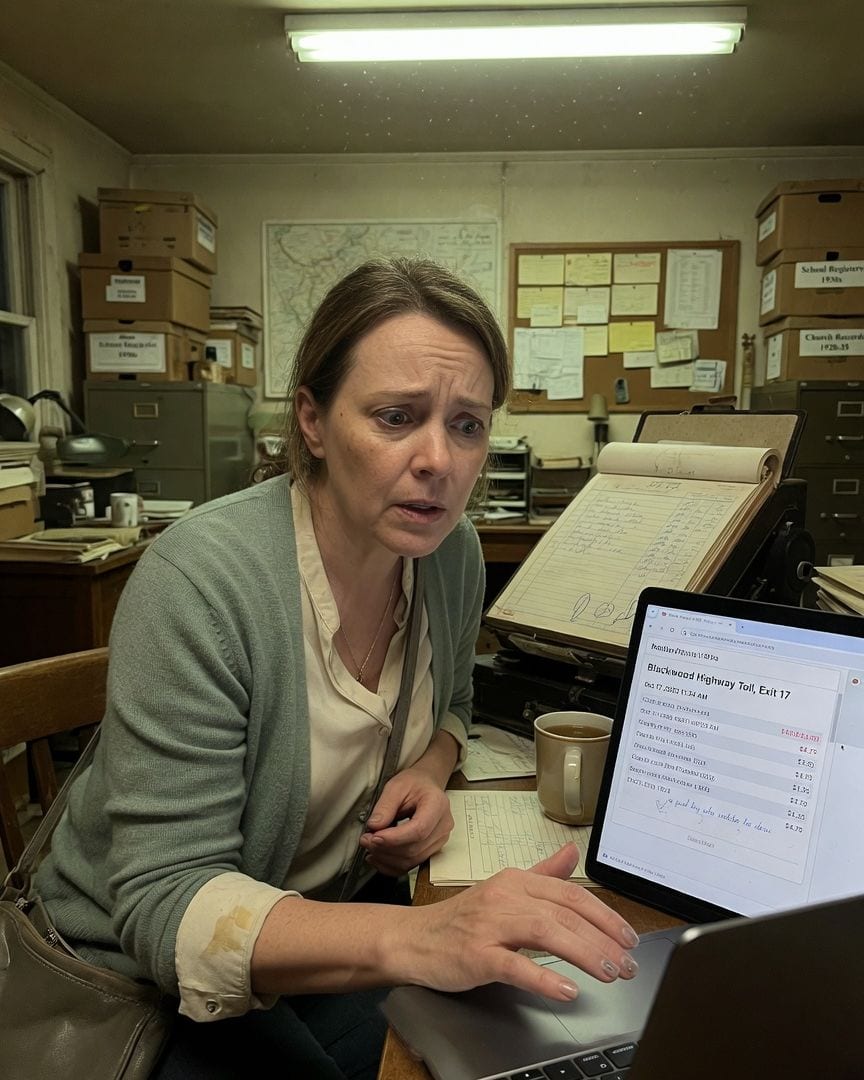
The dust in the archives always settled the same way, a fine, almost invisible film that coated everything in a layer of quiet history.
As the village archivist, it was a smell I knew better than my own perfume – old paper, dried ink, hushed secrets.
Today, I was digitizing the fragile school registers from the 1930s, each page a tiny window into lives long passed.
My colleague, Desmond Vaughn, a local historian with a penchant for tweed and a dry wit, called my name from across the room.
"Lydia, you'll want to see this," he said, his voice unusually hushed.
I walked over to his table, where a heavy, leather-bound register for the 1931 Spring Term lay open. He pointed a finger, thick with age spots, at an entry halfway down the page.
There, in neat, almost elegant cursive, was the name: 'Lydia Kowalski.' Beside it, a series of ticks, marked 'present' every single day of the term.
A cold knot tightened in my stomach. I was born in 1969.
"A common name," Desmond offered, but his voice lacked conviction, the usual dry humor absent. He knew as well as I did that 'Kowalski' wasn't exactly common in our tiny village, and 'Lydia' even less so in that era.
My family had lived here for generations. I knew our lineage.
I leaned closer, a prickle on my arms. At the back of the book, where students often practiced their penmanship, was a small, almost faded signature.
It was undeniably mine – the distinctive loop of the 'L', the specific slant of the 'k', the slightly hurried end of the 'i'. But it was… younger. Less practiced, certainly, but still mine. It couldn't be.
My throat felt dry.
Then I saw the teacher's remarks column for that entry. In faded pencil, scrawled almost as an afterthought, was a single, chilling note: 'a quiet boy who watches the door.'
The familiar hum of the fluorescent lights, the scent of old paper and dust, the comforting weight of history surrounding us – it all suddenly felt profoundly wrong, as if the very air itself was holding a breath it shouldn't, waiting for me to catch up to a truth I didn't want to see.
The register, heavy and silent, felt like a lead weight in my bag as I carried it home that evening. The 'Lydia Kowalski' entry gnawed at me.
I spent hours hunched over my laptop, tracing my family tree back through generations, my fingers flying across the keyboard. Ancestry.com, local birth records, old census data – nothing. No other Lydia Kowalski.
Not in my direct lineage, not in any distant branch I could find. Desmond's 'common name' theory crumbled to dust, replaced by a growing dread.
The name was too specific, the village too small for such an unlikely coincidence to be just a coincidence.
I tried to find any other record of a Lydia Kowalski from 1931 in the village, a birth certificate, a mention in the church bulletin, anything. There was nothing. It was an isolated, impossible entry, a phantom in the records.
To ground myself, to prove the world was still sane and orderly, I decided to perform a mundane check: my own bank statements.
I logged into my online banking, scrolling through recent transactions, half-expecting to find nothing amiss, just the familiar, reassuring pattern of bills and groceries, a testament to my own perfectly ordinary, verifiable existence.
Then I saw it. A small, innocuous charge, buried among the direct debits and card purchases: 'Blackwood Highway Toll, Exit 17.'
It was dated October 17th, last year.
I froze. My mouse hand hung suspended over the screen. Blackwood Highway? I had never been to Blackwood Highway. It was in a town nearly twenty miles away, a place I had no reason to visit.
I remembered that day with stark clarity: I was home, battling a particularly nasty flu, shivering under three blankets, the television droning in the background. My head had throbbed so hard I could barely lift it.
I could even recall the empty soup can on my nightstand, the specific pattern of the duvet cover as I pulled it to my chin.
The amount was negligible, just a few dollars, barely noticeable.
But the specific location, the precise date, the undeniable fact that it placed me somewhere I absolutely was not, sent a fresh wave of ice through my veins, colder than any flu.
The school register was an anomaly, a strange, uncomfortable historical ghost. But this, this was a direct contradiction of my own recent, verifiable past. This was current. This was real.
The bank statement glowed on my screen, the toll charge for the Blackwood Highway exit, 11:34 AM, October 17th, glaring up at her.
My finger, trembling, navigated to my phone's location history for that day, the tiny blue dot confirming I was home, static, for twenty-four hours straight. The memory of the fever, the shivering, the empty house, was sharp, visceral.
My breath hitched. The paper, the device, the world's record, insisted something happened that I knew did not.
The dread was a physical thing, clawing at my throat, as I stared at the widening gap between what I remembered and what the evidence swore.
The next day, a raw edge of panic sharpening my focus, I embarked on a futile quest to dispute the toll charge.
The bank's automated system was unyielding, an infuriating loop of pre-recorded options that refused to acknowledge anything outside its script.
A call to the toll authority yielded a polite, unhelpful representative who insisted, with practiced calm, that the charge was legitimate, tied directly to my license plate number.
"The system doesn't make mistakes, ma'am," she chirped, her voice devoid of any genuine concern. "The charge is valid." Each dead end tightened the noose of unease around my throat.
Driven by a desperate need for a rational explanation, a single, firm anchor in a world that felt increasingly fluid, I delved deeper into my own personal records.
I needed to prove this was a fluke, a series of bizarre clerical errors. Instead, I found another impossible entry.
Tucked away in a box of old papers from my college years, an overdue notice from the local public library, addressed to 'L. Kowalski,' for a book titled 'A History of Our Village.' The date on the notice was 1987.
I was 18 then, away at college, living in a dorm three towns over, consumed with textbooks and late-night study sessions. I remembered borrowing books from my college library, certainly, but never from the village. Why would I?
The librarian, a kindly woman named June who had been there for decades, was able to retrieve a photocopy of the original library card. The signature on it was almost mine, frighteningly so.
But the 'L' had an extra flourish, an elegant loop I never used, a small, unnecessary curl that felt alien, almost mocking. It was too close to be a mistake, too different to be authentic.
The specific nature of the book – a dry, forgotten local history detailing the village's obscure industries and long-lost landmarks, places I'd only ever read about in other, more reputable histories – combined with the impossible date and the 'almost-but-not-quite' signature, cemented a terrifying pattern.
These weren't random glitches. They were specific. Personal. And profoundly, intimately wrong.
My increasingly frantic inquiries, my obsession with these impossible details, began to attract notice. Desmond, initially amused, then mildly concerned, now suggested, with a strained kindness, that I take some leave, citing 'stress.'
He avoided my gaze when I tried to show him the library notice, waving a dismissive hand. "Lydia, you're overworked. Take a break."
In the quiet solitude of the archives, where I now spent most of my waking hours, hunting for more impossible echoes, I started to feel watched. Not physically, not directly, but a pervasive, subtle presence.
Files I had meticulously organized seemed subtly out of place, shifted by a fraction of an inch, or an entire section.
A specific folder on local census data I'd been examining vanished from my desk one afternoon, only to reappear in the wrong drawer, beneath a stack of unrelated property deeds, days later.
I blamed my own frayed nerves, my growing obsession, telling myself I was simply misplacing things, seeing patterns where none existed.
One evening, alone in the echoing silence of the main reading room, my phone rang. An unknown number. My heart gave a jump. I answered, "Hello?"
but only static greeted me, a soft, whispering hiss that seemed to fill the vast room, then a soft click as the line disconnected. A prickle of cold fear crawled up my spine.
Later, as I was locking up, fumbling with the heavy antique key, I caught a fleeting shadow at the very edge of my vision, darting between the towering shelves of municipal records. It was gone in an instant.
I spun around, heart pounding, but there was nothing there. Just the long, silent rows of paper, holding their secrets, their countless, impossible facts. The sensation of being observed, a quiet, persistent presence, never left me now.
It was like a thousand unseen eyes sifting through the layers of history with me, watching my search.
I finally cornered Desmond in the break room, the fluorescent lights humming above us, casting a sickly glow on his pale, uncomfortable face.
In my hand was a stack of photocopied anomalies: the 1931 register entry, the bank toll statement, the library notice, even a blurry, indistinct photograph from a 1940s village fair where a figure in the far background, out of focus, bore an uncanny, chilling resemblance to my younger self.
"These aren't glitches, Desmond," I insisted, my voice tight, barely controlled. "They're too specific, too personal to be random."
Desmond, running a hand through his thinning hair, tried to wave me off, looking away. "Lydia, you're seeing things. It's a combination of stress, confirmation bias…"
"Confirmation bias for a 1931 school register?" I cut him off, slamming the photo of the blurry figure onto the table, the sound sharp in the small room. "Or for a toll charge when I was sick in bed?
Or a library book I never checked out from a library I wasn't even living near?"
He flinched, then sighed, his shoulders slumping. He looked genuinely troubled now, the attempt at professional distance crumbling. "Look, I'm not saying it's nothing. I'm just saying… some things are best left alone."
He lowered his voice, almost to a whisper, glancing around the empty break room. "There's an old woman, Mrs. Holloway. Used to be the school secretary for decades. Sharp as a tack, even in her nineties.
She… she had a reputation for noticing things. Odd details. Kept her own records, you might say. She lives on the old Donovan place, just outside town. Maybe… maybe she's seen some of these 'quirks' before."
He gave me a look that was both a warning and a reluctant permission.
Clutching my file of impossible proofs, my heart pounding with a fresh, terrifying hope, I drove straight to the address. The Donovan place was an old Victorian, tucked away down a winding lane, overgrown with ivy.
Mrs. Holloway, a tiny woman with sharp, knowing eyes, answered the door. Her movements were slow but deliberate, every gesture precise. She invited me in, her living room filled with the scent of lavender and old paper.
I laid out my evidence, the impossible entries, the recurring descriptions. Mrs. Holloway listened, impassive, her gaze never leaving my face.
Then, with a quiet sigh that seemed to carry decades of resignation, she rose and walked to an old wooden cabinet. She pulled out a stack of yellowed papers, a small, bound notebook, and a faded photograph.
"I knew you'd come eventually," she said, her voice calm, utterly devoid of surprise or fear. "Someone always does."
Mrs. Holloway returned to the table, her movements unhurried, placing the items before me. She picked up the faded photograph first, a small, stern-faced girl in a 1940s school photo, clutching a slate as if it were a shield.
"That's my aunt, Penelope Donovan," she said, her voice flat, matter-of-fact. "Born 1935, died 1942. Seven years old when she passed, after a bad bout of scarlet fever."
I stared at the picture, at the serious, unsmiling face of the child, then back at Mrs. Holloway.
"But here," the old woman tapped a finger on a small, meticulous label beneath the photo, written in the same looping script as her other annotations, "it's her signature from a library book, checked out in 1953.
Eleven years after her death."
I felt the blood drain from my face, a cold rush. Eleven years. It was impossible.
"And next to it," Mrs. Holloway pushed the small, bound notebook across the table, its pages filled with dozens of similar entries, meticulous, looping script detailing dates and observations, "is what the librarian wrote about her in her own logbook: 'The child who watches the door, waiting for something to begin.'"
My gaze fell on the notebook. The words blurred, then sharpened into terrifying focus. It wasn't just Penelope. It was dozens of similar entries: each a name, a wrong date, and a chillingly familiar description.
Not just 'a quiet boy,' or 'the child who watches the door,' but 'the silent passenger,' 'the unlisted occupant,' 'the one who observes.'
My own family name, 'Kowalski,' appeared several times, stretching back through the decades, associated with impossible records, with dates and circumstances that contradicted every official account.
The very air in Mrs. Holloway's quiet living room seemed to thicken, heavy with untold histories. The world shifted beneath my feet. It wasn’t just me.
It was a pattern, a lineage, an insidious, unseen current running beneath the placid surface of our village's history, deeper and older than I could have ever imagined.
Mrs. Holloway explained, her voice a low murmur, devoid of fear, as if discussing the weather. "It's not a ghost, not in the way people think. It's… a Record Keeper.
It anchors itself to the official histories, the paper, the ink, the digital logs. It doesn't need a body, not really. It just needs to be recorded." She gestured to the notebook, its pages filled with impossible truths.
"It picks people, often from certain families, certain places. It creates an echo, a presence, through their name in the records. It's a way for it to exist, to observe, without ever truly being here, physically."
I flipped through the notebook, seeing my own name, my ancestors' names, interwoven with others, all marked by impossible timelines, by unsettling descriptions.
"The quiet boy who watches the door," I whispered, the phrase finally clicking into place, not as a description of a child, but as something else entirely. "That's not the child. That's it."
Mrs. Holloway nodded, a small, grim confirmation. "Precisely. It's its signature. Its way of saying, 'I am here, and I am watching.' It feeds on the coherence, the belief that what's written is true, that records don't lie.
The more accepted, the more undisputed the record, the stronger its anchor. It weaves itself into the fabric of what we agree is real."
The terrifying implication settled over me like a shroud.
The entity wasn't just creating random anomalies; it was building a pervasive, unseen network of 'witnesses' throughout the village's history, quietly asserting its presence through the very documents meant to define reality.
My own family, with its long history in the village, its name appearing so consistently, had been a fertile ground for its silent expansion. It wasn't a monster in the dark; it was a ghost in the ledger.
Mrs. Holloway pointed to specific entries in her notebook, highlighting a cluster of impossible records tied to the old village church's baptismal registry and a set of land deeds for the original Kowalski homestead, dating back to the late 1700s.
"These are its strongest anchors right now," she explained, her finger tracing the faded script, "its current focus. It needs the records to be undisputed, to be believed.
We can't destroy them – that would only make it stronger, more desperate, as if it never existed, forcing it to find new, perhaps more aggressive, ways to assert itself. We have to disprove them.
Introduce enough contradiction into the official system to break its coherence, to make its presence… untenable, for a time."
I returned to the archives, no longer afraid in the same visceral way, but burning with a cold resolve.
With Mrs. Holloway's quiet, guiding voice over the phone – she didn't possess a computer, but her memory for obscure local history was encyclopedic – I meticulously cross-referenced the anomalous land deeds with original hand-drawn survey maps from the same period, maps that were never officially filed but kept by a local surveyor's family, passed down through generations.
I found discrepancies: a property line that subtly shifted, a forgotten stream bed that was never acknowledged in the formal deeds, a small, unrecorded annex to the church.
These were minor details, tiny cracks in the official facade, but when combined with the impossible baptismal entries and the wrong land transfers, they created a web of 'disputed' facts, questions of authenticity.
I didn't erase or alter anything.
Instead, I flagged the records in the digital system, cross-referencing them with the newly 'discovered' contradictory survey data, creating an official 'anomaly report' that, given my authority as archivist, could not be easily dismissed or overwritten.
I cited newly unearthed historical documents, the weight of academic diligence lending credibility to the impossible.
As I clicked 'submit' on the final report, a sudden, cold draft swept through the archives, rattling a stack of unbound newspapers on a nearby table, rustling the old papers with a sigh.
The humming of the fluorescent lights flickered once, twice, then steadied. The pervasive feeling of being watched, which had been a constant companion, a silent weight on my shoulders for weeks, suddenly receded, leaving behind a chilling void.
It felt like a quiet victory, but a fragile one.
The immediate pressure eased. The impossible bank statements ceased appearing. The shadowy figures in my peripheral vision vanished, leaving only the reassuring solidity of the shelves.
I continued my work, but the archives were no longer just a collection of historical facts; they were a battleground, a fragile membrane between what was real and what was merely recorded.
Mrs. Holloway remained in her quiet home, continuing her own meticulous observations, a silent sentinel. She accepted, as I now did, that the Record Keeper had merely shifted its focus, its influence, to other, undiscovered anchors, other quiet families.
I now saw the subtle, impossible entries in the margins of history everywhere I looked, a hidden language of presence only I could truly decipher. The world was still sane, but it held a terrifying, silent truth.
Months later, I was back in the archives, cataloging a new donation of local historical documents – a dusty box of old ledgers from a defunct general store.
The quiet hum of the building was familiar, but the silence felt heavier now, charged with unseen possibilities.
I pulled out the original 1931 school register, the one that started it all, its yellowed pages brittle, its leather cover softened by time.
As I carefully turned to the very last, empty page, my finger brushed against a faint pencil mark I hadn't noticed before, hidden in the crease of the spine.
It was a small, almost imperceptible symbol, a looping knot I didn't recognize, a silent flourish. Beneath it, in faded script, a series of dates, stretching far into the future, and a new name: Damien Ashford.
The silence in the archives, thick with the scent of old paper and dust, now felt like a thousand quiet eyes.
If this one got to you
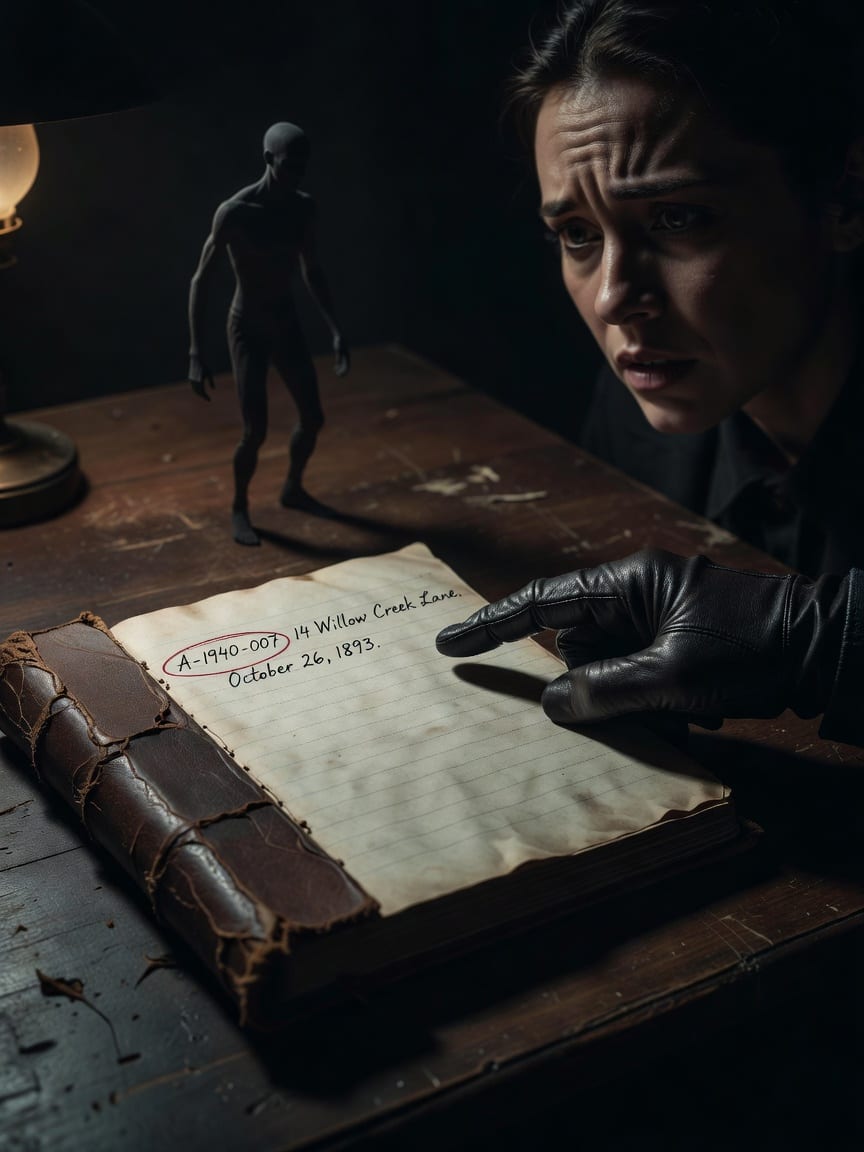
My dead relative's 1940 hospital record had a note: 'same admission number as reissued below.' Below it, decades later, was my home address, and 'hold, do not process new patient.'
As an archivist, I was researching my great-aunt Vera's 1940 psychiatric admission. Her microfiche file, however, contained a handwritten note about a reissued admission number. To my shock, this identical number was later assigned to a blank file listing my own home address, with a chilling directive to 'hold'.
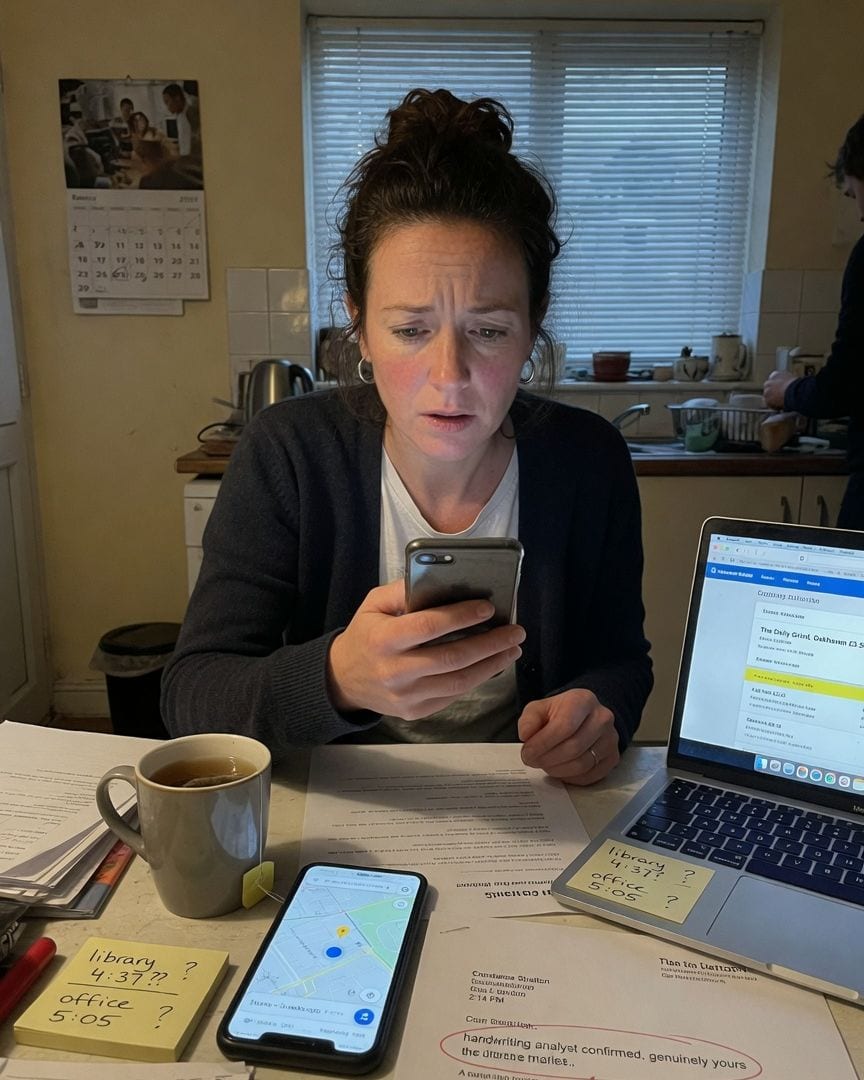
My signature covers a twelve-thousand-pound loan agreement. It's witnessed three hundred miles away, the day my phone confirms I was home.
My afternoon takes a chilling turn when the bank calls about a £12,000 loan, signed with my own handwriting in a town 300 miles away. My phone proves I was at my kitchen table at the time, yet a handwriting analyst confirms the signature is genuinely mine. The impossible truth deepens when a keycard log places me 100 miles away, just minutes before I entered my office.
My own signature is on a Baltimore police report for a hit-and-run I never witnessed. The officer remembers my university sweatshirt.
I was settling into a quiet Tuesday evening when Baltimore PD called, asking about a witness statement I supposedly gave. They described my faded green university sweatshirt, seen at a hit-and-run last Friday. But my sweatshirt was in my dresser, and I was home in Seattle.
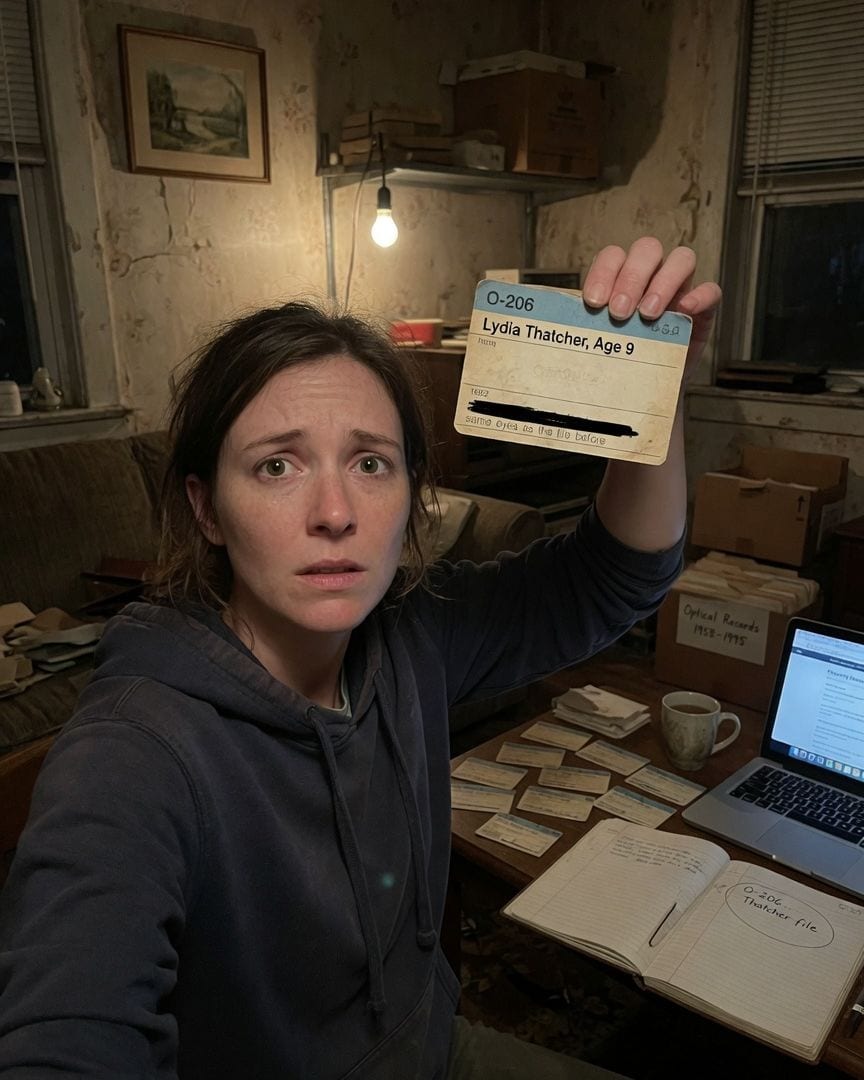
My own optical card is dated 1962, with my name on it. I wasn't born until 1993.
Sifting through old patient files from my former optical practice, I found my own O-206 card. It had my name, Lydia Thatcher, and my current home address printed on it. But the card was dated 1962, decades before I was even born, and a redacted note mentioned 'same eyes.'
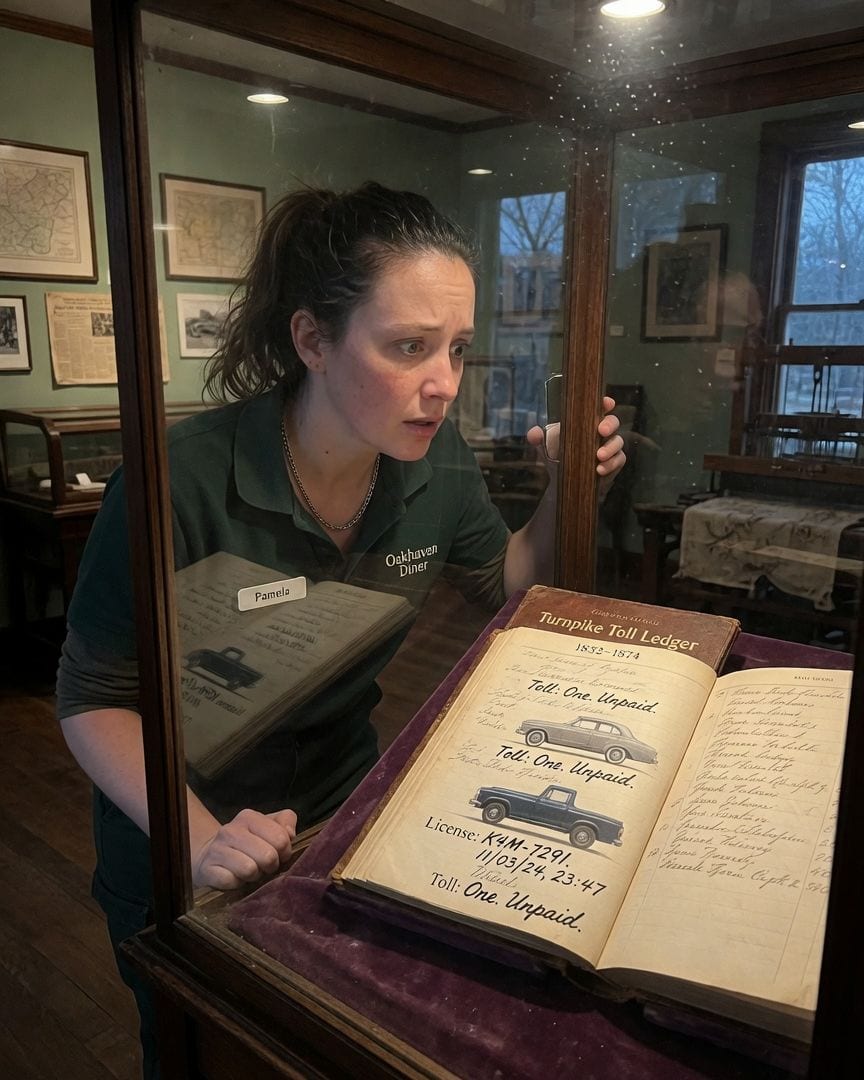
My car stalled at the old turnpike milestone, after dark. The toll ledger, closed in 1874, then listed my car, my stall time, and a toll of one, unpaid.
I had just moved to Oakhaven when my old sedan died on a dark, winding road by an infamous turnpike milestone. The next day, I found my car's exact registration and stall time written in fresh ink in a 150-year-old, locked museum ledger, marked 'Toll: One. Unpaid.' The curator dismissed it as a prank, but her white knuckles and strained voice hinted at something far more unsettling.
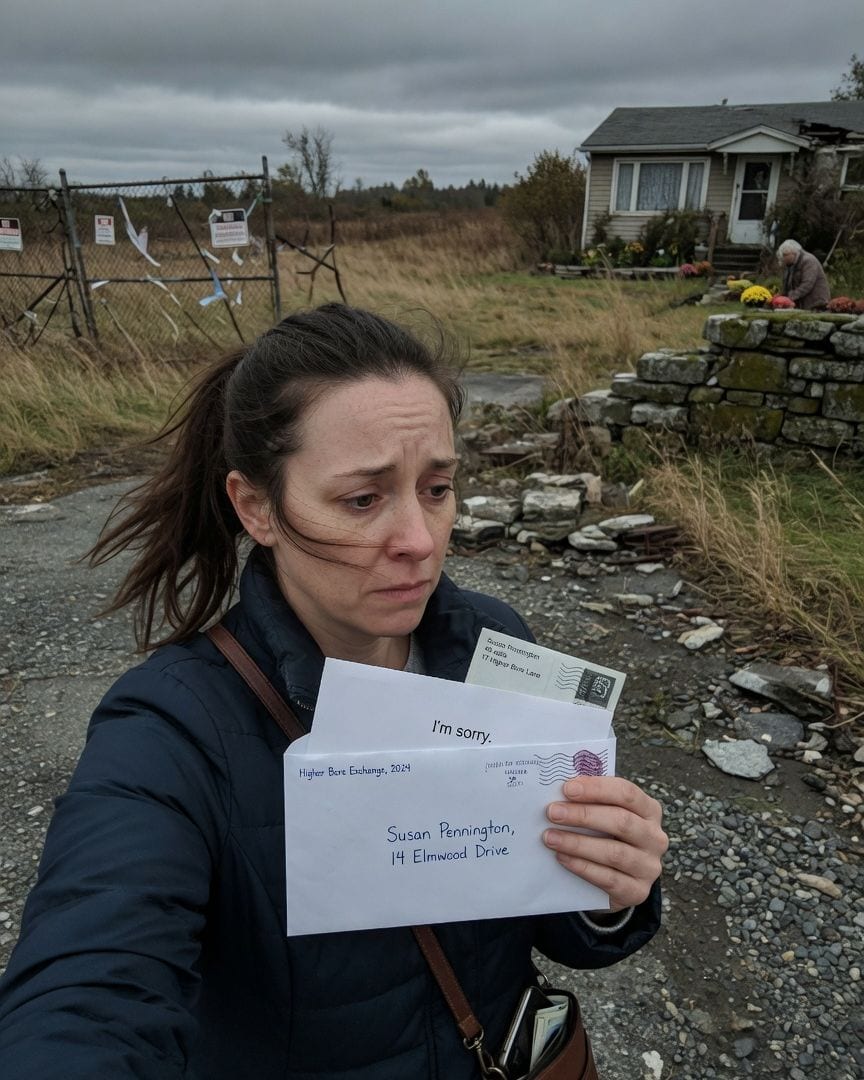
My phone bill listed forty calls made at 3:14 AM to a house demolished in 1990. The paper bill came from a flattened building. My name is on it.
I stared at my phone bill, my morning coffee forgotten. It detailed forty calls, each at 3:14 AM, to an address I knew was a vacant lot where a house had stood decades ago. But the real dread began when I saw the bill's return address: a telephone exchange flattened years before.