My debit card bought a dress in Nashville, signed with my own flourish, on a day I was presenting at a conference. Then my lost bracelet arrived.
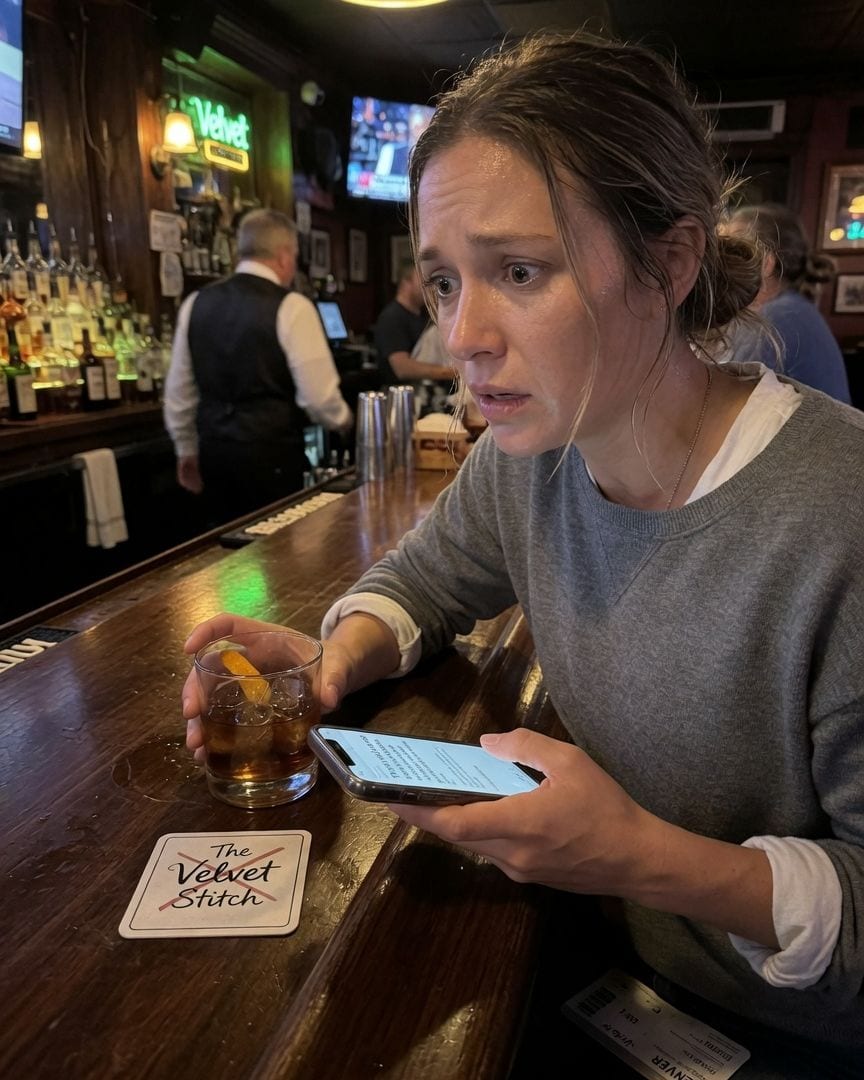
The clinking of ice in an Old Fashioned settled on the polished bar top, already there before I’d even opened my mouth. “Em! Your usual,” the bartender said, sliding it across.
He was a broad, kind-faced man in his late fifties, a clean white towel slung over his arm. My name is Emily. I’ve never been called ‘Em’ by anyone outside my family, and I certainly wasn’t a regular here.
I was in Nashville for a layover, just ducked into this bar for a quick phone call. I live in Denver.
I told him he had the wrong person. He just chuckled, a low rumble. “Nah, Em. You’re in here every couple weeks. Last three times, let’s see… July 12th, August 1st, then just last week, the 23rd.”
He rattled off the dates with an easy confidence that froze the blood in my veins.
I could account for every single one of those days: at my sister’s wedding, at a work conference, then sick with the flu in my own bed. When I insisted, his smile faded, replaced by a quiet, unsettling blankness.
He simply walked away to serve another customer, leaving my untouched drink on the bar.
Back in Denver, I tried to rationalize it. A case of mistaken identity, a running joke, a weird old man. I told my boyfriend, Raymond, about it, and he laughed it off as a 'travel story.'
But a week later, an alert from my bank popped up on my phone: 'Thank you for your purchase at The Velvet Stitch, Nashville, TN, on August 1st.'
The Velvet Stitch. A women’s boutique. And August 1st, one of the dates the bartender had mentioned. My stomach dropped. I pulled up my statements. There it was: a $187 charge, paid with my debit card, signed 'E. Sinclair.'
The signature was unmistakably mine, a specific flourish on the 'E' that I’d developed in high school. But on August 1st, I was at a work conference in Colorado Springs, presenting a data analysis report.
I had the hotel receipts, the conference badge, the signed attendance sheet.
I called the bank, indignant. They were polite but firm. The transaction was legitimate, the card was present, the signature matched their records. I asked for video, anything. They said the boutique didn't have cameras at the register.
They suggested identity theft, but the card was still in my wallet. I tried to dispute it, but the evidence was against me. It was my card, my signature, my name, in a place I definitively was not.
The unease festered. Raymond, seeing my distress, suggested we just cancel the card and move on. He was trying to be practical, but I couldn't shake the feeling that something deeper was wrong. Then, a small package arrived.
It wasn't expected. The return address was a P.O. box in Nashville. My hands trembled as I opened it. Inside, nestled in tissue paper, was my silver bracelet.
The one Raymond had given me for our anniversary, custom-made with a tiny raven charm. I’d lost it months ago, convinced it had slipped off during a hike.
A small, folded note lay beside it, in the same neat, unfamiliar script as the bank statement signature. It read: 'Found this at the bar. Thought you'd want it back, Em.' The postmark on the package was August 1st.
Raymond held the bracelet, then the note, his skepticism finally cracking. “This is… impossible,” he muttered. We spent hours dissecting it. The P.O. box was registered to a defunct business, a dead end.
But the dates, the signature, the nickname – it was all too specific. We started looking for other discrepancies. It was like a dam had broken.
A toll charge from a Nashville highway on July 12th, the exact time I was driving to my sister’s wedding in Utah.
A library overdue notice from the Nashville Public Library for a copy of ‘Dreadful Hollow’ – a book I’d put on hold at my Denver branch, but hadn't picked up yet.
Even a parking ticket, issued to 'E. Sinclair' on August 23rd, outside a Nashville jazz club. Each record was irrefutable, tied to me, yet placing me in a life I hadn't lived.
Raymond, with his knack for digital sleuthing, tried to trace the P.O. box, the bank transaction, anything. He kept hitting brick walls, or finding records that simply vanished the deeper he dug.
It was as if these 'traces' existed just enough to be seen, but not enough to be truly investigated.
The library book, for instance, had been returned, but the digital record of its checkout by 'E. Sinclair' had been overwritten by a 'system error' just hours after I tried to inquire.
The toll charge had been paid, but the associated vehicle information was 'unavailable.' Each thread we pulled disintegrated, leaving us with only the impossible fact.
The unease wasn't just mine anymore; Raymond's face grew tighter, his usually calm demeanor replaced by a constant furrow in his brow. He was seeing it too, the widening gap between what was real and what the world insisted.
My attempts to contact the Nashville bar directly proved futile. The number from my initial search was disconnected. A quick online search yielded another number for the same address, but the person who answered was terse. 'Walter Abbott?
He's no longer working here.' They wouldn't elaborate. The dead ends started to feel less like bad luck and more like deliberate obstruction. I began to feel watched.
Little things at first: a car that seemed to follow me for too many blocks on my drive to work, a figure in the reflection of a shop window that lingered a moment too long.
Raymond dismissed it as paranoia, but the feeling intensified.
Then came the email. Anonymous, no sender information. The subject line was just a single, chilling emoji: 👁️.
The body contained a single image: a blurry, zoomed-in photo of the facade of my Denver apartment building, taken from across the street. Beneath it, in stark white text on black, were five words: 'You're getting close, Em.'
My blood ran cold. This wasn't just about impossible records anymore. Someone knew I was digging. Someone knew where I lived. The danger had become personal, immediate.
I showed Raymond the email, and the fear in his eyes mirrored my own. We changed our locks, installed a cheap security camera. But the feeling of being observed, of a silent, unseen presence, never left.
Every creak of the floorboards, every shadow outside the window, became a potential threat. The world felt smaller, more porous.
Desperate, I dove into online forums, searching for anything remotely similar. 'Impossible records,' 'duplicate identities,' 'phantom charges.' Most results were scams or conspiracy theories, but one small, obscure forum caught my eye: 'Echoes of Self.'
A user, 'Watcher07,' had posted about bank statements showing purchases she swore she hadn't made, in towns she'd never visited. I messaged her, cautiously. She responded, equally wary, but agreed to meet.
Kathleen Holloway was a kind, weary woman in her late sixties. We met in a quiet coffee shop, far from my usual haunts. Her hands trembled slightly as she showed me printouts, faded with age, of her own impossible records.
A gas station receipt from Montana, a dental bill from Florida, all dated from twenty years ago. 'They called them 'The Echoes',' she whispered, her voice raspy. 'Traces left by the Placeholders.' I leaned forward, hanging on her every word.
She explained that 'Placeholders' were temporary occupants, brief facsimiles of people, created to interact with the world in minor ways, leaving these 'echoes' in public and private records.
'They're like system updates, or data redundancy checks,' she said, a strange, calm resignation in her voice. 'They just… fill in the blanks.'
Kathleen told me her 'Echoes' had stopped after a few years. She’d been lucky, she said. Hers were just records, never an 'advance.'
She pointed to a specific pattern in her documents: all the 'Echoes' originated from a single, unassuming address in Nashville – an old, brick building that once housed a data archiving company.
'I think that's where they come from,' she said, tapping a finger on the address. 'Where the records are made, and the Placeholders are… generated.' The pieces clicked into place: the bartender's calm, the vanishing records, the impossible dates.
It wasn't identity theft. It was something far more insidious, a quiet, bureaucratic horror. My bracelet, the bank statement, the library book – all 'Echoes' left by my own Placeholder, a temporary, legally sanctioned doppelganger.
Kathleen finished her coffee, her eyes distant. 'Be careful, Em,' she warned. 'Sometimes, they don't just leave traces. Sometimes, they advance.'
Kathleen's words, 'Sometimes, they advance,' haunted me. The idea that this Placeholder, this temporary version of me, could escalate from leaving behind simple records to something more, was terrifying.
I kept thinking about the anonymous email, the picture of my apartment building. Was that an 'advance'? A warning?
Raymond and I were trying to process everything Kathleen had told us, the concept of 'Placeholders' and 'Echoes' stretching the limits of our rational minds.
He was already researching the defunct data archiving company, hitting more dead ends, but finding enough obscure legal filings to suggest something odd was indeed happening there. The air in our apartment felt thick with unspoken dread.
Then, the mail arrived. Among the usual bills and junk mail, a thick envelope, official-looking, with the Nashville Medical Center's logo embossed on the front. I opened it, my heart pounding.
It was a formal letter, an 'Appointment Confirmation,' addressed to 'Emily Sinclair.' The date was for three weeks from now. The appointment: an MRI Scan. I stared at the words, my hands starting to shake uncontrollably. An MRI.
I had no medical issues, no symptoms, no reason whatsoever to need an MRI. I had never even considered making such an appointment. This wasn't an 'echo' from the past.
This was a record of a future event, under my name, that I knew absolutely nothing about. It was a record that could not be.
My Placeholder wasn't just living a parallel life; it was preparing to take a tangible, physical step into my future, under my identity.
The MRI appointment detonated the last vestiges of our disbelief. Raymond and I immediately drove to Nashville, armed with Kathleen’s address for the old records office.
It was an unremarkable brick building, tucked away on a side street, its windows dark and dusty. It looked abandoned, yet we noticed a subtle hum, a faint glow from within some evenings. We staked it out, observing.
Ordinary-looking people, mostly quiet, almost invisible, entered and exited at odd hours, carrying plain folders. We noticed one man in particular, thin with a pronounced limp, who seemed to be a regular.
He carried a worn leather briefcase and moved with an air of quiet authority.
Raymond, using his skills, managed to access a local public records terminal. He found obscure legal filings related to the building, documents referencing 'temporary identity provisions' and 'data stream management.'
Then he found it: a pattern of 'Declarations of Provisional Identity,' filed under various names, including 'Emily Sinclair,' each with dates corresponding to the Placeholder's activities. These were not for identity theft. They were legitimate, if temporary, legal identities.
Each declaration listed the same 'sponsor' organization: a shell company linked to the defunct data archiving firm. The full truth clicked into place: the 'Placeholders' were not ghosts or glitches.
They were carefully, bureaucratically created entities, given temporary legal standing to perform mundane tasks, leaving their 'echoes' in the world.
The MRI appointment was simply the next step in my Placeholder’s programmed existence, a 'data redundancy check' that was now encroaching on my own physical reality.
We knew we had to stop the MRI. We couldn't let my Placeholder undergo a medical procedure under my name. It felt like a violation of my very being.
We confronted the limping man, Howard Rutherford, as he emerged from the office one evening. He had a calm, almost serene demeanor, eerily similar to Walter Abbott. Raymond had a hidden audio recorder running.
'Mr. Rutherford,' I began, my voice surprisingly steady, 'we know about the Placeholders. We know about the Declarations of Provisional Identity.'
Howard didn't flinch. 'Ah, Ms. Sinclair. You've been… persistent.' He admitted, without malice, that they 'managed redundant data streams,' creating temporary identities for 'system maintenance.' He described my Placeholder as merely 'fulfilling its programmed parameters.'
He told me, quite dispassionately, that trying to stop it was 'inefficient' and 'futile,' as the 'records' were already 'ingrained' in the system.
While I kept him talking, pressing for details, Raymond, using a pre-configured laptop, worked furiously from our car, targeting the Nashville Medical Center's online portal.
He found my Placeholder's MRI appointment and, with a few precise keystrokes, corrupted the specific entry, rendering it unreadable. The system would register an error, not a cancellation.
We then presented Howard with the evidence: the recorded confession, the corrupted MRI record, and Raymond's compiled data on the 'Declarations.' We threatened to expose his entire operation. Howard’s composure finally wavered.
'This would compromise system integrity,' he said, his voice tightening. He agreed to 'decommission' my specific Placeholder, ensuring no further 'advances' would be made in my name. He gave us a chilling, final warning: 'The records exist, Ms. Sinclair. Always.
We merely manage their flow.'
The MRI appointment for 'Emily Sinclair' was quietly scrubbed from the system. The Placeholder ceased leaving new records.
I deleted my social media profiles, changed my phone number, and meticulously worked to remove any public traces of my identity, a futile act, I knew, but a necessary one for my peace of mind.
Raymond and I moved to a small town in Oregon, a place with no direct flights to Nashville. The sense of dread never fully dissipated, settling instead into a quiet, constant hum beneath the surface of my life.
The world felt subtly different, imbued with a new, terrifying layer of hidden mechanisms. I survived, but a piece of my innocence, my belief in a singular, verifiable reality, was irrevocably lost. The records, Howard said, always exist.
I often find myself scrutinizing public records, news articles, online profiles, searching for the tell-tale signs.
I never find anything about 'Placeholders' or 'redundant data streams,' but I see them in the small, almost imperceptible errors: a wrong middle initial in a local newspaper obituary, a misplaced street number in a property deed, a birthdate off by a single digit in an online directory.
Tiny, innocuous discrepancies, easily dismissed as human error, but I know better. They are the silent corrections, the invisible adjustments, the echoes of a vast, ongoing process that continues without me.
The world is full of them, these quiet little wrongnesses, hidden in plain sight. They are everywhere. They always were. It’s just that now, I see them. And I can't unsee them.
I live with the knowledge that my identity, my very existence, is a mere record, subject to a silent, bureaucratic manipulation.
Raymond asks her one evening, "You think they really stopped it? For good?" Emily smiles, a faint, wrong little smile, and takes a sip of her water. "For me," she says, her eyes distant.
If this one got to you
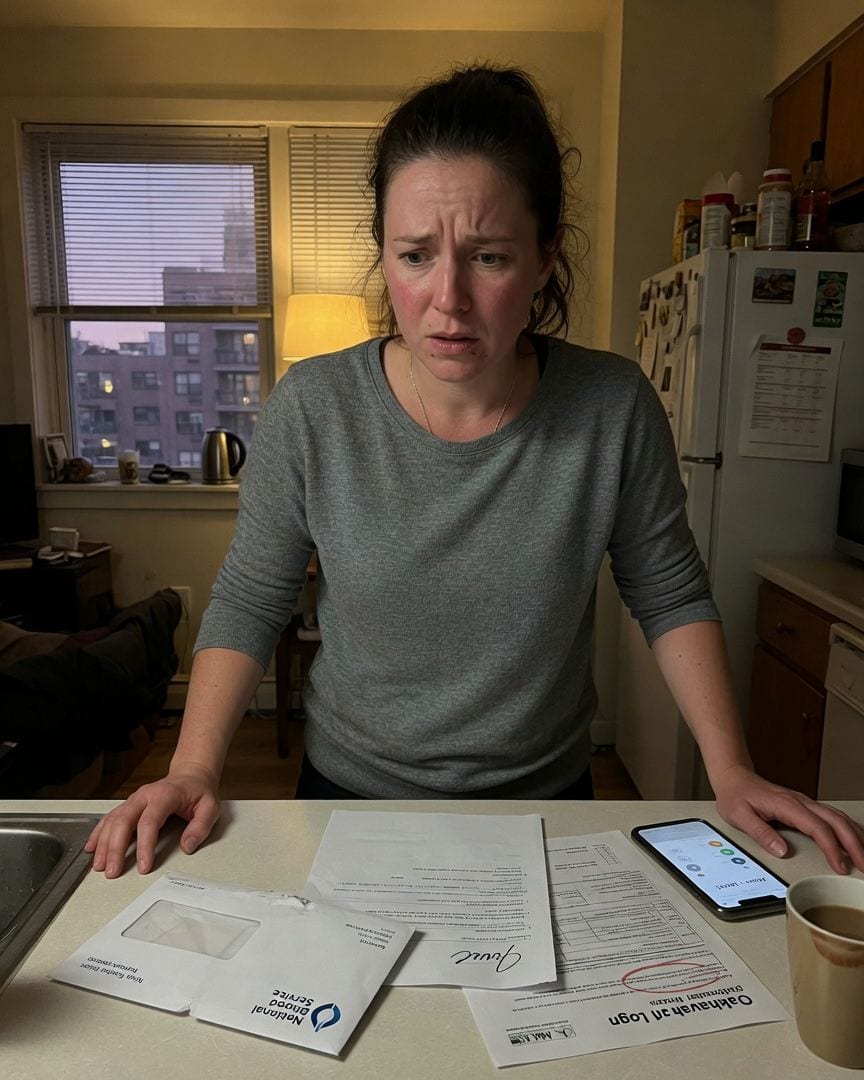
My signature appeared on a blood donation form, thanking me for my sixth. I've never set foot in that town.
An ordinary envelope arrived, but inside, a letter from the National Blood Service thanked me for a sixth blood donation. I’ve never given blood in my life, and the thought makes me queasy. But then I saw the enclosed consent form, signed unmistakably with my own hand, for a donation made in a town I’d never heard of. It was my signature, but it wasn't me.
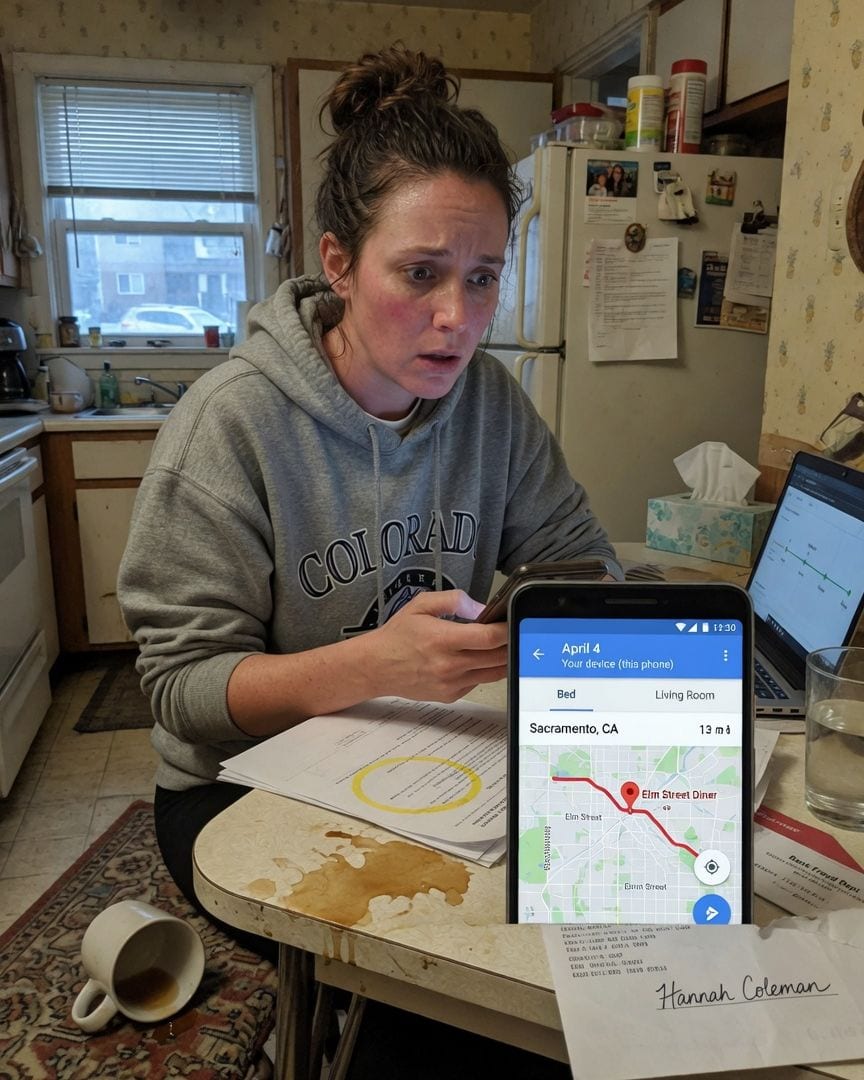
My phone's GPS places me in Sacramento every fourth of the month, driving a street I've never seen. I'm always home in Denver.
My Google Location History showed a phantom trip to Sacramento on a day I was home sick in Denver. I dismissed it as a glitch, until a bank statement revealed a charge from that diner. When the receipt arrived, it bore my exact signature for a coffee I never ordered.
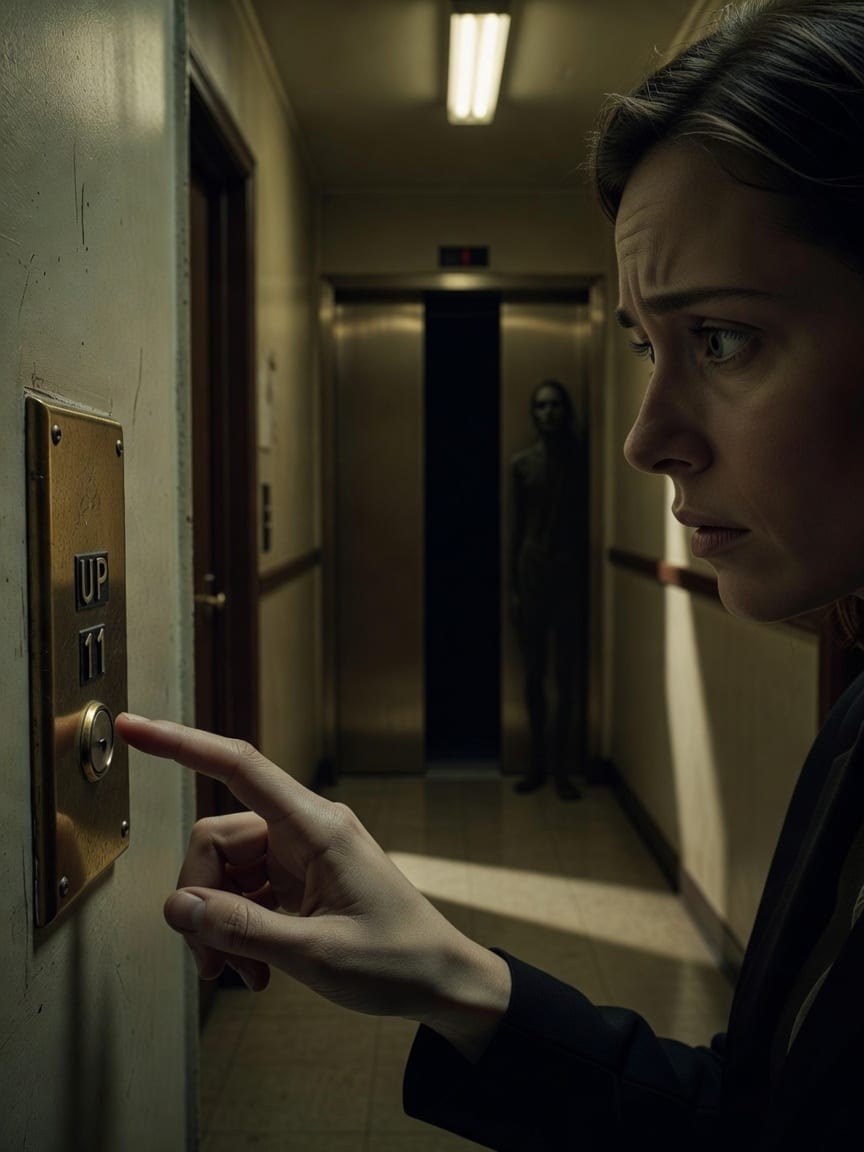
My doorman warned me not to take the tenth-floor lift on Saturday. The building's lift passed inspection last month. He seemed terrified that he'd said it.
My doorman's unsettling warning about the tenth-floor lift left me with a metallic taste of unease. I tried to rationalize it away, but then a birthday card arrived for me, five months early, from an impossible address. It was a site linked to unexplained disappearances, and a cold certainty began to settle in.
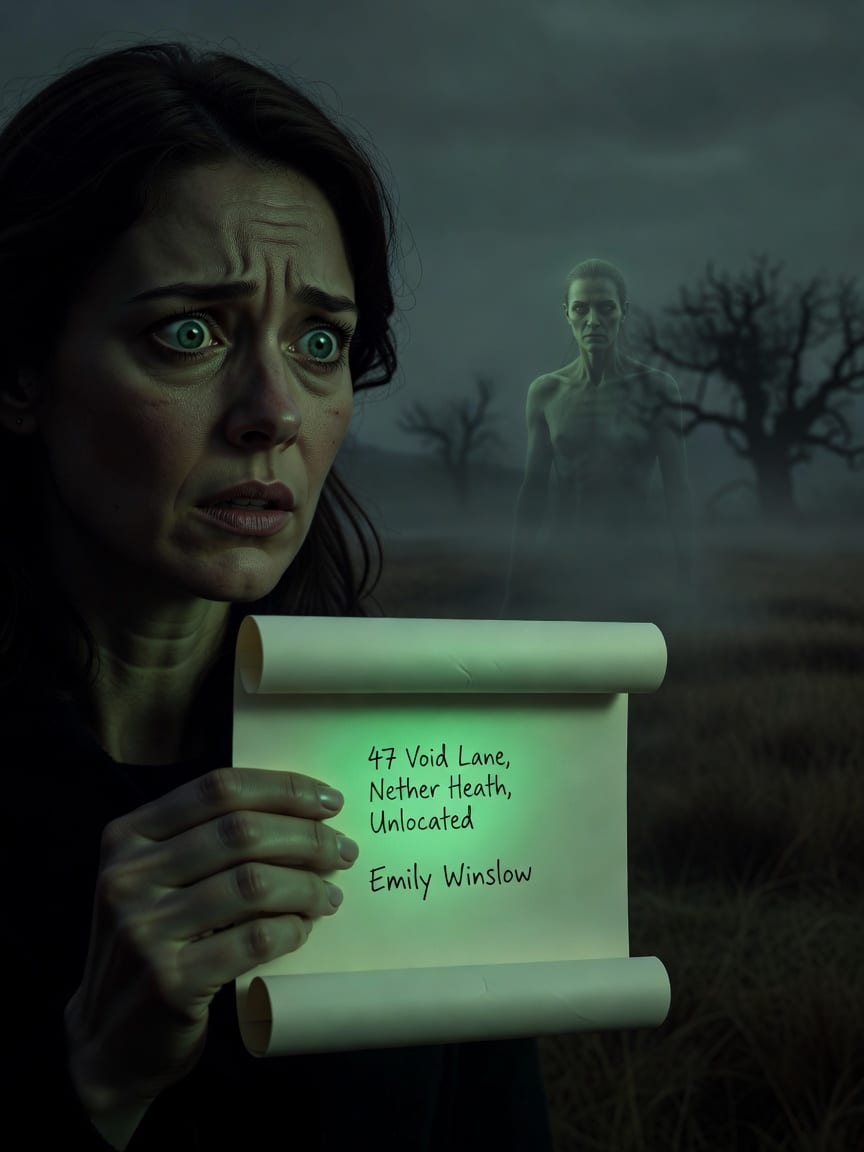
My change-of-address card arrived today. It said I'd moved to a house I'd never seen, on a street that didn't exist. And it was signed with my own hand, a month from now.
A crisp, cream-colored card on my kitchen counter informed me I'd moved to 42 Willow Creek Lane, an address that didn't exist. The signature was my name, Emily Winslow, a chillingly precise ghost of my own handwriting. But then I found an old 1947 ledger, listing 42 Willow Creek Lane and a signature identical to the one on my card.
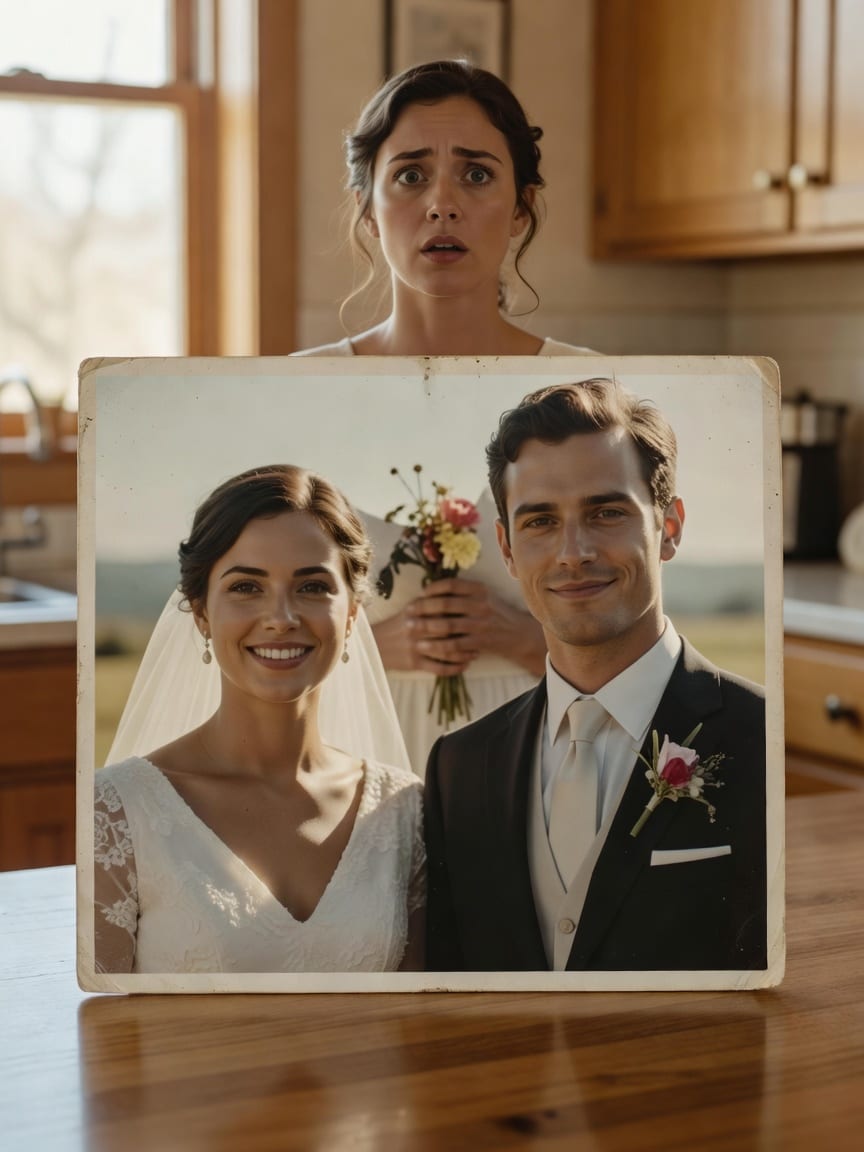
My best friend thanked me for standing up at his wedding. He isn't married. He described my speech, the ring, the bride's face — none of it real, but he remembered every detail.
My friend Julian Doyle vanished for two years, then reappeared acting like no time had passed. He talked about his wedding, where I supposedly gave a speech, describing every detail vividly. But Julian isn't married, and I have no memory of ever attending such an event.
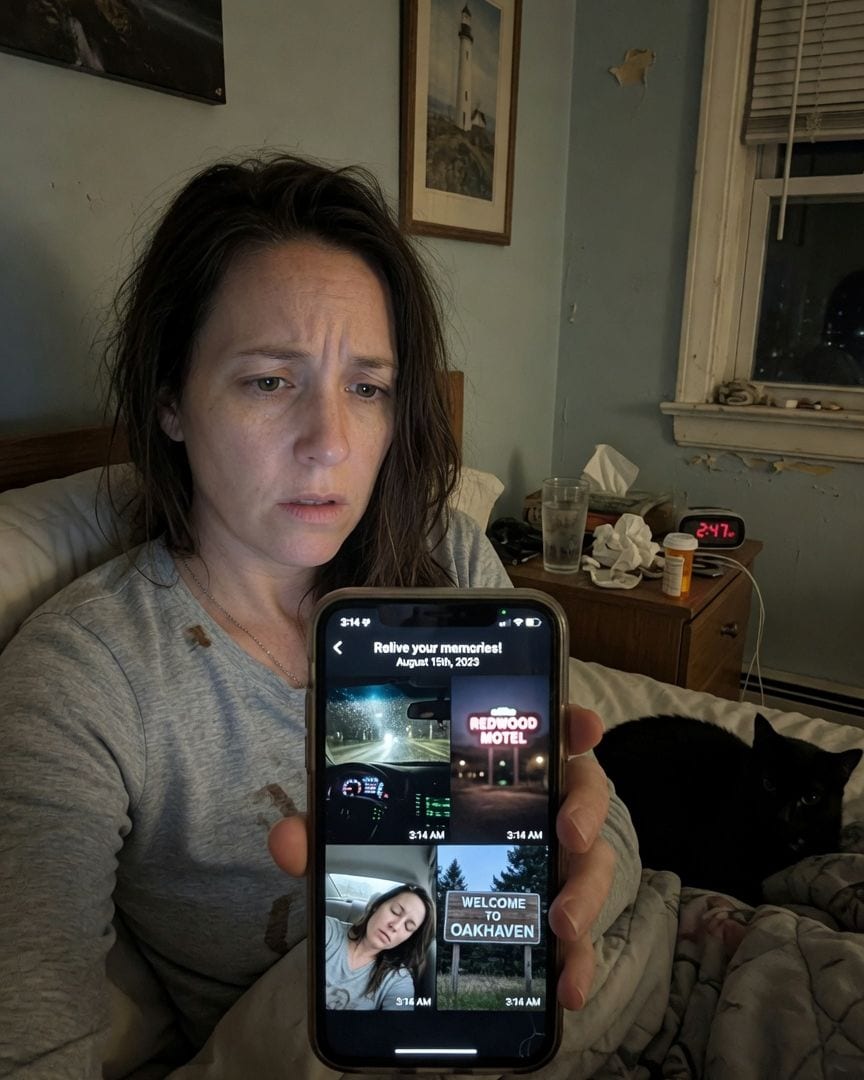
My phone has photos of me asleep in a strange car at 3 AM. Then a voicemail: 'We'll have her back by sunrise.'
My phone woke me with a cheery notification, promising memories from last August. Instead, it showed me asleep in a dark car, rain streaking the windshield, miles from my apartment. I was certain I'd been home in bed that night, but the images were undeniably in my camera roll, a quiet violation of my memory.