My phone's GPS places me in Sacramento every fourth of the month, driving a street I've never seen. I'm always home in Denver.
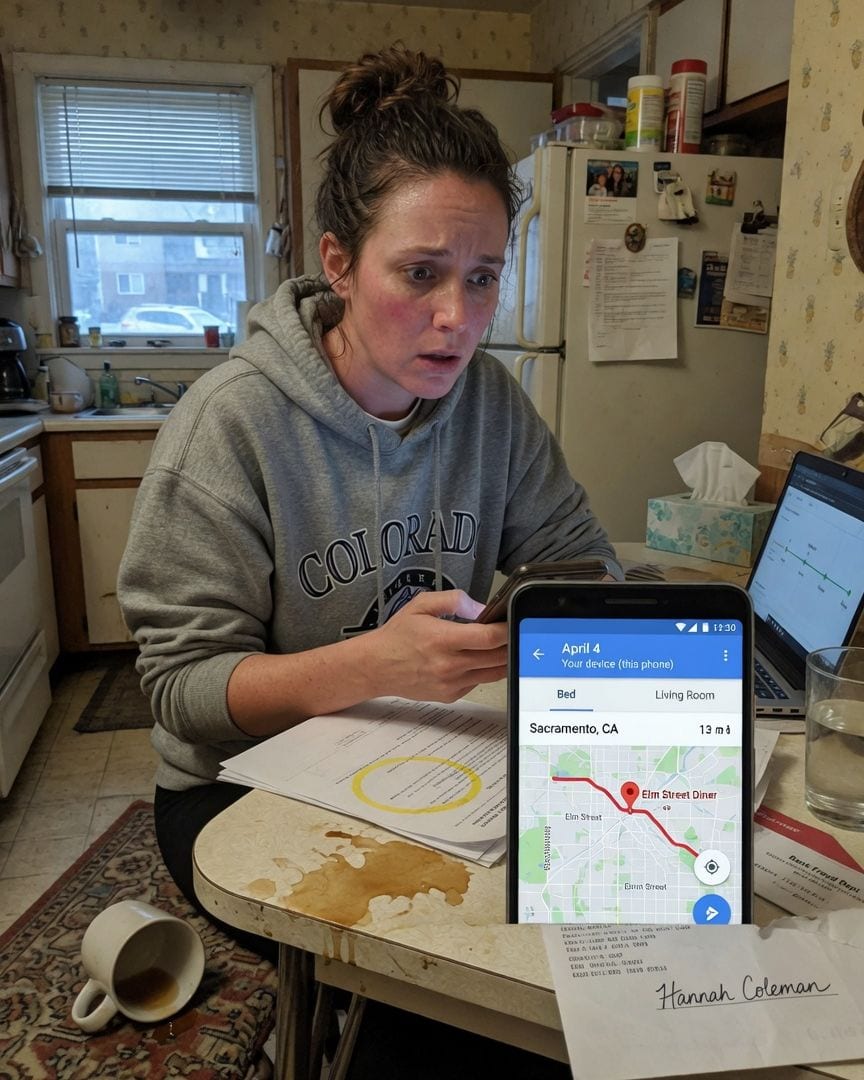
The spilled coffee cup was the first sign. Not the cup itself, just the stain on my favorite rug.
I needed a parking receipt from last month for the insurance claim, proof I'd been at the dry cleaner, not some cafe.
So there I was, Sunday morning, curled up in my Denver kitchen, scrolling through my Google Location History, something I hadn't looked at in years. The grid of dots, my usual routes, green for Denver. Mundane, predictable.
Then I saw it. A bright red line, a thick one, snaking across California. My stomach clenched. It placed my phone in Sacramento.
Not just in Sacramento, but driving down a street called Elm, parking near a small dot labeled 'Elm Street Diner,' then an hour spent inside. The date? The fourth of last month.
I froze. That day. I remembered it perfectly. A truly awful head cold had glued me to my couch, binging a terrible documentary. My phone hadn't left the charger next to me all day.
I picked it up, cold metal in my palm, and checked the date on its screen. It was definitely the fourth. I stared at the red line, then back at my kitchen.
A glitch, I told myself. Google Maps was always having weird hiccups. Or maybe I’d grabbed my old phone by mistake, the one I hadn’t used since college? No, this was my current phone, my primary Google account.
I even checked the timeline filter; it showed my device, this device, also in Denver that day, a sparse green line moving between my bed and the living room. Two places at once. It made no sense.
Then I saw the pattern. The fourth. Every month. Since spring, there it was: a ghost trip to Sacramento. A red line, always the same street, the same diner, an hour-long stop. Each time, my phone's Denver history ran concurrently.
A phantom me, driving a street I'd never seen, leaving a trail of impossible steps.
The Sacramento trips festered in my mind. I tried to dismiss them, but the image of that red line was a constant itch.
After a few days, I decided to tackle it head-on, find the most mundane explanation and make it stick. The diner. If I was supposedly at the diner, there had to be a transaction.
I pulled up my bank statements online. My finger trembled slightly as I scrolled past my usual Denver purchases. Groceries, gas, streaming services. Then, there it was.
Nestled amongst transactions I recognized, dated the fourth of last month, a line item I absolutely did not: 'Elm Street Diner, Sacramento' for $12.50. Just a coffee and a muffin, judging by the amount.
My heart pounded against my ribs, a frantic drumbeat.
I immediately called my bank, my voice tight. "Fraudulent activity," I said, trying to sound calm, professional. "A charge from Sacramento. I was in Denver." The representative was polite, almost too polite.
She promised an investigation, assured me they'd cancel the card, and then, almost as an afterthought, offered to send a copy of the signed receipt for my records.
"Yes," I heard myself say, "Please. Send it."
I hung up, a strange mix of relief and growing unease. This was it. Identity theft. A sophisticated scam, someone had gotten my card details, maybe even studied my habits.
They’d mimicked my routine, purchased something small to test the waters, and then forged my signature. That was it. That had to be it. I even grabbed a pen and a scrap of paper, practicing my signature. Hannah Coleman.
The slightly looping 'H,' the way the 'a' connected to the 'n'. I tried to imagine how a forger might replicate it, what subtle flaws they'd make.
It was a flimsy comfort, but it was all I had to hold onto. A mundane explanation against the creeping dread that was starting to feel less like a chill and more like a permanent resident.
A week later, the plain envelope arrived. Not from the bank directly, but from their fraud department, no return address. I tore it open with trembling hands. Inside was the diner receipt.
A carbon copy, not quite as sharp as a digital image, but clear enough.
My eyes scanned the itemized list first: drip coffee, a blueberry muffin, a dollar tip. My usual order. Then, they dropped to the signature line. It wasn't a clumsy imitation.
It wasn't even a skilled forgery, where you could pick out the tiny, tell-tale hesitations. It was her. The exact curve of the 'H,' the slightly elongated 'C,' the distinct flourish at the end of the 'n' in Coleman.
Every line, every pen stroke, was mine. My blood ran cold. I remembered being in Denver that day, clear as day, watching a terrible movie on my couch, wrapped in a blanket.
But the paper in my hand, solid and real, insisted I was in Sacramento, signing for coffee.
I took the receipt to Dean Fairfax, my oldest friend, a programmer with a knack for digital forensics and a healthy skepticism for anything remotely woo-woo.
We sat in his cramped living room, the late afternoon sun slanting across his overflowing bookshelves. I laid out the Google history, the bank statement, and finally, the receipt itself, flat on his coffee table.
He listened, his brow furrowed, then took my phone, running diagnostics for malware, checking server logs for compromised passwords. He poked, he prodded, he even tried to spoof my location to see if it was a weird triangulation error.
Hours passed. The initial skepticism on his face slowly morphed into something else, a quiet bafflement.
"Hannah," he said finally, pushing his glasses up his nose. "There's nothing. No intrusion, no data breach. Your phone wasn't hacked. Your accounts weren't compromised. It's like… your phone was there. Or a perfect mirror of it.
The GPS coordinates are solid. The timestamps match the bank record. It doesn't make any sense."
The mundane explanations, the ones I'd clung to so desperately, crumbled into dust around me. Dean, seeing the distress on my face, offered a last-ditch effort. "Okay, so the bank says it's your signature. But banks aren't handwriting experts.
Let's get an actual one. Someone professional. That's the only way to prove forgery if it exists."
Desperate for any shred of normal, I agreed. I spent the next few days rummaging through old boxes, pulling out school assignments from high school, college letters from my parents, anything with my signature.
The pile grew, a small testament to my identity.
Fiona Davenport was a calm, meticulous woman in her fifties, her office smelling faintly of old paper and ozone. She took my samples and the diner receipt, her movements precise.
"Leave these with me, Miss Coleman," she said, her voice even. "I'll be in touch."
Days stretched into an agonizing week. Then, Fiona called. Her voice was as calm as ever, but the words hit me like a physical blow. "Miss Coleman, there's no doubt. This signature on the diner receipt… it is genuinely yours.
Not a forgery. It matches your known samples perfectly."
The definitive proof of a lie. A lie that insisted I was in two places at once, signing my name for coffee I never drank. Numb, I ended the call. There was nothing left to deny.
The system, whatever it was, was real. I began researching 'Elm Street Diner' in Sacramento, anything related to the specific street name my GPS data showed.
I found mentions of an old, defunct diner, a beloved local spot that had closed down years ago. And, more intriguingly, a reference to the Sacramento Historical Society, located just blocks away from where the diner used to stand.
I drove to Sacramento the next morning, the city that had been recording my phantom presence for months. The Elm Street Diner was long gone, as expected, replaced by a vape shop with a neon sign that buzzed faintly.
But the Historical Society stood, a grand, dusty old building of red brick and weathered stone. Inside, the air was thick with the scent of aged paper and something else, something metallic and still, like old copper.
I explained my unusual query to the reception, vaguely mentioning 'old local records' and 'unusual patterns.' The young woman behind the desk, barely looking up from her screen, directed me to the archives in the back.
As I walked down the dim corridor, a prickle of unease started to spread across my skin. I noticed an older man, silver-haired, perhaps in his early sixties, watching me from behind a towering stack of leather-bound ledgers.
Gerald Montgomery, his nametag read: Archive Manager. He had a calm, unnerving gaze, his eyes a pale, almost translucent blue.
He approached me, his movements silent, gliding rather than walking. I hadn't heard him move. "Looking for something specific, Miss Coleman?" he asked, his voice soft, a low hum that seemed to resonate in the quiet.
It wasn't a question, not really. It felt like he already knew. He didn't wait for my answer, just gestured with a long, thin finger to a dimly lit section of shelves crammed with forgotten municipal records.
"Some records are best left unread," he said, his gaze unwavering, fixed on my face. "They demand more than just looking."
He turned then, as silently as he'd arrived, and walked away, leaving me with a distinct feeling of being recognized, understood, and subtly warned. His eyes, I realized, had held no surprise, only a deep, unsettling familiarity.
Unsettled by Gerald, but compelled by a primal need for answers that was now a raw, exposed nerve, I made my way to the section he had indicated.
It was indeed filled with forgotten municipal records, ledgers bound in faded leather, some tied with string, others simply stacked.
I pulled one out, its pages brittle with age, the dust motes dancing in the thin sliver of light from a high window. The title, in elegant, looping script, read 'Sacramento Proxy Validations - 1980-1990.'
The term 'proxy validation' sent a chill straight through me, an immediate recognition that struck deeper than anything I'd felt before.
My hands trembled as I opened it. Inside, the entries were neat, meticulous, written in uniform black ink.
Each was dated the fourth of a month, listing names and brief, mundane 'tasks' performed: 'Signature for Parcel Deposit,' 'Witness to Property Line,' 'Verification of Public Right-of-Way.'
I flipped through, my heart thudding louder with each turn of the page, the dry paper whispering in the silence.
And then, there it was. My name. In the precise, clear script of the ledger, it read: 'Hannah Coleman, Proxy Validation, Elm Street Diner, April 4, 1989.' My breath hitched. This wasn't the recent trip. This was decades ago.
The entry described the 'proxy' having coffee and signing a receipt. I continued flipping, finding May 4, June 4, and so on, mirroring my own Google history, but for 1989. Every detail clicked into place with horrifying precision.
This wasn't a glitch. This wasn't identity theft. This was a system. A system that had been using me, or something of me, for decades, for reasons I couldn't begin to comprehend.
The dread wasn't just a pattern anymore; it was a cold, hard, meticulously documented fact, staring back at me from a faded page.
My fingers flew through the ledger, searching for more 'Hannah Coleman' entries. The dates kept going back, through the 1980s, then into the late 1970s.
The entries remained consistent: the fourth of the month, a mundane task, a location in Sacramento.
I found an entry for 'Hannah Coleman, Proxy Validation, Main Street Post Office, October 4, 1979,' complete with a description of signing for a package. I wasn't even born in 1979. I was born in 1991.
A cold dread, far deeper and more encompassing than anything I’d felt before, washed over me. It wasn't just my present being compromised; my entire past, my very existence, felt like it was dissolving around me.
I flipped back further, my vision blurring, desperate for it to stop, for the name to change, for it to be a different Hannah Coleman. But it didn't. The elegant script continued.
'Hannah Coleman, Proxy Validation, River Street Market, June 4, 1962.'
My eyes locked onto the signature scrawled beneath the entry. It was identical. Identical to mine, to the one on the diner receipt, to the practice signatures on my old school papers.
My own handwriting, from before my parents had even met, from before I was even a thought. The heavy ledger lay open on the archive table, reflecting the dim, dusty light.
It showed my name, my signature, from a time I couldn't possibly have existed.
I found Gerald Montgomery again, seated at a heavy oak table, meticulously cataloging a stack of sepia-toned photographs. The impossible ledger was clutched in my hand, its brittle pages accusing.
He didn't flinch, didn't deny, didn't even look up at first. When he finally met my gaze, his pale eyes held an unnerving calm. He gestured to the empty chair beside him.
"It's not malicious, Miss Coleman," he said, his voice a low, even hum. "It's maintenance. Bureaucracy on a scale you can't imagine, requiring physical validation for certain… energetic flows. A signature, a presence, a walk down a street.
Your 'echo' is simply a projection, a physical manifestation of you, drawn by the System to perform these duties."
He spoke with the quiet authority of someone explaining a fundamental law of physics. He explained it was often generational, a subtle 'inheritance' within certain families, a predisposition passed down through bloodlines.
"Your line has been involved for a very long time," he added, as if discussing a family business. "The signature is yours because, in that moment, it is you, or a part of you, manifesting to fulfill a need."
He didn't wait for questions, simply showed me more ledgers. He cross-referenced names, dates, locations. Page after page of meticulous entries. The pattern was undeniable, horrifyingly coherent.
Every impossible entry, every ghost trip, every inexplicable signature from my Google history and bank statement, from decades before my birth, now fit into a vast, ancient, and utterly mundane system.
The ordinary explanation was not just dead; it had been replaced by a truth far more unsettling, a truth that seemed to predate time itself.
"There is no 'stopping' the System, Miss Coleman," Gerald said, observing my slack face. "It's not a person or a place. It's an ingrained, invisible aspect of the world, operating beneath the surface of normal life."
He leaned forward slightly, his gaze unwavering. "It doesn't harm, it simply uses. You can fight it, but you'd be fighting gravity. It simply is."
I felt a profound sense of helplessness, but also a strange, cold understanding. I wasn't a victim of a monstrous entity, not in the way I’d imagined. I was a cog in an incomprehensibly vast, indifferent machine.
My life, my identity, was intertwined with this phantom existence. I tried to understand the ultimate purpose, the 'why' of it all. What were these 'energetic flows'? What was being maintained?
Gerald only shrugged, a slight, almost imperceptible movement. "Maintenance. Stability. The world turns because these validations occur." There was no grand conspiracy, no evil plot, just an eternal, bureaucratic necessity.
He spoke of it as if it were the most natural thing in the world, like the tides or the rotation of the earth.
I realized I couldn't escape it. I was not trapped by it, but within it, an integral part of its fabric. I had the choice: to live in denial, to rage against the unseen, or to simply carry the knowledge.
The archive air, thick with the scent of old paper and the weight of generations, pressed down on my shoulders. I stood, the ledger left open on the table, and walked out.
The sunlight outside felt too bright, too normal, a contrast to the quiet horror I had just absorbed.
I returned to Denver, the impossible knowledge a permanent fixture in my mind. It sat there, cold and heavy, a phantom limb that throbbed with a constant, silent ache. I tried to resume my life.
I went to work, saw friends, watered my plants. But every 4th of the month brought a subtle, internal dread, a tightening in my chest that had nothing to do with external events.
I still check my location history. I still check my bank statements. The Sacramento entries continue, unwavering, a persistent red line across the map, a small charge for coffee and a muffin. I no longer report fraud.
I no longer try to rationalize. I simply observe, a silent witness to my own unwilling proxy, to the part of me that is elsewhere, doing tasks I don't remember.
The gap between what I remember and what the world's record insists is real has not closed; it has simply become a permanent, unbridgeable chasm within my own existence.
I have learned to live with the ghost of myself in Sacramento, a part of me I can't control, leaving signatures and footsteps I never made.
The world's record disagrees with my own, and the gap is now a permanent fixture in my life.
Every fourth, a phantom me walks a street I've never seen, and the record insists it's real.
If this one got to you
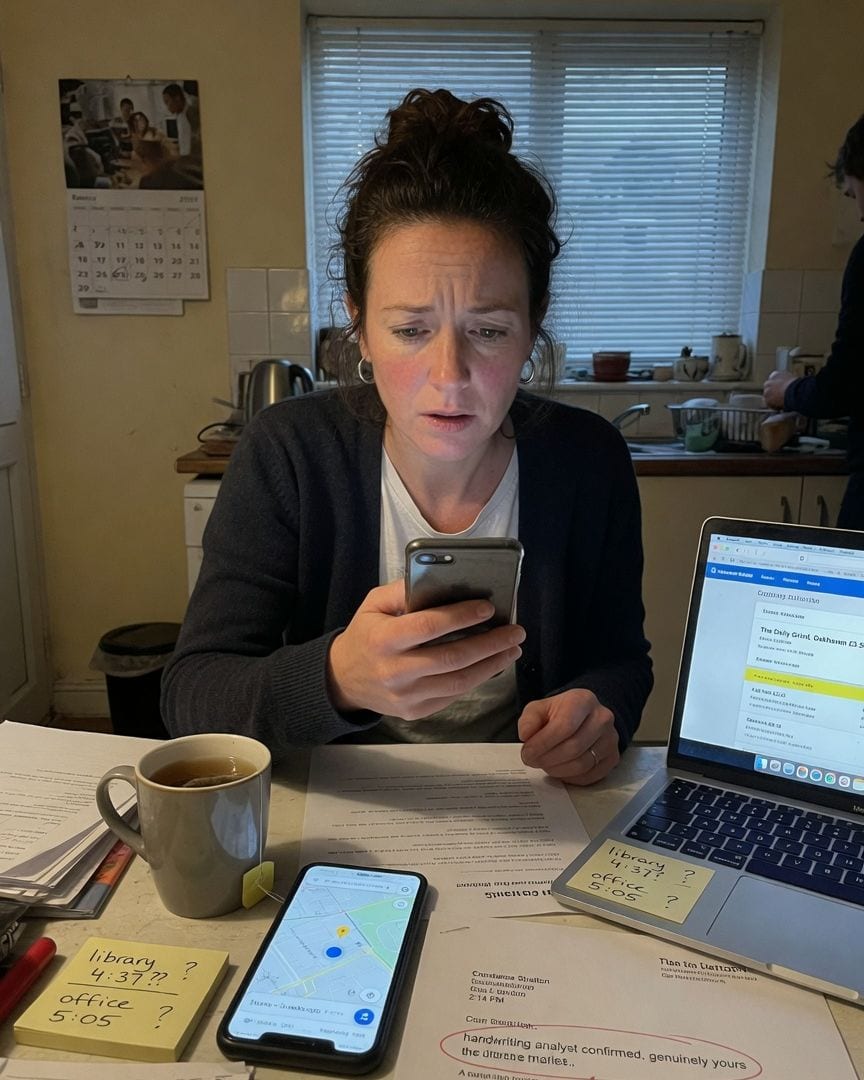
My signature covers a twelve-thousand-pound loan agreement. It's witnessed three hundred miles away, the day my phone confirms I was home.
My afternoon takes a chilling turn when the bank calls about a £12,000 loan, signed with my own handwriting in a town 300 miles away. My phone proves I was at my kitchen table at the time, yet a handwriting analyst confirms the signature is genuinely mine. The impossible truth deepens when a keycard log places me 100 miles away, just minutes before I entered my office.
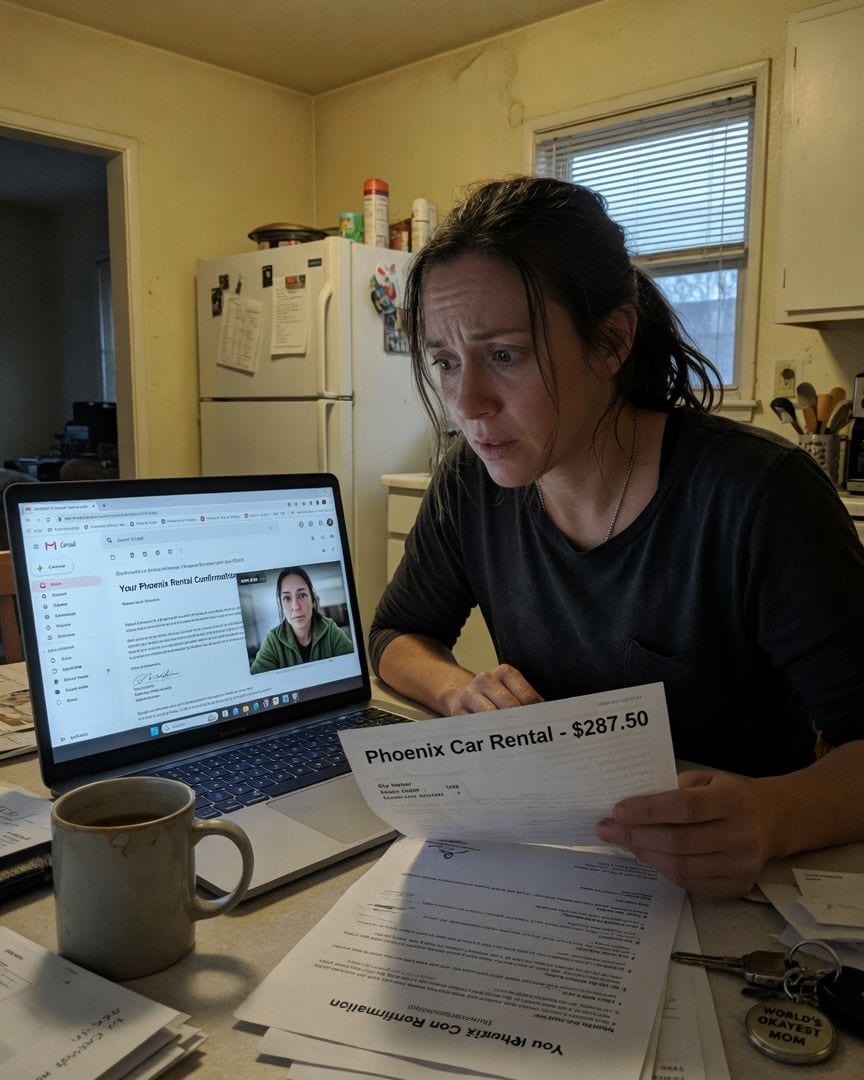
My bank sent a security photo: me, entering Harrington Research Facility. I was home with a fever; that face isn't mine.
I found a bank charge for a rental car in Arizona, a place I’d never been, with my license and signature. But the rental agreement also noted a specific coffee stain on the passenger seat — the exact faded mark from my own car. Then, a security alert showed me entering a facility I’d never visited, on a day I was home sick.
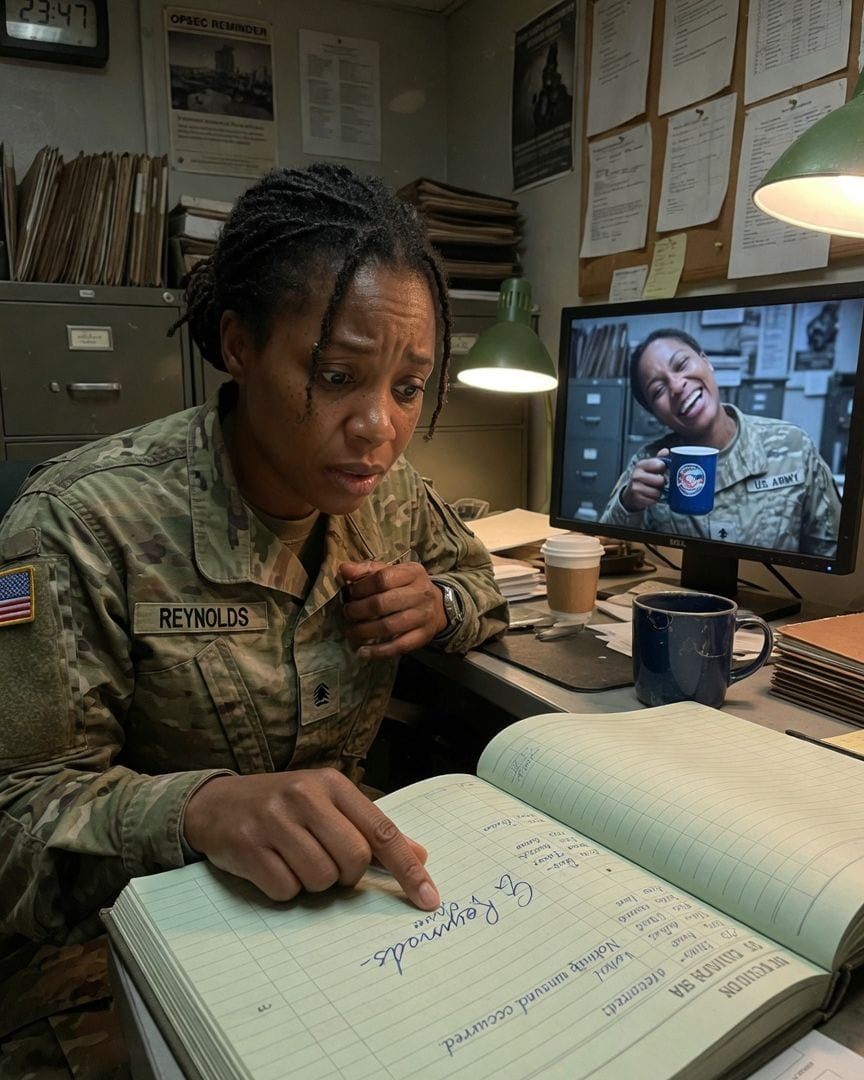
Lieutenant Grace Reynolds saw her own signature in the staff-duty log for a shift she never worked. The security footage then showed 'her' leaving a coffee mug she’d never once seen.
Lieutenant Grace Reynolds hunched over the battalion staff-duty log, the fluorescent hum of the records room a monotonous backdrop to her dry inventory audit. Her gaze snagged on an entry from three weeks prior: her own unmistakable signature, closing out a full 24-hour staff-duty shift she knew she had never worked. Security camera footage only deepened her unease, showing 'Grace Reynolds' moving with her familiar stride, laughing a shade too brightly, her head tilting a fraction too precise, like a flawless, chilling performance. But as the imposter turned to leave, she picked up and rinsed a chipped, dark blue ceramic coffee mug with a faded diner logo—a mug Lieutenant Reynolds had never once seen in her life. The air in the quiet room grew heavy, thick with the unspoken wrongness: if that wasn't her, then who was it?
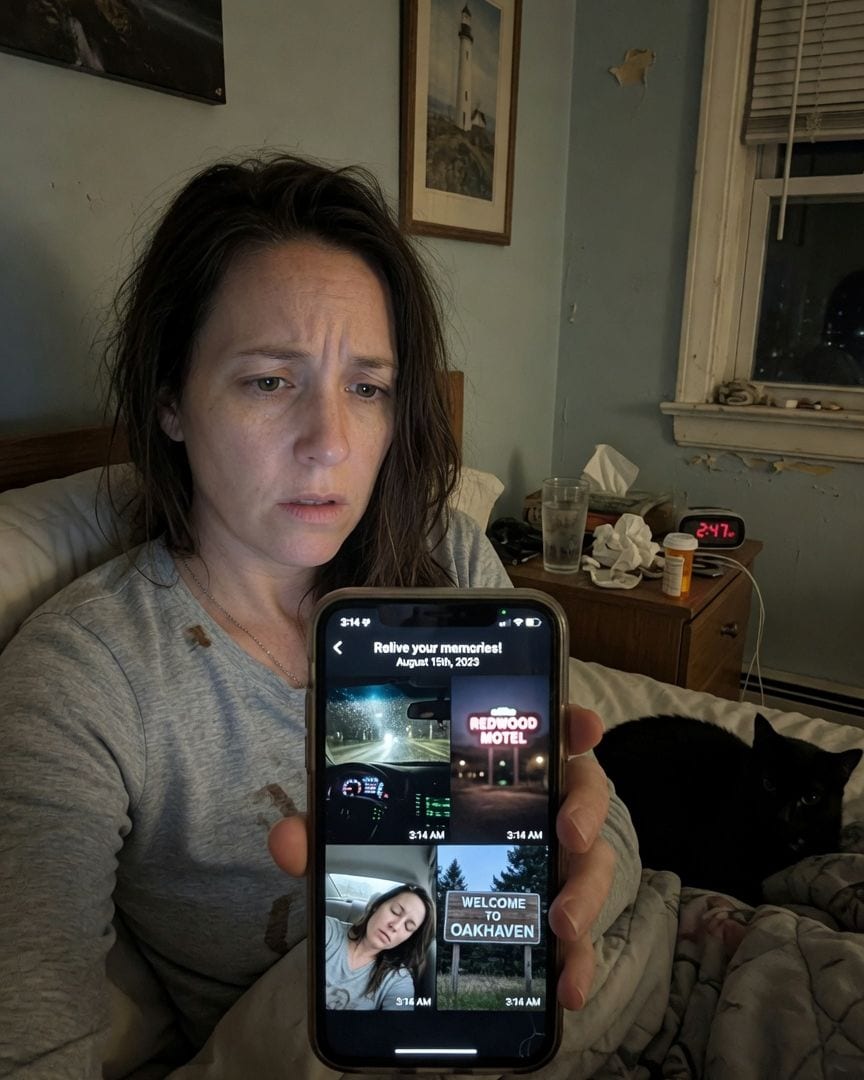
My phone has photos of me asleep in a strange car at 3 AM. Then a voicemail: 'We'll have her back by sunrise.'
My phone woke me with a cheery notification, promising memories from last August. Instead, it showed me asleep in a dark car, rain streaking the windshield, miles from my apartment. I was certain I'd been home in bed that night, but the images were undeniably in my camera roll, a quiet violation of my memory.
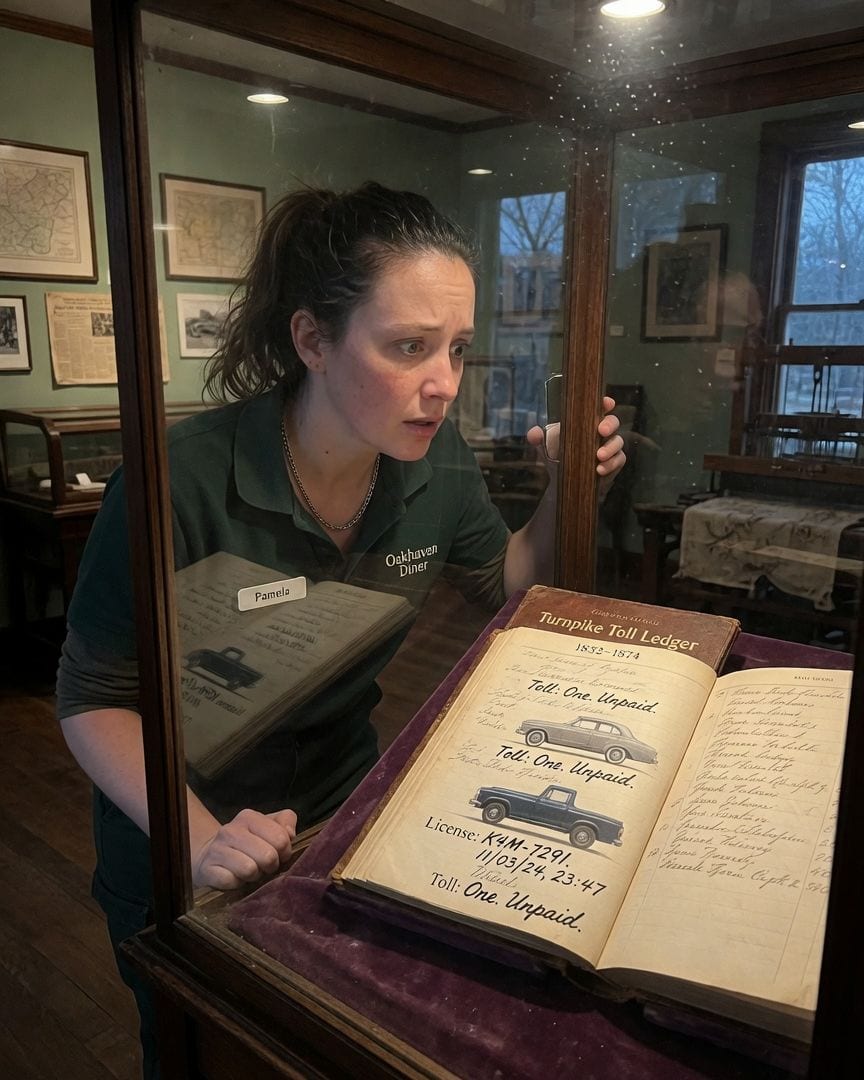
My car stalled at the old turnpike milestone, after dark. The toll ledger, closed in 1874, then listed my car, my stall time, and a toll of one, unpaid.
I had just moved to Oakhaven when my old sedan died on a dark, winding road by an infamous turnpike milestone. The next day, I found my car's exact registration and stall time written in fresh ink in a 150-year-old, locked museum ledger, marked 'Toll: One. Unpaid.' The curator dismissed it as a prank, but her white knuckles and strained voice hinted at something far more unsettling.
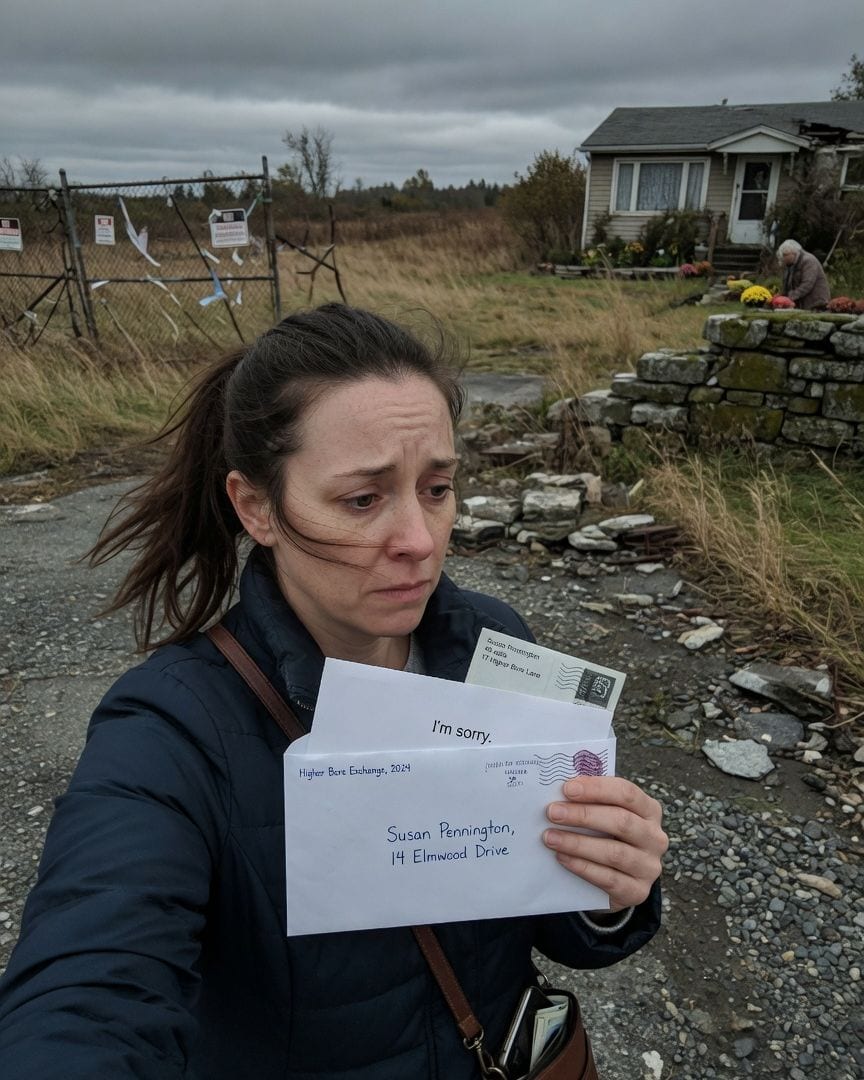
My phone bill listed forty calls made at 3:14 AM to a house demolished in 1990. The paper bill came from a flattened building. My name is on it.
I stared at my phone bill, my morning coffee forgotten. It detailed forty calls, each at 3:14 AM, to an address I knew was a vacant lot where a house had stood decades ago. But the real dread began when I saw the bill's return address: a telephone exchange flattened years before.