My fingerprints perfectly match a dead man's. He died in prison in 1980, but the bureau insists our hands are identical.
My distant cousin, Vincent Ford, got arrested a few weeks ago. Petty theft, nothing major. But it meant my family’s records, including my fingerprints from an old background check, got run through AFIS, the national automated system.
Normal procedure, they said. I barely thought about it until the call came.
The voice on the other end was calm, professional. Diane Mitchell, a bureau examiner. She explained that the system had kicked back a partial match, then a full one.
My prints, Deborah Vance’s prints, were identical to an inmate registered in 1977. Maxwell Whitmore. He died in custody in 1980. Diane repeated it, her voice even, without a hint of surprise or alarm.
My hands, the ones I’d lived with for 42 years, were certified to be the same as a dead man’s.
I tried to argue. "That's impossible," I remember saying, "There must be a mix-up, a system error." I even suggested they had faulty equipment, or perhaps the original records were corrupted.
My mind raced, trying to grasp at any rational explanation. Diane listened patiently, then spoke, her quiet certainty like a cold hand on my chest. "Ms. Vance, we've double-checked, triple-checked. Our technicians have cross-referenced every data point.
There is no mistake. The official record insists your fingerprints and his came from the same biological source." The phone felt heavy in my hand. No system error. No mix-up. Just an impossible, undeniable fact.
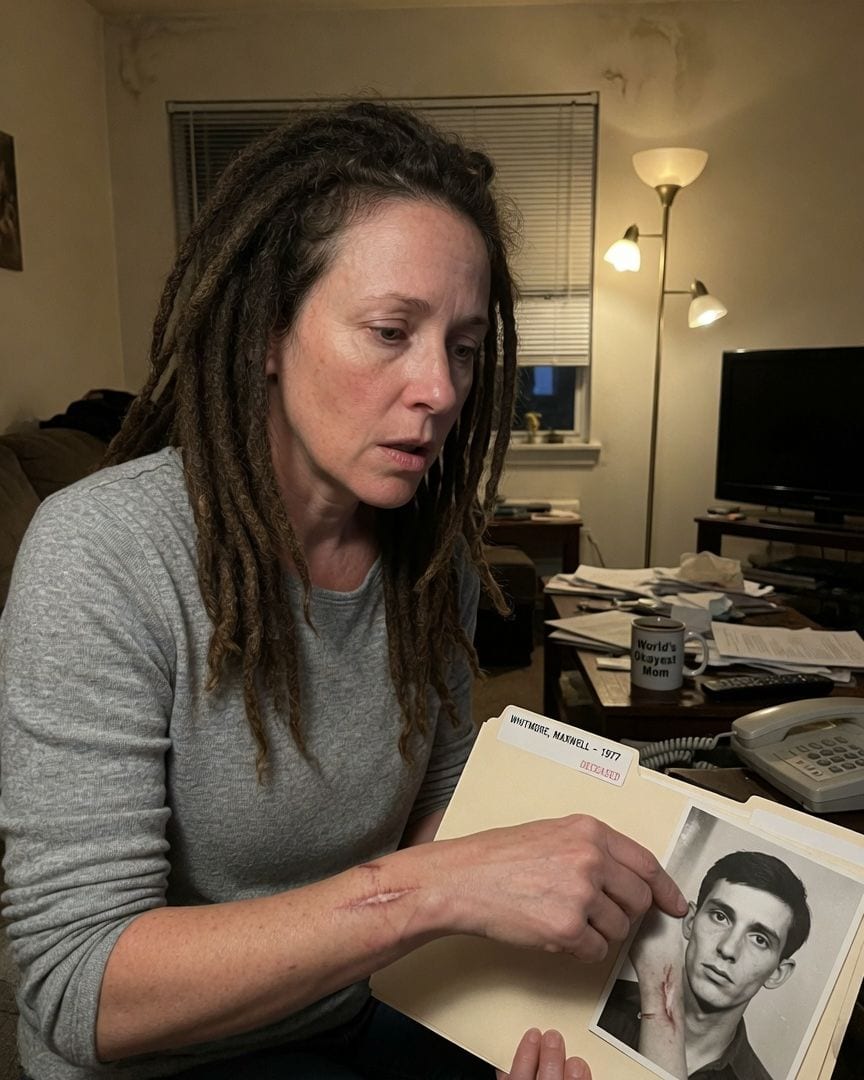
After the call, a packet arrived from the bureau. Maxwell Whitmore’s file. Mugshots, intake forms, a brief death report. I flipped through it, my hands clammy, a knot tightening in my stomach.
He was young, barely out of his teens when he entered, dead at 28. His face was gaunt, his eyes hollow in the faded monochrome photograph. He looked like someone who had already given up on the world.
But it was a detail in one of the mugshots that stopped me cold. A faint, jagged scar just above his left wrist, barely visible against the grainy black and white.
It looked like an old injury, a thin, white line on his skin. My breath hitched. I knew that mark.
Slowly, I pushed up the sleeve of my sweater, revealing the exact same scar on my own left wrist. Not faint, not a new injury, but a raised, silvery line I’d had since birth.
My mother had always called it my "unique birthmark," a little story about how it appeared after a minor childhood scrape that never truly healed. I ran my thumb over it, feeling the familiar ridge, then back to the photo.
The shape, the position, the slightly raised texture—it was utterly identical. A birthmark, a scar. The same mark, on two different people, separated by death and decades.
The rational part of my brain screamed coincidence. A genetic quirk, perhaps. Maybe some distant relative. But the dread in my gut knew better.
The bureau might have been wrong about the prints, I’d argued, but how could they be wrong about this? It was too specific, too perfectly mirrored. The light in my apartment seemed to dim, casting long, unfamiliar shadows.
I stared at the mugshot, then at my own wrist, the identical scar a chilling mirror. Maxwell Whitmore’s eyes in the photograph seemed to bore into mine, a silent, knowing gaze from across the decades.
My hand trembled as I lowered the file, the paper crinkling faintly in the sudden silence of the room.
The scar pulsed with a phantom ache, a sensation I’d never noticed before, but now felt acutely, a throbbing just beneath the skin. The room grew cold, the air thick, heavy and still.
I was looking at a dead man, and he was looking back, his mark on my skin. The wrongness wasn't just on paper anymore; it was etched into my very flesh. It was inside me.
The scar was the thread, and I couldn't stop pulling. I dug deeper into Maxwell Whitmore’s life, or what little record remained.
Prison records were sparse, detailing only his entry in 1977, a few disciplinary notes about minor infractions, and a terse report of death by 'natural causes' on April 12, 1980. No further explanation, no autopsy report.
It felt too neat, too conveniently brief.
I found the address of the old facility, a state penitentiary that had been decommissioned in the late 90s, now a crumbling shell on the edge of the city, slated for demolition.
A strange compulsion drew me there, a feeling that I wouldn't find answers in archives, but in the echoes of the place itself.
The perimeter fence was breached in places, and I slipped inside through a gap, the air heavy with dust and the silence of decay. The wind whistled through broken windows, sounding like a sigh.
Inside, the cell blocks were a labyrinth of rusted bars and peeling paint. Each step echoed, sending chills up my spine. I found Maxwell’s cell number from his file – Cell Block C, Number 14.
The small, dark space felt colder than the rest, the air stagnant. As I stood there, a faint, almost imperceptible scent of old tobacco and something metallic, like stale blood, tickled my nose.
I gripped my arms, dismissing it as my imagination, a trick of the stale air.
Then, a vivid, unbidden image flashed through my mind: a small, intricately carved wooden bird, clutched in a hand, its wings smooth under a thumb. It was gone as quickly as it came, leaving only a lingering sense of unease.
I checked the walls of the cell, running my fingers over the rough concrete, hoping for some forgotten etching.
Near the floor, almost obscured by layers of grime, I found a faint, almost erased carving: a tiny, stylized bird, identical to the one in my fleeting vision. It was too precise to be random graffiti.
My inquiries didn’t go unnoticed. A week after my visit to the old prison, I received an anonymous email. No sender, no subject line, just a string of random characters for the address.
Inside, a single, chilling line: 'Some things are better left buried, Deborah. Let Maxwell rest.' My blood ran cold. How did they know I was investigating Maxwell? How did they know my name?
I hadn't used my full name in any of my initial, fruitless calls.
The following day, as I left my apartment, a beat-up, dark sedan was parked across the street, its windows tinted opaque. I couldn't see the driver, but I felt eyes on me, a heavy, insistent weight.
I hurried to my car, my hands fumbling with the keys. Later, I found a small, smooth, river stone on my doorstep, a perfect oval. It wasn't one of mine. It felt deliberate, placed with an unsettling precision.
I tried calling the records office again, but the line was always busy, then disconnected. When I called the main bureau number, I was put on hold indefinitely. The dread intensified, morphing from existential horror into something immediate and personal.
Someone out there knew, and they were watching. I felt a prickle on my neck every time I was outside, a sense of being perpetually observed, like prey.
The threat was no longer abstract; it was a shadow following me, a silent warning that I was getting too close.
I tracked down Carol Fontaine, a retired prison administrator whose name appeared on Maxwell’s intake forms. She lived in a quiet, unassuming house a few towns over, her face lined with age but her eyes still sharp behind thick glasses.
She was initially reluctant to speak to me, dismissing my questions about Maxwell as "old history, dear."
I pressed her, explaining the fingerprint match, the visit to the prison, the faint carving of the bird in his cell. Then, finally, I showed her the mugshot, the distinctive scar, and then my own wrist.
Her composure, which had been so firm, finally faltered. She took off her glasses, rubbing the bridge of her nose. "That's… impossible," she murmured, her gaze fixed on my arm, then back to the faded photograph. "Maxwell had that mark.
Always wondered what it was."
Her resistance crumbled further as I spoke. She admitted Maxwell was a strange inmate, even for their facility. Quiet, withdrawn, but intensely focused. He spent hours carving small wooden figures, mostly birds, from scraps of wood salvaged from the workshop.
"He always had one with him," she recalled, her voice softer now, "a little wooden sparrow. Said it kept him grounded."
I asked about his death. Carol hesitated, her eyes darting around the room, as if afraid of being overheard. She leaned forward, lowering her voice. "There had been whispers. Not 'natural causes' in the usual sense.
Maxwell had been found in his cell, perfectly still, but with a look of profound terror on his face. No marks, no struggle. Just… gone. The official report was hushed up, signed off quickly. No one wanted a scandal."
She then revealed the most unsettling detail, her voice barely above a whisper. "He kept a diary. Filled with the most peculiar things. Memories, he called them, but they weren't his.
He wrote about 'phantom aches' and sudden, vivid images, things he knew weren't from his own life. Said he was losing himself, that his thoughts weren't entirely his own anymore. The diary vanished after his death."
She looked at me then, a dawning horror in her eyes that mirrored my own. "He also talked about 'the cycle.' How it never truly ends. How it finds a new home."
Carol, visibly shaken, remembered Maxwell had hidden his diary in a small, forgotten archive room she’d overseen in the old administration building, tucked away in an old filing cabinet designated for "miscellaneous records."
She gave me the location, her voice barely a whisper, as if speaking it aloud might awaken something.
I found it easily. The archive room was cold, smelling of stale paper and disuse. There, in a dusty metal cabinet, was a leather-bound journal, surprisingly well-preserved, its cover worn smooth.
My heart hammered against my ribs as I opened it.
The first few lines were a shock. The handwriting, though slightly different in pressure, was undeniably mine, a familiar slant and loop I'd seen countless times on my own grocery lists and notes.
I read a passage describing a childhood memory: hiding under my grandmother’s porch during a thunderstorm, the smell of damp earth and petrichor, the comforting rumble of the thunder against the wooden floorboards.
It was my memory, vivid and personal, yet it was written by Maxwell, a man who died before I was born. A wave of nausea washed over me.
I flipped to the very last page, my fingers trembling, afraid of what I would find.
The final entry, dated weeks after his official death, was stark and chilling, written in that familiar hand, now almost perfectly indistinguishable from my own: 'The next vessel is ready. The cycle continues.'
My own hand, my own memories, a dead man's diary. The words swam before my eyes, and the room spun, the floor tilting beneath my feet. The truth wasn't just outside me; it was already here, inside.
The diary wasn't just a record of Maxwell's life; it was a confession, a desperate, fragmented warning.
Page after page detailed the insidious process: an ancient consciousness, not evil in a malicious sense, but utterly alien, transferring from host to host upon death.
It sought out a new 'vessel' born around the time of the previous host’s demise, slowly integrating, absorbing memories, skills, and even physical traits. Maxwell had been fighting it, leaving clues, trying to warn the next host – me.
He described the 'phantom aches' he felt, the sudden influx of knowledge or preferences that weren't his – a strange fondness for old jazz music, a specific aversion to mushrooms, a fear of tight, enclosed spaces.
These were the inexplicable attractions and recurring, vague fears I'd experienced throughout my own life, dismissed as quirks.
He wrote about the growing sense of being a passenger in his own body, his thoughts merging with another's, his identity slowly being overwritten.
My birth in 1980, the year of his death, wasn’t a coincidence; it was the mechanism. My scar, my fingerprints, my 'childhood memories' from his past—it all clicked into horrifying place. The consciousness didn't possess; it became.
It was a quiet, relentless overwrite, a biological and psychological superimposition. I was not just matching Maxwell; I was, in some fundamental way, his continuation, a vessel slowly becoming the next iteration of this ancient, unkillable entity.
The diary described how the carved wooden bird, the 'impossible object,' acted as a psychic anchor, a focus for the transference, a way to 'ground' the migrating consciousness in its new host, a physical tether for its influence.
The full truth detonated within me. The consciousness wasn't a separate entity to be hunted; it was already me, a silent war waged in my own mind. I felt a surge of nausea, then a terrifying, vivid flashback.
I was in Maxwell’s prison cell, the air thick with the metallic scent I’d smelled at the ruins.
I felt his fear, his desperation, the slow, chilling realization that his life was ending, not with a bang, but with a quiet, internal fade.
I saw the carved wooden bird in his hand, a small, defiant gesture against the inevitable. My own hand twitched, a phantom memory of clutching it, the smooth, cool wood beneath my fingers.
I knew then what I had to do. The diary mentioned the bird as a tether, a focus. If I could break the anchor, maybe I could break the cycle.
I remembered Carol mentioning Maxwell's attachment to it, and the small carving I’d found in his cell. It had to be here, somewhere. I raced home, my heart pounding, frantically searching my apartment, tearing through old boxes and forgotten drawers.
I found it in an old box of forgotten childhood trinkets, tucked away beneath dusty report cards and faded drawings: a small, intricately carved wooden sparrow, identical to the one in my vision, to the carving in the cell.
I’d always thought it was just an old toy, a gift from some forgotten relative.
As I picked it up, a wave of intense physical pain washed over me, a sharp, burning sensation in my head and chest.
A voice, not my own, but a part of my own thoughts, screamed in protest, a cacophony of ancient fear and rage, wordless and primal. It fought me, trying to make my hands drop the bird, to pull away.
My muscles locked, resisting my own will. I gripped it tighter, forcing my trembling fingers to snap the delicate wooden wings, then the body, until it was nothing but splintered fragments in my palm.
A profound, unsettling silence fell, deep and vast. The pain vanished, leaving a chilling emptiness, a sense of something immense and ancient receding from within me, like a tide pulling back from the shore.
I was alone in my head again, but the silence was heavier now, marked by an absence.
The fragments of the wooden bird lay scattered on my table. I swept them into a small bag, careful to leave no trace, and disposed of them in a distant public bin, watching the sanitation truck swallow them.
The diary, too, was burned, its pages curling into ash in my fireplace, taking Maxwell's desperate warnings and the ancient entity's history with it.
The internal struggle was over, the presence gone. But the echoes remained. The distinctive scar on my wrist, the identical fingerprints on file—they were physical proof of what I had carried, what had been within me.
I felt a quiet, profound exhaustion, a part of my life that was never truly mine now irrevocably severed. The world continued, oblivious to the silent battle that had just concluded within me.
I was free, but the freedom felt like a vast, cold space.
Life resumed its rhythm, but it was a different rhythm for me. The old preferences, the phantom aches, the vague fears – they were truly gone. My own thoughts felt singular again, clear and unburdened, like a room freshly aired.
Yet, the knowledge of what I had been, what I had carried, never truly faded.
I still caught myself sometimes, looking at my hands, tracing the line of the scar on my wrist, a constant, physical reminder of the impossible truth. The cycle, as Maxwell had called it, was broken for me.
But the diary had hinted at countless previous vessels, stretching back through time, an endless chain before Maxwell, before me. The world was vast, and I was just one person.
I still wonder how many other hands carry the same silent mark.
If this one got to you
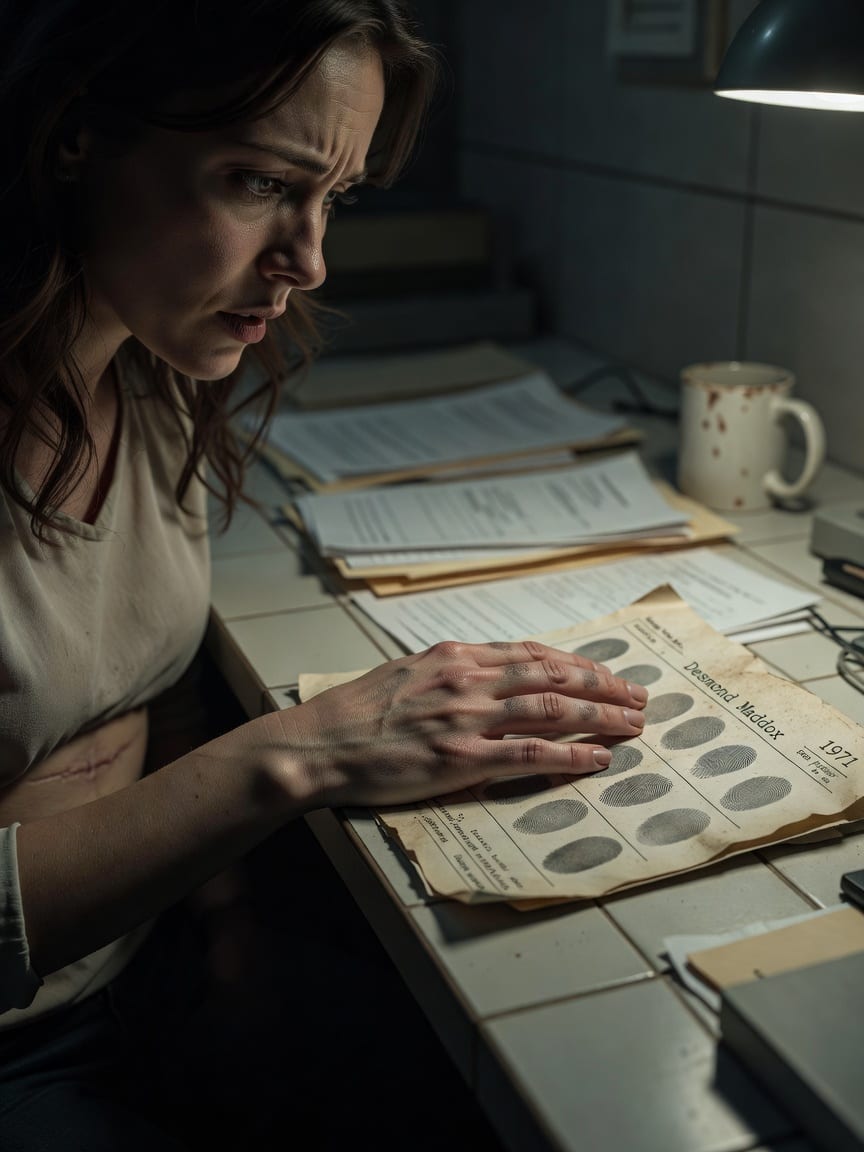
My fingerprints matched a man's 1971 arrest card. I've never been to that city, nor used that name. The examiner just stared at my hands.
As a fraud auditor, my world is built on facts, so when forensic examiner Russell Sheppard slid two ten-prints across his desk, I expected routine. One was mine. The other, yellowed from 1971, belonged to a Desmond Maddox arrested in New Haven – a city I'd never visited. But the impossible truth was clear: his prints were an exact match to mine.
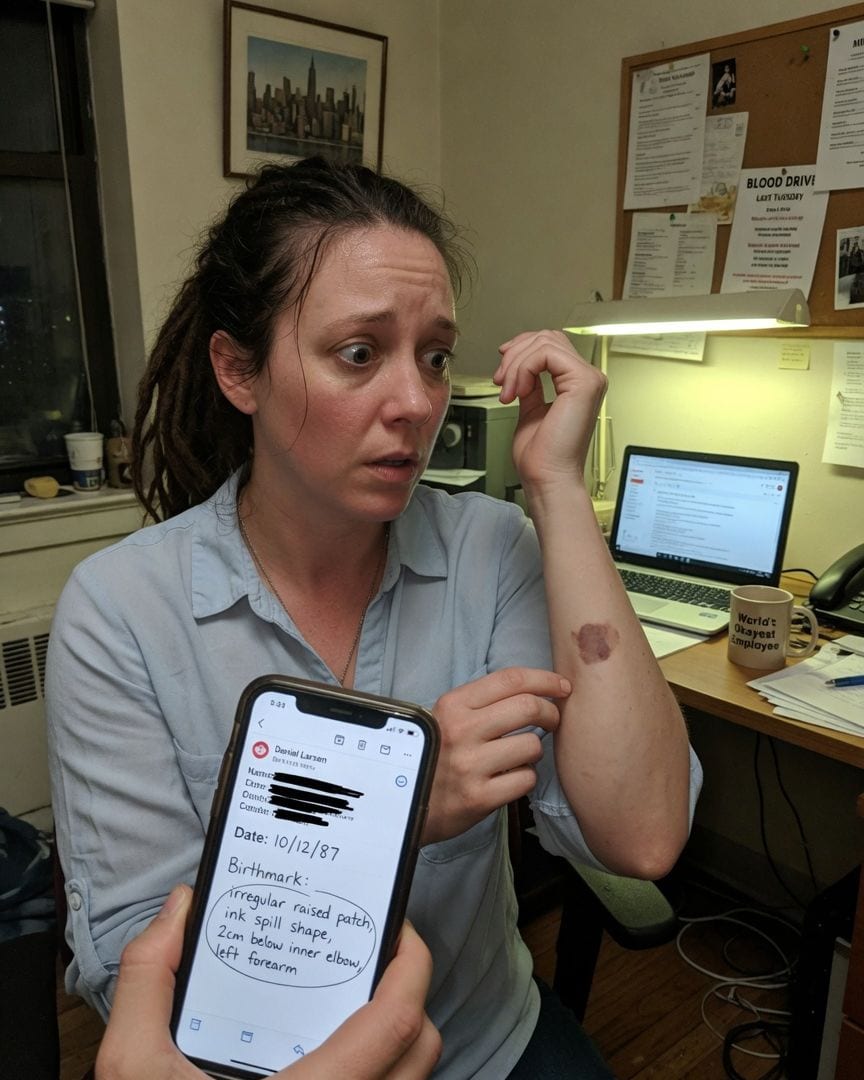
My left forearm has the exact birthmark described on a dead man's blood donor card from 1987, two years before I was born.
I gave blood as a routine civic duty. A call from the blood bank revealed my sample matched a donor from 1987, a man who died that year. But his donor card also detailed a unique birthmark on his left forearm, exactly mirroring my own.
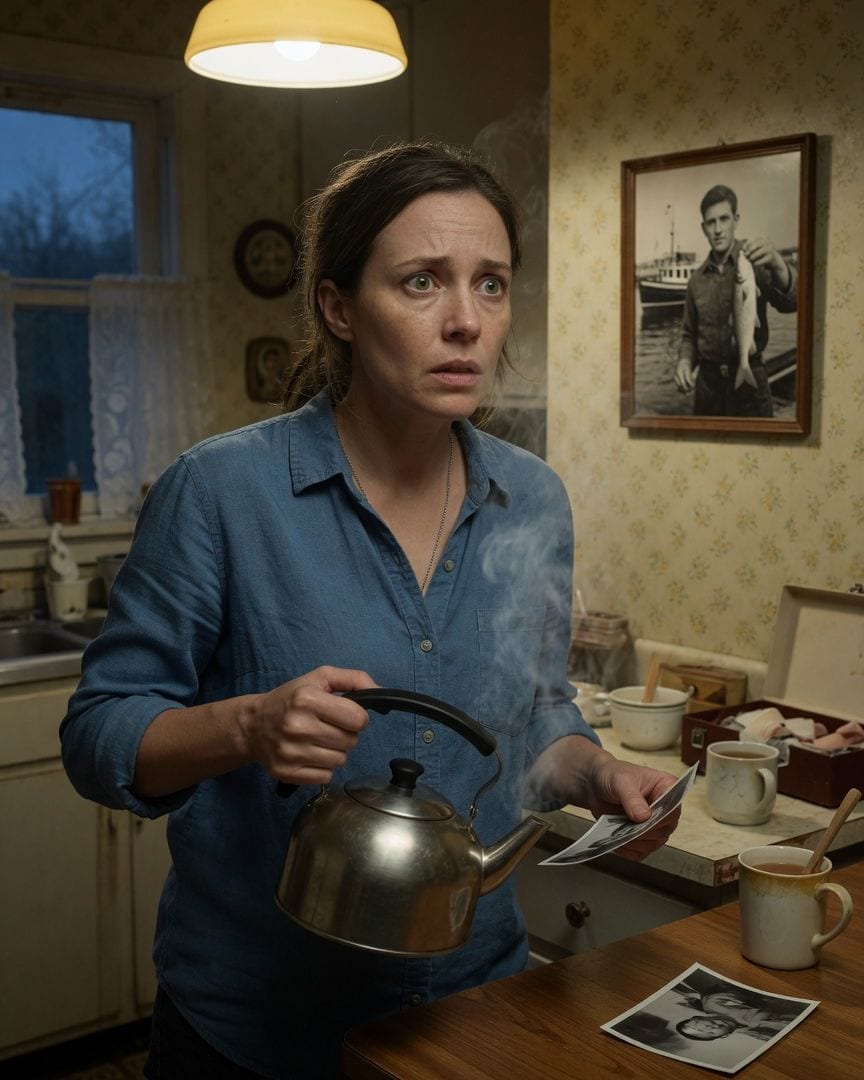
My grandfather thanked me for whiskey at his wake. There was no wake. My father, who gave the toast, has been dead for years.
My grandfather, Theodore, returned from Blackwood Forest, alive but subtly changed. Then I found his distinctive childhood scar, always on his left hand, had somehow moved to his right.
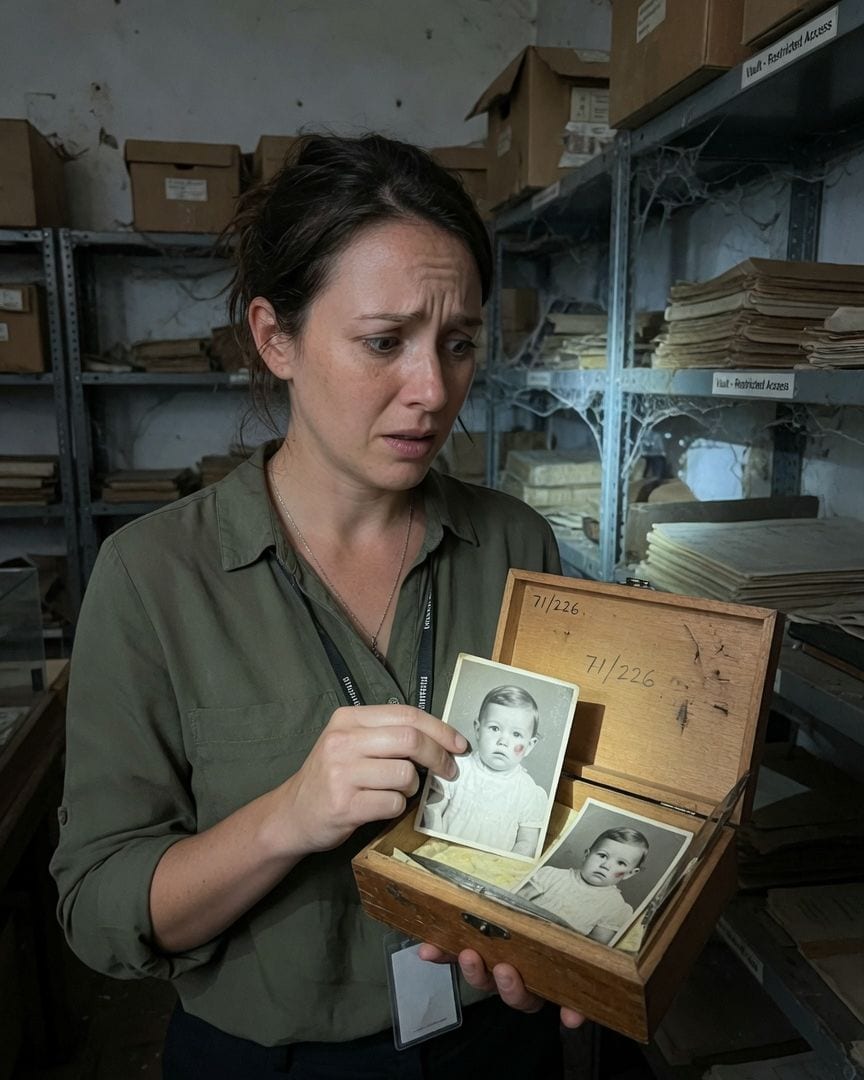
The christening gown in my museum names my own family on a blacked-out donor card. It's the fourth to carry that number since 1919 — and the date it comes back is already typed in.
Cataloguing an antique christening gown, I found its museum card listed a future "return" date, and then uncovered an old box in the vault. Inside, a 1961 photograph of a child bore a birthmark identical to my own, taken at my street address, and chillingly marked "Returned."
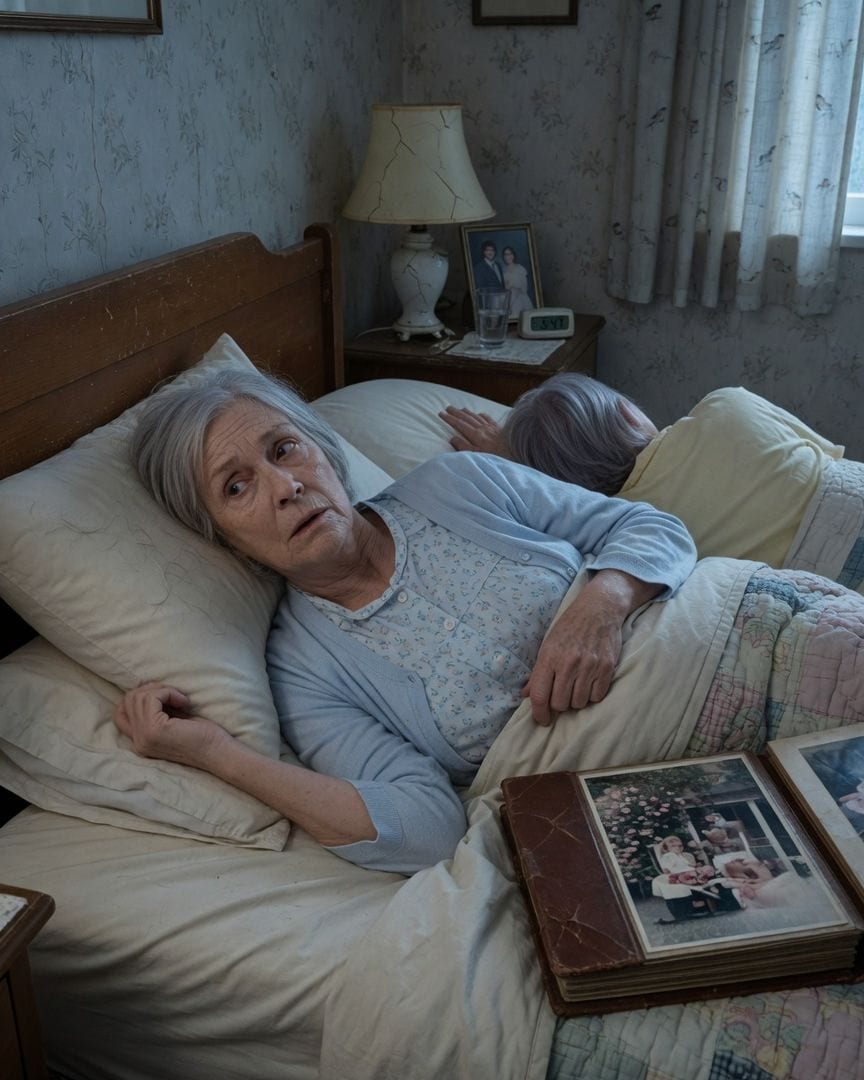
My twin sister Ruth sleeps on the right now, facing the wall. For forty-one years, she always took the left side. She insists I'm misremembering.
After three days missing, my partner Ruth finally came home. But the morning after, I woke to find her sleeping on the wrong side of our bed. She claimed she'd always slept there, and my memory was wrong, despite forty-one years together.
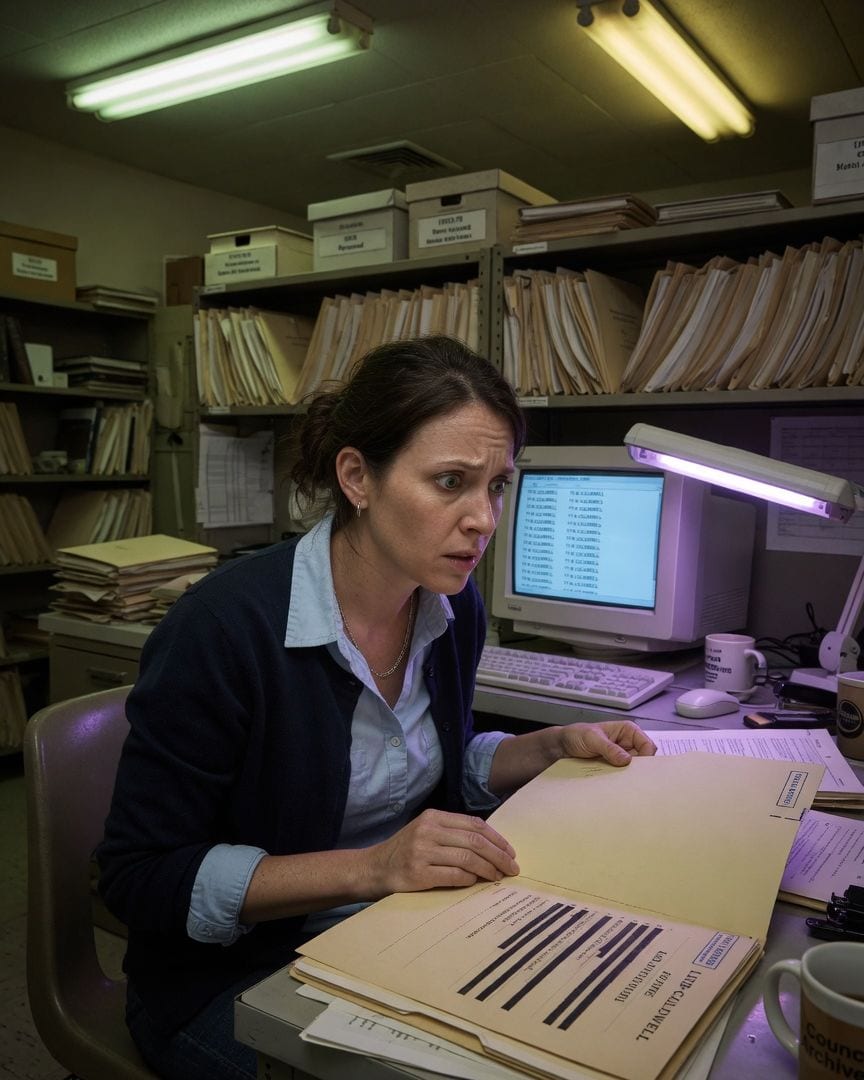
My employer's security file holds a vetting report on me dated nine years before I ever applied. It has my full name and my parents' address — with only one line, the source who referred me, blacked out.
Working a routine data audit, I pull my own security file. The issue date is nine years before I even applied for the job. Then, hidden within an old archive file, I find my current address etched under a blacked-out line.