The christening gown in my museum names my own family on a blacked-out donor card. It's the fourth to carry that number since 1919 — and the date it comes back is already typed in.
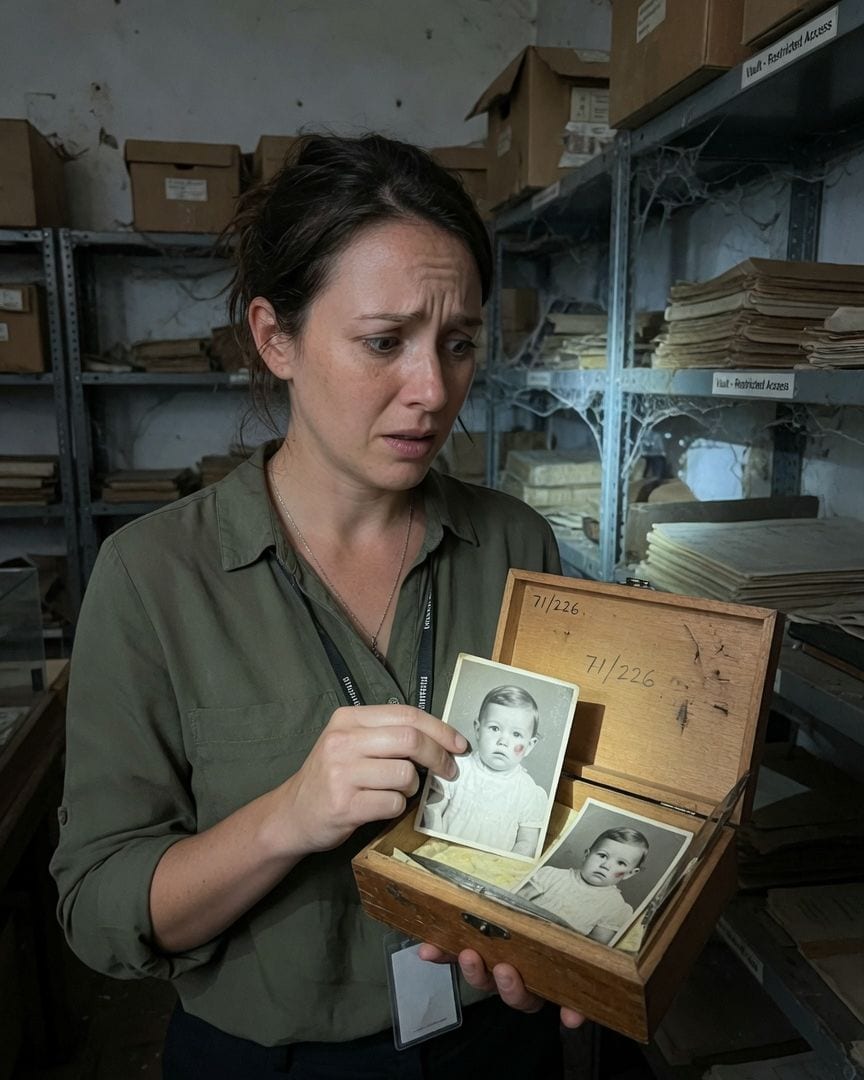
My hands, usually steady as I work, trembled slightly as I ran them over the delicate lace of the christening gown. It was an antique, cream-colored silk, probably from the 1950s, meticulously preserved.
Another day, another artifact in the Oakhaven Local History Museum. I hummed a little, a tuneless sound, as I pulled its accession card from the drawer. Accession number 71/226.
I paused. The donor's name was blacked out, not with a pen, but with a thick, permanent marker, a heavy swipe of ink obliterating the space.
Below it, a line survived, typed in crisp black, unmarred by the black-out: "Returned by the family as before — accession to recur."
I frowned, a small crease forming between my brows. "Accession to recur?" That wasn't standard museum terminology. I flipped the card over. Sure enough, three earlier gowns were listed, each carrying the exact same accession number, dating back to 1919.
Each of those had a donor name, and a "reclamation date" typed in. The newest card, for the gown in my hands, had a blank space for the next return date, which was usually left for future cataloguers to fill.
But beneath it, a date was already typed in: October 14th, two years from now. It was too specific, too neat, for a simple clerical error.
I tried to shake it off, dismissing the recurring number as some old museum quirk, a recycled reference for common, less significant items. Maybe they had a whole collection of generic christening gowns and just used one number.
But the phrase "accession to recur" and that pre-typed future date gnawed at me. It felt... deliberate.
I spent the next hour pulling other old accession records. Hundreds of unique numbers, each one for a different item, none repeating across unrelated artifacts. A spinning wheel had 34/112. A butter churn, 58/078.
Only 71/226 defied the logic, appearing again and again, linked only by these christening gowns. This number was unique in its repetition. A chill, faint but persistent, crawled up my spine.
Driven by an uneasy curiosity, I ventured into a rarely used section of the museum's vault. It was a forgotten corner, behind a stack of unused display cases gathering dust like sleeping giants.
Cobwebs, thick and grey, clung to the shelves, shimmering faintly in the weak light from my phone's flashlight. My fingers brushed against something small, solid. A wooden box. It wasn't formally accessioned, no museum tag.
But '71/226' was faintly scratched into its lid, almost worn away by time, as if someone had etched it there with a fingernail, then tried to erase it.
It felt unnervingly warm to the touch, a surprising heat for something sitting in a cold vault for what must have been decades.
My heart thumped, a frantic rhythm against my ribs. I pried open the box with a loose letter opener I’d taken from my desk. The metal grated faintly against the wood.
Inside, nestled on a bed of yellowed tissue, was not another gown, but a single, brittle photograph. It was dated 1961.
It showed a solemn child, no older than three, wearing a christening gown that definitely wasn't the one I'd just catalogued. The child stared straight ahead, eyes wide, almost blank.
On the back, in faint, looping cursive, were my family's street address – my street address – and the single, chilling word: "Returned."
I didn’t even register the address at first. My gaze was fixed on the child’s face, then on a small, distinct birthmark on its left cheek, a faint, reddish splotch. A cold shock ran through me, sharp as ice water.
It was identical. Identical to a birthmark I’d had as a baby, visible in my own childhood photos, before it faded almost completely by the time I was seven.
I stared at the faded photograph of the child, then at my own baby picture, pulled from my wallet and laid beside it, the birthmark mirroring perfectly.
The word "Returned" on the back of the museum photo seems to bloom, black ink suddenly stark, across the smooth surface of my own past.
The discovery of the photograph, its implied connection to me, settled in my gut like a stone. Unnerved, I spent days cross-referencing that 1961 image.
I slipped into the town archives during my lunch breaks, sifting through old town records and census data, searching for a child born at my family's address around that time. Nothing.
There was no official birth record for any child matching the photo's apparent age between 1958 and 1961. The child simply didn't exist in the public record. Like a ghost.
I tried to be subtle. "Carol," I asked one afternoon, "what do you know about accession number 71/226? It seems to be reused an awful lot."
Carol Sinclair, the museum's long-time curator, looked up from her paperwork, her reading glasses perched on the end of her nose. She was 68, with hair the color of bone and eyes that usually held a kindly twinkle.
"Oh, those," she said, waving a dismissive hand. "Just old museum quirks, dear. Pre-computer days. We had some... unusual cataloguing methods back then."
But her eyes, usually kindly, lingered on my face a beat too long, a tiny flicker of something I couldn't quite place. A flicker that vanished before I could be sure it was there at all.
Undeterred, I dug deeper. The local library, which also housed some of the town's historical archives, had an ancient hospital ledger in a dusty, forgotten corner. Bound in faded green cloth, it smelled of disinfectant and old paper.
I painstakingly cross-referenced names and dates from the museum's accession cards with hospital admissions.
And there it was. Halfway down a brittle page, an entry for 'Patient 71/226,' a child admitted in 1961. The listed age matched the photo. And then, the discharge note, scrawled in faded blue ink: "Returned to family.
No further record." The entries for other patients around it were meticulous: full names, addresses, detailed diagnoses, treatment plans. But for 71/226, the details were strangely sparse, almost deliberately vague.
The name of the child is simply 'Patient 71/226', no actual given name. It was as if bureaucracy itself had gone out of its way to obscure a person, to make them unidentifiable beyond a number.
The cold in my stomach intensified.
I started noticing small, unsettling changes. My office door, which I always made sure to lock before leaving for the day, was sometimes ajar when I arrived in the morning.
Not wide open, just slightly ajar, as if someone had passed through moments before. Files I'd been actively working on were subtly rearranged on my desk, not missing, but shifted.
A stack of loan forms that I knew I'd left aligned perfectly was now skewed. It was too precise to be a draft from an open window.
One morning, a yellow sticky note was affixed to my computer monitor, right over the clock display. It wasn't in my handwriting, or Carol's, or anyone else who worked here. It simply said: "Some things are best left filed."
No signature. My bl**d ran cold. I immediately suspected Carol. Who else had keys? Who else was so invested in 'old museum quirks'?
To test my theory, I began working late. Alone in the quiet, echoing museum, the silence pressed in around me, amplifying every creak of old wood, every distant hum of the ventilation system.
One evening, as dusk settled, painting the high windows in shades of bruised purple and grey, I heard faint, rhythmic scraping sounds from the locked archives – the exact section where I'd found the wooden box. Only Carol and I have keys.
My heart hammered against my ribs, a frantic drumbeat. I crept to the archives door, my steps muffled by the ancient carpet, and peered through a narrow crack where the old frame had warped. Carol was there.
Not cataloguing, not shelving. She was standing perfectly still in the dim light, gazing intently at a shelf of ancient, leather-bound ledgers. Her face was strangely placid, almost serene, bathed in the faint glow of a desk lamp.
Slowly, unnervingly, Carol turned her head, as if sensing my presence. But her eyes didn't quite meet the crack. They seemed to look past me, into some unseen distance. She didn't move, just held that still, unnerving pose.
I ducked back, my breath catching in my throat, convinced she'd seen me, or at least felt my watching gaze. The air in the hallway seemed to thicken, suddenly heavy and cold.
The next morning, I confronted her, the yellow sticky note clutched in my hand. "Did you put this on my monitor, Carol? And why are my files being moved?"
Carol didn't deny it. She merely took the note from my outstretched hand, her movements slow and deliberate, as if performing a long-practiced ritual. "We've always been stewards of the town's history, Sophia," she said, her voice even, calm.
"Some histories are more... delicate."
I pressed her, my voice rising slightly despite my best efforts to control it. "What about 'accession to recur'? And 'Patient 71/226' in the hospital ledger? A child with no name, just a number, 'returned to family. No further record.'
What does that mean?"
Carol sighed, a sound of profound, weary patience, as if she'd had this conversation countless times before. "Your grandmother, Edith Ellison, was very particular about the process. She managed it before me, just as I manage it now."
She looked at me, her gaze steady. "The 'returns' are not just symbolic, Sophia. Certain children, from certain families, are 'borrowed' for a time. The gowns mark the cycle."
My bl**d ran cold. Borrowed?
"Your family, the Ellisons, has been part of this since the beginning. Your great-aunt was the first 71/226, back in 1919. And you, dear," Carol said, her gaze unwavering, "were the 1989 'return'. That's why your birthmark matches the photograph.
You were... re-accessioned."
A sickening lurch. The air seemed to leave my lungs. Every fragmented clue, every impossible detail, snapped into focus with a horrifying, coherent click. The blacked-out name on the card. The identical birthmark on the 1961 photo and on me.
The missing public birth records. The vague hospital entry, a person erased, then 'returned.' It all fit. I was one of them. I am one of them.
I reeled, the floor beneath me feeling suddenly unstable. "Julian? My son? What do you mean 'due'?" I demanded, my voice a strangled whisper. Carol, unblinking, rose from her desk.
She walked to a heavy, iron-bound ledger hidden in a locked drawer beneath her desk.
It was an older, thicker book than any Sophia had seen, its leather cover worn smooth with age, the corners rounded by decades of handling – the museum's true 'master ledger.'
Carol flipped it open, the stiff pages whispering. Her finger, surprisingly delicate, traced down the column of entries for 71/226.
Past the last typed 'next return date' on my own accession card, a handwritten entry, in Carol's neat, familiar script, stood out like a fresh wound. It read: "Ellison, Julian. Due: October 14th."
My breath caught in my throat, a strangled gasp. Julian. My son. Carol's eyes, calm and untroubled, met mine across the desk. The room seemed to grow cold, a deep, pervasive chill emanating from the old book.
"It's always been this way, dear. Don't make it harder than it has to be."
I shoved the ledger back across the desk, the heavy book thudding against the wood. My hands trembled, my bl**d roaring in my ears. "Julian? My son? What do you mean 'due'?" The words tore from me.
Carol’s voice remained soft but firm, devoid of malice or regret, like someone explaining a particularly tedious museum policy. "The museum doesn't 'take' the children, Sophia. We merely manage the records for 'the arrangement'.
The 'returns' are temporary, usually until adolescence. The purpose is unknown to me, only that it ensures the town's continued prosperity."
She explained that the blacked-out donor lines were to protect the families from public scrutiny, and the 'recur' signified that the family line was obligated to continue providing.
I was returned, just like the child in the photograph, just like my great-aunt Edith, and now it was Julian's turn.
Carol stood, her posture erect. "The arrangement has specific, unwritten requirements. If a family tries to break the cycle, there are 'consequences'."
She pointed to a faded entry in the ledger from the 1930s, a family name crossed out with a chilling, precise note in the margin: "Refused. Family disappeared."
The coherence of it was terrifying: the missing records, the specific dates, the quiet management – it was all part of a meticulously maintained system, an unspoken contract that has bound Oakhaven for generations. And now, it bound Julian.
A desperate surge of adrenaline coursed through me. I lunged for the master ledger, needing to destroy it, to somehow sever this horrifying cycle at its bureaucratic root.
Carol, surprisingly strong for her age, intercepted me, her hand closing on my arm with a grip like iron. "It won't change anything, Sophia. The records are merely a reflection. The arrangement exists whether the paper does or not."
I shoved past her, a frantic energy seizing me, and raced through the museum. My mind fixed on the oldest gown, the 1919 one, the root of it all, the first 71/226.
The glass display case felt impossibly cold beneath my touch. I tore open its protective casing, my fingers fumbling with the delicate silk. I remembered Carol's casual mention that the first 71/226 was my great-aunt, Edith Ellison.
Inside a small, intricately embroidered pocket sewn into the gown's lining, I found it. My fingers brushed against something hard, smooth. I pulled it out.
A tiny, perfectly preserved baby's tooth, impossibly white and smooth, as if just fallen from a living mouth. It wasn't brittle, not yellowed. It was fresh. Next to it, a small, hand-stitched tag in faded thread: '71/226 - 1919.
From Edith Ellison. Reclaimed.' It felt unnervingly warm in my hand, not cold and brittle as it should be after a century. The ordinary explanation died.
This isn't just paper, not just a historical curiosity; it's a living artifact, a tangible piece of the arrangement, proving its dreadful reality. This was a piece of Edith, preserved.
I didn't destroy the ledger, nor could I. The weight of generations, the chilling consistency of the records, felt too heavy, too immense to fight. I left the museum, the tooth still clutched in my hand, my knuckles white.
Carol didn't try to stop me, only watched me go from her office doorway with that same placid, serene expression.
Julian still wakes up every morning, bright-eyed and innocent, asking for breakfast, his six-year-old world unburdened. I watch him, a constant, icy knot of dread tightening in my stomach. The Oakhaven Local History Museum continues its quiet work.
Carol Sinclair still opens its doors every morning, a serene guardian of its terrible, bureaucratic secrets.
I sit at my kitchen table, staring at the small, perfectly preserved tooth. Julian is asleep in his room, dreaming the vivid dreams of a six-year-old. I know the date on the ledger, now just weeks away.
I know the cycle. I know I was part of it. And I know Julian will be next.
I pick up my phone, opens a browser, and begins to search for houses for sale, far away, in towns I've never heard of.
My fingers hover over the search bar, then, with a profound sense of futility, I type 'Oakhaven, local history'.
Julian stirs in his sleep, a faint, contented sigh. The small tooth, resting on the kitchen counter, glints softly in the moonlight.
If this one got to you
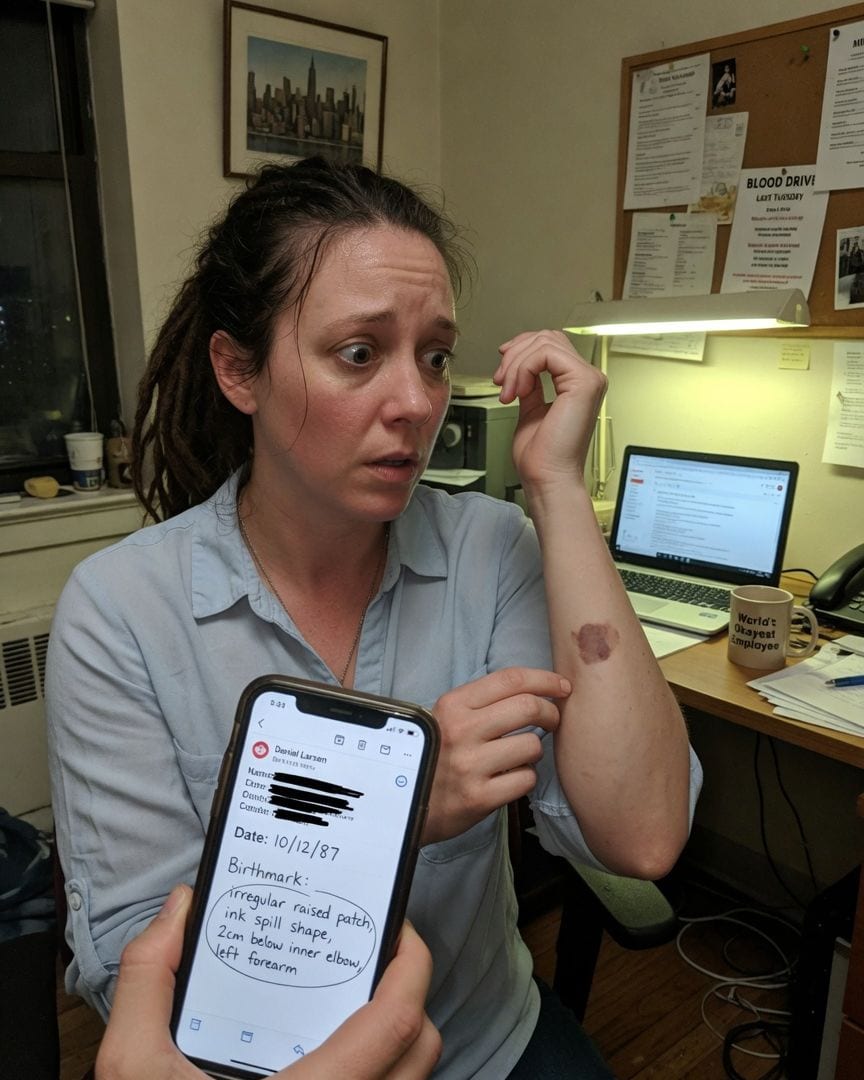
My left forearm has the exact birthmark described on a dead man's blood donor card from 1987, two years before I was born.
I gave blood as a routine civic duty. A call from the blood bank revealed my sample matched a donor from 1987, a man who died that year. But his donor card also detailed a unique birthmark on his left forearm, exactly mirroring my own.
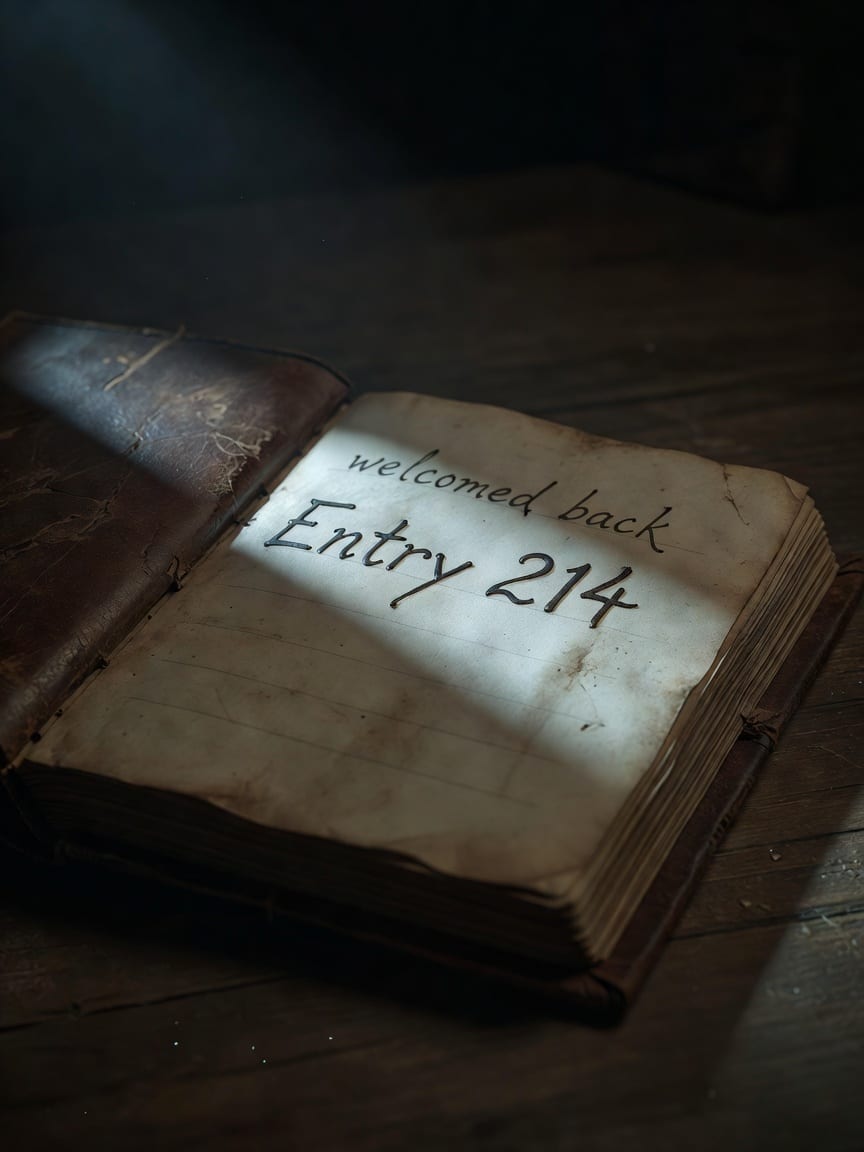
My hand traced the ink of 'welcomed back' beside Entry 214 in the old baptism register. It was the same entry number, used for a christening every seventeen years, inked over and over. Someone had been managing this for over a century.
As the new keeper of my village church's baptism register, I found solace in its unchanging ritual. But when I opened the heavy volume to Entry 214, I saw it was inked over an older, identical number. I soon discovered this specific entry had been used every seventeen years since 1873, each time with the same cryptic note: 'welcomed back'.
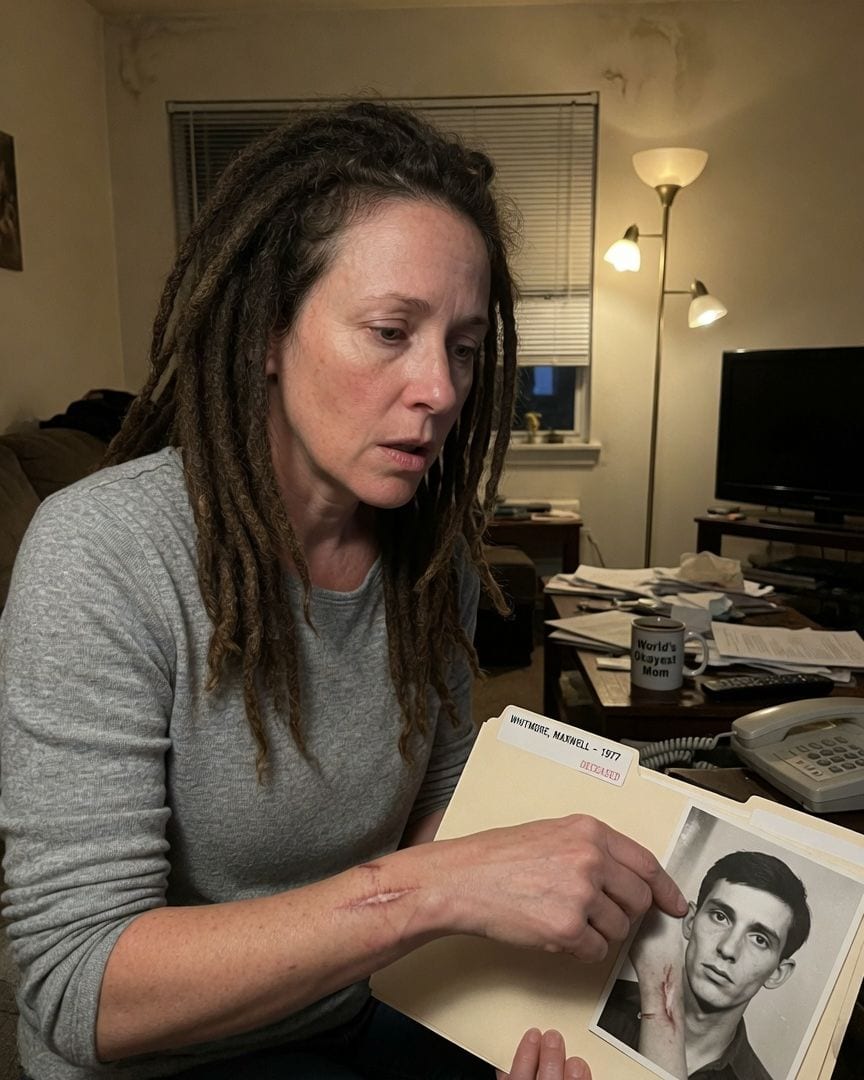
My fingerprints perfectly match a dead man's. He died in prison in 1980, but the bureau insists our hands are identical.
My distant cousin's arrest led to a routine fingerprint check, but the results were anything but normal. A bureau examiner confirmed my prints were identical to an inmate who died in custody decades ago. Then I saw his mugshot: the faint scar on his wrist was the exact same as my own unique birthmark.
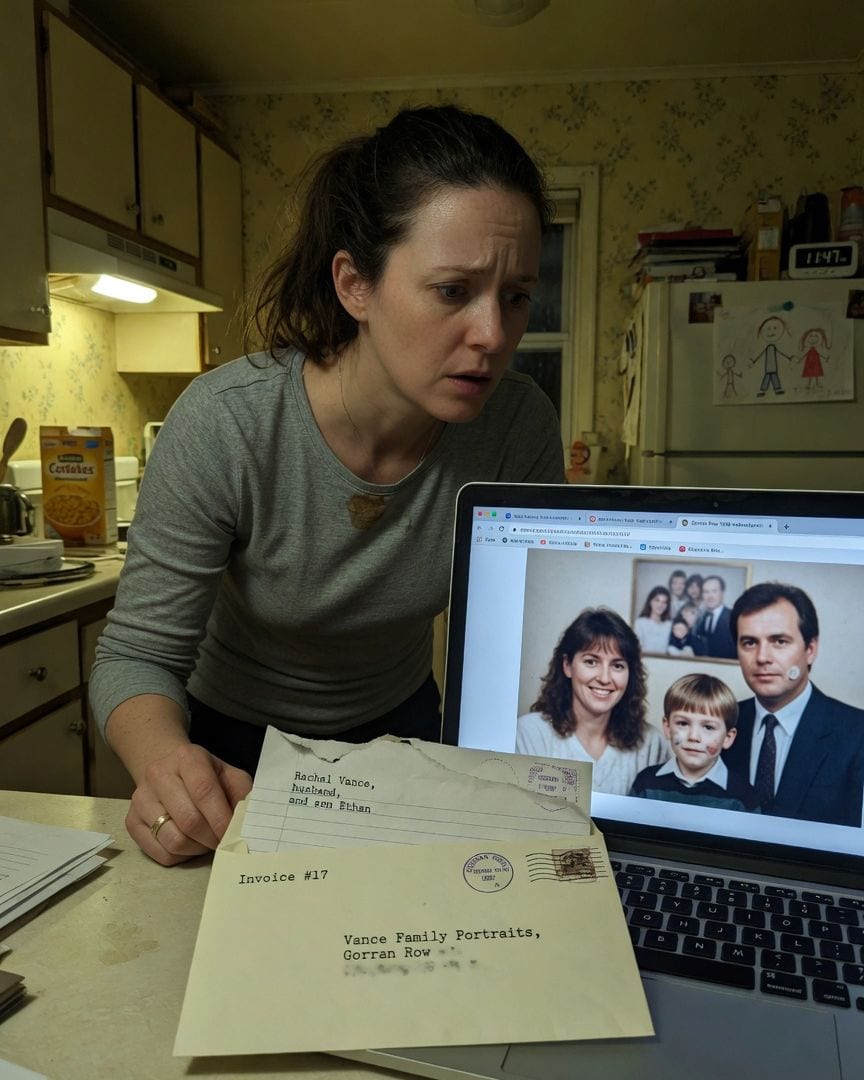
A 1987 portrait shows my younger face and my son's birthmark. I was born in 1988.
I've been receiving baffling invoices for a family portrait from a studio that closed in 1987, each one listing my son Ethan. My son was born decades after that studio shut its doors. Now, I've found an archived studio photo from 1987: my younger face, a stranger, and my son Ethan, his unique birthmark clear.
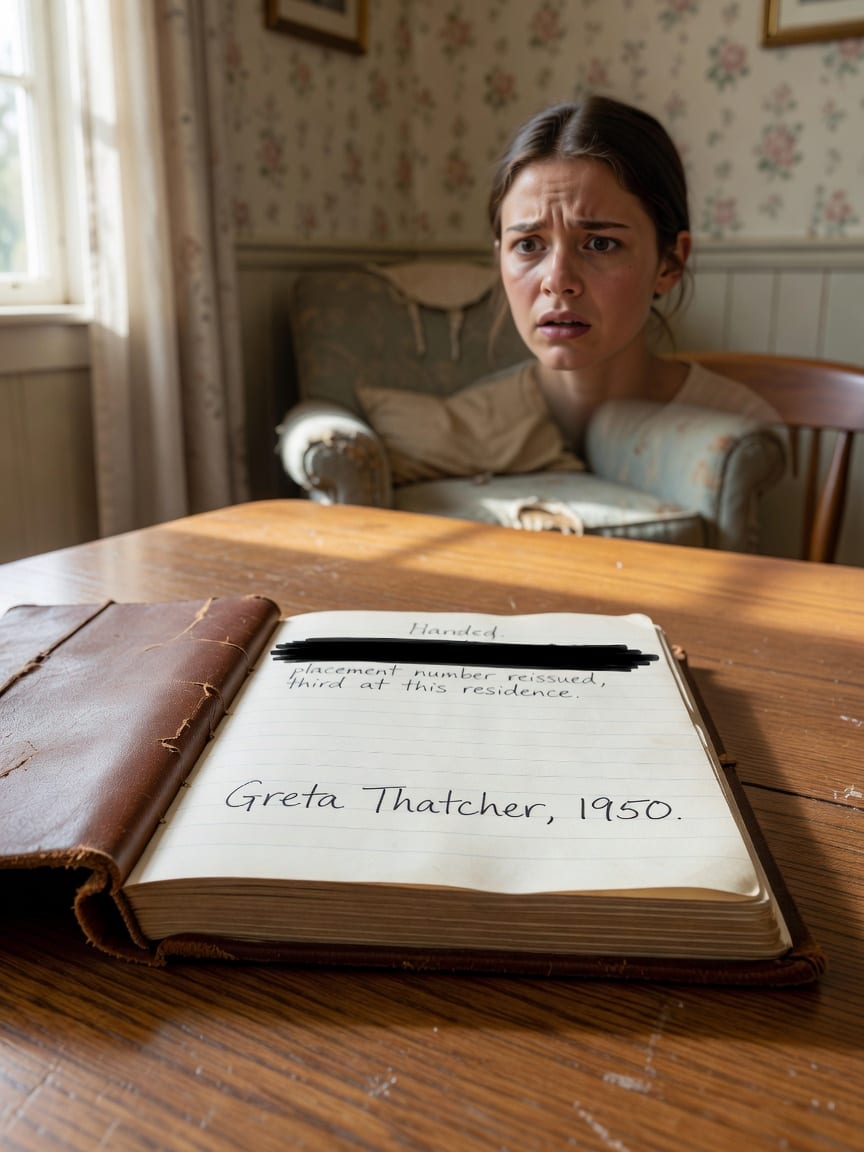
My mother's orphanage file has a redacted line above hers. The address listed? My own house, fifty years ago.
Examining my mother's old childhood records, I found a 1950 admissions book with a redacted entry. A thick black bar obliterated the details, but the address listed beneath it was unmistakably my own house, the one I've owned for over a decade. My heart gave a sickening lurch.
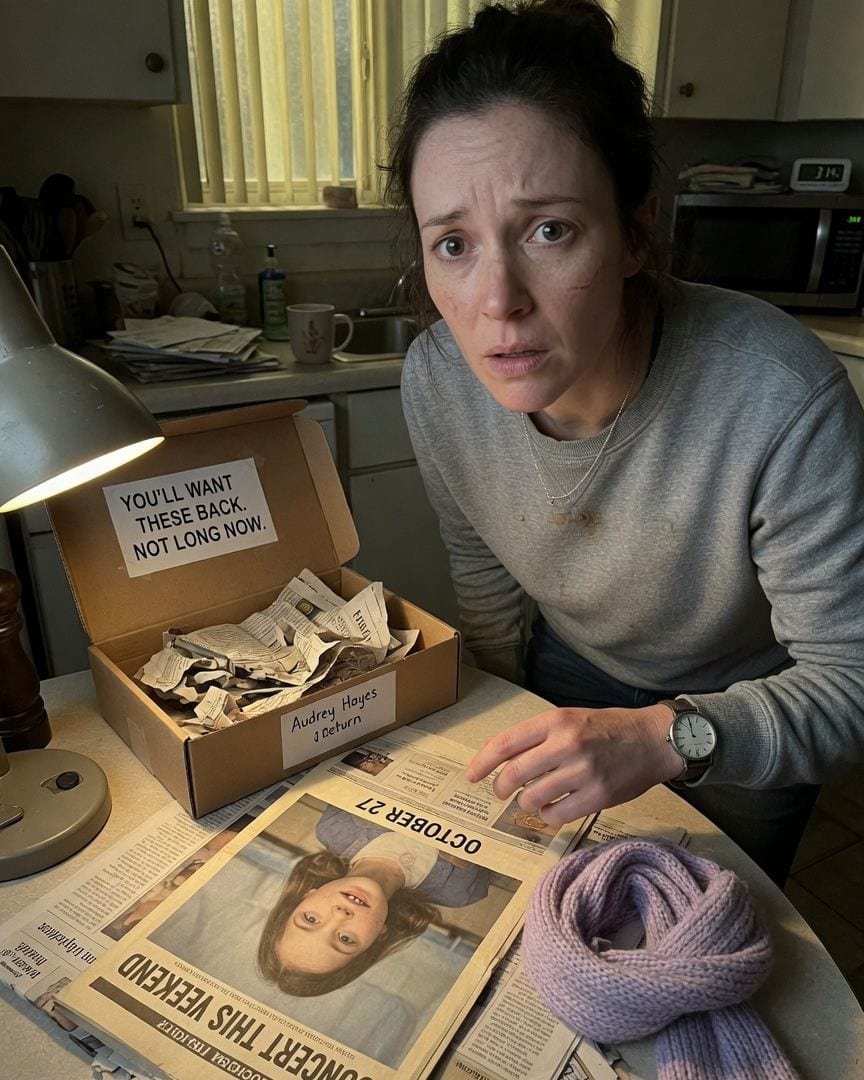
A box turned up with my name and no sender. Inside was a watch I lost years ago, still ticking and set right — wrapped in newspaper dated two weeks from now.
A plain brown box appeared on my step, containing my long-lost personal items. Among them, my grandmother's ticking watch and a newspaper dated two weeks in the future. But a historical ledger then revealed my name and these exact items, listed in 1965.