A 1987 portrait shows my younger face and my son's birthmark. I was born in 1988.
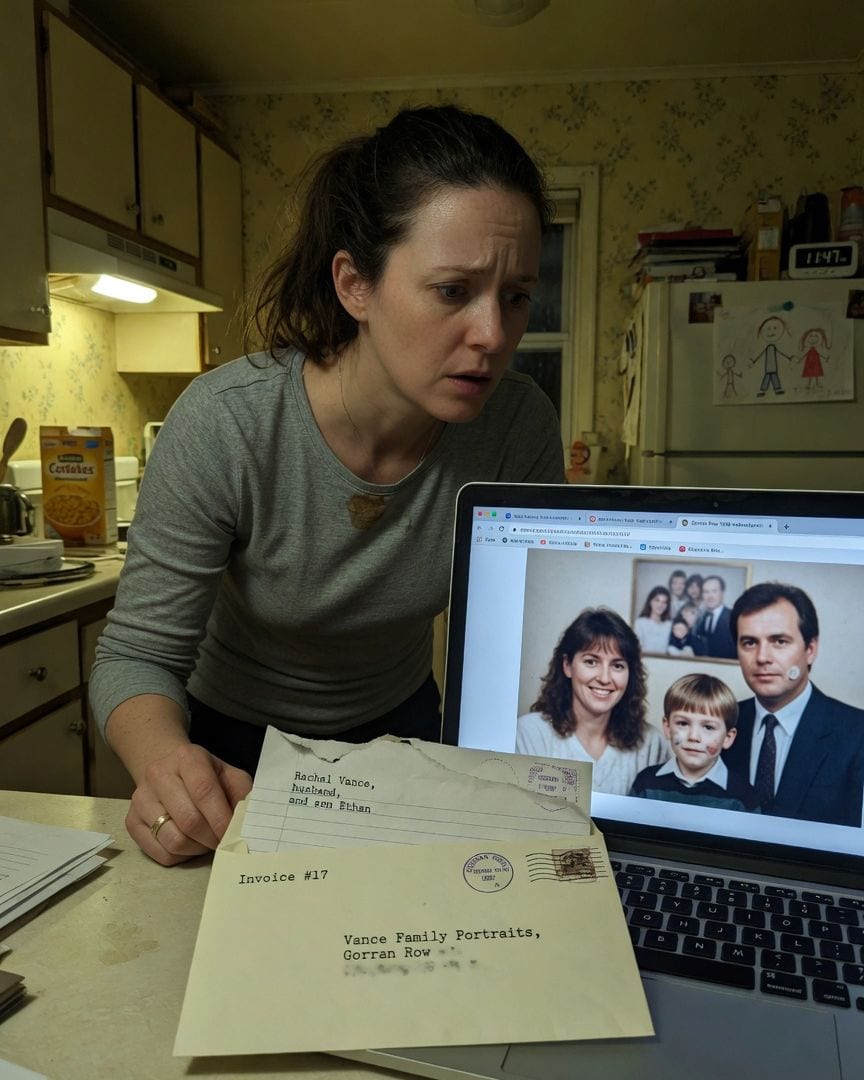
The latest envelope sat on my kitchen counter, cream-colored and stiff, just like the five others before it. Invoice #17. Every three months for a year now, another one had arrived.
The return address was faded, almost illegible, but clear enough: 'Vance Family Portraits, Gorran Row.' It was always a bill for a family portrait sitting I never attended.
This one, like the others, itemized the subjects: 'Rachel Vance, husband, and son Ethan.'
My son, Ethan, is seven years old. He has this distinctive birthmark, a small, pale smear on his left cheek, the one I’d inherited from my own grandmother. It’s genetic, a little family quirk.
The 'Vance Family Portraits' studio, I’d confirmed online, closed in 1987. Gorran Row itself was a residential terrace, cleared for redevelopment in 1988, now a public park.
The postmark on these envelopes was always faint, but unmistakably dated 'Gorran Row, 1987.' I'd tried calling the number on an earlier invoice once; it was disconnected.
I'd ignored them, dismissed them as a bizarre postal error, a glitch in some defunct archive. Maybe someone else named Rachel Vance? But the detail about 'son Ethan' always snagged me.
How could a studio that closed before I was born, from a street that no longer existed, know my name, and my son’s name, and even the makeup of my impossible family? It wasn't just my name.
It was our names.
The latest invoice, with its crisp, impossible details, finally pushed me past annoyance into a quiet, focused investigation. I started where most modern mysteries begin: local history forums. Gorran Row, 1988.
The records were clear: 'compulsory purchase order, public park development.' Every mention confirmed its fate.
The 'Vance Family Portraits' studio popped up in a few archived newspaper snippets from the mid-80s, always with the same address on Gorran Row. One article from late 1987 detailed its closure, citing 'owner's retirement and impending street redevelopment.'
The owner was a Mr. Alistair Vance. A distant relative, perhaps? I checked my family tree again, painstakingly. No Alistair. Not even a remote connection to anyone running a photography studio in that era.
My Vances were from the next county over, always had been.
The studio's advertisements were quaint, featuring smiling families in sepia tones, the kind of stiff, formal portraits you see in old albums. I found a digitized photo from a local archive, a street view of Gorran Row in 1986.
There it was, 'Vance Family Portraits,' a neat storefront sandwiched between a dry cleaner and a bakery. The closure date was confirmed again and again across multiple sources. 1987. No ambiguity.
The invoices were not just old; they were from a place and time that could not logically intersect with my life, let alone Ethan's. My birth year was 1988. Ethan’s was 2016.
It was too specific to be random, too impossible to be real. I searched for any mention of the studio after 1987, any continuity, any other local businesses with 'Vance' in the name. Nothing.
It was a dead end, making the continued arrival of the invoices even more unsettling. The ordinary explanation — a phantom bill, a prank — crumbled under the weight of the impossible detail: 'son Ethan.' My son.
Deep in the digital archives of the local historical society, a particularly high-resolution scan caught my eye. It was an internal studio photograph, dated October 1987, showing the 'Vance Family Portraits' reception area. Empty, just before closure.
The light in the room was dim, dusty. In the background, through a partially open door, a display portrait hung on a wall. It was slightly out of focus, a typical family shot: a woman, a man, a small boy.
I zoomed in, my heart thudding, the laptop screen humming softly against the sudden silence in my office. The woman in the portrait was unmistakably me, younger, yes, but my face, my hair, the curve of my smile.
The man was a stranger, but the boy… the boy was Ethan. His exact smile, his hair, even the tiny birthmark on his left cheek, visible through the digital grain. It was a perfect match.
The photo, dated 1987, showed my son, born in 2016, with a younger version of myself. My finger hovers over the enlarged, pixelated image on my screen.
The impossible photo: her face, younger, beside a stranger, and a child with Ethan's unmistakable grin, all captured in a studio that closed before any of them could have posed for it.
The dread is a cold, tight knot in my stomach.
The impossible photograph haunted me. I printed it, a grainy, sepia-toned ghost, and pinned it to my corkboard next to the stack of invoices.
It felt like a physical manifestation of the wrongness, solid proof that my mind wasn't playing tricks.
I drove to the site of Gorran Row, the place that couldn't exist but kept sending me mail. It was a wide, landscaped park now, green and inviting, with children playing on swings, their laughter echoing in the afternoon air.
It was a sunny, ordinary place, which only deepened the unease. The old oak trees, gnarled and ancient, stood as silent sentinels, the only living things that might remember the street.
I saw an elderly man, his white hair a halo in the sun, sitting on a bench, sketching one of the old oaks. He looked like he’d been here a long time, rooted to the spot.
Preston Montgomery, his nameplate on his watercolor kit read. My heart pounded, but I knew I had to ask.
“Excuse me,” I began, “I hope I’m not disturbing you. I was just wondering if you knew anything about Gorran Row? The old street that used to be here?”
Preston looked up, his eyes sharp behind wire-rimmed glasses. “Gorran Row, eh? Used to live here myself, back in the day. Before they turned it into all this.” He gestured vaguely at the park.
He was initially jovial, reminiscing about the old bakery, the corner store, even the dry cleaner. Then I asked about the studio. “Vance Family Portraits? Oh, yes. Mr. Vance, fine old fellow. Always a bit… odd, that place.”
He never elaborated, just a dismissive wave.
He mentioned how the ‘clearing’ of Gorran Row was “more thorough than most,” every building demolished, every foundation removed, as if erasing it completely from the map.
He vaguely referred to “the Record Keepers” who came around before the demolition, “documenting everything for the council.” He dismissed it as bureaucracy, but a tremor in his voice, a slight tightening around his mouth, suggested otherwise.
“The Record Keepers?” I pressed, trying to keep my voice even. “What did they document?”
He grew visibly uncomfortable, his eyes darting towards the children playing, then back to my face. “Just… old things. People. Houses. Said they needed everything for the archives. They had a spot, I think, at the old local council annex.
Where they kept all the old maps and deeds. Don’t think it’s used much anymore.” He quickly changed the subject, asking if I was “new to town,” his tone a little too casual. The unease solidified.
There was more to Gorran Row than a simple demolition.
Days later, the impossible photo still staring at me from the corkboard, I was leaving Ethan’s school. The late afternoon sun was low, casting long shadows across the parking lot.
A man in a dark, well-tailored suit stepped out from behind a parked SUV. He was in his late sixties, impeccably groomed, with a calm, unreadable face. My instincts screamed.
He approached me directly, without hurrying. “Rachel Vance?” he asked, his voice smooth, almost soothing, cutting through the usual bustle of parents and children.
I froze, clutching my bag strap tight enough to whiten my knuckles. “Yes?” I replied, my voice tighter than I intended.
“My name is Desmond Norwood,” he said, offering no hand, no smile. “I just wanted to apologize.”
I stared at him, confused, my mind racing. “Apologize for what?”
Desmond’s gaze was steady, unwavering, fixed on my face. “For what is about to happen,” he said, a faint, almost imperceptible sadness in his eyes, like a ripple on still water. “It’s not personal. It’s simply… procedure.”
He glanced towards the school entrance, where Ethan was emerging with his class, his red backpack bouncing as he waved goodbye to a friend. A wave of cold, crystalline fear washed over me, sharper than anything I’d felt before.
Desmond didn't threaten, didn't warn. He simply stated. His composure was terrifying.
“I just wanted you to know,” he added, then turned and walked away, blending into the stream of other parents, his dark suit disappearing into the shadows.
I stood rooted to the spot, watching him go, the words echoing in my mind. What is about to happen? He knew my name. He knew where to find me, knew when Ethan would be dismissed.
And he apologized for an event that hadn't occurred, as if it were a foregone conclusion. The dread was now sharp, personal, and aimed. Someone was watching, and they knew more than just my son's face.
Desmond Norwood’s chilling apology ignited a cold, hard resolve in me. I couldn’t just investigate anymore; I had to understand. I returned to Preston Montgomery, this time armed with the impossible photograph and the invoices.
He was again at his bench by the old oak, his sketchbook open.
“Mr. Montgomery,” I said, holding out the photo. “You said Vance Family Portraits was ‘odd.’ And you mentioned ‘Record Keepers.’ What do you know about this?”
Preston’s face, already pale from the sea air, went ashen as he saw Ethan’s image, his eyes fixed on the birthmark. He fumbled with his charcoal stick. “I… I shouldn’t have said anything.”
I pushed harder. “Preston, someone just approached me. They knew my name, my son. They apologized for ‘what is about to happen.’ This photo, these invoices, they’re impossible. They point to something terrible. What is it?”
He looked around frantically, as if expecting someone to materialize from behind the trees. Finally, he broke. His voice was barely a whisper. “Vance Family Portraits wasn’t just a studio, Rachel. It was… a front.
Before Gorran Row was cleared, there was a quiet, unofficial ‘census’ conducted. By a discreet ‘organization.’ They documented every family, every child.” He swallowed hard. “We called them ‘The Keepers.’
My own family… generations ago, they had a similar ‘portrait’ taken. My parents received ‘invoices’ for events that hadn’t even happened yet.”
He rose, his old joints cracking, and started walking towards the edge of the park. “That old council annex,” he mumbled, “where they kept the maps. It’s mostly abandoned now. But they had another section. A small, locked room.
For ‘special records,’ they said.”
I followed him, a strange mix of terror and grim determination hardening my spine. We reached a nondescript, brick building on a side street, its windows dark and dusty.
Preston produced a heavy, old-fashioned key from his pocket and with trembling hands, unlocked a small, unmarked side door. The air inside was thick with the smell of damp paper and old wood.
He led me through a narrow, unlit hallway to a heavier, locked door at the very end. This one, he opened with a second key. Inside, the room was small, lit by a single bare bulb hanging from the ceiling.
Floor-to-ceiling shelves sagged under the weight of countless old ledgers and files.
“This is it,” he whispered, his voice catching. He went to a particular shelf, almost hidden behind a stack of moth-eaten maps. He retrieved a heavy, leather-bound ledger. It was old, fragile, its cover embossed with a faded, unidentifiable crest.
It smelled of dust and damp earth.
With trembling hands, he opened it to a brittle, yellowed page. There, in elegant, looping script, was an entry. My breath hitched.
'Vance, Rachel. Family Portrait. Gorran Row.'
And the date, clearly written, was '1985.'
My mind reeled. 1985. Three years before I was born.
Preston pointed to other entries, identical “portraits” for other families from Gorran Row, dated decades ago. The words “son Ethan” weren't there, but the impossible date for her portrait slammed into Rachel.
The invoices, the photograph, the cleared street – it all clicked into a terrifying new pattern. The studio wasn’t just recording; it was predicting.
Preston Montgomery, his face streaked with tears he didn’t bother to wipe away, pointed to more entries in the ledger. “My own family, see? The Montgomerys. An entry for my grandfather. Not a portrait. A ‘relocation’ order, dated 1932.
He vanished that year, just disappeared. My grandmother said he went to work one morning and never came home.”
He flipped through pages, his finger tracing lines in the faded script, revealing a chilling history of ‘portraits,’ ‘relocations,’ and ‘integrations’ for families from Gorran Row and other forgotten communities. Names I didn’t know, dates stretching back over a century.
A cold dread settled deep in my bones. This wasn’t just about me; it was a generational pattern. A system.
Then, Preston turned a page, his finger slowing, tracing a line lower down on the brittle paper. “And here…” he whispered, his voice barely audible, “after your own ‘portrait’ entry…”
I leaned closer, my eyes following his finger down the page, past my own name, past the 1985 date that had already shattered my understanding of reality.
My gaze landed on a new entry, stark and clear amongst the faded script.
'Vance, Ethan. Relocation and Integration. Age 12.'
The date. The date listed next to it was precisely five years in the future.
The heavy ledger is open, and Rachel’s breath catches. An entry for 'Vance, Ethan. Relocation and Integration. Age 12.' The date is five years from now. Her son. Her future.
The names of 'cleared' families stretch back for centuries, all with similar, chilling directives. The full, cold mechanism of it all is suddenly, terrifyingly clear.
The 'Relocation and Integration. Age 12.' entry for Ethan shattered my world into jagged pieces. Preston, his voice barely a whisper, explained what it all meant.
“The institution,” he began, “we called them ‘The Keepers.’ Sometimes ‘The Census.’ They believed they were maintaining a delicate balance, a necessary order. They identified individuals and families destined to play a part in a larger, unseen ‘pattern.’
A grand design, they called it. The ‘portraits’ were just the initial identification. A record of a pre-determined life. The ‘invoices’ were reminders, notifications of their recorded status. Not bills, but confirmations.”
He paused, looking at the faded ledger with a haunted expression. “’Relocation’ meant they were taken. Absorbed into the institution’s operations. Their old lives erased.
‘Integration’ meant they were given new identities, new roles, to fulfill their pre-ordained purpose within the pattern. My grandfather… he was ‘relocated.’ Nobody in my family ever saw him again.”
Gorran Row, he explained, was one such ‘nursery’ community. Not the only one, but one they watched closely. The ‘clearing’ in 1988 wasn’t just demolition; it was a systematic harvesting.
A way to process the ‘marked’ individuals and ensure the secrecy of their operations. Preston himself had avoided a ‘relocation’ by sheer luck; his family had moved just before their scheduled ‘event.’
He had lived his life in terror, always looking over his shoulder, knowing he was an anomaly, a loose thread in their pattern.
Desmond Norwood, Preston explained, was an ‘Integrator.’ One of those who had once faced ‘relocation’ but now served the system. His apology wasn’t for malice, but for the cold inevitability of the ‘pattern.’ He was just following procedure.
Every clue, every impossible detail, from the invoices to the photo, to Desmond’s unsettling words, now coalesced into a horrifyingly coherent system. A system that had been operating for generations, silently shaping lives, predicting futures, and then making them happen.
My son, Ethan, was part of that pattern.
Armed with the ledger’s terrible truth, I knew I could not let Ethan be ‘relocated.’ I had to fight.
I found Desmond Norwood’s office in a nondescript building downtown, the kind of place you’d walk past a hundred times without noticing. He greeted me calmly, as if expecting me, without a trace of surprise.
The office was spare, minimalist, like the man himself.
“The ledger,” I said, my voice trembling, but holding steady. “Ethan. What do you want with him?”
Desmond gestured to a leather armchair opposite his desk. “Please, Rachel. Have a seat.” He settled back in his own chair, his hands clasped on the desk blotter. “We want nothing, Rachel. We merely observe. And, when necessary, facilitate.”
He explained, without a shred of malice or emotion, that Ethan was simply ‘marked’ for a particular role, a continuation of a pattern, and that ‘fighting it’ was futile. “The pattern endures,” he said. “It has for centuries.
Individuals come and go, but the mechanism remains.”
He pointed to a faded, framed photograph on his desk: a younger Desmond Norwood, perhaps in his late teens, standing stiffly beside an older, stern-looking man in a similar dark suit. “My own integration,” he stated simply, his voice flat.
“They came for me when I was seventeen. I chose to understand, rather than resist. It is a necessary function.”
He offered me the same choice: accept Ethan’s destiny, his inevitable ‘relocation and integration,’ or attempt to break a pattern that had endured for centuries. He spoke as if discussing a weather forecast, not the life of my son.
I looked at the photo of Desmond, then at him, seeing the quiet resignation in his eyes, the almost imperceptible weariness.
I saw the ghost of Ethan, at 12, being led away, his birthmark visible on his cheek, his smile gone.
“I won’t let you,” I whispered, the words tasting like ash in my mouth.
Desmond sighed, a quiet, almost sympathetic sound. “Then you will deviate. And we will record it.”
I stood up, my chair scraping harshly on the polished floor. My resolve hardened, brittle but unbreakable. I would not accept it. I would run. I would disappear. I would break the pattern, or die trying.
I turned and walked out, Desmond’s calm, unblinking gaze following me, a silent, unmoving presence. The choice was made: survival, at any cost.
Rachel and Ethan vanished. Their house was sold quickly, the digital footprint of their lives meticulously erased. They moved from town to town, Rachel using cash, never settling, always looking over her shoulder.
The invoices stopped arriving, but the memory of the ledger, of Desmond’s calm acceptance, remained a constant shadow, a cold knot in her stomach. The institution, for its part, closed their file, recording a new entry: 'Vance, Rachel & Ethan.
Deviation from Pattern. Status: Unresolved.' Desmond Norwood, a faint, almost regretful expression on his face, moved on to the next scheduled ‘event’ in the ledger. The pattern continued, unbroken, elsewhere.
Years pass. Ethan is now a young man, almost 12. They live in a small, anonymous town in the Midwest, Rachel working under a new name at a local diner, always vigilant, always scanning the faces in the crowd.
The quiet life they've built is fragile, like glass.
One quiet afternoon, the mail arrives, thudding softly onto the welcome mat. Among the bills and junk mail, Ethan pulls out a thick, cream-colored envelope. It’s addressed to him, by name, in elegant, looping script.
The return address is a small, unfamiliar local photography studio, offering a 'complimentary family portrait sitting.' But the postmark, faint yet unmistakable beneath the new stamp, is from a town that no longer exists, a place called Gorran Row.
Rachel watches him, her breath catching in her throat, the grease from the diner still on her hands. Ethan looks up, a faint, puzzled frown on his face, the birthmark a stark reminder.
“Mom,” he asks, “what’s this?”
If this one got to you
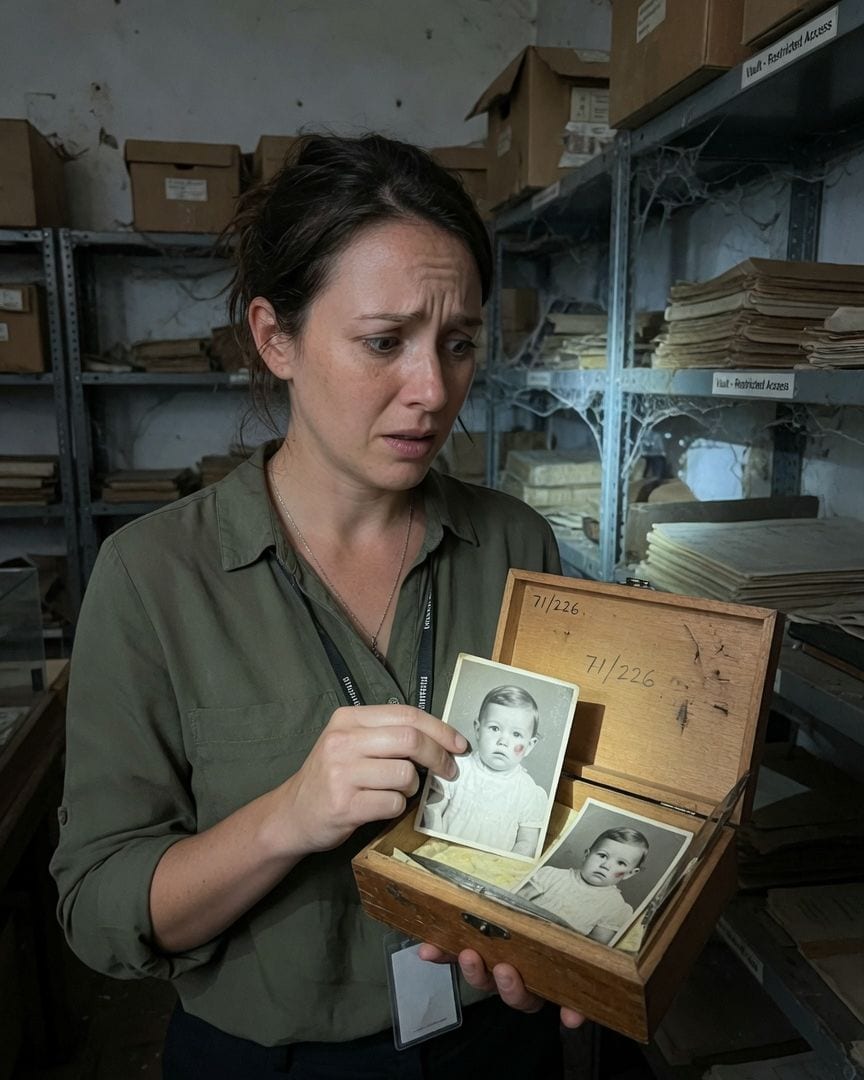
The christening gown in my museum names my own family on a blacked-out donor card. It's the fourth to carry that number since 1919 — and the date it comes back is already typed in.
Cataloguing an antique christening gown, I found its museum card listed a future "return" date, and then uncovered an old box in the vault. Inside, a 1961 photograph of a child bore a birthmark identical to my own, taken at my street address, and chillingly marked "Returned."
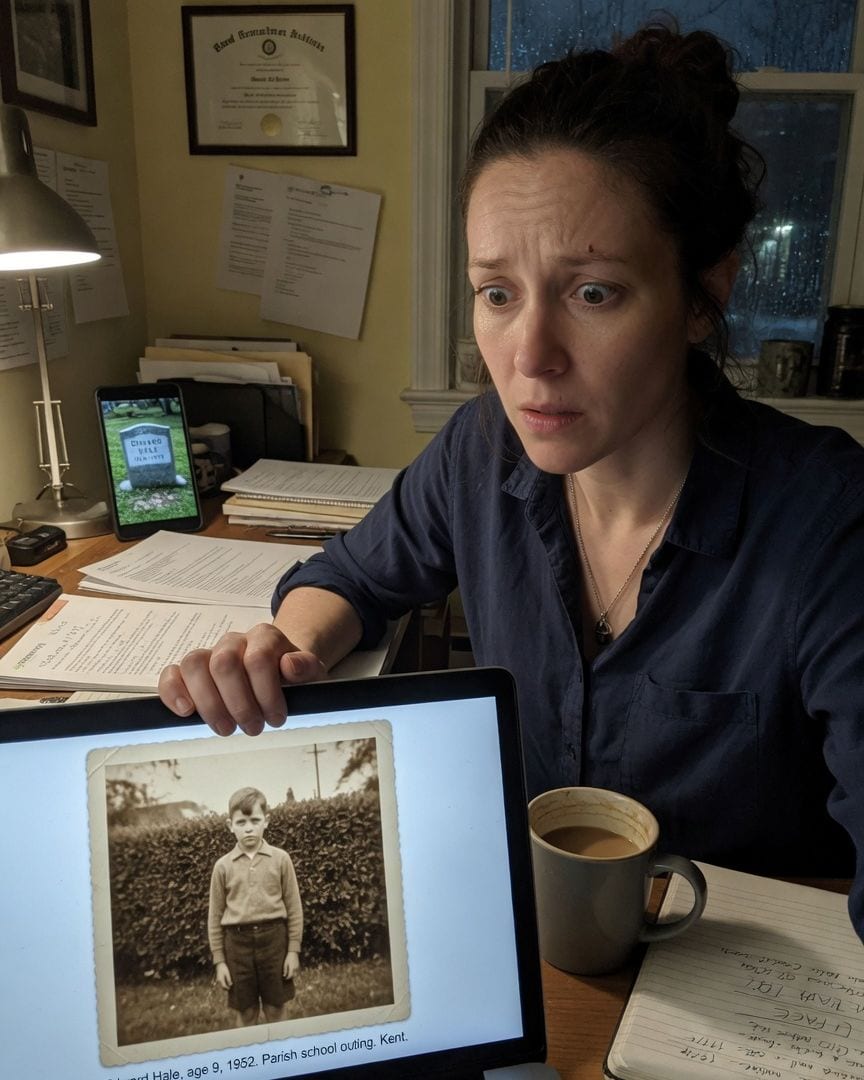
My DNA kit matched a man who died in 1974. The lab asked if I had a twin. Edward Hale is buried in Kent, under a stone I have now stood in front of.
I expected routine AncestryDNA results, but the lab found an 'unprecedented' genetic match. Edward Hale, who died in 1974, shares 99.9% of my DNA, prompting questions about a twin. The impossible dates didn't make sense, until a 1952 photo showed his face was unmistakably my own.
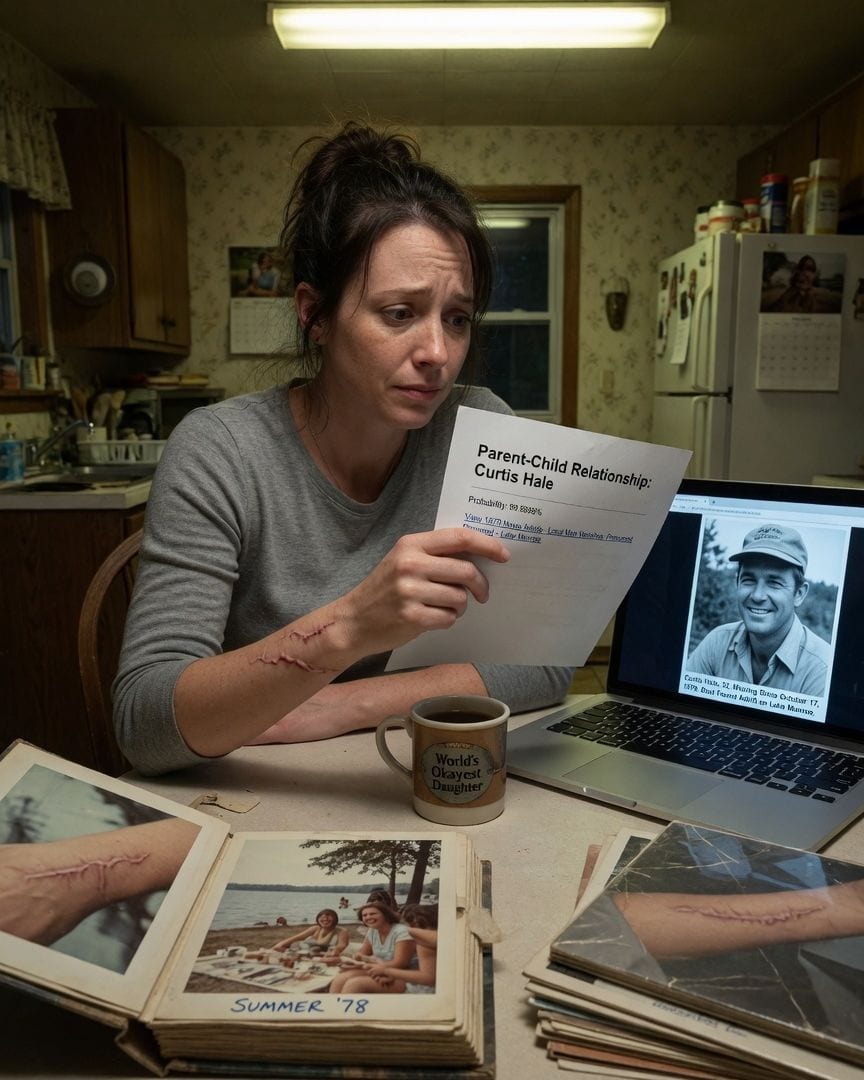
My DNA returned Curtis Hale as my father. He vanished in 1979. I was born twelve years later. The lab confirmed the match twice.
My DNA test results revealed something impossible: my biological father vanished in 1979, twelve years before my birth. My mother dismissed it as nonsense, but her reaction felt forced, leading me to old family photos. There, in a faded 1978 snapshot, I found my own distinctive childhood scar on the wrist of a stranger.
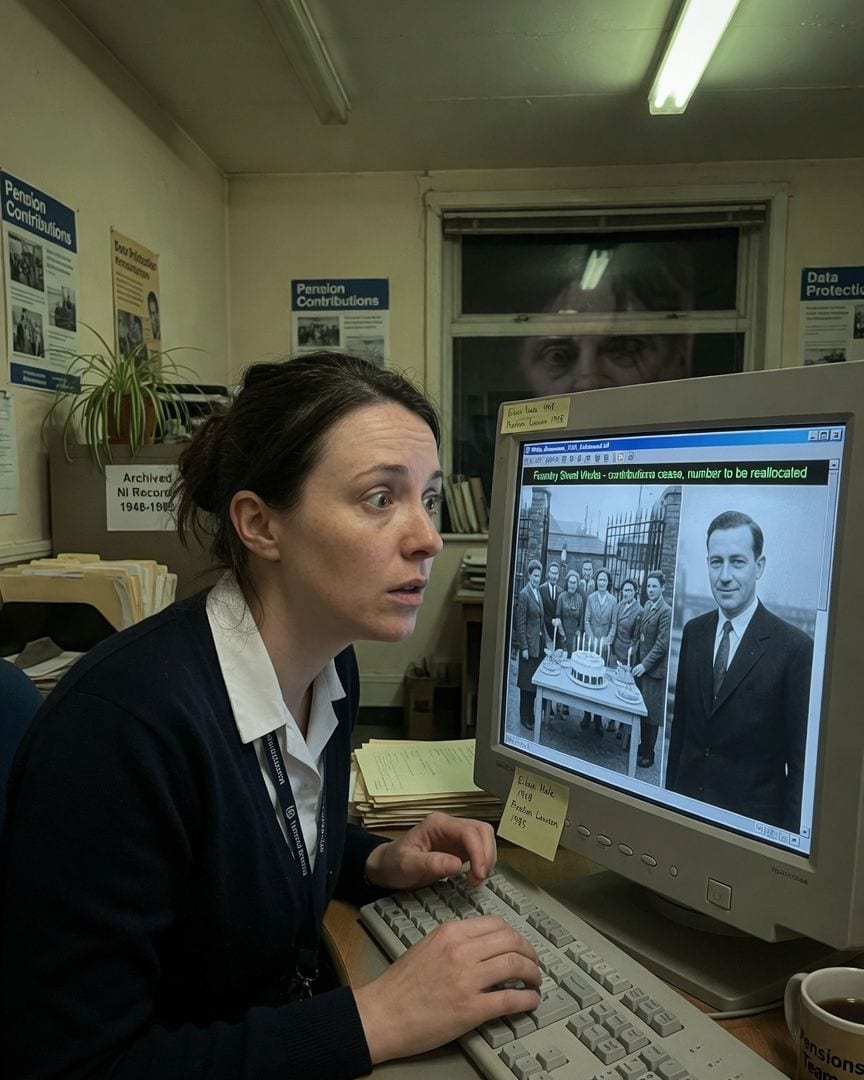
My National Insurance number has been used by four people since 1948. Each one worked at the same Foundry Street works, and none ever drew a pension.
I was just sorting out my new National Insurance number, a routine task I expected to take minutes. But the clerk found it had been used four times since 1948. Even stranger, all four previous holders worked at the defunct Foundry Street Works and never drew a penny of pension.
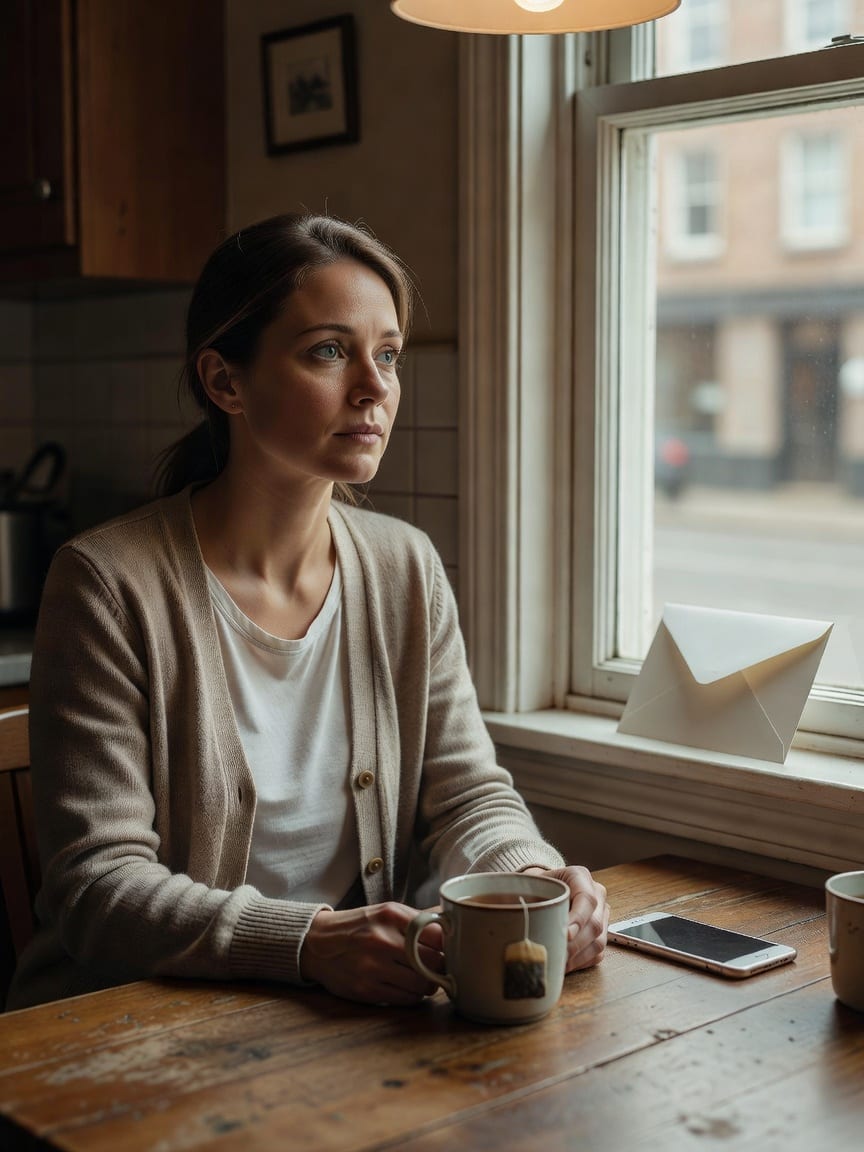
My taxi driver knew my name before I spoke, then apologized for the flight I was going to miss. I was arriving. The cab's plate was scrapped four years ago.
After a strange taxi ride, I received an unsettling birthday card addressed to me. Its return address listed 'Old Mill Road Field,' an empty lot where a mill once stood, and it was postmarked locally. The card arrived four months before my actual birthday, sparking a cold dread I couldn't ignore.
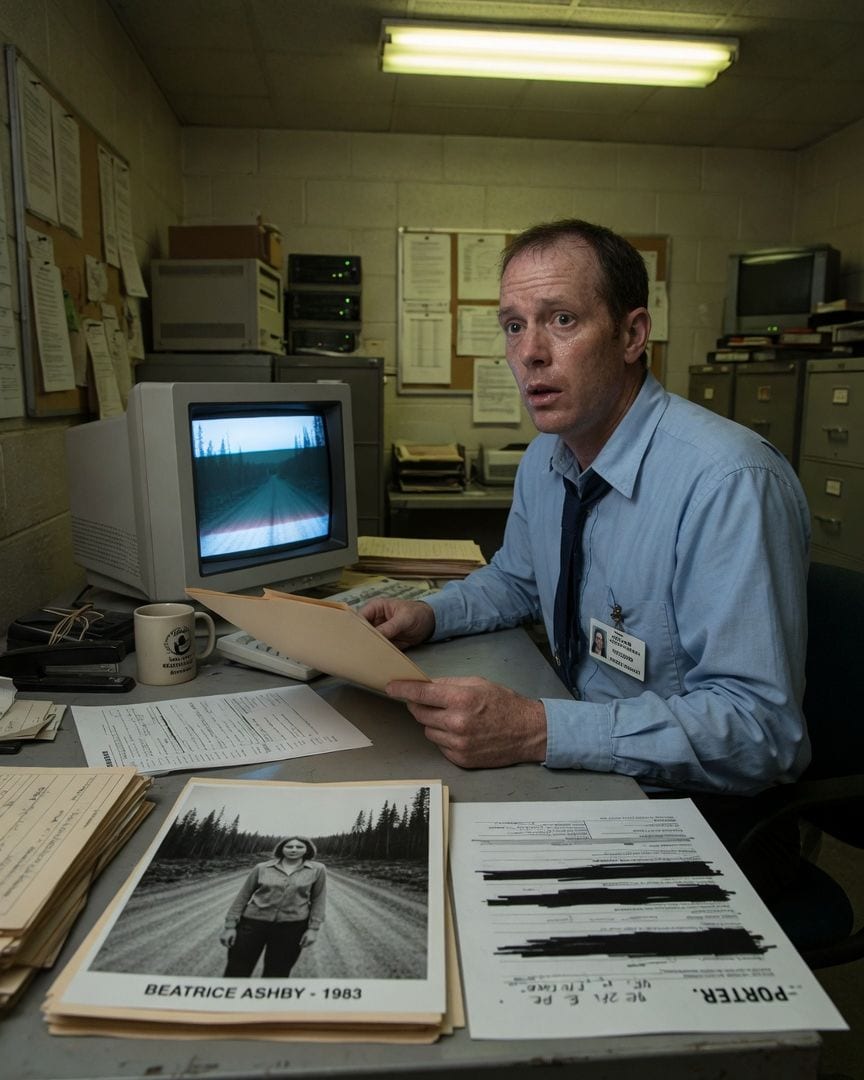
A federal clerk found his dead mother’s photo in a 1983 Cold War file, listed as a witness.
Devon Ashby, a federal records clerk in Missoula, Montana, spent years dismissing a repeated request for a 1983 file. He finally pulled the thin folder, expecting a clerical anomaly, but found a stark black-and-white photograph. It showed his mother, Beatrice Ashby, looking directly into the lens, calm and familiar, yet stamped with the year 1983. Devon remembered her funeral in 1981 and the quiet scrape of earth against her coffin, making her appearance in the official file two years later a chilling impossibility. Further investigation revealed conflicting records and a handwritten addendum with geographic coordinates, hinting at a truth far darker than a simple misfile.