My National Insurance number has been used by four people since 1948. Each one worked at the same Foundry Street works, and none ever drew a pension.
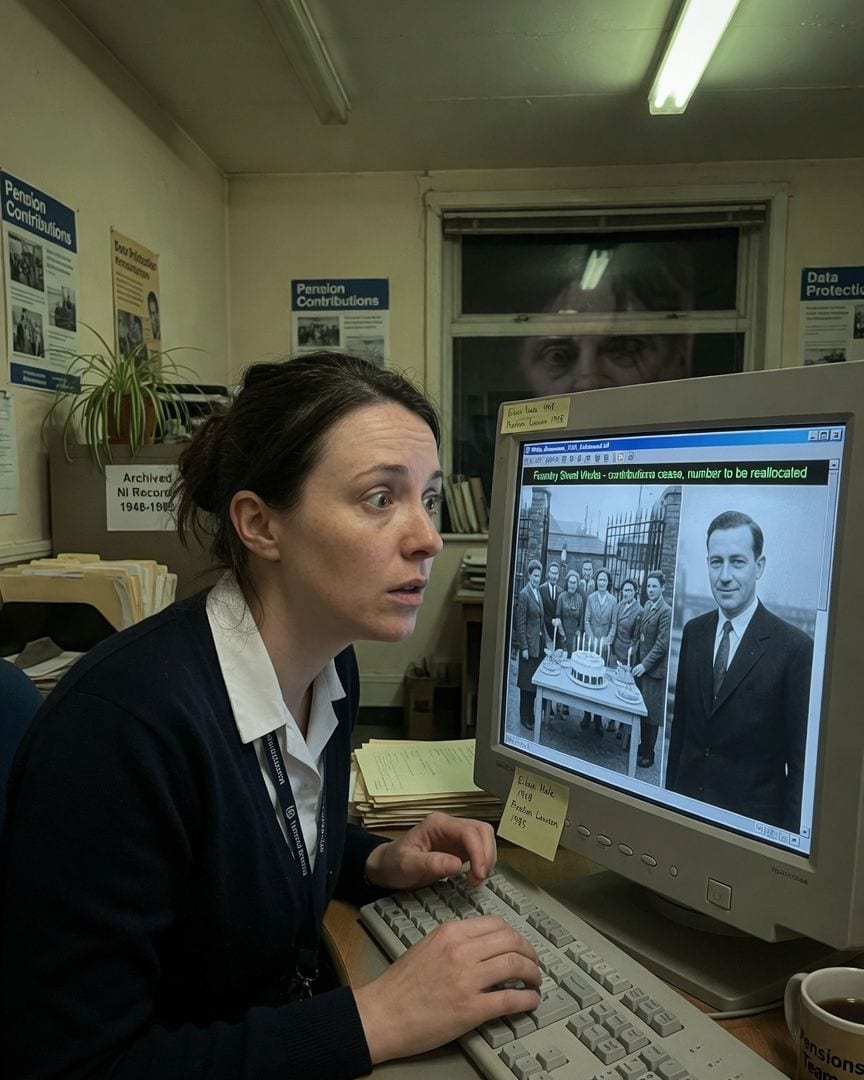
The clerk, Susan Hale, looked up from her screen, her brow furrowed. I was sitting across from her, just trying to get my new National Insurance number sorted out for the council’s internal system.
Standard paperwork, the kind of thing you expect to take five minutes and involves no surprises. I’d just started in pensions, thirty-two years old, meticulously organized, and honestly, a little dull. I liked it that way.
“That’s… odd,” Susan murmured, tapping at her keyboard. She scrolled a little, then paused. The fluorescent lights above us hummed with a sudden, anxious flicker. “Hannah, this number of yours… it’s been used before.”
I blinked. “Used before? Like, a recycled number?” I tried to laugh it off, a glitch in the system. Everything’s a glitch these days.
Susan shook her head slowly. “Four times, actually. Since 1948. Each one marked ‘contributions cease, number to be reallocated.’ And here’s the thing… all four of them, their last employer was the old Foundry Street Works.”
She tapped the screen again, a low, rhythmic sound against the quiet of the office. “And not one of them ever drew a penny of pension.”
My smile faltered. Foundry Street Works. It was a defunct industrial site, closed down ages ago. I vaguely remembered a dilapidated brick building on the edge of town, long since demolished. Four people. The same number.
All from the same place. And none of them, after years of work, ever saw a single payment from their contributions. It felt less like a bureaucratic error and more like a carefully maintained pattern.
The cold, logical part of my brain wanted an explanation. The other part, the one that paid attention to the sudden chill in the air conditioning, just wanted to forget Susan had ever said anything.
I couldn’t shake Susan’s words. The next morning, I was back at my desk, the numbers and names swirling in my head. My own NI number, supposedly unique, now felt… shared. Tainted, somehow.
I discreetly accessed the archived digital records, using my new credentials. The system, designed for efficiency, yielded the four previous holders instantly.
Eileen Hale, first entry, 1948. Philip Beaumont, second, 1961. Grace Ashford, third, 1973. Preston Lawson, fourth, 1985.
All listed, without exception, as 'Foundry Street Works'. And beneath each name, the same chilling phrase: 'contributions cease, number to be reallocated'. The screen glowed with the stark finality of it.
I pulled their full employment files, a strange compulsion guiding my fingers across the keyboard. It was like I was looking for a missing piece of my own history, even though these people were strangers.
The initial pages of each file were mundane: dates of birth, addresses, tax codes. Standard. But the deeper I went, the more unsettling details emerged.
Eileen Hale’s file, from way back in 1948, had a handwritten note scrawled in faint blue ink, almost invisible against the scanned page: 'Subject requires continued observation, re-allocation pending.' Re-allocation pending. What did that even mean?
Then I got to Philip Beaumont's file, dated 1961. Among the usual forms and payroll slips, there was a blurred, grainy photograph.
It was a group of workers, crammed together outside the Foundry Street gates, dressed in their work clothes, celebrating something – a milestone, a new contract, perhaps. A cake with flickering candles sat on a trestle table in the foreground.
I zoomed in, looking for any clue, anything that could explain this bizarre pattern. My father, Philip Beaumont. The name felt strangely familiar, though I couldn’t place why.
My own father had disappeared years ago, a gaping hole in my life I rarely spoke about. But this wasn’t him. This was a Philip Beaumont, from 1961.
I traced the faces, trying to find a shared thread, some physical commonality beyond the company name and the reallocated number.
My gaze snagged on a small, almost imperceptible smudge on the far right of the photo, just beyond the laughing group.
I cleaned up the image on my screen, enhancing the contrast, running it through the archive's old photo restoration software. The smudge resolved into a figure standing slightly apart from the festive group, almost in shadow.
It was a man in a dark suit, impeccably dressed, watching the scene rather than participating. His face, though distant and slightly out of focus, was unnervingly clear despite the age of the photograph.
He wasn't smiling with the others, but was looking directly at the camera, a faint, unreadable smile playing on his lips, his eyes fixed, almost piercing, on the lens.
My breath hitched. The screen's glow reflected in my wide eyes. It was Malcolm Stratton. The calm, unbothered senior administrator from the main archive. The same man whose office I’d visited just yesterday to get access to these very files.
He looked exactly the same. Not a day older than he is now, in a photograph from 1961.
The photograph became my obsession. I printed it out, slipped it into a folder, and carried it with me everywhere. The man in the background, Malcolm Stratton, unnervingly serene, watching from the past.
I cross-referenced his personnel file, searching for any anomaly, any explanation. His official start date at the council archive was listed as 1995. The man in the 1961 photo couldn't be him. It was impossible.
I tried to dismiss it as a lookalike, a trick of the light, a particularly well-preserved relative. But the calm certainty in his eyes, the almost preternatural stillness, gnawed at me.
There was no family resemblance, just an identical face, a chilling echo across the decades.
I revisited the Foundry Street Works records, digging deeper into the 'reallocation' phrase that had been stamped on all five of our NI numbers. It became my singular focus. The official closure records for Foundry Street were straightforward: late 1980s.
But something told me to look for the unofficial. I found a series of internal memos, not addressed to anyone specific, but filed under a general 'Operational Continuity' section.
It was tucked away in a rarely accessed digital sub-folder, one I almost overlooked.
These memos, dated well into the 1990s—long after the Foundry Street Works officially ceased operations—referred to 'resource transfers' and 'personnel adjustments' using the same NI numbers I’d found. The language was clinical, bureaucratic, terrifyingly devoid of human context.
They mentioned a 'Sub-Level Facility' and 'ongoing contributions.' What kind of 'contributions' could be ongoing for individuals whose pensions had been cut off decades ago? One memo, dated 1998, casually referenced 'the continued oversight of Mr. Stratton.' My skin crawled.
Stratton. Always Stratton.
I felt eyes on me constantly now. Not just a feeling, but tangible little invasions. My desk lamp flickered at odd times, even after I replaced the bulb.
My browser history occasionally showed tabs I hadn’t opened, focused on my own NI number, on the 'Operational Continuity' folder. It was like a ghost was tracing my steps, or someone was watching my screen.
The silence in my office felt less like peace and more like held breath.
One evening, I was working late, the only sound the quiet whir of the server racks. A soft knock came from my office door. I nearly jumped out of my skin.
Malcolm Stratton stood there, a steaming teacup in hand, his expression placid as ever. He was wearing the same dark suit I'd seen in the old photograph, or one just like it.
“Still digging into those old Foundry files, Hannah?” he asked, his voice smooth, almost melodic. He didn’t wait for an answer, just took a slow sip of his tea. “Fascinating, aren't they? So much history. Such intricate connections.”
He stepped inside, not quite closing the door, leaving me feeling exposed. “Just be careful not to disturb anything vital. Some records are best left… undisturbed.”
He smiled then, a faint, unnerving curve of his lips that didn’t quite reach his eyes. The room suddenly felt very cold, the warmth from his teacup doing nothing to counter it.
“The past has a way of repeating itself, after all. Especially for those who look too closely.”
He lingered for a moment, his gaze unwavering, taking in my desk, the open files, perhaps even the printout of the 1961 photograph I’d hastily pushed under a pile of invoices.
He wasn’t looking at me, but through me, as if assessing my very composition. Then he turned and quietly walked away, leaving me with the distinct impression of a warning delivered, not a friendly chat.
The silence that followed him felt heavier, charged with something I couldn't name.
The next day, a new document had been scanned and attached to the 'Operational Continuity' memos. It was an addendum, a register. 'Reallocated Personnel' for the 'Sub-Level Facility,' dated 2005. I felt a prickling dread as I opened it.
It was a roster, column after column, each entry a name, followed by my NI number, and then a brief, cryptic note.
Eileen Hale: 'Initial Adaptation Complete'. Grace Ashford: 'Stable, Productive'. Preston Lawson: 'Integrity Maintained'.
My heart hammered against my ribs. These were the names. The four phantom lives sharing my number. I scrolled down, my finger shaking slightly. And then, an entry that made my blood run cold, stopping my breath in my throat:
'Philip Beaumont: Integration Phase 2, Stable'.
Philip Beaumont. The name from the 1961 photo. And now, I recognized it fully. It was my father. The man who had disappeared years ago, whose absence had been a quiet, constant ache in my life.
The police report, a cold, official document, had merely listed him as a missing person, no foul play suspected.
But now, seeing his name on this horrifying ledger, tied to my own NI number, marked for 'Integration Phase 2'—all the vague, unexplained details of his disappearance clicked into place with sickening clarity.
My father hadn't just gone missing; he had been reallocated. The Foundry Street Works hadn't just closed; it had gone underground, and it was still operating, managing 'reallocated' individuals under the same numerical tags.
And my own father was one of them. The world tilted on its axis.
I scrolled to the bottom of the 'Reallocated Personnel' register, my hand trembling so violently I almost dropped the mouse. The fluorescent lights overhead seemed to dim, casting long, unsettling shadows across my desk. I knew what I would find.
I felt it, a cold certainty settling deep in my bones.
It was the last entry on the list, dated just six months ago, after the 'contributions cease, number to be reallocated' note that Susan had told me about, the one from my own file.
'Hannah Pierce: Initial Observation, Phase 1'.
I clutched the printout of the 'Reallocated Personnel' register, crumpled and damp from my grip, and marched into Malcolm Stratton’s office. He sat behind his imposing mahogany desk, calm as ever, sipping his tea from a pristine porcelain cup.
The faint scent of stale tea and old paper hung in the air.
“You knew,” I accused, my voice cracking, pointing a trembling finger at the page. “My father. And me.”
Malcolm set down his cup with a soft clink, his movements deliberate, unhurried. He looked at me, his eyes perfectly unreadable. “Of course, Hannah. It’s all on file, isn’t it? Very thorough, our record-keeping.”
He gestured to the register with an open hand. “The ‘Foundry Street Works’ was always a front. A necessary cover. A way to identify and process those suitable for… continued contribution. The NI number is simply a tracking mechanism.
A way to ensure continuity of service, even beyond conventional life cycles.”
He leaned back slightly in his chair, a study in composure. “Eileen, Philip, Grace, Preston… all excellent resources. Each one contributing in their own way. And your father, Philip, he showed remarkable aptitude for integration. A natural, really.”
He smiled, a thin, dry thing that didn’t warm his eyes. “And now you. Fascinating, how the pattern repeats itself, isn’t it? You were always destined for this, Hannah.
We simply waited for you to find your way back to the records.”
A cold dread, deeper than any fear I’d ever known, settled in my gut. “What… what do you mean, ‘continuity of service’?” I whispered, my voice barely audible. The reality of his words was too enormous, too monstrous to comprehend.
Malcolm leaned forward, his eyes holding mine, a faint glint catching the light. “The Foundry Street Works never really closed, Hannah. It evolved.
The Sub-Level Facility ensures that certain individuals, those with a particular… resonance, can continue their work, their ‘contributions,’ indefinitely. Their bodies change, their minds adapt, but the essence, the raw potential, is preserved.
Your father, for example, is quite content now, managing the maintenance protocols for the lower levels. He doesn't remember his old life, of course, but he’s fulfilled. He has purpose.
And you, Hannah, with your meticulous attention to detail, your knack for uncovering patterns… you’ll be perfect for archival management. A truly vital role in ensuring the smooth ‘reallocation’ of others.”
He stood then, moving around his desk, his steps silent on the carpet. He reached for a small, silver pen lying beside a leather-bound journal. It looked innocuous, ordinary. “It’s a privilege, really,” he said, his voice soft, almost soothing.
“To transcend the mundane cycle of life and death, to become part of something truly enduring. We just need to complete your ‘Initial Observation’ phase.” He picked up the pen, turning it over in his fingers.
“No need to be alarmed. It’s a very simple, painless procedure. Just a brief period of adjustment. You’ll be home before you know it, though perhaps a slightly… different version of yourself.”
The office door was found locked from the inside the next morning. A note, neatly typed and taped to the outside, read: 'Archivist Hannah Pierce has been reallocated to a new, specialized role. All inquiries to Malcolm Stratton.'
Her personal belongings – a framed photo, a half-finished cross-stitch project, her favorite coffee mug – were neatly packed in a cardboard box on her desk. The computer terminal was wiped clean, its screen blank and unblinking.
No one questioned it. Malcolm Stratton, calm and efficient as ever, simply added a new entry to the 'Reallocated Personnel' register, then moved on with his day.
Two weeks later, Susan Hale, the pensions clerk, saw Malcolm Stratton in the staff canteen. He was chatting amiably with a new, quiet young woman who had just started in the archive department.
She looked vaguely familiar, a wisp of recognition that Susan couldn’t quite place.
“That’s Hannah,” Malcolm said, introducing her, his smile unforced.
Susan offered a polite nod, but something about Hannah’s eyes, flat and unnervingly serene, made her shiver. They seemed to look without seeing, perfectly still.
She watched Hannah take a sip of her tea, a faint, wrong little smile playing on her lips.
If this one got to you
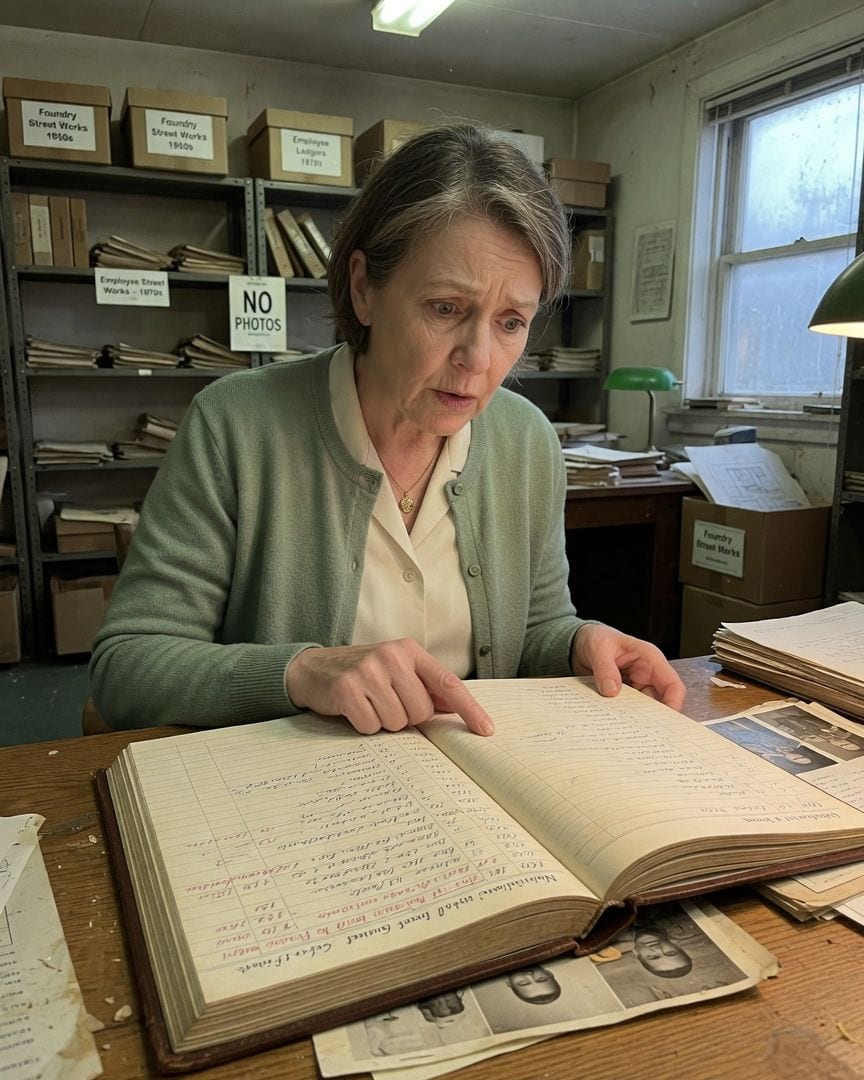
Four people have used my National Insurance number since 1948. All worked at the same Foundry Street plant. Not one ever drew a pension.
Finalizing my pension should have been a simple task at the council office. But the clerk found my National Insurance number had been active since 1948, assigned to four different people before me. Now I've found one of them lived on my own street.
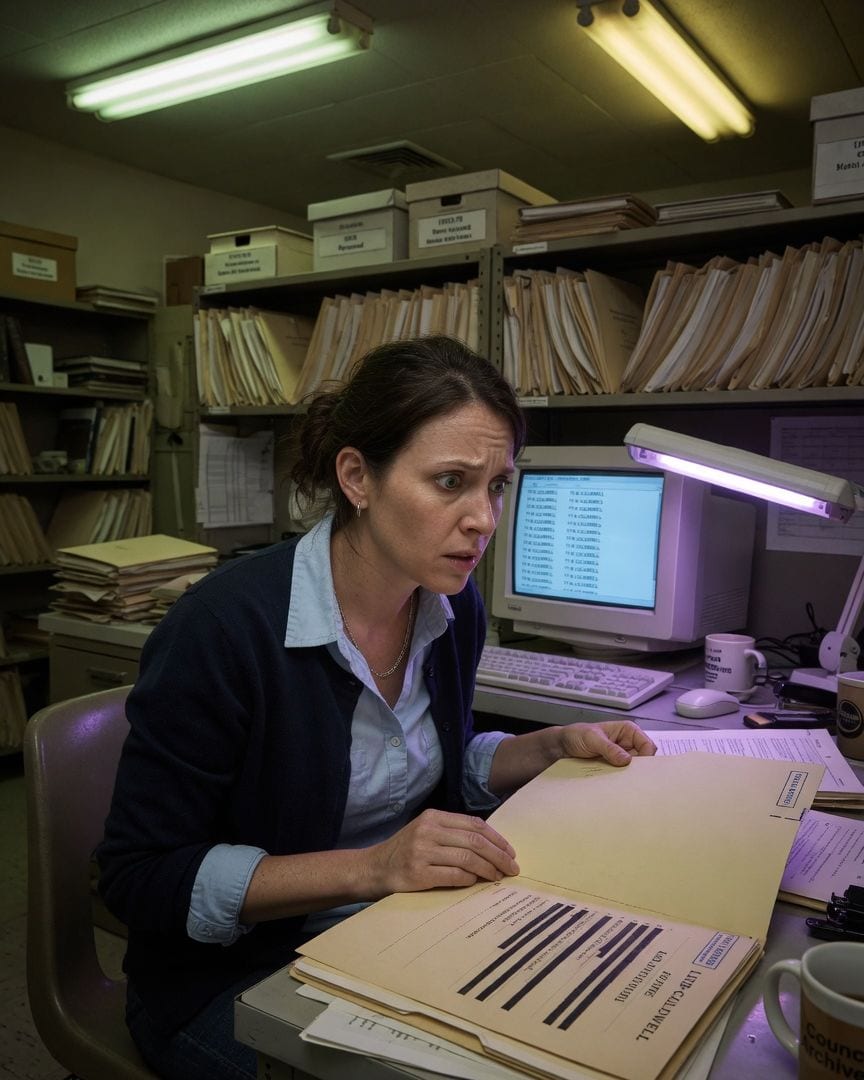
My employer's security file holds a vetting report on me dated nine years before I ever applied. It has my full name and my parents' address — with only one line, the source who referred me, blacked out.
Working a routine data audit, I pull my own security file. The issue date is nine years before I even applied for the job. Then, hidden within an old archive file, I find my current address etched under a blacked-out line.
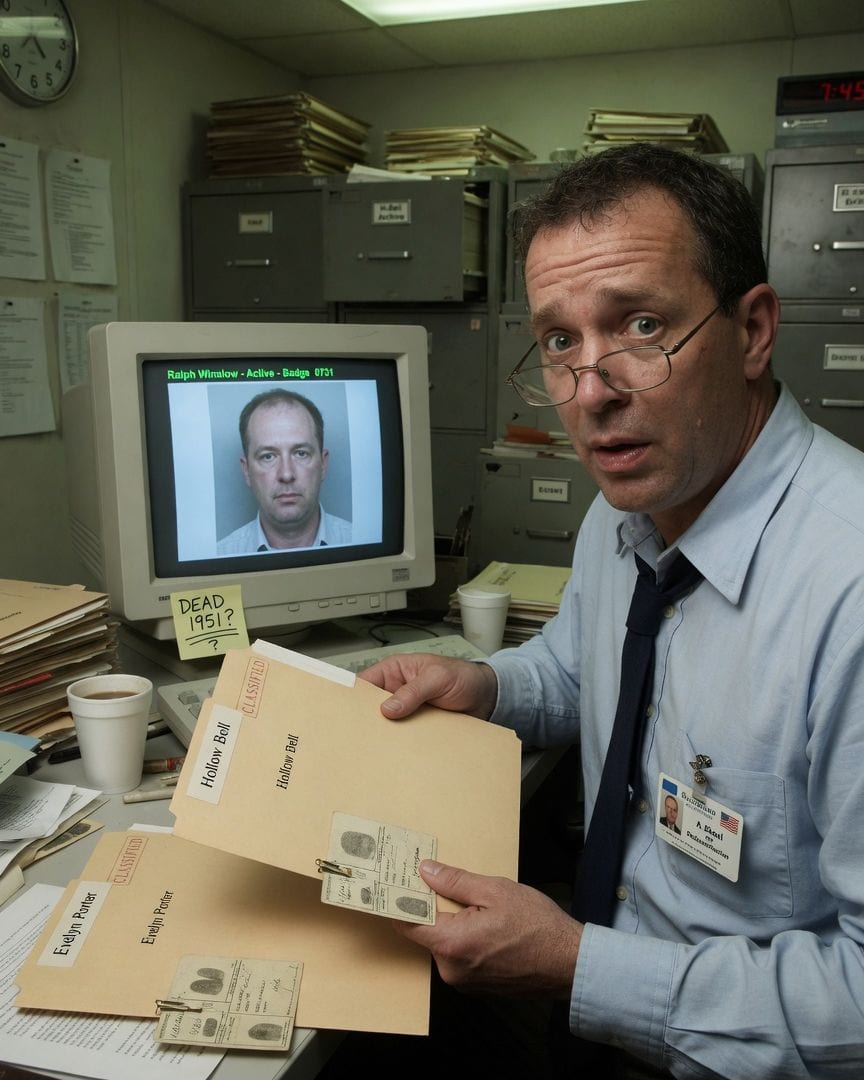
A Cold War declassification reviewer finds a man reported dead in 1951 just badged into his building.
Anton Skeel, a declassification reviewer, hoped his tedious work on old Cold War files would finally lead to an early retirement. He stared at a folder for 'Hollow Bell' containing a fingerprint card from 1958 for a man named Ralph Winslow, who was reported dead in 1951. Out of professional pique, Skeel ran the prints, only to find Ralph Winslow currently employed and badged into the building that very morning. The employee photo, however, was a complete stranger, attached to a file that insisted the man was both seven years dead and decades active. Now, a second impossible file has surfaced, revealing another 'returned subject' reported lost at sea, whose photo also belongs to a stranger.
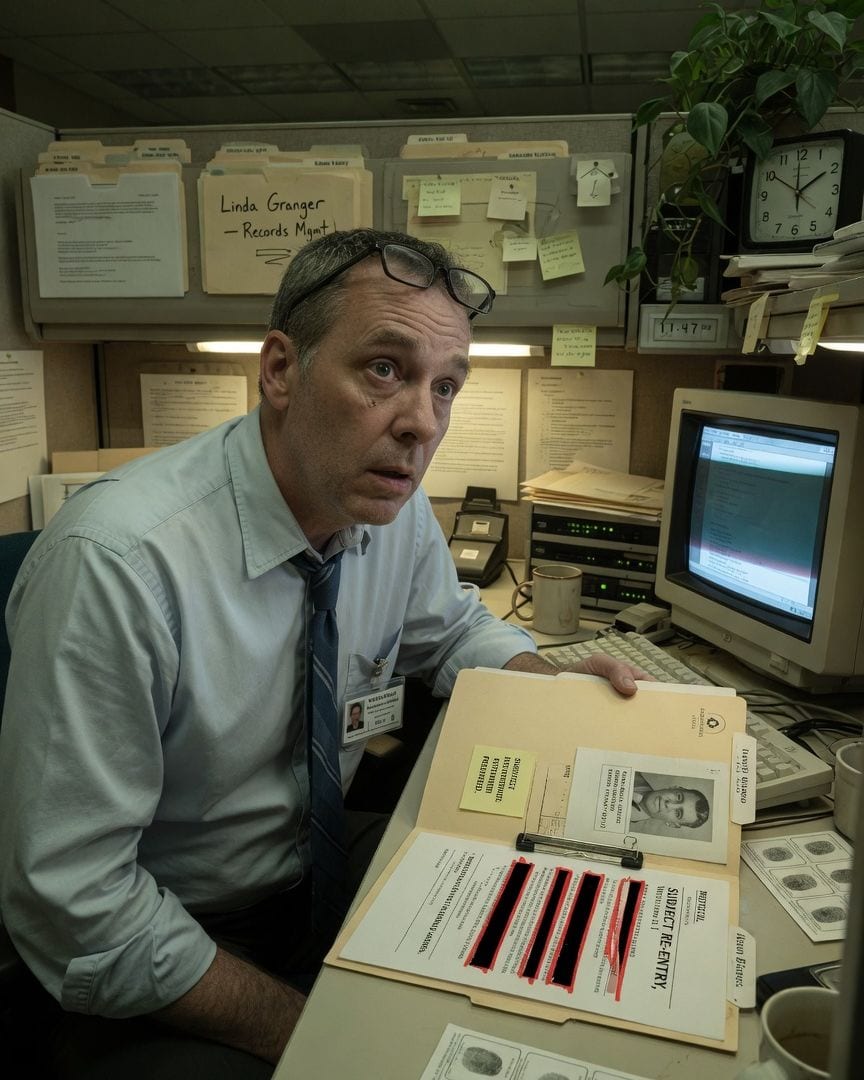
A declassification agent processed old Cold War files. A man reported dead in 1951 had 1958 fingerprints matching an employee badged into the building that morning.
Anton Skeel, a declassification agent nearing two decades of service, meticulously processed the endless backlog of Cold War secrets. His cubicle hummed with the ghosts of forgotten files, but one 'Hollow Bell' folder held a particularly glaring anomaly. It contained a 1958 fingerprint card for Henry Bishop, a man officially reported dead in 1951. When Anton fed the print into the active database, it matched Carl Romano, an employee badged into the building that very morning. A cold certainty settled over him: this wasn't an error, but a system designed for such impossible discrepancies.
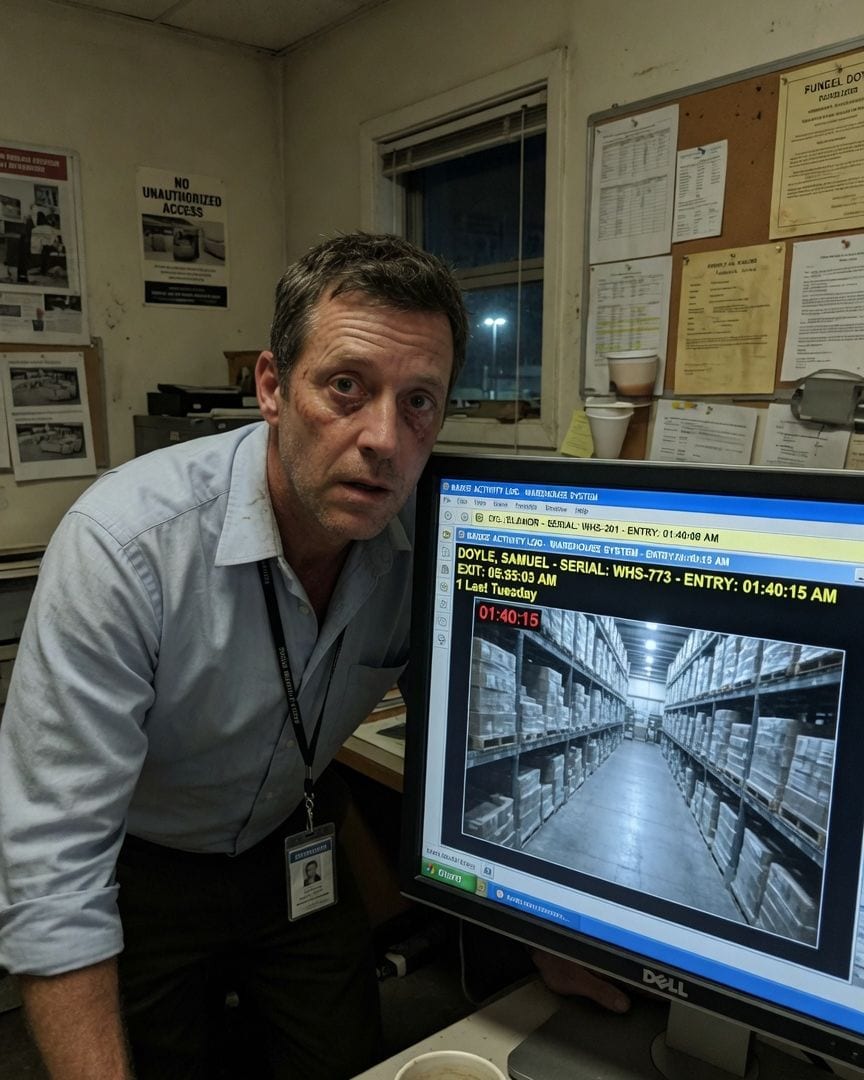
My dead colleague's badge, deactivated weeks ago, logged an entry at 1:40 AM last Tuesday. Then I found another from 1978, with the same impossible times.
My monitor showed a shocking entry: Samuel Doyle, dead and buried three weeks ago, had just logged into the warehouse. His badge was deactivated the day of his funeral, yet the system recorded his precise entry and exit, even though security footage showed the aisles were utterly empty.
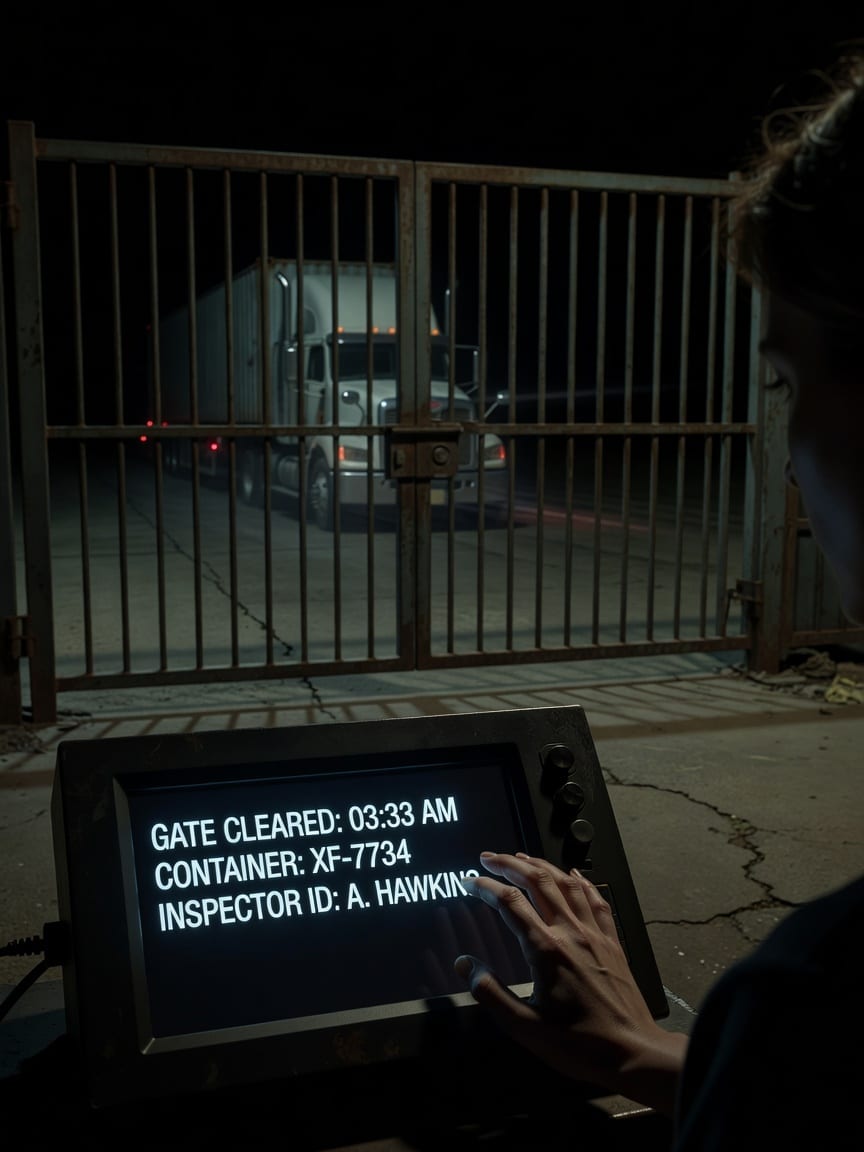
My gate log shows a container left at 3:33 AM, stamped with my ID. The yard was closed, the gate down, and I was asleep.
Audrey Hawkins' inspection log shows a container cleared at 3:33 AM, an impossible time when the gate was locked and no one was working. Her supervisor dismisses it as a glitch, but Audrey can't shake the specific details. Digging into old archives, she finds a handwritten ledger entry from 1974 for the exact same container, signed by a man who died half a century ago.