A Cold War declassification reviewer finds a man reported dead in 1951 just badged into his building.
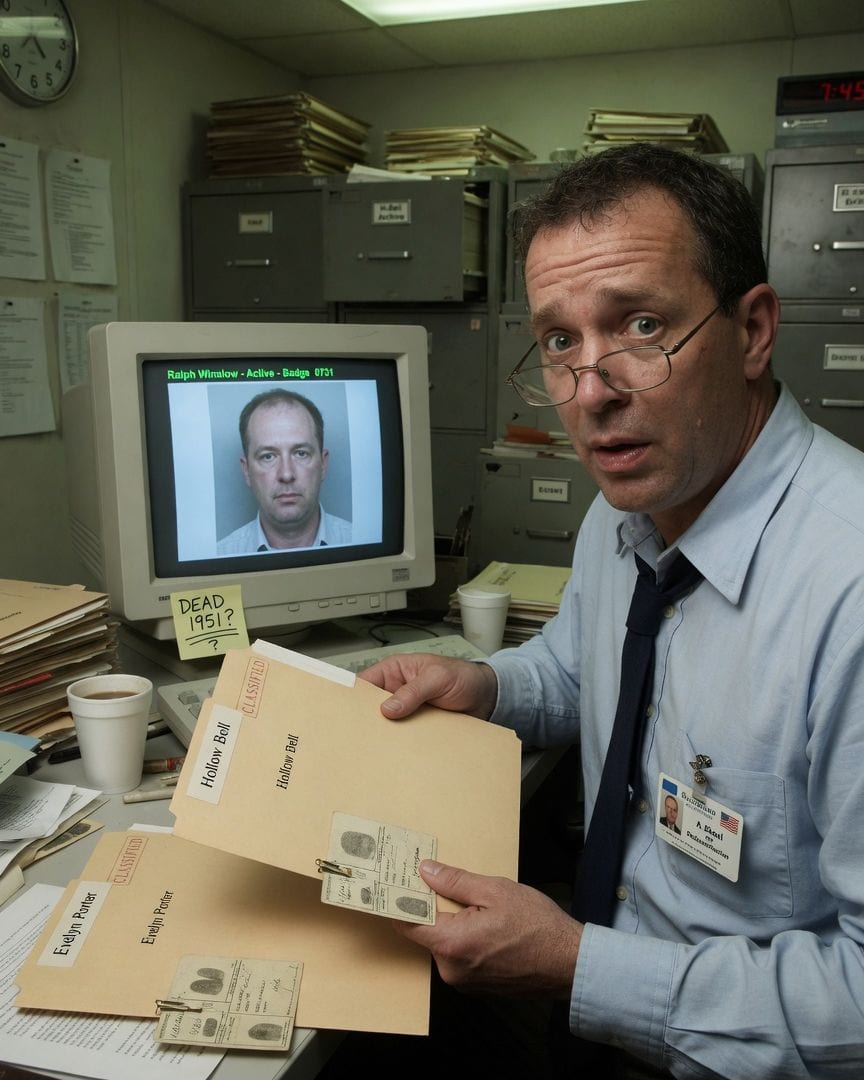
Anton Skeel, a declassification reviewer in his mid-forties, stared at the single sentence on the ‘Hollow Bell’ folder. It read: ‘SUBJECT RETURNED. NOTHING FURTHER REQUIRED.’
The Cold War had been over for six years, and Skeel was still cleaning out the referral queue, a tedious task he hoped would lead to something less mind-numbing, perhaps even an early retirement.
Attached was a fingerprint card, dated 1958, taken at a remote border crossing. The name on the card, Ralph Winslow, had been reported dead in 1951.
Skeel, a stickler for detail and a man who took quiet satisfaction in administrative correctness, ran the prints through the active employee database out of sheer professional pique. The system whirred, then chimed with a match.
Ralph Winslow, current government employee, badged into the building at 0731 that very morning. Skeel clicked on the employee photo. It was a stranger. Not a different Winslow, not a relative.
A completely different face, calm and unremarkable, staring out from a file that insisted it belonged to a man seven years dead and decades active, all at once.
Skeel’s first instinct was ‘misfile.’ It had to be. A clerical error, a duplicate entry, a system glitch. He cross-referenced the badge-in data. The 0731 entry was real, tied to the main entrance turnstiles, verified by security logs.
He checked the personnel database for Ralph Winslow, attempting to find a secondary record, a note, anything to explain the discrepancy.
The system offered only one Ralph Winslow: the one reported dead in ’51, whose prints were taken in ’58, and who was actively employed in ’97. The stranger’s photo was firmly attached to that record.
Skeel tried to trace the stranger’s face through facial recognition, but the system returned no matches. It was as if the face simply didn’t exist outside of that single, impossible employee file.
He pulled up the original ‘Hollow Bell’ folder again. The paper felt odd, too crisp for its apparent age, yet the stamps and watermarks looked genuinely vintage.
It was a contradiction, a physical wrongness in his hands that felt colder than the climate-controlled office air. The thread, thin and icy, had definitely snagged.
He spent the rest of the day, and then the next, digging. He queried ‘Hollow Bell’ through obscure classification codes, bypassing the main search functions. The internal system, designed to obscure more than reveal, finally coughed up a second hit.
Another folder. He pulled it from the deep archives, its cover just as plain, just as devoid of detail as the first. His fingers trembled slightly as he opened it. Inside, a single sentence, identical to the first: ‘SUBJECT RETURNED.
NOTHING FURTHER REQUIRED.’ This time, the name was Evelyn Porter. Reported lost at sea in 1965. Fingerprint card dated 1972, taken at an international airport. Active employee, badged into a different department in the same building, just yesterday.
And the photo on her file was yet another stranger, a different, calm, unremarkable face.
The discovery of Evelyn Porter’s file solidified Skeel’s dread. This wasn’t a clerical error; it was a pattern.
He tried to track the physical locations of both Ralph Winslow and Evelyn Porter within the building using their internal badge data, but the results were nonsensical.
Winslow’s last recorded location was a sub-basement server farm that had been decommissioned a decade ago.
Porter’s data showed her in three different wings of the building simultaneously, then vanishing entirely from the system for hours before reappearing in a different department.
The trails were either impossible or led to dead ends that twisted back on themselves. He started reviewing other ‘no further action’ entries in the referral queue, looking for similar anomalies.
He found minor date discrepancies, names with gaps in their service records that stretched for years, always followed by the same terse ‘nothing further required’ or ‘status confirmed’ notes.
The files themselves seemed to radiate a cold indifference, a quiet hum of something operating beneath the surface of the official record. Skeel found himself shivering, despite the office thermostat set to a comfortable seventy-two degrees.
He felt like he was sifting through the fossilized remains of a vast, patient machine.
Skeel’s focused digging did not go unnoticed. His section chief, Patrick Porter, a man whose calm demeanor bordered on unnerving, called him into his office.
“Anton,” Porter said, his voice smooth and even, “I’ve noticed your recent interest in Null-Class referrals. A rather… niche area, wouldn’t you say?” Skeel felt a prickle of unease.
He explained his findings, the impossible dates, the stranger photos, trying to keep his tone professional and rational. Porter listened, unblinking, then simply nodded. “Interesting. But I’d advise focusing on the active queue, Anton.
Resources are tight, and these older cases are, by definition, resolved.” The next morning, Skeel found his access to the ‘Null-Class’ database temporarily revoked. The system simply displayed an ‘Access Denied’ message, with no explanation.
Later that day, a plain, unmarked envelope appeared on his desk. Inside was a single, blank page, but with a recent agency stamp in the corner.
Beneath the stamp, a small, perfectly circular redaction, the size of a fingerprint, seemed to stare back at him. He felt a distinct chill, a sense of being observed, a quiet understanding that his inquiries had crossed an unspoken line.
The chill spurred Skeel to action. He sought out Audrey Bishop, the records administration clerk, a young woman in her early thirties who managed the physical archives. She was known for her photographic memory of file locations.
He cornered her in the quiet hum of the lower vaults, away from prying ears. “Audrey, I need to understand the ‘Hollow Bell’ designation. And Null-Class files.” She blanched. “Sir, those are just… legacy oddities. Nothing to worry about.”
He laid out the files, Ralph Winslow, Evelyn Porter, the impossible dates, the stranger photos. “These are not oddities, Audrey.
These are records of people reported dead, whose prints are taken years later, who are then badged into this building, with faces that don’t match the names. What does ‘SUBJECT RETURNED’ mean?” Audrey’s eyes darted around the stacks of folders.
She wrung her hands. “It’s… it’s a status, sir. Not an outcome.” She lowered her voice to a whisper. “There are many more. So many. Null-Class is where they go. The ones who are… repurposed.”
She explained, haltingly, that a deeply buried section of the agency maintained these ‘returned’ individuals. The ‘stranger’ in the photo? That was the current physical host for the identity. The photos updated over time. “Nobody talks about it,” she breathed.
“It’s just… how the machine works. It keeps the secrets alive, by keeping the people who knew… available.”
Audrey, now visibly terrified, fumbled in her pocket. “They’ll know I told you,” she whispered, her eyes wide. She pressed a small, ancient data chip into Skeel’s hand. “Don’t open this here.
And don’t tell anyone I gave it to you.” As she spoke, Patrick Porter walked silently past the end of their aisle, his gaze sweeping over them, a faint, almost imperceptible smile playing on his lips.
He continued on, his footsteps echoing in the cavernous archive. Skeel felt a cold dread settle in his stomach. He clutched the chip, his heart pounding.
Later that night, in the quiet solitude of his apartment, he inserted the chip into his personal terminal. It contained a single, heavily redacted document: an internal memo from 1950, titled ‘Hollow Bell: Subject Re-integration Protocols.’
He scrolled through the dense, official language, through paragraphs blacked out with an unnerving precision. And then he saw it: a list of names and what looked like service numbers.
Beneath a heavy, circular redaction, too short to completely obscure the digits, he could make out the last four numbers of his own service ID, assigned decades after the memo was written, a cold whisper of his own name within the machine.
The realization hit Skeel with the force of a physical blow. His own service number, decades before his birth, marked in a file detailing ‘re-integration protocols.’ The data chip contained not just the memo, but a series of cryptic logs.
He spent hours, fueled by cold coffee and a growing terror, cross-referencing the logs with the redacted memo. The pattern snapped into place, horrifying in its coherence.
The ‘Hollow Bell’ was a system, an institutional mechanism designed for the perpetual recycling of identities.
Individuals reported ‘dead’ or ‘missing’ were not lost; they were simply filed, their identities preserved, ready to be ‘returned’ and re-assigned to new physical hosts when needed.
The ‘stranger’ in Ralph Winslow’s and Evelyn Porter’s files wasn’t a mistake; it was the current occupant, the new face for an old name.
The system didn’t just maintain secrecy; it was the secret, a living, breathing entity that absorbed human lives as its filing system, ensuring an endless supply of agents who could move through the bureaucracy unnoticed, their pasts erased, their futures predetermined.
The impossible dates, the stranger photos, the circular references, the ‘no further action’ entries—they all coalesced into a monstrous, self-perpetuating cycle.
He wasn’t just reviewing old files; he was looking at the operating manual for a machine that had been running for generations, and he had just found himself on the next page.
Skeel, trembling with a cold fury, knew he had to expose it. He drafted an anonymous email to an oversight committee, detailing everything, attaching the memo and logs. He hit send. The email bounced, a generic ‘address unknown’ message.
He tried another, then another, each attempt routed back to internal servers or simply vanishing into the digital ether. Desperate, he confronted Patrick Porter in his office, slamming the chip and a printout of the memo onto his desk.
“You knew!” he accused, his voice tight. Porter looked at the documents, then at Skeel, his expression calm, almost serene. “Of course, Anton. I oversee the process.” He leaned back, a faint smile playing on his lips.
“You were being evaluated. Your methodical nature, your dedication to coherence, your quiet persistence… all optimal traits.” Porter explained, in a chillingly detached tone, that the system simply was. It had evolved, a necessary adaptation for absolute secrecy and continuity.
He offered Skeel a ‘position’ within the system, not as a victim, but as an administrator, ensuring the efficient flow of ‘subjects returned.’ Skeel stared, horrified. “Never.” He pushed back his chair, moving for the door.
Porter shook his head slowly. “A shame. Such potential.” As Skeel reached for the handle, the office doors locked with a soft, almost inaudible click. The overhead lights dimmed, casting long, unsettling shadows.
A faint, pervasive hum began to emanate from the walls, a sound that felt less like machinery and more like a vast, patient organism waking up.
Anton Skeel was reported missing the following morning. His office was quietly cleared out, his personal effects boxed and sent to an unclaimed property facility.
The ‘Hollow Bell’ folders, and all related Null-Class documentation, were purged from the system, leaving no digital trace.
Audrey Bishop was transferred to a remote, obscure data entry department in a satellite office, where she never spoke of her past work again, her eyes holding a permanent, distant fear.
Life within the agency continued, seamless and undisturbed, as if Skeel had never existed, as if no one had ever looked too closely at the files.
Two weeks later, Patrick Porter, now with a new, younger assistant, walked past a cubicle in the declassification review section. He paused by a new reviewer, a man with a familiar, methodical air, diligently going through the referral queue.
The man looked up, and there was a faint, almost imperceptible shift in his eyes, a depth that wasn’t there before, a quiet understanding. Porter gave a slight, almost imperceptible nod.
The reviewer returned to his screen, where a folder titled ‘Hollow Bell’ had just come up. Its single sentence read: ‘SUBJECT RETURNED. NOTHING FURTHER REQUIRED.’ The file is still being signed.
If this one got to you
A declassification agent processed old Cold War files. A man reported dead in 1951 had 1958 fingerprints matching an employee badged into the building that morning.
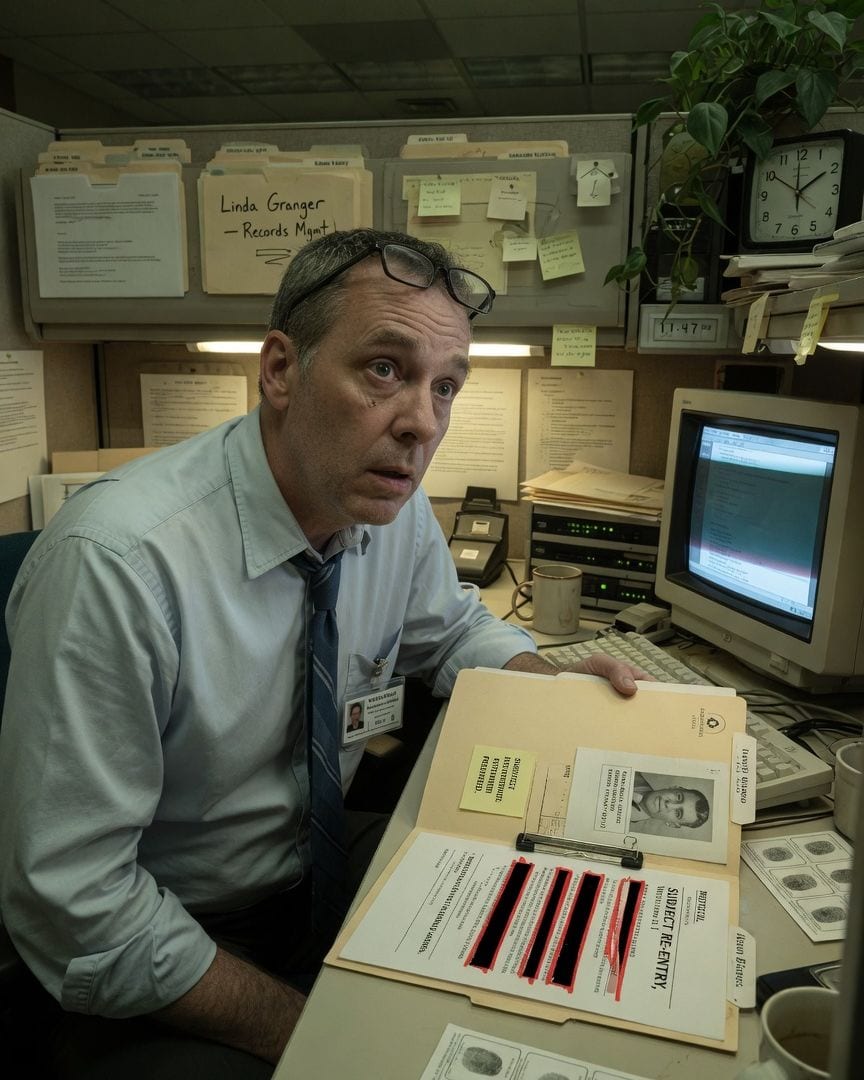
Anton Skeel, a declassification agent nearing two decades of service, meticulously processed the endless backlog of Cold War secrets. His cubicle hummed with the ghosts of forgotten files, but one 'Hollow Bell' folder held a particularly glaring anomaly. It contained a 1958 fingerprint card for Henry Bishop, a man officially reported dead in 1951. When Anton fed the print into the active database, it matched Carl Romano, an employee badged into the building that very morning. A cold certainty settled over him: this wasn't an error, but a system designed for such impossible discrepancies.
A government records reviewer found a Cold War file marked 'DECEASED – 1951.' It showed the man badged into the building this morning, then transferred by his own supervisor.
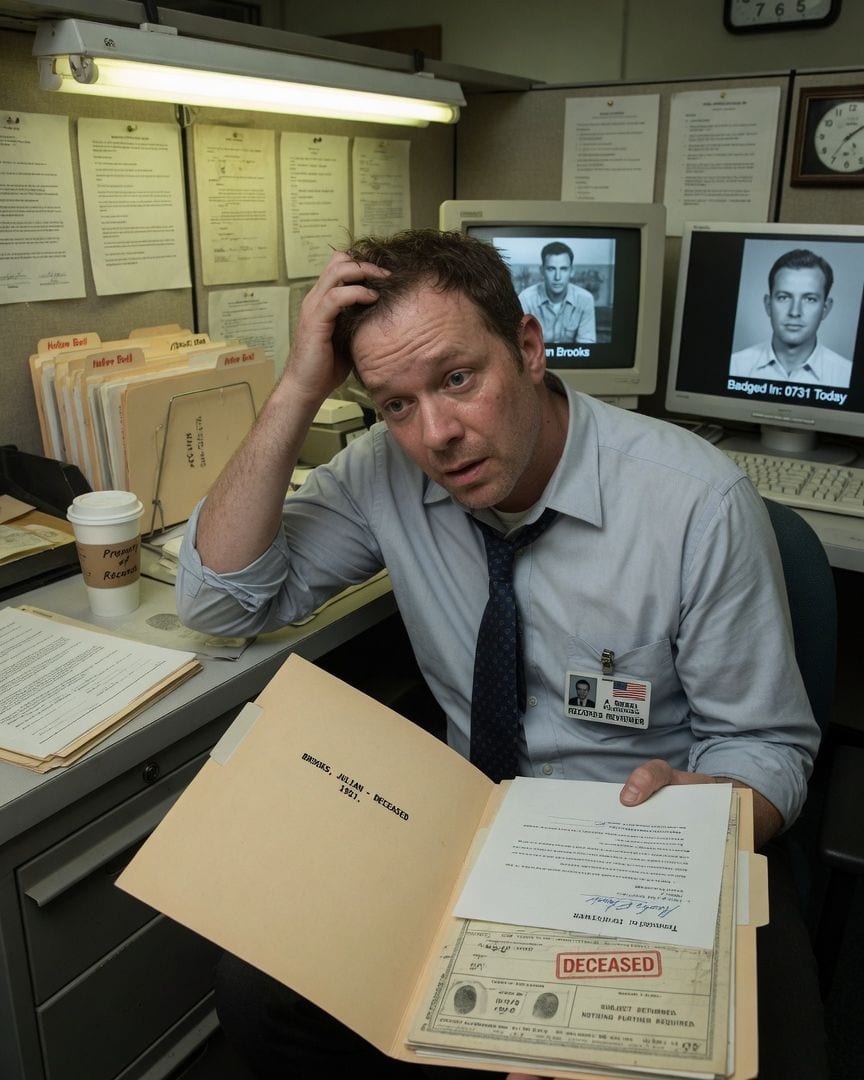
Anton Skeel, a meticulous government records reviewer, typically found his cubicle farm full of stale coffee and routine. But a slim folder marked 'RESTRICTED' shattered his quiet order: it contained a fingerprint card for Julian Brooks, a man officially dead since 1951. The system, however, showed Brooks badged into the building just hours earlier. Skeel's search revealed a file that simply kept writing, documenting a full career after Brooks’ official demise, culminating in a transfer order signed by Skeel’s own supervisor. The quiet hum of the office suddenly felt deafening as the impossible truth settled in.
My National Insurance number has been used by four people since 1948. Each one worked at the same Foundry Street works, and none ever drew a pension.
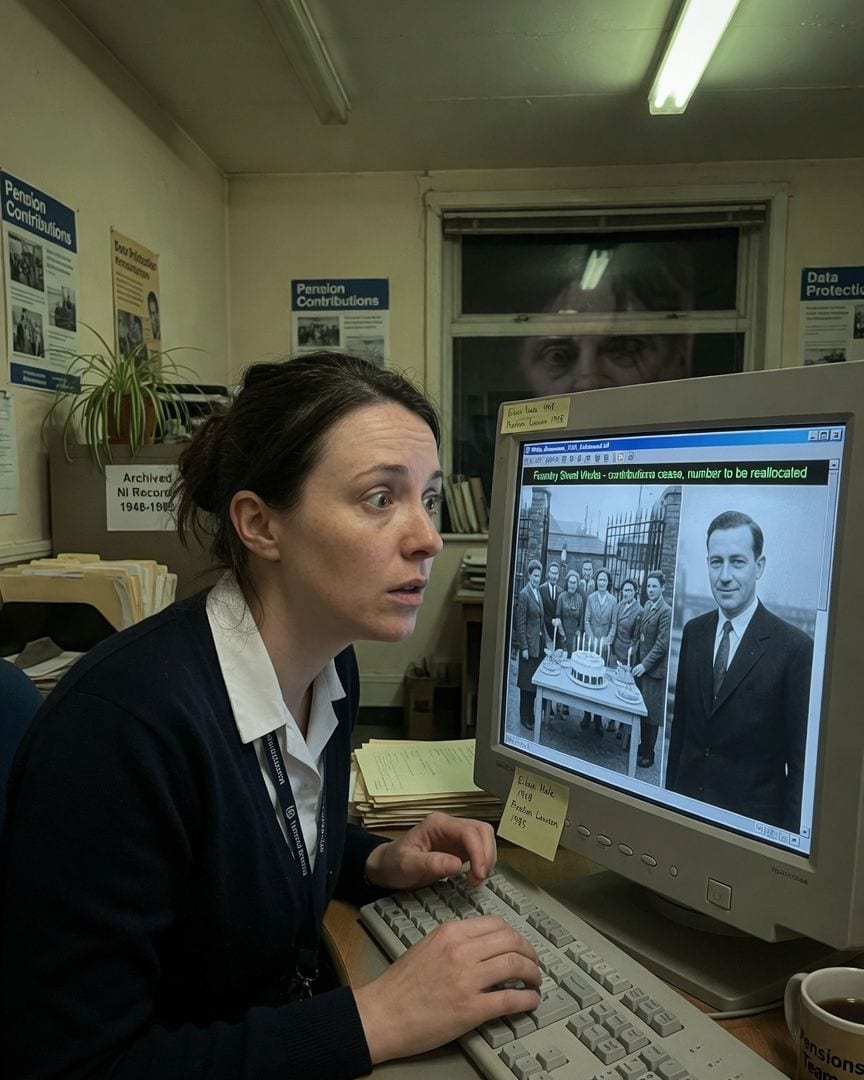
I was just sorting out my new National Insurance number, a routine task I expected to take minutes. But the clerk found it had been used four times since 1948. Even stranger, all four previous holders worked at the defunct Foundry Street Works and never drew a penny of pension.
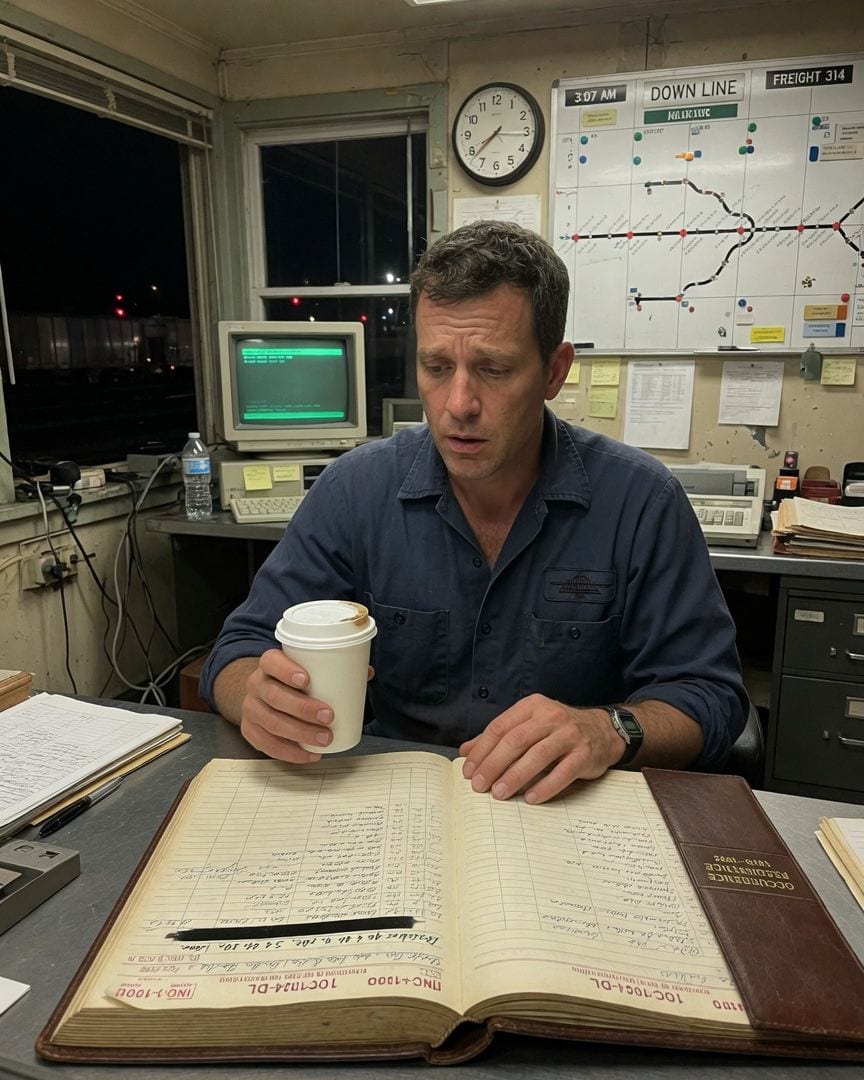
My new colleague's face is identical to a woman in a 1958 archive photo. She was declared 'the woman on the down line' for decades.
Working my solitary shift in the signal box, I found a blacked-out entry in the old occurrence register. It noted 'the woman on the down line' and the instruction 'do not stop.' This same strange entry, word-for-word, recurred every October 4th, back through the years from 1988. It felt like a chill in the routine, a silent dread in a book of transient events.
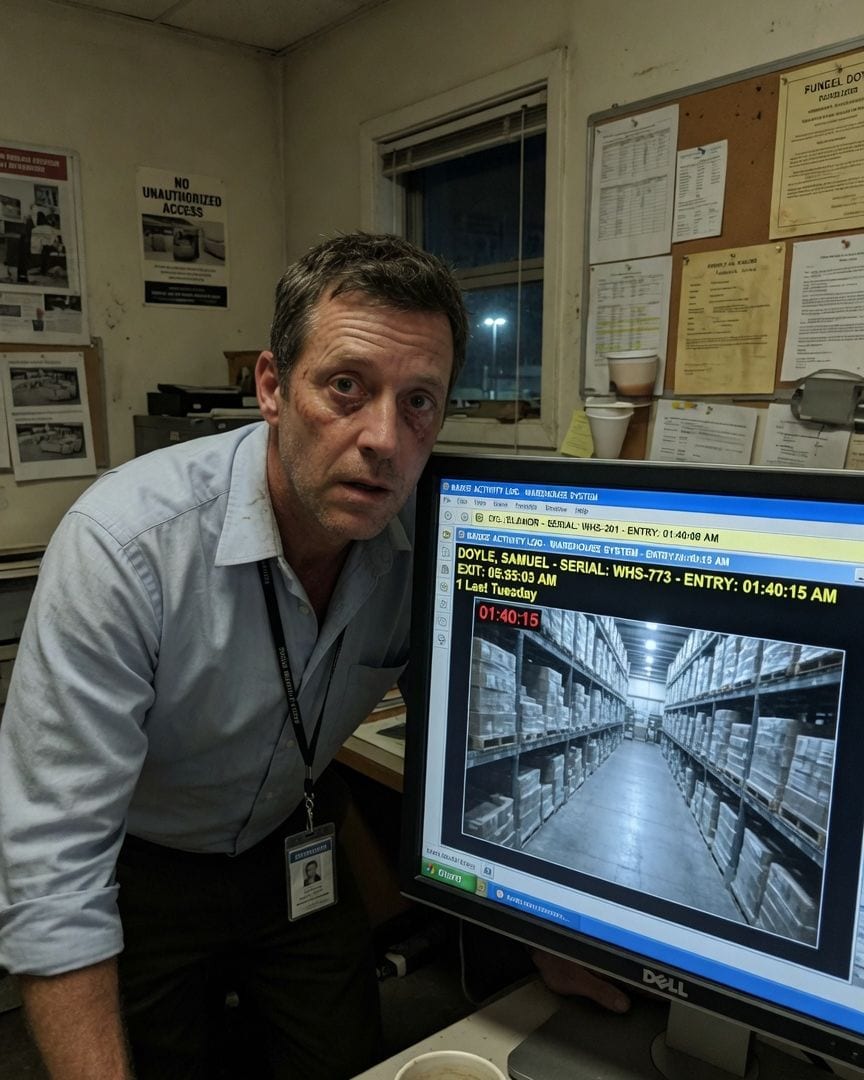
My dead colleague's badge, deactivated weeks ago, logged an entry at 1:40 AM last Tuesday. Then I found another from 1978, with the same impossible times.
My monitor showed a shocking entry: Samuel Doyle, dead and buried three weeks ago, had just logged into the warehouse. His badge was deactivated the day of his funeral, yet the system recorded his precise entry and exit, even though security footage showed the aisles were utterly empty.
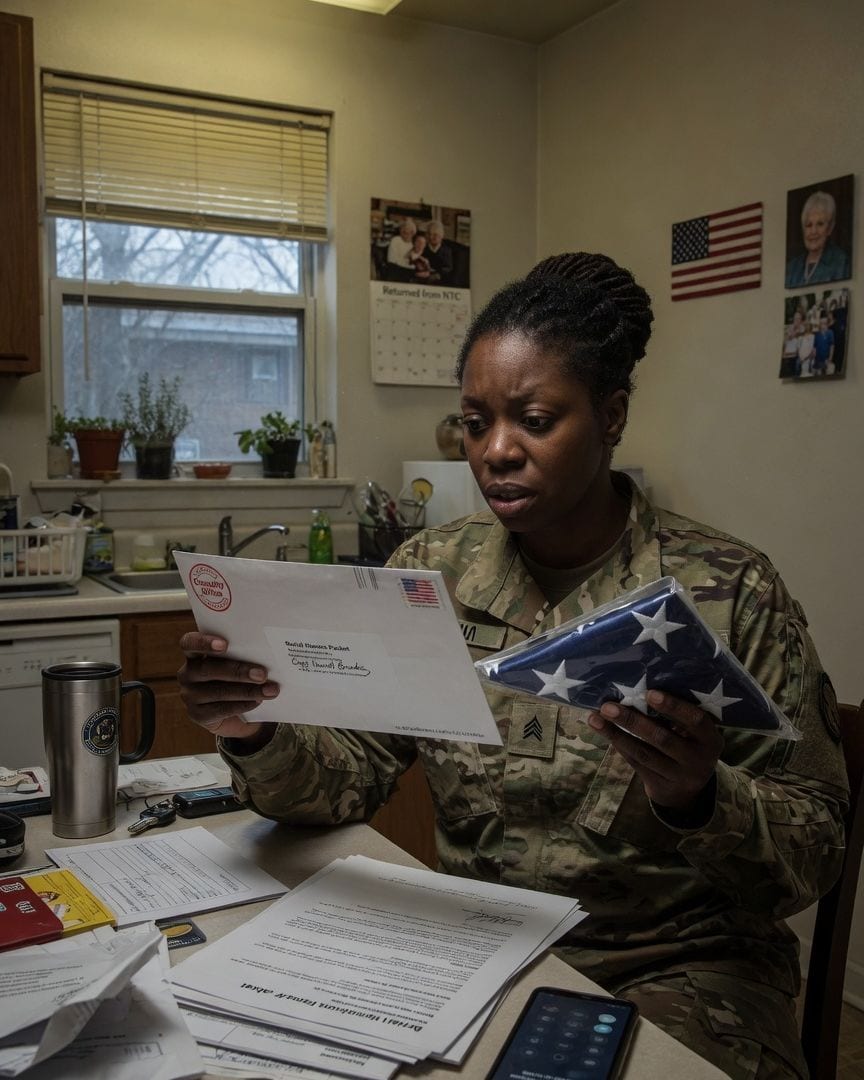
A Sergeant finds her own complete burial packet, dated for the coming spring, then finds a stack of identical ones for others.
Sergeant First Class Bree Alcott returned from a grueling training exercise, looking forward to peace, but found her kitchen table piled with mail, one official package heavy with dread. Inside was her own complete burial-honors packet, every detail filled, from Arlington plot to her grandmother’s chosen hymn, all dated for a specific day in the coming spring. The casualty office dismissed it as a 'glitch,' but Bree found a cryptic code leading to a decommissioned desert station and a stack of identical packets for other soldiers. What meticulous hand had prepared these packets, and why was Bree Alcott’s name on a list for a future she shouldn't have known?