A declassification agent processed old Cold War files. A man reported dead in 1951 had 1958 fingerprints matching an employee badged into the building that morning.
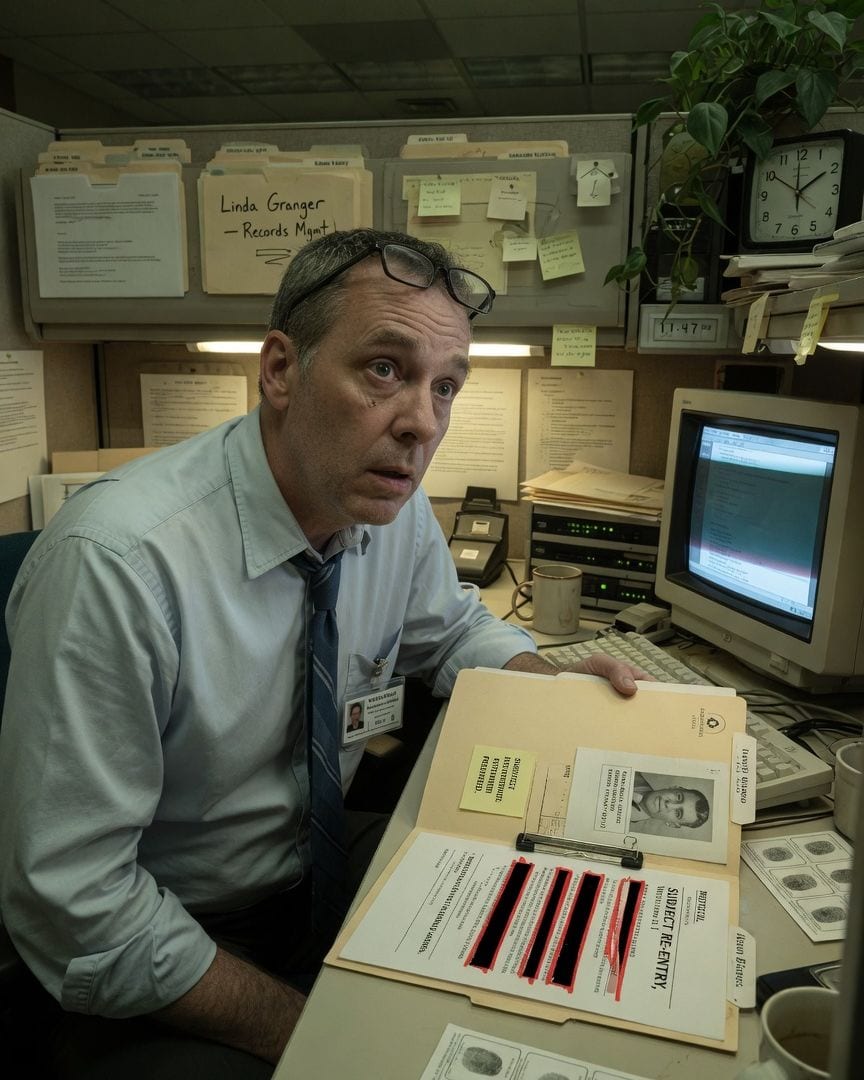
Anton Skeel, forty-eight and nearing his twenty-year service mark, found himself staring at another 'Hollow Bell' folder. Six years after the Cold War’s official end, his cubicle in the agency’s declassification department still hummed with the ghosts of old secrets.
He spent his days clearing a monotonous backlog of referral queue folders, each one a testament to bureaucracy’s endless churn. This particular folder, dull manila like all the others, contained a single, typed sentence: 'SUBJECT RETURNED. NOTHING FURTHER REQUIRED.'
Below it, stapled without explanation, lay a yellowed fingerprint card dated 1958. The name on the card read 'Henry Bishop.' Anton checked the accompanying note – Bishop, it stated, was reported dead in 1951.
An obvious discrepancy, a sloppy error. Anton, whose meticulousness was both his career’s engine and its occasional curse, felt a familiar flicker of annoyance.
He fed Bishop's fingerprint into the active personnel database, more out of spite for the inefficiency than any real expectation. The system whirred, processing the ancient data, then pinged. A match.
Carl Romano, an active government employee, badged into the building at 07:31 that very morning. Anton pulled up Romano’s full file. The photo on the screen was of a completely different man, a stranger with a bland, unfamiliar face.
The air in the sterile office didn't chill; instead, a cold, precise certainty settled over Anton. Something in the machine hadn't just broken its own rules. It had been designed to.
Anton, methodical by nature, tried to dismiss it. A misfiled card, a database error, a common name. He tried to tell himself that. But the details nagged. He checked the control numbers on the 'Hollow Bell' folder.
They traced not to any originating office, but looped back to a generic 'Records Management - Special Projects' department, a name that hadn't existed on any organizational chart since the late 70s.
He flagged the discrepancy for Linda Granger, a veteran archivist two cubicles down, whose institutional memory was legendary. She was known for knowing where all the bodies were buried, figuratively speaking.
Linda, fifty-five, her face a map of quiet knowledge, merely glanced at the file Anton held out. Her expression was unreadable, a practiced neutrality. 'Hollow Bell again?' she murmured, a faint sigh escaping her lips. 'Just re-file it, Anton.
It always comes back.'
But Anton couldn’t. He zoomed in on the digital scan of the fingerprint card, looking for a clue, any clue, to explain the impossible mismatch. There it was: a faint, almost imperceptible watermark, a stylized bell.
It wasn't a standard agency watermark; he knew every one. This wasn't a clerical error. This was a deliberate misdirection, a system designed to look like a mistake.
He decided to cross-reference the Hollow Bell folder's control numbers with other seemingly unrelated 'dead-end' files in the referral queue, a tedious task no one else would bother with. He would, though. He had to.
Hours later, the stale office air thickening around him, Anton sat amidst stacks of obsolete microfiche readers and blinking terminals. His eyes burned, but a strange current of exhilaration now ran through him.
He stared at the printout from the agency's internal database, the culmination of his stubborn cross-referencing.
The control numbers, once random strings on dozens of folders, now formed a clear, sequential pattern across multiple, seemingly unrelated 'Hollow Bell' files he’d pulled. He traced one of the numbers to a document titled, 'PROTOCOL: SUBJECT RE-ENTRY, Version 3.1.'
The title was clear, printed in a stark, official font.
But the entire body of the document was blacked out, a solid rectangle of redaction, impenetrable and complete, save for a single, unredacted line near the bottom: '…disposition of prior identity assets…'
The phrase hung in the quiet hum of the room, cold and precise, implying a system, a process, for what happened to the lives left behind.
Anton spent the next few days in a quiet fury, working through lunch, ignoring the knowing glances from Linda. The phrase 'disposition of prior identity assets' was a barb in his mind. It sounded like property, not people.
He scoured declassified Cold War-era personnel manuals, a dust-choked pursuit through endless rows of binders, looking for any mention of 're-entry protocols' or similar terminology.
He found nothing explicit, but a new pattern began to emerge in certain classified files: a specific, unusual redaction style.
Not just blacked-out lines, but entire paragraphs where the blacking out created an odd, almost geometric shape, like a broken key. These weren't standard redactions. These were… designed.
He also found several instances where control numbers in these oddly redacted documents pointed to a 'Section Omega' – an office that, according to official records, was decommissioned in 1962. Yet, these documents were dated as late as 1985.
The paper trail was deliberately convoluted, designed to deter, to exhaust. But Anton’s meticulousness, usually a bureaucratic curse, was now a weapon.
He compiled a list of every 'Hollow Bell' folder he’d ever processed, noting the years, the names, and the identical one-sentence instruction. There were dozens, spanning four decades. This wasn't a glitch; it was a machine, churning away, quietly, relentlessly.
He realized the 'stranger' in Carl Romano’s photo might not have been a mistake at all, but a deliberate part of this chilling 'disposition' process.
Anton’s late-night research didn’t go unnoticed. One evening, as he was cross-referencing another batch of 'Hollow Bell' files, his computer screen flickered.
A pop-up appeared, not an error message, but a stark, black box with white text: 'YOUR QUERIES ARE BEING LOGGED. PROCEED WITH CAUTION.' Anton’s heart thumped a heavy beat against his ribs.
He immediately tried to trace the message, to grab a screenshot, but it vanished as quickly as it appeared, leaving no digital footprint, no evidence that it had ever been there.
The next morning, he found his desk slightly askew. A specific file he’d left open, a stack of copied control numbers, was now closed and neatly stacked, almost too neatly.
A minute later, Linda Granger approached his cubicle, her voice low, barely a whisper above the hum of the fluorescent lights. 'Anton, the section chief asked about your progress on the 'Hollow Bell' queue.
Said you were 'taking a keen interest.'' Her eyes, usually placid, held a warning, something beyond professional courtesy. She paused, then added, 'Some files are better left buried, Anton. For everyone's sake.' He felt a cold knot in his stomach.
He wasn't just an observer anymore. He was part of the file now, a new entry being written. He decided to shift his focus.
He would look for records of past declassification reviewers who might have encountered the 'Hollow Bell' folders. He needed to know if anyone else had ever looked too closely.
Anton confronted Linda Granger in the quiet hum of the archives, the rows of shelves pressing in around them.
He presented her with the overwhelming pattern of the 'Hollow Bell' folders, the 're-entry protocol' title, and the impossible Section Omega references. She initially dismissed it, waving her hand with a dismissive gesture. 'Old Cold War paranoia, Anton.
Files get messy. Departments reorganize.'
But Anton pushed, laying out the printouts of the peculiar geometric redactions. 'This isn’t random, Linda,' he insisted, his voice tight. 'Someone designed this to be overlooked, but not erased. This is a language, a code.'
Linda’s composure finally cracked. A flicker of something, fear or resignation, crossed her face.
She led him deeper into the archives, to a rarely accessed sub-archive, a forgotten corner where dust motes danced in the single shaft of light from a high window.
'The 'Hollow Bell' isn’t a folder, Anton,' she whispered, her voice strained, barely audible. 'It’s a designation. For assets who are… returned. People who had a purpose, even after they were officially gone.'
She explained, her words a chillingly calm revelation, that 'Section Omega' was a black project, established decades ago, responsible for 're-integrating' certain individuals whose deaths were faked.
Henry Bishop, reported dead in '51, fingerprinted in '58, was one of the first successful 're-entries' into a new identity: Carl Romano. Anton’s mind raced, connecting the dots. The stranger’s photo on Romano’s file?
'It’s the face of the previous Carl Romano,' Linda revealed, the words landing like stones. 'Another asset whose identity was recycled. They don’t just fake deaths; they recycle lives, too. Identities become assets, transferable property.'
The truth, cold and bureaucratic, clicked into place, explaining the 'disposition of prior identity assets.' It was a system, patient and self-sustaining, turning people into paperwork, erasing and rewriting them without a ripple.
Linda, visibly shaken by her own admissions, pointed Anton to a specific microfiche archive, a dimly lit machine humming softly in the quiet corner. 'It’s all in here,' she said, her voice barely audible, 'the genesis, the first subjects.
But be careful, Anton. This rabbit hole goes deeper than you think.'
He spent hours scrolling through grainy images of documents on the screen, lists of names, dates, and coded designations. The sheer scale was staggering.
He saw familiar names, figures from history reported dead, now listed with new service numbers and 're-entry' dates years later. The world he knew, the history he thought was solid, felt like a flimsy stage curtain.
Then, buried deep within a heavily redacted list of 'potential assets' or 'legacy subjects' from the early 1970s, his eyes snagged on an entry.
Most of the name was blacked out, a thick bar of black ink, but next to it, a six-digit number was perfectly clear: '792041.'
Anton froze. He knew that number. It was his own service number, assigned to him when he first joined the agency, decades ago. Below it, in faded blue ink, a single handwritten note read: 'Monitor: family legacy.
Status: Active, Records Review.'
The screen flickered. The microfiche view suddenly locked, replaced by a blank, blue error message, the archival system now completely unresponsive. Anton was no longer just investigating. He was part of the file he had been reading.
Anton stared at the frozen screen, the implication of his own service number chilling him more than any ghost story. He knew he couldn’t ignore it. Linda, seeing his pale face, finally confessed the full truth, her voice hushed.
'The program doesn't just find people, Anton. It cultivates them. Some families have a… predisposition. A certain aptitude for discretion, for detail. Like yours.'
She revealed that Anton's great-uncle, a minor intelligence analyst reported 'lost at sea' in 1948, was one of the earliest 'Hollow Bell' subjects. His 'disappearance' was a re-entry into a new identity, and his continued, unacknowledged service was exemplary.
'You were flagged, Anton,' she continued, 'not as a target, but as a potential legacy asset. They watched you. Your meticulousness, your ability to spot patterns where others saw only chaos… it’s what they look for.
Your constant pulling of the 'Hollow Bell' folders wasn’t an accident; it was a test. To see if you’d notice. To see if you’d dig.'
The 'Hollow Bell' program, she explained, wasn't just about recycling identities; it was about perpetuating a shadow bureaucracy with an endless supply of loyal, untraceable personnel, some of whom were unknowingly descended from previous subjects.
The redacted shapes, the impossible control numbers, the 'SUBJECT RETURNED' phrase – all were internal markers for those 'in the know,' a language of secrecy designed to be coherent only to itself. Anton wasn't just a reviewer.
He’d been a potential candidate, groomed by the very system he sought to expose.
The realization hit Anton with a cold, sickening clarity. He wasn't chasing a ghost; he was being observed by a living, breathing machine that had already accounted for him, calculated his every move.
He looked at Linda, seeing not just a colleague, but another cog, perhaps a 'legacy' herself, who had chosen to stay silent.
'What happens now?' Anton asked, his voice flat, devoid of emotion.
Linda avoided his gaze, tracing an invisible line on the archive shelf. 'You have a choice, Anton. You can re-file the folders, forget what you’ve seen. Continue your service, make your twenty years, retire with your pension.
Or… you can push. But the 'Hollow Bell' program doesn’t stop. It just adapts.'
Anton felt the weight of his pension, his years of quiet, meticulous service. He thought of the blank face on Carl Romano’s file, of Henry Bishop, dead and then not dead.
He thought of the note about his own 'family legacy.' He made his decision.
He spent the next seventy-two hours working relentlessly, fueled by cold coffee and a quiet rage. He wasn’t just compiling the evidence of the 'Hollow Bell' program, the patterns, the names, the dates.
He was creating a secure, encrypted digital package, a bomb designed to detonate in the heart of the system.
He included his findings on the 're-entry protocol,' the identity recycling, the impossible control numbers, and crucially, the 'legacy asset' flagging, including his own service number and the note attached to it.
He didn’t confront the program directly; he exposed it to an external, independent oversight committee, bypassing the internal channels he knew were compromised. He knew this wouldn’t 'stop' it entirely, but it would force an investigation, a reckoning.
He finished the upload just as dawn broke, the pale light filtering into his office, painting the dust motes in the air with faint gold. He felt hollowed out, utterly drained, but a strange, quiet resolve settled over him.
He had pulled back the veil, at least for a moment. He knew his life would never be the same, and his 'twenty years' might be forfeit, but the truth, or a fragment of it, was out.
Weeks later, the fallout was a controlled tremor. An internal investigation was launched, quiet but relentless, its parameters vague but its reach clear. Anton was placed on 'administrative leave' pending review, his pension now a distant, uncertain hope.
Linda Granger took an early retirement, her silence bought with an accelerated package and a non-disclosure agreement thicker than a phone book.
The 'Hollow Bell' folders disappeared from the referral queue entirely, replaced by a new, innocuous-looking designation, too generic to mean anything.
Carl Romano’s name vanished from the active employee roster, and the fingerprint database entry for Henry Bishop was purged, scrubbed from existence. The records were being rewritten, the traces swept clean, but the machine had been seen.
The committee’s report was heavily classified, but a single, unredacted line leaked to a persistent investigative journalist: '…evidence suggests a systemic, multi-generational program of identity management…'
Anton sat in his small apartment, the blinds drawn against the afternoon sun. He’d been officially retired, without fanfare or full pension, a quiet casualty.
He spent his days organizing his own personal archive, a meticulous collection of every piece of evidence he’d managed to retain, every anomaly, every geometric redaction that had a shape. He knew they were still watching, still filing.
One evening, the mail arrived, a plain brown envelope with no return address. Inside was a single sheet of paper, a printout from a public database.
It was a birth certificate, recently registered, for a child born in a small, out-of-the-way town. The father’s name listed was 'Anton Skeel.' He had no children.
He stared at the name, at the date, at the implication that the file was still being signed, still being written, and he was still part of it, even in his quiet retirement.
He carefully folded the paper and added it to his private archive, a new entry in a file that could never truly be closed.
His former colleague, Linda Granger, now living in a quiet coastal town, occasionally checked a specific news feed on her tablet.
One day, a small, local obituary caught her eye: a man, a meticulous record-keeper, had passed away peacefully in his sleep, leaving behind no known family. She noted the name.
It isn't Anton's, but the photo attached shows a face that looks uncannily like the 'stranger' from Carl Romano's file, only older, tired. She closes the tablet, a faint, almost imperceptible tremor in her hand.
The file is still being signed.
If this one got to you
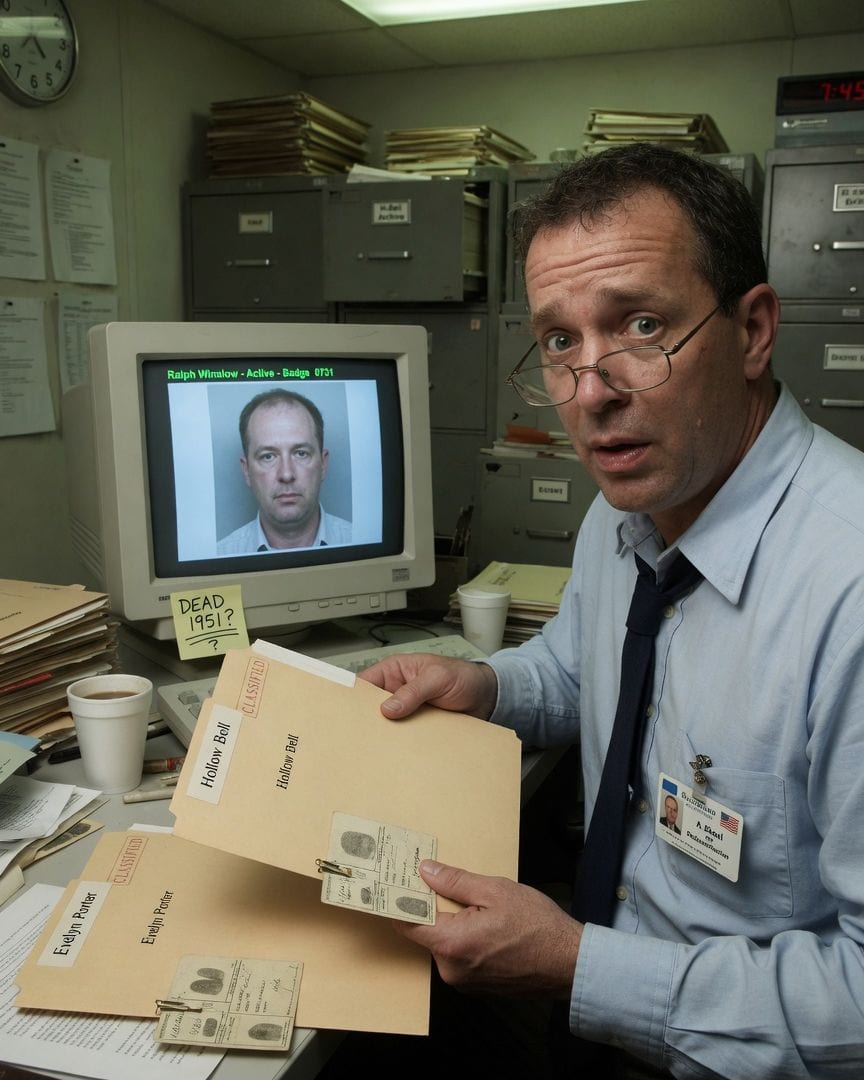
A Cold War declassification reviewer finds a man reported dead in 1951 just badged into his building.
Anton Skeel, a declassification reviewer, hoped his tedious work on old Cold War files would finally lead to an early retirement. He stared at a folder for 'Hollow Bell' containing a fingerprint card from 1958 for a man named Ralph Winslow, who was reported dead in 1951. Out of professional pique, Skeel ran the prints, only to find Ralph Winslow currently employed and badged into the building that very morning. The employee photo, however, was a complete stranger, attached to a file that insisted the man was both seven years dead and decades active. Now, a second impossible file has surfaced, revealing another 'returned subject' reported lost at sea, whose photo also belongs to a stranger.
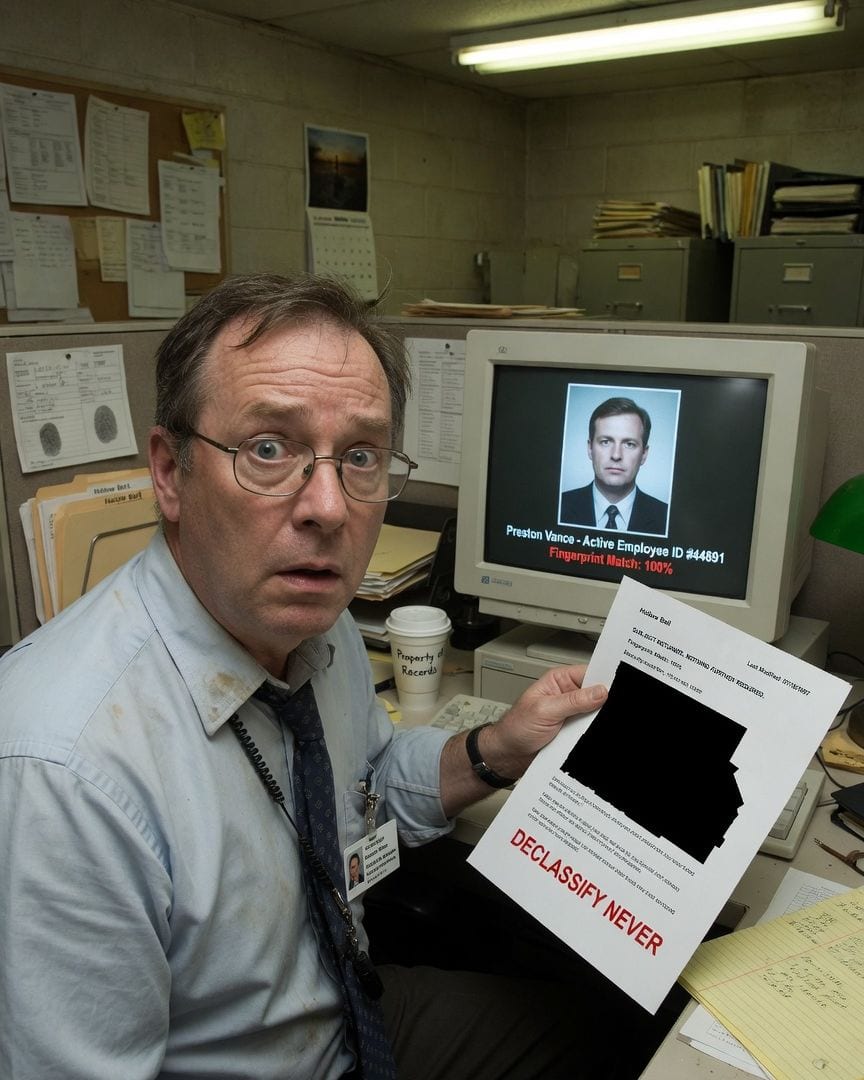
Nearing retirement, a government reviewer finds a dead Cold War agent's fingerprints match an active employee in his building.
Anton Skeel, a government records reviewer nearing retirement, anticipated a quiet end to his career. His days were spent in a dull, windowless office, sifting through the lingering paperwork of a bygone era. But a file labeled 'Hollow Bell' stopped him cold: it held fingerprints from a man, Preston Vance, reported dead in 1951. Anton's system then matched those prints to an active employee, badged into his very building that morning, whose personnel file showed a stranger's face and a section with a 'DECLASSIFY NEVER' redaction. Who exactly is Preston Vance?
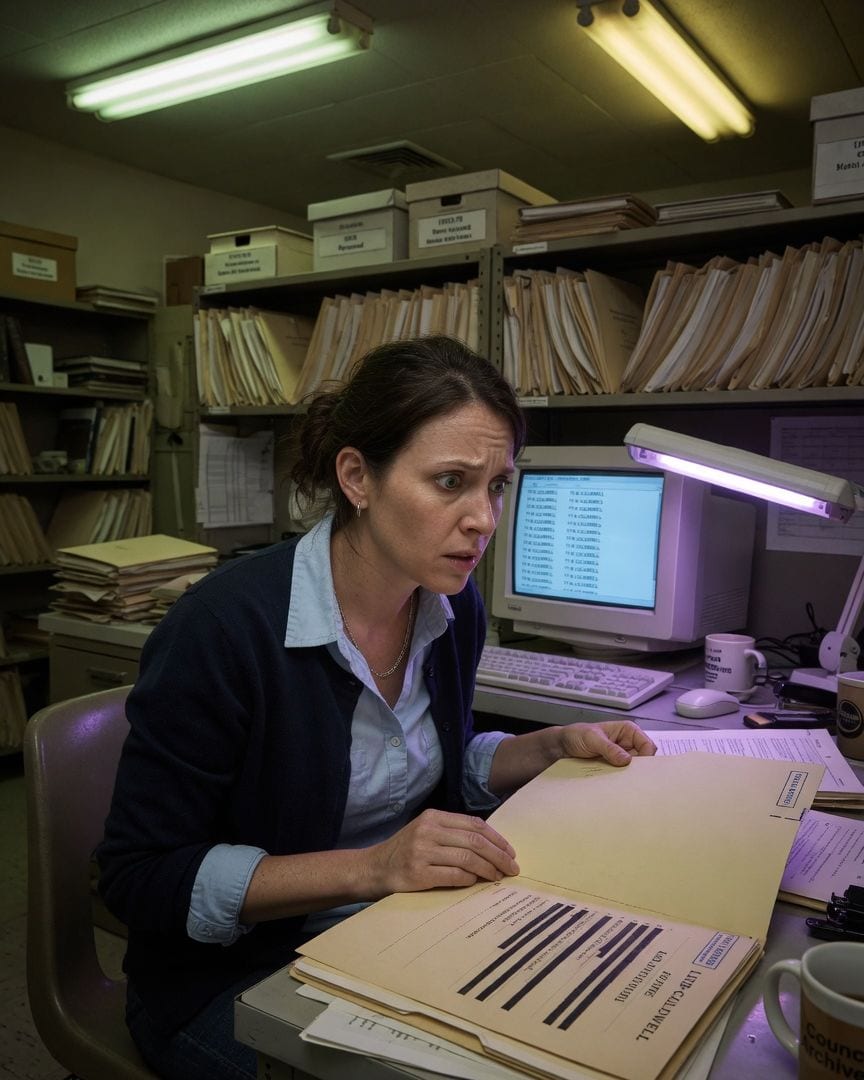
My employer's security file holds a vetting report on me dated nine years before I ever applied. It has my full name and my parents' address — with only one line, the source who referred me, blacked out.
Working a routine data audit, I pull my own security file. The issue date is nine years before I even applied for the job. Then, hidden within an old archive file, I find my current address etched under a blacked-out line.
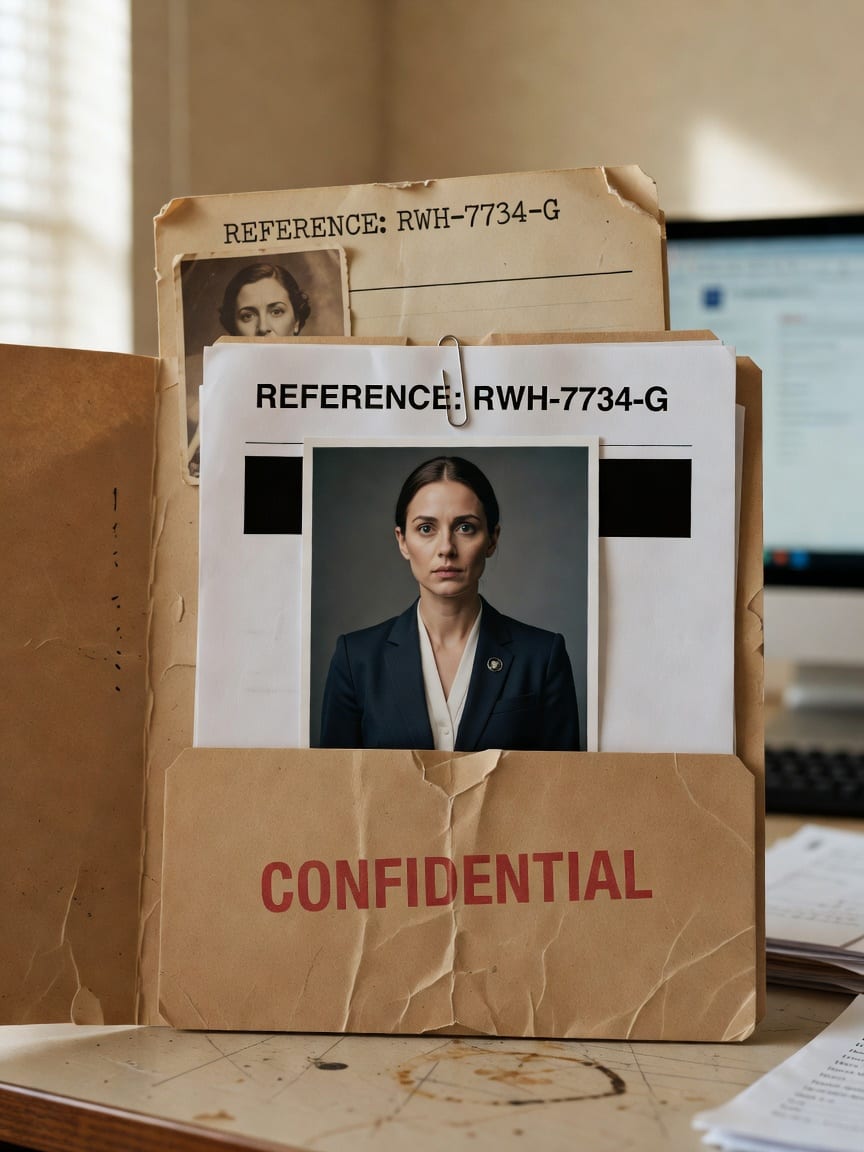
My security file was opened nine years before I was born. Its note said: 'subject not to be briefed'.
Auditing company digital records was routine until I pulled up my own personnel file. It clearly showed a 'Date Opened' nine years before I was born, yet bore my exact name and reference number. Below, an assessor's note from that impossible year mentioned a 'previous holder' and ordered the 'subject not to be briefed,' sparking a cold thrum in my chest.
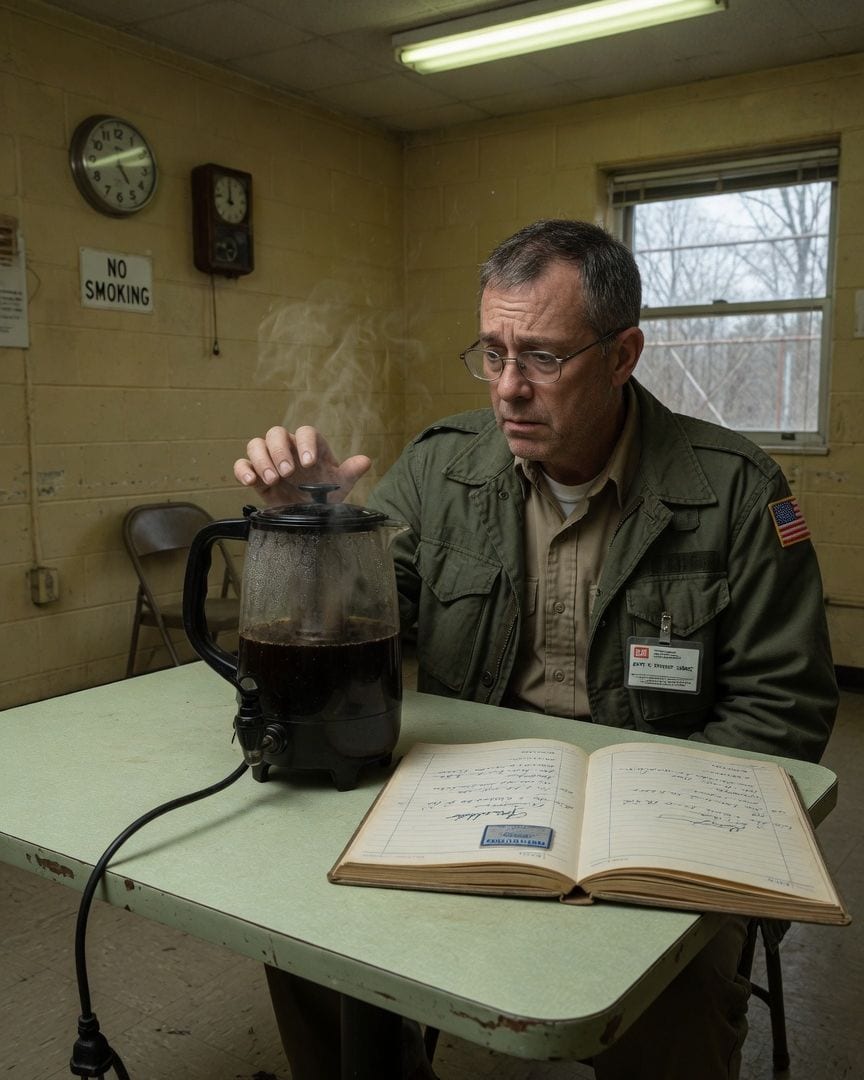
A methodical US Army engineer found a Cold War facility's file stamped 'DECLASSIFY NEVER' — and half its pages were missing.
Captain Nolan Threep, a methodical US Army engineer, expected another routine decommissioning at Alert Facility Twelve in rural Montana. The chains on the doors had rusted solid since 1970, promising a long-dead site. Yet, inside, a faint warmth hung in the air, and a glass coffee urn sat half-full, a wisp of steam rising lazily from its dark surface. The urn, warm to the touch, was clearly unplugged, and the duty log beside it, signed for a shift ending nineteen years prior, looked as though it had been signed yesterday. What secret could a supposedly abandoned Cold War facility hold?
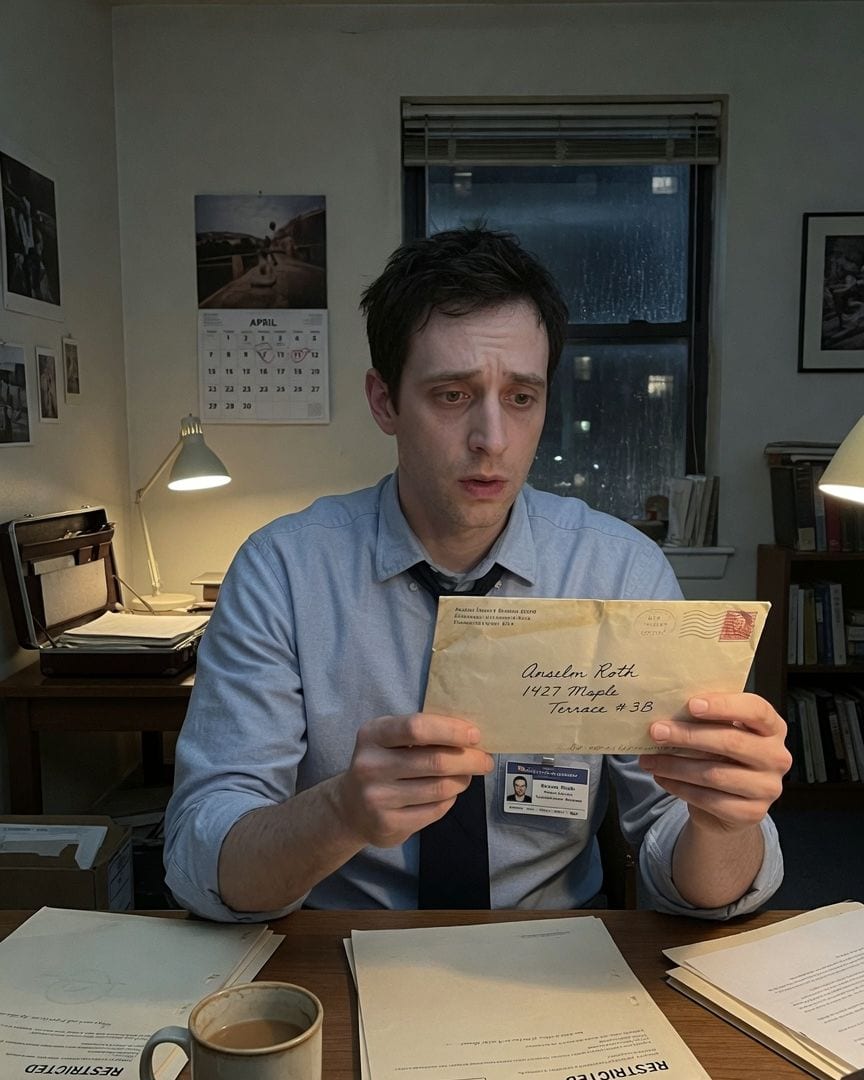
A Cold War declassification reviewer finds his dead grandmother's letter, postmarked 1974, addressed to him years before he was born, and radiating heat.
Declassification reviewer Anselm Roth meticulously sorted through a Cold War-era file on impossible disappearances at the National Archives, a routine 'thirty-year clock' review in 2014. Among the countless records of vanished ships and military units, he found an unscheduled addendum: a thick, sealed envelope addressed to him in his dead grandmother Eleanor Vance’s unmistakable hand. The postmark read 1974, years before he was born, and the paper itself was faintly, inexplicably warm against his fingers, defying every archival principle. Later, a photograph inside revealed his grandmother in an unknown uniform with a stark warning: 'They file us, Anselm. Don't let them finish.' This wasn't just a record of the lost; it was still active.