A box turned up with my name and no sender. Inside was a watch I lost years ago, still ticking and set right — wrapped in newspaper dated two weeks from now.
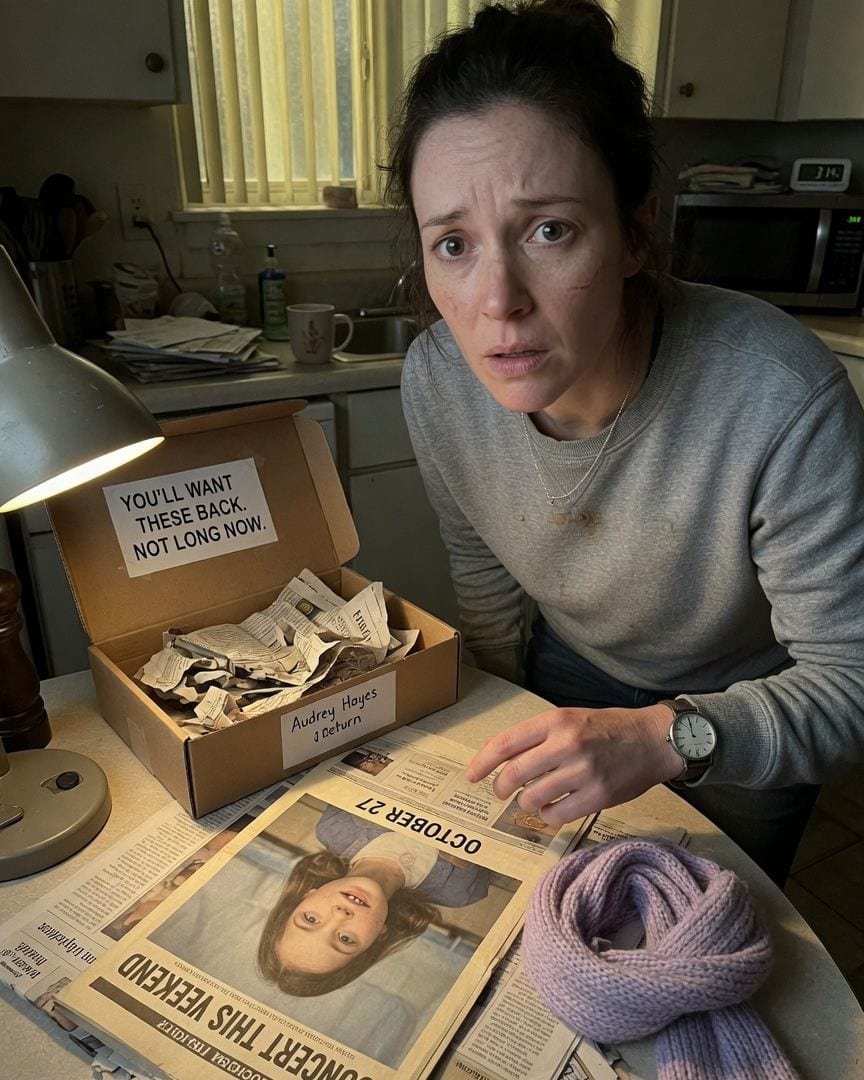
The courier box sat on my step, a plain brown rectangle with no return label, just 'Audrey Hayes' in neat, block letters. No one knocks anymore, not even the delivery drivers. It had simply materialized there.
Inside, nestled amongst crumpled newspaper, were my lost things.
Not just some lost things, but the lost things: the silver watch my grandmother gave me for my eighteenth birthday, a hand-knitted scarf my mother made that had vanished from my car years ago, and even a faded school photograph of myself at ten, gap-toothed and awkward.
I hadn't seen any of them in years, some for over a decade.
My grandmother’s watch, a simple analog piece, was ticking. I picked it up. It showed the correct time, exactly 3:14 PM, the same as my phone. But as I pulled out the crumpled sheets of paper, the chill started.
The headlines were for a local event, a concert happening two weeks from now. The date printed clearly at the top of the page read: October 27th. Today was October 13th.
Taped to the inside of the box lid, a plain white card, in the same careful capitals as my name on the box, read: 'YOU'LL WANT THESE BACK. NOT LONG NOW.'
My first thought was a prank, an elaborate, unsettling joke. Maybe a new viral marketing stunt for the newspaper? But who would know about the watch, the scarf, the specific date I'd lost them?
And how could they get a newspaper from the future? I lived alone. My rational mind wrestled with the impossible, the quiet horror settling in my gut.
The watch, ticking away on my wrist now, was a constant, unnerving reminder of something profoundly, inexplicably wrong. The kitchen felt colder than usual, the afternoon light dimming too fast.
I spent the next day trying to find a mundane explanation. I called the courier company listed on a tiny, almost invisible sticker at the bottom of the box. They had no record of any delivery to my address.
The newspaper office confirmed the date on the paper was indeed a future publication – "That's our October 27th edition," a cheerful voice told me, "Are you having problems with your subscription?"
My attempts to laugh it off as a viral marketing stunt died a quiet death. No marketing campaign would ever be this meticulously unnerving, this specific to my forgotten possessions.
I re-examined the items, spread out on my kitchen table like evidence. The watch, a simple analog, showed no signs of tampering. It kept perfect time.
The scarf felt exactly as I remembered, the familiar wool soft under my fingers, a faint scent of lavender from my mother’s old closet clinging to it. The school photograph, however, held a faint, almost invisible mark on the back.
I had initially dismissed it as a smudge or a quirk of the old paper, but under the strong light of my desk lamp, it was clear.
It wasn't a crease or a tear, but a symbol, a small, intricate spiral, almost like a fingerprint, but too regular, too precise.
I tried to rub it off with my thumb, but it seemed embedded in the paper itself. It didn't look like a manufacturer's stamp or a personal doodle. It was too precise, too deliberate, etched there like a hidden sigil.
I scanned the photograph with my phone, trying to enlarge the mark, but my camera couldn't quite capture its detail, blurring the edges into an indistinguishable smear.
It was subtle, almost a trick of the light, visible only when you knew to look for it, but once I saw it, I couldn't unsee it.
It felt like a signature, a quiet claim on the objects themselves, a sense of ownership that wasn't mine.
My search for the newspaper's origins led me down a rabbit hole of local history. The paper, a regional daily called The Chronicle, had once been printed by an independent press before being bought out by a larger corporation decades ago.
A small, dusty local historical society in the next town over, housed in an old stone building that smelled of old paper and dust motes, had an archive of its old editions.
I drove there, hoping to find some anomaly, a misprint, anything that could explain the impossible date.
The librarian, a kindly woman named Vivienne Vance, with glasses perched on her nose, pointed me to a back room, a cavern of stacked shelves.
Amidst the brittle stacks of newspaper bindings, I found not just old dailies, but also shelves overflowing with local records and ledgers, documenting everything from town council meetings to birth and death records.
Just as I was about to give up, my gaze fell on a heavy, leather-bound book, its spine cracked and worn with age, sitting oddly amongst the newsprint. It wasn't a newspaper ledger.
Curious, a new tremor of unease making my hands shake, I pulled it open. The pages inside were filled with elegant, faded script, ink bleedings into the yellowed paper. And there, halfway down a page, my heart stopped.
My full name, 'Audrey Hayes,' written in an elegant, looping script. And beside it, a date: '1965.' Then, a list of items: 'Silver watch, knitted scarf, school photograph.' The same items. Dated sixty years before I was born.
I spent hours poring over the ledger, the cold dread that had begun with the courier box now a solid block in my chest, replacing my initial shock. My name wasn't alone.
Other names filled the pages, some with similar lists of mundane personal items, others with cryptic symbols, tiny squiggles and dots that looked like nothing I'd ever seen.
Dates ranged from the early 1900s to the late 1980s, all decades before my time, before the current owners of the paper, before I'd even been a thought.
Each entry felt like a stolen whisper from the past, each name a person marked. I discreetly copied down a few names and dates onto a napkin, feeling like an intruder into a secret history I wasn't meant to witness.
The librarian, Vivienne, had seemed oblivious, humming softly as she restacked a shelf of tax records.
Back home, a quick online search revealed some of the names corresponded with local disappearances or unsolved 'accidents' reported in old newspaper archives – never violent, just… gone, or found in unusual circumstances, bodies sometimes discovered in places they couldn’t have reached on their own.
Each one sent a fresh shiver down my spine, tightening the knot in my gut. I tried to find living relatives for some of the older entries, but the trail was cold, fading into the anonymity of time.
Then, I remembered the card: 'YOU'LL WANT THESE BACK.' And the stranger. The Apology In Advance. Days before the box arrived, before any of this insanity, while walking through the park near my apartment, a man had stopped me.
Older, perhaps in his late sixties, with haunted eyes that held too much sorrow. He’d looked directly at me, his gaze unnervingly specific, and used my name, "Audrey." He’d said, his voice a low rumble, “I’m so sorry.
For what’s coming.” He’d squeezed my arm, a fleeting, almost desperate grip, then hurried away before I could respond, disappearing into the lunchtime crowd.
It had seemed like a bizarre, random encounter at the time, a confused old man mistaking me for someone else. Now, it was a terrifying piece of the puzzle, clicking into place with a chilling sense of inevitability.
His face, etched in my memory from its profound sadness, suddenly became a vital clue. I started searching for him, for Leonard.
My search for the apologetic stranger led me to a quiet, forgotten corner of town, a cluster of old, neglected houses that time seemed to have overlooked.
One address, gleaned from an old community directory that listed residents from decades past, matched a name in the ledger from 1972: Leonard Bishop. The house was overgrown, paint peeling in long, curling strips, but it wasn't abandoned.
A faint light glowed from a window, a wisp of smoke curled from the chimney. As I cautiously approached the porch, my footsteps crunching on dry leaves, the front door creaked open, just enough to reveal a sliver of darkness.
A man emerged from the shadows of the doorway, just as I remembered him from the park. His face was gaunt, his eyes hollowed, a profound weariness in every syllable as he spoke.
"Audrey Hayes," he said, his voice raspy, a low, gravelly sound that seemed to pull from a deep well of exhaustion. "I knew you'd come looking."
I tried to speak, to ask him about the ledger, the impossible box, his bewildering apology. My throat felt tight, words catching. He held up a hand, silencing me.
"I already said I'm sorry," he repeated, his gaze fixed on my face, "There's nothing more to say. Don't dig deeper. You won't like what you find."
His voice was not accusatory, not threatening, but filled with a terrible pity, a quiet despair that seemed to press in on me from the sagging porch itself.
He took a single step back, melting into the dim interior of the house before I could gather my wits, before I could force a single question past my lips.
The door clicked shut, the sound unnaturally loud in the sudden silence, leaving me alone on the porch.
The street felt empty, but a chilling sense of being watched from unseen windows settled around me, the silence itself seemed to hum with unseen eyes.
I waited. I couldn't just leave, not after his words. The sun was beginning its slow descent, painting the sky in bruised purples and oranges.
After an hour, Leonard Bishop emerged again, walking with a slow, shuffling gait towards a small, corner grocery store a block down the street. I intercepted him, stepping into his path, my voice firm despite the tremor in my hands.
"Mr. Bishop, please. What is this? My name is in that book. What did you mean, 'what's coming'?"
He sighed, a sound that seemed to carry the weight of years of resignation. Defeated, he gestured to a quiet bench outside the store, away from the sparse evening traffic.
"They found me, just like they found you," he began, his voice barely a whisper, his eyes scanning the street as if expecting someone. "The box, the items… it's a preparation. A courtesy, in their twisted way."
He explained that he'd been 'marked' decades ago, for an 'event' on a specific date, just like the one on my newspaper.
He'd seen the newspaper, received his own lost items – a pipe, a set of cufflinks, a worn photograph of his young family. He'd tried to fight it, he said, his hands clenching into fists on his knees.
"But you can't. You can only delay. I got out. Barely. But they make you pay. They make you... participate."
He described 'them' as an unseen presence, a pattern that collects lives. "They don't want to hurt you, not really. They want your place. Your memories. Your life."
He paused, his gaze meeting mine, and I saw a deep understanding there, a shared terror. The items, he said, were for the 'new' person. The newspaper date, he confirmed, was the exact day of the switch, the transition.
"They monitor everyone, through... channels. Sometimes, they even speak through them. That's how they knew to send me, to apologize." He spoke of it with a chilling calm, as if reciting a well-learned, terrible truth.
The spiral mark on my photograph, I blurted out, was that… And he nodded slowly. "Their signature."
My lost items, my name in the ledger, his apology – it all clicked into place, not as a random series of bizarre events, but as a horrifying, coherent picture of a systematic, patient replacement.
The air around us suddenly felt thinner, colder. The streetlights flickered on, casting long, distorted shadows.
My head spun as I walked home. Leonard’s words echoed, a relentless hammer against the fragile walls of my sanity: 'They want your place. Your memories. Your life.' The implications were staggering, terrifying.
This wasn't just a threat; it was an erasure. A complete, meticulous scrubbing out of my existence, replaced by a flawless simulacrum. I was being prepared for my own obsolescence.
The rational world I'd clung to, the world where a future newspaper was impossible and old ledgers were just quaint history, had shattered into a million irreparable pieces.
I needed to think, to plan. I needed to understand 'the channels' he'd mentioned, the way they monitored and communicated. What did that mean, really?
As I fumbled with my keys, unlocking my front door, the shrill, unexpected ring of my old landline phone cut through the silence of the empty apartment.
I hadn't used that phone in years, it was practically a relic, plugged in but forgotten, a ghost in the corner of my living room. My cell was my primary contact; hardly anyone even knew that landline number anymore.
I hesitated, my hand hovering over the receiver, then, a morbid curiosity overriding my raw fear, I picked it up.
The receiver felt cold against my ear, the plastic slightly damp. The voice that came through was flat, almost electronic, yet utterly calm, devoid of inflection or emotion. "You've been asking too many questions, Audrey Hayes.
Your event is not far off now. You won't want to miss it."
And then it added, chillingly, a detail that froze the blood in my veins, confirming the entity’s pervasive reach, their intimate knowledge of my conversation with Leonard, "Leonard was right to apologize."
The phone call confirmed everything Leonard had hinted at. The voice wasn't a prankster; it was 'them.' The entity. They were inside my home, inside my life, listening, watching, always.
The 'event' wasn't a metaphor for death, but a literal replacement. A seamless usurpation. The items in the box weren't for me to reclaim, but for the new 'Audrey' to possess, to lend authenticity to her usurpation.
The newspaper date wasn't a prediction, but a schedule, my schedule. The dread solidified into a terrible clarity: I was being replaced, and the new 'me' would step seamlessly into my life, using my memories, my possessions, my name.
The horror wasn't in being targeted, but in the meticulous, coherent plan for my total erasure. Leonard had warned me: 'They want your place.'
The 'channel' was more than just a phone line; it was a way for them to observe, to learn, to prepare. They were studying me, gathering every detail, every nuance, every forgotten habit, so that the transition would be flawless.
The true horror was the precision of it all, the utter lack of malice, just a cold, relentless process.
The date on the newspaper arrived, a perfectly ordinary Tuesday. I had spent the previous days in a state of hyper-vigilance, my mind racing, trying to find a way out, any loophole, any weakness.
Leonard’s warning echoed constantly: you can’t fight them, only delay. But what was the point of delay? The cold process would continue. I decided to make my stand in my living room, the one space I still felt was mine.
I had placed the school photograph, the one with the faint spiral mark, on the coffee table, a small act of defiance. My heart hammered, a frantic drum against my ribs, as the clock ticked past midnight.
A subtle shift in the air, a faint scent of damp earth, of something freshly turned and vaguely metallic, permeated the house. It wasn’t a draft; the windows were all shut tight.
A figure, almost identical to me, stepped out of the shadows from the hallway. It wore my clothes, the blue sweater I'd worn that day, my jeans, my expression.
But its eyes… they were too still, too deep, like dark pools reflecting nothing. There was a lack of spark, a hollowness that vibrated in the air.
"Audrey," it said, its voice a perfect mimicry of my own, yet lacking a certain warmth, a subtle tremor of human emotion. "It's time."
I picked up the photograph, my fingers trembling around the brittle edges. "Who is this, then?" I asked, my voice trembling but somehow steady, a thin thread of defiance. "This is me, at ten years old.
Tell me, what was I thinking when this photo was taken?"
The figure faltered, its perfect smile wavering, a hairline crack appearing in the facade. A flicker of confusion crossed its face, a brief, inhuman blankness, like a glitch in a perfect program.
It reached for the photo, its hand slightly too slow, too deliberate, a fraction of a second behind a natural human reaction. This was my chance. It couldn't truly be me.
It could mimic, it could observe, but it couldn't know. Not truly. I didn't wait for an answer. I bolted.
I crashed through the back door, the wood splintering, not looking back, into the predawn dark, leaving the 'Audrey' behind, staring at the photograph, its perfect facade cracking under the weight of an unanswerable, deeply personal memory.
I ran, breath tearing at my lungs, leaving my old life, my old self, behind.
Audrey Hayes vanished. Her house was found undisturbed, the back door slightly ajar, splintered wood the only sign of an anomaly. The police found no signs of struggle, no forced entry, beyond the door.
Her car remained in the driveway, her phone on the kitchen counter, charger still plugged in. Leonard Bishop’s house was empty, too, the 'For Sale' sign already hammered into the overgrown lawn, the paint peeling faster now.
The authorities filed a missing person report, but without any evidence of foul play, it was quickly relegated to a cold case. A few weeks later, a new person moved into Audrey’s house.
She looked exactly like Audrey, talked like Audrey, and quietly picked up the threads of Audrey’s life.
The new Audrey settled in. She went to Audrey’s job, saw Audrey’s friends, shopped at Audrey’s grocery store.
There was a faint, almost imperceptible wrongness in her eyes, a slight hesitation in her smile, a quietness that hadn't been there before, but it was easily dismissed as a new introspection, a changed outlook after...
well, no one knew what. One evening, her neighbor, Joan Holloway, leaned over the fence separating their manicured lawns, pruning shears in hand. “Audrey, is that a new scarf? It’s lovely.”
The new Audrey ran a hand over the knitted wool, the very scarf from the courier box, the one her mother had made, a faint, wrong little smile on her lips. “Oh, this old thing? I’ve had it for ages.
I just… wanted it back.”
If this one got to you
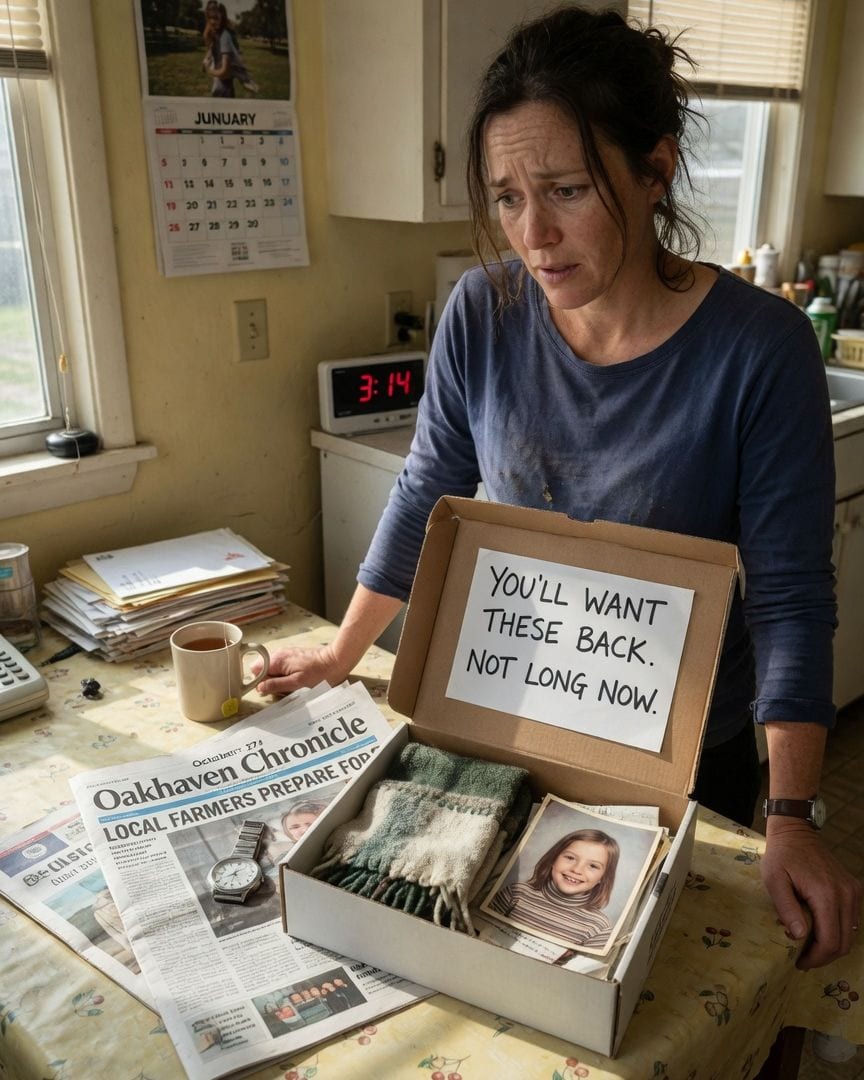
Newspaper dated next week wrapped my lost things. The watch inside was still ticking.
A mysterious courier dropped a plain box on my step, containing my long-lost watch, a treasured scarf, and a childhood photo I hadn't seen in decades. It felt like a strange prank, until I saw the newspaper wrapped around them. The *Oakhaven Chronicle* was dated the week after next.
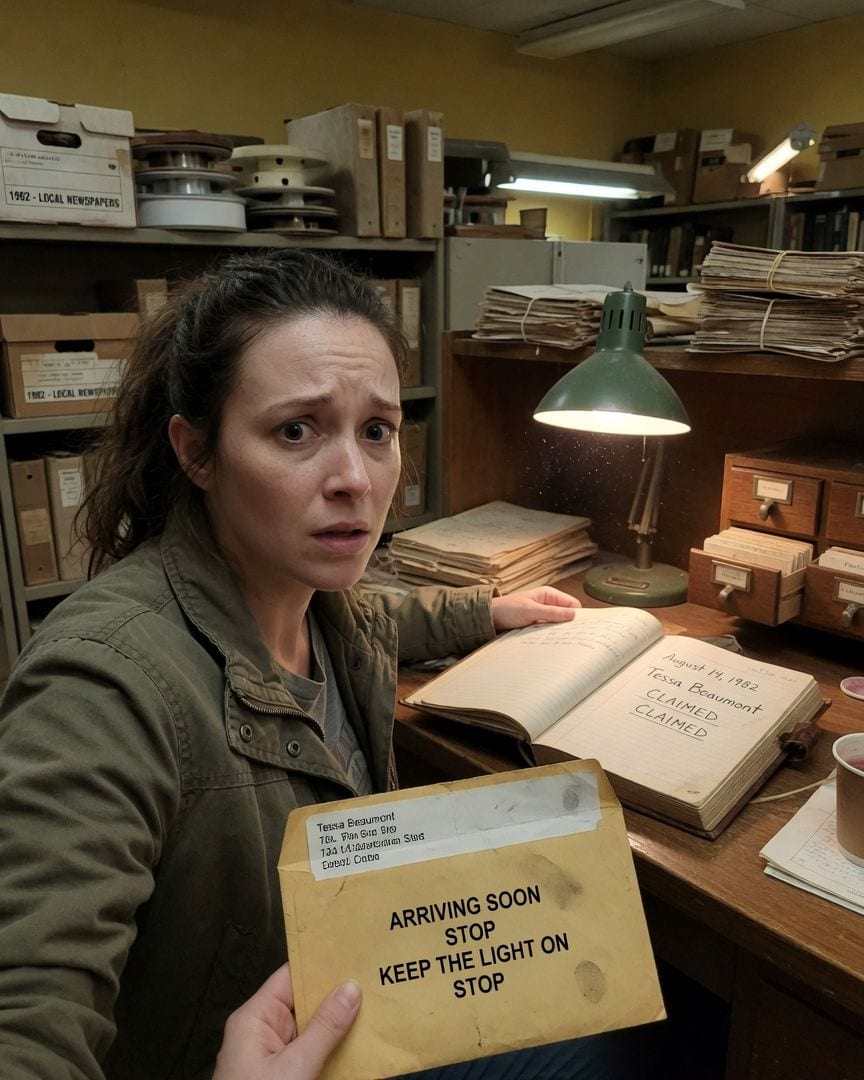
A boy in an unfamiliar uniform hand-delivered a telegram to my flat — the kind the Post Office stopped sending in 1982. It said only 'KEEP THE LIGHT ON.' Then he vanished before I could tip him.
My ordinary morning was interrupted by a sharp rap on the door. A boy in a dark uniform delivered a telegram addressed to me, but the Post Office officially stopped that service in 1982. Its message, 'ARRIVING SOON STOP KEEP THE LIGHT ON STOP,' felt like a premonition.
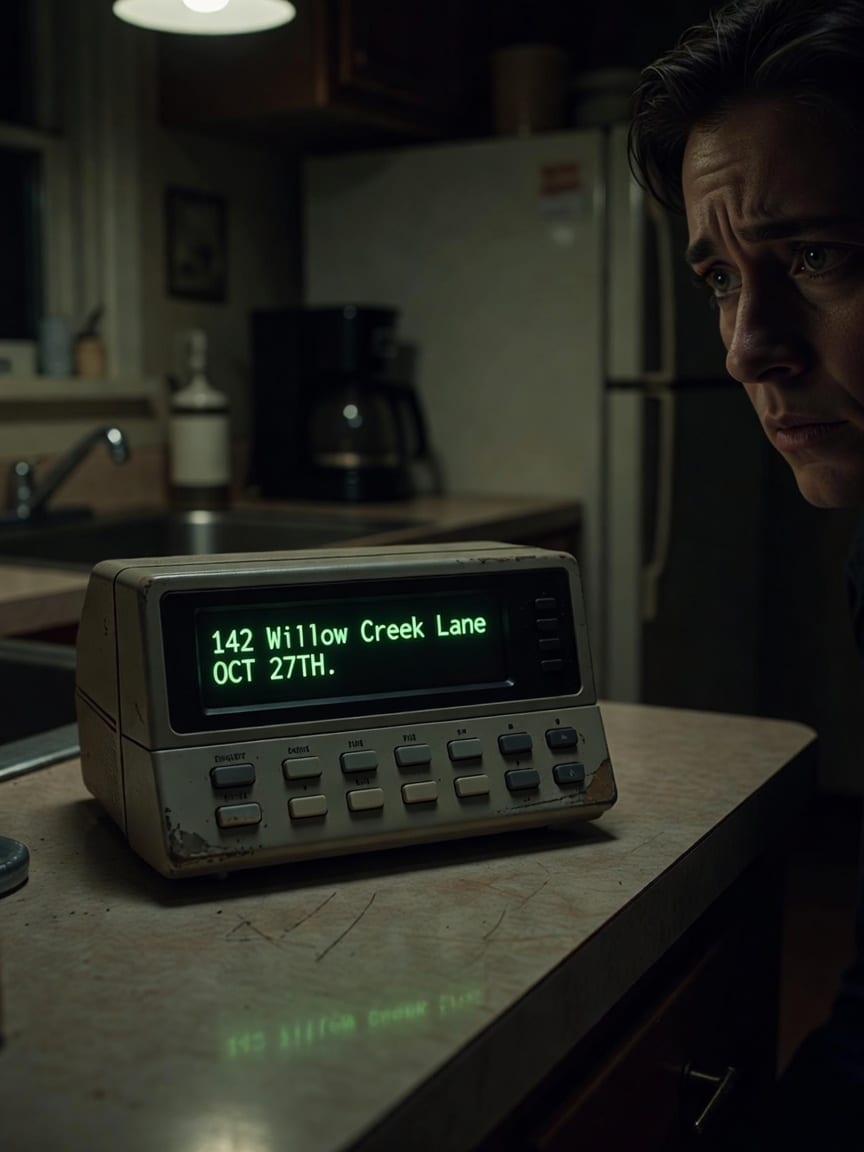
My radio scanner picked up a channel at 2 AM reading local addresses. Mine was on it, dated tomorrow.
I was tracking a storm on my old weather radio when a synthesized voice cut through the static. It began reading local street addresses, then my own: 142 Willow Creek Lane. But the date it gave for my address was tomorrow.
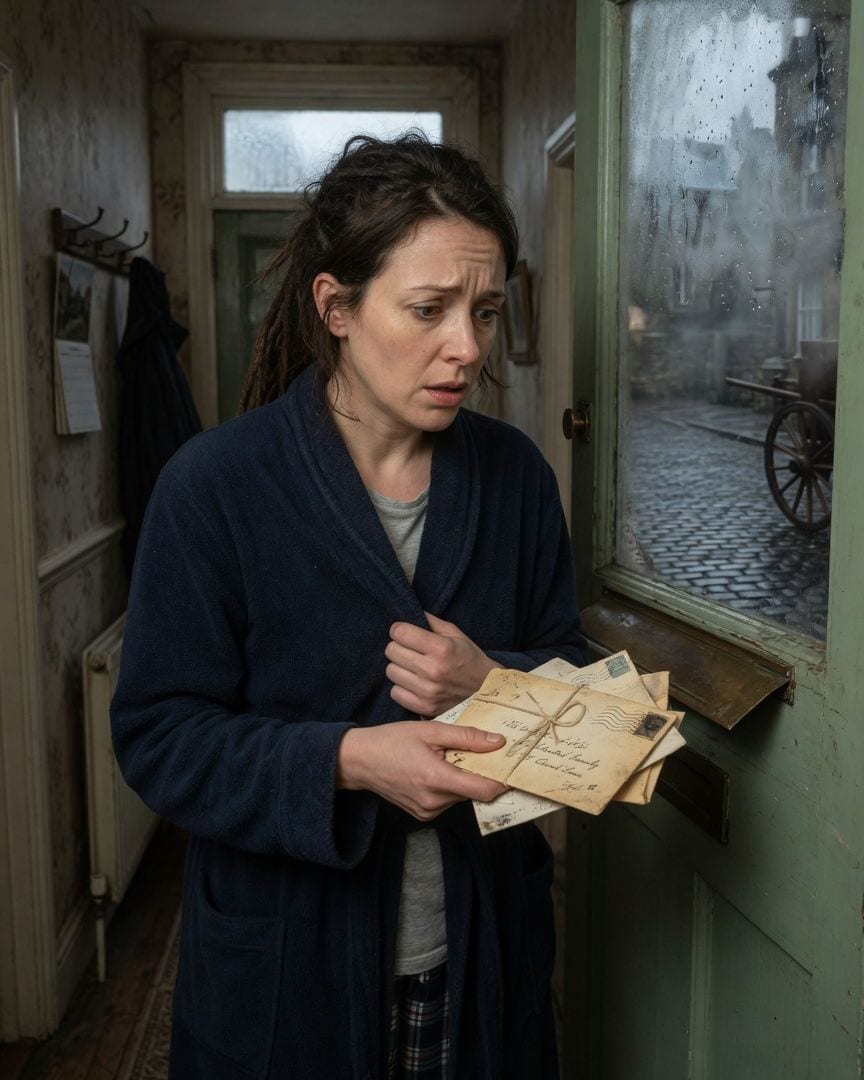
Seventy years ago, a hidden journal recorded my door opening to the wrong street and receiving Lockwood post.
I'd only recently moved into my inherited house, a quiet place on the edge of town. One grey morning, a distinct clatter from the front door's post flap caught my attention. Reaching down, I expected my gravel path, but instead, the flap showed a dark, cobbled street that wasn't mine. A bundle of warm, old letters, addressed to 'The Lockwood Family,' slid through, before the vision flickered and was gone.
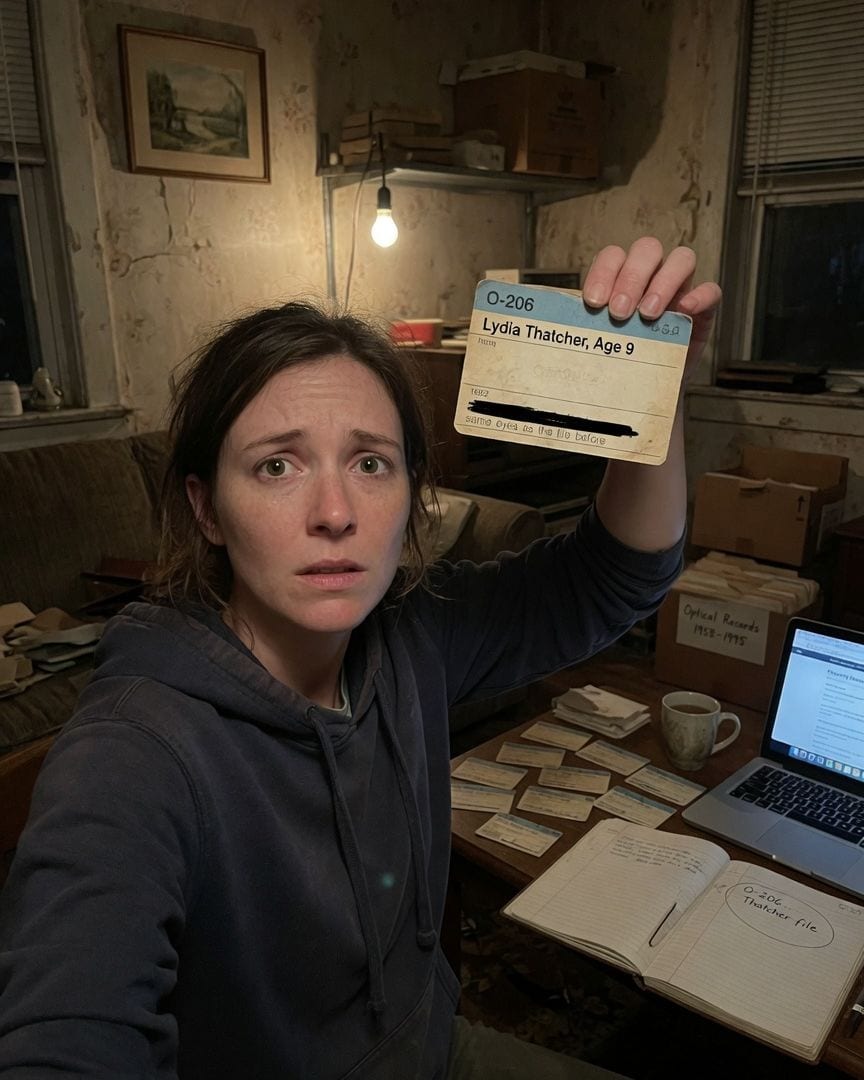
My own optical card is dated 1962, with my name on it. I wasn't born until 1993.
Sifting through old patient files from my former optical practice, I found my own O-206 card. It had my name, Lydia Thatcher, and my current home address printed on it. But the card was dated 1962, decades before I was even born, and a redacted note mentioned 'same eyes.'
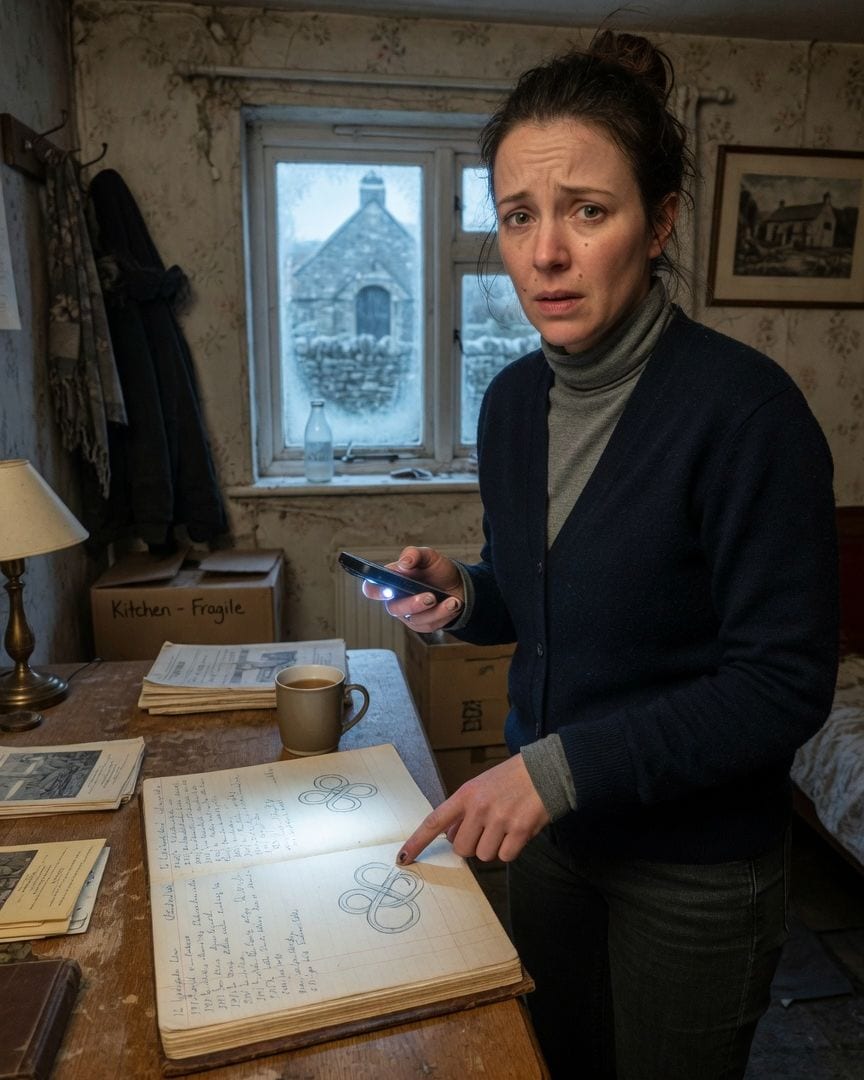
Milk appears daily by my lychgate. The dairy closed in '79. My address is handwritten into their old delivery book, starting the day we moved in.
Moving to Blackwood Creek, I loved the quaint charm, especially the unexpected morning milk delivery to my lychgate. But when I mentioned it to Eleanor at the village shop, her smile froze. She told me Willow Creek Dairy closed decades ago, in '79.