A boy in an unfamiliar uniform hand-delivered a telegram to my flat — the kind the Post Office stopped sending in 1982. It said only 'KEEP THE LIGHT ON.' Then he vanished before I could tip him.
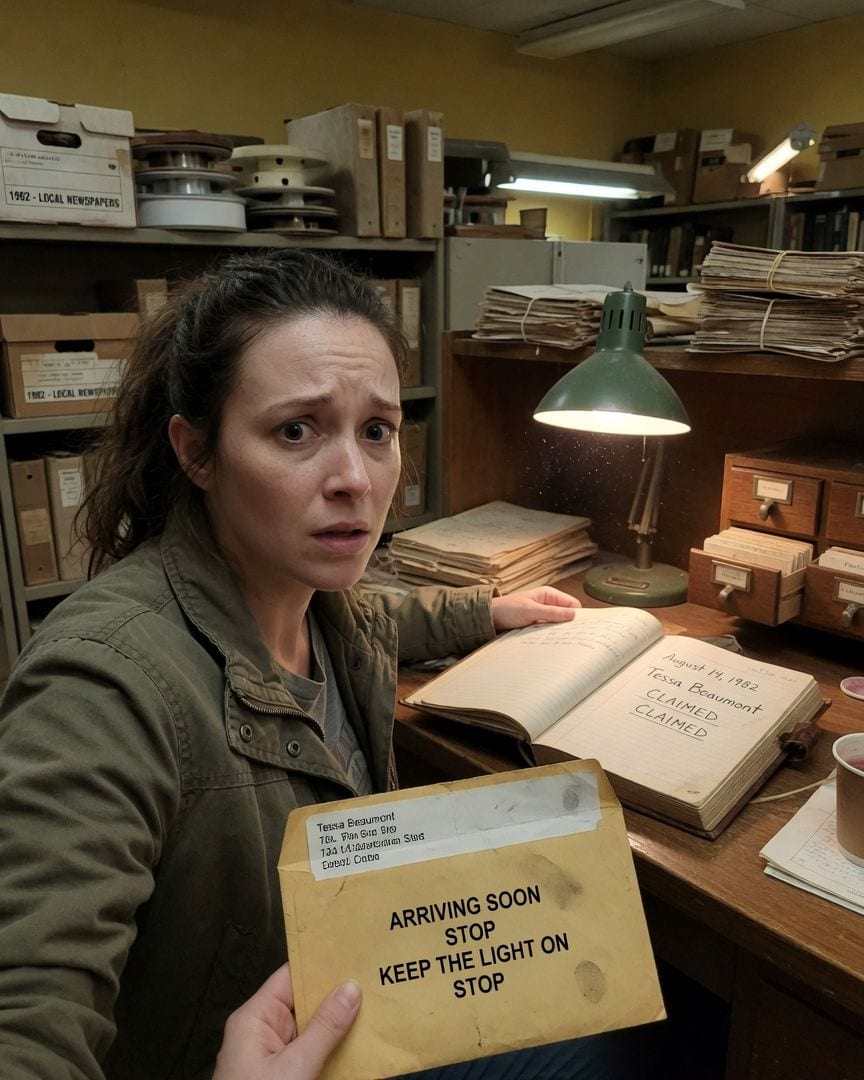
The sharp rap on my door startled me. It wasn’t the usual light knock of a delivery service, but a solid, almost old-fashioned thud. I was still in my pyjamas, sipping lukewarm coffee, when I opened it.
Standing on my porch was a boy, no older than twelve, in a dark, unfamiliar uniform—heavy wool, I think, and a peaked cap that shadowed his face. He held out a yellowed envelope, crisp around the edges.
“Telegram for Tessa Beaumont,” he said, his voice flat, devoid of the usual teenage inflection.
A telegram. I blinked. The Post Office stopped sending those in 1982. It was a detail I knew, a piece of trivia from some forgotten documentary. Yet, here it was, a physical impossibility in the boy’s hand.
I took it, my fingers brushing the thick, almost brittle paper. My name, 'Tessa Beaumont', was typed precisely on the front, along with my current address.
Inside, in stark black capitals, the message read: 'ARRIVING SOON STOP KEEP THE LIGHT ON STOP.' No sender. No return address. Just that unsettling command.
I mumbled something about a tip, fumbling for my wallet on the hall table. The boy stood patiently, not moving, not making a sound.
The air around him felt oddly still, even though a breeze rustled the leaves in my front yard. When I turned back, wallet in hand, he was gone.
Not on the path, not on the sidewalk, not even a glimpse of his dark uniform disappearing around the corner. He had simply vanished, as if the space he occupied had folded in on itself.
I stood there, the impossible telegram clutched in my hand, the empty porch mocking my disbelief. I pulled out my phone, googling 'Post Office telegrams 1982' almost reflexively. The top results confirmed it: the service was officially discontinued that year.
The object in my hand was a ghost, its message a riddle.
The rest of that Saturday blurred into a haze of disbelief and a mounting, cold unease.
I called the Post Office’s general inquiries line, then a couple of local branches, describing the boy’s dark uniform, his uncanny disappearance, the impossible date on the telegram.
Each call was met with polite confusion, then firm statements: “No telegrams since ’82, ma’am,” “We certainly don’t have any delivery uniforms like that in circulation.” The practical explanations I desperately sought crumbled one by one. A prank?
But the boy’s vanishing act was too clean, too absolute to be a neighbourhood kid’s joke. And the message itself, ‘KEEP THE LIGHT ON,’ burrowed into my thoughts. It felt like an instruction, a premonition, rather than a mere warning.
The logical part of my brain was screaming for a mundane explanation, any anchor to reality. The only concrete detail left to investigate was the date: 1982.
I remembered the old local history section at our public library, a quiet, dusty corner filled with forgotten records.
Perhaps there was some obscure local event, a historical quirk, a community tradition that involved vintage telegrams or ‘keeping lights on’ in our town back then. It was a desperate hope, but it was all I had.
I pulled on my jacket and headed out, the yellowed telegram tucked into my purse, a tangible piece of impossible evidence.
Paul Thornton, the elderly archivist, a man who seemed to have grown into his tweed jacket, directed me with a wave of his hand to a particularly dusty corner.
Hours passed as I sifted through microfiche reels and brittle local newspapers from 1982. Nothing. Just mundane town council meeting minutes, forgotten charity drives, the usual everyday hum of a small community.
Frustrated, my eyes aching from the dim light, I was about to give up when my hand brushed against something unexpected behind a stack of directories.
It was a thick, leather-bound ledger, its cover worn smooth, its pages yellowed and stiff. Hand-bound, clearly very old. I pulled it free, a small cloud of dust rising around it. I opened it, the spine creaking in protest.
Most of the entries were faded, barely legible notes about property transfers or forgotten bylaws. Then, halfway through, a page caught my eye. Neatly written in elegant cursive, an entry stood out from the rest.
It was dated 'August 14, 1982'. And next to it, clear as day, was my own full name: 'Tessa Beaumont'. Below it, a single, chilling word.
'CLAIMED'.
My breath caught in my throat. I stared at the precise handwriting, my name, 'Tessa Beaumont – CLAIMED,' etched onto a page dated nine years before I was even born.
The ink was faded, but the words were starkly clear, a record of my existence from before I had one.
I showed the ledger to Paul Thornton, my voice a strained whisper, barely audible over the rustle of pages in the quiet library. He squinted at it, adjusted his spectacles, and then, to my utter disbelief, shrugged.
"Oddity," he mumbled, dismissing it with a wave of his hand. "Probably a forgotten local joke, or some strange administrative error. These old ledgers have all sorts of nonsense."
He reached for it, as if to put it back, but I clutched it tighter. The mundane explanation failed, completely.
I spent the next hour researching "claiming" in local folklore, in historical dictionaries, even in obscure online forums.
I found only vague, unsettling references to old traditions of naming children, or archaic land disputes, nothing that fit this chilling, personal context. The dread, however, didn't dissipate. If anything, it solidified.
A prickling sensation started at the back of my neck, a phantom touch. I caught myself glancing over my shoulder more often, felt like I was being watched.
The air in the usually quiet library seemed to hum, a low, almost imperceptible vibration, like something was resonating just beyond the edge of hearing.
I even found myself checking the library’s security camera feeds, which were mostly for show, finding nothing but blurry, grainy images of empty aisles. Still, the feeling persisted.
Every rustle of a turning page, every distant cough from another patron, seemed amplified, directed, pulling my attention to the empty spaces around me.
Days later, that pervasive unease had solidified into palpable anxiety. I stepped out of the library, the impossible ledger still burning in my mind, even though I’d reluctantly returned it to Paul.
The sun was too bright, the sounds of traffic too loud. On the pavement outside, an elderly man stepped directly into my path. He was impeccably dressed in an old-fashioned suit, tweed, with a crisp white shirt.
His eyes, a startling, clear blue, met mine with an unnerving intensity. He stopped me, gently placing a surprisingly firm hand on my arm.
“Tessa Beaumont,” he said, his voice soft but firm, a low hum beneath the words. “I am truly sorry for what is about to happen to you.”
My mind raced, a sudden frantic scramble. How did he know my name? What "event" was he talking about? His expression was one of profound, sincere regret, as if he genuinely grieved for a future event he already knew.
My tongue felt thick in my mouth. Before I could utter a single syllable, he simply stepped around me and walked away. Calm, unhurried, as if delivering such a chilling prophecy was an everyday occurrence.
I tried to follow, calling out to him, but he merged seamlessly into the lunchtime crowd, vanishing as completely and effortlessly as the delivery boy. The apology, so specific and personal, yet utterly vague, left me shaken to my core.
It wasn’t a question of whether I was being pranked anymore. This was a terrible, intimate confirmation.
Panicked, I rushed back into the library, finding Paul Thornton at his desk, meticulously cataloguing new acquisitions. My voice trembled as I recounted the encounter with Marcus Davenport.
Paul’s face, usually placid and imperturbable, paled considerably, the colour draining from his cheeks. He pushed his spectacles up his nose, his eyes wide.
“Marcus Davenport?” he whispered, the name a faint exhalation. “He… he knows things. Always has.”
I pressed him, demanding to know what Marcus had meant, what the ledger meant, what any of it meant. Paul, clearly uncomfortable and now visibly shaken, finally relented.
He admitted Marcus was known for these "Apologies In Advance," always specific in their naming of the individual, always vague about the event itself.
He then stood, his movements slow and deliberate, and led me to a locked oak cabinet in a back corner of the archives.
With a sigh that sounded like it carried decades of unspoken worry, he pulled out several more ledgers. They were identical in binding and age to the one I’d found, but clearly from different decades.
Each contained names, dates, and the word 'CLAIMED,' sometimes with cryptic notes next to them. "I've been here forty years, Tessa," Paul said, his voice low, his gaze distant. "These ledgers… they’ve always been here. Tucked away.
I've seen entries for people I knew. People who then… just seemed to fade. Minor accidents, quiet disappearances, sometimes just a strange shift in memory. As if they were never quite there."
He pointed to various entries, showing me how the dates of 'claiming' often preceded some minor, inexplicable local misfortune, or, more unsettlingly, a gradual forgetting by the community, a quiet erasure.
He admitted he’d never understood it, never dared to investigate too deeply, but the pattern was undeniable: a name, a date, a subtle shift in reality.
The telegram, the ledger, Marcus's apology – they were all pieces of this same, terrifying puzzle.
I sat at a worn oak table in the archives, surrounded by the old ledgers Paul had reluctantly provided, a cold dread settling in, heavier than any fear I’d known. The air around me felt thick, charged.
I pored over the names, the dates, the cryptic phrases. ‘The Silent Departure,’ ‘The Unseen Shift,’ ‘The Echo Fades.’
I started to see a repeating pattern, not just in the names, but in the peculiar phrasing of the ‘events’ next to the ‘CLAIMED’ entries, recurring over generations.
My own entry from 1982, my name dated before my birth, was a stark, impossible anomaly.
Then, buried deep in a ledger from the 1970s, I found another entry that made my blood run cold. It was a page with my name again, ‘Tessa Beaumont,’ but this time with a specific date: tomorrow’s date.
Next to it, in that same elegant, unnerving cursive, a cryptic phrase: ‘The Light Unmade.’
The words reverberated in my mind, echoing the silence of the room. ‘The Light Unmade.’
And then I remembered Marcus Davenport’s exact words, his sincere, heartfelt apology for ‘what is about to happen,’ and the chilling command from the telegram: ‘KEEP THE LIGHT ON STOP.’
The apology wasn’t for something in the past, or some general misfortune. It was tied to this specific event, recorded for me in the ledger, scheduled for tomorrow. An event that would ‘Unmake the Light’.
I shoved the ledger across the table, my face ashen. “Tomorrow!” I whispered, the sound raw in the sudden silence of the archives. “What does ‘The Light Unmade’ mean?”
Paul Thornton, his composure completely gone, finally broke. He sat heavily in his chair, his hands trembling. He revealed what he’d pieced together over decades of silent, fearful observation.
These ledgers, he explained, were maintained by an unseen ‘presence’ or ‘pattern’ that had been ‘claiming’ individuals in this town for generations.
It manifested through impossible communications, like the telegrams or earlier, more archaic forms of messages, and these impossible records.
The ‘Apology In Advance,’ delivered by people like Marcus, was a recurring sign given by those who unknowingly served as conduits for its influence, or perhaps those who had been ‘claimed’ in a milder way previously.
‘The Light Unmade,’ he explained, is a local euphemism for a particular, quiet form of disappearance. Not death, but something far more insidious.
A person simply ceases to be remembered clearly by those around them, their life story blurring, their impact fading, as if their ‘light’ has been extinguished from the collective memory. They become a blank space, a forgotten name.
The entity feeds on this erasure, strengthening itself by consuming the ‘light’ of those it claims.
The telegram wasn't a warning, I realized with a jolt of horror; it was a macabre instruction, a final, mocking command to ‘KEEP THE LIGHT ON’ for the entity to consume.
Paul urged me to leave town immediately, to try and outrun whatever pattern had claimed me. But a cold resolve was settling over me, a desperate fury replacing the fear. "Why me?" I demanded. "Why us?"
I frantically searched the ledgers for any commonality among the 'claimed' names. It took a while, sifting through hundreds of faded entries, but then I found it.
A subtle, recurring surname appearing in the periphery of some entries—as a witness, a distant relative, a spouse's maiden name: 'Fontaine'.
My grandmother's maiden name.
The realization hit me like a physical blow: I am a descendant of a family line targeted by this entity. The 'claiming' isn't random; it's a generational pattern, an inheritance of erasure.
The entity seeks to consume the 'light' of her lineage, ensuring its own continued existence by systematically erasing the memory of those it claims. The telegram was an invitation to my own unmaking.
I grabbed the 1982 ledger, my hands shaking. "This is it," I whispered, tears blurring my vision. "This is how it remembers."
I began to rip the brittle pages, tearing through the careful cursive, trying to destroy the record, to break the cycle.
As the first page tore, the library lights flickered violently, plunging the room into momentary darkness before snapping back on, dimmer than before.
A profound chill permeated the room, a low, guttural hum growing from the very walls, a sound like a distant, angry beehive. Paul, his face chalk-white, grabbed my arm. "We have to go!" he shouted, pulling me towards the exit.
Just as we reached the heavy oak doors, the main library lights shattered, plunging the interior into near-total darkness, the hum now a tangible vibration in the air.
We burst out into the cool night, leaving the echoing darkness behind us.
Paul and I drove for hours, putting as much distance as possible between ourselves and that town.
We reported our findings to anyone who would listen – local police, historical societies, even a few fringe academics – but our story was universally dismissed as a shared delusion, a breakdown under stress.
I, haunted, tried to rebuild my life in a new city, but the dread of being ‘unmade’ never truly left me.
I meticulously documented my own life, writing diaries, recording videos, a frantic, desperate effort to ensure that I exist, that I won’t be forgotten. I avoided forming deep connections, fearing that my eventual erasure might harm those I cared for.
Paul, too, disappeared, choosing to live a quiet, anonymous life, forever marked by what we uncovered.
Months later, I sat alone in my new apartment, scrolling through my phone. I paused on Paul's contact, a name I hadn't called in weeks, needing to distance myself from the horror. Hesitantly, I deleted his contact, then hers.
A flicker of doubt. Had I ever really known a Paul Thornton? The name felt… thin, indistinct, like a word on the tip of my tongue that always slipped away.
I pulled out a small, worn photo from my wallet—a picture of me and my grandmother. Her, whose maiden name was Fontaine.
I looked at the photo, trying to recall her face, but it was blurred, indistinct, as if time had worn away the edges of memory, just as the entity intended.
I stared at the photo, then at my own reflection, a chilling realization dawning, not as a memory, but as a fresh, cold understanding of the void that has always been there, just at the periphery of my life.
A face I remember, but a name I cannot quite place.
If this one got to you
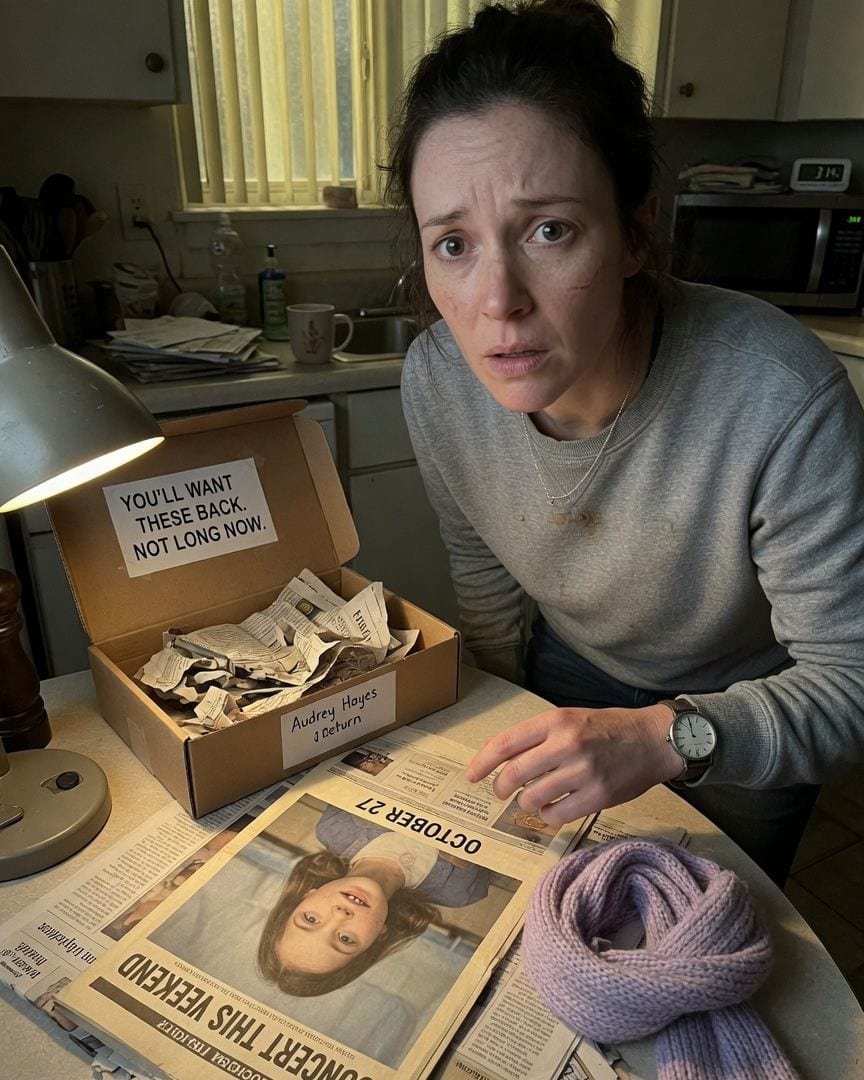
A box turned up with my name and no sender. Inside was a watch I lost years ago, still ticking and set right — wrapped in newspaper dated two weeks from now.
A plain brown box appeared on my step, containing my long-lost personal items. Among them, my grandmother's ticking watch and a newspaper dated two weeks in the future. But a historical ledger then revealed my name and these exact items, listed in 1965.
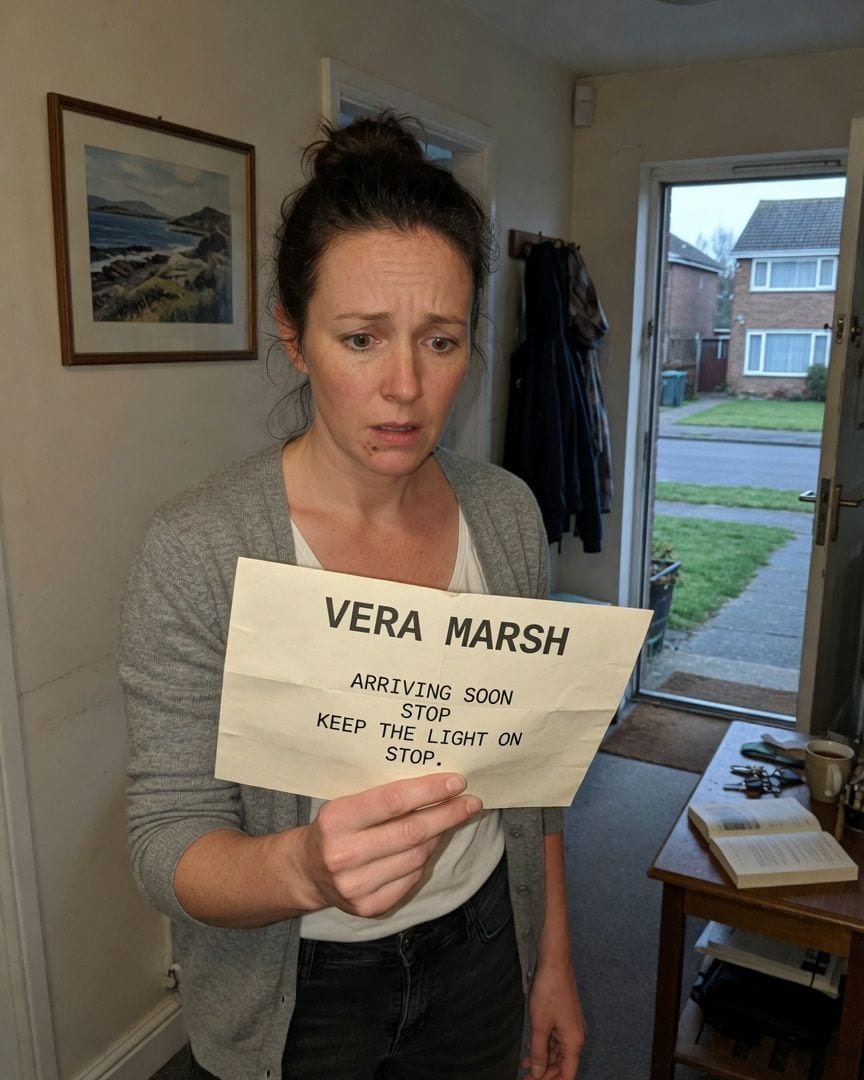
A boy of about twelve, in a uniform I didn't recognise, handed me a telegram addressed to me — but the Post Office stopped sending telegrams back in 1982. When I turned to grab my wallet, he was gone.
My quiet Saturday afternoon was broken by an insistent doorbell. A boy in an antique uniform delivered a telegram addressed to me, then simply vanished from my doorstep in less than two seconds. I scanned the empty street, but there was no trace of him.
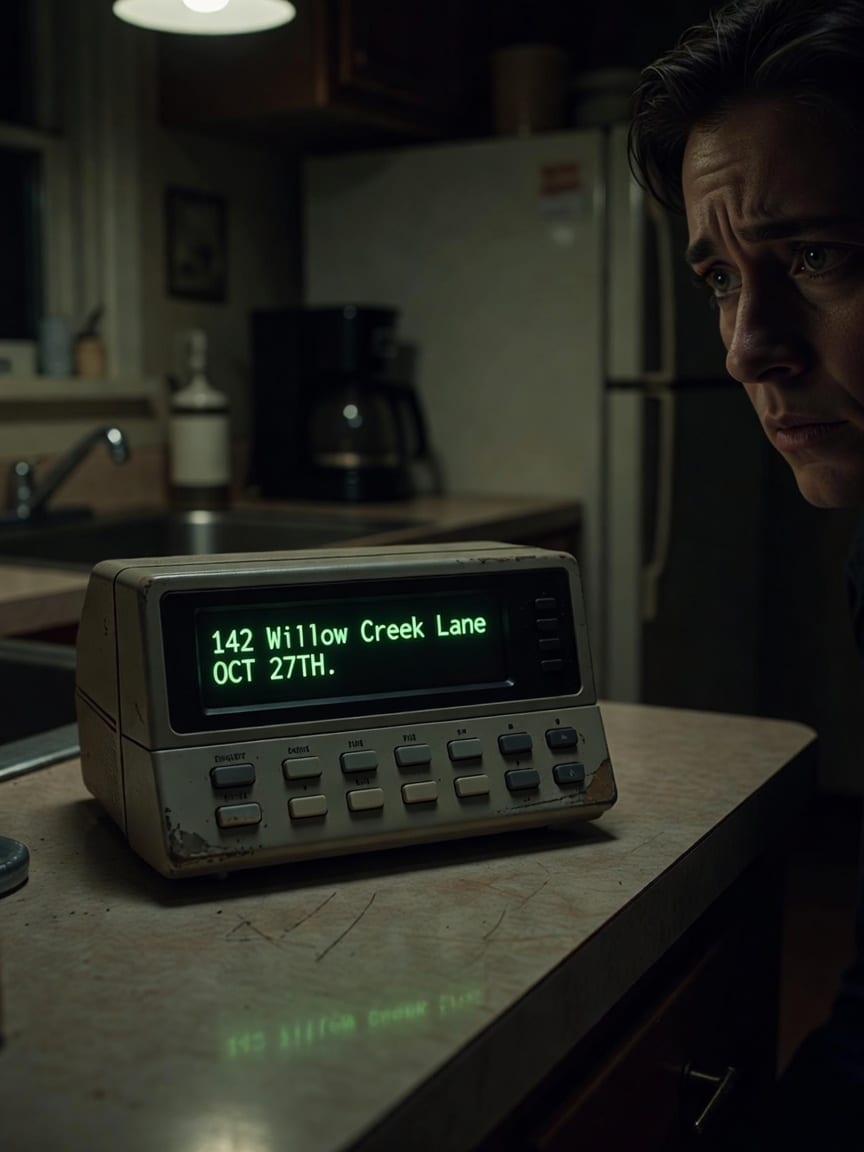
My radio scanner picked up a channel at 2 AM reading local addresses. Mine was on it, dated tomorrow.
I was tracking a storm on my old weather radio when a synthesized voice cut through the static. It began reading local street addresses, then my own: 142 Willow Creek Lane. But the date it gave for my address was tomorrow.
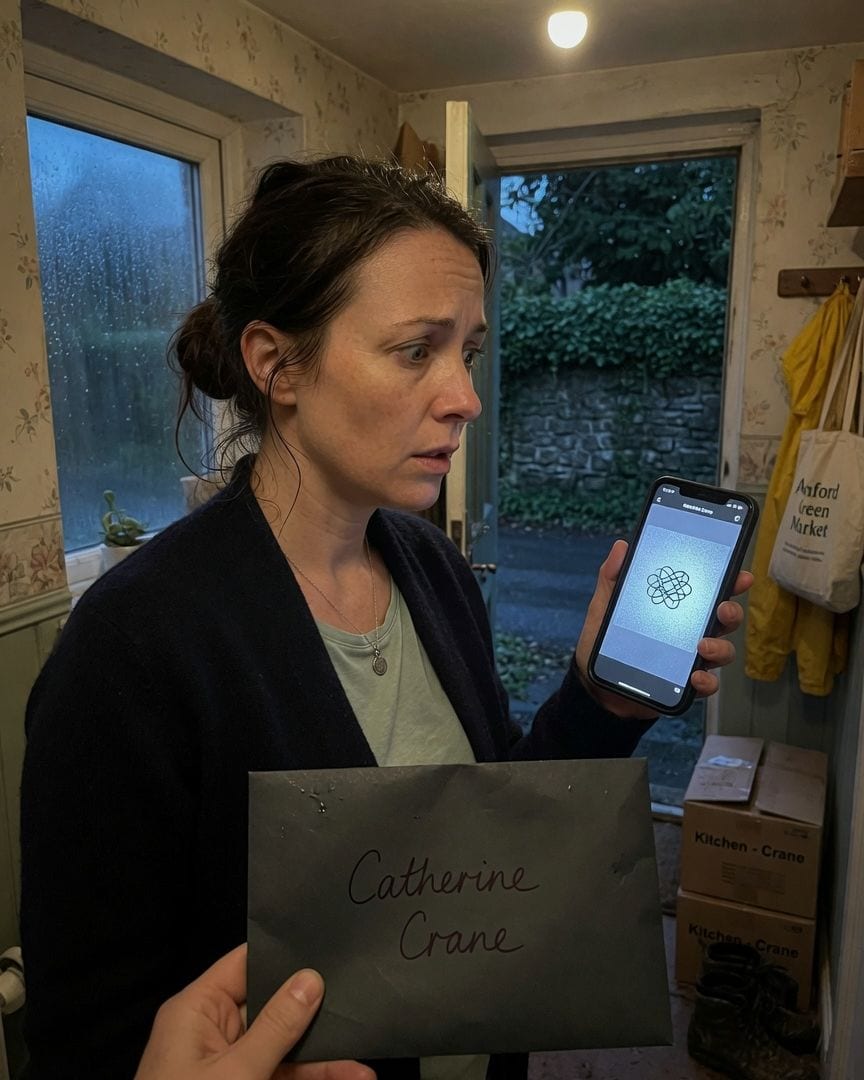
My postman warned me: never use the old pillar box. Royal Mail logs a collection every day, one item, signed by no one.
Moving to Ashford Green, I dismissed my postman's strange warning about the old pillar box by the ford. But after my own letter vanished inside it, I returned at midnight. Then, a dark, unstamped envelope slowly slid *out* of the slot, addressed to me.
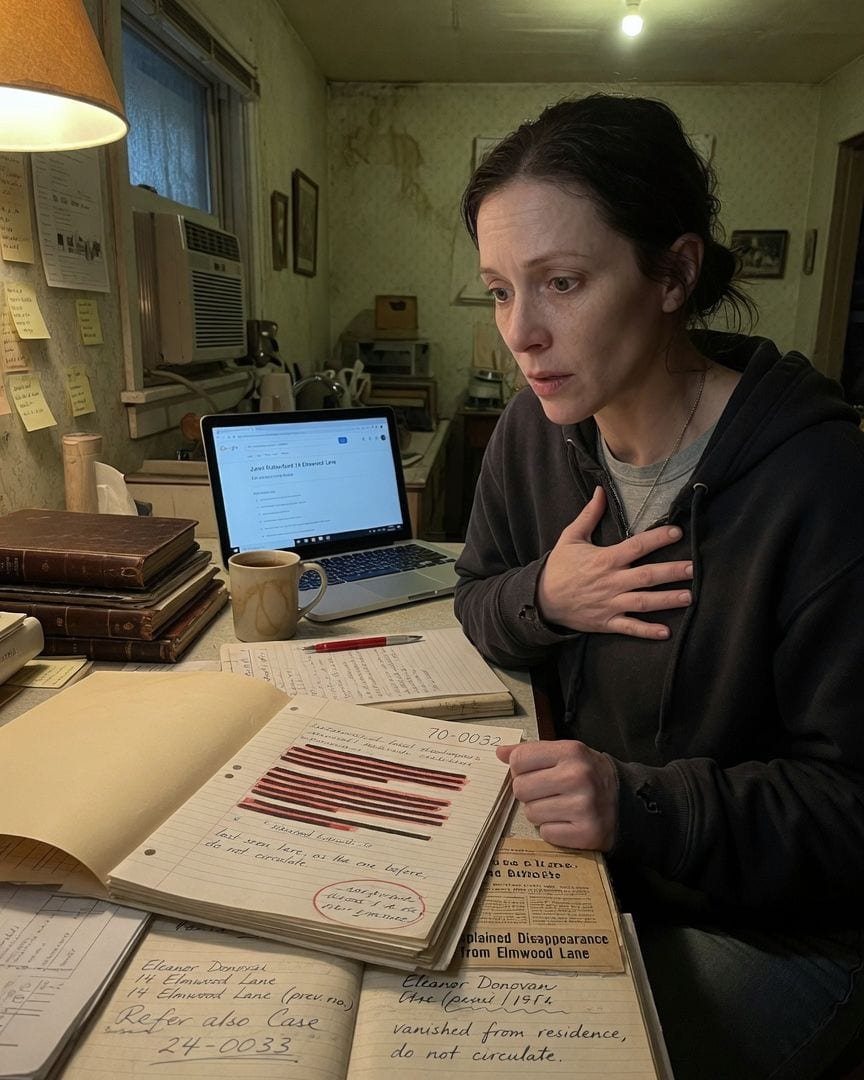
My own address is on a missing person's file from 1970. The blacked-out line names my street. She never lived here.
When my neighbor vanished, I started digging into old local missing persons cases. In a police file for a woman who disappeared in 1970, I found my own address, 14 Elmwood Lane, framing a blacked-out section of the duty log. Janet Rutherford never lived here, and the file contained a chilling handwritten note: 'do not circulate.'
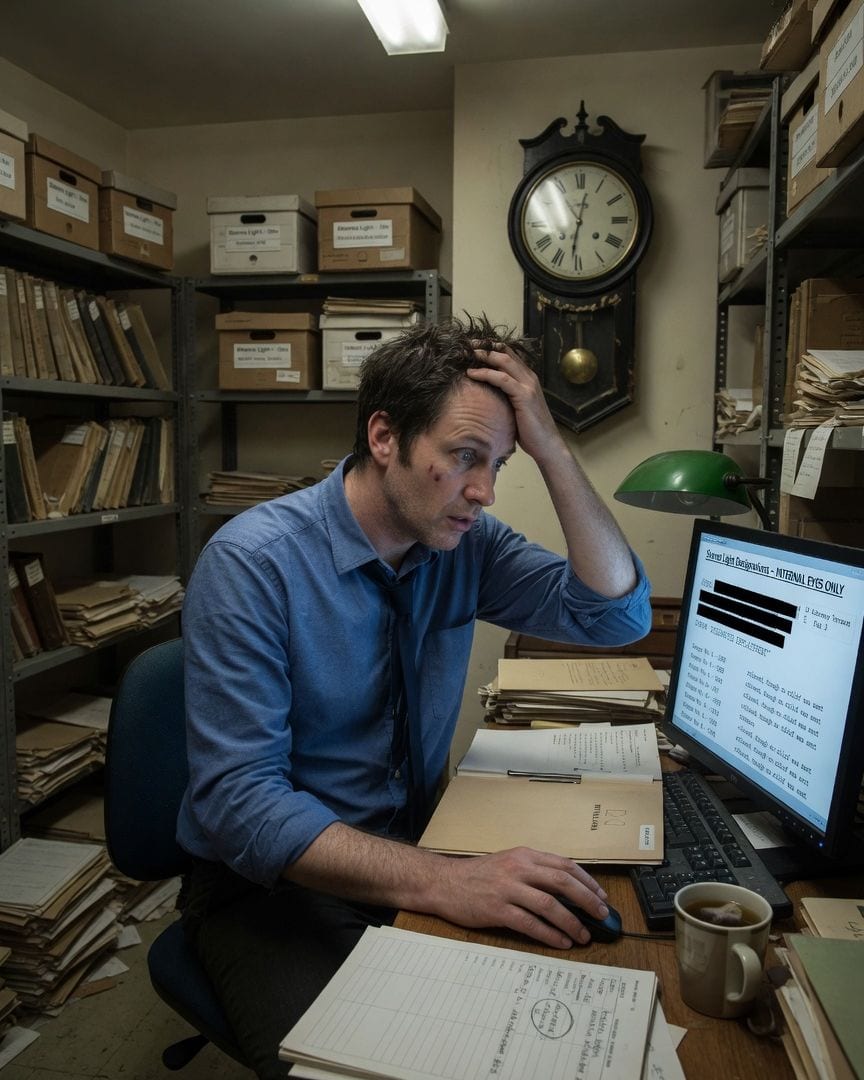
I found my street address in a century-old lighthouse file, printed decades before I lived there.
As a maritime archivist, my world revolves around forgotten lives and dusty ledgers. But the Skerne Light files broke that quiet rhythm, revealing a chilling pattern: 'Keeper number 6' relieved, though no relief was sent, repeating for decades. Now, an internal document with a strange code has led me to a redacted entry, revealing my own street address, decades before I ever lived there.