My postman warned me: never use the old pillar box. Royal Mail logs a collection every day, one item, signed by no one.
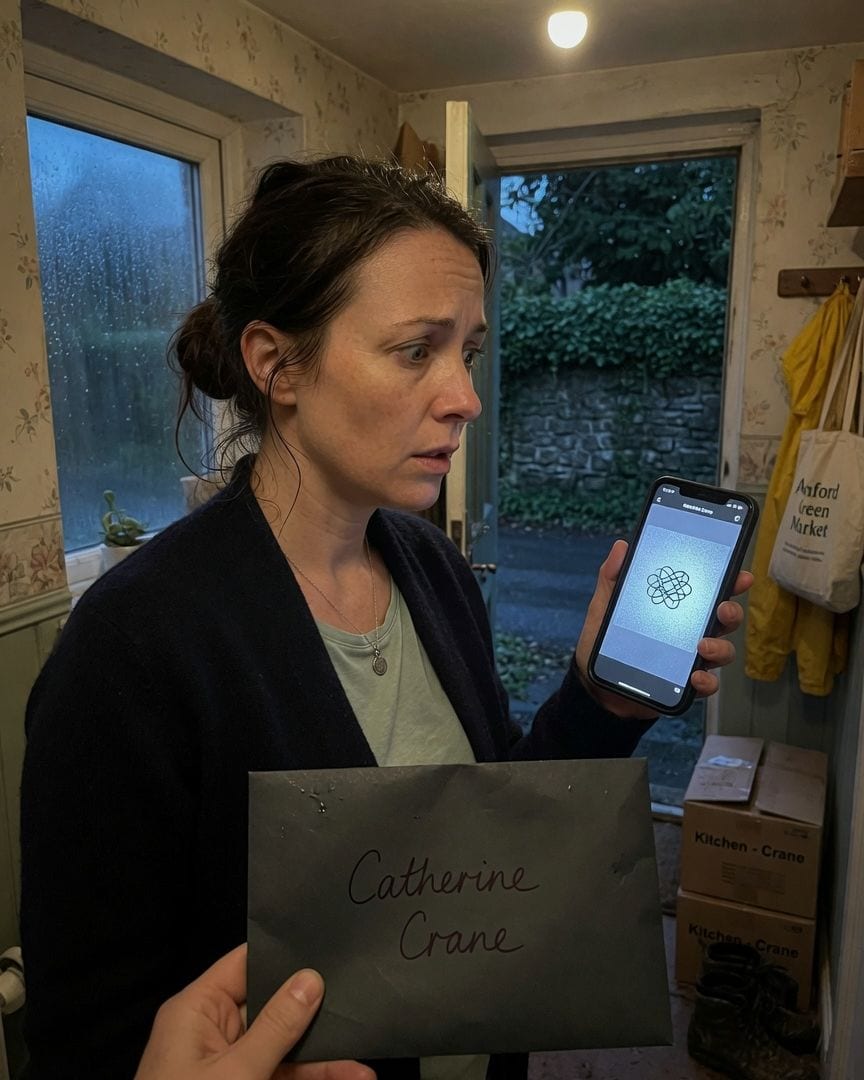
The move to Ashford Green had been everything I’d hoped for: quiet lanes, stone cottages, the kind of stillness that let you hear the wind change direction.
I’d unpacked the last box and was just about settling in when Gary Galloway, my postman, gave me my first piece of local wisdom.
Gary was a kindly man, his face a roadmap of smiles and sun-squints, though his eyes always seemed to carry a faint, perpetual weariness. He was leaning against my newly painted gate, holding a small stack of flyers.
"Just a heads-up, love," he'd said, his voice soft, "Don't ever post anything in the old pillar box by the ford. It's... not for us."
He’d gestured vaguely towards the edge of the village, where a thick curtain of ivy marked the start of the ancient woods. I’d laughed, picturing some quaint local superstition, a forgotten legend. "Mysterious village rules, then?" I'd teased.
Gary just offered a tired smile and changed the subject.
A week later, the main post office in town was closed for a bank holiday, and I had a letter for my sister, a birthday card I’d nearly forgotten.
My car was playing up, and the old pillar box by the ford was just a ten-minute walk. It was almost evening.
The box itself was a squat, cast-iron affair, almost swallowed by a particularly tenacious patch of ivy, its paint chipped and faded. It felt like stepping back in time.
I slipped the card into the slot, hearing the soft thump as it dropped inside. Problem solved.
The next morning, I saw Gary trundling up the lane, his satchel bulging. I caught him just before he reached my cottage. "Morning, Gary! Quick question, does the old box by the ford get cleared regularly?"
He stopped, his usual friendly demeanour momentarily replaced by something I couldn't quite place – a flicker of unease. He avoided my gaze, adjusting his cap. "It gets cleared, Catherine. Every day. One item."
He walked on, a little faster than usual, leaving me standing there with the odd sense that I’d touched a raw nerve.
Curiosity gnawed at me. Later that day, I found Renee Porter, the sorting office manager, stacking parcels. She was a brisk, no-nonsense woman, probably around 45, with a headset permanently grafted to her ear.
I explained about the pillar box, asking if she could confirm my letter went through. Renee tapped at her keyboard, frowning. "The old one? Hmm.
Royal Mail logs a daily collection from there, one item, always signed off as 'no signature required' or sometimes just a blank line." She looked at me, a shrug in her voice. "But your name, Crane... not seeing anything.
When did you post it?"
"Yesterday evening," I said, a prickle of unease beginning to spread.
She typed again, then shook her head. "No. Nothing. It wouldn't have made it into the system at all." It was as if my letter had simply... vanished.
I went back to Renee, pressing her. "A blank line? Every day, for one item? That's not right, is it?"
Renee, clearly uncomfortable, sighed and pulled up a digital scan of the actual collection log on her monitor. The screen glowed with the familiar grid of Royal Mail forms.
But where a signature should have been, for the collection from the ford pillar box, there wasn't a blank line. Not exactly. Instead, a strange, squiggly symbol, almost like a stylized knot, appeared in the signature column.
It was a precise, intricate mark, utterly unlike any scribble or initial I’d ever seen.
"See?" Renee said, tracing it with her finger. "Never understood it. Just... how it's always been. Fifty years I’ve been here, and it's always that symbol, or whatever it is."
My rational mind tried to find an explanation. A local prank? An ancient, forgotten tradition of the postmen?
I tried to initiate a lost mail protocol, but Renee repeated that there was no record of my letter ever entering the Royal Mail system. It was as if it had been collected, yes, but then ceased to exist.
The mundane explanations felt flimsy, worn thin around the edges.
I started asking other locals, dropping the pillar box into conversations as casually as I could.
Their reactions were uniform: vague answers, a sudden stiffness, eyes that darted towards Gary Galloway, who seemed to watch me with a new, quiet intensity whenever I saw him. It wasn't hostility, more like a profound, troubled pity.
It was the kind of look you give someone who doesn't know what they've walked into.
The rational part of my brain was losing the fight. A growing, cold curiosity, overriding all common sense, pulled me back to the old pillar box by the ford. It was almost midnight, the village steeped in silence.
The air was still and damp, carrying the scent of wet earth and ancient leaves.
I stood there, under the skeletal branches of the trees, half-expecting nothing, half-hoping for some mundane explanation to present itself – a forgotten night-postman, a time-release mechanism.
The silence was absolute, broken only by the faint rustling of leaves and the distant hoot of an owl. Then, a soft, almost imperceptible click echoed from within the iron shell of the box.
The mail slot, which had been firmly shut, creaked slightly, a thin groan of metal. A single, heavy, dark envelope slowly slid out of the slot, landing with a soft thud on the damp pavement at my feet.
It had no stamp, no postmark. It was addressed to me, in a script I had never seen before, elegant yet unsettlingly alien.
I picked up the envelope with trembling fingers. The paper was thick, almost like vellum, cool to the touch.
Back in my cottage, the warm yellow light of my kitchen lamp felt like a flimsy shield against the cold certainty that had settled in my chest. I opened it carefully, a strange reluctance making my movements slow.
Inside, there was no letter, no message. Only a single, dried, pressed flower, its petals a deep, almost bruised purple. I didn't recognize it. It looked fragile, ancient, yet perfectly preserved.
The next morning, the sun felt like a lie. I caught Gary Galloway by the village green. "Gary," I began, holding out the envelope and the flower. "This came out of the old box last night.
Do you recognise the script, or this flower?"
He glanced at the envelope, then at the bruised purple petals. His face went pale, his usual friendly demeanor dissolving into a troubled, stony silence. He wouldn't even touch it. "Catherine," he mumbled, his voice tight, "Some things... old ways.
You shouldn't have gone back there." He turned abruptly, walking away with a speed that belied his years, leaving me standing alone, the silence ringing in my ears.
I took the flower back to my cottage, laying it gently on my desk. I pulled out my phone and started researching, typing in combinations of 'rare purple flower,' 'ford,' 'Ashford Green.'
It took a while, but eventually, an image popped up that matched. 'Ford's Nightshade,' the description read. Rare.
Traditionally associated with ancient local rituals, believed to grow only near the ford, especially in the damp soil along the old river path. The unsettling feeling deepened, coiling in my gut like a cold snake.
The library. That was the next step. I needed more than internet searches. Ashford Green was old, older than the internet, older than Royal Mail.
I spent hours in the dusty local history section, poring over brittle pamphlets and forgotten books. Tucked away in an obscure drawer, I found a hand-drawn map of the area from the late 1800s. The detail was incredible.
And there, by the river, where the pillar box now stood, it was clearly marked. But not with a Royal Mail symbol.
Instead, it was denoted by that same peculiar, stylized knot I saw in Renee's log, accompanied by an archaic word: 'Tithen.'
As I delved deeper, a palpable shift began to ripple through the town’s atmosphere. It was subtle at first, like a change in air pressure. Conversations would abruptly cease when I approached, dissolving into strained smiles and hurried departures.
Gary Galloway, who had once offered a cheerful wave every morning, now barely made eye contact, his gaze sweeping over me as if I were a ghost.
I’d catch him watching me from his postal van, parked a little too long down the lane, a look of profound worry etched onto his face. He wasn't the only one.
The baker, Mrs. Henderson, a woman who usually greeted me with a story about her grandchildren, now just nodded stiffly, her eyes flickering away from mine.
One evening, after returning from the library, a chill seeping into the cottage with the dusk, I found a crisp, folded note slipped under my front door.
It wasn't tucked under the mat; it was slid precisely into the gap, almost a part of the frame. My heart thudded against my ribs as I picked it up.
The paper was the same heavy, dark stock as the envelope I'd received. The handwriting was eerily similar to the strange script that had addressed it to me. It read, in stark, blunt terms: 'Leave it alone.
Some things are best undisturbed. For your own good.'
The casual, almost gentle threat sent a deep, icy chill down my spine. The dread intensified. I was no longer just investigating a mystery; I was being warned, watched.
And the warning seemed to come from someone who knew exactly what I’d found, what I was risking. The very air in my cottage felt thick, compressed, as if the walls themselves were holding their breath.
I was being told to stop, but the urgency of the warning only made me more certain I was on the right track.
Shaken by the note, by the sudden, chilling intimacy of it, I knew I couldn't stop. I needed answers, directly from someone deeply rooted in the town's history, someone old enough to remember the 'old ways.'
There was only one person. Bernard Caldwell. The elderly retired local historian, known for his encyclopedic, if sometimes eccentric, knowledge of Ashford Green's past.
I found him in his cluttered study, surrounded by stacks of books and ancient artifacts. He was a small, stooped man, his hair a wispy white halo, but his eyes were sharp, bright behind thick spectacles.
I laid the hand-drawn map on his oak desk, pointing to the 'Tithen' mark on the pillar box. "Mr. Caldwell," I began, my voice steady despite the tremor in my hands, "What does 'Tithen' mean?"
Bernard’s eyes, usually so quick, clouded over. He leaned back in his creaking chair, clasping his hands. He tried to dismiss it, of course. "Ah, that. Old village folklore, dear. Just superstitions. Kept the youngsters from littering, you know.
Nothing to concern yourself with."
"No," I insisted, pushing the map closer to him. "It's more than that. My letter vanished. Royal Mail logs a collection, 'one item, signed by no one,' or with this."
I pulled out my phone, showing him the photo of the stylized knot from Renee's log. "Then this." I laid the dark envelope, then the pressed Ford's Nightshade, on his desk. "And last night, this."
I described the anonymous note, the strange, familiar script. "It's all connected, isn't it? The pillar box. The symbol. The flower. 'Tithen.'"
Under my relentless, rational questioning, Bernard's carefully constructed resolve slowly crumbled. He closed his eyes for a moment, a deep, shuddering sigh escaping his lips. When he opened them, the brightness was gone, replaced by a profound sorrow.
"Tithen," he repeated, his voice barely a whisper, "is an old local word. For 'offering.' Or 'tithe.'"
He leaned forward, his elbows on the desk, his voice growing fainter. "The pillar box... it's not for mail, Catherine. It's for 'the Collection.' This town... for centuries, we've made an 'offering.' To 'keep the balance.'
We don't understand what it is. Only that it comes. And it demands." He ran a trembling hand over his face. "Gary's warning, the local 'eccentricity'... that's the town's way. Our way of deterring outsiders from accidentally becoming involved.
From becoming... an offering." He looked at the dried flower. "Once you've posted, once you've received the flower," he said, his gaze filled with a bottomless sorrow, "you're marked."
Bernard, his face a grim mask of resignation, finally pushed himself from his chair. He went to a dusty, locked cabinet in the corner of the room, fumbling with a small, tarnished key.
With a soft click, he opened it and retrieved a large, hand-bound ledger. Its leather cover was cracked and flaking with age, the pages yellowed and stiff.
He placed it on the table between us with a soft thud, the air around it suddenly heavy and cold.
He opened it to a section filled with names and dates, meticulously recorded in neat, looping script, spanning centuries.
Each entry was marked, not with a cross or a check, but with that same unsettling, stylized knot symbol I’d seen in Renee’s logs and on the old map. My breath caught in my throat.
He pointed to a column of dates, his finger trembling slightly. "The cycle," he whispered, his voice hoarse. "Every 25 years. Always around this time of year, late summer, early autumn. It corresponds roughly to... now."
His finger traced down the page, past dozens of entries, stopping on a date that made my blood run cold. It was today's date, written plainly in the meticulous hand.
Then, with a profound, shuddering sigh, he traced back 25 years to the last 'collection.' My heart pounded in my chest, a frantic drum against my ribs. I leaned closer, my eyes scanning the faded script. My breath hitched.
The name, stark and clear on the ancient page, was 'Crane.' My own surname, staring back at me from the ancient ledger.
Bernard confirmed my worst fears. The 'Crane' from 25 years ago wasn't just a coincidence; it was Sylvia Crane, my great-aunt. Sylvia, who had moved to Ashford Green decades before I was even born, and then vanished without a trace.
A family mystery, explained away by time and distance, that I had never understood. Now, the full, horrifying coherence of it all snapped into place.
"The town has always known about the cycle," Bernard continued, his voice heavy with generations of dread. "This ancient 'arrangement.' We don't understand what makes the collection, but we know how to manage it.
We ensure that when the time comes, only one item – the 'offering' – is in the pillar box. Outsiders who break the rule, or those who become too curious, often become the unwitting 'offering.' They are... selected."
He explained how Gary Galloway, as the postman, was the one who monitored the box, ensuring no accidental mail went in during the 'collection window,' discreetly guiding the chosen item, making sure no one interfered.
The 'one item' in the Royal Mail logs wasn't a collection; it was the chosen person's last trace, a final acknowledgment before they were taken. The town kept silent, not out of malice, but out of a desperate, generations-old fear.
They believed their quiet cooperation ensured the safety of the rest of the community. They had sacrificed before, and they would again.
I had stepped into an ancient, deadly trap. The 'collection' was due tonight, and I was the chosen one.
Terror consumed me. My cottage, usually a place of quiet refuge, now felt like a cage. My mind was a whirlwind of fear and disbelief, every creak of the old house, every rustle of leaves outside, making me jump.
I had to get out, now. I scrambled through my bedroom, frantically throwing essentials into a small bag: my passport, a change of clothes, my phone charger. My hands shook so violently I could barely zip the bag shut.
The old floorboards groaned under my feet, the windows rattling faintly as if a breath had been drawn outside. I glanced at my watch – 11:47 PM. Almost midnight.
I burst out the door, fumbling with my car keys. The night air was thick and cold, pressing down on me. As I reached my car, illuminated by the feeble glow of the streetlamp, I saw him.
Gary Galloway, standing perfectly still by the old pillar box, not looking at me, but toward the ford, his face etched with a solemn, almost ritualistic grief. He didn't move, didn't speak.
He was simply watching, an observer of the inevitable.
From the direction of the ford, a faint, dragging sound began. It was low, guttural, like something immense being pulled through the damp earth, growing steadily louder with each passing second. It wasn't natural.
It was a sound of heavy, unseen weight, approaching. I scrambled into my car, the interior suddenly feeling small and vulnerable. I jammed the key into the ignition, my hands slipping on the smooth plastic. The engine roared to life.
I threw the car into reverse, then slammed it into drive, speeding away from Ashford Green, leaving everything behind, the dragging sound echoing in my ears, growing louder and closer with every meter I gained, until the village was a dark smudge in my rearview mirror.
I drove through the night, a panicked blur of dark roads and fleeting streetlights, not stopping until the sun was high and Ashford Green was hundreds of miles behind me. I never looked back.
I sold my cottage remotely, never returning to collect the rest of my things.
I still carry the dried, pressed Ford's Nightshade flower, sealed in a small glass jar, and a photograph of the ledger page with 'Crane' written on it, captured on my phone before I fled Bernard Caldwell’s study.
I tried to tell people, to explain the terrifying coherence of it all, but my story was met with polite disbelief, nervous smiles, or dismissive explanations of stress and paranoia.
"It sounds like you had quite the shock, dear," they'd say. I became, to them, simply the woman who fled her new life in a sudden, inexplicable panic.
The proof I carry is just a flower and an old, faded name.
I now live in a quiet, anonymous apartment in a city far away. The jar with the pressed flower sits on my desk, a silent, dark bloom.
I often find myself looking at my own local postboxes, a cold dread in my stomach, wondering if there are other towns, other rules, other collections. I know the cycle continues. I know the post still gets collected.
The dread is not for what I lost, but for what I now understand. It lives in the quiet knowledge that some things are simply managed, not stopped.
I still check the mail every day, but I never send anything, and I always wonder who signs for the letters that still arrive in Ashford Green.
If this one got to you
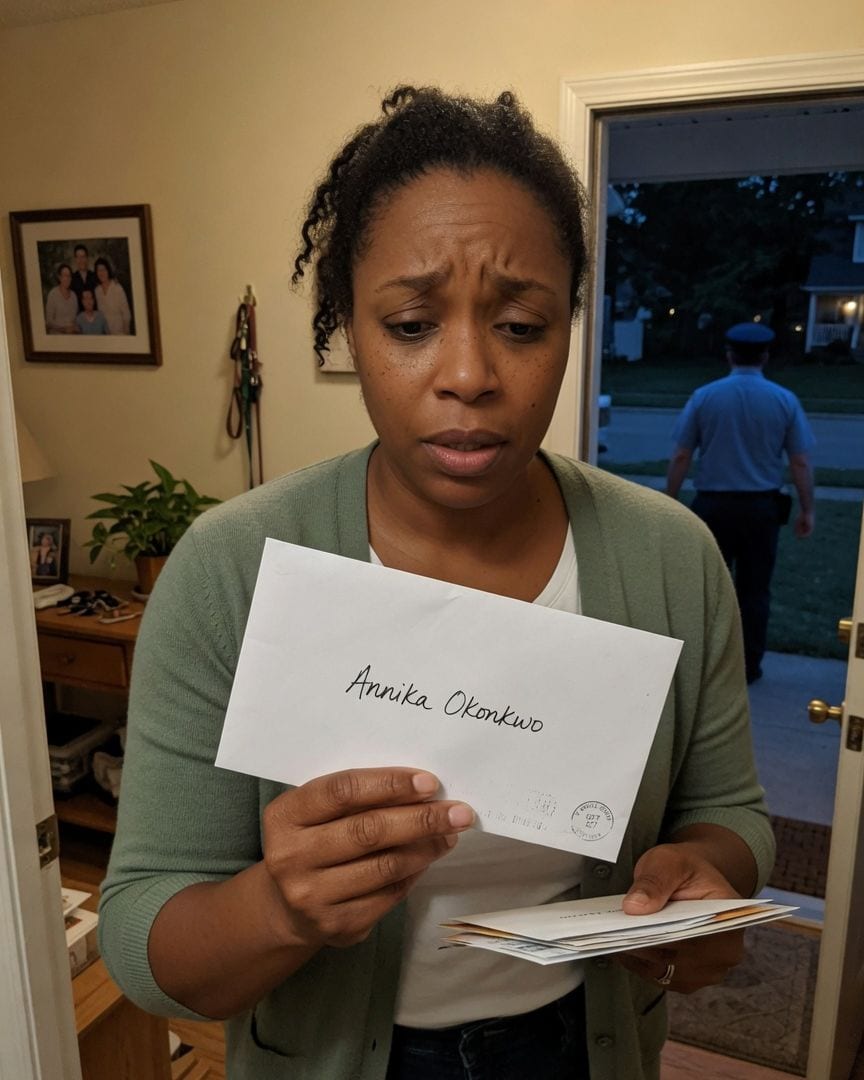
My postman apologised, then disowned the letter with my name.
My postman, Dave, delivered the usual mail, but then strangely swore he never carried one plain white envelope. Addressed to me in an elegant hand, it stood out from the bills. The real dread began when I saw its postmark: 14 Maple Street, a vacant lot where a house burned down fifteen years ago.
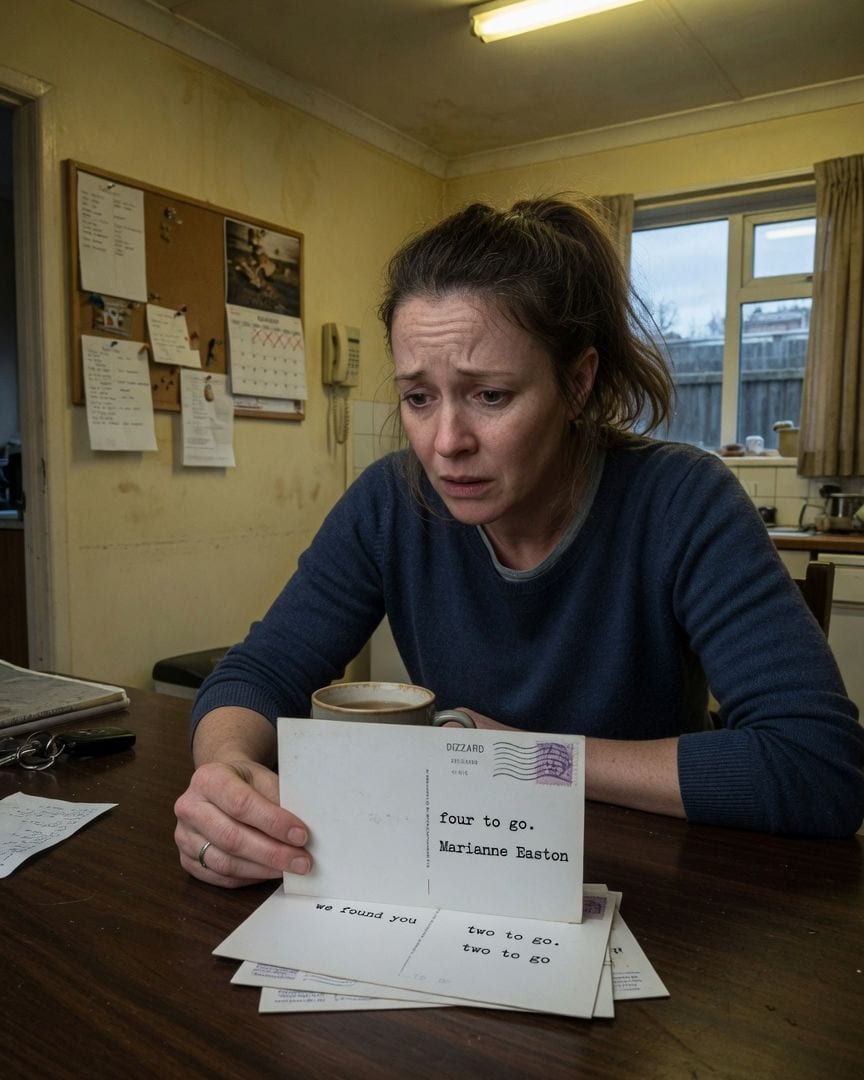
My postcards arrive each Friday, addressed by name, counting down. This week's says 'four to go,' postmarked from a cliff with no postbox.
Every Friday, stark white postcards arrive on my kitchen table, addressed to me. Each one is postmarked 'Dizzard,' a desolate cliff miles from any town, with no post office. For weeks now, they've been counting down.
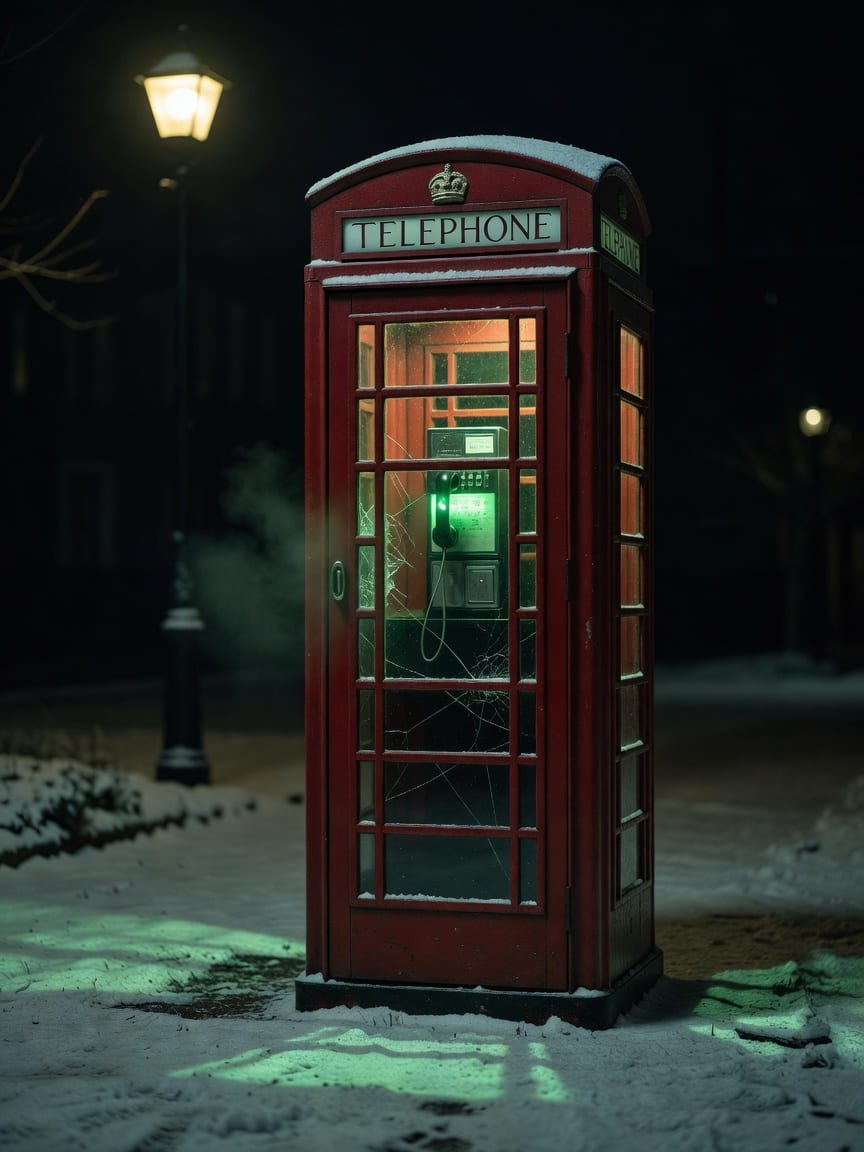
The phone box on our town green makes a call every New Year's Eve at 11:59. It's been dead for twenty years, and calls the same disconnected number.
Moving to Trellow for a quiet life, I quickly learned about the village's red phone box, a relic everyone agreed was dead for decades. But then a retired engineer showed me its call log. Every New Year's Eve for the past twenty years, it records a 90-second outgoing call from that very box, always at 11:59 PM to a disconnected number.
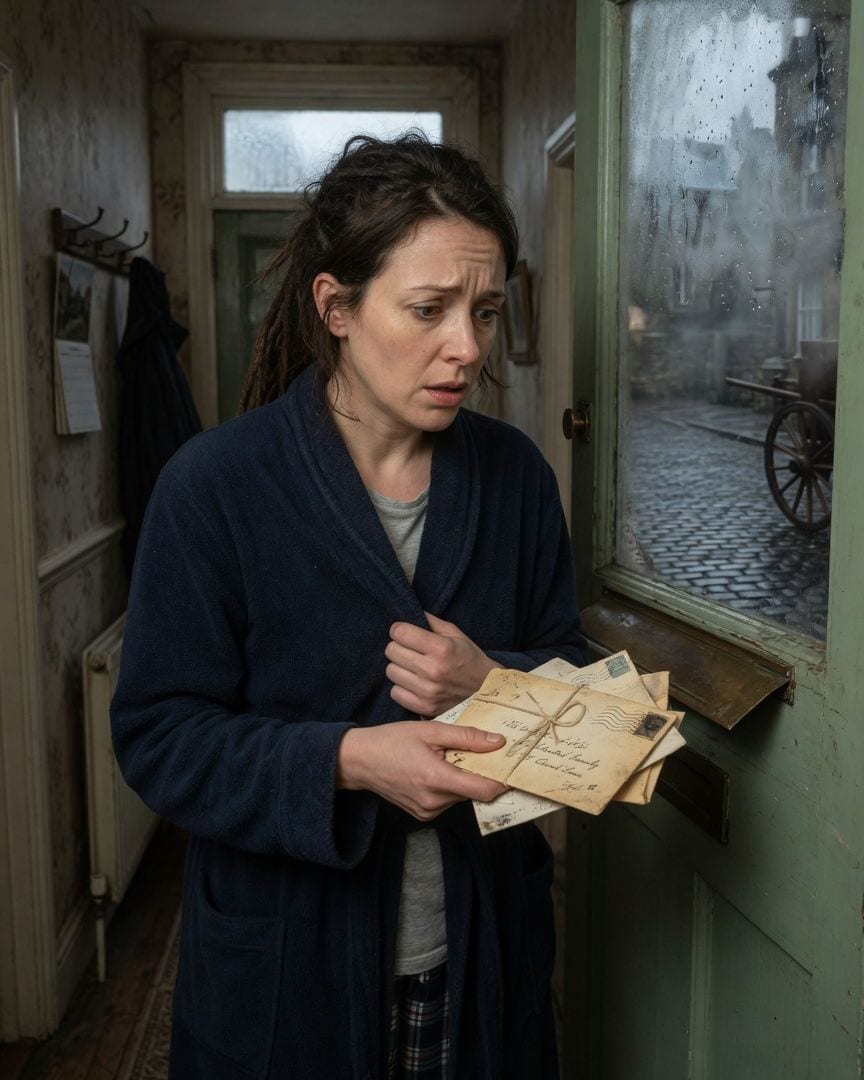
Seventy years ago, a hidden journal recorded my door opening to the wrong street and receiving Lockwood post.
I'd only recently moved into my inherited house, a quiet place on the edge of town. One grey morning, a distinct clatter from the front door's post flap caught my attention. Reaching down, I expected my gravel path, but instead, the flap showed a dark, cobbled street that wasn't mine. A bundle of warm, old letters, addressed to 'The Lockwood Family,' slid through, before the vision flickered and was gone.
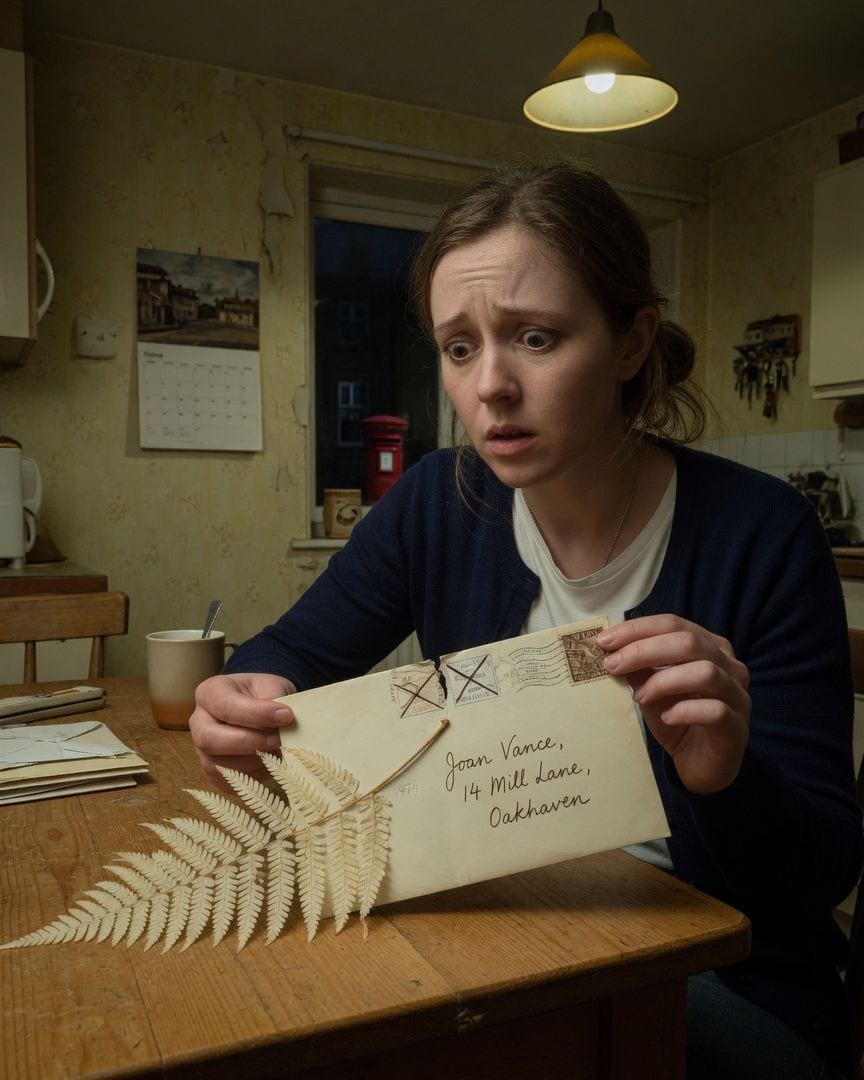
My letter returned. Delivered by hand, with a 1974 postmark. My own address, in a hand I didn't recognise.
As Joan Vance, new to Oakhaven, I posted a letter to my sister just two days ago, well past the last collection. Now, that same envelope sits on my kitchen table, delivered by hand. It bears a postmark from Oakhaven, 1974, a date that makes no sense, as the local post office officially closed that very year.
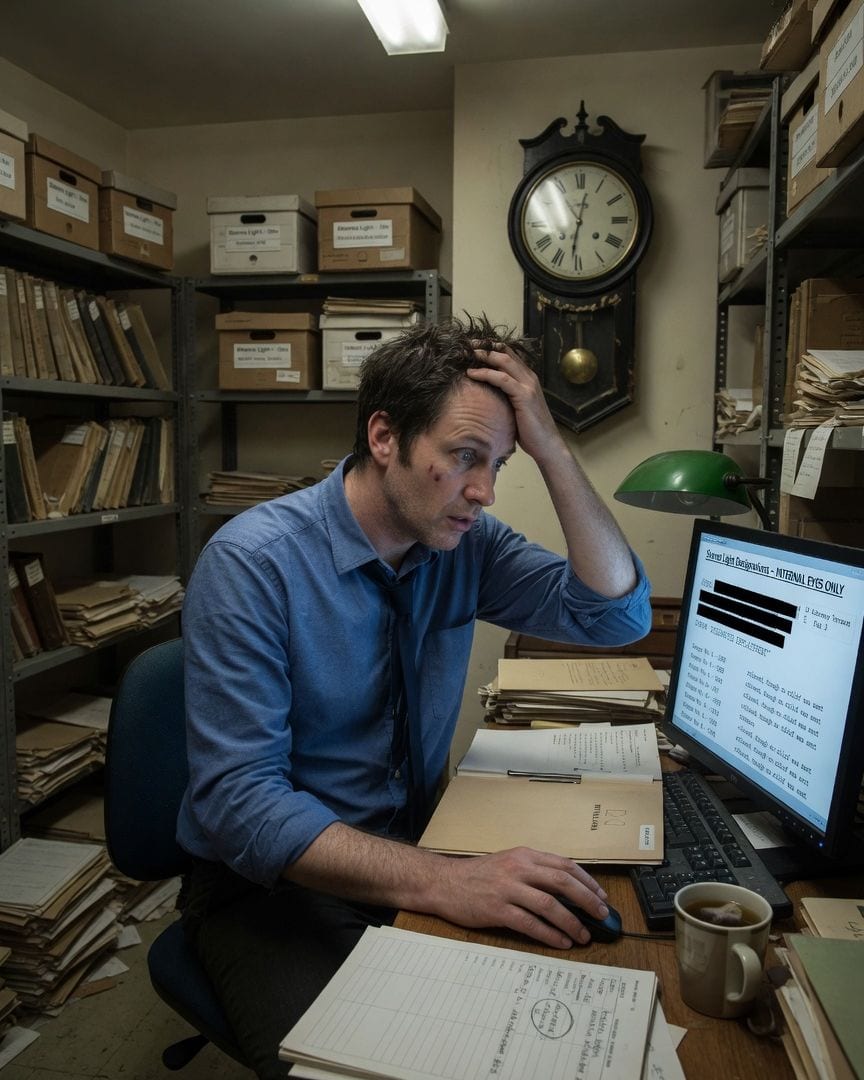
I found my street address in a century-old lighthouse file, printed decades before I lived there.
As a maritime archivist, my world revolves around forgotten lives and dusty ledgers. But the Skerne Light files broke that quiet rhythm, revealing a chilling pattern: 'Keeper number 6' relieved, though no relief was sent, repeating for decades. Now, an internal document with a strange code has led me to a redacted entry, revealing my own street address, decades before I ever lived there.