My letter returned. Delivered by hand, with a 1974 postmark. My own address, in a hand I didn't recognise.
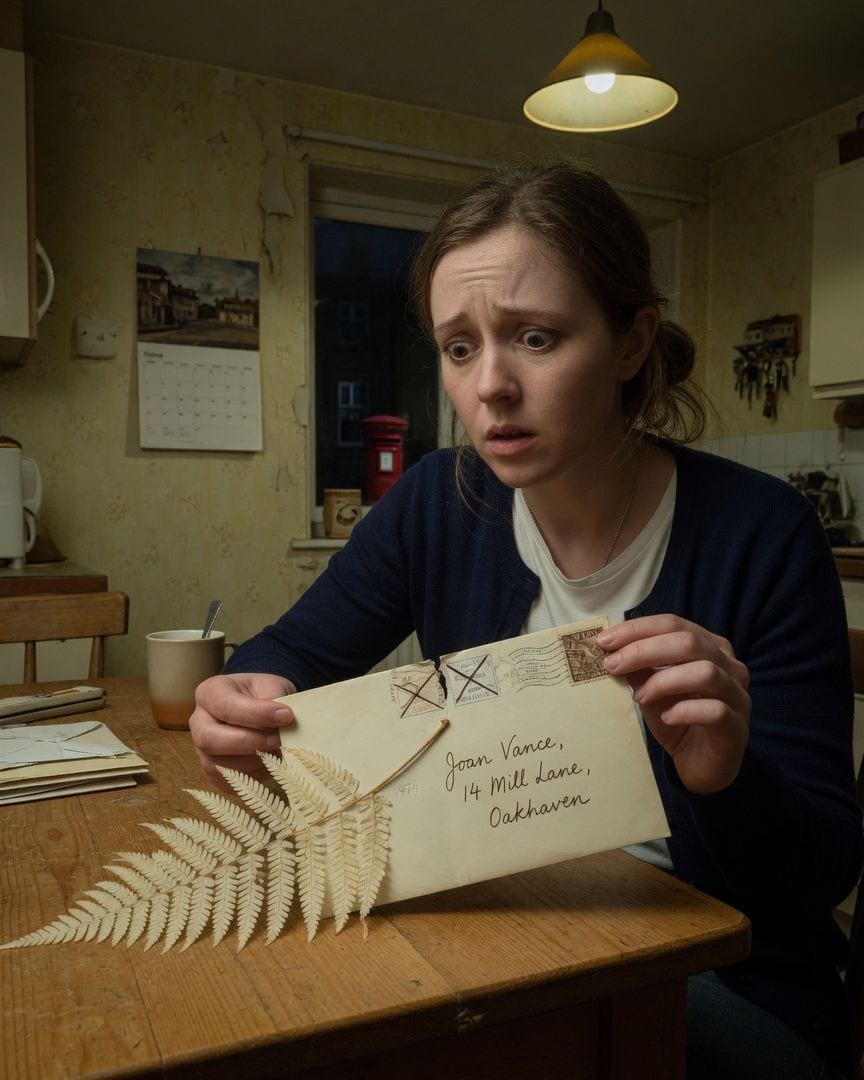
Oakhaven is a quiet village, the kind where everyone knows everyone, and I, Joan Vance, at 32, was the new arrival.
Two days ago, a Tuesday, I’d dropped a letter for my sister into the main village postbox, a cheerful red pillar near the old market square. It was just after 5 PM, well past the last collection time.
Russell Kingsley, the postman, a friendly man with a perpetually rosy face, had been doing his rounds earlier and saw me walking toward it.
“On this round, love,” he’d called out with a smile, leaning out of his van window, “you wait for tomorrow. Nothing goes in after I’ve cleared it for the day.”
I’d waved him off, a little amused by the small-town quirk. A letter was a letter, after all. But now, that same envelope sits on my kitchen table.
It arrived this morning, delivered by hand by Adam Kowalski, the village shopkeeper, who claimed he’d found it propped against his porch door. The envelope is exactly as I posted it, unopened, untouched.
Except for one detail: a second stamp, cancelled with a postmark that clearly reads ‘Oakhaven, 1974.’
And my own address, penned in a hand I do not recognise, a strange, almost too-perfect script, formal and precise, as if copied from an instruction manual.
I picked up the returned letter, a cold knot tightening in my stomach. My first thought, naturally, was that it was some elaborate, if baffling, prank. A new face in town, a bit of local teasing.
But when I’d pressed Adam Kowalski, he’d been genuinely unnerved. He’d insisted, his eyes wide and a little too still, that he’d simply found it and brought it over. He had no idea who could have left it or why.
His hands had fidgeted with the edge of his apron, a nervous tic I hadn’t seen before. Later, I’d called the general postal service archives, half-expecting a bureaucratic shrug.
Instead, a polite clerk, after a moment of searching, confirmed it: Oakhaven’s local post office, a quaint independent branch, had indeed closed permanently in late 1974.
The mundane explanation of a postal error, a misrouted letter, died a quiet death right there, leaving a hollow space. I studied the handwriting on my address again.
It wasn’t just unfamiliar; it was unsettlingly precise, like a perfect copy of perfect penmanship, almost too uniform, lacking the individual flaws that make a human hand unique.
The ink itself seemed faded, an antique sepia, as if from another era. I tried to rationalise, to find a logical flaw, but every detail held up under scrutiny. The paper, the postmark, the untouched seal, the impossible date.
With a deep breath, my heart thumping a frantic rhythm against my ribs, I slid a finger under the flap of the returned envelope, carefully breaking the seal.
My fingers trembled slightly as the flap gave way. I pulled it open. My original letter, the one I’d written to my sister, was gone.
Instead, perfectly flat and preserved as if it had just been pressed, rested a single, dried fern frond. It was a species I didn’t recognise, its fronds delicate, intricate, and the colour of old parchment.
I turned it over in my palm, examining the stem. There, almost invisible to the naked eye, was a faint embossment, a date pressed into the very fibre of the plant itself, clear and cold to the touch: "1974."
The fern frond became an obsession. The strange, fragile thing sat on my coffee table, a constant, unsettling reminder.
For days, I buried myself in the local library and then the historical society, poring over microfiche and dusty newspaper archives from 1974.
I found articles confirming the post office closure, often tucked away on page two, but interspersed were curious notices of 'missing persons' cases from that year.
Three individuals, all young adults, vanished without a trace in the span of a few months. Their cases were quietly closed, cold cases, filed away due to lack of evidence. One name, in particular, seized my attention: Vanessa Kowalski, 23.
The article described her as a keen botanist, known for her extensive collection of pressed ferns, a detail that sent a cold dread prickling at my skin. The connection was too direct, too specific, to be mere coincidence.
The Kowalski surname rang a bell. Adam. I found him behind the counter of his village shop, stacking tins of beans. "Adam," I asked, trying to keep my voice casual, "do you know anything about a Vanessa Kowalski?
From around 1974?" Adam froze. His usual jovial demeanor, the easy smile he wore for customers, was replaced by a strained, unnatural silence.
He mumbled something about 'old village stories' and quickly changed the subject, his eyes darting away from mine, flicking nervously to the window as if expecting someone. The shift was stark, undeniable.
My research, my questions, seemed to draw an unspoken attention. I began to notice Sylvia Jennings, an elderly woman who lived a few houses down, frequently observing me.
She was always in her garden, or at her window, ostensibly tending to her meticulously manicured plants, but her gaze often lingered on my house, sharp and still.
She never waved, never approached, just watched with an unnerving stillness that made my skin crawl. I tried to dismiss it as small-town curiosity, the newcomer being scrutinised, but the intensity of her gaze was different, almost expectant.
One evening, after returning from another fruitless session at the archives, I found a small, folded piece of paper tucked under my front door.
It wasn’t a note, no words, no message, just a crudely hand-drawn map, sketched on what looked like aged, brittle paper.
It pointed to a narrow, barely visible path behind the defunct post office building, leading into a dense thicket of overgrown woods.
It felt less like a threat and more like a silent, desperate warning, a breadcrumb trail laid by someone who knew more than they were willing to say aloud.
Driven by the map, a grim curiosity propelling me forward, I followed the overgrown path behind the old, derelict post office.
The air grew heavy, thick with the scent of damp earth and decaying leaves, clinging to me like a shroud. The canopy of trees above was so dense that little light broke through, creating a perpetual twilight.
The path, barely discernible, ended at a small, almost swallowed-by-nature clearing. In the center, half-hidden by a wild tangle of ferns, stood a weathered memorial stone, its grey surface scarred by lichen.
It listed three names, all with the chilling inscription 'Missing - 1974'. Vanessa Kowalski was among them, her name carved deeply, almost angrily, into the stone.
As I traced Vanessa’s name with my finger, a quiet voice spoke from behind me, soft but clear. "They didn't just go missing, dear," Sylvia Jennings said.
Her face, when I turned, was etched with a lifetime of hidden knowledge, her eyes deep and impossibly old. "They went... back." Sylvia stepped closer, her voice low and steady. "The postbox isn't just for sending mail out, Joan.
It's a threshold. A conduit." She looked toward the rusted red pillar, barely visible through the trees. "The rule," she continued, "the one Russell tried to tell you about, was to keep it dormant. To keep the conduit closed."
My letter, posted after hours, had acted like a bell, ringing on the other side. "The postmark, the handwriting... that wasn't a mistake, Joan. That was Vanessa. Or what's left of her. Reaching back."
Sylvia revealed that she herself had worked at the post office in 1974, a young woman then, and had seen Vanessa disappear.
She’d been watching the postbox ever since, knowing what it could do, what it would do, given the chance.
I reeled from Sylvia’s words, the pieces of the puzzle clicking into place with horrifying clarity: the quiet disappearances, the swiftly closed post office, the strange returns. "But... why? What does she want?"
I asked, my voice barely a whisper, ragged at the edges. Sylvia’s eyes, heavy with a knowledge that spanned decades, met mine, unwavering. "She wants to finish what she started. She wants her letter delivered."
Sylvia then leaned in close, her voice dropping to an almost inaudible whisper, revealing the full, chilling implication of my actions. The hairs on my arms stood on end. "And you, Joan, have just given her the signal."
Sylvia Jennings finally whispered a name — "Vanessa Kowalski."
It was the name of the young woman I’d just found in the old village records, listed as 'missing' in 1974, and Sylvia added, her voice a dry rustle of leaves, "She's been waiting for her letter.
And now it's coming."
Sylvia led me back to her cottage, the short walk feeling like a journey through ice. Her voice was unwavering, a steady hum in the deepening twilight, as she recounted the full, terrible truth.
"Every few decades," Sylvia explained, settling into a worn armchair, "if the conditions are right, if the barrier between here and... elsewhere, is breached, the postbox calls them back.
Not as they were, but as echoes, searching for something lost, trying to finish their last acts. They try to return, or to call something through."
Vanessa, Sylvia revealed, was trying to mail a crucial letter on the very day she vanished, a letter that never reached its destination.
The fern was her last physical touch, a desperate attempt to send a message, an anchor across the divide.
The handwriting on my returned envelope wasn't Vanessa herself, not precisely, but the impression of it, a spectral signature reaching out from the threshold between worlds.
Sylvia confessed her own burden, her guilt: she was a young woman in 1974, working at the post office, and she witnessed Vanessa's disappearance.
She’d also seen the first 'returns' begin, the faint, impossible things that started appearing in the box in the weeks after.
For fifty years, she’d watched, trying to keep the conduit closed, trying to keep the tenuous peace, knowing that any breach could awaken them again. My innocent act had undone decades of careful vigilance.
Under the cover of night, Sylvia guided me back to the postbox, a sense of grim determination in her every step. The air around the familiar red box was cold, unnaturally still, as if every sound had been swallowed.
The slot, usually a tight slit, was now slightly ajar, almost breathing. A faint, swirling mist emanated from within, carrying the distinct smell of damp earth and old, decaying leaves.
I heard it then: a whisper, thin and reedy, seeming to emanate from the slot itself, calling a name—not Joan's, but a different, forgotten one, stretched and distorted. Sylvia produced an old, heavy iron key, tarnished black with age.
"This was the original key to the post office's strongbox," she explained, her voice strained, a raw edge of fear in it. "It's the only thing that can seal it. The old lock, the original mechanism."
As Sylvia tried to insert the key into the postbox's corroded lock, a pale, almost translucent hand, adorned with a simple silver ring, reached out from the slot.
It didn't grab or strike, but gently, yearningly, it attempted to grasp for something unseen, something lost. It was the hand of Vanessa Kowalski, spectral yet undeniably present, shimmering in the gloom.
I saw the profound sadness and longing in the gesture, a silent plea, but I knew the danger, the terrible cost of that connection. I shoved Sylvia's hand forward, forcing the heavy key into the ancient lock.
With a grating shudder that echoed in the night, a sound of stone grinding against stone, the postbox clanged shut. The whispering stopped. The cold dissipated, leaving only the ordinary chill of the night air, suddenly quiet, suddenly empty.
The next morning, the village postbox was sealed shut with a new, heavy padlock, installed by the council without explanation. Sylvia Jennings was gone.
Her cottage stood empty, a 'For Sale' sign quickly erected in the garden, almost before the dew had dried. Adam Kowalski, the shopkeeper, looked relieved, but his eyes held a new, haunted depth. He avoided mine.
The village returned to its quiet rhythm, but a new, unspoken tension hung in the air, a collective memory of a rule now understood as a warning.
I stayed in Oakhaven, unable to leave the knowledge behind, but I never used the postbox again, always driving to the next town for my mail.
I stayed in Oakhaven. I never used the postbox again, always driving to the next town, avoiding the red pillar by the square.
One day, weeks later, clearing out Sylvia's abandoned garden before the new owners arrived, I found a small, leather-bound collection of pressed ferns, tucked beneath a loose paving stone. They were carefully labeled in Sylvia's neat script.
One, identical to the one I found, was marked 'Vanessa, 1974'. Another, fresher, pressed flat and vibrant green, was labeled 'Sylvia, 2024'.
The new owners of Sylvia's cottage moved in a month later. They found a small, hand-carved wooden box tucked under the floorboards in the garden shed, filled with dried ferns.
The last one was pressed flat, its stem bearing a faint, almost invisible embossment: "Joan, 2024."
If this one got to you
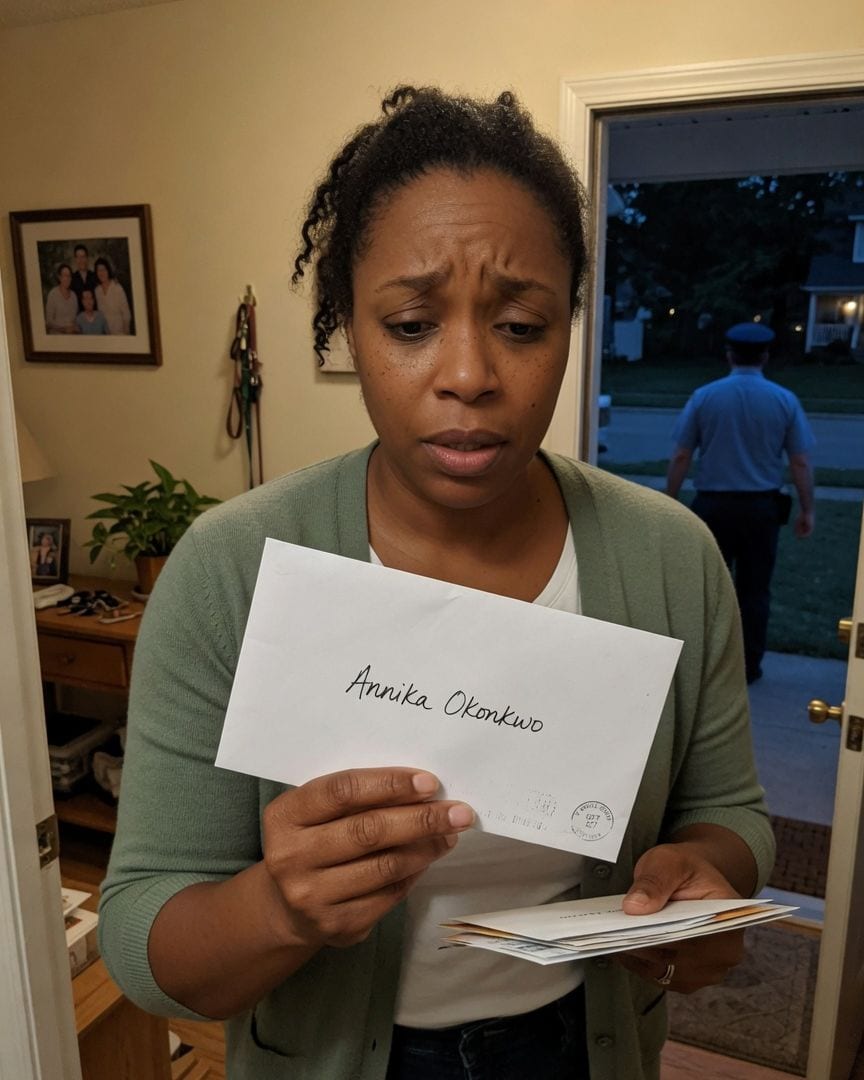
My postman apologised, then disowned the letter with my name.
My postman, Dave, delivered the usual mail, but then strangely swore he never carried one plain white envelope. Addressed to me in an elegant hand, it stood out from the bills. The real dread began when I saw its postmark: 14 Maple Street, a vacant lot where a house burned down fifteen years ago.
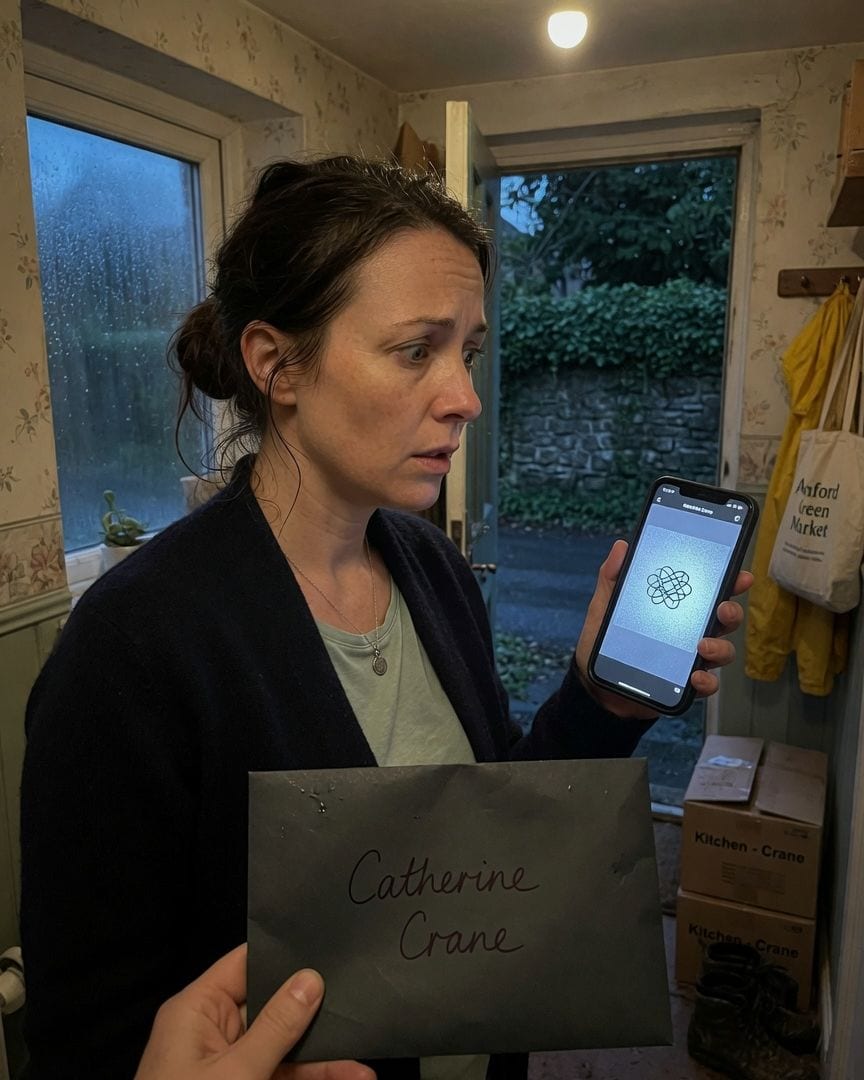
My postman warned me: never use the old pillar box. Royal Mail logs a collection every day, one item, signed by no one.
Moving to Ashford Green, I dismissed my postman's strange warning about the old pillar box by the ford. But after my own letter vanished inside it, I returned at midnight. Then, a dark, unstamped envelope slowly slid *out* of the slot, addressed to me.
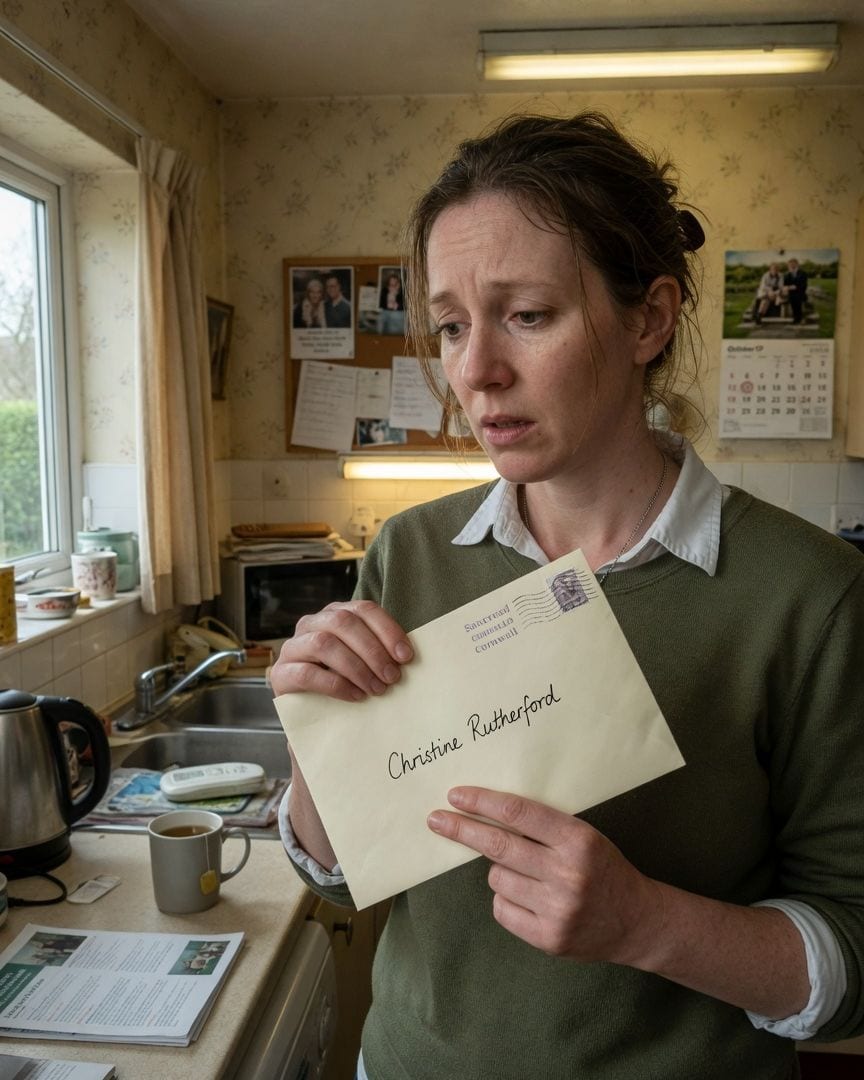
My name was carved on the village war memorial. Below it: 'October 17th'. The fresh cut looked fifty years old.
I drove to Sancreed to meet my friend Kenneth, a stonemason, who had called me with an urgent tone I'd never heard before. He met me at the village war memorial, a granite obelisk listing the fallen, and pointed to a fresh carving. Beneath the last name of a 1945 soldier, my name, 'Christine Rutherford', was etched, followed by 'October 17th' — a date this coming autumn.
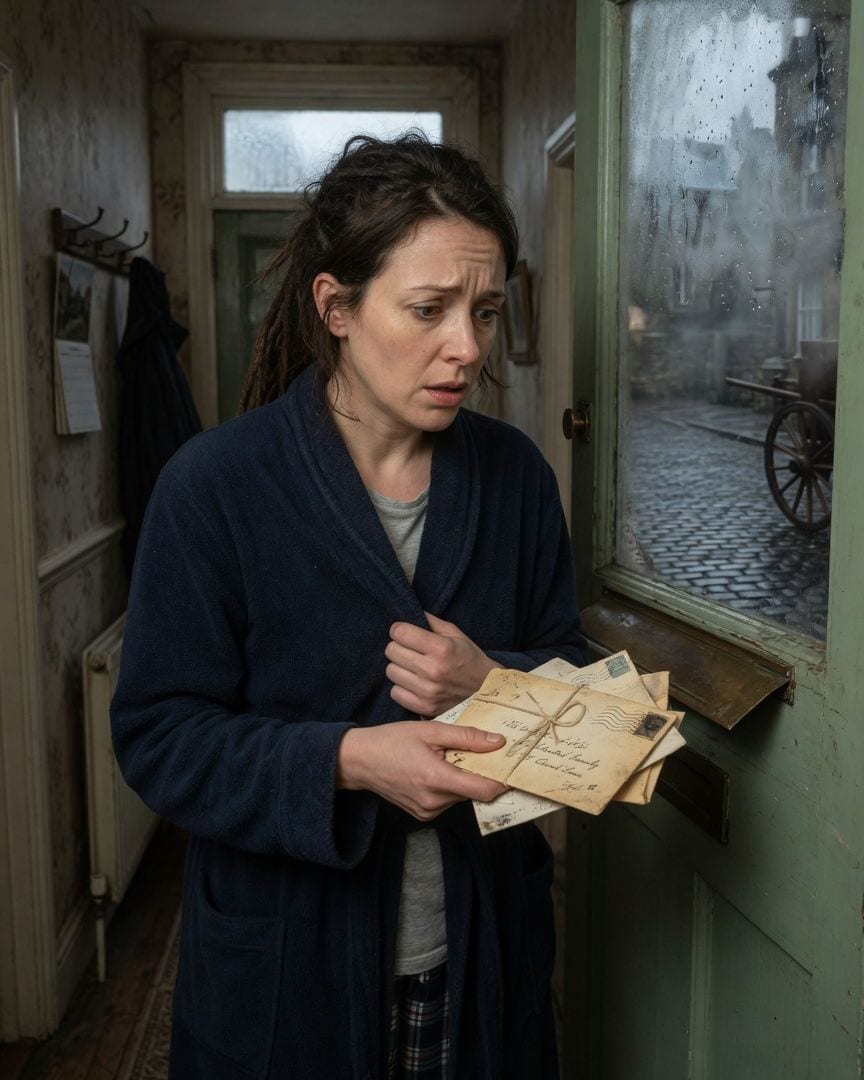
Seventy years ago, a hidden journal recorded my door opening to the wrong street and receiving Lockwood post.
I'd only recently moved into my inherited house, a quiet place on the edge of town. One grey morning, a distinct clatter from the front door's post flap caught my attention. Reaching down, I expected my gravel path, but instead, the flap showed a dark, cobbled street that wasn't mine. A bundle of warm, old letters, addressed to 'The Lockwood Family,' slid through, before the vision flickered and was gone.
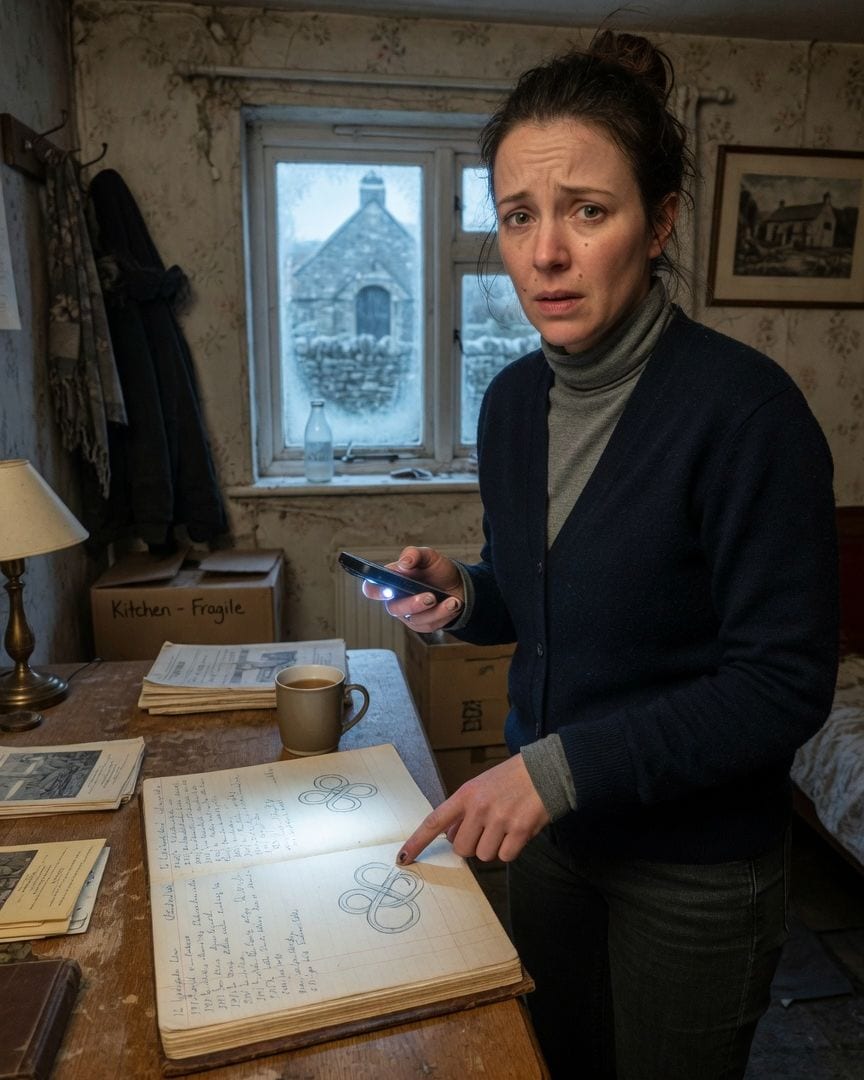
Milk appears daily by my lychgate. The dairy closed in '79. My address is handwritten into their old delivery book, starting the day we moved in.
Moving to Blackwood Creek, I loved the quaint charm, especially the unexpected morning milk delivery to my lychgate. But when I mentioned it to Eleanor at the village shop, her smile froze. She told me Willow Creek Dairy closed decades ago, in '79.
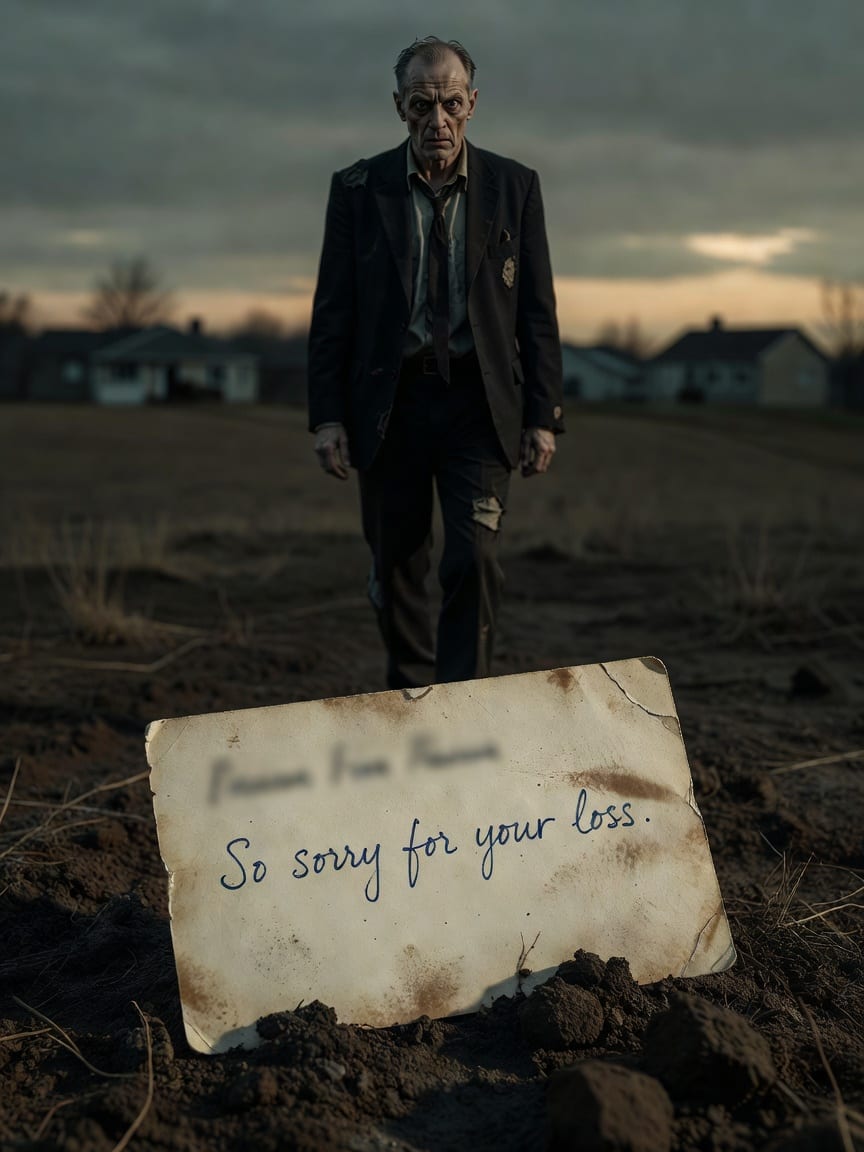
My sympathy card arrived this morning for my living wife. The return address on the envelope is a field outside Ross-on-Wye.
My morning was ordinary until a courier delivered a sympathy card addressed to me, for a loss I hadn't experienced. Inside, it mourned Vivian Bishop, my wife, who was very much alive and at her office. The impossible card felt like a cold weight in my hand, its return address simply 'A field outside Ross-on-Wye.'