My sympathy card arrived this morning for my living wife. The return address on the envelope is a field outside Ross-on-Wye.
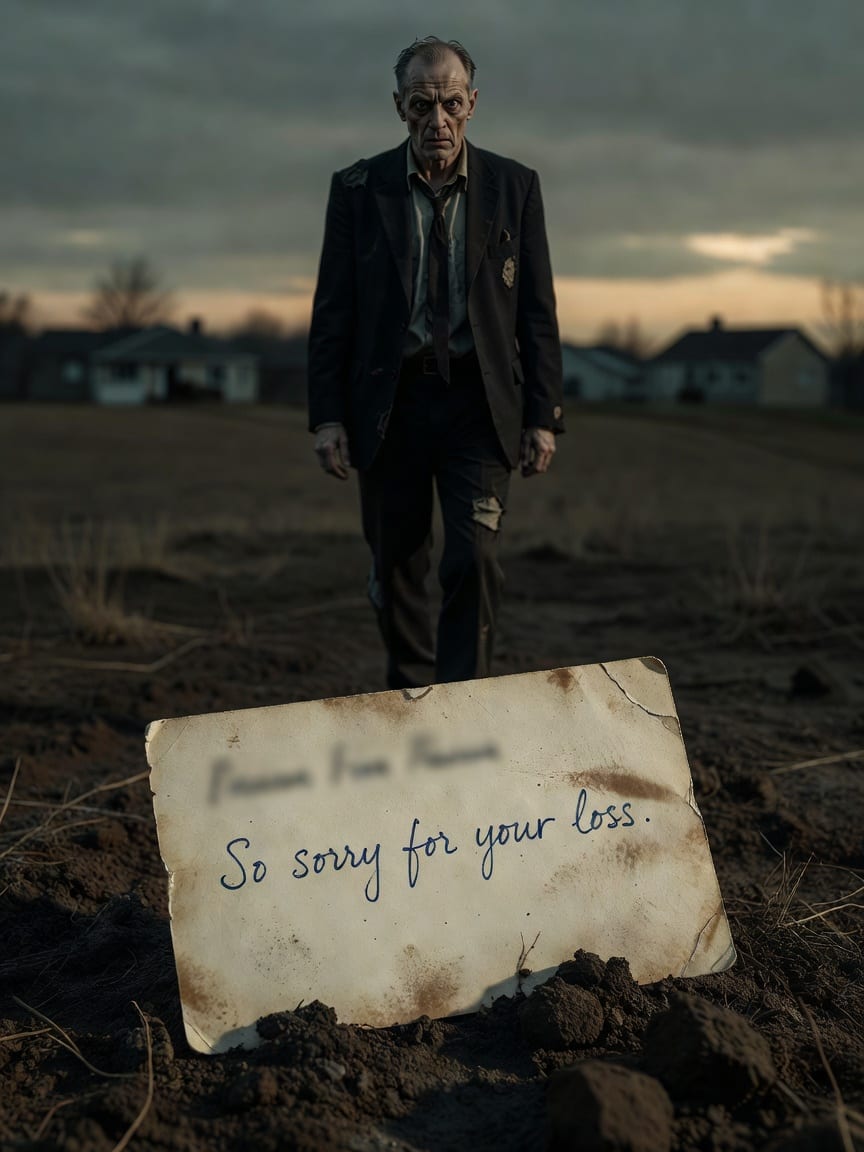
A courier in a plain, unmarked white van, the kind that blends into any street, delivered the sympathy card at precisely 11:20 this morning.
It was addressed to "Owen Pryce," my name, in a neat, careful hand that somehow felt both generic and deeply personal. I opened it at the kitchen counter, Vivian’s coffee mug still steaming beside the toaster.
Inside, on thick, smooth card stock, were the words: "So sorry for your loss." Beneath it, a line that twisted my gut: "Vivian Bishop."
But Vivian Bishop, my wife, was not lost. She was at her office, probably answering emails, vibrant and alive. I called her. She picked up on the second ring, her voice clear, asking about my morning. I couldn't tell her.
Not yet. The card felt like a cold, impossible weight in my hand.
The return address, etched onto the back of the pristine envelope, was simply: "A field outside Ross-on-Wye." No house number, no name, no postcode. Just a field.
I’m a man of meticulous order. I checked the tracking number on the courier slip; it was real. I called the courier service. They confirmed the delivery, but had no sender details beyond the vague address.
"Might be a new business, sir," the operator offered politely. "Sometimes they use a holding address before they set up proper."
I called the local post office in Ross-on-Wye. Their automated system didn't recognize "A field outside Ross-on-Wye" as a valid return address. I finally spoke to a human, a cheerful woman named Brenda.
Her voice, when she understood my query, shifted from cheerful to confused. "A field? Sir, we don't deliver to fields, let alone accept mail from them. Are you sure you're reading that right?"
I even considered calling the police. For what? A prank? A sick joke? But the careful script, the plainness of the envelope, the sheer effort involved in sending something so specific, so precisely wrong, gnawed at me.
This wasn't some haphazard misdelivery. This was intentional.
I set the card back on the kitchen counter, next to Vivian's mug. Its presence was a dark smudge on the bright morning, a silent accusation that hadn't found its target yet.
The dread deepened with each passing hour. Vivian, oblivious to the small, cold terror that had landed in our home, asked about my day over dinner. "Anything exciting happen?" she'd asked, spooning pasta onto my plate.
I found myself unable to mention the card. "Just work," I mumbled, the lie tasting like ash.
The next morning, the card still sat on the counter, accusing. I called in sick. I drove to Ross-on-Wye, the name on the envelope a cold mantra in my head.
I found the field easily enough, just as the GPS predicted. It was a vast, unremarkable expanse of overgrown grass and thistles, bordered by a crumbling dry-stone wall and a line of ancient, gnarled oaks.
No house, no farm, no postal box. Just open land, stretching to a distant, hazy tree line. The ground was boggy in places, the soil dark and rich.
I walked the perimeter, the chill wind biting at my exposed skin, searching for any sign of human activity – a track, a forgotten shed, anything that could plausibly be a return address. There was nothing.
The silence was profound, broken only by the rustle of dry weeds and the distant call of a crow. I pulled out my phone again, GPS confirming the precise coordinates. It was exactly as the card had stated.
This was the field. The return address was literally the earth beneath my feet.
As I turned to leave, a glint of faded white caught my eye near the base of one of the old oaks, almost entirely swallowed by the encroaching ivy. It looked like a scrap of paper, trapped. My stomach tightened.
I knelt, digging with my bare hands, the soil damp and cold, clinging to my fingers.
What I unearthed was another envelope, identical in size and shape to the one still sitting on my kitchen counter. But this one was brittle with age, its edges frayed and stained with earth.
The paper felt like parchment, almost translucent. The address, barely legible in faded sepia ink, was to a 'Mr. Thomas Lawson' of a nearby village. The sender was the same, a ghostly repeat: 'A field outside Ross-on-Wye.'
The date, stamped in a faded, barely visible postmark, read 'OCT 1908'.
Owen knelt in the cold mud, his fingers tracing the faded blue ink on the second card, identical in every detail, addressed to a name long dust, dated 1908.
It was tucked into the earth as if someone had left it there on purpose, waiting.
The old card felt like a fever dream, a physical impossibility. A hundred and fifteen years. How could two identical cards, from the same impossible sender, be separated by more than a century?
I spent the next few days in a haze, barely sleeping, the question burning in my mind.
First, I hit the local library. Then, the county archives. I searched for 'Mr. Thomas Lawson', for any mention of the field's history, for strange occurrences in the Ross-on-Wye area in 1908.
I found nothing conclusive on Lawson, no death certificate, no obituary for that specific year, just a few scattered mentions of a family with that surname in the local parish records. It was as if he’d simply… ceased to be.
The field itself, however, had a vague, unsettling reputation. Locally known as 'Sheppard's Acre' despite no Sheppard ever appearing on its deeds, whispers of 'bad luck' and 'things lost' clung to its name in old newspaper clippings.
Always dismissed, of course, as local superstition, the ramblings of old timers. "Don't go near Sheppard's Acre after dark, lad," one column from the 1950s quoted a villager as saying. "Things vanish there. Time itself gets… sticky."
I even found a brief mention of a small ‘memorial’ on the land, erected after a local tragedy in the late 1800s, but no details of the tragedy itself. Just a cryptic note about "the fallen."
One afternoon, back in my own town, I stepped out of the local coffee shop, the bitter taste of stale dread in my mouth. A man stopped me.
He was older, maybe in his early sixties, with kind, tired eyes that seemed to have seen too much. He wore a neat, old-fashioned suit, the kind you rarely saw anymore.
"Owen Pryce?" the man asked, his voice soft, almost a whisper.
I confirmed it, my guard immediately up. How did he know my name?
The man nodded slowly, a profound sadness in his gaze. "I'm Bernard Sheppard," he said, extending a hand. His grip was firm, surprisingly so, almost pleading. "I'm so terribly sorry for your loss. Or… the one to come."
My blood went cold. Sheppard's Acre. The name from the old newspaper clipping. My mind reeled, trying to connect the pieces.
I opened my mouth to ask, but Bernard simply squeezed my hand once more, a deep, genuine apology in his eyes that went beyond mere politeness.
He let go, then turned and walked away, disappearing into the crowd before I could react, before I could even formulate a single coherent question. He didn't look back.
Bernard Sheppard's apology resonated in my mind, a chilling echo. Or the one to come. His words felt like a physical presence, wrapping around me, tightening. I felt a sudden, acute sense of being watched.
On the drive home, I checked my rearview mirror constantly, the familiar streets now feeling alien, their usual hum replaced by an unnerving silence in my perception. Every flicker of movement in the corner of my eye made me jump.
That night, Vivian mentioned a strange call she'd received at work. "Someone asked for you, Owen," she said casually, stirring her tea. "They just said, 'Is Owen Pryce still... available?' When I said you were, they just hung up. Odd."
My blood ran cold. The phone in her hand suddenly felt like a conduit for something I couldn't comprehend. Still available. For what? I tried to dismiss it, to focus on the mundane – a wrong number, a telemarketer, anything.
But the unease clung to me like a damp shroud.
I started noticing small things around the house: a gate left ajar that I'd sworn I'd closed after letting the dog out, a faint, undeniable scent of damp earth in the living room when all windows were shut, the distinct feeling of a presence just beyond my peripheral vision, like a shadow that wasn't there.
I blamed fatigue, stress, the unsettling weirdness of the cards. But the feeling persisted. It knew where I lived.
I returned to the field a few days later, drawn by an irresistible, terrible pull. It felt like walking to my own execution.
As I approached the dry-stone wall, I saw Bernard Sheppard standing near the ancient oak, the same one where I'd found the 1908 card.
He wasn't looking at me, but staring out across the vast, empty expanse of the field, his posture stiff, almost like a sentinel guarding a forgotten border.
Bernard didn't acknowledge me, didn't turn his head. He was utterly still, part of the landscape. I felt a profound shift in the air, a coldness that wasn't just the wind whipping across the barren ground. It felt ancient, hungry.
The field itself seemed to hum with a quiet, waiting energy, a low vibration that thrummed beneath the soles of my shoes. I felt a terrible, intimate dread blooming in my chest. It wasn't just something out there.
It had found me, and it was watching.
I approached Bernard, who still stood motionless, his gaze fixed on nothing visible. "Mr. Sheppard," I said, my voice hushed, almost swallowed by the wind. "You know about the cards, don't you? About the field?"
He slowly turned his head, his tired eyes glazed with a distant sorrow that seemed to reach across decades. "I received one too, Owen. Thirty years ago. For my wife, Edith." A tremor ran through him, a barely perceptible shake.
"It was a beautiful day. We were planning a trip, a second honeymoon. Then the card arrived. Just like yours. 'So sorry for your loss.'" Bernard's voice cracked, raw with old pain. "Two days later, she was gone.
A freak accident. A loose lorry tire on the motorway. No explanation. The police, the doctors… they had no answers. But I knew. I knew the moment I saw that card in my letterbox."
A cold certainty settled over me, chilling me to the bone. "And the apology?" I managed to ask, my throat tight.
"I tried to warn others, once or twice. It's… a compulsion," he confessed, looking back at the field. "The field. It chooses. And once it chooses, it sends the card. It marks you. It always has."
Bernard slowly pulled back the cuff of his suit jacket, revealing a faint, almost invisible scar on his left wrist. It was a tiny, intricate symbol, like a twisted knot, that I recognized from somewhere, though I couldn't place it.
"I survived, but not whole. It took her. And it took a piece of me, too. Now… I just watch. I apologize. Because I know what comes next." He lowered his sleeve.
The pieces clicked into place with sickening precision: the old card, the field’s vague, unsettling reputation, Bernard’s chilling words. This wasn't a prank, or a mistake. It was a cycle. It was a damn schedule.
"How does it choose?" I asked, a desperate plea in my voice. "Why me?"
Bernard shook his head, looking back at the ominous expanse of field. "That, I don't know. But there's a record. An old ledger, kept by the parish clerk for generations. They called them 'The Unaccounted.'
Eleanor Whitfield, the current clerk, might have it. She doesn't understand what it is, but she guards it. It’s a book of names. A book of losses."
I found Eleanor Whitfield, a stern but obliging woman in sensible shoes and a severe bun, at the parish office the next day.
I spun a hurried tale about genealogical research, about tracing my family tree in the area, a distant, vague connection to Ross-on-Wye.
After some hesitation and a suspicious look over her bifocals, she produced a heavy, leather-bound ledger from a locked, dust-coated cabinet. Its pages were brittle, yellowed with age, filled with elegant, looping script in various hands.
The leather groaned as she laid it on the polished oak table.
"These are the old records of local tragedies, strange disappearances," she explained, her voice hushed, as if the book itself demanded reverence. "The ones without a clear cause, the ones that just… went missing.
My family has kept it for generations. A duty, my grandmother used to say. To remember those the earth swallowed."
My heart hammered against my ribs. I scanned the pages, my finger tracing the faded ink.
Entries stretched back to the late 1800s: 'Mary Drummond, lost to the Mire, May 1898,' her name penned in a delicate hand; 'Simon Fletcher, vanished from his bed, February 1915,' a bolder, more rushed script.
I saw dozens of names, dates, terse descriptions of inexplicable 'losses,' often associated with 'the field' or 'the edge of Sheppard's Acre.' The hair on my arms stood on end.
Then, my breath hitched. My finger froze halfway down a page. Dated October 1932, a name jumped out at me like a ghost in the lamplight. It was my own.
The pencil-scrawled entry in the tattered ledger read: 'Owen Pryce. Claimed by the Field, October 1932.' Owen stared at his own name, written in a hand from before his parents were born, a cold dread blooming in his chest.
It wasn't a warning. It was a schedule.
I returned to Bernard at the field, the ledger clutched in my shaking hands, the chilling entry burned into my mind. "My name," I whispered, holding the book open to the page. "Before I was born."
Bernard nodded slowly, his gaze distant, resigned. "It's a pattern, Owen. It's been happening for centuries. Not random. It chooses lines, sometimes families, sometimes just a specific 'type' of person. My family, the Sheppards, we've always been near the field.
My great-grandfather, my uncle… they're in that book too, back in the late 1800s. It's not just a field. It's… a mouth. A hunger. And the cards are its invitation."
He explained that the small symbol on his wrist, which I now recognized as an exact duplicate of a tiny watermark on my own modern card, was the 'mark' – a spiritual tether.
The field wasn't just a place; it was a living entity, ancient and patient, stirring cyclically to claim what it deemed its own.
The 'loss' was never truly death; it was absorption, a joining with the field, becoming part of its consciousness. "They don't die, Owen," Bernard said, his voice flat. "They become it."
Bernard revealed that the field's hunger intensified when a 'marked' individual tried to resist or warn others.
The apology he gave was not just a warning, but a subtle plea to the field, a ritual he performed to appease it, hoping to delay or soften the claiming.
"It recognizes me now," he said, gesturing vaguely at the ground. "It knows I'm… serving its purpose, in my own way. My family, we carry the mark, but some of us survive to tend the edges, to prepare the way."
He had learned, through his own decades of haunted observation, that the only way to 'stop' a claiming, to break the immediate cycle for the chosen victim, was to offer something in its place, a 'diversion' – a significant personal sacrifice that satisfied the field's immediate hunger, but did not destroy it.
"It won't take Vivian," Bernard said, his voice firm, his eyes locked on mine. "It chose you. It always chooses the marked one, the one whose name is in the book. But you can buy her time. At a cost."
I knew what I had to do. That night, I sat Vivian down and told her everything. The cards, Bernard, the ledger, the impossible name in the book. I showed her the faded 1908 card, then the pristine modern one.
I showed her the entry in the ledger. She listened, her face draining of color, her initial disbelief slowly giving way to a dawning, terrible understanding. She was terrified, but resolute.
"We face it together," she insisted, her hand gripping mine, her nails digging in. "Whatever it is, we face it."
We drove to the field at dusk. The setting sun bled across the sky, turning the clouds a bruised purple. Bernard was already there, a silent, solemn figure near the ancient oak, his silhouette stark against the fading light.
"The old oak," he whispered as we approached, pointing a gnarled finger. "It's the heart. You must sever the mark, divert the claiming. But it will require a piece of you, Owen. A permanent piece."
I understood. I had brought the original, modern card.
I held it in my hand, feeling the smooth stock, focusing all my will, all my love for Vivian, into a single, desperate intention: to sever my connection to the field, to break the cycle for her. For us.
I walked to the ancient oak, its branches like skeletal arms against the twilight sky. The air grew heavy, thick with a silent presence.
The ground beneath my feet pulsed with a cold energy, a low thrum that vibrated up through my bones.
I could feel the field reaching for me, a silent, vast hunger, a tendril of something ancient seeking to wrap itself around my very essence.
I placed the card flat against the rough, fissured bark of the oak, holding it there with my palm, pressing it hard into the wood. I closed my eyes, picturing Vivian, her laugh, her vibrant presence, alive, safe, free.
I wished it with every fiber of my being.
Then, a searing pain. Not physical, not of flesh or bone, but deep within my very being, as if a thread was being violently torn from my soul, ripped away from its anchoring.
I gasped, a raw cry that caught in my throat, falling to my knees, the pain a cold fire that spread through my chest. My vision swam.
When I opened my eyes, gasping, the card was gone, absorbed entirely into the bark of the tree, leaving no trace.
The symbol on my wrist, the one Bernard had shown me, was now a deep, angry red, pulsing faintly beneath my skin.
The field went silent. The oppressive weight, the feeling of being watched, lifted like a shroud torn away by an unseen wind. I had stopped it. For Vivian.
But I was changed. I felt a profound emptiness where a piece of me had been, a new, cold awareness of the field, its hunger, its ancient patience. I was no longer just Owen Pryce, husband, office worker.
I was a survivor, yes, but also a new kind of sentinel, marked by the mouth of the earth.
Life returned to a semblance of normal. Vivian was safe, oblivious to the deeper cost I had paid. The field remained, quiet and green, no longer threatening, but Owen saw it differently now.
He saw the currents beneath the surface, the ancient pulse. He saw the faint outlines of the hungry mouth. He visited Bernard sometimes, the older man's eyes holding a knowing, shared sympathy. The courier never delivered another card.
The ledger remained in Eleanor Whitfield's care, a silent testament to a pattern no one truly understood.
Owen’s wrist, where the symbol had burned, now bore a faint, permanent mark, a tiny, almost invisible scar like a knotted piece of twine.
He felt the field, not as a threat, but as a silent, constant presence, a part of him now, a deep, unsettling connection that hummed beneath his skin.
He would sometimes catch his reflection, seeing not just himself, but a flicker of something ancient and patient in his own eyes.
He had saved Vivian, but the field had claimed a piece of him, replacing it with an unsettling awareness, a quiet dread that never truly left.
He knew its name now, not the one on the maps, but the one whispered in the rustle of dry leaves, the one that echoed in the deepest part of his mind.
He was a different man, a marked man, forever bound to the silent hunger of the earth. He knew the cycle would continue, for others, for generations to come. He was merely an interlude, a brief interruption.
The field was quiet now, but he knew its name too well.
If this one got to you
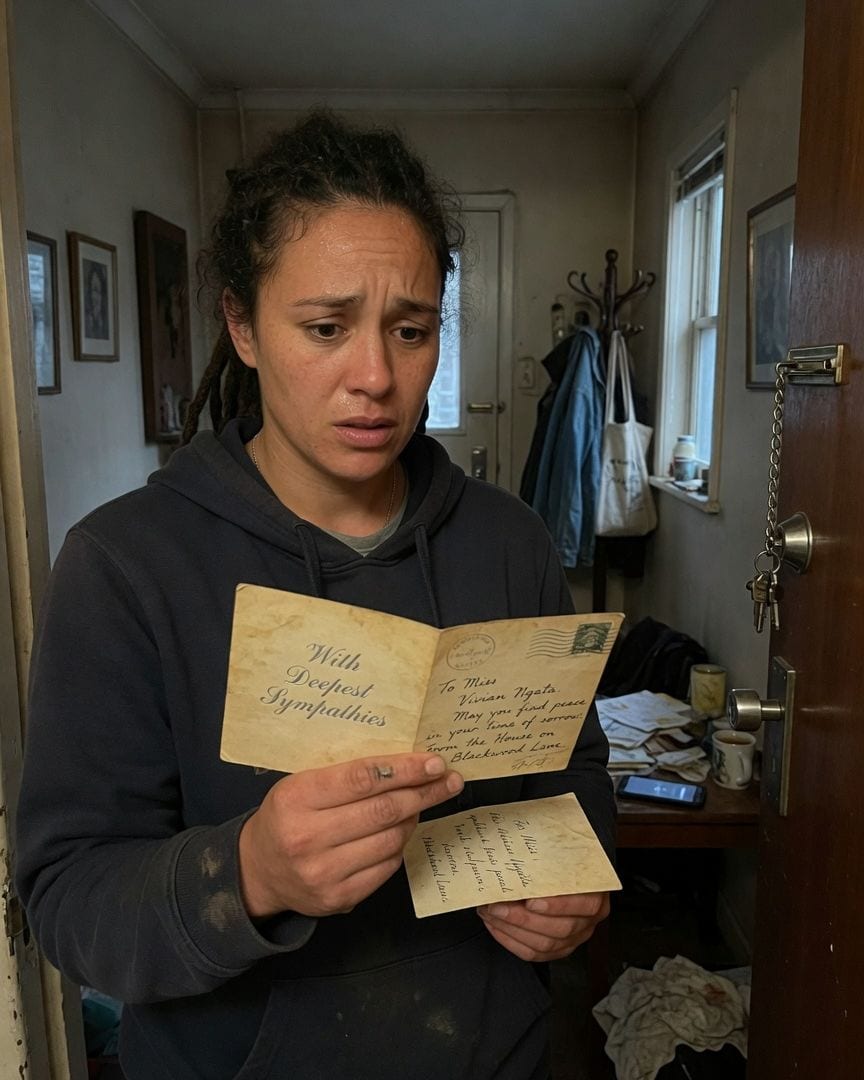
My locksmith knew my name, then apologized for next Tuesday. I never gave him my name; his firm doesn't exist.
I just needed a new deadbolt after some neighborhood thefts. But the locksmith knew my name without me telling him, and murmured something about 'Tuesday' when it was Thursday. Then his company, 'Everlast Security Solutions', vanished without a trace, its phone number dead and its address an empty field.
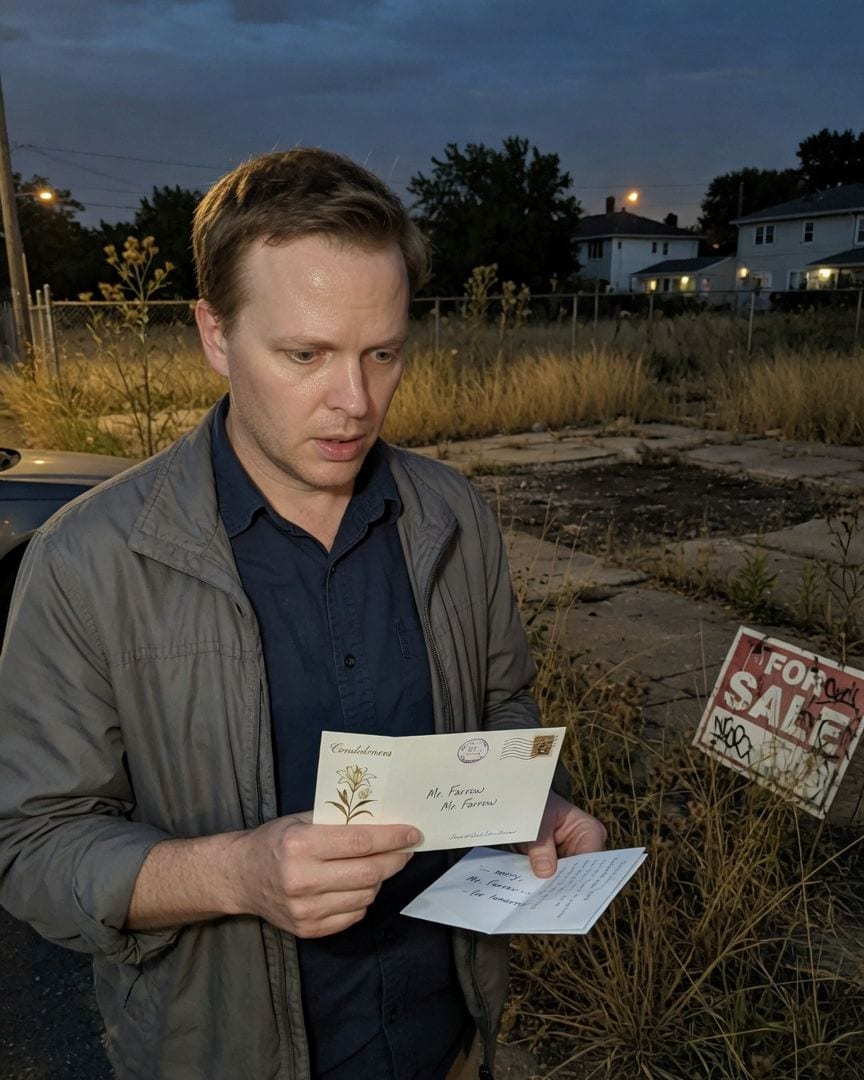
My waiter apologized for tomorrow's plans I hadn't made. He stared at his own handwriting, swore he didn't write it.
My quiet, solitary life was routine until a condolence card arrived, addressed to me for an unknown loss. The postmark, '14 Elm St.', was unsettling enough, but driving there revealed the impossible truth: the address was nothing but an empty lot.
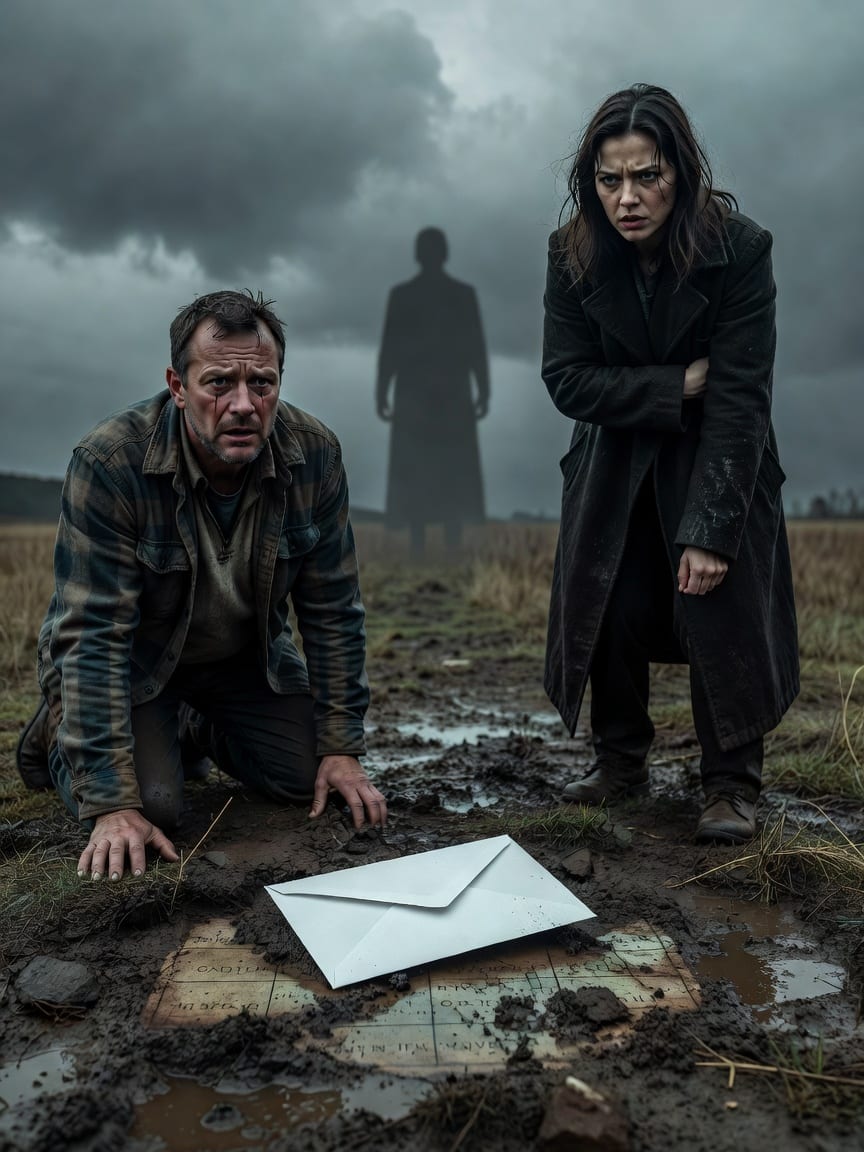
My mail carrier delivers polling cards to Nine Acre Field. It floods, they say. The tithe map shows nine family plots there.
As the new county archivist, I was used to quiet days poring over dusty records. But then I found an empty field, Nine Acre, was receiving current-year polling cards and utility notices for nine distinct addresses. When I investigated, I unearthed a perfectly crisp, current-year tax bill, buried in its soil, surprisingly warm against my fingers.
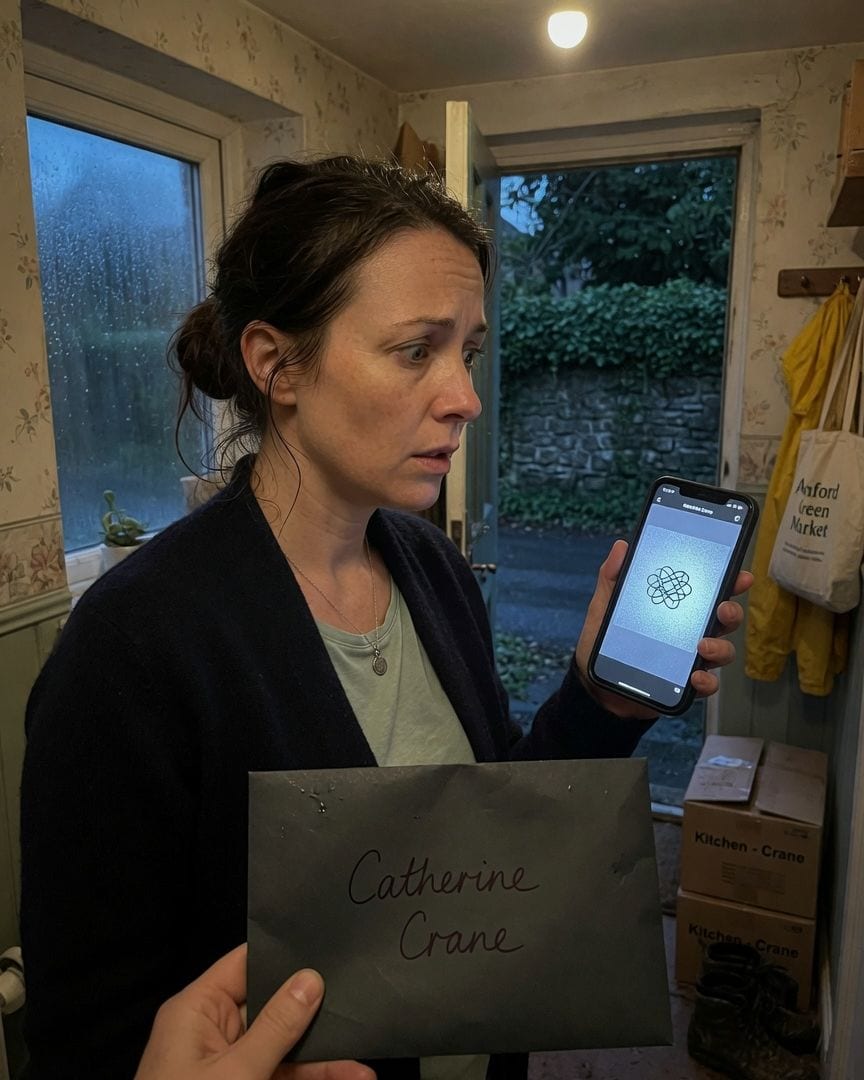
My postman warned me: never use the old pillar box. Royal Mail logs a collection every day, one item, signed by no one.
Moving to Ashford Green, I dismissed my postman's strange warning about the old pillar box by the ford. But after my own letter vanished inside it, I returned at midnight. Then, a dark, unstamped envelope slowly slid *out* of the slot, addressed to me.
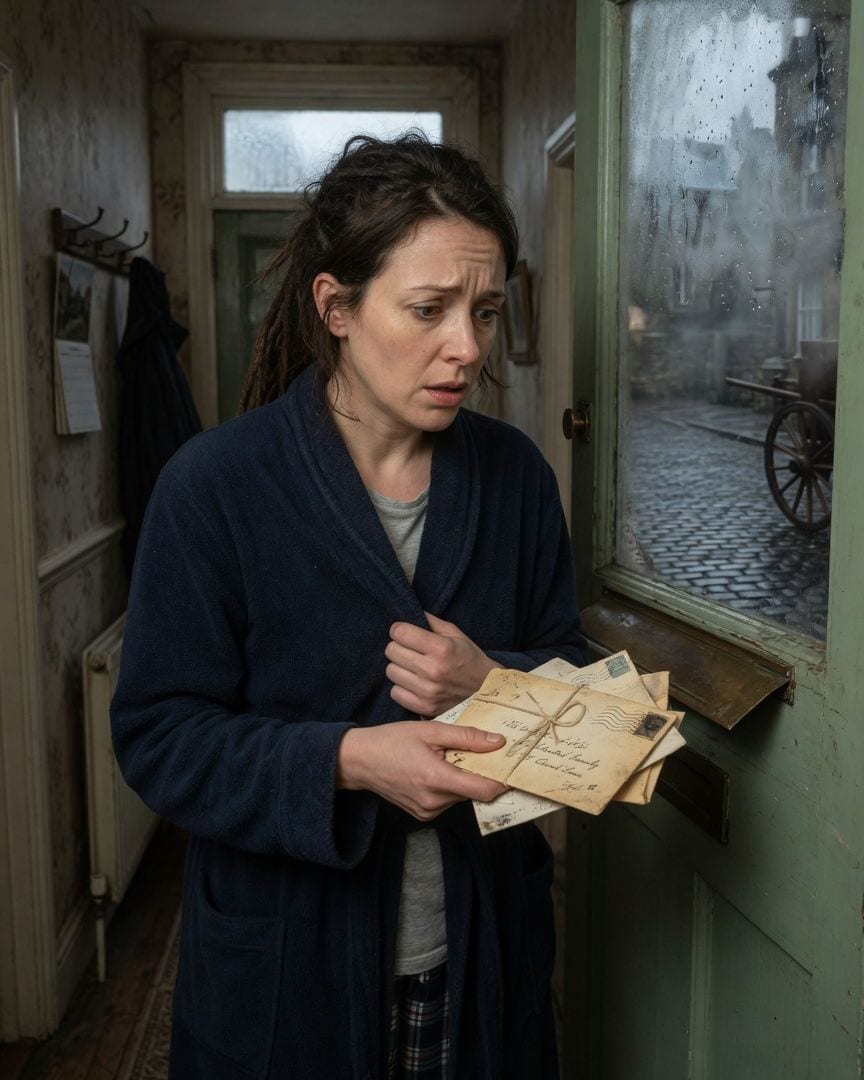
Seventy years ago, a hidden journal recorded my door opening to the wrong street and receiving Lockwood post.
I'd only recently moved into my inherited house, a quiet place on the edge of town. One grey morning, a distinct clatter from the front door's post flap caught my attention. Reaching down, I expected my gravel path, but instead, the flap showed a dark, cobbled street that wasn't mine. A bundle of warm, old letters, addressed to 'The Lockwood Family,' slid through, before the vision flickered and was gone.
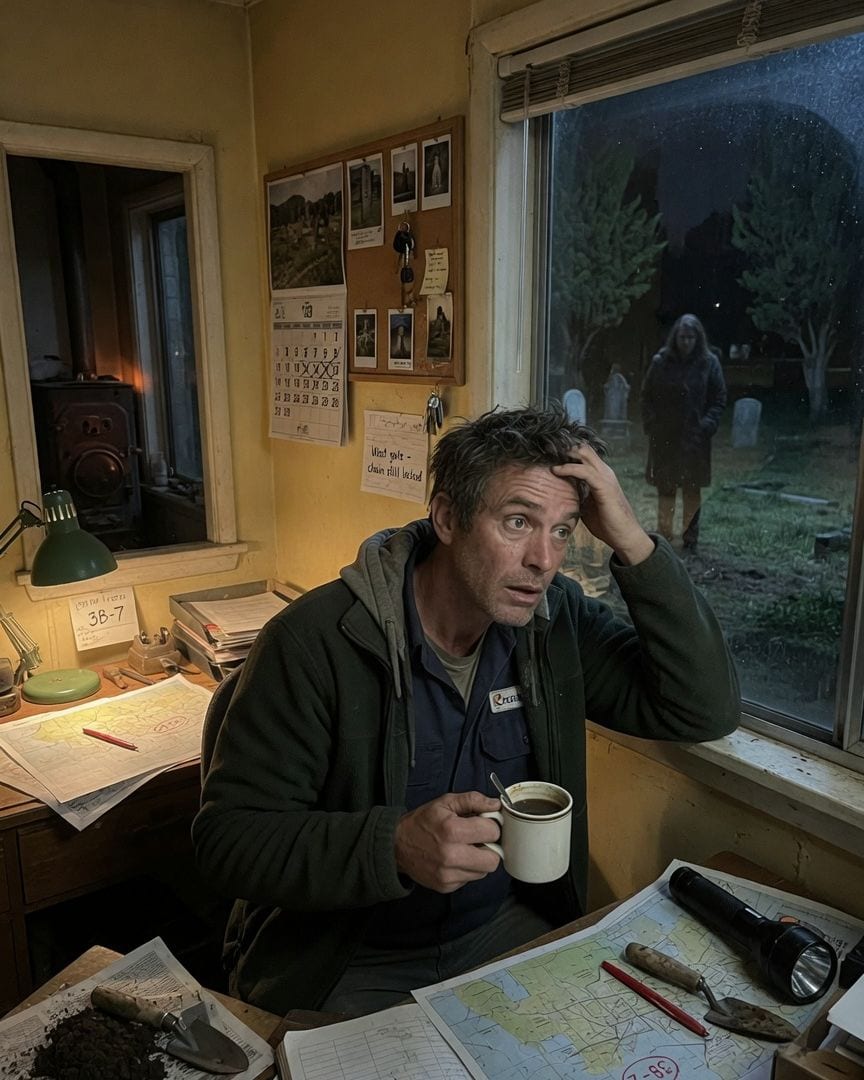
My cemetery lodge overlooks a woman visiting an empty grave near 3 AM most nights. The west gate she uses has been chained shut since autumn, its lock untouched.
As the cemetery's night caretaker, I'm used to the quiet hum of the lodge. But for three weeks, a woman has appeared nightly at plot 3B-7, a silent mourner in the deep night. What chills me is how she leaves: walking straight through the west gate that's been chained and padlocked shut for eight months.