My cemetery lodge overlooks a woman visiting an empty grave near 3 AM most nights. The west gate she uses has been chained shut since autumn, its lock untouched.
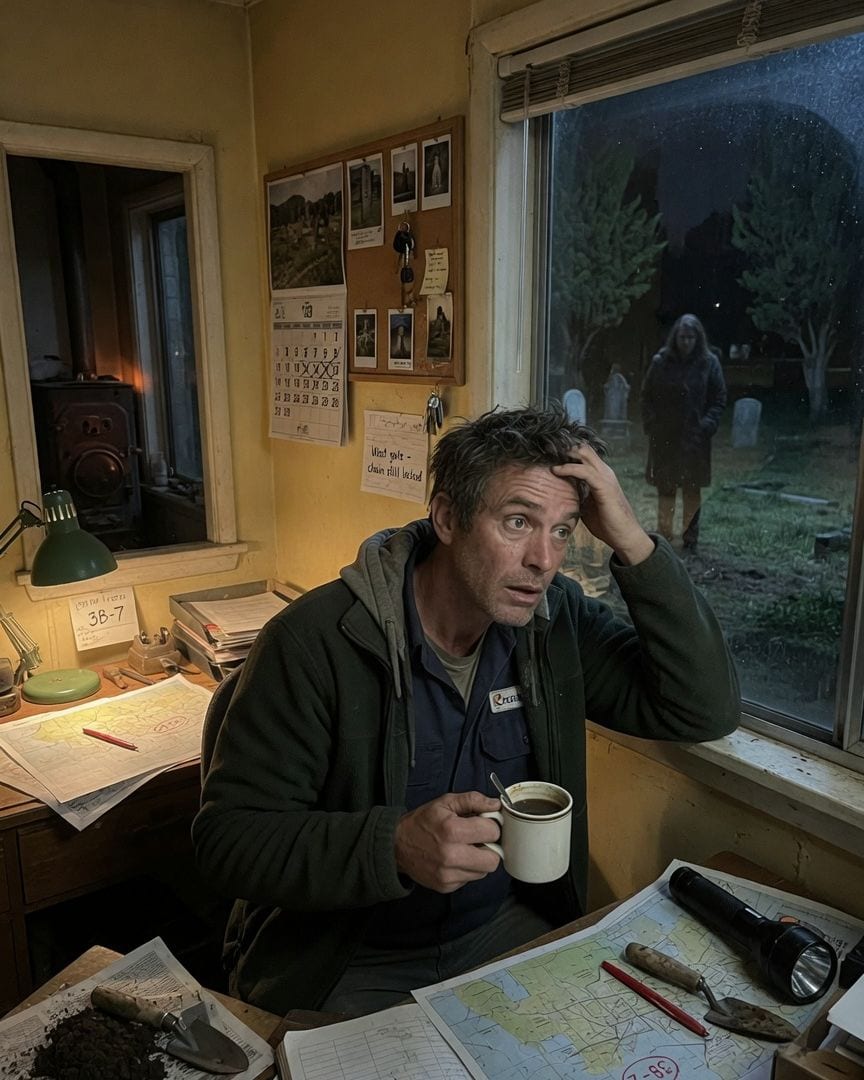
The cemetery lodge hums with the low thrum of the ancient boiler, a comforting counterpoint to the deep quiet of the graveyard. Most nights, the sound just faded into the background, part of the job.
But for the last three weeks, it felt like a countdown. I stirred my instant coffee, my gaze drifting to the west window, already knowing what I’d see.
Just past three AM, as it had been for the last three weeks, a woman in a dark, heavy coat stood perfectly still at plot 3B-7, her back to the lodge.
She was a regular, a silent mourner in the deep night, almost invisible among the shadowed headstones.
When I first started as the night caretaker here a few months ago, I’d assumed she was visiting a loved one, perhaps avoiding daylight hours, like some families do. People grieve in strange ways.
But a quick check of the plot records – standard procedure for any new regular – revealed no burial listed for 3B-7. The ground there was officially unused, a blank space on the meticulously kept maps. Nothing.
Just an empty patch of earth near the old cypress trees. That alone was odd, a detail that pricked at the corners of my logical mind. Why stand vigil over nothing?
Then came the second anomaly. After maybe fifteen, twenty minutes, the woman would turn, not toward the well-lit main entrance where visitors typically exited, but toward the west gate, walking with a steady, unhurried pace.
I’d tried to leave a friendly note for her once, a simple ‘Welcome, if you need anything, my office is here,’ thinking maybe she was new to the area. I’d walked over to the west gate during my morning rounds.
Its heavy iron chain, thick with rust, was still wrapped around the bars, its padlock untouched since autumn. I knew for a fact it hadn't been opened in eight months. It was a barrier, solid and undeniably locked.
Yet the woman simply walked through it, or rather, past it, as if the barrier wasn’t there, and vanished into the night. My first thought was exhaustion, a trick of the dim light or the angle.
My second thought was: I needed more coffee.
The image of the woman passing through that chained gate played on my mind, a persistent static in the back of my thoughts. It wasn't possible. Not in any way that made sense.
I tried to rationalize it again and again. Maybe the angle was just right, and she squeezed past a gap I couldn’t see from the lodge? No, the chain was tight, the gate bars close together.
Maybe she had a key to a secret passage near the gate? But the ground there was solid, no hidden path on the maps. Or a friend unchained it just for her, then re-locked it instantly?
I had checked the lock myself, a heavy brass thing, undisturbed, cobwebs still clinging to the edges. No, it was clearly undisturbed.
The next night, I was ready. Armed with a powerful flashlight and a small trowel from the storage shed, I waited. I watched the clock tick past three, watched the woman appear, a silent silhouette against the dim sky.
I kept my gaze fixed, looking for any deviation, any flicker. Nothing. Just the same still figure, the same quiet vigil.
When she finally turned and made her impossible exit through the west gate, I waited a full five minutes, heart thumping with a mix of scientific curiosity and something colder, before I grabbed my jacket.
The air was damp and cold, carrying the scent of wet earth and dying leaves. I made my way to plot 3B-7, my flashlight beam cutting through the gloom.
The grass was slightly flattened where the woman always stood, a faint depression in the dew, exactly as I’d expected. I knelt, shining my light across the ground. It looked like any other unused plot, overgrown with sparse, hardy weeds.
Nothing special, nothing to suggest a constant visitor. I pulled out my phone, cross-referencing the GPS coordinates with the cemetery map. No, this was definitely 3B-7, the empty plot.
I tried to think of a reason someone would visit an empty patch of earth every night. Perhaps it was a memorial for someone lost at sea, or a symbolic spot for a tragedy.
People often placed personal meaning on locations. But the sheer regularity, combined with the impossible gate exit, grated. My rational explanations were failing, one by one. I decided to check the soil itself.
Maybe there was an old foundation, or a marker that had sunk too deep over the years. I began to carefully scrape away the topsoil with my trowel, expecting to find nothing but earth and roots.
The ground was surprisingly soft, almost loose, as if recently disturbed, despite the weeds. A faint, almost imperceptible scent, like old iron and damp soil, hung in the air, a metallic tang beneath the earth.
I dug deeper, my breath misting in the cool night air. The soil yielded easily, much too easily for ground that was supposedly untouched for decades. My trowel hit something solid, not rock, but something unnervingly smooth and regular.
I paused, heart thumping, a cold dread prickling my scalp. This wasn't a stone. I carefully moved more earth, revealing a small, dark shape.
My gloved fingers brushed against something cold and metallic, deeply embedded in the soil of plot 3B-7. I dug carefully, exposing a small, tarnished silver locket, ancient and unlisted, clutched in the earth where the official records insist nothing lies.
I stared at the locket, its surface dulled with age and soil. It was unmistakably old, a small, oval piece of jewelry, intricately engraved with a faded floral pattern. I managed to pry it open with a thumbnail. Empty.
No inscription, no initial. It was a tangible object in an impossible place, proving that plot 3B-7 was anything but empty.
I carefully cleaned it later that morning, the tiny brush working away at the grime, a knot of unease tightening in my stomach. This locket proved someone had been here, something had happened here, contradicting every official record I had.
The next day, ignoring my exhaustion, I delved into the cemetery’s archives.
I pulled out old maps, historical land deeds, even newspaper clippings from generations past, searching for any mention of plot 3B-7, any unrecorded incident, any lost child, any name that might connect to the locket.
The records were exhaustive, meticulously kept. This place prides itself on its history. Yet 3B-7 remained a blank. No burials, no incidents, no notes. It was as if the plot simply didn't exist in the historical narrative, erased from time.
I even tried cross-referencing the locket’s style with jewelry trends from different eras, finding similar designs from the late 19th and early 20th centuries, but nothing concrete, no definitive identification.
Frustrated, my thoughts kept returning to Arthur Ellison, the previous caretaker. He'd been retired for a few years, but still lived locally, a quiet man known for his encyclopedic knowledge of the cemetery. He’d worked here for decades.
If anyone knew the hidden corners of this place, it was him. I found his number in the old Rolodex and called him that afternoon. He answered, his voice gravelly but clear, a little surprised to hear from me.
When I cautiously brought up 'unusual activity' near the west gate, and specifically plot 3B-7, Arthur's polite tone shifted. A distinct pause, a hesitation, stretched across the line, long and heavy.
Then he murmured, his voice softer, almost weary, "Some things… some things just are, Naomi. Best not to disturb them. The records are there for a reason." His voice was calm, almost detached, but the underlying tension was palpable.
I could almost hear the unspoken words hanging in the air. He quickly changed the subject, asking about the new spring plantings, the seasonal duties, effectively shutting down my line of inquiry.
Yet his very evasion, his refusal to discuss it, was a clue in itself. He knew something.
Arthur’s refusal to engage only fueled my resolve. If he wouldn't talk, I'd find another way. I started leaving the locket on my desk in the lodge, a constant reminder of the impossible fact I’d uncovered.
It sat there, a tarnished challenge.
The following night, as the woman stood at 3B-7, I watched her through binoculars from the darkened lodge window. My usual spot. This time, after her silent vigil, the woman paused. She didn't immediately turn toward the gate.
Instead, she turned slowly, her head tilting slightly, directly toward the lodge window where I hid in the shadows. Naomi's breath hitched. I couldn't make out a face in the dim moonlight, but the gesture was unmistakable: a direct acknowledgment.
She wasn’t just a random visitor, oblivious to being watched. She knew I was here. A chill colder than the night air seeped into my bones. I felt like an insect under a microscope.
The old boiler clunked in the corner, a little too loud, like a startled breath.
Later that shift, while patrolling the older sections, past the Victorian mausoleums and crumbling obelisks, I heard a faint, rhythmic tapping. It came from the mausoleum section, near a cluster of overgrown family crypts, a quiet, insistent sound.
Tap. Tap. Tap. It sounded like something tapping a stone surface, maybe a loose branch in the wind? I approached cautiously, flashlight beam cutting through the gloom, casting dancing shadows. The tapping stopped abruptly as I rounded a corner. Nothing.
Just the faint rustle of the wind through the cypress trees. But as I turned to leave, I noticed a single, withered rose petal on the ground, directly in my path, in an area where no roses grew.
It was brown, brittle, ancient. It felt like a deliberate breadcrumb, a sign that my investigation was not only noticed, but perhaps even subtly guided. A cold, unsettling thought.
A few nights later, returning to the lodge after my rounds, I found a small, unmarked envelope tucked under the windshield wiper of my car. My heart hammered. I tore it open.
Inside was a single, aged photograph: a blurry, sepia-toned image of the cemetery lodge from decades ago.
And in the foreground, near the west gate, stood a woman in a dark coat, identical to the one I saw every night, looking directly at the camera.
Scrawled on the back in shaky, faded ink, were two words: 'She knows.'
The photograph terrified me, but also gave a name to my dread: 'She knows.' Someone was watching me, and that someone had a connection to the woman.
I drove straight to Arthur Ellison’s house the next morning, the locket and photograph clutched in my hand, bypassing the usual polite phone call. The sun was up, but it offered no comfort.
He opened the door, his expression unreadable, already knowing, I realized, why I was there. He hadn’t looked surprised. “You didn’t listen, did you, Naomi?” he said, his voice softer than I’d ever heard it, full of a quiet resignation.
I pushed the photograph into his hand. My own hand was shaking. “Who is she, Arthur? And who sent this?”
Arthur’s gaze lingered on the photo, his eyes distant, unfocused, as if looking into a past only he could see. “That’s Constance,” he finally said, his voice barely a whisper. “Constance Granger. She was a caretaker here, before me.
Years ago.” He sighed, a deep, shuddering sound that seemed to carry the weight of decades. “She was like you, curious. Started noticing things. The patterns.”
I pressed him, my voice tight. “What patterns? The woman, the empty grave, the gate that isn’t there?”
Arthur nodded slowly, his gaze still on the photograph. “Not empty. Never empty. Just… unrecorded. There are places on these grounds, Naomi, where deaths happened that weren’t meant to be buried. Violent ends, sudden disappearances. The land remembers.
And on certain dates, under certain conditions, they… manifest. They repeat their last moments, or just stand there, a memory made flesh.”
I felt a cold wave wash over me, a chilling clarity. “So Constance… she saw them too?”
Arthur looked at me then, his eyes full of a profound sadness, the kind of sorrow that only comes with deep, old knowledge. “She didn’t just see them. She tried to understand them. To document them.
She kept detailed journals, not the official logs, but her own. She believed if she understood the cycle, she could break it.”
I held up the locket, the small, tarnished silver cold in my palm. “And this? From the ‘unused’ plot?”
Arthur took the locket, his fingers tracing its worn surface, as if remembering. “That’s from a child, a century ago. Lost in the woods that used to be there, never found. Constance found it too, years back.
It’s part of the manifestation. An anchor.”
My mind raced, cold logic trying to piece together the impossible. “So the woman in the coat… she’s not visiting. She is the manifestation of Constance Granger? The one who tried to break the cycle?”
Arthur closed his eyes, a single tear tracing a path down his weathered cheek. His voice was heavy, barely audible. “Yes, Naomi. She became one of them. The ones who are always here. And now, you’ve seen her.
You’ve acknowledged her. You’re part of the shift too.” His words echoed the note on the photograph, a silent, terrible confirmation: 'She knows.' But it wasn't just Constance who knew. Arthur knew. And now, so did I.
Arthur’s confession hung heavy in the air, a truth I could no longer deny. I felt a horrifying clarity settle over me, chilling me to the bone.
Constance Granger, the woman in the coat, was a ghost, a recurring echo of a past caretaker. And I was following in her footsteps, walking the same doomed path.
“Her journals,” I said, my voice trembling, barely my own. “Where are they? Maybe there’s a way to stop it, to understand more?” The desperation in my voice was raw.
Arthur hesitated, his gaze fixed on some point beyond me, then he pointed to a dusty, locked cabinet in his study. “I kept them. Hidden. They’re… dangerous. They show the full extent.”
He pulled a small, ornate key from a chain around his neck, unlocked the cabinet, revealing a stack of leather-bound journals, faded and brittle with age. “Be careful, Naomi. There’s more than just Constance’s story in there.”
His eyes were full of a warning I was too eager to heed.
I pulled out the thickest journal, its pages filled with neat, precise handwriting, Constance’s meticulous observations.
It chronicled not just her recurring figures and their specific dates, but also cross-referenced them with local folklore, obscure historical events, and even astronomical alignments. Then, deeper in, a new section caught my eye. It wasn't about Constance.
It was a list, meticulously updated, of other caretakers who had noticed the patterns, their names, their dates of observation, and the chilling notes of their eventual disappearances or institutionalizations. My breath hitched.
The dread was no longer abstract; it was a lineage, a chilling succession.
I flipped to the last completed entry in Arthur's secret journal, my fingers shaking, the leather cover suddenly feeling cold and slick. Beneath a meticulously charted list of recurring dates and observed figures, a new section began, titled 'Current Watch.'
The first bullet point read: 'Patterson, N. - Noticed the Granger figure near 3B-7, west gate. Initial skepticism noted. Consistent observations.' Her own name, her own thoughts, documented by a man she trusted, a man who knew this would happen.
I stared at my name in Arthur’s journal, a cold, inescapable dread solidifying in my gut. He hadn't just known; he had been tracking me, waiting for me to fall into the same trap.
Every casual conversation, every shared observation, had been a data point for this grim ledger. I flipped back through the pages, my fingers trembling.
The journals detailed an intricate, horrifying tapestry of recurring events.
Not just Constance Granger, but other figures: a Civil War soldier endlessly searching for something near the old oak, a child’s phantom laughter echoing from the forgotten playground, a horse-drawn hearse that drove through the grounds on specific lunar cycles, its passengers never seen.
Each manifestation was tied to a specific, unrecorded death, an event of intense, unresolved emotion that had imprinted itself onto the land.
And each was meticulously documented, not just by Arthur, but by the caretakers before him, stretching back over a century. A line of 'aware' witnesses, each recording the next.
The true horror wasn't just the manifestations, but the cycle they created. The journals explained that once a caretaker became 'aware'—once they saw, acknowledged, and began to investigate the patterns—they became inextricably linked to the cemetery.
Their own consciousness, their own 'shift,' would eventually become part of the grounds, joining the endless tableau.
Arthur’s final entries, written in a hand that grew increasingly shaky, described his own near-descent, how he had fought to pull back, to stop documenting, to simply ignore what he saw.
He had retired, desperate to break the chain, but not before recording Naomi's initial observations, a grim legacy for the next 'aware' caretaker. He left a final, stark warning: 'The graveyard watches those who watch it.
To know is to be known. To seek is to be found.' The woman in the dark coat wasn't just Constance Granger; she was a chilling mirror of my own inevitable future.
I returned to the lodge that night, the weight of Arthur’s journals heavy in my bag, and heavier still in my mind. The dread was no longer a chilling mystery; it was a coherent, terrifying truth. I was trapped.
I watched the clock tick past 3 AM, the boiler’s low hum now a mournful drone.
The woman in the dark coat appeared at plot 3B-7, as always. But tonight, I didn’t hide. I walked to the window, turned on the lodge lights, and simply stood there, watching.
The light from the lodge spilled out onto the near gravestones, but Constance remained in shadow. She completed her vigil. Then, slowly, she turned.
Her head tilted, just as it had before, but this time, I felt a profound, aching connection, a terrible empathy.
She wasn’t looking at me, but through me, as if seeing a reflection of herself, or perhaps, a memory of what she once was.
I raised my hand, a small, tentative wave. The woman didn't wave back, but her posture seemed to soften, a subtle shift in the heavy coat, like a sigh. Then, Constance began her walk toward the west gate.
I closed my eyes, picturing the rusted chain, the untouched lock, feeling the cold certainty of it. I opened them again, watching as Constance passed through the gate as if it were air.
But this time, as Constance reached the other side, she didn't simply vanish. She paused, and for the first time, turned fully toward the lodge.
I gasped. In the faint moonlight, I could make out a face, translucent and sorrowful, yet undeniably Constance Granger's.
And then, for a split second, the face seemed to ripple, to shift, and I saw a flicker of my own features superimposed over Constance's. My eyes, my mouth, a ghost within a ghost.
The illusion vanished, and Constance was gone. I felt a profound, internal shift. A cold, quiet understanding settled deep within my bones. I wasn't just an observer anymore. I was part of the landscape, part of the pattern.
The dread wasn't a threat of what might happen; it was the quiet, certain knowledge of what would happen.
I continued my night shifts. The cemetery remained my domain, but it was no longer just a job. It was my future. I stopped checking the plot records, stopped trying to find explanations. I simply watched.
The woman in the dark coat, Constance Granger, still appeared near 3 AM. I no longer felt fear, but a quiet, terrible empathy. I knew. I understood the endless vigil, the silent repetition.
The locket I’d found remained on my desk, a polished reminder of what was buried, and what would never truly leave. Arthur Ellison never called again, and I didn't seek him out.
He had given me the truth, and that was all he could do. The world outside the cemetery gates continued, oblivious to the quiet, unchanging shifts within.
The quiet acceptance grew, a cold comfort. I no longer shivered at the impossible, but felt a strange pull to it, a deepening connection to the ancient ground and its silent, repeating inhabitants.
One night, as the first hint of dawn touched the eastern sky, I walked to plot 3B-7. The grass was wet with dew, the air still and cold.
I stood where Constance always stood, looking toward the west gate, toward nothing. For a moment, I felt a profound sense of peace, a belonging I hadn't known before. I was here, and I would always be here.
The shift was endless. The knowing was her end.
Days later, a new night caretaker, Elliot Fairfax, found a small, tarnished silver locket left on the desk in the lodge.
He picked it up, curious, and glanced out the west window, just as the last sliver of the moon dipped below the horizon.
The faint outline of a woman in a dark coat, standing perfectly still at plot 3B-7, caught his eye.
He thought nothing of it, assuming she was a regular, until she turned, slowly, and her gaze seemed to meet his across the expanse of the cemetery. The shift had begun.
If this one got to you
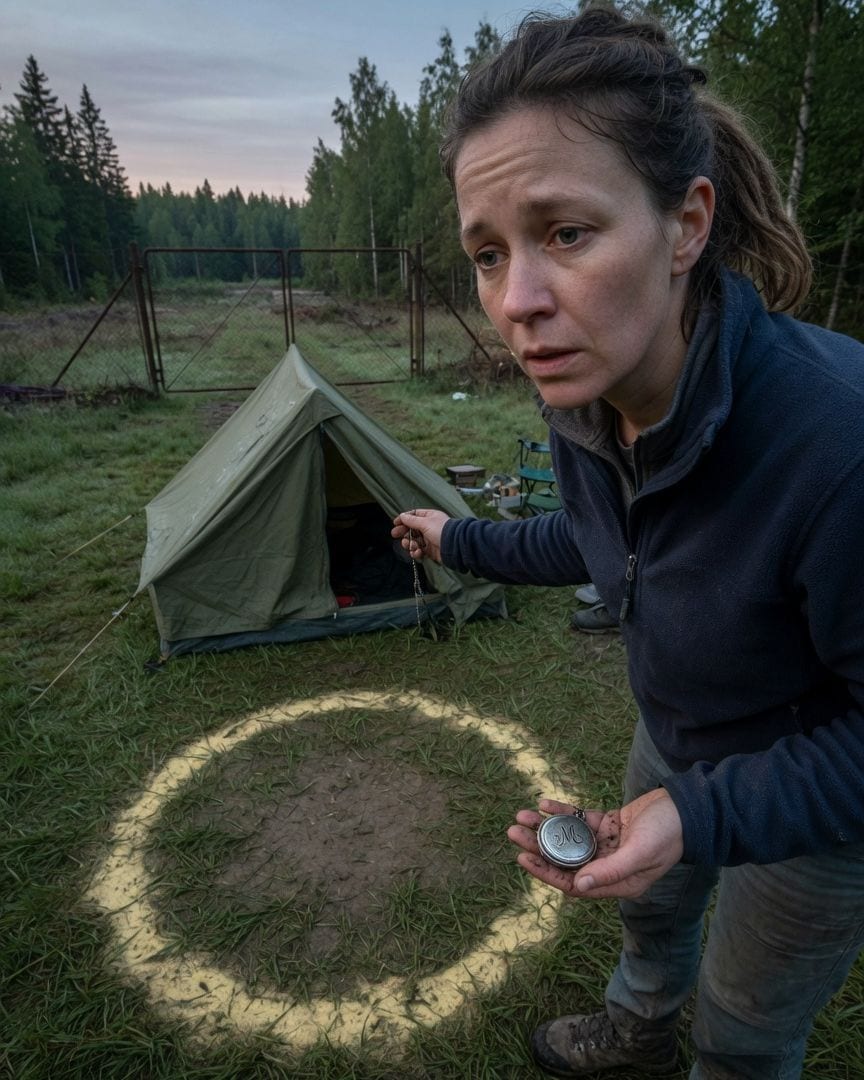
My tent left a flattened ring in the grass, but an older one was already there, worn into the turf, exactly tent-sized, for thirty years.
As the new camp host, I ignored the warden's odd rule about pitching my tent on a particular flat spot. That night, something enormous walked in slow, methodical circles around my tent. The next morning, I found a deeply worn, old ring in the earth beneath my tent, and later, a tarnished silver locket buried there.
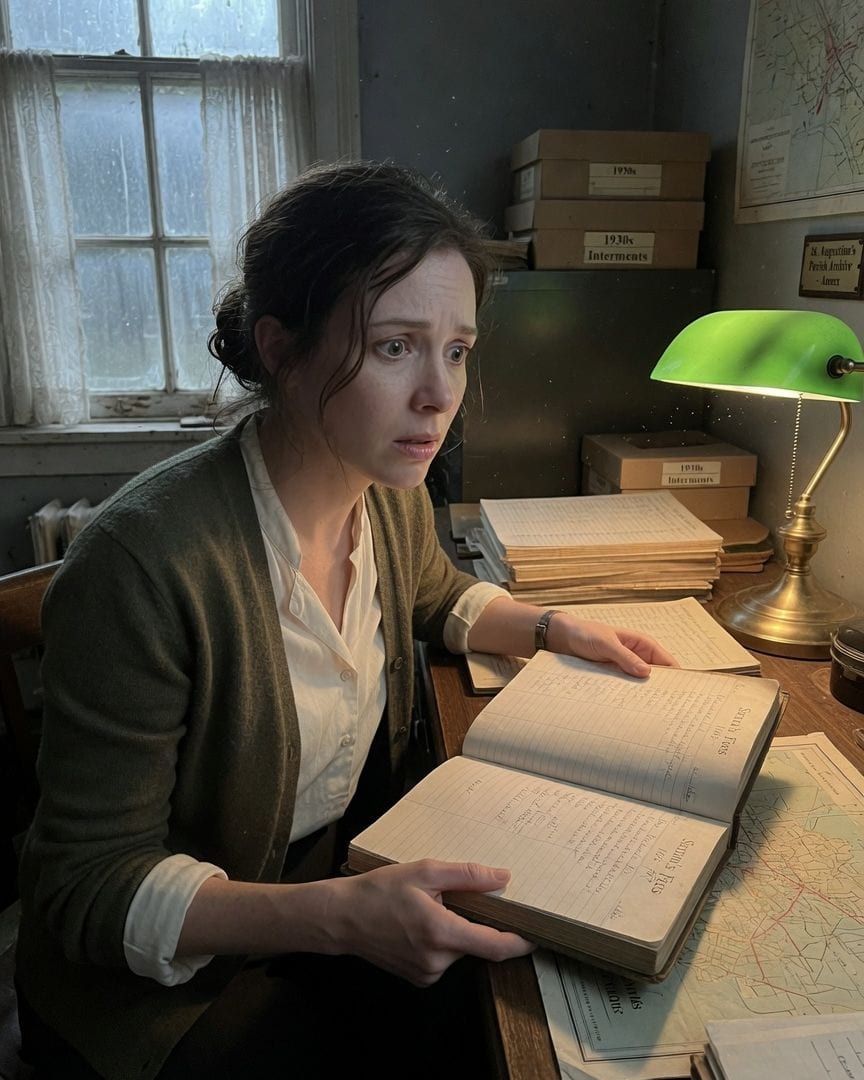
Our churchyard closed in 1974. But the sexton's book shows new graves every month, paid by families whose names are on stones from the 1930s.
As Oakhaven's new archivist, I expected a quiet life of dusty ledgers and ancient records. But a current entry in the sexton's fee book listed a "new burial plot" paid last month for Theresa Romano, who died in 1931. The town ordinance closed the churchyard to new burials in 1974.
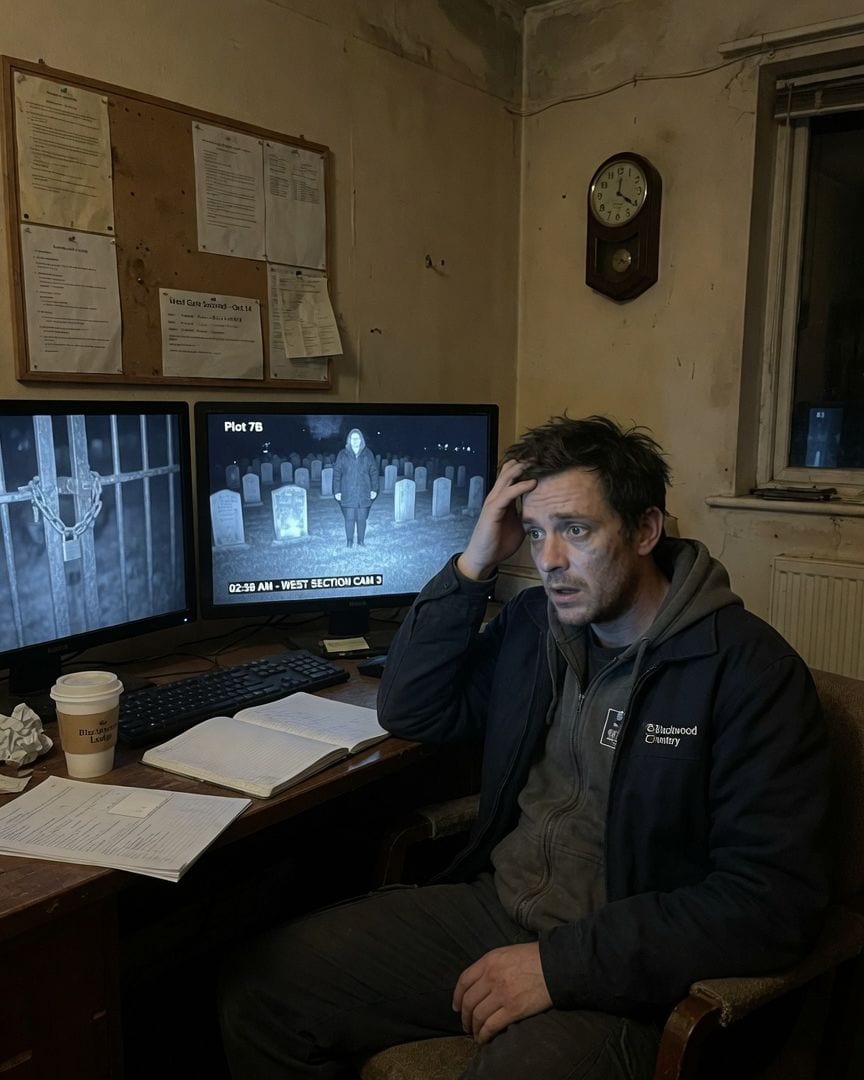
An empty grave in my cemetery gets a nightly visitor. She walks out the west gate, which has been chained and locked since autumn.
My graveyard night shift means quiet hours watching the CCTV monitors. For weeks, a woman has appeared, always stopping at an unused plot before walking towards the west gate. I just watched her walk straight through the locked, chained gate, but my own shift log now shows *my* name on a gate check I never made.
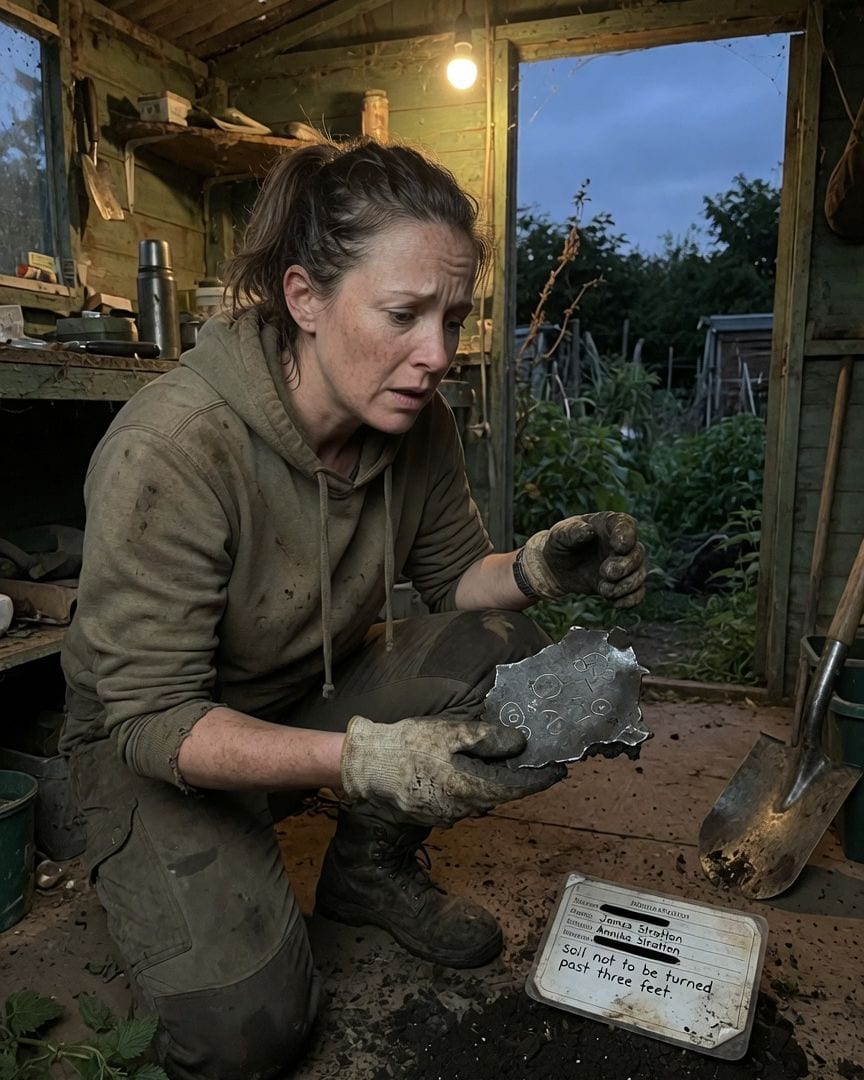
My spade struck something impossibly cold and metallic, pulsing with a slow, steady heartbeat, exactly where the old warning ended.
I took over a neglected allotment, Plot 23, and found a strange, handwritten rule on its tenancy card: 'Soil not to be turned past three feet.' I rationalized it as an old drainage issue, but when my spade hit something impossibly hard, a slow, steady heartbeat pulsed from the ground.
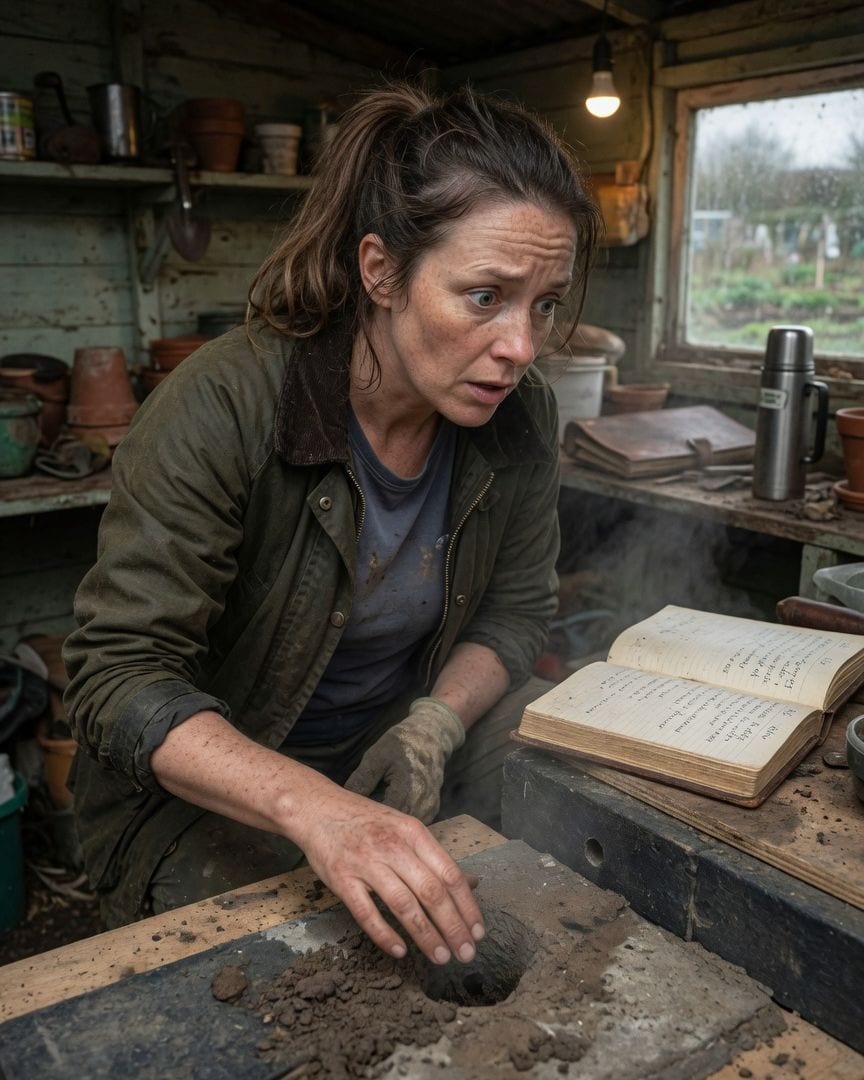
Every gardener who's held allotment plot 26 gave it up after a single season, each one leaving the same note behind: never dig the ground below two feet.
Newly single at 38, I hoped Plot 26 at Weir Field Allotments would be a fresh start. But the committee’s rent book held a strange, decades-old rule: 'ground not to be dug below two feet.' Ignoring the warnings, I dug anyway, only to find a perfectly smooth concrete slab with a tiny hole—and a distinct, unnatural cold breath rising from it.
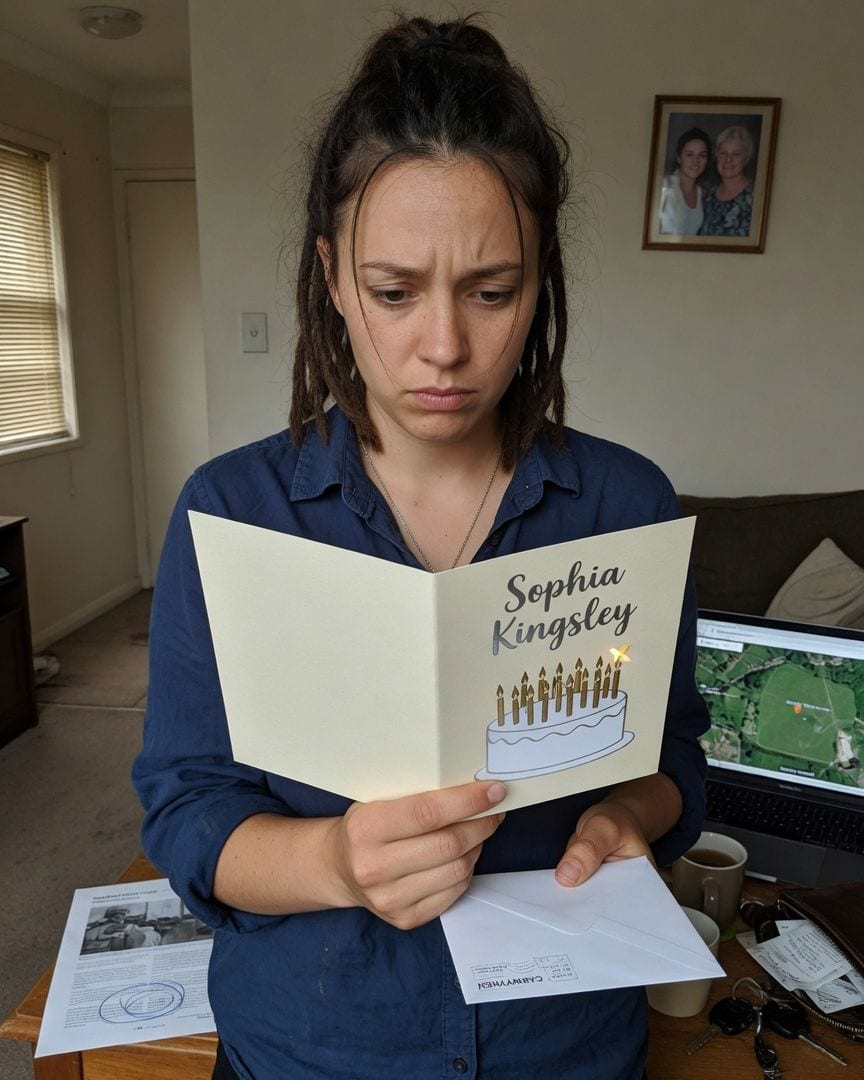
An empty field sends my birthday cards. This year, one candle was crossed out.
My birthday card always arrived a day early, a familiar comfort for five years. This year, a tiny silver 'X' marked one of the thirty candles, and the postmark read 'Carwynnen.' It was an empty field miles from anywhere, with no post office, and no one to send a card.