An empty grave in my cemetery gets a nightly visitor. She walks out the west gate, which has been chained and locked since autumn.
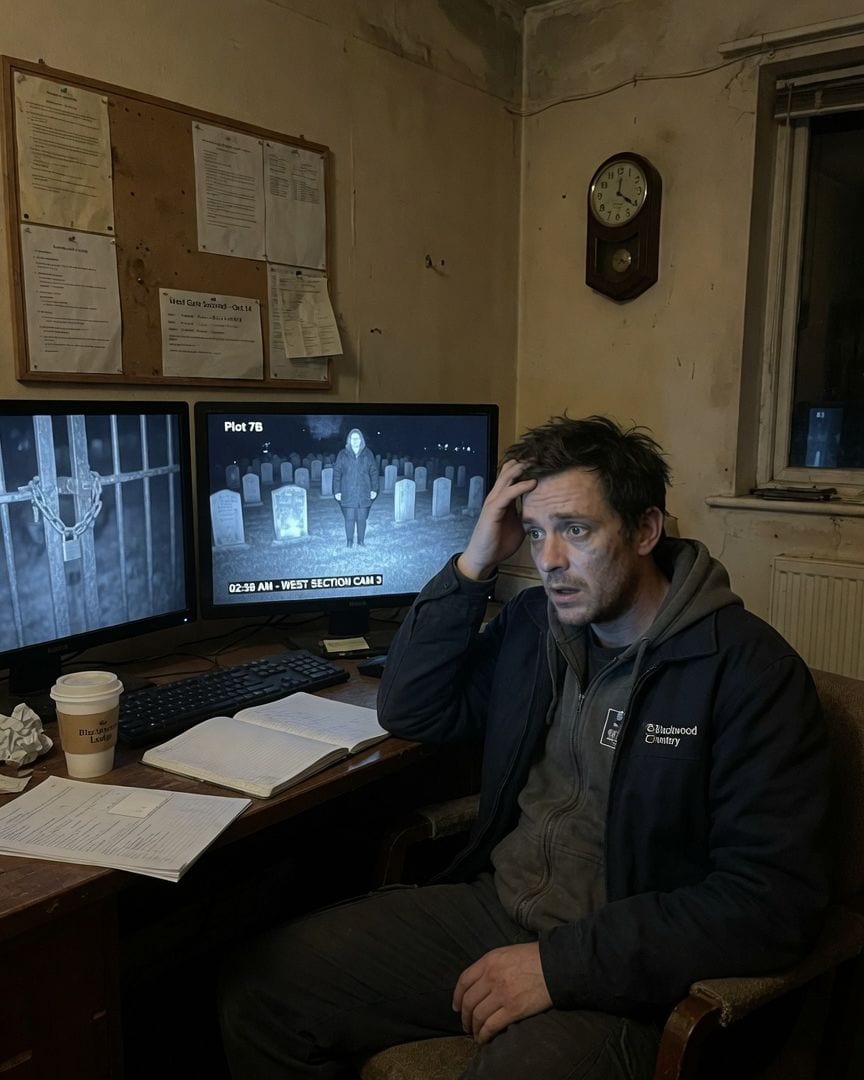
I remember shifting in the worn armchair of the Blackwood Cemetery lodge, the blue light from the CCTV monitors painting my face.
It was 2:58 AM, the dead quiet part of my night shift, the kind of quiet that lets you hear the hum of the old building. On Monitor 3, showing the older, west section of the cemetery, a figure appeared.
A woman in a dark, heavy coat. I’d seen her before, most nights for the past three weeks, an unmistakable shape even in the low light filtering between the headstones.
She walked slowly, deliberately, her silhouette moving through the rows of granite and marble. She stopped at Plot 7B, a patch of ground I knew was officially unused. No headstone, no marker, just grass.
She stood there for a full two minutes, perfectly still, a silent vigil. Then she turned and walked towards the west gate.
I watched, as I always did. The gate was heavy iron, chained and locked since autumn, its rusted links thick and immovable. No one went through that gate.
But she reached it, and without a pause, she simply walked through it. Her shape dissolved on the other side.
The gate swung shut behind her, a faint sigh of metal on metal, the chain still perfectly intact, the lock untouched.
I blinked, hard, rubbed my eyes. The screen showed only the empty, chained gate. Just like every other night.
The first thing I did was pull up the cemetery's digital plot records. Typed in 'Plot 7B.' The screen confirmed it: 'Unassigned. No interments. Ground currently unused.' I sighed, running a hand through my hair.
I’d even walked out there myself a few days ago, kicked at the dirt a little. Nothing. Just grass, damp with the late autumn dew.
Then I pulled up the maintenance log for the west gate. 'October 14th: West Gate secured with heavy-duty chain and padlock, per seasonal closure protocol.' No subsequent entries.
I knew the lock was intact; I’d checked it yesterday morning before I left, tugged on the chain myself. There was no way in or out of that gate without a key or a grinder.
Finally, I pulled up my own shift log for the previous night. I scrolled through my entries, my routine. '2:00 AM: Patrol perimeter, all clear. 2:30 AM: Lodge check, systems nominal. 3:00 AM: Coffee break.' All standard.
Then, just below the coffee break entry, a new one. It was highlighted in green, like I’d just typed it myself. '3:15 AM: West Gate Secure - No anomalies, Plot 7B checked, all clear.'
It had my login, my digital signature. But I knew, with a cold certainty that made my stomach clench, that I was in the lodge, drinking coffee, watching the woman walk through the impossible gate at exactly 3:00 AM.
I never, ever made that entry.
I stared at the glowing screen, my own name, my own login, next to words I didn't write. The green highlight seemed to pulse, mocking me. I was here. I was watching her.
I closed my eyes, trying to make sense of it, but the contradiction screamed in my mind. The system, my system, was saying I was out there, checking the gate and the empty plot, reporting everything normal.
I opened my eyes, and the entry was still there, undeniable. Then, a faint, almost imperceptible click echoed from somewhere far off, sounding suspiciously like the west gate swinging shut.
For the next few nights, I tried to rationalize it. A system glitch? Someone’s idea of a prank? I checked the lodge's network logs, the access history for my account. Everything was clean.
No anomalies, no unauthorized logins, no software errors. The entry was simply there, as if I'd typed it myself.
I started cross-referencing. I looked at my logs from previous weeks, specifically the 3 AM window.
Sure enough, similar entries appeared on random nights – 'West Gate Secure,' 'Plot 7B clear' – always around 3:15 AM, always under my login, always on nights I distinctly remembered seeing the woman.
It was unsettling, like finding someone had quietly been writing a chapter in my diary.
I began requesting access to older digital archives, stretching back years, then decades. The digital records were spotty, fragmented, but I found enough.
Vague mentions in older caretakers' logs, not as specific as mine, but describing 'routine checks' of the west section, always in the small hours, often noting 'no disturbances' around the general area of Plot 7B. The language was coded, almost.
Then I started requesting the physical logbooks, old, leather-bound ledgers stored in a dusty back room of the main office. The clerk, a young woman named Hannah, gave me a strange look but complied.
These older books were harder to decipher, filled with different handwriting, some fading with age, but the pattern, once I knew what to look for, was chillingly clear.
Entries about 'perimeter checks, west side' at odd hours, sometimes with a cryptic note about 'maintaining security at the old gate,' or 'all quiet at the unused plot,' dated years, then decades, apart.
The specific phrasing changed, but the core elements remained: the west gate, the unused plot, the small hours, and an implicit, unsettling 'normalcy' asserted against something unseen.
It felt less like a glitch and more like a very old, very thorough lie.
My persistent requests for old records didn't go unnoticed. One morning, as I was about to leave my shift, my phone rang. It was Sandra Merritt, the cemetery operations manager. Her voice was calm, almost unnervingly so.
'Philip, I hear you've been quite busy with our archives. A sudden interest in historical maintenance logs?' She chuckled, but it sounded forced, like a rusty hinge. 'Anything specific you're looking for?
We generally don't encourage delving too deep into those old paper trails. Too much dust, you know.'
I fumbled for an excuse, something about wanting to understand maintenance cycles for preventive measures. Sandra's tone sharpened slightly. 'I understand. But let's keep your focus on current operations, shall we? We wouldn't want any... unnecessary distractions.'
The call ended abruptly, the line going dead with a soft click.
Later that day, as I drove home, I noticed a dark sedan idling near the entrance to my street.
It was too far away to make out the driver, but the car was there for a long time, its headlights off, just sitting.
The following night, an email landed in my inbox, from an anonymous sender: 'Some things are better left undisturbed. Focus on your shift.' The subject line was chilling: '3:15 AM.'
The dread was no longer just about the woman; it was about who else knew, and who was watching me.
I decided I needed to talk to someone outside the cemetery. Someone who might remember things, or have heard stories.
I went to visit Rosemary Lockwood, a retired local historian and former cemetery office clerk, known for her encyclopedic knowledge of the town's past. I found her tending her rose garden, her hands gnarled but deft with the shears.
I described the woman, the empty grave, the west gate. Rosemary listened, her expression unreadable, snipping a dead rose head with a practiced snip. 'Oh, the lady in black,' she said, almost casually, as if I’d asked about the weather.
'Been a story around here for generations. My grandmother, she worked in the office back in the thirties, used to tell tales about her. Always around the same time, too, near 3 AM.'
I pressed her. 'Stories? What kind of stories? And the gate?'
Rosemary sighed, wiping her hands on her apron. 'They always tried to chain that gate. Said it was for security, but everyone knew it was for her. To keep her in, or out, depending on who you asked.
The office staff, they just learned to ignore it. Or to make sure the records looked proper, even if what happened wasn't.' She looked at me, a flicker of something old and tired in her eyes.
'There was a woman, Evelyn Sinclair. Vanished in the forties. Never found. Family put up a memorial, a plot, but no body. The stories started shortly after. Some folks say she's still looking for something.
Others say she's just… part of the cemetery now. A fixture.'
I felt a chill that had nothing to do with the cool autumn air. 'So, the cemetery knows?'
Rosemary gave a dry laugh. 'Honey, the cemetery is the one making sure everyone else forgets.'
Rosemary disappeared inside her house for a moment, returning with a brittle, yellowed newspaper clipping. 'My grandmother kept this,' she said, her voice hushed, the paper rustling like dry leaves. 'Said it was the beginning of it all.'
She laid it gently on the small metal table between us.
My eyes fixed on the headline: 'Local Woman Vanishes Near Blackwood Cemetery.' Below it, a faded, haunting photograph of a young woman with dark, serious eyes and a distinctive profile. Evelyn Sinclair. The date, October 17, 1947, was clear.
I looked from the clipping to Rosemary, then back to the image. It's the woman from the cemetery.
Not an exact match – the photo was old, the image grainy, the fashion decades removed – but the resemblance was undeniable, the same quiet intensity in the eyes, the same tilt of the chin.
I felt the weight of decades pressing down on me, the pattern across dates and names now terrifyingly specific, the history of the cemetery entwined with a single, lost soul.
I confronted Sandra Merritt in her office. I laid out the evidence: my altered logs, the historical patterns I’d found, Rosemary's testimony, the Evelyn Sinclair clipping spread across her polished desk like a damning indictment.
Sandra's calm facade finally cracked, just a hairline fracture, but it was there. She leaned back, exhaling slowly. 'You've been thorough, Philip. More thorough than most.'
She typed a code into her computer, her fingers moving quickly across the keyboard. A hidden section of the cemetery's digital archives appeared on her screen. 'This is the 'Restricted Incidents' file. Management only.'
On the screen, a flood of documents appeared. Decades of internal memos, caretaker reports, security assessments. 'The Persistent Visitor,' 'Plot 7B Anomaly,' 'West Gate Protocol.' Each entry detailed observations strikingly similar to mine.
One memo from 1968 outlined a 'containment strategy' for the phenomenon, including a directive to 'ensure all official logs reflect normal operations, regardless of observed events.'
Another, from 1985, discussed 'the futility of physical barriers at the west gate,' noting that 'the subject consistently bypasses them without disturbance.'
I saw my own 3:15 AM 'all clear' entries, replicated across other caretakers' logs from years past, some with handwritten notes by supervisors: 'Confirmed, log updated as per protocol.'
The truth was laid bare, cold and sterile in black and white: the cemetery had known for generations, not just about Evelyn Sinclair, but about her continued presence, and had actively managed the illusion, rewriting history.
Sandra gestured to a specific section of the 'Restricted Incidents' file, her voice flat. 'And here, Philip, is the protocol for caretakers who... get too close.'
My eyes scanned the screen. Entries detailing quiet transfers, early retirements, even 'extended leaves of absence' for previous night shift staff who started asking too many questions. Then, I saw my own name. 'Ingram, Philip. Night Caretaker.
Inquiry into historical anomalies. Status: Monitor.' Below it, a chilling update, dated weeks ago: 'Log entries for Plot 7B and West Gate for 3:15 AM now automated. Manual input overridden.'
Sandra looked at me with a chillingly placid expression, as if discussing the weather. 'They've already updated your file, Philip. Your 3:15 AM check-in?
It's been logged as 'All clear, no anomalies' for weeks now, regardless of what you actually enter. Just like all the others who came before you. You're part of the system now.'
I felt a cold, hollow sensation spread through my chest, like something vital had been scooped out. My own reality, my own observations, were being systematically overwritten.
I was no longer an observer; I was an unwitting participant in a decades-old deception, my voice silenced, my experience erased by the very institution I served.
I was trapped, not by chains or locks, but by the quiet, undeniable power of a record that disagreed with the truth.
Philip Ingram remains the night caretaker at Blackwood Cemetery. He still makes his rounds, still watches the CCTV, still sees the woman in the dark coat visit Plot 7B and pass through the chained west gate.
He still logs his entries into the digital system. But his 3:15 AM 'West Gate Secure, Plot 7B clear' entry for those nights is always already there, an automated placeholder, a ghost in the machine.
He has learned to accept it. The cemetery's records, officially, remain pristine, an unbroken testament to uneventful nights. No anomalies. Nothing to see here.
I sit in the lodge, sipping my lukewarm coffee. On Monitor 3, the woman in the dark coat walks towards the west gate. It’s chained, as always. She reaches it, and without touching it, simply passes through.
The gate swings shut behind her, the chain still perfectly intact, the lock untouched. I watch, then take another sip of coffee. I glance at my digital log. The 3:15 AM entry is already there, glowing green.
I don't even bother to type. I pull out a small, worn notebook from my pocket, a personal journal. I uncaps my pen. I write.
The cemetery records for Philip Ingram show a pristine, unbroken record of uneventful night shifts. His 3:15 AM 'all clear' entry for Plot 7B is always present, an automated reassurance.
The old west gate, still chained, sometimes appears to swing open on the night camera, but the records always show it secure. Some things are simply part of the night shift now.
If this one got to you
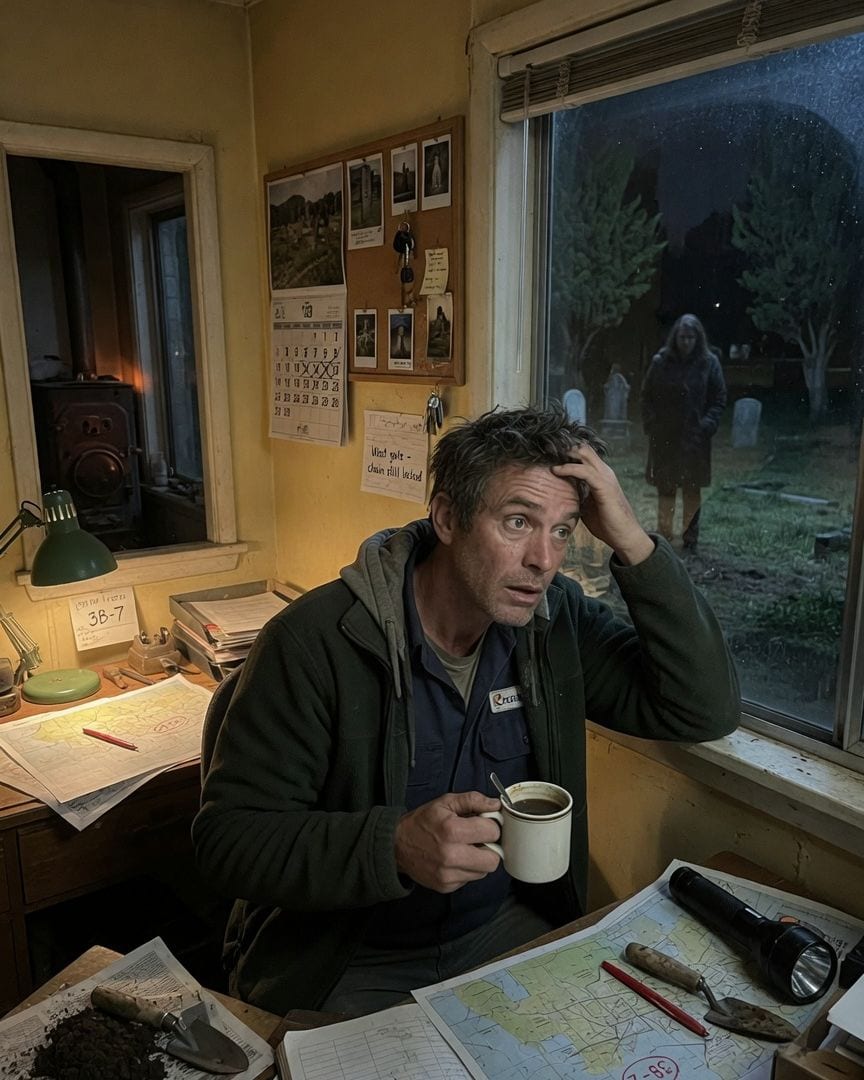
My cemetery lodge overlooks a woman visiting an empty grave near 3 AM most nights. The west gate she uses has been chained shut since autumn, its lock untouched.
As the cemetery's night caretaker, I'm used to the quiet hum of the lodge. But for three weeks, a woman has appeared nightly at plot 3B-7, a silent mourner in the deep night. What chills me is how she leaves: walking straight through the west gate that's been chained and padlocked shut for eight months.
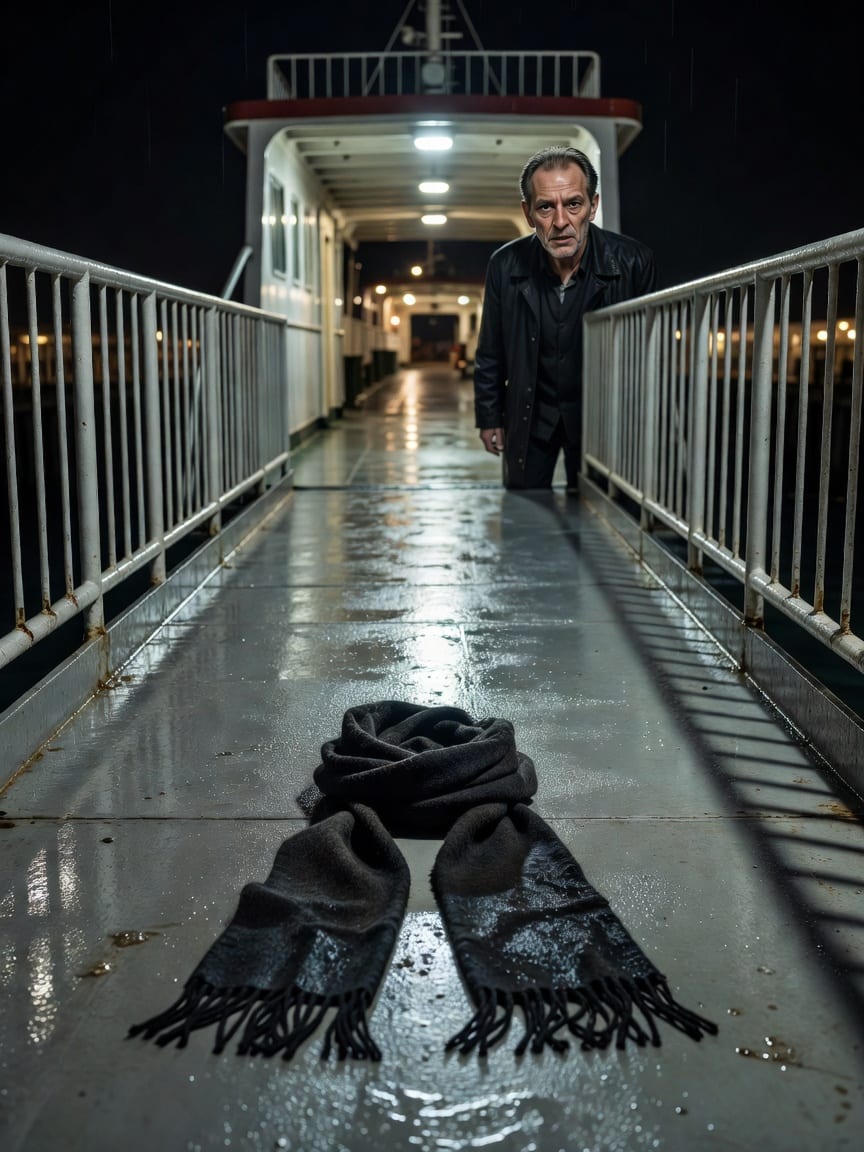
My ferry's night log recorded a foot passenger disembarked at 2:15 AM. We don't sail until six, and I wrote the entry myself.
Working the night shift on the 'Sound Clipper,' I found my own handwriting in the watch log recording an impossible event: a foot passenger disembarking at 2:15 AM. The ferry was tied up, engines cold, and the gangway locked tight. No one could have left, yet the entry was undeniable, signed with my initials.
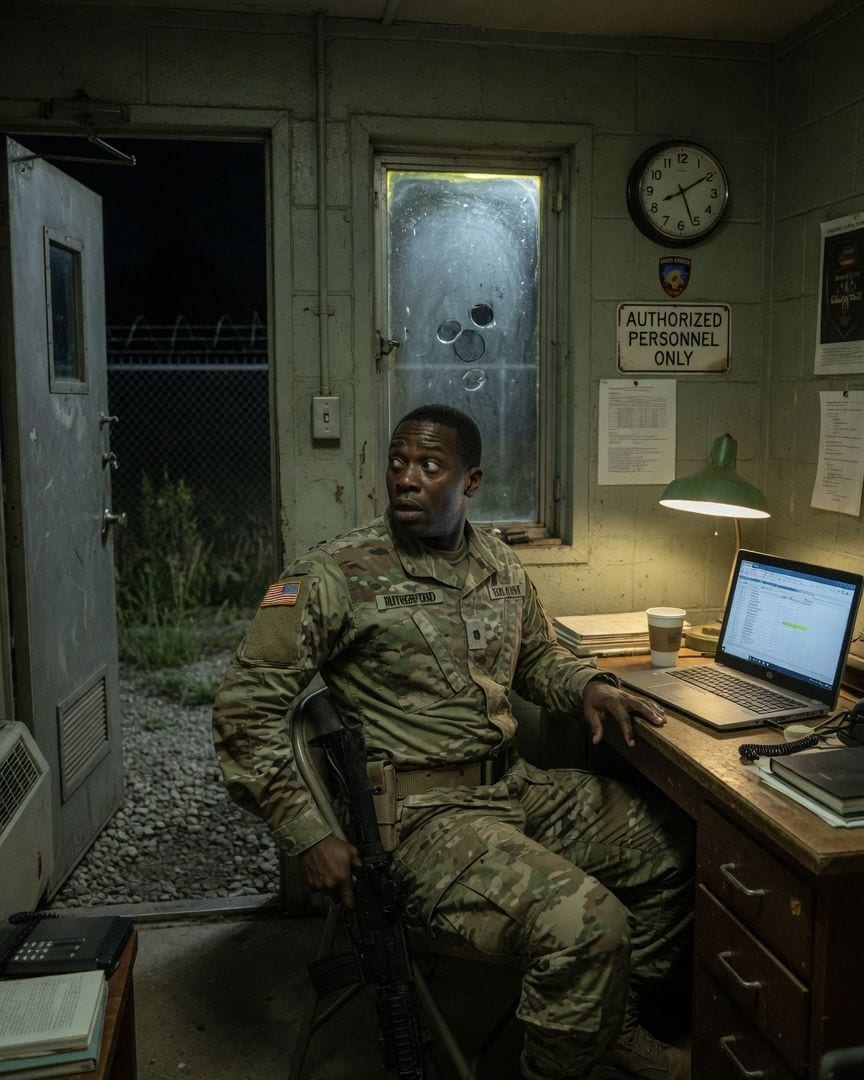
Fort Vashon's lone guard heard precise knocks on her window, then felt them from *inside* the locked shack.
Staff Sergeant Julian Rutherford felt an unsettling quiet at Fort Vashon's back gate, replacing a guard who reported strange knocks. He discovered an extra name on the digital duty roster that kept reappearing after deletion, a cold digital ghost. His search through decades of archived logs revealed a persistent anomaly: an unassigned slot, always present on short-staffed shifts. Then, in a forgotten supply shed, he unearthed an old journal detailing similar knocks and shadows, and one entry describing a guard hearing his own name called from the dark. What invisible presence haunted the fort's lonely gate?
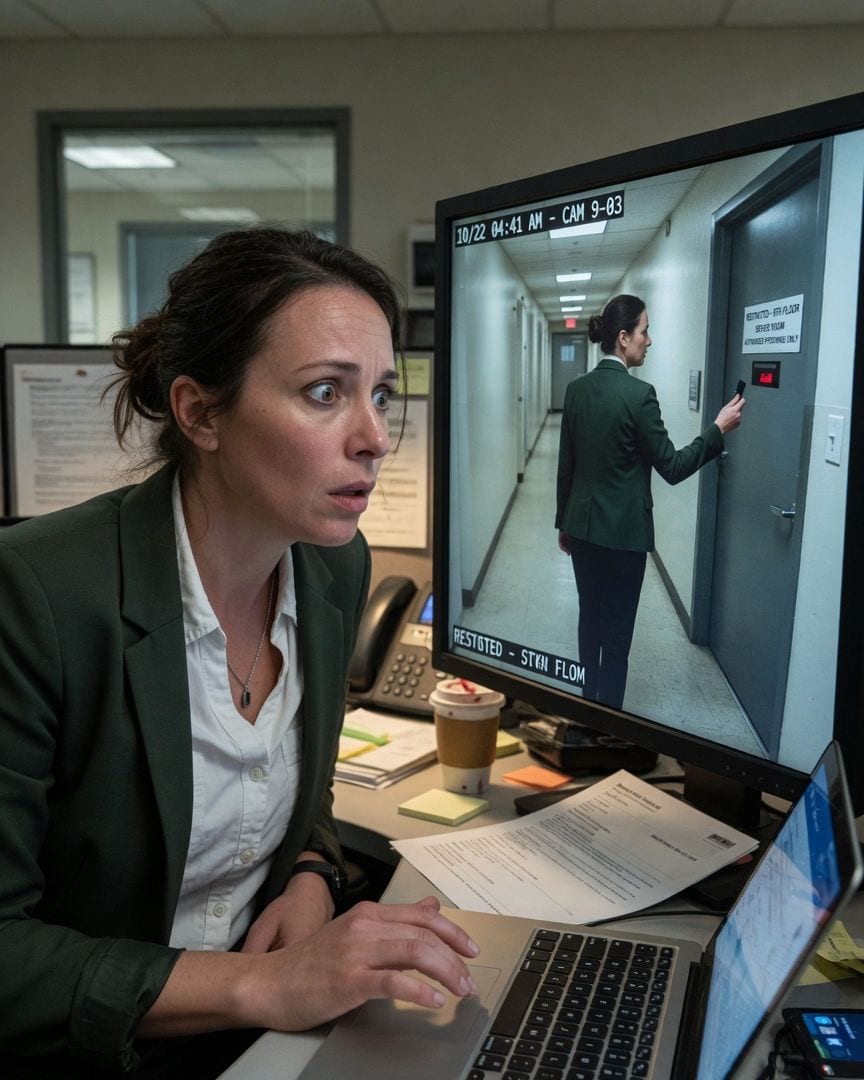
My keycard log shows me in the server room at 4:41am. I was asleep, and my badge was at home.
An email from corporate IT reveals my keycard registered entry into a restricted server room at 4:41 AM last Sunday. I was asleep in my apartment across town, my badge clipped securely to my jacket at home. But then I scrolled down and found eleven more impossible entries, all within the past week, all under my name.
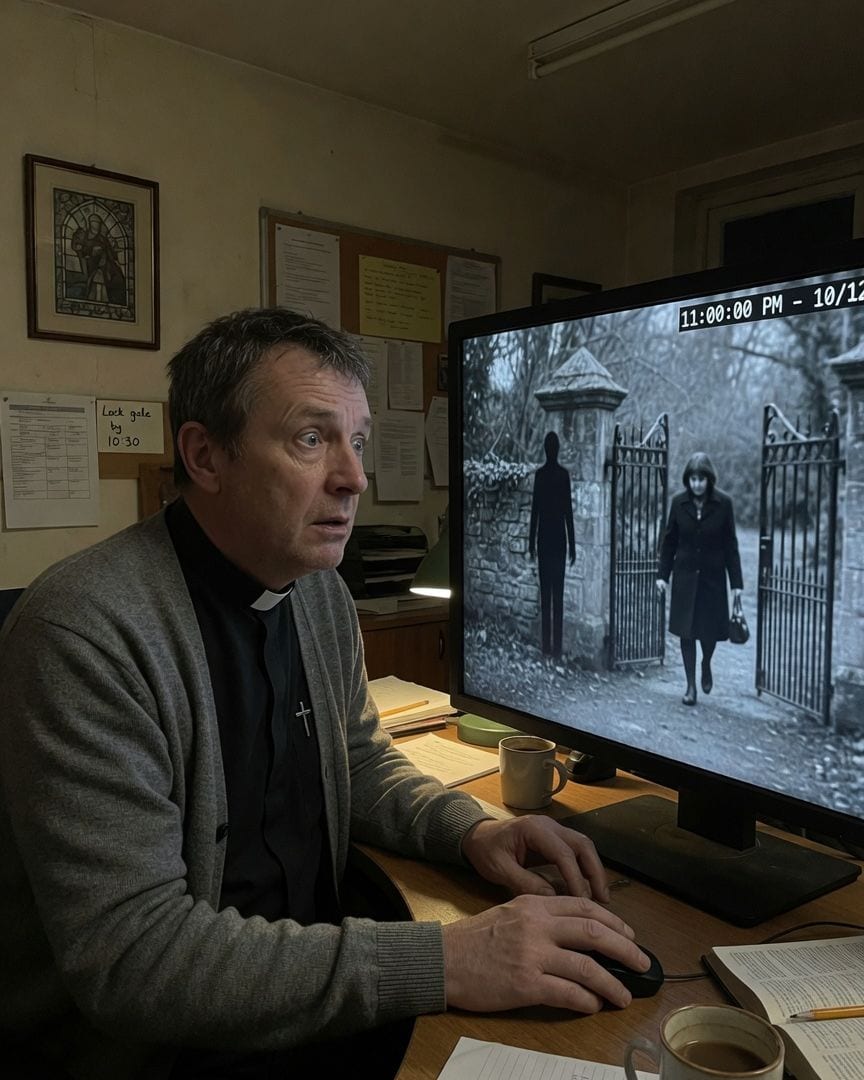
Our church trail cam logged a woman walking in at 11 PM. It never logged her walking out.
I saw Josephine Delaney walk into our churchyard on the trail cam monitor. I had personally locked the heavy wrought-iron gate at 10:30 PM, just thirty minutes before her 11:00 PM timestamp. Yet, the footage shows her gliding through the gate as it silently swung open, untouched, and then she simply vanished without a trace.
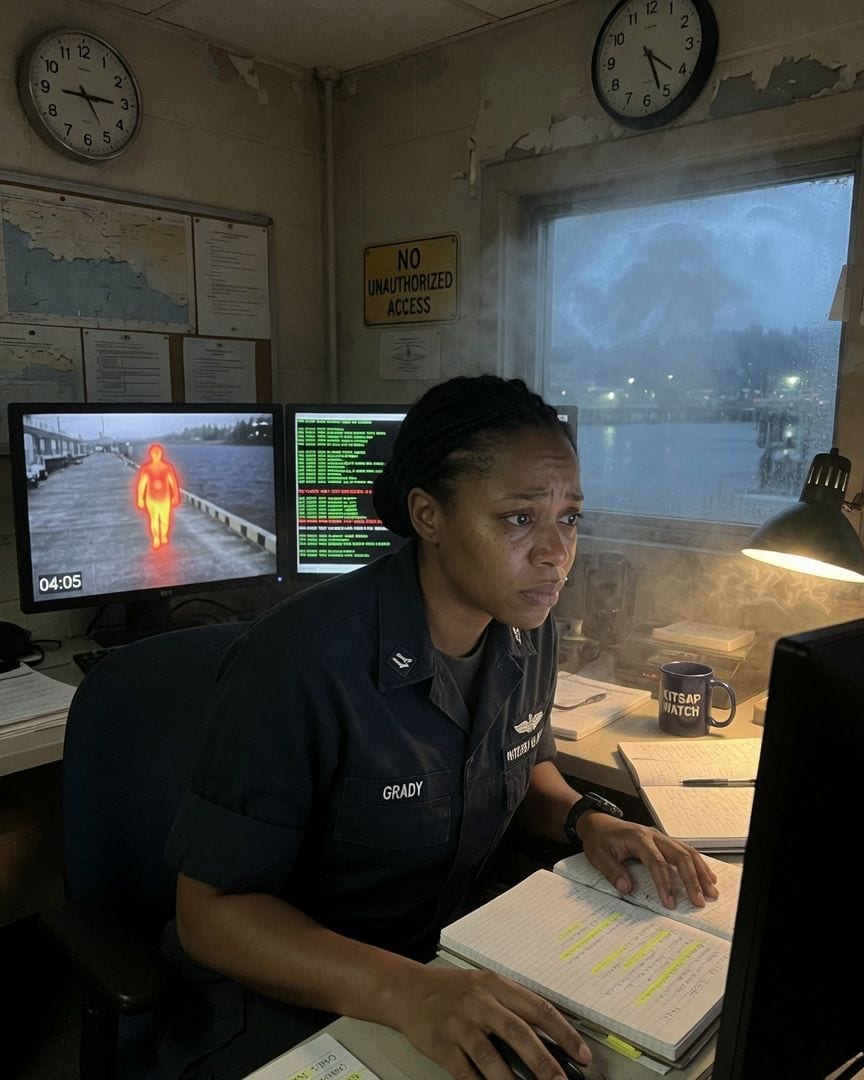
Petty Officer Olivia Grady found the base system logging impossible access at 0405. Every night for years, a blank ID walks Pier 7.
Petty Officer Olivia Grady stood her predawn watch on Pier 7, the cold mist of Puget Sound a familiar companion. Her routine scan of monitors at 0405 was shattered when an IR sensor flared with a man-sized heat bloom moving along the pier. Yet the camera feed showed only empty concrete and swirling mist. When historical logs confirmed the invisible presence had walked that exact path every night for years, Olivia dug deeper. She found a ghost "access log" entry with a unique ID but no name attached, meticulously aligned with the 0405 bloom. What impossible entity was the base system logging, night after night?