My spade struck something impossibly cold and metallic, pulsing with a slow, steady heartbeat, exactly where the old warning ended.
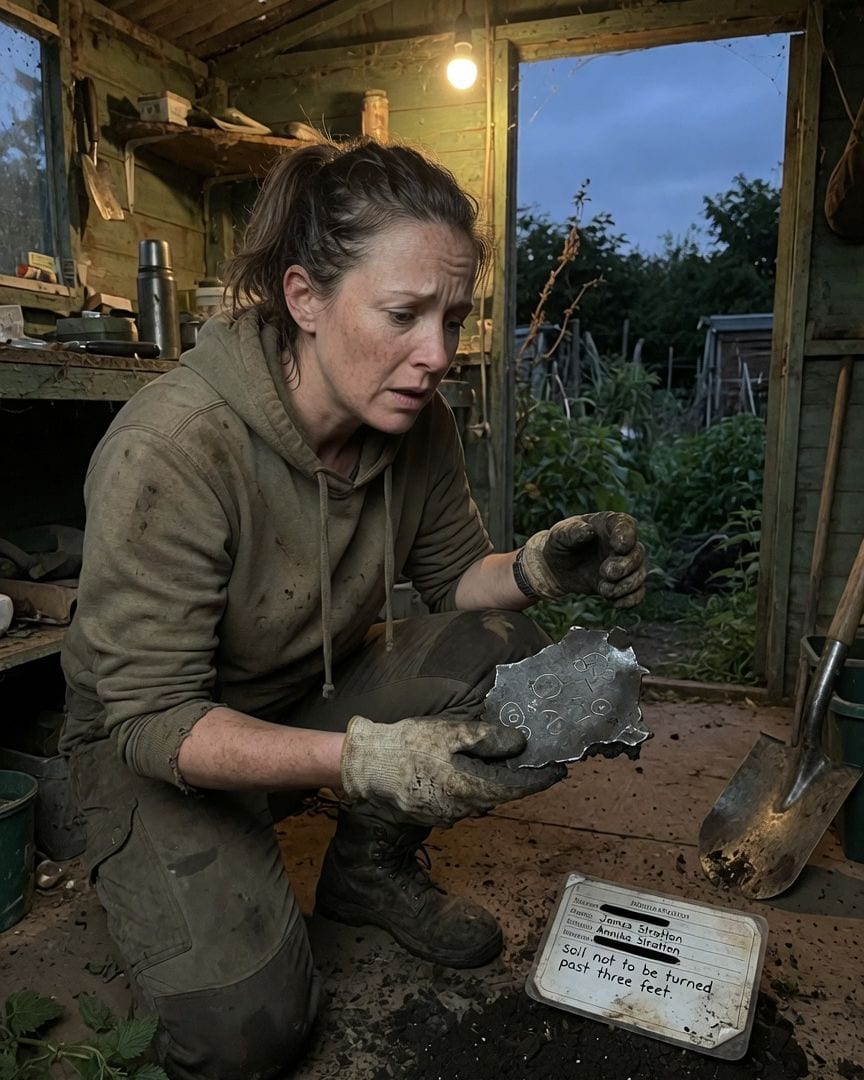
The allotment plot I took over last spring, Plot 23, was an absolute mess. Overgrown with knotweed and nettles, the shed leaning precariously, it looked like it hadn’t seen a spade in decades.
But it was cheap, close to my flat, and the parish clerk, Daniel Forsythe, had been surprisingly keen to get it off his books. He’d handed me a laminated tenancy card, its edges softened by years of thumbing.
On one side was a small map of the site, on the other, a meticulously typed list of previous tenants, stretching back to 1931.
The earliest entry, a single line, was blacked out with what looked like a thick, permanent marker.
Someone, perhaps long ago, had tried to obliterate it completely, but the card was old enough that the black had faded a little, hinting at letters beneath.
And written in faded, looping script, directly under the redacted line, were five words: ‘the same as before, soil not to be turned past three feet.’
My eyes snagged on that. It was an odd detail, even for parish bureaucracy.
Every subsequent tenant, listed by name and dates, had the same clause typed beneath their entry, usually in a crisp, machine font, but for Plot 23, it was always the same handwritten addendum, a unique rider.
‘Soil not to be turned past three feet.’ Like a permanent warning.
It was only when I saw my own name, Annika Stratton, typed neatly at the bottom with the current year’s date, that I looked closer at the earlier entries. James Stratton. My grandfather.
My surname, staring back at me from the mid-seventies, on the very plot I’d just inherited. I’d known he’d kept an allotment, vaguely, as a kid, but never which one, or that he’d signed anything quite so specific.
It was a bizarre coincidence. A strange, quiet bureaucracy of an old laminated card, holding a stark, singular warning that felt more like a spell than a garden rule.
Determined to make a start, I bought a new spade, heavy-duty gloves, and a pair of steel-toed boots. The nettles were taller than me in places, and the knotweed roots were like underground cables.
I rationalized the ‘three-foot’ clause as an old drainage issue, perhaps a buried field drain that connected to the main ditch. Or maybe it was a gas line from some forgotten wartime installation. It was old, after all.
These places always had some quirks.
The first few days were pure muscle ache. I dug out bucketloads of bindweed, disentangled years of bramble, and felt a strange satisfaction in turning over the heavy, dark soil. I was careful, at first, about the depth.
I’d eyeball it, measure the spade’s blade. Three feet seemed generous anyway. Most of what I wanted to plant – carrots, potatoes, garlic – didn’t need that kind of depth.
But after a week, as the initial exhaustion gave way to a rhythm, I relaxed. The sun was warm, the birds were loud, and the smell of damp earth was intoxicating.
I was working on a particularly stubborn patch, near the far corner of the plot, where the soil was especially compacted. I pushed the spade in, leaning my weight into it, trying to break up a dense clump.
I wasn't paying attention to the depth, just the resistance.
Instead of the satisfying crunch of earth and roots, the blade scraped. Not against a rock, or a ceramic pipe, but something impossibly hard, unyielding.
The sound was a dull, metallic grind that vibrated up the shaft of the spade, through my gloves, and into my wrist. It was unnervingly cold, even through the thick steel.
It wasn’t just the shock of hitting something unexpected; there was a peculiar quality to the impact. It felt…dense. Ancient.
I tried again, nudging the spade around it, trying to dislodge whatever buried obstacle I’d found. The edge of the blade grated against it again, a sound that felt wrong in the soft, dark earth. And then, a faint thrum.
Almost imperceptible at first, like the vibration from a distant, idling engine, but it pulsed, rhythmically, against my palm. A low, steady beat that wasn’t my own pulse, nor the throb of the earth.
I dropped my spade. It clattered against the loose soil, echoing the sudden frantic thudding in my chest. Kneeling, I brushed away the dark, damp soil with trembling hands. My fingers scraped the top of it.
Exactly three feet down, where the clause had warned not to go, was a small, dark, metallic object.
It wasn’t uniform. Its shape was irregular, almost organic, like something that had grown there, not been manufactured.
The surface was impossibly smooth in places, pitted and rough in others, and engraved with faint, intricate markings I couldn’t decipher in the dimming light. They looked like lines, circles, strange symbols etched into the cold, alien metal.
As my fingers closed around it, the rhythmic thrum intensified. It wasn't just a vibration now; it was a slow, steady heartbeat, chillingly cold, beneath the earth, and echoing up through my very bones.
I cleaned the metallic object carefully under the outdoor tap at the allotment office. It was no bigger than my fist, dark grey, almost black, with veins of a lighter, silvery metal running through it like marbling.
Its surface, once the grit was gone, was smooth and cool, but the thrumming, though quieter now, was still there.
If I held it just right, pressing it against my palm, I could feel that faint, rhythmic pulse, a slow, deep vibration. It didn’t feel like an engine, or a machine, or anything I’d ever encountered.
It felt…alive, in a strange, inert way.
Unable to identify it, and unwilling to simply put it back in the ground, I decided to dig deeper into the history of Plot 23. My discovery hadn’t felt like a coincidence.
I requested access to all historical records pertaining to the plot from Daniel Forsythe at the parish office.
He looked at me over his spectacles with that unnervingly calm expression, a small, almost imperceptible smile on his lips, before agreeing with a nod. "Curious about your heritage, are we, Miss Stratton?" he'd murmured.
The archives were a dusty, poorly lit room at the back of the parish hall. I spent days there, meticulously cross-referencing old tenancy agreements, council minutes, even local newspaper clippings.
The ‘soil not to be turned past three feet’ clause, I confirmed, appeared consistently in every agreement for Plot 23 from 1961 onward. Always after a new tenant signed on.
And that bizarre, handwritten note, ‘the same as before,’ just beneath the redacted 1931 entry?
I found faint, stylistic variations in the handwriting of that note over the decades, suggesting different people had copied it, but the phrase itself remained constant.
I needed a human connection, someone who’d been around long enough to remember. Ruth Fletcher, 74, whose plot bordered mine, seemed the obvious choice. Her small garden was immaculate, her roses prize-worthy.
She was always there, digging, pruning, an ancient fixture of the allotment site.
"Lovely day for it, Ruth," I offered one afternoon, leaning on my spade.
She straightened up slowly, her face weathered but kind, eyes the color of faded denim. "It is, dear. But you've been doing a lot of… deep work, haven't you?"
Her gaze flickered, not at me, but towards the corner of my plot where I’d found the object.
"Trying to get the knotweed out once and for all," I said, offering the mundane explanation first. "And I found something odd. Did you ever notice that clause on the tenancy cards for Plot 23?
About not digging past three feet?"
Ruth’s smile faltered. Her hands, gnarled from years of gardening, paused mid-air over a fuchsia bush. The air around us, which had been warm and easy, suddenly felt thinner, colder.
Her eyes, usually so direct, darted around, settling on the soil of Plot 23, then back to me, full of a quiet unease. "Oh, that old thing," she murmured, almost to herself. "They say it's just… a tradition.
Best to leave old things alone, Annika. Respect the ground. It gives back what you put in, but it doesn't like to be… disturbed." She spoke as if choosing each word carefully, her voice softer than before, almost a warning.
Her gaze returned to my plot, lingering. It was more than unease; it was a deep, ingrained fear.
A few days after my conversation with Ruth, I received a polite but firm summons from Daniel Forsythe. An email, rather than a phone call.
His office was a testament to his role: meticulously tidy, every ledger aligned, every pen in its holder. The air conditioning hummed, making the room feel sterile, almost unnaturally cool despite the warm spring outside.
He offered me a cup of Earl Grey, the china delicate, the tea steaming, as if we were having a genteel social call. But his eyes, behind the wire-rimmed spectacles, were sharp and assessing, missing nothing.
He sat opposite me, hands clasped on his polished oak desk, a faint smile on his lips. "I understand you've developed quite an enthusiasm for the allotment’s history, Miss Stratton," he began, his voice smooth, unhurried. "That's certainly commendable.
We appreciate a new tenant's engagement with our local heritage."
I took a slow sip of tea, the heat a comfort against the strange chill in the room.
"The clause about not turning the soil past three feet sparked my curiosity," I admitted, watching his face for any flicker of reaction. There was none. His composure was absolute.
"Ah, yes. A rather unique stipulation for Plot 23," he acknowledged, nodding slowly. "The parish takes its stewardship of the land very seriously, you see. Particularly regarding old traditions and boundaries. We have a long history here. Ancient land.
Certain… sensitivities. We aim to preserve the tranquility of the site, avoid unnecessary disturbance." His words were gentle, almost paternal, but the emphasis on "unnecessary disturbance" was a lead weight in the air between us.
It was a clear, unspoken message: I know you’ve been digging too deep, Annika. And I know you've been asking questions.
He paused, letting his words settle, before continuing, "Your grandfather, James Stratton, was a tenant of Plot 23, wasn't he? A good man. Enthusiastic gardener, by all accounts.
Though he did have an… unfortunate departure from the allotment scene, decades ago. Very regrettable. We always want to ensure our tenants are happy, and that the plots are well-tended."
He said "unfortunate departure" with the same placid calm he might use to describe a change in committee meeting schedules. It was too neutral, too neat. The room seemed to contract, pressing the air out of my lungs.
He knew more than he was saying. He knew exactly what I was looking for.
I went back to Daniel's office a few days later, uninvited. The metallic object was a cold weight in my pocket, thrumming faintly against my thigh. This time, there was no offer of tea.
I walked in, found him at his desk, and without a word, placed the object on the polished oak. The slight clink it made seemed to echo too loudly in the quiet room.
Then, I laid out the laminated tenancy card, its redacted line accusing, its handwritten warning stark. Next to it, a photocopy of my grandfather’s signed agreement, the ‘soil not to be turned past three feet’ clause underlined in red pen.
I looked at Daniel, my heart thumping against my ribs. My hands were visibly shaking.
Daniel's expression remained perfectly impassive. His gaze fell first on the object, then on the redacted line, then on my grandfather’s name. He picked up the metallic object, his fingers carefully tracing its irregular contours.
I watched closely, and for the first time, I saw it: a faint, almost imperceptible tremor in his hand as he held it. A momentary crack in his granite composure.
"You went deeper than three feet," he stated, his voice flat, not a question.
"Yes," I admitted, my voice tight. "And I found this. What is it, Daniel? What does that clause mean? And why does my grandfather’s departure from this 'allotment scene' feel less like a regrettable incident and more like… a secret?"
I demanded, the words tumbling out. "Ruth Fletcher nearly had a heart attack when I mentioned it. Everyone acts like it's an old wives' tale, but you… you know something. Don't you?"
Daniel placed the object gently back on the desk. He sighed, a slow, deep exhalation that seemed to carry the weight of generations. He pushed his spectacles up his nose, his gaze distant.
"The parish has a… long-standing responsibility, Annika," he began, his voice quiet, almost a whisper. "To manage something beneath Plot 23. It’s… an ancient presence. Not a spirit, not a demon as you might find in stories. But something elemental.
Bound to the earth itself. Something very old, that predates all of us, all our records."
He paused, collecting his thoughts, his gaze meeting mine. His eyes held an unsettling calm, an acceptance that chilled me more than any dramatic pronouncement. "The clause, Annika, is a practical measure. A containment.
A way to keep the presence… settled. Dormant. It requires a certain balance. A reciprocity, if you will. It exists, it’s part of the land, and we, as stewards, must ensure it remains undisturbed.
If provoked, if its boundaries are breached… it can be disruptive. Extremely so."
He didn’t name it. He didn't explain its nature, where it came from, or what it truly was.
But his calm, almost academic tone, describing this ancient, elemental thing beneath the soil, made the truth far more chilling than any monster story I could have imagined. The wrongness of it settled in my bones, cold and deep.
Shaken by Daniel’s confession, the metallic object a cold weight in my pocket, I retreated home. The truth was worse than I’d imagined, an ancient, unnamed presence beneath the soil, a thing that required careful management.
But Daniel’s calm, his almost academic explanation, had left too many gaps. Disruptive? What did that even mean? And what about my grandfather’s "unfortunate departure"? It sounded too clinical for someone who'd simply given up a garden plot.
A terrible suspicion began to curdle in my gut. I returned to the parish archives, fueled by coffee and a growing dread that tightened around my chest with every passing hour. This time, I didn't look for the clause.
I looked for the tenants themselves.
I meticulously cross-referenced the names of every Plot 23 tenant who had signed that three-foot clause with old parish death records, local newspaper archives, and historical missing persons reports. It took days. Pages and microfiche blurred before my eyes.
My kitchen table became a chaotic spread of dates, names, faded newsprint. I felt like a mad woman, tracing the ghost steps of strangers, my pen marking connections on a printed spreadsheet.
And then, I found it.
A pattern. An undeniable, horrifying correlation. James Stratton, my grandfather, was not alone. The date of his tenancy ending, followed by a local news blurb about his "sudden disappearance" that was never solved.
And then the next name on the Plot 23 ledger: a brief notice of a "tragic accident" on a fishing boat, a year after they took over the plot.
The one after that: a terse obituary for a man found dead in his home, cause of death "undetermined" despite no obvious foul play.
Every single tenant who had signed the 'soil not to be turned' clause for Plot 23, without exception, had either vanished or died under mysteriously unexplained circumstances within a year of their tenancy ending.
The cold, sickening certainty settled over me, chilling me far more than the metallic object in my pocket ever could. This clause wasn’t just about containment. It was about sacrifice.
I confronted Daniel one last time. This wasn't a request for information; it was an accusation.
I slammed the printouts of obituaries and missing persons reports onto his polished desk, the names and dates accusing him silently from the yellowing paper. My voice, when I spoke, was a ragged whisper. "My grandfather. All of them.
They didn't just 'depart,' did they? They vanished. They died. After they left Plot 23. What did you do to them?"
Daniel didn't flinch. He didn’t even glance at the papers directly. He looked at me, his eyes holding a profound, ancient sadness, but no surprise, no defensiveness. He already knew.
"The presence beneath Plot 23," he began, his voice as calm as ever, "requires… sustenance. A form of attention, or energy, if its containment is breached or neglected. It isn't malicious, Annika, not in the human sense. It simply… is.
And it exists on a different kind of scale, a different kind of need."
He picked up the metallic object from my pocket, which I’d placed back on his desk. He turned it over, his fingers tracing its ancient lines.
"The clause is not just for containment," he clarified, his gaze resting on me, unwavering. "It's a contract of stewardship. Those who maintain the plot, who respect the deep boundary, keep the presence dormant.
It asks for nothing, if its quiet is maintained. But those who fail, Annika. Those who ignore the warning, or probe too deeply, or abandon their post… they become the sustenance."
My breath hitched. "My grandfather…"
"James Stratton," Daniel continued, his voice softer now, almost mournful, "had grown careless. He believed he could perhaps excavate the object entirely, control it, or remove it. He neglected the plot, thinking he could outsmart it.
His 'disappearance' was not an accident. It was a consequence of his broken contract. The 'same as before' on the tenancy card refers to the recurring need for a new steward to take up the burden.
Or risk the cycle claiming another."
Daniel gestured to a faded, hand-drawn map of the allotment plots, pinned to the wall behind his desk. His finger rested on Plot 23, a dark smudge among the neat squares. "You understand now, Annika.
You have breached the containment, just as your grandfather did. The presence has been roused, however slightly." He looked at me, his eyes grave. "You have a choice. You can accept the role of steward.
Maintain the plot, ensure the containment of the presence, and thereby break the cycle for others. For the person who would have come after you, had you not made your discovery."
The metallic object, still on the desk, seemed to thrum faintly, a low, patient vibration against the polished wood. A silent reminder of the power beneath the soil, of the thing that required its due.
"Or," Daniel continued, his voice betraying no judgment, "you can refuse. And the parish will find another successor. Perhaps someone less informed, someone who will fall into the cycle unknowingly. Someone who will, eventually, become the next sustenance."
I stared at the map, at the marked square of Plot 23. Then at Daniel, seeing not a monster, but a man burdened by generations of grim duty, a quiet custodian of an ancient, terrible pact.
I thought of my grandfather, of the others. The horror wasn't a violent end, I realized, but an eternal, quiet responsibility. A slow, chilling inheritance that now belonged to me. I took a deep, shuddering breath.
My decision was made, a silent, terrible acceptance. I would tend the plot. I would become another link in the chain of silent guardians.
I returned to Plot 23. The metallic object, now understood as a focal point of the containment, was carefully re-buried, exactly three feet down, in the earth it had always called home.
I continued my gardening, but with a new, chilling purpose. My spade never ventured past the prescribed depth. I cleared the knotweed, nurtured the vegetables, but always with a meticulous awareness of the silent, ancient presence beneath.
The parish records remained unchanged, the redacted line and the peculiar clause still present, a quiet testament to the truth. Daniel Forsythe would nod to me at parish council meetings, a silent, shared understanding in their eyes.
The cycle, for now, was managed.
Sometimes, when the wind is just right, I think I can hear the faint thrumming from beneath the soil of Plot 23, a low, patient hum that reminds me of my inheritance.
If this one got to you
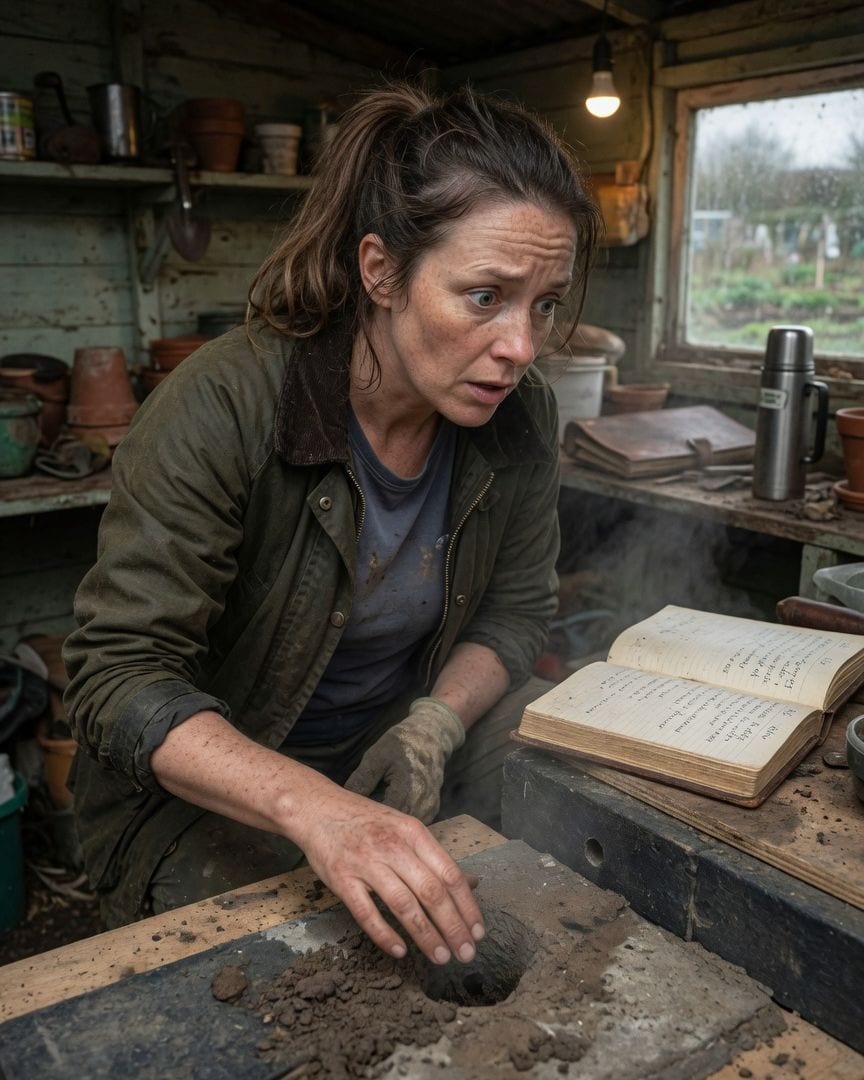
Every gardener who's held allotment plot 26 gave it up after a single season, each one leaving the same note behind: never dig the ground below two feet.
Newly single at 38, I hoped Plot 26 at Weir Field Allotments would be a fresh start. But the committee’s rent book held a strange, decades-old rule: 'ground not to be dug below two feet.' Ignoring the warnings, I dug anyway, only to find a perfectly smooth concrete slab with a tiny hole—and a distinct, unnatural cold breath rising from it.
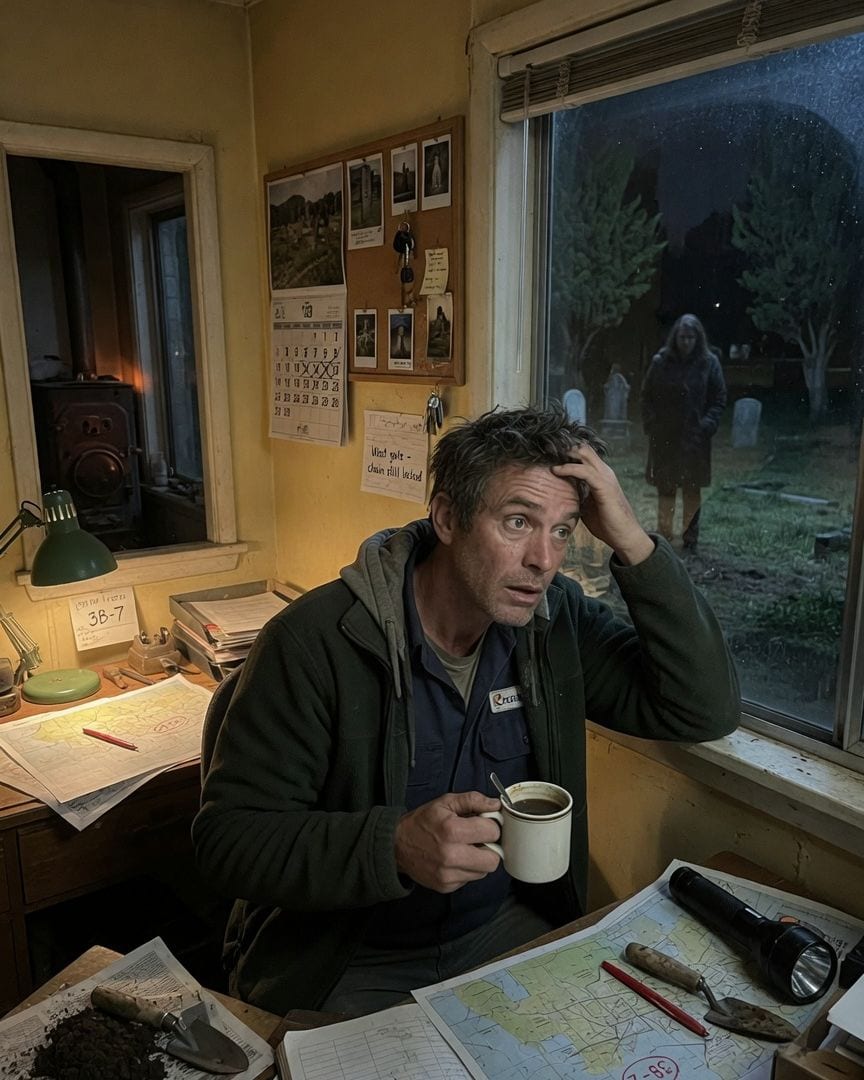
My cemetery lodge overlooks a woman visiting an empty grave near 3 AM most nights. The west gate she uses has been chained shut since autumn, its lock untouched.
As the cemetery's night caretaker, I'm used to the quiet hum of the lodge. But for three weeks, a woman has appeared nightly at plot 3B-7, a silent mourner in the deep night. What chills me is how she leaves: walking straight through the west gate that's been chained and padlocked shut for eight months.
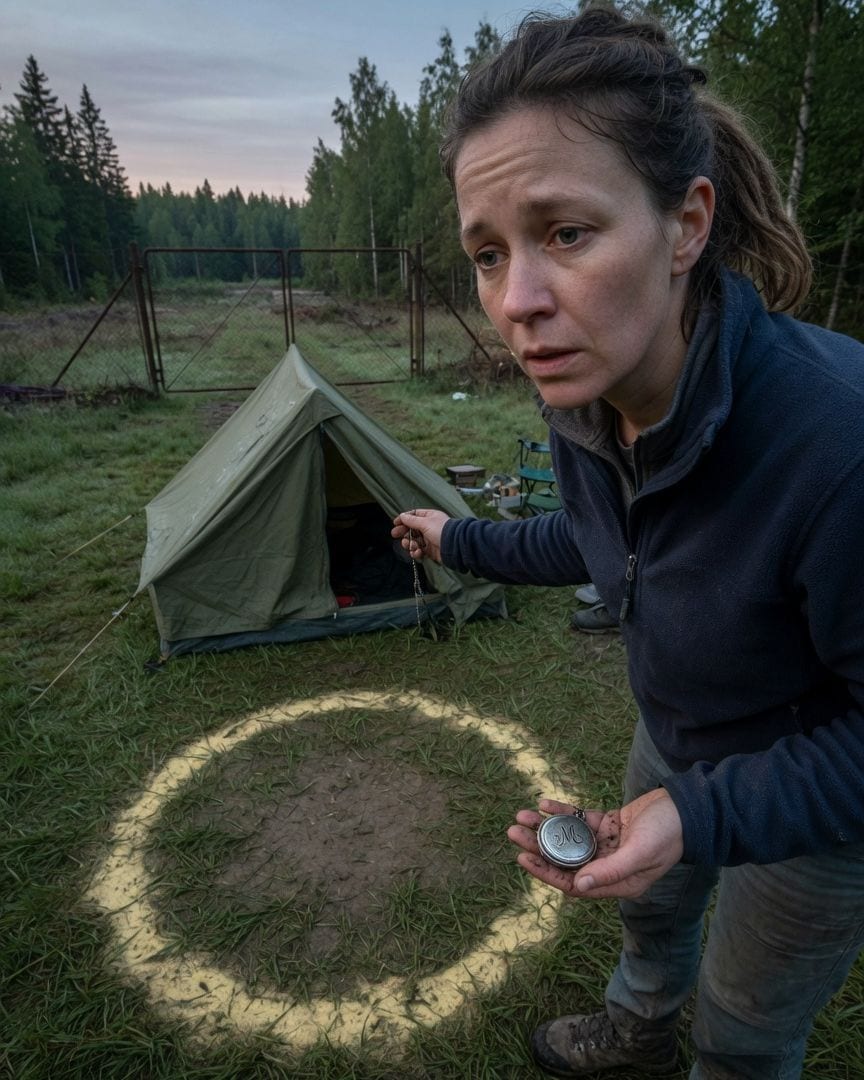
My tent left a flattened ring in the grass, but an older one was already there, worn into the turf, exactly tent-sized, for thirty years.
As the new camp host, I ignored the warden's odd rule about pitching my tent on a particular flat spot. That night, something enormous walked in slow, methodical circles around my tent. The next morning, I found a deeply worn, old ring in the earth beneath my tent, and later, a tarnished silver locket buried there.
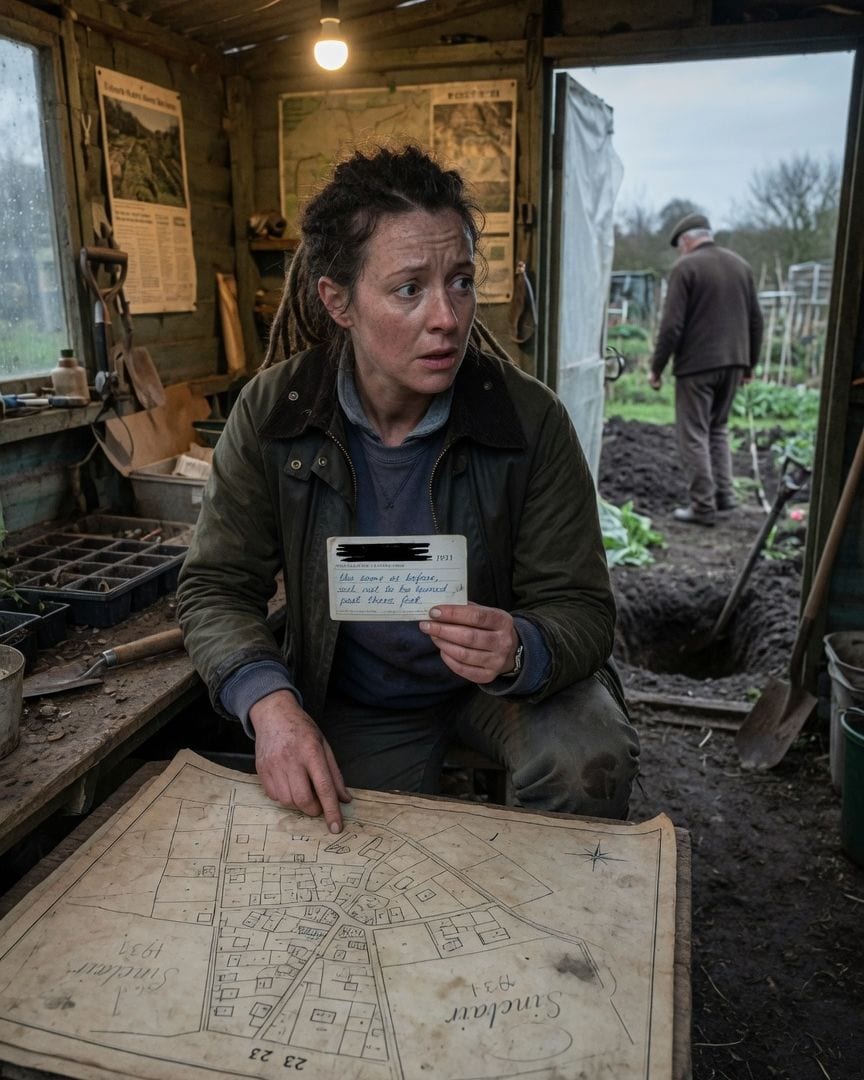
My allotment plot’s tenancy card has a redacted name from 1931. Under it, someone wrote 'the same as before, soil not to be turned past three feet,' and my dead grandfather signed it too.
My new allotment Plot 23 felt unnaturally still, the soil unusually dense and cool. The tenancy card warned 'soil not to be turned past three feet,' but my spade hit something hard and unyielding at that depth: a compacted, petrified layer that felt deliberately laid, a barrier.
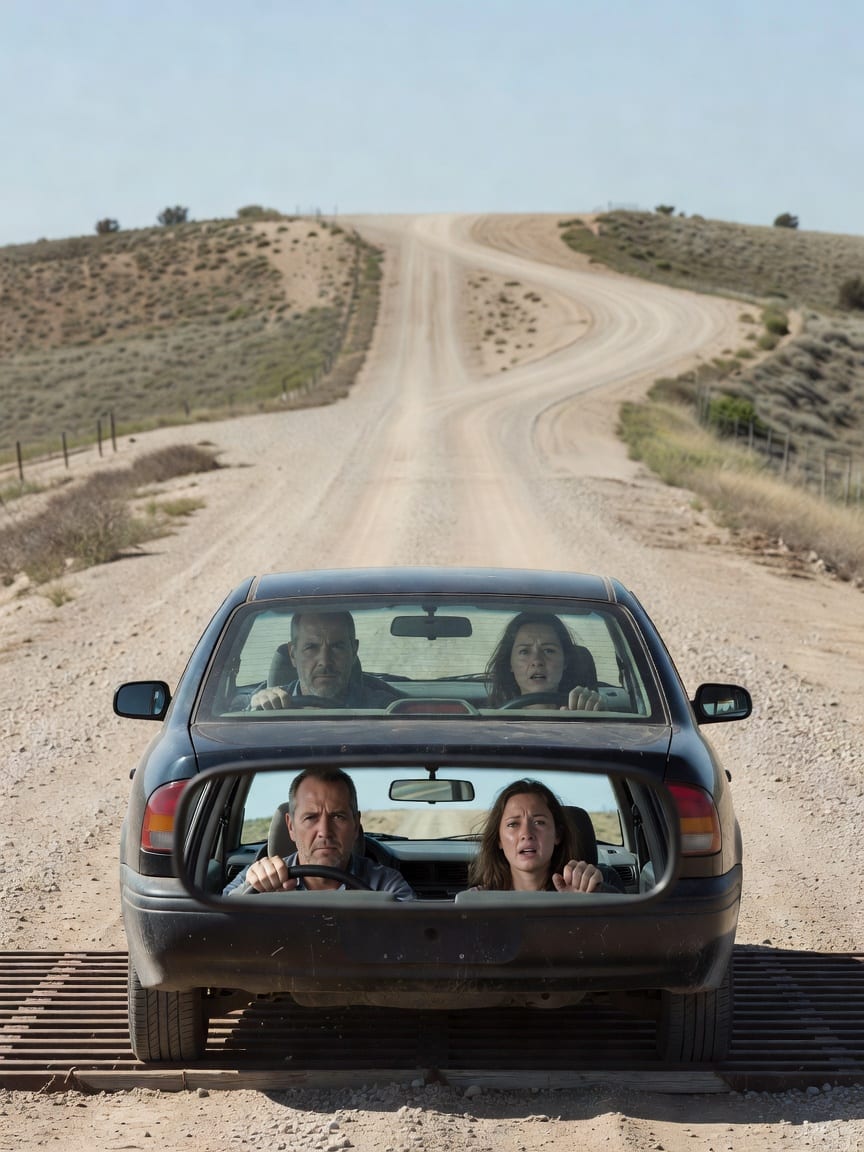
My father's ashes never made it to the hilltop. That single track kept feeding my car back to the cattle grid, the same sheep scattering, the same gate swinging.
I'm trying to scatter my dad's ashes at the highest point, but the track to Ashford Hill keeps looping, pushing my car back down. After my fifth attempt, I walked it myself, only to find the same pale grey gravel and cattle grid appearing inexplicably behind me again. Then, half-buried in the verge, I found a brass marker with strange symbols, dated 1897, that I'm certain wasn't there before.
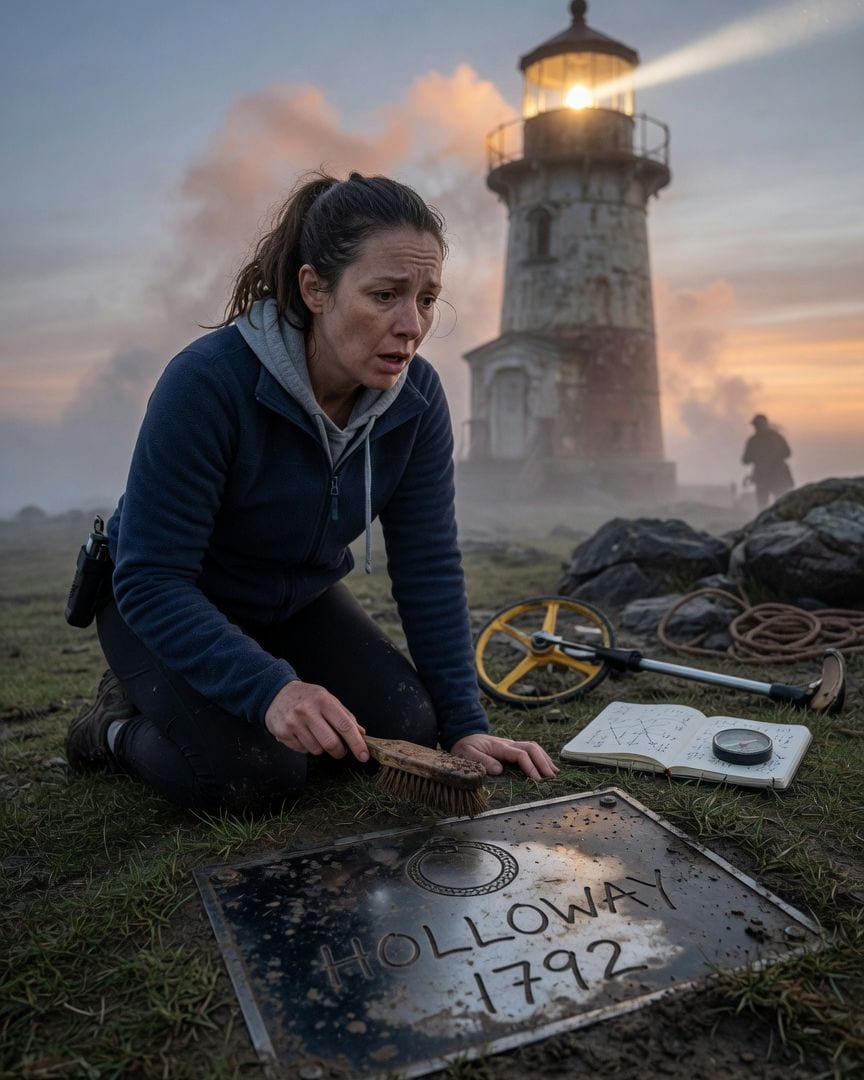
My coastal path just kept curving me back to the lighthouse. Nine miles walked, the same fisherman coiling rope, but I never left.
My morning ritual is a brisk walk along the coastal path. But last Tuesday, after what felt like an hour, I found myself back at the lighthouse, having walked miles to nowhere. My step-counter read 4.5 miles, yet the same fisherman was still coiling the same rope right where I started.