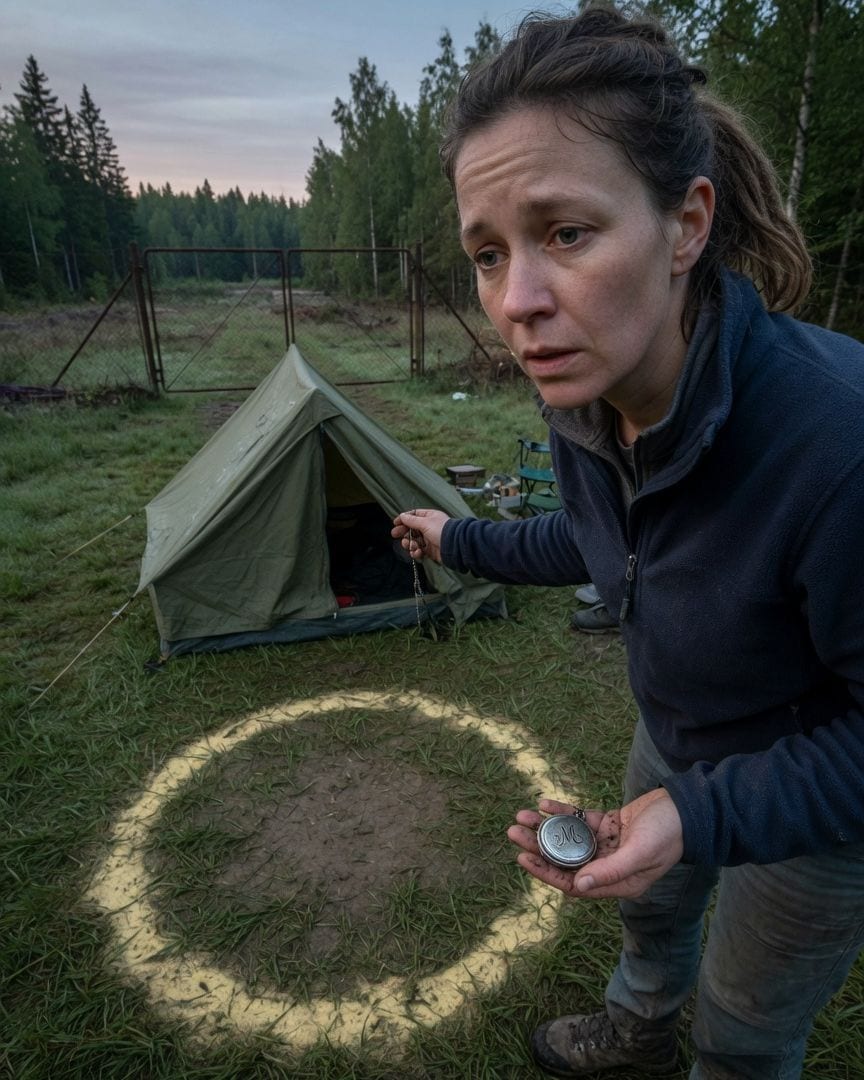
My tent left a flattened ring in the grass, but an older one was already there, worn into the turf, exactly tent-sized, for thirty years.
The laminated rules were taped inside the warden's hut, curling slightly at the edges. I’d just started my post as the new camp host, and Roland Sutton, the warden, hadn’t been much for explanations.
The first few rules were standard: 'No open fires after 10 PM,' 'Dispose of waste properly.'
But the last one, scrawled in blue biro at the bottom, felt out of place, almost an afterthought: 'Pitch anywhere but the flat ground by the third gate.'
I found the 'third gate' easily enough on my first walk-through. It wasn’t a gate at all, just a gap in an old, rusted fence line where a logging track used to be. And the 'flat ground'?
It was the only genuinely level, cleared spot for acres, perfect for a tent. It almost looked inviting, like it was waiting. So I ignored the rule.
The next morning, with my supplies still in boxes, I pitched my own small canvas tent there. It felt right, nestled in the clearing, the woods quiet around me.
That night, the camp was still. Not even the usual chirping of crickets. I lay in my sleeping bag, trying to adjust to the unfamiliar sounds of the wilderness. Then I heard it. A soft, rhythmic sound outside my tent.
A crunch, crunch, crunch. It was too heavy for a rabbit, too slow for a deer. Deliberate. A steady, almost patient weight pressing the grass around my tent, circling.
It wasn’t scraping, not dragging, just a gentle, deep compression of the earth, as if something enormous was walking slowly, methodically, just outside my canvas wall. I lay frozen, my breath caught, listening to the soft, impossible steps.
The sound faded, then returned, a methodical circumference being drawn around me in the dark.
When dawn finally broke, the air felt crisp, almost too clean. I unzipped my tent flap and stepped out. The grass around my tent was flattened, a perfect, dark green ring where the canvas had pressed it down.
But inside that ring, under where my tent now stood, was another circle. Deeper. Worn into the turf itself, a pale, almost yellowed scar on the earth, exactly tent-sized.
It wasn’t just flattened; it was old, the grass thinned and stunted. I stared, a chill crawling up my spine.
Roland Sutton walked by later that morning, checking the fence line, a thermos in his hand. He glanced at my tent, then at the ring. 'Oh, that? Don't worry about it,' he grunted, taking a sip of coffee.
'Been there thirty years, give or take. Just an old spot.'
His 'thirty years' felt too casual, too dismissive. I tried to press him, asked about the rule, about the permanent ring. He just shrugged. 'Folklore, mostly. Kids used to tell stories about it.'
He didn't elaborate, just changed the subject to lumber prices. The easy dismissal, the way he avoided my eyes when I mentioned it again, only made it more unsettling.
I spent the next few days in the small warden's office, digging through the camp’s archived records. Hoping for a historical note, an old map, anything that might explain the rule, the worn ring. Nothing.
No mention of a 'third gate' beyond its physical location, no past incidents, no explanation for a spot that clearly had a history.
The records were meticulous for everything else – fire permits, maintenance logs, visitor counts – but this one thing was invisible.
Whenever I brought it up with other locals in town, a subtle shift occurred. Eyes would flick away, conversations would dry up, a quiet agreement passing between them, a communal wall going up.
It wasn't hostility, more like a polite, practiced evasion. As if they knew, but couldn't, or wouldn't, say.
At the local library, a dusty, underused place, I found a brittle, yellowed newspaper clipping from decades ago, tucked into an old town history book. The date was smudged, but it looked to be early 20th century.
It detailed an 'unexplained disappearance' near what was then an 'unnamed wilderness camp.' The location was vague, but the description of the surrounding woods, the old logging trails, felt eerily familiar.
The article ended abruptly, without resolution, and no follow-up could be found in subsequent issues. It just… stopped.
The clipping gnawed at me. I returned to the third gate the next morning, the worn ring now seeming darker, more defined in the cool light.
It wasn't just flattened grass; it was an indentation, almost a scar on the earth, the soil compacted and pale. I walked its perimeter slowly, my boot catching on something hard just within the ring’s edge.
Bending down, I saw a faint, metallic glint, partially buried in the compacted turf. It was too small to be a discarded can, too precisely placed to be random.
Curiosity, a stronger force than caution, took over. I pulled out my small garden trowel. The soil, surprisingly loose beneath the surface, gave way easily. I dug carefully, feeling the cold resistance of metal.
My fingers closed around something small, smooth, and heavy with age. I pulled it free. It was a tarnished silver locket, bearing a single, ornate initial: 'M'.
I took the locket to Cynthia Winslow at the local historical society. She was a neat woman, all crisp blouses and silver hair, with kind, but sharp, eyes that missed nothing.
She turned the locket over in her hands, her brow furrowing. 'This style… late 19th, early 20th century,' she murmured, her thumb tracing the ornate 'M'. Her expression, however, tightened noticeably when I mentioned where I’d found it.
'The third gate? That old place?' Her voice was strained, thinner than before.
I pressed, asking if any 'M' initialed people had gone missing from the area around that time. Cynthia demurred, setting the locket down carefully on a velvet cloth. 'There are always old stories, dear. This town has many.
People moved on, or sometimes… just got lost in the woods.' Her gaze, though, kept returning to the locket, like a moth to a flame it tried to avoid.
Frustrated by the evasion, I spent the rest of the day poring over public records and old maps of the region. Most were too recent, too vague.
Then, in a forgotten drawer, I found one, brittle with age, dating back to 1910. It showed the camp area, long before it was officially a camp.
And near the third gate, drawn small and almost illegibly, was a strange symbol. It looked like an inverted crescent moon with a dot in its curve. It wasn't on any other map I could find.
Back at the camp, a prickle on my neck told me I wasn't alone. Roland, usually scarce, seemed to be everywhere. He'd appear from the woods as I walked near the third gate, ostensibly checking the trails.
Or he'd be 'just checking the fence line' when I was returning from town. His presence was a quiet, constant reminder.
One evening, he approached my tent, his face unreadable in the fading light. He didn’t stop at the edge of the flattened circle my tent made, but stood just beyond it, his shadow long. 'Still digging up old bones, Grace?'
he asked, his voice low, almost a rumble. 'Some things are best left buried. This town has its ways.' He paused, his gaze drifting to the silent woods. 'There's a reason we don't talk about certain spots.'
The implication hung heavy in the cooling air. He didn’t threaten, not directly, but the warning was clear, almost an appeal.
Later that week, while I was researching at the historical society again, I glanced out the window, needing a break from the microfiche. Parked down the street, partially obscured by an oak tree, was an old, distinctive pickup truck.
It belonged to Gideon Prescott, an octogenarian local known for sitting on his porch all day, watching the world go by. The engine wasn't running, but I knew he was watching.
The feeling of being observed was no longer a vague unease; it was concrete, present, and unsettling. It felt like the whole town was holding its breath, waiting for me to make a mistake.
I returned to Cynthia, the tarnished locket in one hand, the old map with its strange, lunar symbol in the other. I laid them both on her desk.
'This locket,' I began, my voice steady, 'was found in that old ring, by the third gate. And this symbol, it's on a map from 1910, right where the third gate is now. It's not on any other map.
What does it mean, Cynthia? What does it really mean?'
Cynthia’s composure, so carefully maintained, finally cracked. Her gaze fell to the locket, then to the map. Her hand trembled as she reached for the silver 'M'.
'That… that belonged to my great-aunt, Maureen Winslow,' she whispered, her voice barely audible, as if speaking it aloud was a transgression. 'She disappeared in 1923. From near that very spot.'
She pushed the old map away, as if its presence burned her. The symbol, she explained, marked a 'binding point,' an old term.
'A place,' she said, her voice thick with generations of suppressed history, 'where the veil between things is thin.' Her eyes, usually so sharp, were distant now, haunted. 'The town has managed it for generations. There's a presence, you see.
Not evil, not a spirit, not in the way you might think. But… something that claims if it's acknowledged. If its boundary is breached. The 'rule' in the camp, Grace? It's not a rule. It's a warning.
To keep it from knowing anyone is there.'
'The circle always shows itself again,' Cynthia continued, her voice gaining a desperate tremor. 'Every generation or so. Maureen's disappearance was one of those times. It was always an 'M' name, too.
We thought it was a coincidence at first, or a terrible curse, but the elders always said it was a pattern. A cycle.' She explained that Roland's 'thirty years' wasn't just a casual estimate.
It was the town's agreed-upon 'cooling-off' period, a time when the presence was dormant, when the cycle reset, before the next 'active' phase began.
A cold dread settled in my stomach. Roland's evasiveness, the locals' silence, the old newspaper clipping that ended abruptly. It all snapped into focus. It all fit. Too well.
The silence wasn’t because there was nothing to say, but because there was everything to say, and no one dared.
Cynthia, her face pale and drawn, her eyes red-rimmed, pushed a heavy, leather-bound ledger across the desk. Its pages were brittle, the leather worn smooth with age, but the elegant, copperplate script inside was still clear.
'This is the true history,' she said, her voice barely a whisper. 'The town's record. Not for public eyes.'
I opened it. It was a meticulous accounting, page after page of neat script. Names and dates. Not just Maureen. There were other names, all beginning with 'M', each followed by a date.
The dates formed a chilling pattern, roughly thirty years apart. A cycle. My breath hitched. Each entry was a disappearance, a 'claiming.'
I traced the last entry with a trembling finger, the parchment cool beneath my touch. Dated exactly thirty years ago, it read: 'Margaret Sutton'.
Roland’s mother.
The locket she found, the locket she thought was Maureen's, was in fact Margaret's. The truth was far deeper, far more personal, than I could have imagined. Roland knew. He had always known.
And now, I realized, I was standing on the precipice of the next cycle.
I found Roland at the third gate. He was standing in the center of the worn ring, staring down at the pale, flattened turf, his back to me. The air around him felt cold, even though the sun was high.
I held up the ledger, its heavy leather cover a contrast to the quiet woods. 'Margaret Sutton,' I said, my voice steady despite the tremor in my hands. 'Your mother. She disappeared exactly thirty years ago. From here.'
Roland finally broke. He turned, his face haggard, his eyes hollow. He explained, his voice raw with decades of suppressed grief, that the presence wasn't malicious, not evil in a human sense. But it was territorial, ancient.
It 'claimed' those who lingered too long on its emerging boundary, especially those who acknowledged it directly.
The 'M' names in the ledger weren't random; they were those who had, across generations, either accidentally or intentionally, tried to understand or intervene with the presence.
It interpreted any direct interaction as an invitation, a claim to be met with a reciprocal claim.
His mother, Margaret, had believed she could break the cycle. She’d studied the old tales, the patterns.
She’d camped on the spot, just like I had, hoping to 'speak' to it, to understand its nature, to end the town’s burden, to stop the disappearances for good. She disappeared, leaving behind only her locket.
The town’s generations-long 'agreement' wasn't just about silence, but about active avoidance, to steer people away, to forget the claims, to prevent further ones.
Roland had stayed, tending the camp, watching the cycle, hoping for a sign, a way to bring his mother back or at least break the pattern for good.
He was a keeper of the perimeter, a warden in the truest sense.
Roland reached into his pocket and pulled out another silver locket. It was identical to the one I found, tarnished with age, also bearing an ornate 'M'.
'This was hers,' he said, his voice choked with grief, holding it out to me. 'My mother's. I buried it here, after she… after she was gone. Hoping.
Hoping to leave a different marker, a new 'M', to replace the previous claim, to break the pattern.'
I stared, the impossible truth clicking into place with a sickening finality. The locket I found wasn't Maureen's; it was Margaret's.
It was the second locket, the one Roland himself had buried in a desperate attempt to interfere, to fool the cycle. The 'artifact that cannot exist' was right here, proving Margaret's desperate act and the continuous, impossible cycle of claims.
The older, deeper ring wasn't just old; it was a recurring scar, a manifestation of the presence itself. And Margaret's locket, the one I’d found, was a fresh wound within that scar.
The presence was now active, stirred by my unwitting actions, by Roland’s long-held, desperate hope, by the very act of seeking it out.
'You have to leave, Grace,' Roland urged, his eyes pleading, no longer the taciturn warden, but a man drowning in generations of terror and grief. 'Now. Never come back. Never speak of this. Or you’ll be the next 'M'.
It’s already noticed you. It's waiting.'
I packed my few belongings in a blur, my hands shaking so hard I dropped my travel mug twice. I didn't bother with goodbyes. The camp felt cold, the woods too quiet, pressing in.
I didn't look back at the third gate, or at the silent, watching town. The camp warden's hut was dark, already empty. Roland was nowhere to be seen.
The road out felt endless, stretching into a heavy, silent air, thick with unspoken histories. I clutched the locket in my hand, its silver warm now against my palm.
The locket, Margaret’s locket, still rests in a small, velvet bag at the bottom of my travel chest. I never returned to that town. I never spoke of what I learned.
But sometimes, when the wind blows just right, or when I see a perfectly circular indentation in the earth, a faint echo of that slow, heavy step returns.
The next time I saw a worn ring in the grass, I knew it wasn’t just an old campsite.
If this one got to you
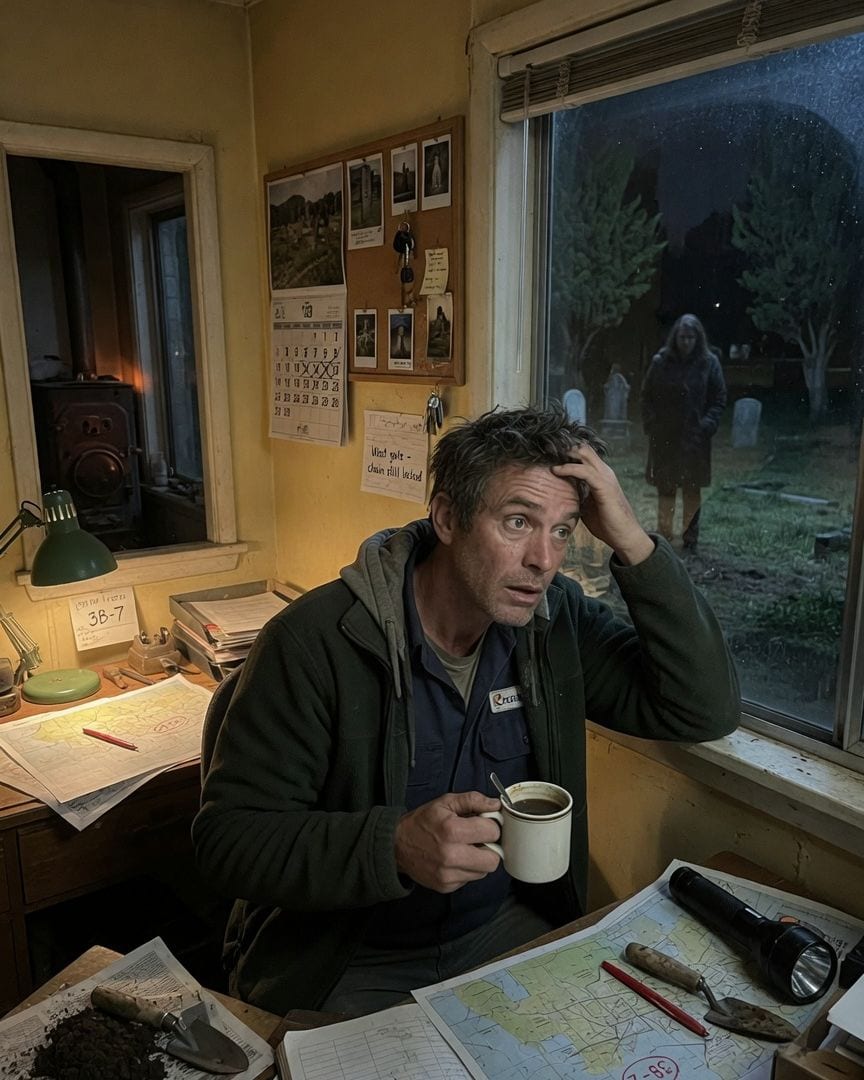
My cemetery lodge overlooks a woman visiting an empty grave near 3 AM most nights. The west gate she uses has been chained shut since autumn, its lock untouched.
As the cemetery's night caretaker, I'm used to the quiet hum of the lodge. But for three weeks, a woman has appeared nightly at plot 3B-7, a silent mourner in the deep night. What chills me is how she leaves: walking straight through the west gate that's been chained and padlocked shut for eight months.
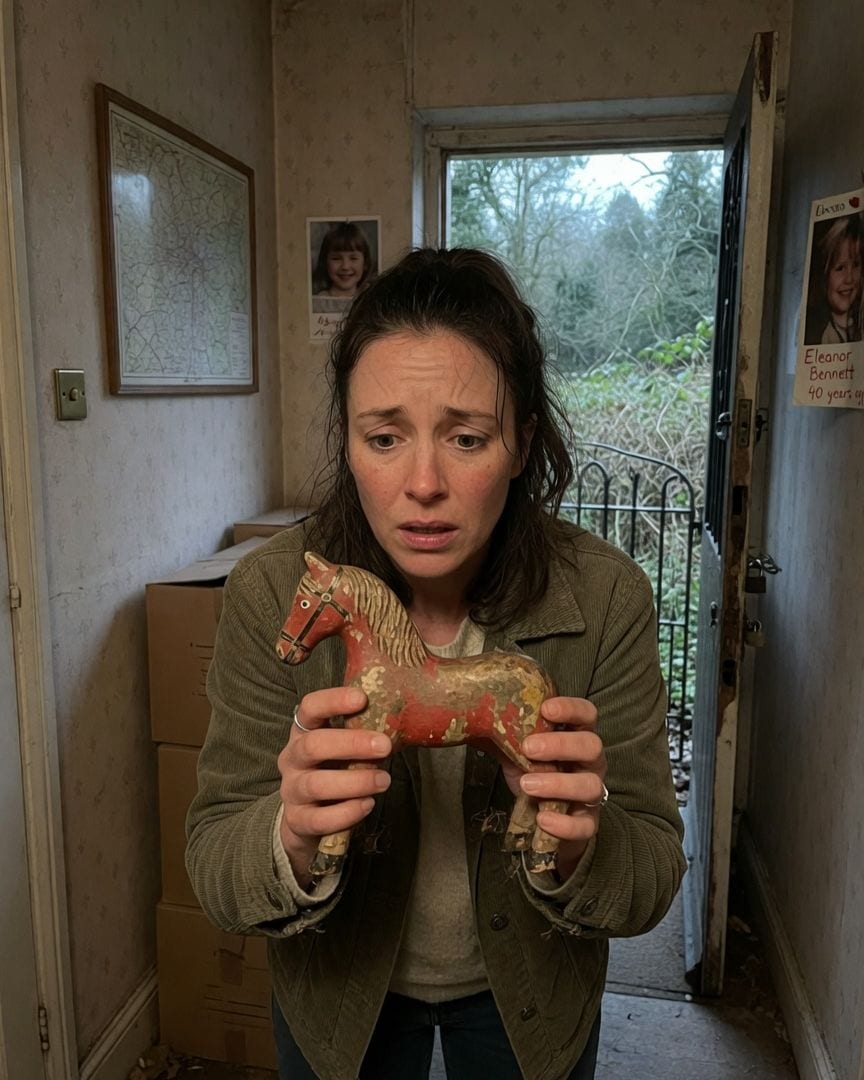
My black gate stands open, the padlock hanging closed but the hasp unscrewed clean out of wood untouched for years. The parish keeps that gate shut. It's the rule.
I'd settled into my new village, accepting the old farmer's gruff rule about the black wrought-iron gate that guarded the ancient woods. But last Sunday, I found that heavy gate wide open, a gaping maw in the orderly lane. The padlock still dangled from its frame, securely locked, but the metal hasp was unscrewed clean out of the gatepost.
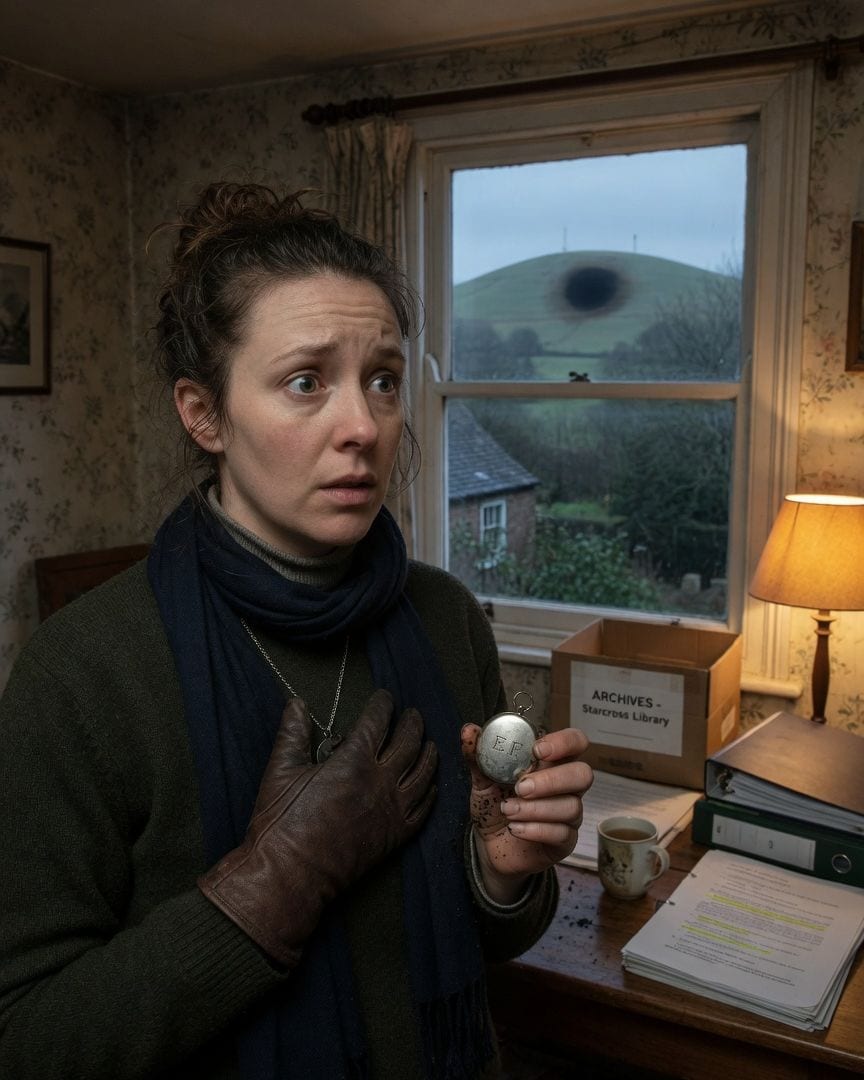
The hill behind Starcross village is scorched black every seven years. No fire brigade ever logs a call.
After moving to Starcross, I became fixated on Beacon Hill's peculiar, perfectly black scorch mark, which had no explanation in local fire records. While exploring the strange, glassy earth of the burn site, I unearthed a small, tarnished silver locket. It was later identified as belonging to Eileen Fairfax, a child who vanished decades ago and was officially presumed drowned in the local lake.
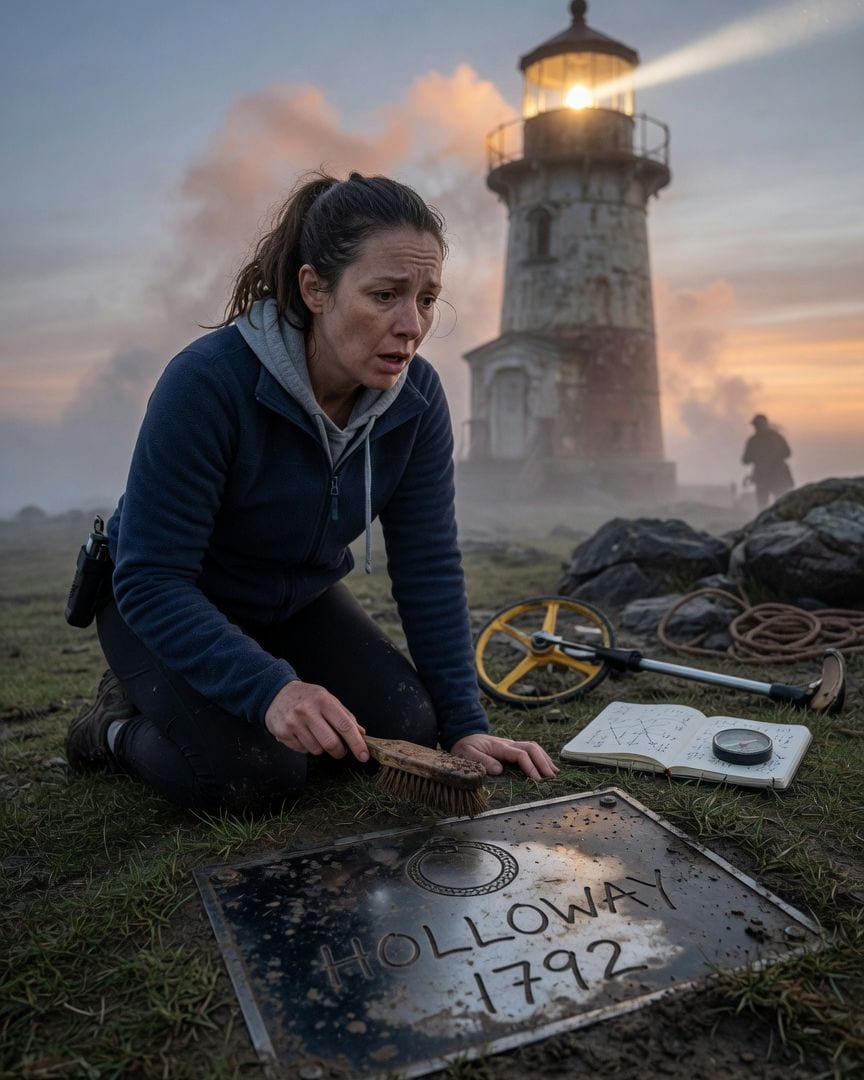
My coastal path just kept curving me back to the lighthouse. Nine miles walked, the same fisherman coiling rope, but I never left.
My morning ritual is a brisk walk along the coastal path. But last Tuesday, after what felt like an hour, I found myself back at the lighthouse, having walked miles to nowhere. My step-counter read 4.5 miles, yet the same fisherman was still coiling the same rope right where I started.
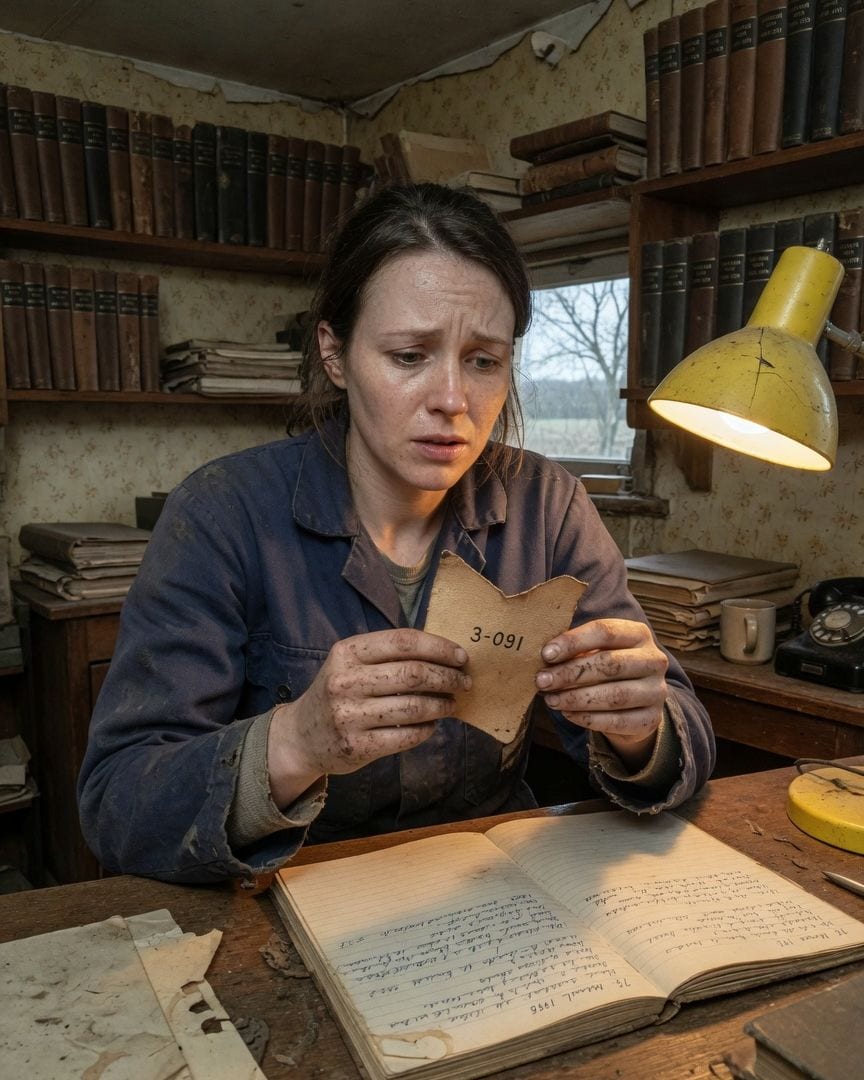
My cattle's ear-tag 3-091 returned this spring, retired by the ministry in 1974. Our old books show 3-091 reappearing every seven years since 1946.
This spring, I found ear tag 3-091 on a new calf. That number was officially retired decades ago, before I was born. My grandfather's old records showed the same tag 'lost' every seven years, with a chilling note: 'the tag returns of itself'.
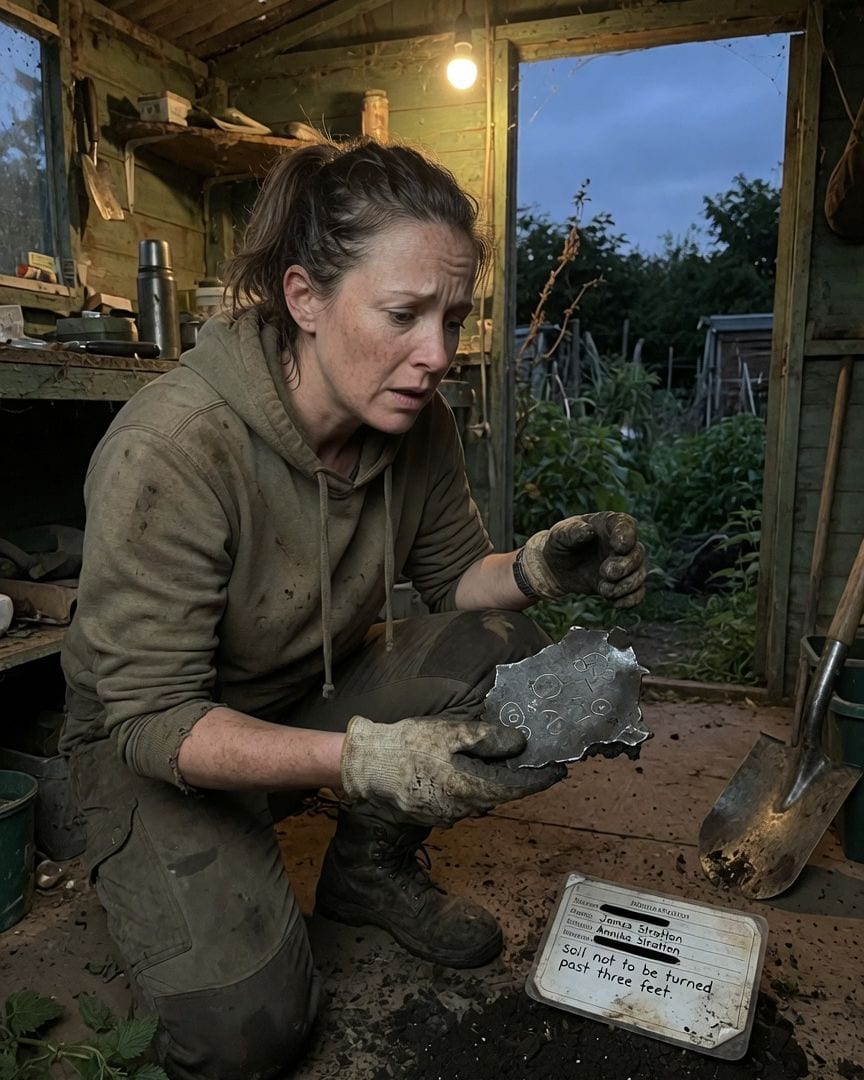
My spade struck something impossibly cold and metallic, pulsing with a slow, steady heartbeat, exactly where the old warning ended.
I took over a neglected allotment, Plot 23, and found a strange, handwritten rule on its tenancy card: 'Soil not to be turned past three feet.' I rationalized it as an old drainage issue, but when my spade hit something impossibly hard, a slow, steady heartbeat pulsed from the ground.