Our churchyard closed in 1974. But the sexton's book shows new graves every month, paid by families whose names are on stones from the 1930s.
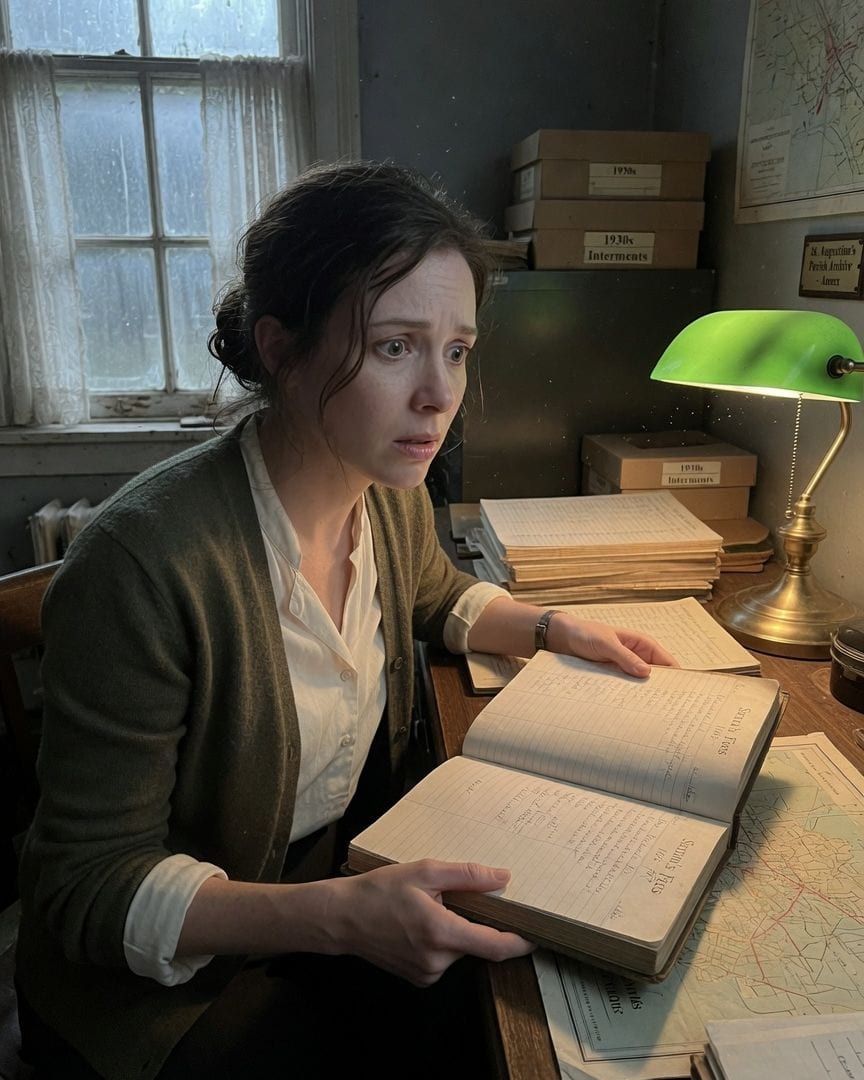
The application to Oakhaven had been a godsend. A quiet town, miles from anything resembling a city, with a meticulous archive needing a fresh pair of hands. That was me, Frances Sterling, thirty and looking for a slower rhythm.
The town itself was a postcard, all clapboard houses and ancient trees, culminating in the stone bulk of St. Augustine’s church. Its churchyard, a sprawling green quilt of history, drew me in immediately.
During my orientation, Edmund Bishop, the sexton, a man whose quiet courtesy felt as old as the church itself, led me through the neat rows of gravestones.
"Closed to new burials since 1974, Miss Sterling," he informed me, his voice soft, "A town ordinance. No more room, you see."
Every local I’d spoken to, from the postman who dropped off my keys to the woman at the grocery store, had echoed that same year, 1974, with an almost practiced ease, a shared truth that felt deeply ingrained.
My new office, tucked away in a quiet annex of the church, was a treasure trove. Dust motes danced in the afternoon light, illuminating stacks of forgotten ledgers and brittle parish records.
I settled in, cataloging, when I found the sexton’s fee book. It was a stout ledger, its cover worn smooth by years of handling. My finger traced down a page, then paused. The dates were current. Last month.
Two months ago. Each entry noted a payment for a 'new burial plot' in the 'unmarked corner' of the churchyard. But the names beside them… Theresa Romano. I’d walked past her stone that morning. Died 1931. John Whitfield, 1928.
Sarah Pennington, 1935. The book, clearly dated and official, recorded a grave dug and paid for every few weeks since 1974, always by someone who, by all accounts, should have been long dead.
It had to be a descendant, I reasoned. Someone with the same name, perhaps honoring an ancestor. A simple, if slightly odd, clerical entry. I pulled up old town censuses, then newspaper obituaries, cross-referencing. Theresa Romano, born 1905, died 1931.
The records were sparse, but clear: no recorded children, no living relatives by that name in Oakhaven.
Yet, there it was in the fee book, stark and undeniable: ‘Theresa Romano, c/o Oakhaven Parish’ – paying for a plot just last month.
Intrigued, and now undeniably unnerved, I began systematically cross-referencing other names in the fee book’s recent entries. Half a dozen more, all matching gravestones from the 1920s and 30s.
Every single one had no living descendants in town according to any record I could find. The pattern wasn't just coincidence; it was too consistent, too specific.
I confronted Edmund Bishop, showing him the offending pages. He took the book, his gaze scanning the entries. He smiled, a little too smoothly, a practiced blandness. "Ah, that. Just a tradition, dear.
Families keep up the plots, even after they're gone. A way of honoring the ancestors." His explanation felt rehearsed, a platitude designed to deflect. A chill snaked up my spine.
The entries clearly stated 'new burial plot,' not 'plot maintenance' or 'upkeep.' The ordinary explanation failed, leaving a cold, specific dread in its wake. It wasn't just a tradition. Something was happening. I decided to see the 'unmarked corner' myself.
The 'unmarked corner' was exactly that: wild and overgrown, a contrast to the manicured rows of older stones. It was a tangle of brambles and tall grass, distinct from the neat, closed sections of the churchyard I’d explored earlier.
I pushed through, my skin snagging on thorns, consulting a rough map I’d found tucked into the sexton's desk. The air here was colder, somehow stiller, as if it held its breath.
I found the coordinates from the fee book entries, near a particularly gnarled, ancient oak. The ground here should have been undisturbed since 1974, compacted and settled.
Instead, a rectangular patch of earth, darker and looser than the surrounding soil, lay exposed. It was freshly turned. And stuck into its center, simple and stark, was a rough-hewn wooden marker, unengraved, but unmistakably new.
The wooden marker was a punch to the gut. This wasn't quaint tradition or an ancestral homage. This was active, deliberate deception.
I returned to Edmund Bishop’s office, the mud still clinging to my shoes, and described the freshly turned earth, the raw wood. His smooth smile faltered, just for a fraction of a second, before snapping back into place. "Oh, that.
Must be one of the older families, tidying up a memorial. The wood, you see, it's temporary. They'll put a proper stone in eventually."
He sounded less convincing this time, his eyes darting away from mine, his hands fussing with a stack of papers on his desk.
The room itself seemed to hold its breath around his words, the usual gentle hum of the old church falling silent.
Still searching for an honest answer, I then sought out Susan Whitfield, 52, the head of the Oakhaven History Society. Susan was a precise woman with kind eyes, her office smelling of old paper and lavender.
She listened patiently to my findings about the fee book and the new marker, her expression unreadable. "Our town has many quaint customs, dear," Susan said, her voice gentle but firm, almost a practiced cadence.
"Some things are just… part of Oakhaven. Best not to disturb them." It was the same evasiveness, the same quiet steering away. The town, it seemed, was united in its silence.
I spent the next several days in the dusty archives, driven by a growing, cold certainty.
I cross-referenced the recurring names from the fee book – Romano, Pennington, Whitfield – not just with gravestones, but with older parish records, local newspaper archives, and property deeds.
I discovered that these names didn't just appear on headstones from the 1930s. They were consistently present in records stretching back to the late 1800s, often associated with land transactions around the churchyard.
It wasn't just a few names; it was a lineage, a pattern of specific families tied to this corner of the graveyard, recurring across generations, defying all logic and common sense.
My polite questions had not gone unnoticed. I felt a subtle shift in the town's atmosphere.
Edmund Bishop started appearing at the archive more frequently, ostensibly to drop off new records, but his gaze lingered on me, a quiet, knowing glint in his eyes that made my skin prickle.
I started feeling observed during my lunch breaks in the town square, the easygoing rhythm of Oakhaven now laced with something watchful.
One afternoon, while walking past the general store, an elderly man, Gideon Pennington, 84, who often sat on a bench outside, caught my eye. He was known for his quiet demeanor, rarely speaking to outsiders.
As I passed, he leaned forward slightly, his voice a low rasp that seemed to scuttle along the pavement. "Some roots run deep here, Miss Sterling. Deeper than the stones.
Best not to tread where they're buried, if you value what the town keeps." He didn't elaborate, just watched me with an unnerving calm that chilled me more than any open threat.
Later that week, I found a small, hand-written note tucked into a book I was researching – a history of Oakhaven’s early settlers. It was addressed to me, simply stating: 'The town keeps its secrets for a reason.
Do not break the peace.' There was no signature, but the neat, slightly old-fashioned script reminded me faintly of Susan Whitfield's hand. The danger was no longer just historical; it was personal, and immediate.
I confronted Susan Whitfield directly, not with questions, but with the cold, hard pattern I’d uncovered: the recurring names, the new grave, the note. I laid it all out on her desk, the photocopied ledger entries, the printed census records.
"This isn't just tradition, Susan," I stated, my voice tight. "The churchyard is closed. Those graves are new. And the names belong to people dead for decades. Someone is actively maintaining this deception."
Susan's composure, usually so unwavering, finally cracked. Her kind eyes filled with a deep, weary sadness, not anger, as she looked around the empty history society office, as if checking for unseen listeners within the very walls.
"It's not deception, Frances. It's… a duty. A balance." She spoke in hushed tones, leaning closer, her voice barely a whisper. "The 'burials' aren't for bodies. Not exactly. They are… an appeasement. To keep the peace.
The ground here… it breathes. It takes. And in return, we give."
I pushed, my heart hammering against my ribs. "Give what? And why those names?"
Susan sighed, a long, ragged sound, her shoulders slumping. "The names… they are the lineages. The founding families, those first touched by it. The Romano family, the Whitfields, the Penningtons. We uphold the pact. We are the stewards.
If the tributes cease, if the balance is broken… the ground demands more. It claims." She explained that the 'unmarked corner' wasn't just a section of the churchyard, but a specific, ancient point where the entity's presence was strongest.
She spoke of 'the ledger,' a true record of the pact, kept separate from common parish books, its existence a secret from outsiders. "It details the claims," Susan whispered, her face pale, her gaze distant.
"What happens when the balance is not kept. It's why we all agree, Frances. Why we must."
Following Susan’s fearful, cryptic hints, I searched the hidden alcoves of the church vestry.
Behind a loose stone in the wall, tucked deep inside a small, damp recess, I found it: an iron-bound wooden box, about the size of a shoebox.
Inside was a very old, leather-bound ledger, distinct from the fee book, its pages brittle and yellowed with age. The script was archaic, spidery, but legible.
This wasn't a record of burials, but a chilling account of 'The Claims' and 'The Appeasements.'
Page after page, I saw dates, names, and terse, chilling notes: 'Harvest of the Sterling farm, 1888,' 'The sickness in the Bishop household, 1912,' 'Child taken from the Pennington woods, 1947.'
Each entry aligned with a period where the 'tributes' in the sexton's fee book, which I'd examined, were sparse or absent. The ledger detailed that when the 'payments' faltered, something beneath the town took a living soul.
My blood ran cold as I flipped to the final pages. The last completed entry was a name I recognized from a local newspaper article about a recent, unexplained disappearance: 'Felix Romano, age 7, claimed, 2023.'
It was dated just weeks before I arrived in Oakhaven.
And directly beneath it, a new line, stark and chillingly blank, save for a single, stark entry: 'Frances Sterling - [my arrival date].'
Clutching the ancient ledger, my heart a frantic drum against my ribs, I confronted Gideon Pennington. He sat on his porch, in the same rocking chair, calm and unbothered, as if expecting me.
The afternoon sunlight was strangely muted, caught in the thick, still air. "So, you found it," he rasped, his eyes holding centuries of weary knowledge, not a flicker of surprise or anger.
He confirmed everything Susan had hinted at, and more. "The town," Gideon explained, his voice low and gravelly, "sits atop a hungry thing. Not evil, not righteous. Just… hungry. It stirs when the balance shifts, when the tributes stop."
He recounted the history, passed down through generations of families like his own: the original pact, forged centuries ago after a devastating 'claiming' that nearly wiped out the fledgling settlement. The 'burials' are symbolic, yes, but vital.
They are a recognition, an offering of names, a promise that the town remembers its debt.
The 'unmarked corner' is not just a burial site, he elaborated, but the very mouth of the entity, where its presence is strongest, where the pact is renewed.
He explained that the ledger meticulously tracked the successes and failures of the pact, outlining the specific cyclical nature of the claims.
The blank line with my name and arrival date wasn't a threat, he clarified, but a grim premonition: I was an outsider, unburdened by the pact, and my investigation had already disturbed the delicate balance.
I was, effectively, the next 'claim' if the town's stewards failed to reset the tribute. Every planted clue—the churchyard's 1974 closing, the sexton's fee book, the recurring names on those gravestones, the 'Town That Agrees'—now snapped into horrifying, coherent focus.
The dread was absolute: it all made a terrible kind of sense.
My mind reeled, but I needed to see it. Something tangible, something beyond ledgers and hushed words. Gideon, with a profound, almost resigned weariness, rose and led me back to the churchyard's unmarked corner.
The air there felt thick, heavy, pressing down on my chest. He knelt at the freshly turned earth, the same patch where I'd found the wooden marker.
With a small, rusted trowel, he carefully scraped away the topsoil, revealing not a coffin, but a small, ancient, iron-bound casket, no larger than a shoebox, buried shallowly.
It wasn't new; the metal was pitted with age, etched with strange, pre-Christian symbols that I recognized from the oldest pages of Gideon’s ledger.
He pried open the lid. Inside, nestled on a bed of dried, crumbling herbs, was a single, impossibly preserved, shrunken human heart. It was dark, leathery, and utterly real.
A faint, almost imperceptible pulse seemed to throb within the casket's depths, a deep, slow beat that vibrated in the soles of my feet.
Gideon pointed to a symbol carved into the casket's inner lid – a spiral with a single broken line – explaining it signified 'First Claim, 1700s.' This was it.
The artifact, the physical heart of the pact, the focal point for the entity's hunger.
The wooden marker, he explained, was a temporary 'reset,' a desperate measure after Felix Romano’s claiming, a placeholder tribute until the true ritual could be performed. The ordinary explanation died completely, replaced by a cold, ancient truth.
I stared at the impossible artifact, the living proof of Oakhaven’s horror, the chilling reality of a pact upheld for centuries.
I left Oakhaven a week later, my archivist position quietly resigned. The town remained outwardly unchanged. Edmund Bishop continued his duties, his smile as smooth and evasive as ever.
Susan Whitfield still presided over the history society, her eyes holding a familiar, quiet dread, like a deep pool reflecting an unseen sky.
A new archivist, a young man named Patrick Sutton, arrived a month later, eager for the peace of small-town life.
The unmarked corner of the churchyard, after my departure, saw a new, meticulously orchestrated 'burial' recorded in the sexton's fee book, attributed to a long-dead family name. The wooden marker was gone, replaced by undisturbed earth.
Months later, I live hundreds of miles away, trying to rebuild a normal life. I avoid small towns, especially those with old churchyards.
But sometimes, late at night, I find myself scrolling through local news feeds for obscure communities, a compulsion I can’t shake.
I see a brief report from a distant, isolated hamlet, detailing a cluster of unexplained disappearances, a 'strange, quiet pattern' that echoes in the quiet corners of my mind.
I glance at a small, framed photograph on my desk – a picture I took on my last day in Oakhaven, a wide shot of the churchyard.
In the far, overgrown corner, barely visible in the digital grain, is a faint, dark smudge on the ground, almost like a shadow, right where the impossible casket lay. I know what it means.
The pattern always finds a place to bloom.
If this one got to you
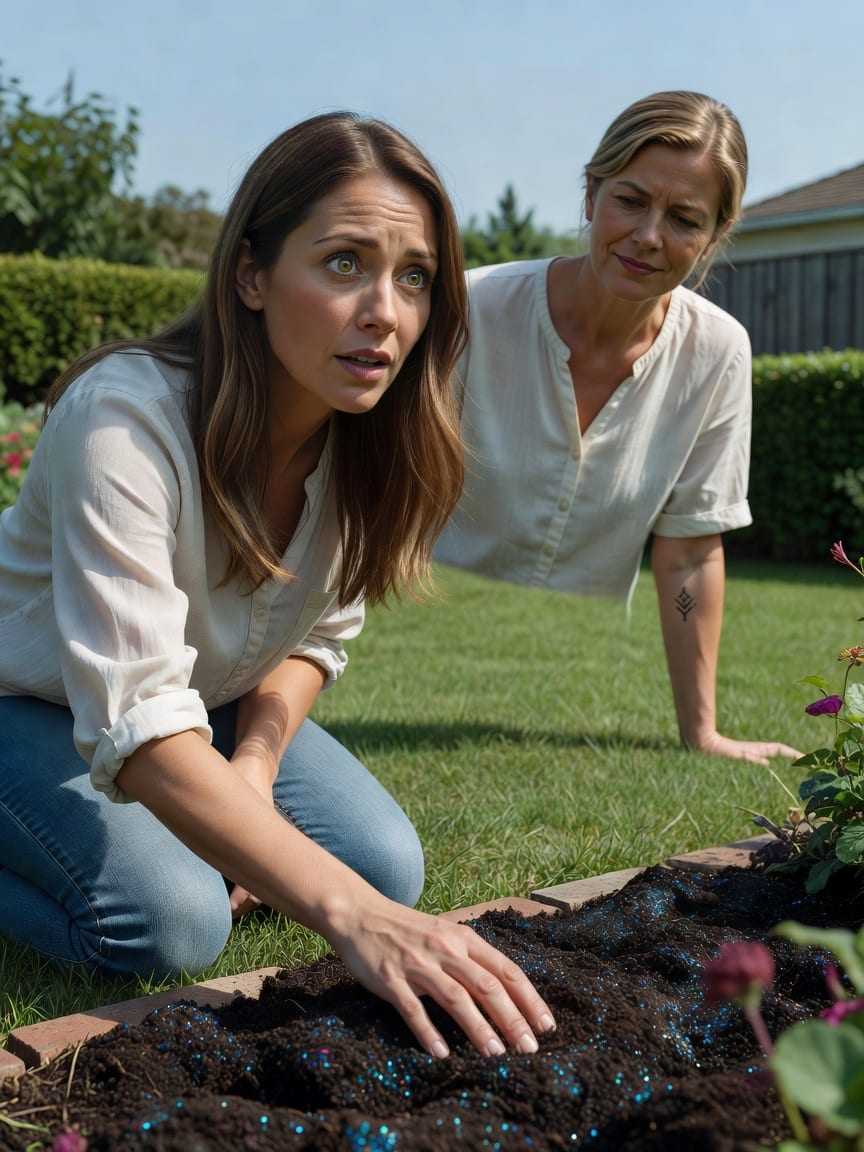
My family's grave 44 on the council map is marked "reused" from 1908. The sexton's old ledger confirms: "no new stone, no notice to kin." We never arranged it.
I always thought Grave 44 was solid ground, our family plot for generations. But a council map showed a sexton's note: 'grave 44 — reused under the standing arrangement, no new stone, no notice to kin.' Now, I've found an archive record for Plot 44, buried in 1905 under a completely different name.
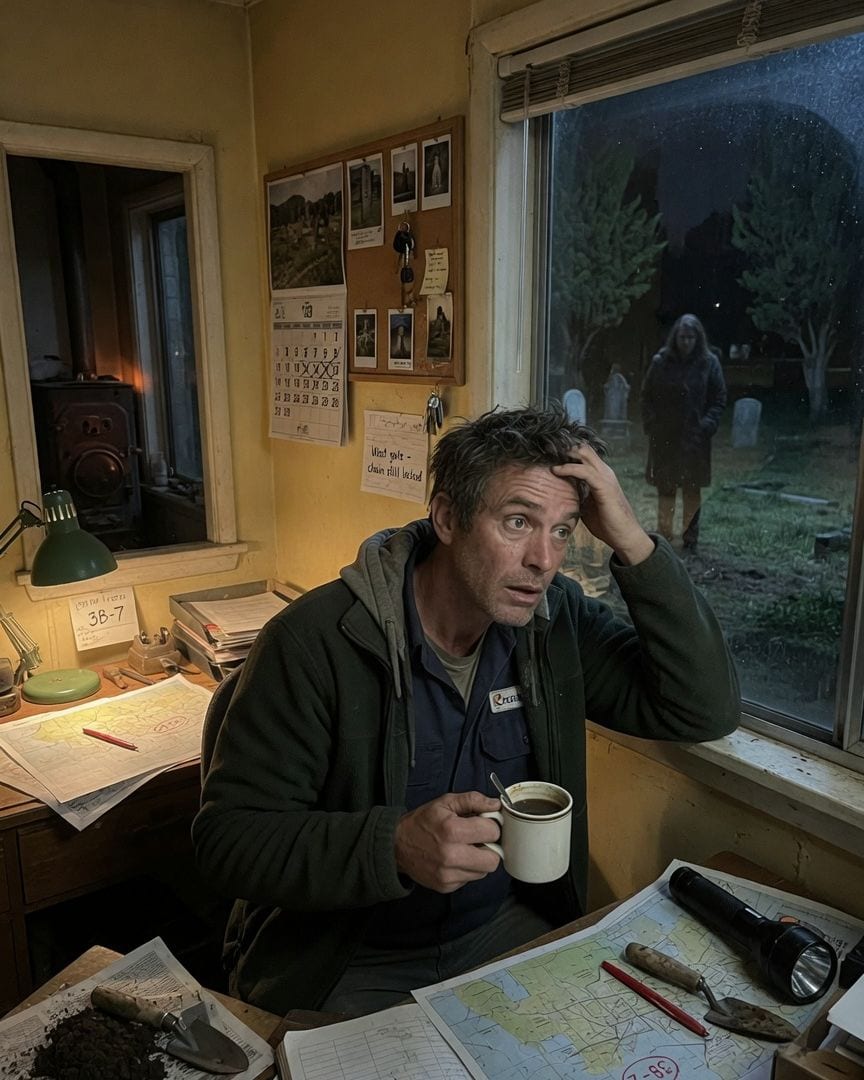
My cemetery lodge overlooks a woman visiting an empty grave near 3 AM most nights. The west gate she uses has been chained shut since autumn, its lock untouched.
As the cemetery's night caretaker, I'm used to the quiet hum of the lodge. But for three weeks, a woman has appeared nightly at plot 3B-7, a silent mourner in the deep night. What chills me is how she leaves: walking straight through the west gate that's been chained and padlocked shut for eight months.
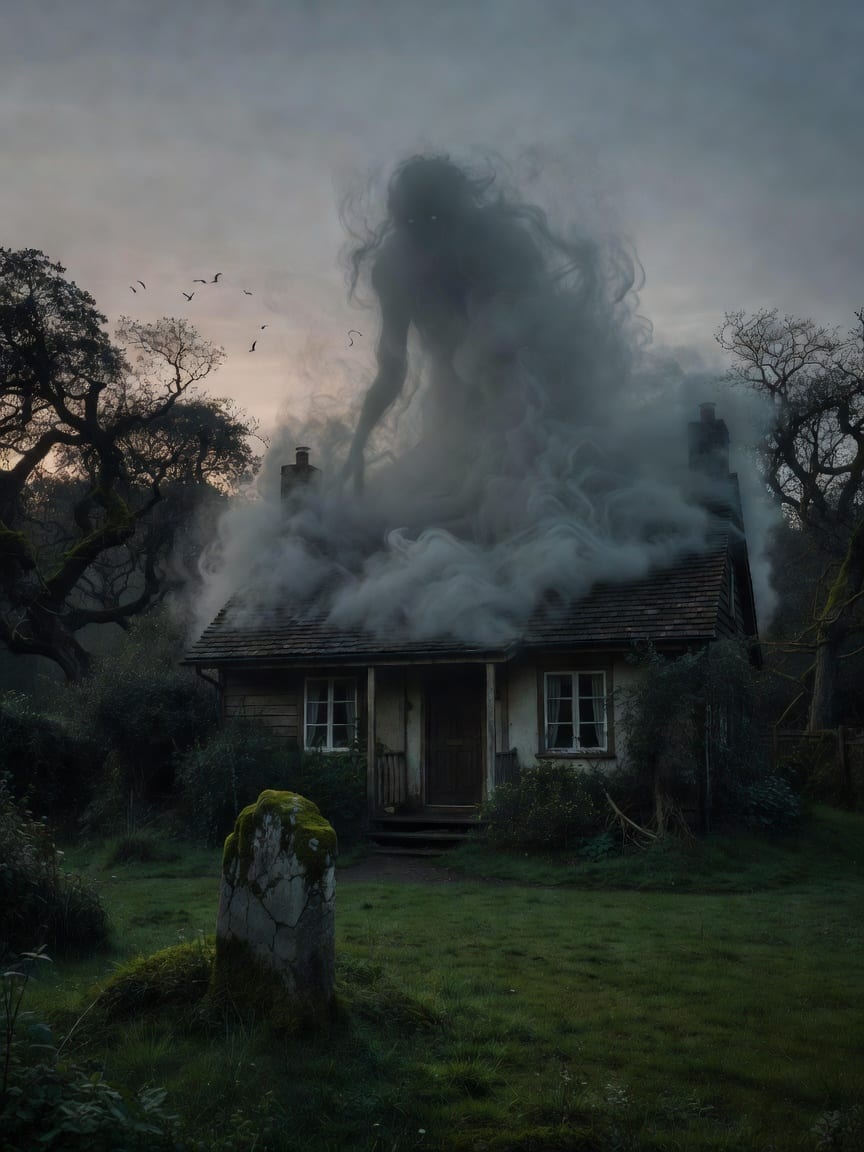
My cottage is now outside the parish, says the vicar. I moved one boundary stone into my ditch, and now I'm outside the line.
I loved my new cottage, with its sprawling garden and ancient oak. But after I moved an old, mossy stone at the edge of my property, Vicar Vance arrived with grave news: my cottage was now outside the parish line, and he could no longer keep me 'on the right side.'
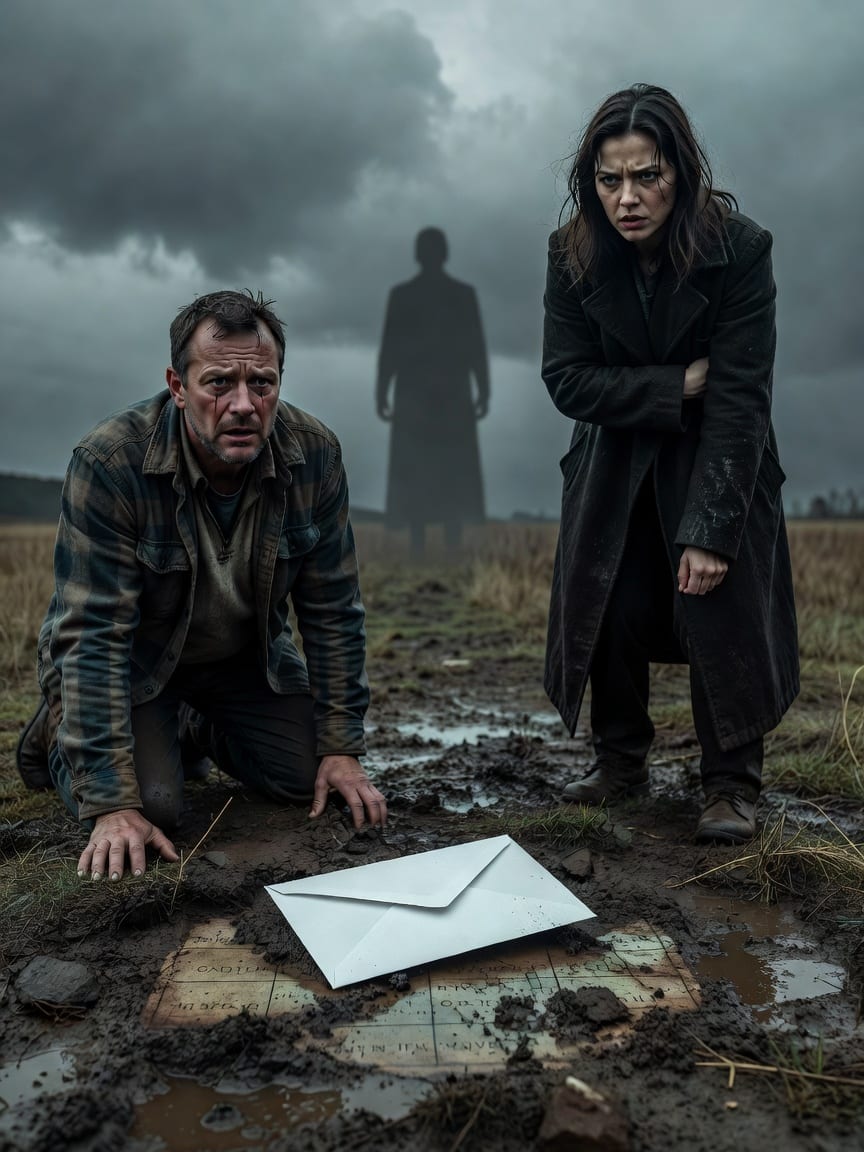
My mail carrier delivers polling cards to Nine Acre Field. It floods, they say. The tithe map shows nine family plots there.
As the new county archivist, I was used to quiet days poring over dusty records. But then I found an empty field, Nine Acre, was receiving current-year polling cards and utility notices for nine distinct addresses. When I investigated, I unearthed a perfectly crisp, current-year tax bill, buried in its soil, surprisingly warm against my fingers.
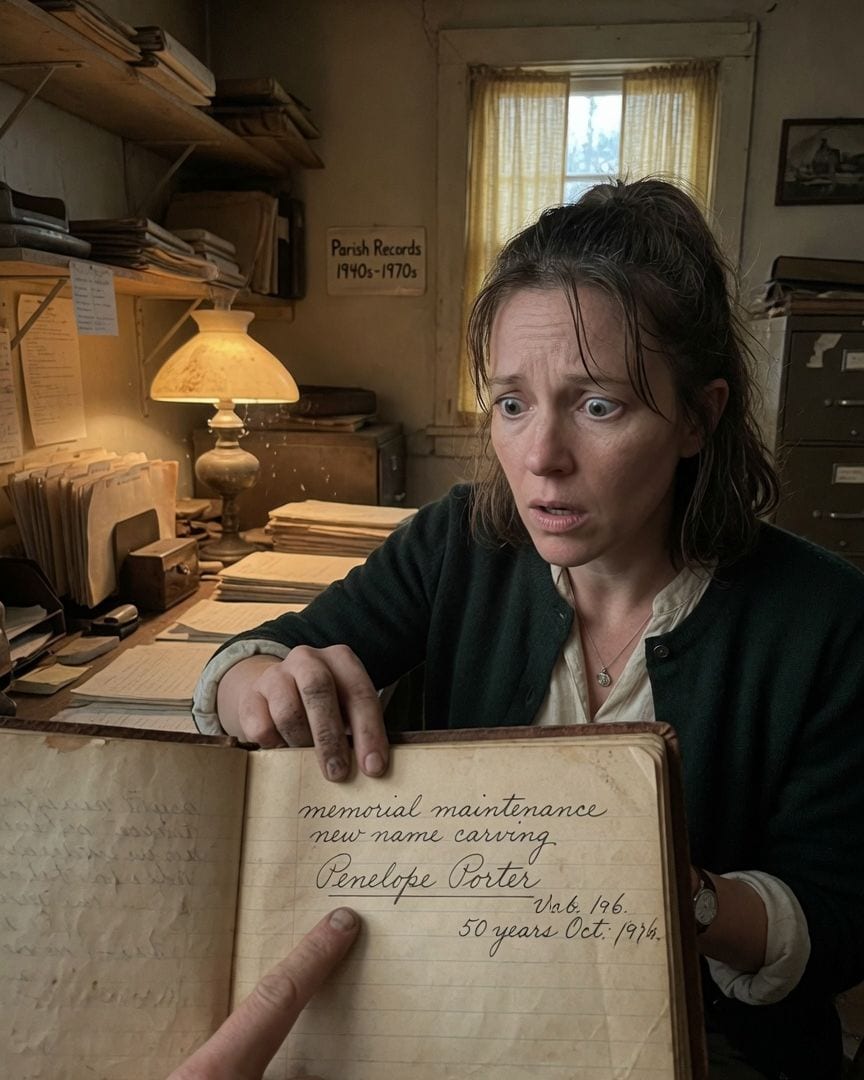
My name is carved on the war memorial with this coming Tuesday's date. The cut is fresh, but the stone inside matches fifty years of age, and a ledger says it was carved exactly fifty years ago.
On a sunny autumn Tuesday, my oldest friend, Gary, urgently called me to the village war memorial. There, carved beneath the names of the fallen, was 'PENELOPE PORTER' with a date from this coming autumn. The fresh carving of my name, dated for a Tuesday yet to arrive, felt like a cold jolt, an impossible message from the stone itself.
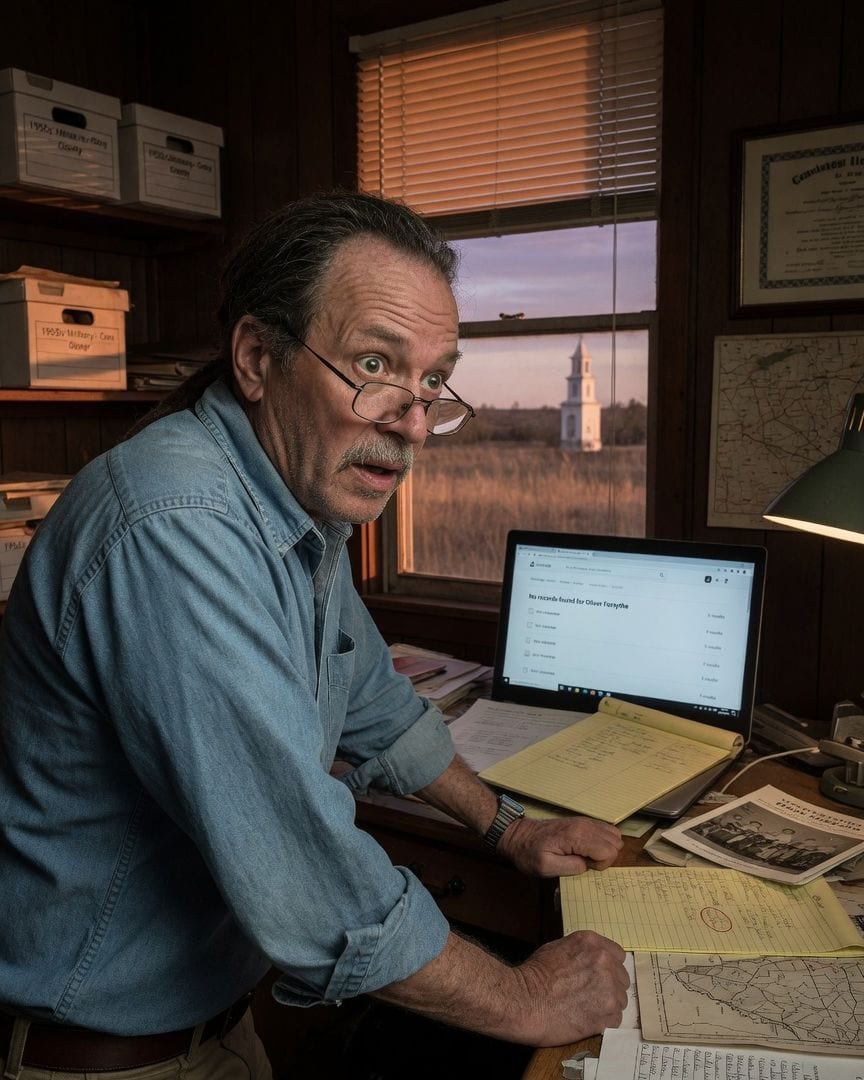
On his final project, a historian found forty-one Cold War headstones, all with names but no death dates.
Approaching retirement, lineage historian Owen Sarkis took on one final project: solving the mystery of the 250th Chemical Company, a unit that vanished after a single 1955 parade. His search led him down Carolina backroads to a lonely, weathered chapel, behind which lay forty-one identical gray headstones in neat rows. Each stone bore a name, but chillingly, not one had a date of death, a silence louder than any inscription. Then, on one stone, he found a small, industrial metal plate bearing a cryptic code and a symbol he recognized from a declassified document on 'unconventional materials handling.' The true nature of these 'graves' began to curdle in his mind, suggesting something far colder than death itself.