My family's grave 44 on the council map is marked "reused" from 1908. The sexton's old ledger confirms: "no new stone, no notice to kin." We never arranged it.
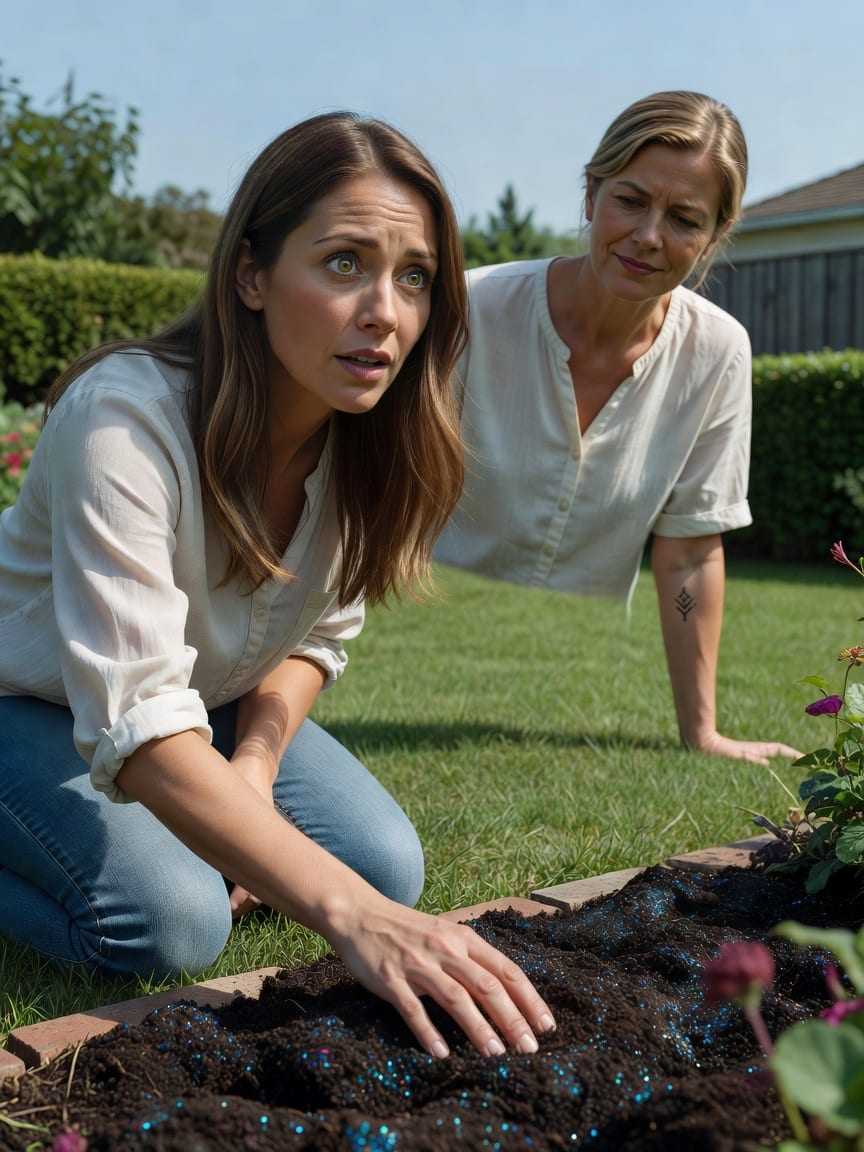
I smoothed the council's burial-ground map across my kitchen table, tracing the grid lines with my finger. It was a simple request, really.
Just a family plot query for Grave 44, a patch of earth my family had owned for as long as anyone could remember. My great-grandmother was there, my uncle. Solid ground.
But there, on the map, was a faint, almost invisible line of redacting fluid stretching back from Grave 44 to 1908.
Beneath it, in tiny, elegant script, was a sexton’s ledger note, copied verbatim: ‘grave 44 — reused under the standing arrangement, no new stone, no notice to kin.’
My family had held Grave 44 for generations. We had the deed, passed down. No one alive, or in any memory, had ever arranged for it to be 'reused.' And what the hell was a 'standing arrangement'?
The phrase felt deliberate, menacing, completely out of place for a bureaucratic record. The map felt cold beneath my fingers, the smooth paper suddenly alien. It wasn't just a mistake. It was too specific, too… final.
The next morning, the cemetery felt different. The crisp autumn air bit at my cheeks, but the quiet of the place, usually a comfort, now felt heavy.
Grave 44 was as I remembered: an old, weathered stone, a quiet patch of grass. No sign of recent disturbance, certainly no new stone. I walked the perimeter, scanned the adjacent plots. Nothing.
I found the groundskeeper, a stoic man named Thomas, raking leaves near the old chapel. He pulled the rake through a rustling pile, the sound unnaturally loud in the silence.
When I asked about the plot, specifically Grave 44, he paused, leaning on his rake, his gaze distant.
'Ah, 44,' he said, his voice flat. 'Old Gordon Yates, the sexton before me, he was always… particular about that one.'
He offered no more, just a shrug, and went back to his raking, as if I hadn't asked anything at all.
Back home, the contradiction gnawed at me. I tried to rationalize it, to force it into the neat box of a clerical error, a misfiled note in some dusty council archive. It had to be.
But the specific language, 'standing arrangement,' felt too deliberate, too formal for a simple mistake. It implied something authorized, something agreed upon, but by whom? And for whom?
I decided to check the local history archives, convinced I'd find some administrative quirk, some forgotten regulation that would explain the whole damn thing.
Vincent Russo, the archivist, was helpful, if a little overwhelmed by the mountains of brittle paper and endless microfiche reels. He pulled up dusty parish registers, the original records that predated the modern council.
I scrolled through microfiche, my eyes blurring from the endless names and dates, then, in a brittle, leather-bound book from 1905, I found it: a clear entry for 'Plot 44,' with a name that was definitely not a Sinclair, and a burial date from the early 1900s.
I stared at the two open books, laid side-by-side on the archive table, the fluorescent lights humming above. My family's deed for Grave 44, dated 1934, bright and clear.
And the faded parish register from 1905, which clearly listed 'Plot 44' with a completely different name and burial date, decades before my family officially acquired it.
Next to the 1905 entry, a small, looping hand had penned the words: 'Reused under standing arrangement. No notice to kin.' The same number, different people, different centuries. It was impossible.
The impossibility burned in my gut. Shaken but methodical, I returned to the archives the next day, and the day after that.
I spent days there, fueled by stale coffee and a growing sense of dread, searching every ledger, every map, every register I could find for 'Grave 44' or 'Plot 44.'
I found it again and again: 1905, 1928, 1947, 1961, 1983. Each entry for the same number, but a different name, a different date, and always, a variation of that chilling note about 'standing arrangement' or 'reallocation.'
This wasn't an error. It was a system, meticulously documented, almost proud in its bureaucratic precision. I realized the 'Number Reissued' wasn't a mistake; it was the method. The dread deepened from a prickle to a cold, heavy weight.
I requested a full set of historical cemetery maps from the council, specifically asking for any documents related to 'standing arrangements.'
Pamela Kingsley, from the council's records department, was polite but unnervingly unhelpful. Her smile was practiced, her tone perfectly modulated. She cited 'incomplete historical data' and 'archival limitations' with an ease that felt rehearsed.
Her placid demeanor did nothing to soothe my growing unease. She seemed almost… untroubled by my questions, like a librarian handling a misplaced book.
My digging was clearly noticed. I started by attempting to contact Gordon Yates, the retired sexton, but his number was unlisted, his address elusive. I left messages with a few local historical societies, hoping someone could connect us.
They never called back.
Then, the car. A dark, unmarked sedan. It first appeared on my street, idling directly across from my house, for over an hour. I dismissed it as coincidence, a lost driver checking their phone.
But the knot in my stomach tightened. The next day, it was there again, parked further down the street, almost hidden by the trees. I told myself it was nothing. I tried to believe it.
Finally, a week later, Gordon Yates called me back. His voice was a raspy whisper, barely audible over the phone line. 'You're Abigail Sinclair, aren't you? Heard you've been asking about the old plots.'
'Yes,' I said, my voice tight. 'Grave 44. And the 'standing arrangement'—'
The frailty vanished. His voice hardened, a quiet steel that cut through the static. 'Some things are best left buried, dear,' he said, his words slow and deliberate, each one heavy. 'Some things are just... managed.' The line clicked dead.
He hadn't hung up; it was like the connection had simply ceased to exist.
I looked out my window. The dark sedan was still there, parked almost directly opposite my driveway now. The driver's silhouette was unmoving, a dark shape against the tinted glass.
A cold dread seeped into my bones, a certainty that made my hands tremble. They knew.
I decided a direct approach was needed. I couldn't keep digging in the dark with a phantom car watching my house.
I marched into the council offices, photocopies of the 'Grave 44' entries clutched in my hand, and confronted Pamela Kingsley. I laid out the stack of documents on her pristine, uncluttered desk.
Pamela’s smile didn’t waver, not a flicker. She looked at the papers, then back at me, her gaze unblinking. 'Historical records can be complex, Miss Sinclair,' she began, her tone perfectly even, as if we were discussing the weather.
'The 'standing arrangement' refers to an old, parish-level protocol for managing plots where families had no remaining kin or claims. It was a practical solution for land use, common in the past, especially after the two wars.'
She spoke with the practiced smoothness of someone reciting a well-worn script, every word enunciated perfectly.
'Practical?' I demanded, my voice sharper than I intended. 'With 'no new stone, no notice to kin'? That sounds less like land management and more like… erasure. Like something being deliberately hidden.'
Pamela’s eyes, calm and unblinking, met mine. 'It was a different time, Miss Sinclair. Resources were finite. The council, and before it, the parish, had a responsibility to ensure efficient use of all public assets, including burial grounds.'
She picked up one of the photocopies, examined it briefly, then set it back down. The gesture was dismissive.
But as Pamela turned to dismiss me, reaching for a file on her own desk, I noticed it. Just above the cuff of her blouse, on her inner wrist, was a small, almost imperceptible symbol tattooed into her skin.
It was a stylized, intertwined loop, faded but distinct, like an old brand. And in that instant, my breath caught in my throat.
It was identical to a faint, forgotten symbol I’d seen earlier, barely visible in the margin of the 1905 parish register’s 'Plot 44' entry, right beneath the 'Reused' note. I must have missed it the first dozen times I looked.
It was there, quiet and subtle, waiting.
I returned to the archive, deeply unnerved by Pamela’s placid explanation and the unsettling symbol.
My mind raced, connecting the dots: the persistent car, Gordon Yates’s coded warning, Pamela’s unnervingly calm demeanor, and now that symbol, linking her to the ancient, impossible records. I wasn't looking for graves anymore.
I searched for the symbol, for any mention of 'standing arrangement' outside of burial plots, outside of cemeteries.
Vincent Russo, the archivist, saw the frantic edge in my movements. He pointed me to an obscure box tucked away on a high shelf, labeled 'Pre-Amalgamation Parish Council Minutes, 1900-1930.'
Dust motes danced in the light as I pulled it down. Inside, I flipped through brittle, yellowed pages, my heart pounding a frantic rhythm against my ribs.
A resolution from 1923 caught my eye, signed by several prominent local names I recognized from local history books. It mentioned 'Plot Reallocation' and, chillingly, 'resource management protocols for designated sites.' My breath hitched.
Below it, typed in a neat, archaic font, was a list of addresses. My eyes flew down the column, scanning, searching, praying. And there it was. My own street address: 14 Elmwood Lane. Cleared printed.
Next to it, tiny but unmistakable, was the identical symbol I saw on Pamela’s wrist, the same one from the old register. The wrongness wasn't just in the ground; it was under my own feet.
My hands trembled violently as I found the accompanying memo, dated 1924, tucked into the same box as the minutes. It was less formal, almost an internal directive.
It detailed 'sub-surface resource collection' and 'periodic harvest cycles' for these 'designated sites.'
The memo didn't specify what was being harvested, but the context, the chilling emphasis on 'organic matter' and 'sustained yield,' implied something living, something sustained by the very soil beneath the properties.
It used terms like 'fertility management' and 'nutrient replenishment.'
The 'standing arrangement' wasn't about land conservation or forgotten kin. It was a horrifying protocol for sustained extraction, with the 'reallocated' plots serving as a convenient cover.
The 'no new stone, no notice to kin' wasn't oversight; it ensured the continuity of the 'resource' without drawing attention.
Every clue clicked into place with sickening precision: the repeated grave number, the calm bureaucracy, the subtle symbol on Pamela's wrist, on the old register, on the list of my own street.
The terror wasn't a monster in the dark; it was the meticulous, generations-long management of this horror by ordinary, unbothered people. It was all documented, all filed, all understood by them.
The sheer, chilling coherence of it was worse than any grotesque beast.
I knew, with a certainty that settled in my bones like ice, that I couldn't stay. My house, my home, the place I slept and ate and lived, was a designated site.
I grabbed my phone, fingers fumbling, and started taking photos of the most damning documents: the 1923 resolution, the 1924 memo, the list of 'designated sites' that included 14 Elmwood Lane.
I sent them to a distant cousin who lived three states away, with a terse, hurried message: 'If anything happens, these are important. Check them. Believe me.'
I knew no one would believe me without the physical proof, and even with it, the truth was too bizarre, too mundane in its horror.
As I packed a small bag – just essentials, my passport, some cash, anything I could carry – I glanced out the window. The dark, unmarked sedan was parked directly across the street, closer now than it had ever been.
A figure sat inside, utterly still, watching my house. They knew. They had been watching for days. They knew I had found it all.
There was no time for goodbyes, no time to grieve what I was leaving behind. No time to explain to anyone.
I slipped out the back door, heart hammering against my ribs like a trapped bird, clutching the bag with the printed documents inside.
I walked, fast, away from Elmwood Lane, away from the town I had called home, away from the meticulously managed horror beneath its surface.
The proof was heavy in my hands, but I knew, with a hollow certainty, that no one would ever truly believe me.
Abigail never returned to her house on Elmwood Lane. She sent the documents to multiple investigative journalists and local authorities, but her emails went unanswered, her calls unreturned.
The council issued a terse, boilerplate statement about 'historical anomalies in record-keeping and privacy concerns.' Her house was eventually listed for sale, then quietly taken off the market.
It was as if her entire ordeal had been neatly filed away, just like the records she had unearthed.
A year later, a new family moved into 14 Elmwood Lane. The garden was meticulously replanted, vibrant and green, everything growing with unnatural speed.
The new mother, chatting with a neighbor over the fence, remarked on how wonderfully fertile the soil was, how quickly everything thrived. The neighbor just smiled, a faint, almost imperceptible symbol tattooed on her inner wrist.
If this one got to you
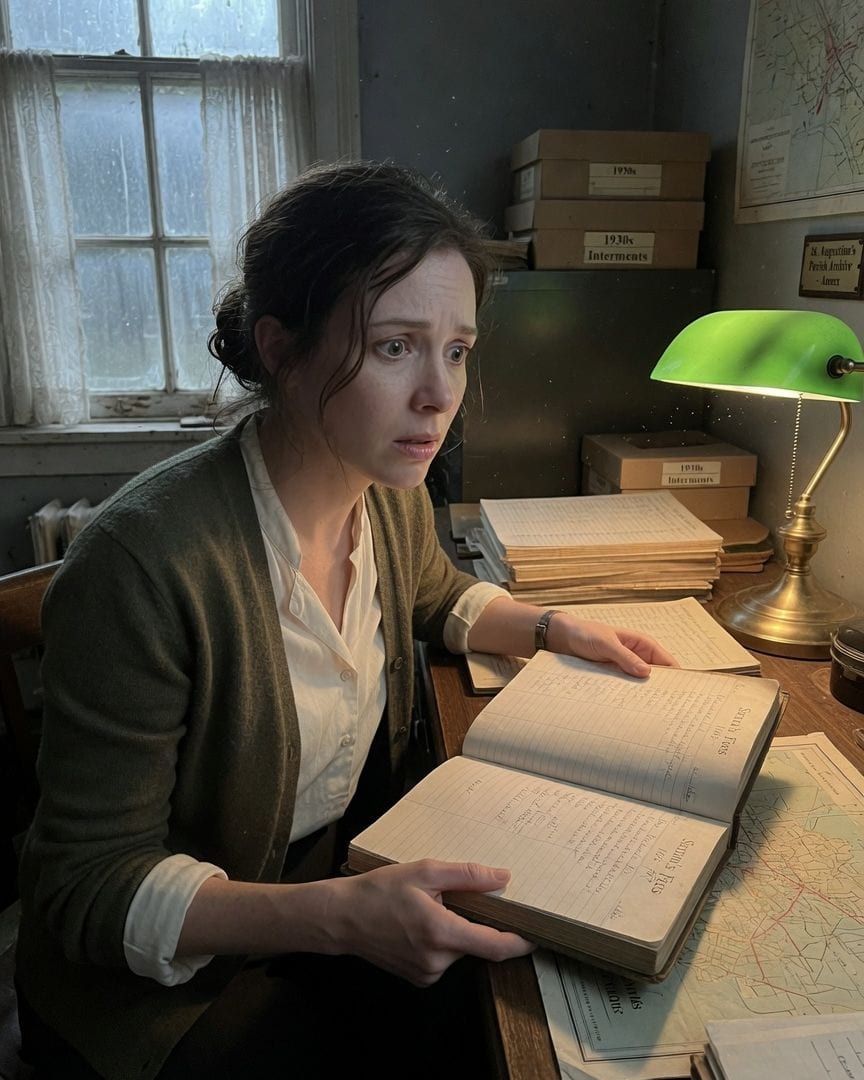
Our churchyard closed in 1974. But the sexton's book shows new graves every month, paid by families whose names are on stones from the 1930s.
As Oakhaven's new archivist, I expected a quiet life of dusty ledgers and ancient records. But a current entry in the sexton's fee book listed a "new burial plot" paid last month for Theresa Romano, who died in 1931. The town ordinance closed the churchyard to new burials in 1974.
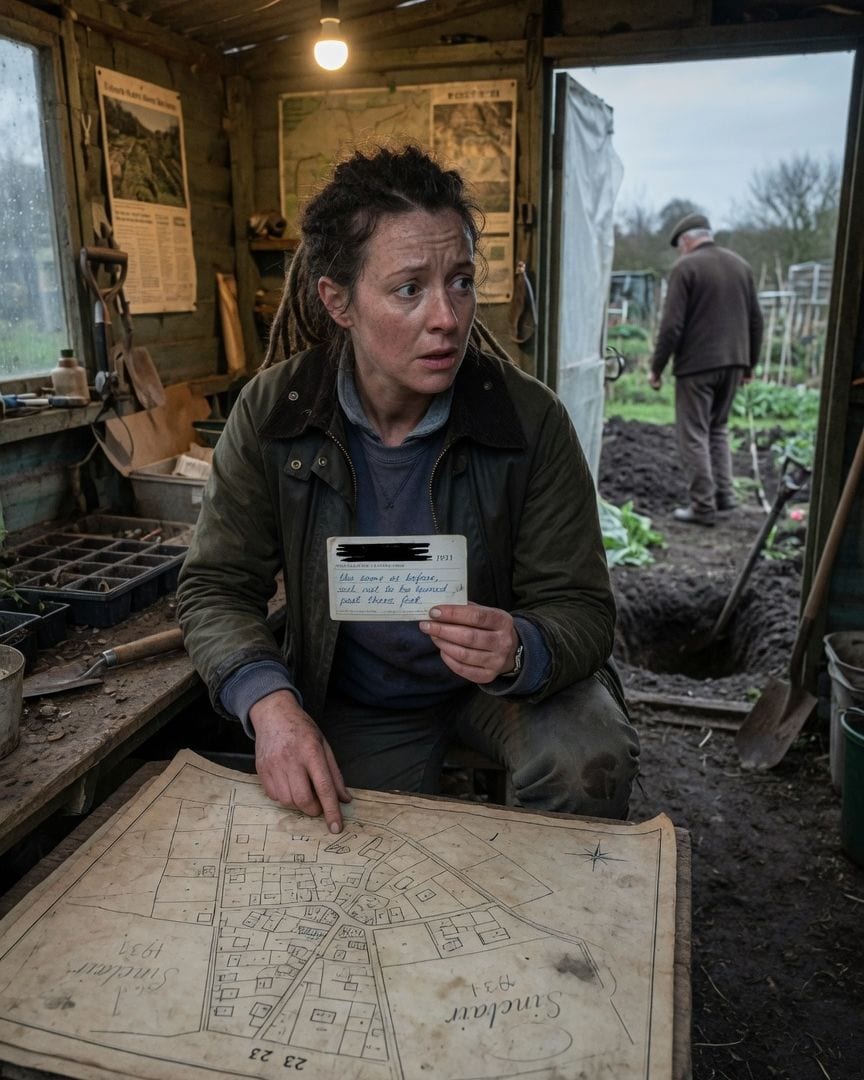
My allotment plot’s tenancy card has a redacted name from 1931. Under it, someone wrote 'the same as before, soil not to be turned past three feet,' and my dead grandfather signed it too.
My new allotment Plot 23 felt unnaturally still, the soil unusually dense and cool. The tenancy card warned 'soil not to be turned past three feet,' but my spade hit something hard and unyielding at that depth: a compacted, petrified layer that felt deliberately laid, a barrier.
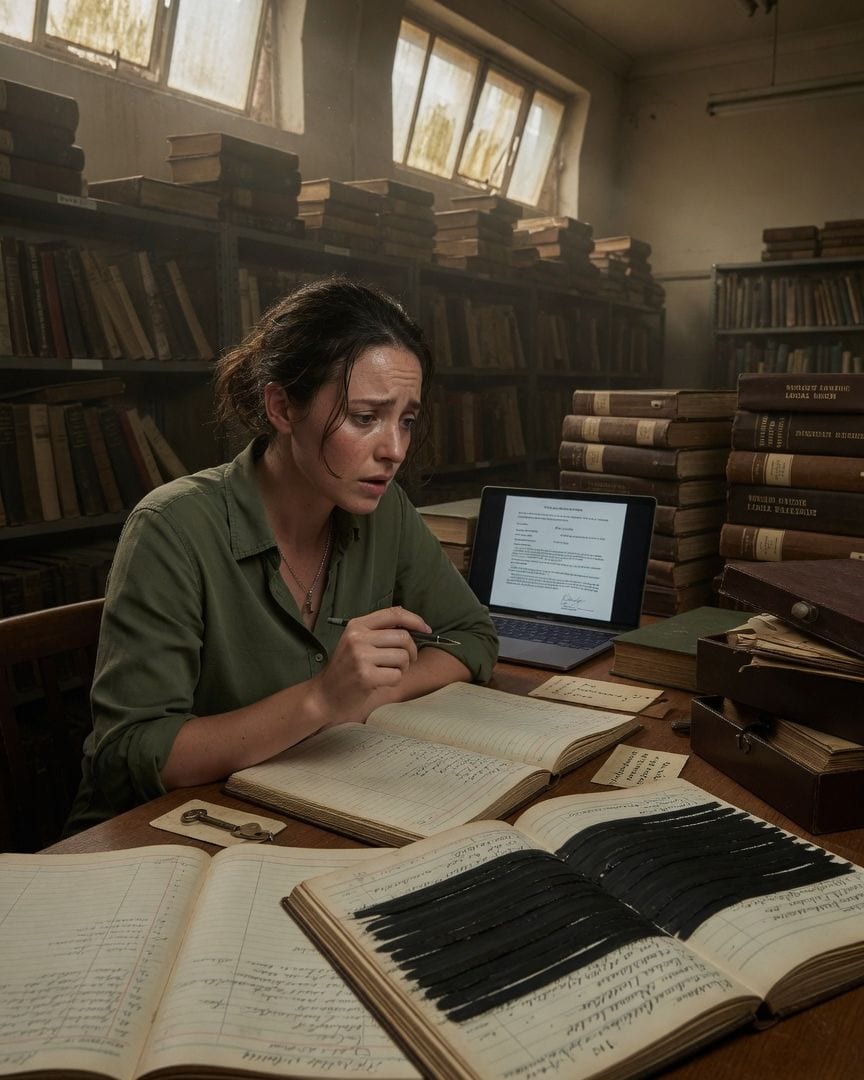
My grandmother’s name is on a blacked-out line from a 1954 drowning inquest, on our street, with a note: 'do not send a second notice.'
Transcribing old inquest registers in the quiet archive was a routine task, until I found a 1954 entry for an accidental drowning. The next of kin line was savagely blacked out, but the faint impression underneath named Patricia Kingsley, my grandmother. Her address was listed on Weir Lane, eleven years before she ever lived there, alongside a chilling note: 'do not send the notice a second time.'
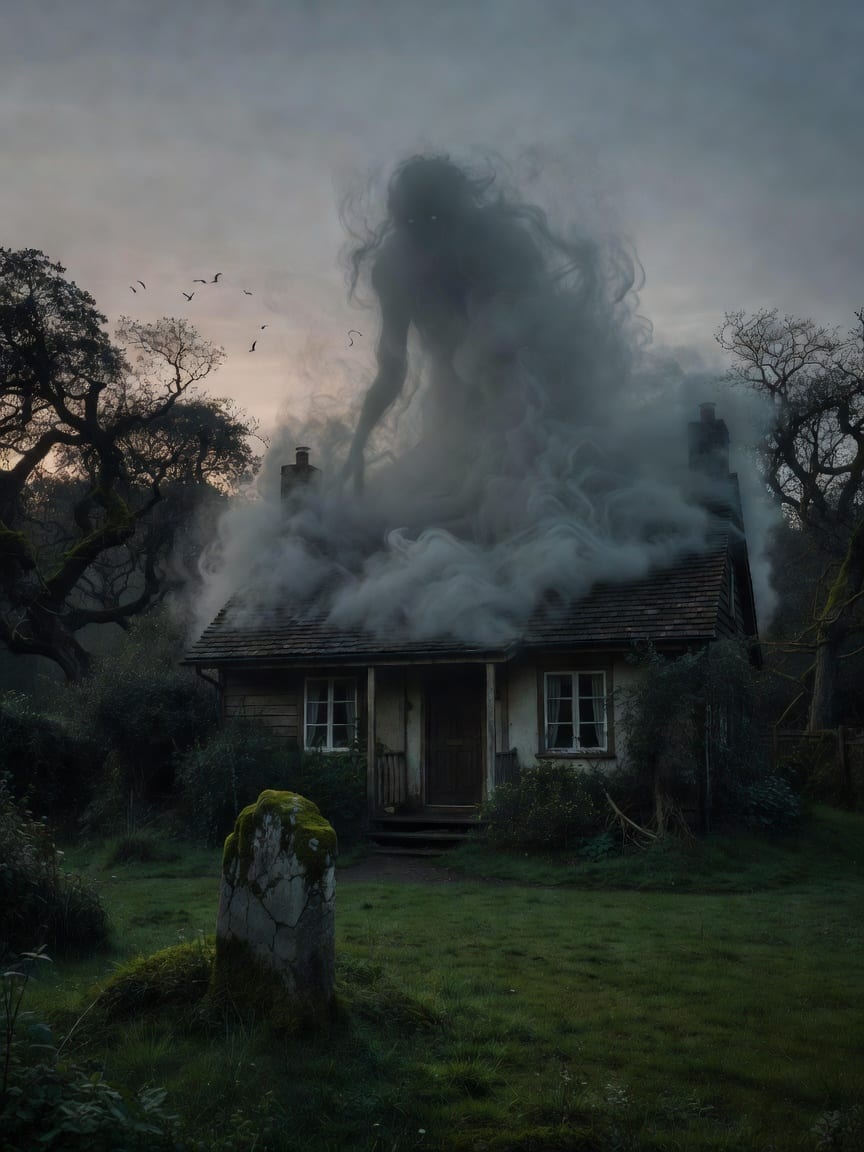
My cottage is now outside the parish, says the vicar. I moved one boundary stone into my ditch, and now I'm outside the line.
I loved my new cottage, with its sprawling garden and ancient oak. But after I moved an old, mossy stone at the edge of my property, Vicar Vance arrived with grave news: my cottage was now outside the parish line, and he could no longer keep me 'on the right side.'
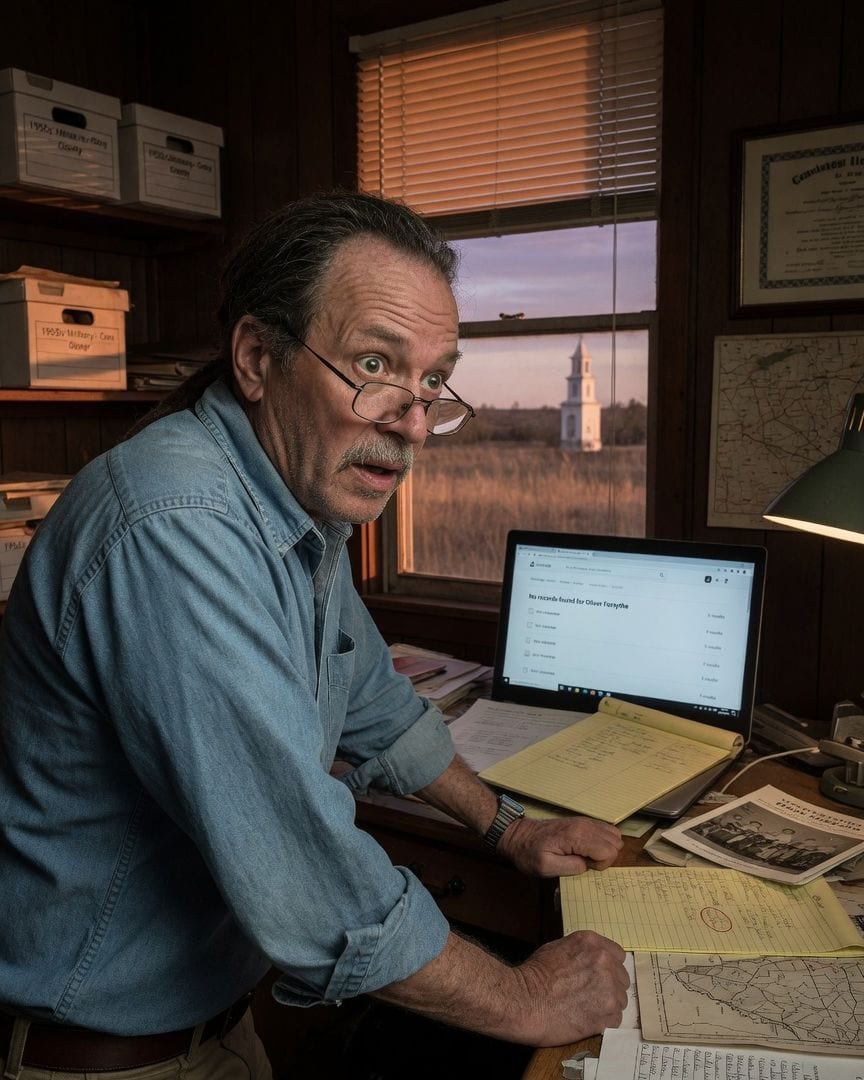
On his final project, a historian found forty-one Cold War headstones, all with names but no death dates.
Approaching retirement, lineage historian Owen Sarkis took on one final project: solving the mystery of the 250th Chemical Company, a unit that vanished after a single 1955 parade. His search led him down Carolina backroads to a lonely, weathered chapel, behind which lay forty-one identical gray headstones in neat rows. Each stone bore a name, but chillingly, not one had a date of death, a silence louder than any inscription. Then, on one stone, he found a small, industrial metal plate bearing a cryptic code and a symbol he recognized from a declassified document on 'unconventional materials handling.' The true nature of these 'graves' began to curdle in his mind, suggesting something far colder than death itself.
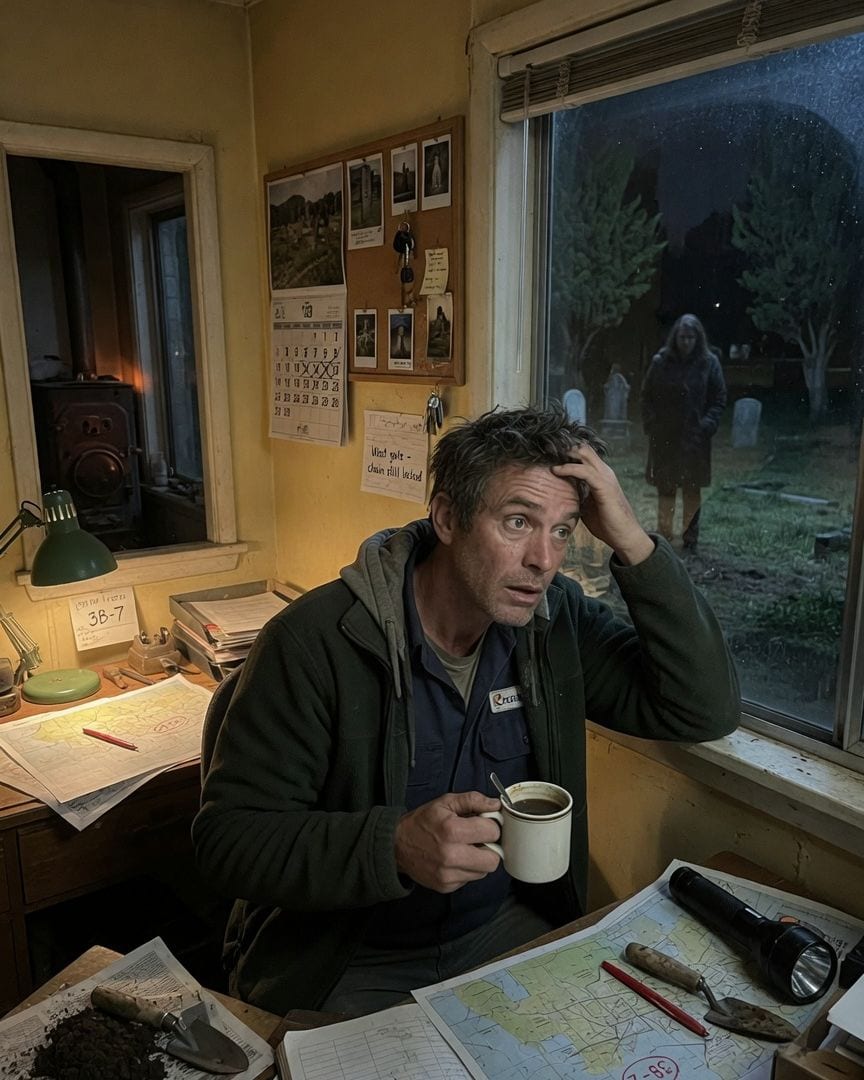
My cemetery lodge overlooks a woman visiting an empty grave near 3 AM most nights. The west gate she uses has been chained shut since autumn, its lock untouched.
As the cemetery's night caretaker, I'm used to the quiet hum of the lodge. But for three weeks, a woman has appeared nightly at plot 3B-7, a silent mourner in the deep night. What chills me is how she leaves: walking straight through the west gate that's been chained and padlocked shut for eight months.