My name was carved on the village war memorial. Below it: 'October 17th'. The fresh cut looked fifty years old.
I remember the exact afternoon. It was a mild spring day, sunlight soft and buttery over the hedgerows as I drove out to Sancreed. Kenneth, my friend and stonemason, had called me, his voice tighter than I'd ever heard it.
He’s a man who measures his words like he measures stone, so I knew something was wrong.
He met me at the village war memorial, a cut granite obelisk standing silent guard over a small, manicured green. It listed the fallen from two wars, names and dates carved deep into the grey rock.
Kenneth, fifty-five, a man whose hands were calloused testament to his trade, didn't waste time with pleasantries. He just pointed. His finger, thick and blunt, stopped at the bottom of the column dedicated to the 1945 dead.
‘See this?’ he asked, his brow a single, deep furrow.
Below the last name of a soldier I didn’t recognize, freshly incised in lettering that perfectly matched the century-old script above it, was my name. ‘Christine Rutherford’. And beneath my name, not a war year, but ‘October 17th’. A Tuesday.
This coming autumn.
I laughed, a nervous, disbelieving sound that felt utterly foreign in the quiet air. ‘Very funny, Ken. Who paid you for this? You’ve really outdone yourself with the vintage look.’
Kenneth shook his head, his gaze unwavering from the stone. ‘Nobody. The parish paid for no new carving. I checked. And look closer.’
He ran a thumb, rough from years of grit and chisel, over the fresh cut. The granite felt smooth, newly exposed. ‘The cut itself? Days old, Christine. I can tell. It’s crisp. But the stone inside the letters? It’s greyed.
Exactly matches the patina of the rest of the memorial. That takes fifty years, Christine. Minimum.’
The laughter died in my throat, replaced by a cold, sudden dread. My fingers, trembling slightly, reached out, brushing against the impossible name. My name. And a date that hadn't happened yet.
I spent the next few days in a fog of disbelief, trying to find a mundane explanation, a thread to pull me back to sanity. I called the Sancreed Parish Council. No new work had been commissioned, they confirmed.
Not for decades. I spoke to William Mercer, the parish archivist, a meticulous man of sixty-seven who had forgotten more local history than most people ever learned.
He confirmed no Rutherford had ever served in either war from Sancreed, let alone been a casualty. My family had no roots here, not that I knew of.
I even posted discreetly in local Facebook groups, phrasing it carefully. ‘Has anyone noticed any unusual activity around the war memorial recently? Asking for a friend who saw a strange new carving.’
I was trying to gauge if anyone knew of a local prankster with a stonemason's skill and a dark sense of humour. Nothing. Not a single lead, just a few sympathetic emojis.
The dread, initially a cold knot in my stomach, began to spread, seeping into my thoughts, staining everything. I considered hiring a private investigator, then dismissed it. What would I even tell them?
‘Someone carved my future death date on a war memorial’? It sounded insane, the ramblings of a paranoid woman.
I tried to convince myself Kenneth was mistaken, that some freak weather condition had aged the stone unnaturally, but the idea felt flimsy, like tissue paper.
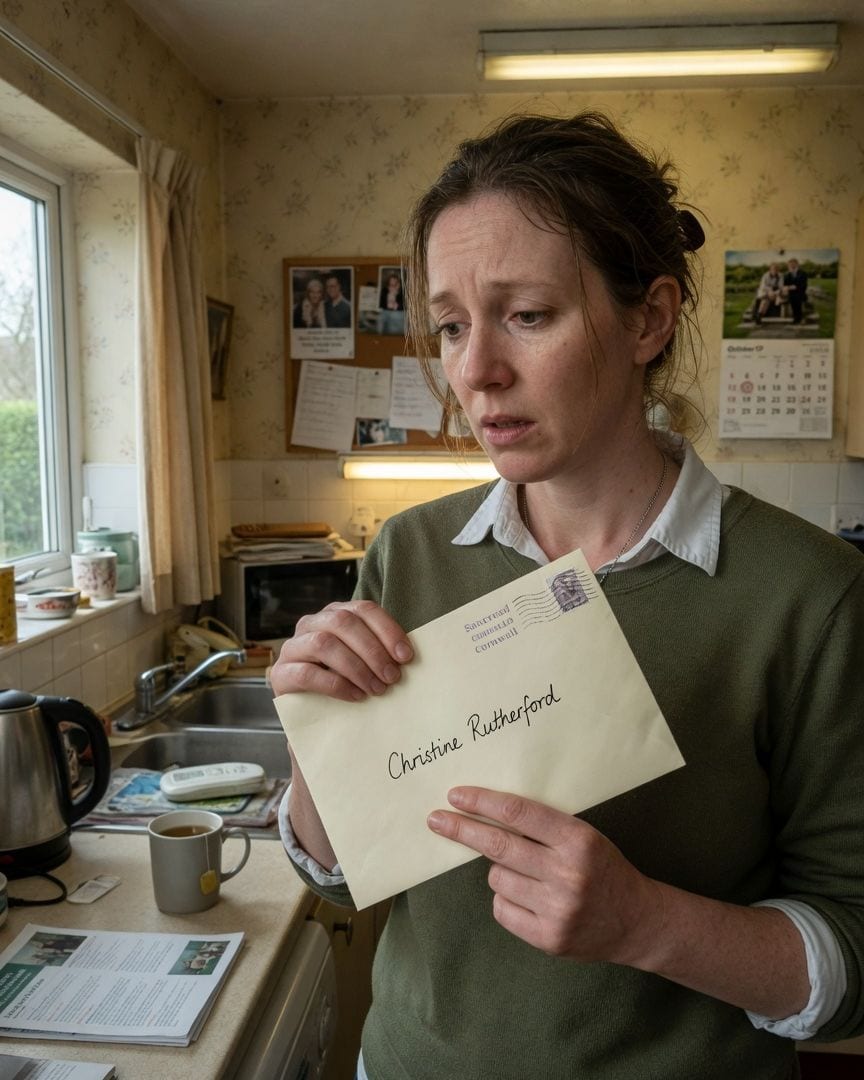
Then, a week later, it arrived. A thick, cream-coloured envelope, addressed simply to ‘Christine Rutherford’ in an elegant, looping script. It was my name, undeniably. The postmark was faded, almost illegible, but I could just make out ‘Sancreed, Cornwall’.
I knew the village well; I’d visited Kenneth there often enough. My eyes dropped to the sender's address: ‘Old Mill Lane, Sancreed’.
My blood ran cold. Old Mill Lane hadn't existed for decades. It was an empty field now, where a derelict mill had once stood before its demolition in the 1970s.
I had seen the overgrown foundations myself, just last year, an innocuous pile of stones on a dog walk. Who would post a letter from a place that wasn't there?
I stood in my kitchen, the impossible letter from a non-existent address clutched in my hand. My heart hammered against my ribs, a frantic drumbeat against the sudden, oppressive silence of my home.
The paper felt strangely cold, almost as if it had been kept in a tomb. The ink on the envelope’s intimate address, my name, seemed to pulse faintly with an unseen, inner light, making my breath catch in my throat.
I stared at my own name, written in a hand I didn’t recognize, yet felt eerily familiar, as if from a half-forgotten dream. The postmark, faded and impossible, mocked my rational mind.
Every instinct screamed at me not to open it, to burn it, to throw it away. But another, darker impulse, a terrible, magnetic curiosity, held me captive. My fingers trembled as I slowly, carefully, slid a nail under the flap.
The paper resisted, thick and fibrous, as if it didn’t want to yield its secret. A faint, earthy scent, like damp soil and old leaves, wafted from the opening.
The letter inside was short, written in the same elegant hand as the address: ‘The autumn awaits you, Christine. Prepare.’ No signature, no other details. Just that chilling, personal directive. I felt a wave of nausea, cold and sharp.
This wasn’t a prank. This was something else entirely.
I drove back to Sancreed, clutching the letter, the heavy cream paper feeling like a lead weight in my palm.
I stood in the empty field where Old Mill Lane once was, the wind whipping at my hair, carrying the scent of damp earth.
There was nothing but tall grass and the faint, crumbling outline of a stone foundation, half-swallowed by weeds. No postbox, no building, nothing. How could a letter be postmarked from here? It defied physics, logic.
I spent days at William Mercer’s archive, poring over old parish maps and property deeds. I found records of the mill’s demolition, confirmed the site had been vacant land since 1977. Yet, the letter was undeniably real.
I started asking elderly locals about Old Mill Lane, about anyone who lived there before it was demolished, trying to find a link, a name. Most shrugged, offered vague memories of a ruined mill, nothing concrete.
But one afternoon, I found Frances Kingsley, an eighty-three-year-old woman with sharp, knowing eyes, tending her cottage garden. She’d lived in Sancreed her whole life, they said.
When I mentioned Old Mill Lane, Frances paused, snipping a dead rose with precise, unhurried movements.
‘Ah, the Mill,’ she murmured, her voice soft but surprisingly clear. ‘Always had a way of… drawing people in. Many a name from there ended up on the memorial, you know. Not always from a war.’
I felt a jolt, sharp and unwelcome. ‘What do you mean by that, Frances?’
She just smiled faintly, a serene, unsettling expression that didn’t quite reach her ancient eyes. ‘Some things just are, dear. Best not to disturb them.’
A week later, another letter arrived, identical to the first in every chilling detail. Same cream paper, same elegant hand. This time, it was postmarked from a different, equally demolished Sancreed address, the site of a long-gone granary.
It simply said: ‘Your time approaches.’
My relentless questions about Old Mill Lane and the memorial were clearly making ripples. One evening, my phone rang. It was an unknown number, displaying only 'CALLER ID BLOCKED'.
I answered, a tremor in my hand, my heart a frantic flutter against my ribs. A voice, raspy and barely a whisper, spoke my name.
‘Christine Rutherford.’
The hairs on my arms stood on end, prickling as if a cold draft had passed through the room, though the windows were closed. ‘Who is this?’ I demanded, my voice shaking, trying to inject more authority than I felt.
The line crackled, a dry, rustling sound like dead leaves skittering across pavement. ‘You’re getting close,’ the voice hissed. The sound seemed to fill my ear, not quite human. ‘Leave it be. It won’t change anything.’
Then, with a click, the line went dead.
I frantically tried to call back, but the number was disconnected, returning a generic automated message. The encounter left me profoundly rattled. I started looking over my shoulder, convinced I was being watched.
Every car that slowed on my street, every shadow at the edge of my vision, every rustle of leaves outside my window, sent a fresh jolt of fear through me.
My home, once a sanctuary, now felt like a glass cage. I felt like prey.
The next day, as I was leaving William Mercer’s archive, the heavy oak door creaking shut behind me, I spotted Frances Kingsley. She was sitting on a bench across the street, beneath the ancient oak tree, watching me.
Frances didn’t wave, didn’t smile. Her eyes, ancient and knowing, simply followed me until I was out of sight, a quiet, unsettling presence.
That night, I found a small, smooth river stone on my doorstep, cold and damp, even though the evening had been completely dry. It wasn't from my garden. It was too perfectly rounded, too dark.
There was no message, just the stone. But I knew. It was a warning. The dread was no longer abstract; it was personal, breathing down my neck.
I confronted Frances Kingsley the very next morning, my heart pounding a frantic rhythm against my ribs. She was watering her fuchsias, her movements slow and deliberate in the soft morning light.
‘Frances,’ I began, my voice tight. ‘What do you know about these letters? About Old Mill Lane? About my name on the memorial?’
She didn’t flinch, didn’t even look up from her plants. ‘I know what I’ve always known, dear. What everyone in Sancreed knows, if they’re old enough to remember the quiet things.’
I pressed, urgency thrumming through me. ‘What quiet things? Someone carved my name on that stone, and I’m getting letters from places that don’t exist!’
Frances sighed, a thin, papery sound, finally looking up. Her eyes were deep, like pools reflecting ancient starlight. ‘It’s a calling, Christine. Always has been. The land takes what it’s owed. A cycle. Families like yours… well, sometimes they’re chosen.’
‘My family?’ I gasped, the words catching in my throat. ‘What are you talking about?’
‘The Rutherfords were millers, centuries back,’ Frances said, her gaze distant, fixed on something I couldn't see beyond her cottage garden. ‘Lived right there, on Old Mill Lane. They made a pact, long ago. A debt to the land.
And the land remembers. It collects. The memorial… it’s just a public tally. For those who are claimed.’
A cold shiver ran down my spine, an icy tendril of fear snaking around my heart. ‘A pact? A debt? This is insane! My parents never mentioned any of this!’
Frances shook her head slowly. ‘They wouldn’t. It’s a quiet knowing. It doesn’t need to be spoken, only honoured. The letters… they’re the summons. The land calls its own.’
My mind reeled. The greyed stone on the memorial, appearing decades old despite its fresh cut. The demolished addresses on the impossible letters. The intimate, knowing tone of the anonymous voice.
It all began to click into place, a horrifying mosaic forming itself in my mind. ‘Are you saying… I’m next? That this ‘October 17th’ is…?’
Frances simply looked at me, her eyes full of a deep, ancient sorrow, and nodded. ‘There’s an old ledger, Christine. In the archive. Records the names. The true tally, not just the memorial.
Those who went quietly, and those who tried to fight. Didn’t matter in the end.’
Driven by a desperate need for concrete proof, for something tangible beyond Frances’s chilling words, I returned to William Mercer’s archive. The air felt heavy, charged, the silence of the room no longer peaceful but oppressive.
I spent hours sifting through dusty parish records, my fingers stained with the grit of ages, looking for anything that might hint at ‘The Autumn Harvest’ or a ‘pact.’ William, noticing my frantic, almost obsessive search, approached my table.
‘You seem to be looking for something quite specific, Christine,’ he observed, his voice quiet. ‘There’s an unlabeled box in the back storeroom, it contains miscellaneous documents from the old mill’s estate.
Might be a long shot, but you’ve exhausted most of the obvious registers.’
I nodded, a desperate hope flickering within me. I found the box. Inside, beneath layers of faded invoices and land deeds, smelling faintly of mildew and forgotten things, I found it.
A heavy, leather-bound ledger, its pages yellowed and brittle with age, the cover utterly plain. It wasn’t a standard parish record; the script inside was more artistic, almost ceremonial, curling with an archaic flourish.
My breath hitched as I turned pages filled with meticulous entries: names, dates, and sometimes, short, cryptic notes like ‘Returned to earth’ or ‘Claimed by the deep.’
My heart pounded, a frantic, echoing drum in my chest, as I flipped to a section titled ‘The Autumn Harvest.’ A list of names. And next to each name, a specific date, always in autumn.
My vision blurred for a moment, then cleared.
I scanned the list, seeing familiar Sancreed surnames. And then, halfway down a page, as if waiting for me across the decades, was my name. ‘Christine Rutherford.’ Beside it, ‘October 17th.’ The exact autumn date from the memorial.
My hand trembled, tracing the faded, spidery letters.
And then I saw it. Above my name, at the top of the page, written in the same elegant, spidery hand, was the ledger’s own date: ‘April 1978.’
Christine stared, frozen, at the yellowed page of the ledger. Her fingers traced the faint, spidery script of her own name, ‘Christine Rutherford,’ followed by ‘October 17th’ — the exact autumn date from the memorial.
But above it, the ledger’s own date, ‘April 1978,’ mocked her, making the air in the archive suddenly thin and cold, confirming a predestination that can’t be undone.
I returned to Frances Kingsley, the heavy ledger clutched in my hands like a death warrant. My mind was numb, my thoughts chaotic. ‘This,’ I whispered, pushing the book into Frances’s view, my finger hovering over the damning date.
‘This is dated 1978. I wasn’t even born yet.’
Frances looked at the ledger, a faint, sad smile on her lips, a smile of ancient understanding. ‘It’s always been there, Christine. The ledger is the true record. The memorial is just… a public acknowledgement.
A reminder for those who might forget. The land, it remembers its claim. It has always remembered.’
‘What is it?’ I demanded, my voice cracking, tears stinging my eyes. ‘What claims people? What’s the pact?’
Frances shook her head slowly. ‘It’s not a ‘what’ as you understand it. It is the land itself. The deep earth, the ancient roots, the water that feeds it. It demands a balance. A return.
The Rutherfords, your ancestors, they made a bargain for prosperity, for the mill to thrive. And the price was paid, generation by generation. A name, every so often, to keep the balance.’
I thought of the greyed stone on the memorial, the impossibility Kenneth had pointed out. ‘And the carving? The old stone, but it was just done.’
Frances nodded. ‘The land makes its claims known. It can make a fresh cut look ancient, a new letter seem as old as the earth itself. It marks its own. The letters, the calls… they are merely the final invitation.
The tightening of the thread.’
I felt the full, terrible weight of it then. Not a monster, not a ghost, not a person. But an ancient, indifferent force woven into the very fabric of the earth beneath Sancreed.
My name wasn’t a threat; it was a receipt. My life wasn’t mine; it was merely on loan.
I tried to escape. I packed a small bag, bought a train ticket to London, intending to vanish into the anonymity of the city, to become just another face in the crowd.
But as the train pulled into the station, the doors hissing open, I felt an overwhelming, undeniable pull back towards Sancreed.
It wasn’t a compulsion, not a voice in my head, but a deep, resonant ache in my bones, a sense of belonging to the very soil I was trying to flee.
The dread was no longer fear, but a profound, weary acceptance.
I canceled my ticket, the escape attempt feeling childish and futile, like trying to outrun a tide. The date, October 17th, loomed closer with each passing day.
I spent my last days in Sancreed, walking the paths I knew, visiting the places that felt most ancient – the overgrown mill site where my ancestors had lived, the quiet churchyard where generations lay buried, the war memorial with my name shining from its grey face.
I felt no anger, no terror, only a strange, detached peace. The knowledge was the ending. I understood. I was not a victim, but a part of a cycle, a thread in a tapestry woven long before my birth.
On the morning of October 17th, I woke before dawn. The air was crisp, scented with woodsmoke and damp leaves, the sky a deep, bruised purple just before the sun. I dressed slowly, meticulously, in clean clothes.
I left my house unlocked, my phone on the kitchen counter, a small note beside it, simply reading ‘It is time.’ I walked out into the quiet village, the only sound the crunch of my shoes on the gravel path.
I walked past Frances Kingsley’s cottage, where a faint light was already on, a silent acknowledgement. I walked towards the war memorial.
The sun was just beginning to touch the horizon, painting the sky in fiery oranges and deep blues. I stood before the granite obelisk, my name, ‘Christine Rutherford,’ shining faintly in the nascent light.
I reached out, my fingers brushing the impossible letters one last time. A profound stillness settled over me, a sense of merging, of coming home.
The air around me shimmered, not with light, but with an absence, a quiet, deep breath that seemed to pull at my very essence. I closed my eyes.
Christine Rutherford was not seen in Sancreed after October 17th. Her house remained quiet, the front door slightly ajar. Her car sat untouched in the driveway. Neighbors eventually noticed her absence, then her family.
The police conducted a search, but found no sign of forced entry, no struggle, no note, beyond the one left on the kitchen counter.
Just the open ledger on her kitchen table, turned to the page with her name, and the letters from nowhere neatly stacked beside it.
The war memorial remained unchanged, her name still etched into the granite, the stone inside the letters still impossibly greyed. Life in Sancreed continued, a quiet rhythm of ancient customs and unspoken truths.
The autumn came and went, and another spring arrived, bringing with it a new cycle of growth and renewal to the land.
A year later, Kenneth Abbott, the stonemason, visited Sancreed for a job, repairing a crumbling wall near the church. He paused by the memorial, a habit he'd developed since that strange spring afternoon.
He saw a young man, a tourist by the backpack and camera slung around his neck, studying the names. The man pointed at Christine’s name, tracing it with his finger. 'Strange,' he muttered, more to himself than to Kenneth.
'My girlfriend, Olivia Mercer, has that exact same date on her arm. A birthmark, she says. Always been there.' Kenneth felt a chill deeper than the spring air.
He looked at Christine's name, then at the young man, a flicker of ancient dread in his eyes. He knew William Mercer, the archivist, had a granddaughter.
Kenneth Abbott found himself walking past the Sancreed war memorial a year later. A young man, a tourist, was tracing the names. 'Funny,' the tourist commented, 'My girlfriend, Olivia Mercer, has that exact date tattooed on her arm.
A birthmark, she says. Always been there.' Kenneth felt a chill deeper than the spring air. He knew William Mercer had a granddaughter. The autumn had indeed awaited her.
If this one got to you
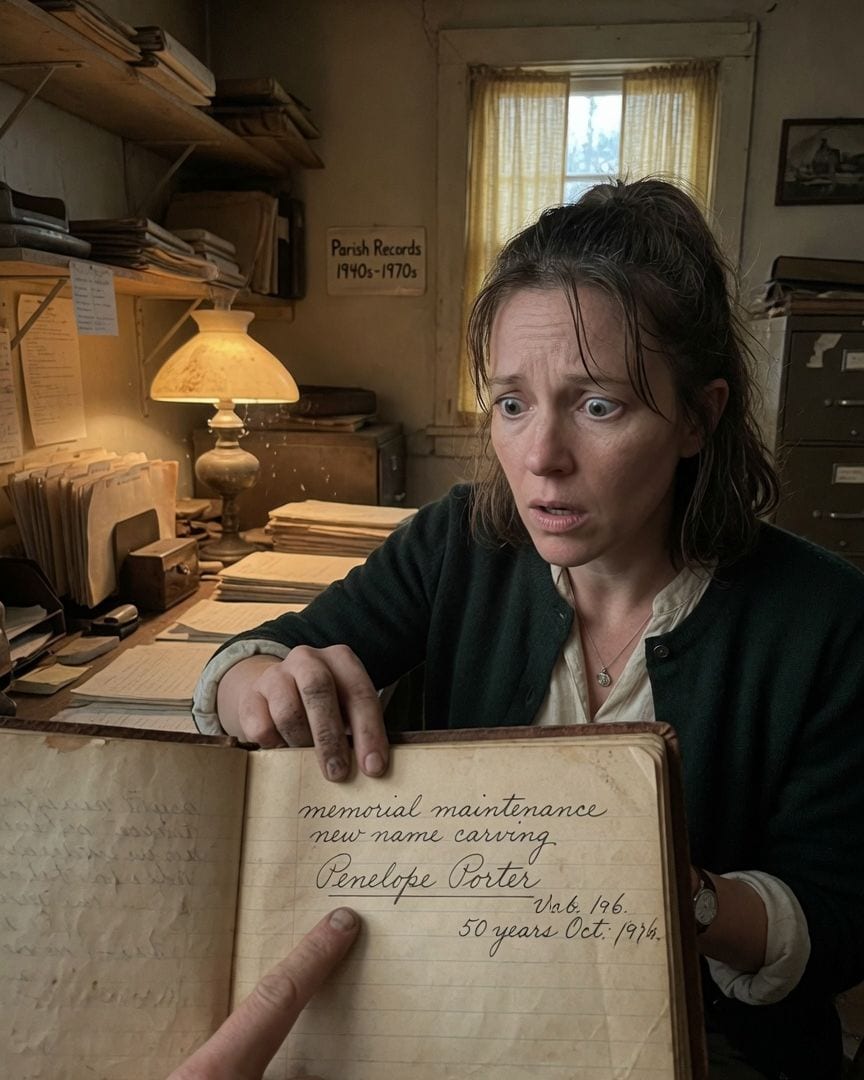
My name is carved on the war memorial with this coming Tuesday's date. The cut is fresh, but the stone inside matches fifty years of age, and a ledger says it was carved exactly fifty years ago.
On a sunny autumn Tuesday, my oldest friend, Gary, urgently called me to the village war memorial. There, carved beneath the names of the fallen, was 'PENELOPE PORTER' with a date from this coming autumn. The fresh carving of my name, dated for a Tuesday yet to arrive, felt like a cold jolt, an impossible message from the stone itself.
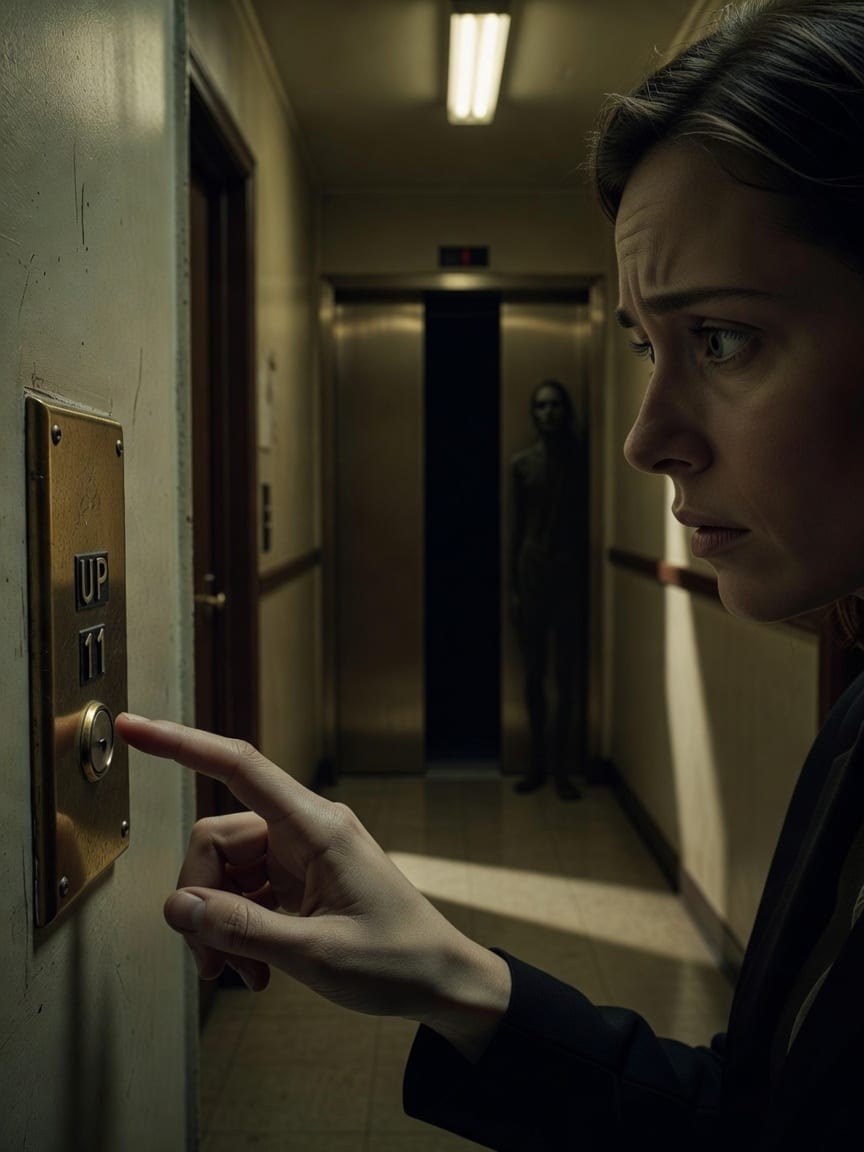
My doorman warned me not to take the tenth-floor lift on Saturday. The building's lift passed inspection last month. He seemed terrified that he'd said it.
My doorman's unsettling warning about the tenth-floor lift left me with a metallic taste of unease. I tried to rationalize it away, but then a birthday card arrived for me, five months early, from an impossible address. It was a site linked to unexplained disappearances, and a cold certainty began to settle in.
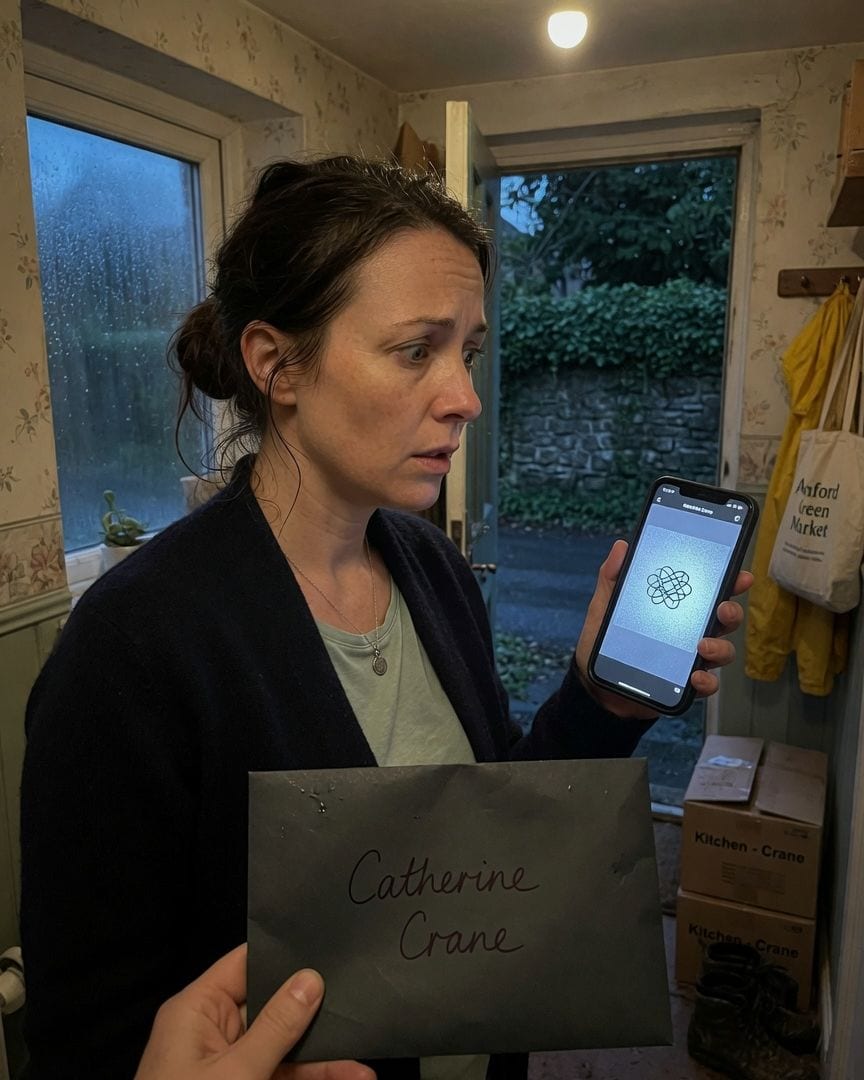
My postman warned me: never use the old pillar box. Royal Mail logs a collection every day, one item, signed by no one.
Moving to Ashford Green, I dismissed my postman's strange warning about the old pillar box by the ford. But after my own letter vanished inside it, I returned at midnight. Then, a dark, unstamped envelope slowly slid *out* of the slot, addressed to me.
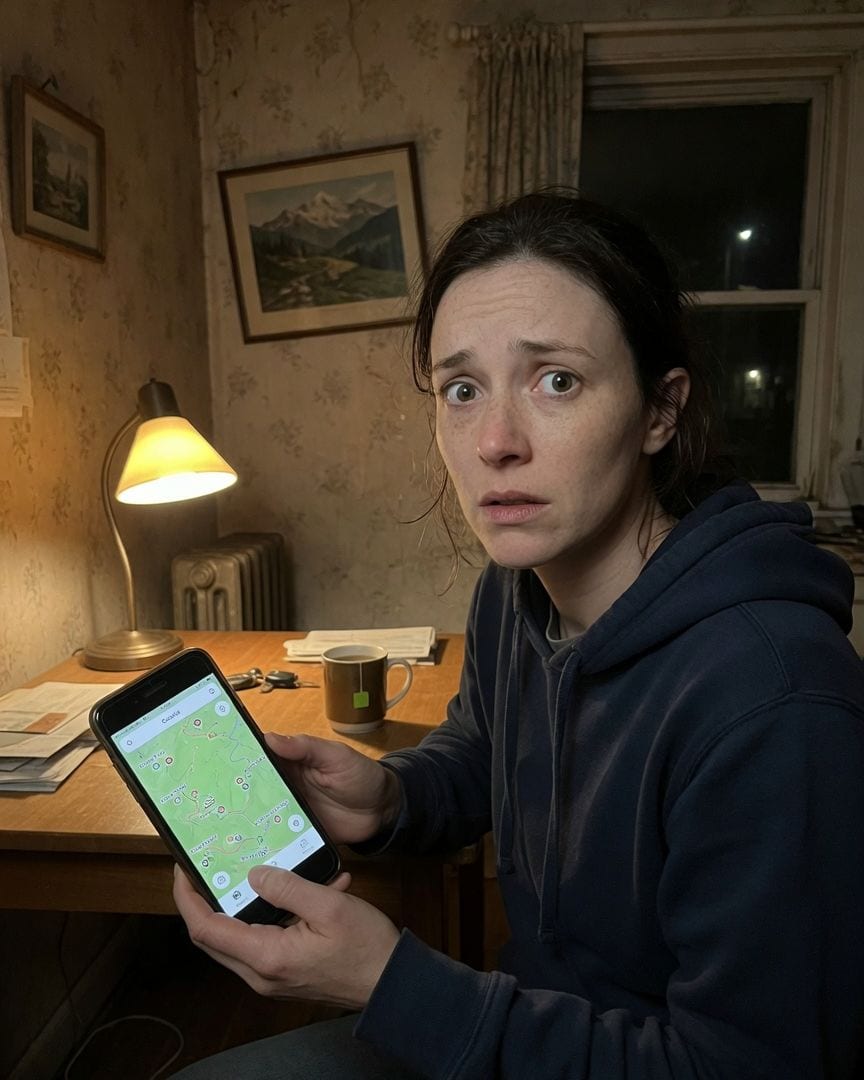
My hiking app scrubbed the hill's name from the map, on a phone that's been in airplane mode for two days.
I just moved to town and hiked a local hill, 'Cathan Tor,' according to my phone's app. But when I mentioned the name to the mechanic, he froze, dropped his wrench, and whispered, 'Don't say that name, Colette.'
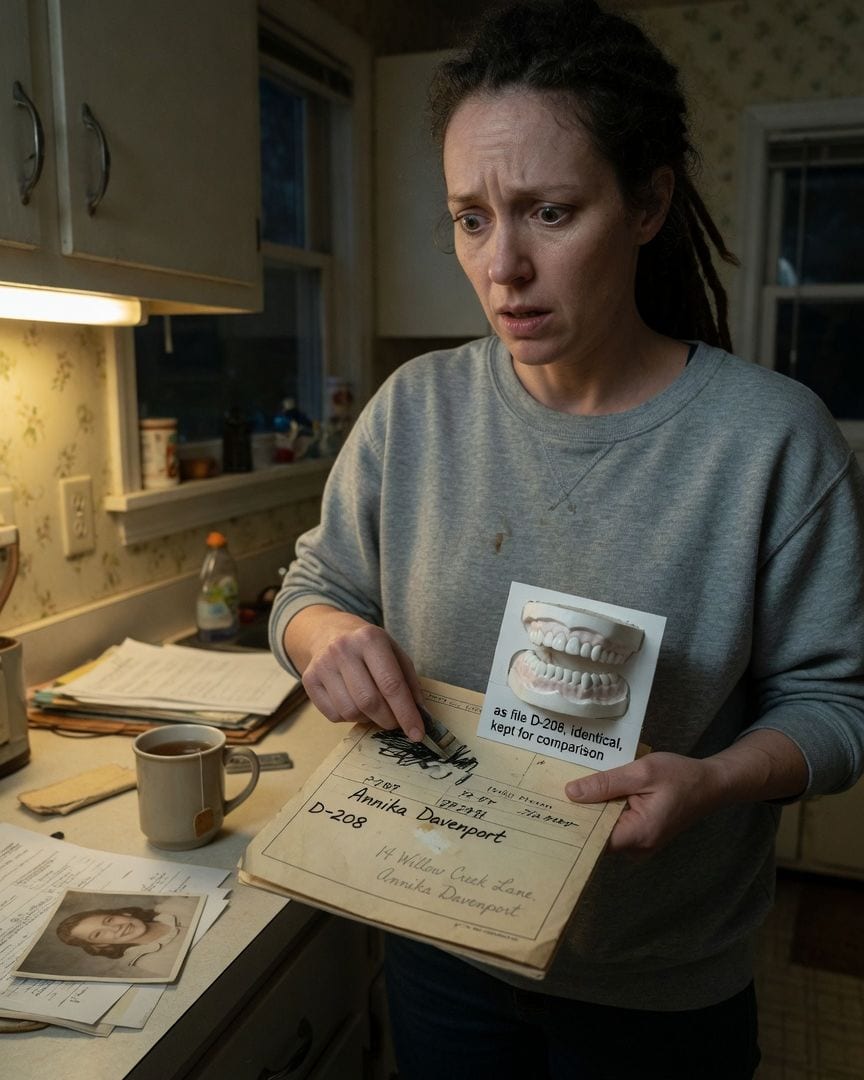
My childhood dental chart lists the house I bought last year — in my own name, years before I was born. A second set of my teeth sits filed beside it, marked 'identical.'
Sifting through old dental records, I found my chart, D-208, with my 1988 birth date. But a line from 1958 was blacked out, and a clipped card with an impression of my teeth listed my name and current home address, decades before I was born. The impossible facts knotted into a cold certainty.
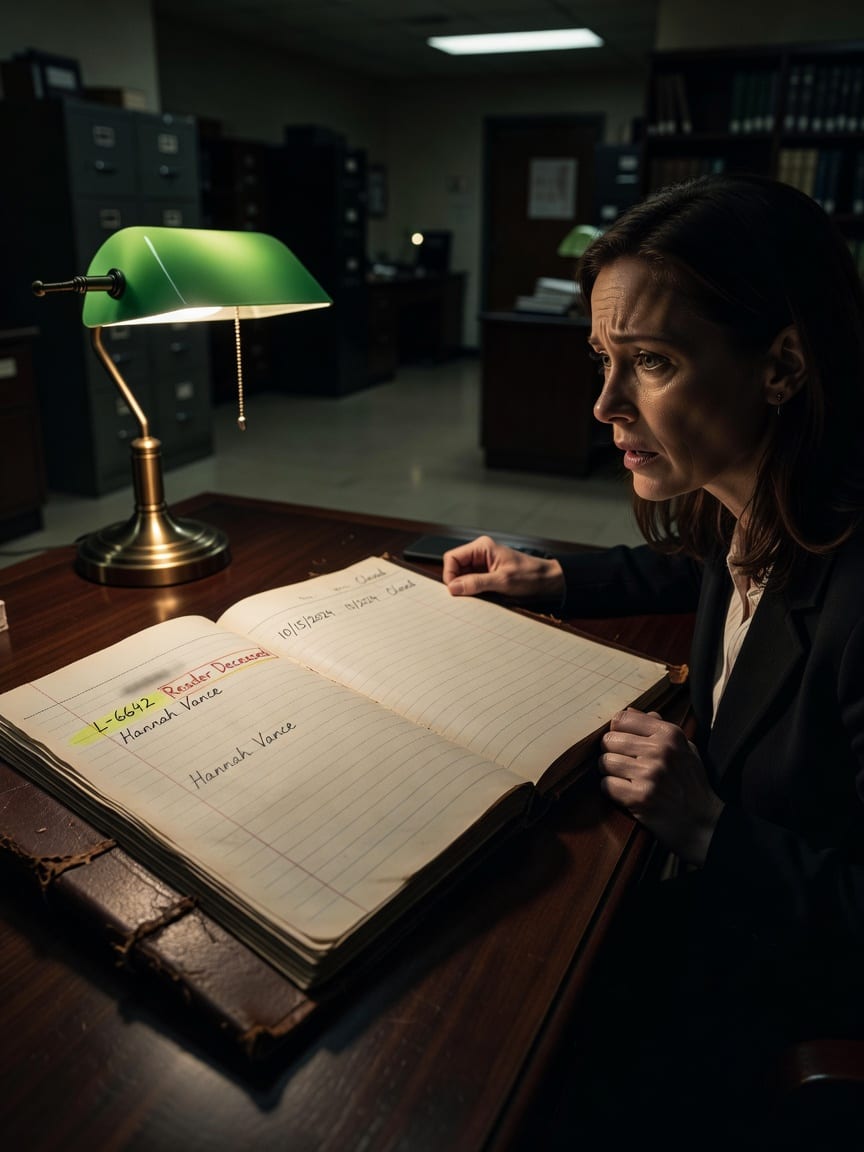
My library card number L-6642 was issued to me at seven — and the ledger shows that number has marked a reader 'deceased' every twelve years since 1949.
Returning my late father's library card to the old town library felt like a small act of closure. But the senior librarian's ancient ledger revealed a chilling pattern of 'reader deceased' entries tied to specific card numbers and borrowed books. My unease turned to cold dread when I secretly found my own name penciled in, marked for a future 'reader deceased' entry.