A boy of about twelve, in a uniform I didn't recognise, handed me a telegram addressed to me — but the Post Office stopped sending telegrams back in 1982. When I turned to grab my wallet, he was gone.
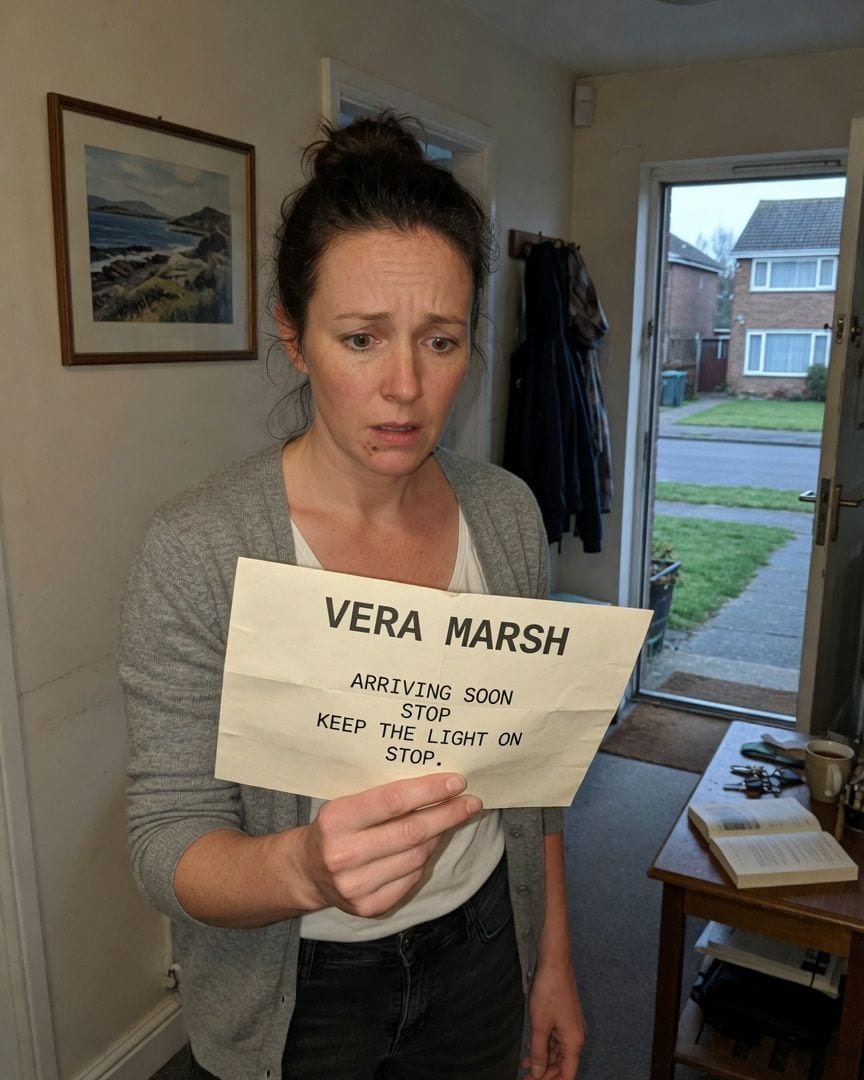
The doorbell rang sharply, a sound far too insistent for a quiet Saturday afternoon. I looked up from my book, startled. No one ever used the doorbell; friends texted, deliveries left packages.
I went to the door, peering through the peephole, and saw a boy, no older than twelve, standing on my doorstep.
He wore a dark, heavy serge uniform with brass buttons that looked stiff and out of place, like something from a century past. I opened the door a crack.
He held out a crisp, cream-colored telegram, folded neatly in his hand. “For Vera Marsh,” he said, his voice flat, devoid of any youthful inflection. His gaze was unnervingly steady, fixed on my eyes, not the door or the street.
I took the telegram, my name embossed in stark capitals on the front. I unfolded it: ‘ARRIVING SOON STOP KEEP THE LIGHT ON STOP.’ No sender was listed. A prickle of unease started on my skin. Telegrams?
The Post Office stopped telegrams in 1982. My mind raced, trying to invent a context—a retro delivery service, a bizarre marketing stunt?
“Just a moment,” I said, turning back into my flat to grab my wallet. I meant to pay him, to ask him where he was from, but the thought was already slipping.
When I looked up, less than two seconds later, the boy was gone. Not on the steps, not on the path.
He wasn’t walking away down the quiet residential street, which I could see the entire length of from my doorway. He had simply vanished, leaving only the impossible telegram in my hand.
I stepped outside, scanning the empty street, the manicured lawns. Nothing. I checked my phone for local delivery services, for historical reenactment groups, anything that might explain the anachronism. There was nothing.
I live alone; no one could be playing a prank like this on me. The heavy silence of the afternoon pressed in, amplifying the strangeness.
The next morning, I was still unnerved, the telegram lying on my coffee table like a silent accusation. I called Paige, my oldest friend, hoping for some rational perspective. Over lukewarm coffee, I recounted the entire bizarre incident.
Paige, bless her, tried. She offered explanations about viral marketing stunts and elaborate pranks, but even as she spoke, I could see her struggling to make it fit.
The look in her eyes, a kind of forced cheerfulness, told me she didn’t quite believe her own theories, or mine.
Later that week, a plain white envelope arrived in my post. Addressed to me by name, the cursive was elegant, almost formal. Inside was a generic birthday card. Mass-produced, forgettable, the kind you buy at a supermarket.
But my birthday wasn’t for six months. This felt different from the telegram, more intimate somehow, yet just as wrong. I turned the envelope over. The postmark was faint, but legible: ‘Blackwood Lane, Old Mill District.’
I remembered Blackwood Lane as a disused industrial area, mostly redeveloped now, home to modern apartments and boutique coffee shops, not a post office.
My unease tightened into a cold knot in my chest. This wasn't random. It was targeted. Twice now, something impossible had reached for me by name. I typed "Blackwood Lane Post Office" into my search bar. Nothing.
I tried a few numbers listed for businesses in the old district, but none connected to anything related to mail or novelty items. This wasn’t a mistake. It was deliberate. I decided I had to see it for myself.
I got in my car, the birthday card clutched in my hand, and drove towards the Old Mill District.
I navigated my car through the newer developments of the Old Mill District, past sleek glass buildings and artisanal bakeries, until the GPS directed me down a crumbling, unpaved track. The buildings thinned out abruptly, replaced by overgrown scrubland.
I pulled up to the coordinates for ‘Blackwood Lane’ and stared, a cold certainty hardening in my stomach.
Before me lay not a shop or a post office, not even a derelict building, but an expansive, empty field, choked with weeds and wild grass, stretching to a distant treeline. No sign of any structure, past or present.
I pulled out my phone, my hands suddenly clumsy, and brought up Google Maps Street View for the address. The image loaded: the exact same desolate patch of land.
A single, ancient, gnarled tree, its branches twisted like arthritic fingers, stood silhouetted against the setting sun at the far end of the field, swaying slightly despite the still air.
The postmark on the birthday card in my hand was unmistakably from this exact, empty location.
Driven by that cold certainty, I spent the next few days lost in the labyrinth of municipal records online, searching for any history of the empty Blackwood Lane field. The internet was sparse, frustratingly vague on anything pre-redevelopment.
Eventually, I stumbled across an old surveyor's map from the 1950s, a brittle-looking digital scan that marked the site as the former location of the 'Blackwood Almshouse,' demolished in 1968 due to structural decay.
No mention of a post office, not even a corner store. Just an almshouse, a charitable institution for the poor and elderly.
The next day, I made my way to the local historical archive, a quiet, dusty building that smelled of old paper and forgotten time.
It was presided over by Constance Barlow, a meticulous librarian in her late sixties with silver hair pulled back in a severe bun and spectacles perched on her nose.
She regarded me with an air of polite, but wary, curiosity as I explained my unusual request for records pertaining to the Blackwood Almshouse.
Constance retrieved several brittle, leather-bound volumes, thudding them softly onto the reading table. As I poured over the faded documents—admission registers, donation lists, burial records—a disturbing pattern began to emerge.
An unusually high number of residents were simply listed as 'departed, destination unknown' or, more chillingly, 'removed without trace.'
Even more unsettling were the gaps in the records themselves, pages seemingly torn out or deliberately left blank in sections pertaining to resident departures.
I found no mention of a 'Vera Marsh' in the admission registers, which was a relief, but the sheer volume of unexplained disappearances from a single, isolated institution left a cold, sour taste in my stomach.
The field wasn't just empty; it held a history of vanishing.
As I continued my research in the archive over the next few days, the initial relief gave way to a growing sense of unease. I became acutely aware of Constance Barlow’s presence.
The librarian, usually discreet and absorbed in her own work, seemed to be watching me from behind the main desk, her gaze lingering a moment too long when she thought I wasn’t looking.
I tried to dismiss it as natural curiosity about my unusual research topic, but the feeling persisted, a constant tickle at the back of my neck.
One evening, after a particularly long session sifting through microfilm until my eyes blurred, I returned to my flat, exhausted but no closer to an explanation. The silence of my apartment felt heavier than usual.
My landline, a number I rarely used and kept unlisted, suddenly rang. I hesitated, staring at the old beige phone, then picked it up.
A calm, deep male voice, utterly devoid of inflection, spoke. “Vera Marsh.”
The use of my full name, the impossible reach to my unlisted number, sent a sharp jolt of dread through me. “Who is this?” I asked, my voice tight, my heart hammering against my ribs.
The voice paused, a beat too long, the silence on the line stretching taut. “Have you found what you were looking for?” it asked, the question utterly devoid of curiosity, more like an observation. My breath hitched.
I didn't answer, my mind racing, trying to place the voice, to understand how. The voice simply repeated, “Have you found what you were looking for, Vera Marsh?” before the line clicked dead.
I stared at the receiver, my hand trembling. Someone knew exactly what I was doing. They knew my name. The hunt, I realized with a sickening lurch, had turned. I was now the hunted.
The next morning, the archive’s familiar musty scent did little to calm my racing pulse. I walked directly to Constance Barlow’s desk, feigning a casual interest I didn't feel.
"I noticed a lot of… unexplained departures in the almshouse records," I began, watching her closely.
Constance’s composure, usually as rigid as the spines of her oldest books, faltered. Her gaze flickered, not to me, but to the stack of ancient ledgers I’d been examining. She adjusted her spectacles, her fingers tapping lightly on the desk.
"Some places… some histories… they have a way of repeating," she said, her voice lower now, almost a whisper.
I pressed, a desperate need for answers overriding my caution. "What kind of repetitions? Are there other names that just… appear and then disappear? What was really happening there?"
Constance sighed, a deep, weary sound that seemed to carry the weight of decades. "There are stories, of course. Local legends. About the almshouse being built on… thin ground. And about a certain ledger.
Not one for admissions, mind you, but… well, a register of a different kind."
She rose slowly from her chair, her movements stiff, and led me to a locked cabinet tucked away in a back room, hidden behind towering shelves of microfiche.
She opened it with a heavy brass key, revealing a single, particularly heavy, leather-bound book. Its cover was worn smooth with age, almost black from countless touches.
"This one isn't cataloged," Constance murmured, her voice barely audible. "It's a parish register, from before the almshouse was even officially established.
Most of it is illegible, faded to dust, but…" She flipped through the brittle pages, her finger stopping on an entry. "Sometimes… names just appear."
I leaned closer, my breath catching in my throat. There, stark against the faded script and flourishing ink of a century past, was my full name: 'Vera Marsh.' Beneath it, a date of birth that perfectly matched mine.
The date at the top of the page, clearly written in flourishing script, read '1908.' My blood ran cold, a glacial shock spreading through my veins.
The telegram, the letters, the vanishing boy, the voice on the phone—it all snapped into agonizing, terrifying focus. This wasn't a prank. This wasn't a mistake.
My name, my exact identity, was recorded here, in a book that predates my existence by decades.
"The almshouse was known for people simply 'leaving' without a trace," Constance added, her voice barely a whisper, her eyes fixed on the open page. "But the ledger… it was always there, even when the building wasn't.
It knew them before they knew themselves."
My mind reeled, the impossible entry burning itself into my memory. My own name, my own birthday, dated 1908. It was a record that cannot be, yet it lay open before me, irrefutable.
The weight of the ledger felt immense in the quiet room, ancient, as if holding the very fabric of time in its pages.
I reached out, my finger tracing the impossibly familiar letters of my name. As my skin brushed the aged paper, a faint, almost imperceptible tremor ran through the heavy, brittle page beneath my touch.
A sudden, sharp drop in temperature enveloped me, chilling me to the bone, and I felt a cold, damp breath on my neck, carrying the faint, familiar scent of damp earth and old paper.
The pages of the heavy ledger seemed to shiver almost imperceptibly, as if stirred by an unseen presence. The low hum of the archive's fluorescent lights seemed to flicker, and the dusty air grew heavy, pressing in on me, suffocating.
I returned to the archive the next morning, heart pounding with a mixture of dread and grim determination, but Constance Barlow was gone. A handwritten note on the main desk simply stated: "Out for the day."
There was no one else in the building. It felt like an evacuation. Armed with a newfound, terrifying clarity, I drove straight to the empty Blackwood Lane field.
The ancient gnarled tree at its edge, its branches clawing at the sky, seemed to call to me, to beckon. It was a beacon. I stood at the edge of the field, the silence vast and consuming.
The pieces clicked into place, not with a sudden flash of insight, but with a horrifying, methodical precision. The almshouse was never just an almshouse; it was a front, a convenient collection point.
The entity wasn't evil in a human sense, I realized, but an ancient, indifferent ‘collector’ of marked individuals. The ledger wasn't a record of the past, but a pre-registration, a list of those whose 'time' was approaching.
The telegram's 'ARRIVING SOON' was a final summons. The delivery boy, a fleeting manifestation, a temporary shape. And 'KEEP THE LIGHT ON'?
That was a chilling command, an instruction to be prepared for the claiming, or perhaps a literal direction to a specific, unseen chamber beneath the field.
The letters from nowhere, postmarked from this desolate place, were its way of tracking me, keeping me aware, luring me closer.
The 'thin ground' Constance had mentioned must be where the entity resides, a place where the veil between worlds was weak, permeable. Every clue now coalesced into a horrifyingly coherent pattern.
My name, inscribed in that ledger decades before my birth, meant I was chosen. Marked. Pre-ordained. The almshouse's 'unexplained departures' were not disappearances, but collections. And I was next.
A terrible compulsion pulled me towards the ancient gnarled tree in the center of the field. The air grew heavy, charged with an unseen presence.
I could feel it, a vast, patient awareness, now fully focused on me, a deep hum vibrating in the air.
As I drew closer to the roots of the gnarled tree, I saw a subtle indentation in the ground, a faint, almost perfectly circular outline of what might have been a cellar entrance, long since overgrown and hidden by tangled roots and thick moss.
A low, resonant hum, far deeper than anything I could physically hear, seemed to emanate from beneath the earth, a sound I felt more than perceived, vibrating in my teeth.
This was it. This was where the 'claiming' happened. I felt an immense, almost irresistible pull, a terrible intimacy with the thing that had known my name for so long, that had waited for me across generations.
Every instinct screamed at me to run, to flee this place, but a darker part of me, the part that craved understanding, wanted to step into that hum, to finally know.
I fought it, my breath ragged in my throat, my hands clenched into fists. This was not a confrontation I could win, only one I could escape.
With trembling hands, I pulled out my phone and snapped a rapid series of photographs: the gnarled tree, the faint outline of the cellar, the empty, waiting field.
Then, almost hidden in the tangled roots at the edge of the indentation, I spotted it: a small, rusted metal tag, about the size of a dog tag, half-buried in the soil. With trembling fingers, I pried it free.
Engraved on its corroded surface, despite the rust and dirt, I could just make out my full name: 'VERA MARSH.' My proof.
Clutching the tag and my phone, I turned and ran, not looking back, fueled by a primal terror and the terrible knowledge that I was marked from birth.
I escaped the field, but the cost was profound; I carried the indelible mark of what I now knew.
I tried to show the photographs and the rusted tag to the local police, recounting my story, the words tumbling out in a desperate flood.
They listened politely, their faces carefully neutral, then suggested I might be experiencing stress, dismissing it as an elaborate hoax or a personal breakdown.
My friend Paige was supportive, but her eyes betrayed a clear disbelief, a pity I couldn't bear. I sold my flat, left town, changed my phone number, attempted to erase my digital footprint, anything to sever the connection.
I moved to a small, isolated cottage hundreds of miles away, constantly looking over my shoulder, the dread a constant, low thrum beneath the surface of my new, quiet life.
The tag, wrapped in cloth, remained hidden in a locked box, my only tangible proof of the impossible.
Years passed. I lived a quiet, guarded life, far from Blackwood Lane. I avoided anything that reminded me of the field, the archive, or the impossible ledger.
I checked my post with a careful, almost ritualistic dread, bracing myself each time, but nothing out of the ordinary ever arrived.
The memories have faded, softened at the edges, but the knowledge remains, a cold, hard knot in my stomach, a permanent tenant.
One morning, nearly a decade after I fled, I found a small, unassuming package on my doorstep. No return address, no postmark, nothing to indicate its origin. Inside, nestled in shredded paper, was a single, plain white postcard. No stamp.
No postmark. On one side, in elegant, archaic script, was my full name, ‘Vera Marsh.’ On the other, perfectly centered, a single word: ‘Waiting.’
The postcard lay on my table, a silent promise from a patience that had outlived centuries.
If this one got to you
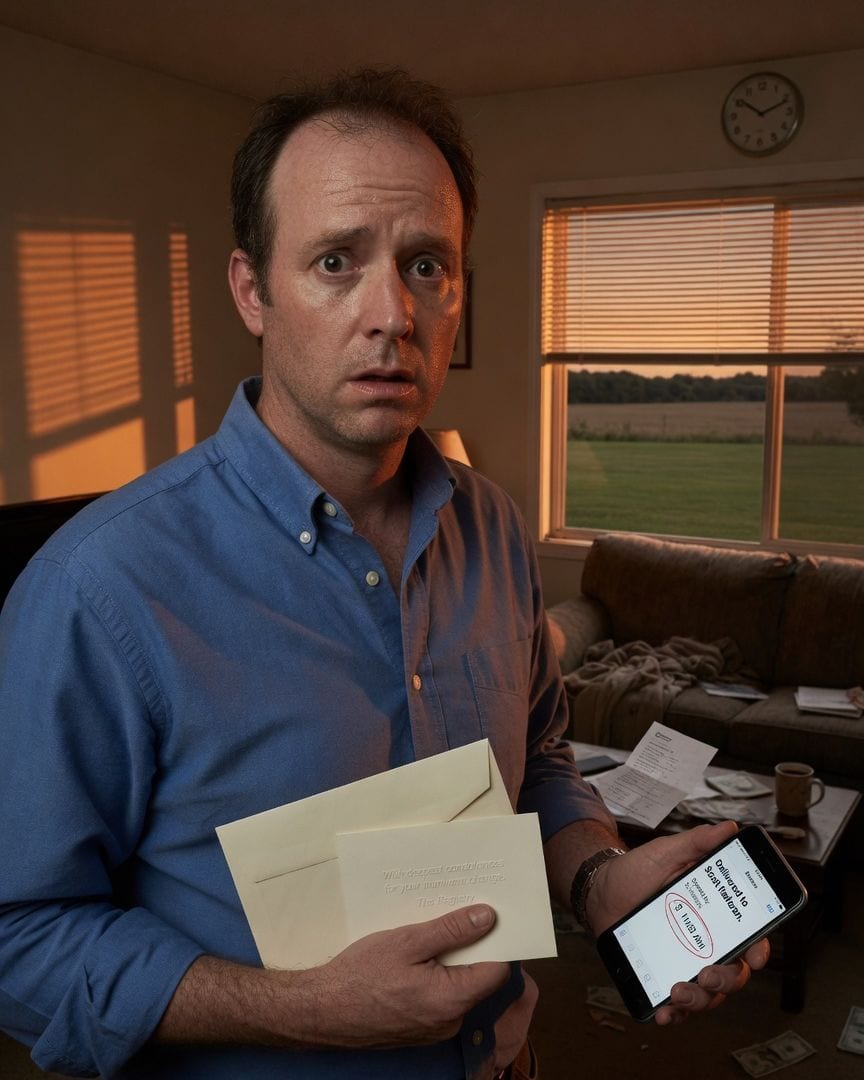
My delivery driver apologized for nothing. The app showed my signature, a completed drop, timestamped eleven minutes before he even arrived.
The delivery driver pulled away, leaving me on my porch with no parcel, yet my phone buzzed 'delivery complete.' The app showed *my* unmistakable signature, but the timestamp logged the delivery eleven minutes *before* the van had even pulled onto my road. A cold, digital lie.
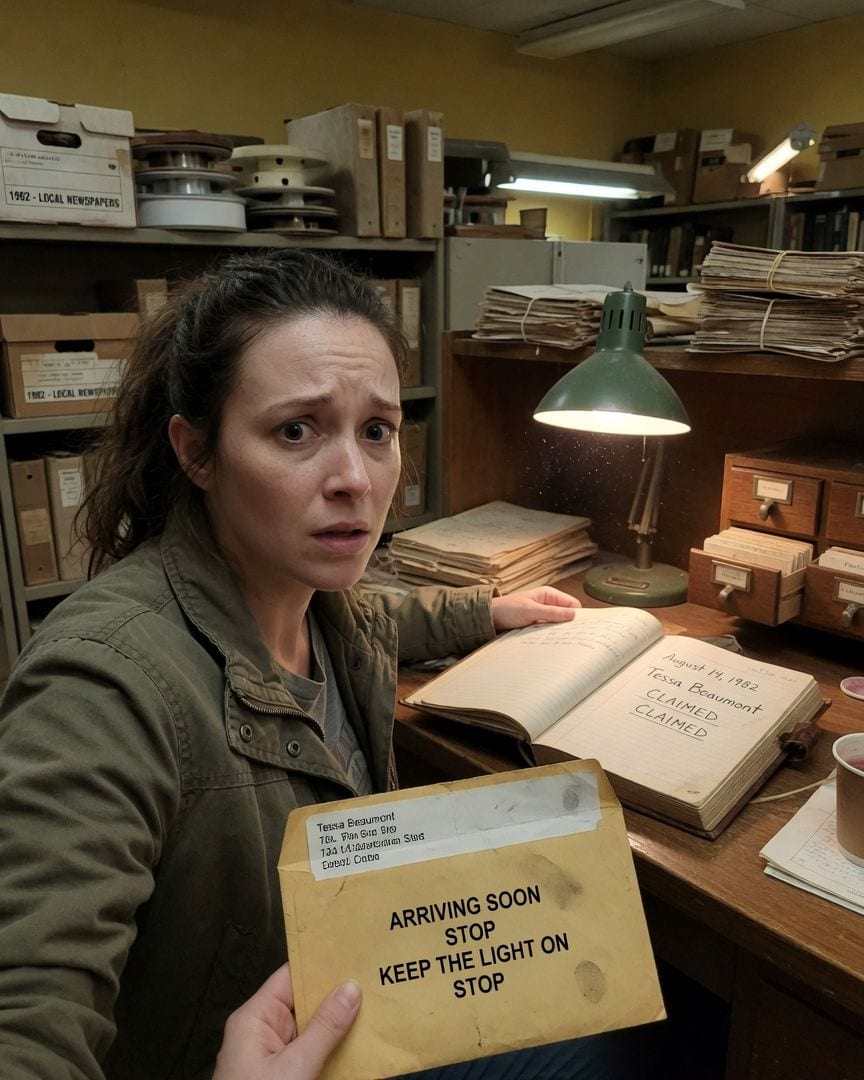
A boy in an unfamiliar uniform hand-delivered a telegram to my flat — the kind the Post Office stopped sending in 1982. It said only 'KEEP THE LIGHT ON.' Then he vanished before I could tip him.
My ordinary morning was interrupted by a sharp rap on the door. A boy in a dark uniform delivered a telegram addressed to me, but the Post Office officially stopped that service in 1982. Its message, 'ARRIVING SOON STOP KEEP THE LIGHT ON STOP,' felt like a premonition.
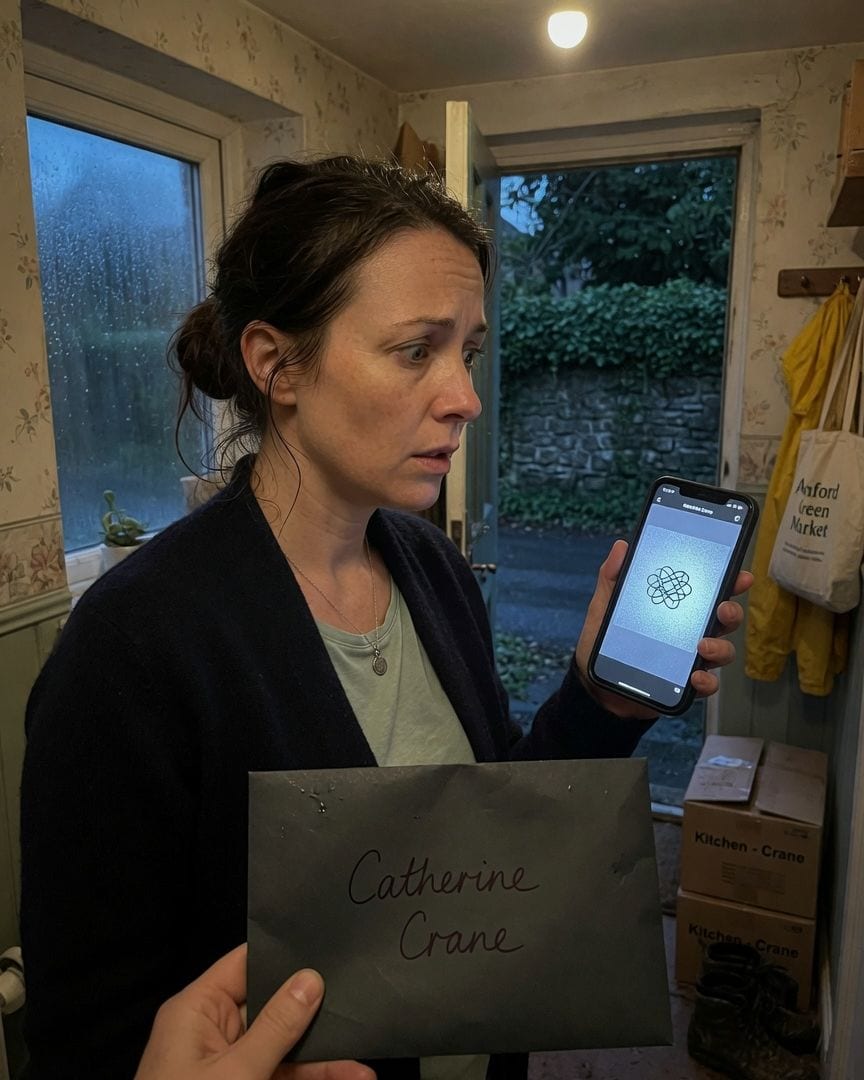
My postman warned me: never use the old pillar box. Royal Mail logs a collection every day, one item, signed by no one.
Moving to Ashford Green, I dismissed my postman's strange warning about the old pillar box by the ford. But after my own letter vanished inside it, I returned at midnight. Then, a dark, unstamped envelope slowly slid *out* of the slot, addressed to me.
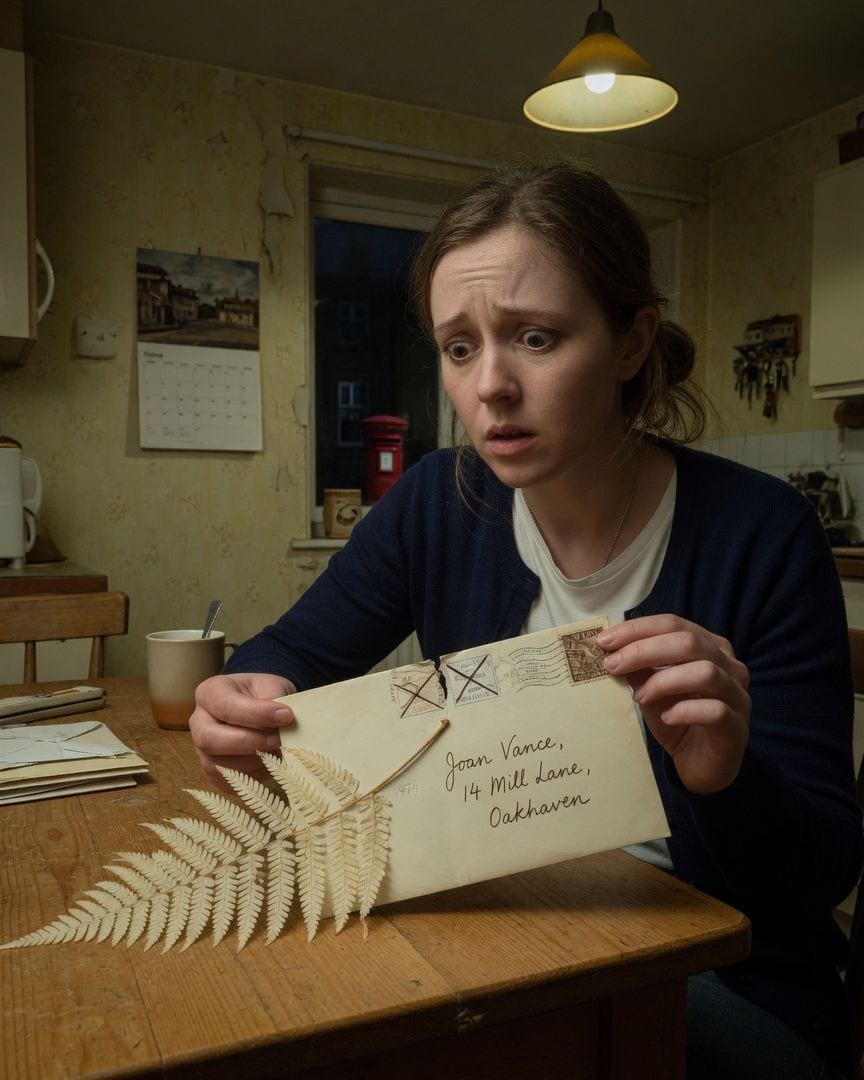
My letter returned. Delivered by hand, with a 1974 postmark. My own address, in a hand I didn't recognise.
As Joan Vance, new to Oakhaven, I posted a letter to my sister just two days ago, well past the last collection. Now, that same envelope sits on my kitchen table, delivered by hand. It bears a postmark from Oakhaven, 1974, a date that makes no sense, as the local post office officially closed that very year.
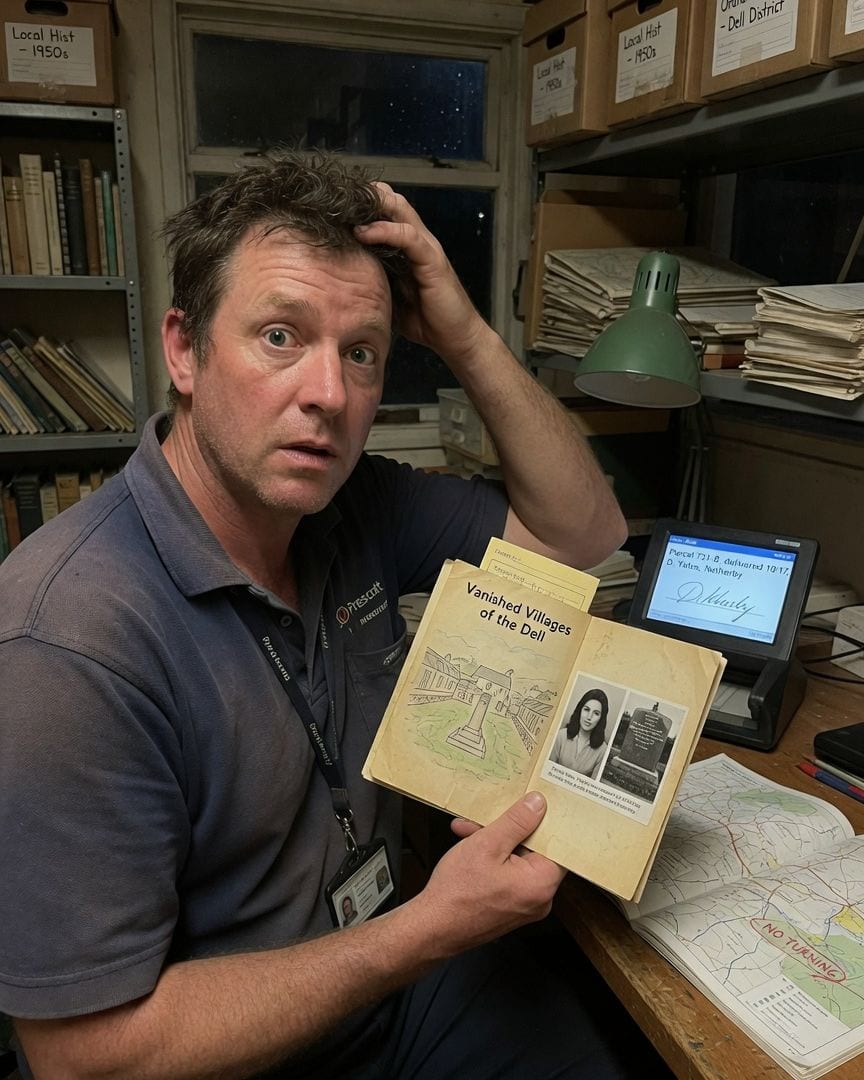
A village signed for my parcel last October, but Netherby isn't on any map. I've driven the lane; there's only farmland.
As a parcel delivery driver, Roy Prescott’s job is usually mundane, but a recent delivery to a village called Netherby now haunts him. The next day, the village vanished from his satnav and maps, leaving only farmland. Yet, his internal system held undeniable proof: a scanned signature from Daphne Yates, the woman who signed for the package, now appears in a 1957 village photo, looking exactly the same.
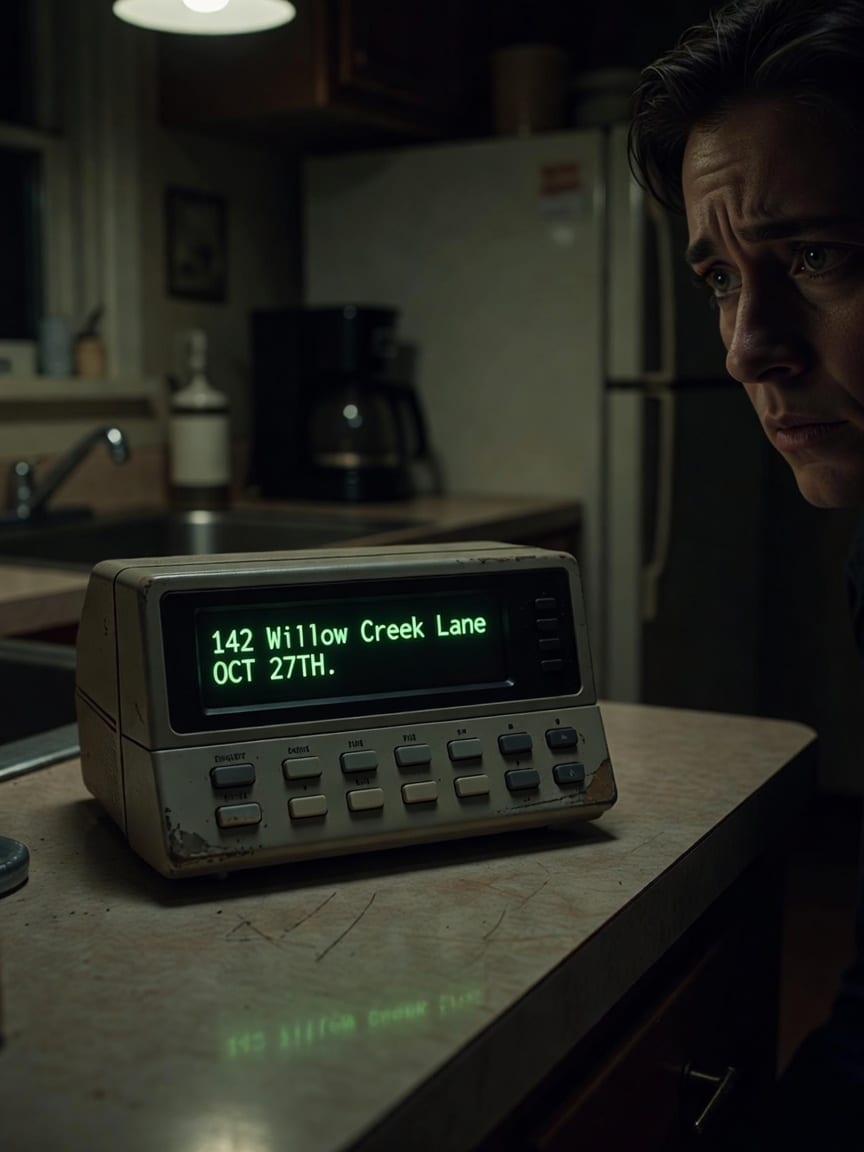
My radio scanner picked up a channel at 2 AM reading local addresses. Mine was on it, dated tomorrow.
I was tracking a storm on my old weather radio when a synthesized voice cut through the static. It began reading local street addresses, then my own: 142 Willow Creek Lane. But the date it gave for my address was tomorrow.