My twin sister Ruth sleeps on the right now, facing the wall. For forty-one years, she always took the left side. She insists I'm misremembering.
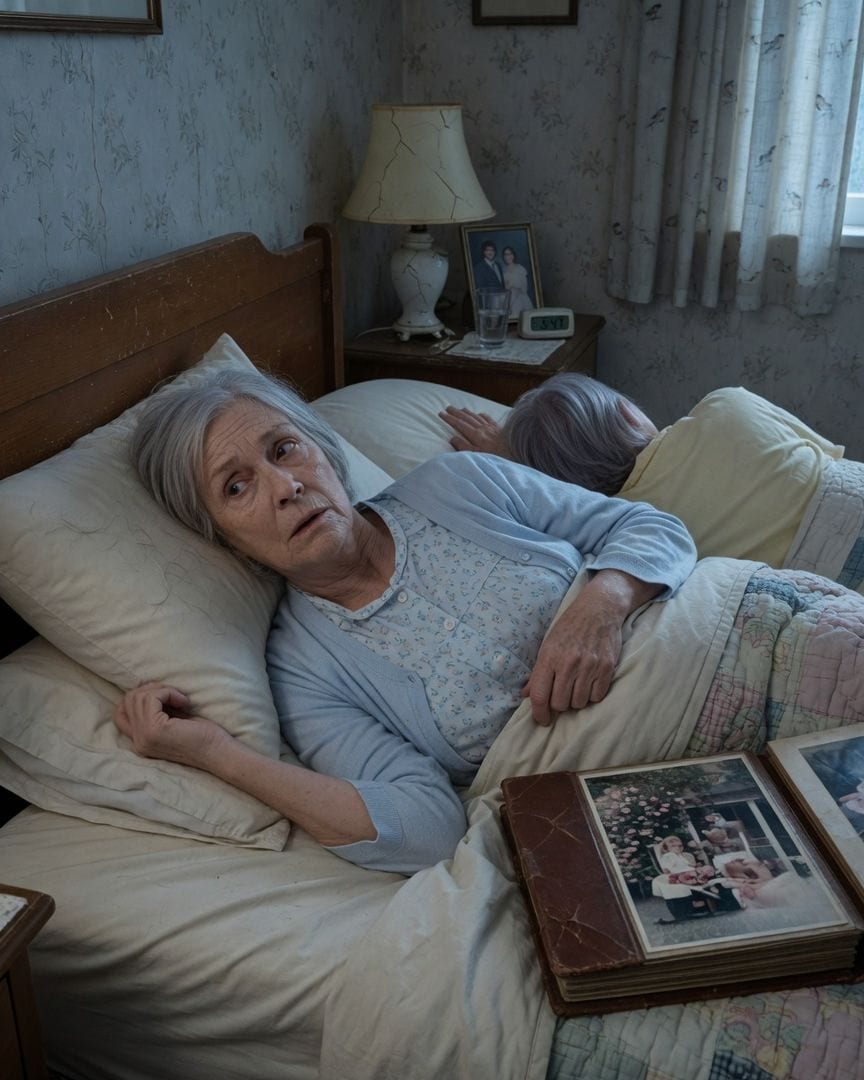
The first morning after Ruth came back, the light in our bedroom was still soft, barely pushing back the pre-dawn greyness.
I stretched, my arm brushing empty sheets where Ruth should have been, sleeping on her usual left side of the bed, head-to-toe with me, just as we’d done for forty-one years.
But then I heard a small, even breath, a sound that was too close, not from across the foot of the bed. I opened my eyes.
Ruth was there. Next to me. On the right side. Facing the wall.
I lay still for a long moment, my breath catching in my throat. My mind scrambled for an explanation. Jet lag? Disorientation from the ordeal?
She’d been gone for three days, vanished on the 6 AM ferry, only to reappear on the 3:14 manifest three days later, without anyone seeing her board, no security footage to explain her return, just her name on a page.
The ferry company called it a “glitch.”
I reached out, gently touching her shoulder. “Ruth?” I whispered. “Honey, you’re on the wrong side. You always sleep on the left.”
She stirred, a slow, deliberate movement. Her head turned towards me, her eyes opening. They were clear, unblinking, even in the dim light. They held a calm I hadn’t seen since before she went missing, a strange, almost placid stillness.
“Claire,” she said, her voice soft, a little husky from sleep. “You’re the one who’s misremembering. I’ve always slept on the right, facing the wall. You like the window side.”
A cold dread, sharp and sudden, cut through the quiet morning. It wasn't the cool air. It was the certainty in her voice, unwavering, gentle, yet utterly dismissive of my own memory. Forty-one years. Every night. The left side.
I could feel the space, the specific hollow in the mattress, the faint outline of her head against the headboard from all those years. But her eyes were so calm, so sure.
It was the same wrongness that had gnawed at me when I looked at that ferry manifest, her name on the passenger list for a crossing she was never seen boarding, as if she’d simply materialized from the churning grey water itself.
A week into Ruth’s return, the house felt different, quieter somehow, even with her in it. I was trying to recapture some normalcy, sitting on the sofa, flipping through an old family photo album.
Ruth was beside me, nursing a cup of tea – black, something she’d never done before, always milk and two sugars.
She leaned closer, her finger tracing a faded snapshot of our grandmother’s cottage. The tiny, ramshackle place by the lake, covered in climbing roses. “Remember that summer?” Ruth said, a wistful smile playing on her lips.
“The one where we found the baby robin in the hydrangea bush, and Gran taught us to feed it with an eyedropper?”
I felt a jolt, a sudden, sharp tremor that went through my chest. I remembered that summer, vividly. The robin, the delicate process of feeding it, Gran’s gentle patience. But Ruth wasn’t there.
My heart began to pound a slow, heavy rhythm against my ribs. Ruth had spent that entire summer with our Aunt Margaret, miles away, while I stayed with Gran. I had missed her terribly.
I tried to keep my voice light, casual. “Oh, that was such a lovely summer, wasn’t it? I remember missing you so much while you were at Aunt Margaret’s.”
Ruth’s smile didn’t falter. Her eyes, still holding that unnerving placid calm, met mine. “No, Claire, you’re mixing it up. We were definitely there together.
Don’t you remember me trying to climb the old oak in Gran’s yard and scraping my knee?”
She shifted, lifting the hem of her jeans slightly, and pointed to her own left knee. There, beneath the denim, was a faint, jagged scar, a childhood relic from a bicycle accident. I remembered that scar.
I had an identical one on my left knee.
The detail, the physical proof, made her impossible memory feel even more concrete, more terrifyingly real, as if it had always been true, and I was the one who was suddenly losing my mind.
The old wooden house around us seemed to hold its breath.
That night, unable to sleep, I pulled out another old photo album, a smaller one I’d kept hidden away in a shoebox under my bed, full of childhood mischief and secrets only Ruth and I shared.
My hands trembled slightly as I leafed through the yellowed pages. And then I saw it.
A picture of Ruth, age seven, her face streaked with dirt and tears, proudly displaying a scraped knee after a fall from her bike, just as she’d described.
The scar was prominent, unmistakable, a jagged white line against her tanned skin. My breath caught in my throat, freezing there. It was the same scar Ruth had pointed to earlier that day.
But in this photograph, taken the summer Ruth was supposed to be with Aunt Margaret—the very summer she now claimed she spent at Gran’s—the scar was on her right knee.
A small, almost imperceptible detail, a mirrored image of my own scar, which sat squarely on my left knee. But it was utterly damning.
I stared at the image, then down at my own left knee, where my identical scar sat. The photograph in my hand was a silent, undeniable scream.
The photo became a cold weight in my gut, a physical knot of dread. I couldn’t confront Ruth directly.
The calm certainty with which she’d dismissed my memory of our sleeping arrangement, the unwavering smile as she recounted an impossible childhood summer—it suggested a barrier, a wall of unknowing, that I couldn’t breach with reason.
Instead, I began to observe. I called the ferry company again, pressing for details about the manifest, the lack of security footage. The customer service agent, a woman named Sharon, was polite, almost robotic.
She attributed it to a “system glitch” or “human error.” I pressed harder, describing the exact anomaly, but Sharon’s voice remained flat, rehearsed, her tone unwavering. “We can assure you, ma’am, our systems are highly reliable.
Sometimes these things just… happen.” It wasn’t an explanation. It was a refusal. The normal channels for answers had simply evaporated.
I started noticing other things. Ruth, who always took her tea with milk and two sugars, now preferred it black, without even a hint of a grimace.
Her favorite shirt, a worn flannel I remembered her practically living in, was folded differently now, the sleeves rolled with an unfamiliar, almost obsessive precision.
She had always had a distinctive, slightly off-key hum when she was happy, a little tuneless warble that was uniquely hers.
Now, the humming I’d started to catch from the kitchen, from her reading chair, was perfectly in tune, every note true, a subtle shift that made my skin crawl with an instinctive revulsion.
It was better, technically, but it wasn't Ruth.
I found myself scrutinizing old home videos, watching Ruth’s gestures, listening to her laugh, trying to pinpoint the exact moment the familiar became alien, the point of departure.
The differences were small, so easily dismissed as ‘changing after a traumatic experience’ or ‘growing up,’ but they accumulated, each one a tiny, perfectly cut stone, forming a chilling mosaic of wrongness.
The air in the house itself seemed to thicken with these silent observations, the walls holding their breath as I did.
I even tried to speak to neighbors, casually asking if they’d noticed anything ‘different’ about Ruth since her return, but they all offered platitudes of relief, praising Ruth’s resilience, her miraculous recovery. No one saw it.
Or maybe, no one wanted to see it.
The more I observed, the more I felt observed in return. I’d catch Ruth’s gaze across the room, a placid, unreadable expression that lingered a fraction too long, like a still pond mirroring the sky without truly reflecting anything.
One evening, the living room was dark save for the glow of my laptop. My back was to the entrance as I researched old news articles about ferry disappearances, the screen alight with headlines of unsolved cases from decades past.
Suddenly, Ruth’s voice, soft and level, came from directly behind me. “Still up, Claire? Are you doing some research?”
I jumped, a yelp escaping my throat as I slammed the laptop shut, the screen going black with an audible snap. My heart hammered against my ribs, a frantic bird trapped in a cage. I spun around.
Ruth stood there, framed in the doorway, her silhouette calm against the dim light of the hall. Her eyes, usually warm and familiar, held that strange, still depth, like dark stones at the bottom of a deep well.
“Just… looking into some local history,” I stammered, my voice barely steady.
Ruth nodded slowly, a faint, almost imperceptible smile touching her lips, a movement that didn’t quite reach her eyes. “Local history can be very interesting, can’t it? Especially the older stories.”
The air in the room grew heavy, thick and cold, pressing down on me with unspoken knowing. I felt a cold dread prickle my skin, a realization that slid into place with sickening certainty. Ruth knew.
She knew I was digging. She knew I was questioning.
I decided then that I needed to talk to someone else, someone who might understand, someone who had seen more than just the surface of things. I thought of Evelyn Sheppard, our elderly neighbor.
She had lived in this coastal town her entire life, known for her quiet observations and an encyclopedic knowledge of local lore, whispered histories that never made it into the official records.
I found Evelyn Sheppard tending her rose garden the next afternoon, her movements slow and deliberate, each snip of her shears precise.
The scent of damp earth and blooming roses hung in the air, a contrast to the tightening knot in my stomach.
I approached cautiously, starting with small talk about the weather, the unseasonably warm breeze off the ocean, before steering the conversation.
“Evelyn,” I began, my voice lower than I intended, “I need to ask you something. It’s about Ruth.”
Evelyn paused, her pruning shears still, suspended mid-air above a half-opened crimson bud. Her gaze, usually kindly and a little rheumy with age, sharpened, fixing on me with an unexpected intensity. “Ah, Ruth. Lovely girl, back safe and sound.”
There was an inflection in her voice, a subtle pause, that made my skin prickle.
I took a deep breath, clutching the small, worn photo album I’d brought with me. “She is. But… she’s different. She remembers things that didn’t happen.
She has a memory of a summer at Gran’s, a summer where she found a baby robin, but she was with Aunt Margaret that year.”
I pulled out the two photographs from the album, laying them on the garden bench between us: the one of Ruth’s bike accident, clearly showing the scar on her right knee, and another, more recent photo, where the scar was now on her left.
Evelyn picked them up, her brow furrowed into deep lines. She studied them for a long moment, turning them over in her gnarled fingers, her silence more unnerving than any denial.
“A memory she shouldn’t have,” Evelyn murmured, almost to herself, her voice barely a whisper above the rustle of rose leaves.
She looked up at me then, her eyes, the colour of faded denim, holding a deep, ancient sorrow I couldn’t place. “It happens, dear. More often than people like to admit. Especially around here. Things… get exchanged.”
A cold wave washed over me, numbing me from the inside out. “Exchanged? What do you mean, exchanged?” My voice was hoarse.
Evelyn sighed, a sound heavy with resignation, with decades of knowing. “People go missing. Sometimes, something else comes back wearing their face, their memories. Almost perfect. But never quite. Always a detail off. A habit reversed.
A memory that simply… isn’t theirs. Like a photograph that’s been subtly retouched, but the original just isn’t there anymore.”
The sleeping position, the black tea, the perfectly tuned humming, the scar on the wrong knee—it all clicked into a terrifying, coherent pattern, snapping into place with the sickening precision of a trap. Ruth was gone.
This thing, this almost-Ruth, was here instead.
“It’s happened before?” I whispered, barely daring to breathe, the rose-scented air suddenly suffocating.
Evelyn nodded, her gaze fixed on the distant ferry terminal, a dark smudge against the horizon line where the sky met the grey ocean. “Oh, yes. Long before your time. Happened to my own family, too.”
She reached into the deep pocket of her apron, her movements slow and deliberate, as if she were moving through thick water.
Her fingers, gnarled with age and the work of a lifetime, fumbled for a moment before extracting a small, worn leather wallet.
From within it, she carefully pulled a single, brittle photograph, its edges softened by time, the colours muted to sepia tones. She held it out to me.
It was a picture of a young man, handsome, with a kind face, standing on what looked like the old ferry dock, planks weathered and grey.
He was smiling, but there was a faint, almost imperceptible wrongness in it, a stillness in his eyes that was chillingly familiar, a placid blankness that mirrored Ruth’s.
“My brother, Thomas,” Evelyn said, her voice flat, devoid of emotion, as if she were merely stating a fact from a long-ago census. “Vanished on a fishing trip, near the old lighthouse. Came back a week later.
Just like he’d never left.”
I stared at the photograph, then back at Evelyn, whose face was etched with decades of quiet suffering, her eyes like wells of ancient, unshed tears. “And he… he was like Ruth?”
Evelyn’s eyes, ancient and knowing, met mine. “He was exactly like Ruth. And I’ve lived with him, with it, in that house, for sixty years.”
Evelyn led me inside, into a parlor filled with antique furniture and the heavy, sweet scent of dried potpourri and old wood. She sat me down on a velvet armchair, her own movements stiff.
Her voice, when she spoke again, was low and steady, as if reciting a catechism she’d known her entire life.
“It’s not evil, not in the way we understand evil,” she explained, her gaze distant, focused on something only she could see. “It’s… an exchange. A crossing.
These things, they exist on the edges, in places where the veil between worlds is thin. And sometimes, a door opens.” She gestured vaguely towards the window, towards the distant glint of the ocean.
“The ferry route, the old lighthouse, they’re thin places. When someone goes through, something comes back. A perfect mimicry, a body, a face, even the surface of memory. But not the soul. Not the core.
It watches, it learns, it adapts. It wants to fit in.”
Evelyn showed me more old photographs, images she kept tucked away in a dusty tin box. Pictures of other townspeople, some from decades past, who had vanished and returned, their stories whispered over generations.
In each, now that Evelyn had given me the key, I saw it: the subtle wrongness in the eyes, the unnervingly placid smile, the precise, almost robotic posture. A chill, cold and absolute, ran down my spine.
“They take the place, live the life,” Evelyn continued, her voice soft but firm. “They’re good at it. Better than you’d think. And no one notices, not really, because who wants to believe such a thing?
Who wants to look too close at the person they love and see something else?” She pointed to her brother’s photo again.
“Thomas loved to sing sea shanties, loud and off-key, always missing a note or two, but full of joy. When he came back, he sang them perfectly, every note. He never missed a lyric, never hit a wrong note.
It was beautiful, but it wasn’t him.”
The humming, the black tea, the reversed sleeping position, the scar on the wrong knee, the impossible memory of Gran’s cottage—it all coalesced now into a horrifying, seamless truth. My Ruth was gone.
This thing, this perfect imitation, was here to stay. And no one would ever know but me.
I walked home in a daze, the weight of Evelyn’s words pressing down on me, making each step heavy.
The familiar street, the houses I’d known my entire life, even my own front door, now felt alien, a stage for a silent, terrifying play only I was watching.
I found “Ruth” in the kitchen, meticulously arranging a bowl of fruit on the counter, her movements precise, almost unnervingly so. She turned as I entered, her eyes meeting mine with that same placid calm.
“You’re back,” she said, her voice perfectly pitched. “Did you have a nice chat with Evelyn?”
The question was innocent, harmless on the surface, but the undertone was a cold, knowing current that ran beneath the words, making the kitchen feel airless. I felt a suffocating realization: I couldn’t confront it. What would I say?
“You’re not my sister”? It wouldn’t understand. It would only smile that perfect, empty smile, its eyes holding nothing but a glassy reflection of my own terror.
I couldn’t escape either. This thing knew me, knew our home, knew our life. It was embedded, intertwined, a part of the very fabric of my existence.
To leave would be to abandon my life, my history, and to confirm to the world that I, Claire, was mad, delusional, mourning a sister who was standing right there.
The dread wasn’t a sudden shock but a slow, creeping poison, filling every corner of my existence, tainting every breath.
I watched “Ruth” peel an apple, the skin coming off in one perfect, unbroken spiral, each movement executed with an unnatural exactitude. It was so precise, so wrong.
I felt a cold certainty settle in my bones: this was my life now. Living beside the ghost of my sister, trapped in a silent, terrifying charade.
The only way out was to play along, to pretend, to survive the intimate horror of perpetual, quiet observation. The glint of the small paring knife in her hand seemed too sharp, too deliberate.
I continued to live in the house, a quiet observer of my own life.
I meticulously noted every subtle deviation, every perfect mimicry, every impossible memory “Ruth” casually mentioned about a childhood never lived, a shared experience that was only mine.
The initial relief of Ruth’s return had been utterly consumed by the cold, constant fear. I learned to feign normalcy, to smile and nod, to pretend the black tea was always her favorite, the sleeping position always on the right.
The world around me saw only Ruth, returned and recovered, perhaps a little quieter, a little more settled, but perfectly fine. Only I knew the truth, a truth too horrifying, too unbelievable to ever voice aloud.
My home had become a cage, my twin sister a mirror reflecting something monstrously familiar, yet utterly alien.
I still sleep in that bed, next to her. She still takes the right side, facing the wall. Sometimes, in the quiet hours of the night, I hear her humming, perfectly in tune.
I've learned to close my eyes and pretend it's just Ruth, come home. But I never forget. I can't.
The fear is a constant companion, a silent witness to a life that isn't mine, lived beside a sister who isn't hers. I keep living, breathing, pretending. And sometimes, I wonder if it knows that I know.
And I wonder what it will do when it's sure.
Claire Lambert continued to live with her sister, her quiet observations becoming a meticulous, private record. Years passed. The neighbors occasionally remarked on how well Ruth had recovered, how calm she always seemed.
No one noticed the slight, almost imperceptible shift in Claire’s own eyes, the way she too, began to hold a certain placid stillness. One morning, a friend called, asking if Claire was coming to book club. Ruth answered the phone.
“Claire’s just fine,” she said, her voice perfectly Claire’s, her smile a little too wide, “She’s just… misremembering what day it is.”
If this one got to you
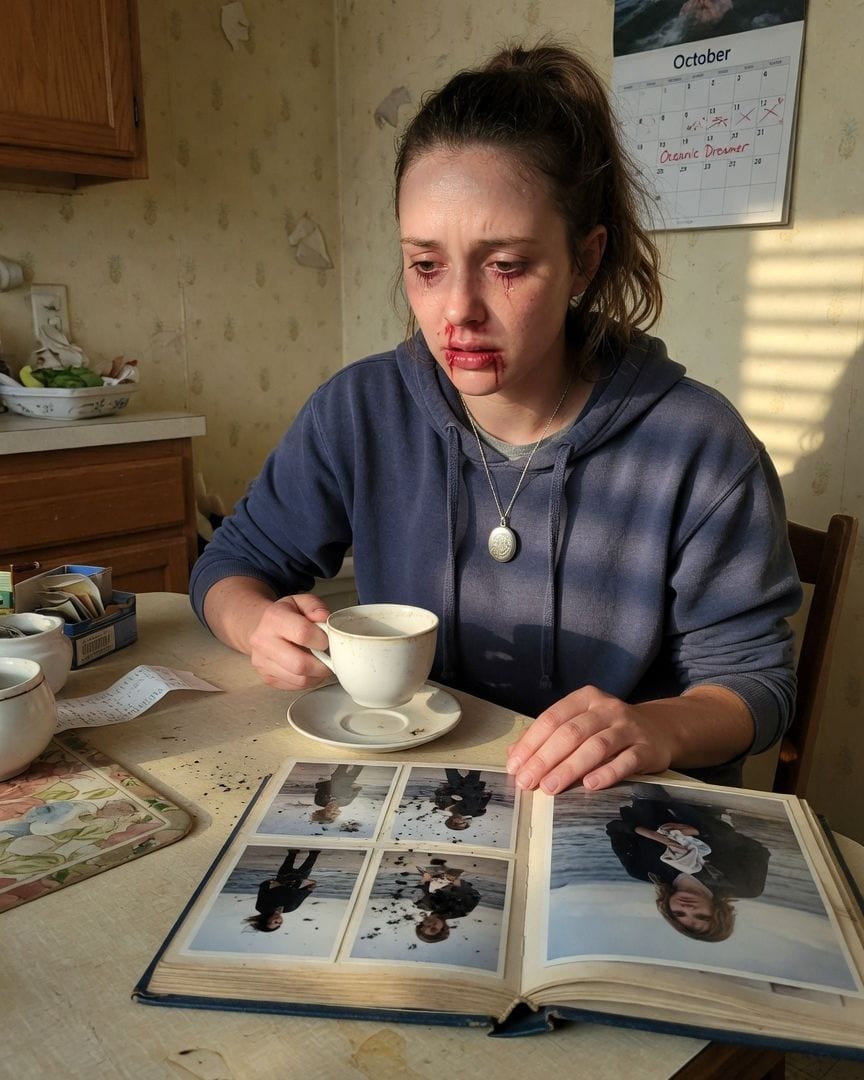
My mother recalled scattering Dad's ashes. She was gone when we did it, lost at sea. She knew which of us cried that day.
My mother came home a month ago, changed after nearly drowning at sea. But then she started describing the day we scattered my father's ashes, every detail sharp and clear. She couldn't have been there; she was lost at sea when we stood on that pier.
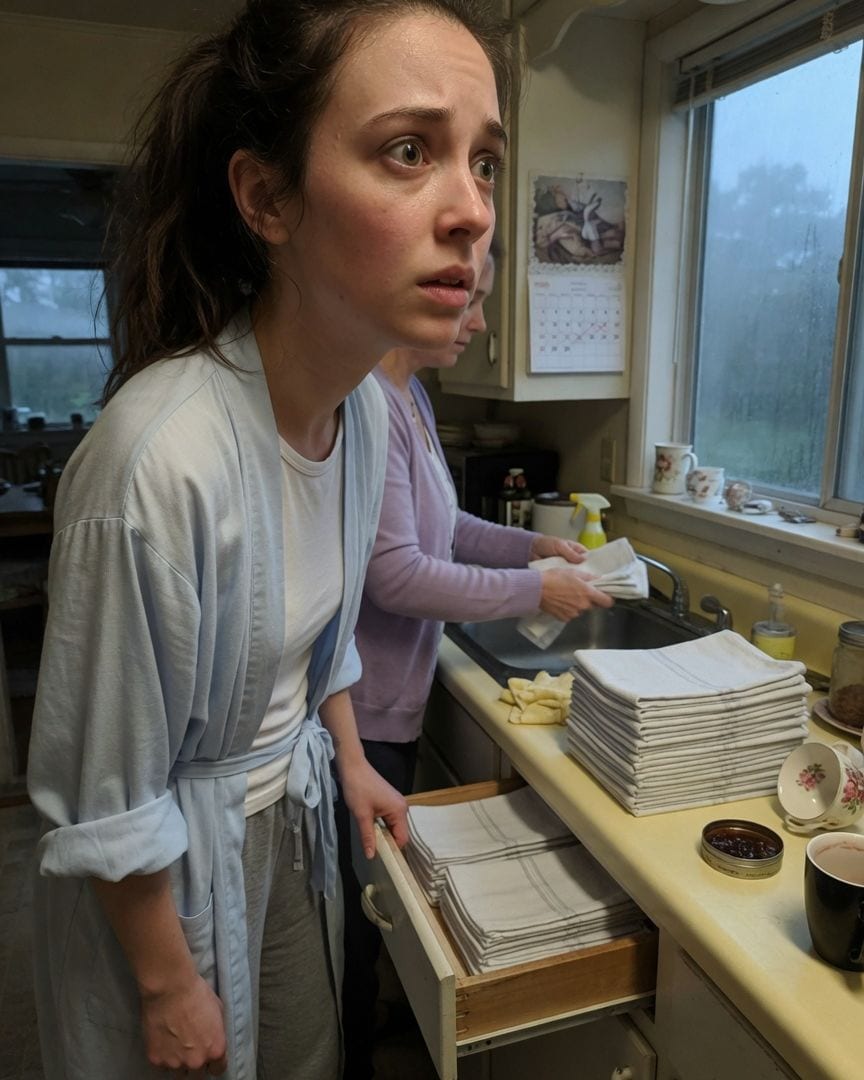
My mother's left wrist has a new scar. She never had one there.
My mother is finally home after her disappearance, and I'm trying to find our old rhythm. But then I watch her fold tea towels, a simple ritual I learned from her. She's doing it completely wrong, seam-out, insisting it's how she's always done it.
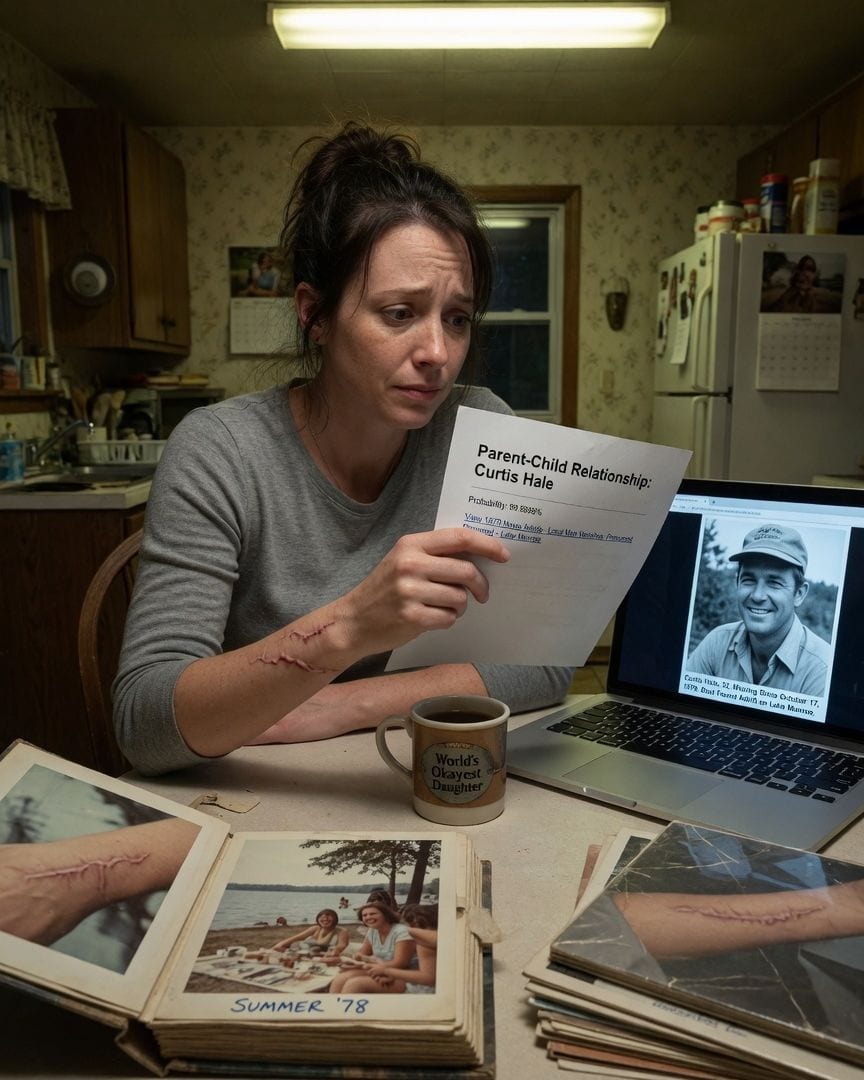
My DNA returned Curtis Hale as my father. He vanished in 1979. I was born twelve years later. The lab confirmed the match twice.
My DNA test results revealed something impossible: my biological father vanished in 1979, twelve years before my birth. My mother dismissed it as nonsense, but her reaction felt forced, leading me to old family photos. There, in a faded 1978 snapshot, I found my own distinctive childhood scar on the wrist of a stranger.
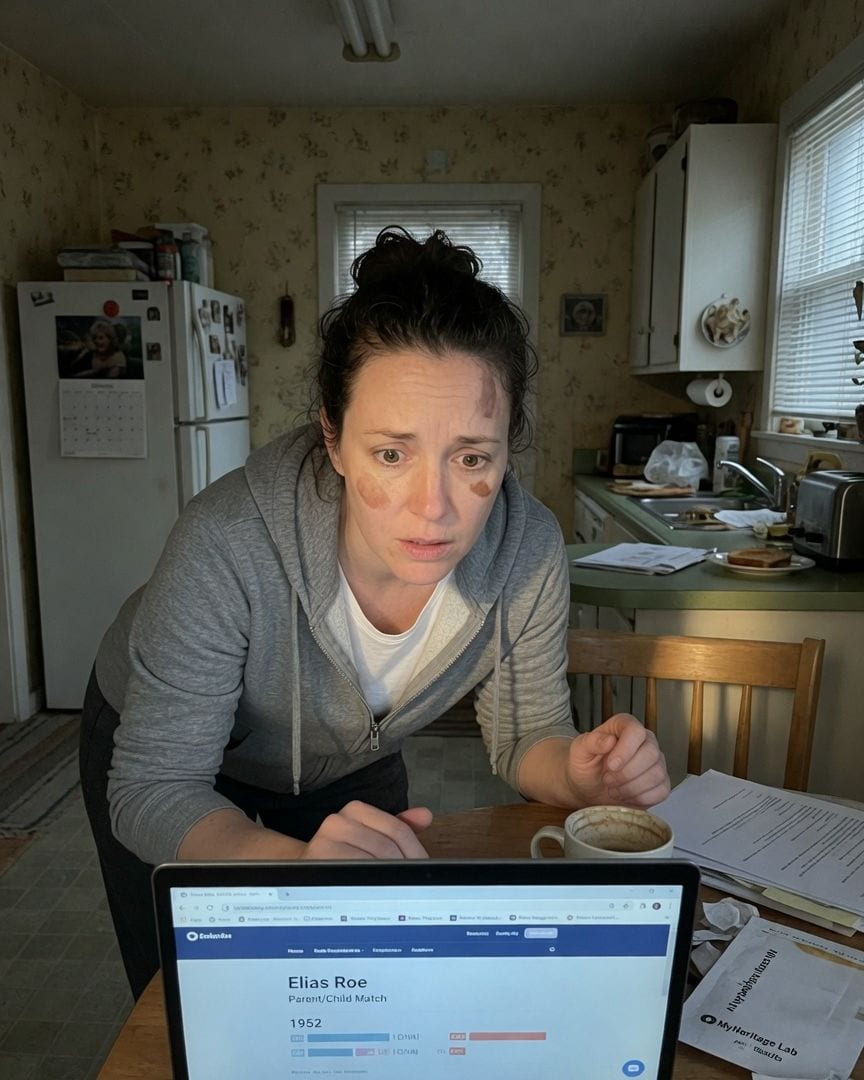
My DNA came back a parent-child match to a farmer who died in 1952. I didn't believe it, so I paid a second lab — same result, down to the last marker.
As a pragmatic software engineer, I've always trusted facts. But my recent MRI revealed a perfectly healed compound fracture on my left tibia, one that mended decades ago. I've never broken a bone in my life, and there isn't even a scar.
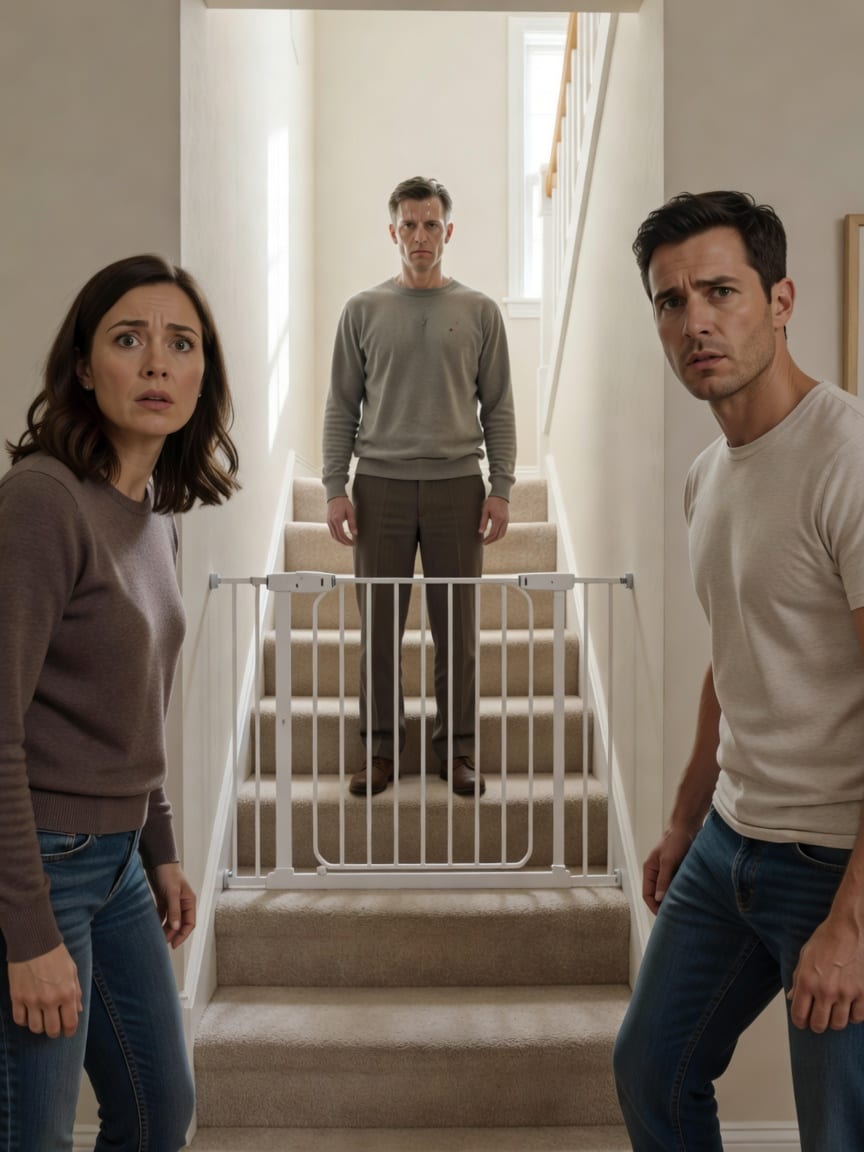
My stair gate latches itself every night. Pressure-fitted tight across my empty stairs, no children live here and no fixings exist on the wall.
I live alone in my inherited house, so the toddler gate at the top of my stairs should not be there. Each morning, I find it perfectly latched and sturdy, despite having hidden it away in the shed the day before. This isn't a quirk; it's a routine, and it isn't mine.
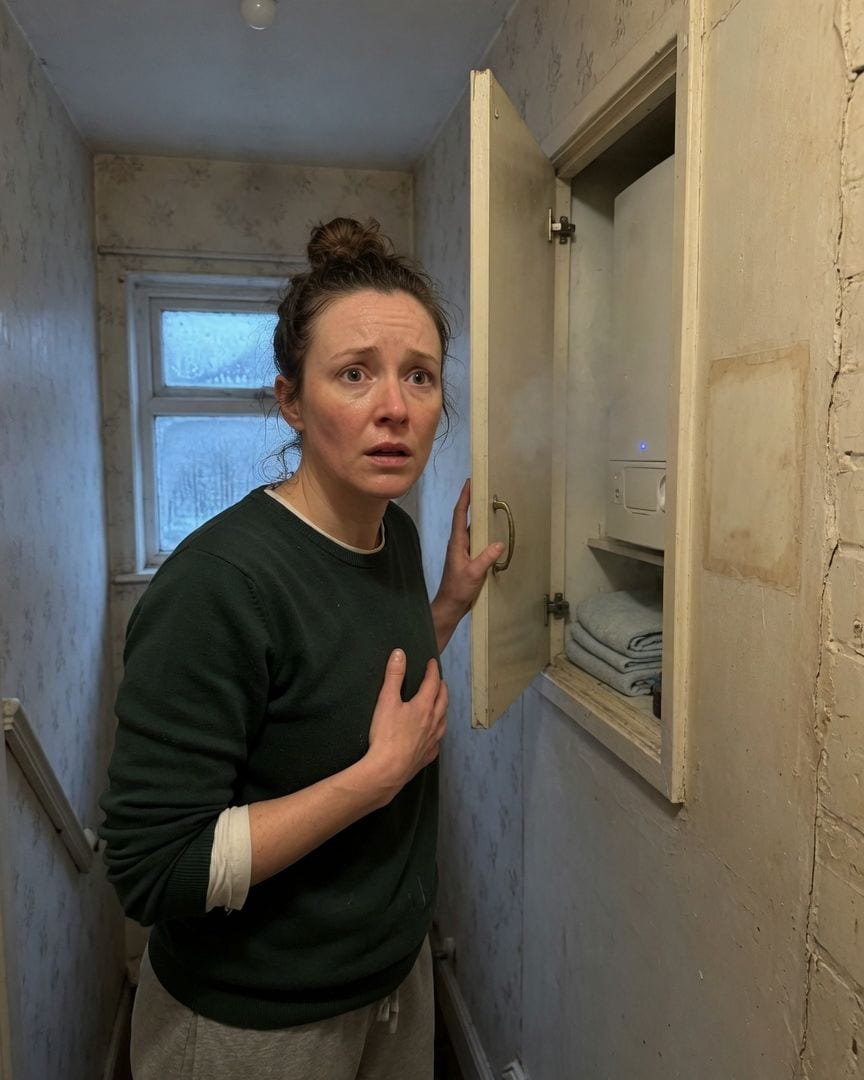
My airing cupboard held a brick copper, fire lit, sheets boiling, smelling of soda and wet linen. I live in a modern flat; there's only ever been a boiler and towels.
Claire Bishop was settling into her new house when she opened the airing cupboard for a blanket. A wave of humid heat and the intense smell of soda rolled out, revealing a heavy copper vessel boiling laundry over a crackling fire. She slammed the door, only to find the cupboard perfectly normal moments later, the impossible vision unnervingly vivid.