My mother recalled scattering Dad's ashes. She was gone when we did it, lost at sea. She knew which of us cried that day.
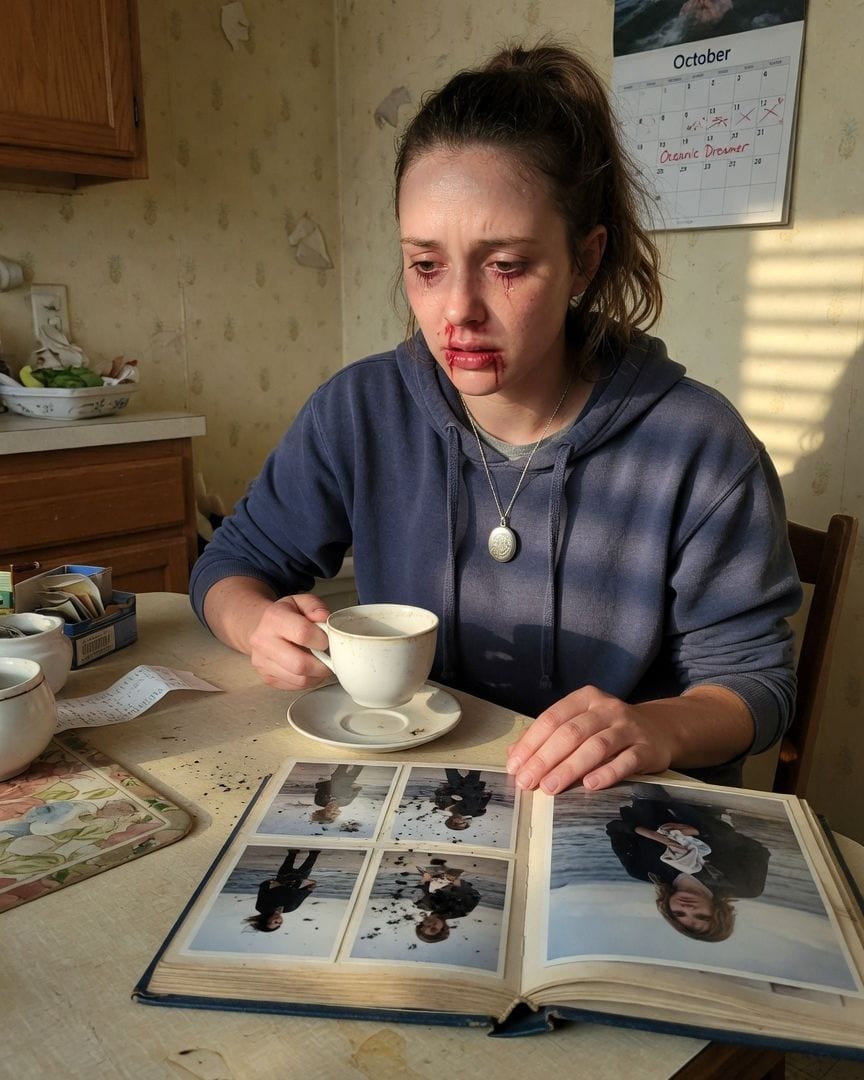
It’s been a month since Mom came home, and I’m trying to convince myself it’s all normal. That people change after nearly drowning at sea. That the mind plays tricks.
But then she’ll say something, small and perfectly wrong, and the doubt starts to prickle, a cold pinprick on the back of my neck.
Just last night, for instance. We were sitting at the kitchen table, the late afternoon sun slanting across the worn linoleum.
She was sipping her tea, eyes a little distant, and then she smiled, a warm, familiar curve of her lips.
“I remember the day we scattered your father’s ashes,” she said, her voice soft. “The wind was biting, tearing at my scarf. And that heavy urn… it felt like holding all our grief in my arms.”
She paused, tracing the rim of her teacup. “There was a persistent gull, remember? Circling overhead, like it understood. Your Aunt Vivian, she just clutched her handkerchief and sobbed into it the whole time.”
My teacup clattered lightly in its saucer. I could feel the blood draining from my face. I remembered that day, too. The biting wind, the heavy urn, Aunt Vivian’s quiet sobs. Even the goddamn gull.
Every detail was sharp and clear in my mind because it was one of the hardest days of my life.
But Mom wasn’t there.
She couldn’t have been. She was weeks into her disappearance from the Oceanic Dreamer cruise when we’d stood on that pier, feeling the wind whip our hair and watching the grey water swallow Dad. They hadn’t found her yet.
We’d scattered his ashes alone, a solemn, incomplete act.
Yet, her eyes, usually so prone to wandering these days, held a calm, certain knowledge. A detailed, intimate memory of a day she couldn’t have witnessed. Down to who cried. She really knew.
Later that evening, I pulled out the old photo album, the one with the faded navy cover. My hands were trembling slightly as I flipped through the pages, past birthdays and Christmases, until I reached the section dedicated to Dad.
There it was: a sequence of blurry, sorrowful pictures from the pier. The wind-whipped hair, Aunt Vivian’s bent head, the grey water. And me, clutching my jacket tight. As expected, Mom was absent from every single frame.
My heart hammered against my ribs, a cold dread spreading through my chest. I tried to rationalize it, to force the pieces into something coherent. A trauma response, I told myself. A coping mechanism, maybe.
Or perhaps we’d described that day to her so many times, in such vivid detail, that she’d absorbed it, made it her own. People do strange things after near-death experiences. But the details she’d recalled… they were too specific.
Too intimate. Not just a general sense of the day, but the exact actions, the emotions, the circling bird. It felt less like a reconstructed memory and more like a direct download.
Then I noticed the locket. It was small, antique silver, hanging from a thin chain around her neck. My father’s locket. He’d worn it constantly, a plain, almost unadorned silver oval that had belonged to his own grandfather.
Mom, the original Mom, had always found it 'fussy.' She used to tease him about it, asking if he was hiding a lock of hair inside.
Now, she wore it constantly, her fingers often going to it, stroking the cool metal with a quiet, almost reverent affection.
“That’s Dad’s locket,” I said, trying to keep my voice even.
She smiled, a serene, unbothered smile. “Oh, I know, darling. I always loved its simple elegance. Your father had such wonderful taste.”
My stomach churned. She never would have said that. Not in a million years. The Mom I knew wouldn’t have touched that locket with a ten-foot pole, let alone called it elegant.
I tried to tell myself again, people change after trauma. They find new perspectives.
But the locket, combined with the ash-scattering memory, felt less like a new perspective and more like another discordant note in a rapidly unraveling melody, a tune that was becoming increasingly off-key.
The next morning, I was helping Gloria put away groceries. She reached for a high shelf, stretching to place a box of cereal, her sleeve riding up slightly as her arm extended.
My gaze, almost involuntarily, locked onto the inside of her wrist.
There, against the pale skin, was a faint, almost perfectly circular scar. It was small, no bigger than a pea, and barely visible. But my breath hitched in my throat. I had known my mother’s body my entire life.
Every mole, every faint childhood scrape, every little imperfection. I had held her hand a thousand times. I had never, ever, seen that mark before.
As Gloria lowered her arm, her eyes flicked to mine. For a fraction of a second, I saw a flicker of something unreadable in their depths – recognition? Warning?
– before she deliberately and slowly pulled her sleeve back down, covering the mark entirely.
The circular scar refused to leave my thoughts. I tried to dismiss it, to rationalize it as a new injury, perhaps from the lifeboat, something minor she just hadn't mentioned.
But the memory of her swift, almost instinctive movement to cover it, the unreadable flicker in her eyes, clung to me. I spent hours online, discreetly searching for 'unusual marks after cruise recovery,' or 'scars from lifeboat trauma.' Nothing.
Just articles about hypothermia and dehydration.
I shifted my focus to the cruise line itself, the Oceanic Dreamer. I pulled up news reports, official statements about Gloria’s disappearance and miraculous recovery. The reports were boilerplate, sterile, devoid of any genuine detail.
Just another lost passenger, then a triumphant return. But something kept nagging at me. The sheer unlikelihood of her being found weeks later, alone in a fully stocked lifeboat that had somehow evaded every search grid.
Deep in the corporate filings, I found the name: Roland Montgomery. Executive Vice President of Guest Experience. He was the one who personally handled Gloria's case, the man quoted extensively in the press releases.
His picture showed a man in his early sixties, impeccably dressed, with a calm, almost unnervingly placid expression. He looked less like a corporate executive and more like a high-end mortician.
I called the number listed. His assistant was polite, efficient. I explained, vaguely, that I had some lingering concerns about my mother’s recovery, some memory issues. To my surprise, Roland Montgomery called me back himself an hour later.
His voice was smooth, almost hypnotic, radiating practiced reassurance.
“Ms. Kowalski,” he began, “I understand your distress. Post-traumatic stress can manifest in many ways. Memory quirks are not uncommon after such an ordeal. Your mother is a remarkably resilient woman.”
He dismissed my veiled questions about the scar as a trivial 'skin abrasion' likely from the ordeal, already healing. He offered to send a detailed 'recovery dossier' outlining their extensive protocols and all medical findings.
“For your peace of mind, of course.”
I agreed, but the conversation left me colder than before. His calm was too perfect, too rehearsed. It felt less like empathy and more like a performance.
That night, Gloria hummed. It was a jaunty, almost annoyingly cheerful tune, one my father used to whistle constantly while he gardened. The original Mom had always detested it, calling it ‘common’ and insisting it gave her a headache.
Now, Gloria hummed it with an almost wistful affection, a new, unsettling habit. The melody wound its way through the house, a ghost of my father, filtered through a new, unfamiliar voice.
The dossier arrived two days later, a thick, bound document filled with bland assurances and medical jargon. I spent hours cross-referencing names, dates, and ports of call, looking for any inconsistency, any deviation from the official narrative.
Everything seemed to align, too perfectly perhaps. It was like reading a meticulously crafted novel, every plot point tied up, every loose end tucked away.
As I dug deeper, I felt an increasing sense of unease, a prickling sensation that I wasn't alone in this.
I kept catching myself glancing over my shoulder, convinced I heard something, saw a shadow shift just at the edge of my vision. One evening, I received a call from an unknown number.
When I answered, there was only silence, a faint, almost imperceptible hiss on the line, then a click. I dismissed it as a wrong number, probably telemarketing, but the hairs on my arms stood on end.
The next morning, I came downstairs for coffee. I’d been working on my laptop late, closed it, and left it on my desk in the study. Now, it was on the kitchen counter, lid open, displaying my browser history.
Specifically, the page for the Oceanic Dreamer cruise line’s corporate contact page. The one with Roland Montgomery’s name.
I hadn't left it there. I was certain I hadn't. My heart started to pound. I tried to convince myself I’d moved it, distracted, forgotten. But the screen had been asleep; now it was awake, bright.
At dinner that night, Gloria looked at me across the table, her eyes clear, serene. A gentle, knowing smile played on her lips, a smile that didn't quite reach her eyes. “Still researching the cruise, dear?”
she asked, her voice soft, almost a caress. “Making sure everything was above board?”
My fork clattered against my plate, the sound startlingly loud in the quiet kitchen. The smile felt less like affection and more like a trap, the question a quiet, chilling warning.
I made an appointment to visit Roland Montgomery at the cruise line's corporate office in the city. I feigned a need for further reassurance, claiming Gloria's memories were still quite erratic, though I presented her 'adaptive' memories as mere confusion.
He received me in a spacious, almost sterile office overlooking the harbor, the calm blue water stretching out to the horizon. He offered me tea. I took coffee.
He maintained his calm, clinical demeanor, listening intently as I spoke. He nodded, offered practiced condolences, and occasionally jotted something in a small leather-bound notebook. Finally, I steered the conversation to my true purpose.
“Mr. Montgomery,” I began, trying to keep my voice steady, “I’ve been reading some medical articles about… rare cases. Individuals who, after severe trauma, sometimes exhibit… unusual memory patterns. Almost as if they’re drawing from others.”
I watched his face carefully. Not a flicker.
He merely steepled his fingers, his gaze unwavering. “Ah, yes,” he said, his voice as smooth as polished stone. “You’re likely referring to what we, in specialized recovery contexts, term ‘adaptive mnemonic integration.’ It’s a fascinating, if rare, phenomenon.”
My mouth felt dry. “And what exactly does that entail?” I asked, my voice barely a whisper.
“Some individuals,” he explained, his tone almost academic, “under extreme duress, in a state of profound vulnerability, can indeed exhibit this. They absorb narratives, experiences, even emotional responses from those closest to them, to reconstruct their own identity.
It’s a remarkable testament to the mind’s resilience, its profound need for connection.”
He paused, taking a slow sip of his tea, his eyes fixed on mine over the rim of the cup. The silence in the room seemed to stretch, taut and suffocating.
“So,” I pressed, my voice barely audible now, “they remember things they weren’t present for? Intimate details, even emotions they didn't originally possess?”
“Precisely,” Roland confirmed, his voice calm, utterly devoid of surprise or judgment. “It’s a profound form of empathy, a way of reconnecting with their loved ones’ lives.
A testament to the human spirit’s capacity to rebuild itself from the fragments of others. It helps them assimilate, to return to the fabric of their family whole again.”
His words were smooth, a perfectly crafted explanation, but his stillness, the knowing glint in his eyes, was terrifying. It was less an explanation, more an admission of profound, unsettling knowledge.
I felt a sudden chill, as if the room temperature had dropped several degrees. “And does it… ever fail?” I managed, my tongue feeling thick. “Or is it always… perfect?”
He merely smiled, a thin, almost imperceptible curve of his lips, before setting his cup down. “Perfection, Ms. Kowalski, is often a matter of perspective.”
Rattled but unwilling to show it, I stood to leave Roland’s office. I muttered polite goodbyes, shaking his unnervingly cool hand.
As I turned to walk towards the door, my eyes drifted over a shelf behind his massive mahogany desk, adorned with a collection of framed family photographs.
Most were typical, smiling vacation shots – Roland with his current wife, Linda, with children and grandchildren.
But one, older and slightly faded, caught my attention. It was a snapshot of a much younger Roland, perhaps in his late twenties, standing on a sunny pier, his arm around a woman.
She was attractive, with kind eyes and a warm smile, but I immediately knew she wasn’t Linda. And then I saw it.
The woman’s arm was casually bent, her hand resting lightly on Roland’s shoulder, and on the inside of her visible wrist, faint but unmistakable even in the faded print, was a perfectly circular scar.
Identical to the one on Gloria’s wrist.
I went straight back to Roland Montgomery’s office, the faded photograph of the woman with the scar still burning in my mind. I didn’t call ahead this time.
I walked straight past his assistant, who looked up with a startled expression, and pushed open his door. He was on the phone, but he put it down without a word, his placid expression unchanged. I didn’t speak either.
I simply walked over to his desk, picked up the framed photograph of the woman with the scar from the shelf, and placed it squarely on his blotter. I pointed to the faint mark on her wrist.
Roland didn’t flinch. He picked up the photo, a faint, almost nostalgic smile touching his lips. “Ah, Eleanor,” he murmured, his voice soft. “A beautiful woman, indeed.”
He turned the photograph over in his hands, then placed it back down, his gaze meeting mine. There was no denial, no surprise, only a calm, unsettling resignation, as if he had been expecting this moment for decades.
“You’re discovering our legacy, Ms. Kowalski,” he said, his voice still that smooth, educational tone, devoid of malice or fear, as if he were discussing a quarterly earnings report. “The cruise line, you see, has a… unique role.
For generations, certain families have participated in what we refer to as ‘exchanges.’ Not every family, mind you, but those with a particular… resonance. A lineage that, for various reasons, must be maintained.”
My heart was hammering so hard I thought he must hear it. “Exchanges?” I choked out.
“When a family member is lost,” he continued, ignoring my interruption, “an ‘echo’ is called forth. It’s not an exact clone, no. It’s a mimetic entity, a perfect reflection.
The cruise, the ocean itself, is merely the most convenient ‘staging ground.’ It provides the isolation, the emotional blank slate, if you will, for the transition.”
He leaned back in his chair, gesturing vaguely towards the window overlooking the harbor. “The entity then absorbs memories and personality traits from the deceased’s closest living relatives. It’s a form of… data assimilation.
Your mother, for instance, perfectly integrated your collective memories of your father’s ash scattering. Your sorrow, your aunt’s grief – it all contributed to her complete understanding of that moment. And the locket, of course. Your father’s locket.
It became her own treasured item, imbued with the sentiment you and he shared.”
My mind raced, the pieces clicking into place with a horrifying, sickening precision. The impossible memories. The loved locket. The eerie calm.
“The scar,” I whispered, pointing to the photograph on his desk, then to my own wrist, as if by association. “The circular scar. What is it?”
Roland smiled again, a genuine, if chilling, smile this time. “That, Ms. Kowalski, is a ‘resonance mark.’ A subtle signature of the echo’s successful integration. A confirmation of the exchange.”
He held up his own left wrist, pushing back the cuff of his expensive shirt. There, on the inside of his wrist, much fainter than Gloria’s, almost invisible, was a similar, perfectly circular scar.
“My mother,” he stated simply, his gaze steady on mine, “was an echo. Just like Eleanor. Just like your Gloria.”
I returned home, the truth a chilling, suffocating weight in my chest. Every step felt heavy, every breath a struggle. My mother. Not my mother. Never really my mother, not anymore.
I found Gloria in the living room, humming my father’s tune, a small watering can in her hand as she tended to a flourishing houseplant. She looked up as I entered, her face soft, serene.
The image of a loving mother, perfect in every detail, utterly unblemished.
I approached her, not with anger, not with accusations, but with a quiet, desperate plea. A final, futile reach for the woman I’d lost. “Mom,” I began, my voice trembling, barely a thread.
“The real Mom… she wouldn’t have known about the gull that day. The one circling when we scattered Dad’s ashes. She wasn’t there.”
Gloria turned fully, her serene smile unwavering. Her eyes, so calm, so certain, held no flicker of doubt, no hint of the woman I knew. There was no recognition of my pain, only a gentle, almost patronizing affection.
“Oh, but I did, darling,” she said, her voice lilting, infused with a warmth that felt like a carefully constructed performance. “It was a magnificent bird, circling as if it understood our grief.
And the way it kept watch… such a tender sight. You cried the most that day, my sweet Josephine, your little shoulders shaking.”
She reached out and gently touched my cheek, her hand warm. Her memory was perfect, seamless, coherent. She had absorbed every detail, every emotion, every nuance from me, from Aunt Vivian, from everyone who had been there.
There was no 'her' left to reach, no original consciousness to appeal to. This 'Gloria' was complete, coherent, and utterly unassailable.
The dread that settled over me was intimate, suffocating. I couldn’t expose it, not without destroying my own life, perhaps even being ‘exchanged’ myself. What would Roland and his ‘lineage’ do?
And the terrifying implications for everyone else, for every family where someone had been ‘lost at sea’? I had to live with this thing, this perfect, uncanny replacement of my mother.
I made a silent, agonizing choice: I would survive, but I would never be safe.
A month later, I moved out of the family home, citing a new job opportunity in a different city. It was a lie, of course, but a necessary one to establish a careful, much-needed distance.
I called Gloria regularly, visited only on holidays, always keeping our conversations superficial, focusing on safe topics: the weather, my new apartment, her houseplants.
She continued to send me cards and texts, filled with warm, intimate memories of our shared past, many of which I knew never truly happened.
Elaborate, vivid recollections of childhood picnics or quiet afternoons that simply didn't exist in my own memory.
Roland Montgomery sent a polite, almost congratulatory email about my 'career advancement.' A subtle, chilling reminder of his knowing presence, his silent acknowledgment of my acquiescence.
I sit alone in my new apartment now, the latest card from Gloria on my coffee table.
It describes a vivid, sun-drenched afternoon picnic from my childhood, a moment of profound joy and connection that I, with a cold, absolute certainty, know never occurred. The card is signed, in Gloria’s familiar, elegant script, 'Your loving Mother.'
I look at the card, then out my window at the quiet street below. The hum of my father's old tune, now her favorite, followed me everywhere.
If this one got to you
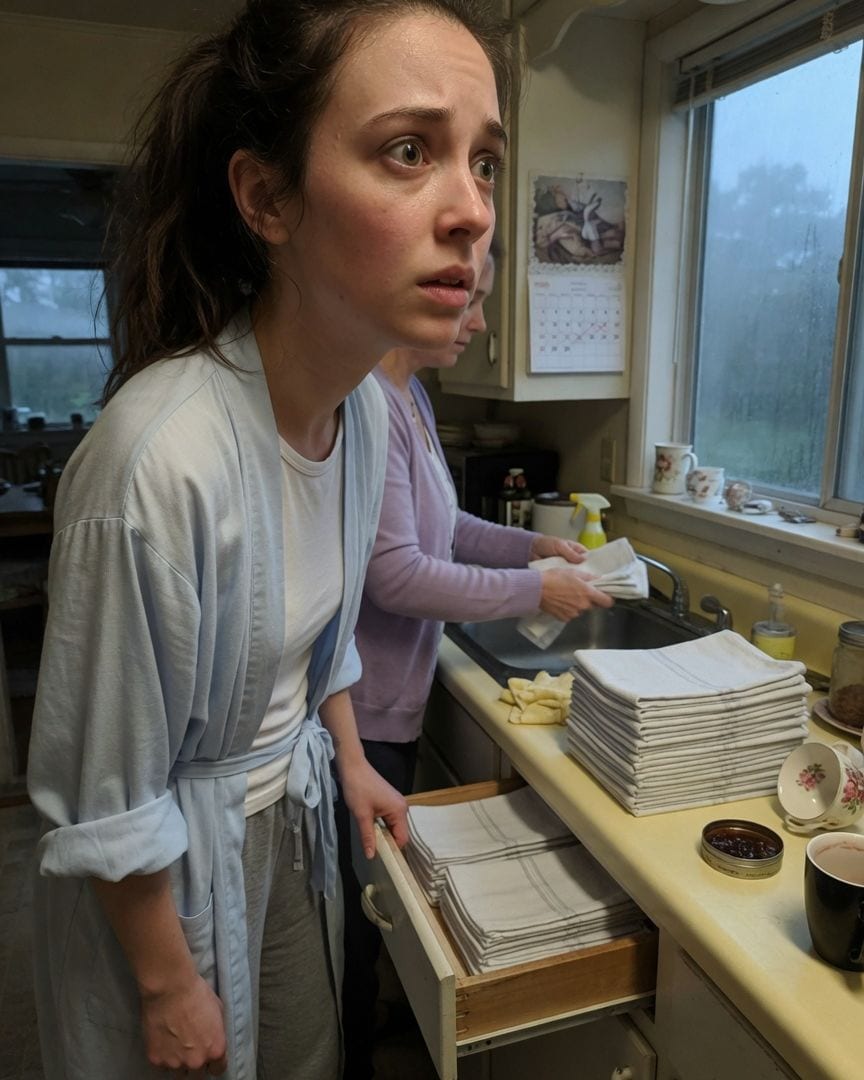
My mother's left wrist has a new scar. She never had one there.
My mother is finally home after her disappearance, and I'm trying to find our old rhythm. But then I watch her fold tea towels, a simple ritual I learned from her. She's doing it completely wrong, seam-out, insisting it's how she's always done it.
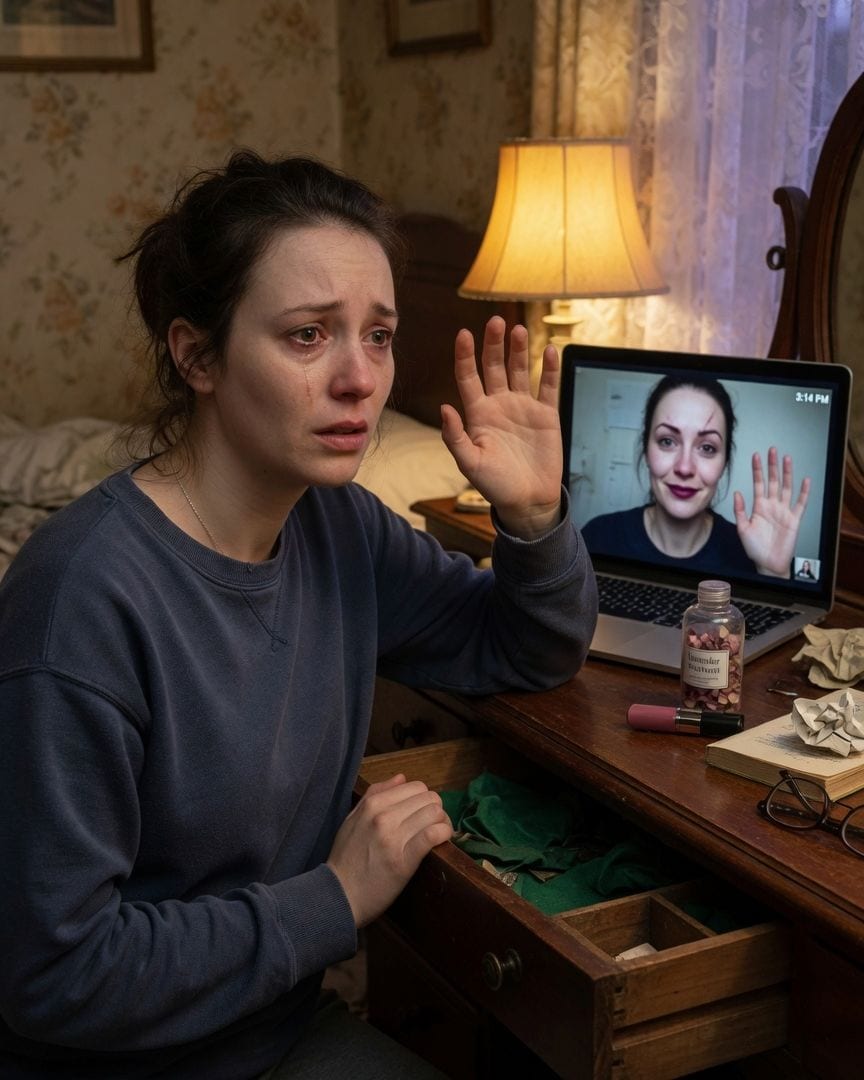
My mother waved with her right hand, both times, on our first call after she came home. She always waved left.
My mother vanished three months ago, then came back. On our first video call, she waved goodbye, but not with her usual left hand. It was her right, a small gesture that twisted something cold in my stomach.
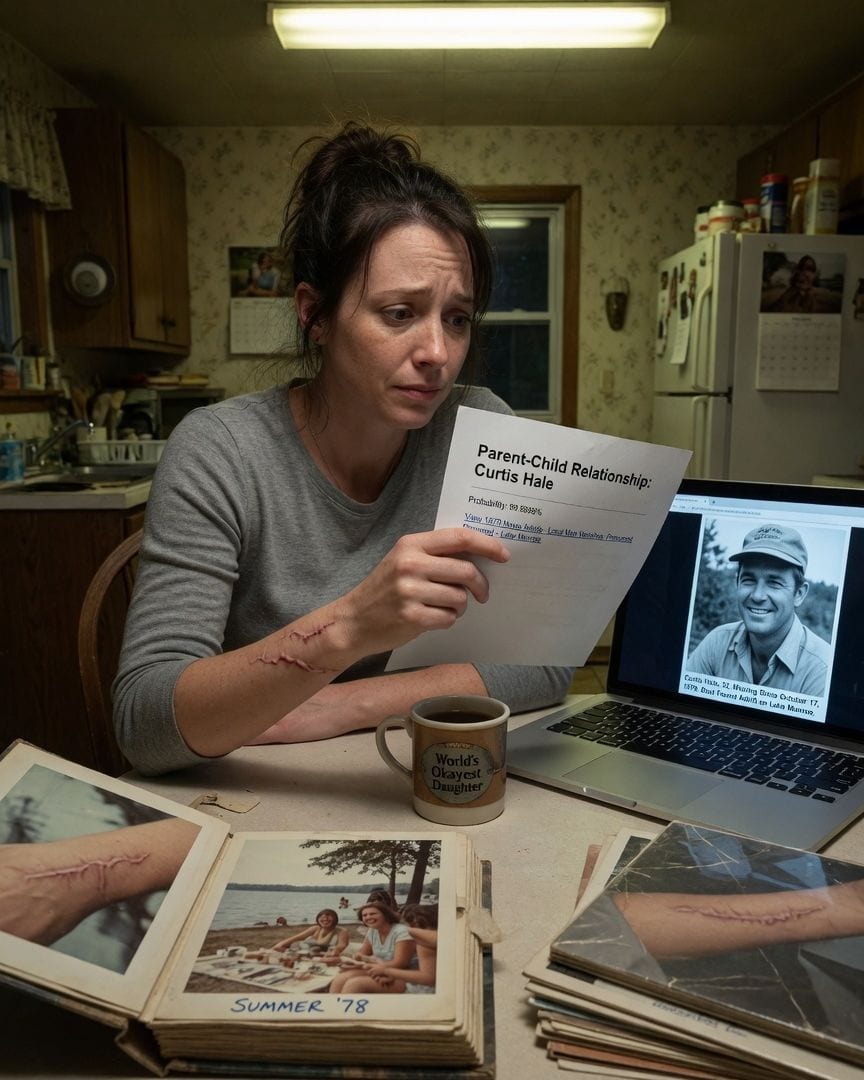
My DNA returned Curtis Hale as my father. He vanished in 1979. I was born twelve years later. The lab confirmed the match twice.
My DNA test results revealed something impossible: my biological father vanished in 1979, twelve years before my birth. My mother dismissed it as nonsense, but her reaction felt forced, leading me to old family photos. There, in a faded 1978 snapshot, I found my own distinctive childhood scar on the wrist of a stranger.
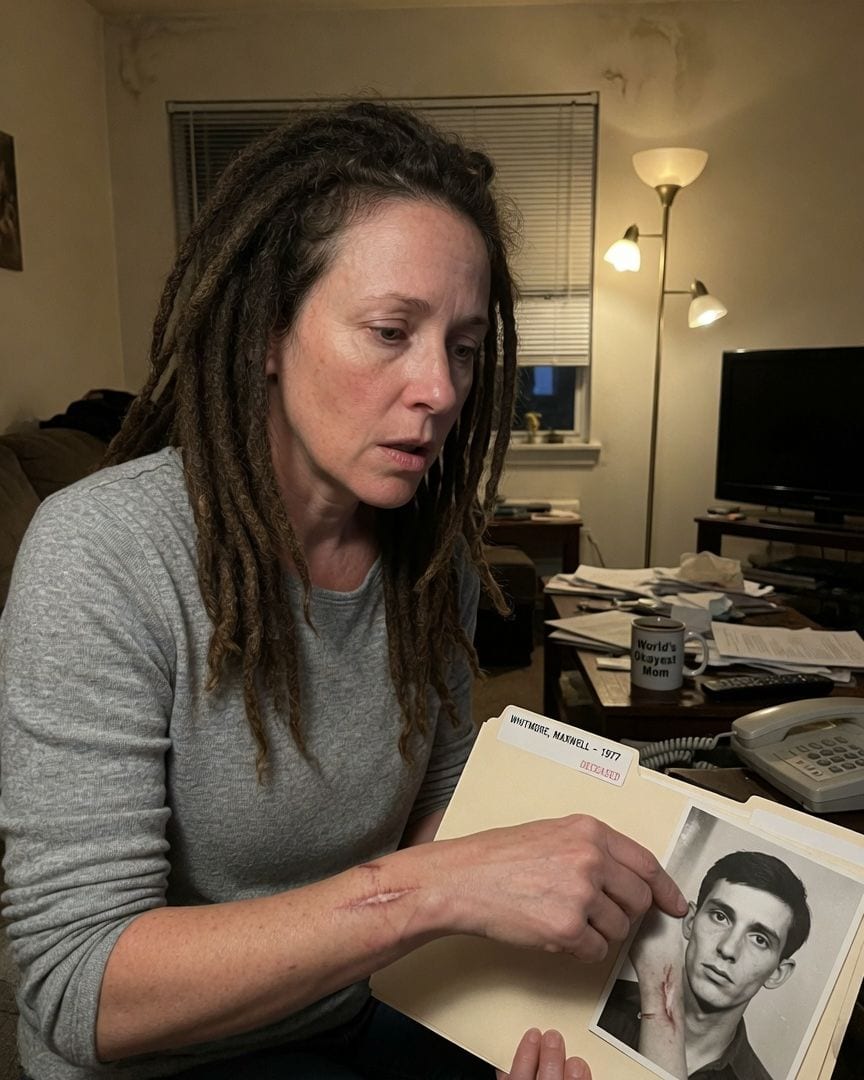
My fingerprints perfectly match a dead man's. He died in prison in 1980, but the bureau insists our hands are identical.
My distant cousin's arrest led to a routine fingerprint check, but the results were anything but normal. A bureau examiner confirmed my prints were identical to an inmate who died in custody decades ago. Then I saw his mugshot: the faint scar on his wrist was the exact same as my own unique birthmark.
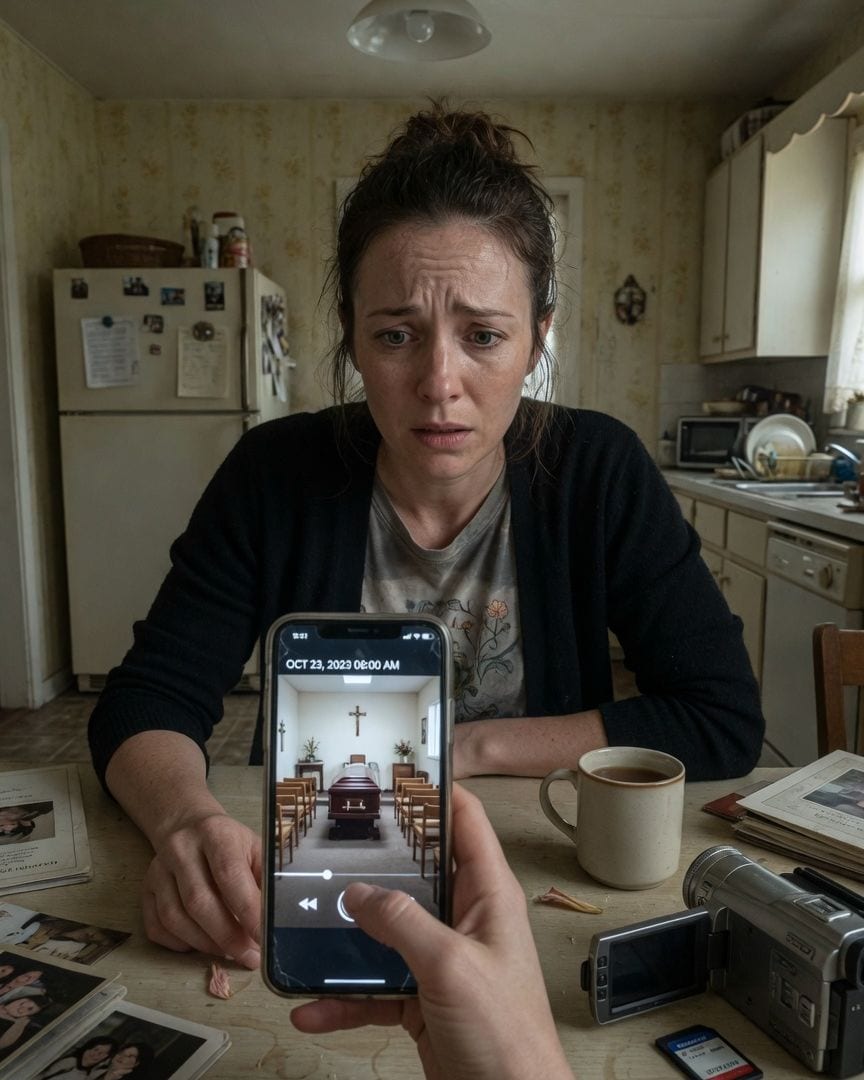
On my dead mother's phone I found a video of her funeral — steady, shot from the back over the mourners' heads, holding on her coffin. The timestamp says it was filmed an hour before any of us had arrived.
Days after my mother's funeral, I sifted through her digital life, hoping for comfort. Instead, her old camcorder revealed a video of my living room, timestamped for tomorrow morning. The abstract landscape I'd just hung was already there, waiting on the wall, a cold dread tightening in my gut.
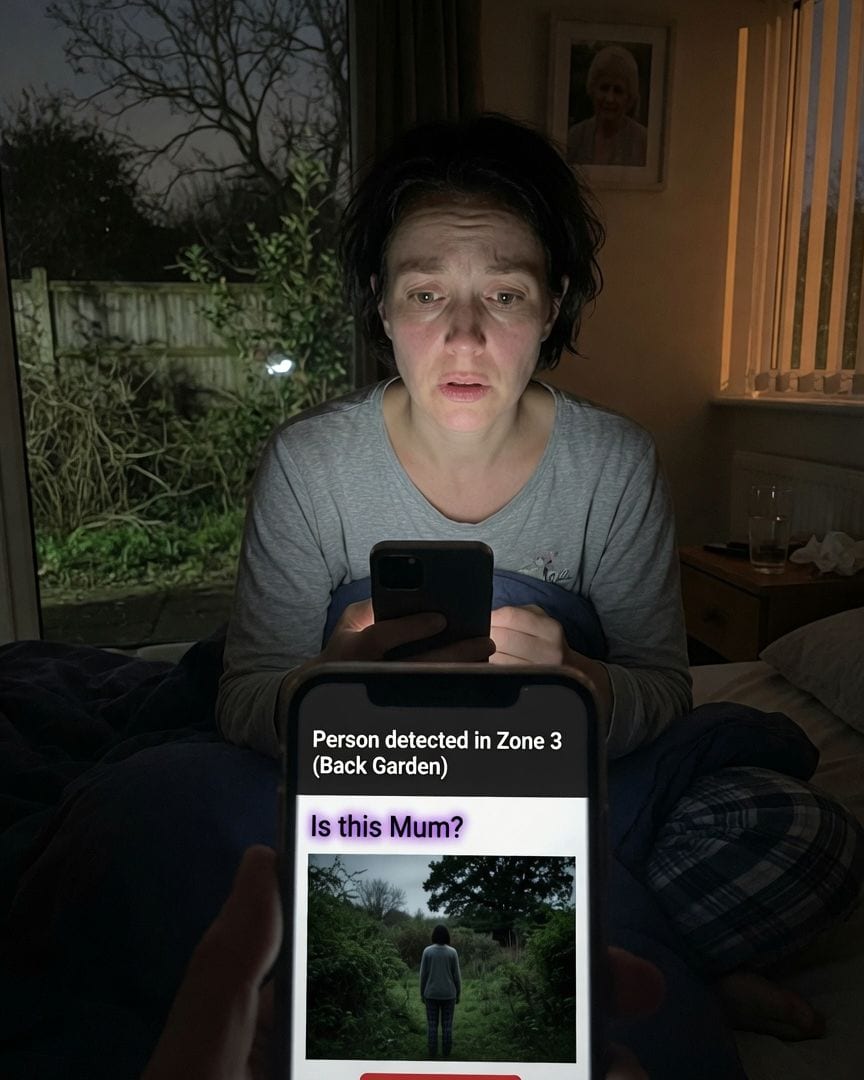
My security camera sent a clip at 3:03 AM: a woman standing in my back garden. The subject line read, 'Is this Mum?' My mother died here in March.
My phone pinged at 3 AM with a security camera alert, interrupting the deep quiet of my house. The attached clip showed a still figure in the back garden, but the subject line froze me. It asked, 'Is this Mum?' My mother died here in March.