On my dead mother's phone I found a video of her funeral — steady, shot from the back over the mourners' heads, holding on her coffin. The timestamp says it was filmed an hour before any of us had arrived.
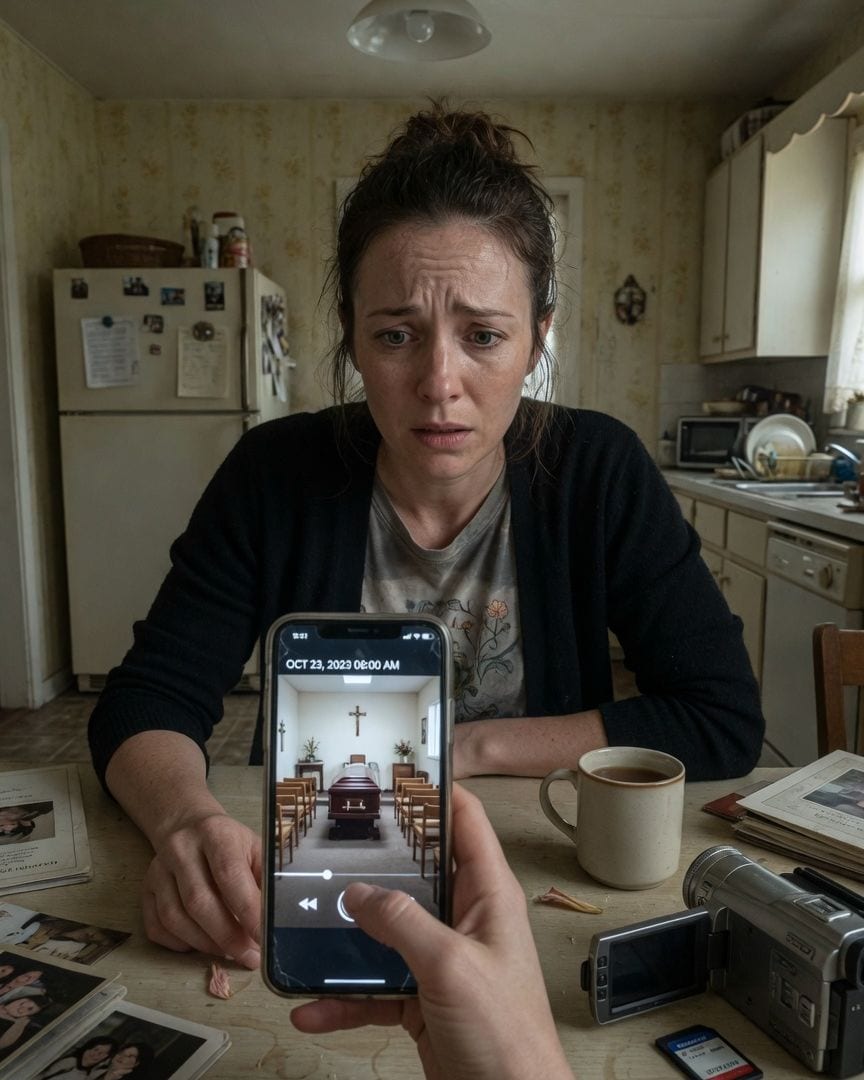
The scent of lilies still clung to my clothes, days after the funeral. It was insidious, reminding me of the sterile hush of the chapel, of everything I’d tried to push away.
I sat at my kitchen table, Edith’s smartphone a cool weight in my hand, scrolling through the chaotic digital life my mother had left behind. Edith had filmed everything, always.
Every birthday, every mundane trip to the grocery store, even me doing my homework back in high school. A relentless chronicler of the utterly ordinary.
Then I found it: a video file from the morning of the funeral itself. The timestamp on the upper left corner of the screen read 'OCT 23, 2023 08:00 AM'.
The video was steady, filmed from the back of the funeral home chapel, panning slowly over the empty rows of chairs before settling on her dark wood coffin. No mourners, no flowers, just the hushed, sterile room.
My mother’s funeral had been scheduled for 09:00 AM. No one, not even the funeral director, had been there an hour early. I clicked play again, my thumb hovering over the rewind button, a cold knot tightening in my stomach.
It was just an empty room, a silent coffin, an impossible timestamp. And the silence on the recording was absolute. No faint coughs, no creaking floors, just nothing.
I watched the funeral video for the tenth time, Julian Montgomery, my partner, trying to soothe me with talk of time zone errors or phone glitches. “Maybe the phone clock was off, Mari. Or a daylight savings thing?”
he offered, his voice gentle but firm. But I’d checked. The time was local, standard. Edith’s phone settings were basic, never touched.
Julian went to make tea, leaving me alone with the looping footage, the phone’s screen a cold glow against the quiet hum of the fridge.
I zoomed in, pixel by pixel, searching for anything, any detail that would break the spell. Then I saw it. On the far wall, barely visible behind the coffin, was a small, ornate silver cross. It hadn't been there.
I was certain. The funeral home had been decorated minimally, exactly as Edith had specified – no religious symbols. I’d even helped set up the small table with her photos. That cross was new. Or old. Or wrong.
I pulled up photos of the chapel from the funeral home’s website, from other funerals I’d attended there. No cross. I even called Grace Kowalski, Edith’s oldest friend, who’d arrived early to help arrange the guest book.
Grace confirmed the wall had been bare. “Not a thing on it, dear,” she’d said, her voice raspy. My rational explanations were crumbling, one by one.
I scrolled through Edith’s phone, desperate for context. Weeks earlier, a short, grainy video clip, barely five seconds long, caught my eye.
It showed the main street of our town, but the old, faded 'Montgomery & Sons Hardware' sign, the one Julian’s family had owned for three generations, was missing. Replaced by a brightly lit, generic 'HOME GOODS' banner. It hadn't changed.
Not in my lifetime. The footage flickered, a phantom storefront in digital amber, and I felt a chill that had nothing to do with the draft from the window. I needed to find Edith’s old camcorder.
My mother had kept everything.
I found the dusty camcorder in the back of Edith’s closet, nestled amongst old photo albums that smelled of dust and dried flowers. It was an older model, a digital handicam from the early 2000s, but still functional.
I fumbled with the memory card slot, my fingers clumsy with anticipation and dread. There were dozens of files, labeled cryptically: 'Garden_2008', 'Xmas_2015', 'Cat_Sleep'. I clicked on the newest one, dated just yesterday. The screen flickered to life.
It was my own living room. Empty.
But there, on the wall above the fireplace, hung the framed photograph I had just picked up from the gallery this morning – the abstract landscape I’d bought weeks ago but only just collected.
I had hung it myself less than an hour ago, leveling it carefully, making sure it was centered. The video’s timestamp, however, read 'OCT 25, 2023 09:17 AM'. Tomorrow. My breath hitched. A cold dread seized my gut, tightening.
My hand trembled. The painting was already there, waiting.
Julian, usually so grounded, tried to rationalize the new video. He stood in the living room doorway, rubbing his temples. “It’s a faulty camera clock, Mari. Or… a prank? Does your mother know anyone who’d do that?”
I shook my head, mute. “I just hung that painting, Julian. An hour ago. It’s impossible.” I spent the next day in a frantic, almost manic state, comparing the video to my actual living room, checking every angle, every shadow.
The light in the video was unmistakably morning light, matching tomorrow's forecast perfectly. The way the shadows fell on the armchair, the glint off the polished wood floor. It was perfect. Too perfect.
I scoured Edith's camcorder memory card again, then moved to the stacks of mini-DV tapes her mother had meticulously labeled and stored in plastic bins. Each one was a tiny, silent rectangle of memory.
I bought an old player online, waiting impatiently for its delivery, tracking its progress across three states. When it arrived, I started digitizing, hours blurring into a dizzying montage of mundane family events interspersed with stark, unsettling anomalies.
There was a clip of a local park playground, deserted, but with a new, brightly painted bench that had only been installed last week.
Another showed a stretch of highway, but with a new, gleaming billboard advertising a brand that hadn't launched yet, its logo still unfamiliar. Each 'footage of nowhere' was clean, timestamped, and utterly wrong.
I noticed a faint, almost imperceptible shimmering effect in the corner of these anomalous videos, like static trying to resolve itself into an image, a momentary digital distortion.
It was a recurring visual signature, a tiny, almost subliminal glitch, appearing and disappearing. The unease wasn't just in the content; it was in the very fabric of the recordings, a faint hum beneath the images.
This wasn't a glitch in Edith's camera; it was a glitch in reality itself, caught on tape.
My investigation consumed me. Julian grew distant, concerned by my obsession.
He’d leave for work in the morning, finding me hunched over the laptop, surrounded by piles of tapes, and return to find me in the same position, barely having moved. “You need to sleep, Marianne,” he’d say, his voice strained.
I ignored him, fueled by a terrifying, desperate need to understand. I was going through Edith’s old laptop, searching for any digital trail, any hint of what she’d been seeing, knowing.
Edith had always backed up her files to a cloud service, a habit I now blessed and cursed.
I found the familiar login details scribbled on a sticky note under the keyboard, then a folder I’d never seen before, tucked deep in a directory marked 'Archives_Private'.
My heart hammered against my ribs, a frantic bird trapped in a cage. The folder was labeled: 'The Channel'. Inside, there were hundreds of subfolders, each with cryptic names like 'Iteration_Alpha_01', 'Loop_Echo_Beta', 'Future_Probe_Gamma'.
One, at the very top, glowed faintly in the file list, catching my eye with its chilling familiarity. It was named 'Marianne_Life_Loop_V.X'. A jolt of pure ice shot through me. My name. I clicked it, my finger trembling.
A single video file was inside, labeled 'Discovery_Point_A_2023'. I double-clicked. The screen filled with a familiar image: my own face, reflected in the laptop screen, my eyes wide with a mixture of fear and dawning recognition.
It was a recording of me, right now, in this exact moment, looking at the screen. The video was less than five seconds long. Just me. Caught in the act of discovery.
I felt a cold hand on my shoulder, though the room was empty, the air still and heavy around me. I wasn’t just watching. I was being watched. Or rather, I was already recorded.
I slammed the laptop shut, the image of my own terrified face burned into my mind. The faint click echoed in the silence. I stumbled back, hitting the wall, the sudden impact jarring me.
Julian rushed in, alarmed by the noise. “Marianne, what is it? What’s wrong?” he asked, his voice laced with worry, his eyes searching my face.
I couldn't speak, just pointed a shaking finger at the laptop, which sat like a dark, silent slab on the desk. He walked over, his brow furrowed with concern, and carefully opened it. He saw the folder, the file name.
“'Marianne_Life_Loop_V.X'?” he read aloud, a quizzical note in his voice. He clicked, and saw the same short, chilling clip. “It’s… it’s just you looking at the screen, Marianne,” he said, trying to sound rational, his voice softening.
“It could be a webcam test, or maybe you accidentally recorded yourself.”
“No,” I whispered, finding my voice, though it felt like it was tearing itself from my throat. “It’s me. Now. This exact moment. Watching it.” I knew. Edith had known.
Julian looked at me, a flicker of something unreadable in his eyes – fear? Doubt? I reopened the laptop, frantically searching, ignoring him. I found a text file hidden deep within 'The Channel' folder, encrypted.
It took me hours to crack it, the frustration a burning coal in my gut, until I tried Edith’s old birthday as a password. The file unlocked. It was a diary, not of events, but of observations.
'The Feed,' Edith had called it. “It’s not a record of the past, Marianne. It’s the present, always. And the future. It’s all there, always has been. We just… access it.”
Edith wrote about the 'shimmering effect' I had noticed, describing it as 'the edges of the loop.' She wrote about how the 'channel' was specific, personal, showing 'your life, my life, played out.'
Edith had realized that her 'filming everything' was her subconscious attempt to interact with, or document, this predetermined reality. “I tried to break the pattern,” one entry read, the words stark on the screen, “to step outside the frame.
But the playback always corrects itself. We are the playback.” The funeral video, the missing hardware store, the painting – they weren't predictions. They were just… already recorded.
And I, in my frantic search, was simply playing my part in the script.
The full weight of Edith’s words settled over me, a crushing understanding. 'We are the playback.' My mother hadn't been an eccentric filmmaker; she'd been a prisoner, a character in a story she couldn't change, meticulously documenting her own cage.
Edith’s final, frantic entry echoed in my mind: “There’s a point,” she had written, “a specific recurring event in the channel that always precedes the shift. The final loop.
I tried to alter the playback at this point, to… to make a different choice.” The entry was cut short, unfinished, leaving a gaping void.
I went back to the 'Marianne_Life_Loop_V.X' channel, scrolling through the hundreds of clips. Past my childhood, past my adolescence, past my present. Each clip a moment, perfectly rendered, perfectly timestamped. I scrolled further, into the future.
My thumb ached from the scrolling, my eyes burning. And then I saw it. A new clip, added recently, dated decades from now. My breath hitched.
It was a dark wood coffin, draped in white, centered in a familiar, sparsely decorated funeral home room. Identical to my mother's. My own coffin. The timestamp on the screen read: MARIANNE ABBOTT, JAN 17, 2073 08:00 AM.
The image of my own funeral, decades away but already recorded, solidified the horrifying truth. The 'channel' wasn't a prediction; it was the script. Edith's desperate attempts to 'alter the playback' were futile because the playback was reality.
Every clue I had found — the early funeral video, the phantom hardware store, the pre-hung painting, even my own face staring back from the 'Marianne_Life_Loop_V.X' file — clicked into place, not as mysteries, but as undeniable evidence of a predetermined existence.
The pattern was monstrously coherent: a cycle, a loop, repeating with minor variations, but always returning to the same inevitable points. Edith's life, I realized, had been the first iteration I’d witnessed, a preview of my own.
The 'shift' my mother had written about, that final loop, was simply the moment of full, conscious realization that one was merely a character in an eternal, inescapable play.
The shimmering effect was the bleed-through from one iteration to the next, a momentary flicker of the underlying mechanism, a brief glimpse of the static between two identical frames.
The terror wasn't in what was coming, but in the knowledge that it had already happened, countless times, and would again. I was living out a recording, and my mother had done the same.
The channel was not just a record of my life; it was my life.
A cold, quiet resolve settled over me. I would try to break it. Edith had failed, but I wouldn't go down without a fight.
The channel showed me leaving the house at exactly 10:00 AM the following morning, to pick up groceries from the corner store. A mundane, insignificant event, a perfect test. I would not leave. I would stay inside.
At 9:50 AM, I sat on my sofa, watching the clock on the mantelpiece, a defiant tremor in my hands. 9:55 AM. The air in the room felt heavy, charged. 9:58 AM.
Julian called from work, his voice a concerned murmur through the phone, asking if I was alright. I ignored it, letting it ring out.
At 9:59 AM, the doorbell rang. I froze. Who could it be? I hadn't ordered anything, wasn't expecting anyone. The doorbell rang again, insistent, a sharp, buzzing sound that made me flinch. A package. I always signed for packages.
It was an old habit, a small courtesy. The thought of the delivery driver waiting, the inconvenience, the small social pressure, tugged at me, a tiny hook in my consciousness. My heart pounded against my ribs, a desperate drum.
I glanced at the clock: 10:00 AM. The channel had shown me leaving. I didn't want to. But the bell rang again, a sharp, demanding sound that vibrated through the floorboards. With a sigh of pure, crushing defeat, I rose.
I walked to the door, my legs heavy, my hand reaching for the knob. My fingers closed around the cold metal. I opened it. The delivery driver stood there, a package in hand, a polite, practiced smile on his face.
'Marianne Abbott?' he asked. I nodded, accepting the parcel, my fingers brushing his. I had left the house. The playback had corrected itself. I was trapped, an actor in a play with no director, only a script.
The fight drained out of me, replaced by a quiet, unsettling resignation. I stopped checking the channel. There was no point.
I began to notice the echoes in everyday life: Julian’s recurring phrases, delivered with the exact same inflection each time; the way my neighbor Grace always asked about my garden on Tuesdays, without fail; the precise cadence of a cashier’s 'Have a nice day' at the supermarket.
It was all familiar, played out countless times before, variations on an immutable theme. I went through the motions, a phantom limb of my former self, present but detached. The world continued, vibrant and oblivious, around me.
I was in it, but not of it. Just a participant in a grand, endless, pre-recorded performance.
I sit at my kitchen table, staring blankly at my phone screen, the same device that started it all. Julian walks in, home from work, his face etched with familiar concern, his movements a well-worn choreography.
He puts an arm around my shoulder, a gesture I’ve felt a thousand times. 'Rough day, love?' he asks, his voice a gentle, predictable warmth. I turn, a faint, unsettling smile playing on my lips.
It's a smile he's seen before, countless times, though he couldn't say where, or why it makes him uneasy now. 'Is that so?' I reply, my voice flat, perfectly echoing a tone he's heard a thousand times.
If this one got to you
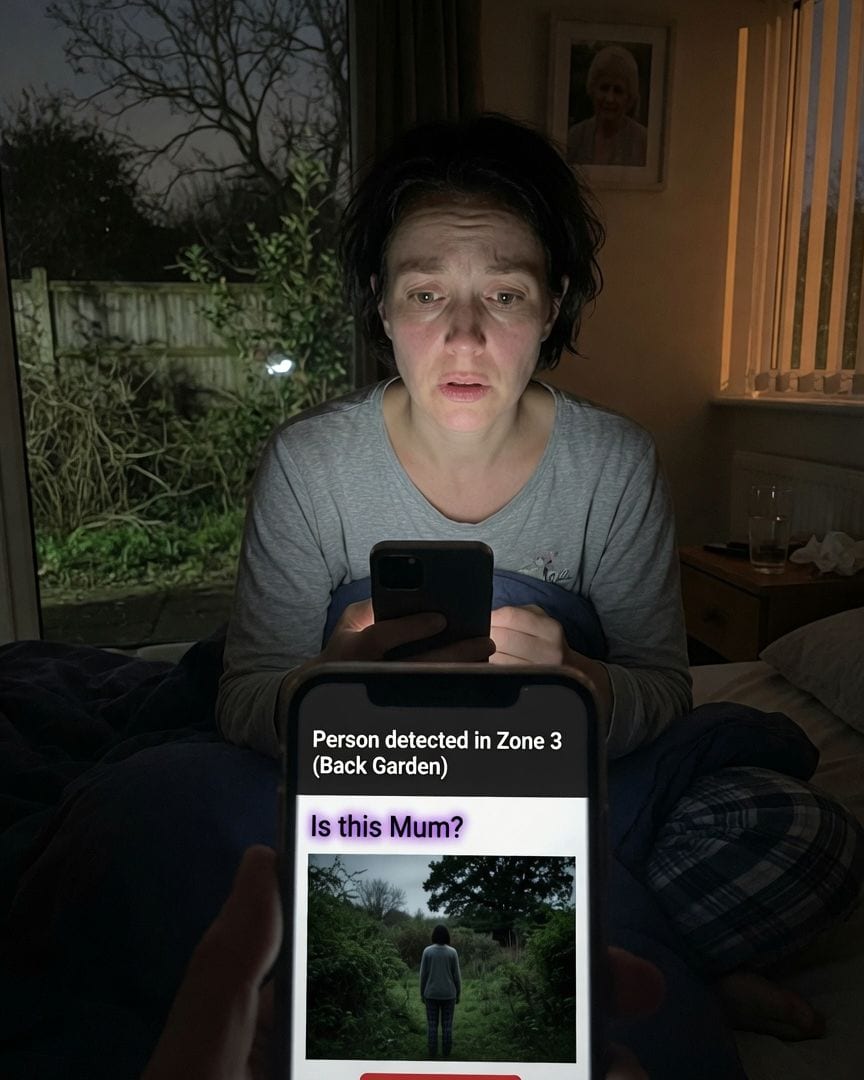
My security camera sent a clip at 3:03 AM: a woman standing in my back garden. The subject line read, 'Is this Mum?' My mother died here in March.
My phone pinged at 3 AM with a security camera alert, interrupting the deep quiet of my house. The attached clip showed a still figure in the back garden, but the subject line froze me. It asked, 'Is this Mum?' My mother died here in March.
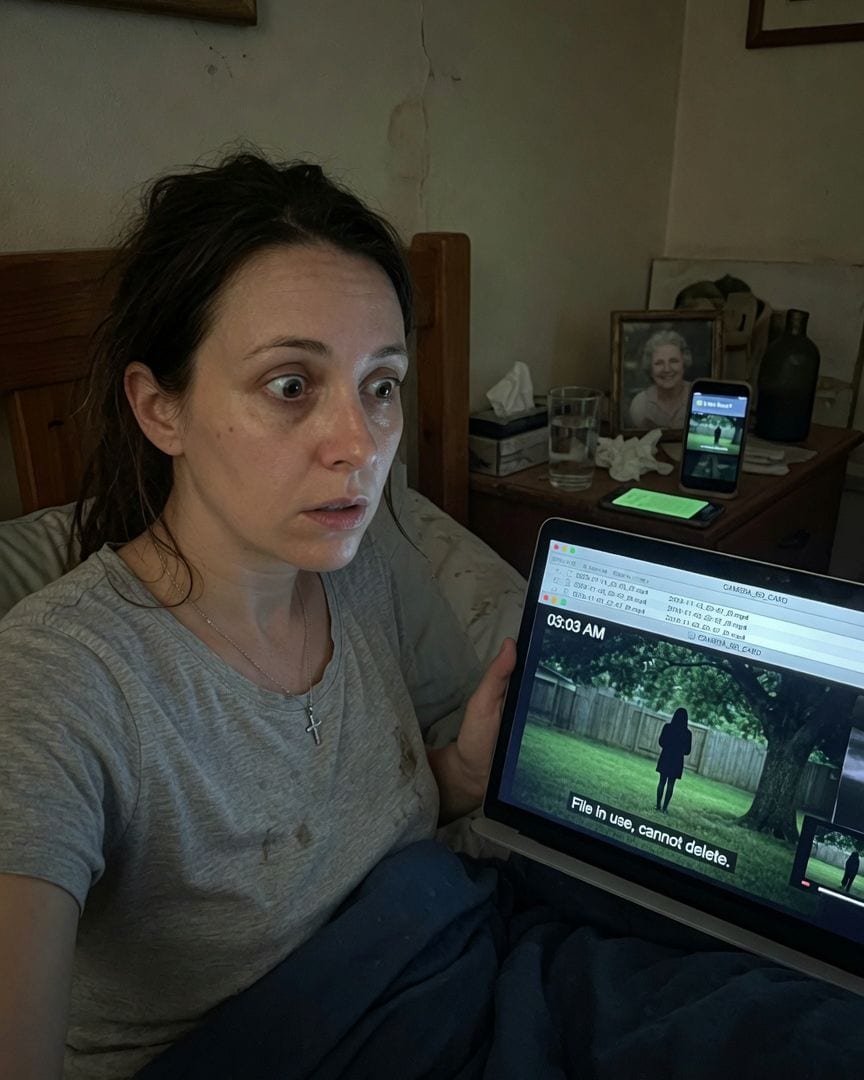
My security camera emailed a clip at 3:03am: a woman stood in the garden, back to the house. The subject line read 'Is this Mum?' My mother died in March. I can't delete the file.
My security camera sent an alert at 3 AM: 'Is this Mum?' But my mother, Constance, died in March. The grainy clip showed a woman in the garden, perfectly still, her back to the camera. The impossible question coiled a sick dread in my gut.
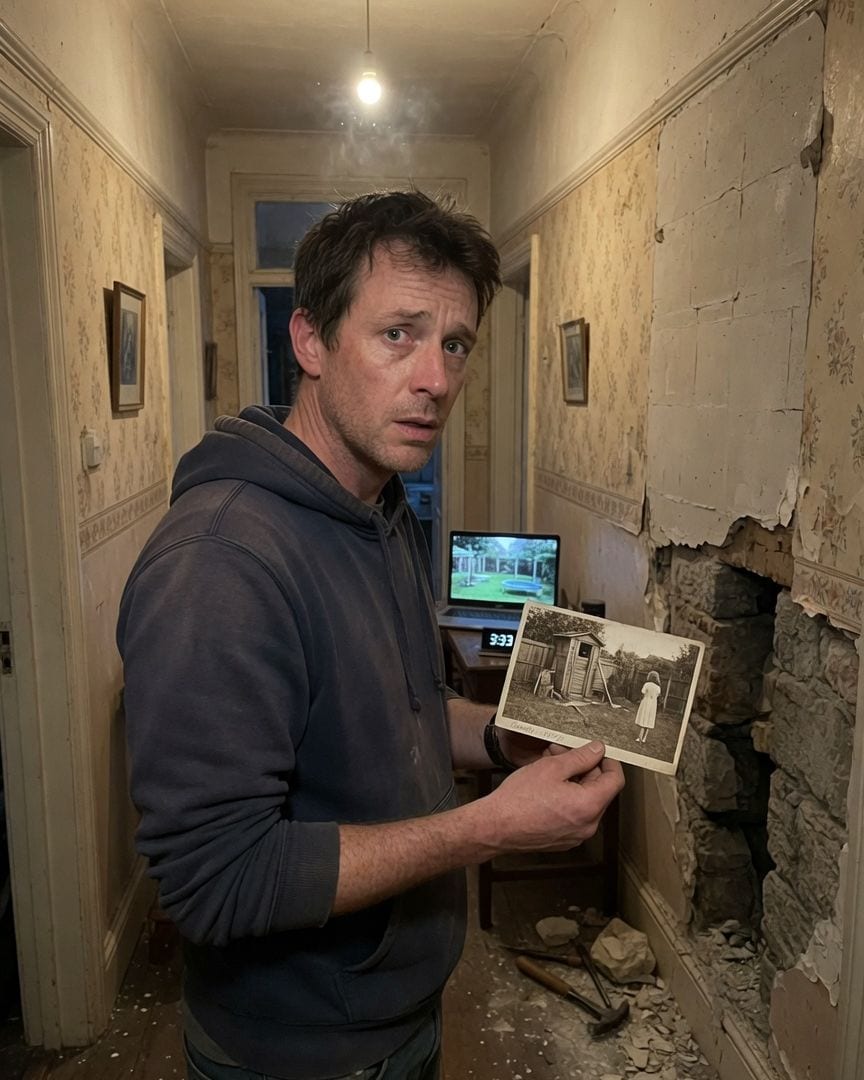
My trail camera keeps catching a girl on the lawn at 3:33, but the garden around her is wrong—a privy, a mangle, washing lines where my trampoline is. The last frame each night is her starting to turn.
I inherited an old house and set up a trail camera for foxes. But the footage changed: a young girl appeared in my garden at 3 AM, standing where my trampoline was, surrounded by washing lines where my rose bushes bloom. The landscape was decades out of place.
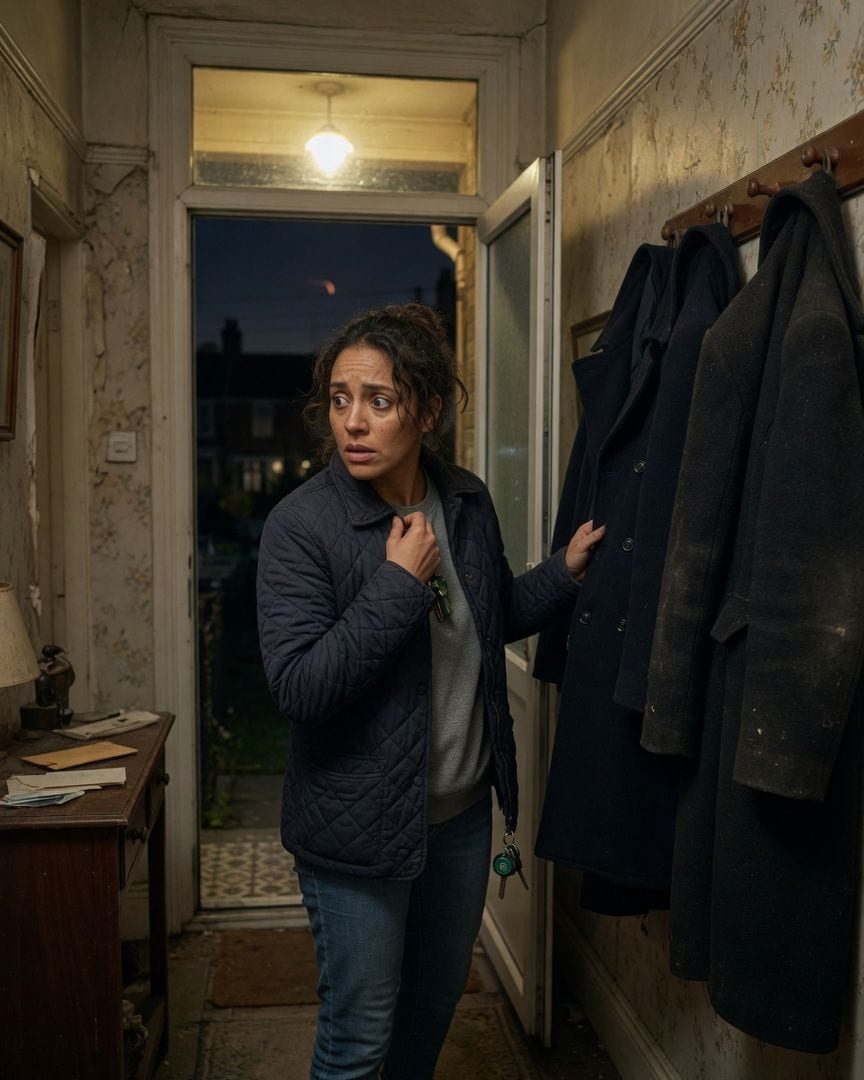
My tiled path was new, my front door green. Then three dark coats hung in my hallway.
After a late night watching the lunar eclipse, I returned to my Victorian house, only to find the path and front door inexplicably changed. Though the house seemed to revert to normal, strange things started appearing: a kettle warm from boiling, a distinct impression on my armchair. Then, an antique, lavender-scented handkerchief appeared on my bedside table, an undeniable presence in my private space.
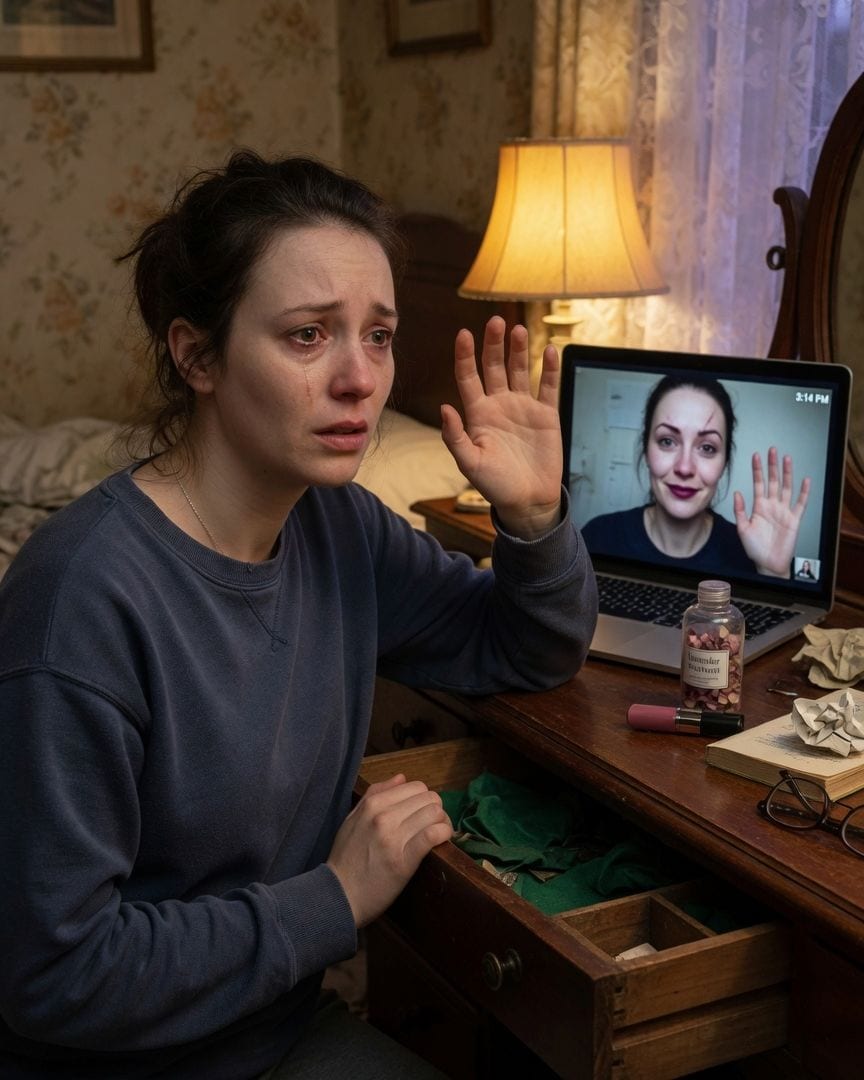
My mother waved with her right hand, both times, on our first call after she came home. She always waved left.
My mother vanished three months ago, then came back. On our first video call, she waved goodbye, but not with her usual left hand. It was her right, a small gesture that twisted something cold in my stomach.
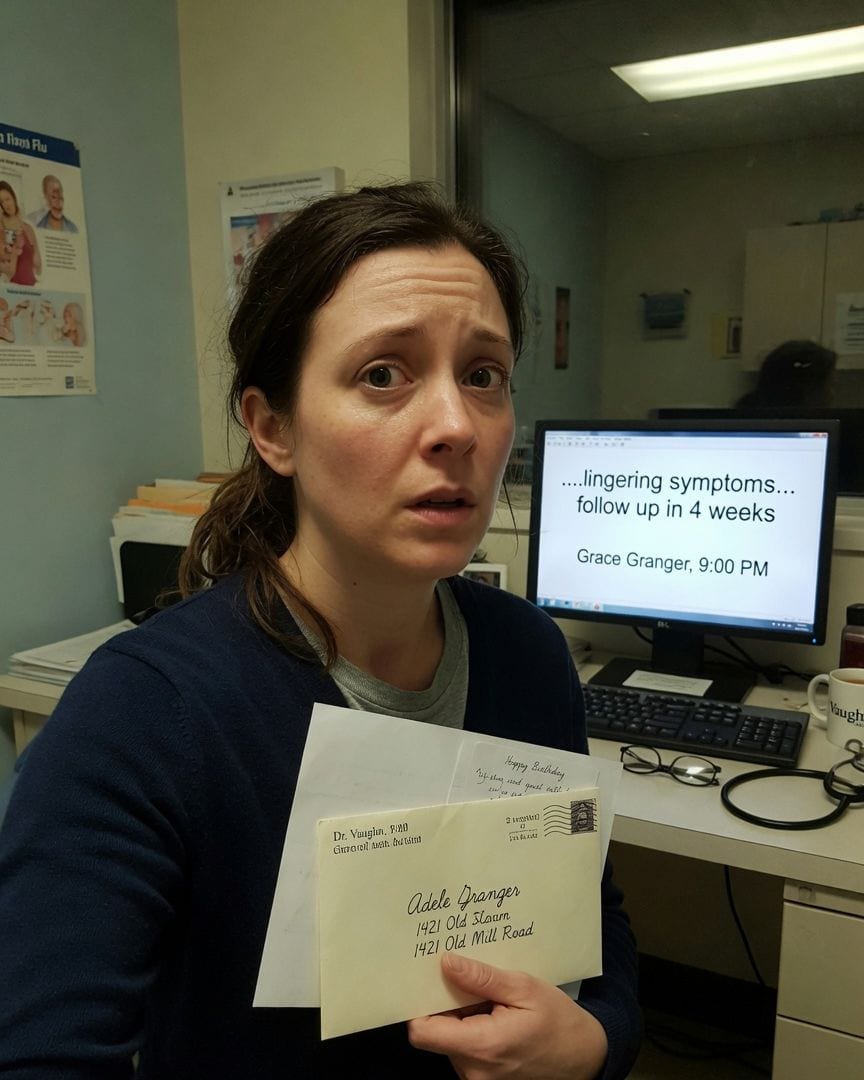
Mid-appointment about my cough, my doctor told me to call my estranged sister tonight — a sister I'd never mentioned to him. The note on his screen ended with her name and a time.
My doctor dismissed my cough as a lingering virus, but then he said something impossible: "You should call your sister tonight." I hadn't spoken to Grace in years, and I'd never mentioned her to him. When I saw her name on his screen with a specific time, a cold dread began to claw at me.