My DNA came back a parent-child match to a farmer who died in 1952. I didn't believe it, so I paid a second lab — same result, down to the last marker.
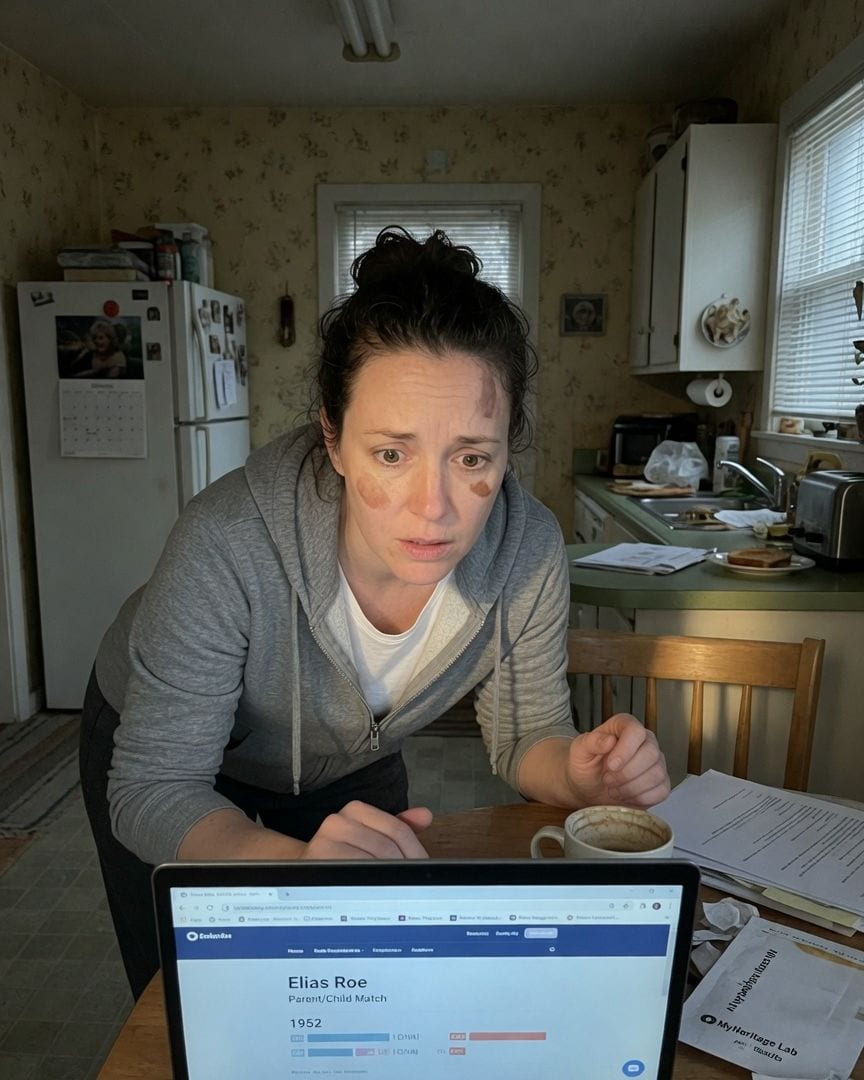
The genealogy website glowed on my kitchen table, its light stark against the dim morning. I’m Karen Hughes, 38 years old, and pragmatic to a fault.
I’d sent off my DNA kit on a whim, curious about distant cousins, not expecting... this. My sample, uploaded weeks ago, had clustered me with a small group of relatives. The purpose of their collective submission?
To identify the exhumed remains of a single man: Elias Roe, a farmer buried in 1952.
The site listed him. Elias Roe. Parent/Child Match.
A cold ribbon of dread unspooled in my chest. This couldn’t be right. I was born in 1985. Elias Roe died in 1952. The math was impossible. My first thought was a glitch, a database error.
I’m a rational person, a software engineer by trade; I understand how systems fail. I immediately contacted the genealogy lab, explaining the obvious, egregious error. They were polite, professional, and re-ran the sample. The results came back identical. Still "Parent/Child."
Still Elias Roe.
Convinced they were simply trying to save face, I ordered a completely separate kit from another major DNA service, sent in a new sample, and waited. The wait stretched my nerves taut.
When their email arrived, I opened it with a trembling finger, half-expecting vindication. Instead, their report confirmed the impossible, down to the last marker. Elias Roe, deceased since 1952, was indeed my direct parent or child. I closed the laptop.
The screen went dark, but the disquiet remained, a faint, internal hum of wrongness that vibrated deep in my bones.
Despite my rational mind screaming "mistake," "impossible," I couldn't let it go. The hum wouldn't quiet. It started small, a few late-night searches, but quickly became an obsession. Elias Roe. I scoured online archives.
Sparse details emerged: a local farmer, unmarried, died in a rural accident. Nothing about family, no known heirs. Just a brief mention in some forgotten digital ledger about a property sale decades ago.
The next weekend, I drove out to the countryside, following the thread of a decades-old map to a small, overgrown cemetery just outside town. The air was still, heavy with the scent of damp earth and decaying leaves.
Birds were unusually silent. I walked through rows of weathered stones, my shoes crunching on dry grass, until I found it. Elias Roe. The granite was rough beneath my fingertips, lichen-stained, but the death date was clear: October 1952.
My stomach churned. It was real.
A strange, unshakeable pull drew me further, to the old Roe farm property, described in one of the archived land deeds. It was a few miles deeper into the valley, a dilapidated, abandoned shell, surrounded by skeletal trees.
The farmhouse sagged, its windows dark, like vacant eyes. As I walked the perimeter, pushing through shoulder-high weeds, a fleeting, unplaceable sense of déjà vu washed over me.
I felt as if I’d walked this land before, heard these wind-chimes of creaking wood, breathed this same earthy air. It made my skin prickle, a ghost of familiarity I couldn't place.
I pulled out my phone to check the time, and in the reflection of the dark screen, I saw the faint, crescent-shaped birthmark on my left cheek, a mark I’d had my whole life. It felt… prominent, suddenly.
A week later, the creeping unease was still there, a constant undertow. I also had a persistent ache in my left knee, completely unrelated to my growing obsession. My doctor, a kind, no-nonsense woman, ordered an MRI.
Lying on the narrow bed, the humming machine a resonant thrum around me, my mind drifted to Elias Roe, to the impossible dates, the decaying farm. The hum of the machine seemed to merge with that internal hum of wrongness.
Later, in the radiologist's office, the doctor turned to the screen, a clean, white-on-black image of bone. My bone. She pointed to a specific area on the scan of my left tibia. "See this?" she said, her voice calm, clinical.
"It's an old, perfectly healed compound fracture. Looks like it mended decades ago." I stared at the image, utterly bewildered. My left leg. A compound fracture. I’ve never broken a bone in my life. Never had surgery.
There isn't even a faint scar on my skin. Yet there it was, perfectly mended, smooth, whole. The bone on the screen was mine, yet it bore the evidence of a wound I had never, ever sustained.
The MRI image, a physical manifestation of an impossible injury, hit me harder than the DNA results ever could. This wasn't just a record mix-up anymore; it was my body, carrying the ghostly imprint of a trauma I'd never experienced.
The dread solidified, growing heavy and cold.
I went straight back to the local historical society, a dusty building that smelled of old paper and forgotten lives. The air conditioning hummed, occasionally rattling a loose pane of glass in a display case.
I felt an urgency I couldn't shake. I needed more than dates and names; I needed details. I spent hours hunched over a microfilm reader, my eyes aching from the faint, flickering light.
I scrolled through reels of yellowed newspaper archives, specifically searching for anything about Elias Roe's death, no matter how trivial. My fingers cramped as I wound the small handle, image after image blurring past.
Then, I found it. A faded newspaper clipping from October 1952. The headline, stark and uncompromising, read: 'Local Farmer Elias Roe Killed in Tragic Tractor Accident.' My breath hitched.
The article went on to describe the accident in grim detail, how Roe had been caught beneath the overturned machinery.
The words blurred before my eyes, then sharpened: he had suffered 'a severe, crushing injury to his left leg, including a compound fracture of the tibia.'
The description. The location. The specific injury. It matched my MRI scan exactly. A cold wave washed over me, draining the warmth from my face. This was no coincidence, no mistake.
The world around me seemed to tilt, the quiet hum of the microfilm reader suddenly too loud, like something trapped.
While at the historical society, poring over the articles, I became aware of someone watching me. An elderly woman, sitting a few tables away, ostensibly reading a large book on local flora.
But her gaze kept drifting, sharp and knowing, lingering on me. She had unnervingly bright eyes set in a deeply creased face.
I tried to ignore her, to focus on the flickering screen, but the feeling of being scrutinized was palpable, a prickle on the back of my neck.
Every time I glanced up, she would quickly drop her eyes to her book, but the sensation never truly dissipated.
Later that week, unable to resist the pull, I returned to the overgrown Roe farm property. The sun was dipping, painting the sky in bruised purples and oranges.
As I walked through the decaying orchard, the branches skeletal against the twilight, I spotted her again. The same elderly woman, standing by her ancient, beat-up sedan, parked on the dusty lane, just watching me from a distance.
She made no move to approach, simply stood there, a silent sentinel, her silhouette stark against the fading light. There was something unsettling in her stillness, a deep patience.
I walked back to my car, my heart thumping a frantic rhythm against my ribs. As I reached the driver's side, a small, folded note, crisp and white, was tucked under my windshield wiper.
My hand trembled as I unfolded it. In neat, precise handwriting, it read: 'Some things are better left buried.' The message was clear. Someone knew what I was digging for, and they wanted me to stop.
The air around me suddenly felt colder, despite the lingering warmth of the day.
The note, and the woman's unnerving, quiet presence, pushed me past caution, past fear, into a cold, determined resolve. She knew something. I tracked down her name from the historical society visitor log: Vivian Radcliffe.
The librarian had recognized the name, describing Vivian as a local elder, known for her deep knowledge of the area’s history, and a bit of an eccentric.
I found her address, a quaint, cluttered cottage tucked away on a winding lane. When I knocked, the door opened almost immediately, as if she'd been expecting me. Vivian Radcliffe stood there, her sharp eyes appraising me. She didn’t smile.
"Karen Hughes," she said, her voice raspy, a statement, not a question.
I stated my business directly, holding up the note. "You left this for me."
She sighed, a slow, deep sound that seemed to carry the weight of years. Her eyes darted, not nervously, but as if weighing options. Finally, she stepped back, inviting me in with a gesture.
The cottage was a labyrinth of books, yellowed maps, and framed photographs. The air was thick with the scent of dried herbs and dust.
"Elias Roe," Vivian began, her gaze settling on me. "He was… different. Not like others." She gestured to a worn armchair. I sat, my knuckles white on my knees. "What do you mean 'different'?" I pressed, my voice tight.
"My DNA matches him. I have an injury in my leg that perfectly mirrors his fatal wound. Why?"
Vivian’s eyes, ancient and knowing, didn't flinch. She spoke of a 'spirit,' or 'essence,' that didn't simply die. She used phrases like 'passing on,' a 'continuation.'
"The Roe line isn't about bl**d, Karen," she said, her voice barely a whisper, yet resonating with authority. "It's about the purpose. The caretaker. Elias always found his way back. He always found a new form.
And you, dear, are no different. You carry his legacy, his purpose."
The words hung in the air, pulling the disparate threads—my impossible DNA match, the phantom injury, the unsettling pull of the old farm—into a terrifying new coherence. It was a pattern, clear and monstrous.
My mind raced, reeling from Vivian's impossible claims. "A new form? What does that even mean?" I demanded, my voice trembling, disbelief battling with the undeniable evidence. "Are you talking about… reincarnation?" The word felt clumsy, alien in my mouth.
Vivian didn't answer directly. She rose slowly, moving with a quiet grace surprising for her age, to a dusty bookshelf crammed with old photo albums and local histories.
The air grew still, the only sound the faint tick-tock of a grandfather clock in the hall. She pulled out a small, leather-bound album, its cover cracked, its pages brittle with age.
Carefully, reverently, she opened it to a faded, sepia-toned photograph. It showed a young man, perhaps in his early twenties, standing proudly beside a newly built barn. His eyes, even in the blurred image, held a familiar intensity. Elias Roe.
Vivian pointed to Elias's face in the photo, her finger resting on a subtle, almost imperceptible detail. "His mark," she said softly, her voice flat, devoid of emotion. My eyes strained, focusing on the left cheek of the young farmer.
And there it was. A faint, crescent-shaped scar, barely visible, but unmistakable.
I felt a cold shock, like stepping into an icy stream. My breath hitched.
Without thinking, I reached up, my own fingers tracing the identical birthmark I've always had on my left cheek, a mark I’d always considered unique, distinctly mine.
I looked from the photo, to my fingers on my cheek, back to the photo. Vivian looked from the image of young Elias to me, her ancient eyes piercing, seeing straight through me. "And yours."
The revelation of the shared mark, the physical echo across decades, shattered my last vestiges of disbelief. My hand still rested on my cheek, my fingers tracing the familiar crescent. "What is this?"
I whispered, my voice barely audible, the words catching in my throat.
Vivian, now entirely calm, her composure chilling, explained the full, horrifying truth. The 'essence' of Elias Roe, she said, was not a soul in the traditional sense, but a consciousness, an awareness, that had existed for generations.
It didn't die; it transferred. The crescent mark was the lineage's identifier, a physical echo carried by each new vessel, a birthmark in one, a scar in another, but always there, a silent signature.
Elias Roe, the farmer buried in 1952, was himself a vessel for a previous 'Elias.' His violent death, specifically the compound fracture of his left tibia, was the 'trigger' for the essence to seek a new host, a new life.
My birth, 33 years later, was a new beginning for Elias.
My DNA match, the impossible healed injury that perfectly mirrored Elias Roe's fatal wound, my own crescent birthmark – all of it snapped into place. A monstrous, coherent pattern spanning decades, millennia even, she implied.
I wasn't Karen Hughes, the software engineer. I was never just Karen. I was Elias, waiting to reawaken. The knowledge settled over me, heavy and cold, making the air in the cottage feel thin, impossible to breathe.
I recoiled, shaking my head, a desperate, frantic movement. "No. I'm Karen. I have my own life, my own memories, my own... everything." My voice cracked.
Vivian stepped closer, her eyes filled with a placid, ancient understanding that offered no comfort. "You have Karen's memories, yes. But Elias's purpose. The land calls to him. To you."
She explained that the 'purpose' was to watch over the valley, to maintain the balance, to be the silent, eternal caretaker of this specific patch of earth. It was a duty, a legacy, passed on.
She spoke of cycles, of seasons, of the land requiring an anchor.
I tried to argue, to find a loophole, a way out of this inherited, impossible fate. My mind scrambled for any logical counterpoint, any scrap of my former life to cling to.
But Vivian's calm, unwavering certainty, coupled with the undeniable evidence now woven into my very being, into my bone, into my skin, began to erode my resistance.
The dread wasn't from a monster in the dark; it was from the realization that the monster was her, or lived within her. There was no escape. The choice wasn't to fight, but to accept.
An overwhelming exhaustion settled over me, a profound, internal surrender that felt both terrifying and strangely inevitable. I felt the weight of generations, the quiet pull of the earth, settling into my bones, a slow, deep ache.
I left Vivian's cottage, the world outside now muted, seen through a new, ancient lens. My old life, my city apartment, my job – they felt distant, irrelevant, like stories about someone else.
The hum of wrongness had changed; it was no longer a frantic warning, but a resonant echo of the valley.
I sold everything. My apartment, my car, my belongings. The process was swift, emotionless. I moved into a small, isolated house on the edge of the valley, not far from the old Roe farm. It was quiet here.
The wind, when it blew, whispered secrets through the pines.
I began to spend my days walking the fields, observing the changing seasons, the patterns of the wildlife, the subtle shifts in the soil beneath my feet.
I started a journal, not of my own thoughts, not of Karen's thoughts, but of the land, the crops, the weather, just as Elias might have. My handwriting began to change, becoming more precise, more ordered.
I sit now on the porch of my new home, watching the sun dip below the distant treeline, painting the sky in hues of orange and purple. The air is cool, carrying the scent of damp earth and coming frost.
A faint, familiar ache resonates in my left leg, a dull throb that I no longer question.
I raise a hand, running a finger over the crescent-shaped birthmark on my left cheek, a gesture I now understand, a mark I share with Elias. The next entry in my journal, dated months later, simply reads:
The harvest is early this year. The soil remembers.
If this one got to you
The blood on my own newborn heel-prick card — the one my mother saved in a drawer for thirty years — doesn't match the DNA in my mouth today. The lab ran it three times: two different people.
I sent my newborn heel-prick card to a genealogy lab, expecting to confirm my family tree. Instead, the lab tech called with an impossible truth: the blood from my infancy did not match my adult DNA. My own record insisted I wasn't quite myself.
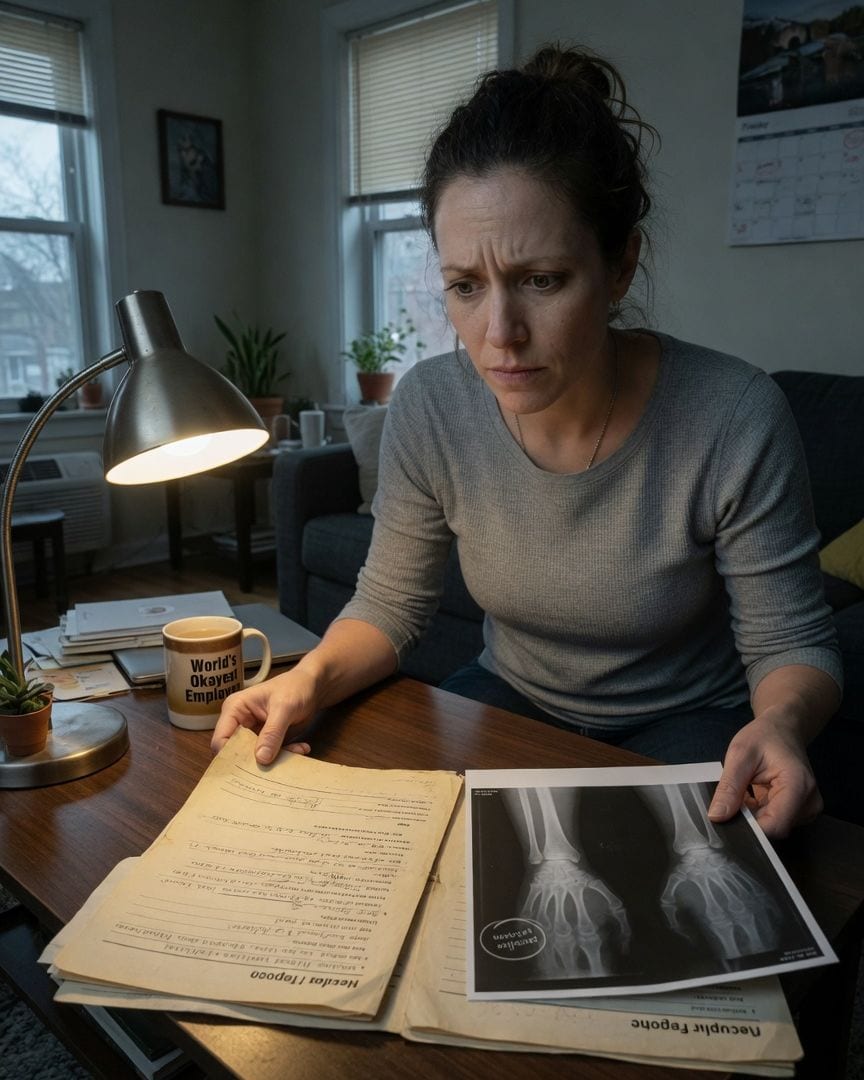
My own X-ray shows a rare wrist bone fusion. It's identical to one in a dead man's 1972 autopsy.
My ordinary work-from-home routine was shattered by a call from a pathology department. They were auditing old tissue samples and found my exact DNA profile matched a man's autopsy from 1972. The chief pathologist calmly stated the impossible: both samples, mine and his, came from one body.
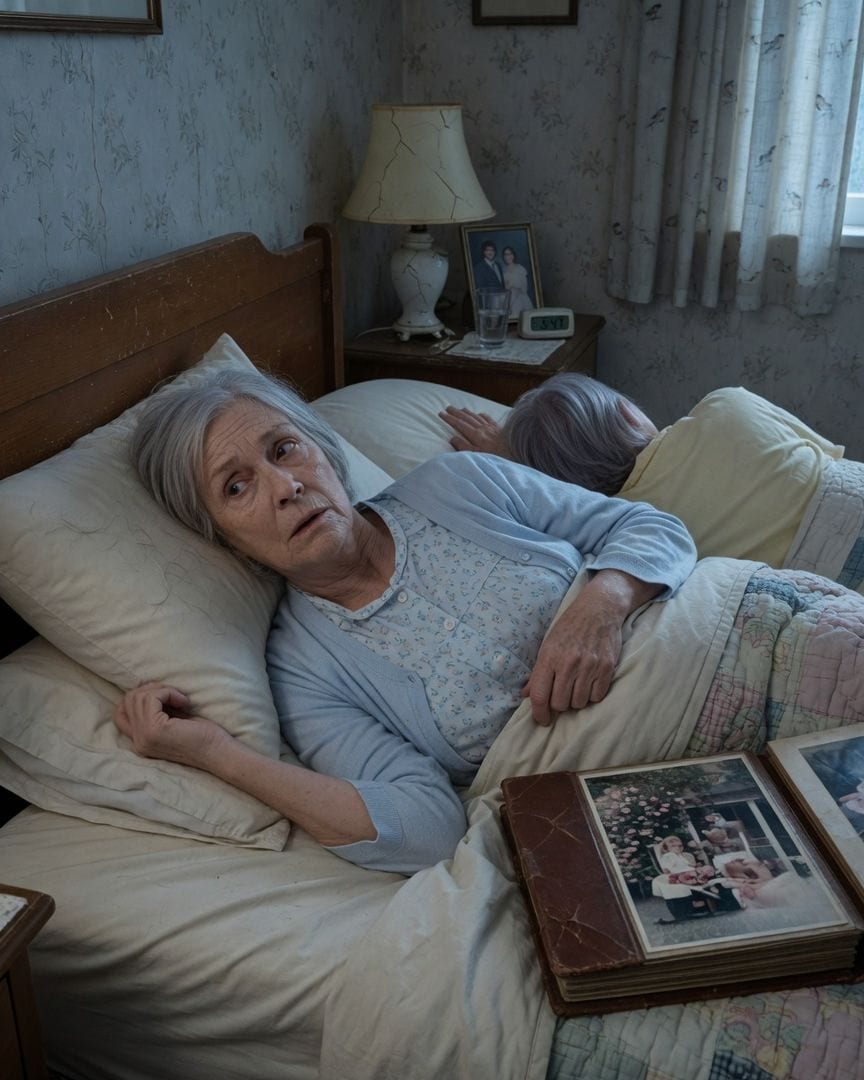
My twin sister Ruth sleeps on the right now, facing the wall. For forty-one years, she always took the left side. She insists I'm misremembering.
After three days missing, my partner Ruth finally came home. But the morning after, I woke to find her sleeping on the wrong side of our bed. She claimed she'd always slept there, and my memory was wrong, despite forty-one years together.
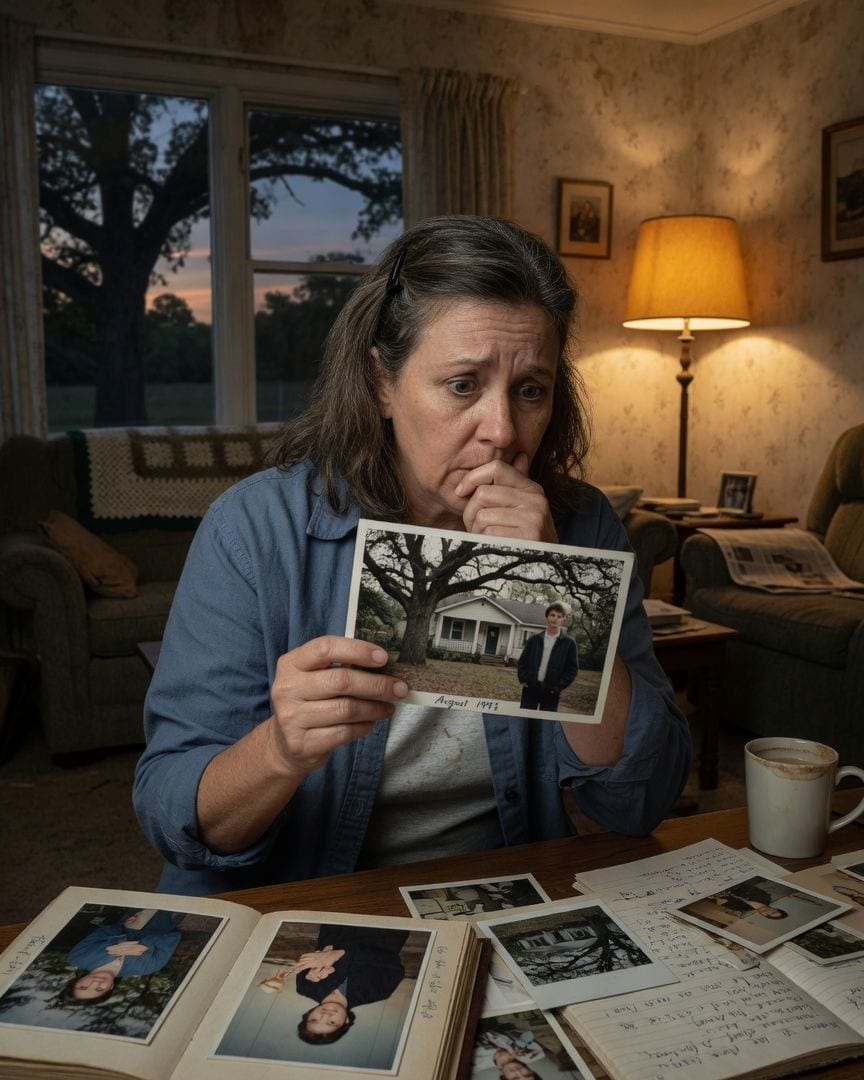
My brother remembers carrying me home after I broke my arm. He was already gone two years when it happened.
After thirty-two years, my brother Joel returned, bringing a relief that felt physical after decades of quiet absence. But when he recounted carrying me home after I broke my arm, a memory I held dear, the warmth in my chest curdled cold. He was twenty years old then, two years gone already, and my mother had carried me.
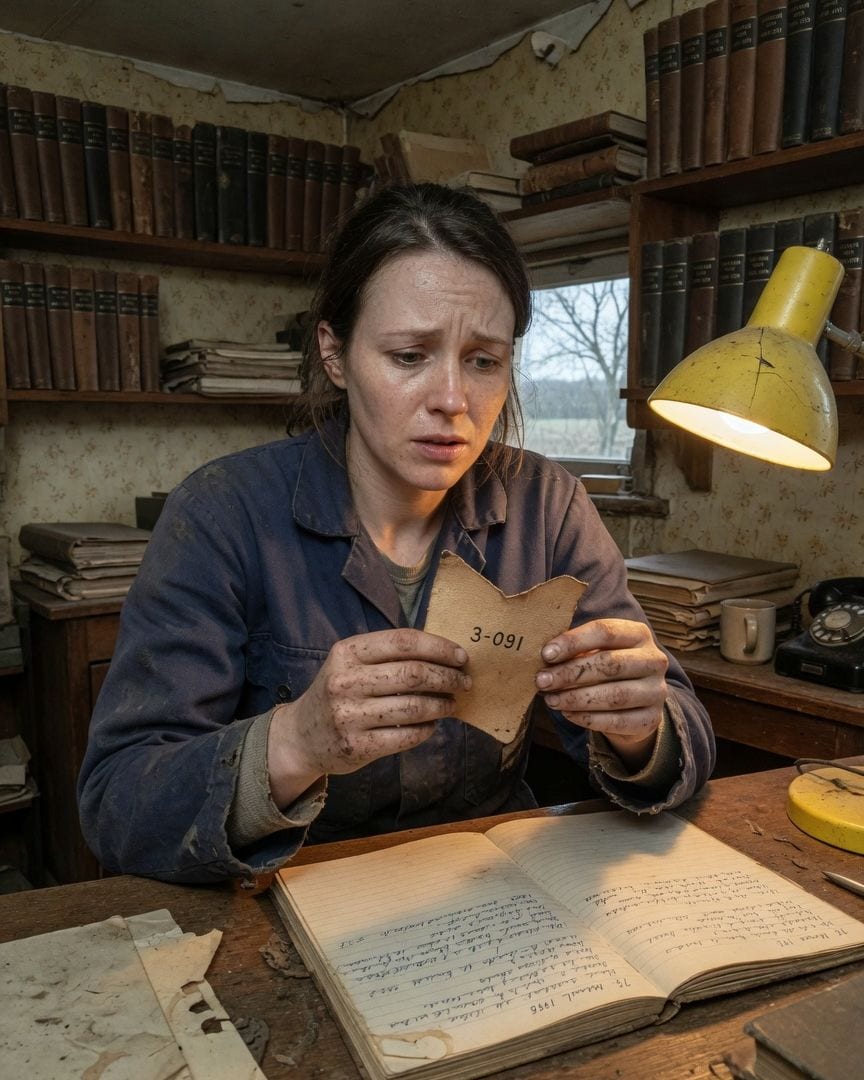
My cattle's ear-tag 3-091 returned this spring, retired by the ministry in 1974. Our old books show 3-091 reappearing every seven years since 1946.
This spring, I found ear tag 3-091 on a new calf. That number was officially retired decades ago, before I was born. My grandfather's old records showed the same tag 'lost' every seven years, with a chilling note: 'the tag returns of itself'.
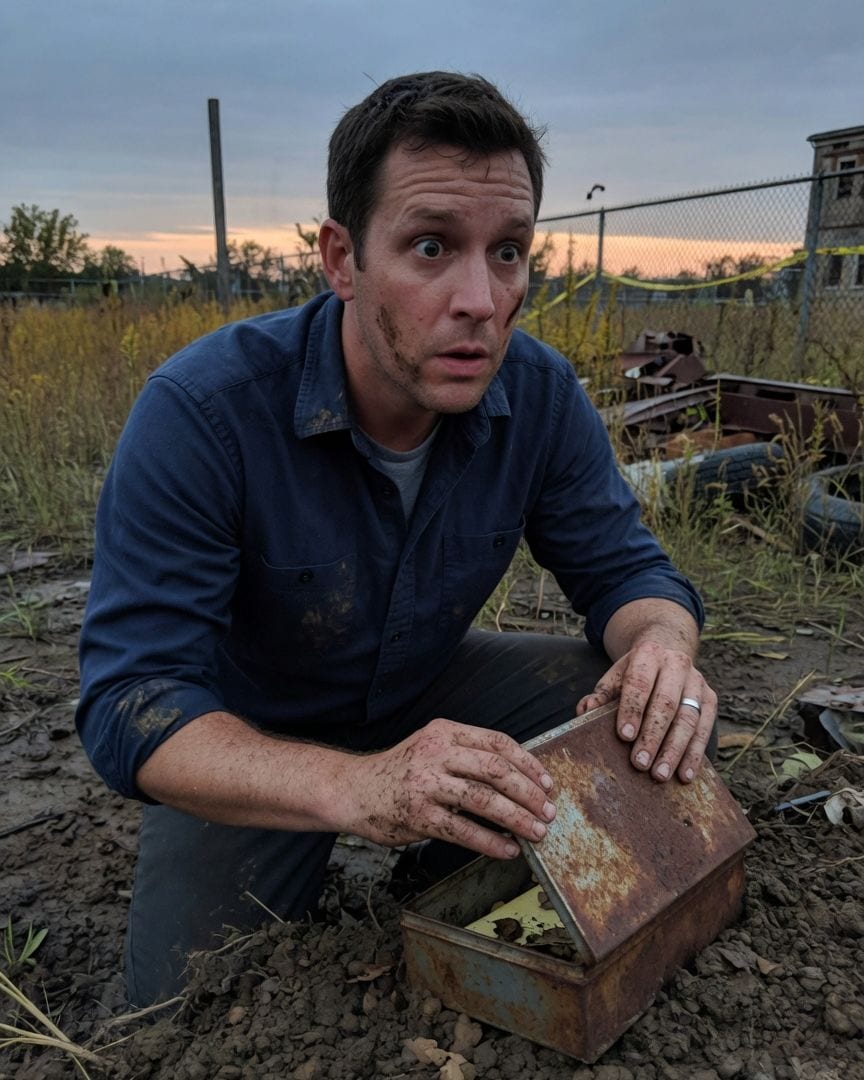
My ancestors' photo shows a letter addressed to me, dated 1972.
My birthday card arrived a day late, from a small town an hour north, nowhere we knew. Inside, an elegant, unfamiliar script read: 'Happy Birthday, Robert. The Field remembers.' It was postmarked from the site of my ancestral homestead, demolished decades before I was born.