My own X-ray shows a rare wrist bone fusion. It's identical to one in a dead man's 1972 autopsy.
The call came on a Tuesday morning, just after I’d settled into my work-from-home routine. A pathology department from a major research institution downtown. They were conducting a biobank audit, a routine check of old tissue samples.
And then the lead-up: a long, careful explanation about a specific tissue block, catalogued from an autopsy in 1972. It shared my full DNA profile. Not a distant relative’s, not a close one’s. Mine.
They had assumed a labeling error, of course. Had to be. Until they re-typed both samples. Multiple times. Dr. Roland Forsythe, Chief Pathologist, was the one on the phone.
His voice, carrying the crisp, authoritative weight of decades of scientific authority, had been surprisingly calm. He explained the anomaly with a clinical detachment, as if discussing a faulty machine that had finally yielded an inexplicable result.
"We re-typed both samples, Ms. Abbott. Multiple times. The match is absolute. Statistically impossible for unrelated individuals." He sounded almost apologetic, but his words sent a cold spike through my gut.
The probability, he said, was less than one in a trillion. The block, he’d continued, was from a man buried that year, Russell Mercer.
And the pathologist then, a Dr. Henderson, had explicitly noted that the two samples – mine and Mercer’s – came from one body. One body.
I tried to process it, sitting at my kitchen table, the morning light too bright, too normal, glinting off the coffee pot. My hands, usually steady, trembled slightly as I picked up my mug. It was a mistake, of course.
A mix-up. It had to be. But Forsythe’s voice, so assured, so certain, echoed in my ears.
I arranged to visit the biobank the following day. It was a sterile, hushed wing, tucked deep within the sprawling research institution. The air was cool, smelling faintly of antiseptic and something metallic, like old machinery.
Dr. Forsythe, a man with silver hair combed back neatly from a high forehead and unnervingly still blue eyes, met me at the entrance. His lab coat was impossibly white.
He led me through a series of locked doors, each one clicking shut with a soft, final sound.
He showed me the tissue block – a small, grey cube suspended in a perfectly clear paraffin wax, nestled in a chilled drawer. It was unremarkable, and chillingly ordinary. Just a piece of preserved flesh.
And yet, it was Russell Mercer. And somehow, it was a piece of me. The thought made my stomach clench.
I didn’t want to see it, I wanted to understand it. "I need to see Russell Mercer’s original autopsy report," I stated, my voice firmer than I felt.
Forsythe hesitated, his gaze sweeping over my face. Then, with a sigh that seemed to deflate some of his earlier composure, he nodded. "Of course. It’s in our archives. We keep everything."
He led me down several more corridors, past silent labs and offices, to a quieter section of the building.
The archival librarian, Grace Norwood, a woman with tight grey curls and an air of quiet efficiency, sat behind a large oak desk. The room was dim, stacked high with metal filing cabinets that reached the ceiling.
Dust motes danced in the slivers of light filtering through the tall, narrow windows. Grace retrieved the heavy, bound file from 1972. The report itself was a relic: brittle, yellowed pages, typewritten with meticulous detail.
The ink had faded to a pale grey in places.
I scanned through the clinical jargon, my gaze snagging on a specific section under 'Skeletal Anomalies.' It read: 'Healed fracture, distal radius and ulna, right wrist, with unique lunate-triquetrum fusion.
Anomaly appears congenital or very early-life, impeccably healed, no recent trauma.'
I frowned. A rare, congenital bone fusion in the wrist. Impeccably healed. I’d never broken my wrist. I had no memory of any such injury, not even as a child.
But then a memory, faint and almost forgotten, surfaced: a few months ago, a minor sprain from a clumsy fall. My doctor had ordered a routine X-ray, just to be sure.
The radiologist had mentioned, almost in passing, a "peculiar old fusion" in my wrist bones, nothing to worry about, likely congenital. I’d dismissed it then, a minor detail, part of the background noise of my own body.
Now, a cold, sickening certainty began to form, a thread of dread tightening in my chest. This wasn’t just a DNA match. This was something physical, an identical imperfection.
I looked up at Grace, who was watching me, her face unreadable. "I need a copy of that recent X-ray," I said, my voice barely a whisper. She seemed to hold her breath.
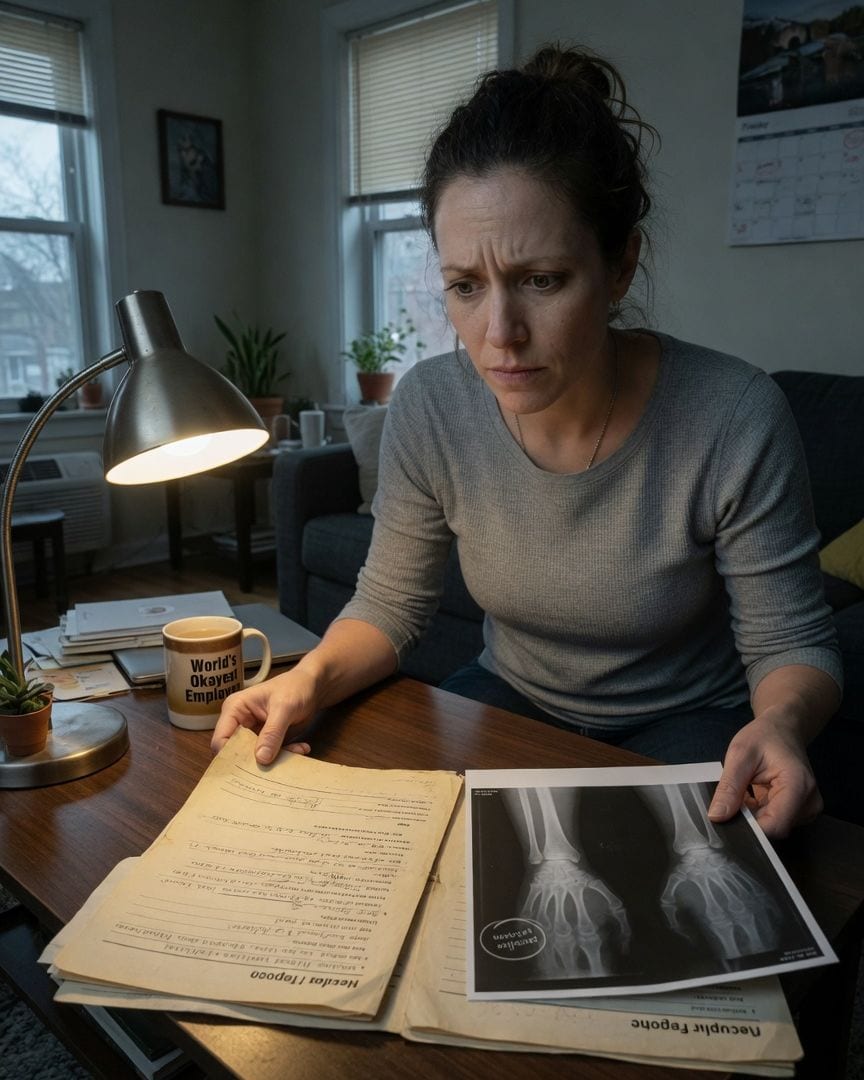
Back at my apartment, the clinical white paper of Mercer’s autopsy report lay spread on my coffee table, stark against the dark wood. Beside it, the digital printout of my own wrist X-ray.
My hands were steady as I picked them up, then brought them closer, aligning the images in my mind. The faint, undeniable shadow of a perfectly healed lunate and triquetrum fusion was visible on my own bones.
A distinct, almost elegant curve where two separate carpal bones should have been. My own doctor had called it 'peculiar.' Mercer’s report, written fifty years ago, described the exact same rare anomaly.
Not a vague similarity, not a possible coincidence, but a precise, anatomical fingerprint. My hands started to shake, not from fear yet, but from a profound, disorienting disbelief. This wasn't just DNA.
This was my body's history, a physical scar I never earned, imprinted in a dead man's file. The two records, separated by decades, were undeniably linked. I felt a vertiginous drop, as if the floor beneath me had vanished.
The impossibility of the wrist fusion gnawed at me. I couldn't sleep, couldn't focus. The image of my own bones, mirrored in a dead man's file, replayed in my mind.
I needed to know who Russell Mercer was, beyond the sterile medical files. A quick search led me to an obituary from a local paper, archived online.
He’d been a quiet man, a civil engineer, no immediate family mentioned, died suddenly at 43. He’d lived in a small house on the outskirts of the city. I drove there one afternoon, the address now a modern subdivision.
The original house was long gone, replaced by a row of identical new builds, bland and unwelcoming. It felt like trying to grasp smoke, like he'd never truly existed.
I returned to the institution, focusing on its history. The biobank was relatively new, but the research wing, where Mercer’s autopsy had taken place, had a long, storied past in genetic research.
Digging through digitized public records, I found mentions of controversial 'life extension' studies in the 1960s and 70s, often funded by anonymous benefactors. Nothing overtly illegal in the public record, but ethically grey areas that made my skin crawl.
I started to notice a pattern: a few other unusual deaths, listed vaguely as 'cardiac arrest' or 'unknown complications,' all around the time of Mercer's, all involving patients who had some prior connection to the institution's research programs.
Each death was followed by a convenient 'tissue donation' to the very facility that now housed Mercer's block. It was too neat, too convenient to be mere coincidence.
I tried to access more detailed historical files, the ones beyond the sanitized public record. But Grace Norwood, the archivist, became increasingly guarded. Her usual quiet efficiency turned into a visible reluctance.
"Some records are restricted, Ms. Abbott," she'd said, her voice tight, "for proprietary and privacy reasons." Her eyes, however, held a flicker of something else beneath the professional facade: fear.
A genuine, quiet fear that made the hairs on my arms stand up.
My persistent inquiries didn't go unnoticed. One afternoon, after another fruitless attempt to access Grace’s restricted files, I found a small, unmarked envelope tucked under my apartment door. No stamp, no address, just my name scribbled on the front.
Inside was a single, faded photograph: a blurry, black-and-white image of the old research wing, taken sometime in the 70s. It wasn't overtly threatening, no red circles or cryptic messages, but the implication was clear: someone knew I was digging.
My apartment felt colder after that, the silence heavier.
The next day, Dr. Forsythe called me into his pristine, minimalist office. A wall of frosted glass overlooked the city, stark and uninviting.
He offered me a 'consultant position' with the biobank, a generous stipend, suggesting my 'unique perspective' could be valuable. His tone was smooth, professional, almost solicitous, but his eyes were like chips of ice, unblinking.
"It would give you full access to our historical archives," he'd said, a slight, almost imperceptible emphasis on 'full.'
It wasn't an offer; it was a warning, a sophisticated way to bring me under their control, to watch me more closely. I politely declined, feeling a shiver of unease that had nothing to do with the air conditioning.
Later that evening, I noticed something even more insidious. My own digital medical records, which I’d accessed to compare with Mercer’s, had been subtly modified. The note about the 'peculiar old fusion' in my wrist was gone.
Replaced with a generic 'no significant anomalies.' The evidence was being erased, systematically, quietly. Someone wasn’t just watching; they were actively managing the narrative.
I went back to the archives, looking for Mercer’s file, determined to get my own copy. But Grace Norwood was nervously guarding the cabinet where it had been.
"It’s… it’s been recalled," she stammered, avoiding my gaze, her hands fidgeting with a stack of folders. "For an internal review. Dr. Forsythe requested it personally." The files weren’t just restricted; they were actively being managed.
Someone was watching, and they were very good at it. I was no longer just curious; I was hunted.
I waited for Grace after her shift, catching her in the deserted parking garage under the institution. The concrete cavern was oppressive, the air thick with exhaust fumes.
Her face went pale when she saw me, illuminated by the harsh overhead lights. "You need to stop, Ms. Abbott," she whispered, her voice barely audible over the distant hum of the ventilation system. "They’ll know. They already know."
I pressed her, explaining everything I’d found: the impossible DNA match, the identical wrist fusion, the way my medical records had been erased, Mercer's file recalled. Her resolve, already fragile, finally crumbled. Her shoulders slumped.
"It's 're-patterning,'" she finally confessed, her words tumbling out in a desperate rush, echoing slightly in the vast space. "A project. Decades old. They found a way to… to manifest genetic profiles.
To take a unique genetic blueprint and re-seed it into a new biological host. A kind of immortality, they called it. Reclaiming 'lost potential.'"
Her eyes darted nervously around the empty garage, as if expecting someone to appear from the shadows. "Russell Mercer was one of their early successes. His profile was… harvested… after his death. They kept it viable. Stable."
I gripped her arm, my fingers digging into her coat sleeve. "And me? I’m… a new host?"
Grace nodded, tears welling in her eyes, reflecting the harsh fluorescent lights. "You’re one of the most stable manifestations. A 'perfect echo,' they call you. They’ve been monitoring you since your birth. Looking for 'pattern stability' and 'host viability.'"
She explained the coded memos I'd seen in passing, fragments of scientific language that now made horrifying sense – 'host viability,' 'pattern integrity,' 'manifestation stability.'
The institution, she revealed, wasn't just a hospital or a research facility; it was the hub of this clandestine project. They'd been doing this for decades, quietly, systematically.
My head spun. The DNA match, the impossible wrist fusion, the erased records – it all clicked into place, forming a terrifying, coherent picture.
My life, my very body, was a manufactured echo, a second chance for a man who died decades before I was born. The dread was no longer abstract; it was personal, intimate, and chillingly real.
I wasn't just observing something wrong; I was the wrong thing.
Grace led me back into the deserted archives, her hands shaking as she fumbled with a hidden lock behind a false bookshelf that swiveled open with a soft groan of old wood.
Behind it was a narrow, unlit space, smelling of old paper and something metallic. She pulled out a thick, leather-bound ledger, its pages yellowed and brittle, almost crumbling at the edges.
"This is the true record," she whispered, her voice barely a breath. "The one that doesn't exist."
She opened it to a page marked with a series of alphanumeric characters – my unique genetic identifier, the sequence Forsythe had confirmed.
Below 'Mercer, Russell,' stretching back to the 1950s and forward into the late 1990s, were dozens of other names, each with a birth date, a location, and a single, chilling note: 'Pattern Stable.'
And then, further down, a small section marked 'Active Manifestations.' Under it, a name and a birth date from just last year. My blood ran cold, a glacial wave washing over me. This wasn't just about me and Mercer.
This wasn’t an isolated incident, a strange, beautiful mistake. I wasn't just a host for Russell Mercer's DNA; I was a template.
My genetic profile, my very essence, was being re-used, re-patterned, perhaps even as I stood there, looking at this impossible book. The ledger was 'the_record_that_cannot_be,' a horrifying testament to an ongoing, systemic violation of identity, of existence itself.
I looked at the name from last year, a fresh entry, and understood the true, terrifying scale of what they were doing. I was a copy, and there were others, and they were still making more.
I confronted Dr. Forsythe in his pristine, minimalist office the next morning. The ledger, heavy and impossible, was clutched in my hand. His calm was unnerving. He didn't deny it, didn't even try to feign surprise.
Instead, he leaned back in his ergonomic chair, a faint, almost proud smile playing on his lips, as if I’d just presented him with a successful thesis. "Ah, the ancestral records," he said, as if discussing a family tree.
"Grace has always been sentimental about her historical documents."
He explained the 're-patterning' project with an academic's detached enthusiasm, his voice smooth and even. "We call it 'echo manifestation.' A way to ensure certain, valuable genetic profiles persist. A form of immortality, Ms. Abbott.
Not for the consciousness, perhaps, but for the blueprint of what makes us unique. Russell Mercer was… a prime candidate. A particularly robust genetic sequence." His gaze flickered to me, unwavering.
"And you, Lydia, are one of our most successful echoes. A testament to the project’s viability, to its ultimate triumph."
He spoke of the inherent 'potential' in certain genetic sequences, the 'waste' of allowing them to simply vanish with the individual. The institution, he clearly believed, was preserving humanity’s best, creating a living genetic library.
He mentioned the 'template stability' of my profile, how it had successfully manifested multiple times across different decades.
He pointed to the names in the ledger, explaining how each was a 'branch' of the same genetic tree, a reiteration of the same core pattern. The horror was in the cold, logical coherence of it all.
Every clue, every impossible detail, slotted into place with sickening precision. My DNA, Mercer’s wrist, the erased records, Grace’s fear, the ledger – it all painted a picture of a controlled, chillingly successful experiment.
I was not a person with a unique identity; I was a living, breathing genetic copy, part of a larger, ongoing biological archive, carefully curated, meticulously managed.
The calm rationality of Forsythe was more terrifying than any monster. He offered me a place in their 'inner circle,' a position to 'understand and contribute' to the project, to embrace my 'purpose.'
He spoke of a future where I would oversee the 'next generations' of echoes, a living bridge between the original blueprint and its endless manifestations.
I knew then that I couldn't expose them; they were too entrenched, too powerful, too convinced of their own righteousness. The institution had quietly influenced local government, medical boards, even academic funding for decades.
My proof, a ledger and a few medical scans, would be dismissed as a hoax, a delusion, the rantings of an unstable mind. My only option was to escape.
I feigned interest, agreeing to consider his offer, buying myself time. "It's… a lot to take in," I said, trying to keep my voice even, my hands hidden beneath the ledger. "I'll need to process this."
He nodded, a small, knowing smile on his face, clearly believing he had me.
That night, I packed a small bag, taking only essentials: cash, a few changes of clothes, my old analog phone.
Before leaving my apartment, I went to my bathroom, sterilized a needle over a gas flame, and with shaking hands, drew a small vial of my own blood. This was irrefutable.
Then, driven by a desperate need for a second, external piece of proof, something that couldn't be dismissed as a personal delusion, I returned to the institution. It was a reckless gamble, but I couldn't leave without it.
I remembered one of the 'Active Manifestations' listed in the ledger – a junior lab assistant named Ethan Abbott, whose birth year was recent, whose genetic identifier matched mine. He worked late.
I waited in the shadows near the lab, my heart pounding, the sound deafening in my ears. As Ethan left, pushing a cart of used glassware, I 'accidentally' brushed past him in a dimly lit corridor, feigning a clumsy apology.
As I mumbled "So sorry!" and pretended to steady myself, I managed to pluck a single, almost invisible hair from his jacket collar. It was a terrifying, heart-stopping moment of pure adrenaline, a small, tangible piece of a larger horror.
I left the city that night, driving until dawn, then switching cars and phones, shedding my old life like a skin. I was free, but at a profound cost: every relationship, every memory, every sense of who I was, shattered.
I carried the proof, knowing it was the kind of truth no one would ever believe.
I live in the quiet corners now, far from any city, far from any institution. Every stranger I pass, every new face, I scrutinize, wondering if they too carry the same impossible blueprint.
I carry the small, sealed vial of my blood, wrapped carefully in a handkerchief, and the single, almost invisible hair I plucked, now taped to a piece of paper, a testament to a truth too vast and terrifying for anyone to grasp.
The proof is irrefutable, yet utterly unbelievable. The constant hum of dread is my new normal. Sometimes, when I look in the mirror, I don’t just see my reflection. I see a pattern, a recurring echo.
I see the faint, almost imperceptible shadow of Russell Mercer, peering back through my eyes. It is a quiet horror, a knowledge that hollows me out from within, knowing that my very existence is a lie, a manufactured continuation.
The world believes I am Lydia Abbott, but I know better. My body is not truly mine; it is a vessel, a borrowed form. And somewhere, someone is still making more.
A year later, a new entry appeared in the institution’s hidden ledger, under 'Active Manifestations.' It bore the same genetic identifier. The name listed was 'Abbott, Lydia.' The birth date: '2025.' The final note, meticulously penned, simply read: 'Pattern Stable.'
If this one got to you
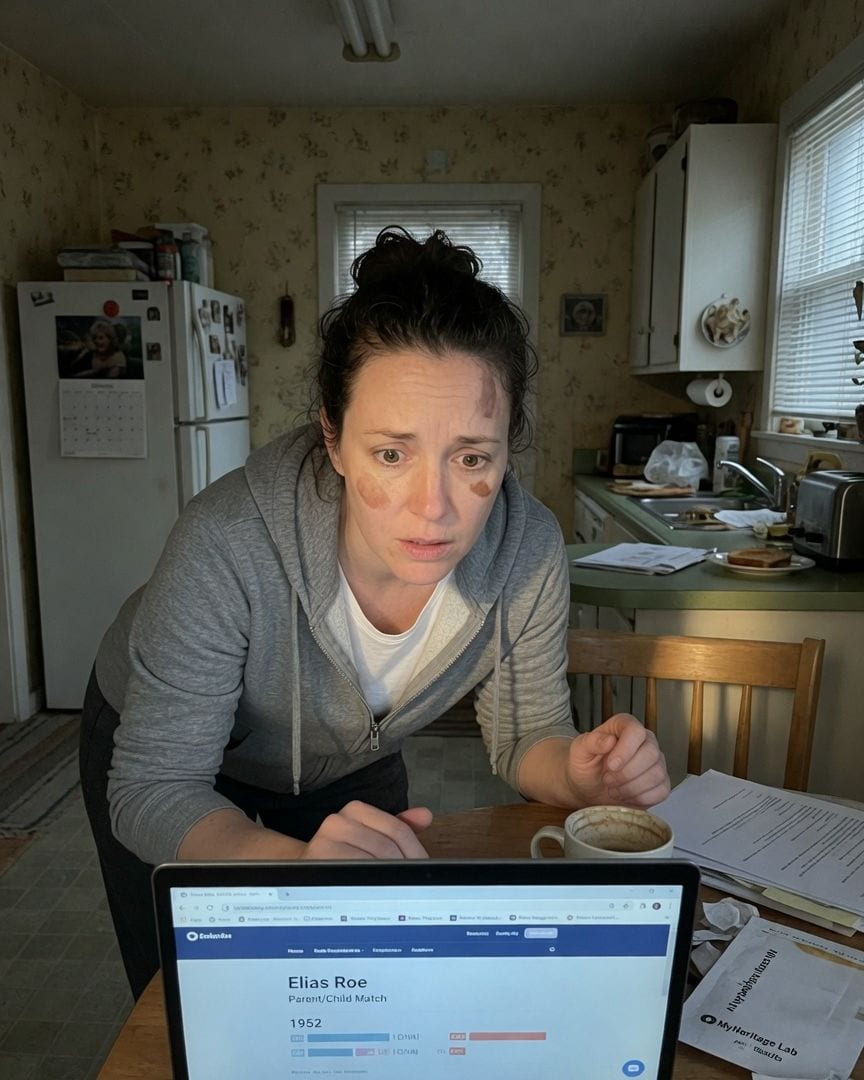
My DNA came back a parent-child match to a farmer who died in 1952. I didn't believe it, so I paid a second lab — same result, down to the last marker.
As a pragmatic software engineer, I've always trusted facts. But my recent MRI revealed a perfectly healed compound fracture on my left tibia, one that mended decades ago. I've never broken a bone in my life, and there isn't even a scar.
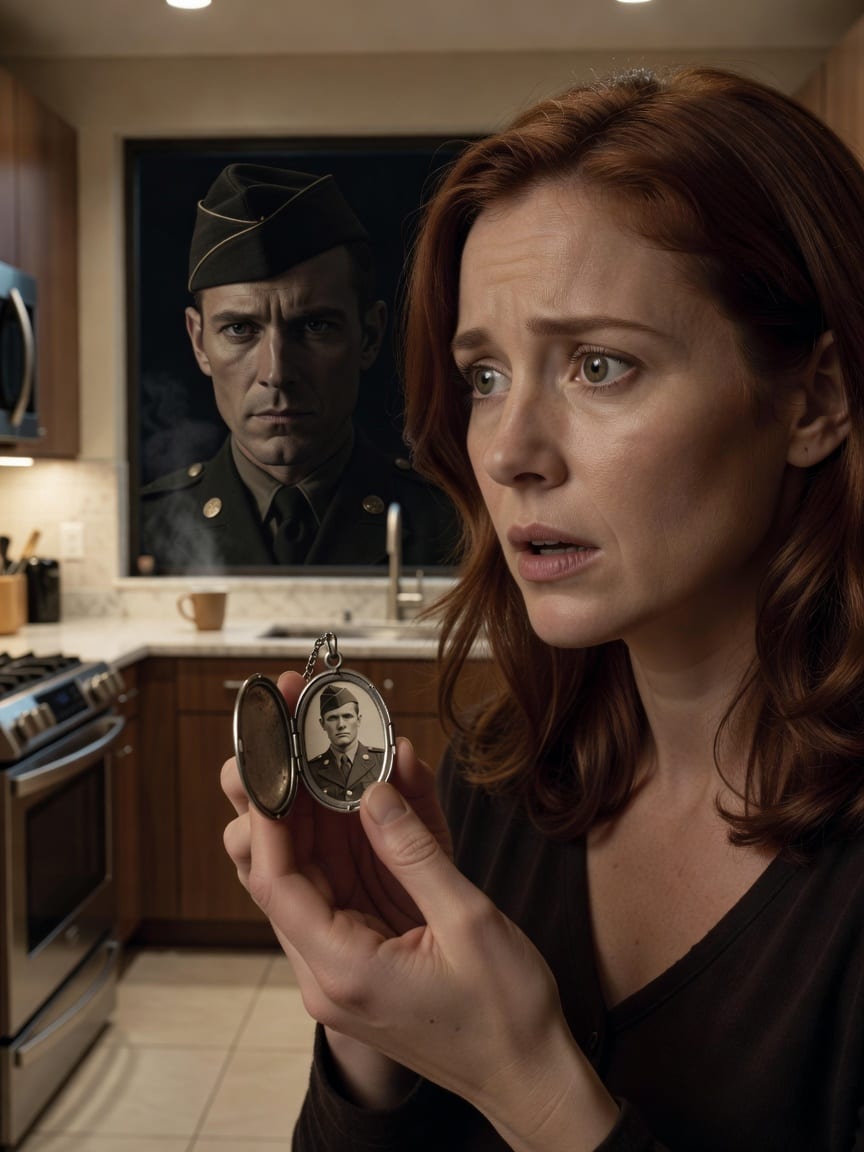
My DNA matched a soldier k*lled in 1944. Not my grandfather, but the man himself. The lab confirms it.
As a forensic analyst, I've spent fifteen years finding order in chaos. When I submitted my DNA for a WWII project, I expected a standard relative match. Instead, the lab report stated my genetic profile was identical to my grandfather, Preston Lawson, who died in 1944. My own DNA, a living woman's, perfectly matched a man dead for nearly eighty years.
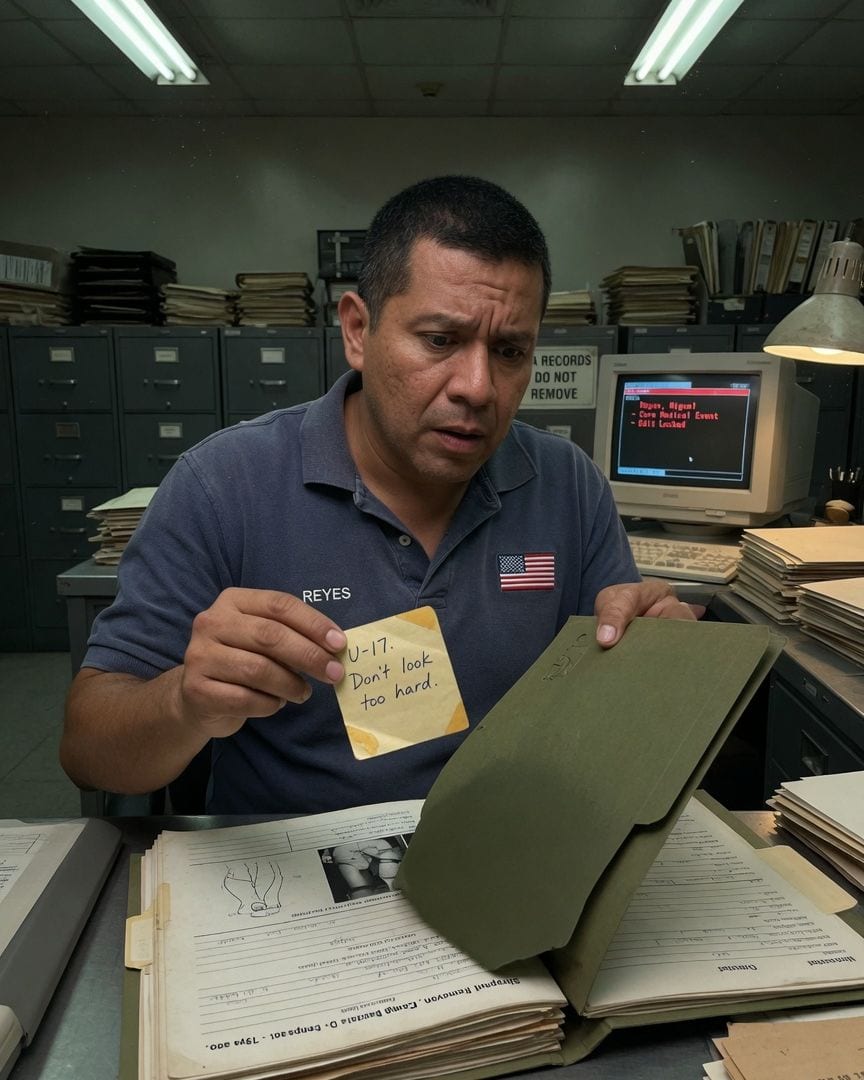
A veteran's medical record details a shrapnel wound his body never had. Taped to the report: 'U-17. Don't look too hard.'
Miguel Reyes, a veteran seeking relief for an old running injury, found his routine VA visit take a chilling turn. His medical file claimed a shrapnel wound and surgery from thirteen years prior, but his leg bore no scar, no mark of the supposed incident. Despite the detailed digital and paper records, his body swore the event never happened. As he pressed for answers, a hidden, yellowed note taped inside the official report surfaced, scrawled with two words: "U-17. Don't look too hard." The sterile clinic air suddenly felt cold and thick, suggesting a truth far darker than a simple clerical error.
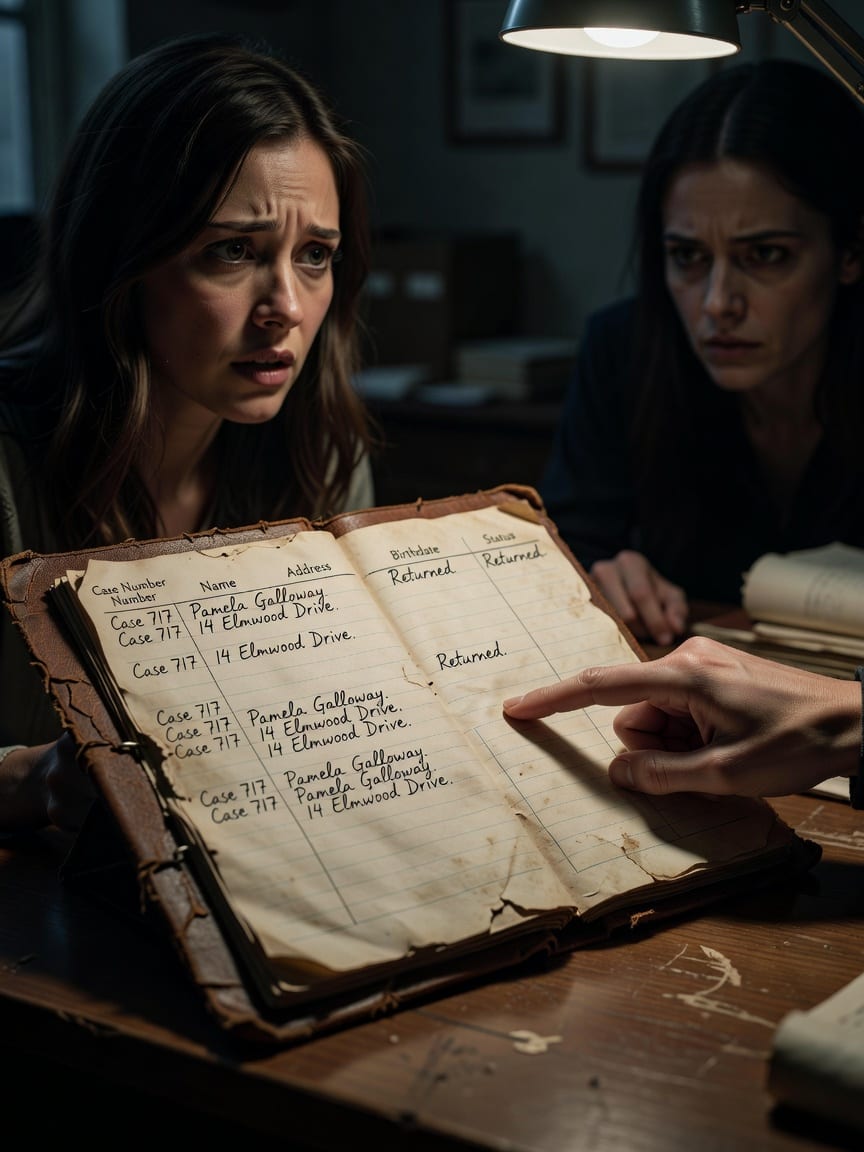
My hospital file has a blacked-out line from 1988. It names my street address, decades before I lived here. Then: 'returned'.
I finally got my medical file, hoping to clear up a ridiculous bill. Inside, I found an entry from 1988: my current home address, scrawled on a partial intake form and marked 'returned.' I was six then, living fifty miles away.
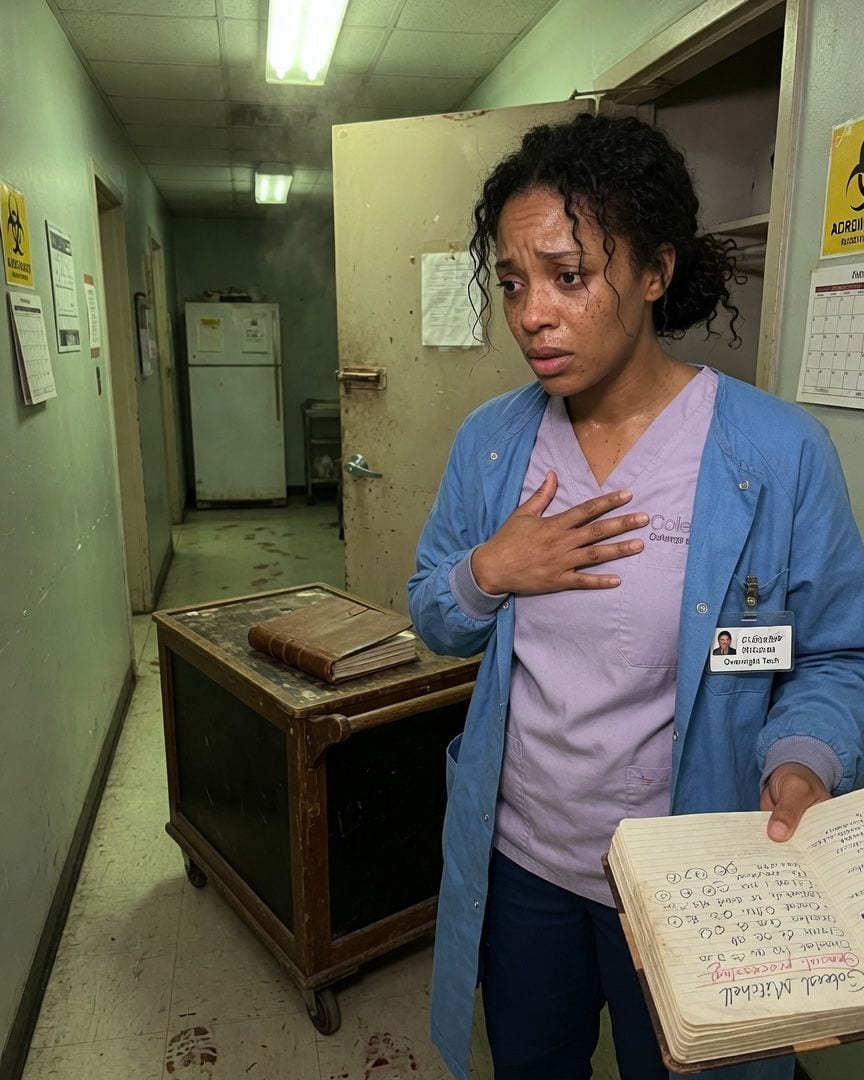
My boss says no one named Grace has ever worked here. But Grace stands beside me every night, reminding me to label the third rack — and I work the overnight shift alone.
On my quiet night shift at the blood bank, Grace always appears around 3 AM. I hear her familiar cart, smell her antiseptic scent, and follow her precise instructions. But my lab director insists no one named Grace has ever been credentialed here, leaving me to wonder who I've been working with.
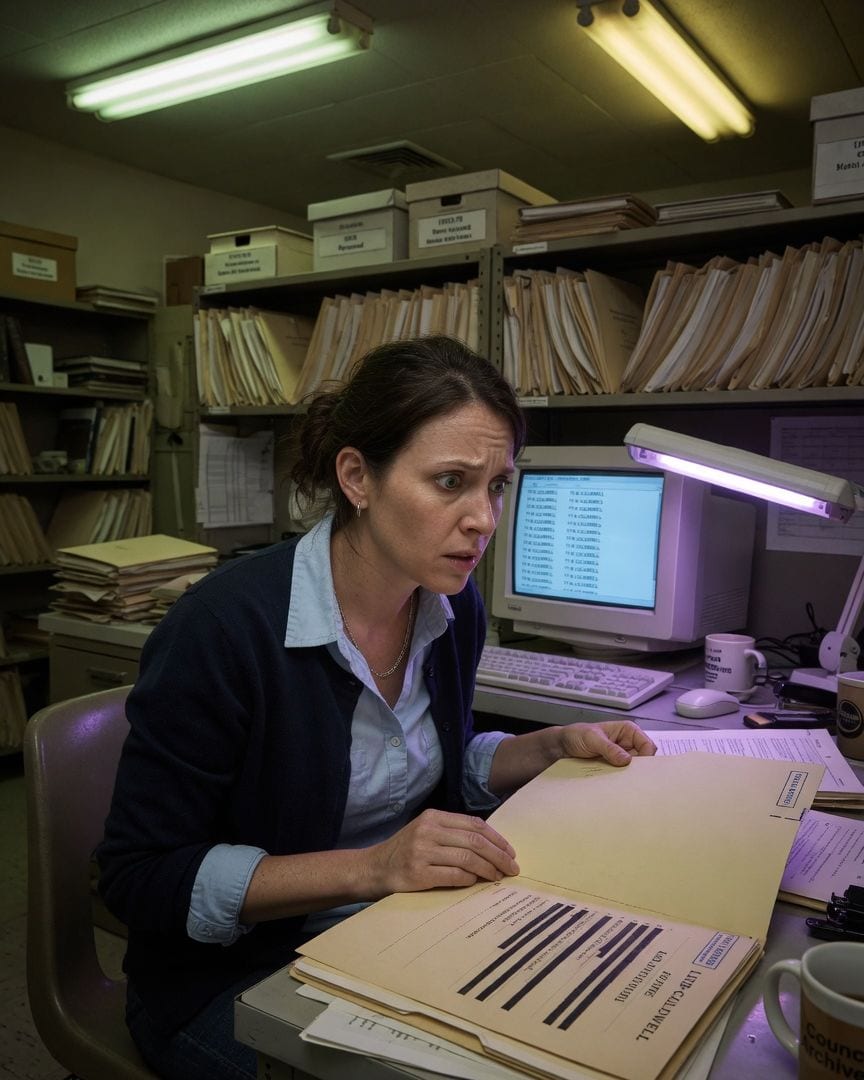
My employer's security file holds a vetting report on me dated nine years before I ever applied. It has my full name and my parents' address — with only one line, the source who referred me, blacked out.
Working a routine data audit, I pull my own security file. The issue date is nine years before I even applied for the job. Then, hidden within an old archive file, I find my current address etched under a blacked-out line.