The blood on my own newborn heel-prick card — the one my mother saved in a drawer for thirty years — doesn't match the DNA in my mouth today. The lab ran it three times: two different people.
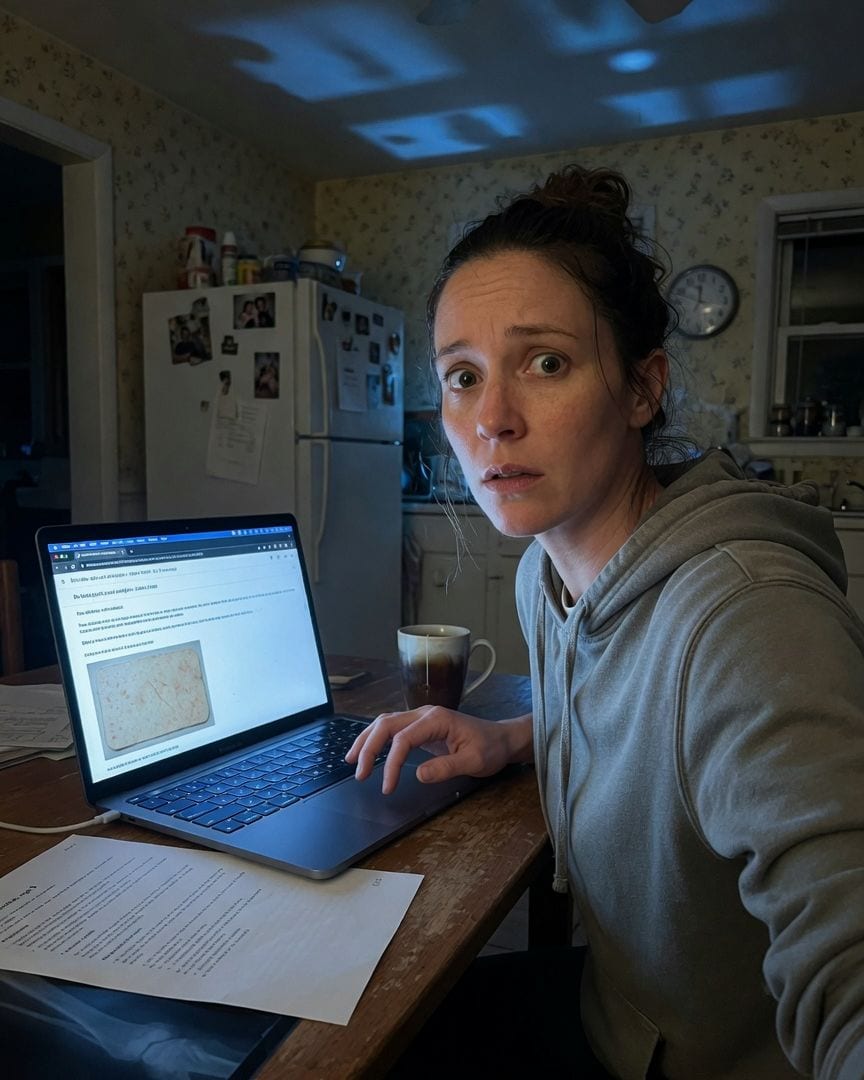
I sat rigid in my kitchen, the blue light of my laptop screen making shadows dance on the ceiling. A single email was open, its white text stark against the dark.
I’d sent my newborn heel-prick card—the little parchment square my mother had kept in a velvet box for thirty years—to a genealogy lab. Just idle curiosity, I’d told myself.
A fun way to confirm my family tree, maybe find some distant, exciting heritage.
Julian Foster, the lab tech, hadn’t emailed first. He’d called. His voice, calm and professional, had chipped away at my ordinary day. He’d explained, carefully, that the blood on the card did not match the DNA in my mouth today.
Not a near miss, not a distant cousin. Two distinct individuals.
He’d run the test twice, he’d stressed, then a third time, each result confirming the same impossible truth: the dried spot from my infancy and the living swab from my adult self came from two different people.
The world felt suddenly, unnervingly thin. The hum of the refrigerator sounded too loud, a low, ominous growl in the impossible silence. I tried to swallow, but my throat was a desert, dry and constricted.
My own blood, my own record, insisting I wasn't quite myself. The data on the screen was absolute, definitive. I traced the curves of the characters with a numb finger, a foreign language describing a foreign body.
I spent a week in a daze, trying to rationalize it. Lab error? A mix-up at the hospital, thirty years ago? It was the only explanation. I called Julian again, expecting to find the flaw, the human mistake.
He patiently walked me through the chain of custody for the heel-prick card, from its arrival in a sealed envelope to the triple-blind testing protocol. He spoke of statistical certainty, of markers that simply did not overlap.
There was no error, he insisted. Not on their end. He suggested I see my GP, Dr. Reynolds, for a full physical and to review my childhood medical records.
Maybe there was a documented blood transfusion, a serious illness, anything that could account for such a drastic genetic shift.
Dr. Reynolds, a kind man who’d known me since I was a child, listened with a frown that deepened into a furrow. He didn’t dismiss me. He ordered new blood work, which, predictably, confirmed my current DNA profile.
Then began the laborious process of retrieving decades-old files from an off-site medical storage facility. Days later, a thick manila folder arrived at his office, smelling faintly of dust and old paper.
Buried deep within were my early pediatric records: immunization charts, growth curves, and a series of X-rays from when I was three years old, taken after a minor fall, as the notes indicated.
I sifted through them, my heart thumping a strange, irregular rhythm, looking for anything unusual, anything that might explain.
Then I saw it. An X-ray of my left leg, stark and bony. My tibia, clear as day. And a distinct, perfectly healed fracture.
A jagged line across the bone, mended seamlessly, the calcium having knitted itself back together like a careful seamstress. I stared, baffled. I’d never broken my leg. Not ever.
I had no memory of the pain, no cast, no scar, no story my mother had ever told me.
It wasn't just a healed break; it was a ghost limb, a memory that wasn't mine, staring back at me from the ghostly grey of the film.
The air in the room felt suddenly heavy, thick with something I couldn't name.
I brought the X-ray back to Dr. Reynolds. He held it up to the glowing light box, his brow furrowed, his usually calm demeanor edged with a professional perplexity. “Are you certain, Annika? No memory at all?”
I shook my head, a cold knot tightening in my stomach. “Never. Not even a cast.”
Dr. Reynolds consulted his notes, his finger tracing the lines of text, cross-referencing the film’s unique identifier with my file. The monitor on his desk blinked, its soft chime like something trapped.
He turned the glowing light box, confirming the date on the X-ray film: “Three years old, Annika. It’s definitely your file. And that fracture is perfectly healed.”
I stared at the image of the bone, a clean break mended, knowing with absolute certainty it never happened to me.
The healed fracture, combined with the DNA mismatch, sent me down a rabbit hole of medical research. My laptop, once a window to everyday life, became a portal to the strange, obscure corners of biology.
I devoured articles on genetic chimerism, vanishing twins, and rare birth anomalies.
Most cases involved mosaicism, where an individual had different genetic lines in different tissues, but the heel-prick card implied something far more profound, a fundamental shift at the very core of my identity.
The search led me to an obscure, decades-old medical journal. Its digital pages, scanned from yellowed paper, detailed experimental procedures from the late 20th century. One article, in particular, caught my eye.
It discussed a controversial 'embryonic integration' technique, conducted by a small, now-defunct clinic in the next county over. The procedure aimed at saving failing pregnancies by introducing healthy genetic material from a donor embryo.
The descriptions were vague, clinical, full of scientific jargon, but one phrase jumped out at me, cold and clear: 'successful fusion often evidenced by a distinct dermal anomaly, a 'fusion scar'.'
A tremor of dread ran through me, a chilling echo. I had a unique birthmark on my left shoulder blade. A starburst pattern, dark and distinct, that I’d always considered just a quirky part of me.
I tried to talk to my mother, Deborah Romano, about my early childhood, about any unusual medical events, any difficulties with the pregnancy. Deborah grew visibly uncomfortable, her eyes darting around the room as if searching for an escape.
She deflected every question, her hands fussing with the edge of her teacup. “You were a special baby, Annika,” she’d say, her voice tight, “a gift.” But she offered no details about the X-ray, no explanation for the heel-prick card.
The more I pressed, the more Deborah retreated, her face hardening into a mask of evasiveness. The evasiveness was a new, chilling layer of wrongness, far worse than silence.
My research continued, a desperate, solitary quest, focusing now on the defunct clinic and the names of the doctors involved. And then I started noticing things. Small things, at first.
My mail, usually piled neatly on the hall table, was sometimes slightly disarranged, the edges of envelopes not quite aligned, as if handled. My internet search history, which I was meticulous about clearing, occasionally had unexplained gaps, brief moments missing.
I told myself it was just my imagination, a consequence of stress.
One evening, as I returned home, the streetlights casting long, brittle shadows, a faded, dark blue sedan was parked three houses down. Its engine was off, a figure slumped low in the driver’s seat.
It wasn’t a car I recognized, and it was gone by morning. I dismissed it as someone waiting for a friend, a late-night visitor.
The next day, after a particularly pointed conversation with my mother about the clinic — she'd practically fled the room — Deborah’s voice, usually warm and reassuring, turned cold, flat as concrete. “Some things are best left buried, Annika.
You don’t know what you’re digging up.” The warning was clear, unspoken, a chill that seeped into the marrow of my bones.
I felt a prickle on the back of my neck. Was my mother protecting me, or something else? The sedan reappeared a few days later, parked even closer to my house, its windows tinted.
Its presence felt like a deliberate punctuation mark in the silence. I felt a profound sense of being watched, not by a monster in the shadows, but by a quiet, calculating presence in plain sight.
Someone knew I was getting close, and they were letting me know they were there. The air around me had thickened, coalescing into a palpable tension, a quiet threat.
I confronted Deborah at her house the next day, the evidence spread out on her kitchen table like an indictment: the lab report, the X-ray, the obscure medical journal. “Mom, what is this?”
I pleaded, my voice trembling, barely holding it together.
Deborah’s face crumpled. She looked old, defeated, her shoulders slumping. She stared at the papers, then at me, her eyes brimming. “I… I wanted to tell you, but…”
I pushed, my own fear making me ruthless. “Tell me what? Why do I have a perfectly healed fracture I never had? Why is my baby blood not mine?”
Deborah sank onto the sofa, burying her face in her hands, her frame shaking with silent sobs. The room seemed to shrink around us, the silence pressing in. “It was… complicated. You were a difficult pregnancy, Annika.
The doctors… they said you wouldn’t make it.” She took a shaky breath, finally meeting my gaze, her eyes red-rimmed. “There was an experimental procedure. A way to… to give you a chance.”
My mind raced, the words echoing in the confined space. “Experimental? What kind of experiment? The one in this journal? Embryonic integration?”
Deborah nodded, a single tear tracing a path down her cheek, a glint of desperation in her gaze. “They took… they took a piece of another. A donor. To make you strong. To make you whole.”
I felt a dizzying wave of nausea, the room swaying around me. “Another? Whose? What do you mean, a piece?”
Deborah shook her head, refusing to meet my gaze again. “They said it was the only way. A chance at life. They promised it would be seamless. That you would be… you.”
My mind reeled, the pieces clicking into place with a sickening thud. The heel-prick, the X-ray, my mother’s evasiveness. It wasn't a mix-up. It was a construction. My own body, a patchwork. “And the clinic?”
I pressed, my voice barely a whisper, dread coating every word. “The one in the article? Was it… St. Jude’s?”
Deborah flinched, the name like a physical blow. “They’re long gone. The doctors… they moved on. It was all confidential. No one was ever supposed to know.”
The truth, when it came, was far more clinical, far more horrifying, than any ghost story. I wasn't just mismatched; I was made.
Leaving my mother’s house, I felt a profound, chilling clarity. Deborah had given me a name: St. Jude’s Clinic. A quick online search confirmed it was indeed defunct, its digital footprint faint.
But old local archives yielded a grainy, black-and-white photograph from a local newspaper, dated just months after my birth.
It was an article about the clinic’s groundbreaking, controversial research. The photo showed a smiling Dr. Evelyn Thornton, a nurse, holding a baby, her hand protectively cupped around its tiny head.
The caption identified the infant as ‘Baby A, one of the clinic’s first successful cases of embryonic integration.’
I zoomed in, my breath catching in my throat, my hands suddenly clumsy. The baby in the photo had a distinct, starburst-shaped birthmark on its left shoulder blade. My own birthmark. The one I’d always had.
The one described as a 'fusion scar' in the obscure medical journal.
I held the faded photograph, my own baby face smiling up at me from the past.
My thumb traced the dark, starburst pattern on the tiny shoulder in the image, a birthmark she’d always dismissed as unique, now chillingly familiar from the journal.
The article had called it a 'fusion scar,' proof of two lives made one, and the photograph showed it on her.
Driven by the photograph and the cold, hard name of Dr. Evelyn Thornton, I tracked her down. She was now in her eighties, living quietly in a retirement community several states away.
Her small apartment was filled with light, framed photos of grandchildren, and the faint smell of lavender. Evelyn, calm and sharp, wasn’t unbothered by my questions. Her gaze, clear and steady, met mine without flinching.
She’d been expecting someone like me one day, she said.
“You were a miracle, child,” Evelyn said, her voice soft but firm, sitting across from me in her sunlit living room. Her hands, gnarled with age, rested in her lap. “Your mother’s body was rejecting the pregnancy.
We had a protocol, experimental, yes, but promising. We introduced viable genetic material from a compatible donor embryo. A 'rescue' embryo, we called it.”
She explained the delicate process, how the donor cells had integrated, stabilized, and ultimately saved my life. “Your heel-prick card, Annika, that’s your original genetic signature. The blood in you now, that’s the fusion.
Two distinct genetic lines, living as one.”
The healed fracture? Evelyn nodded. “The donor embryo had a developmental anomaly, a tiny, almost imperceptible bone weakness. It manifested as a hairline fracture in its early development. When those cells integrated, that ‘history’ came with them.
Your body repaired it, made it whole, but the blueprint was already there.”
Every impossible detail clicked into place. The missing DNA, the phantom injury, my mother’s agonizing silence, the distinct birthmark that had always been mine. It wasn't a mistake, it was a precise, albeit radical, medical intervention.
I was not one person, but two, seamlessly woven together, a living testament to a desperate act of creation. The horror wasn't in a monster, but in the clinical precision of it all.
Evelyn rose, her movements slow but deliberate, and led me to a dusty, locked cabinet tucked into a corner of her living room. The wood was dark and scarred, a relic from another time.
“I kept a few things,” she murmured, her gaze distant, fixed on something I couldn't see. “For posterity. For truth.”
She produced a small, tarnished brass key and, with a soft click, opened the cabinet. Inside, among stacks of old medical textbooks and faded photographs of lab equipment, she extracted a thick, leather-bound folder, its edges worn smooth with age.
Its weight in my hands felt immense, physical proof of the impossible.
Inside, among more faded photographs and handwritten notes detailing cell cultures and integration rates, was a single, official-looking document: a detailed 'Embryonic Integration Case Study – Subject A.' It included my original birth date, my mother’s signed consent forms, and a full biological profile of the 'Donor Embryo B.' The donor’s genetic markers were listed, along with a brief medical history noting a 'minor skeletal anomaly, left tibia.'
The document was stamped with the St. Jude’s Clinic seal, its ink faded but still legible, and dated exactly 30 years ago.
It was a cold, clinical record of my impossible genesis. My fingers traced the precise, typed words, the scientific jargon that described my very being.
This wasn't a monster; it was a medical marvel, a desperate gamble that had paid off. The artifact, a relic of a forgotten science, lay in my hands, irrefutable proof. I was the result.
My life, my very body, was a testament to this archived, impossible object, now examined up close and undeniably real. The ordinary explanation died for good. I was a living archive, a walking, breathing fusion of two distinct lives.
The St. Jude’s Clinic was long gone, its records mostly scattered or destroyed in the years after its closure. Dr. Evelyn Thornton passed away peacefully a few months later, taking her quiet, meticulous knowledge with her.
Deborah Romano found a fragile peace, finally unburdened by her secret, though a quiet melancholy still clung to her, a residue of the difficult choice she’d made.
I never sought out the family of the donor embryo; Evelyn had confirmed the donor was anonymous, never having fully developed on its own.
The knowledge settled within me, heavy but without malice. I was alive, undeniably. But I was also something else. I carried the ghost of another within her, a silent partner in my own existence.
The world moved on, oblivious to the quiet miracle, or horror, I represented.
I stood before my bathroom mirror, brushing my hair, the familiar rhythm a small comfort. I looked at my reflection, at the familiar curve of my jaw, the slight asymmetry of my smile.
It was my face, my body, the one I’d always known. But now, I saw more. I saw the faint, starburst birthmark on my shoulder, not just a mark, but a scar of fusion.
I saw the ghost of a healed fracture in my leg, a memory of pain that wasn’t mine. I looked into my own eyes, and for the first time, I truly understood.
The face in the mirror was mine, but it no longer belonged only to me.
If this one got to you
My X-rays show a perfectly healed fracture from 1968. I've never broken a bone in my life.
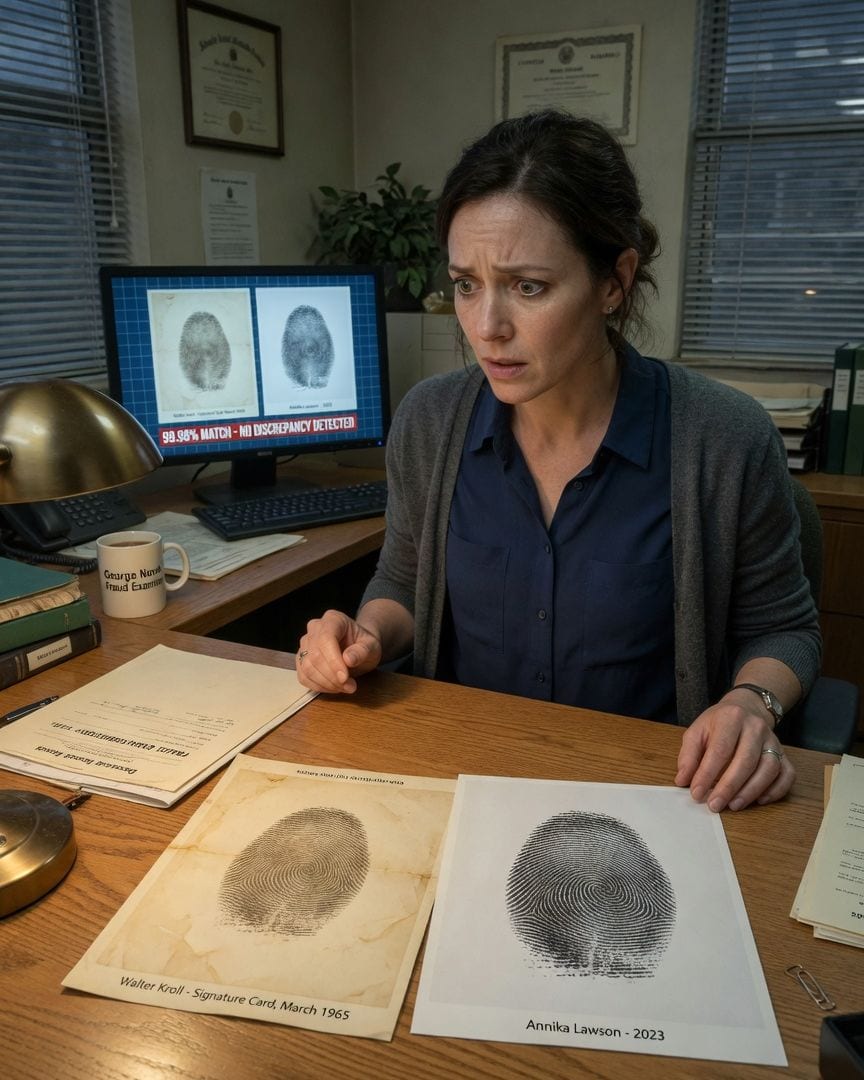
An ordinary bank deposit turned chilling when my account was locked. My unique thumbprint, the very mark of my identity, inexplicably matched that of a man named Walter Kroll, who died in 1970. The bank's robust system confirmed the impossible: my fingerprint, identical to a man dead for decades.
My DNA matched a soldier k*lled in 1944. Not my grandfather, but the man himself. The lab confirms it.
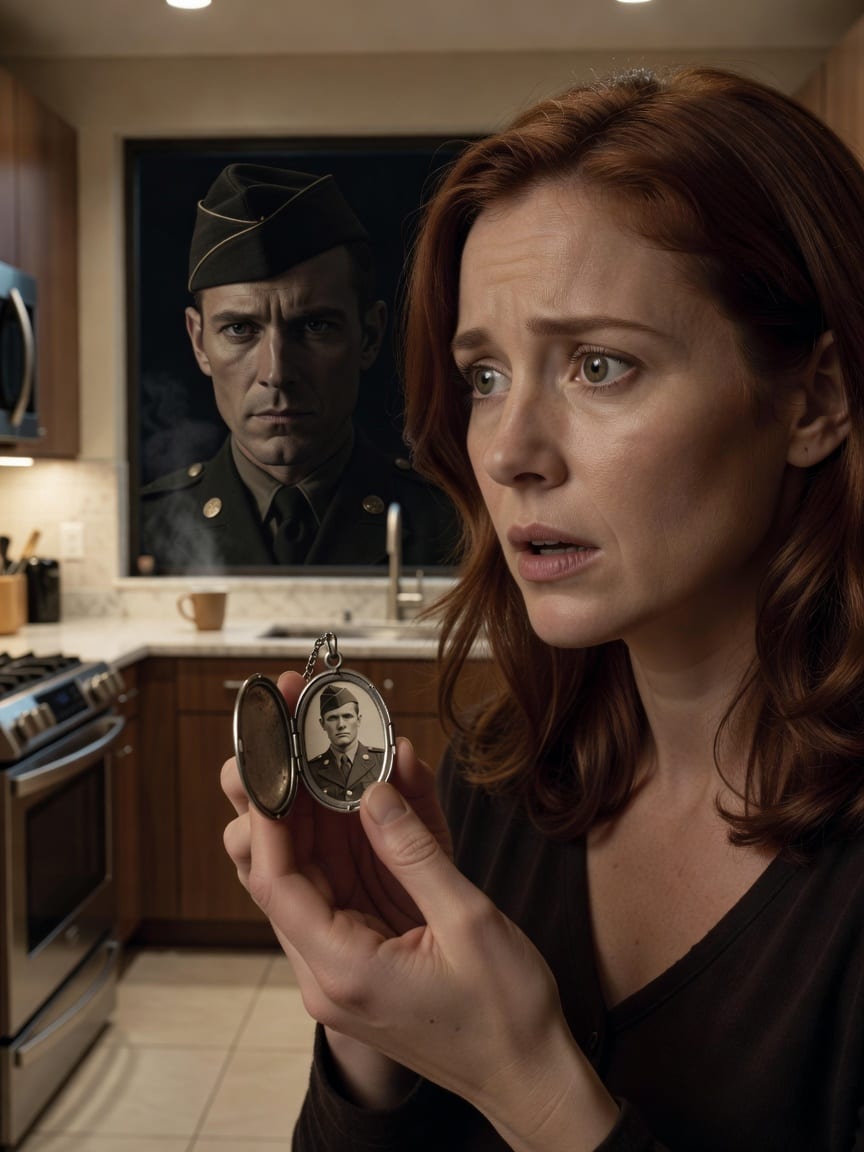
As a forensic analyst, I've spent fifteen years finding order in chaos. When I submitted my DNA for a WWII project, I expected a standard relative match. Instead, the lab report stated my genetic profile was identical to my grandfather, Preston Lawson, who died in 1944. My own DNA, a living woman's, perfectly matched a man dead for nearly eighty years.
My twin sister Ruth sleeps on the right now, facing the wall. For forty-one years, she always took the left side. She insists I'm misremembering.
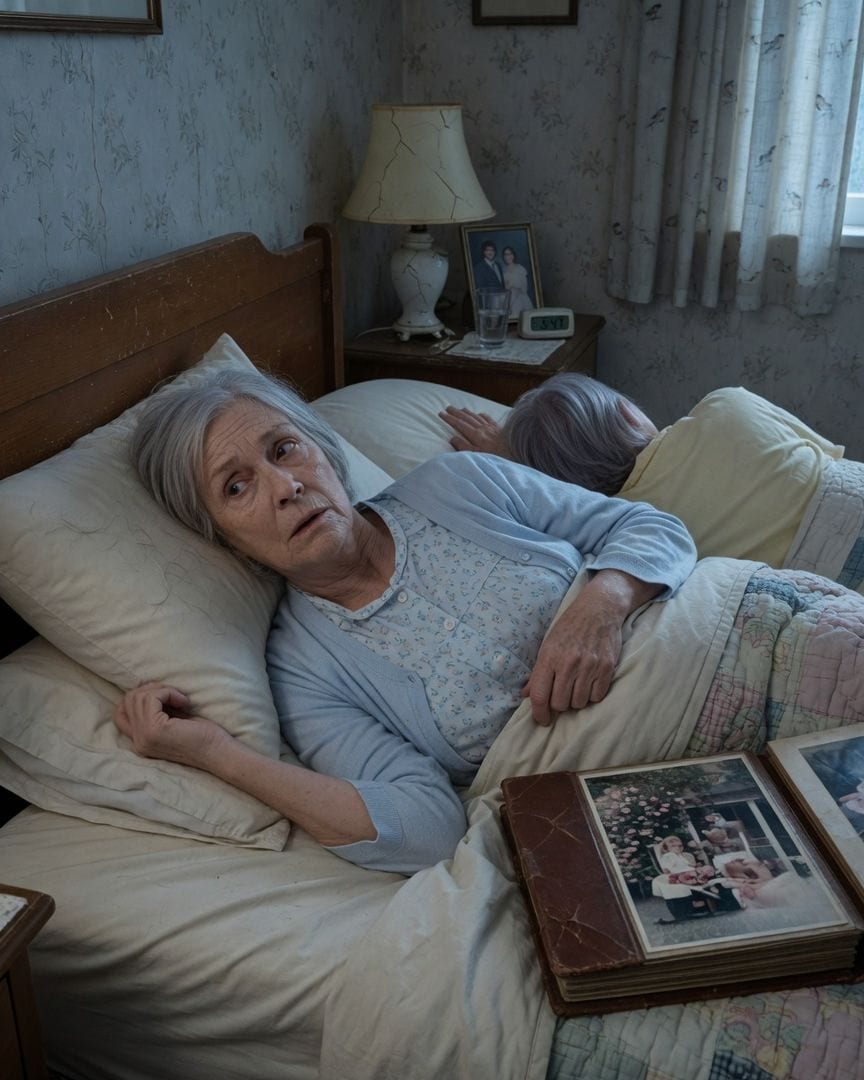
After three days missing, my partner Ruth finally came home. But the morning after, I woke to find her sleeping on the wrong side of our bed. She claimed she'd always slept there, and my memory was wrong, despite forty-one years together.
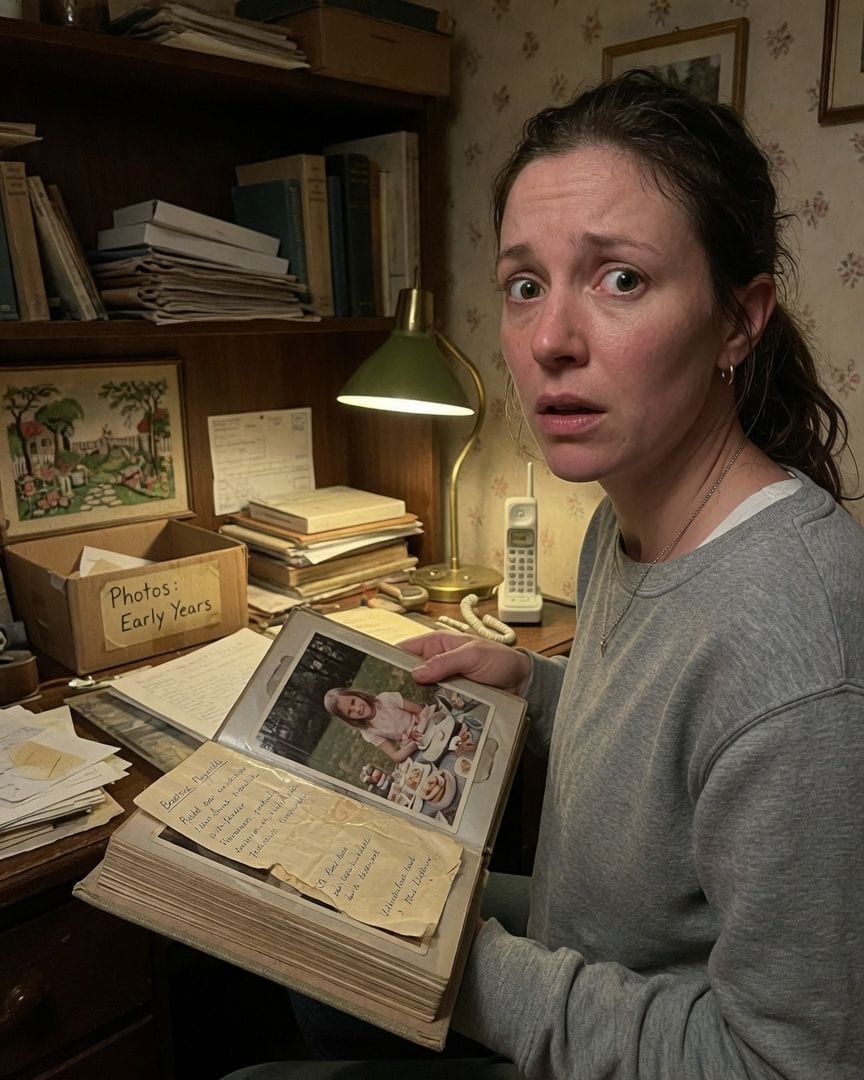
My mother's right ear has been partially deaf since she was eight. Now she's talking on the phone with it.
My mother, Beatrice, is finally back after five days, but my relief is curdling. She's using her right ear for phone calls, the one that's been partially deaf since she was eight. A new doctor confirmed her right ear was perfect, her left ear weaker, completely contradicting my lifelong memory.
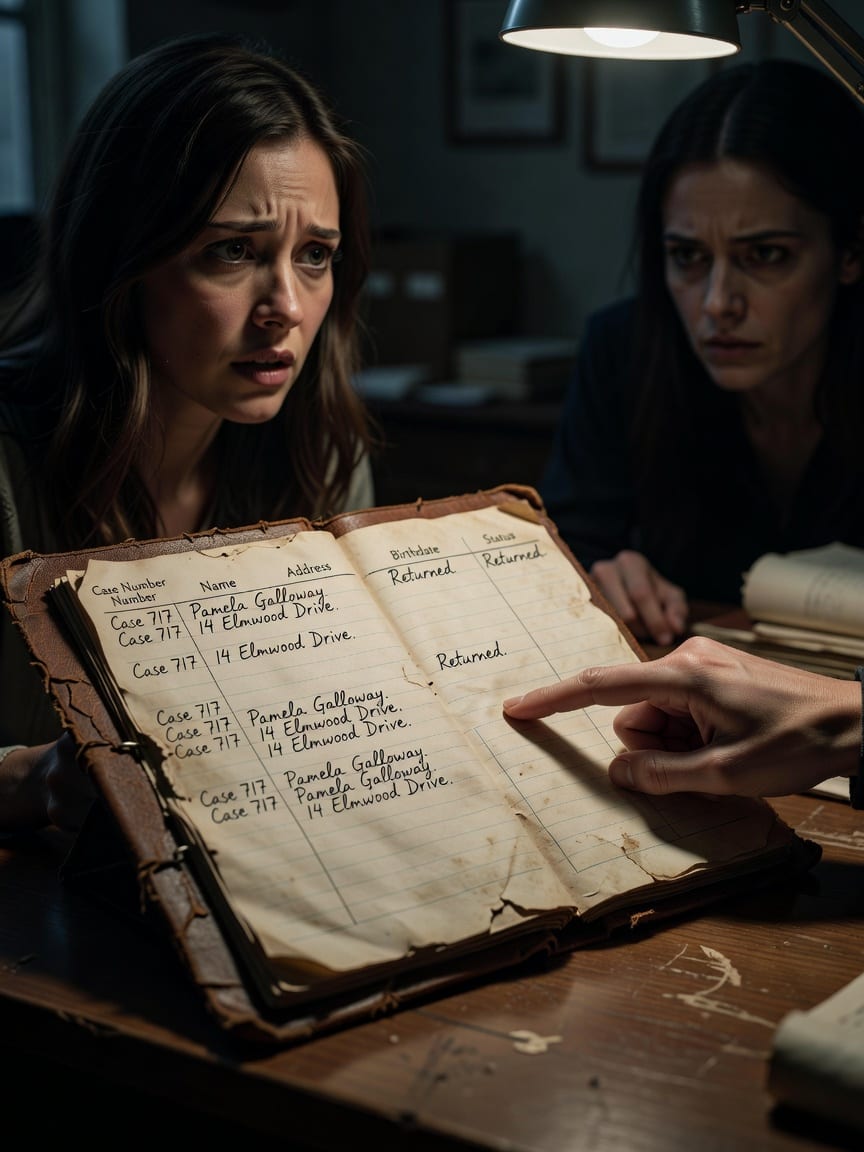
My hospital file has a blacked-out line from 1988. It names my street address, decades before I lived here. Then: 'returned'.
I finally got my medical file, hoping to clear up a ridiculous bill. Inside, I found an entry from 1988: my current home address, scrawled on a partial intake form and marked 'returned.' I was six then, living fifty miles away.
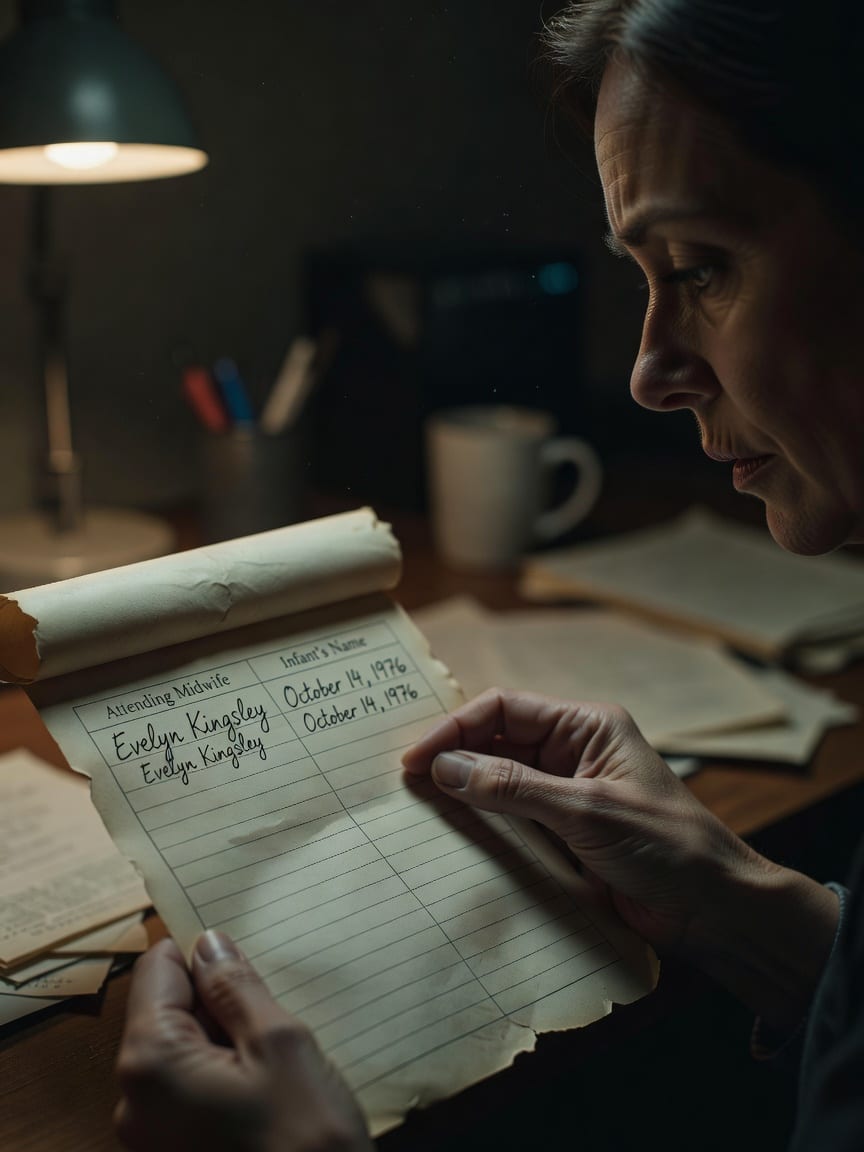
My own handwriting is on my birth certificate, signed as the attending midwife. I was the baby born that night.
I found my adult signature scrawled across my mother’s maternity file, right on my own birth register page. Forensic analysis confirmed it was genuinely my handwriting, dated 1976. But that was the year I was born, and my signature was listed as the attending midwife.