My mother's right ear has been partially deaf since she was eight. Now she's talking on the phone with it.
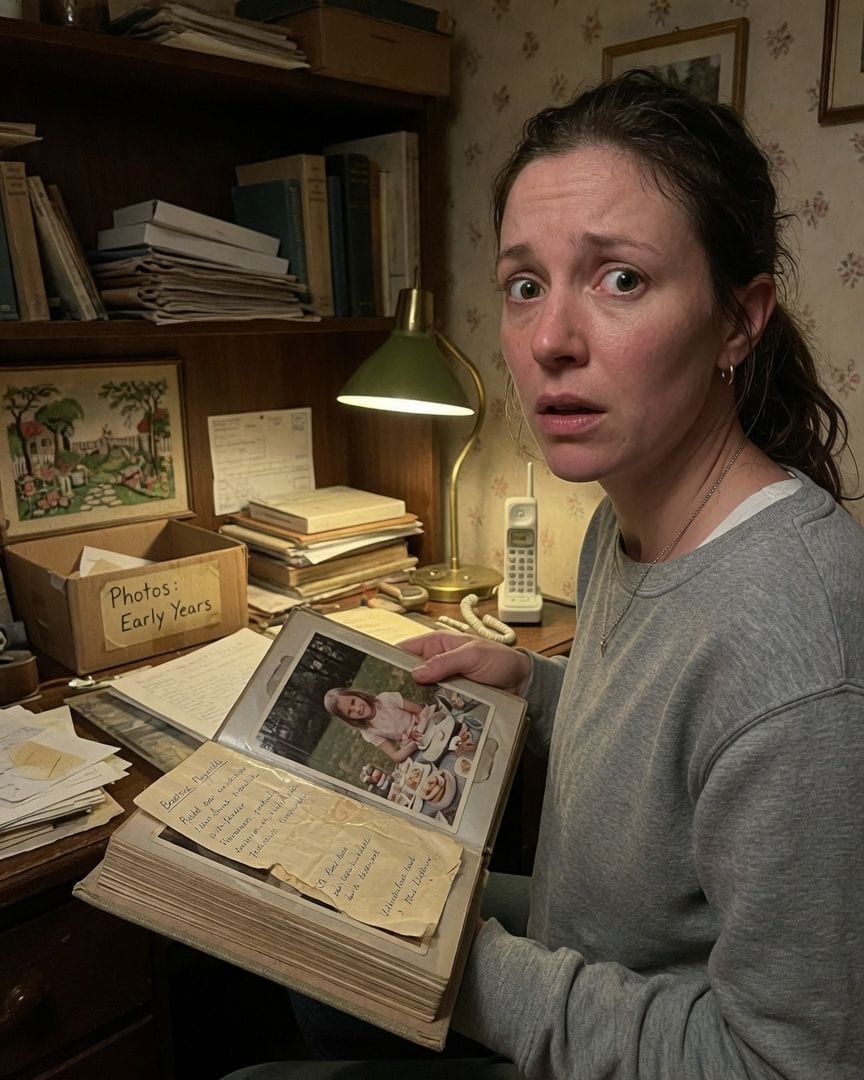
The first thing I noticed was the phone.
My mother, Beatrice, had been back for five days, and every single one of them felt like trying to remember a dream that was already crumbling. Relief was a physical ache in my chest, a constant, dizzying companion.
But it was curdling, turning sour in the quiet moments. She was sitting in her favorite armchair, talking to Mrs. Davison about the community garden plans. And she was holding the phone, a heavy, old-fashioned cordless, to her right ear.
My stomach clenched. All my life, my mother had used her left ear for phone calls, for conversations at dinner parties, for whispers across a crowded room.
Her right ear, ever since that bad fever when she was eight, had been partially deaf. It was a family legend, a well-worn joke. 'Speak up for Beatrice's bad ear!' my grandpa used to boom.
We all knew to sit on her left, to articulate clearly if we were on her right. Now, she was chatting, nodding, laughing effortlessly, her right ear pressed to the receiver, perfectly attuned.
I tried to tell myself it was the sheer relief, the shock of her return after five days of waking nightmares. Maybe a miracle.
We’d seen a new doctor, a younger man I didn’t recognize, after the usual one, Dr. Porter, was out of town. He'd done a quick check.
He’d confirmed her right ear was perfect, her left ear slightly weaker, a mild childhood infection. “It’s always been that way, Mrs. Reynolds,” he’d said, smiling, “nothing to worry about.” My world had tilted then, but I’d pushed it back.
My mother’s posture was off, too. Straighter, almost rigid, gone was her usual gentle, anxious hunch. Her hands, which used to constantly fidget with a loose thread or a forgotten button, were still, resting placidly in her lap.
I’d tried to smile, to believe it was just my imagination playing tricks, a coping mechanism for the trauma of her disappearance.
But the image of the phone, held to the wrong ear, kept ringing in my mind, a discordant note in the quiet house.
I tried to rationalize it all away, to blame my own frayed memory, the crushing stress of her absence. I’d engage Beatrice in old conversations, testing her.
She’d recount the details of our last trip to the lake house, or the precise ingredients for her blueberry pie, without her usual pauses, without the slightest 'what was that again?' from her supposedly weaker side.
It was all too perfect, too smooth. The wrongness persisted, a low hum beneath the surface of my forced normalcy.
I remembered old family stories, old jokes about 'Beatrice's bad ear,' not just my grandpa's boisterous declaration, but quiet, tender moments. My father always knew to kiss her left ear at bedtime. It wasn't something you forgot. It was her.
I walked into Beatrice’s study, a room she’d always kept meticulously, almost obsessively, tidy – a habit that hadn’t faded even as her memory for smaller things occasionally did.
The familiar scent of old paper and lemon polish hung in the air. I pulled out a dusty cardboard box from the bottom shelf of her bookcase, labeled 'Photos: Early Years.'
My hope was irrational, a desperate reach for any image, any shred of physical evidence that might confirm my memory. Maybe a picture of her at a loud family gathering, straining to hear with her left ear, her head cocked.
Instead, tucked beneath a stack of faded black and white snapshots, I found an old, brittle medical bill. It was from Dr. Porter’s father’s practice, dated when Beatrice would have been nine, a year after her fever.
The paper crackled in my fingers. In the margins, scrawled in an elegant, looping hand, were a few precise words: Beatrice Reynolds. Right ear impairment, post-fever. Permanent partial deafness.
The bill was concrete, undeniable. A physical shred of proof that my memory wasn't failing me, that the current reality was not the one I’d lived in for thirty-two years.
My hands trembled as I carefully opened Beatrice’s old, fabric-bound photo album, meticulously labeled by year in her neat script. I found a page near the front, faded at the edges, with a family picnic photo from 1970.
Beatrice was a young girl, about ten years old, her smile wide, squinting slightly in the summer sun, her head tilted just so.
I brought the album closer, zooming in on her younger face with my phone’s camera, my heart hammering against my ribs. There, faint but distinct, was a tiny, almost imperceptible scar on the very top of Beatrice’s left earlobe.
Her left ear. The one the new doctor had just said had always been the weak one, the one that supposedly had a 'mild childhood infection.'
It was impossible. The scar was undeniable, a physical record of an injury I never knew about, on the ear that, by all accounts, should have been perfectly healthy her entire life.
My world spun, and the wrongness solidified into a terrifying certainty.
Armed with the faded photograph, its tiny scar a burning proof, and the old medical bill, I drove to Dr. Edmund Porter’s office.
He was a man in his early seventies, quiet, with deep-set eyes that seemed to carry the weight of generations. He’d known my family forever, had delivered me, in fact.
“Ah, Florence,” he said, gesturing to the chair across his large oak desk. The office felt exactly as it always had, smelling faintly of antiseptic and old paper. “How is your mother settling back in?”
I laid the photo and the bill on his desk. “Dr. Porter,” I began, my voice steadier than I felt, “about my mother’s ears.”
He picked up the bill first, his gaze lingering on his father’s familiar script. A flicker crossed his face, quickly masked. “My father kept meticulous records,” he murmured.
He then examined the photo, his brow furrowed slightly as he leaned in to see the scar. He acknowledged his father’s records, nodded vaguely.
But when I pressed him, he became evasive, speaking in generalities about 'memory playing tricks on us in times of stress' and 'the body healing in unexpected ways.' He offered a subtle, almost philosophical hint.
“Old ways changing, Florence,” he said, looking at me with those knowing eyes, “new ways settling in. It happens.”
I left his office with a growing, cold dread in my stomach. His evasiveness, the way he skirted around the direct contradiction, was more damning than any outright denial.
For days, I poured over old town archives at the local library, the microfiche reader humming softly in the quiet room. I focused on missing persons cases, anything odd, anything out of place. It was needle in a haystack.
Then, tucked away in the digitized microfilm of a 1950s newspaper, buried on the back pages of the Harmony Chronicle, I found it. A faded article about a local man, William Drummond, who had vanished for a week and then returned.
The headline was innocuous: 'Local Man Returns After Week-Long Absence.' But the last paragraph made my blood run cold: His family expressed overwhelming relief, though neighbors have noted minor changes in habit and disposition that, it is presumed, the family will eventually grow accustomed to.
Minor changes in habit and disposition. The words echoed my own experience with terrifying precision. It wasn't coincidence. It was a pattern.
My late-night research didn’t go unnoticed. The house, which had always felt like a sanctuary, now seemed to breathe with a quiet tension. Subtle shifts began to occur.
Beatrice started asking too many pointed, specific questions about my day, about where I’d been, who I’d spoken to, her words unnervingly calm. "What were you reading at the library, dear?"
she'd ask, her tone light, but her eyes held a depth I didn't recognize.
I'd find her in rooms I’d just left, standing silently, ostensibly 'tidying' a perfectly neat stack of magazines or smoothing an already flat throw pillow.
One evening, deep into my research, the glowing screen of the microfiche reader illuminating my face, I was back in the study.
I had just finished another clipping, this one even older, from the 1930s, describing a similar 'return' with vaguely mentioned 'peculiarities.'
Then I heard it. A distinct, soft creak from the floorboards outside the study door. My heart pounded against my ribs, a trapped bird. Slowly, I looked up.
Beatrice was standing in the doorway, framed in the dim hall light, utterly silent. Her expression was unreadable, a faint, almost imperceptible smile playing on her lips. She didn't speak, didn't move, just watched me with an unnervingly calm intensity.
The air in the room thickened, heavy with unspoken knowledge. I felt a profound chill, a realization that slammed into me with physical force: I wasn't just investigating anymore. I was being observed.
Every move, every late-night session, every question I asked, was being noted by the thing living in my mother’s skin.
The silent watch lasted for what felt like an eternity before Beatrice finally, slowly, turned and walked away without a word.
The next day, I confronted Dr. Porter again. This time, I didn’t just hint.
I laid out everything on his desk: the photo with the scar, the old medical bill contradicting the new diagnosis, and the crumbled, faded newspaper clipping about William Drummond. My voice trembled, but it was firm.
“What is happening, Dr. Porter? What did you mean by ‘settling in’?”
He listened, his expression unreadable, his old eyes fixed on the evidence. He didn't deny any of it. He didn’t confirm it either. Instead, he spoke of the town's 'long memory,' of 'things that settle in over time.'
He mentioned his father’s own 'difficult cases,' cases that were eventually 'resolved' and 'accepted' by the families involved.
He talked about 'adaptations,' about 'the natural order of things' for Harmony, as if this quiet horror was simply part of the local ecosystem.
He never explicitly stated what Beatrice was, never uttered words like 'replacement' or 'entity.' But his words, his knowing glances, his weary, almost resigned acceptance painted a terrifyingly clear picture.
He explained that the original medical records, like the bill I’d found, were indeed 'amended' by his father decades ago, after Beatrice's 'return,' to align with the new reality.
He implied it was a quiet, necessary act, a way to 'maintain peace' and 'not disturb the settled order' of the town.
He spoke of a historical pattern, not just an isolated incident, confirming my worst fears without ever explicitly naming them. The revelation snapped all the earlier clues into horrifying focus: the altered records, the changed habits, the town's collective blindness.
It all fit, a silent, pervasive truth woven into the fabric of our lives, hidden in plain sight.
I sat across from Dr. Porter in his dimly lit office, the air heavy with the unspoken and the profoundly chilling understanding of the pattern he’d hinted at.
He finished his tea, setting the cup down with a soft, precise clink on its saucer. He offered that same placid, almost too-calm smile.
He then reached out, slowly, with his right hand, a faint, almost imperceptible tremor in his fingers, to subtly adjust a framed photograph on his desk – a photo that always sat perfectly straight, a picture of his father receiving some kind of civic award.
It was a small, precise, fiddly movement.
My blood ran cold. I’d seen him do that exact same gesture countless times over the decades. His desk was always immaculate, those frames always perfectly aligned.
And he had always, every single time, performed such fine adjustments with his left hand, his dominant, steady hand.
The tremor. The wrong hand. The placid smile that never quite reached his eyes. A cold certainty washed over me, a dread that tightened around my throat, making it difficult to breathe. He wasn't just an old man who knew.
He was either complicit, or he was another one of 'them,' a silent, knowing part of the pattern, his own 'habit reversed' in plain sight. The implications were staggering, far wider and deeper than I could have imagined.
Reeling from the realization about Dr. Porter, about what that simple, wrong-handed gesture implied, I knew I had to go back. I needed proof, solid and undeniable, before I could make sense of anything.
I returned to his office the next morning, under the flimsy pretense of collecting more 'old family records' for Beatrice, knowing he wouldn’t question it. While he was briefly distracted with a phone call in the adjacent room, I searched.
My eyes fell on a section of his desk I’d never paid much attention to before, a low, solid piece of oak near the floor. Guided by a hunch, I felt along the underside.
My fingers brushed against a small, almost unnoticeable latch. It wasn't a lock, just a precise, hidden catch. It sprang open with a soft click.
Inside, beneath a stack of old prescription pads, was a shallow drawer. It contained a series of meticulously organized, coded files. Not patient files, these were different. They were bound with twine, labeled only with dates and an initial.
I pulled one out. Inside, tucked between brittle, yellowed pages, were old photographs, faded newspaper clippings, and cryptic handwritten notes, all detailing similar cases of 'returns' in Harmony, spanning over a century.
Each file described a vanished person who came back, subtly altered. I saw names I recognized from the town's history: Miller, Henderson, Granger. Each with a note about a 'habit reversed' or a subtle physical change, just like Beatrice.
A man who suddenly began writing with his left hand after a week missing in 1912. A woman who developed an unnatural fondness for raw oysters, a food she’d once detested, in the 1940s.
A child whose eyes, noted a crude sketch, inexplicably changed from hazel to a startling shade of green.
The pattern was undeniable, horrifyingly coherent.
Some notes, written in a spidery, antique hand – perhaps Dr. Porter’s father’s, or even his grandfather’s – hinted at a specific local landmark: an ancient well on the edge of town, known locally as ‘The Quiet Place.’
The names of certain prominent families appeared again and again, implying a generational cycle, a quiet, insidious replacement woven into the town's very fabric. Dr. Porter, and his father and grandfather before him, weren’t just witnesses.
They were custodians, silent keepers of the 'settled order.' The sheer scale of it, the fact that it had been happening under everyone's noses for so long, was the true horror.
I closed the drawer, my fingers shaking, the knowledge heavy and cold in my gut. I knew I couldn't expose 'Beatrice' without exposing the entire, deeply entrenched pattern, which now included Dr. Porter and potentially countless others in Harmony.
The thought of fighting a pervasive, unseen force, one that had operated for generations, was futile, a fool’s errand. My only option was to escape, to sever myself from this horrifying reality before it claimed me too.
I returned home, my mind numb, the files I'd seen replaying in a horrifying loop. I found 'Beatrice' in the living room.
She was sitting by the window, knitting with her right hand, a new, intricate lace pattern emerging from the yarn. She’d always been a clumsy knitter, and always used her left.
I walked to the mantelpiece, my gaze fixed on her. I took down a small, framed photograph of the real Beatrice, taken before she went missing, her smile genuine, her eyes warm.
I placed it prominently on the mantelpiece, facing her, a silent challenge.
'Beatrice' looked at the photograph, then at me. Her placid smile faltered for a fleeting moment.
For an instant, I saw something ancient, cold, and utterly alien flicker in her eyes, a flash of recognition and something akin to a silent, knowing hunger.
The air in the room crackled, heavy with the unsaid, with the impossibility of it all.
I didn’t speak. I simply turned, walked out of the house, got into my car, and drove away. I left my old life, my home, and the thing wearing my mother’s face behind.
I didn't look back, knowing that to do so would be to acknowledge the impossible, and to be drawn back into its orbit forever.
Florence Reynolds vanished from town. Her house stood empty for months, the 'For Sale' sign slowly fading, eventually purchased by a young couple from out of state.
Beatrice Reynolds continued her life, a pillar of the community, quietly attending town meetings, volunteering at the library, her right ear always perfectly attuned. Dr. Edmund Porter continued his medical practice, his smile serene, his hands steady.
The town continued, oblivious, its quiet rhythm unbroken. No one asked too many questions about Florence. It was simply 'Florence being Florence,' always a bit restless.
The framed photograph on the mantelpiece in the old Reynolds house was eventually packed away by the new owners, a forgotten relic.
A year later, Sophia Walsh, Florence’s best friend, stopped by the old Reynolds house. It was a Saturday, warm, and the new residents were out.
She saw Beatrice Reynolds tending the rose garden out front, humming a tune Florence didn’t recognize, her hands carefully pruning a thorny branch. Sophia approached the fence.
“Beatrice,” she called out, her voice hesitant, “have you heard from Florence?”
Beatrice turned, a faint, wrong smile playing on her lips, her eyes calm and unreadable. “Florence? Oh, she’s doing just fine. She always loved the quiet, didn't she?”
If this one got to you
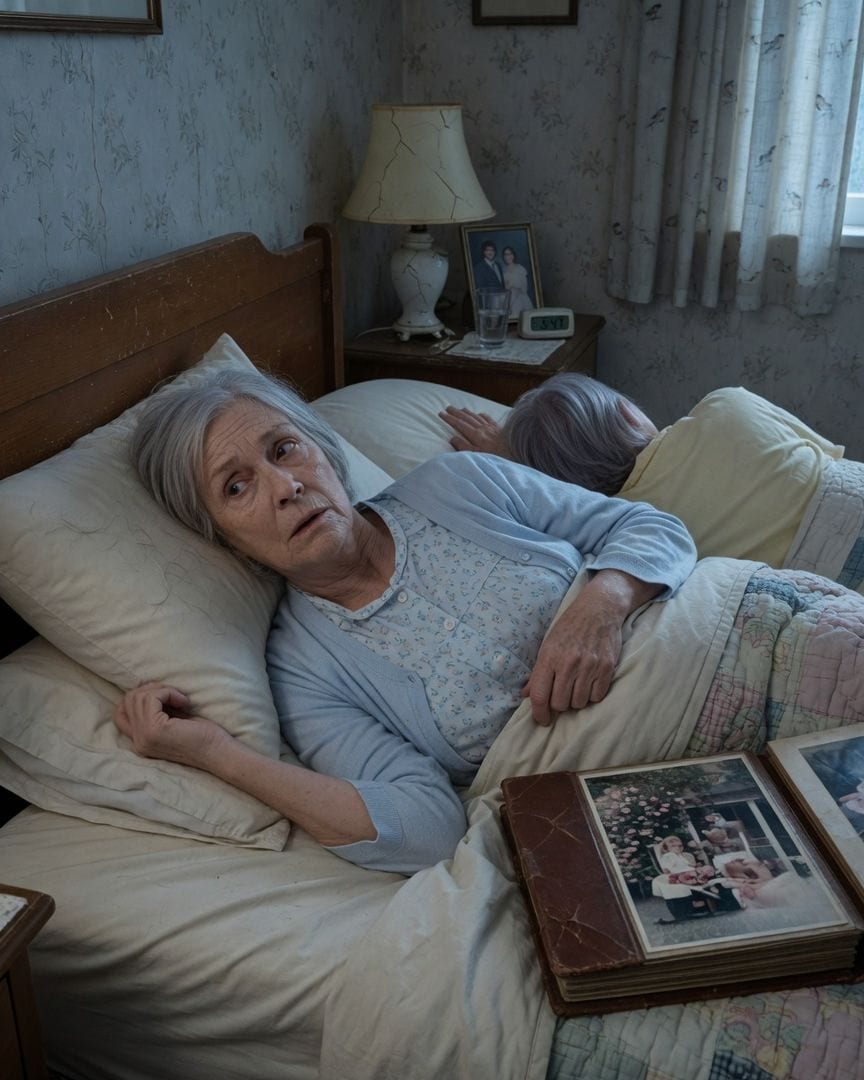
My twin sister Ruth sleeps on the right now, facing the wall. For forty-one years, she always took the left side. She insists I'm misremembering.
After three days missing, my partner Ruth finally came home. But the morning after, I woke to find her sleeping on the wrong side of our bed. She claimed she'd always slept there, and my memory was wrong, despite forty-one years together.
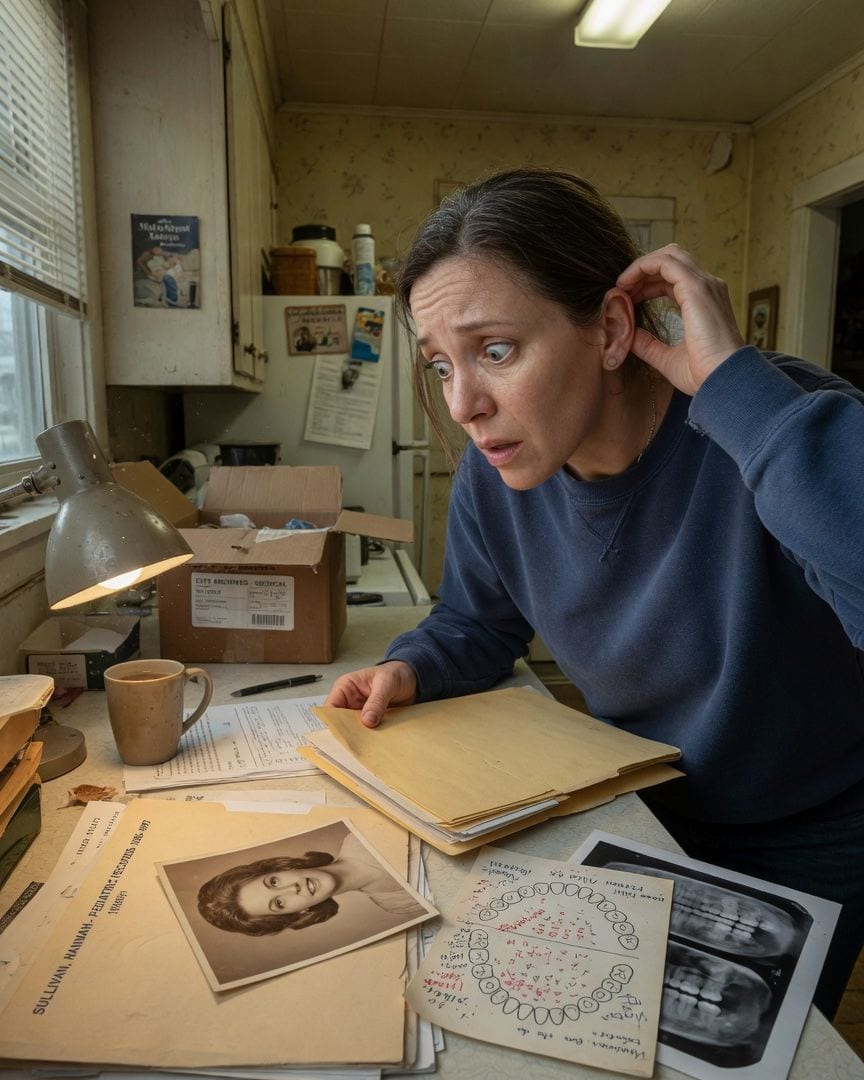
My MRI showed a perfect, decades-old surgical opening in my skull. I have no memory of it.
I underwent a routine MRI for persistent dizziness, expecting reassurance. Instead, the scan revealed a perfectly healed, decades-old surgical opening in my parietal bone, just behind my left ear. Dr. Hughes confirmed it was an access point for a procedure, yet I have no memory of any head surgery, ever. My body holds a secret I cannot recall.
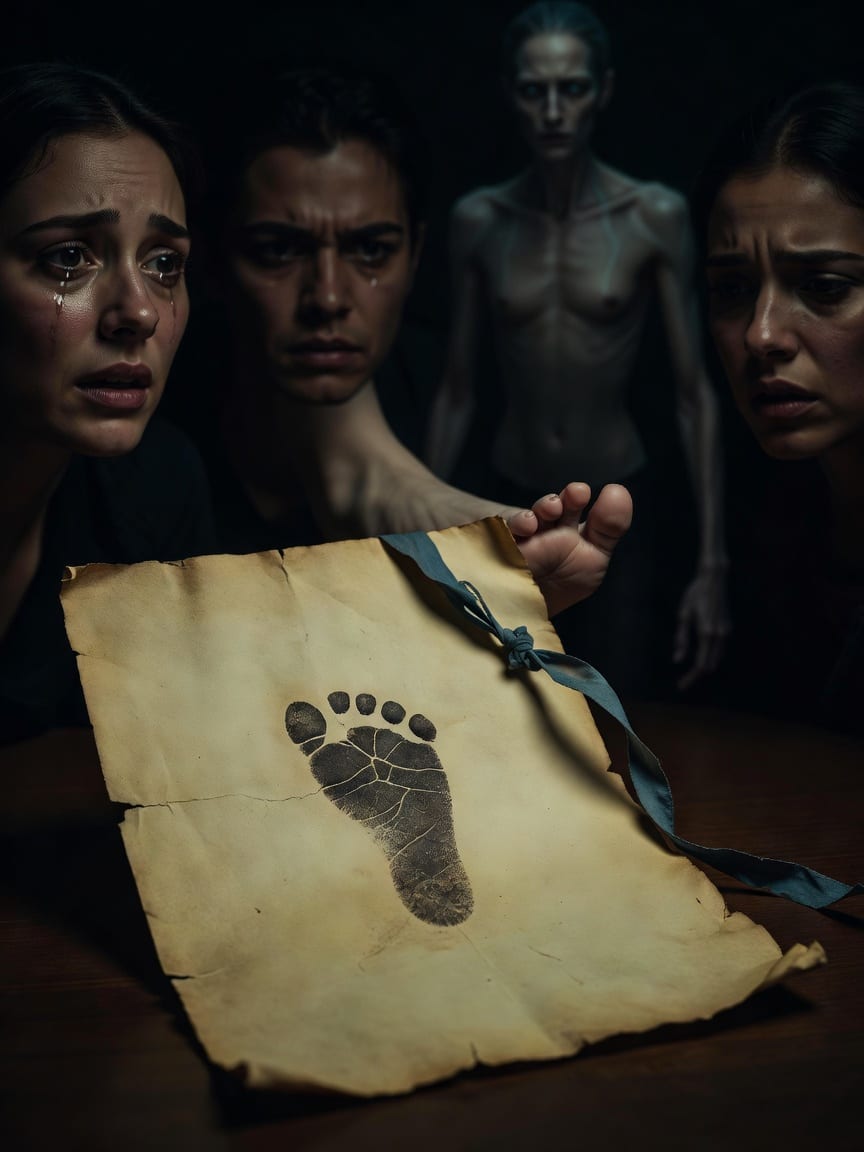
My hospital scanned old newborn footprints. They matched my foot, every whorl and arch, to a stillborn infant's card from 1954. Those tiny, inked ridges on the yellowing paper were undeniably mine. Sixty years apart, the same feet.
I was only curious when St. Jude's Hospital sent my newborn footprint card, part of digitizing their old records. But a genealogist soon revealed my own unique footprint matched a stillborn infant's card, filed in 1954 – an impossible biometric anomaly.
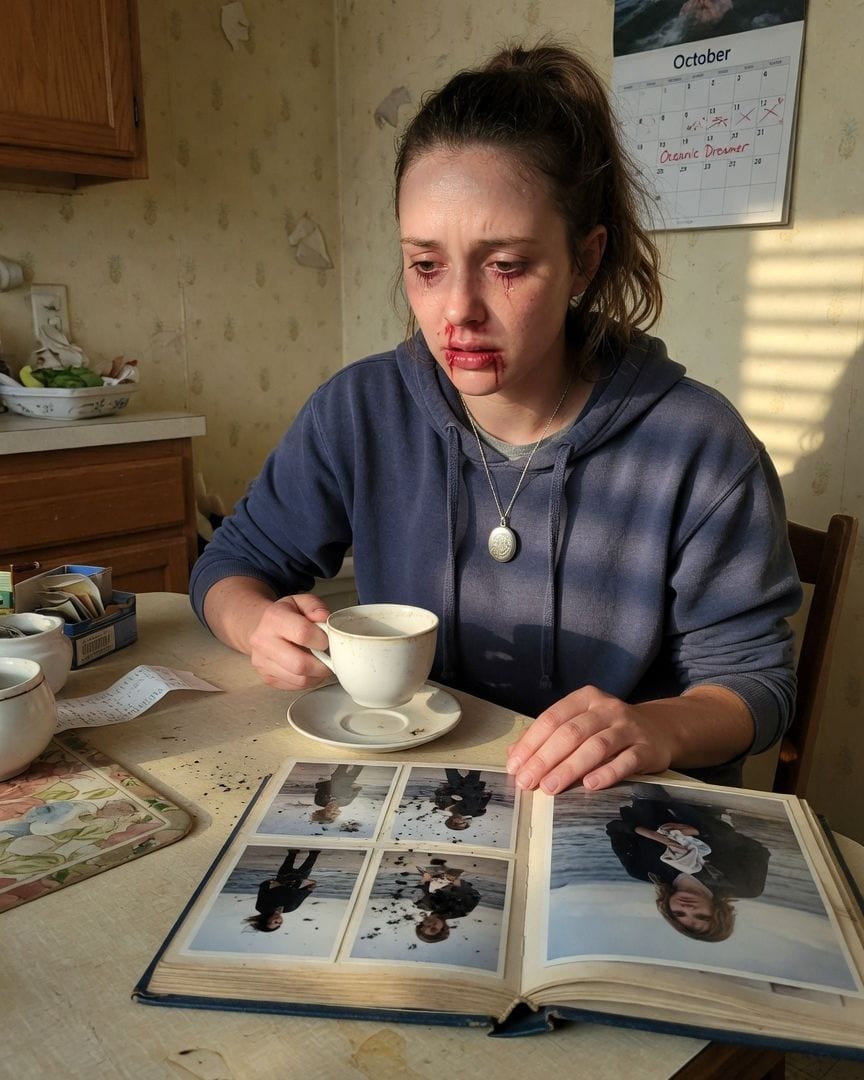
My mother recalled scattering Dad's ashes. She was gone when we did it, lost at sea. She knew which of us cried that day.
My mother came home a month ago, changed after nearly drowning at sea. But then she started describing the day we scattered my father's ashes, every detail sharp and clear. She couldn't have been there; she was lost at sea when we stood on that pier.
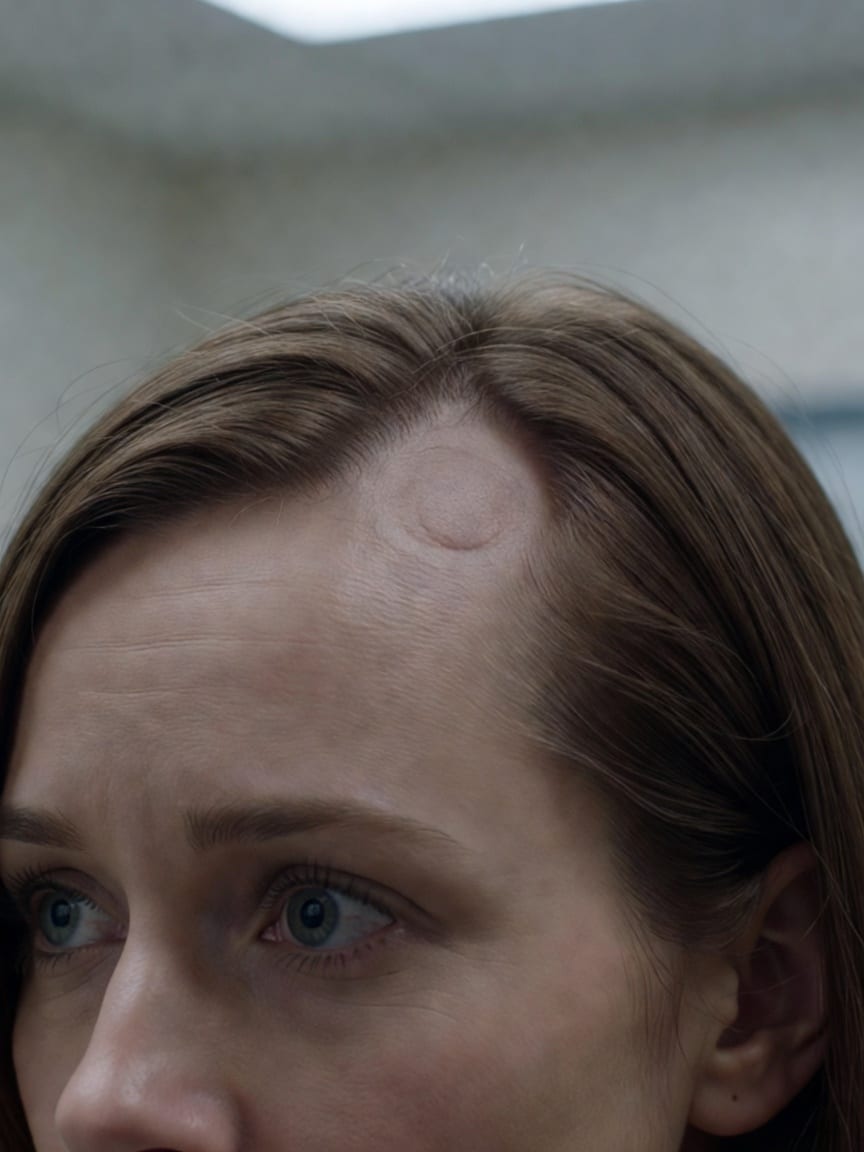
My skull has a healed burr hole. No scar. My MRI says it's mine.
I visited the doctor for routine headaches, expecting a simple prescription. Instead, my brain MRI revealed a perfectly circular, healed burr hole in my skull, indicating neurosurgical intervention decades ago. I have no memory of any head injury or surgery, no scar, and my parents deny anything ever happened.
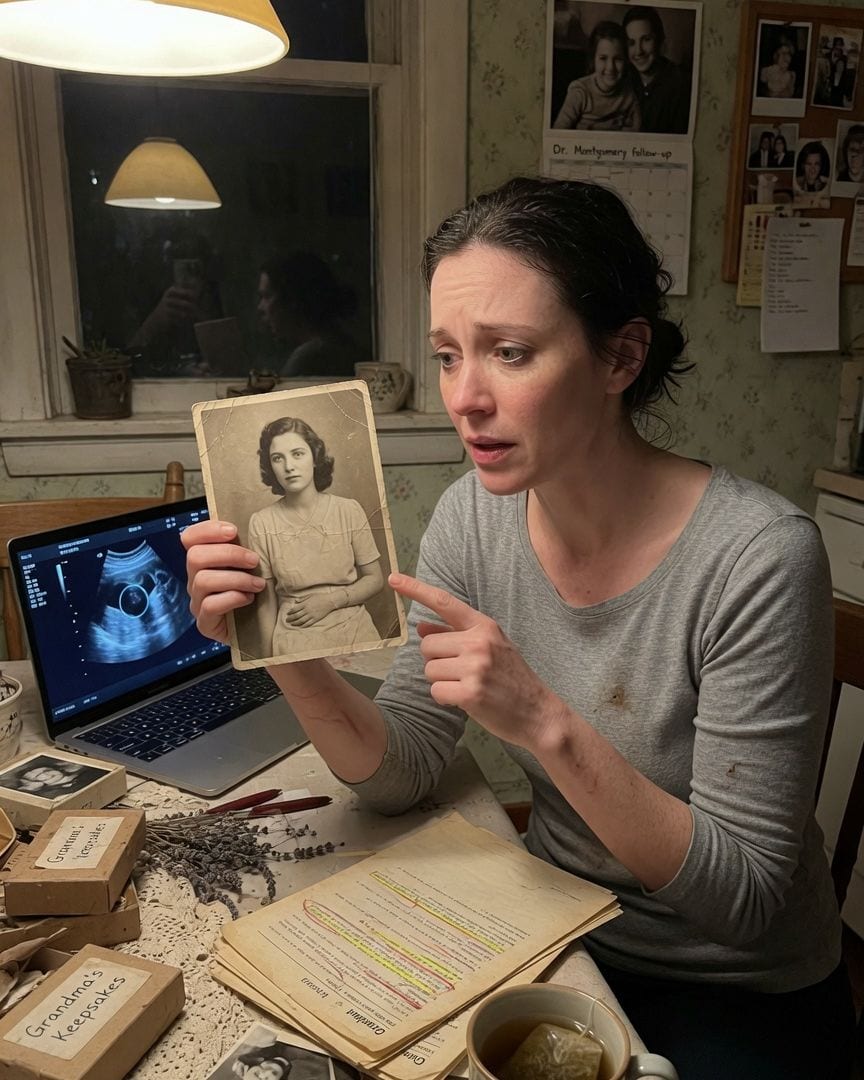
My left ovary is gone, tied off with a clip. I've never had surgery, and my abdomen is smooth.
A routine ultrasound for pelvic pain quickly turned chilling when the sonographer pointed to the screen. My left ovary was missing, replaced by a surgical clip. Yet my abdomen was perfectly smooth, no scar, and I knew I had never had an oophorectomy. Doctors asked for the date of my operation, but I have no memory of any surgery.