My skull has a healed burr hole. No scar. My MRI says it's mine.
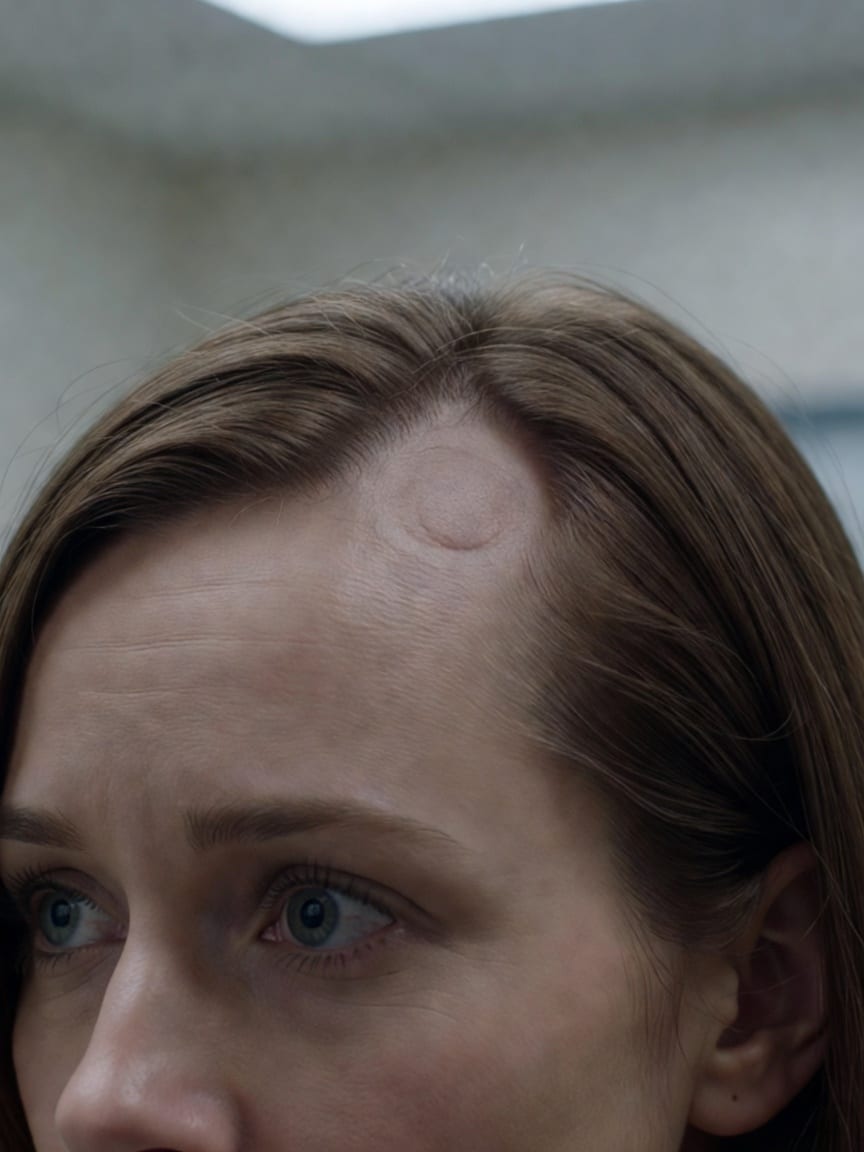
I sat in Dr. Everett Yates’s office, the sterile smell of antiseptic doing little to calm my nerves. I’d come in for persistent headaches, nothing more.
A dull throb behind my eyes, sometimes a sharp spike, but nothing that felt medically urgent. Just a hassle. I expected a prescription, maybe a referral for a sleep study.
Instead, Dr. Yates’s face was grim as he pulled up my recent brain MRI. The screen glowed, a grey landscape of my own skull.
“Ms. Sinclair,” he began, his voice carefully neutral, “the scan shows something unusual.” He pointed to a small, perfectly circular shadow on the bone, a dark pockmark against the lighter grey. “A healed burr hole.
And a faint track through the tissue beneath it, consistent with old neurosurgical intervention.”
I stared at the image, then at him. Bewildered. Neurosurgical? I had no memory of any head injury, let alone surgery. No childhood illness that required anything beyond antibiotics.
I ran a hand instinctively over the top of my head, feeling nothing but smooth scalp beneath my hair. No bump, no indentation. My fingers moved through the roots, searching. Nothing.
“There’s no scar,” I said, my voice barely a whisper, the words feeling foreign and ridiculous even as I spoke them.
Dr. Yates nodded slowly. “That’s what makes it so peculiar. We sent it for a second opinion. The neuroradiologist agreed. It’s genuinely there, and it’s years old. Decades, by the look of it.” He leaned back, his chair creaking.
“Are you certain you have no recollection, no family history of such an event?”
The image of the burr hole haunted me. Perfectly round. Like it had been drilled. Drilled into my infant skull, decades ago, then healed over without a trace.
I spent days sifting through old photos, dusty baby albums, anything that might show a hint of a bandage, a shaved head, anything out of the ordinary. Nothing.
My childhood was unremarkable, filled with scraped knees and chickenpox, never a serious head trauma. I was a normal kid. I had the pictures to prove it.
I called my parents, trying to sound casual, trying to make it a light, passing question. “Mom, did I ever have a bad head injury as a baby? Or surgery? Anything like that?”
My mother paused, a beat of silence that felt too long, then she laughed, a bright, dismissive sound that didn’t quite reach her eyes when I pictured her. “No, sweetie, you were a perfectly healthy, if occasionally fussy, baby.
No broken bones, no major illnesses. Just the usual sniffles.”
No memory. No record. No scar. The MRI was an undeniable fact, yet it violated my entire personal history, every memory I had. It was a blank space where something fundamental should have been. It made no sense.
One afternoon, a week after the MRI, the headaches thrumming faintly behind my eyes, I found myself in the attic. I wasn’t looking for answers, not directly.
I was rummaging through a box of forgotten baby clothes, searching for a tiny knitted hat I remembered my grandmother making, a silly, sentimental distraction.
My fingers brushed against something hard, cold, and metallic, tucked away beneath a yellowed christening gown.
I pulled it out. It was a tarnished, almost black metal bracelet, far too small for an adult’s wrist.
It looked like a hospital ID, a baby’s ID, but instead of my name, it bore a series of faded, almost unreadable alphanumeric characters.
And next to them, a small, stylized symbol, like an abstract ‘S’ with a tiny, delicate medical cross intertwined.
The bracelet felt cold and heavy in my hand. It wasn't jewelry; it was functional, institutional. The metal was dull, corroded by time, but the symbol, that strange S-cross, was still clear enough to make out.
I typed a rough description of it into a search engine: “stylized S cross medical symbol infant.” After several dead ends, scrolling through pages of unrelated logos and ancient religious iconography, a forgotten local news archive popped up.
A grainy 1980s article. The headline was sensational, something about “Controversial Neurological Research Clinic Shut Down.” The accompanying photo showed a faded sign, barely legible in the dim monitor light, but the stylized ‘S’ with the medical cross was unmistakable.
It was the ‘Sterling Clinic.’
I felt a cold dread spread through me, like ice water leeching into my bones. The burr hole on my MRI, the missing scar, my parents' vague answers, and now this.
It connected the impossible mark on my skull to a place that shouldn't exist in my history, a place with a controversial past.
The headaches intensified, a sharp, cold spike behind my right eye, right where Dr. Yates had pointed on the screen.
The Sterling Clinic. I dug deeper, the internet becoming a rabbit hole of forgotten scandals. More articles detailed its controversial practices, whispers of experimental treatments, and a sudden, quiet closure decades ago.
The records, if they still existed, would be scattered, likely buried. I found an old forum for former employees and patients, a ghost town of posts from years past.
One name kept appearing, a Maureen Carver, a former records clerk who had tried to blow the whistle on the clinic’s ethics, then vanished.
I found a current address for Maureen, a small, unassuming house twenty miles away. My hands were clammy on the wheel as I drove, the engine noise loud in the silence of my fear.
Maureen, a woman with kind, tired eyes etched with decades of worry, seemed initially surprised when I showed up unannounced, then wary. Her gaze lingered on the symbol on the bracelet I held out.
“The Sterling Clinic,” she murmured, her voice thin, almost a whisper, as if speaking the name aloud could conjure something. “I remember that symbol. They were… ambitious.”
She ushered me inside, the small living room smelling of dust and old paper. Maureen confirmed that the clinic had performed highly experimental procedures, often on infants, under strict secrecy.
“They thought they were pioneering,” she said, her voice laced with bitterness. “Playing God.” She admitted she’d kept copies of some of the records when the clinic closed, fearing they’d be destroyed, fearing what they contained.
After a long, uncomfortable silence, the ticking of a grandfather clock filling the gap between us, she pulled out a dusty, unlabeled cardboard box from a closet.
Inside, among yellowed folders, was a single, official-looking document. It bore the Sterling Clinic logo, that stylized S-cross, and a heavily redacted list of ‘Project Alpha’ participants.
My stomach dropped like a stone as I saw my own birthdate, and next to it, a partial, coded ID number. It matched the one on the bracelet.
Maureen, after revealing the document, became noticeably withdrawn. Her kind, tired eyes now held a new, cautious glint, darting towards the windows.
She insisted I leave, promising to “look for more,” but her tone was firm, a sudden shift in her demeanor. I felt dismissed, warned.
Days later, I tried calling her. No answer. I drove back to Maureen’s house, finding it dark and silent. The blinds were drawn, a lone newspaper on the porch.
A neighbor mentioned Maureen had suddenly gone “on a long trip,” without notice. A long trip. My gut twisted.
Then, an anonymous email arrived. No sender, no subject line, just a single, chilling line of text: ‘Some things are better left buried.’ It landed in my inbox like a stone in a well, silent, cold, immediate.
My phone, which I’d used to photograph the document from Maureen, started acting strangely. The battery drained fast, odd pings in the middle of the night, phantom vibrations. I felt watched, my every inquiry leaving a trail.
I knew someone was aware of my investigation, someone who had access to information, and perhaps to my devices.
The dread wasn't just about the past anymore; it was actively present, a silent observer in my pursuit of truth, a cold breath on my neck.
I decided to go back to the source, to any remaining official records that might be less easily tampered with, pushing past the anonymous warning. I couldn't stop. Not now.
I found an obscure government archive, the final repository for defunct medical institutions. It was a dreary building, filled with the scent of mildew and forgotten paperwork.
After navigating layers of bureaucracy, feeling like I was talking to ghosts, I finally sat across from a stern-faced clerk. His name was Preston Ellsworth, and he looked like he’d been carved from granite.
I presented my MRI report, the tarnished bracelet, the partial document from Maureen. Preston looked at the evidence, his expression unchanging, betraying nothing. “The Sterling Clinic,” he stated, tapping a finger on the bracelet.
His voice was flat, devoid of emotion. “Project Alpha.” He pulled up a digital file on his computer, the monitor glowing faintly in the dim office. “Participant 703.”
My breath hitched in my throat. Participant. Not a patient. An experiment. “What was Project Alpha?” I demanded, my voice tight, my hands clenched under the table.
Preston cleared his throat, a dry, rustling sound. “A neurological study. Experimental procedures, designed to address… certain inherited predispositions.” He paused, choosing his words carefully, his eyes flicking to mine for a fraction of a second.
“The burr hole you have was for an implant. A neuro-regulator.”
A wave of nausea washed over me. An implant. In my brain. For forty years. “A regulator? What did it regulate?”
Preston looked directly at me then, his gaze unnervingly steady. “It was designed to suppress a specific neurological trait. A genetic marker the clinic believed could lead to… unpredictable cognitive development.”
He then produced a heavily redacted record—a duplicate of the one Maureen had shown me, but with more context. It confirmed my enrollment as an infant, the burr hole, the implant.
The headaches, the constant low-level unease I'd felt my whole life, the feeling of being slightly ‘off’ – suddenly, they all clicked into focus.
I wasn't just a patient; I was an experiment, and the implant had been actively shaping my life for decades.
I gripped the edge of the table, my knuckles white, digging into the plastic laminate. The room felt cold, the air thick with the unspoken. My brain felt like a buzzing hive. “What about the ‘checks and adjustments’?”
I pressed, recalling the column of dates on Maureen’s document, the one she’d been so hesitant to show me. “Is this thing still active?”
Preston hesitated, his usually impassive face showing a flicker of something, maybe pity, maybe just a deeper weariness. He accessed another file, typing rapidly. The screen changed, displaying a dense grid of data. He turned the monitor towards me.
It was a detailed medical history. My own. Stretching back decades, far beyond any records I’d ever seen. Every few months, sometimes more, a coded entry appeared under a specific heading. ‘Regulator status check. Parameters adjusted.’
Not just a past intervention, but an ongoing, active presence. The ‘faint track’ in my MRI wasn’t just a scar; it was a conduit. My headaches weren’t random.
They were a signal, a byproduct of a device that had been quietly, constantly manipulating my brain, and was now failing, allowing something else to stir within me.
The wrongness was not just inside my body; it was my life, every moment of it, defined by a hidden, alien control that was now breaking down. My entire existence had been a lie.
I looked at the screen, at the dates spanning my entire life, each one a silent affirmation of manipulation. My breath caught in my chest, a choked gasp.
The paper on the screen, a digital record of my stolen autonomy, trembled in my hand as I stared at the truth. The wrongness wasn't over. It was still happening.
The full, unredacted institutional record, finally obtained after a bitter legal battle that felt like fighting shadows, laid bare the Sterling Clinic's full agenda.
Project Alpha wasn't just about 'unpredictable cognitive development'; it was about suppressing a specific, rare form of neurodivergence that the clinic, funded by a shadowy eugenics-adjacent foundation, deemed undesirable for societal integration.
The implant was designed to create 'compliant, average' individuals from birth. My parents, young and trusting, had been told it was a preventative measure for a minor congenital defect that 'might' cause learning difficulties, nothing serious.
A simple procedure, for my own good.
The records detailed the implant's mechanism: a subtle dampening of specific neural pathways, effectively re-routing my innate cognitive patterns, suppressing my true self.
The 'faint track' was a microscopic network of micro-filaments, now degrading, failing after forty years of silent control. My headaches were the internal struggle, the suppressed trait pushing back, re-emerging as the regulator faltered.
The truth detonated in my mind, a silent, internal scream: my entire personality, my preferences, my very way of thinking, had been curated, not by choice or nature, but by an external, mechanical force.
I wasn't just Hannah; I was 'Participant 703,' a carefully constructed self, now unraveling.
The horror wasn't external; it was internal. It was me. I tried to find answers, consulting neurologists with the unredacted documents, but the consensus was grim: the implant was too deeply integrated, too fragile after decades.
Removal was impossible without catastrophic neurological damage, potentially leaving me in a vegetative state or worse. The suppressed trait, once fully re-emerged, was irreversible. I was trapped in a body and mind becoming increasingly alien to me.
The headaches intensified, no longer just pain, but a buzzing, a new way of processing information, a cascade of unfamiliar sensations and thoughts that felt both ancient and utterly foreign.
I would catch myself speaking in strange cadences, my thoughts veering into patterns I couldn't control, into depths I'd never known.
Samuel, my husband, noticed the subtle shifts first: a faraway look in my eyes when he spoke to me, a sudden, sharp retort unlike her, an increasing detachment from our shared life.
He tried to reach me, his hand on my arm, asking what was wrong. I tried to explain, but the words felt inadequate, the truth too vast and terrifying to convey.
The climax was the dawning, inescapable realization that I was losing myself, piece by agonizing piece, to the 'original' self that had been buried for so long, and that this new self was not the Hannah Samuel knew, or even the Hannah I thought I was.
I withdrew from the world, the buzzing in my head becoming a constant, low hum. My journal entries, once precise and analytical, became fragmented, filled with abstract drawings and non-sequiturs, symbols that mirrored the one on the bracelet.
Samuel found me staring at walls for hours, sometimes muttering to myself in a low, resonant voice that wasn't quite hers, a language he couldn’t understand.
The headaches became a constant, dull throb, but I seemed to transcend the pain, entering a detached, almost serene state.
I stopped responding to my name with the same recognition, a slight hesitation, a turn of the head as if the sound was unfamiliar.
The woman he had married was slowly, irrevocably, fading, replaced by something else, something ancient and quiet, that now occupied her body.
Hannah's last journal entry simply contained a repeating pattern of geometric shapes, a language Samuel didn't understand. He found her in the garden, meticulously arranging pebbles into a spiral, her eyes distant, her lips curved in a faint, knowing smile.
He spoke her name, but she didn't turn.
He often wondered if she was still in there, somewhere, behind the eyes that now saw things he couldn't.
If this one got to you
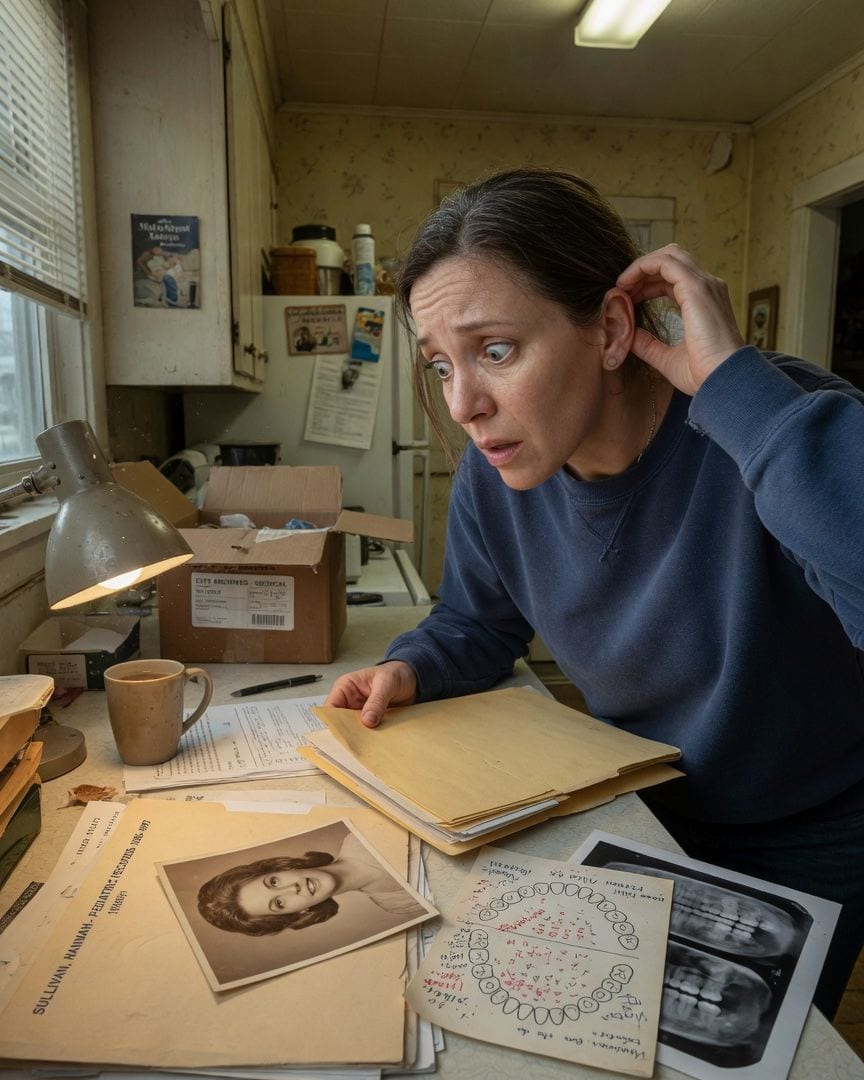
My MRI showed a perfect, decades-old surgical opening in my skull. I have no memory of it.
I underwent a routine MRI for persistent dizziness, expecting reassurance. Instead, the scan revealed a perfectly healed, decades-old surgical opening in my parietal bone, just behind my left ear. Dr. Hughes confirmed it was an access point for a procedure, yet I have no memory of any head surgery, ever. My body holds a secret I cannot recall.
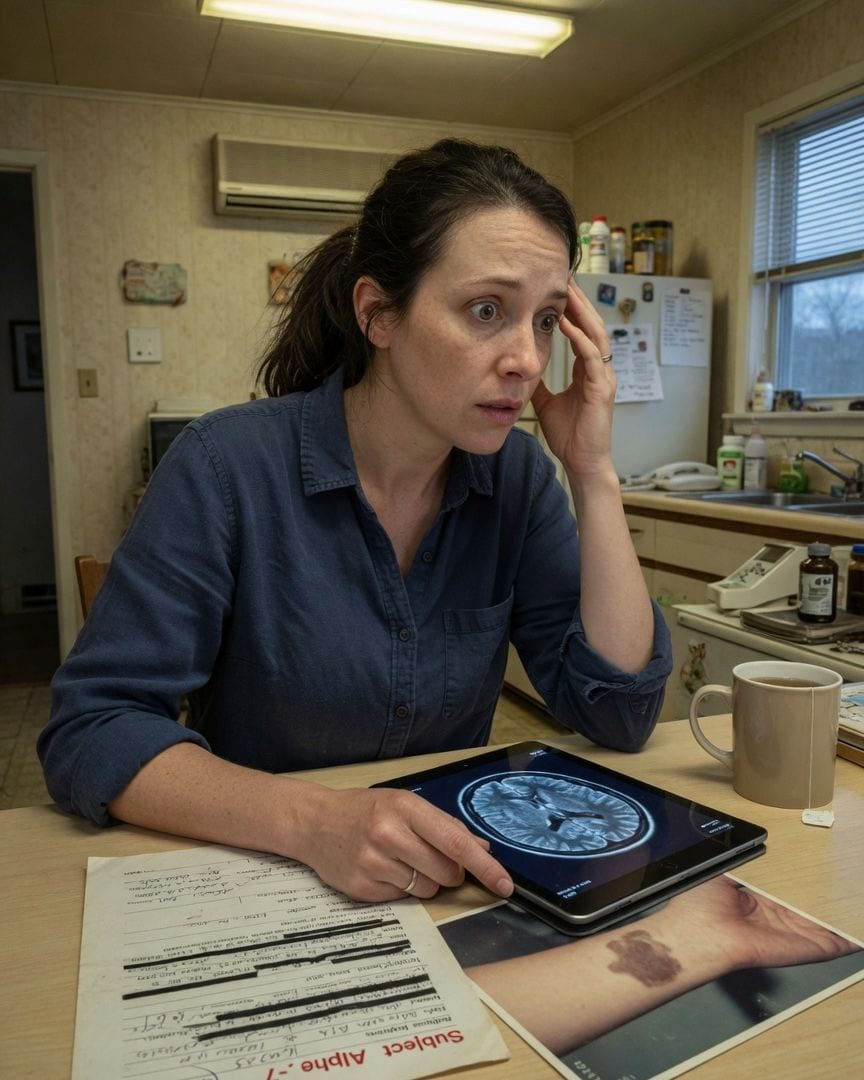
A metal clip seals off a vessel deep inside my brain. My head has no scar, I've had no surgery, and it's been there for over a decade.
My persistent headaches led to an MRI, revealing an impossibly neat metal clip inside my brain. My doctor confirmed it had been there for over a decade, despite no record of any past surgery or scar. Now, a restricted file links my unique birthmark to a mysterious patient from 1968.
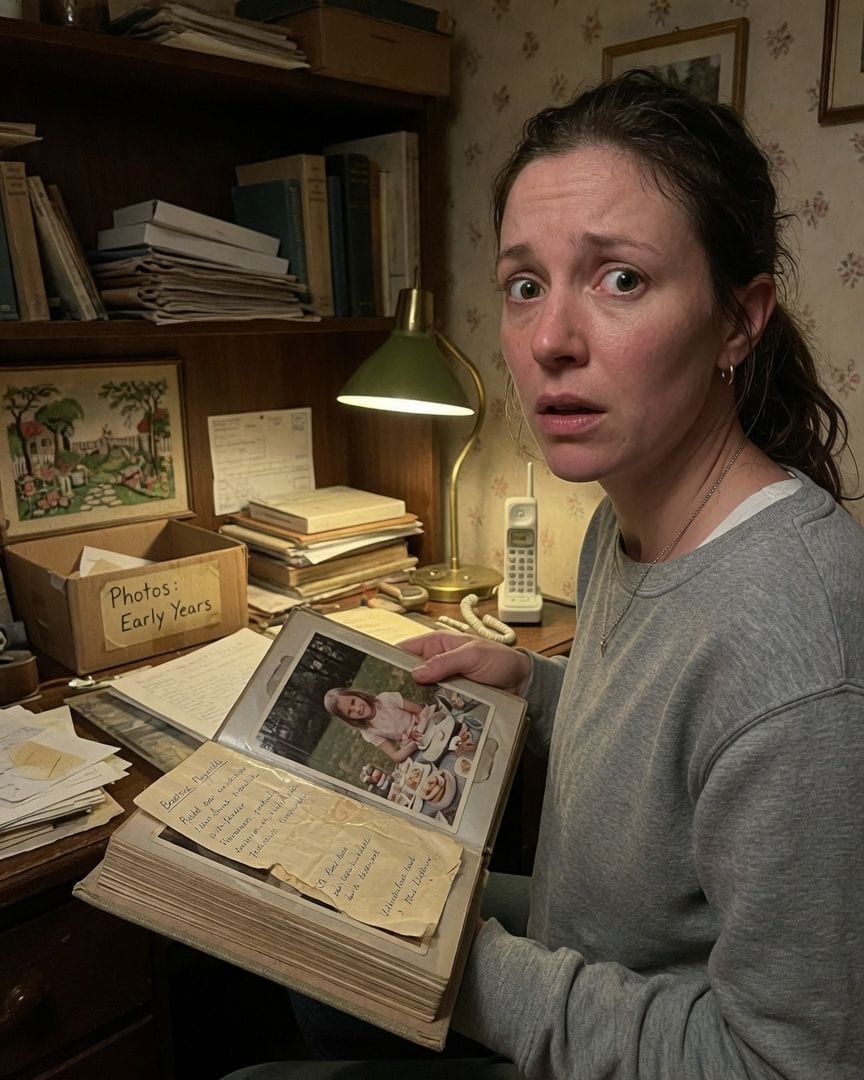
My mother's right ear has been partially deaf since she was eight. Now she's talking on the phone with it.
My mother, Beatrice, is finally back after five days, but my relief is curdling. She's using her right ear for phone calls, the one that's been partially deaf since she was eight. A new doctor confirmed her right ear was perfect, her left ear weaker, completely contradicting my lifelong memory.
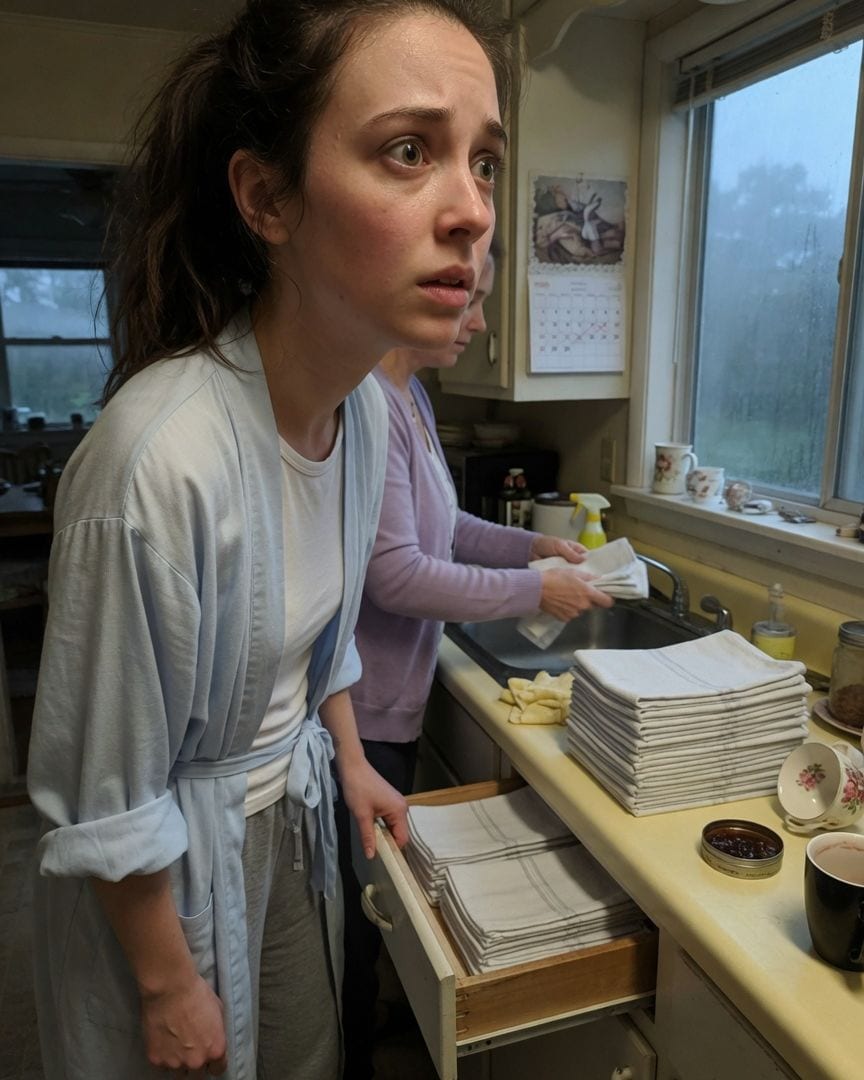
My mother's left wrist has a new scar. She never had one there.
My mother is finally home after her disappearance, and I'm trying to find our old rhythm. But then I watch her fold tea towels, a simple ritual I learned from her. She's doing it completely wrong, seam-out, insisting it's how she's always done it.
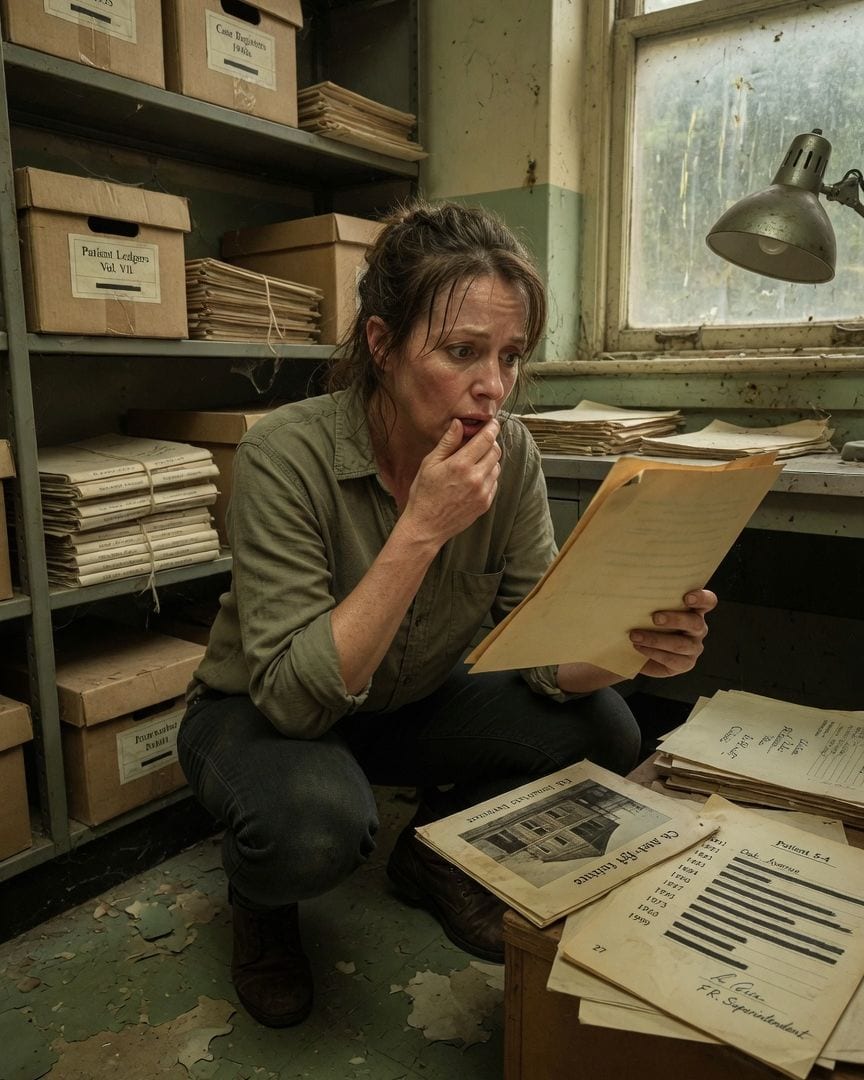
Patient 5-4 keeps checking into my aunt's old sanatorium chalet. The same initials sign them out, 'not traced,' every thirteen years since 1921.
Sifting through my aunt Margaret's estate, I found her old sanatorium file from 1999. Her patient record listed her as 'Patient 5-4,' discharged 'not traced.' But when I accessed the archives, I found 'Patient 5-4' was admitted every thirteen years since 1921, always with identical discharge notes.
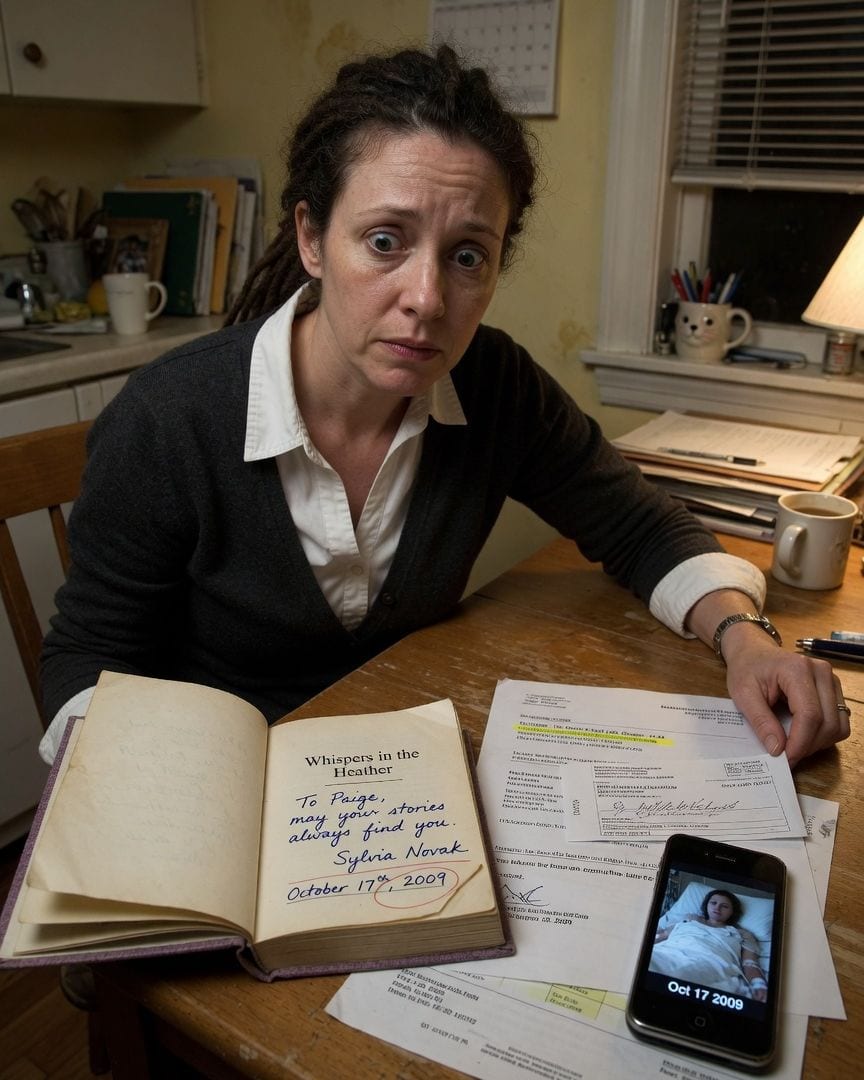
A stranger asked me to re-sign the book I'd already signed for her in Glasgow in 2009 — in my own hand. I've never toured Scotland, and that week I was recovering from surgery in Boston.
As a novelist, I'm used to signing books, but a fan recently presented *Whispers in the Heather*, already inscribed with my signature from a 2009 Glasgow event. The problem? That novel wasn't published until 2010, and on that exact date, I was recovering from major surgery in Boston. Now, my own bank records and a hospital photo confirm I was in two impossible places at once.