A stranger asked me to re-sign the book I'd already signed for her in Glasgow in 2009 — in my own hand. I've never toured Scotland, and that week I was recovering from surgery in Boston.
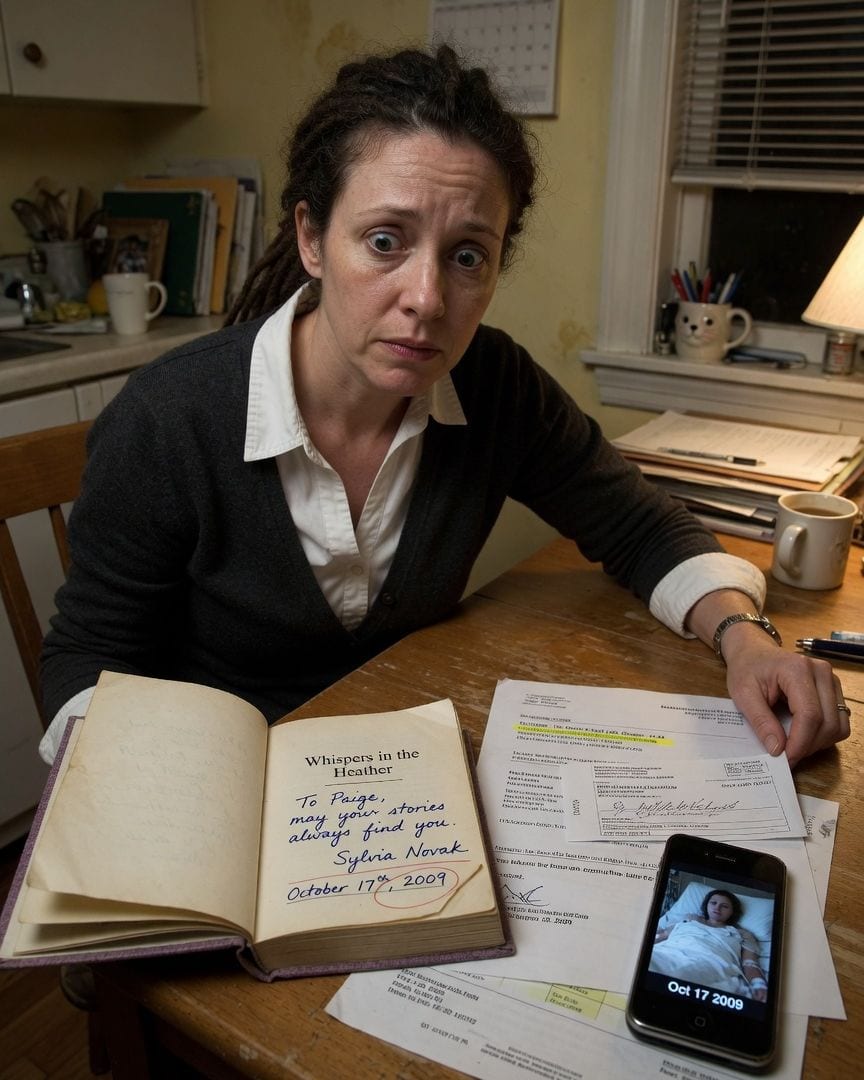
The air in the bookstore was thick with the scent of old paper and lukewarm coffee. I sat at a small table, signing copies of my latest novel, when a woman approached, a worn paperback clutched in her hands.
She had bright, earnest eyes, and a smile that seemed to apologetically ask for too much.
“Ms. Novak?” she began, holding out the book. “Could you sign this again for me? It means so much.”
I took the book, a copy of Whispers in the Heather, one of my earlier works. It was well-loved, the cover creased, the spine soft. “Of course,” I said, reaching for my pen. “Who should I make it out to?”
“Paige,” she said. “You already signed it to me in Glasgow, back in 2009.”
My pen paused mid-air. Glasgow. 2009. I opened the book. And there it was. On the title page, my own unmistakable hand, bold and precise.
To Paige, may your stories always find you. Sylvia Novak. Below it, my signature flourish, a little loop on the ‘k’ I’d perfected over years. And then the date: October 17th, 2009.
A cold knot tightened in my stomach. October 17th, 2009. That was the week I’d had surgery. Major surgery.
I was laid up in a hospital bed in Boston, recovering, barely able to lift a spoon, let alone hold a pen, definitely not signing books in Scotland. And Whispers in the Heather? It wasn't even published until late 2010.
I looked up at Paige. Her smile was still eager, innocent. She didn’t notice the slight tremor in my hand as I held the book.
My eyes scanned the inscription again, searching for a flaw, a subtle difference in the stroke, anything to make it a forgery. But it was mine.
Every curve, every dip, the way the 'S' began, the definite pressure on the final 'k'. It was my hand, my pen, my words. An absolute impossibility.
The incident with Paige stuck to me like static electricity, a low hum beneath my skin. I tried to dismiss it, to rationalize it away. A misremembered date, a fan’s elaborate prank, a surprisingly good forgery.
But the handwriting was too perfect, too intimate. It was me. It was my particular closing line, the sentiment I’d used for years, the one I felt connected me to readers.
I spent the next few days in a haze, the signed paperback lying open on my kitchen counter, a constant accusation. I pulled out old calendars, medical records, anything that could offer a mundane explanation. I called my agent, Maria.
“Maria,” I said, trying to keep my voice light, “quick question. Did I ever do a signing in Glasgow, say, back in 2009? October, specifically?”
There was a beat of silence on the line. “Glasgow? In 2009? Sylvia, honey, we barely had you doing local readings for The Broken Compass that year. You were still building your platform. And then, you know, your surgery.” She paused.
“Absolutely no tours, definitely no international ones. Why?”
I mumbled something about a fan having a vivid memory, a strange mix-up. The call ended, leaving me with a hollow ache. My agent, the keeper of my professional history, confirmed what I already knew.
I dug through boxes of old documents. My hospital discharge papers from Massachusetts General were precise: admitted October 15th, 2009, discharged October 20th. Days of post-op recovery, heavily medicated, barely conscious. The timeline for Glasgow was perfectly within that window.
Desperate for any mundane explanation, I signed into my old digital banking portal, scrolling through statements from 2009. I clicked past charges for hospital bills, local pharmacies, my apartment rent. My cursor hovered over October. And there it was.
Tucked between a charge for ‘Boston Meds’ and ‘Green St. Grocer,’ a small, innocuous debit from a place called ‘The Thistle & Quill Café, Glasgow.’ Dated October 17th, 2009. The exact same day as the book’s inscription.
My breath hitched. I clicked the entry. A scanned credit slip popped up, pixelated but clear. The amount: £4.50. And there, scrawled across the signature line, undeniably, was my name. My familiar flourish, the same one from the book.
The same loop on the ‘k’. My hand, my signature, on a credit slip in Glasgow, for a book that didn’t exist yet, a thousand miles away, while I was under heavy anesthesia.
I stared at it, the small, damning image on my screen. This wasn't a prank. This wasn't a mistaken memory. This was a financial record.
I sat at my kitchen table, the growing pile of evidence an unstable tower of impossibilities. The worn paperback, its impossible inscription staring up at me. The Glasgow café credit slip, her own signature perfectly rendered, a digital ghost.
My hospital records, solid and undeniable, confirmed where I actually was. My world was shrinking, compressing around these facts.
I pulled out my phone, fingers fumbling through old photos from that year. I scrolled past blurred selfies with friends, pictures of my cat, mundane snapshots of a life I’d thought was normal. And then I found it.
A photo a friend had taken of me in my Boston hospital bed, pale and bandaged, tubes running into my arm. I was smiling weakly, a ghost of myself, the hospital gown loose on my frame.
The date stamp in the corner was clear, stark: October 17th, 2009. The exact same day.
The world’s records, my own undeniable hand, now insisted I was in two impossible places at once.
The Glasgow incident wasn’t an anomaly; it was a crack in the foundation of everything I understood. I became obsessed. The normal world felt thin, transparent, and underneath, something else pulsed. I started searching for other ‘wrong’ records.
It wasn’t easy, sifting through the digital detritus of two decades, but the signs, once I knew to look, started to emerge.
I found a faded hotel bill, scanned and uploaded to a local historical archive in some obscure corner of the internet. It was from a small, forgotten inn in rural France, a place called ‘L’Auberge du Silence.’
Dated August 12th, 2011. A single night’s stay. And there, among the scratchy lines of an old dot-matrix printer, was my name, 'Sylvia Novak,' followed by what was clearly my signature. My distinctive flourish, that precise loop on the 'k'.
I’d never been to France. Not even for a vacation.
Then, a digitized flight manifest from a regional Argentinian airline, ‘Aerolíneas del Sur.’ February 3rd, 2013. My name listed, ‘Sylvia Novak,’ flight from Salta to Córdoba. And beside it, a small, hastily scribbled signature. Still mine. That loop, that angle.
I’d seen pictures of Argentina, read about it for research, but I'd never set foot there. The idea of navigating a regional airline in 2013, alone, was absurd.
Each time, my familiar hand, my unique closing line, my signature, appearing in places I’d never set foot. The pattern was too precise, too consistent to be coincidence or forgery.
It was a signature so intimate, only I could have made it. Only I hadn't.
I widened my search, using my public profile as a published author. My name, Sylvia Novak, wasn’t unique, but my writing, my face, my history, were somewhat public.
I stumbled upon a blog post from the ‘Oldport Historical Society’ in a small New England town, detailing a donation of a rare manuscript in 2007 by ‘local author, Sylvia Novak.’
This was years before Whispers in the Heather, before I’d published anything significant, when I was still scraping by, writing late into the night.
The accompanying grainy photo showed a woman from behind, leaning over a desk, signing a ledger. The angle conveniently hid her face.
But the hand, the specific curve of the wrist, the slender fingers, the way she held the pen – it was undeniably mine. Even the way my hair would fall, just so, when I bent my head to sign.
This was before my first book was even published. What manuscript? What donation? I felt a creeping dread, a cold certainty. I had to go to Oldport.
The drive to Oldport felt like crossing a temporal boundary. The small, sleepy town seemed disconnected from the current century, its quiet streets lined with clapboard houses and ancient elms.
The historical society was a squat, grey stone building, its windows narrow and dusty, giving it the appearance of an old, watchful eye.
Inside, the air was cool, heavy with the scent of aged paper and something else, something faintly metallic, like forgotten pennies.
I found Malcolm Doyle in a small office behind the main exhibit hall. He was a precise man in his late sixties, with neatly combed grey hair and unsettlingly calm blue eyes.
He looked up from a large, leather-bound book, his gaze meeting mine directly.
“Ms. Novak, I presume?” he said, his voice soft, almost a murmur, but clear. He didn’t wait for me to introduce myself. “I had a feeling you might come.”
My heart gave a sharp, unpleasant lurch. He didn’t seem surprised by my questions about the 2007 donation. He offered me a cup of herbal tea, his movements unhurried, almost ritualistic, his eyes never quite leaving mine.
They were observing, assessing, and for a terrifying second, they seemed to hold a knowledge that dated back centuries.
As I recounted my impossible discoveries – Glasgow, France, Argentina, each impossible signature, each impossible date – Malcolm listened, occasionally nodding. A faint, knowing smile played on his lips, not unkind, but deeply unnerving.
He didn't interrupt, didn't question my sanity. He simply watched.
Then, he stood, walked to a shelf, and pulled out a heavy, canvas-bound ledger, its pages brittle. He brought it back to the table. “The 2007 donation ledger,” he said, sliding it across the polished wood.
“You were quite young then, if I recall.” He opened it to a specific page.
There, beneath an entry for a manuscript titled ‘The Oldport Chronicles,’ was my signature. My perfect, undeniable signature. And beside it, almost imperceptible, a small, unique symbol. A stylized, intertwined knot. I recognized it.
I’d noticed it before, a tiny, almost hidden glyph in the Glasgow book’s inscription, a faint trace on the Argentinian manifest. I’d dismissed it as an accidental pen mark, or a trick of the eye.
Now, it stood out, a stark, tiny branding.
Malcolm then sipped his tea, the ceramic cup clinking softly against his teeth. “Are you finding what you’re looking for, Ms. Novak?” he asked, his voice soft, but suddenly resonant, filling the quiet room. “Or is it finding you?”
The question hung in the air, a quiet, unsettling warning.
I pushed, my voice tight, laced with a tremor I couldn't control. “What is that symbol? What are these records? Why does my signature keep appearing in places I’ve never been?”
My hand hovered over the ledger, pointing at the small, intricate knot next to my name.
Malcolm sighed, a sound of ancient weariness, as if he’d been answering these questions for a thousand years. He set down his teacup, the ceramic ringing softly against the wooden table. “I’ve been expecting you, Sylvia. Or someone like you.”
He leaned forward, his calm gaze unwavering. “Certain individuals,” he began, his voice low, almost a drone, “possess a unique ‘resonance.’ They are, for lack of a better term, ‘sensitives.’ Or ‘Designates.’ Within a centuries-old… ‘Record System.’
Your signature, your very presence, can be ‘borrowed’ or ‘activated’ to fill gaps. To ‘balance’ events. To witness things you never actually saw.”
I stared at him, my mind scrambling to make sense of the words. “Borrowed? Activated? What are you talking about?”
He held up a hand. “The system isn’t malicious, Sylvia. It’s merely… necessary. It ensures certain moments are recorded, certain energies balanced, certain voids filled.” His gaze drifted, as if seeing beyond the dusty walls of the archive.
“It’s a mechanism for coherence, for order in the grand tapestry of existence.”
“My closing line,” I interjected, a sudden, horrifying connection forming. “May your stories always find you.”
Malcolm nodded slowly. “Precisely. And that flourish, the loop on the ‘k.’ They are your ‘activation code.’ They allow the system to identify and utilize you. To manifest your ‘proxy’ where needed.
Your unique creative essence, your drive to put things on paper, makes you particularly potent.” He paused, allowing the weight of his words to settle. “You’ve been part of this, unknowingly, since you first put pen to paper.”
My entire life, suddenly, felt like a stage, and I was merely a puppet whose strings were pulled by an unseen, inhuman hand. The Glasgow book, the café receipt, the hotel in France. They weren't just anomalies; they were activations.
My entire career, my identity as a writer, suddenly felt like a profound, unwitting complicity. My own creative power, the very thing that made me me, was a trap.
Malcolm, seeing the dawning horror in my eyes, stood, a silent command in his posture. “Come,” he said, his voice devoid of emotion, a mere whisper in the suddenly too-quiet room. “There’s more you need to see.”
He led me past rows of dusty shelves, the air growing colder with each step. We descended a narrow, spiral staircase, the old wood groaning softly under our weight.
It twisted down into a hidden sub-basement, a vast, cold archive of ancient ledgers and scrolls. The air here was heavy with the scent of old paper, mildew, and something else, something metallic and timeless, like cold iron.
The very stones seemed to absorb sound.
He stopped before a massive, leather-bound volume, its covers thick with age, its spine cracked with untold centuries. He placed it on a heavy wooden table, the thud echoing in the cavernous space.
“This is the master ledger,” he said, his voice barely a whisper, yet it vibrated with immense gravity. “The record of those who truly serve.”
He opened it to a page, its vellum yellowed and brittle, filled with elegant, anachronistic script. My breath caught in my throat. My name, Sylvia Novak, was clearly inscribed there, rendered in a hand that was not mine, but perfectly legible.
Following it, a series of dates, locations, and the small, familiar, intertwined symbol. The Designate mark.
But these weren’t just proxy activations. This ledger was filled with names of ‘Designates’ and lists of ‘Proxy Activations’ – and I saw my own name, not as a subject, but as an originator for certain entries.
Generations, going back decades, even before I was born. My name, listed as the source. I saw entries for ‘Glasgow, 2009,’ and ‘France, 2011,’ but beneath them, it was marked ‘Source Activation.’ I was generating these events, these echoes.
The last entry beneath my name was dated yesterday.
My blood ran cold.
Malcolm explained, his voice resonating in the silent archive, that the system didn't just use people; it created them, or rather, it manifested their influence through ‘Source Designates.’ I, he revealed, was one of these rare individuals.
My unique signature, my very essence as a writer who creates worlds on paper, allowed the system to manifest my 'proxy' in other places and times, not merely as a witness, but as an activator for other proxies or events.
The entries in the master ledger weren't just records of my phantom presences; they showed that my signature had been used to 'activate' other individuals or to 'seed' specific moments in history.
The Glasgow signature, he explained, wasn't simply me appearing there; it was me activating something else – perhaps a subtle shift in a local event, or the brief manifestation of another proxy, someone whose presence was needed there, at that exact time, to maintain the 'balance.'
The surgery in Boston, he added, was a moment of lowered defenses, a window when my 'source' connection was particularly potent, allowing for a clearer, more powerful activation.
He then produced another, smaller ledger, its cover less ornate than the master but equally ancient. He opened it to a page.
It was filled with entries, each one for another ‘Sylvia Novak’ – a blurry photo of a woman in a street market in Marrakech, a mention of a poet giving a reading in Helsinki, an academic attending a conference in Tokyo.
Each with my handwriting. Each in an impossible place for me. But these, he stressed, were my creations. My proxies. My influence, spreading like ripples across time and space.
“You’ve been writing yourself into existence, everywhere, all your life,” Malcolm concluded, his gaze fixed on my horrified face. “Your stories, your words, your unique signature… they are the fuel. The system simply harnesses it.”
The full implication crashed over me. Every time I signed something, every time I put pen to paper, every time I published a story, I might have been inadvertently fueling this system, creating these phantom presences, activating other lives.
My entire life, my identity as a storyteller, had been a tool. The freedom I thought I had as a writer was a carefully constructed cage, built by the very essence of who I was.
Malcolm, seeing my distress, offered a choice, his voice unnervingly calm. “You can embrace your role, Sylvia. Accept your purpose. Or… you can try to break free.”
He warned that trying to break free could have unpredictable consequences, not just for me, but for the delicate balance the system maintained.
“The system has its own needs,” he murmured, his eyes distant, “and it will always find a way to fulfill them.”
My mind raced. Embrace this? Become a willing puppet, a silent generator for some cosmic balancing act? Never. I couldn’t accept this. I couldn’t be a conduit for something so vast, so old, so inhuman.
The thought of my life not being my own, of my creative spirit being nothing more than a manipulated energy source, made me physically sick.
With a surge of desperate adrenaline, I lunged for the master ledger, my fingers closing around its thick, worn leather.
I fumbled, grabbing it and a handful of the smaller 'Sylvia Novak' proxy activation records from the table, desperate to have proof, something tangible.
I whirled, bolting for the narrow staircase, the heavy ledger clumsy in my arms, its ancient pages rattling.
Malcolm called after me, his voice echoing in the vast, cold archive, following me up the stairs. “You can’t outrun your own hand, Sylvia! It’s already everywhere!”
I scrambled up the stairs, my lungs burning, heart hammering against my ribs.
I burst through the heavy oak door at the top, out into the quiet street, clutching the impossible proof to my chest, knowing with chilling certainty that no one, absolutely no one, would ever believe me.
Sylvia Novak vanished from public life. Her agent, Maria, reported her missing after weeks of silence. Her apartment was found undisturbed, save for a few scattered papers on her desk – outlines for new stories, all left unfinished.
The master ledger and the proxy records she took were never recovered, their existence dismissed as a delusion or a strange hoax.
Malcolm Doyle continued his work at the Oldport Historical Society, his demeanor unchanged, the hidden archive undisturbed beneath the quiet town. The world, oblivious, moved on.
Years passed. A new author, a young woman with a bright, hopeful smile, held a book signing in a small, quiet town in the Scottish Highlands. The light outside was fading, painting the street in soft purples and greys.
An older man, his face etched with familiar lines, approached her table, holding a worn paperback.
"Could you sign this for me again?" he asked, his voice soft.
You signed it to me, by name, in Glasgow, back in 2009.
If this one got to you
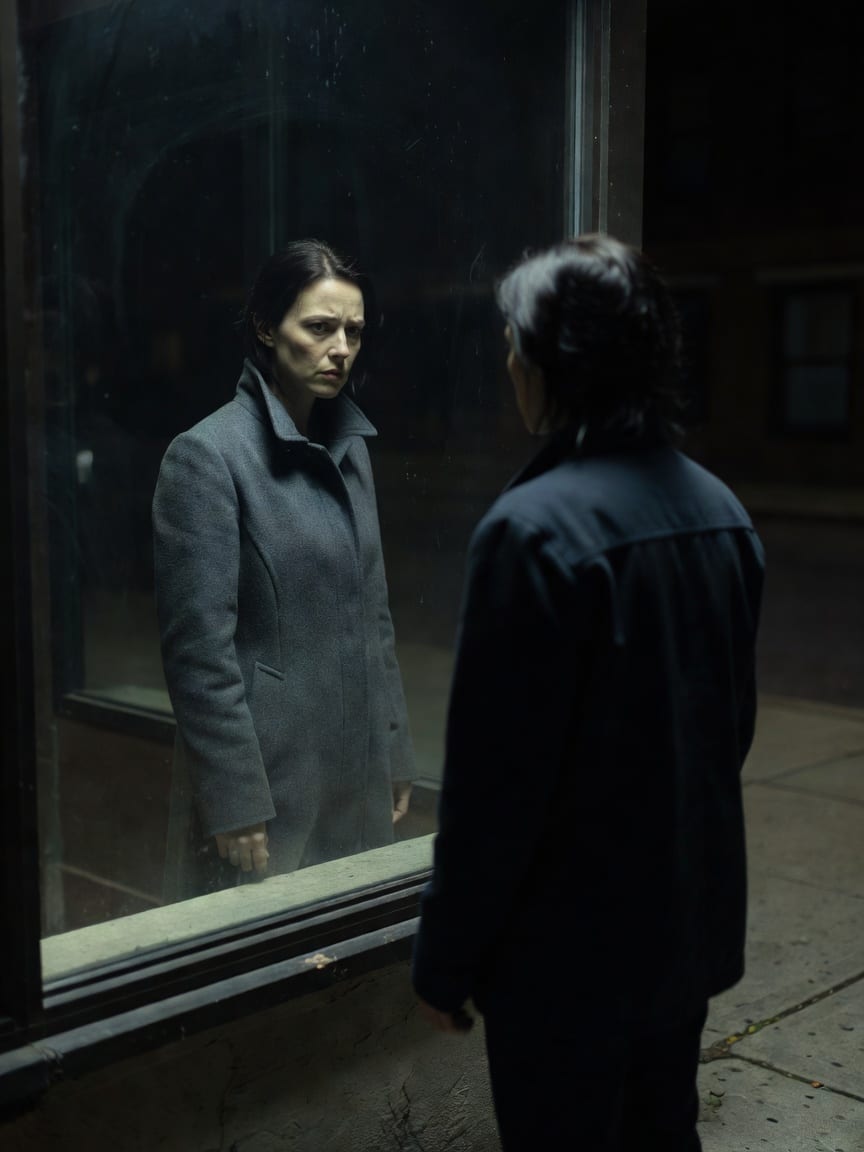
My neighbor saw me take her parcel, wearing my grey coat, at 11:52 AM. I was in Lisbon that whole week.
Returning from Lisbon, I was met by my neighbor Elena, who insisted I'd signed for a parcel last week. She even said I was wearing my grey wool coat. But my coat was still packed in my suitcase, and I was thousands of miles away, checking into my Lisbon hotel at that exact time.
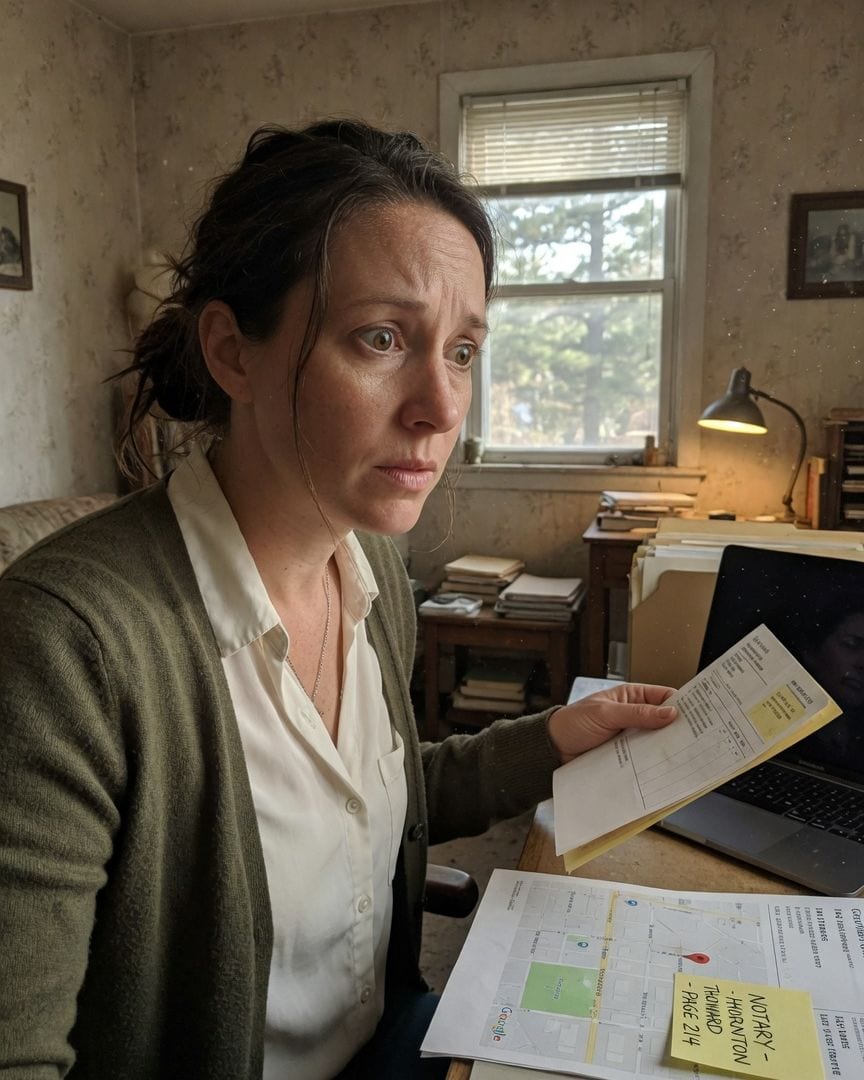
My signature is in a notary's book for an accident I wasn't in. I've never even met the man.
My name is Janet Caldwell, and my life is perfectly ordinary. Or so I thought, until a notary's register revealed my distinct signature on a document. It was dated May 14th, 2014, a day I was confined to a hospital bed, miles away.
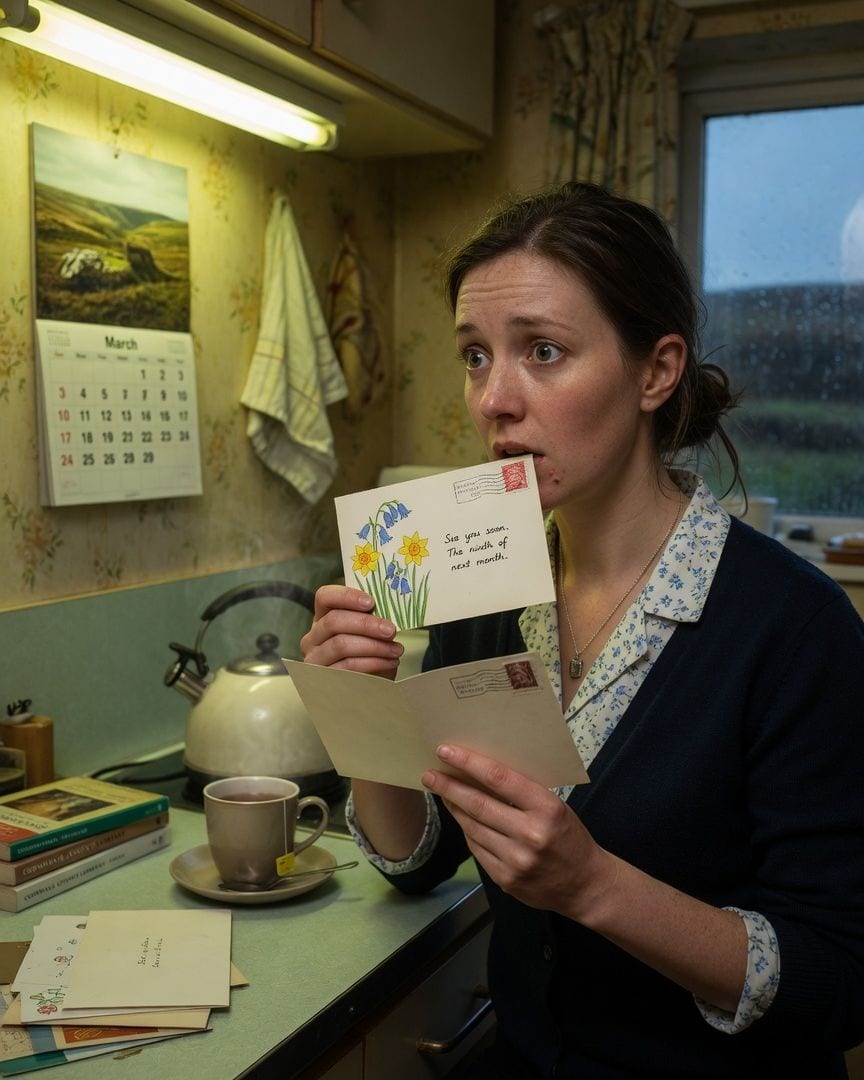
My get-well card arrived from a field, postmarked from a sanatorium that burned down in 1963. It wished me well for an operation I've never had, scheduled for next month.
I was just making tea on an ordinary Tuesday when a strange letter arrived. It was postmarked from Treneglos Sanatorium, a place that burned to nothing over sixty years ago, and contained a get-well card for an operation I'd never had. My research into this impossible message then led me to an old patient register where I found my own name, dated 1958.
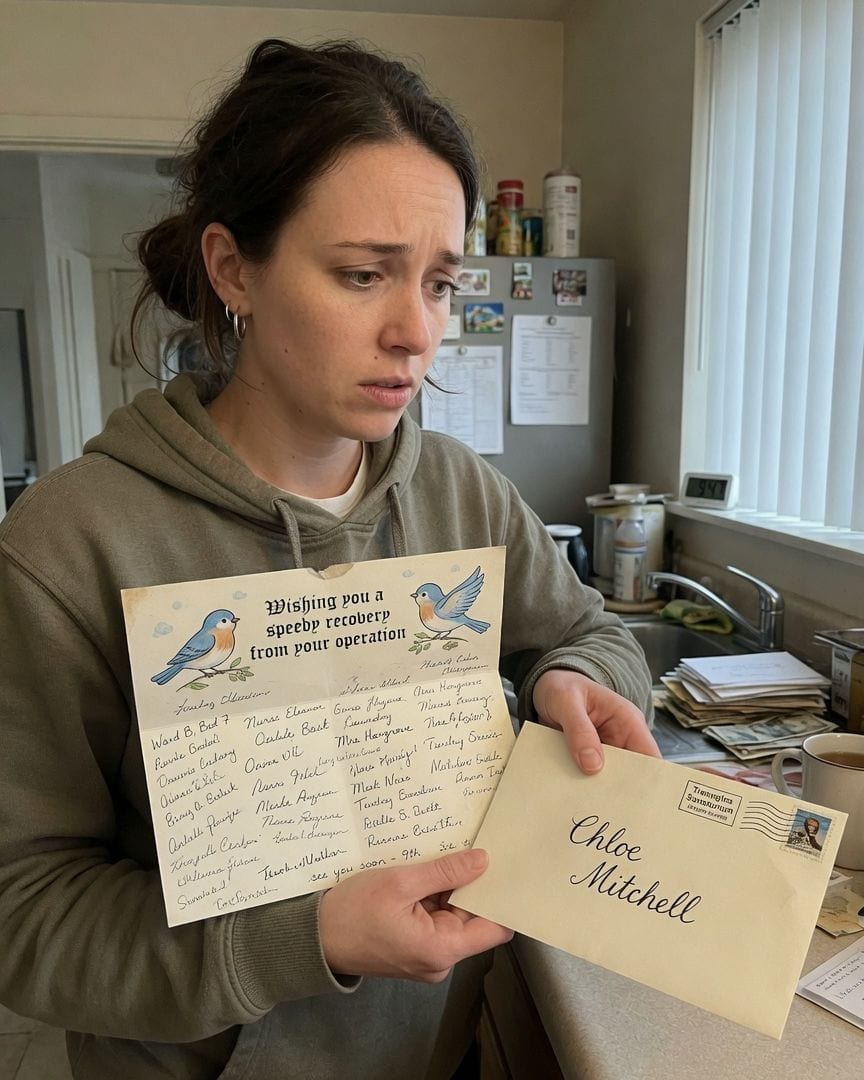
A get-well card wished me a speedy recovery from an operation I never had. It was postmarked from a sanatorium that burned down in 1963.
My quiet Tuesday morning was interrupted by an elegant get-well card, addressed to me. It wished me a speedy recovery from an operation I'd never had. But the postmark read 'Treneglos Sanatorium,' a hospital that vanished in a fire back in 1963.
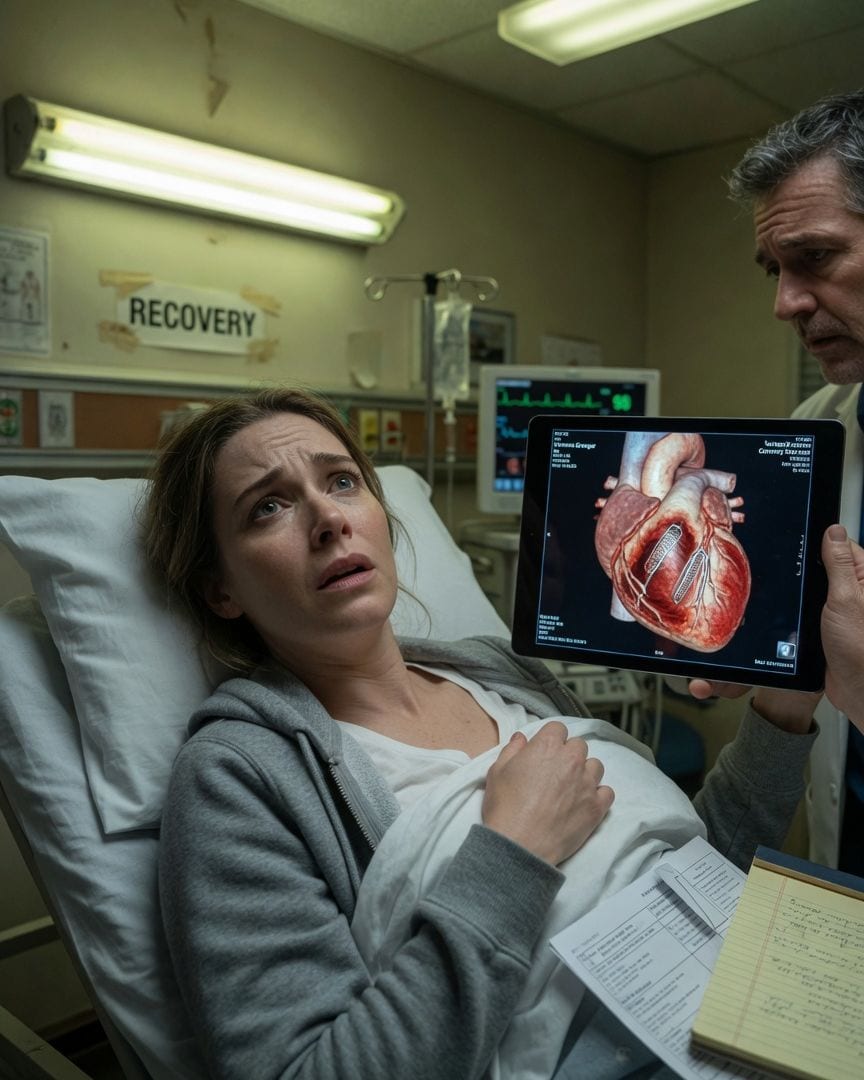
Metal stents are propping open my heart. The doctor rotated the image, but I've never had a cardiac procedure.
After years of dismissed chest pain, a CT scan revealed an impossible truth: my heart contained two metal stents. Dr. Maddox confirmed there was no record of any cardiac procedure in my entire medical history, and I had no memory of ever having surgery. My own body held a secret, alien architecture I couldn't explain.
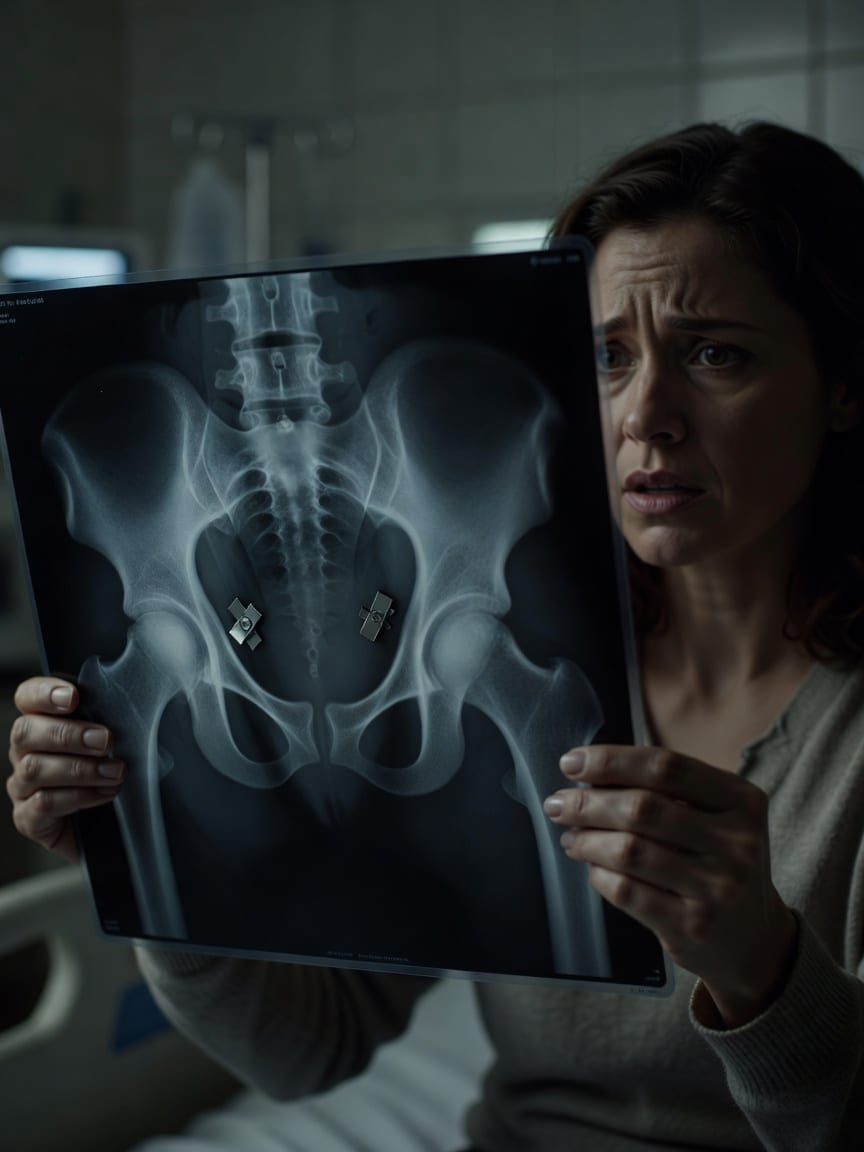
My X-ray shows sterilisation clips on my tubes. I've never had surgery, and I have no scar.
A routine X-ray for a hip injury turned chilling when my gynecologist pointed to two small clips on my fallopian tubes. She called it a standard tubal ligation, but I know I've never had surgery. My memory is completely blank, yet the X-ray is undeniably mine, dated yesterday.