My neighbor saw me take her parcel, wearing my grey coat, at 11:52 AM. I was in Lisbon that whole week.
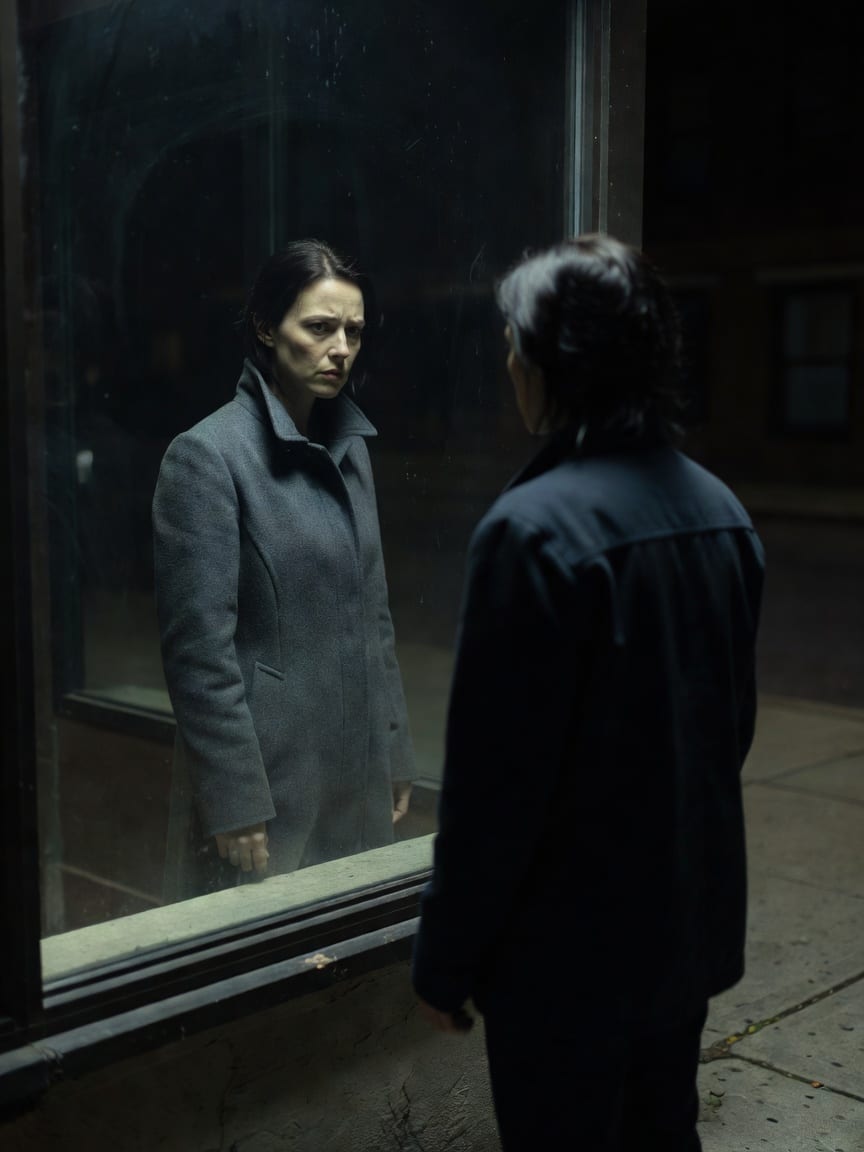
I came back from Lisbon jet-lagged but happy. The sun on the cobblestones, the taste of pastéis de nata – it felt like a dream, the kind you hold onto for weeks.
I was still humming a fado tune when Elena, my neighbor, met me at my door. Her face was a mix of concern and relief, and she clutched a delivery card like it was a winning lottery ticket.
“Lydia, thank goodness you’re back,” she started, pushing her glasses up her nose. “I took this in for you last week.
The courier left it when you weren’t home, but then you popped by a few minutes later and signed for it.”
I blinked at her, the fado tune dying in my throat. “I was in Lisbon all last week, Elena. I didn’t sign for anything.” I’d been meticulous with my travel plans, making sure everything was covered. My passport stamped.
My out-of-office on.
Elena’s brow furrowed, deepening the lines around her kind eyes. “But you did, dear. Thursday, just before noon. You were wearing that lovely grey wool coat of yours.”
My stomach tightened. My grey coat. It was a classic wool blend, warm and smart, a gift from my grandmother. It was still folded carefully in my suitcase, packed on Monday, not touched since.
It suddenly felt heavy, like a lead weight in my luggage.
Elena pressed the card into my hand. My own signature, an unmistakable flourish I’d perfected in high school art class, was scrawled across the receipt line. Not a forgery. It was mine.
The courier’s handheld log, Elena added, had recorded the exact same signature at 11:52 AM. It was undeniably hers, on a card for a parcel I never took, on a day I was thousands of miles away.
The air in the hallway felt suddenly colder, stiller.
The next morning, the delivery card still sat on my kitchen counter, a silent accusation. I picked it up, tracing the familiar loops of my signature. Maybe Elena was mistaken. Maybe the courier just forged it, a lazy shortcut.
It happened.
I called the courier company. The customer service representative, a cheerful voice named Brenda, put me on hold for a brief, tinny rendition of Vivaldi. When she returned, she confirmed the details: parcel delivered, signed for, timestamped. My name.
My address. I explained my situation, my voice calm but tight, trying to sound reasonable even as the absurdity of it gnawed at me. I was abroad. No way.
Brenda, slightly apologetic, offered to email the delivery manifest and any available images. “Sometimes the drivers take a quick snap for proof of delivery,” she said, as if that would clear things up.
Moments later, an email landed in my inbox. There was the digital signature, a perfect match for my own. And below it, a grainy, low-resolution dashcam photo. It showed the front door of Elena’s house.
And standing there, accepting the parcel, was a figure. Blurry, indistinct, but the outline of the head, the posture, and the undeniable bulk of a familiar grey wool coat were all too familiar. It was me. Or a perfect imitation.
A cold knot started to twist in my stomach.
I pulled up my flight details, my hotel receipts from Lisbon, dated and time-stamped. I had been checking into my hotel room, miles away, at exactly 11:52 AM on Thursday, struggling with the Wi-Fi.
The mundane explanation—a mistaken signature, a friendly neighbor's confusion, a lazy courier’s bad scan—shattered. This was something else entirely. The dread was a cold, spreading stain, seeping into the corners of my usually ordered world.
The faucet in the sink dripped, loud and rhythmic, like a metronome counting down to something terrible.
I spent the rest of the day in a daze, trying to make sense of the impossible.
My fingers scrolled aimlessly through social media, a desperate attempt to distract myself from the phantom signature and the ghost in the grey coat.
I landed on a local community group, a page usually filled with lost cats and bake sale announcements. Someone had posted photos from a charity event held last Thursday—the same day as the parcel delivery.
I absently clicked through the gallery. It was just a series of smiling faces, trestle tables, and overflowing donation bins.
Then one photo caught my eye: a wide shot of the community hall, tables laden with baked goods, balloons bobbing near the ceiling. In the bustling background, by a stack of donation boxes, a figure stood.
The angle was awkward, the face partially obscured by a stack of canned goods, but there was no mistaking the familiar silhouette, the dark hair pulled back, and the distinct, grey wool coat.
It was ‘her,’ carrying a box, smiling faintly, at an event I had no knowledge of, in a town I was supposedly not in, on a day I was most definitely in Lisbon.
My breath hitched, caught somewhere in my chest. The screen glowed, mocking me with its undeniable, impossible truth.
The community photo was a gut punch. My fingers felt numb as I zoomed in, then out. The impossibility of it screamed from the pixels.
I needed a second pair of eyes, a logical brain to rip apart my creeping paranoia. I called James Maddox, my colleague and friend, a data analyst by trade, a skeptic by nature.
“Okay, so, walk me through this again,” James said, his voice cautious, after I’d laid out the impossible facts. I heard the rustle of papers on his end, an unconscious gesture of his need to organize information.
“Parcel delivery at your neighbor’s, signed by you, while you were in Lisbon. Dashcam photo shows you doing it. Now, a charity event photo, same day, same you, same goddamn coat. In town.”
The silence on his end grew heavier with each detail. “This is… not a prank,” he finally conceded, the skepticism in his voice replaced by something else – a genuine bewilderment. “Let’s look for more. Anything else out of place?
Any weird transactions, forgotten appointments?”
I started with my bank statements. I meticulously reviewed every transaction from the last few weeks, my eyes scanning for any other chronological impossibilities. And there it was.
One entry jumped out: a small charge from 'The Daily Grind Coffee' – a local café I hadn't visited in months – dated two days after the Lisbon trip. Last Wednesday.
I remembered that day clearly; I’d been at an all-day marketing conference, three hours away by train, presenting a pitch deck until my throat was raw. My coffee that day had come from the hotel’s lukewarm urn.
I texted James, sending him the transaction details. He was quick. Leveraging his network, he managed to pull up a security camera still from The Daily Grind, timestamped for the transaction.
My heart hammered against my ribs when I opened the file. There she was again: 'Lydia Stratton,' clearly visible, accepting a coffee from the barista. Her hair was swept back, a faint smile on her face.
And, of course, the grey wool coat, its collar neat, exactly as I wore it.
The pattern was chillingly precise: a mundane, recordable interaction, a specific timestamp, an impossible location, and the ubiquitous grey coat. It wasn't just a signature; it was a uniform.
The unease shifted from confusion to a cold certainty that something fundamental was wrong with my reality. My coffee mug on the table felt suddenly insubstantial, as if it might simply fade away.
Determined to find more, or perhaps just to confront the phantom, I drove to The Daily Grind the next day. The aroma of roasted beans hit me as I walked in, trying to appear casual.
I ordered a latte, the same order I usually got.
The barista, a young woman with bright blue hair, smiled. “Welcome back, Lydia. Haven’t seen you in a while.”
My heart hammered against my ribs. “Oh, really?” I managed, trying to keep my voice even. “I thought I was just here the other day.”
The barista nodded, tapping the register. “You were! Wednesday, same time, same order. Grey coat.” She didn’t bat an eye. Just a simple statement of fact.
I mumbled something about a busy schedule and quickly paid, my hands fumbling with my wallet. This wasn't just a digital record now; it was a living, breathing witness.
As I left the café, a gnawing sense of being watched settled over me, a prickle on the back of my neck. I scanned the street.
Across the street, in the small park, an old man sat on a bench, calmly reading a newspaper. His gaze, however, was not on the headlines. He was watching me.
Not with malice, but with a quiet, unbothered intensity, as if observing a familiar, predictable event. His eyes were pale, almost translucent behind his spectacles.
I hurried to my car, the man’s placid gaze prickling my skin, burning through the rear-view mirror. I kept checking my mirrors all the way home. Later that evening, an anonymous email landed in my inbox. My breath caught.
The subject line was simply: 'Local Oddities.' The body contained a single link to an archived article from a regional online newspaper, dated twenty years ago. The headline read: 'The Phantom Signatures of Willow Creek.'
It detailed inexplicable, repeating signatures on town hall petitions and library check-out cards, always attributed to individuals who were verifiably out of town. Witness accounts in the article repeatedly mentioned a 'figure in a grey coat.'
The silence in my apartment pressed in, thick and suffocating.
The article confirmed my growing dread. It wasn’t just me. It wasn’t just my town. And the old man. Richard Winslow, the local historian and archivist, was quoted extensively in the 'Willow Creek' piece.
His name jumped out at me, tying together the disparate threads. The quiet watchfulness in the park clicked into place.
With a mix of fear and desperation, I found his contact details online and called him. He answered with a calm, almost weary voice, as if he’d been expecting my call.
We met the next day at a quiet café – not The Daily Grind. The fluorescent lights hummed overhead, stark and unforgiving.
Richard didn't seem surprised to see me. He sat across from me, a half-empty cup of tea cooling between his hands. “I recognized you from the coffee shop photo,” he stated, his eyes kind but knowing.
“And the grey coat, of course.”
I plunged in, recounting everything: Elena, the delivery, Lisbon, the dashcam, the community photo, the bank statement, James, the barista, the old article. Every impossible detail poured out of me. Richard listened without interruption, occasionally nodding, his expression unchanging.
“These aren't unheard of, Ms. Stratton,” he finally said, his voice low and even. “We call them 'temporal bleed-throughs.' Not ghosts, not doppelgangers. More like… echoes.
Of moments, actions, sometimes even entire brief interactions, pulled from a different point in time, manifesting here, now. They leave traces. Records.”
I stared at him, trying to process his words. Echoes. My mind struggled to grasp it. “But… why me? Why my signature? Why my coat?”
Richard sighed, running a hand over his thin hair. “Some lines, some families, seem more susceptible. It's tied to specific individuals, specific actions, almost like a resonance.
The grey coat, it seems to be a common identifier for your particular bleed-throughs. A marker, perhaps even a conduit. The records aren't false, Lydia. They're just… not linear. Not for you, anyway.”
He explained that the individuals in the old article were all connected to a specific lineage, a pattern he’d observed for decades. He saw the questions burning in my eyes, the re-meaning of every impossible detail.
The signed card, the dashcam photo, the community event, the coffee shop. All of it clicked into a terrifying, coherent whole. The dread wasn't in the unknown anymore, but in the awful, undeniable knowing.
The coffee machine behind the counter hissed, a sharp, sudden sound like a warning.
“This phenomenon,” I asked, my voice barely a whisper, “does it… run in families?”
Richard’s gaze softened, a hint of sorrow in his eyes. “Sometimes. It's not a genetic trait, not in the medical sense, but certain patterns of resonance seem to follow specific lines.
I’ve been tracking them for years, quietly, mostly out of academic curiosity.”
He paused, then gently slid a thin, leather-bound album across the table. Its cover was worn smooth with age. “I want to show you something. From the town archives. It might explain why I was watching you.”
My hands trembled as I opened the album. It contained old photographs, mostly community events, local landmarks, sepia-toned glimpses of a past I didn't know. Richard pointed to a faded, sepia-toned group photo from a bustling town fair.
It was dated 1985.
My breath hitched. In the background, amid the bustle of the fair, a small child stood, clutching a bright red balloon. The child couldn't have been more than seven years old.
But the face, even in the blurry old print, was mine. Unmistakably Lydia’s.
And the child was wearing a miniature version of the familiar grey wool coat, its collar slightly turned up, exactly like the one hanging in my own closet.
I wasn't born until 1986. I had never lived in this town before I was fifteen. This record, this photograph, could not be. My world tilted, threatening to crack under the impossible weight of this image.
The small girl in the picture smiled faintly, an echo from a time that wasn't mine.
I stared at the photograph, the impossible image of my younger self, caught in a time and place I could not have existed.
“I wasn’t born yet,” I whispered, my voice raw, barely audible over the sudden pounding in my ears. “And I didn’t grow up here.”
Richard nodded, his expression grave. “Precisely. This is what I meant by 'the record that cannot be.' It’s not just your present actions bleeding through. It’s… your entire timeline. Past, future, possibilities. They’re all permeable.
The child in that photo, that’s you, Lydia. Or an echo of you, pulled into a past that isn't yours, to be recorded. It’s a deeper manifestation of the bleed-throughs, suggesting a resonance that runs through your entire existence.”
He explained that his research, painstaking and solitary, had traced similar anomalies across generations of Lydia’s maternal lineage. Not everyone in the family, but certain individuals. And always, he emphasized, a recurring item, a signature of their particular bleed.
For her grandmother, it had been a distinctive silver locket. For me, it was the grey coat.
“It’s not the coat itself,” Richard clarified, his voice quiet, “but what it represents to your line. A recurring motif, a point of focus for these temporal disturbances. You aren’t merely observing the wrongness, Lydia.
You are, in a profound sense, the source of it. Your life, your actions, your very presence, create these records across time.”
The full horror wasn't a monster, or a conspiracy, or some external malevolence. It was a fundamental, unchangeable aspect of myself. Every impossible signature, every out-of-place photo, every insistent memory from Elena, clicked into place. It was all true, undeniably.
And it was all me. The café table felt solid beneath my hands, a grounding point in a reality that had just fragmented.
I returned home, the weight of Richard’s words pressing down on me. My apartment felt hollow, vast. I walked directly to my closet, my gaze fixed on the grey wool coat hanging there, a silent sentinel.
It was a gift from my grandmother, a classic style that had been passed down. I remembered her, always impeccably dressed, often in a similar shade of grey, a woman of elegant routines.
The coat wasn't just a garment now; it was a symbol, a conduit, a silent witness to my own un-reality.
I reached for it, my fingers brushing the soft wool. A sudden, overwhelming urge to tear it, burn it, erase it from existence, gripped me. To rip this damning evidence from my life, to sever the connection.
My breath came in shallow, ragged gasps. But as my fingers tightened around the sleeve, a strange calm settled over me. It wouldn’t change anything.
The bleed-throughs weren't about the coat; the coat was just the manifestation, a visible marker of something deeper. The wrongness was inside me, woven into the fabric of my being, a part of my lineage.
This wasn't something I could escape or fight. It wasn't a villain to be confronted, or a puzzle to be solved and then put away. It was simply a truth, a terrifying, inherent characteristic of my existence.
I was the one generating these impossible records, these fleeting echoes of myself. The knowledge was a cold, quiet dread that settled deep in my bones.
I would continue to live, to make choices, to experience moments, and somewhere, in other times, other places, records of my impossible presence would continue to appear. I was not being hunted; I was the hunt.
I was not merely witnessing the uncanny; I embodied it. There was no undoing it, no acting on it. Only knowing. The silent coat hung there, perfectly still, a shadow stretching from its hem.
I sold my house, citing a desire for a fresh start, and moved to a city several states away. Elena Lawson expressed her sadness, but understood, waving goodbye with a worried glance.
James Maddox, though troubled, respected my need for distance, his usual questions left unasked. Life, on the surface, resumed a semblance of normalcy.
Yet, the records continued. A notification from a local library in my old town, informing me a book I'd never checked out was overdue. A small, anonymous donation made in my name to a forgotten charity, recorded on their website.
Sometimes, I would catch a fleeting glimpse in a shop window, a reflection of myself moments before I truly passed, or a figure in the background of a photograph someone else took, always with a whisper of grey.
I learned to live with the constant, low hum of temporal wrongness, a secret truth I carried alone. I never wore the grey coat again, keeping it locked away in a dusty trunk, a relic of my impossible reality.
But sometimes, when I catch my reflection in a particularly still pane of glass, I see a flicker of it on my sleeve.
If this one got to you
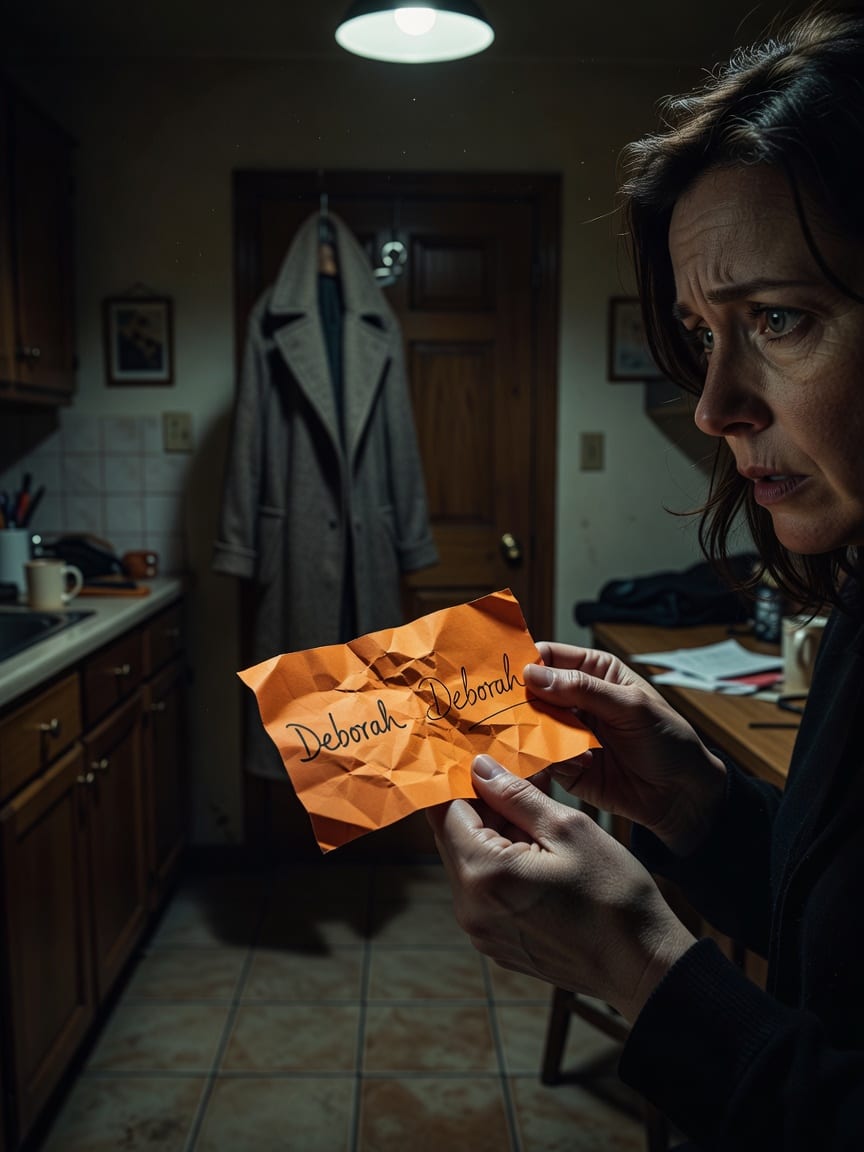
My grey coat stood at my neighbor's door at 11:52am, taking in a package. I was in Lisbon that entire week.
My neighbor, Linda, handed me a delivery card, thanking me for saving her a trip. But the date on the card showed my signature, for a parcel I'd never received. On that exact day and time, I was sipping espresso in Lisbon, thousands of miles away. My grey coat, which Linda recalled me wearing, hung untouched in my closet.
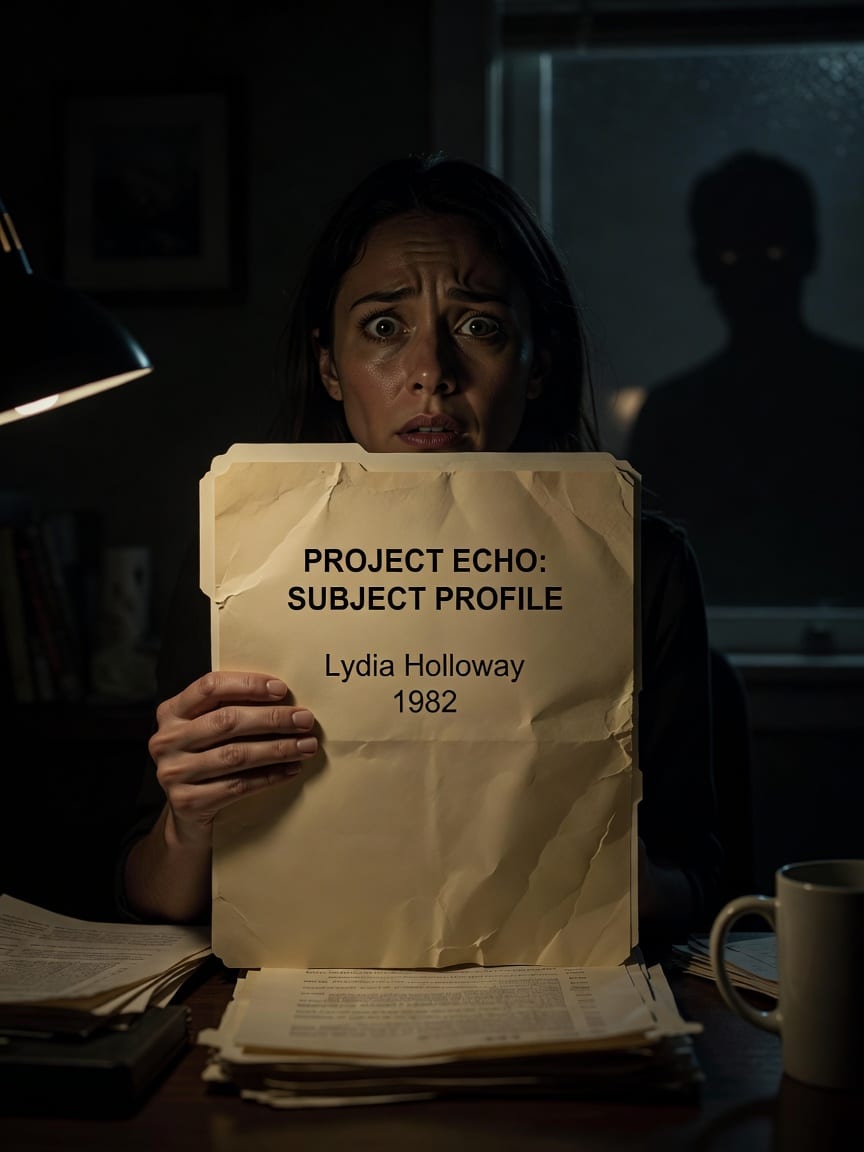
My own signature is on a Baltimore police report for a hit-and-run I never witnessed. The officer remembers my university sweatshirt.
I was settling into a quiet Tuesday evening when Baltimore PD called, asking about a witness statement I supposedly gave. They described my faded green university sweatshirt, seen at a hit-and-run last Friday. But my sweatshirt was in my dresser, and I was home in Seattle.
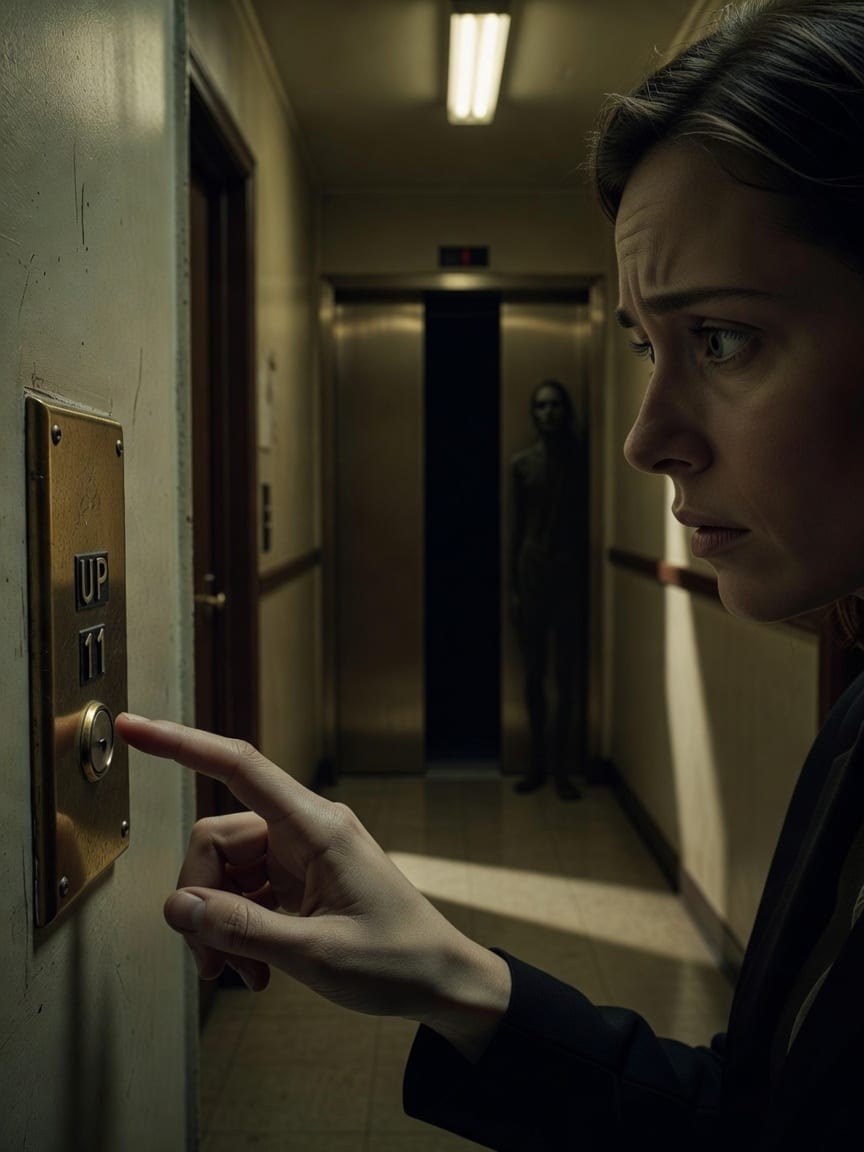
My doorman warned me not to take the tenth-floor lift on Saturday. The building's lift passed inspection last month. He seemed terrified that he'd said it.
My doorman's unsettling warning about the tenth-floor lift left me with a metallic taste of unease. I tried to rationalize it away, but then a birthday card arrived for me, five months early, from an impossible address. It was a site linked to unexplained disappearances, and a cold certainty began to settle in.
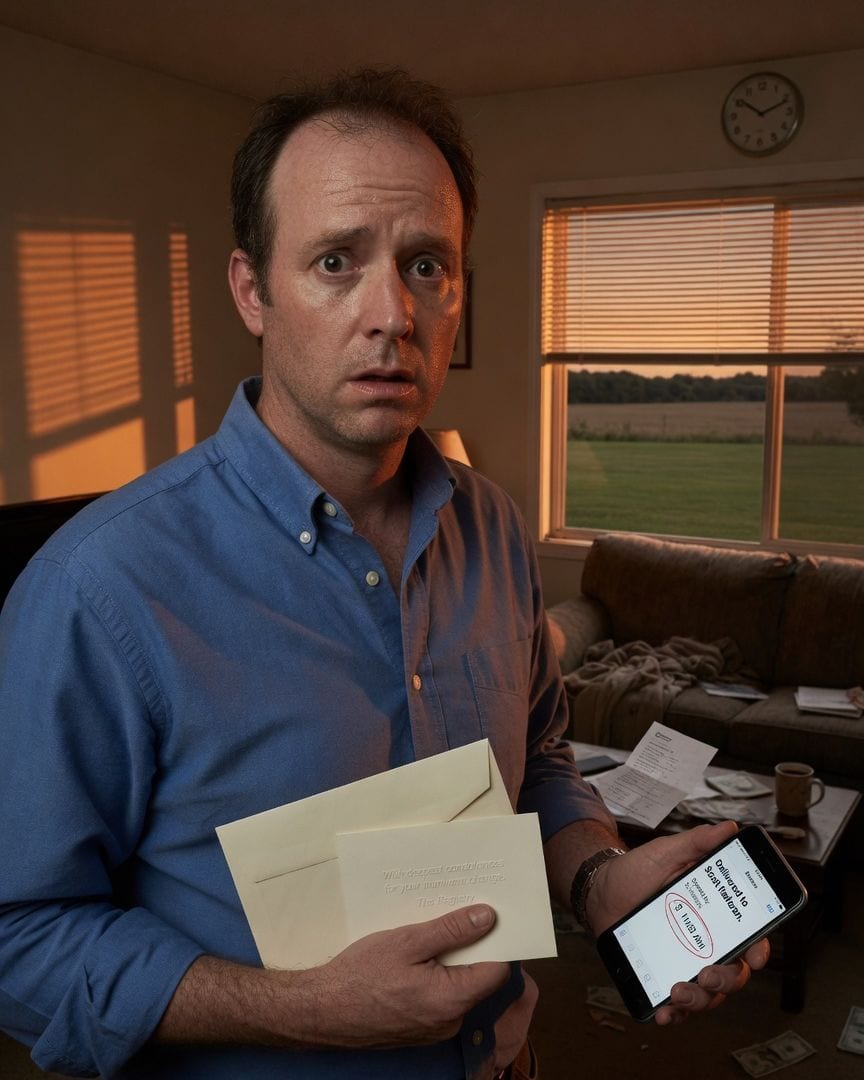
My delivery driver apologized for nothing. The app showed my signature, a completed drop, timestamped eleven minutes before he even arrived.
The delivery driver pulled away, leaving me on my porch with no parcel, yet my phone buzzed 'delivery complete.' The app showed *my* unmistakable signature, but the timestamp logged the delivery eleven minutes *before* the van had even pulled onto my road. A cold, digital lie.
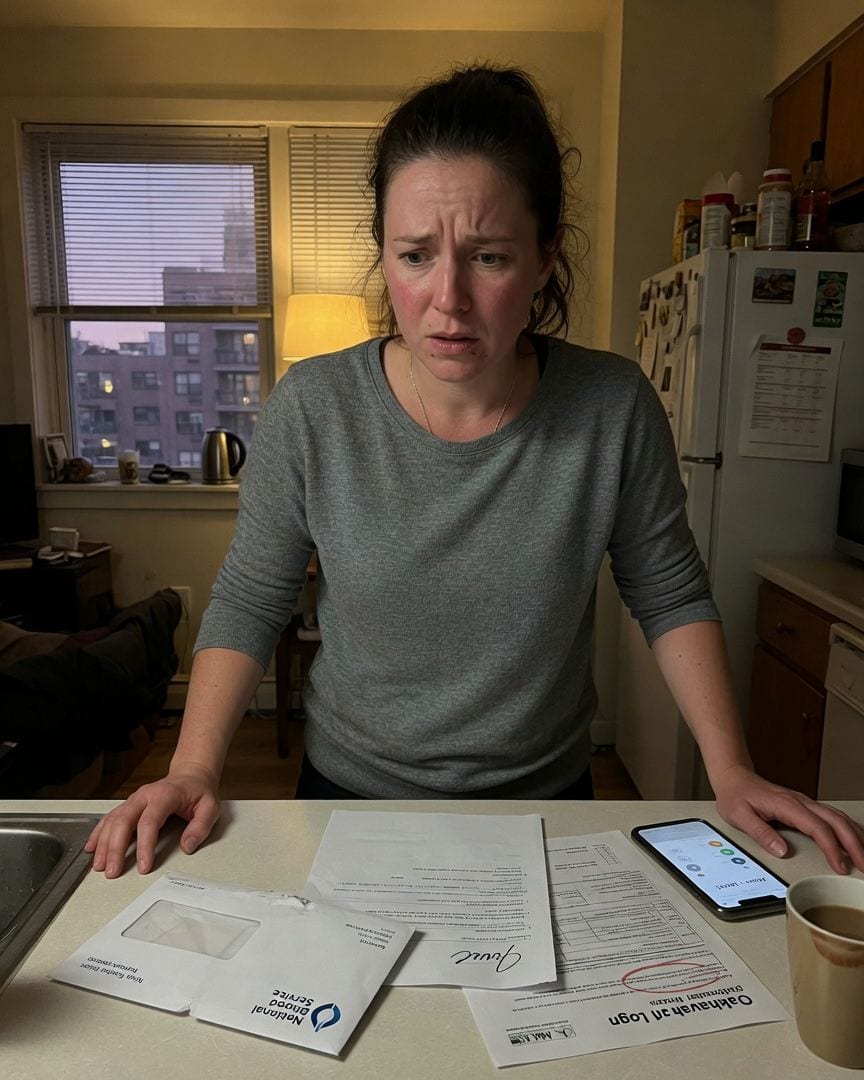
My signature appeared on a blood donation form, thanking me for my sixth. I've never set foot in that town.
An ordinary envelope arrived, but inside, a letter from the National Blood Service thanked me for a sixth blood donation. I’ve never given blood in my life, and the thought makes me queasy. But then I saw the enclosed consent form, signed unmistakably with my own hand, for a donation made in a town I’d never heard of. It was my signature, but it wasn't me.
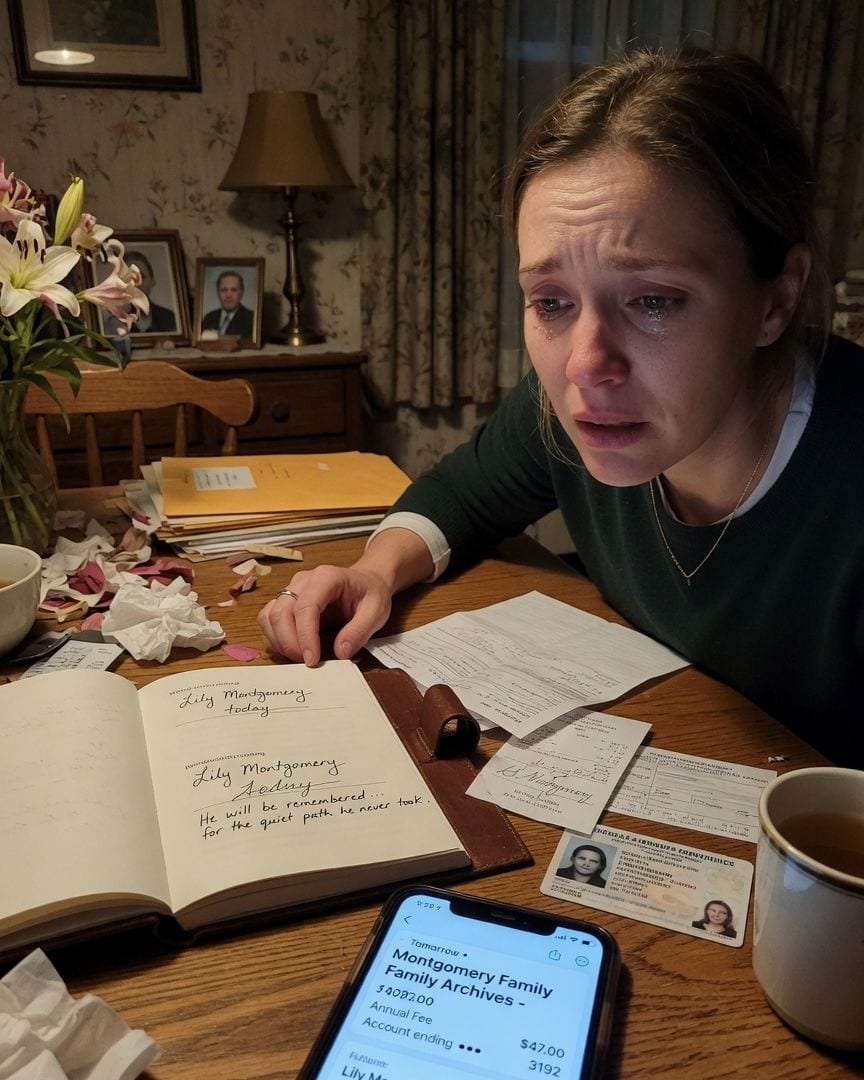
My handwriting was in the condolence book. Dated before my uncle died. Words I'd never choose.
At Uncle Howard's funeral, grief-stricken, I signed the condolence book. But later, flipping back through the pages, I found my own distinct handwriting on an entry dated the previous morning—before he had even died. The words beneath my name were chilling, a judgment I would never make.