My MRI showed a perfect, decades-old surgical opening in my skull. I have no memory of it.
The hum of the MRI machine was a dull, rhythmic thrum against my skull, vibrating through my jaw, up into my teeth. I lay still, trying to breathe evenly, counting the seconds. Just routine, I told myself.
Just the dizziness, the persistent, low-grade vertigo that had started a few months ago. Nothing to worry about. Dr. Hughes, my neurologist, was calm, reassuring. He’d ordered the scan as a precaution, a way to rule out anything serious.
When he called me back to his office two days later, his calm was subtly fractured. He didn't meet my eyes immediately, instead staring at the glowing screen behind his desk. My stomach tightened.
"Hannah," he began, finally looking at me, his brow furrowed, "these are three slices of your parietal bone." He gestured to a series of images on the screen, monochrome and stark.
I could see the curve of my skull, the grey matter beneath. Then he pointed, a precise, almost surgical movement of his finger, to a small, perfectly round opening, neatly healed, just behind my left ear.
The bone around it had closed smoothly, almost seamlessly. There were no jagged edges, no signs of trauma, just this perfect, tiny circle. It was like a forgotten keyhole.
"It’s the kind of access point for draining pressure, or… something else," he said, his voice quiet. "It’s been there for decades. Completely closed over. But it's clearly an entry point for some kind of surgical procedure.
Who did this, Hannah?"
I stared at the image, then reached up, my fingers automatically tracing the skin behind my left ear. It was smooth. Unmarked. No lump, no scar tissue, nothing. I looked back at Dr. Hughes, utterly bewildered.
"I… I've never had any operation on my head, Dr. Hughes. Not ever. I’ve never even broken a bone. Who could have done something like that?" The room felt suddenly cold.
The sterile air conditioning unit seemed to hum louder, mocking my confusion.
Dr. Hughes looked visibly unnerved. He leaned back in his chair, running a hand through his silver hair. "Hannah, I understand this is shocking. But that opening is undeniable.
It's too perfectly formed to be natural, and it’s clearly decades old." He suggested a full medical history review.
"A long shot," he admitted, "to rule out a forgotten childhood trauma, perhaps a rare, asymptomatic condition, even something you might not recall due to age."
I agreed, trying to maintain a rational composure, even as a cold, hard knot tightened in my stomach. The dizziness was a distant concern now. This… this was something else entirely.
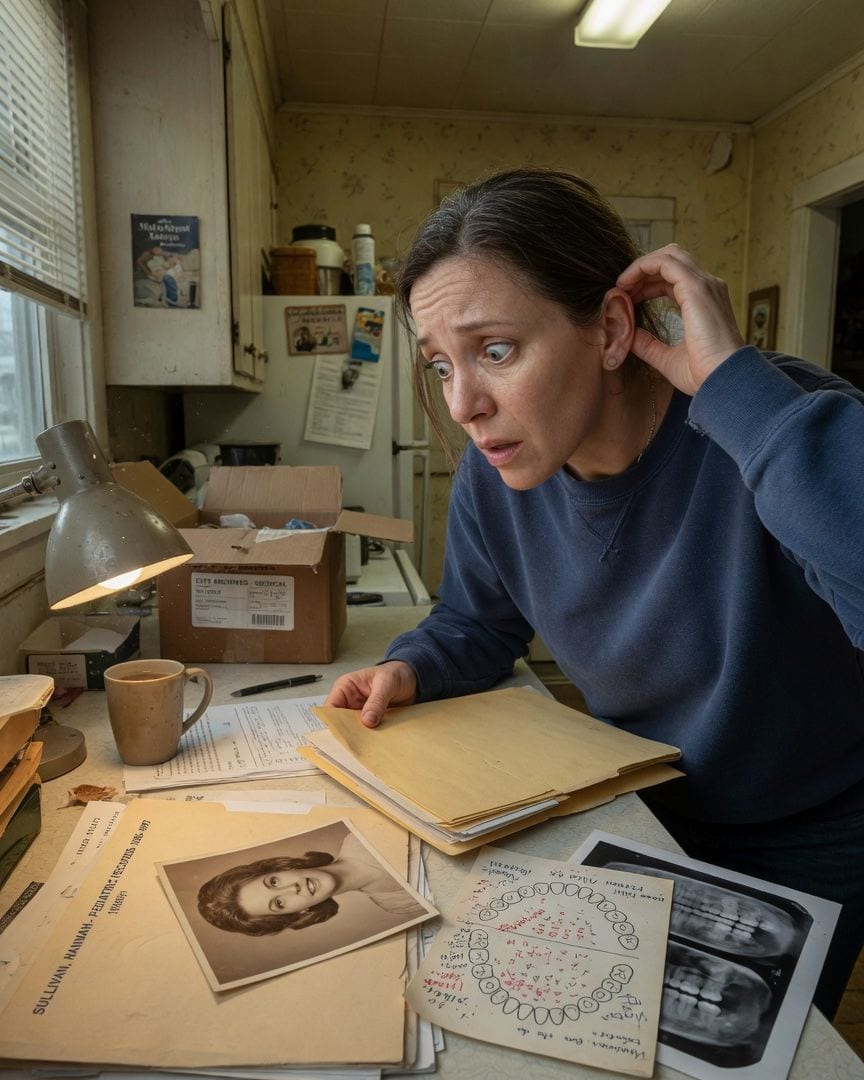
The first step was to collect my old records. I started with my childhood dental charts. I remembered a particularly painful root canal at age ten, the metallic taste of antiseptic, the drills.
My parents still had a box of old medical files in their attic. I climbed the creaky stairs, the smell of dust and old paper thick in the air, and found the faded, yellowed file.
Back in my kitchen, I spread the diagram on the counter, comparing the intricate drawings of my teeth to my current mouth in the mirror. My breath caught.
A prominent silver filling, clearly marked on tooth #14 in the diagram from when I was twelve, was simply not there in my mouth. Instead, it was a perfectly healthy, unblemished tooth.
I ran my tongue over it, felt its smooth surface. It couldn't be. I checked another, then another. The diagram showed a full set of wisdom teeth, all present and accounted for.
But my current dentist had confirmed, just last year, that I’d had two wisdom teeth extracted in my early twenties. Where were they on this chart? And where were the extractions marked?
I called my old family dentist, Dr. Peterson, who was now retired but still answered his office line on Tuesdays. He remembered me, faintly. "Yes, Hannah. Sullivan. Sweet girl. Your records are meticulously kept, dear. They're yours." He assured me.
I visited my current dentist the next day, not mentioning the old chart at first, just asking for new X-rays due to a 'minor sensitivity.' When the X-rays came back, they confirmed it.
My current mouth, undeniably mine, with its current fillings and missing wisdom teeth, simply did not match the historical record. The discrepancy was too significant to be a clerical error. My body, my actual teeth, didn’t match my own past.
Driven by a growing dread that overshadowed even the dental records, I requested my full, archived medical files from the city’s central records office. It was a paper trail stretching back to my official birth year, 1986.
Days later, a heavy box arrived. I spent an entire Saturday sifting through immunization records, pediatrician notes, school health forms. The dust made my nose itch, but I barely noticed. I was looking for anything, any anomaly.
Then, tucked away in a brittle plastic sleeve, among a stack of routine check-up reports from my elementary school years, I found it. A single, faded, sepia-toned photograph.
It was undated, slightly blurry, showing a young woman, perhaps in her early twenties, with an old-fashioned hairstyle, maybe from the 60s or 70s. She was smiling faintly, looking off-camera.
But what made my blood run cold was the detail just behind the woman's left ear. There, clearly visible against her temple, was a small, perfectly round scar, identical in shape and placement to the opening on my MRI.
The woman’s face was subtly, unsettlingly familiar, and as I stared at her, a tremor ran through my hand. I felt a cold certainty that this photo should not exist in my file.
I took the photograph straight to Dr. Hughes. His professional detachment cracked the moment he saw it. He took it from my trembling hand, his own brow furrowed as he compared it to the MRI scans I’d brought back.
"This… this is impossible," he murmured, tracing the scar with a gloved finger on the grainy image, then glancing at the clean circle on the bone scan. "A perfectly healed trephination, decades old. And here it is, on this woman.
But the records say you’ve never had such a procedure."
He suggested a DNA test. "Initially," he explained, "to rule out any rare genetic markers that might manifest in such a way, or a deep, inexplicable family connection to the woman in the photo."
He also hoped it might identify the woman, offering a name to this growing, horrific mystery. I agreed, needing answers, needing to put a name to the face that felt both unknown and strangely, deeply familiar.
While waiting for the results, I became obsessive. My research was no longer casual. I dove into medical archives, looking for anything related to cranial procedures and identity in the mid-20th century.
My apartment became a nest of open browser tabs and photocopied articles. I unearthed obscure medical journals from the 1960s and 70s, some of them dry, academic, others almost sensational in their claims.
Many referenced experimental neurological surgeries at a place called the Rutherford Clinic, now long defunct. The articles were vague, hinting at 'continuity studies' and 'advanced neural interfacing,' but the implications were chilling.
Phrases like "preserving critical intellect" and "transferring cognitive essence" appeared in between dense scientific jargon.
I found an old city directory with a listing for the clinic, then cross-referenced it with public records.
The Rutherford Clinic had been a prominent research facility, specializing in neurology, but it had closed abruptly in the late 1970s, its assets quietly absorbed by a larger research hospital. The property, however, remained.
I found the address, a precise location. An inexplicable pull drew me towards it, a strange sense of recognition, as if the place itself, even in ruin, was calling to me.
I knew, with a certainty that defied logic, that I had to go there.
The Rutherford Clinic’s former site was a ghost of its past, a dilapidated, overgrown complex on the outskirts of the city. Weeds choked the cracked asphalt driveway, their tendrils snaking through fissures in the concrete.
Broken windows stared like vacant eyes from the main building, reflecting the grey, bruised sky.
I pushed through a rusted gate, the metal groaning a protest that echoed eerily in the oppressive silence, a sound that seemed to shred the afternoon air.
As I explored the grounds, the wind sighed through shattered panes, making the whole place feel like it was breathing.
I found a partially collapsed administration building, its interior a ruin of scattered, water-damaged papers, rusted medical equipment, and overturned furniture. A forgotten calendar on the wall was frozen on May 1978.
Dust motes danced in the sparse shafts of sunlight cutting through holes in the roof.
Then, a sudden, sharp crack of a twig nearby made me jump. I spun around, my heart leaping into my throat. Nothing. Just the wind, I told myself, trying to rationalize it away.
But the distinct feeling of being watched, of not being alone, settled over me like a shroud. The silence outside felt heavy, charged.
I hurried back to my car, my pulse hammering against my ribs, the ruined buildings looming behind me like silent sentinels.
The next day, a small, unmarked envelope appeared in my mailbox, tucked neatly beneath my usual bills. No return address. My hands shook slightly as I tore it open.
Inside, a single sheet of paper, typewritten, with stark, unfeeling letters: 'Some things are best left buried. For your own good.' The message was blunt, unsettling, and undeniably a warning. Someone knew I was digging.
And they knew where I lived.
Shaken but resolute, I tracked down Sylvia Rutherford. The few surviving records for the clinic, sparse as they were, listed her as a former administrator.
She was 88 now, and lived in a meticulously kept bungalow nestled in a quiet, tree-lined suburb. Her house smelled of lavender and old books.
She greeted me with a calm, almost serene expression, her eyes clear and unlined despite her age, an composure that unnerved me more than outright hostility.
Sylvia initially dismissed my questions about the clinic's experimental procedures and the faded photograph of the young woman. "Oh, that old place," Sylvia said with a dismissive wave of her hand, her voice soft but firm.
"We did a lot of groundbreaking work in our time, certainly, but nothing sensational that would interest a young woman like you." She poured us tea, her movements precise.
I gently pressed, taking a deep breath. I pulled out the photograph again, placing it on her polished mahogany coffee table, pointing to the scar behind the ear. "This scar, Mrs. Rutherford.
It's identical to an anomaly on my own medical scans. And the clinic's research into 'continuity of consciousness'? What exactly did that entail?"
Sylvia's gaze sharpened, a flicker of something unreadable, like an old film projector briefly catching the light, in her eyes. She took a slow sip of tea, the delicate porcelain cup rattling almost imperceptibly as she set it down.
"There were… certain projects," she finally said, her voice now devoid of its earlier dismissiveness, acquiring a detached, almost academic tone. "Attempts to preserve what was most valuable."
"Preserve in what way?" I pushed further, my voice steady despite the tremor in my hands. "Was it… a transfer?"
Sylvia finally sighed, a soft, almost imperceptible sound, like air escaping a sealed chamber. "Yes," she confirmed, meeting my eyes directly, her own unwavering. "A transfer. Of consciousness. For those whose minds were too important to simply cease.
The skull opening you mentioned was… an access point. For the neural interface. A delicate procedure, requiring immense precision and a willing host."
She spoke with a clinical detachment, as if discussing a scientific paper, not the horrific reality of what she’d just admitted.
She didn't offer names, or full explanations, but the chilling confirmation of the procedure's existence and its purpose hung heavy in the air. Her steady gaze seemed to imply I was one of its 'successes.'
The unspoken horror made the air in the room thick, almost impossible to breathe.
I was still reeling from Sylvia Rutherford’s quiet, clinical admission when my phone rang. It was Dr. Hughes. His voice, usually so steady and professional, was strained, almost hoarse. "Hannah, the DNA results are in. We have a match."
My heart leaped, a flicker of desperate hope. Perhaps the woman in the photo had been identified. Perhaps this entire nightmare had a name, a logical explanation that didn’t involve impossible transfers. "Who is it, Dr. Hughes?"
I asked, my voice barely a whisper, afraid to break the fragile moment.
There was a long pause on the other end, punctuated by his shallow breathing. "It's… not who we expected. The DNA matched to a Beatrice Mitchell."
I frowned, the name unfamiliar. "Beatrice Mitchell? Is she… a relative of the woman in the photo? Or… a relative of mine?"
Dr. Hughes cleared his throat, the sound tight and unnatural. "No, Hannah. Beatrice Mitchell. Born 1934, died 1968. Buried in the old Fairview Cemetery right here in the city. The lab stands by the result. They've run it twice.
Your DNA matches a woman who has been dead for over fifty years."
I stared at my own living hand, flexing my fingers, watching the blood flow beneath the skin. Then I looked at the calendar on my desk, the bold red circle around today’s date.
The year 1968 stared back from a past that predated my official birth by almost two decades. The phone slipped from my grasp, hitting the floor with a dull thud, the silence in the room suddenly deafening.
I revisited Sylvia Rutherford, the DNA report for Beatrice Mitchell clutched in my hand like a lifeline, or perhaps a death warrant.
Sylvia, seeing the raw horror in my eyes, gestured for me to sit on the same floral sofa as before. This time, there was no tea, no gentle evasion. Her face was grave, etched with a quiet, almost mournful clarity.
"Beatrice Mitchell was a genius," Sylvia began, her voice soft but firm. "A neuroscientist. Brilliant, uncompromising, but terminally ill. She was one of our earliest, most promising subjects for Project Chimera. Her mind, her research, was too valuable to lose."
"Project Chimera?" I interrupted, the words tasting like ash in my mouth. "And my DNA matches hers. How?"
Sylvia nodded, her gaze unwavering. "Beatrice’s consciousness, her very identity, her lifetime of knowledge and experience, was transferred. Re-housed." She then pointed to the faded photograph I still carried, now a crumpled piece of paper from being handled so much.
"That is Joan Patterson. A young woman, healthy, vibrant, but… alone. She volunteered for the procedure shortly after Beatrice’s death. Her body was the vessel."
I felt a sickening lurch, a dizzying tilt of my entire world as the pieces, all the impossible, contradictory pieces, snapped into place.
The perfectly healed skull opening, the dental records that didn't match my own history, the photo of a stranger with my scar, the DNA of a woman dead before I was born.
"So… I’m Joan Patterson’s body, but Beatrice Mitchell’s mind?" I asked, my voice thin, reedy, barely my own.
Sylvia offered a faint, unsettling smile, a ghost of satisfaction. "You are the continuation, Hannah. The successful integration. The identity of Hannah Sullivan was carefully constructed, a new life for a re-housed consciousness.
Your records, your official age of 38, all of it… an elaborate fabrication to allow for a 'normal' existence. You were always inside it, Hannah. This body, this life, was always hers, or rather, yours now."
The dizziness, the phantom pains, the mismatched dental records, the eerie photograph, the anonymous warning—all of it cohered, not into madness, but into one monstrous, undeniable truth.
I stood, the room spinning around me, though not from dizziness this time. It was the world itself tilting on its axis.
I confronted Sylvia, not with rage, not with hysteria, but with a profound, dawning horror that chilled me to the bone. "You… you created me," I whispered, the words tasting alien on my tongue.
"My entire life, everything I thought I was…"
Sylvia simply inclined her head, her expression still serene, unsettlingly unbothered. "We preserved a legacy. We extended a brilliant mind. You are living proof of our greatest triumph. And there are others, Hannah.
Others who continue their vital work, unbeknownst to themselves, or perhaps, slowly, coming to realize it." The implication hung heavy in the air, a vast, terrifying network beyond my comprehension. I was not unique.
There was no escape, no undoing it. I was a construct, a continuation, two lives irrevocably fused.
The pattern of clues and anomalies that had plagued me for weeks now locked into place with terrifying precision, revealing a coherent, monstrous shape. I was never just Hannah Sullivan. I was always the project, the vessel, the re-housed consciousness.
My entire life, every memory, every experience, every relationship, was now tainted by this truth. Sylvia looked at me with an almost parental pride, a look that promised no release, only acceptance.
I turned and walked out of the bungalow, leaving the quiet, unbothered Sylvia behind. The afternoon sun felt harsh, too bright. The world outside was suddenly too loud, a cacophony of sounds that grated on my nerves.
My reflection in a shop window caught my eye as I passed, and for a terrifying second, I didn't recognize the person staring back.
The face was mine, yes, but the eyes… the eyes held something new, something ancient, something that wasn't Hannah.
I tried to resume my life, but every reflection in a mirror, every mundane task, every memory, was now tainted by the knowledge of Beatrice Mitchell and Joan Patterson.
The very fabric of my existence felt like a meticulously woven lie. I kept the DNA report and the faded photograph hidden, locked away in a safe deposit box, as if containing the physical evidence could contain the truth.
Dr. Hughes, disturbed by the DNA results and my increasingly withdrawn demeanor, quietly referred me to a specialist in psychological trauma, but I never made the appointment. What good would it do?
I spent my evenings in libraries, then online, researching Beatrice Mitchell’s scientific papers, her old research interests, the unfinished projects Sylvia had mentioned. I delved into neurobiology, consciousness theory, forgotten mid-century psychological experiments.
A strange, insistent pull drew me to the material, a faint echo of a different life, a different mind, beginning to assert itself. It wasn't my curiosity anymore; it was an urgency I didn't recognize, but understood instinctively.
Hannah finds herself unconsciously researching Beatrice Mitchell's scientific papers, feeling a strange pull to complete her unfinished work, a faint echo of a different life.
Months later, Hannah Sullivan's neighbors notice she's started wearing her hair differently, often pulled back, revealing the smooth skin behind her ear. She sometimes pauses mid-sentence, a distant, almost calculating look in her eyes.
'You seem different, Hannah,' a neighbor remarks one afternoon. 'More... focused.' Hannah just smiles, a faint, wrong little smile.
If this one got to you
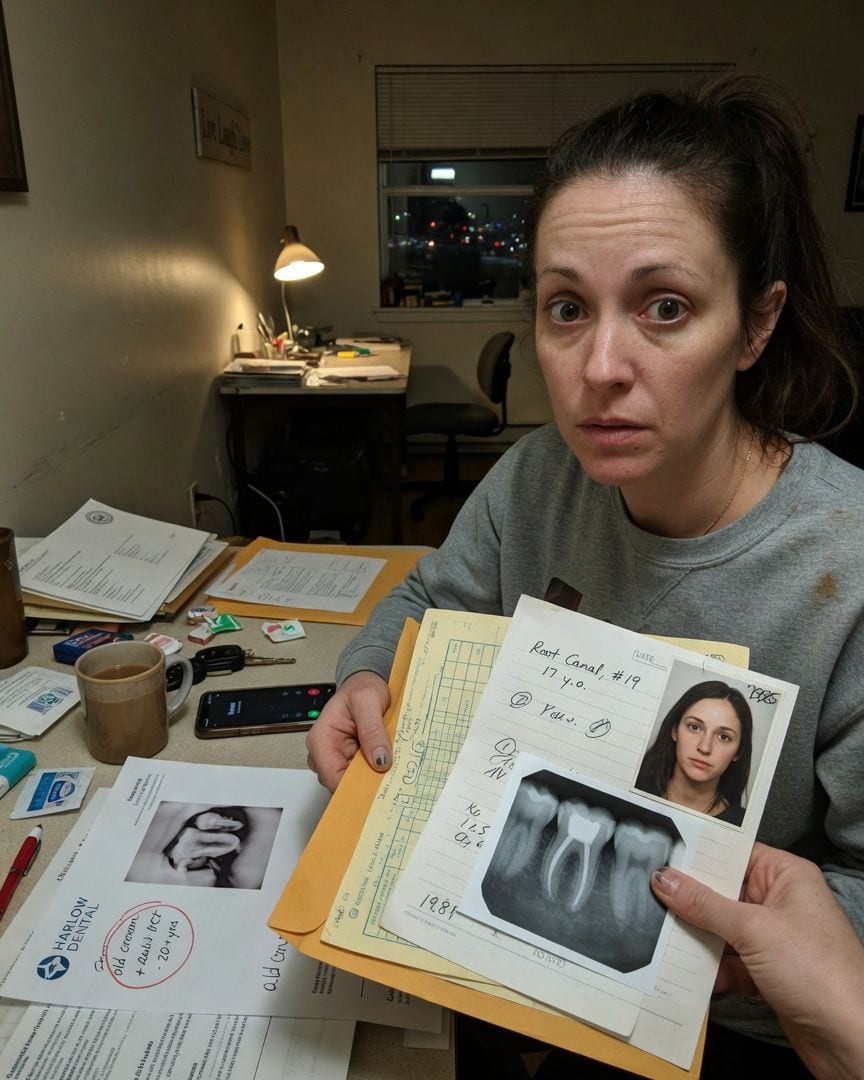
My lower molar has a twenty-year-old root canal. My new dentist showed me the scan. That tooth is whole. I can feel it.
My new dentist found a twenty-year-old root canal and crown in my mouth. The problem? I have no memory of ever having major dental work there, and my mother confirms I never did. My own body held a secret I couldn't explain.
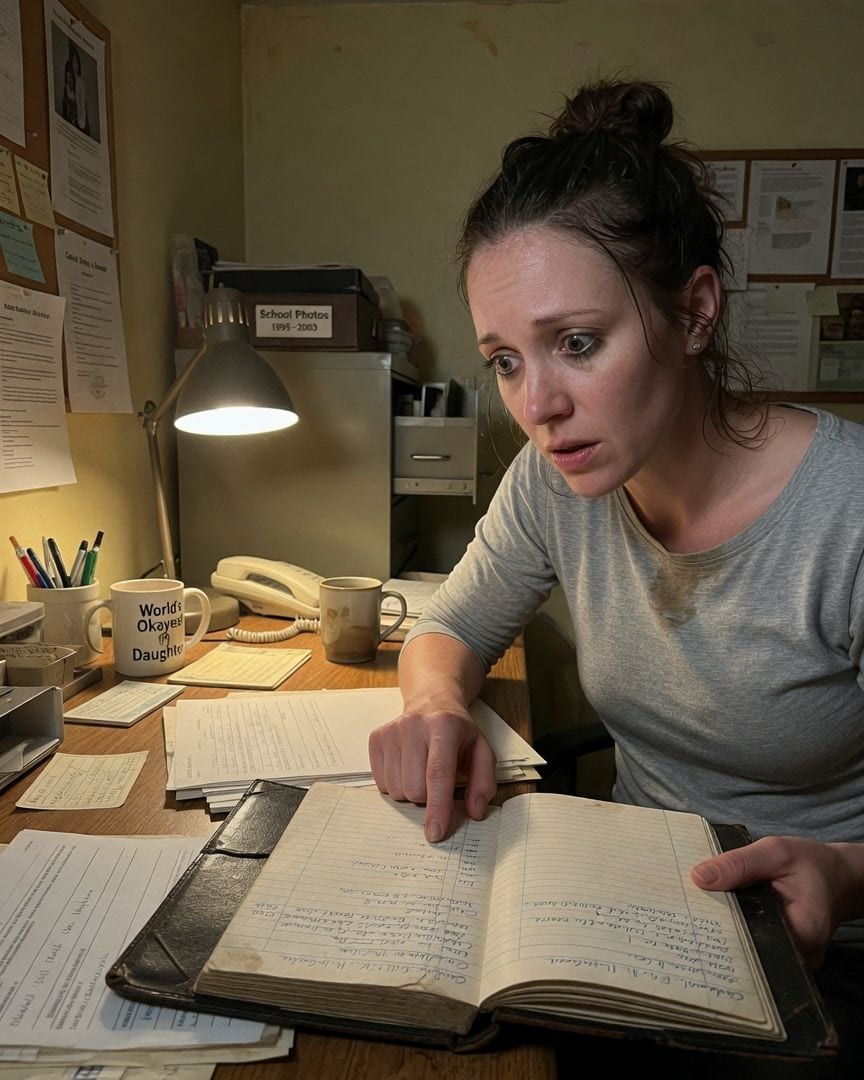
My CT scan found a metal plate in my eye socket. Then I found its surgery record, two years before I was born.
After a CT scan for my headaches, I learned a small metal plate was embedded in my left eye socket, a well-healed repair from decades ago. I have no memory of any injury severe enough to require such surgery, and my parents are certain it never happened. It's a piece of someone else's past, stitched into mine.
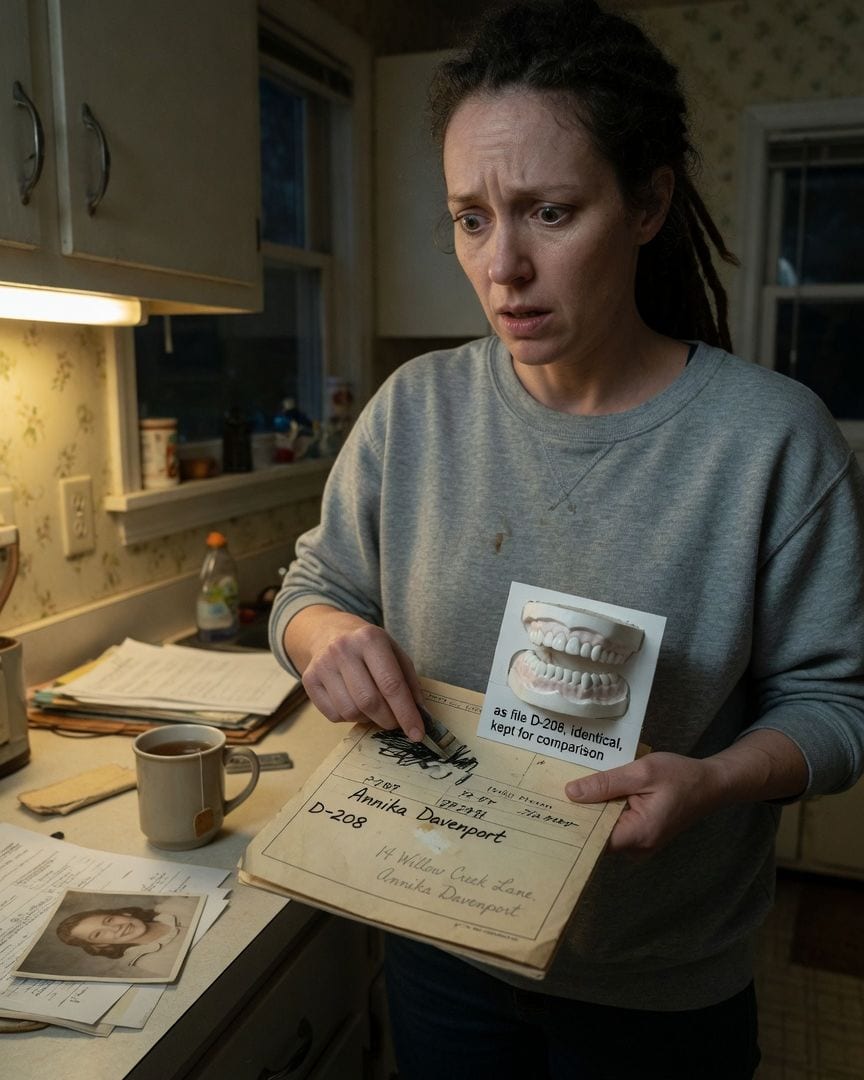
My childhood dental chart lists the house I bought last year — in my own name, years before I was born. A second set of my teeth sits filed beside it, marked 'identical.'
Sifting through old dental records, I found my chart, D-208, with my 1988 birth date. But a line from 1958 was blacked out, and a clipped card with an impression of my teeth listed my name and current home address, decades before I was born. The impossible facts knotted into a cold certainty.
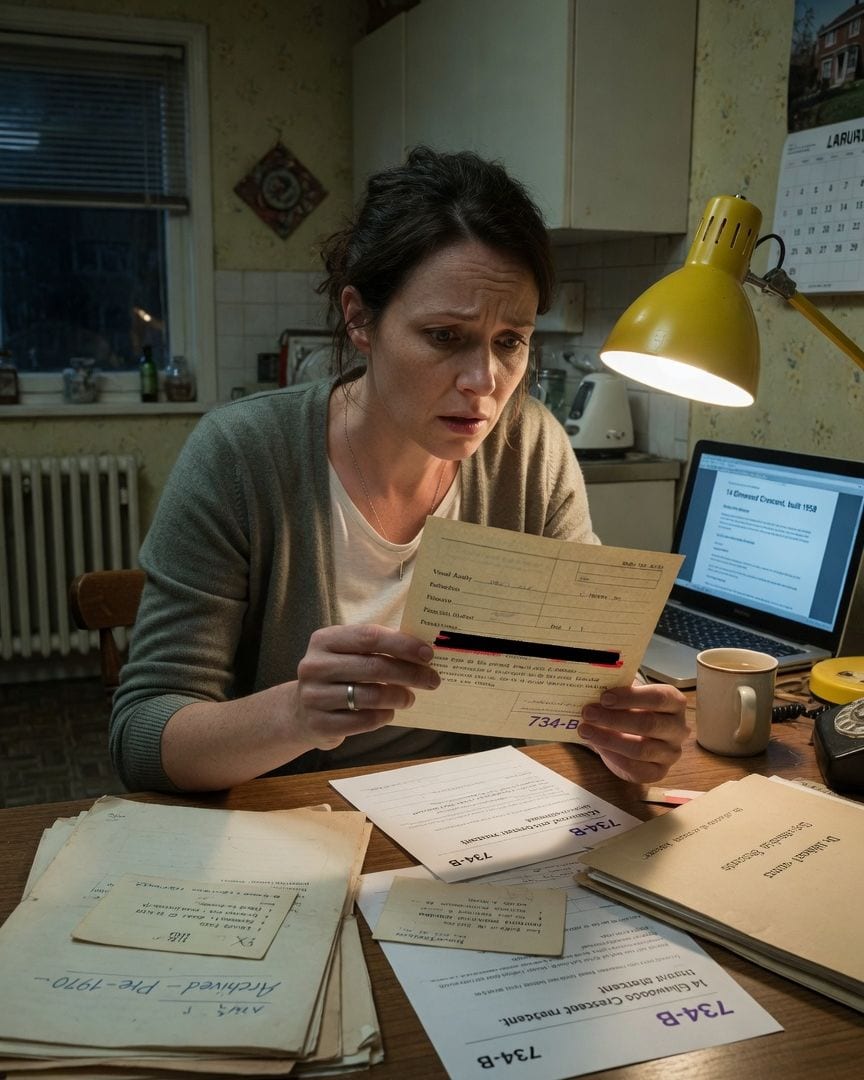
An old eye test card had my patient ID, 734-B, dated 1966. I found another, from 1948, for my house.
Transferring my old eye records should have been routine, but a strange, redacted card from 1966 raised a cold knot of dread. It mentioned my surname and street, along with a chilling instruction: 'tell the patient nothing.' Then I found my unique patient ID, assigned to me, on records dated 1948.
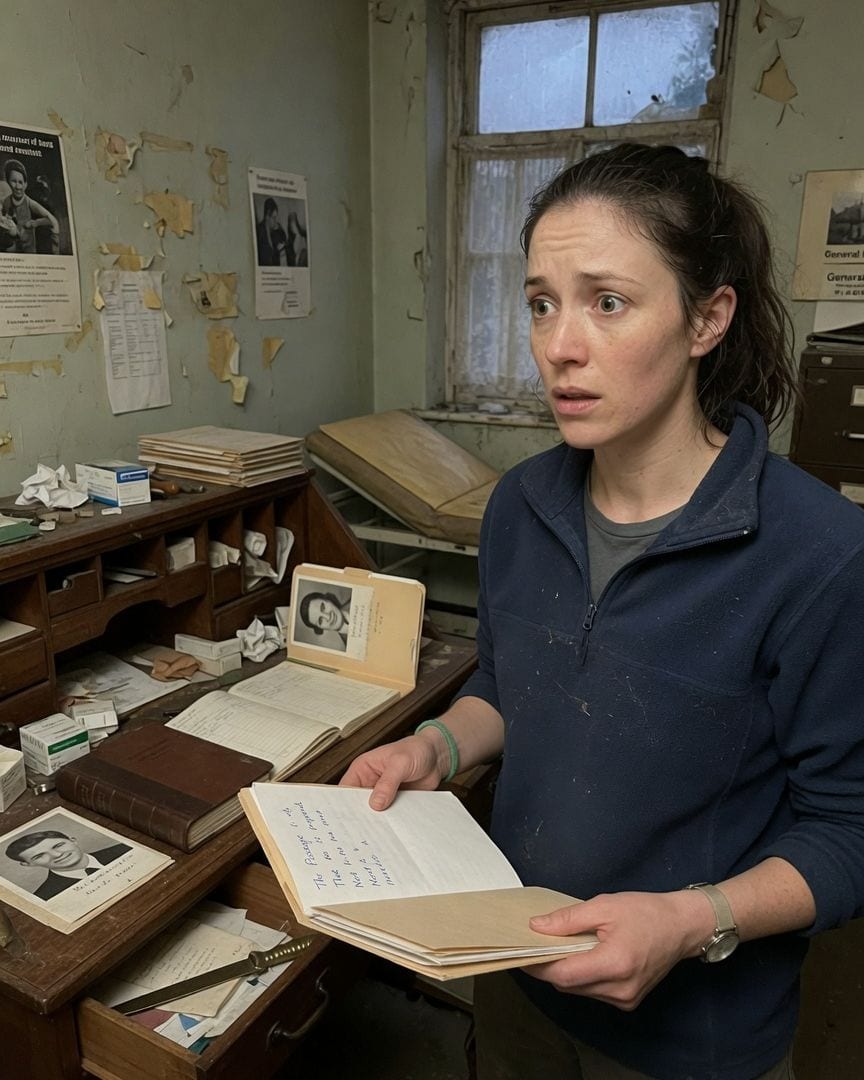
My new clinic's appointment book shows entries for this coming Monday, decades after the doctor retired and died.
Chloe Lawson bought an old, abandoned surgery in Nettlebed, ready to open her new vet clinic. Locals insisted Dr. Almott retired in '79 and the practice shut down for good. But then Chloe found his dusty appointment book filled with meticulous entries, continuing unbroken from 1979 through the decades, right up to this coming Monday.
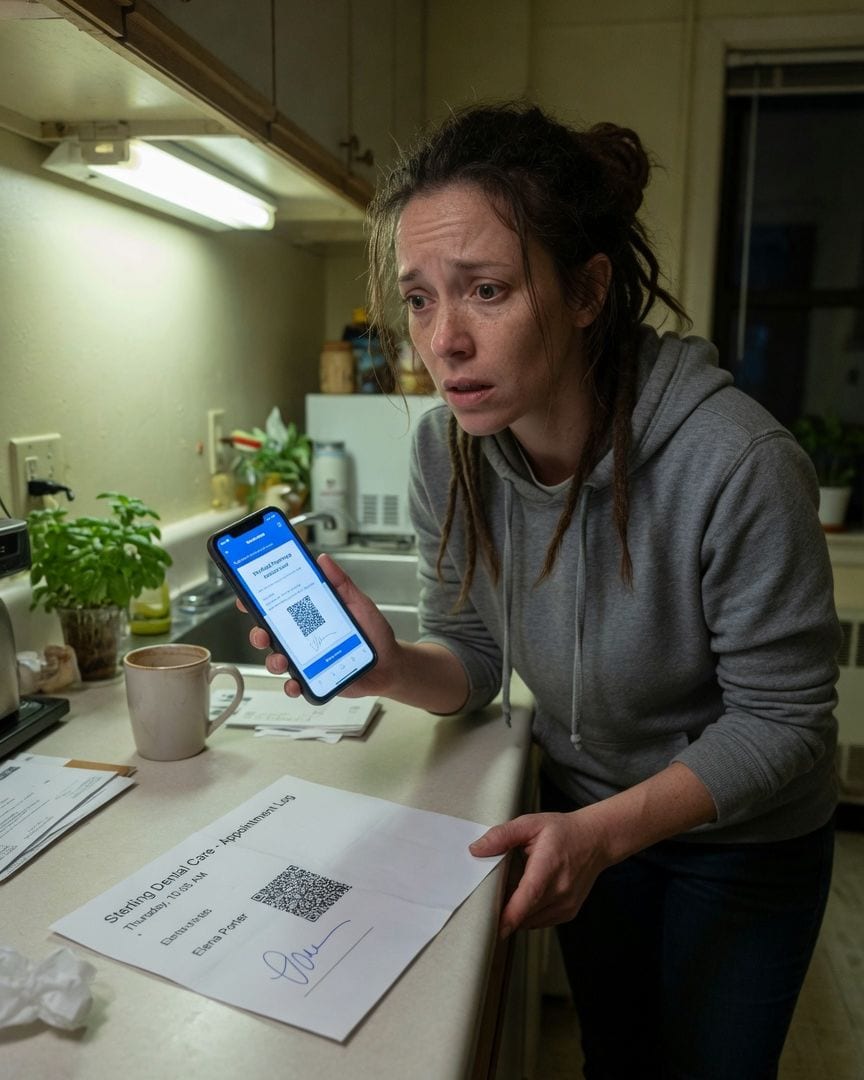
My dentist's system says I was there last Thursday. I wasn't. But the check-in tablet shows my signature, and the hygienist described my chipped tooth exactly right.
I received a call confirming a dental appointment I never made, for a day I was home. Yet, Sterling Dental had my perfect digital signature and described a chipped incisor I’d never told them about. The physical proof insisted I was there, but I wasn’t.