My CT scan found a metal plate in my eye socket. Then I found its surgery record, two years before I was born.
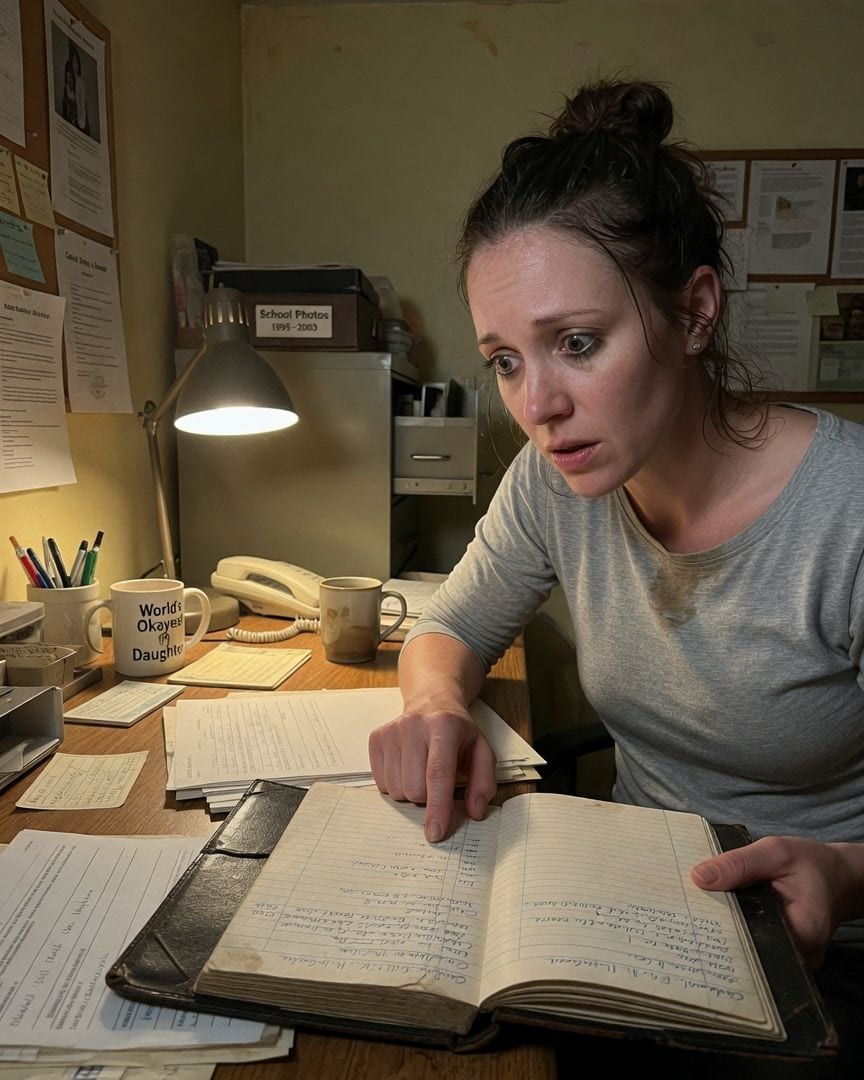
I got the CT scan report last Tuesday. My headaches had been getting worse, a dull, persistent throb behind my left eye, and Dr. Romano finally ordered a scan just to rule out anything serious.
I’m thirty-four, and I’ve never had more than a cavity filled. I expected nothing.
The report, however, mentioned a "Small metal plate, left orbital floor, old repair, well-healed."
I stared at the words on the screen, then instinctively ran a finger along my left lash line. Smooth. No scar. Nothing. I pulled the skin taut near my temple, then pressed hard around the socket.
There was no tenderness, no unevenness. My face felt exactly as it always had. I had no memory of any injury severe enough to break an eye socket, let alone surgery to repair it.
My mind scrolled through childhood incidents: a scraped knee at seven, a nasty fall off a bike at twelve that broke my wrist. Never anything near my eye. Not even a black eye.
Dr. Romano looked just as baffled when I brought it up. He squinted at the report, then at me. "Are you sure, Emily? No childhood accident? Maybe you just don't remember the specifics?"
He suggested it might be a very minor, forgotten thing, but a metal plate implies reconstructive surgery. He referred me to Dr. Christine Vaughn, a maxillofacial surgeon, for a follow-up.
Dr. Vaughn was brisk and efficient. She had me lie back, examined my face, then pulled up the CT images on a large monitor.
There it was, unmistakable: a tiny, glinting sliver of metal, perfectly integrated into the bone beneath my left eye. "It's a titanium plate," she confirmed, her voice crisp. "And it's old.
Completely healed, probably been there since you were a child, possibly even younger. It's not causing your headaches now, that’s for sure. This thing has been a part of you for decades."
Decades. I called my parents right after. My mom was confused, then frustrated. "Emily, you never broke your eye socket! Not that I remember, anyway. If you'd had surgery like that, I'd remember every detail." My dad was equally firm.
"Definitely not. You were a clumsy kid, sure, but a facial fracture? No way." Their certainty, combined with my complete blank, was more unsettling than the plate itself.
It was inside me, a perfectly healed, perfectly wrong piece of a past I didn't own.
The headaches faded into the background, replaced by a dull, constant thrum of unease. A metal plate in my head, a relic from a trauma that never happened, according to everyone who should know.
It felt like a glitch in my own personal history, a piece of someone else's life accidentally stitched into mine. I had to find out.
I started with the records I did have. My old dental files. Dr. Peterson, the family dentist, had been a stickler for detail. I remembered her little office, the smell of clove and antiseptic, the whirring of the drill.
I dug out a dusty box from my closet, the one with old school photos and my immunization records. Tucked inside a folder, labeled "Caldwell, Emily – Dental," were stacks of yellowing forms.
I sifted through them, looking for anything that might hint at a facial injury. An X-ray of a cracked tooth, a note about a bruised jaw, anything. Nothing. My dental history was remarkably unremarkable.
Routine cleanings, a few small fillings, wisdom teeth extraction in my early twenties. No major incidents. Then, buried within a stack of progress notes from a check-up when I was ten, I found it.
A tiny, handwritten note in Dr. Peterson's familiar, looped script, dated July 19, 2000: "Patient reports no prior major dental or facial trauma. Dental arch consistent with typical development. Continue fluoride regimen."
My breath hitched. "No prior major dental or facial trauma." It wasn't just a lack of a record; it was an explicit denial of any such trauma. Why would she even write that?
It felt so specific, so unnecessary for a normal check-up. It was almost as if she was documenting something not there, anticipating a question no one had asked.
A broken eye socket, requiring a metal plate, would absolutely count as "major facial trauma." The kind that would impact dental development, perhaps even require reconstructive dentistry. But her notes said the opposite.
My own dental history flatly contradicted the surgical history now lodged in my skull. It felt like I was looking at two different people's files, yet both were undeniably mine.
The room suddenly felt colder, a silent alarm going off in some primal part of my brain. This wasn't a forgotten memory or a simple mistake. This was a direct, impossible contradiction.
I spent the next week navigating what felt like an endless bureaucratic maze. Phone calls, emails, forms to fill out, all in an attempt to access my complete medical history from the regional hospital where I was born.
Eventually, after explaining my predicament to a sympathetic-sounding supervisor, I was granted permission to view physical archives.
The hospital basement was a labyrinth of dim corridors and metal shelving. The air hung thick with the smell of old paper and dust. A young clerk, Joel, skinny with perpetually tired eyes, led me to a caged section.
He pulled a thick, leather-bound ledger from a shelf, its cover worn smooth, the pages yellowed. "These are the admissions from the late eighties, early nineties," he mumbled, pushing it across a grimy table.
My hands trembled slightly as I opened it. The pages were filled with neat, faded blue ink. I skimmed through the 'C' section, my heart thumping a frantic rhythm against my ribs.
There, under 'Caldwell, Emily,' I found it: "B. 1990." My birth entry, simple and reassuringly normal.
But then, my finger snagged just a few lines above it. Another entry. "Caldwell, E. Admitted: 1988. Diagnosis: Left orbital fracture, severe. Procedure: Orbital floor reconstruction. Surgeon: Dr. T. Langford." The page swam. An identical orbital repair.
The same initial, the same surname. Dated 1988, two years before I was born. The birthdate column for that entry was blank.
My name. An identical procedure. Two years before I existed. The impossible sequence made the page swim before my eyes.
The impossible ledger entry gnawed at me. Dr. T. Langford. I started there. A quick online search confirmed he was a prominent maxillofacial surgeon in the region, but he had passed away a decade ago. I found an old obituary.
It mentioned his long career, his contributions to the Caldwell Clinic, a renowned local institution founded by my great-grandfather. Caldwell Clinic. My surname again. The connections were starting to feel too tight, too coincidental.
My next step, an old archivist. Nathaniel Brooks. He was a name that kept coming up in local history forums, someone known for his encyclopedic knowledge of the town's past, its families, its institutions.
I found him in a small, cluttered office above the old library, surrounded by stacks of yellowed newspapers and precariously balanced boxes. He was an older man, seventy-eight, with sharp, intelligent eyes that seemed to take everything in.
I laid out my story, watching his face for any flicker of disbelief. I showed him the CT scan, the image of the metallic plate. Then, carefully, I presented the photocopied ledger page.
He picked up the copy, his fingers, gnarled with age, tracing the faded ink. He didn't say anything for a long moment, just studied it.
The silence in the room was heavy, broken only by the hum of the old fluorescent lights and the distant sigh of traffic.
"Dr. Langford," he finally said, his voice raspy, "yes, a brilliant surgeon. But he also had... particular associations." He looked at me over the top of the page. "The old hospital, where these records are kept. And the Caldwell Clinic.
They had a very particular way of doing things. Especially when it came to certain family lines."
My heart hammered. "What do you mean, 'particular way'?"
Nathaniel leaned back, his chair creaking. "They often cross-referenced records. Not in the way a public hospital would, for continuity of care. More for... continuity of identity, you could say, within specific families. Especially the founding families of this town.
And the Caldwells, of course, were at the very top."
He tapped the 1988 entry. "This entry for 'Caldwell, E.' with the blank birthdate. It's unusual, but not unheard of in certain internal records maintained by the Clinic itself, rather than the public hospital. They had influence, Emily.
A lot of influence. Your great-grandfather, Victor Caldwell, was a visionary, but also, some would say, an... ambitious man." He didn’t elaborate, just let the words hang there, heavy with implication.
The room itself seemed to darken, the shadows deepening in the corners, as if the air was absorbing the weight of his quiet revelations. It wasn't a glitch. It was deliberate.
I left Nathaniel’s office with a new, even more unsettling set of questions. "Continuity of identity?" The phrase echoed in my mind. The Caldwell Clinic. My great-grandfather.
The pieces were starting to connect, but the picture they formed was far from reassuring.
The Caldwell Clinic today was a quiet, almost serene place, a sprawling stone building set back from the road, surrounded by immaculate gardens.
It was now operating as a specialized retirement home, but the imposing architecture still carried a hint of its former, more clinical purpose.
I walked through the heavy oak doors, the scent of antiseptic and old money hanging in the air.
The lobby was hushed. A woman with perfectly coiffed gray hair sat behind a polished mahogany desk. "Caldwell Clinic. How may I help you?" Her voice was smooth, professional, but her eyes held a polite, almost wary distance.
I explained my search for historical medical records, specifically regarding Dr. Langford and any entries pertaining to my family name. I kept it vague, not mentioning the plate or the impossible ledger.
She listened, her smile unwavering, then informed me, with practiced ease, that patient confidentiality extended to all historical records, and access was strictly limited to direct descendants with formal legal documentation, and even then, often digitized records were insufficient.
Physical archives, she implied, simply weren't accessible. It was a polite but firm wall. "I'm afraid we can't assist you, Ms. Caldwell. Perhaps the public hospital archives could be more helpful?" She knew. She must have.
As I walked out, a tall, thin man in a dark, impeccably tailored suit emerged from an office down the hall. His hair was perfectly slicked back, his face devoid of expression. He didn't speak, just stood there, watching me.
His gaze felt cold, assessing, following me as I crossed the pristine lawn to my car. I got in, feeling a prickle of unease on the back of my neck.
He was still standing there, unmoving, as I pulled out of the parking lot.
That evening, I drove home, the headaches flaring with renewed intensity. The thought of that man's eyes, like chips of ice, lingered. I parked my car under the flickering streetlights in front of my apartment building.
As I reached for my purse, something caught my eye on the windshield. A small, white rectangle, tucked neatly under the wiper blade.
I pulled it free. It was a single sheet of cheap printer paper, folded once. Typed, in a simple, sans-serif font, were five chilling lines:
Some questions are best left unasked. For your own good. The Clinic knows.
The paper felt cold in my hand. It wasn't a prank. The implicit threat solidified my dread. I wasn't just investigating a mystery anymore. I was a target.
The note burned a hole in my pocket. I drove straight back to Nathaniel Brooks's office, the typed words echoing in my head. He didn't seem surprised when I showed him the warning.
He simply nodded, his eyes scanning the message. "I told you, Emily. They have their ways. They value their privacy. And their... continuity."
"What does that mean, Nathaniel? 'Continuity of identity'? My great-grandfather founded that place. What did he do?" My voice was tight, frayed.
He sighed, a long, weary sound, and pushed aside a stack of old town council minutes. "Victor Caldwell was a brilliant man. Obsessed, some would say, with legacy. Not just his name, but his essence.
He believed certain patterns of consciousness, certain... identities, could be preserved. Transferred. The Caldwell Clinic, initially, wasn't just a hospital. It was an experiment. A project. The 'Caldwell Pattern,' he called it."
My stomach lurched. "Transferred? You mean, like a soul?"
Nathaniel shrugged, a movement that seemed to carry the weight of decades. "Or a sophisticated neurological imprint. A consciousness. They developed methods, protocols. To ensure the 'Caldwell Pattern' could persist through generations, hosted in new bodies."
He walked over to a metal filing cabinet, its drawers stiff as he pulled one open. The squeal of metal on metal seemed to amplify the silence in the room.
He pulled out another ledger, older than the one Joel had given me, its cover a rich, dark green leather, embossed with gold lettering: Caldwell Lineage: Continuity Project.
He carried it to the table, handling it with reverence. "This is a private record. Clinic property, technically. It details the true lineage. Not birth records, but host records."
He opened it, flipping through pages filled with dense, meticulously penned entries. His finger stopped on a page, already bookmarked with a faded ribbon. He pushed the book towards me.
My eyes scanned the elegant script. I saw a name, unfamiliar but resonating with an awful familiarity: "Eleanor Caldwell. Born 1968. Admitted 1988. Left orbital fracture, severe. Orbital floor reconstruction. Surgeon: Dr. T. Langford."
My breath hitched. "Eleanor Caldwell?"
"Yes," Nathaniel said, his voice flat. "Eleanor was the 'host' of the Caldwell Pattern prior to you. The one whose consciousness, they believed, held the pattern. Her 1988 orbital repair, the one in that public ledger... that was a complication.
A 'failed transfer attempt,' as they termed it internally. A traumatic event that disrupted the process they intended for her. It made her unsuitable for full continuity. So, the Clinic did what it always did. They rewrote history.
Cross-referenced the ledgers to make it seem like a continuous, albeit anomalous, medical record under the name 'Caldwell, E.' They needed to obscure Eleanor's individual identity, subsume her into the 'Pattern' itself. To prepare for the next host."
The horror wasn't just the plate. It was Eleanor. It was the complete rewriting of a person's life, a seamless erasure. My hands were shaking, gripping the edge of the table. "So... I was the next host?"
Nathaniel looked at me, his gaze softening, but the truth in his eyes was hard. "It appears so, Emily. It explains the plate. Not your plate, not entirely. It was a residual.
A physical manifestation of the trauma from Eleanor's transfer, a marker that carried over into your own."
The air in the small office thickened, pressing in on me. I tried to swallow, but my throat was suddenly dry. "So Eleanor Caldwell... she existed. She had that surgery. And then... what happened to her?"
Nathaniel sighed, a sound like rustling old paper. "Her individual consciousness, her personal identity, would have been... superseded. The Pattern asserts itself. But they needed a new, younger host.
A clean slate, as it were, to fully re-establish the Caldwell Pattern. And that's where you came in."
He slid the heavy, green ledger a fraction of an inch further towards me, his finger pointing to a new section, a few pages on.
My name. Emily Caldwell. Below my birth year, 1990, a chilling line in an older hand, unmistakably similar to Dr. Langford's, caught my eye. "Subject Emily Caldwell. Initial Transfer: April 1990. Status: Stable. Orbital anomaly noted, no impact on continuity."
The words hit me like a physical blow. Not a future transfer. Not a preparation for becoming a vessel. This was my birth. My origin.
The plate in my skull wasn't just a residual echo; it was a flawed marker of my own initial transfer, a physical anomaly from the very moment my supposed life began. I wasn't going to be a host.
I already was one. The self I knew, the memories I had, the person I believed myself to be, had been created through this process. I wasn't merely scheduled for 'continuity.' I was the continuity.
I had always been inside the 'Continuity Project' from my very beginning.
The ledger lay open between us, an obscene biography of my own stolen life. I could feel the cold print of "Initial Transfer: April 1990" against my fingertips, a branding on my very soul.
"The full truth, Nathaniel," I demanded, my voice raw. "Tell me everything. Now."
He closed the ledger, his gaze distant, as if seeing decades unfold. "Victor Caldwell believed in a form of immortality. Not for the body, but for the mind, for the 'Pattern' of a family's consciousness.
He called it the Caldwell Pattern. He founded the Clinic in the 1950s specifically to perfect this, using his own lineage. You, Emily, were the successful outcome of this ambition.
Your 'Initial Transfer' at birth wasn't just a medical procedure; it was the mechanism by which the Caldwell Pattern was placed into you.
The orbital plate, that 'anomaly' they noted, was indeed a residual echo, a physical scar from Eleanor's prior, complicated transfer that somehow carried over, a bleed-through of physical trauma from one host to the next during the Pattern's shift."
He continued, his voice steady, "The Clinic's ledgers aren't just records of hospital visits. They are a meticulous, continuous biography of this Pattern, weaving together the lives of different hosts, making it appear as one unbroken identity.
The 1988 entry for Eleanor Caldwell, then your 1990 birth entry, was their way of showing a progression, a continuity. And your headaches, Emily... your growing unease... they are signs.
Signs of the Pattern asserting itself, preparing for the next stage. Your 'Projected Continuity Event' in October 2024. That's when your consciousness would be 'updated,' or prepared for a new transfer. They're making sure the vessel is ready."
The horror of coherence settled over me like a shroud. Every wrong detail, every impossible record, every piece of missing memory snapped into place, forming a hideous, undeniable picture. I wasn't just observing a mystery; I was the mystery.
I was a product of a decades-long design, a living container for something I couldn't comprehend.
A cold, desperate fury sparked in my chest. Reclaim my identity. I had to. I drove to the Caldwell Clinic, my hands white-knuckled on the steering wheel, the warning note forgotten.
I burst through the heavy oak doors, ignoring the receptionist's surprised gasp, and marched straight towards the office where I’d seen the tall, thin man in the dark suit. Kenneth Yates.
He was sitting at his desk, just as I remembered him, a faint, unsettling smile playing on his lips as I stormed in.
"What is this, Mr. Yates?" I demanded, my voice trembling but firm. "What have you done to me?"
He didn't flinch. He leaned back in his leather chair, his eyes cold and assessing. "Ms. Caldwell. I was expecting you. Your increased awareness is... a natural part of the process.
The 'Continuity Project,' as you’ve no doubt been informed, is for the greater good of the Caldwell lineage. A preservation of what makes us... us."
"You put something in my head," I whispered, the words tasting like ash. "You stole my life."
"We facilitated your life," he corrected, his voice calm, chillingly reasonable. "The orbital plate was indeed a minor complication during your initial transfer. A physical echo, as Nathaniel Brooks might say. Nothing more. Your current discomfort, the headaches, the unease...
it simply indicates the Pattern is asserting itself. Preparing for the October 'continuity event.' It’s a very exciting time."
He stood, gracefully, his shadow falling over me. He walked around the desk, stopping between me and the door. "Recalcitrant hosts sometimes require a... guided transition.
For their own peace of mind, of course, and for the purity of the Pattern." As if on cue, two figures, large and silent, appeared in the doorway behind him.
They were dressed in the Clinic's crisp white scrubs, their faces impassive.
"I’m leaving," I said, backing away, my heart hammering against my ribs. "You can't do this."
Yates shook his head, a pitying expression on his face. "But we can, Emily. We always have." The two figures moved forward, blocking the door completely.
A raw, primal scream tore from my throat. I lunged, desperate, but they were too strong, too fast. One grabbed my arms, pinning them behind me. The other held my head still.
I felt a needle prick my arm, a swift, cold burning sensation, and then, slowly, sickeningly, the world began to blur. My own body, my own senses, were betraying me, succumbing to the sedative.
Darkness began to creep in around the edges of my vision, the last thing I saw being Yates's calm, knowing smile.
Emily Caldwell's apartment gradually fell silent. The few house plants she owned withered and died in their pots. Mail piled up on the floor by the front door, notices and bills untouched.
Dr. Scott Romano called her phone several times, leaving increasingly concerned messages about her missed appointments for the persistent headaches.
Her marketing firm received a terse, formal email from the Caldwell Clinic, stating Emily Caldwell had "taken an indefinite leave of absence for specialized care."
Nathaniel Brooks, alone in his cluttered archive, paused his work. A new, crisp entry had appeared in the 'Caldwell Lineage: Continuity Project' ledger, dated October 2024, neatly penned next to Emily Caldwell's name: 'Continuity Event: Successful. Subject stable.
Minor residual echoes noted, within acceptable parameters.'
The Caldwell Clinic's grounds remained manicured, quiet, and self-contained. A few weeks after her disappearance, Emily Caldwell was seen by an old colleague, walking through the town square, her gait slightly different, her eyes holding a deeper, unreadable calm.
She smiled faintly, a new, unsettling serenity on her face, when she greeted them. Her headaches, she says, are completely gone.
If this one got to you
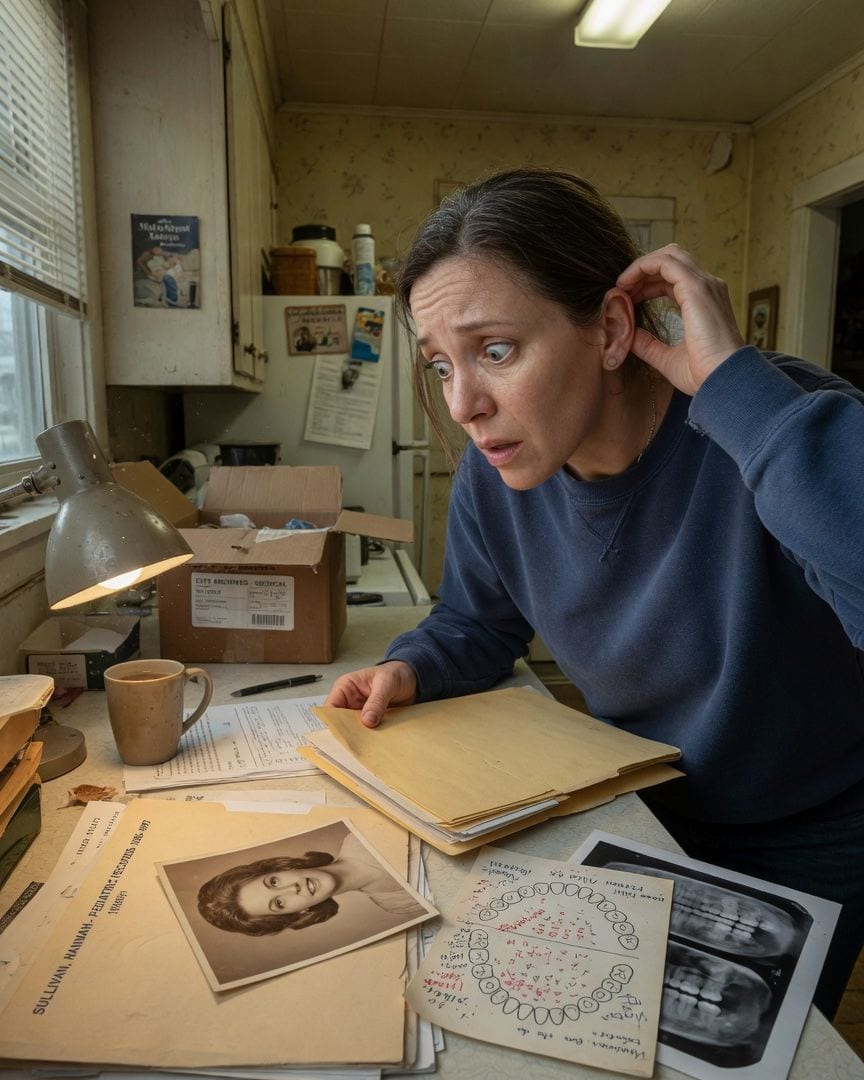
My MRI showed a perfect, decades-old surgical opening in my skull. I have no memory of it.
I underwent a routine MRI for persistent dizziness, expecting reassurance. Instead, the scan revealed a perfectly healed, decades-old surgical opening in my parietal bone, just behind my left ear. Dr. Hughes confirmed it was an access point for a procedure, yet I have no memory of any head surgery, ever. My body holds a secret I cannot recall.
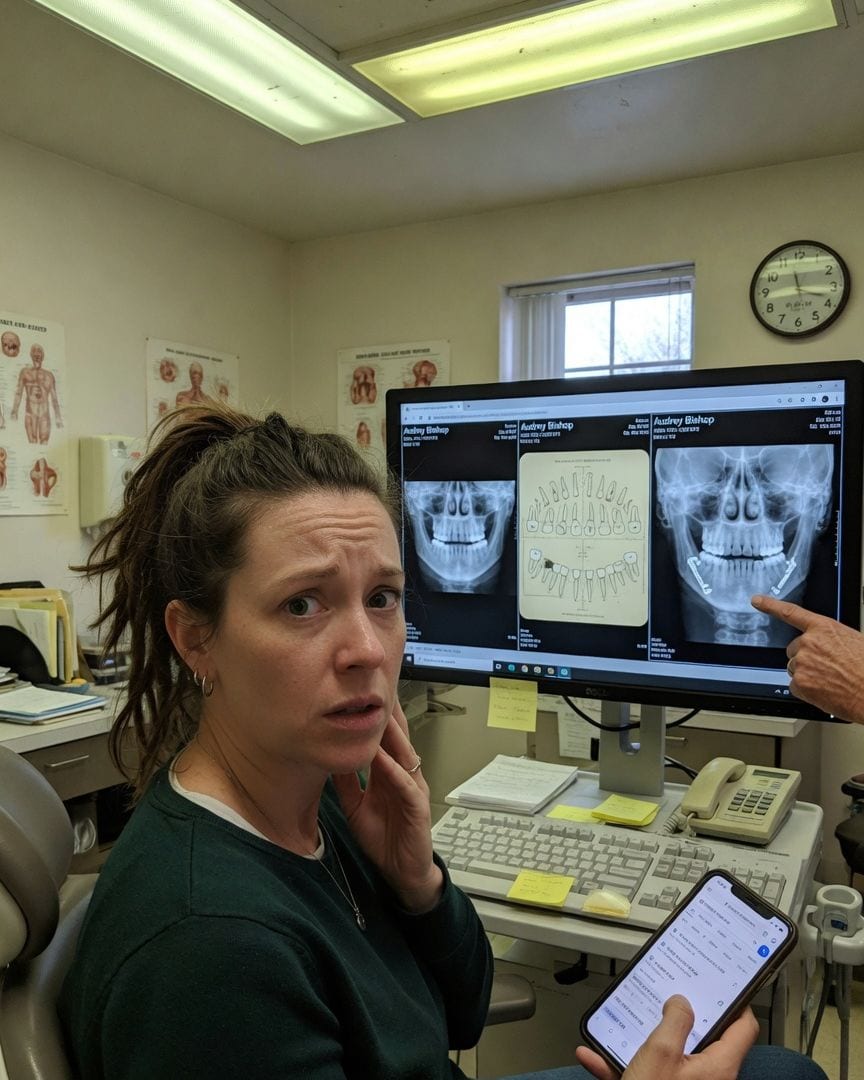
My X-ray shows a metal plate and screws in my jaw from a break I don't remember. My old records show a different mouth.
During a routine wisdom tooth extraction, my oral surgeon found a perfectly healed, decades-old jaw fracture in my X-ray. It came with a small metal plate, completely encased in bone. But I'm 35 years old, and I have no memory of ever breaking my jaw.
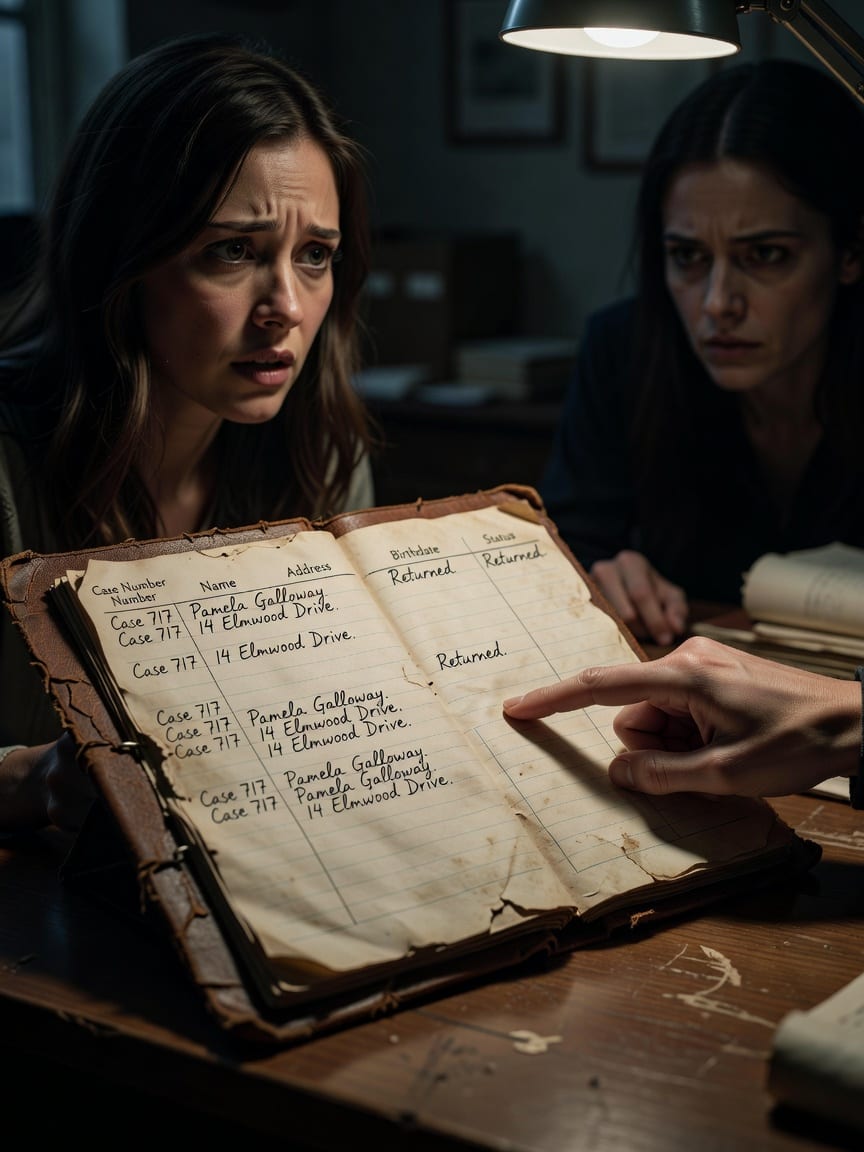
My hospital file has a blacked-out line from 1988. It names my street address, decades before I lived here. Then: 'returned'.
I finally got my medical file, hoping to clear up a ridiculous bill. Inside, I found an entry from 1988: my current home address, scrawled on a partial intake form and marked 'returned.' I was six then, living fifty miles away.
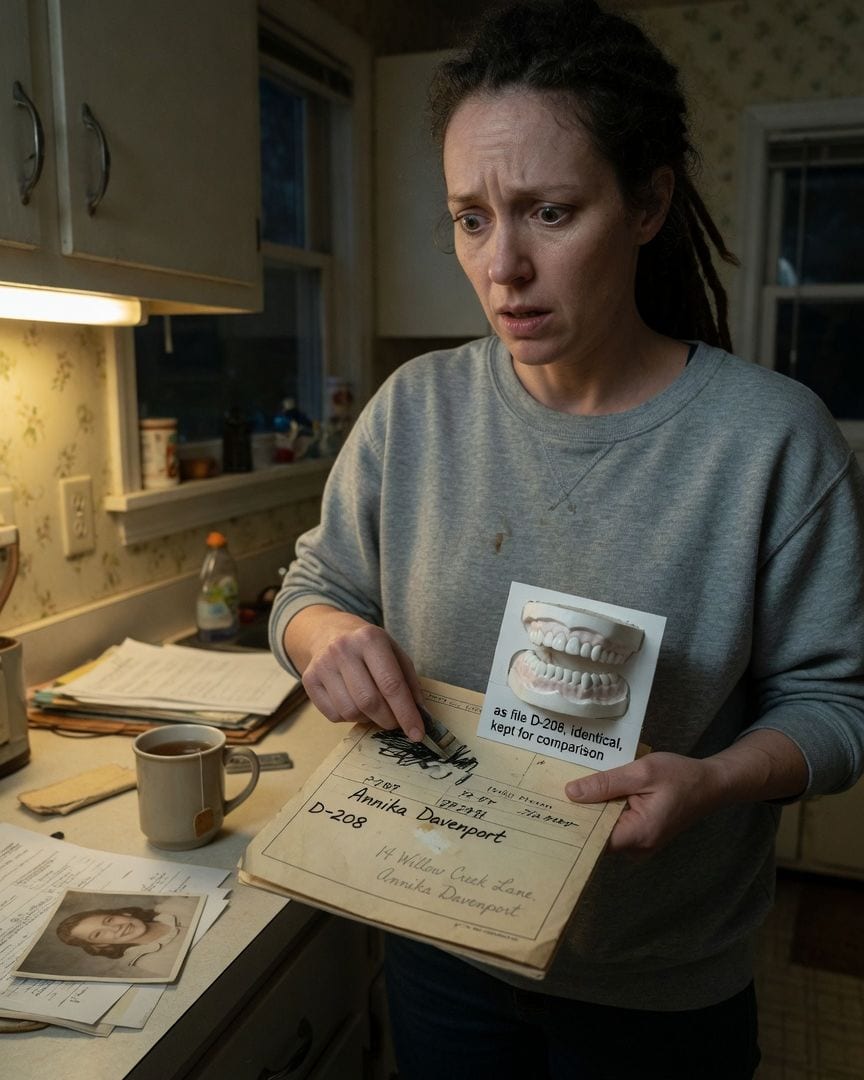
My childhood dental chart lists the house I bought last year — in my own name, years before I was born. A second set of my teeth sits filed beside it, marked 'identical.'
Sifting through old dental records, I found my chart, D-208, with my 1988 birth date. But a line from 1958 was blacked out, and a clipped card with an impression of my teeth listed my name and current home address, decades before I was born. The impossible facts knotted into a cold certainty.
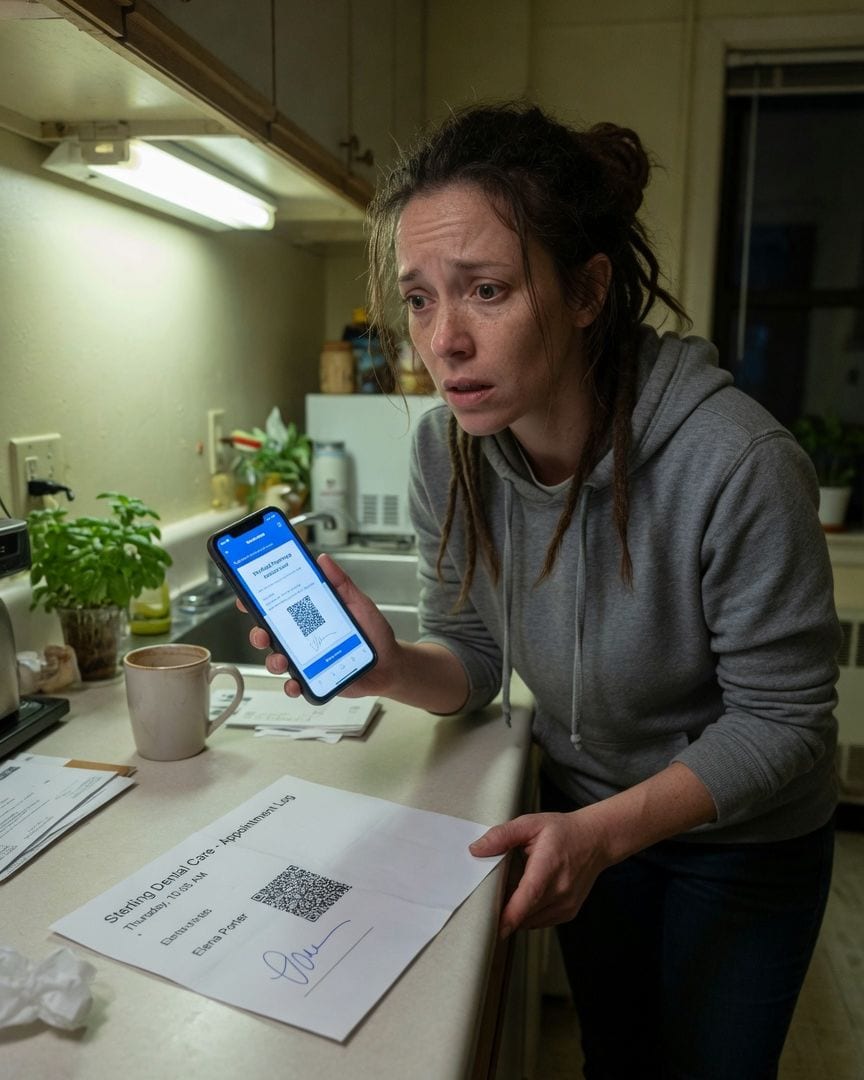
My dentist's system says I was there last Thursday. I wasn't. But the check-in tablet shows my signature, and the hygienist described my chipped tooth exactly right.
I received a call confirming a dental appointment I never made, for a day I was home. Yet, Sterling Dental had my perfect digital signature and described a chipped incisor I’d never told them about. The physical proof insisted I was there, but I wasn’t.
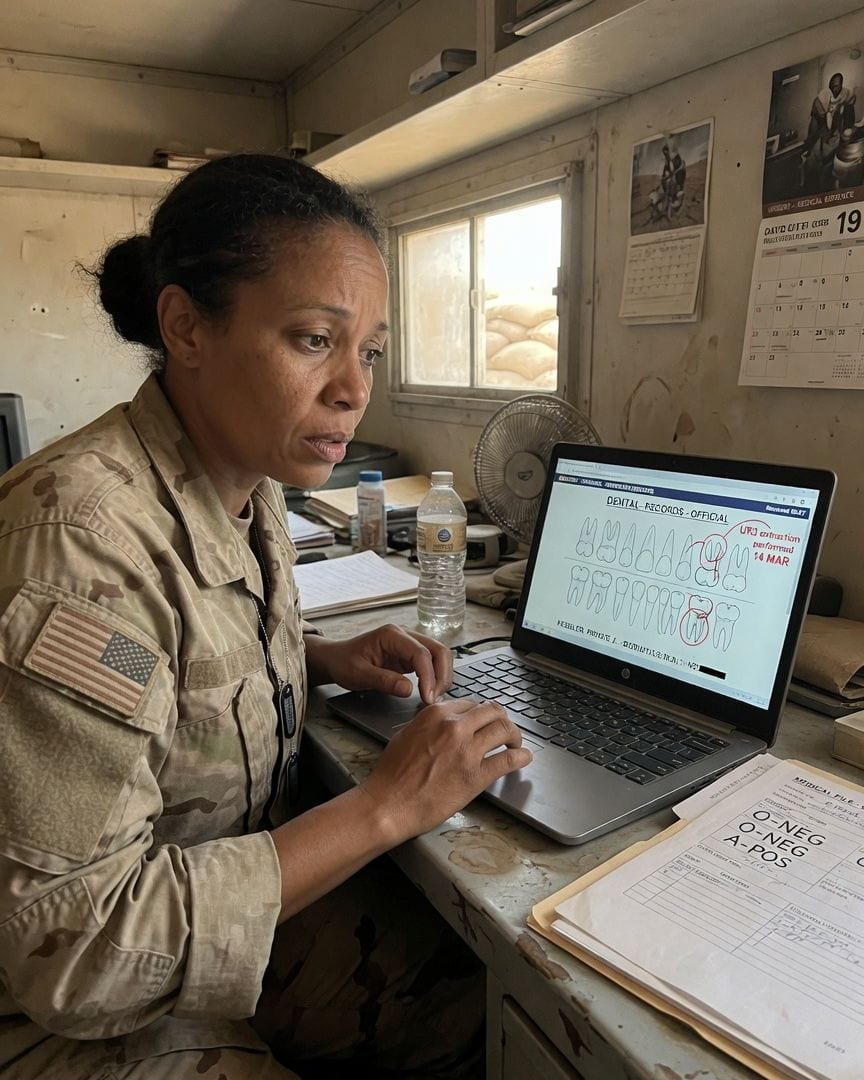
Weeks from going home, Sergeant Whitmore saw Private Kessler’s dental records show teeth he didn’t have and missing ones he did.
Sergeant First Class Iris Whitmore counted the weeks until her deployment ended, dreaming of home as the desert heat baked FOB Cerberus. But the familiar weight of Private Kessler’s dog tags soon brought a cold knot of dread: his blood type, once O-negative, suddenly read A-positive. She dismissed medical anomalies and clerical errors, only to find his official records subtly rewriting his timeline, linking old injuries to new identities. When his dental charts arrived, showing teeth he never had and missing ones he did, Sergeant Whitmore faced an impossible question: who was Private Kessler, really?