My game camera took photos of my back door, from inside the glass, looking out.
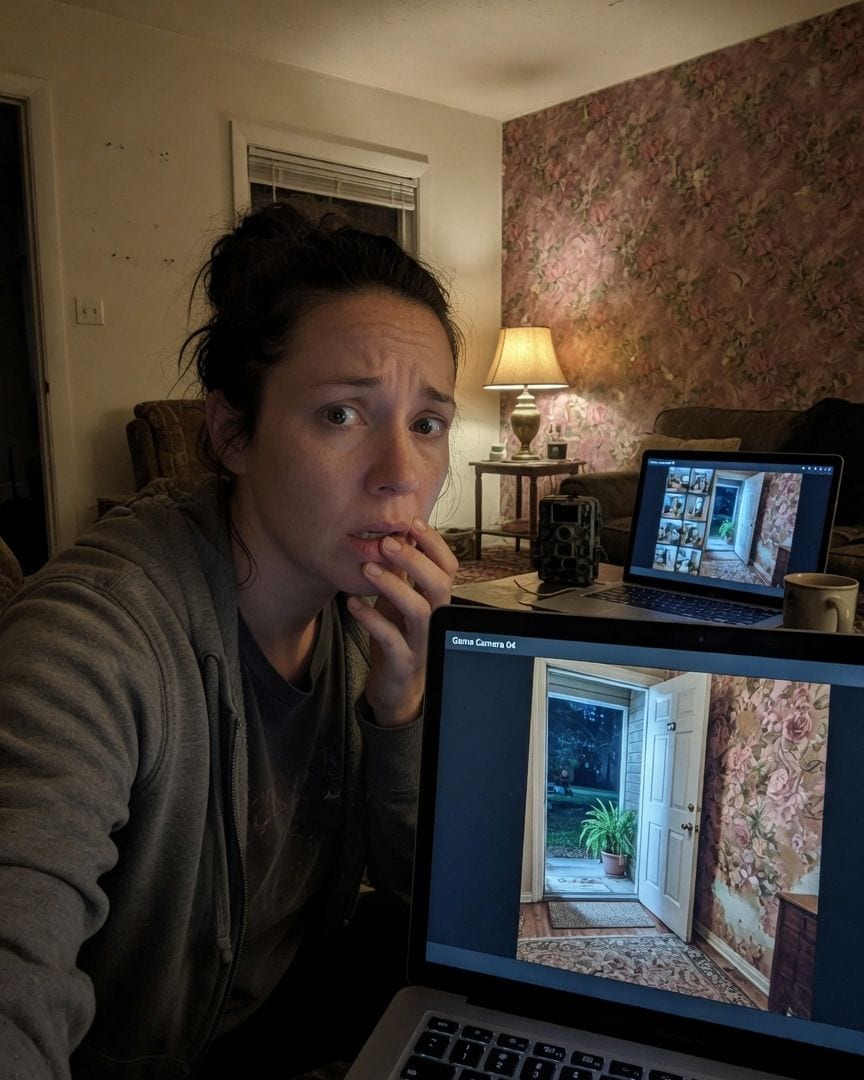
I clicked through the game camera photos on my laptop, a routine check of my backyard perimeter. For three nights, the motion sensor had triggered, capturing familiar shots. First, the back fence, the overgrown lilac bush.
Then, my own back door, framed perfectly in the center. The sequence was normal, mundane even, until the last few frames.
The door was closer each time, the concrete steps leading up to it, the potted fern I kept on the landing. Closer, then closer still, until the door filled the frame.
And then, the final image, stark and undeniable: my back door, but taken from inside the house, looking out.
My breath hitched. The camera, a small, camouflaged box, was still mounted on the back fence, exactly where I’d left it. It had no business seeing what was inside my living room.
I blinked, scrubbing at my eyes, the screen light harsh. A glitch? A random error? Or maybe some kid, a prank? I lived alone.
No one had keys, no one had reason to be in my house playing with a game camera. I replayed the sequence, the impossible image looping, the dread tightening in my chest. The camera was outside.
The photo was from in.
Rational to a fault, I immediately called Dean Foster, my friend who worked in IT. He was over within the hour, already shaking his head before he even saw the photo. We took the camera down from the fence.
He examined it with a practiced eye, the SD card, ran diagnostics on his own laptop. "No signs of tampering, Renee," he concluded, bewildered. "No software hacks, no physical interference. It’s a clean file. The timestamp is legit. 3:14 AM."
Together, we zoomed into the impossible photo again. The details of my living room were clear, sickeningly so: the worn Persian rug, the antique brass lamp on the side table, the edge of my armchair.
Everything was exactly as I’d left it before bed, except for one thing. I froze, my finger trembling as I pointed at the wall just beyond the doorframe. “Wait,” I said, my voice thin. “That wallpaper. It’s not mine.”
Dean squinted, leaning closer. “What do you mean?”
My current wallpaper was a muted cream, a plain, unobtrusive texture. The photo, however, showed a distinct, almost garish, floral pattern, an intricate swirl of faded roses and ivy.
It was old, dated, and definitely not what covered my walls now. It was a detail that simply wasn't there, and couldn't be, unless the camera had captured a ghost. Or something far, far worse.
Driven by an unsettling certainty that clawed at my throat, I spent the next few hours trawling online archives, old real estate listings, anything about my house’s history.
I sifted through dozens of blurry, low-resolution images from previous sales, my fingers cramping on the trackpad. Most were unhelpful, just exterior shots or poorly lit rooms. Then, there it was. A single, faded photograph from a listing dated 1983.
It showed the interior of my living room, unmistakably my back door and the wall beside it.
And covering that wall, in all its faded glory, was the exact same ornate floral wallpaper pattern I’d seen in my game camera’s impossible photograph. It was a perfect, horrifying match.
My camera, somehow, had captured a physical detail of my house from over forty years ago.
The discovery of the old wallpaper sent me down a rabbit hole I couldn’t pull myself out of. The listing mentioned a woman named Edith Granger had owned the house during the period the wallpaper would have been current.
Edith, the sparse records stated, had lived alone and was known for being 'eccentric' before she eventually moved away under unspecified circumstances. There was no forwarding address, no next of kin listed.
It was as if she’d simply ceased to exist after leaving the house.
As I delved deeper, the house itself seemed to respond. I started hearing things I’d previously dismissed as the normal creaks and groans of an old building settling.
A faint, almost imperceptible whisper from the living room when no one was there, like someone muttering just beyond the threshold of hearing.
The distant, almost musical chime of something delicate, a tiny, crystal-clear note, then silence so profound it felt heavy.
A soft rustle of fabric, a sigh, always just at the edge of hearing, always when I was alone, when the house was otherwise still.
The sounds seemed to emanate from the vicinity of the back door, the very spot my camera had captured that impossible image.
I found myself pausing, listening, straining to discern meaning in the auditory shadows, my ears aching with the effort.
The house felt less like a static structure and more like a living, breathing entity around me, full of unseen currents and pressures.
It was as if it was trying to tell me something, or replay something, and Edith Granger was its silent, ghostly conductor.
I decided I needed more. The local historical society seemed the next logical step. The archives were quiet, hushed, filled with the comforting, sepia scent of old paper and dust.
I spoke to Leonard Patterson, a retired archivist who still volunteered, his thin hands perpetually stained with ink. When I mentioned Edith Granger and her old house, Leonard's calm, almost serene demeanor became unnervingly still.
He listened, his eyes unblinking, as I described the impossible wallpaper photo and the faint, unsettling sounds I was hearing.
“Some things,” Leonard said, his voice a low, even murmur, like a river flowing over stones, “are better left recorded, not replayed, don’t you think?”
He offered no explanation, only a subtle shift in his posture, a guardedness that implied a deep, uncomfortable knowledge.
He subtly steered the conversation away from Edith, suggesting I might be 'over-analyzing' old house noises, or letting my imagination get the better of me. His composure was absolute, unwavering, which unsettled me more than any outright denial.
After I left the historical society, a prickling sensation crawled on the back of my neck. I felt observed, exposed. Later that evening, my phone rang. It was an unlisted number.
When I answered, there was only silence on the other end, so profound I could almost hear my own pulse drumming in my ears. Then, a faint, almost inaudible click, like a switch being turned off, before the line disconnected.
My digging had been noticed, my questions had reached a sensitive ear. A silent warning had been issued.
The silent call only hardened my resolve. Leonard Patterson knew something. I went back to him the next day, this time armed.
I laid the old real estate listing photo of the wallpaper and my game camera’s impossible shot on the polished oak table between us. They lay there, two pieces of evidence that refused to be dismissed.
“This isn’t over-analyzing, Mr. Patterson,” I stated, my voice steady despite the tremor in my hands. “This is a fact. My camera captured something from forty years ago. And you know why.”
Leonard sighed, a long, weary sound that seemed to carry the weight of decades. He picked up the photos, his gaze distant, lost in some memory only he could see.
“It was called Project Echo,” he finally admitted, his voice barely a whisper, as if speaking its name could conjure it. “A… a research initiative, decades ago. By a private institution, long defunct now.
They believed that human experience, especially under duress, could leave an indelible 'imprint' on an environment. That a house, a home, could become a living record, a kind of architectural archive.”
He explained that Edith Granger was a primary subject. Her house, my house, had been subtly modified, infused with experimental materials designed to enhance this 'resonance,' to make it more receptive.
“They wanted to see if the house could literally record a life,” Leonard continued, his eyes meeting mine, unblinking. “Not just physically, but emotionally. Every joy, every despair, every mundane moment. And then… replay it. For future occupants.”
He described how Edith’s increasing isolation and distress had made her an ideal, if tragic, subject. She was, he implied, a particularly strong 'signal.'
“Your camera, Renee,” he concluded, gesturing to the photos with a shaking hand, “it just found the right frequency. It tapped into the house’s memory. It’s a recording of Edith’s reality, playing back.”
The pieces clicked into place with a sickening thud: the impossible photo, the whispers, Leonard’s evasiveness. It was all a recording, a ghostly playback from the house itself, a house that wasn’t just a structure, but a vault of echoes.
Shaken but resolute, I returned home, the truth about Project Echo echoing in my mind, far louder than Edith’s faint whispers.
The house felt different now, no longer just old, but alive with a silent, spectral archive, a machine patiently humming its recorded past. I knew I wouldn’t sleep until I’d found something, anything, more.
In the attic, tucked away in a dusty corner behind a forgotten steamer trunk, I found a small, unmarked cardboard box. It was heavy, wrapped tightly in yellowed newspaper. Inside, carefully stacked, were several reel-to-reel audio tapes.
My heart hammered against my ribs. One was simply labeled, in faded black ink: 'Edith F. - Home Echoes.'
This was it. This was Edith's voice, her life, recorded.
I carefully placed the tape onto an old player I’d borrowed from Dean, my hands trembling. The machine whirred to life, a low hum, then the tape hissed into existence, static-laced.
Ambient sounds of a house: floorboards creaking, wind rattling a window, the distant, deliberate chime of an old grandfather clock. Then, a faint, reedy female voice, distressed and weary, began to speak. Edith.
She described her garden, the oppressive loneliness she felt, her fears of being forgotten. Her voice grew more agitated as she spoke about the back door, the feeling of being trapped within these walls.
And then, clear as a bell through the static, Edith's voice dropped to a whisper, filled with a chilling, prophetic dread: "They know my name. Renee."
I confronted Leonard Patterson again, the 'Edith F. - Home Echoes' tape clutched in my hand. I played the segment where Edith spoke my name. Leonard listened, his face a mask of grim resignation, eyes fixed on the spinning reels.
“Edith… she was a sensitive,” he explained, his voice heavy, like he was dredging up words from a deep well. “Her mind, under the stress of the experiment, became unusually receptive to the 'resonance.'
The project wasn’t just about passive recording, Renee. It was about 'experiential resonance,' the idea that an environment could not only store but also subtly project these imprints onto future occupants, creating a kind of shared psychological space.”
He paused, wiping a hand across his brow. “Edith, in her profound isolation, began to perceive glimpses of those who would come after her.
Your name, 'Renee,' was one such projection, a fragment of the future echoing back through the house’s recording, woven into her own experience.”
He revealed that the institution had hoped these imprints could eventually become self-sustaining, a kind of living, evolving memory, a feedback loop between the house and its inhabitants.
The camera’s final photo, Leonard confirmed, was indeed an echo of Edith’s final, desperate attempt to look out from the house, to escape her psychological prison. A moment, a perception, replayed by the house itself.
The horror wasn't just in the past, but in its active, insidious influence on my present. The house wasn’t just playing a recording; it was trying to make me part of it.
The truth detonated in my mind with the force of a physical blow: I wasn't just a witness; I was becoming a participant. My own experiences, my own dread, were beginning to merge with Edith’s.
The house was subtly pulling me into its endless replay, blurring the lines between past and present, between her mind and mine.
I felt a growing sense of dread, a chilling familiarity with Edith’s despair, as if her feelings were bleeding into my own.
I knew I couldn't just leave; I had to break the cycle, to silence the echo, before I became another layer in its archive.
I called Dean, explaining everything, the urgency in my voice conveying the impossible truth, the creeping horror that was now personal. Dean, though skeptical, trusted me. We agreed to meet at the house, armed with tools and a desperate plan.
Leonard Patterson, contacted one last time, had given me a cryptic hint about 'the core resonator' in the basement, a device meant to amplify the 'resonance.'
Together, Dean and I returned to the house, the air inside heavy and cold. We found it: a small, lead-lined chamber hidden behind a false wall in the old utility room, a subtle humming the only giveaway.
Inside, a complex, archaic device pulsed with a soft, sickly green light. As we began to dismantle it, the house seemed to resist.
Floorboards groaned loudly above us, a cold gust of wind swept through the closed rooms on the main floor, and a framed photograph of my parents crashed from a shelf in the living room, shattering the glass.
I felt a profound sense of sorrow, a wave of despair that wasn't my own, but Edith’s, trying to overwhelm me, to pull me back into its loop. Dean worked methodically, cutting wires, disconnecting circuits.
With a final, sharp click, the green light flickered and died. The humming ceased. The house fell utterly silent, a heavy, empty quiet that was almost more unsettling than the sounds.
I sold the house within weeks, practically giving it away. I meticulously purged my belongings, ensuring no personal item remained to feed any lingering 'echoes,' as if the house might try to draw my memories back.
Dean helped me move, never quite meeting my eye, his silence a testament to the impossible thing we’d faced. Leonard Patterson vanished, his phone disconnected, his old volunteer post at the historical society vacant.
The house sat on the market for months, an anomaly in a booming real estate market, before a developer finally bought the entire lot for demolition.
I tried to forget, to rebuild a life untouched by history's insidious replay, but the mark of the house remained, a subtle shift in my perception of reality, a constant awareness that some things linger.
Years passed. I lived a quiet, almost reclusive life, meticulously avoiding smart devices and digital footprints. I knew the world was a vast, unconscious archive, and I refused to be another recording.
One brisk autumn afternoon, I found myself walking past the site where my old house once stood.
A modern apartment complex, all glass and steel, now dominated the skyline, reaching higher than the old oak tree that used to shade my porch. I paused, a strange pull drawing my gaze upward.
A window on the third floor caught the afternoon sun, glinting.
And for a fleeting, impossible second, through the clear glass, I saw it: the familiar, ornate floral wallpaper pattern, faded roses and ivy, glowing faintly in the sunlight of a brand new apartment.
Then the old wallpaper pattern, identical, caught my eye through a window of the new building, and I knew some recordings can never truly be erased.
If this one got to you
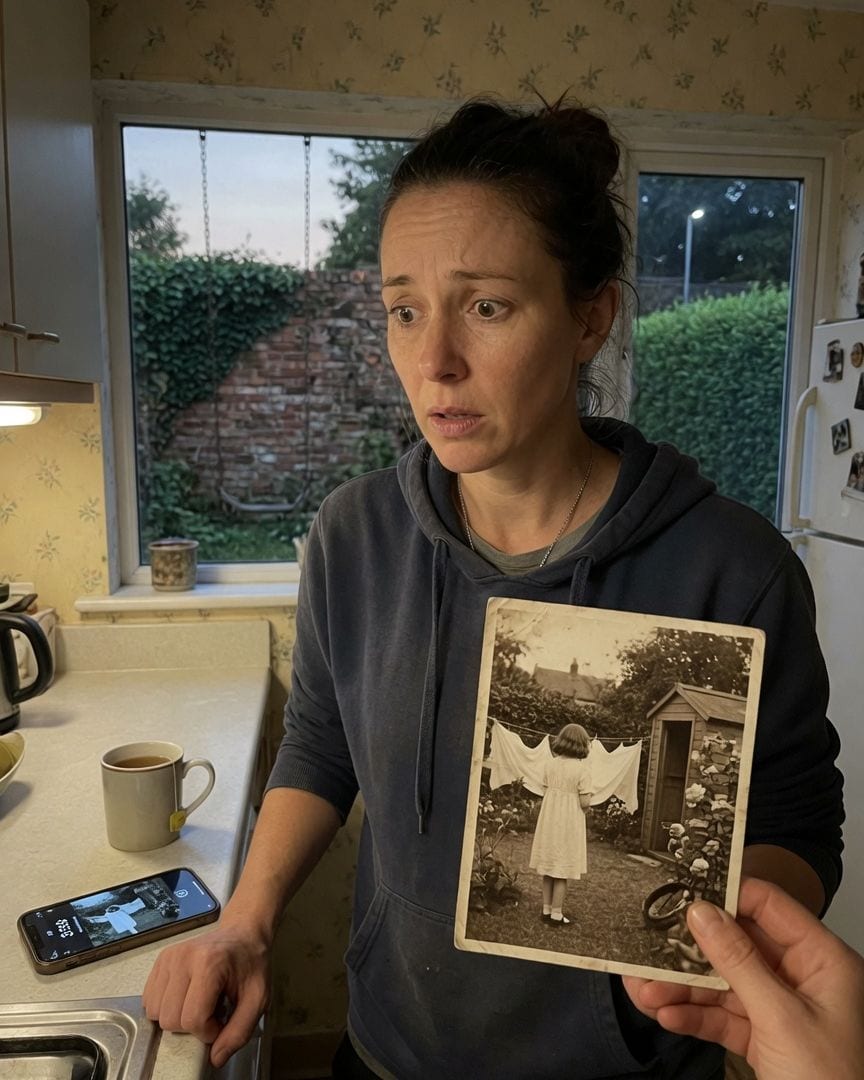
My trail camera catches a girl in a nightdress on my lawn, but the garden around her is wrong: a privy, a mangle, washing lines.
Every morning, my trail camera sends routine alerts, but one day, it showed a girl in a white nightdress standing on my lawn. What truly stopped me was the garden itself: where my trampoline should be, there were laundry lines, a dilapidated privy, and a rusted mangle. These impossible structures appeared in the footage, yet my yard remained exactly as it had always been.
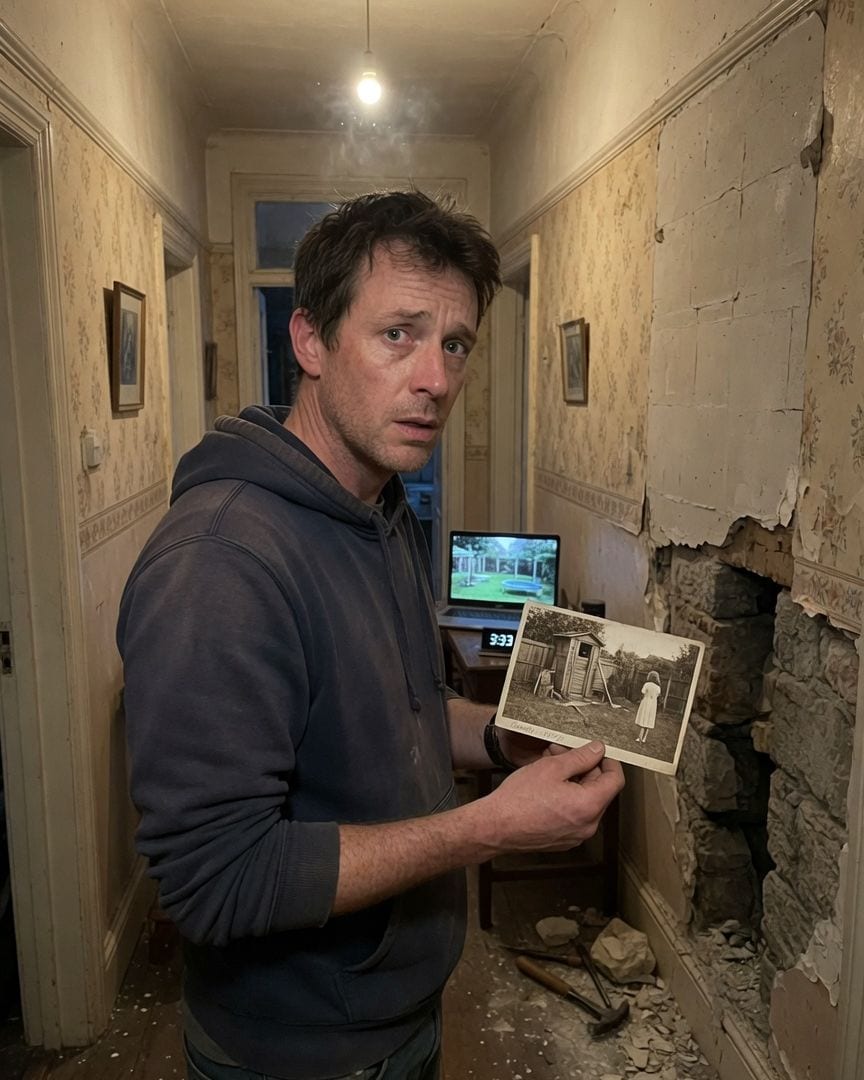
My trail camera keeps catching a girl on the lawn at 3:33, but the garden around her is wrong—a privy, a mangle, washing lines where my trampoline is. The last frame each night is her starting to turn.
I inherited an old house and set up a trail camera for foxes. But the footage changed: a young girl appeared in my garden at 3 AM, standing where my trampoline was, surrounded by washing lines where my rose bushes bloom. The landscape was decades out of place.
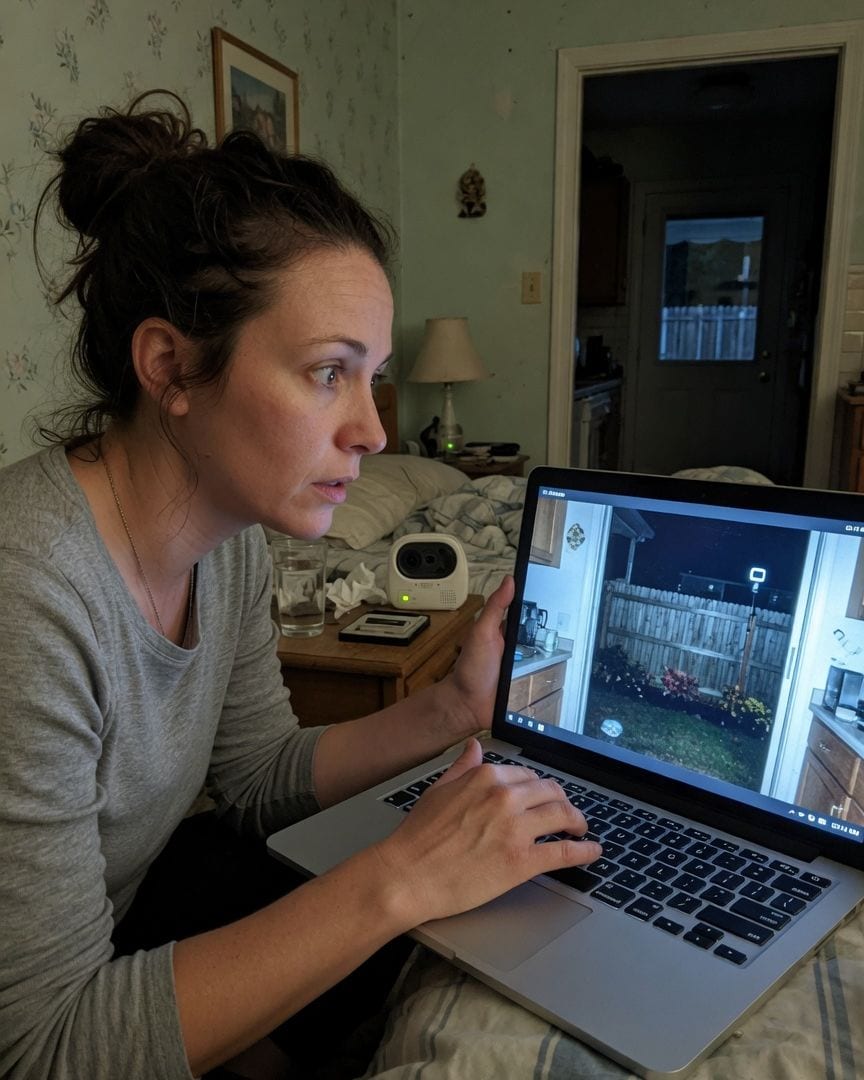
My game camera caught my back door from the inside. For three nights, it showed my door from the yard, getting closer. The last picture is from inside the glass, looking out at the fence.
I had set my game camera on the back fence, aimed at my house, to catch whatever I'd seen moving outside my kitchen window. But the last photo, taken after midnight, showed my kitchen from *inside* the locked back door, looking out.
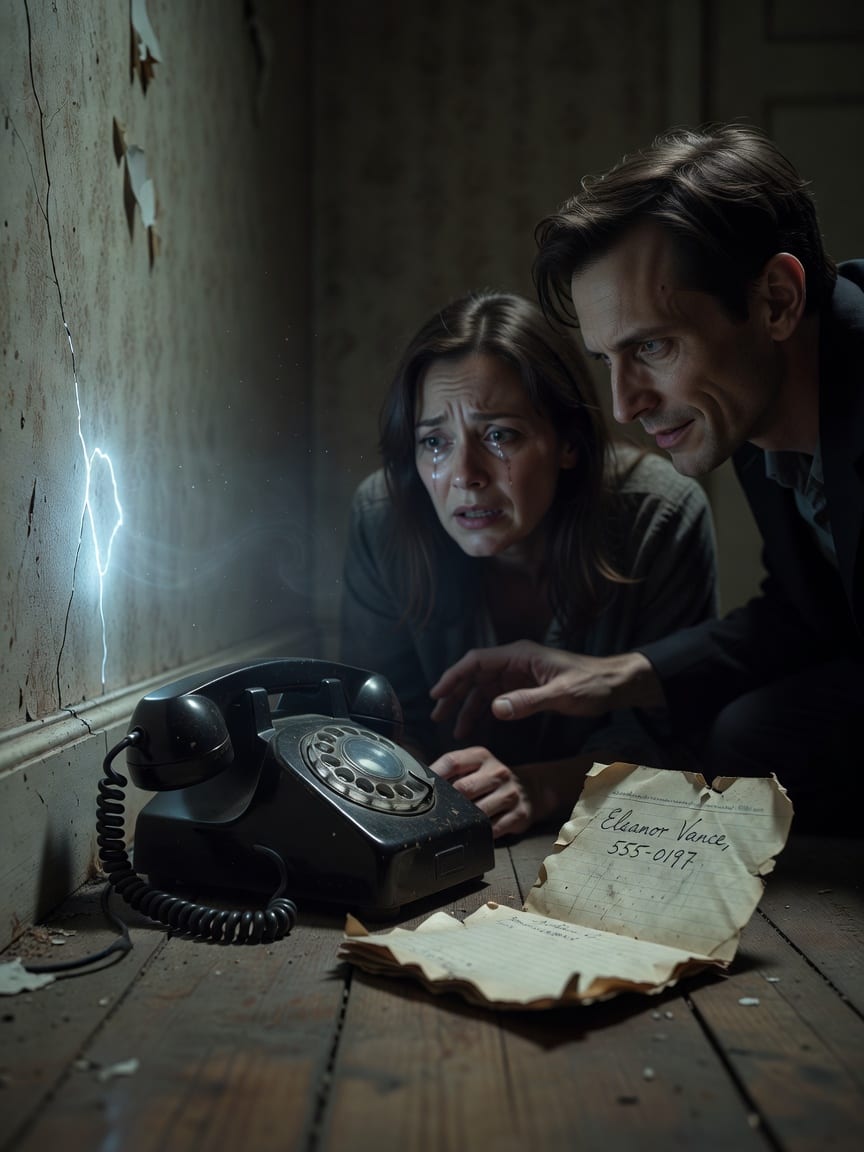
My house's walls ring when I dial a phone number from a 1974 directory. My neighbors said that directory was trash.
I was sifting boxes in my new house when I found an old 1974 telephone directory for my street. It listed my address, 12 Elm Street, under the name "Mr. & Mrs. Sheppard." On a whim, I called the faded seven-digit number. My cell phone rang, but a low, muffled sound also vibrated from the wall beside me.
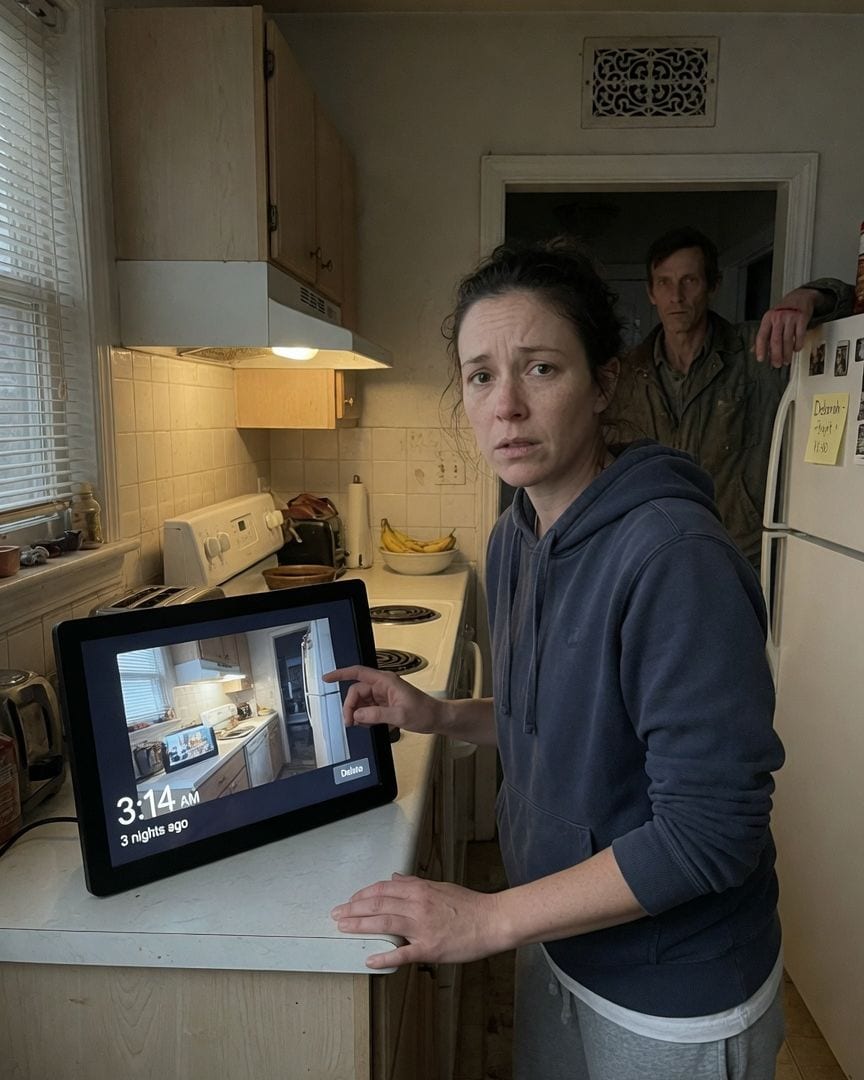
My mother-in-law's photo frame saved a picture none of us took: our kitchen at night, and a tall man we don't know in the doorway, facing the camera it doesn't have.
My mother-in-law's digital photo frame sat innocently on the kitchen counter, meant to display happy family memories. But it had frozen on a picture none of us had taken: our kitchen, late at night, with a tall, unfamiliar man standing in the doorway. The photo, timestamped 3:14 AM three nights ago, was impossible to delete.
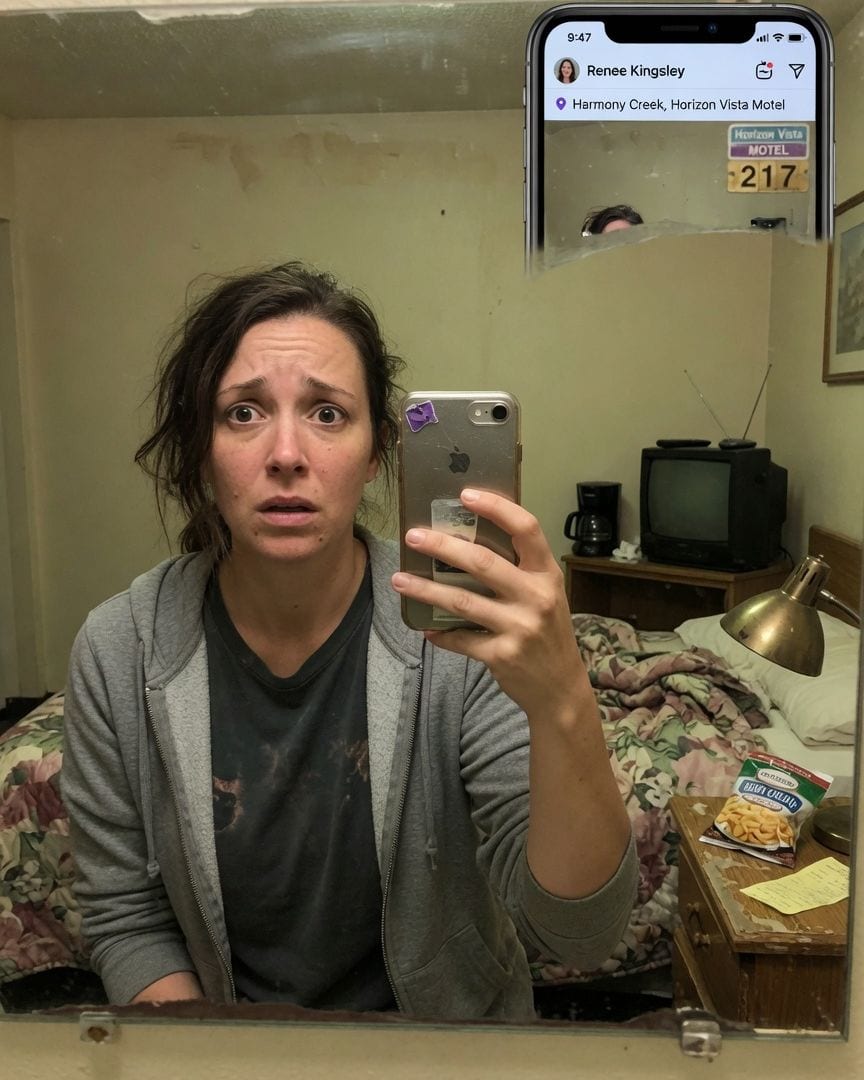
My apartment door opened and closed at 1:20 AM last Thursday, then my digital keycard checked into a motel six hours away, all while I slept.
My Tuesday morning began like any other, until I opened my phone's photo app. Instead of hike pictures, I found forty new photos: a motel room in Harmony Creek, six hours northeast. The last image was a mirror selfie of *my* face, holding *my* phone, but I was asleep in my bed the entire time.