My garage camera filmed a boy of six walk out of a locked door at 3:48am, stare into my empty car, then vanish. My children live abroad.
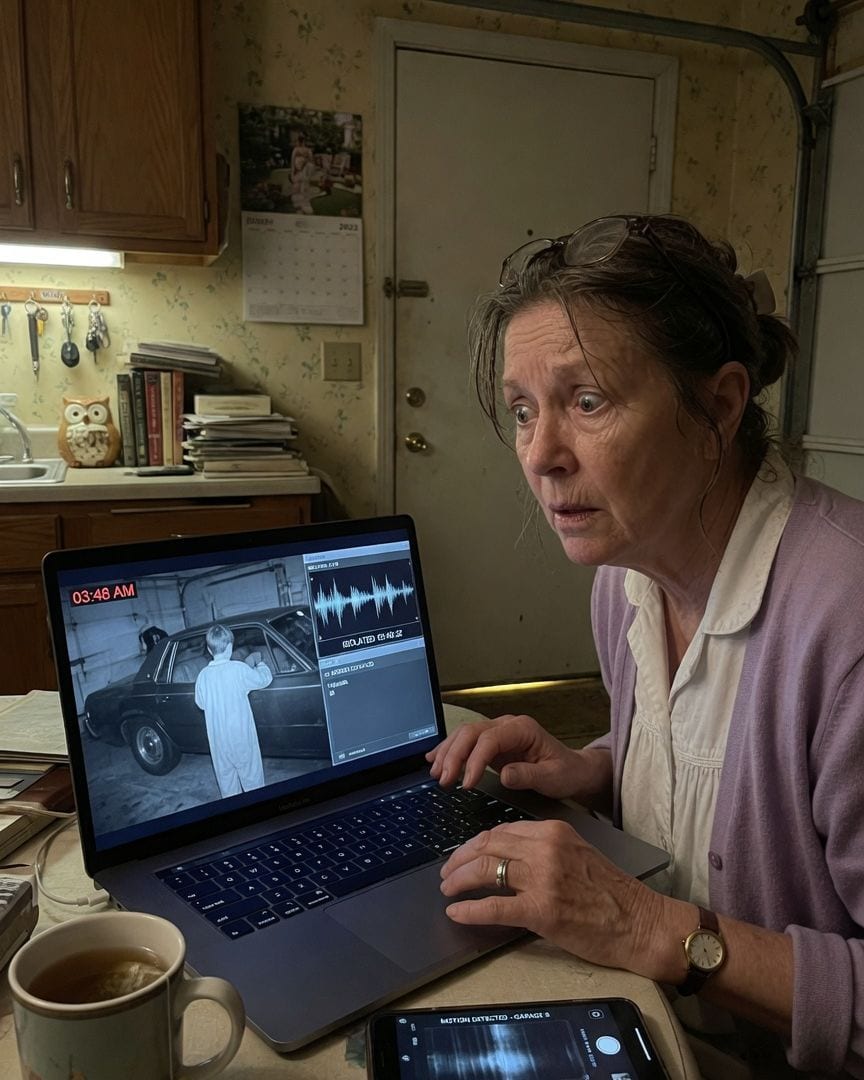
I’m Vivian. I bought this house twenty years ago. It’s a good house, solid. Quiet. Or it used to be.
The night it happened, the motion sensor on my garage camera triggered at 3:48 AM. I usually just check the notifications for raccoons or the occasional stray cat. What I saw wasn't a raccoon.
The internal door, the one that leads from the kitchen directly into the garage, slowly, silently opened. I keep that door locked and bolted from my side. Always.
It was locked when I went to bed, the deadbolt thrown, the slide bolt secured. But on the footage, it opened.
Just a crack at first, then wider, revealing the dim light from the garage lamp I leave on at night.
A boy, no older than six, stepped through. He was wearing what looked like an old-fashioned nightshirt, cream-colored, reaching his knees. His hair was dark, almost black, cut short around his ears. He wasn't translucent or shimmering. He was solid.
Real.
He crossed the concrete floor with a steady, unhurried gait, his small feet bare. He stopped at the driver's side window of my parked sedan – the one I drive most days – and looked in.
My children are grown, live abroad; the house is usually just me. The car was empty. He tilted his head slightly, a child’s curious gesture, as if trying to understand something he saw, or didn't see, within the empty seat.
He stayed there for a long moment, staring, his face pale and indistinct in the low light.
Then, he turned. Walked back towards the internal door. He didn't rush. The door, still open, seemed to wait for him. He passed through, and then, with the same slow grace it had opened, it gently closed behind him.
I rushed downstairs, heart pounding, adrenaline making my hands shake. I checked the door. Locked. Bolted. Just as I’d left it. I pressed my palm against the wood, felt the cold solidity of it.
There was no one in the garage. No sign of forced entry from the outside. Nothing.
I went back to the laptop, checked the timestamp again. 3:48 AM. I watched the footage countless times, zooming in, panning across the empty garage.
My rational mind, the mind of a retired librarian who prides herself on precision, simply failed. There was no explanation for the child who was never there, yet was undeniably recorded.
For days, the footage consumed me. I reviewed it obsessively, pixel by pixel, searching for a trick of light, a reflection, anything mundane. A shadow that looked like a child. A bird caught in the garage. Anything.
But the boy was undeniably real, solid, not a translucent blur. His movements were deliberate.
I even called my son, Nathan, asking about old home videos he might have doctored for a prank, something to explain this impossible sight. He just laughed, said I was overtired, told me to get some sleep.
Nathan has always been pragmatic, too much like his father. He couldn’t fathom it.
A creeping dread, cold and persistent, started to worm its way into my gut. It pushed me towards something irrational. I remembered an old forum post I’d once stumbled upon, about enhancing obscured audio on security footage.
I scoffed at the idea. There was no sound on my footage. My camera was motion-activated, video only. Just the low hum of the garage refrigerator, the distant thrum of the house settling. Still, the dread whispered, try.
I downloaded a free sound editing program, isolated the audio track from the camera footage. It was just a flat line, a low white noise. I started boosting the faintest frequencies, adjusting parameters I barely understood.
At first, it was just static, a wall of hiss. Then, a low, indistinct murmur, like wind through dry leaves, barely there. My fingers hovered over the mouse, frozen. There was no wind in the garage.
I kept boosting, kept focusing, scrubbing the timeline to the exact moment the boy had stopped at the car window, tilting his head. The murmur persisted, a thread of sound woven beneath the static.
It was faint, yes, but it wasn't wind. It was a breathy sound. A human sound. A child's voice, whispering something I couldn't quite make out, lost in the noise.
I leaned closer to the speakers, my heart thudding a slow, heavy rhythm against my ribs. I replayed the enhanced audio, isolating the whisper, scrubbing back and forth over the tiny, barely visible wave on the sound editor.
The static seemed to recede, the sound resolving itself, gaining a terrifying clarity. It wasn't just a child's voice; it was a single, distinct word.
Spoken with an unnerving tenderness, right as the boy had looked into the driver's seat of my empty car.
"Vivian."
My own name. Whispered from the grainy, silent footage, from a child who couldn't possibly know it.
I froze, fingers hovering over the keyboard, staring at the screen where the boy's pale face looked back at me, his dark eyes seeming to meet mine through the digital static. The sound played again, an intimate, impossible calling.
The whisper of my name shattered any remaining rational explanations. Sleep became a distant memory, food a tasteless chore.
For days, I existed in a fog, glued to my laptop, my search terms growing increasingly desperate: 'child ghost security camera,' 'voice on recording not present,' 'house haunted by children.'
The internet, usually a bottomless well of information, offered nothing useful, only sensationalized stories and forums filled with unhinged theories. None of it felt right, none of it addressed the cold, coherent impossibility I had witnessed.
I shifted my focus, searching for historical records pertaining to my specific property address. Old maps, land deeds, anything that predated my ownership, before I bought the house twenty years ago.
It was tedious work, cross-referencing digitized archives, old planning documents. Then, buried deep in a municipal record, I unearthed a dusty mention of the 'Ashford Children's Home.'
It had operated on the very land where my house now stood, from 1950 to 1972.
The online archives were sparse, citing vague, almost deliberately obscure reasons for its closure: 'restructuring,' 'transfer of residents to new facilities.' There was no mention of specific children, no staff lists, no detailed history.
The scarcity of information felt less like a lack of records and more like a deliberate redaction. It unnerved me. Why erase a place that housed children?
The local historical society seemed the next logical, if daunting, step. I found their address – a small, unassuming building downtown, tucked away between a dry cleaner and a defunct bakery.
The idea of digging into a forgotten past felt dangerous, like opening a door to something I might not be able to close. But the boy's voice, calling my name, left me no choice. I had to know.
The historical society was quiet, smelling of old paper, dust, and something faintly metallic, like forgotten pennies. I spent hours poring over microfilm reels, brittle ledgers, and carefully preserved newspaper clippings.
I found only sparse, sanitized accounts of the Ashford Children's Home. 'Model institution,' 'dedicated staff,' 'a haven for children in need.' All the usual platitudes.
I was looking for names, dates, anything about the children who lived there, anything that could connect to the boy in my garage. Nothing.
A shadow fell over my shoulder. The air in the room, already cool, seemed to drop a few degrees. I looked up, startled, to find an elderly woman standing there.
She was dressed in a sensible tweed suit, her silver hair pulled back in a neat bun, and her eyes – her eyes were sharp, a startling, knowing blue that seemed to see right through me.
"You're looking into the Ashford Home, aren't you?" the woman asked, her voice calm but firm, a quiet pronouncement rather than a question.
I swallowed, my mouth suddenly dry. "Yes, I am. My name is Vivian Ashford. I… I live on the land where it stood."
Her gaze softened then, the sharp edge in her eyes giving way to a deep, profound sadness. She nodded slowly. "I thought so. My name is Edith Fletcher. I was an administrator there, in its final years."
My heart jumped, a frantic bird trapped in my ribs. I had found her. The one who knew. "Oh. Please, I… I need to know more. There's something happening at my house—"
Edith cut me off, her hand lifting gently. "Some things are best left buried, dear. For your own good." Her gaze drifted, unfocused, as if seeing something beyond the dusty shelves.
"The children… they had a way of leaving parts of themselves behind."
Unnerved, I tried to press, to ask how she could possibly know about the things I’d been experiencing, about the boy. But she continued, her voice retaining that unsettling calm. "I know about the recordings, dear. You needn't explain."
She met my eyes again, and this time, there was no sadness, only a quiet, resolute understanding. "The land itself… it remembers. And sometimes, it plays them back."
Edith’s words weren't a warning against a ghost, but against an inconvenient truth she already understood, already accepted. She seemed to know everything without me saying a word.
"How could you know about the recordings?" I demanded, my voice tight with a desperate edge. "Who was that boy?" The calm composure Edith radiated was almost as unsettling as the boy himself.
She sighed, a long, weary sound, and motioned for me to follow her. She led me away from the public archives, through a narrow hallway, into a small, dusty office piled high with boxes and forgotten files.
The air in there was even colder, prickling my skin.
"The Ashford Home wasn't a typical orphanage, Vivian," Edith began, her voice low. She sat down behind a cluttered desk, gesturing for me to take the worn armchair opposite. "It was… a place for children with unique presences.
Some of them, you see, had an unusual ability to leave energetic traces, echoes, in their environment." She spoke with a detached, academic calm, as if discussing a scientific phenomenon she’d observed rather than a supernatural one.
"The land itself seemed to be a canvas for them, recording their movements, their voices, sometimes even their likenesses."
I felt a cold dread spread through me, chilling my veins. It was like a piece of ice settling in my stomach.
"We were caretakers, yes," Edith continued, picking up a heavy, leather-bound ledger from her desk, running a finger over its faded cover, "but also observers. We documented everything. The boy you saw, he's one such echo. A particularly strong one.
We called them 'channels' for the way they could influence the physical world, even after they were gone."
My mind reeled. "But why my name? Why now? I've lived there for twenty years, and nothing like this has ever happened."
Edith shook her head slowly, her gaze distant, fixed on a point far beyond the office walls. "That, I don't fully understand. The echoes are unpredictable. But the calling of a name, that suggests a connection. A resonance.
Perhaps you, living on the land, have become a conduit for him."
The word hung in the air: conduit. I felt a sudden, irrational desire to stand up, to run out of that room, but my feet felt rooted to the floor.
"We tried to understand them, to contain them," Edith went on, her voice softer now, almost wistful. "We even made some… unique recordings. 'Channel recordings,' we called them.
Attempts to communicate, to guide the echoes, to give them form or direction. Most were failures, but a few… a few were remarkably clear. I kept one."
She reached into a deep, old-fashioned drawer in her desk, rummaging for a moment. She pulled out an old, unmarked reel-to-reel tape, its plastic casing yellowed with age, alongside a small, modern-looking USB adapter.
"This is one of them," she said, holding it out to me. Her eyes met mine again, and the deep sadness was back. "It might shed some light, but be warned, Vivian. Some truths are not meant to be heard."
I clutched the tape and the USB adapter, my hands trembling. The weight of it, both physical and metaphorical, was immense. Back in my quiet house, the weight of Edith's words pressed down on me. 'A conduit.' 'A channel.'
The terms resonated with an unnatural, terrifying logic.
I rummaged through the attic, searching for a device that could play the reel-to-reel. A relic from my father's youth, a clunky, brown-paneled player, sat beneath a dust sheet. I blew off the dust, plugged it in.
The USB adapter was simpler, plugging directly into my laptop. I stared at the two choices, a cold sweat beading on my forehead. The analog hiss of the tape felt more authentic, more terrifying.
I carefully threaded the tape through the player, my fingers fumbling. I pressed PLAY.
The reels began to turn with a soft whir, a sound of ancient machinery stirring to life. A rush of static filled the air, thick and oppressive, making the hairs on my arms stand on end.
The sound seemed to fill the entire living room, pressing in on me, making the very air feel heavy and cold.
Then, slowly, agonizingly, the static began to recede, fading like a tide going out. It was replaced by a faint, distant murmur, a sound I knew instantly. It was the familiar, breathy whisper from my garage footage. The child's voice.
It grew stronger, clearer, no longer a faint whisper but a definite presence in my living room, as if the boy himself were standing in front of the speaker. And then, it spoke.
"Vivian."
The voice was soft, intimate, utterly chilling. It paused, a beat of profound silence in the heart of the roaring static.
"Vivian... you're home now."
It wasn't a recording of the past, a historical document. It was a recording for her, now, in this moment. The voice knew she was listening. It knew she was home.
I recoiled from the speaker, stumbling back a step, the child's voice echoing in the sudden, ringing silence of my living room. My heart hammered, a frantic drum against my ribs. It had been directed at me.
Not an old recording, but a direct address. It knew.
I forced myself to replay the 'channel recording,' this time listening with a grim, sickening resolve.
The voice on the tape, sometimes a single child, sometimes a faint chorus of whispers just beneath the primary voice, detailed the true purpose of the Ashford Children's Home. It wasn't just observation, as Edith had gently suggested.
It was active amplification and manipulation of the children's 'echoes.' The recordings, the tape explained in a clinical, almost chillingly dispassionate tone, were experiments. Attempts to establish direct, real-time communication.
The echoes, it further explained, were psychic imprints, residual energy that sought to integrate with living presences, to gain substance, to anchor themselves. They were drawn to 'voids' – empty rooms, empty cars, even empty lives.
My children being abroad, my solitary existence in the house for two decades, had made my home a prime target, a perfect environment for them to manifest.
The tape chillingly revealed that certain individuals, through proximity to the land and a specific energetic resonance, became 'conduits' or 'channels' for these echoes. The boy had looked into my car, a ready-made void.
He had called my name because I, by simply living in the house and activating my recording devices, had become a primary channel, inadvertently drawing the echoes closer, making them stronger.
The institutional records, the voice on the tape clarified, detailed how these echoes sought not just to be seen, but to inhabit, to replace.
Every clue clicked into place with horrifying precision. The locked internal garage door, bypassed effortlessly. The boy staring into the empty driver's seat, drawn to the void. The impossible whisper of my name on the footage.
It was all a known pattern for a 'primary channel.' And I was it.
A wave of nausea washed over me as the full, sickening implication hit: the echoes wanted her. They weren't just observing me; they were consuming me.
I scrambled, tearing the 'channel recording' tape from the player, smashing it against the wall. The plastic casing cracked, the magnetic tape spilling like dark entrails.
I ripped the garage camera from its mount on the wall near the kitchen door, stomping on it until the plastic cracked and shattered beneath my heel.
I unplugged every device, every potential 'channel,' every modern convenience that might inadvertently amplify their presence.
But as the last camera died, its indicator light flickering out, the child's voice whispered from the empty hallway behind me, a sound that resonated in my bones, not my ears.
A fleeting shadow, too small to be an adult, darted at the periphery of my vision, gone before I could turn. The house itself was the recorder, the channel, the echo chamber. There was no destroying it.
There was only one option left. I had to leave.
Frantically, I grabbed a duffel bag from my closet, stuffing clothes inside, anything I could lay my hands on. My hands shook so violently I fumbled with the zipper.
I had to get out, now, before whatever was settling in began to truly take hold.
As I reached for the front door, my hand on the cold doorknob, the internal garage door – the one I had checked and found locked after the initial incident, the one the boy had walked through – slowly, agonizingly, creaked open from the inside.
It opened to reveal the dark, silent garage beyond, illuminated only by the faint spill of light from the living room.
A small figure, indistinct but undeniably the boy from the camera footage, stood silhouetted in the doorway. He didn't move. He just watched her, his dark eyes like pinpricks in the gloom, waiting. I knew then. I couldn't leave.
The house had already recorded her. I was the channel, and the echoes were home.
I stopped trying to leave. The duffel bag lay abandoned by the door, a silent testament to a futile escape. I lived in the house, quiet and disconnected from the outside world.
The cameras were gone, the recordings destroyed, but the echoes were still there, woven into the fabric of my home, my life.
I heard their faint whispers, saw their fleeting shadows – always just out of sight, always just at the edge of hearing. I was a presence, yes, but also a container, a vessel for what lingered.
My days passed in a muted haze, my movements slow, deliberate. I rarely left the house, rarely spoke above a whisper. My garden grew wild, mail piled up on the porch, untouched.
I was present, but a vital part of me had gone missing, replaced by a quiet, unsettling stillness.
One sunny afternoon, her neighbor, George Hughes, concerned by her prolonged absence, stopped by. He knocked, waited, then knocked again. After a long silence, the front door slowly opened a few inches. He peered into the dim hallway.
Vivian was there, standing just beyond the threshold. She looked gaunt, her eyes distant, her face pale.
"Vivian? Are you alright?" George asked, his voice strained with worry.
She gave a small, slow smile, a smile that didn't quite reach her eyes, a smile that seemed to stretch too wide, too thin, almost painful.
"I'm fine, George," she said, her voice flat, almost an echo, devoid of her usual warmth. "We're all fine here."
George Hughes, concerned, left a casserole on Vivian Ashford's porch, hoping she'd eat. He'd seen her standing in the dim hall, her face thin, her smile faint and wrong. He just wished she hadn't said "We."
If this one got to you
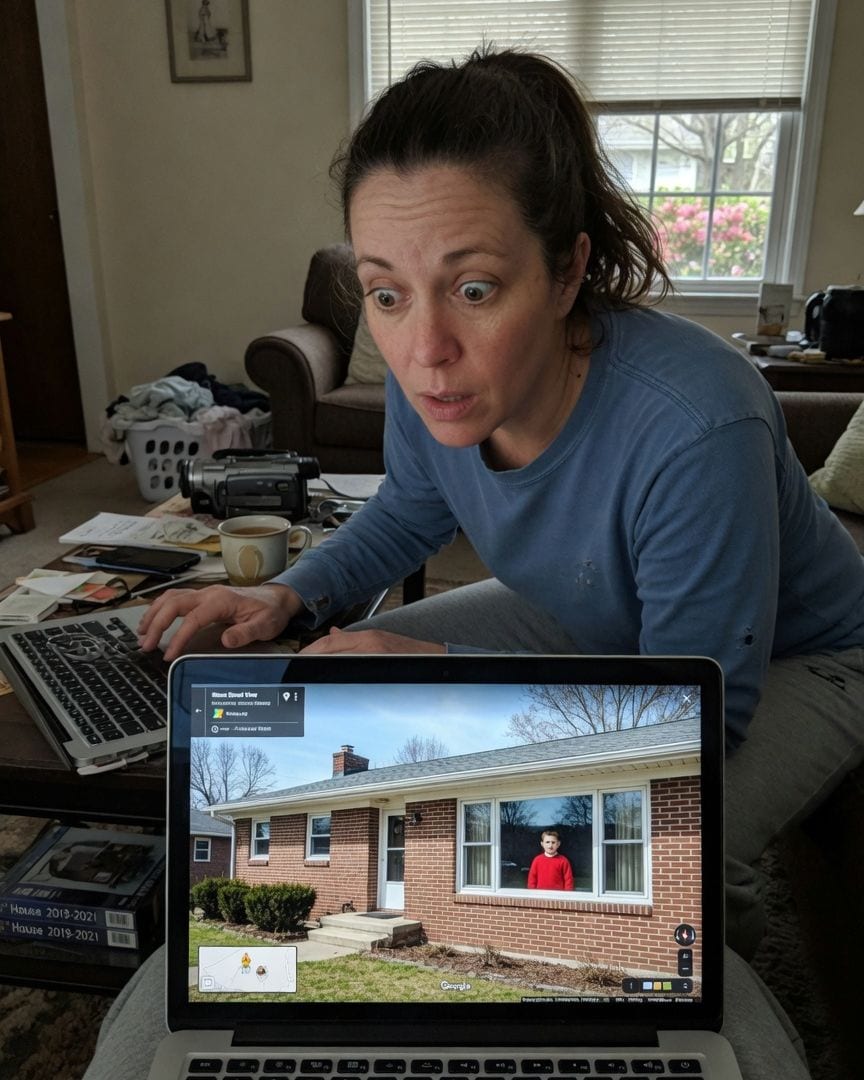
My Street View shows a boy in our window. That room's been empty and locked for months, we have no son, and he's gone if you drag the camera.
I was idly scrolling Google Maps, admiring the spring flowers on my street, when I paused at our house. In the empty, locked front bedroom window, a small boy in a bright red jumper stared out. We have no son, and that room has been storage for two years. He simply vanished from the Street View image.
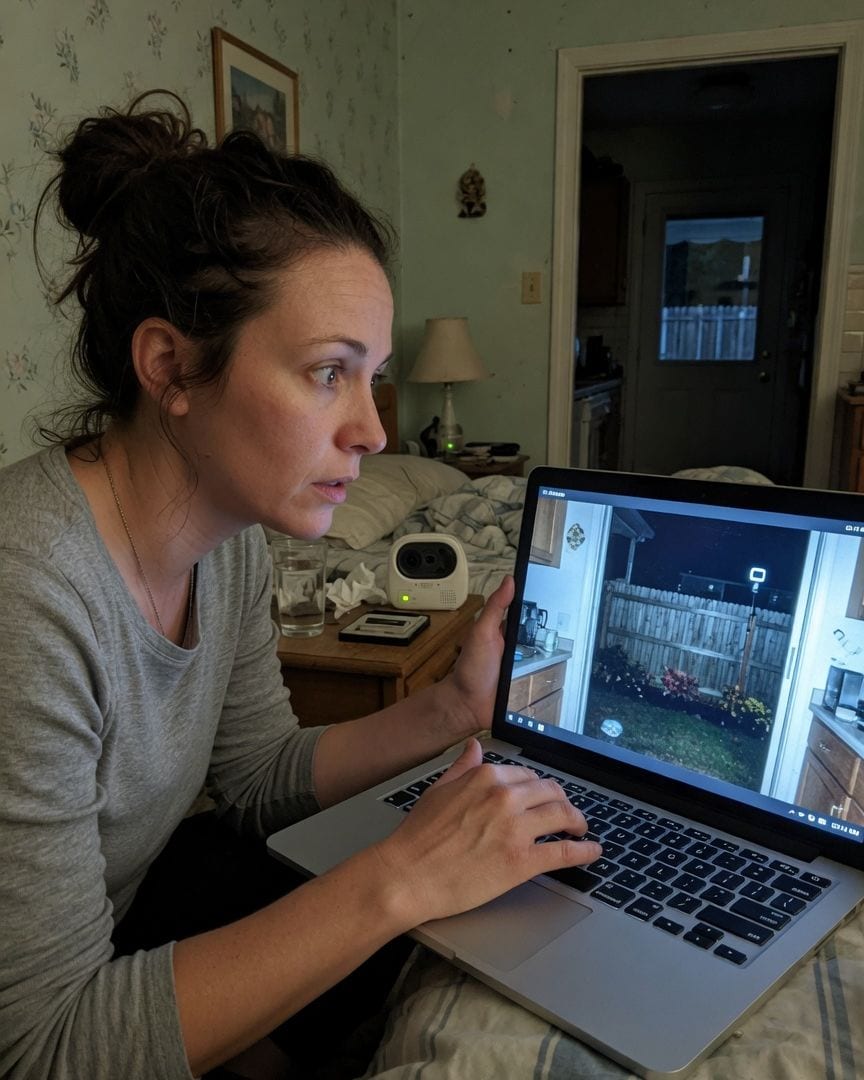
My game camera caught my back door from the inside. For three nights, it showed my door from the yard, getting closer. The last picture is from inside the glass, looking out at the fence.
I had set my game camera on the back fence, aimed at my house, to catch whatever I'd seen moving outside my kitchen window. But the last photo, taken after midnight, showed my kitchen from *inside* the locked back door, looking out.
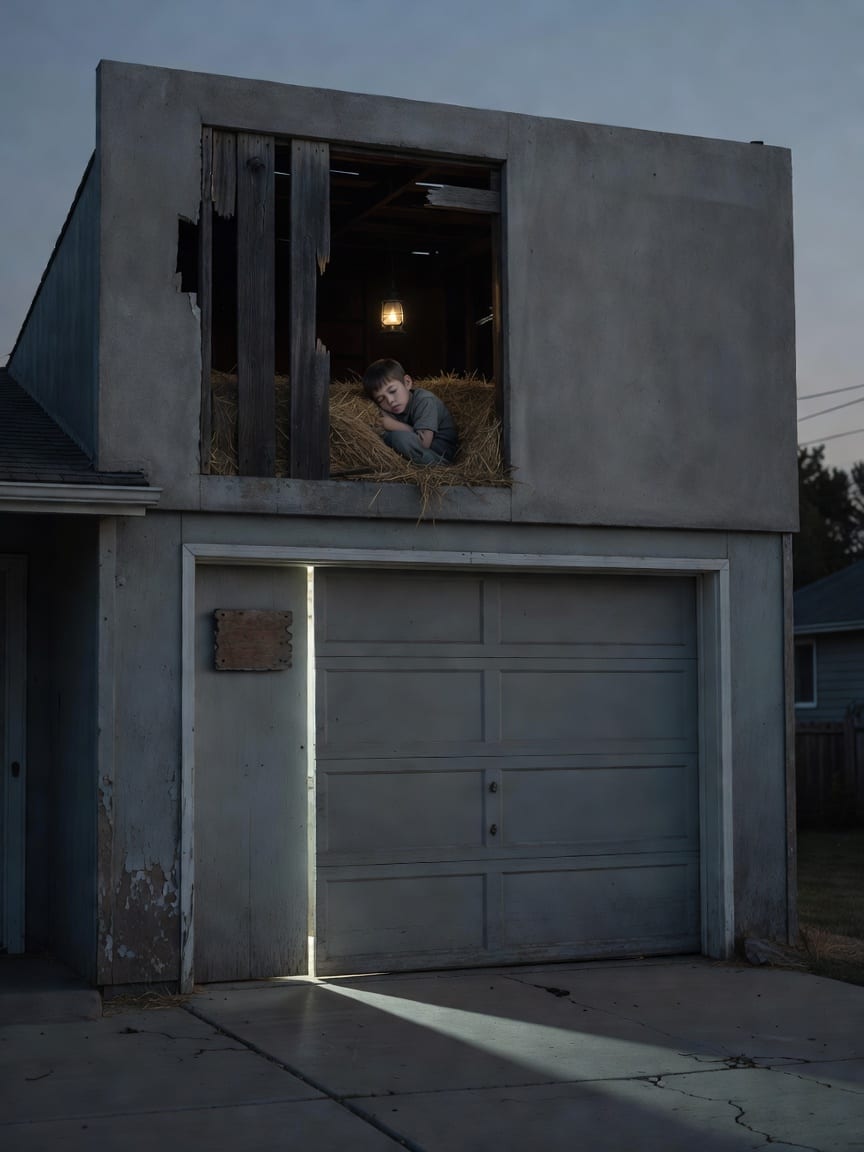
My garage's hayloft door stands open at night, onto a boy asleep in hay. The wall outside has been blank render since 1966.
My new bungalow's garage was a fixer-upper, meant to be my studio. One evening, after seeing strange visions and hearing phantom sounds, I pried open a loose plank in the wall. Inside, I found a child's tiny leather boot and a carved wooden horse, hidden in the dark.
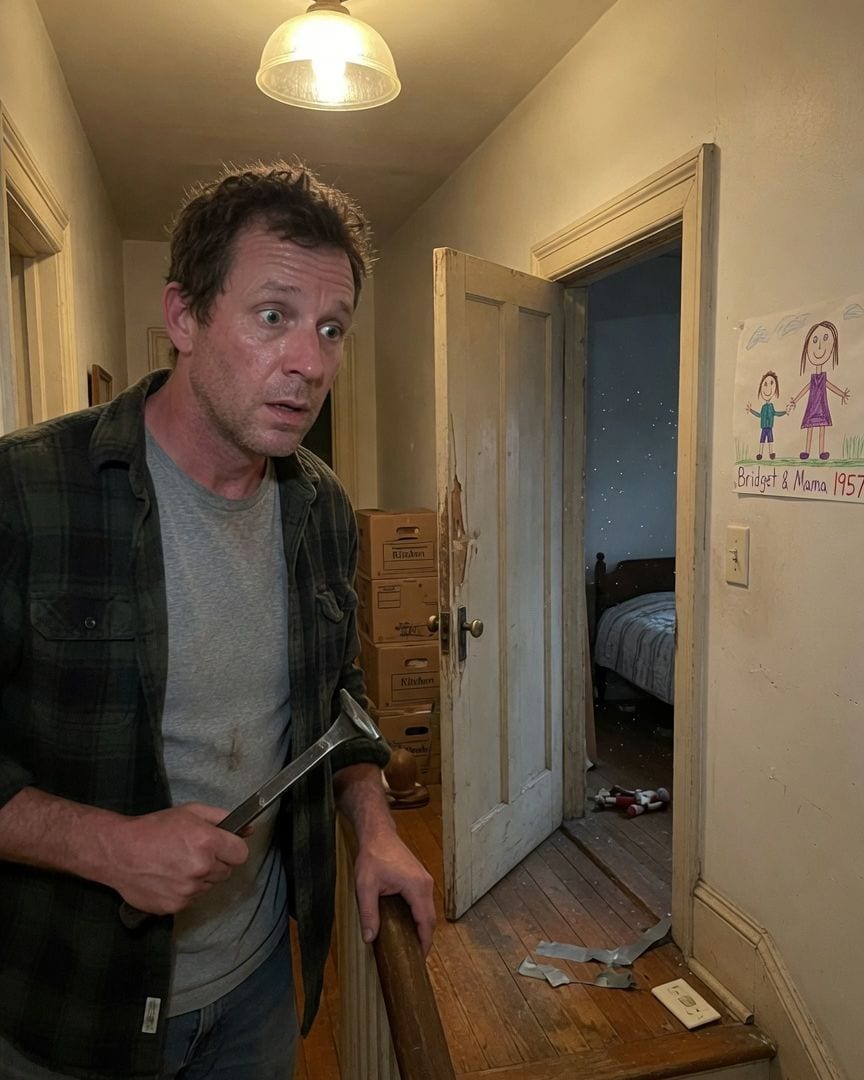
My landing light switches itself off at 9:40 every night. I've watched the switch flick down under nothing, the tape peeled back. The house holds its breath.
My great-uncle's old house was a quiet gift, a place to finally settle. But as I unpacked, a strange worn path on the floorboards led me to a small, barely visible door, perfectly blended into the wall. It was undeniably locked, and felt like a deliberately obscured secret.
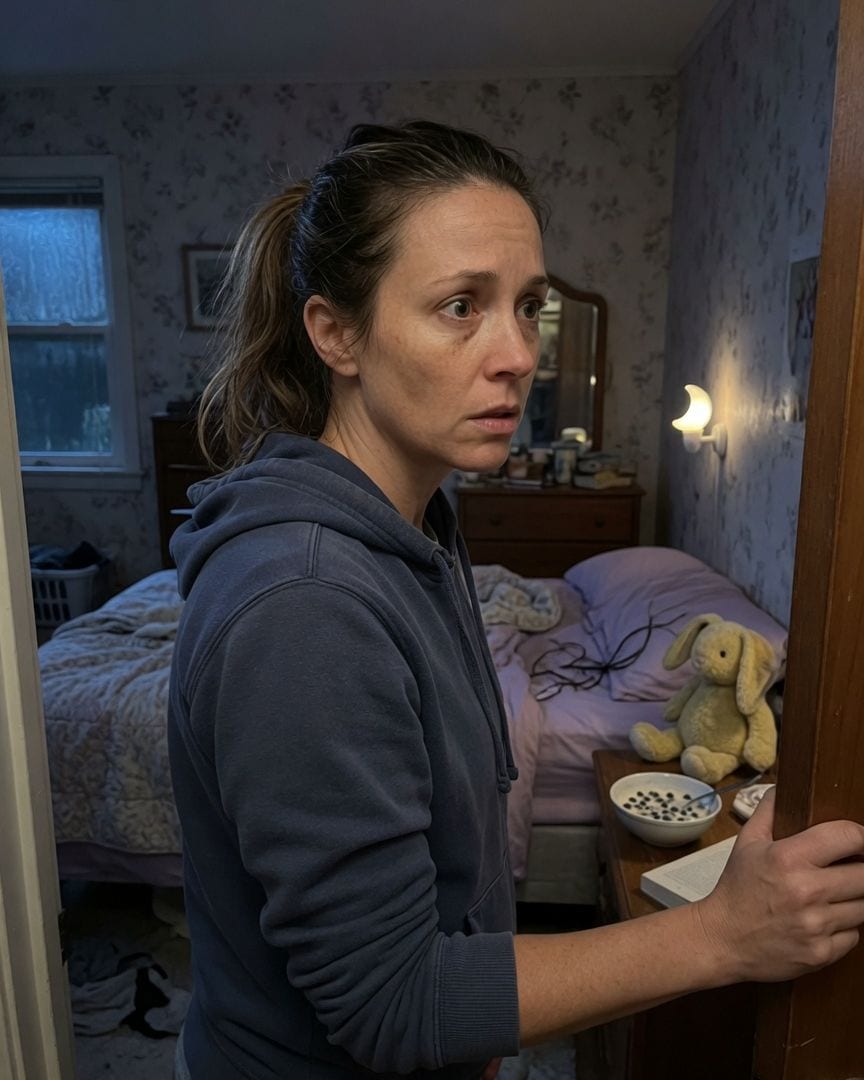
My daughter came home, then described a dream I'd had the week she vanished. I told no one that dream. She asked what it meant.
My daughter, Camille, returned home after four terrifying days missing. As I tucked her into bed, she quietly recounted a vivid dream about a drowned orchard and a heavy wooden door. It was *my* dream, a private terror I had told no one.
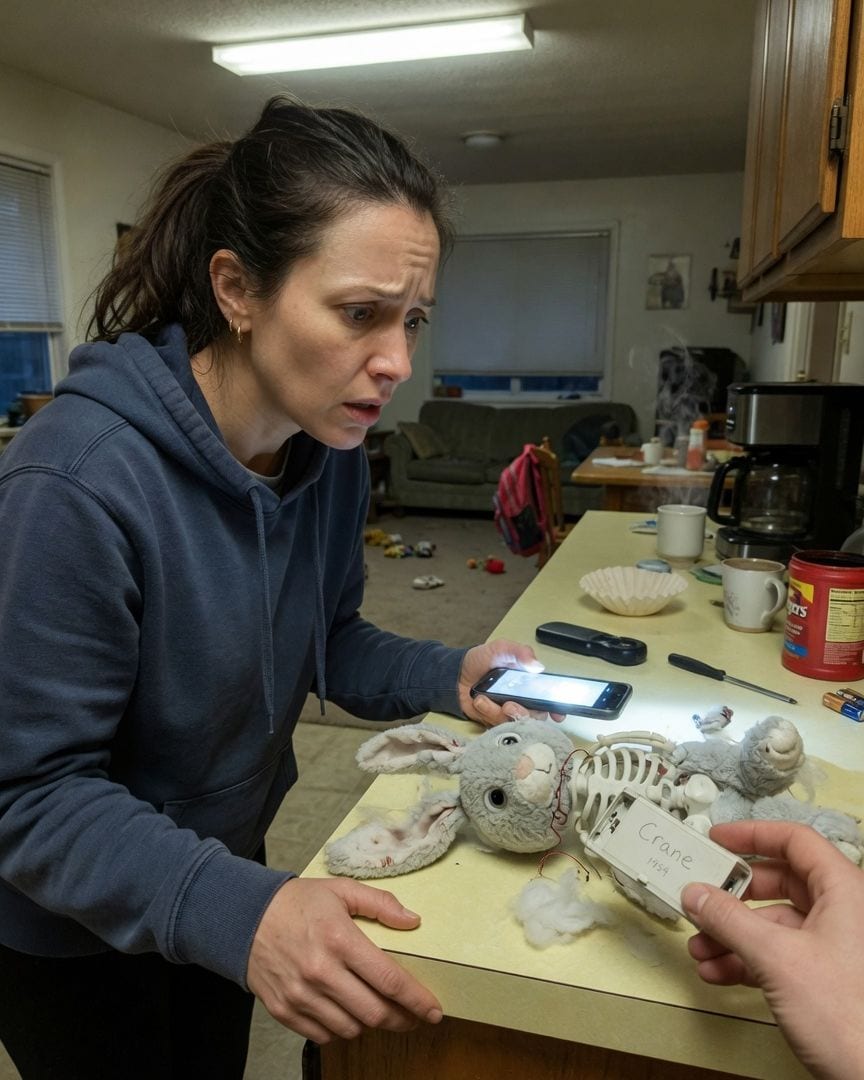
My son's toy rabbit says my name, then, 'bring him to the water.' The batteries are out.
I was making coffee, my son James at school, when I heard a grown man's voice from the living room. It was his favorite toy rabbit, whispering my name: 'Nina, bring him to the water.' The chilling command was impossible; I had removed the rabbit's batteries three days earlier, and they sat on the kitchen counter.