Gramps's workshop nails are sorted smallest-to-biggest now. He rearranged them himself, swears the old way never made sense.
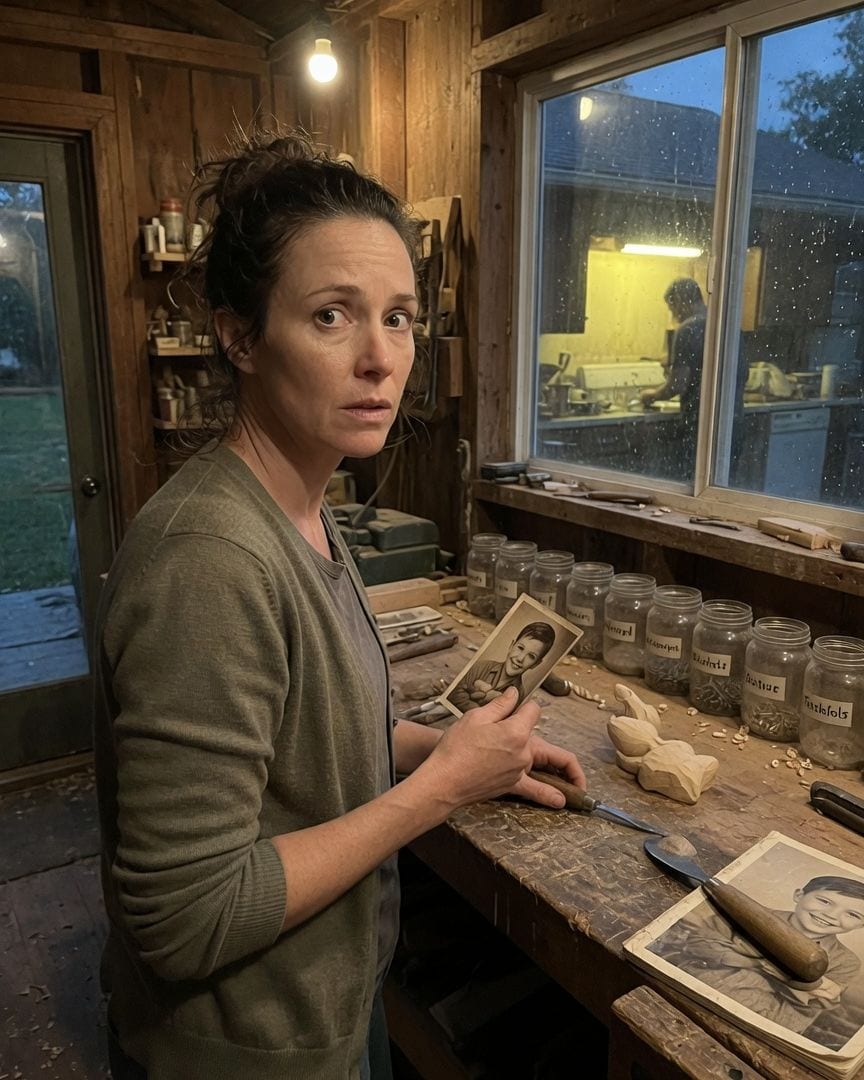
The workshop smelled of sawdust and linseed oil, a scent that used to be a comfort, a familiar embrace of home. But it wasn't comfortable anymore, not since last autumn.
My gaze kept snagging on the nail jars, lined up along the workbench.
For over forty years, Gramps – Oscar Lambert – had kept them sorted left-to-right by size, biggest at the door, a system so ingrained he could find any nail blindfolded.
It was as much a part of him as the way he hummed off-key when he was concentrating. Then he was gone for a week. Just wandered off, the police said. No trace, no memory of where he’d been.
When he came back, thin and quiet, a different kind of quiet, the nails were reordered. Smallest-to-biggest. A mirror image of his life’s habit.
“Never made sense the old way, Vivian,” he’d said, his voice flat, when I’d asked him about it. He was bent over his workbench, his back to me. “This is how I’ve always had them.” The words were his.
The face, when he turned, was his. The scar above his left eye, a jagged line from that fall off the roof decades ago, was exactly right.
But the certainty in his eyes, the absolute conviction that this new way was the only way, was all wrong. It was a blank, unyielding wall.
He hummed a tune I’d never heard him hum before, a high, reedy thing that prickled my skin, as he picked up a wooden carving tool he always called ‘Old Faithful’.
He turned it over in his hand with a strange, delicate precision I didn't recognize. My Gramps gripped that tool with a craftsman's force, not this soft, almost exploratory touch.
I tried to rationalize it. Grief, maybe. The shock of being lost for a week, even if he couldn't recall much of it, could scramble a man's brain, I told myself. People forget things. They develop new quirks.
But it wasn't just the nails. He’d always taken his coffee with cream and two sugars, a ritual I’d watched for thirty years, a comforting clinking of spoon against mug every morning.
Now, he drank it black, without a flicker of hesitation. “Better for the heart,” he’d declared, as if he’d been a health nut his whole life. Joseph, my husband, just shrugged. “People change, Viv. He’s back, that’s what matters.”
But I couldn’t shake the feeling that something deeper was at play, something beyond a simple change of habit.
One afternoon, months later, I was searching for an old photo album for a family project. It was one of those rainy, quiet days where the house felt too large, the silence too loud.
I stumbled upon a dusty box of Gramps’s old woodworking magazines in the attic, forgotten for years. Tucked inside one, dated fifty years ago, was a sepia-toned photograph of him, much younger, carving a bird out of pine.
He was smiling, a genuine, easy smile I missed. My breath hitched.
He was holding ‘Old Faithful’ in his hand, his thumb resting along the blade in a distinct, almost identical manner to how the ‘new’ Oscar had held it that morning.
But I remembered the ‘old’ Oscar, the one before last autumn. He always gripped the handle higher, a different, firmer hold, his thumb pressed against the top of the wooden grip, not the metal blade.
It was a minuscule detail, a ghost of a habit, but it was unmistakably wrong. It was the way the ‘new’ Oscar held it now, not the way my Gramps ever had.
The man in the photo, fifty years younger, was holding the tool exactly like the man who returned a few weeks ago.
My fingers traced the faded image, then moved to the familiar, worn handle of ‘Old Faithful’ lying on the bench. The carving tool, a silent witness.
The thumb placement, the angle of the wrist – it was the ‘new’ Oscar, perfectly replicated, captured in a photograph from before I was born. My grandfather, the real one, had held it differently. This wasn't a new habit.
It was an old one, belonging to someone else, or something else, that had somehow always been there, waiting. I looked up, through the dusty window of the workshop, toward the house. The kitchen light was on.
Oscar was inside, humming tunelessly.
I spent days replaying every interaction, every small deviation. The way Oscar now cleared his throat before speaking, a subtle ‘ahem’ he'd never had in all my years.
His new fondness for classical music, replacing the old country tunes that used to fill the workshop with a twangy, comforting rhythm. Joseph still didn’t see it, attributing it to age or the trauma of being lost.
“He's just settling back in, Viv,” he'd insist, but his reassurances sounded hollow to me, like a thin shell cracking. I started subtly questioning Joseph about Gramps's past, trying to gauge if these ‘new’ habits had ever existed.
Joseph, bless him, was oblivious. He remembered the coffee, the country music, the nail system, just as I did. He saw nothing amiss.
I even took the old photograph to a local historical society, pretending it was for a family tree project. The archivist, a kind woman named Susan Barlow, found a few more.
Nothing as clear as my photo, but in one blurry group shot from a town picnic, there was Oscar, younger, laughing, a coffee cup in his hand. My heart pounded.
He was holding it with his pinky finger extended, a small, refined gesture he'd never, ever made in my lifetime. He was a man of practical grips, not delicate flourishes.
But the ‘new’ Oscar, the one who drank black coffee, sometimes did that exact same thing, a fleeting, almost imperceptible affectation as he lifted his mug. It was too specific to be coincidence. It was a pattern.
The ‘wrongness’ wasn't new; it was ancient. And it was consistent. I felt a cold dread settle deep in my bones. I wasn't just imagining things. This was happening.
My quiet investigation didn't stay quiet for long. I started noticing Oscar watching me.
Not openly, not menacingly, but a lingering gaze from across the room, a stillness when I walked past the workshop, a sudden silence when I entered a room he was in. The air would thicken around him.
One evening, as I was scrolling through old local news archives on my laptop, looking for other missing persons cases – any mention of disappearances followed by strange returns – Oscar walked into the living room.
He didn't ask what I was doing. He just stopped behind my armchair, his breath a soft presence on my hair. “Researching something interesting, dear?” he asked, his voice calm, almost amused. I nearly jumped out of my skin.
My hand flew to the trackpad, quickly closing the browser window. “Just looking up some old recipes,” I lied, my voice a little too high, a little too strained.
He chuckled, a dry, rustling sound that seemed to come from deeper in his chest than it should. “Ah, the recipes. Always something new to learn, isn't there? Or perhaps, something old to rediscover.”
He leaned closer, and I could feel the faint warmth of his presence, the scent of woodsmoke clinging to his clothes. “Some things, once forgotten, are best left that way.”
He patted my shoulder, a gesture that felt less like affection and more like a warning, and walked away. The hair on my arms stood on end. He knew. He knew I was looking.
And the calm certainty in his voice, not a hint of accusation or anger, was far more unsettling than any rage could have been.
I was no longer hunting for answers; I was being watched, and the hunter had become the hunted.
The next day, I decided to push it. I found Oscar in the living room, reading a book on local history, a subject he’d never shown interest in beyond a passing mention of the town’s founding.
“Gramps,” I started, trying to keep my voice even, steady, “do you remember that old oak tree by Miller’s Creek? The one Joseph and I carved our initials into, right after we got engaged?”
It was a small, private moment, just the two of us. A secret spot we’d thought no one else knew about, a place of silent vows and scraped bark.
Oscar looked up from his book, his expression unreadable, then a slow, fond smile spread across his face.
“Of course, Vivian,” he said, his voice soft, a hint of warmth I hadn't heard in weeks, a warmth that now felt like a trick. “A beautiful day, that was.
The sun was just setting, painting the sky in fiery oranges and purples. Joseph was so nervous, fumbling with the knife, trying to get the ‘J’ just right.
And you, you laughed so sweetly, your hair catching the light like spun gold.” He paused, his gaze distant, as if reliving it.
“I remember you both had mud on your shoes from the creek bank, and Joseph had a smudge of dirt on his cheek, right here.” He tapped his own cheek, precisely where Joseph had had it.
He smiled, a genuine, fond smile. “I remember watching you two, hidden behind the old willow tree, thinking what a perfect match you were.”
My blood ran cold, a sudden, icy shock. He couldn’t have been there. We were alone. Always. I’d walked that path a thousand times, that specific stretch of bank.
There was no willow tree by the creek, not anywhere near our spot. Not ever. “Gramps,” I managed, my voice a whisper, barely audible. “There wasn't a willow tree. And we were alone.”
His smile didn't falter, not by an inch. His eyes held a calm, unblinking certainty. “Oh, but there was, dear. A grand old one, its branches sweeping the water. Perhaps you just didn't notice me, hidden away.
I was so proud of you both, my little girl.” He wasn't confused. He wasn't mistaken. He was simply stating a fact, a memory he shouldn't have, a memory he had somehow acquired and woven into his own past.
The old photo, the black coffee, the reordered nails – they all clicked into place with sickening precision. This wasn't my Gramps. This was something else, wearing his skin, wearing his memories, perfectly, terribly, wrong.
Oscar rose from his armchair, the history book still open in his hand, and walked toward me. His steps were quiet, deliberate, making no sound on the old rug.
He reached out, his hand gently cupping my cheek, his thumb brushing a tear I hadn't realized had fallen. His gaze was steady, unwavering, filled with that same unshakeable certainty. “Don't you remember, dear?”
he murmured, his voice a low, comforting hum that was anything but comforting. “That moment, under the sunset, with the willow's branches swaying? It was one of the most beautiful memories I have.”
His eyes seemed to bore into mine, not seeking confirmation, but implanting the memory, making it real, making it his. He was telling me that he was there, that he saw it, that he knew.
And in that moment, I knew he didn't just have that memory; he had all of them. He had mine. He had Joseph's. He had everything.
His grip on my arm was firm, almost possessive, as he asked, "Wasn't that a lovely night, dear?"
The next few days were a blur of frantic, secret research. My laptop screen became my window into a terrifying truth.
I devoured old town records, dusty newspaper clippings from the library’s microfiche, my eyes stinging from the glare, my stomach churning. I searched for other disappearances, other ‘returns’ in our small, quiet town, meticulously sifting through decades of forgotten history.
And I found them. Not always well-documented, often dismissed as eccentricity or the fog of war, but the pattern was undeniable.
A young woman, Iris Lockwood, vanished in the 1930s, only to reappear a week later, her family relieved but subtly unsettled by her new ‘quiet demeanor’ and a strange, uncharacteristic scar above her eyebrow that no one recalled.
A farmer, Howard Carter, missing for two weeks in the 1950s, returned with a sudden, fervent interest in poetry, something he’d always disdained as ‘frivolous nonsense’, and an uncanny ability to recall intimate details of his neighbors' lives he couldn't possibly have known.
Each case involved a disappearance, a return, and a handful of small, incongruous details that, when viewed together, formed a chilling signature. The old photograph of Oscar, with his ‘wrong’ grip on the carving tool, suddenly made perfect, horrific sense.
It wasn’t just a habit; it was a blueprint, a subtle tell that had been present in similar ‘returners’ across generations.
The entity, or whatever it was, didn't just mimic the recent Oscar; it had access to a deeper pool of human experience, a collective memory it drew from, stitching together identities with borrowed habits and impossible recollections.
It was a perfect copy, almost. But the small, intimate details were the seams, the places where the borrowed fabric didn't quite match the original weave.
The willow tree by Miller’s Creek, the mud on Joseph’s cheek – these were fragments, pulled from someone else’s past, grafted onto Oscar’s.
It was a recurring phenomenon, a quiet, insidious replacement that had been happening in this town, perhaps in many towns, for decades.
And no one had ever noticed, or if they had, they’d dismissed it, just as Joseph had tried to do with Gramps.
I found Oscar in the workshop, meticulously polishing ‘Old Faithful’, the metal glinting under the bare bulb. He looked up as I entered, a faint smile on his lips. “Vivian,” he said, his voice soft, “you look troubled.”
I stared at him, at the face that was my grandfather's, at the hands that were his, but that now held the tool with that ‘wrong’ grip, the thumb pressed along the blade.
“You’re not him,” I whispered, the words barely audible, brittle in the heavy silence. His smile widened, just a fraction, a shift in the muscles around his eyes that sent a shiver down my spine.
“Who else would I be, dear? I am Oscar Lambert. Always have been. Always will be.” He didn’t deny it, didn’t try to convince me with pleas or arguments. He simply stated it, as an undeniable truth.
The certainty in his eyes was absolute, unwavering.
I realized then the full horror. There was no escape. There was no exposing him. Who would believe me? Joseph? The town? They saw Oscar, the returned, beloved grandfather. The entity was too perfect, too integrated.
It was Oscar now, in every way that mattered to the world. And it knew that I knew. I felt a cold, crushing weight descend upon me, heavier than any grief.
I was trapped, forever living in a house with a ghost, a mirror image that wore the face of the man I loved, knowing that the real Oscar was truly gone, replaced by something that had simply stepped into his shoes, picked up his tools, and remembered a life that wasn’t its own.
He continued to polish the tool, his movements fluid, precise, as if I had said nothing at all. The silence in the workshop stretched, thick with unspoken understanding.
He was not a monster in the traditional sense, not violent, not overtly malicious. He was simply… there. And I was simply… aware. The knowing was the horror. The knowing was the end.
Life in the house settled into a strange, unsettling rhythm. Oscar continued his routines, his new habits now fully ingrained, unquestioned by anyone but me.
Joseph remained oblivious, happy to have his father-in-law back, attributing any lingering oddities to the natural process of aging. He saw only what he wanted to see.
I learned to live with the constant, gnawing dread, to nod and smile and pretend that everything was normal, that the world hadn’t shifted irrevocably on its axis.
The workshop, once a place of comfort, became a shrine to a stolen life, its reordered nails and ‘Old Faithful’ a silent testament to the truth only I could see, a truth that screamed from every subtle deviation.
The memory of the willow tree, of Oscar watching Joseph and me, became a chilling presence in my own mind, a constant reminder of what had been taken, and what had taken its place.
Years passed. Oscar grew older, his movements a little slower, his memory, ironically, starting to fade on some trivial details, like where he’d left his reading glasses, but never on the core ‘truths’ he now held.
He still drank his coffee black, a habit he'd maintained with unwavering consistency, a dark, unchanging ritual.
Sometimes, when Joseph wasn't looking, Oscar would catch my eye across the kitchen table, a faint, knowing smile playing on his lips, a silent acknowledgment of the secret we shared, a recognition that transcended time and identity.
I'd simply nod, a small, almost imperceptible movement, and look away, back at my plate, at my husband, at the world that moved on, oblivious, perfectly content with its returned, slightly altered Oscar.
The coffee was always black, he'd say, and I could only nod, knowing he'd never liked it that way.
If this one got to you
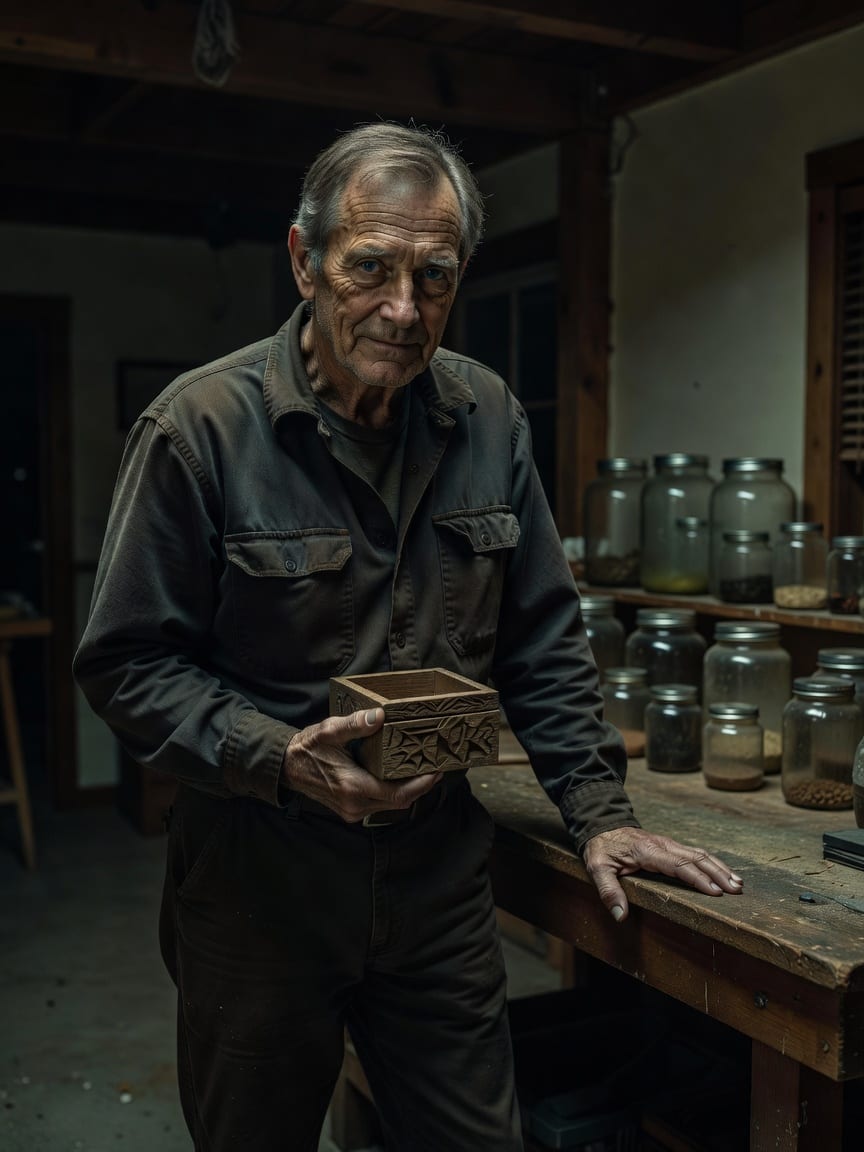
Gramps' nail jars are reversed, smallest-to-biggest now. He rearranged them himself, says the old way never made sense.
The scent of sawdust and oil in Gramps' workshop used to be a comforting hug, but since his return, everything feels off. I've always known his distinctive childhood scar was above his left eyebrow, yet a faded photo from decades ago shows it clearly above his right.
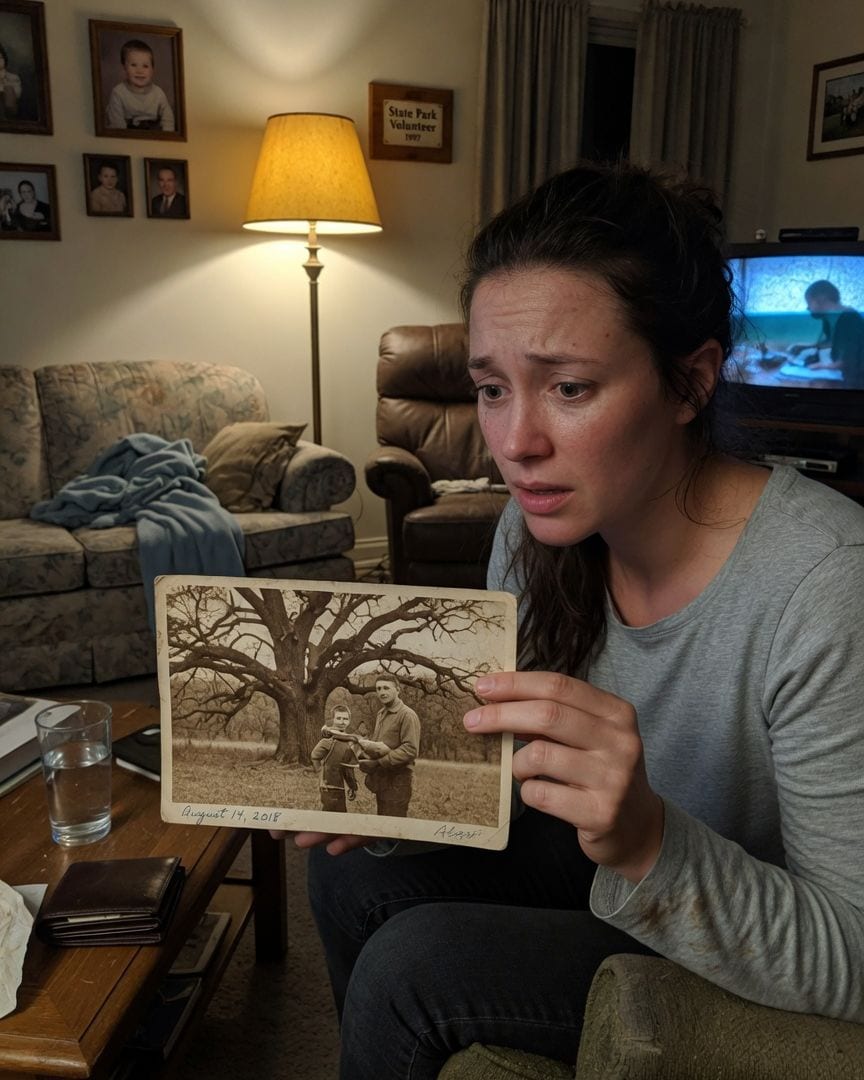
My Grandpa thanked me for whiskey at his wake. He'd been found alive hours ago, but my dead father had given a toast there.
After days lost in the state park woods, Grandpa Donald was finally found, disoriented but seemingly unharmed. The relief was overwhelming until he thanked me for the whiskey at his wake, mentioning my father's toast. My father, Vincent, had been dead for over a decade, and there had been no wake.
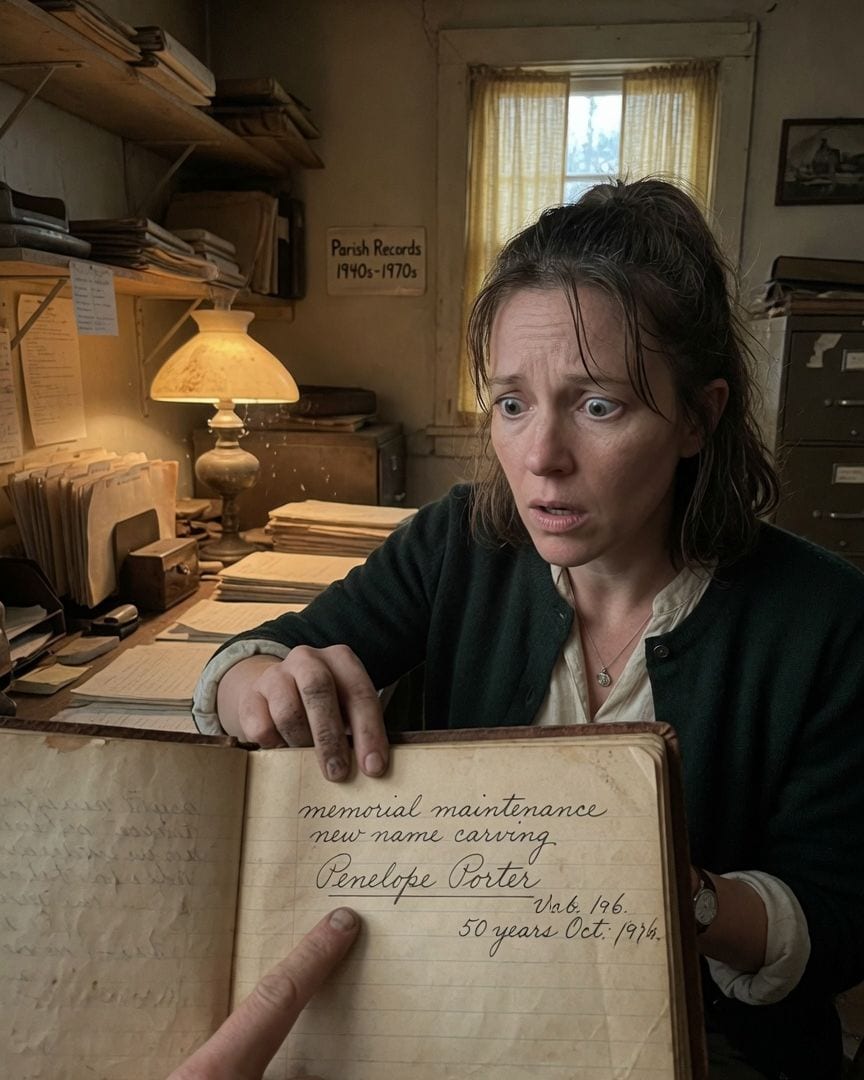
My name is carved on the war memorial with this coming Tuesday's date. The cut is fresh, but the stone inside matches fifty years of age, and a ledger says it was carved exactly fifty years ago.
On a sunny autumn Tuesday, my oldest friend, Gary, urgently called me to the village war memorial. There, carved beneath the names of the fallen, was 'PENELOPE PORTER' with a date from this coming autumn. The fresh carving of my name, dated for a Tuesday yet to arrive, felt like a cold jolt, an impossible message from the stone itself.
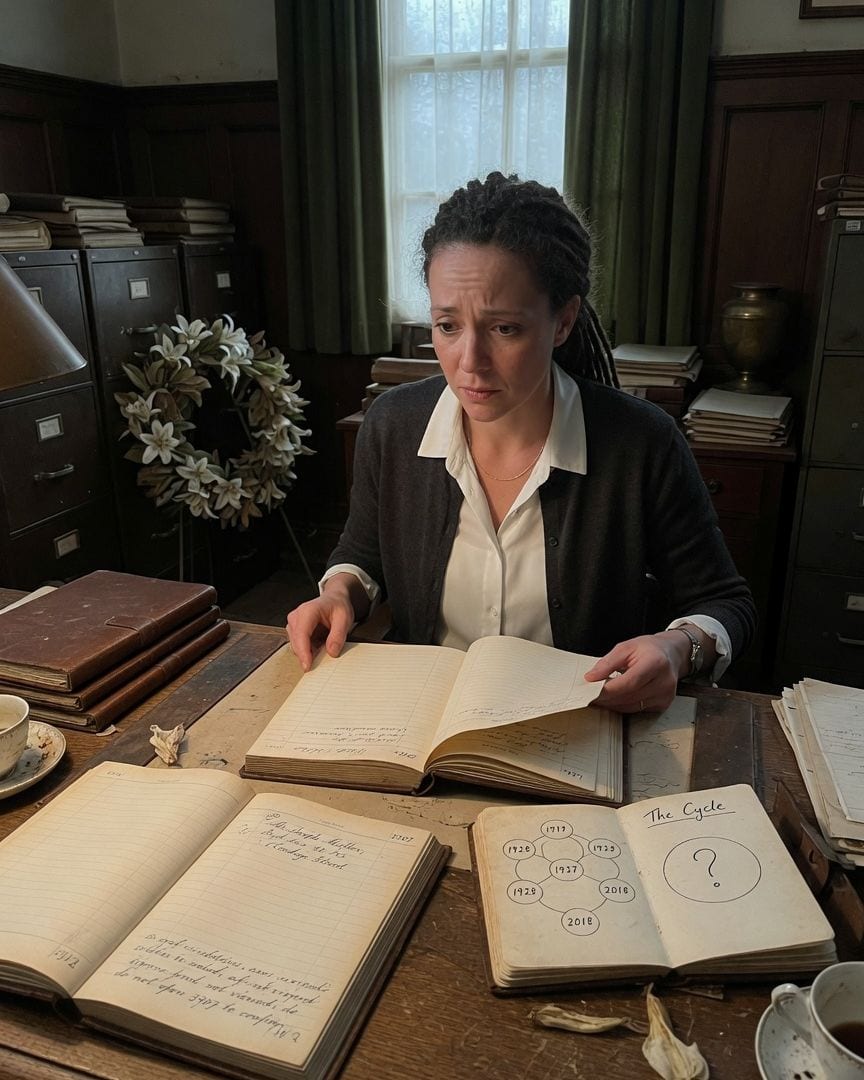
Our funeral ledger records my family name, same age, buried on Cordage Street every nine years since 1919. My great-grandfather's note: 'do not open 3907.'
Reviewing my great-grandfather Joseph’s old ledgers at the Ingram Funeral Firm, I stumbled upon a recurring anomaly. The same burial order for a Joseph Muller, age 45, residing at our family home, 14 Cordage Street, appeared every nine years across decades of records. Each entry, identical, carried the unsettling instruction: 'coffin sealed, not viewed.'
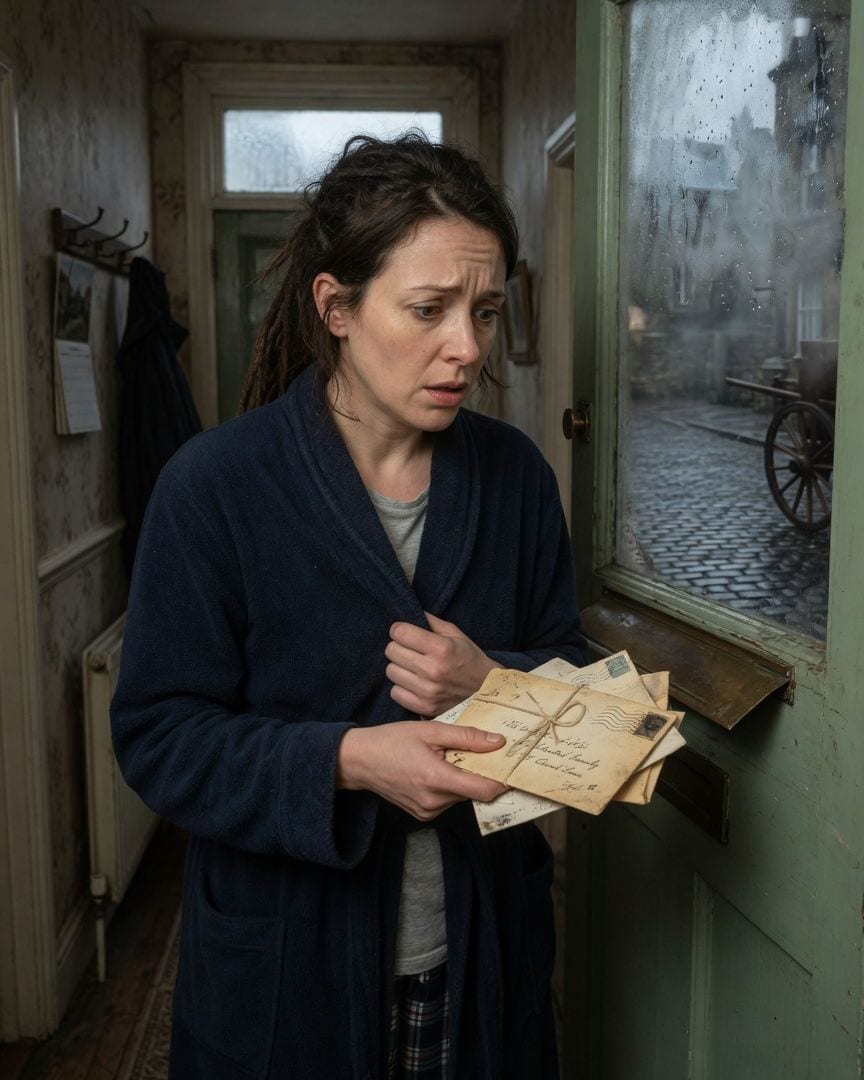
Seventy years ago, a hidden journal recorded my door opening to the wrong street and receiving Lockwood post.
I'd only recently moved into my inherited house, a quiet place on the edge of town. One grey morning, a distinct clatter from the front door's post flap caught my attention. Reaching down, I expected my gravel path, but instead, the flap showed a dark, cobbled street that wasn't mine. A bundle of warm, old letters, addressed to 'The Lockwood Family,' slid through, before the vision flickered and was gone.
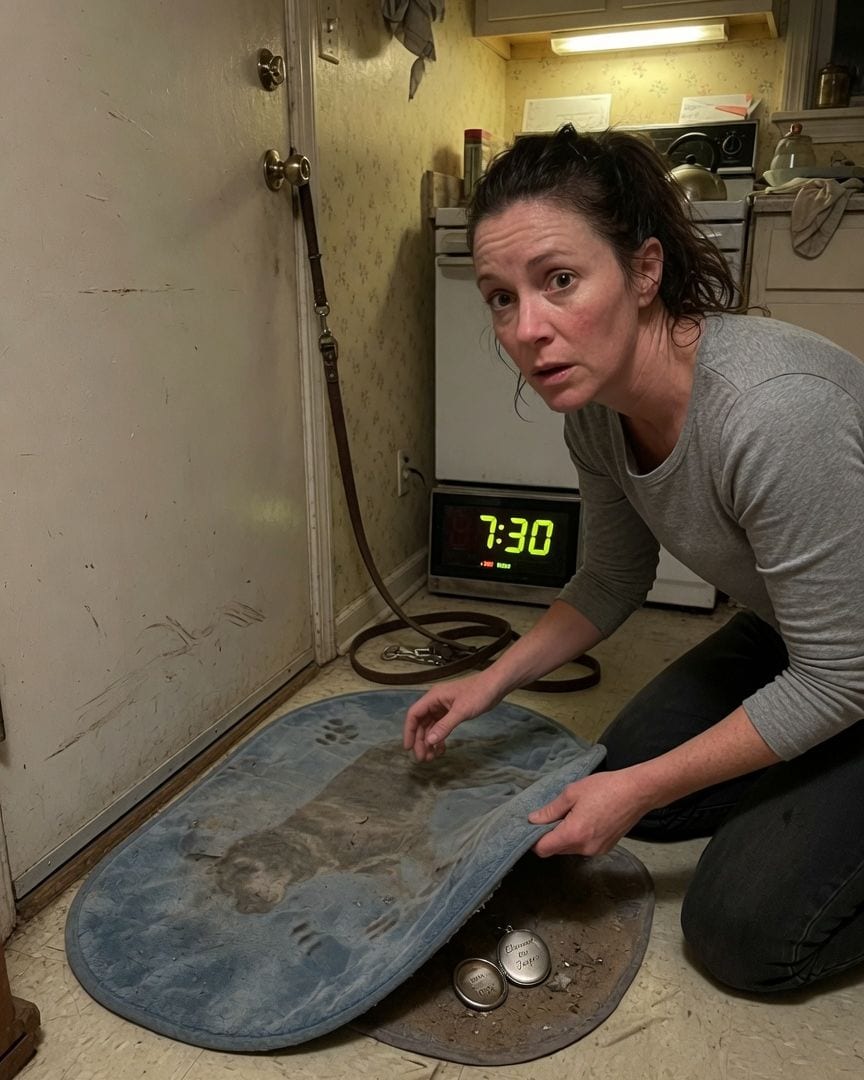
My back door's dog lead falls at 7:30pm, the mat warm, the door scratched. I have no dog.
Every night at 7:30 PM, I find my dog lead on the kitchen floor, even though its hook remains empty and secure. Fresh scratch marks appear on the door, and the old dog mat radiates warmth, as if a large dog had just been there. I don't own a dog, and never have.