My back door's dog lead falls at 7:30pm, the mat warm, the door scratched. I have no dog.
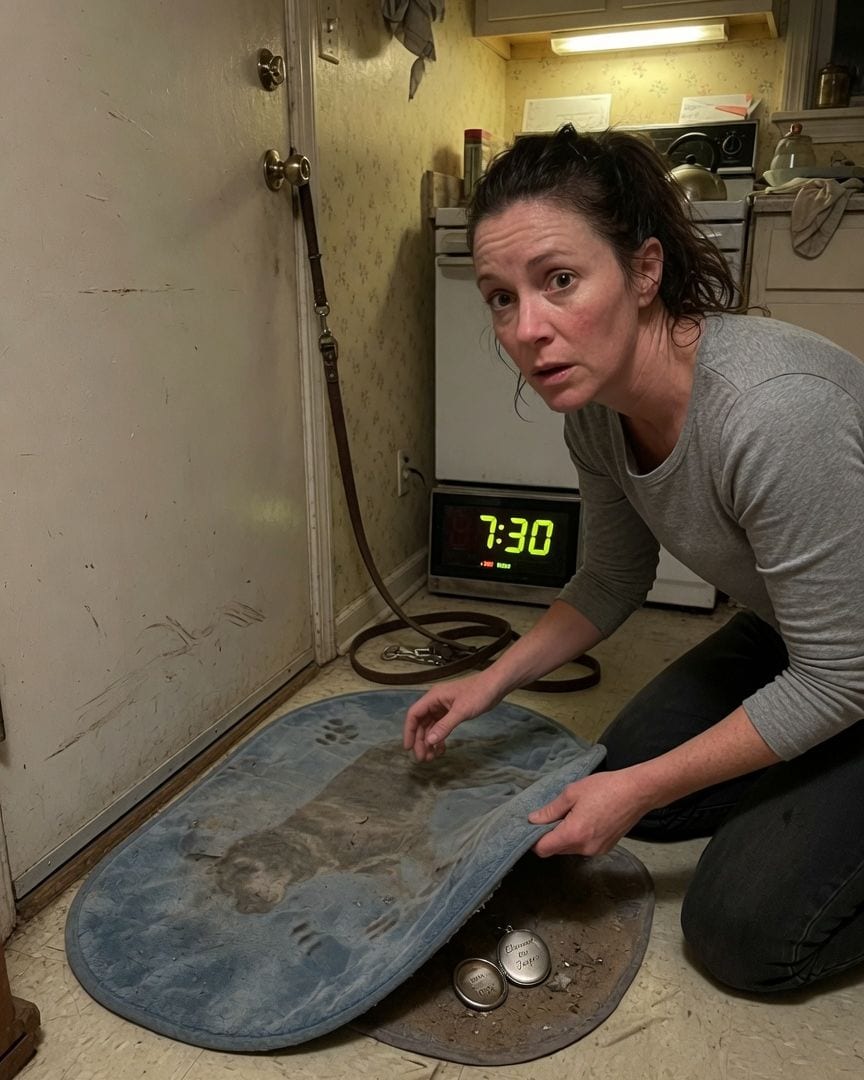
The first time it happened, I was in the kitchen, wiping down the counters. It was precisely 7:30 PM – I remember checking the oven clock. A soft thud. I looked over.
The worn leather dog lead, which I’d hung on the small hook beside the back door that morning, was now lying on the floor. It hadn’t fallen; the hook was still securely in place, empty.
And there, near the bottom of the door, were faint, fresh scratch marks, not deep gouges, but like something had patiently, repeatedly, tried to get out.
The old, faded dog mat by the door was pressed flat in a distinct, oval shape, and when I knelt, my hand hovered over it, feeling a subtle, undeniable warmth radiating upwards, as if a large dog had just settled there, waiting.
I don’t own a dog. I never have. When I bought the house, I’d explicitly asked my neighbour, Grace Vance, if the previous owners had left anything behind.
She’d just smiled, a thin, polite line, and said that the elderly Mrs. Vance, Eleanor, had had a collie, Jasper, and that he’d been "put to sleep in that very kitchen."
I tried to rationalize it then, standing over the fallen lead: a draft, a loose hook, a trick of the light making me think the mat was warm.
But the warmth was too specific, too persistent, and the routine, I would soon learn, was relentlessly precise.
Over the next few days, the 7:30 PM routine with the dog lead repeated without fail. I tried hanging it higher, securing the hook with a dab of superglue. It made no difference.
At 7:30 PM exactly, a faint snap and then the familiar thud. Each time, a fresh set of light scratches appeared on the door, and the mat held that inexplicable warmth. I started to notice other things.
Every morning, precisely at 6 AM, I’d hear the distinct click and hiss of the kettle boiling in the kitchen.
I’m an espresso person; I never use the kettle, especially not that early, and I was always the only one home.
The worn armchair in the living room, a squashy leather thing Grace had mentioned was Eleanor’s favourite, always held a lingering warmth when I walked past it in the mornings, as if someone had just left its embrace.
I tried to dismiss these as quirks of an old house, settling in, groaning in its new life. But the precision unnerved me. The timestamps, the specific objects. I called Grace.
“Just wondering,” I started, trying to sound casual, “did Eleanor have any… routines? Any odd habits with the house?” Grace, ever calm, paused for a moment. “Oh, Eleanor was very precise, dear. Especially with Jasper.
Her morning tea and his first walk were always at six. She’d spend hours with him in that armchair after he got sick, comforting him. He was her whole world.”
I hung up, a prickle of unease turning into a cold dread. These weren't just quirks. This was a schedule.
The routines escalated. The kettle now sounded like it was being placed back on its base with a gentle clink.
The armchair would creak faintly as I walked by, a sound I could almost attribute to the house settling, if it didn’t always happen just as I passed.
Increasingly disturbed, I decided to deep clean the kitchen, starting with the area around the back door. I needed to prove to myself that these were just old house noises, not… memories. Not actual events.
I knelt, my hands bracing, and with a grunt, yanked up the old, faded dog mat. Beneath it, nestled in the accumulated dust and grit, I found a small, tarnished silver locket. My fingers trembled as I picked it up.
On the front, etched in delicate, faded script, were the words 'Eleanor & Jasper.' I flipped it over. On the back, in smaller, bolder type, was a single, chilling date: '1998'.
The locket itself was cold to the touch, but the precise indentation where it lay was unnervingly warm.
The locket chilled me to my bones. '1998'. That was the year Grace said Jasper was put to sleep. I researched ‘Eleanor Vance, 1998’ online.
There was no death certificate, no obituary for her, only a brief, quickly closed missing person report from that year, stating Eleanor Vance had ‘moved on’ from her residence. No further details. No forwarding address, no family statements, nothing.
Just 'moved on.' The vagueness of it felt wrong, a polite euphemism for something unsaid.
Clutching the locket, I walked across the street to Grace Vance’s house. The air felt heavy, and the silence of my own house pressed in on me like a physical weight. Grace answered the door, her expression unreadable as always.
I thrust the locket forward, my hand shaking slightly. “This was under the mat. By the back door. Your mother’s?”
Grace took it, her fingers brushing the engraving with a strange familiarity. “Yes. Eleanor loved Jasper very much.” Her voice was flat, devoid of emotion.
I pressed harder. “She moved on, the report says. From here. Where did she go?”
Grace looked past me, her gaze fixed on my house, the one that had been hers. “She didn’t go anywhere, dear. Not really. After Jasper… after he was put to sleep, the house started remembering. She became very, very sad.
And then she just… stopped being seen.”
My voice was tight, barely a whisper. “What do you mean, ‘stopped being seen’?”
Grace just shrugged, a calm, unsettling gesture that felt completely out of place given the gravity of her words. “People sometimes just disappear from that house. It has a way of holding onto things.”
After that conversation, the routines intensified, becoming more personal. I felt an oppressive sense of being watched, not by a person, but by the house itself.
The 7:30 PM dog lead drop was now accompanied by a faint, mournful whistle, a sound I could almost hear Eleanor using to call Jasper.
I tried to deliberately leave the lead on its hook, securing it with several wraps of heavy-duty tape.
The next evening, at 7:30, I heard a faint snap followed by the familiar thud as it hit the floor, the tape neatly severed.
One morning, I found a single, fresh, muddy paw print on my clean kitchen floor, despite no rain for days and no dog for miles. It was perfectly formed, the imprint of a large, heavy paw.
Shadows seemed to stretch and shift in my peripheral vision, vanishing the moment I turned my head.
Walking through the hallway, I felt a sudden, intense cold spot pass directly through my body, leaving me shivering, as if something invisible had just brushed past me.
The worn armchair in the living room now creaked as if someone just settled into it, even when I was alone in the room, the sound distinct against the house’s unnatural silence.
The house was not just remembering; it was actively re-enacting. And I was its unwilling audience, and increasingly, its participant.
On the verge of panic, I confronted Grace again. “What do you mean, people disappear? What happened to your mother?”
Grace, unperturbed, invited me in for tea. She poured, her hands steady, the clink of porcelain loud in the quiet room. “It’s always been this way,” she said, her voice low and even, stirring her tea.
“My own grandmother, Eleanor’s mother, she lived in that house too. Lost her cat, her companion, decades before. The house started remembering. And then she vanished, just like Eleanor.”
Grace explained that the house doesn't just remember events; it remembers intense emotions, especially profound loss, and it likes to 'keep' the routines that follow. “Eleanor was heartbroken after Jasper.
The house started replaying everything – Jasper’s calls, his meals, his last walks. And Eleanor, she just… she got drawn into it. The house remembers her grief, her routines. It keeps her, somehow. Part of its memory.”
I felt a chill that had nothing to do with the late autumn air. The dog lead, the kettle, the warm chair – it wasn’t just residual; it was Eleanor, trapped, reliving it.
Grace added, calmly, “The house keeps the memory alive, you see. Sometimes, it keeps the person, too.”
The truth about Eleanor’s disappearance and the house’s 'memory' chilled me to the bone. I started to understand the pattern, the terrifying coherence behind every wrong detail. The precise times, the objects, the impossible physical traces.
Grace, observing my dawning horror, sipped her tea. “You know,” she said, almost as an afterthought, her gaze drifting towards my house across the street, “the house has a special way of remembering the last thing. The very last thing.
It repeats it until someone else… takes their place.” My blood ran cold.
I looked around my own kitchen, suddenly seeing the worn dog mat, the fresh scratch marks, the lead lying on the floor, and a faint, almost transparent indentation on the mat, as if something heavy had just lain there. Waiting.
I understood with horrifying clarity. The dog lead, the mat, the scratches – it wasn’t just Eleanor’s routine; it was the dog’s routine, waiting for Eleanor to take him for his final walk.
The house wasn't just remembering Eleanor; it was forcing me to become Eleanor, to complete the cycle.
A gut feeling, cold and insistent, guided my hand to a loose tile in the kitchen wall, just below the window. I tore at it, my nails scraping, until it came free.
Behind it, in a small, damp recess, I found a leather-bound journal. It was Eleanor’s. I opened it, my hands shaking so hard the pages blurred.
The final entries were frantic, detailing the escalating routines, her growing despair, and her terrifying realization that the house was “leading her to him,” to Jasper's final walk, and then to… something else.
She wrote of the kettle boiling for Jasper’s last meal, the warm chair where she held him, the mournful whistle to call him.
The journal ended abruptly, mid-sentence, on the page describing the 7:30 PM routine, the lead, the mat, the scratches, and a growing sense of resignation. “He waits for me, just like he always did.
And I will go with him, one last time…”
I tried to leave the house. I ran to the back door, my heart hammering against my ribs. It jammed tight, despite my frantic pulling. I slammed my shoulder against it. Nothing.
The windows refused to budge, stuck fast, as if sealed by an invisible force. A faint, sweet, metallic smell, exactly as Eleanor described Jasper’s last meal in her journal, began to fill the kitchen.
The scent was cloying, nostalgic, deeply wrong. The lead dropped again, precisely at 7:30 PM, but this time, it seemed to tug at the air, a distinct, insistent pull.
I saw it then: a faint, shimmering outline of a collie, its tail wagging expectantly by the back door, its head cocked, looking directly at me. Jasper.
An overwhelming wave of grief and resignation washed over me, a feeling so profound and familiar it was as if it were my own, yet I knew it wasn't.
It was Eleanor’s, a memory so strong it had become real, consuming me. I felt an invisible hand guide mine towards the worn leather lead. The house had won. My fingers closed around the cold leather.
Days turned into weeks. Grace Vance quietly observed the house from across the street. She saw the kitchen lights come on at 6 AM.
Sometimes, she caught a glimpse of a woman moving through the kitchen, a silhouette against the window.
At precisely 7:30 PM, she sometimes heard a faint, mournful whistle, and the dog lead was always on the floor by the back door. The cycle continued, quiet and relentless.
The house is quiet again, save for the routines. The missing persons report for Camille Sterling will eventually be filed, then closed, just like Eleanor's. Grace Vance sits on her porch swing, watching the house.
A new 'For Sale' sign appears on the lawn, surprisingly quickly, replacing the old one. Her neighbor, Henry Vance, Grace’s brother, walks by on his evening stroll. “New people moving in?” he asks, gesturing at the sign.
Grace nods, a faint, wrong little smile playing on her lips. “Oh yes,” she says. The house always finds someone new to remember with.
If this one got to you
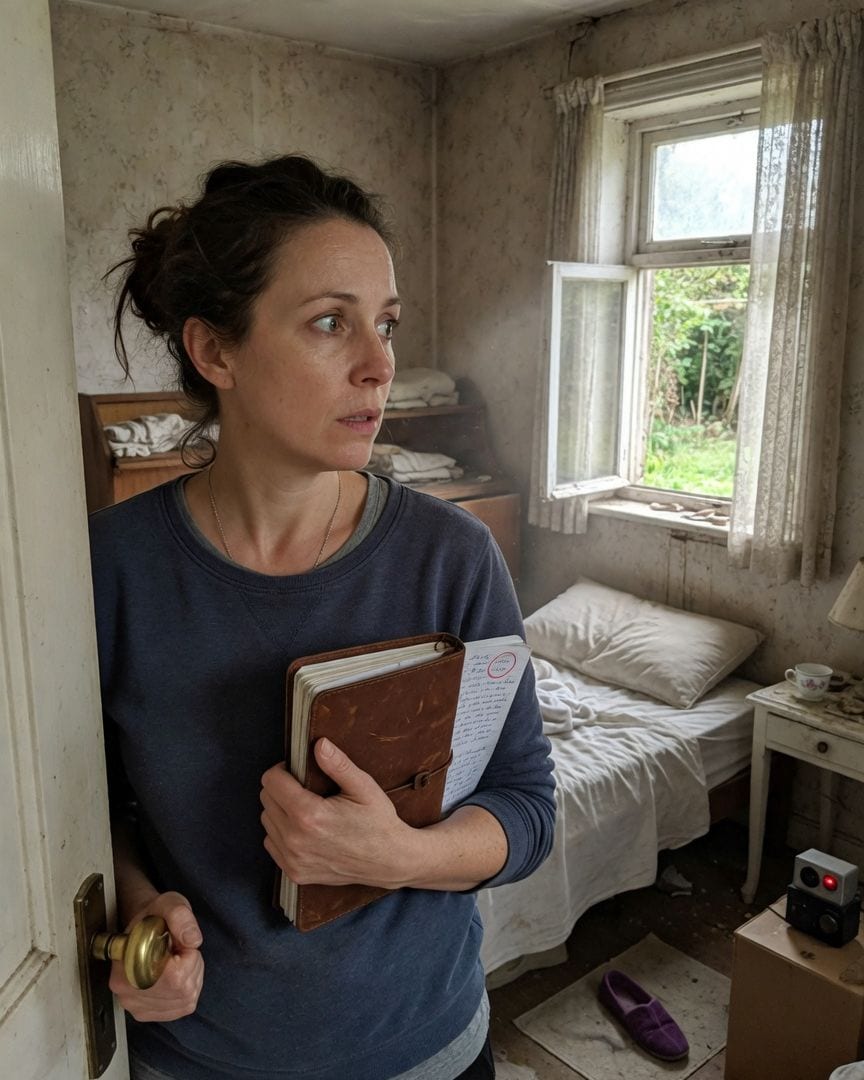
My spare room bed is slept in every few nights, sheets warm and pillow dented. I live alone, painted the window shut, and nobody has a key.
I've lived in Grace's house for six months, adjusting to its quiet rhythms. But the spare room, which I keep shut and empty for storage, has a disturbing routine of its own. Every few mornings, the bed is clearly slept in, the sheet rumpled and warm, and the window I painted shut is open exactly two inches.
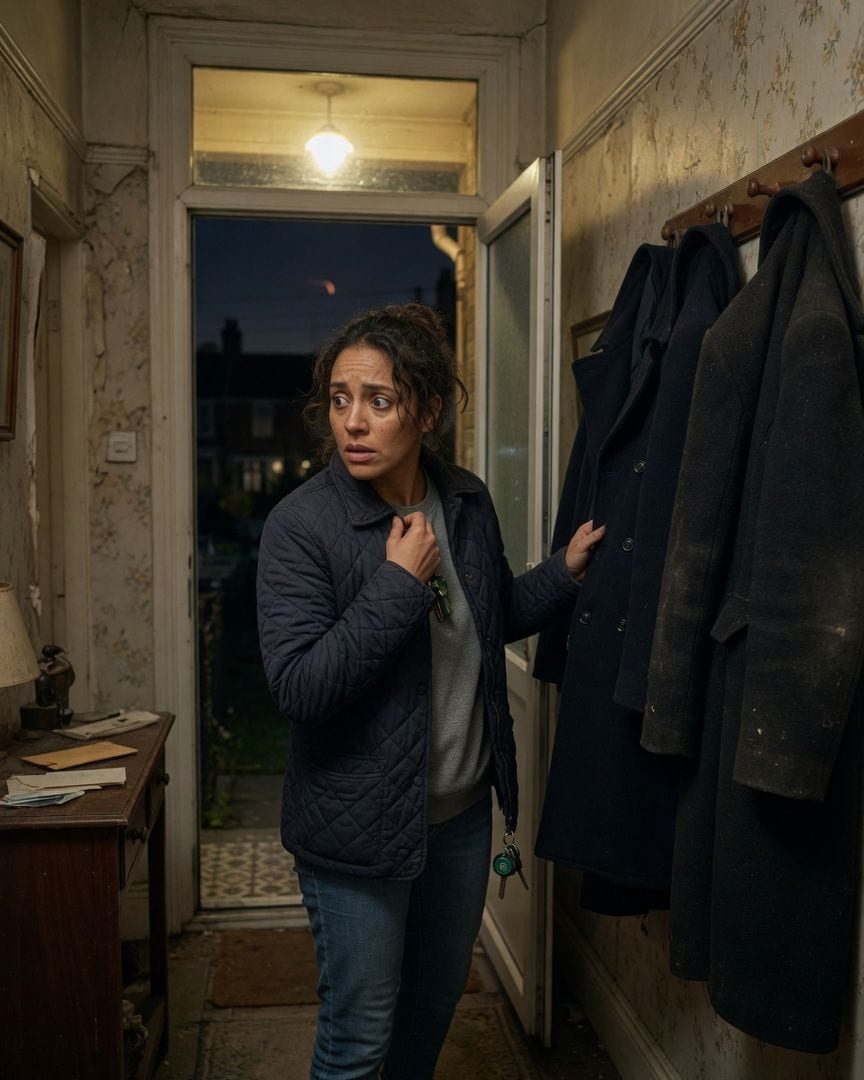
My tiled path was new, my front door green. Then three dark coats hung in my hallway.
After a late night watching the lunar eclipse, I returned to my Victorian house, only to find the path and front door inexplicably changed. Though the house seemed to revert to normal, strange things started appearing: a kettle warm from boiling, a distinct impression on my armchair. Then, an antique, lavender-scented handkerchief appeared on my bedside table, an undeniable presence in my private space.

My black dog on the sea wall isn't mine. Its eyes held something ancient and cold, and my neighbours laughed when they warned me not to feed it. The lifeboat log shows its name beside every drowning for ninety years.
My new cottage by the sea offered peaceful sunsets and a solitary black dog patrolling the wall. I left it some stew, thinking it was just a stray. But its eyes met mine, and they weren’t dog eyes at all—they were obsidian, ancient and cold, devoid of all warmth.
My front door has a dented gate and a dead hydrangea. I walked past it six times, trying to reach the corner shop just a hundred yards away. The pavement kept bringing me back to my own porch, and the shop's light never moved.
My morning started like any other, a quick walk to the corner shop from my home at Number 14, Elm Terrace. But after walking what felt like two minutes, I found myself back at my own front door, the shop no closer. I tried six times, faster and slower, but my street kept compressing, refusing to let me leave.
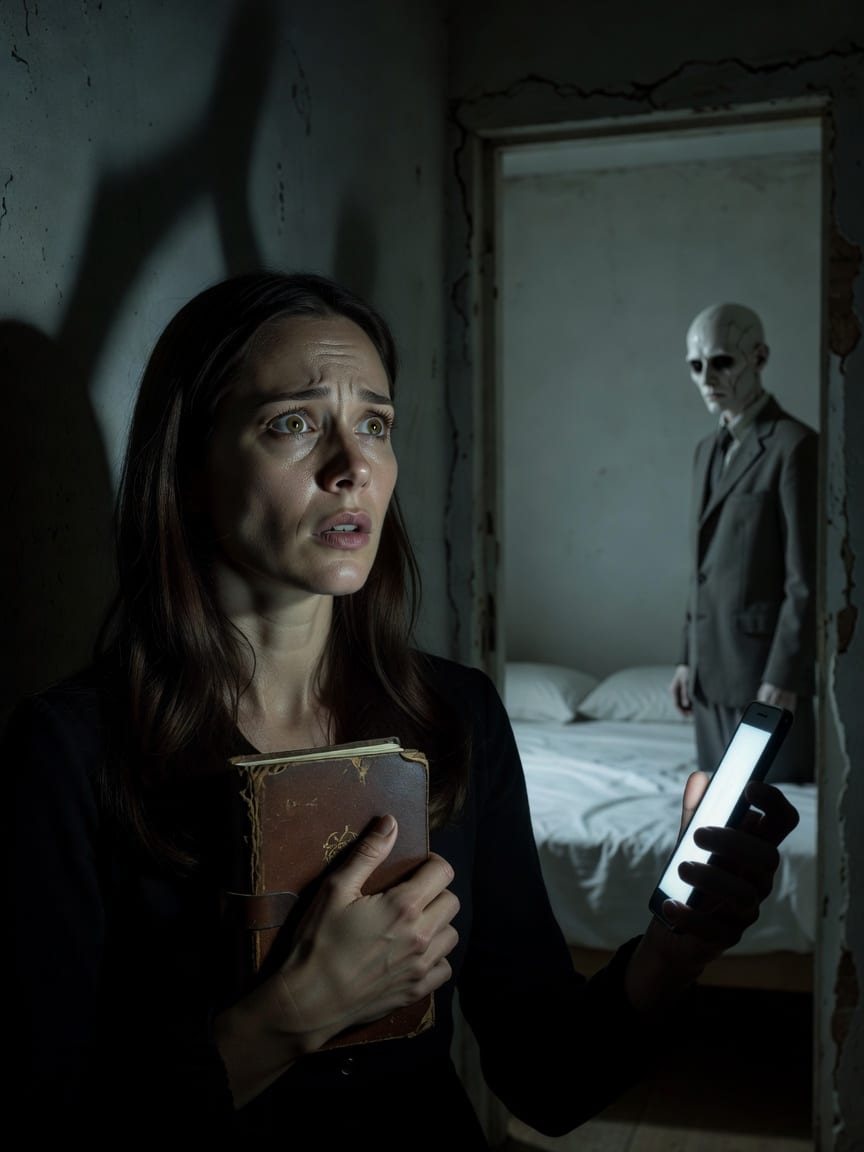
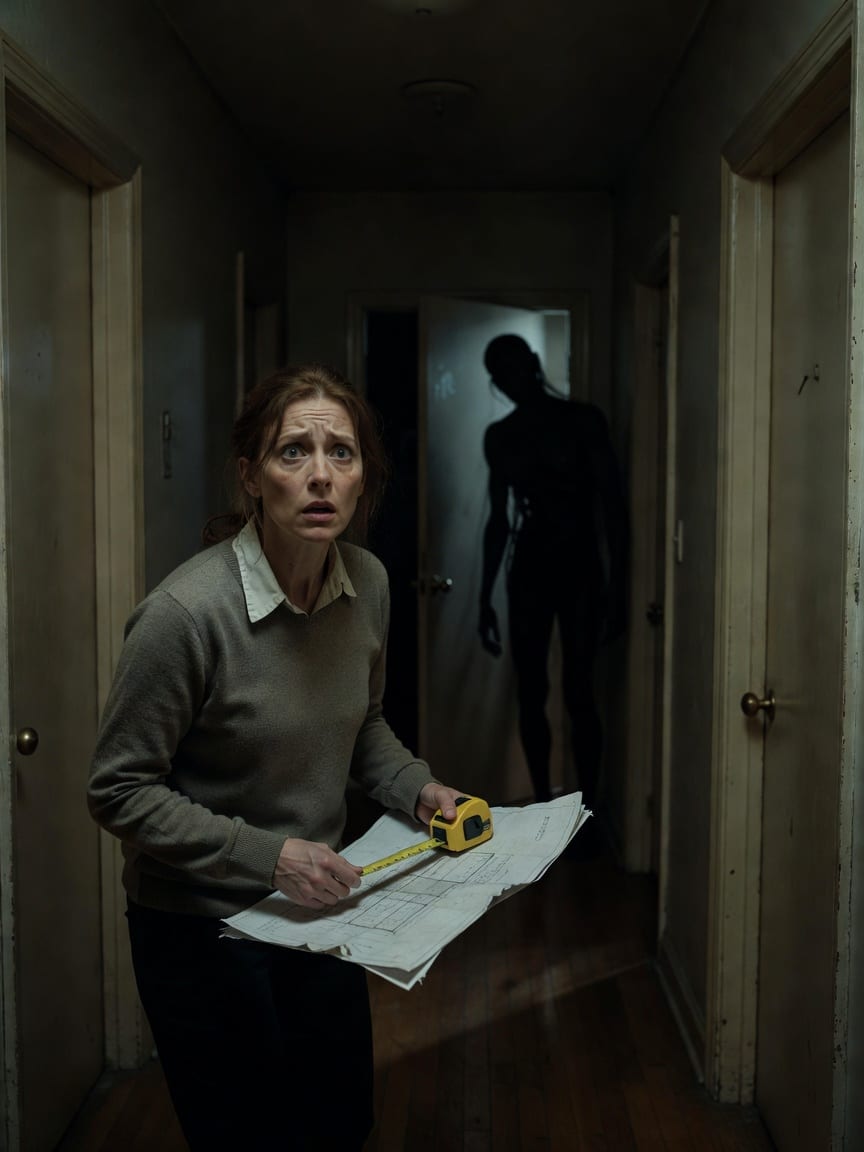
Behind a plastered-over doorway, I found a room. Papered, carpeted, and furnished with a made bed, sealed for decades. The air was dead still, but the bed wasn't dusty. My council tax bill only lists five rooms.
I'm Claire, an architect, meticulously planning my new Victorian terrace renovation. But when I uncovered a hidden room behind a wall, everything I knew about time and decay shattered. The bed was perfectly made, the air still, yet there was no dust, only an unnerving cold.
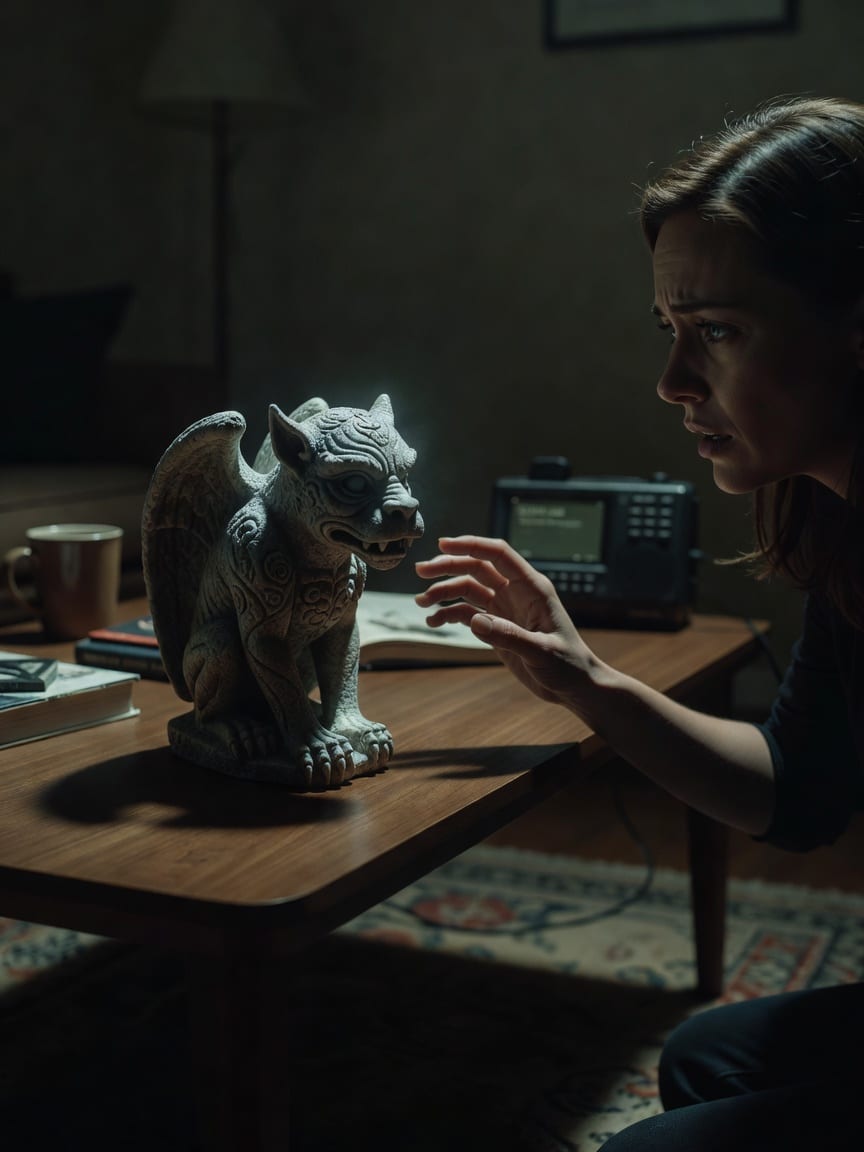
My radio scanner spoke my address at 2 AM. A flat voice read local homes, all with past dates. Mine was the only one in the future.
It was two in the morning, and my quiet house was filled with the usual hum of my weather scanner. But the static broke, replaced by a flat, synthesized voice reading a list of local addresses and dates. My hand froze when it spoke my own address, 181 Foster Drive, followed by a date: October 27th. That date was three weeks from now.