My black dog on the sea wall isn't mine. Its eyes held something ancient and cold, and my neighbours laughed when they warned me not to feed it. The lifeboat log shows its name beside every drowning for ninety years.
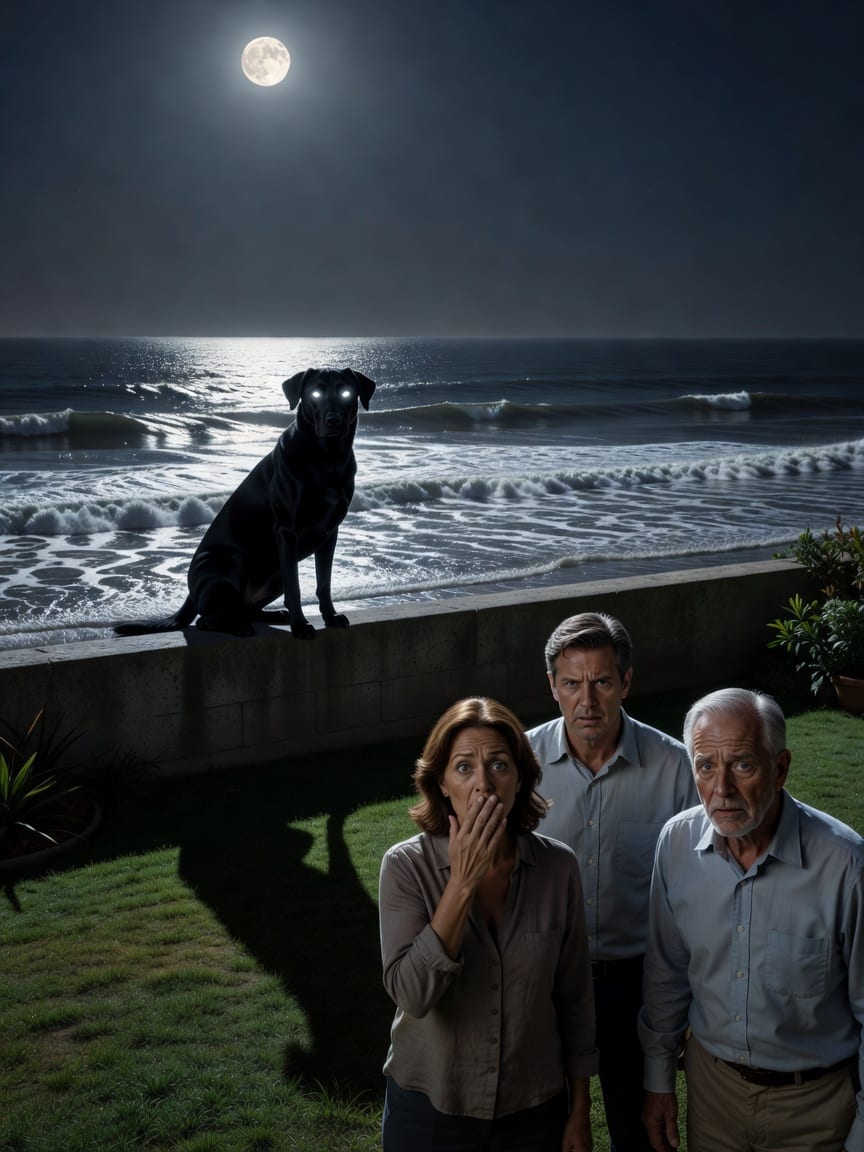
The cottage was exactly what the brochure promised: small, windswept, and perfectly placed overlooking the sea wall. I moved in, unpacked boxes, and spent my first few evenings watching the sunset paint the water.
That’s when I first saw the dog. It was large, black as pitch, with shaggy fur matted with sea spray. It patrolled the sea wall at dusk, a solitary, silent sentinel.
“Don’t you go feeding that one, love,” Edith Mercer, my spry neighbour, called over the fence one afternoon, a smile crinkling her eyes. “Old folk’s rule. Bad luck, they say.”
She chuckled, but her grip on her trowel tightened, just a fraction. I laughed it off. It was just a stray, wasn't it? A hungry creature.
So, that evening, as the light faded, I left a bowl of my leftover stew by the base of the wall. The dog appeared, ghost-like, from the deepening shadows. It approached the bowl, its movements fluid, unnatural.
Then it lifted its head, and its eyes met mine. They weren’t dog eyes. They were obsidian, ancient and cold, holding something that made my breath catch in my throat. Something utterly devoid of warmth.
It ate the stew, but its gaze never left me. Later, rattled, I found an old, salt-stained logbook tucked away in a dusty corner of the cottage’s small study. ‘Lifeboat Station Incident Log (1930-1970)’, the cover read in faded script.
Why it was here, I had no idea.
The dog’s stare gnawed at me. The next day, I made an excuse to visit the local library, claiming I wanted to research the sea wall's history.
Walter Lambert, a man with tired eyes and the scent of old paper clinging to him, ran the small archive. He’d been a lifeboat volunteer in his youth. I asked about the logbook.
“Ah, yes,” he said, pulling a digital archive up on his screen. “We have a digitized version. The old paper ones are down in the secure storage. What’s your interest?” I mumbled something about local legends.
He raised an eyebrow, but clicked away. He showed me the entry for the actual lifeboat station incident log. Its online interface was clunky, but there it was, mirroring the paper one I’d found. I started scrolling, typing in keywords.
"Drowning." "Disappearance." And then, almost by accident, "Black dog." My blood ran cold. Entry after entry, spanning decades, featured the same chilling notation. ‘August 14, 1952. Kevin Sutton, lost at sea. Black dog seen on wall before loss.’
‘March 22, 1978. Charlotte Sutton, presumed drowned. Black dog seen on wall.’ My finger trembled on the mouse. Ninety years. The same notation, like a damn recurring nightmare. “Just an old superstition,” Walter said, his voice flat, startling me.
He hadn't been looking at the screen, yet he seemed to know exactly what I’d found. “Fishermen see what they want to see before a bad tide.” But I looked closer. The names. Sutton. So many Suttons.
And a few Fletchers. Lamberts, even. It wasn't random. This wasn’t superstition. This was a pattern.
I couldn’t shake the log. The names, the dog, the way it all lined up. I went back to the lifeboat station the next day, confronting Walter. “The Suttons,” I started, clutching the digital printout. “There are so many. Why?”
He shifted, visibly uncomfortable. “Tessa, honestly, people move to a small town, they get curious. Some things are just… coincidences.” He tapped his monitor, calling up the station’s current digital log. “Look, last year. Dean Fletcher. Presumed drowned, October.
No dog, no family connection. Just a tragedy.” But then his finger hovered, and his face went slack. The screen showed it: ‘October 18, last year. Dean Fletcher, presumed drowned. Black dog seen on wall.’
He swore under his breath, clicking the entry closed fast, too fast. My eyes narrowed. I stepped closer to the old, paper logbook, the one like mine, still on the shelf. Not the digitized version, the real, tangible thing.
Something glinted from the spine. Tucked deep, almost hidden, was a tarnished silver locket. My fingers closed around it. It was still warm, unnervingly so. I pried it open.
Inside were two faded photographs: a smiling young man, and a woman who could have been an older version of Charlotte Sutton, the one from 1978. On the back, etched in tiny script, were the initials: D.F. Dean Fletcher.
Lost just last year. An object that should have been swallowed by the sea, lying right here, in the station’s records.
The locket felt heavy, a cold weight in my palm, connecting the black dog to the losses, to Dean Fletcher, in a way that defied all reason.
The locket was a damn anchor dragging me down. I’d gone straight to Edith, clutching it like a talisman. “Edith, do you know anything about a Dean Fletcher? This locket…” She stiffened, her usual cheerful face tightening.
She glanced at the locket, then away, her eyes flicking to the sea wall. “Dean? Nice young man. Lived up the lane a bit. Shame. The sea takes what it wants, Tessa. Don’t go stirring up old ghosts.
It’s not healthy.” Her dismissal was too quick, too sharp. My rational mind, the one that usually found mundane explanations for everything, was failing. I spent the next week holed up in my cottage, surrounded by printouts from Walter’s archive.
Suttons, Fletchers, Lamberts. Dates. Tides. I cross-referenced everything. There was a rhythm to it, a pulse. Not just the surnames, but the timing. Full moons. Spring tides. The highest astronomical tides of the year, almost every time. It wasn’t random.
I needed to talk to someone who knew, truly knew. Someone older. Someone like Gerald Sutton. I found him down by the harbour, a craggy old man with hands like gnarled oak, patiently carving a miniature fishing boat.
His family name had practically bled across my spreadsheets. “Gerald Sutton?” I asked, holding out the locket. “This belonged to Dean Fletcher. I found it at the lifeboat station.
They say he was lost last year, and the black dog was seen.” He didn’t look up from his carving. Didn't even blink. His knife shaved another delicate curl of wood from the hull. “You fed it, didn’t you?”
he murmured, his voice surprisingly soft, yet clear over the gulls. “The black dog.” I froze. My face must have given me away. He finally looked up, his eyes ancient, like the sea itself.
“The agreement… it’s there for a reason, Tessa.” He didn’t elaborate, just went back to his carving, the rhythmic scrape of the knife the only sound.
Gerald’s quiet knowing rattled me more than any shout could have. The cottage, once a refuge, now felt like a glass box. I started noticing things. A kitchen window, which I distinctly remembered latching, standing ajar one morning.
The armchair by the fireplace pulled slightly away from the wall. Nothing was ever gone, nothing broken. Just… displaced. Like someone had been there, watching, waiting. The air in the house grew colder, a damp chill that permeated the walls.
One evening, the fog rolled in thick and silent, swallowing the sea wall whole. I was making tea, the kettle whistling, when a shadow detached itself from the greyness at the edge of my garden. The black dog.
It wasn’t on the sea wall this time. It stood on the grass, just beyond my little rose bed, perfectly still. Its obsidian eyes were fixed on the cottage, on me. It wasn’t moving, wasn’t approaching, just watching.
A shiver that had nothing to do with the damp air crawled up my spine. My hands trembled as I fumbled with the curtains, yanking them shut, plunging the room into artificial light.
The next morning, the fog had lifted, leaving everything slick and glistening. On my doorstep, nestled against the weathered wood, was a piece of sea glass. Smooth, dark, almost black. And beneath it, folded neatly, a note.
The script was looping, elegant, familiar in its precision. No signature. Just two sentences: ‘The tide is turning. Don’t call its name.’ It was from Gerald. He knew. And now, whatever it was, knew I knew.
The threat wasn't just in old logs anymore. It was here. At my door.
I found Gerald by the old lighthouse, the sea glass and the note clutched in my hand. The wind whipped around us, tugging at my hair. “What the hell does this mean, Gerald?” I demanded, thrusting the note at him.
“’Don’t call its name’? My window was unlatched. I saw the dog in my garden.” He turned from the churning grey water, his face etched with a profound weariness. “You fed it, Tessa. That’s what it means.”
He sighed, a sound swallowed by the wind. “It’s not a stray. It’s a collector. A herald for the tide. It manifests. Always on the highest tides, the turning points. It comes for specific individuals, from specific lines. Always has.
Always will.” My blood ran cold, the chill seeping deeper than my bones. “Claims them? Like drownings?” He shook his head slowly. “Not always drownings. Sometimes they just… vanish. Leave everything behind. No trace. It’s the sea’s hunger, Tessa.
And the dog… it points the way. Or takes them itself.” He looked directly at me. “The town, we have an agreement. Generations. Don’t acknowledge it. Don’t interact. Don’t make it see you. Let it pass by.
You broke the oldest rule. You made yourself visible. And now… it’s interested in you.” He gestured to the locket still in my pocket. “That’s a bad sign, girl. A lure. It finds what it wants.
And with the new blood… sometimes it decides it wants more.” The names, the patterns in the log, the specific dates, the families—Sutton, Fletcher, Lambert. Everything clicked into place with horrifying precision. The black dog wasn't just a grim omen.
It was an active participant. And it had me in its sights.
Gerald led me to his cottage, which smelled of salt and dried herbs. He sat me down in front of a heavy wooden table, unfolding a sheet of yellowed parchment. It was an ancient, hand-drawn family tree, meticulously labeled.
Names, dates, faded ink. Crude crosses marked beside so many of them. “The lost,” he murmured, his voice heavy. “Kevin Sutton, 1952. Charlotte Sutton, 1978.” He traced the lines with a calloused finger. “Dean Fletcher, last year.
They always get called back, you see. The next full moon. The highest tide of the year.” My eyes scanned the riddled network of names, searching for the logic, the terrible pattern. Suttons. Fletchers. Lamberts.
Branches crisscrossing, dates stretching back centuries. My finger trailed across the page, past Dean Fletcher’s branch, then up, to an older, more distant line, connected by a faint, almost invisible stroke. My breath hitched.
There, circled in vivid red ink, was my own surname: HOLLOWAY. And directly beneath it, carefully written, was my first name: TESSA. Gerald hadn't mentioned it. He hadn’t needed to. My throat went dry.
My name, on this ancient tree of the lost. And scrawled almost illegibly at the very bottom of the page, a single, horrifying sentence: 'The new blood always draws it deeper.' I wasn’t just an observer anymore.
I wasn't just investigating a local legend. I was the next part of its cycle, a fresh thread in an ancient tapestry of loss, pulled here, to this cottage, to this sea wall, by an invitation I hadn’t even understood.
The black dog wasn’t just collecting. It was feeding a legacy. And I was on the damn menu.
“Why me, Gerald? Why my name on that twisted thing?” I demanded, the next morning, back in his cottage. My voice was hoarse. “Holloway? I grew up three hundred miles inland!”
He merely nodded, his gaze distant, fixed on the grey-streaked window. “Distant cousin, five generations back. They leave, they always come back. The coast… it calls them when it’s hungry. And you, Tessa, you came. You fed it.
The new blood. You re-energized the cycle.” He finally turned to me, his eyes holding a profound, ancient sadness. “The town doesn’t just avoid it, Tessa. We manage it. The losses… they aren't accidents. They’re part of an ancient pact.
The sea demands its due. If it isn’t given, it takes more. It escalates. Not just the marked ones, but anyone. Children on the beach, boats out at sea, whole damn families.
The specific lines, the cyclical dates, the high tides – those are the parameters of the offering. Generations of silence, of looking away, of letting the marked ones go… it keeps the greater hunger at bay.”
He spoke of other manifestations, other collectors tied to different parts of the coast, the black dog being just one of many, each with its own territory, its own rules.
“Your act of feeding it, as the new blood… it confirmed your place. Solidified it. Made you the focal point. It brought the collector’s eye directly to us again.” My hands clenched.
The horror wasn’t just that I was next; it was the chilling, cold logic of it all. The town had known. They’d let it happen.
“No,” I whispered, the word a raw, ragged sound ripped from my throat. “I won’t. I won’t be part of your damn pact.” Gerald shook his head, a grim certainty in his eyes. “The tide cannot be stopped, Tessa.
Only redirected. If the marked one resists, the hunger expands. It will take others. Unmarked ones. It will shatter the agreement, and then it will be chaos.” He pointed to a spot on his old map of the coast.
“Highest tide is tonight, at that point on the sea wall. The old beacon. That’s where it takes them.” He said it with such unsettling composure, as if he were discussing the weather. I didn't wait. I ran.
Ran through the narrow lanes, the wind tearing at me, the moon a silver sliver above the churning waves. The cold in my bones was an electric current now, vibrating with panic and a desperate clarity.
I reached the old beacon, the highest point of the sea wall. The tide was a monstrous thing, crashing, recoiling, then surging again. And there it was. The black dog.
A deeper shadow against the moonlit water, its outline sharper, more defined than I’d ever seen it. Its obsidian eyes, no longer just cold, but burning with an ancient, predatory hunger. Its gaze wasn't on me.
It was fixed on a young couple, laughing, oblivious, walking hand-in-hand further down the wall. The new blood had indeed intensified its hunger. It was seeking more.
The town’s desperate containment, the quiet sacrifices—it all slammed into me with terrifying force. I saw a heavy piece of driftwood, smoothed by the sea, lying near my feet. I grabbed it, the rough wood scraping against my palm.
The dog moved, a silent blur, towards the couple. With a primal yell, I hurled the driftwood into the churning waves, just beyond the dog.
It hit the water with an unnatural splash, impossibly loud against the roar of the tide. The dog snapped its head towards the sound, its eyes burning with confusion, torn. It hesitated. That single, precious second.
The young couple, startled, looked up, saw me, then hurried away, their laughter gone, replaced by bewildered shouts. The black dog let out a mournful, inhuman howl that vibrated through the very stones of the sea wall.
It turned, fixed its burning gaze on me one last time, then plunged into the water, dissolving into the froth and spray as if it had never been. It was gone. I had stopped this manifestation.
But a profound coldness, deeper and more pervasive than the night air, spread through me, settling deep in my bones. A piece of me had been claimed by the hungry tide.
The black dog was not seen again on the sea wall. Not by me, anyway. The locals, though silent, treated me with a new, unsettling deference. A quiet understanding in their averted eyes.
Edith Mercer brought a pie to my door, her usual boisterous laughter replaced by a strained, almost pitying smile. Gerald Sutton, when I passed him by the harbour, offered a weary, knowing nod, nothing more.
The pervasive chill in my bones remained, a constant, gnawing drain on my warmth. I stayed in the cottage, the sea view now imbued with a darker, deeper meaning. The tide still turned, a ceaseless, indifferent rhythm.
And the ancient hunger of the coast felt closer, more palpable than ever, a steady presence just beyond the visible.
I still walk the sea wall at dusk, the cold in my bones a constant companion. The sea is calmer now, its stillness feeling less like peace and more like a predator resting, sated for a time.
I observe a new couple, new to town, with their own black dog—a normal, lively Labrador, bounding ahead of them, chasing gulls.
But then the dog pauses, sniffing the air near the rocks, its head cocked, gazing at the dark horizon with an unnervingly still focus, its tail ceasing its happy thump. I watch them, a strange, detached calm settling over me.
I understand the old warnings now, the quiet agreements, the generations of sacrifices—not as superstition, but as necessary truths. My own offering bought time, redirected the immediate hunger. But the tide always turns. And the sea always finds its due.
I feel my new role, connected by the chill within me, a guardian, a silent witness. I see the new couple, so full of life, and I feel a strange, cold certainty.
Weeks later, a new family moved into the cottage next to Tessa’s. The wife, Christine Mitchell, commented to her husband, "Tessa seems... quiet. A bit pale, too."
Tessa, tending her roses, just smiled faintly, a distant, knowing look in her eyes. "Oh, some things," she said, her voice softer than it used to be, "they just take a little piece of you."
If this one got to you
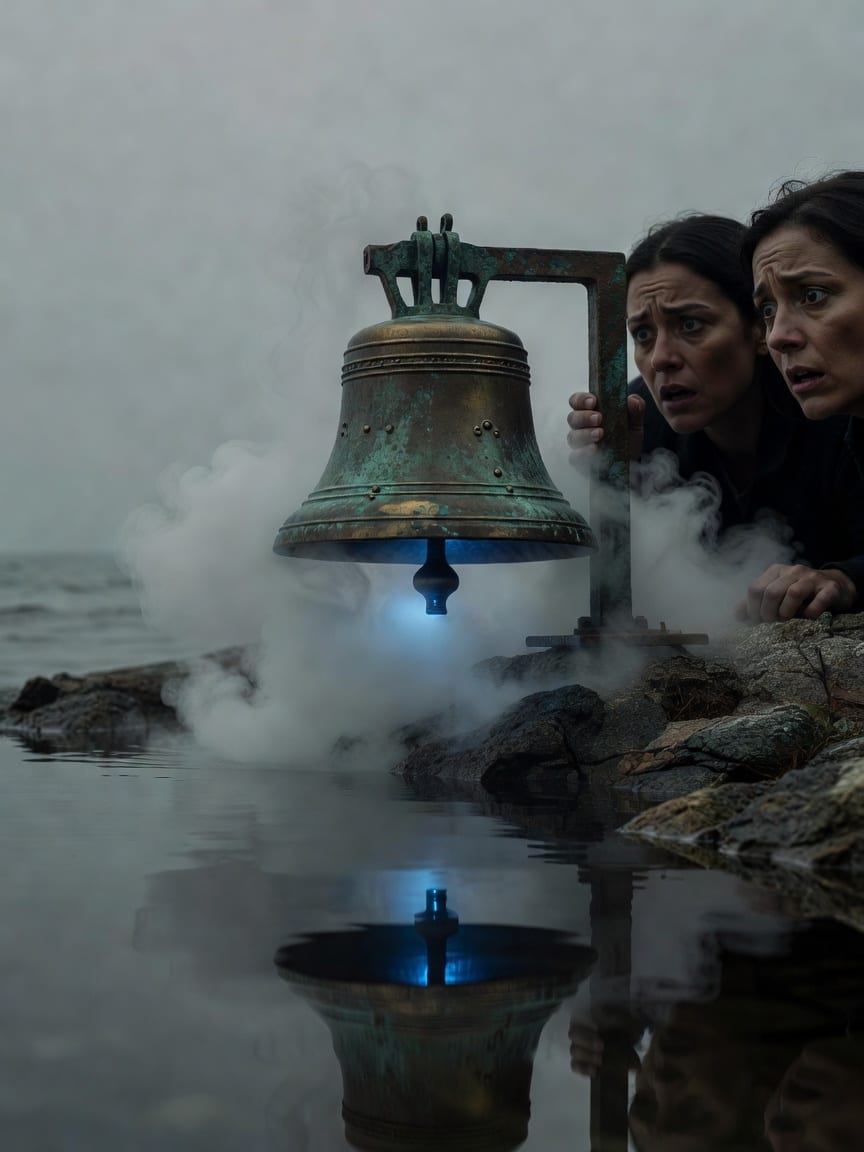
The fog bell on the point rings itself on still nights. The framed log at the yacht club lists eleven calm evenings it rang – each entry beside a boat that never came home.
Moving to a quiet coastal town, I found myself drawn to an old logbook at the yacht club. It recorded the fog bell ringing on flat-calm nights, each instance tied to a boat that simply vanished. Then, I found my own boat's name, 'The Osprey,' penciled at the bottom, marked with an unfinished, cryptic symbol.
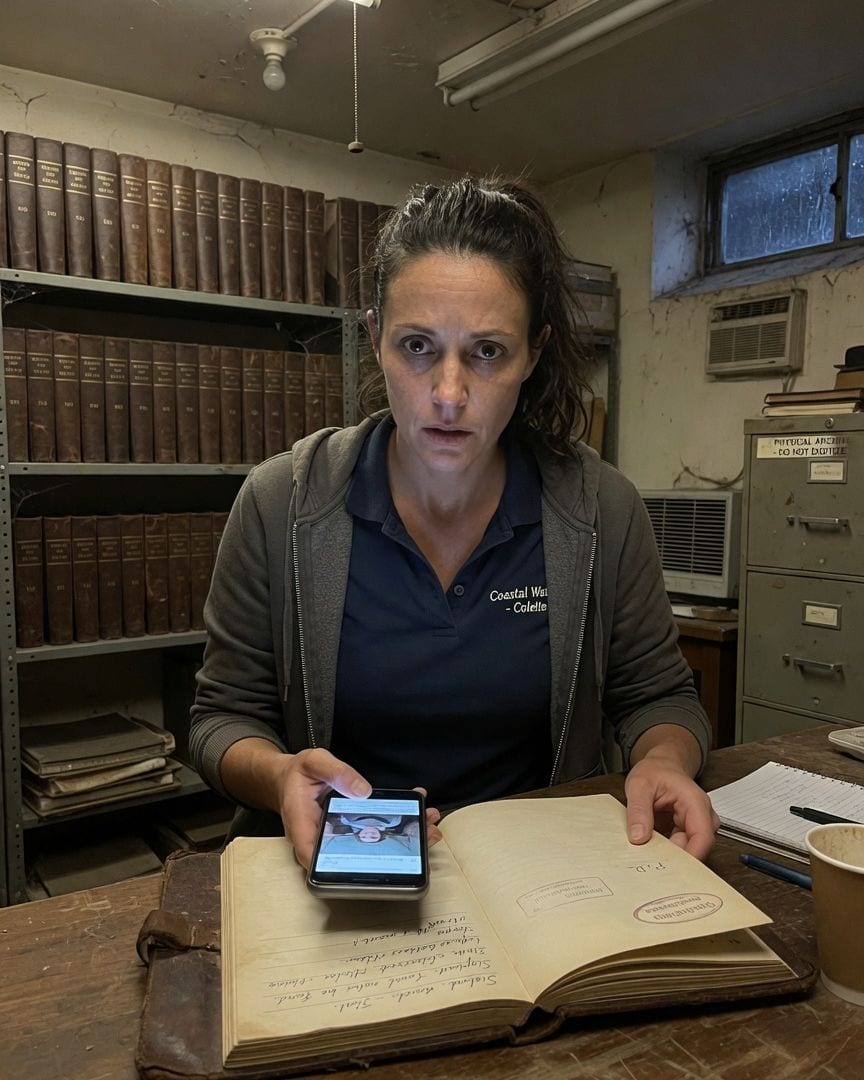
My coastguard log noted Sighting 9 again tonight, a light where no vessel showed. The old logs carry Sighting 9 off Skerry Point at 3:14am every tenth year since 1954, always 'nothing found,' always 'send no boat.'
On my watchtower night shift, the radar screen glowed green and the ocean was quiet. Then, a familiar light appeared off Skerry Point, exactly on cue, just as it had every tenth year for decades. But digging deeper, I found a hidden stamp in an old logbook: 'Operation Skerry. Status: Complete.' It left me with a chilling sense of finality.
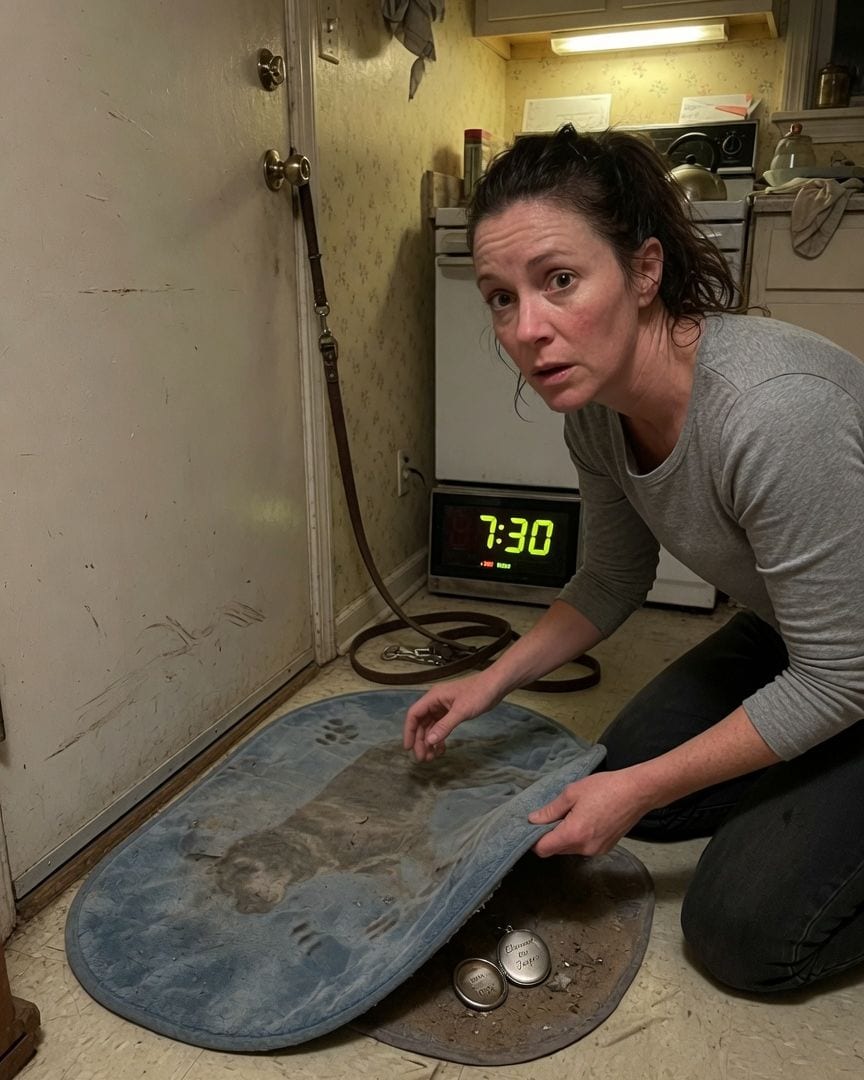
My back door's dog lead falls at 7:30pm, the mat warm, the door scratched. I have no dog.
Every night at 7:30 PM, I find my dog lead on the kitchen floor, even though its hook remains empty and secure. Fresh scratch marks appear on the door, and the old dog mat radiates warmth, as if a large dog had just been there. I don't own a dog, and never have.
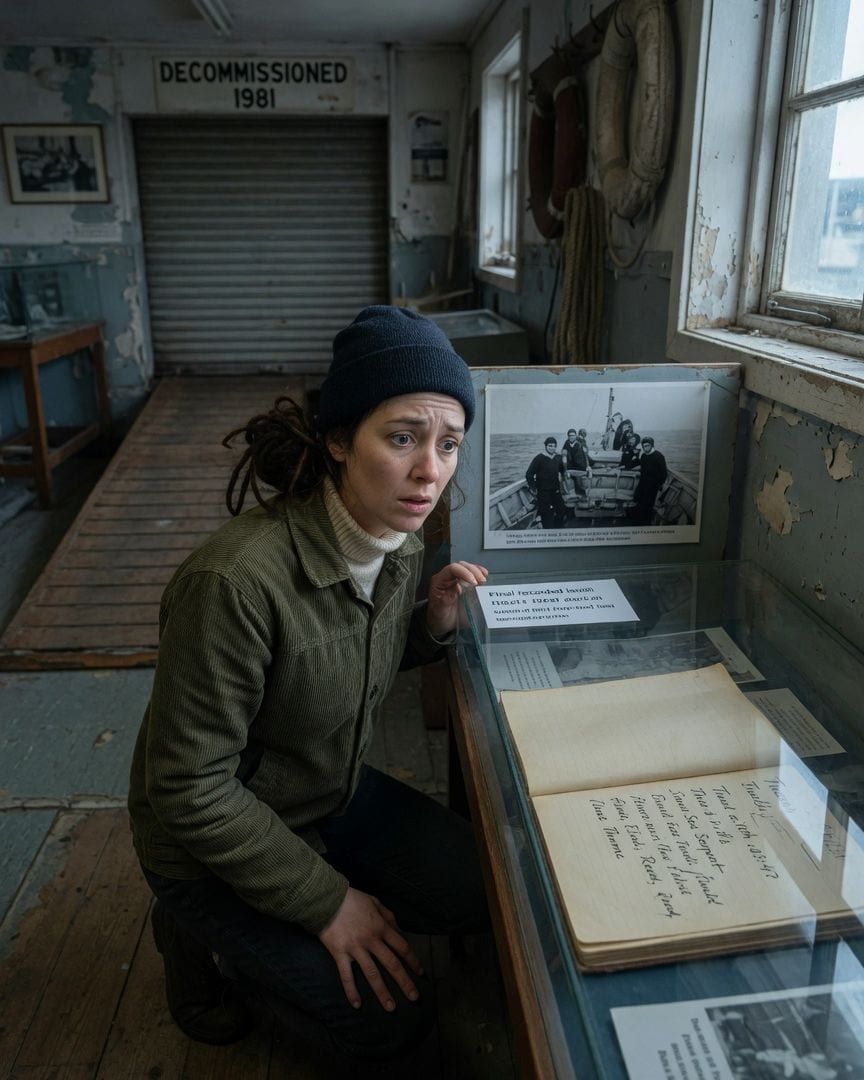
The museum's logbook recorded a rescue two days ago. Its 'souls saved' were buried in 1888.
As the new curator of the Runnock Maritime Museum, my assignment was to refresh the exhibits of its 1981-decommissioned station. Yet, a fresh logbook entry, dated just two days ago, noted a recent rescue. The vessel named, 'The Sea Serpent,' was listed in the archives as lost with all hands in 1888.
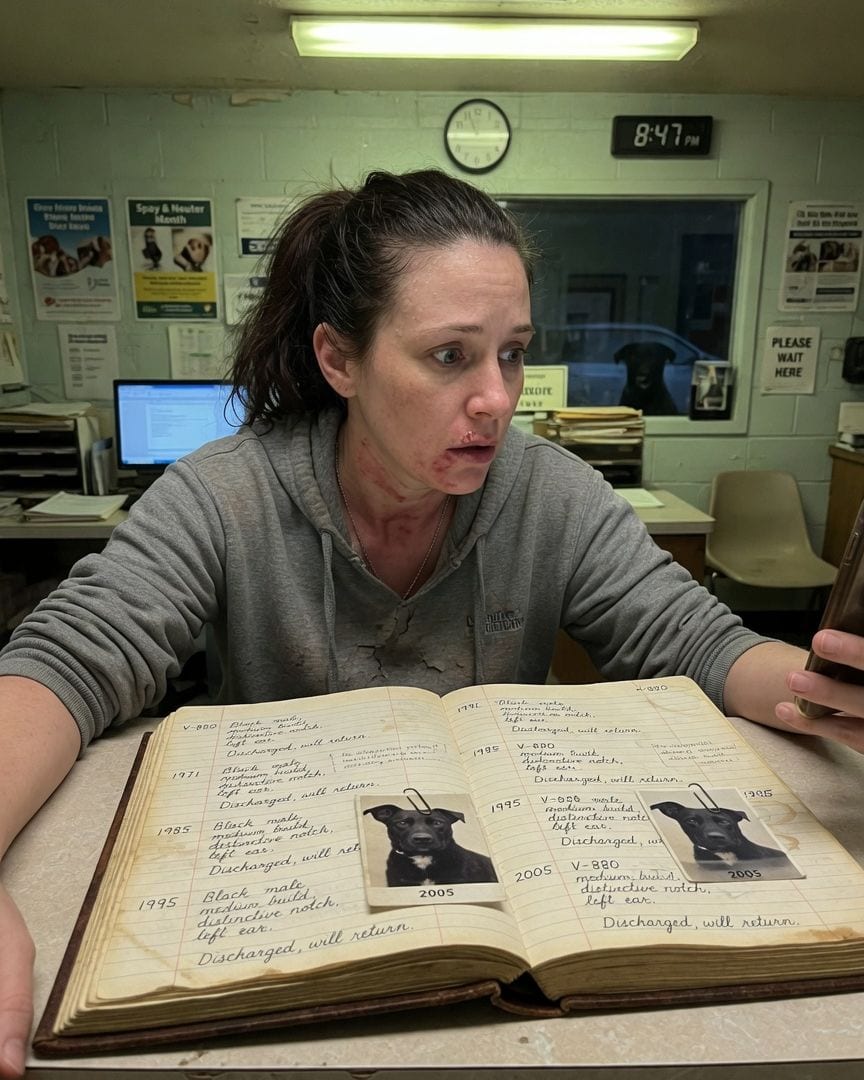
My dog's case number, V-880, traces the same black dog with a notched ear back to 1971, through four different owners, all discharged 'will return'.
As an IT professional, I expect logic. But when I took my new stray, Midnight, to the vet, his old ledger held a chilling, repeated note. Across entries from different decades, it simply read: 'Discharged, will return.'
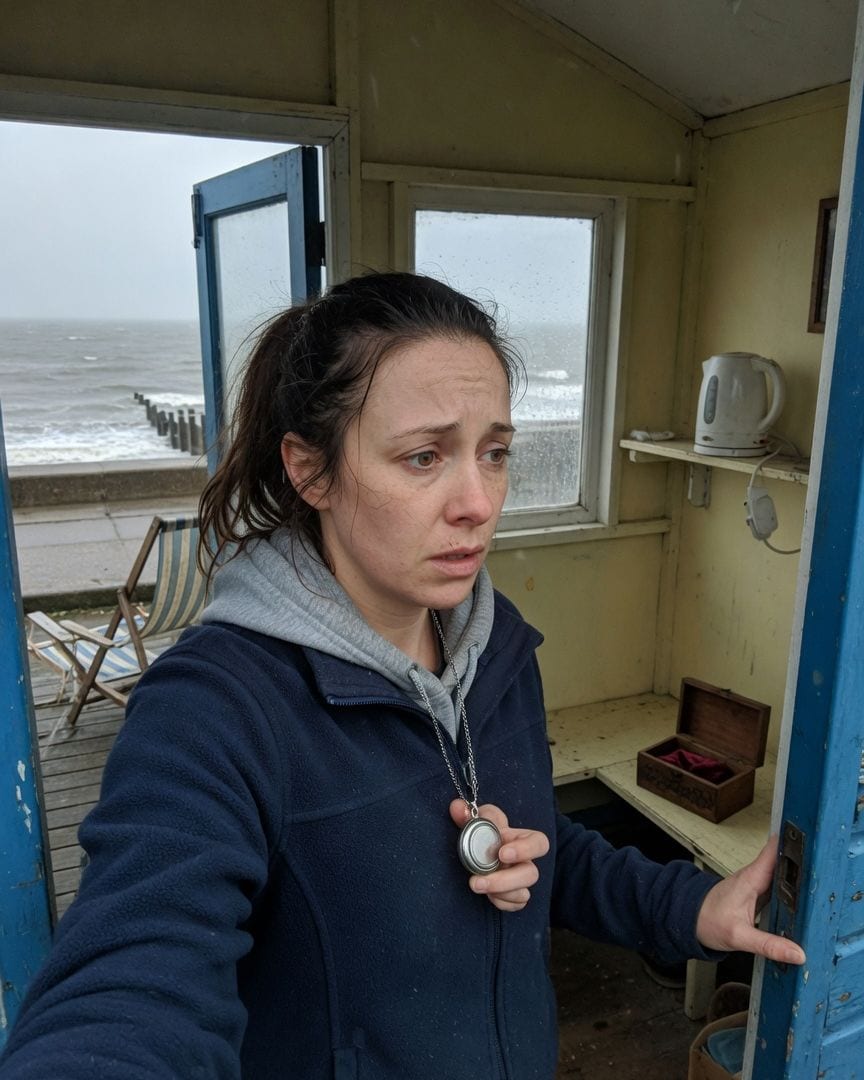
My beach huts run 1 to 60. On Sunday, past 60, was a Hut 61, weathered, with a kettle warm inside, and no record of it ever existing.
I've managed the sixty beach huts on the promenade for five years, knowing every detail. But one Sunday, a new one appeared: Hut 61. Inside, the air was warm and a kettle still steaming, as if someone had just stepped away, yet my booking book holds no record of it.