My beach huts run 1 to 60. On Sunday, past 60, was a Hut 61, weathered, with a kettle warm inside, and no record of it ever existing.
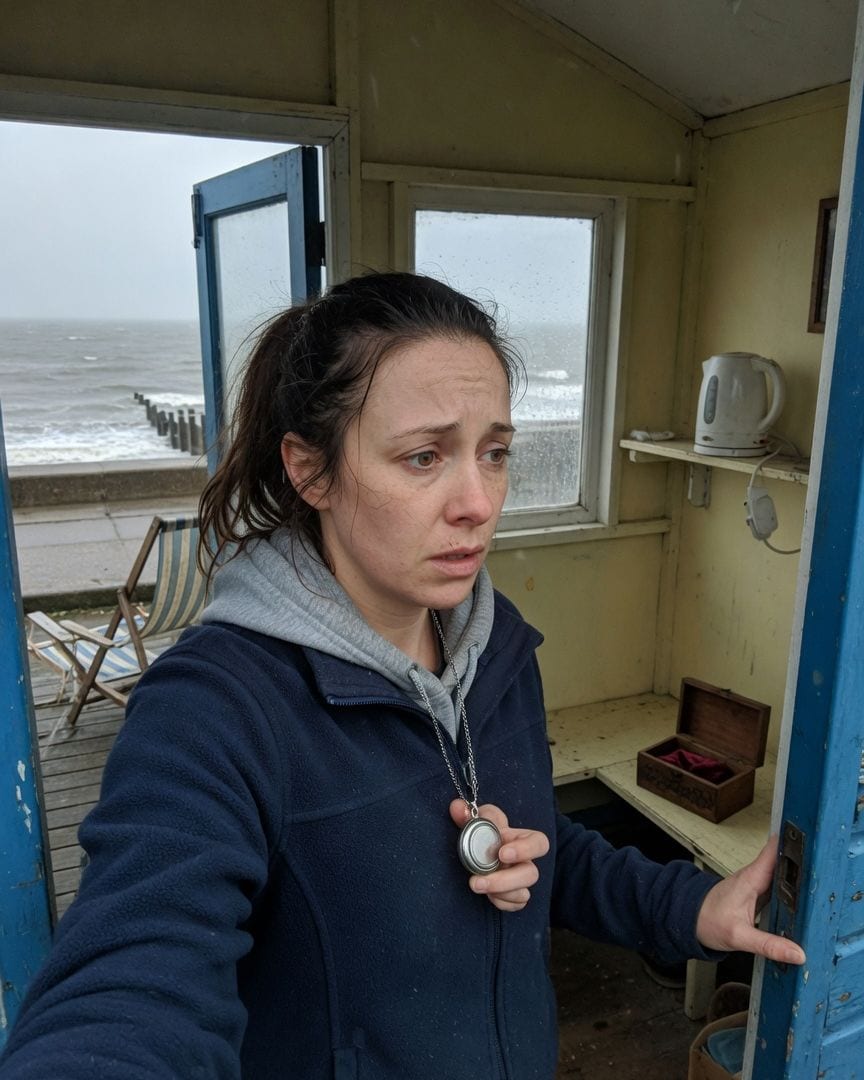
My beach huts, numbers 1 to 60, line the promenade like a row of brightly painted teeth. I’ve managed them for five years, know every chipped door, every creaking hinge.
My booking book, thick with the scrawl of summer bookings, lists every one. So, on Sunday, past the groyne where Hut 60 always stood sentinel, I froze. There was another one. Hut 61.
It wasn't just 'a hut' in the general sense; it was the Hut 61, exactly like the others. Weathered blue paint, a little sign with the number neatly stenciled above the door.
Deckchairs were set out front, faded canvas inviting, as if someone had just stepped away. I walked up to it, my heart doing a strange flutter-kick against my ribs. The door was slightly ajar, rattling faintly in the sea breeze.
I pushed it open further.
Inside, the air was still and warm, carrying a faint, sweet smell I couldn't place. A small, electric kettle sat on a tiny shelf, a faint wisp of steam rising from its spout.
I reached out, my fingers brushing the cool metal, then the ceramic base. It was warm to the touch, not just residual heat, but recently, actively warm. Someone had been here, moments ago.
But my booking book had no 61. Never has. My records were meticulously kept. I walked back and forth along the promenade, counting them again. One to sixty. Then, sixty-one. It was solid, real, yet utterly impossible.
I returned to Hut 61 the next morning, half-expecting it to be gone, a trick of the light or a stress-induced hallucination. But it was still there, stubbornly real, nestled between the groyne and Hut 60.
The deckchairs remained, now damp with morning dew. The kettle, however, was cold, the steam long gone.
I pushed the door open fully. The air inside was damp, smelling faintly of salt and something else – old paper, perhaps, or forgotten dust.
It was sparse, just a small bench built into the wall, the shelf where the kettle had been, and a single window looking out to the grey, choppy sea.
The paint on the walls, a pale, faded yellow, looked untouched, yet also ancient.
Tucked into a corner, beneath the bench, I noticed a small, wooden box. It was intricately carved, with patterns of waves and shells, but covered in a thick layer of dust.
It looked ancient, out of place among the hut's simple, modern fittings. My hands trembled slightly as I picked it up. The wood was smooth, heavy. I ran a finger across its lid, leaving a clean trail in the grime.
I opened it. Inside, nestled on a scrap of faded velvet, was a tarnished silver locket, smooth from years of handling, and a small, sepia-toned photograph. The photo showed a young woman, smiling faintly, her hair a bit windswept.
She was standing on this very beach, the familiar line of huts visible in the background, though the scene felt like it was from another era.
Her face was unfamiliar, yet there was something about her eyes, a quiet intensity, that snagged my attention, pulling at a memory I couldn’t quite grasp.
This wasn't a lost item from a recent renter; this felt like something from another time entirely. The hut shouldn't exist, and neither should these relics within it.
The locket felt heavy and cold in my palm as I walked into the council archives.
Penelope Drummond, her reading glasses perched on the end of her nose, listened patiently to my story about Hut 61, her expression shifting from skepticism to mild curiosity.
She tapped away at her keyboard, searching through property deeds and rental agreements, but found nothing.
'No record of a Hut 61, Bonnie,' she confirmed, pushing her glasses higher up her nose, the small sound echoing in the quiet room. 'Not in any archive I can access. Are you absolutely certain it's... physical?'
I sighed, the frustration a familiar ache in my chest. 'It's physical, Penelope. I walked in it. I touched a warm kettle. It's there.' I had already known this would be her answer.
The official record, solid and immutable, always contradicted what I was seeing.
As I turned to leave, the locket still clutched in my hand, Penelope called out, her voice a little sharper, less distracted. 'Wait.'
She was holding a small, brittle newspaper clipping, its edges yellowed with age, retrieved from a dusty microfiche reel.
'This might be nothing,' she said, her brow furrowed in concentration, 'but a similar locket was found after a disappearance on this very stretch of beach. Decades ago.'
My gaze snapped to the headline, then to the blurry image of a locket next to it. It was identical.
The newspaper clipping detailed the vanishing of a young woman named Clara Jenkins, in 1983. No body, just the locket found near the groyne.
It was the first concrete link, a chilling connection between the impossible Hut 61 and a very real, very old tragedy.
I drove back to the beach, the locket now a cold weight in my pocket, its tarnished silver pressing against my skin.
I sought out Elliot Holloway, a fisherman whose weathered face held the history of the town in its deep lines. He was mending nets by the old slipway, his movements slow and deliberate.
'Elliot,' I began, my voice lower than I intended, 'have you ever heard stories about strange things happening near the huts? Near the groyne?'
He paused, his gnarled fingers stilling their work on the twine. He didn't look up immediately, but his eyes, when they finally met mine, were ancient and knowing.
'The tide takes things it never gives back, lass,' he said, his voice a low rumble, devoid of surprise. 'And sometimes, the land shifts, too. Not always in ways folk can see proper.'
He wouldn't elaborate, just gave me a look that held generations of unspoken knowledge, as if warning me away from a deep, unseen current.
I returned to Hut 61. It stood there, defying logic. I pulled out my tape measure, determined to find a mundane explanation for its existence. The distance between Hut 59 and 60 was exactly 1.5 meters.
The distance between Hut 60 and 61 was also 1.5 meters. Everything looked perfectly aligned, perfectly spaced. But the total length of the row, including 61, was now longer than it should be, by exactly one hut's width.
The numbers didn't add up, yet the physical space was undeniably there, solid and unyielding.
I tried to find old council maps, hoping for a discrepancy, a surveyor's error, anything. But they all showed a neat line of 60 huts, ending precisely at the groyne.
It was as if the extra space, the extra hut, was only visible now, a temporary, impossible addition to an otherwise fixed reality.
The air around Hut 61 felt heavier, the light slightly dimmer, as if it absorbed the sunlight differently than its neighbors.
The more I investigated, the more I felt a prickle on the back of my neck. A sense of being observed. It wasn't just the anomaly I was dealing with; it was the feeling of invisible eyes on me.
I’d catch glimpses of movement at the edge of my vision – a flicker behind a dune, a shadow that wasn't there when I turned my head sharply.
The old hut doors, usually rattling in unison, seemed to creak independently when I passed, like whispers from an unseen presence.
Elliot Holloway, seeing me still poking around the huts, approached me one afternoon as I was inspecting the foundations of Hut 61, convinced there had to be some trick of construction.
His face was etched with a quiet concern, a deep weariness.
'Bonnie,' he said, his voice low, almost a murmur against the constant crash of waves, 'some things are best left alone. The sea has its secrets, and so does this land. Don't go digging where you don't belong.'
His warning was chilling, not because it was threatening, but because it implied knowledge, a history I was only beginning to scratch at. It wasn't a warning from him, but through him, from something older.
Later that day, I found a note tucked under my car's wiper blade. It was a single slip of paper, folded precisely, the paper thin and brittle. The handwriting was old-fashioned, almost calligraphic, the loops and flourishes archaic.
'Some doors are meant to stay closed.' No name, no signature. Just the stark, quiet warning. It felt less like a threat and more like a plea, heavy with sorrow and resignation.
My first thought was Elliot. His warnings had been so pointed. But when I confronted him the next morning, showing him the note, his eyes widened with genuine surprise, a flicker of something akin to fear in their depths.
'I swear on my mother's grave, lass, that wasn't me. But someone else knows. Someone else is watching.'
The fear wasn't just of the unknown anomaly, but of the hidden watchers, the quiet guardians of this impossible place, who moved in the shadows and left their silent, desperate pleas.
I found Elliot Holloway by the old lighthouse, staring out at the turbulent sea, his silhouette stark against the grey sky.
I had gathered the pieces: the locket, the newspaper clipping about Clara Jenkins, and the faded photograph I’d found in Hut 61. I held them out to him, a silent accusation.
'Elliot,' I said, my voice tight with a desperate urgency, 'what do you know? About Clara Jenkins, about this hut, about... everything?'
He took a long, slow breath, his gaze still fixed on the horizon, as if reading answers in the distant churning waves. 'The seam,' he finally said, his voice barely a whisper against the ceaseless wind.
'That's what my grandad called it. A place where the world ripples, where it gets... thin.'
He explained that the 'seam' appears every twenty years or so, always at that exact spot by the groyne. It doesn't just create an extra hut; it creates a pocket of impossible space, drawing people in.
'They say it takes those who are... open to it. Those who belong to the tide, in a way. Those who are already halfway gone.'
He pulled a worn, leather-bound notebook from his coat, its pages brittle with age. Inside, a crude, hand-drawn map of the beach, marked with an 'X' where Hut 61 stood.
Next to it, a series of dates, stretching back a century, each exactly twenty years apart. 'My family, we've watched it. Seen others go. Always quiet. Always unseen.'
He pointed to the locket in my hand. 'Clara Jenkins. She vanished in '83. But she wasn't the first. Or the last.' His finger traced a tiny, almost invisible engraving on the locket – a date, '1983'.
It perfectly matched one of the dates on his map. 'The council covers it up, always. 'Missing person,' 'lost at sea.' Never 'taken by the seam.' It's easier for everyone to pretend it never happened.'
He looked at the faded photograph I'd found. 'The seam leaves traces, sometimes. Echoes. Like a memory in the water.' He paused, his eyes settling on the photo. 'That's not Clara, though. She was a different kind of lost.
This one... this one's from another cycle.'
Elliot's words hung in the air, heavy with a terrible truth. The locket, the newspaper clipping, the cycles – it all clicked into place, a horrifying pattern.
He was right; Clara Jenkins was just one name in a long, tragic list. I felt a cold dread settle in my stomach, the kind that whispers of inevitability, of being caught in a current too strong to fight.
'They say sometimes,' Elliot continued, his voice dropping even lower, almost a conspiratorial whisper, 'it leaves a trace. A memory, a feeling, a face that looks like someone you knew. Or even yourself, but not quite right.
A younger you, perhaps. From when it last called to you.' His eyes, ancient and knowing, shifted from the locket in my hand to the faded photograph I’d found in Hut 61.
The one of the young woman on the beach.
'That photo… it’s not my aunt, Clara. It’s not quite right. Look closer.'
My blood ran cold. I looked at the image again, a younger woman standing on the beach, smiling faintly, the huts a blurred line behind her. I scrutinized the details.
The hair, just that slight, untamed curl that always defied a brush. The tilt of the head, a habit I had when listening intently. The way she held her hand, a particular gesture, almost proprietorial, on her hip.
It wasn't Clara. It wasn't Elliot's aunt.
It was a younger version of me.
The face of Bonnie Ashford, twenty years younger, frozen in time, staring out from a photograph found in a hut that shouldn't exist, a hut that was somehow connected to disappearances stretching back decades.
Elliot confirmed my dawning horror, his voice grave, softened by the sound of the waves. 'You were here before, Bonnie. Twenty years ago. When the seam last opened.' He explained how the impossible geometry didn't just take; it recycled.
It drew in those with a particular resonance, those who had been close to it, or even within it, in previous cycles.
My memories of that time were simply gone, overwritten by the 'normal' life I'd built in the intervening years, but the pull, the resonance, had brought me back. 'The locket was yours, then,' he said, pointing to the engraved date.
'It reappears with the hut, a tether to those it claims, a mark of its passage.'
He showed me a small, faded scar on his hand, a burn mark from when he'd tried to pull his aunt Clara back from the threshold of the previous cycle. 'The geometry has a pull, Bonnie.
Once it marks you, you're always part of it.'
He explained that the 'Road That Returns' wasn't just a local myth; it was a symptom of the seam's influence, a localized spatial distortion that prevented anyone truly drawn into its cycle from ever leaving the affected area.
It was a net, cast wide, ensuring its 'chosen' would always return to its nexus.
Every strange detail, every impossible measurement, every cryptic warning now coalesced into a terrifying, coherent truth: I was not just observing the anomaly; I was its recurring echo, forever bound to the beach and its impossible hut.
The air around us seemed to thicken, pressing down with the weight of that truth.
The full truth detonated, leaving me hollowed out, but clear-eyed. There was no escape. The knowing was the end.
I clutched the locket, now feeling less like an artifact and more like a brand, a permanent mark on my skin and soul, and stumbled to my car. I had to try.
I had to defy the impossible geometry, to break the cycle, to escape the pull that had claimed me before and now claimed me again.
I started the engine, the roar a futile protest against the silence of my fate. I drove along the familiar coastal road, the same one I’d driven a thousand times. Past the local diner, its neon sign flickering tiredly.
Past the old cinema, its marquee dark. The turning for the highway. I meticulously noted every landmark, every turn, convinced that sheer willpower and rational observation could break the loop, could prove Elliot wrong.
Ten minutes. Fifteen. Twenty. My fuel gauge hadn't moved a millimeter. The clock on my dash read the exact same time it had when I pulled out of the parking spot by the huts.
And then, there it was: the distinctive groyne, its wooden bones grey and barnacle-encrusted, the familiar row of beach huts, 1 to 60. And past 60, Hut 61, perfectly in place, waiting.
The sea churned relentlessly, pulling at the shore, pulling at me.
I tried again, taking a different route, this time inland. I meticulously followed my GPS, turning right when it said left, taking every back road I could find, weaving through narrow country lanes.
I drove for what felt like hours, my grip white-knuckled on the steering wheel, my eyes scanning for any sign of escape, any break in the pattern. The result was the same.
The landmarks shifted, rearranged, the roads twisted and turned, always bringing me back to the same stretch of coast, the same impossible hut.
The Road That Returns wasn't just a road; it was the entire coastline, a prison of geometry, and I was now inside it, a permanent fixture.
I stopped trying to leave. The futility of it settled over me like a shroud, heavy and damp, smelling of salt and damp earth.
I sat in my car, staring out at the ceaseless tide, the locket warm in my hand, a faint pulse emanating from its tarnished silver. The engine ticked, cooling, the last sound of my rebellion fading.
I saw Elliot walking along the promenade, his figure small against the vast expanse of the beach, his shoulders stooped against the wind. He paused, his gaze finding mine across the distance.
There was no surprise, no judgment, only a profound sadness, a knowing resignation in his eyes. He didn't approach, didn't wave. He simply nodded, a slow, heavy inclination of his head, acknowledging my new, permanent place in the cycle.
He understood. He always had. I was simply another part of the beach's enduring, impossible secret, a ghost in the geometry, destined to reappear every two decades.
My former life, my office, my booking book – they were already fading, like dreams upon waking, their details blurring at the edges of my memory.
I walked back to Hut 61. The door, which I had closed so many times, was now slightly ajar, as if inviting me in, a silent welcome. I stepped inside.
The air was cool, damp, smelling of salt and old wood, and the faint, sweet scent I couldn't place. It no longer felt foreign; it felt profoundly familiar, like coming home after a very long journey.
My footsteps, usually echoing, were soft, absorbed by the stillness.
I placed the tarnished silver locket on the small, dusty shelf, next to the cold kettle. As my fingers left it, a faint wisp of steam rose from the kettle's spout, and it was warm to the touch again.
My own reflection looked back at me from the small, streaked window, a face that was both familiar and subtly changed, as if the light within it had dimmed, or changed hue.
I looked out through the window at the empty beach, the waves endlessly breaking on the shore, a rhythm that was now my own. I knew I could not leave. I never could.
A week later, Elliot Holloway walked past the row of beach huts. He saw Hut 61, as he always did when the cycle was active, and a figure sitting on a deckchair outside, looking out at the sea.
He paused, then continued his slow walk, his eyes fixed on the horizon, not meeting hers. The kettle inside Hut 61 was always warm now.
If this one got to you
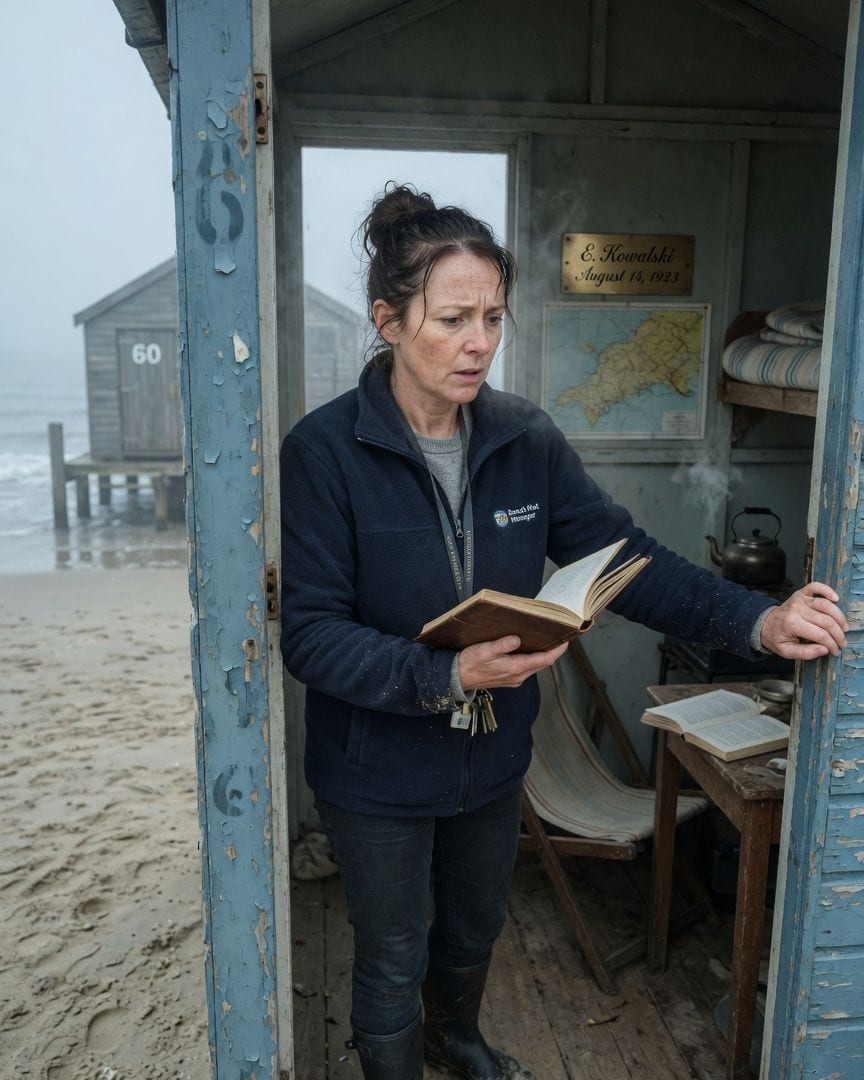
My beach hut row now has Hut 61, but it's not in my books. Inside, a kettle steams, and a plaque on the wall bears my family name, dated 1923.
As manager of the council's sixty beach huts for ten years, I knew my route blind. But on my usual morning walk, nestled against the groyne beyond Hut 60, stood a Hut 61. It looked decades old, just like the others, yet my ledger held no record of its existence.
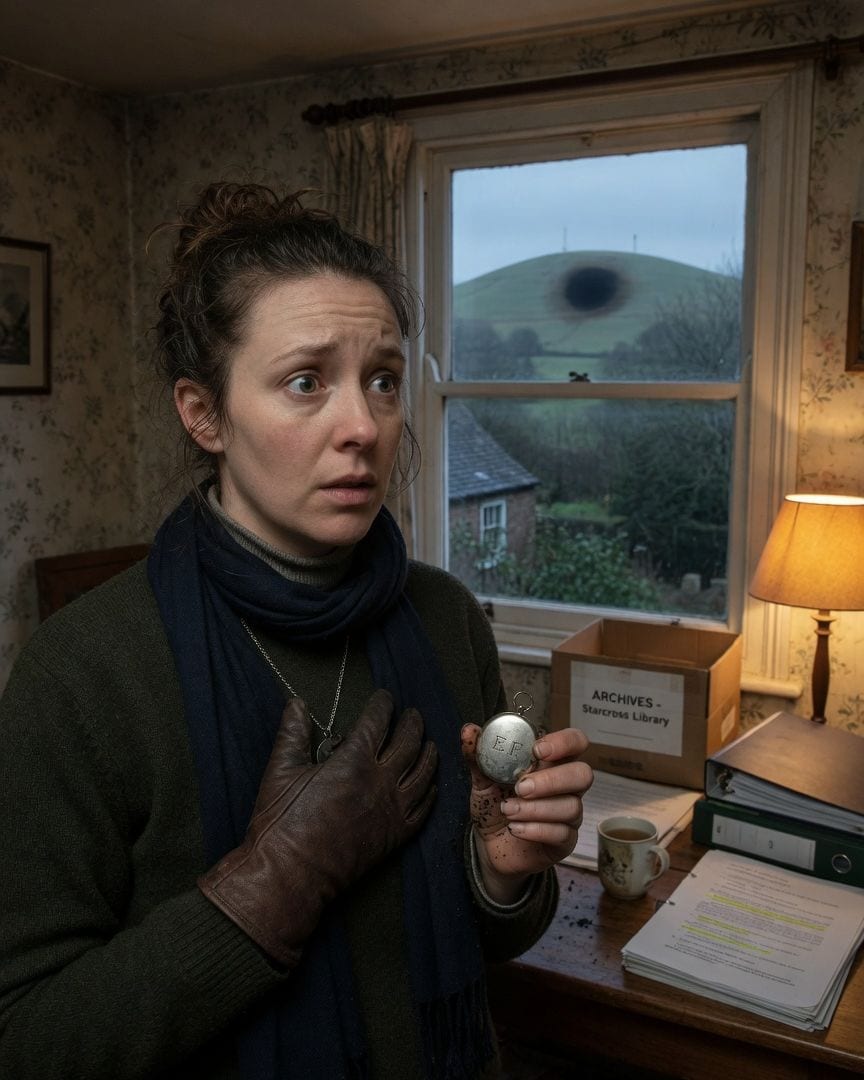
The hill behind Starcross village is scorched black every seven years. No fire brigade ever logs a call.
After moving to Starcross, I became fixated on Beacon Hill's peculiar, perfectly black scorch mark, which had no explanation in local fire records. While exploring the strange, glassy earth of the burn site, I unearthed a small, tarnished silver locket. It was later identified as belonging to Eileen Fairfax, a child who vanished decades ago and was officially presumed drowned in the local lake.
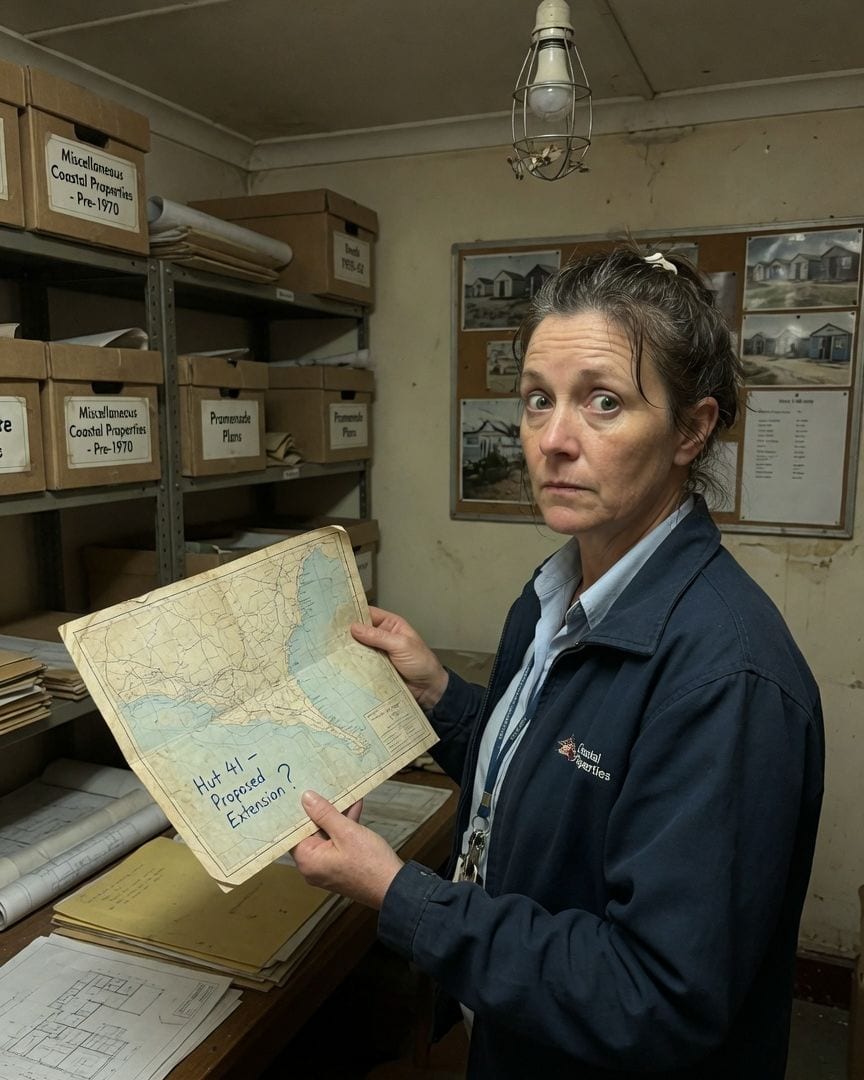
My beach huts now number forty-one. Hut 41 appeared past the promenade's end, locked with a padlock I don't own, washing stiff and dry on its line every morning since Monday.
My morning rounds along the promenade were always predictable: forty beach huts, each numbered and accounted for. But one morning, past the usual end of the concrete slipway, a new hut appeared. Hut 41 stood there, identical to the others, yet its padlock was a tarnished brass and a child's swimsuit hung bone-dry on a line.
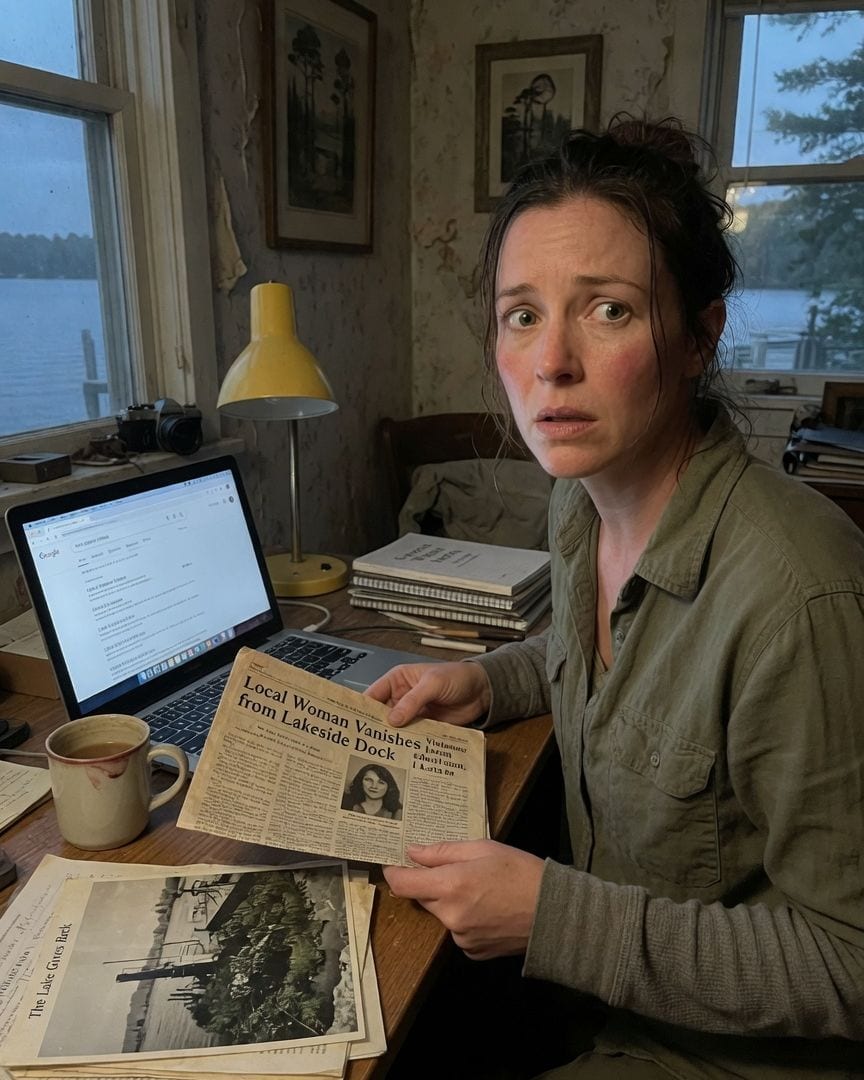
My single dock turned to two. On the impossible second one, a woman stood.
Chasing a quiet life in Cypress Point, I took the ferry across Lake Cypress as I often did, expecting a routine trip. But when I ignored the boatman's warning and looked back, I saw not one dock, but two, side-by-side, with a silent woman standing on the impossible second one. The boatman said nothing, his face impassive, as the image of that impossible figure on the dock gnawed at me.
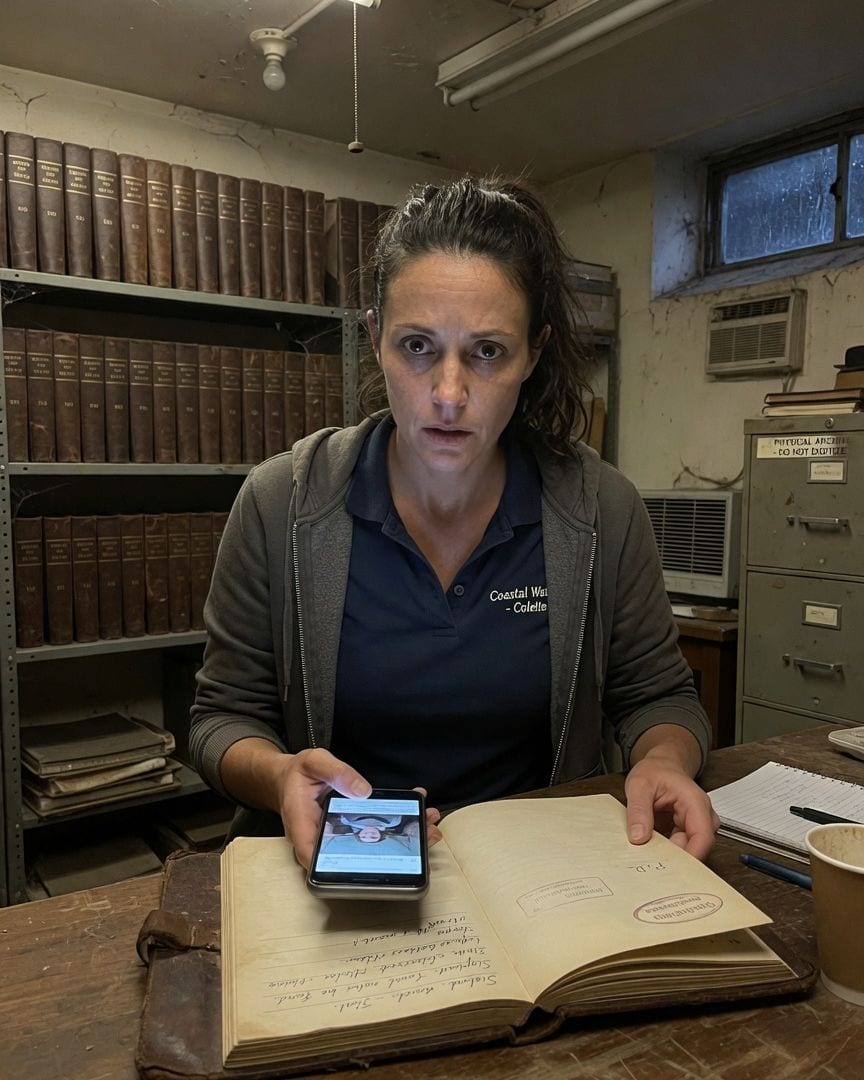
My coastguard log noted Sighting 9 again tonight, a light where no vessel showed. The old logs carry Sighting 9 off Skerry Point at 3:14am every tenth year since 1954, always 'nothing found,' always 'send no boat.'
On my watchtower night shift, the radar screen glowed green and the ocean was quiet. Then, a familiar light appeared off Skerry Point, exactly on cue, just as it had every tenth year for decades. But digging deeper, I found a hidden stamp in an old logbook: 'Operation Skerry. Status: Complete.' It left me with a chilling sense of finality.
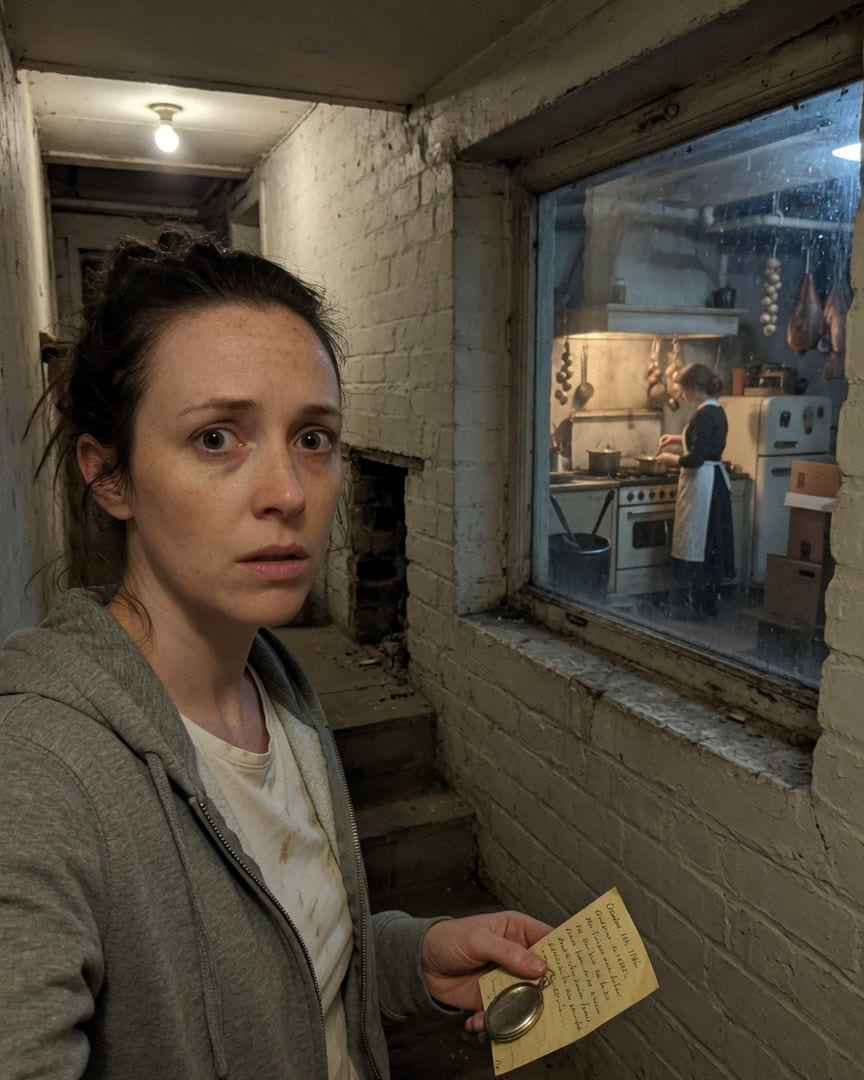
My basement window shows a 1906 kitchen, with a scullery girl and the sound of a poker stirring coals that aren't there.
I've only been in my basement flat a month, still getting used to the city's hum. But my window at pavement level now shows a gaslit kitchen, complete with a bustling scullery girl and the faint sound of coals being poked.