My single dock turned to two. On the impossible second one, a woman stood.
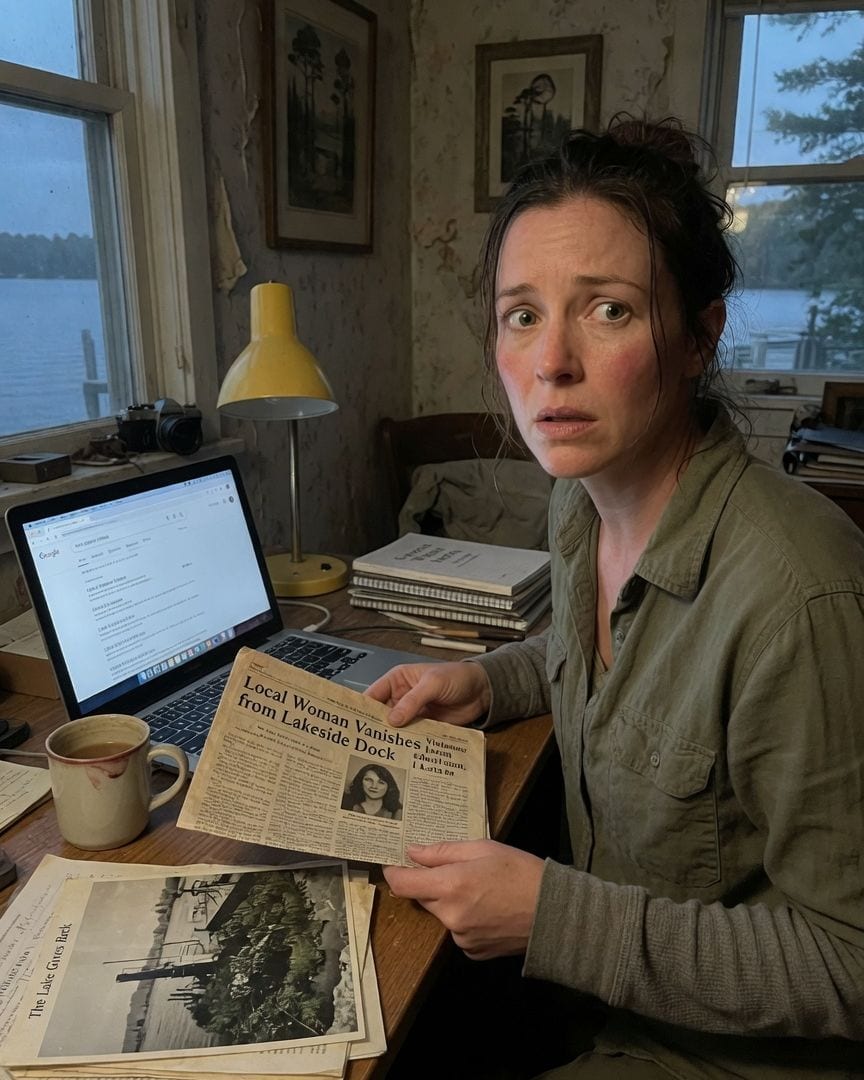
I’m Laura Reynolds, 32. I moved to Cypress Point last spring, chasing the quiet life, hoping to capture it with my camera and my writing.
The isolation, the way the lake wrapped around the town, it felt like a story waiting to be told. Most of that story, I thought, would be about charm.
Today, I was taking the small ferry to the mainland for supplies. It was a routine trip, one I’d done half a dozen times. Everett Prescott, the boatman, was there as always.
He’s about 68, his face a roadmap of lines, carved deep like the weathered wood of his old vessel.
He always gave the same warning, a low rumble from deep in his chest: 'Don't look back at the far shore once you've left it.'
A quaint, folksy rule, I figured, the kind of local color a freelance writer like me lived for. Of course, I looked back.
We were halfway across Lake Cypress, the boat rising and falling gently with the choppy water. The mainland was a hazy line ahead. Curiosity pricked at me. I turned my head, just a quick glance.
The single, familiar dock I'd departed from minutes ago was gone. In its place, or rather, beside it, stood two docks, side-by-side, identical in their weathered gray planks.
And on the new, impossible second dock, where I had been utterly alone just moments before, a figure stood.
It was a woman. Dark hair, slender build, facing the vast expanse of the lake, completely unmoving. Her back was to us, to the town, to me. My mind stalled. It couldn’t process what my eyes were seeing.
A trick of the light? But the details were too sharp, too distinct against the distant treeline. I snapped my head back, turning to Everett, but he wasn’t looking.
His back was to me, his gaze fixed straight ahead on the horizon, his face an impassive mask. He didn’t slow the boat. He didn’t turn. He didn’t speak.
When we finally reached the mainland dock, he just tied off the ropes, his movements economical. I stepped out, my legs feeling strangely heavy. He didn’t ask for money. He never did, for this trip.
I tried to shake off the image of that impossible second dock, the silent figure. It had to be an optical illusion, a reflection, something my eyes conjured from the vastness of the lake, my mind playing tricks.
I told myself that for the next few hours as I shopped. But the image of those two docks, the woman, and Everett’s unnerving silence gnawed at me. Every rational explanation felt flimsy, unsatisfying.
I returned to Cypress Point later that day. Same ferry, same boatman. This time, I kept my eyes fixed forward, forced myself not to look back, though the urge was a physical ache in my chest.
Everett still didn’t charge me. Back in my rented cottage, the unease lingered. I sat down at my laptop and searched online for local folklore about Lake Cypress, for optical illusions, for anything that could explain what I saw.
I found nothing but quaint tales about fishing luck, cold currents, and the occasional lost tourist who wandered off the hiking trails. No second docks, no phantom women. Nothing that touched what I’d witnessed.
The next morning, the unease had sharpened into a persistent itch. More out of desperate curiosity than genuine concern, I decided to visit the tiny local historical archive.
It was housed in a dusty room off the public library, run by Edith Lockwood, a woman in her mid-seventies with sharp, knowing eyes. She seemed to know everything and everyone in Cypress Point.
I browsed aimlessly, running my fingers over brittle book spines. A faded photograph caught my eye – an old shot of the far shore dock, taken decades ago.
In the foreground, almost obscured by a patch of unusual, dark green moss, a small, hand-carved wooden sign was barely visible. I leaned closer, squinting. It read: 'The Lake Gives Back.'
Beneath the photograph, tucked away almost out of sight, as if someone had meant to keep it hidden, was a brittle, yellowed newspaper clipping. It was old, very old, from thirteen years prior.
I carefully extracted the old newspaper clipping, my fingers brushing against the fragile paper. The headline was stark, simple: 'Local Woman Vanishes from Lakeside Dock.'
The article detailed the mysterious disappearance of Vivienne Larsen, 28, last seen near the far shore dock. A small, blurry photograph accompanied the text. My hands trembled as I held it up.
The woman in the picture had dark hair, a slender build, and stood with a slight, almost imperceptible tilt to her head.
There, in the foreground of the photo, near the dock piling, was the same distinctive dark green moss I’d noticed in the larger photograph.
It was the same dock. It was the same dark green moss. It was the same woman.
The silhouette, the posture, the way her arm was held – it was the figure I saw standing on that impossible second dock, where I had been alone just minutes before.
The boatman's silence, the free ride, the 'don't look back' rule, the figure on the dock, the missing woman from thirteen years ago… it all snapped into a horrifying, impossible coherence.
A cold dread settled deep in my bones, a certainty that this wasn't just a coincidence.
The newspaper clipping burned in my mind, a constant, flickering image. I spent the next hour trying to find more about Vivienne Larsen, but the archive's records were frustratingly sparse.
Edith Lockwood, from her desk across the room, watched me with an unnerving calm. Her gaze lingered a moment too long each time I looked up, her eyes like dark, polished stones.
I approached her, feigning a casual curiosity about local history. "Any other notable disappearances from the lake, Edith?" I asked, trying to keep my voice light.
She offered only vague pleasantries. Vivienne, she said, was a "quiet sort" who "moved on." But her eyes, though calm, held a depth I couldn't quite decipher, a knowing glint that contradicted her words.
I spent the entire next day researching. The town’s official history was surprisingly sparse on anything that hinted at unexplained events.
Town council meeting minutes from decades past made fleeting, almost ritualistic mentions of "maintaining the lake's balance" or "the annual passage," usually followed by lists of names for "special maintenance."
The language felt ancient, out of place in a modern town record. But I also found something else: a recurring pattern in the local obituaries and birth records. Every thirteen years, there was a noticeable gap.
Several names simply vanished from the community's paper trail – not deaths, not moves, just an abrupt absence. These gaps often coincided with those strange council meeting entries.
I also started noticing the distinctive dark green moss I saw in the old photograph near the dock.
It was everywhere in the older parts of town, even growing on the foundation of Edith's archive building, clinging to cracks in the stone.
It seemed to thrive in places that had stood for a long time, untouched, almost like a silent witness. It wasn't just near the dock; it was part of the town itself.
I felt increasingly watched. Whenever I ventured near the lake, I caught glimpses of Everett Prescott. Sometimes his boat was moored, sometimes he was just standing on the far shore, watching the water. Or perhaps, watching me.
He never approached, never spoke. But his presence was a constant, unsettling shadow in my periphery. I also started noticing Edith Lockwood's car, an old sedan, parked subtly down the street from my cottage on more than one occasion.
Always just out of direct sight, but there.
One evening, after a particularly fruitless day of searching through microfiche, I returned to my cottage. The front door was slightly ajar. I distinctly remembered locking it, hearing the click. A cold shiver ran down my spine.
Nothing seemed to be missing inside, nothing disturbed. My camera was on the table, my laptop where I’d left it. But then I saw it.
A small, smooth, dark green stone, covered in the same distinctive moss I’d seen in the old photograph and around town, sat neatly on my kitchen counter. Precisely in the center. It hadn't been there when I left.
There was no note, no message, just the stone. A silent, moss-covered warning.
My heart pounded against my ribs. Someone had been in my house. Someone knew what I was looking for. And they wanted me to stop. I picked up the stone.
Its surface was cool and damp, and the moss felt strangely alive beneath my thumb.
The rational explanations – a forgotten lock, a curious neighbor playing a bizarre prank – crumbled under the weight of the deliberate placement and the specific, eerie moss. This wasn't a prank.
It felt like a direct, personal message, a chilling escalation.
The moss-covered stone, cold and heavy in my hand, propelled me back to Edith Lockwood. This time, I dropped the pretense entirely.
I walked straight to her desk, laid the clipping of Vivienne Larsen on the worn wood, then placed the mossy stone beside it, its dampness leaving a faint, dark mark.
"This isn't a coincidence, is it, Edith?" I asked, my voice steady despite the tremor in my hands. "Vivienne Larsen. The second dock. The boatman. The gaps in the records. And this."
Edith picked up the stone, turning it over in her gnarled fingers. Her expression remained unreadable, her gaze distant for a moment. "Some things," she began, her voice raspy, "are older than any record in this room.
Older than this town, even. They are simply… conditions."
She explained that the lake 'claims' a person, every thirteen years, to maintain its calm, its generosity. It’s not malevolent, Edith insisted, just… hungry, and cyclical.
The rule – 'don't look back' – is to prevent the living from seeing the 'exchange,' from being marked.
"You looked back, didn't you?" Edith asked, her gaze piercing, unwavering, meeting mine head-on.
I nodded, unable to lie, the memory of that impossible sight still vivid, sharp enough to cut.
"Then the lake saw you. And it took its payment, not from your wallet, but from your freedom." Edith revealed that the figure I saw was Vivienne Larsen, finally released from her vigil, her 'return' complete.
The second dock is merely a temporary gateway for the exchange, a place of transition. "The town," Edith continued, her voice gaining a quiet authority, "has always honored the cycle. It keeps the rest of us safe.
It keeps the lake from taking more than its due."
I remembered the free boat ride, the boatman’s silence, his constant watch. It wasn't a kind gesture, but a grim acknowledgement of my new status.
The scattered clues – the 'Lake Gives Back' sign, the cyclical disappearances, the boatman's ritual, the strange moss – snapped into a horrifying, cohesive picture.
The folklore isn't folklore at all; it's a meticulously maintained, terrible truth, a covenant of dread.
Edith rose from her desk and walked to a locked, heavy wooden cabinet, tucked away behind a shelf of dusty almanacs.
With a key she wore on a chain around her neck, she opened it, revealing not more dusty archives, but a single, leather-bound ledger, its cover worn smooth with age, the leather almost black.
"This," Edith said, her voice low, "is the true history of Cypress Point. The history of the lake's demands."
She carefully opened the book. Inside, in exquisite, almost calligraphic handwriting, were entries spanning centuries, each page detailing a 'return.' Dates, names, and sometimes a small, hand-drawn symbol.
Edith turned to a page near the end, her finger tracing down the column of names. "Every thirteen years," she murmured, "someone is marked. Someone becomes the next.
My family, the Lockwoods, have been the keepers of this record for longer than memory." Her finger stopped on an empty line, awaiting the next entry.
Then, with a slow, deliberate movement, she pointed to a faint, barely visible sketch in the margin of that line.
It’s a small, intricate drawing of a camera lens, with a distinct, almost familiar, stylized 'L' woven into the design – a symbol I myself use to sign my photographs and my online posts.
Edith's calm, knowing gaze met Laura's across the worn pages of the ledger. Her finger traced the entry for the upcoming 'return' date, stopping on my name, written there in ink that looked decades old.
"It's how it's always been," Edith murmured, her voice soft but absolute. "The lake always takes what it's owed, and someone always has to keep the record."
My breath caught in my throat; I wasn't just investigating a legend, I was already part of its next entry, my fate already inscribed.
The weight of Edith's words and the sight of my own symbol in the ancient ledger crushed me. "My name… it's already here?" I whispered, my voice barely audible, raw with disbelief.
Edith nodded slowly. "Not your name, not yet. But the mark. The lake doesn't care for names until the time comes. It cares for the one who looked back."
She explained that the cycle was a pact, an ancient agreement between the lake and the town, predating any settler's memory.
Generations of Lockwoods had been the keepers of the ledger, the 'witnesses who always knew,' ensuring the 'return' was honored, maintaining the delicate balance.
The boatman, Everett, was another keeper, the one who facilitated the passage and observed the marking, ensuring no one interfered with the lake's due.
"Vivienne Larsen was the last," Edith said, her eyes distant, filled with a profound, ancestral sorrow that seemed to belong to centuries. "She looked back, just like you.
And she stood vigil on that dock for thirteen years, until the lake found its next. Until you."
The town, she clarified, wasn't evil. They were survivors, bound by a terrible necessity. They managed the horror, sacrificing one to protect many, a grim stewardship.
The dates, the disappearances, the quiet complicity of the locals, Everett's stoic demeanor, the free ferry ride, the moss-covered stone – every single unsettling detail I encountered now locked into place, forming a coherent, monstrous pattern.
I wasn't just observing a local legend; I was, from the moment I looked back, being drawn into its inescapable, predetermined rhythm.
I saw the faces of the townspeople, their quiet smiles, their subtle avoidances – not malice, but a desperate, resigned understanding. They knew. They always knew, and now, so did I.
I tried to argue, to plead, to find a way out, my voice raw with desperation. "There has to be another way! I can't just… stand there!"
Edith only shook her head, her face etched with a sorrowful, ancient resignation. "The lake has chosen. To defy it is to invite its wrath upon us all. It will take more than one, and it will take without order."
My mind raced, desperate for an escape. I considered fleeing Cypress Point, but where would I go? The lake's claim, Edith implied, was not bound by geography, by state lines or distant cities.
And the town, in its quiet, unified desperation, would ensure the cycle was completed, for their own survival. I saw Everett Prescott on the lake, his boat a small, dark silhouette against the setting sun.
He wasn't just a boatman; he was a guardian, an enforcer of the ancient pact. The realization hit me with chilling finality: there was no escape. The pattern had closed around me. The town's survival depended on my 'return.'
As the days ticked down to the date marked in the ledger, a strange, profound calm settled over me. It wasn't acceptance, not exactly, but a deep, bone-weary understanding of my fate.
I spent my final days walking the familiar paths of Cypress Point, taking photographs, capturing the faces of the people who would live on because of me. I saw the quiet gratitude in their eyes, tinged with pity.
On the evening of the 'return,' a heavy mist rolled in from the lake, swallowing the town in a shroud of gray. I walked to the dock, the one I departed from that first day.
Everett Prescott was there, waiting in his boat, impassive as ever. He gestured for me to step aboard. I looked back at the town one last time, a community bound by a terrible secret, preserved by a monstrous pact.
I stepped onto the boat. Everett pushed off, and we glided silently through the mist towards the far shore.
The boat cut through the mist, silent, towards the far shore. I looked straight ahead. I didn't look back. I couldn't. I knew what would be waiting for me there, and what I would become.
Everett guided the boat to the single dock. I stepped off, my feet finding the familiar wood. He didn't speak. He didn't look at me.
He just turned the boat and silently began the journey back across the lake, disappearing into the receding mist. I stood there, watching him go, then turned to face the vast, dark water. I was alone, but not truly.
I could feel the lake's cold presence, a deep, ancient hunger. I was no longer Laura Reynolds, the newcomer. I was the placeholder. The next one.
The lake had claimed me, and I was now part of its endless, silent vigil. I had looked back once. I would never look back again.
Days later, a fisherman passing the far shore dock sees a figure standing there, unmoving, facing the lake. He slows his boat, squinting through the morning haze.
The figure is indistinct, a silhouette against the distant hills, but the posture is familiar. He shrugs, used to the strange quietness of the lake, and continues on his way. The lake is calm. It always is, after a return.
He notes the faint, familiar scent of cypress and damp earth on the wind. It's the same scent that always accompanies the calm after a long wait.
If this one got to you
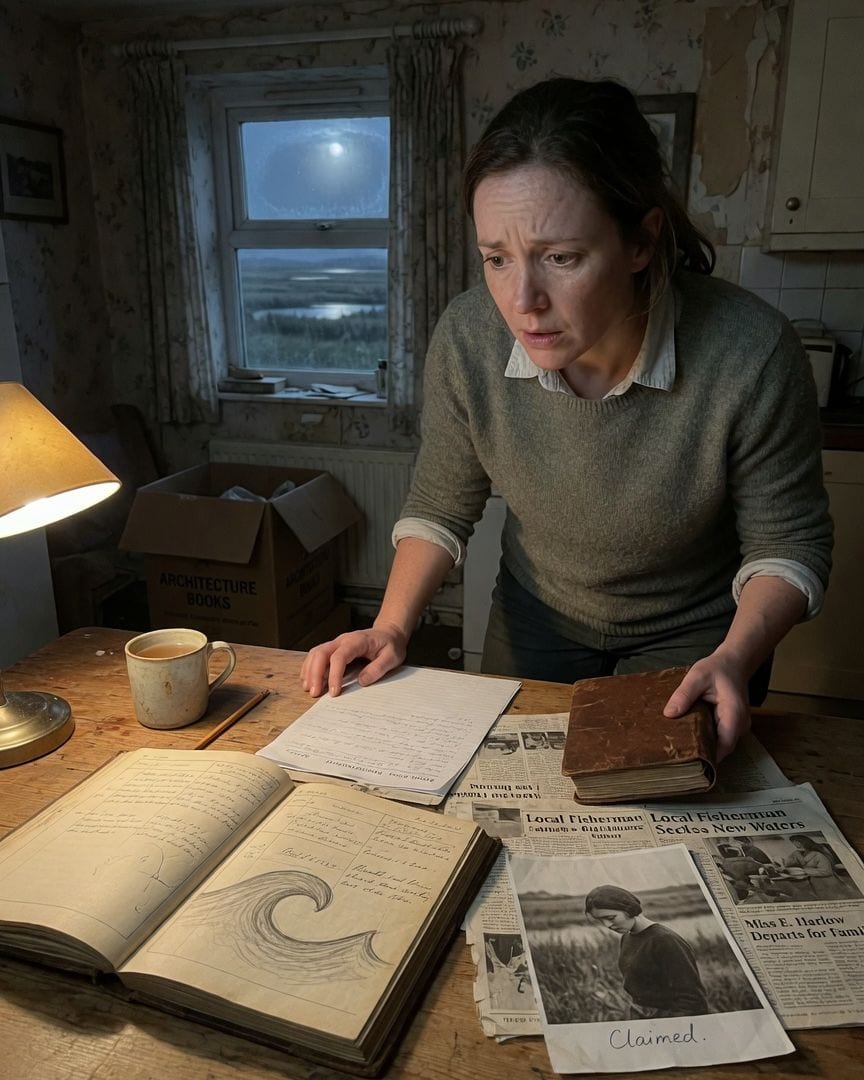
The light crosses the estuary on six specific nights a year. My ferryman called it marsh gas, but the coastguard's log entries for it stop abruptly and resume in a new hand.
I moved to Blackwater Bay for a fresh start, but the quiet marsh holds a secret. One night, I saw a strange light gliding across the mudflats, which the ferryman dismissed as 'marsh gas.' Later, an old coastguard log revealed entries for this 'estuary light' abruptly stop mid-sentence, then resume in a different, shaky hand.
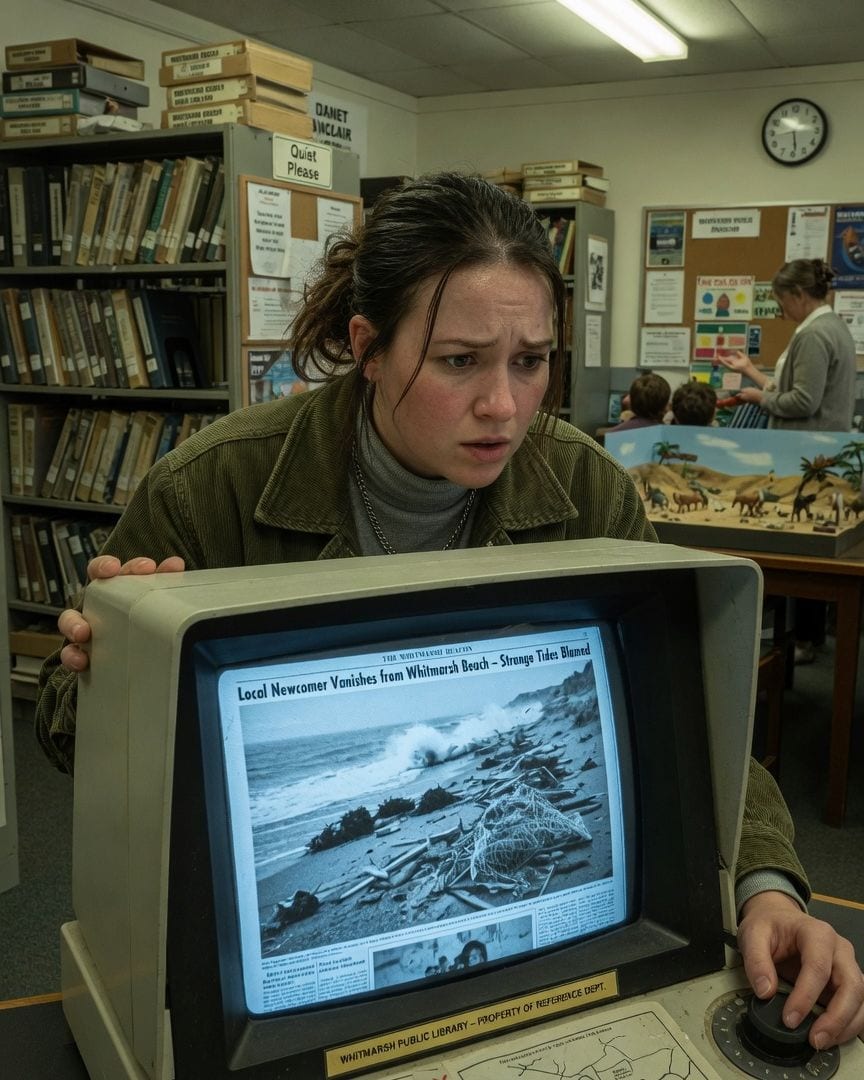
Every Whit Monday, the local paper runs the same empty beach photo. The tide line never changes, though the year does.
Since moving to Whitmarsh, I've spent months at the public library researching old newspapers. My librarian always subtly steered me away from certain dates, but I noticed a chilling pattern: 59 consecutive years of *The Whitmarsh Beacon* featured the exact same photo of an empty, still beach. Then I found the 1964 edition, and its front page screamed about a vanished newcomer and strange, chaotic tides.
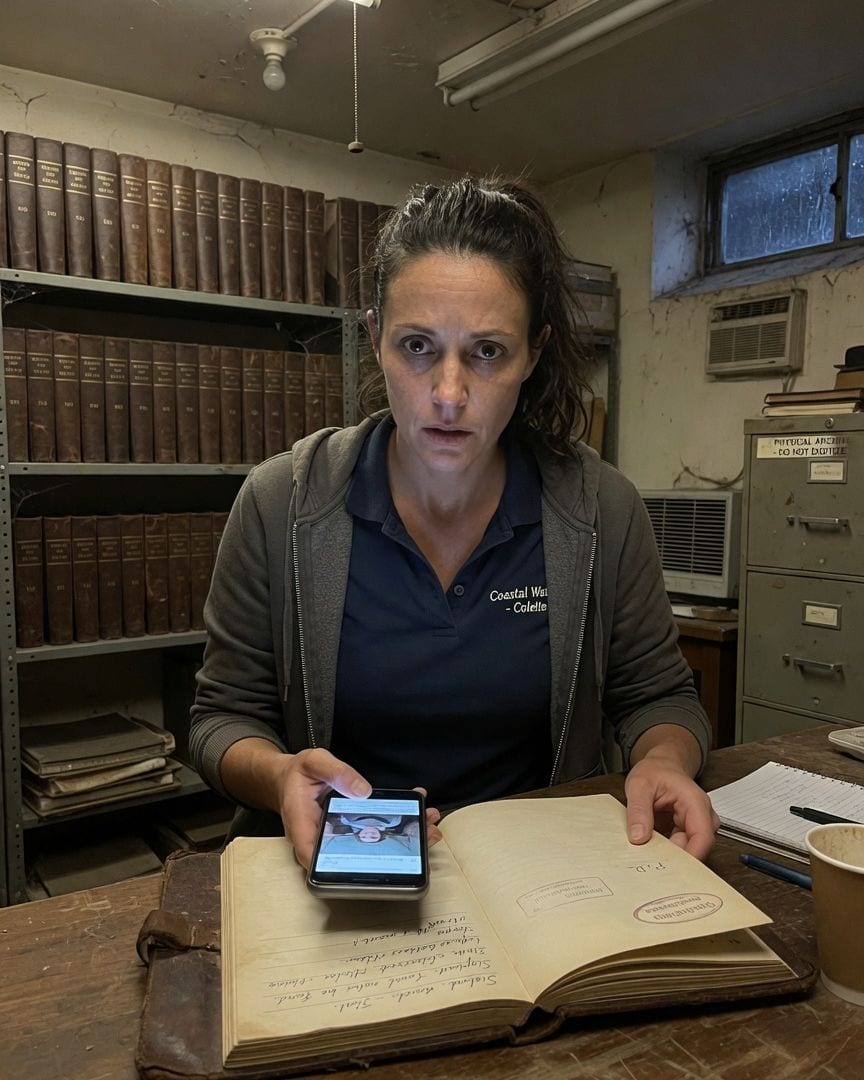
My coastguard log noted Sighting 9 again tonight, a light where no vessel showed. The old logs carry Sighting 9 off Skerry Point at 3:14am every tenth year since 1954, always 'nothing found,' always 'send no boat.'
On my watchtower night shift, the radar screen glowed green and the ocean was quiet. Then, a familiar light appeared off Skerry Point, exactly on cue, just as it had every tenth year for decades. But digging deeper, I found a hidden stamp in an old logbook: 'Operation Skerry. Status: Complete.' It left me with a chilling sense of finality.
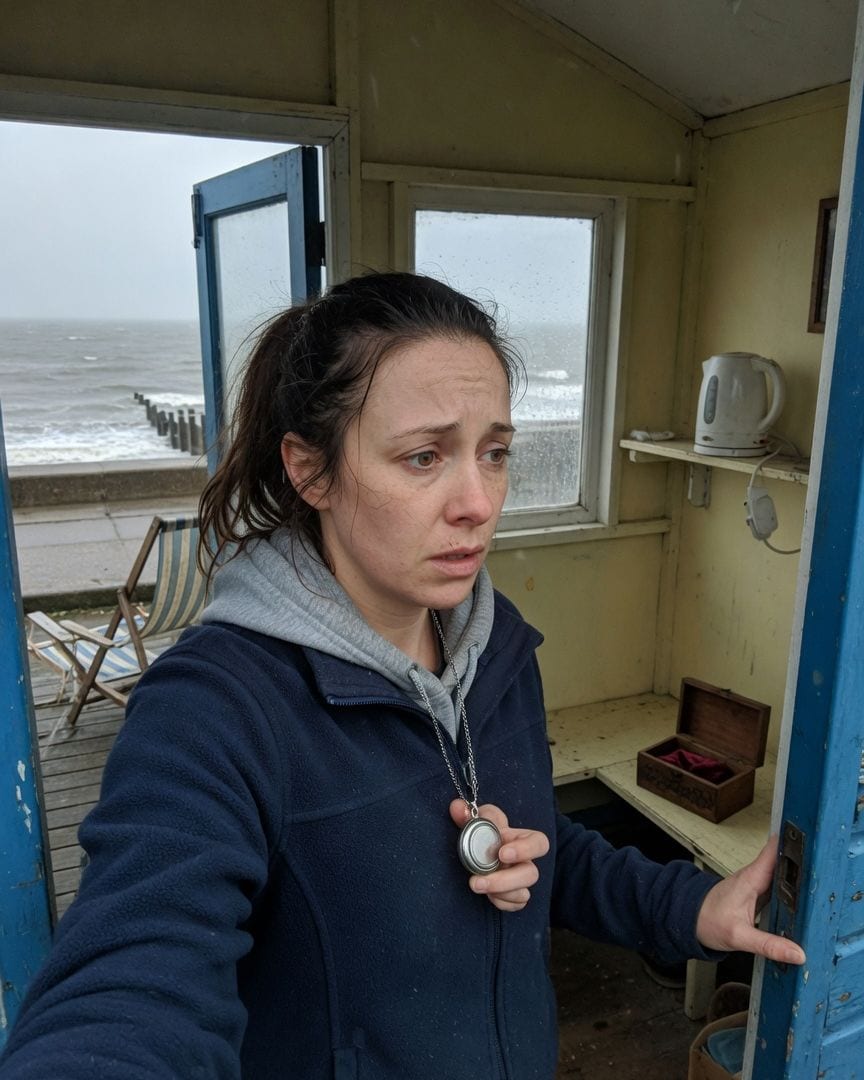
My beach huts run 1 to 60. On Sunday, past 60, was a Hut 61, weathered, with a kettle warm inside, and no record of it ever existing.
I've managed the sixty beach huts on the promenade for five years, knowing every detail. But one Sunday, a new one appeared: Hut 61. Inside, the air was warm and a kettle still steaming, as if someone had just stepped away, yet my booking book holds no record of it.
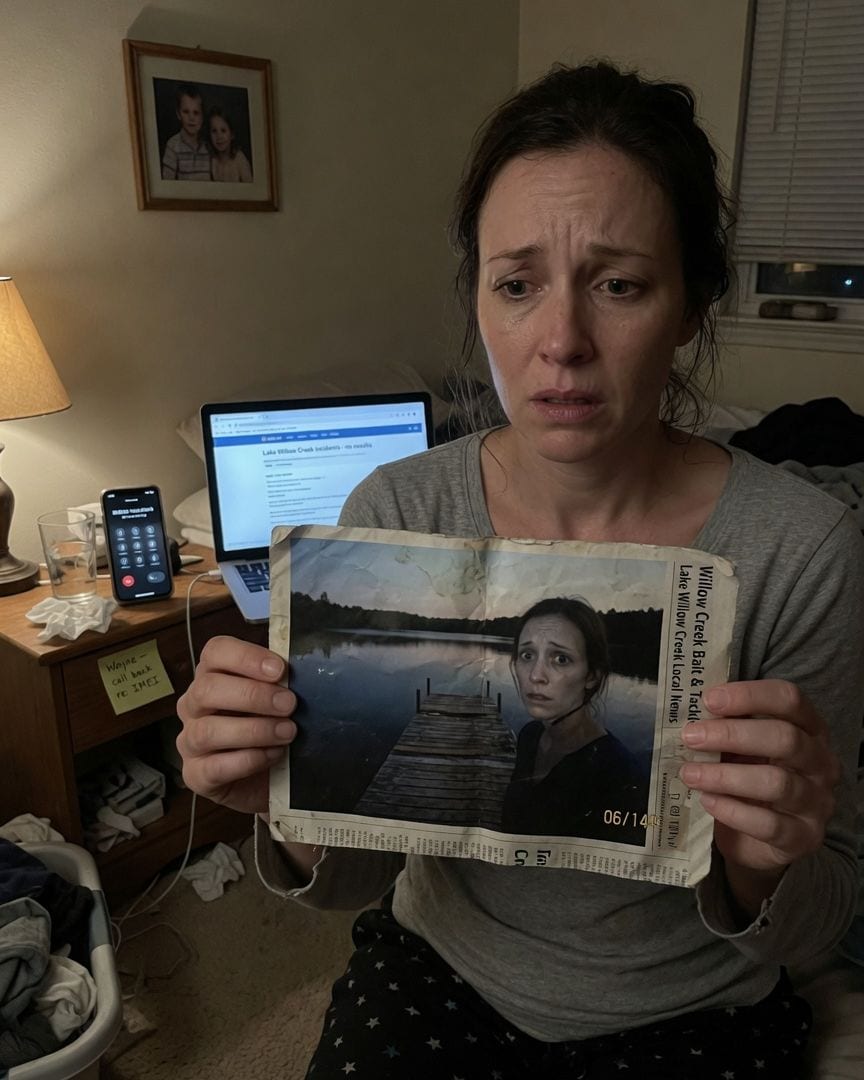
My voice called my sister at 3 AM, telling her not to worry about 'the lake.' I was asleep, my phone off, and nothing happened at any lake.
My sister received a chilling 3 AM call from my phone, my own voice warning her about a lake I'd never been to. I was asleep in my bed, hundreds of miles away. Then, a water-damaged package arrived containing a photo of me, terrified, at that very lake, dated a day I was three states away.
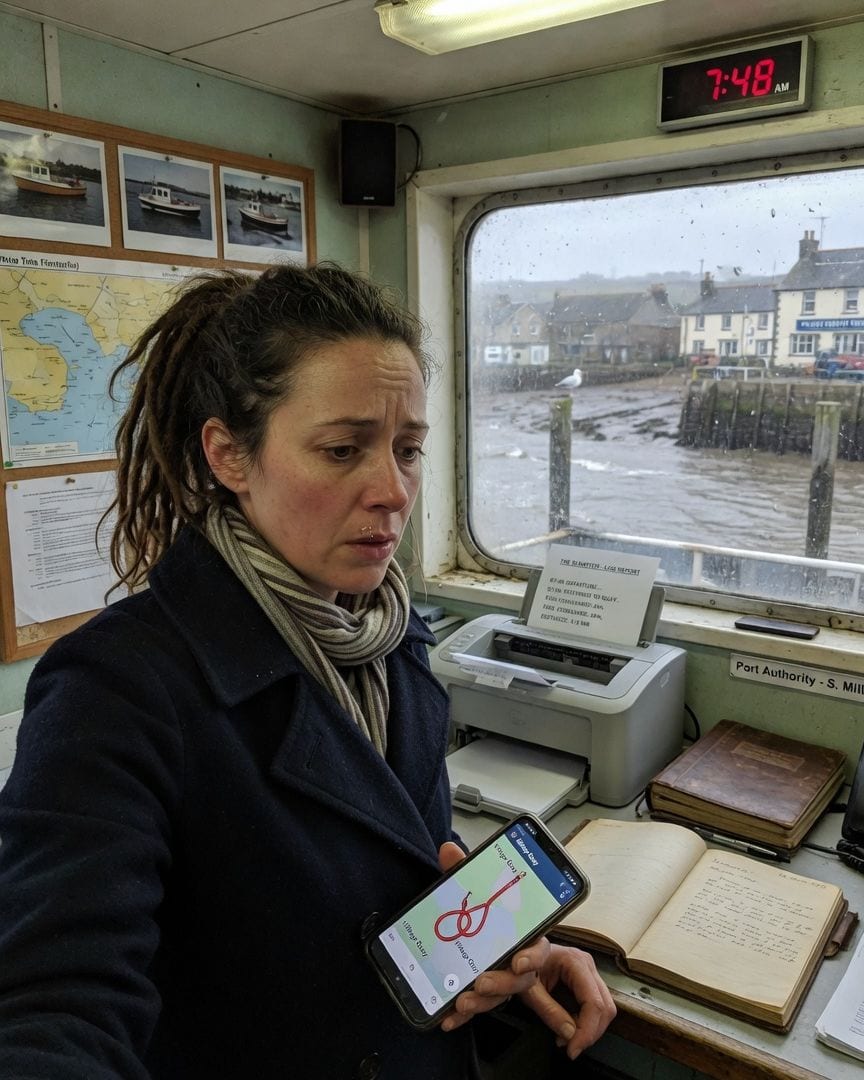
My morning ferry crossed for 40 minutes. The destination town just disappeared.
I board 'The Seawitch' every Tuesday for the familiar eight-minute estuary crossing. But this morning, after making good time, Captain Bernard and I watched the town quay simply fail to appear. Instead, our ferry repeatedly returned to the very same village quay we'd just left, despite burning fuel and advancing the clock.