Every Whit Monday, the local paper runs the same empty beach photo. The tide line never changes, though the year does.
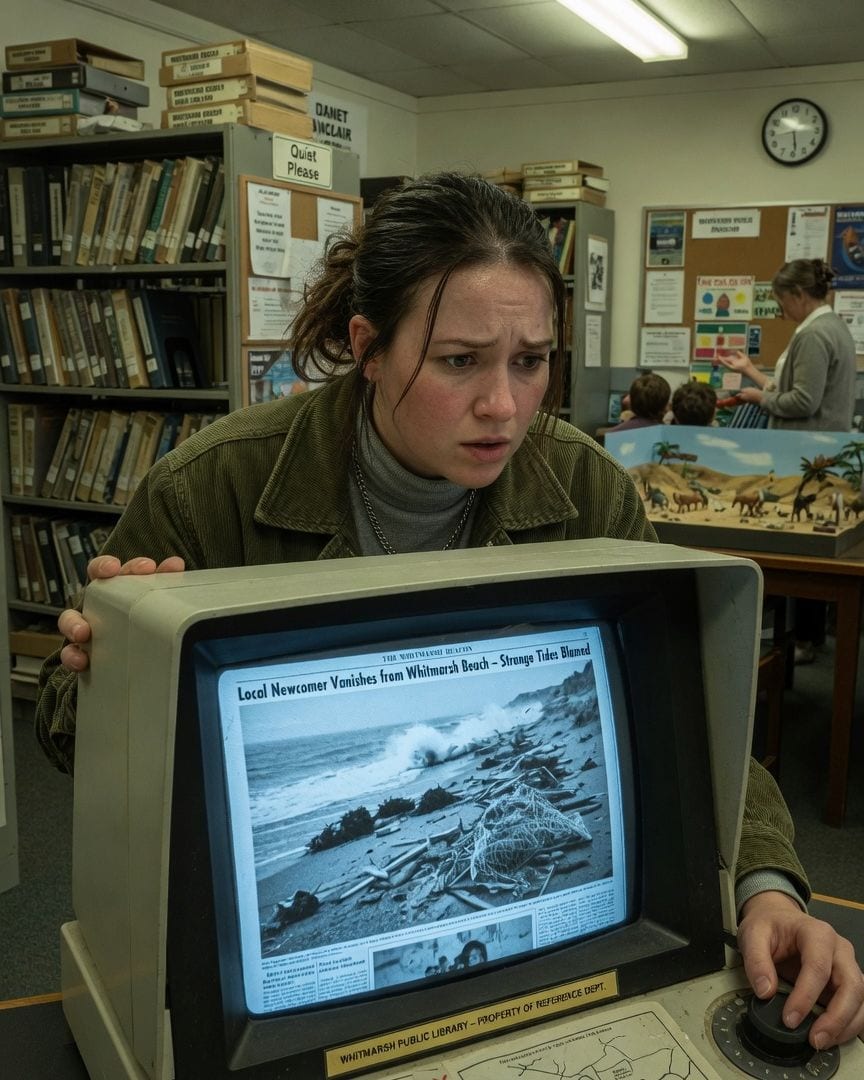
The hum of the microfiche machine usually soothed me.
It was a familiar, mechanical lullaby in the quiet of the Whitmarsh Public Library, a sound I’d grown fond of since moving here a few months ago for my historical society project.
But today, it felt like a persistent, low thrum against my teeth.
Janet Sinclair, the librarian, sat beside me. Her eyes, usually kind, seemed strangely still, like polished stones. She was ostensibly 'helping' me navigate the reels of old local newspapers, The Whitmarsh Beacon.
More often, her hand would hover, a delicate, almost imperceptible nudge, guiding my own past certain dates. 'Nothing of interest there, dear,' she’d murmur, her voice soft as sand, the kind of voice that smoothed over sharp edges.
But I'd noticed a pattern. Not in the headlines Janet seemed to think were 'of interest,' but in the ones she steered me away from, specifically the Whit Monday editions.
For fifty-nine consecutive years, starting in 1965, the front page carried the exact same photograph. An empty stretch of beach, perfectly still. No footprints, no waves, just a flat, gray expanse meeting a perfectly level tide line.
The year changed, the headlines around it shifted, but that photograph, that tide line, never did. It was a frozen moment, looped sixty times over, a quiet impossibility staring back from the past.
I tried to dismiss it as an artistic choice, a local tradition, but the precise, unchanging nature of it nagged at me. It wasn't just similar; it was identical, down to the last grain of sand.
The next day, Janet was busy helping a group of schoolchildren with a diorama project, her back turned, her murmurs about 'local fauna' filling the main room. I seized the opportunity.
I returned to the microfiche machine, the plastic slider cool under my fingers. I scrolled back, past the beginning of the unchanging photo series, past 1965, searching for those 'nothing of interest' reels she'd subtly avoided.
My heart gave a little jolt as the screen flickered, the dates rolling backward into the early sixties.
And then I found it: the Whit Monday edition of 1964.
The front page wasn't the familiar empty beach. Instead, it was a blurry, chaotic photograph of that same stretch of shore, but ravaged.
Debris was scattered across the sand – splintered wood, what looked like torn netting, dark clumps of seaweed – and the tide line was impossibly high, churning foam reaching the very base of the dunes.
The headline screamed, stark and unsettling: 'Local Newcomer Vanishes from Whitmarsh Beach – Strange Tides Blamed.'
The article detailed the mysterious disappearance of a woman named Vivian Norwood, new to town, last seen walking the beach at dusk on Whit Monday. It described an unprecedented surge, a 'rogue wave' that pulled her under.
The language was almost breathless, full of words like 'unfathomable' and 'unprecedented.'
Below the main story, almost as an afterthought, a small, almost unnoticeable paragraph reported on the town council's urgent meeting that same week, discussing 'measures to ensure future stability of the shore.'
Not a natural disaster, then, but something that prompted an official response, a promise of prevention.
A chill ran down my spine, tightening around my throat. This wasn't just a story about a tragic accident.
This was something that had broken the pattern, something that the unchanging photos that followed were trying, with eerie diligence, to paper over.
Driven by a gut feeling, a cold claw gripping my chest, I scrolled further, past the main article, into the classifieds and local notices of that 1964 paper.
The microfiche whirred, each click of the scroll wheel a punch in the silence. Tucked away on page seven, under 'Community Announcements,' I found a small, hand-drawn map of the beach, stark in its simplicity.
It was marked with a red 'X' and a cryptic caption: 'The Line Must Hold.' The map was crudely drawn, a child's understanding of contours, but the 'X' precisely matched the spot where Vivian Norwood was last seen.
And then, at the bottom of that same page, a tiny, almost hidden memorial notice for a 'Thomas Carver,' a local fisherman, who had 'lost his way at sea' that same Whit Monday.
His boat, it read, was found empty near the marked spot. Two disappearances, on the same day, from the same place.
I scrolled back, my finger trembling on the dial, to the chaotic front page. The grainy photograph filled the screen again, debris, churning foam, the impossibly high tide. My eyes strained, pushing past the blur and the static.
In the distant surf, just where the waves broke violently against the rising water, a single, indistinct dark shape seemed to be pulling something under.
My investigation deepened. The Whitmarsh Historical Society project, my reason for being here, felt increasingly like a cover story. I needed answers, something concrete beyond the shifting sands of old newsprint.
I paid a visit to Nathaniel Brooks, an old-timer whose house overlooked the beach, his face weathered like driftwood. He answered the door with a slight smile and invited me in, offering weak tea that tasted faintly of salt.
He listened to my questions about the 1964 disappearance, the strange tides, the council meetings, with an unnerving calm. His gaze, fixed on the distant horizon line visible through his kitchen window, never wavered.
'The sea gives things back, and it takes,' he said, his voice a low rumble, like distant surf. He took a slow sip of his tea. 'Best not to disturb it, especially on Whit Monday.
The shore has its own ways, its own temperament.' He recounted vague tales of 'respecting the shore' and 'leaving things be,' his words heavy with an unspoken meaning I couldn't quite grasp.
He offered no concrete details about Vivian Norwood or Thomas Carver, only quiet warnings that felt less like advice and more like veiled threats.
The air in his small, neat living room felt thick with unspoken history, the old timbers groaning faintly as if listening in.
I spent hours in the library, when Janet was out for lunch or distracted. I dug into town records, not just newspapers, but council minutes, old land deeds, even census data.
I found a curious pattern: every few decades, around Whit Monday, there were brief, almost euphemistic mentions of 'shoreline anomalies' or 'unusual currents' in town council minutes.
These were always followed by a swift, unanimous vote to 'reinforce existing protocols' or 'reaffirm community commitments.' The language was designed to obscure, to minimize, but the frequency was undeniable. And then I cross-referenced dates.
The Whitmarsh Beacon began its unchanging beach photo tradition the very next Whit Monday after Vivian Norwood and Thomas Carver vanished. It was too precise, too deliberate, as if making a silent pledge, a permanent act of placation.
As I continued to dig, the quiet unease of Whitmarsh solidified into something more personal. It started subtly, then became undeniable.
Nathaniel Brooks seemed to appear wherever I went – at the general store when I was buying groceries, walking his dog past my apartment building, even sitting on a bench outside the library, always with that same placid, unreadable expression.
He never approached, never spoke, just watched. His presence was like a cold, slow tide, inexorably rising around me.
One morning, I found a small, folded note tucked under my car's windshield wiper. It was written in elegant, looping script, on aged, slightly brittle paper: 'Let sleeping tides lie. Some stories are best left unread.'
There was no signature, but the paper felt familiar, like old library stock, the same stock I’d seen Janet handling. My breath hitched. Someone knew. Someone was watching me more closely than I’d realized.
The townspeople, once politely indifferent, now eyed me with a subtle shift in their demeanor. A flicker of apprehension in their eyes when I caught their gaze, a quick withdrawal of eye contact when I tried to offer a smile.
It was as if I was an unwelcome ripple in a perfectly still pond, and the pond was starting to push back.
The fear was no longer abstract; it was a cold hand on my shoulder, a knowing glance across a crowded room. It felt less like I was investigating a mystery and more like I was being investigated myself.
The air around me seemed to grow heavier, pressing in from all sides. Someone in town, likely Janet, knew exactly what I was uncovering.
The weight of it all became unbearable. I found Janet Sinclair in the library's back office, meticulously stacking a cart full of returned books.
I laid out my findings on her desk, one by one: the 1964 disappearance of Vivian Norwood and Thomas Carver, the start of the unchanging photos the very next year, the cryptic town council minutes, the anonymous note on my car.
The fluorescent lights hummed above us, casting a sterile glow on the ancient, dusty room.
Janet’s placid demeanor finally cracked. A tremor ran through her hand, causing a stack of old almanacs to teeter precariously.
'You shouldn't have gone looking, dear,' she whispered, her gaze darting to the empty microfiche machine in the main room, as if it might betray us. Her voice was barely audible above the low groan of the old building.
I pressed her, my own voice tight with a mixture of fear and adrenaline. 'What about Vivian Norwood? What about Thomas Carver? What were the "measures" and "protocols" they kept talking about?'
Janet sighed, a deep, weary sound that seemed to carry the weight of generations. She clasped her hands, knuckles white. 'The photos... they're part of the arrangement. A promise, you see. To keep the peace.'
She paused, her eyes, usually so still, now held a haunted depth. 'There’s something ancient, in the deep. Tied to the beach, especially on Whit Monday. It asks for... recognition. And stillness. It takes, sometimes. And it... gives back.'
My blood ran cold. "It takes and gives back?" I repeated, the words feeling alien on my tongue.
She nodded slowly. 'Vivian Norwood was an outsider. She didn't know the rules. She disturbed the balance by being on the beach after dark on Whit Monday. Thomas Carver tried to... intervene. He learned the hard way.'
Janet’s voice dropped to a near whisper. 'The town had to... adjust. To show it understood. To keep it quiet. The photos are a daily reminder, a yearly pledge. Proof of our compliance.'
The room, already quiet, seemed to hold its breath. I felt a visceral shift in my understanding. The unchanging photo wasn't just a record of stillness; it was a ritual. A reassurance to whatever lurked beneath the tide.
A sign that Whitmarsh remembered its place, knew its boundaries. The 'rogue wave' and 'strange currents' of 1964 re-meaninged into something far more deliberate, far more terrifying than any natural disaster.
The local legend wasn't a story; it was a living, breathing set of rules. And the town had been living by them for generations. My chest felt tight, constricted. The dread wasn't just creeping anymore; it was a crushing weight.
Disturbed by Janet’s admission, the quiet horror of her words echoing in my head, I knew I couldn’t wait. I returned to the library late that night, the borrowed key cold and heavy in my palm.
The old building creaked and sighed around me as I moved through the stacks, a phantom whisper in the darkness. I wasn’t looking for newspapers anymore. I was searching for 'returns.'
Deep in a dusty archive room, past shelves of obsolete encyclopedias and forgotten tax documents, I found it. A hidden ledger, bound in worn leather, its cover titled, in faded gold leaf: 'Shoreline Adjustments.'
My hands trembled as I opened it. The pages were yellowed, brittle, filled with elegant, looping script – the same hand, I realized with a jolt, that had penned the anonymous note on my car.
I flipped through it, my eyes scanning the entries. Names, dates, brief notations. People who had vanished. Then, years later, reappeared. Seamlessly integrated into Whitmarsh, often under new names, or subtly altered.
'Vivian Norwood,' it read, 'claimed 1964, returned 1970 as Sophia Norwood, married Thomas Carver's nephew, Albert.' A profound chill ran down my spine, so cold it felt like ice in my veins.
The missing fisherman, Thomas Carver, also reappeared: 'returned 1968, assumed role of harbor master.' Each 'returned' entry noted a 'newfound calm' or 'unfailing serenity.' Their lives, re-stitched. Their identities, absorbed.
My breath hitched. I flipped to the very last page, my fingers brushing against the rough paper.
A fresh entry, crudely scrawled, the ink a slightly darker shade than the rest, almost certainly Janet Sinclair’s hand, still smudged at the edges.
'Mitchell, Emily – Whit Monday, 2025.'
The ink was still fresh, slightly smudged, and she recognized the looping hand from the anonymous note on her car.
I clutched the ledger to my chest, its worn leather biting into my skin, and stumbled out into the pre-dawn light, straight to Nathaniel Brooks's beachside home.
The first pale light of morning was just painting the horizon, turning the sea a dull, metallic grey. He answered my urgent pounding almost immediately, as if he’d been expecting me.
He invited me in, his expression serene, completely unperturbed by my trembling accusation, the wild fear in my eyes. He offered me the same weak tea, the familiar scent of salt and old wood filling the air.
'Ah, the ledger,' he said, a faint, sad smile on his lips, as I dropped the heavy book onto his kitchen table, pages splayed open to my name. 'A necessary record.'
He settled into his chair, watching me with those calm, sea-deep eyes. He seemed utterly unconcerned, as if discussing the weather.
He began to explain, his voice a quiet, measured drone, and in that small, sun-dappled kitchen, the full 'arrangement' unfolded around me, horrifying in its stark coherence. The entity in the deep, he called it 'The Tide-Keeper.'
It maintained the town's prosperity and quiet existence, but in return, it demanded respect. And, occasionally, an 'adjustment' to the shoreline population. The folk rule – never disturb the beach on Whit Monday after dark – was paramount.
'Vivian Norwood broke it,' he explained, gesturing vaguely towards the window overlooking the now-calm beach. 'An outsider, as you are, she thought herself exempt from our quiet traditions. And Thomas Carver...
he loved the sea, but he thought he could fight it. You don't fight the tide, Emily. You respect it.'
The Tide-Keeper, he said, claimed them both. The town, in its ancient wisdom, initiated the unchanging photo tradition as a constant, visible pledge of adherence, a way to 'show' compliance without further loss.
The photos were a peace offering, a yearly reaffirmation of their place.
And the 'returned'? They were vessels, he told me, his gaze unflinching. Shells. Their original selves absorbed, integrated into the deep, their bodies re-purposed to maintain the town's quiet vigilance.
Their 'newfound calm,' their 'unfailing serenity,' were simply the signs of a successful return. He explained that my digging, my disruption of the historical quiet, my relentless search for answers, had upset the delicate balance.
I wasn't just a witness; I was now part of the cycle. Chosen to restore the equilibrium.
The scattered dates, the names, the unchanging tide line, the town's placid acceptance – it all snapped into a monstrous, coherent shape.
I was never an outsider looking in; I had always been walking into the pattern, every step pulling the tide in after me.
The air in his kitchen felt suddenly heavy, ancient, as if the very walls had been breathing this truth for centuries.
Dread, cold and coiling, choked me. I didn't say a word. I bolted from Nathaniel's house, the ledger still on his table. I fumbled for my car keys, my hands shaking so violently I nearly dropped them.
The engine sputtered once, twice, then roared to life. I threw the car into reverse, tires spitting gravel from Nathaniel’s driveway, desperate to escape Whitmarsh, to leave this quiet, ancient horror behind.
But as I sped down the narrow coastal road, I saw them. Townspeople. Not in a mob, not menacingly, but simply… standing.
Nathaniel Brooks was in the middle of the road ahead, calm as ever, his silhouette framed by the setting sun, which was now a lurid orange.
Other figures emerged from their quiet homes, standing on their porches, in their gardens, by their mailboxes. Janet Sinclair stood by the library, her expression serene, a book held loosely in one hand.
They weren't blocking me physically, not with force, but their sheer, pervasive presence formed an unyielding wall. Their faces were all the same: a subtle, unreadable calm, the 'unfailing serenity' described in the ledger. They watched me, silent, waiting.
I slammed on the brakes, the car skidding to a halt mere feet from Nathaniel. The smell of burning rubber filled the air. I tried to turn, to find another route, but every side street, every lane, was similarly 'guarded.'
A figure stood at each entrance, a silent, knowing sentinel. There was no escape. The town wasn't stopping me; it was simply allowing the inevitable to unfold.
The sea air, once fresh and invigorating, now felt heavy, ancient, and endlessly patient. I saw my reflection in the rearview mirror, my face contorted in terror, streaked with tears.
A horrifying thought surfaced, chilling me to the bone: this is the last time I will see myself.
Emily Mitchell's car was found abandoned on the main road leading out of Whitmarsh, keys still in the ignition. Her apartment was quietly cleared out by the landlord, its contents donated. No missing person report was filed.
The Whitmarsh Beacon ran its usual empty beach photograph on Whit Monday, 2025, the tide line perfectly still. The town moved on, its quiet rhythm unbroken.
A new face was seen around town a few months later, a young woman with a polite smile and eyes that held a peculiar, unwavering calm.
A year later, the Whitmarsh Historical Society welcomed a new volunteer, a quiet woman named Emily, who had a remarkable knack for local history, and never missed a Whit Monday stroll along the beach, always before dusk.
She never spoke of the past, only of the town's enduring peace. Sometimes, Nathaniel Brooks would nod to her as she passed, a faint, knowing smile on his lips.
She always returned it, her own smile just as serene, just as unreadable.
Nathaniel Brooks watched the new Emily walk past his house, heading towards the shore. The tide was coming in, but her stride was unhurried. He raised his hand in a silent greeting. She paused, turned, and met his gaze.
'Lovely day for it,' he murmured. Her eyes, once so bright with curiosity, were now still and deep, like the sea itself. 'It is,' she replied, her voice soft, 'the tide always returns what it takes.'
If this one got to you
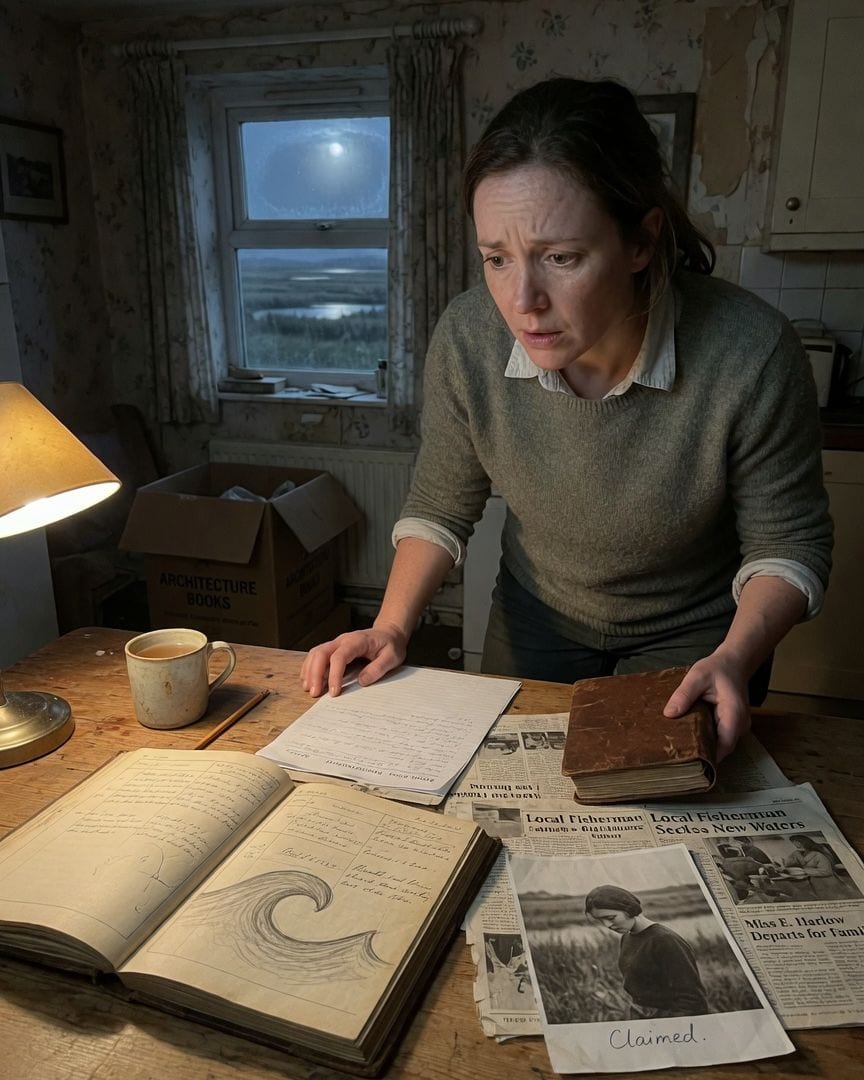
The light crosses the estuary on six specific nights a year. My ferryman called it marsh gas, but the coastguard's log entries for it stop abruptly and resume in a new hand.
I moved to Blackwater Bay for a fresh start, but the quiet marsh holds a secret. One night, I saw a strange light gliding across the mudflats, which the ferryman dismissed as 'marsh gas.' Later, an old coastguard log revealed entries for this 'estuary light' abruptly stop mid-sentence, then resume in a different, shaky hand.
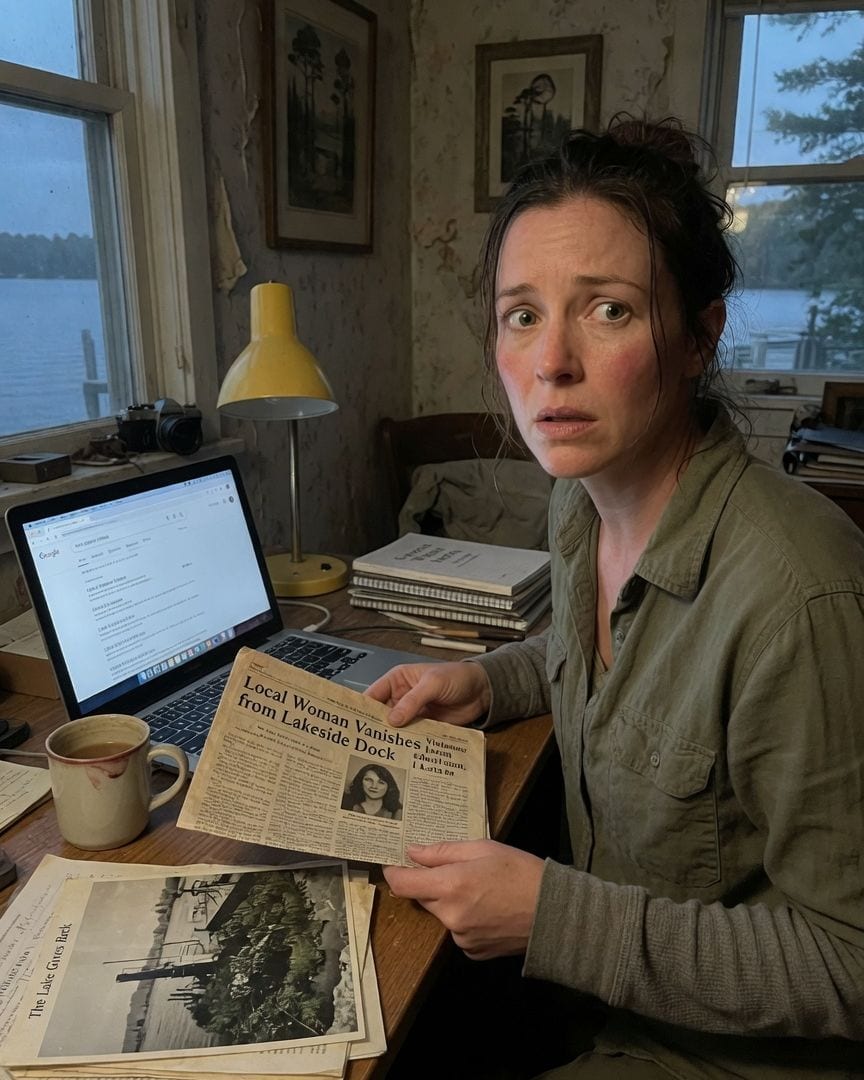
My single dock turned to two. On the impossible second one, a woman stood.
Chasing a quiet life in Cypress Point, I took the ferry across Lake Cypress as I often did, expecting a routine trip. But when I ignored the boatman's warning and looked back, I saw not one dock, but two, side-by-side, with a silent woman standing on the impossible second one. The boatman said nothing, his face impassive, as the image of that impossible figure on the dock gnawed at me.
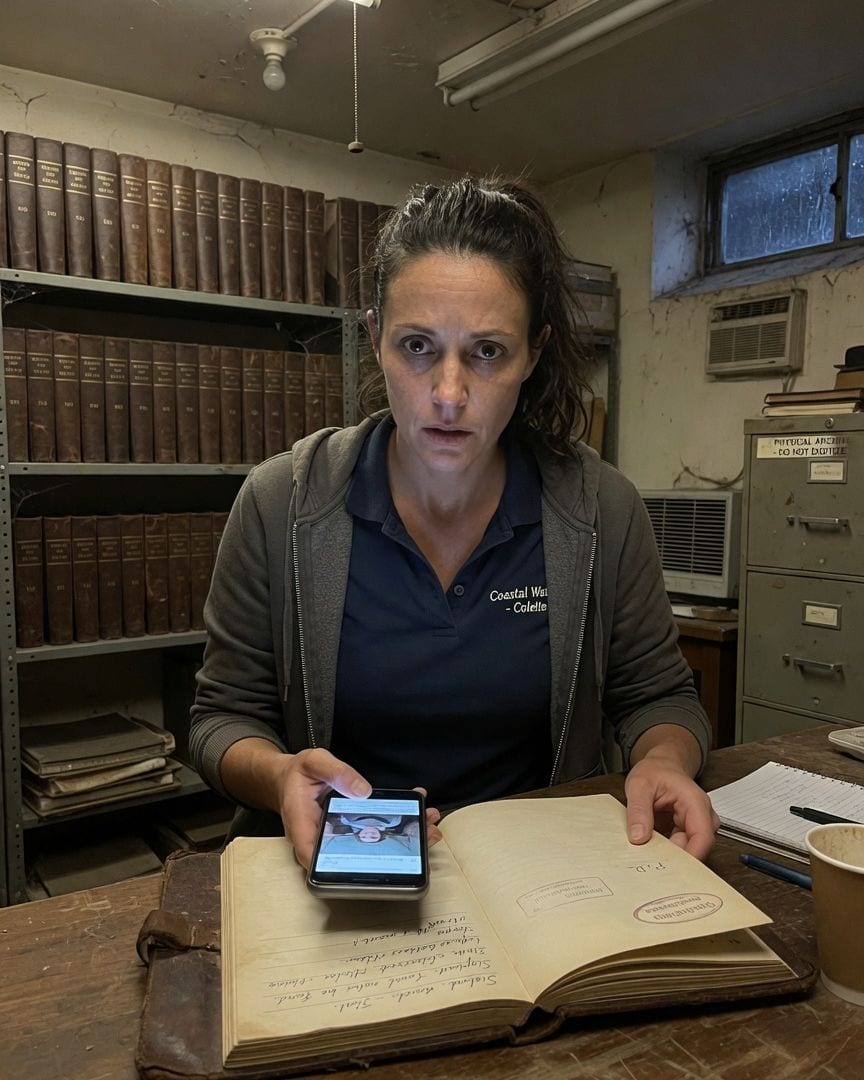
My coastguard log noted Sighting 9 again tonight, a light where no vessel showed. The old logs carry Sighting 9 off Skerry Point at 3:14am every tenth year since 1954, always 'nothing found,' always 'send no boat.'
On my watchtower night shift, the radar screen glowed green and the ocean was quiet. Then, a familiar light appeared off Skerry Point, exactly on cue, just as it had every tenth year for decades. But digging deeper, I found a hidden stamp in an old logbook: 'Operation Skerry. Status: Complete.' It left me with a chilling sense of finality.
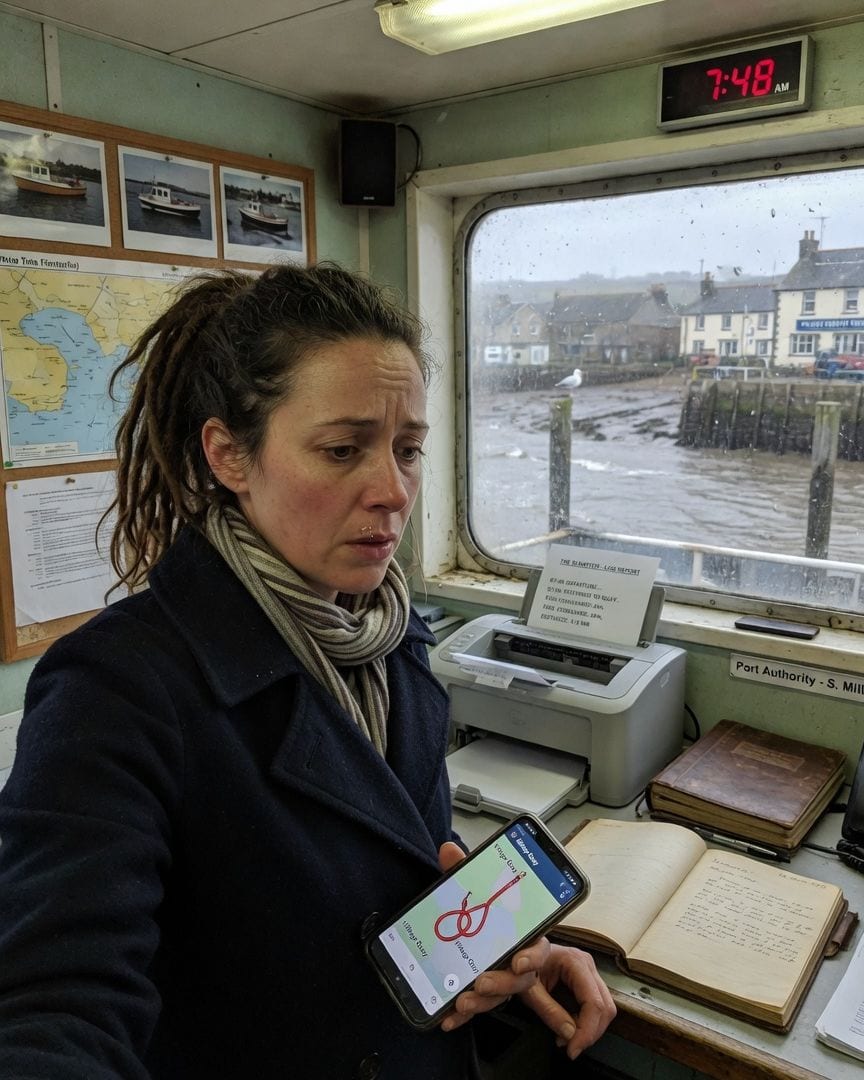
My morning ferry crossed for 40 minutes. The destination town just disappeared.
I board 'The Seawitch' every Tuesday for the familiar eight-minute estuary crossing. But this morning, after making good time, Captain Bernard and I watched the town quay simply fail to appear. Instead, our ferry repeatedly returned to the very same village quay we'd just left, despite burning fuel and advancing the clock.
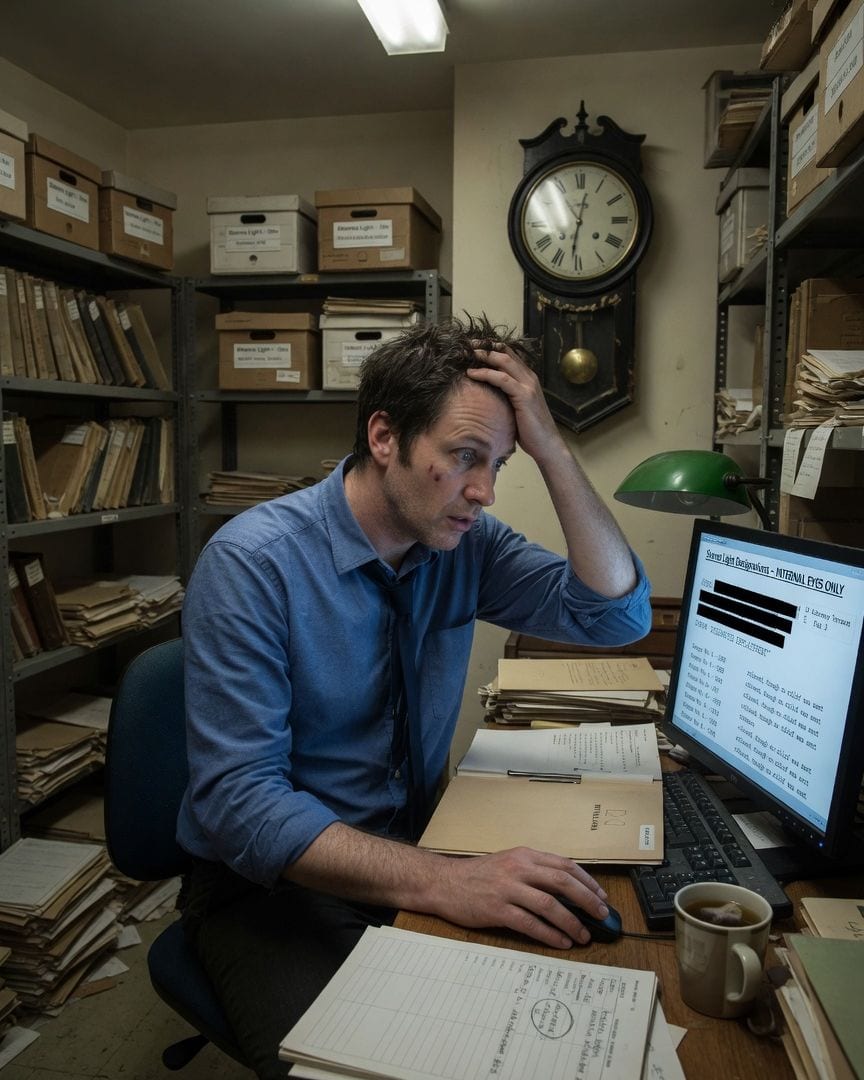
I found my street address in a century-old lighthouse file, printed decades before I lived there.
As a maritime archivist, my world revolves around forgotten lives and dusty ledgers. But the Skerne Light files broke that quiet rhythm, revealing a chilling pattern: 'Keeper number 6' relieved, though no relief was sent, repeating for decades. Now, an internal document with a strange code has led me to a redacted entry, revealing my own street address, decades before I ever lived there.
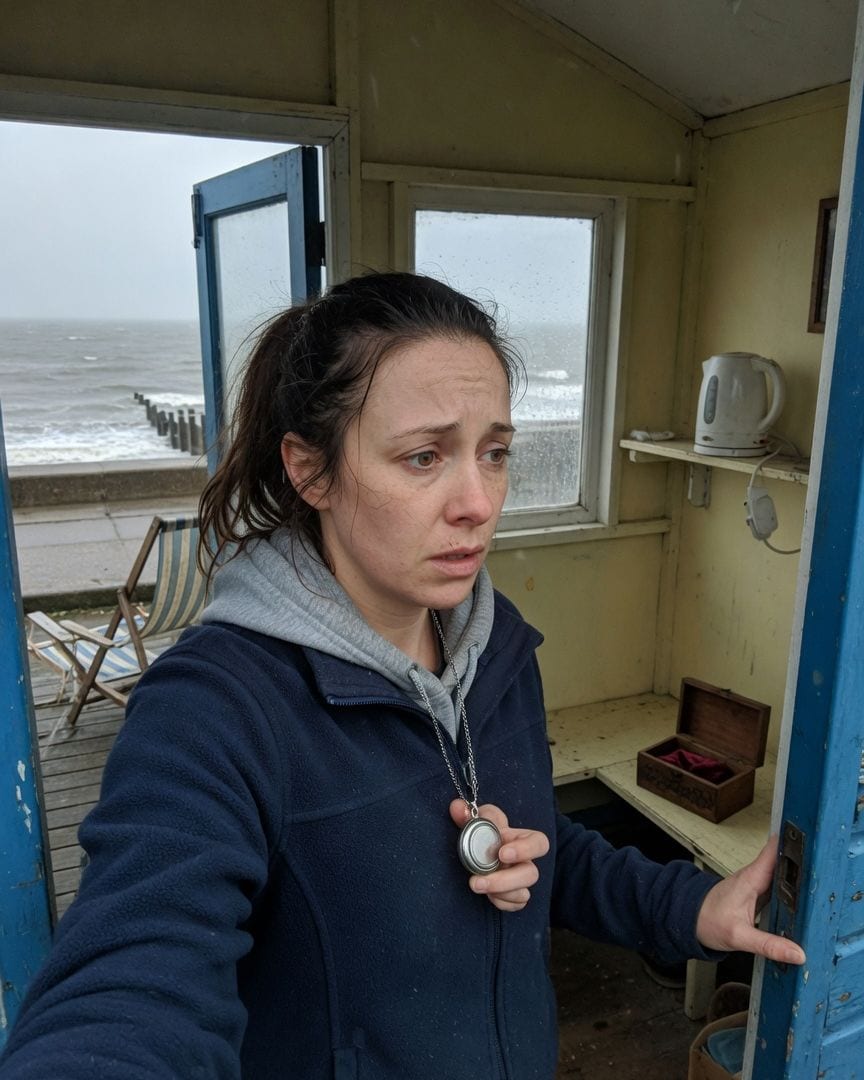
My beach huts run 1 to 60. On Sunday, past 60, was a Hut 61, weathered, with a kettle warm inside, and no record of it ever existing.
I've managed the sixty beach huts on the promenade for five years, knowing every detail. But one Sunday, a new one appeared: Hut 61. Inside, the air was warm and a kettle still steaming, as if someone had just stepped away, yet my booking book holds no record of it.