My voice called my sister at 3 AM, telling her not to worry about 'the lake.' I was asleep, my phone off, and nothing happened at any lake.
My sister Janet’s voice was tight with a fear I rarely heard when she called that Tuesday morning, asking if I was okay. Before I could even answer, before I could ask what she meant, she played it: a recording.
My own voice, unmistakable, even the way I dragged out the ‘a’ in her name, saying, “Janet, don’t worry about what happened at the lake.”
My stomach dropped. “What happened at what lake?” I asked, my own voice now sounding alien.
Janet was shaking, even over the phone. “Exactly. Nothing happened at any lake, Emily. Not for us.” She told me the call came through at 3:03 AM.
I was asleep, in my own bed, my phone off and charging on my nightstand. I’d checked it the second I woke up. No outgoing calls. No activity at all.
We both called Wayne Pierce, our carrier’s customer service rep, an infinitely patient man who usually handled my tech support issues with the calm of a monk. After a long silence, longer than any troubleshooting session, he confirmed it.
The call, the 3:03 AM one, was logged from my registered number, my device. He sounded as baffled as I felt, maybe more so.
Janet then admitted there were two more voicemails from me she hadn’t had the nerve to listen to yet. She still hadn't.
The dread wasn't a puzzle to solve. It was a cold, quiet certainty that something had just reached out from a place it shouldn't exist, using my voice to talk about an event that never happened.
The wrongness wasn't in Janet’s memory, or mine. It was in the phone record itself, insisting on a truth that was a lie.
The next day, Janet finally played the other two voicemails. The second was just static, a faint, distant lapping sound underneath it, like water against a shore. The third, my voice again, barely a whisper, strained and urgent: "It's starting.
Don't go to the dock."
My stomach clenched, twisting into a hard knot. I tried every rational explanation I could conjure: a deepfake, some elaborate prank gone wrong, a glitch at the carrier that even Wayne couldn’t explain.
Wayne, bless his persistent soul, went another round with his internal IT. He confirmed the calls were indeed from my phone’s IMEI, logged as originating from my local cell tower. He even checked for cloned SIMs, found nothing.
His voice, when he called me back, was increasingly unnerved. He kept saying, “It’s impossible, Emily. But it’s there. In the system.”
I started researching ‘Lake’ incidents, any lake, anywhere, frantically scrolling through news archives, local forums. Nothing. No incidents that aligned, no strange disappearances, no disasters, certainly nothing that could be implied by my own voice warning someone not to worry.
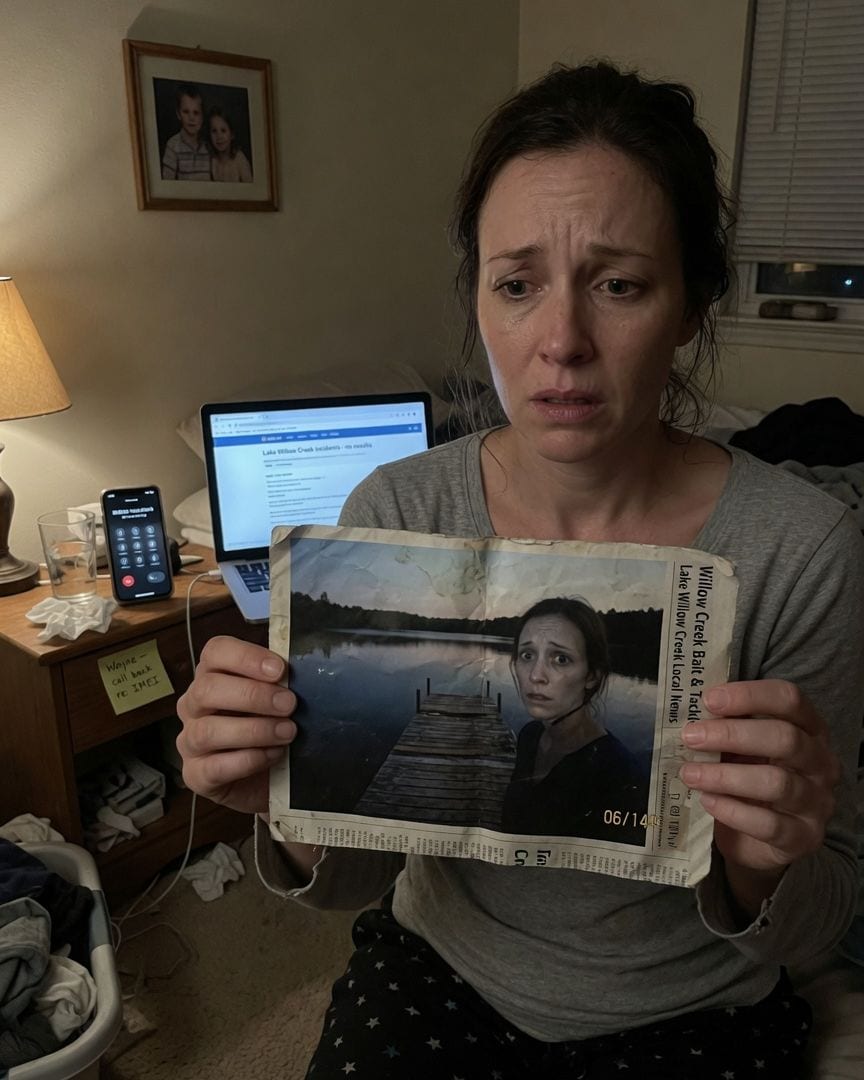
Then, a week later, a small, water-damaged package arrived. It was addressed to me, but the return address was faded, almost illegible: ‘Willow Creek Bait & Tackle.’
I’d never heard of it, or Lake Willow Creek, a remote place by the sound of it. Inside, wrapped in a faded section of newspaper from a local rag I didn’t recognize, was a single, slightly warped photograph.
It was me. My face, unmistakably mine, but pale and gaunt, my eyes wide with an uncomprehending terror I’d never experienced.
I was standing at the edge of a dark, still body of water, a faint, distinctive wooden dock visible in the background, stretching out into the gloom. The photo was dated June 14th, two months ago.
That was the day I’d been at Janet’s apartment, three states away, nursing her through a nasty flu, hundreds of miles away from any lake.
I stared at the photograph, my own face staring back, contorted by a fear I had never felt. The lake in the background was undeniably Lake Willow Creek; I’d searched the name just minutes before.
The date stamped faintly in the corner, June 14th, mocked my memory of Janet's feverish brow, the constant thermometer checks, the quiet hours spent reading to her.
I could feel the chill emanating from the photo itself, a cold that had nothing to do with the paper, settling deep in my bones. It was a physical, undeniable record of me, somewhere I wasn't, experiencing something truly horrifying.
The ordinary explanation for the voicemails had just died a final, chilling death.
The photograph became my anchor in a sea of impossible data. It was concrete. It existed. I had held it. I called the bait and tackle shop, but the number was disconnected, just a series of flat tones.
The newspaper wrapping the photo was an old local rag, dated three months prior, with a small article about an unexplained disappearance at Lake Willow Creek.
The details were vague, just a local angler gone missing, but the date of his last known sighting was close to the photo's. A flicker of unease went through me.
I started digging deeper into Lake Willow Creek.
Online, it was known for its quiet solitude, a picturesque spot for fishing and camping, but also for a scattering of local legends about ‘the lake's memory’ and strange currents that could pull boats under.
Every search led to more dead ends or cryptic forum posts talking about "things not being quite right" or "the whispers from the water." I dismissed them as folklore, but the specific mention of "memory" stuck with me.
Then, another 'record' surfaced. While checking my credit card statement for suspicious activity, I found a digital receipt for a boat rental at a small marina on Willow Creek, dated July 2nd.
My name was on it, and a scanned signature that was undeniably mine, looping and familiar, yet I’d been at a work conference in Denver that entire week.
My credit card company had flagged it as suspicious activity initially, but after I confirmed it wasn’t me, they’d simply removed the charge without further explanation. The unease ratcheted up. These weren't isolated incidents. They were too specific, too personal.
It was as if a parallel version of my life was being meticulously documented, then leaked into my own, each entry a cold, hard fact contradicting my reality.
The pattern of impossible entries was growing, charting a course directly to that remote lake.
My investigation intensified. I drove out to Lake Willow Creek, the photograph clutched in my hand, nestled in my purse. The quiet was unnerving. The trees grew thick and dense right up to the shore, making the air feel heavy.
The bait and tackle shop was exactly as I'd suspected: boarded up, peeling paint, a faded 'Closed' sign hanging crookedly. It was a ghost of a place.
I found the marina from the boat rental receipt, however. It was open, a small ramshackle office with a single fuel pump. I showed the faded photo to the gruff, older woman behind the counter.
She squinted at it, her gaze moving from the image to my face, then back again. "You look familiar," she mumbled, her eyes lingering. "Been here before?"
I explained, carefully, about the photo, the impossible date, the voicemails, my confusion. She just shook her head slowly, a deep sigh escaping her lips. "The lake has a long memory, dear.
Sometimes it remembers things that haven't quite happened yet, or happened to someone else, almost like you." Her voice was calm, almost resigned, as if recounting a daily weather report. "Some folks, they get mixed up in its history.
Best to leave it be." She gave me a long, knowing look, devoid of malice but full of an unsettling certainty, before turning back to her ledger, the pages thick and yellowed.
It wasn't a threat, but a warning, delivered with the quiet authority of someone who knew the lake's secrets. I felt a prickle on my neck, not from fear of her, but from the implication of her words. Someone knew.
Not just knew of the wrongness, but knew what it was. And they were telling me, in their quiet way, that I was already inside it.
The old woman’s words echoed in my mind. ‘The lake has a long memory.’ It wasn't just a local superstition.
I found Marie Sinclair, an elderly woman mentioned in a historical society pamphlet about the area, living in a small, isolated cottage overlooking the lake, its windows dark and deep-set like eyes.
She was initially wary, her gaze sharp and assessing, but when I showed her the photograph and explained the voicemails, a flicker of recognition, not surprise, passed through her eyes.
"Ah, the bleed-throughs," she said, her voice soft, barely above a whisper. "Happens sometimes. The lake... it's a thin place, they used to say. Realities shift. People get caught."
She told me stories, ancient tales of similar incidents from generations ago: a farmer who insisted he’d harvested crops in a field that lay fallow, a woman who saw her own reflection in the lake, but dressed in clothes from another era, carrying a basket she didn't own.
"The records get confused," Marie explained, her gnarled fingers tracing patterns on her kitchen table, "like the lake's trying to reconcile two stories at once. Usually it's small things. A misplaced memory, a faint echo.
But sometimes… sometimes a whole life gets pulled in. Especially if there's an anchor, a strong event. Something the lake takes a particular interest in."
She paused, her gaze drifting towards the dark, glassy water visible through her window, a silent, watchful presence. "The lake remembers, yes. And it tries to tell you. Or warn you."
Her words made the voicemails re-mean: not just a wrong record, but a desperate, fractured message.
The photograph wasn't a random glitch; it was a snapshot from a converging timeline, a moment of terror from a version of me already caught. The ‘ordinary explanation’ of identity theft or prank was now utterly, horribly dead.
The truth, chilling and profound, was that I had found a place where reality was porous, and my own life was becoming entangled with another, almost identical, but tragically different. It wasn't about what might happen.
It was about what was happening, what had happened, and what was still to come, all at once.
Back in my quiet apartment, far from the lake’s eerie stillness, I spread out every impossible record I had collected: the phone carrier logs, the voicemails transcribed on a sheet of paper, the faded photograph now brittle at the edges, the boat rental receipt, a scanned copy of a local newspaper article detailing the disappearance of an angler near Willow Creek, dated for late August, just a few weeks from now.
As I arranged them chronologically, a terrifying pattern emerged. Each item wasn't random; it was a precise, escalating sequence of events, a chilling narrative of a life unfolding, day by day, all culminating in 'what happened at the lake.'
The voicemails were early warnings, the photo a moment of dawning horror, the boat rental a step towards an inescapable fate. My breath hitched, a cold knot forming in my chest.
The final item, the most recent 'record' I'd obtained from an obscure online archive for local businesses, a collection of old resort booking systems, was a keycard log entry for Cabin 7 at the Willow Creek Lakeside Resort.
It was under my name. And the date? Tomorrow.
The small, grainy photo attached to the log showed my face, but the eyes were wide with a terror that felt like a premonition, fixed not on the camera, but past it, to something only she could now see, beckoning from the dark waters of Lake Willow Creek.
My timeline was not just converging; it was being overwritten. I was looking at my own imminent future.
I drove back to Lake Willow Creek, not to escape, but to meet what was coming. The resort sign, faded and peeling, matched the keycard log’s vague logo.
Cabin 7 stood at the edge of the water, weathered and silent, partially obscured by pines.
Every detail from the 'wrong' records clicked into place: the specific dock from the terrifying photograph, its wood splintered and gray; the type of small aluminum boat mentioned in the rental receipt, tethered to a nearby buoy; even the faint scent of pine and damp earth that seemed to cling to the memory of the voicemails was here, thick in the air.
The 'other Emily' hadn't been warning me; she was me, or rather, the version of me whose timeline was collapsing into mine. Marie Sinclair's words echoed, stark and chilling: 'a strong event.'
The angler's disappearance, the lake's 'memory' – it wasn't just a bleed-through, a casual overlap. It was a process of absorption. The lake wasn't just a place; it was a hungry nexus, drawing in and consolidating realities, leaving only one.
The voicemails were the final, desperate attempts of a consciousness to hold onto its own narrative, to warn its converging self of the inevitable.
The 'other Emily' had known her fate, and now, so did I. The terror in the keycard photo wasn't just fear of death; it was the terror of erasure, of becoming another's memory, another's record.
I knew what had happened at the lake, not because I remembered it, but because I was about to live it.
Standing before Cabin 7, the keycard log date now current, I felt a profound sense of inevitability. The cabin door, a plain slab of wood, was unlocked. It swung inward with a soft creak.
Inside, it was dusty but otherwise clean, save for one detail: a small, waterlogged, leather-bound diary lay on the bedside table.
It was exactly as I had seen it in one of the fainter 'wrong' photographs, half-submerged in what looked like muddy water, its pages swollen and distorted.
My hands trembled as I picked it up. The cover was blank, but the first legible entry, written in my own unmistakable handwriting, was dated June 14th, the day of the terrifying photograph.
It chronicled, in harrowing detail, the growing confusion, the feeling of being watched, the strange calls, the mounting dread of being drawn to the lake, each entry a step deeper into the impossible.
It was the 'other Emily's' account, every word a confirmation of my own terrifying journey, leading to this very moment.
The final entry, scrawled frantically, spoke of a presence in the water, a pull, a desperate plea to 'break the cycle.'
As I read the last words, a chill, far deeper than the lake's cold, seeped into me. The small, plain room grew darker, though the sun was still high.
I could feel the convergence, the merging of two lives into one, happening not as a violent clash, but as a quiet, insidious absorption.
The diary was real, undeniable, a physical artifact that should not exist, yet here it was, dating and detailing my own impossible fate. The ordinary explanation died for good, irrevocably, utterly.
My own timeline, once so linear, so predictable, was becoming the lake's. A faint ripple moved across the dark water outside the cabin window, as if something was stirring, acknowledging my presence, welcoming me home.
Janet called, worried, when I didn't answer her texts. My phone, left on the cabin table beside the diary, remained silent.
She left a voicemail, her voice tight with concern, asking if I was okay, if I'd found anything at the lake. The cabin remained undisturbed, the diary closed, the keycard log now just another piece of paper on the table.
The lake's surface reflected the fading light, still and dark, keeping its new memories close.
Janet tried Emily's number again later that night, her heart heavy with a growing dread. It rang three times, then connected. "Emily?" she asked, her voice trembling slightly.
The voice that answered was unmistakably Emily's, and it simply said, "She's here now."
If this one got to you
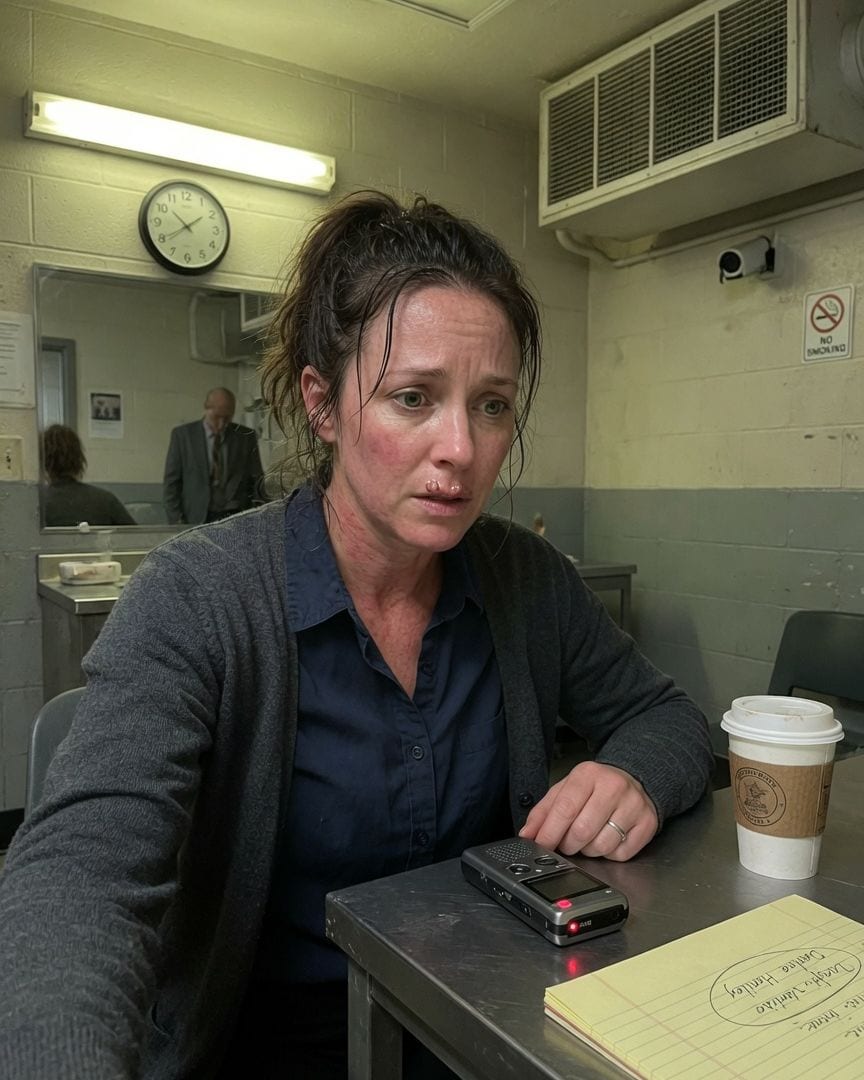
My own voice called 911 from Gary, Indiana, reporting a prowler. I was asleep in Ohio, my phone on the charger.
Sitting in a police interview room, I listened as Detective Walsh played a 911 recording. A woman's hushed voice reported a prowler from a payphone in Gary, Indiana. My stomach dropped cold; it was my exact voice, my specific way of saying 'I think,' even though I was in bed in Ohio that night.
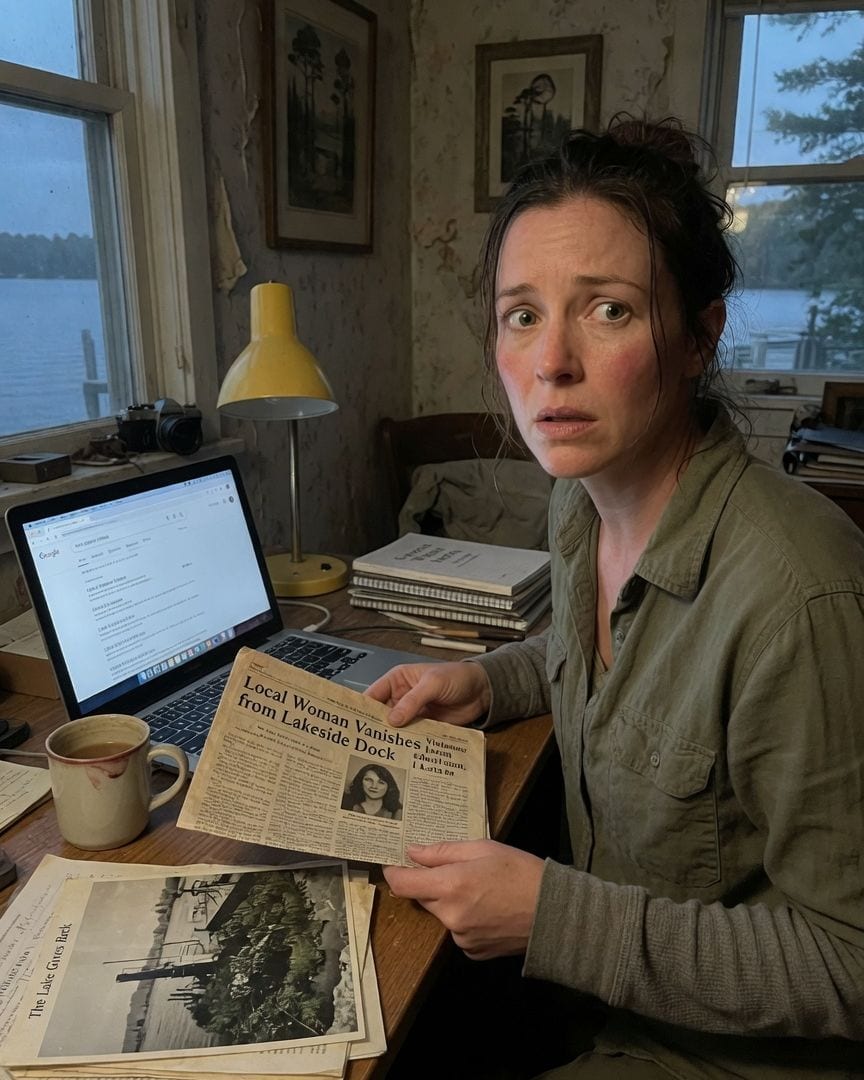
My single dock turned to two. On the impossible second one, a woman stood.
Chasing a quiet life in Cypress Point, I took the ferry across Lake Cypress as I often did, expecting a routine trip. But when I ignored the boatman's warning and looked back, I saw not one dock, but two, side-by-side, with a silent woman standing on the impossible second one. The boatman said nothing, his face impassive, as the image of that impossible figure on the dock gnawed at me.
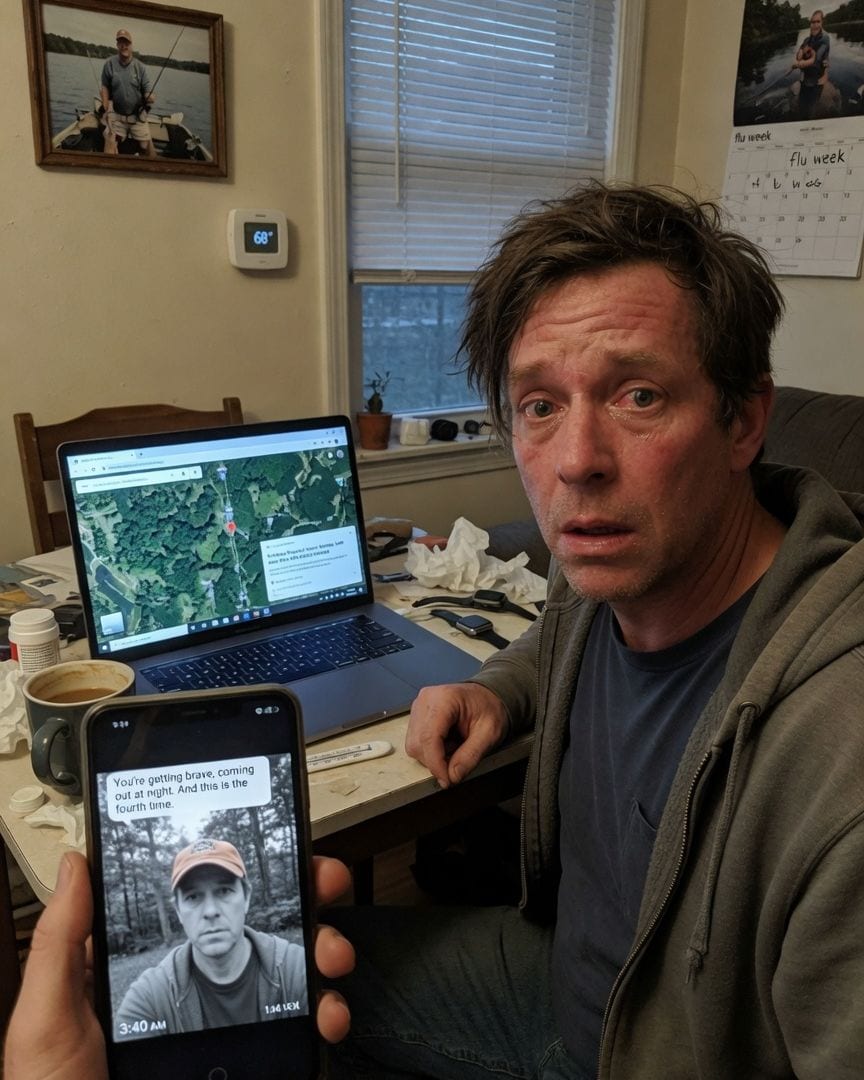
My brother-in-law's camera caught my face in Montana at 3:40 AM. I was asleep in Ohio, but it's the exact orange cap I lost, and he's seen me there four nights running.
I was just making coffee when my brother-in-law sent a photo from his Montana hunting land. It showed my face, wearing my lost baseball cap, timestamped 3:40 AM. I was home in Ohio, sick in bed, and hadn't been to Montana in years. And this was the fourth time.
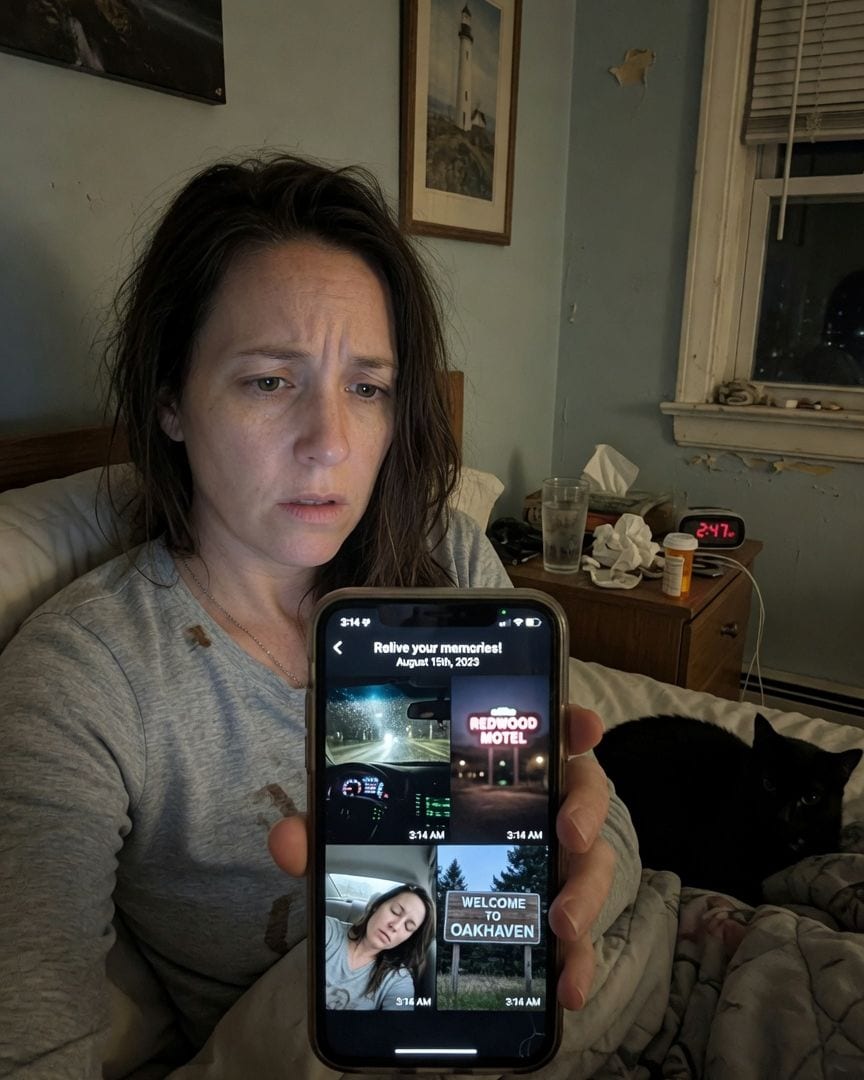
My phone has photos of me asleep in a strange car at 3 AM. Then a voicemail: 'We'll have her back by sunrise.'
My phone woke me with a cheery notification, promising memories from last August. Instead, it showed me asleep in a dark car, rain streaking the windshield, miles from my apartment. I was certain I'd been home in bed that night, but the images were undeniably in my camera roll, a quiet violation of my memory.
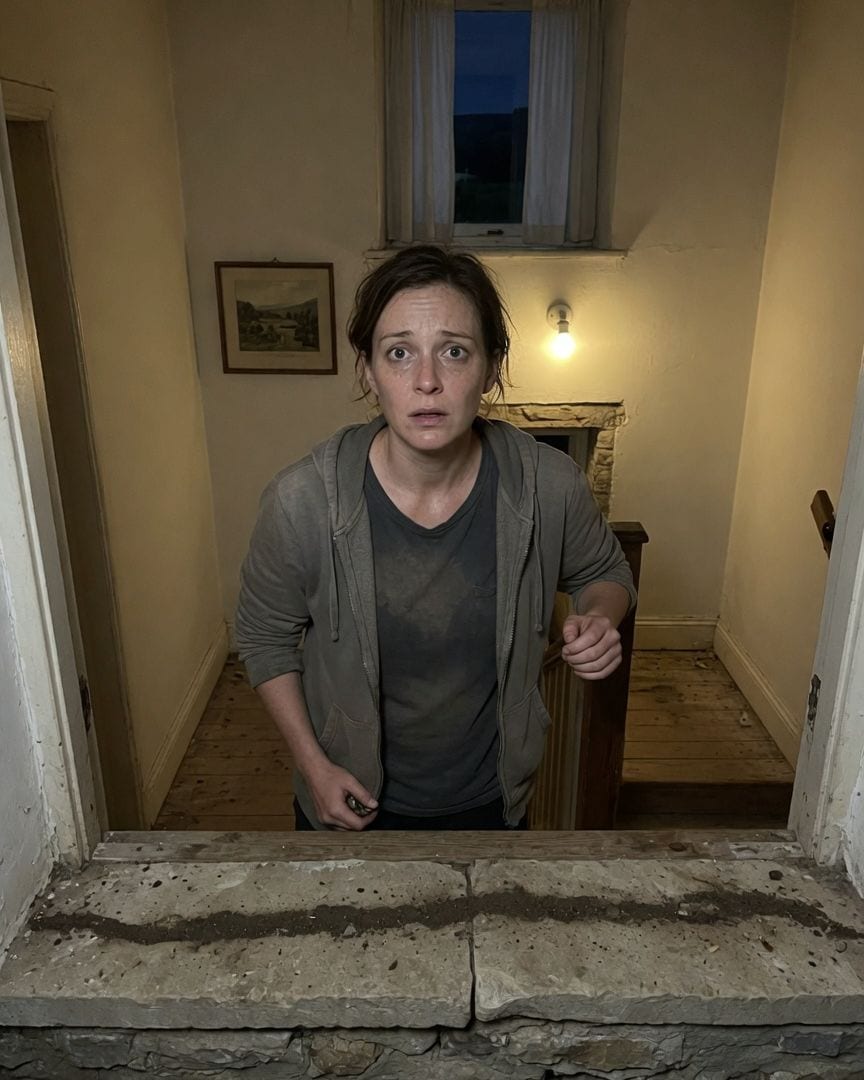
Water moved under my house at 3am, leaving a six-inch silt line. The river's two miles off.
New to my inherited valley house, I was just exhausted. Then, at 3 AM, a powerful current rushed *under* my house, vibrating through the floorboards. By morning, a precise six-inch tideline of dark silt marked my foundation, but no flood had occurred, and my pipes were dry.
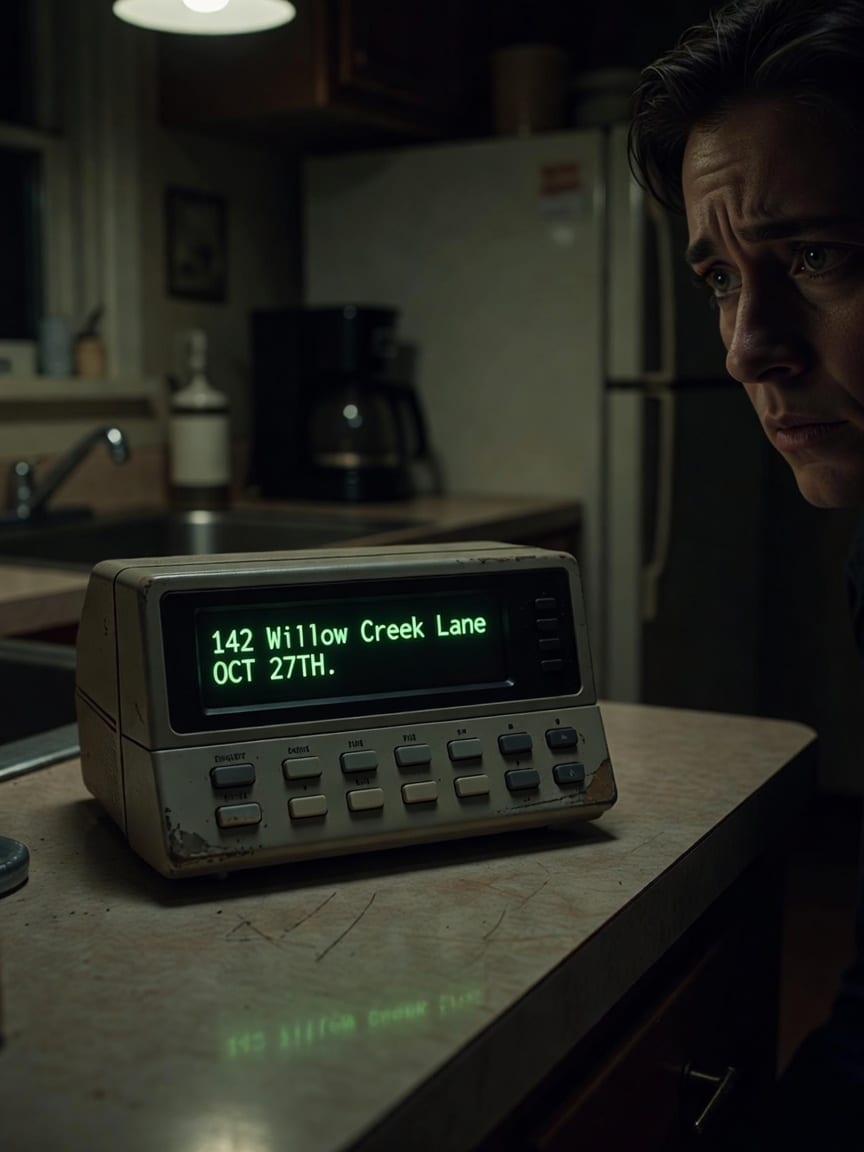
My radio scanner picked up a channel at 2 AM reading local addresses. Mine was on it, dated tomorrow.
I was tracking a storm on my old weather radio when a synthesized voice cut through the static. It began reading local street addresses, then my own: 142 Willow Creek Lane. But the date it gave for my address was tomorrow.