My basement window shows a 1906 kitchen, with a scullery girl and the sound of a poker stirring coals that aren't there.
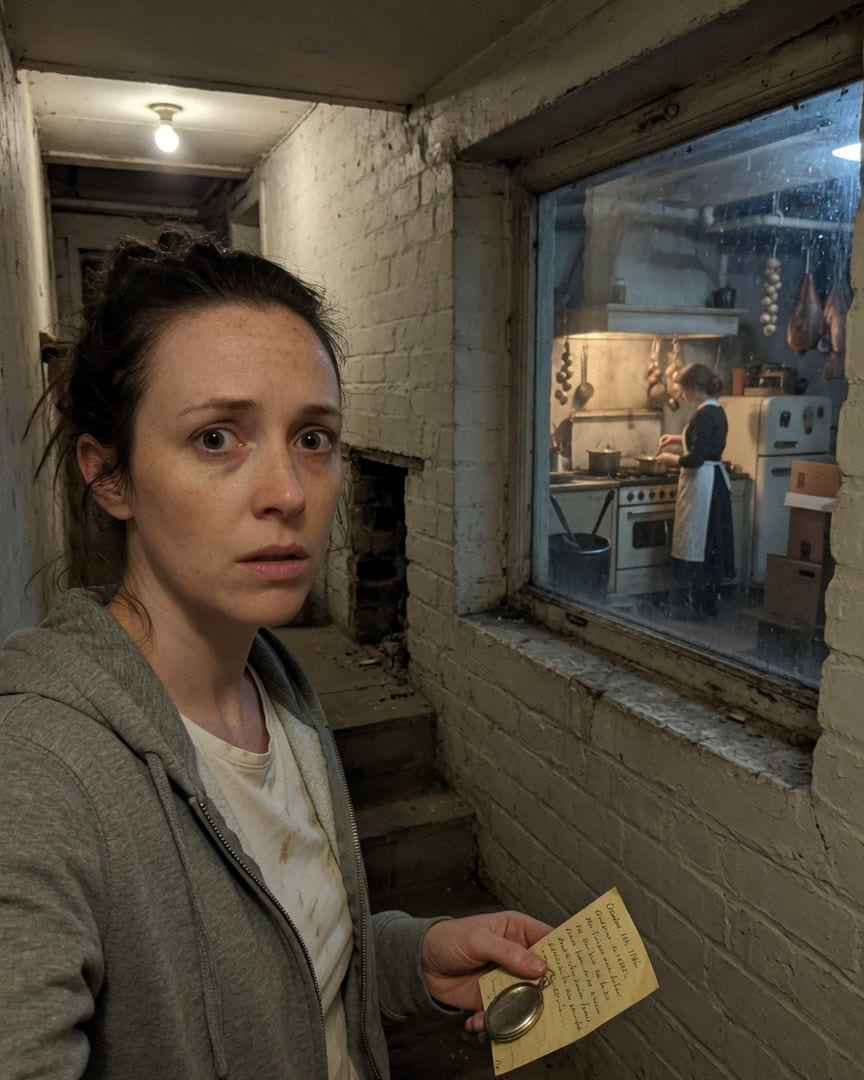
The stair to my basement flat passes a small window at pavement level, about eye-level with people’s ankles if they’re walking past on the sidewalk.
Two nights running, near midnight, that window has shown a gaslit basement kitchen full of movement — a range glowing, a scullery girl bustling, hams hung from the ceiling, all hazy and indistinct.
My own kitchen light was off, the counter empty, my ceiling bare. I could even hear, faintly, a poker working coals that weren't there.
It began subtly. First, the faint, persistent smell of coal smoke, clinging to the stairwell even though the building was all electric, and my heat pump hums a perfectly modern tune.
Then the clinking of porcelain and the low murmur of a voice I couldn’t quite place, always just out of earshot, always when my own flat was quiet.
My name is Rachel Sutton, and I’d only been in the place a month, still unpacking, still getting used to the city’s hum. I'd blamed old pipes, a neighbor's late-night cooking, the city's general strangeness.
But the window… that was different. It wasn't a reflection, not a trick of the streetlights or a reflection of my own apartment's interior.
It was a complete, contained scene, like a diorama, playing out in miniature within the dirty glass.
The scullery girl, a wisp of a thing in a stiff apron, moved with purpose, stirring something in a pot, her back to me. The hams swung slightly, almost imperceptibly, as if in a faint breeze. The gaslight flickered.
And the sound of that poker, stirring coals that had been gone for a century from this spot, was undeniably real, if faint.
I watched it, frozen, for perhaps a minute the first night, then again the second, unable to look away, a cold knot forming in my stomach.
My rational mind tried to construct explanations, but they all felt thin, transparent, like the window itself. It wasn't just a vision; it was a slice of another time, running on a loop, just beyond the glass.
The third night, the window was dark. My relief was immediate, then quickly replaced by a gnawing sense of disappointment. I found myself checking it again, an unwelcome routine already forming.
The mundane explanation – a glitch in my tired mind, a neighbor’s elaborate prank – felt almost comforting. But then, as I was hanging a picture in my living room, my hand brushed against the old, painted-over brick fireplace hearth.
A section of brick felt loose. Curiosity, a dangerous thing, took hold. I pressed harder. The brick shifted, then gave way with a soft scrape, revealing a small, dusty recess behind it.
It was too small for anything modern, clearly an old cubby. I reached in, my fingers brushing against cobwebs before touching something cold and metallic.
It was a tarnished silver locket, surprisingly heavy, and beside it, a brittle, yellowed slip of paper. My breath hitched. This wasn't a prank. This wasn't a hallucination. This was tangible, physical proof that something old, something hidden, was here.
The locket was oval, intricately engraved with a faded floral pattern. It sprang open with a stiff click, revealing two miniature photographs, sepia-toned and almost indistinguishable.
One was a man with a severe expression, the other a young woman, her face obscured by age and damage, but her posture, her apron… it was the scullery girl from the window.
The paper was fragile, threatening to crumble in my hands. With utmost care, I unfolded it. The handwriting was spidery, looping, and faded, but legible. 'October 14th, 1906,' it began, 'Another cold night.
The master complains the kitchen is never warm enough. My fingers ache from scrubbing, and the coals burn low. If only…' The rest was torn away, a jagged edge ending the sentence mid-thought. October 14th, 1906.
That date echoed in my mind, a cold, specific anchor to a time that couldn’t possibly connect to my modern flat, yet here it was, in my hand.
I stared at the locket, then at the date on the fragile paper. October 14th, 1906. The scullery girl. The gaslit kitchen. It was all too specific, too real.
My rational mind, usually so quick to dismiss, now struggled to find any ground. This wasn't just a vision; it was a message, a trace.
The woman in the locket, the one whose faded face was barely visible, was the girl in the window. My fingers traced the date again, a chill running through me. What did she mean, 'If only…'?
What happened on October 14th, 1906? The quiet hum of my modern refrigerator suddenly seemed impossibly loud, a contrast to the silence of the past that now pressed in around me.
I felt a prickle on the back of my neck, the distinct sensation of being watched, not by eyes in the room, but by the very walls themselves.
The house was not just old; it was holding something, and I had just found its secret.
The locket and the diary fragment were no longer just curiosities; they were an undeniable thread. I spent the next few days researching the building, a grand old brownstone converted into flats in the 1950s. Online archives were sparse.
I needed someone with deeper knowledge. That led me to Gerald Coleman, the building's superintendent. He’d been here for decades, a quiet man with kind eyes and a habit of knowing everything about the pipes.
I approached him, locket and paper carefully tucked away. 'Mr. Coleman,' I began, 'I was wondering if you knew much about the history of the building, specifically the basement unit?'
His eyes, usually friendly, took on a distant, almost guarded look. 'Old place,' he rumbled, 'Built late 1800s. Was a single-family mansion. Basement was staff quarters, service kitchen.' He paused, running a hand over his chin.
'Why do you ask, Miss Sutton?' I decided to be direct, but cautious. 'I've… noticed some odd things. Smells. And I found this.' I showed him the locket and the diary fragment.
His gaze sharpened on the date: October 14th, 1906. His calm was unnerving. He didn't seem surprised, or even particularly concerned. 'Agnes Finch,' he said, barely a whisper, 'Scullery maid. Worked here. She… passed away, quietly.'
He offered no further detail, just a shrug and a vague 'old times.' When I pressed for specifics about her death, he simply said, 'Accident. Not uncommon in those days, with gas and coal.'
His evasiveness was a new kind of wrongness. He knew more. Much more. I started spending evenings in the public library, poring over microfiche of old city newspapers from 1906. It was tedious, but I was driven.
The locket and the diary were physical proof, demanding answers. I cross-referenced building permits, census records. The mansion belonged to the Thatcher family. No mention of an Agnes Finch in any official capacity, which wasn't surprising for a servant.
But the date, October 14th, felt like a beacon. The library records turned up no major news stories about an accident at the Thatcher residence that year.
It was as if Agnes Finch had simply ceased to exist, her life, her death, a forgotten whisper in the grand house. But the window, and the locket, said otherwise. The house remembered her, and now, so did I.
My investigation didn't go unnoticed. After my conversation with Gerald, a subtle shift occurred. I’d find him in the hallway more often, ostensibly checking pipes, but his eyes would linger on my door.
Once, I saw him near the basement window, not looking in, but just… standing there, a silent sentinel.
It wasn't menacing, not overtly, but it was a quiet acknowledgment that he knew what I was doing, and perhaps, that he disapproved. One evening, returning from the library, I found my door slightly ajar. My heart leaped.
I always locked it. Inside, nothing seemed out of place. No obvious signs of forced entry, no missing items. Yet, a chill permeated the air that wasn't there before.
A faint scent of coal smoke hung in my living room, stronger than usual, and I could have sworn I heard the soft clink of a poker from the direction of the kitchen. I checked the window. Dark.
But the feeling of intrusion, of being watched, was palpable. I called Gerald. He arrived quickly, his face impassive. He checked the lock, the windows, found nothing. 'Must have not latched properly, Miss Sutton,' he said, his voice even.
But his eyes, when they met mine, held something akin to warning. 'Some places… they have their own ways,' he murmured, almost to himself. 'Best not to disturb what's settled.' It was a message, veiled but clear.
I was digging in places I shouldn't, and someone, or something, was pushing back. The unease escalated from historical curiosity to immediate personal threat.
The house wasn't just showing me the past; it was actively involved, and Gerald was part of its quiet vigilance. I felt the weight of his knowledge, a burden I was now sharing, whether I wanted to or not.
The house's memory was not benign; it was protective, and I was encroaching.
The next day, I confronted Gerald in the building's small, cluttered office. The air was thick with the scent of old paper and dust.
'Mr. Coleman,' I said, holding up the locket and the diary fragment, 'You said Agnes Finch died in an accident. But there's no record. And you warned me to leave things settled. What exactly is settled?'
He sighed, a long, weary sound, and gestured to a stack of ancient, leather-bound ledgers. 'Sit, Miss Sutton.' He pulled one towards him, its cover cracked and faded. 'This building… it holds things. Not just memories, but echoes.
Agnes… she was one of them.' He opened the ledger, his finger tracing an entry. 'October 14th, 1906. Agnes Finch. Ceased employment. Cause: Illness.' He looked up, his eyes meeting mine. 'They didn't want a scandal.
A young girl, alone in the basement, a faulty gas range. Carbon monoxide. Quiet death. Her family was far away.' He paused, then continued, 'But the house, it kept her. Her routine. Her last days. It replays them.'
My mind reeled. The gaslit kitchen, the poker, the smells – it wasn't a haunting in the traditional sense, but a loop, a preserved moment. 'The window,' I whispered, 'the gaslight, the hams…' He nodded. 'Her life. Her work.
It’s all there, compressed into a few days, playing over and over. Especially around that date.' He pointed to the ledger again. 'October 14th. The day she died. The echoes are strongest then.'
He flipped a few pages, then stopped at another entry. 'See here? October 14th, 1948. A young man, a student, renting the basement unit. Reported strange smells, sounds. Left suddenly. 'Ceased tenancy, no forwarding address.' Then again, October 14th, 1989.
A woman, an artist. Complained of 'temporal distortions.' Said she saw 'ghosts of light.' Also left. On the 14th.' The pattern was chillingly clear. Each time, someone in the basement flat. Each time, around October 14th.
Each time, the same kind of vague disappearance or unexplained departure. My earlier visions, the smell of coal smoke, the clinking of porcelain, the scullery girl in the window – they all clicked into place with horrifying precision.
It wasn't random. It was a cycle, a recurring nightmare that the house itself orchestrated. And I was now living in its current iteration, with October 14th drawing closer.
My gaze darted from Gerald's calm, knowing face to the ledger, a cold dread seeping into my bones. 'A cycle?' I choked out, the words barely audible. 'You mean… it happens to people who live in the flat?
They see it, and then they… disappear?' Gerald didn't deny it. He simply closed the ledger with a soft thud, the sound echoing in the small office. 'The house remembers, Miss Sutton. And some memories are… persistent.
They don't just play out; they absorb.' He looked at me, his eyes now holding a deep, ancient sorrow. 'You noticed the smoke. You saw Agnes. You found her locket. You're part of it now. The house has you.'
He reached across the desk, not to threaten, but to turn the ledger back to the page he had shown me earlier.
His finger landed on an entry, not from the 1900s or the 1940s or 1980s, but from just a few years ago. 'Rachel Sutton,' he read aloud, his voice flat, 'Entered tenancy: September 1st. Current date: October 12th.'
He then slid the ledger slightly to reveal another line, faintly penciled in beneath my name, almost an afterthought: 'Expected cessation: October 14th.' My own name, my own date, written in a book that detailed a century of disappearances.
The air solidified around me. I wasn't just an observer; I was the next entry. Gerald's face, usually so placid, held a flicker of something I couldn't quite read – resignation? Pity?
He took a slow breath, his gaze fixed on the ledger page. 'It's not just her, you see,' he said, his voice low and steady, 'It's a pattern.
And you, Rachel, you're not the first to notice the smoke, or the girl, or the quiet.'
He gestured vaguely at the open ledger, where another entry, dated forty years prior, described a 'Mrs. Eleanor Vance, ceased tenancy, no forwarding address,' in the same basement unit. The date of Vance's departure is October 14th.
The penciled entry beneath my name felt like a death sentence. 'Expected cessation: October 14th.' I stared at it, then at Gerald. 'What does that mean, Gerald? What happens on the 14th?' He leaned back, his gaze steady.
'It means the house completes its memory. Agnes's last full day was the 13th. The morning of the 14th, she was found. The house replays that, Miss Sutton. And it needs… a focus.
Someone to experience it, to ground the echo.' He spoke as if discussing a leaky faucet, his calm demeanor utterly chilling. 'The window? It’s a portal. You see Agnes because you're in her space. You're experiencing her last moments.
The smells, the sounds, the routine… they're all part of it. The house isn't malicious, not truly. It's just… a very old machine, running its program. And it needs power.' 'Power?' I asked, my voice thin. 'Your presence. Your focus.
Your… life force, if you will,' he explained, without a hint of sensationalism. 'It's how the echo sustains itself. You become part of the memory. You step into her shoes, so to speak.'
My mind raced back to the faint smell of coal smoke, the clinking, the vision of Agnes in the window. Every single detail, every small wrongness, now coalesced into a terrifying, coherent pattern.
The locket, the diary entry, the previous disappearances – all confirmed this horrific mechanism. Gerald had seen it before, countless times, over his decades here. He wasn't evil; he was simply a custodian of a terrible, unchangeable truth.
He knew it was futile to fight it. He had merely been observing, recording, accepting the house’s grim appetite. The horror wasn't a ghost; it was a fixed, inescapable timeline, playing out again, with me in the leading role.
Panic clawed at me, but Gerald's calm was a strange anchor. 'How do I stop it?' I demanded, my voice shaking. He shook his head slowly. 'You don't. You can only… step out of the way. Before it's too late.'
'Too late for what?' I pressed. 'To become Agnes. To be part of the memory, forever.' His words were a punch to the gut. I looked at the ledger, at my name, at the date. October 14th. Tomorrow.
'What did the others do?' He shrugged. 'Some left. Some stayed too long. The house… absorbed them. They became part of its history, just like Agnes.' He looked at the locket I still held. 'Agnes's child died young.
She was heartbroken. Maybe that's why her memory is so strong, so poignant. The house holds her sorrow.' I stood up, pushing back my chair. 'I'm not staying.' Gerald nodded. 'Good. Some don't have the will.
Or they don't believe it until it's too late. The closer it gets to the 14th, the stronger the pull. The window… it will show more. You'll feel her routines, her despair.'
I ran from his office, the image of the scullery girl’s faded face, the date, and Gerald’s calm acceptance burning in my mind. I packed frantically, throwing clothes into bags.
Every shadow in my apartment seemed to lengthen, every creak of the old building sounded like footsteps. The smell of coal smoke was no longer faint; it was thick, cloying, filling my lungs.
I reached for my phone, my hand shaking, to call a friend, anyone. But as I lifted it, I heard it – a faint, mournful humming coming from the kitchen. A child's lullaby. Agnes's child.
I looked towards the kitchen, towards the small, pavement-level window. It was no longer dark. The gaslight flickered, brighter than I’d ever seen it.
And the scullery girl, Agnes, was there, clearer than I’d ever seen her, her back to me, stirring a pot. But this time, she wasn't alone. A tiny, shadowy figure, barely visible, clung to her apron.
The humming grew louder, a sound of profound, ancient grief. I knew then that Gerald was right. The house was trying to pull me in, to become the witness to Agnes's final, most painful memory.
I grabbed my bags, stumbled out of the flat, and didn't look back. The humming followed me up the stairs, a spectral siren song, until I burst out onto the quiet street, gasping for air.
I never returned to the flat. I forfeited my deposit, left my remaining belongings to be cleared by the building. Gerald Coleman simply sent a terse email confirming my 'early cessation of tenancy.'
I found a new place across town, a modern apartment with no history, no creaking floors, no strange windows. The city's sounds, once a comfort, now seemed too loud, too insistent. I avoided old buildings, especially those with basement units.
The locket and the diary fragment remained with me, tucked away in a box, tangible proofs of an unbelievable truth.
I never spoke to Gerald again, but I often wondered if he had found a new tenant for the basement flat, and if the cycle had begun anew for someone else.
The memory of Agnes, of the gaslit kitchen, of the quiet, knowing superintendent, was an indelible mark on my soul.
I still live in the city, but my world feels different now, thinner in places. I'm always looking, always listening for the faint, impossible echoes.
The calendar still turns, and every October 14th, I find myself restless, checking the news for any unexplained disappearances, any mention of old buildings. I never found out what happened to the previous tenants who 'ceased tenancy' on that date.
I don't want to know. Sometimes, when the light hits just right, I still catch the faint scent of coal smoke on the stairs.
If this one got to you
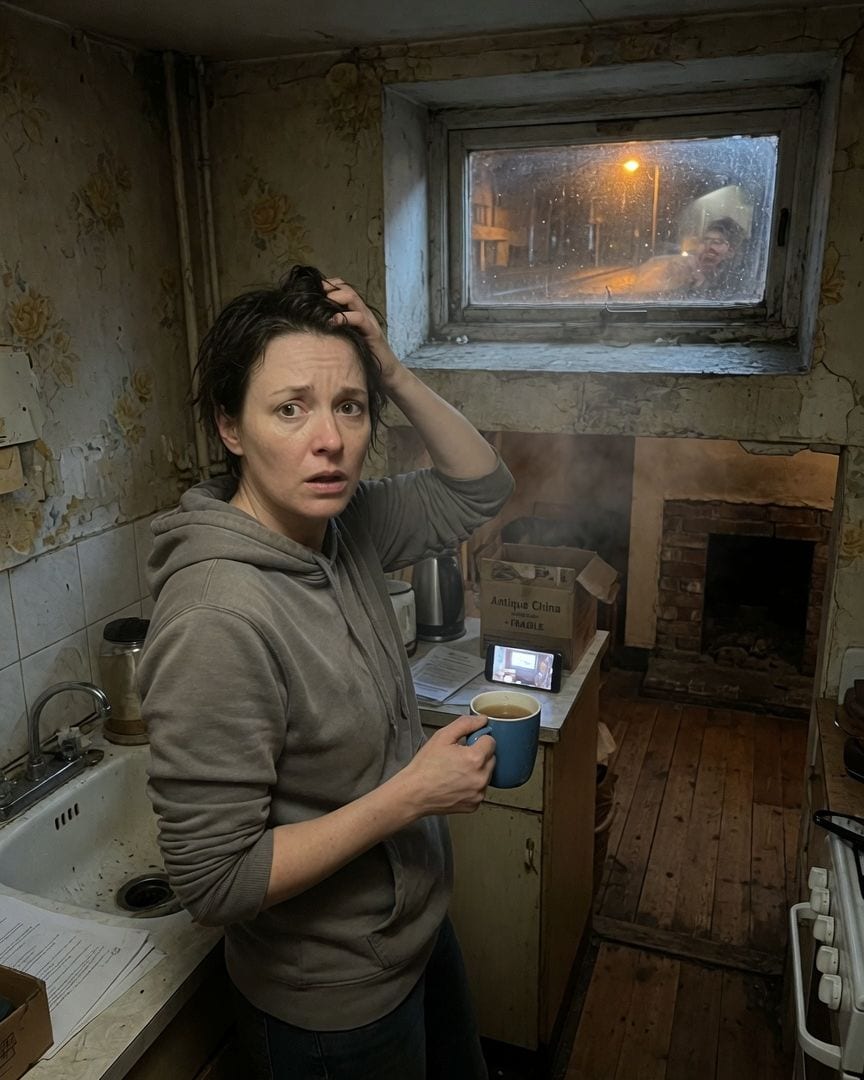
My basement window shows a gaslit kitchen moving at midnight, hams hung from the ceiling. My own kitchen is dark.
Settling into my new basement flat, I was making tea late one night when I glanced out my kitchen window. Instead of the concrete well, I saw a gaslit kitchen with an enormous cast-iron range, a young scullery girl, and cured hams hanging from the rafters. The vision was too sharp, too real, and the smell of coal smoke lingered long after it vanished.
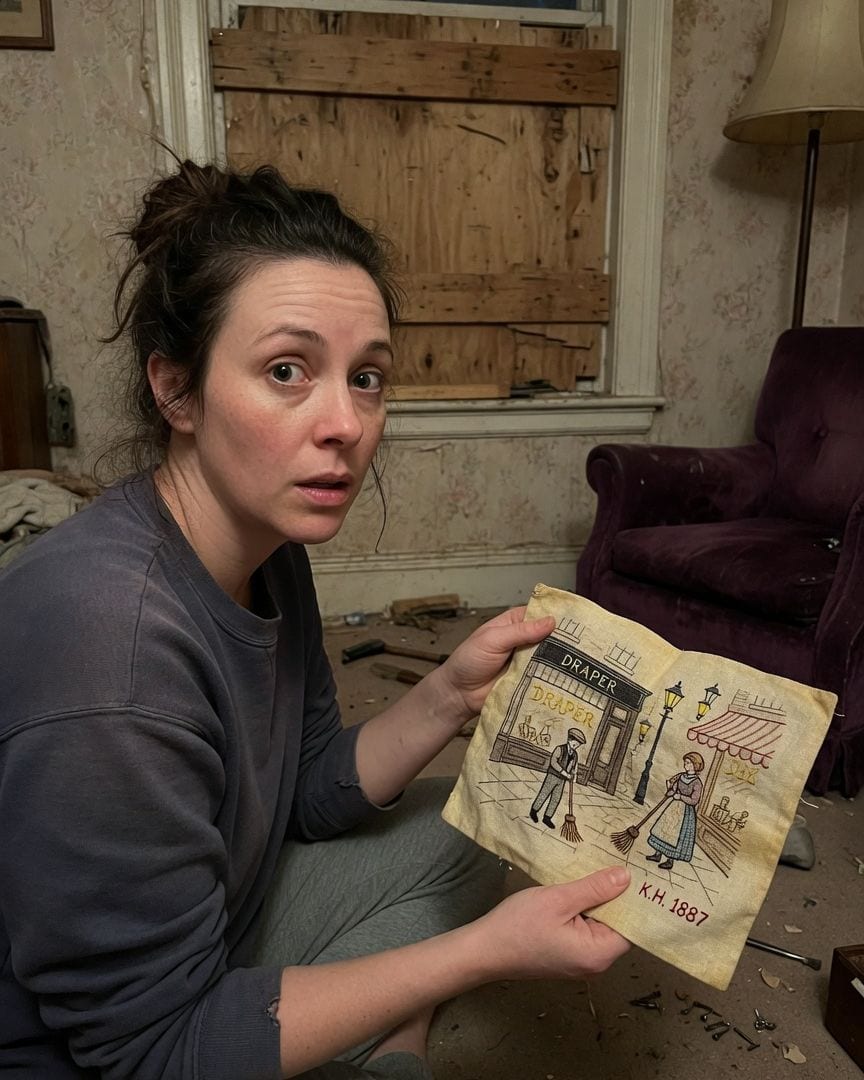
My flat's window shows a gaslit Victorian street across a brick shaft. The nails I hammered back into its frame went into wood soft and new.
My new flat came with a boarded-up window, which the agent dismissed as just an old lightwell. Driven by curiosity, I removed the boards, expecting brick or darkness. Instead, my window opened directly onto a bustling, gaslit street from 1887, a vision that defied all sense.
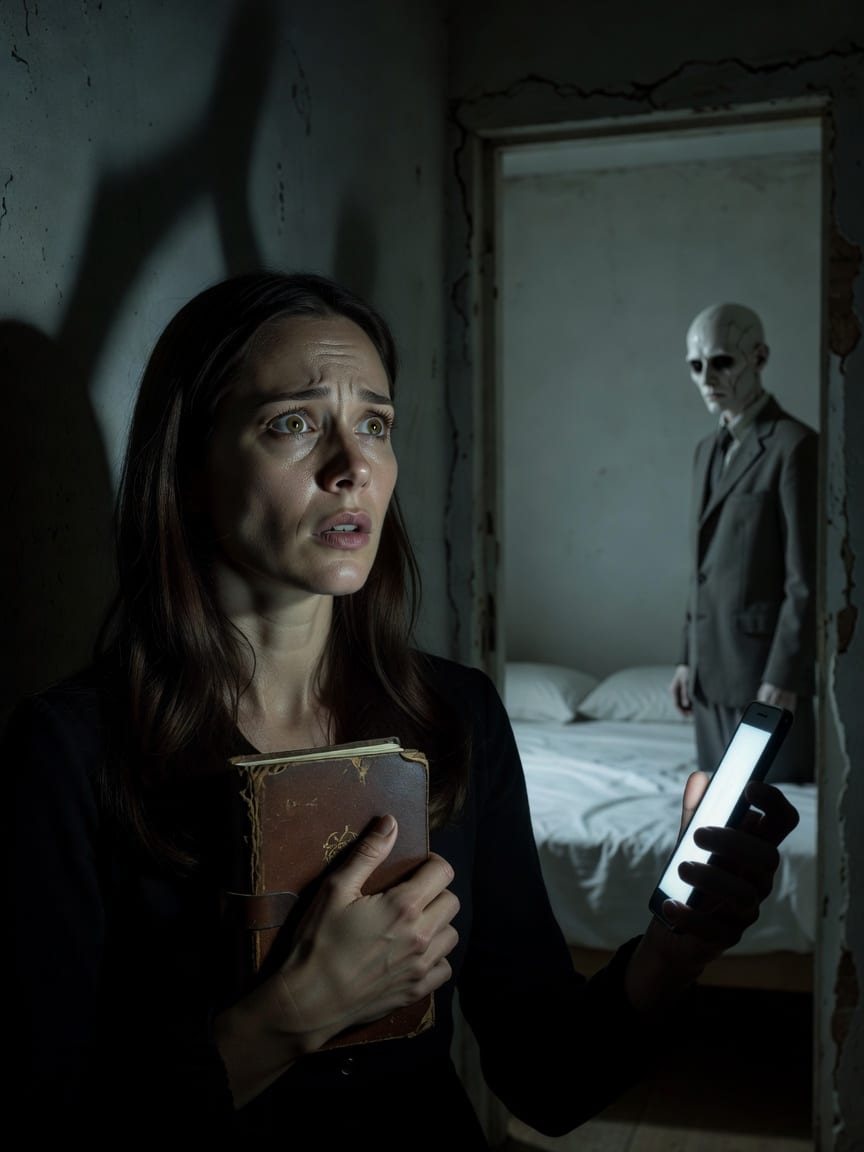
Behind a plastered-over doorway, I found a room. Papered, carpeted, and furnished with a made bed, sealed for decades. The air was dead still, but the bed wasn't dusty. My council tax bill only lists five rooms.
I'm Claire, an architect, meticulously planning my new Victorian terrace renovation. But when I uncovered a hidden room behind a wall, everything I knew about time and decay shattered. The bed was perfectly made, the air still, yet there was no dust, only an unnerving cold.
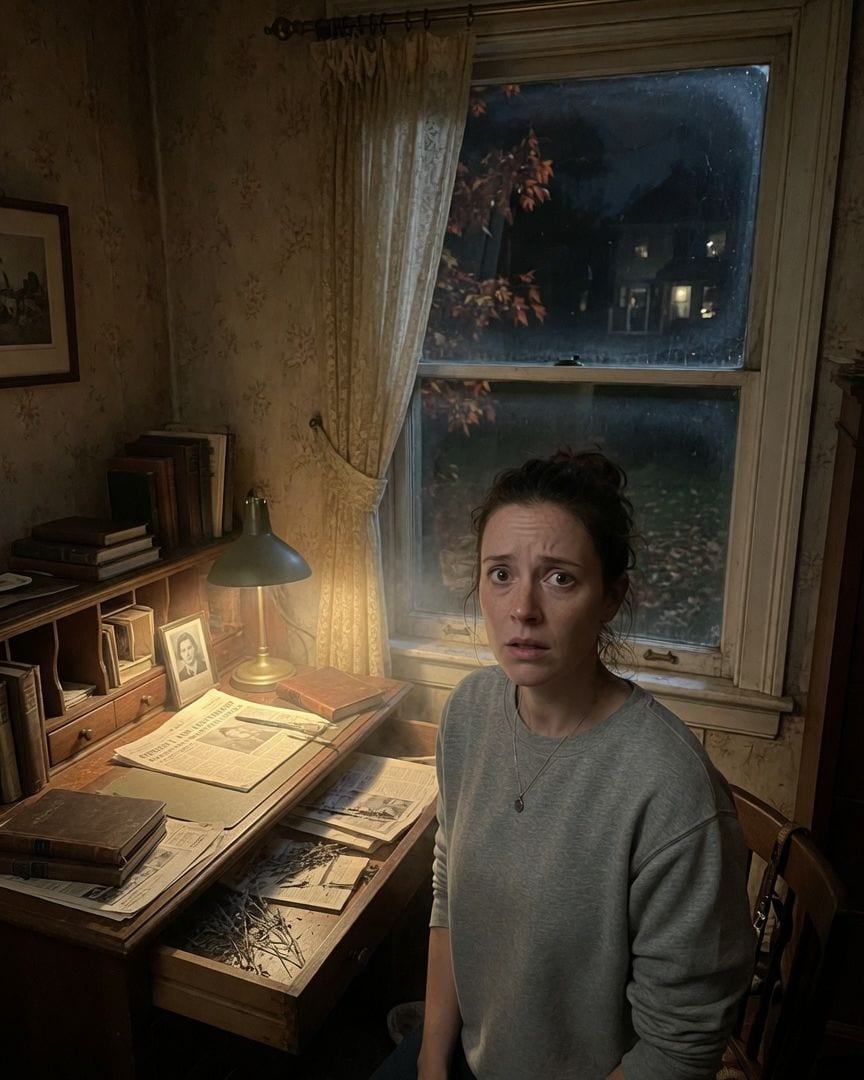
One night every October, every house on our lane lights a single lamp in the west window — 'for him,' the old diaries say. No one under seventy will tell me who 'him' is, or why the lane is named for a man with no grave.
I moved into my grandmother Vera's old house on quiet Radcliffe Lane, finding comfort in her diaries. Every October entry ended with the same cryptic line: 'left the lamp in the west window for him, as we do.' Now, almost every house on the lane lights a lamp in its west window, but mine remains dark and strangely cold. No one here will explain this quiet, golden vigil.
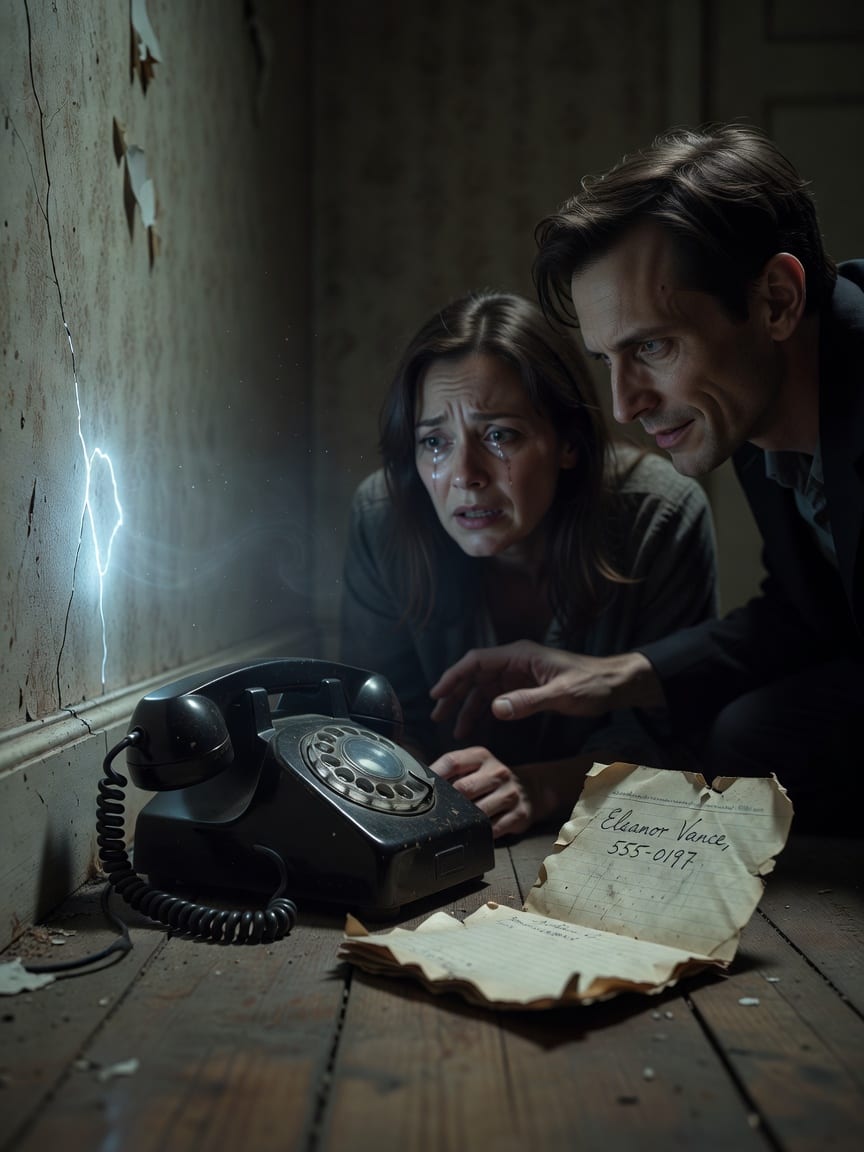
My house's walls ring when I dial a phone number from a 1974 directory. My neighbors said that directory was trash.
I was sifting boxes in my new house when I found an old 1974 telephone directory for my street. It listed my address, 12 Elm Street, under the name "Mr. & Mrs. Sheppard." On a whim, I called the faded seven-digit number. My cell phone rang, but a low, muffled sound also vibrated from the wall beside me.
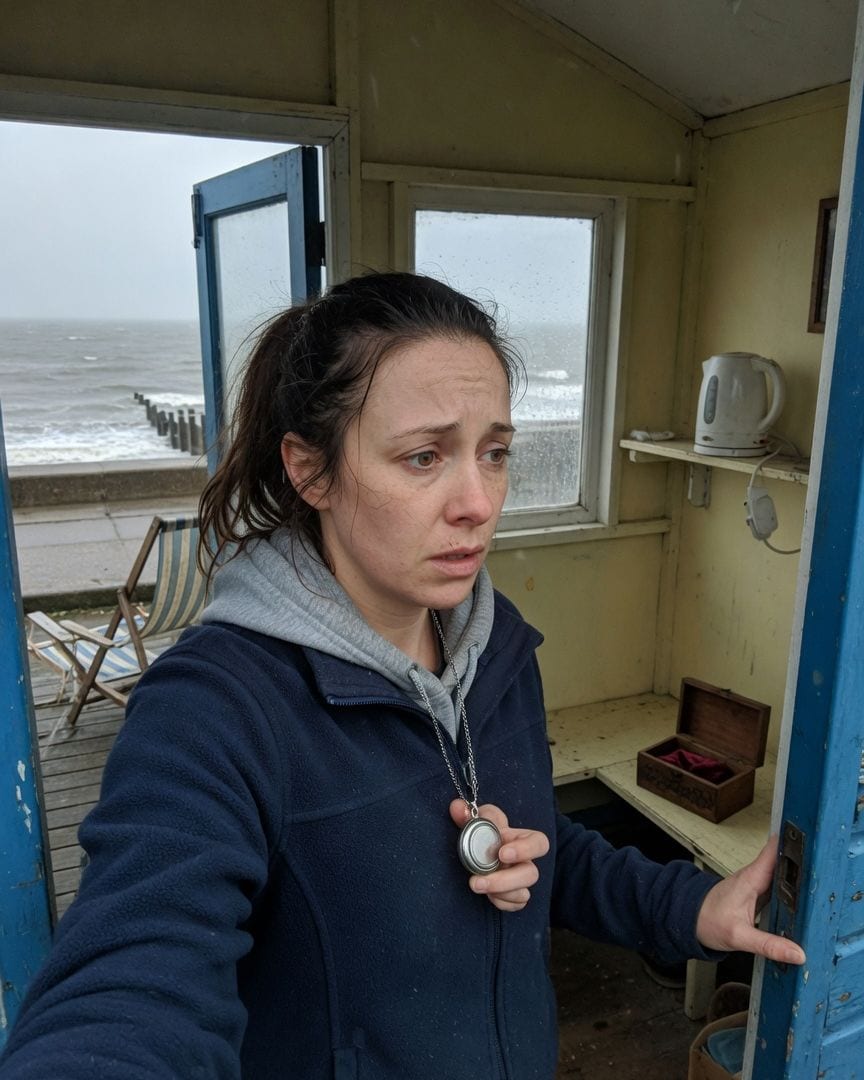
My beach huts run 1 to 60. On Sunday, past 60, was a Hut 61, weathered, with a kettle warm inside, and no record of it ever existing.
I've managed the sixty beach huts on the promenade for five years, knowing every detail. But one Sunday, a new one appeared: Hut 61. Inside, the air was warm and a kettle still steaming, as if someone had just stepped away, yet my booking book holds no record of it.