One night every October, every house on our lane lights a single lamp in the west window — 'for him,' the old diaries say. No one under seventy will tell me who 'him' is, or why the lane is named for a man with no grave.
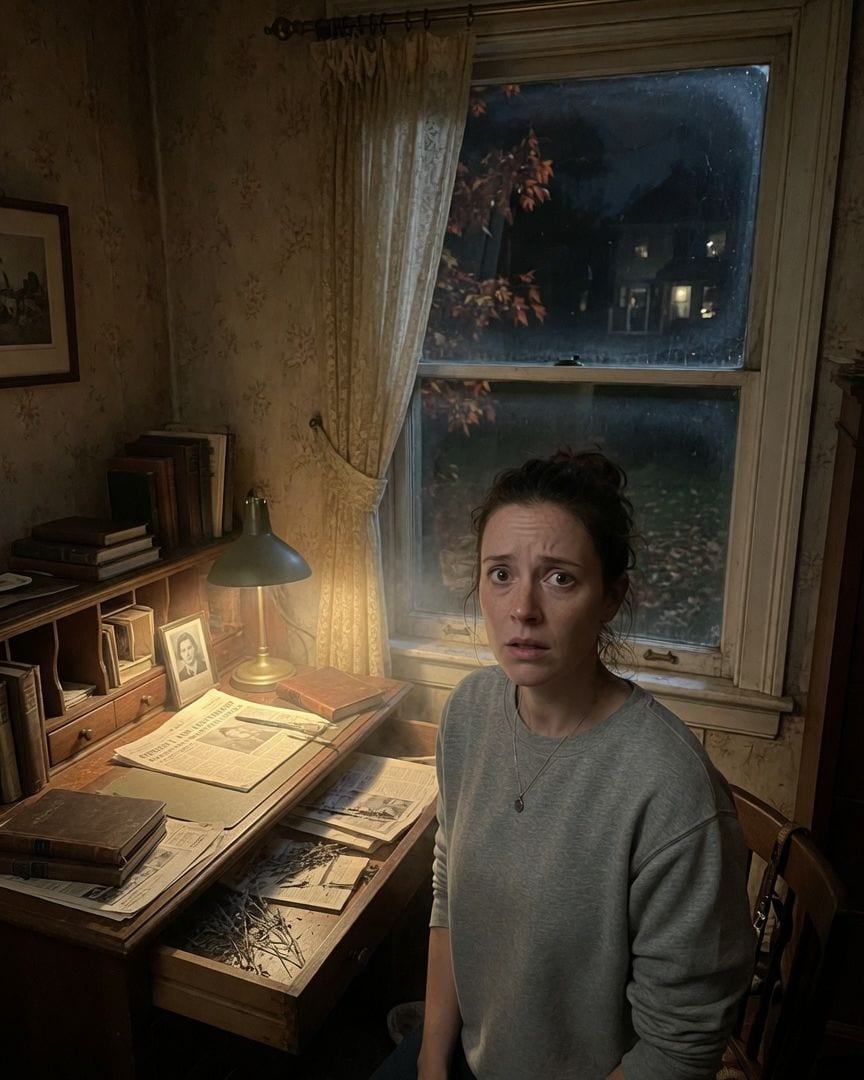
It started innocently enough, like most things do here on Radcliffe Lane. I moved into my grandmother Vera’s old house last summer, a few months after she passed.
It’s a quiet, tree-lined street that feels like stepping back in time, all sprawling yards and houses that have stood for a century. I spent weeks sorting through Vera’s things, a mournful but comforting task.
The stack of her old diaries, going back decades, became a familiar nightly ritual. They were mostly mundane accounts of weather, garden woes, and local gossip.
But then I noticed a pattern. Every single diary, without fail, ended its October entries with the same cryptic line: "left the lamp in the west window for him, as we do."
I’d initially found it quaint, a charming eccentricity. Vera had always been a little particular, a bit superstitious in her own way. Maybe it was an old family tradition, a memorial for someone I didn't know.
I tucked the thought away, planning to ask Oscar Radcliffe, our next-door neighbor, who seemed to know everything about everyone on the lane.
Then October arrived. The air grew crisp, leaves turned that impossible, burning red that only happens here. One evening, walking my dog, Barnaby, I noticed it.
A soft, amber glow from a lamp, burning in the west-facing window of old Mr. Kowalski’s house. Then Mrs. Beaumont’s. And down the lane, almost every single house. Each one, a quiet, golden eye watching the street.
My own west window was dark.
I stood there, Barnaby tugging at his leash, and looked at my house. The front porch light was on, but that particular window, the one Vera had always mentioned, was a black rectangle.
A faint, almost imperceptible chill seemed to emanate from it, even with the heat on full blast inside. It was like a forgotten breath in the room, lingering and cold, pressing against the glass from the inside.
I tried to ask around. Oscar Radcliffe, a man who seemed as old as the ancient oak trees lining our street, just smiled faintly when I brought up the lamps.
“Just a bit of local flavor, dear,” he’d murmured, eyes crinkling at the corners. He quickly changed the subject to the coming cold snap, his gaze unwavering but somehow distant.
Other locals offered similar polite deflections, a quiet, almost rehearsed agreement that left me unsettled. No one under seventy would even acknowledge the phrase “left the lamp for him.” It was as if I’d spoken a banned word.
Frustrated, I returned to Vera’s belongings, hoping for a clearer answer. Tucked away in an old photo album, pressed between yellowed cellophane, I found a faded photograph from the 1940s.
Vera, much younger, laughing, stood beside a similar lamp, glowing brightly in her west window. Her smile was wide, but her eyes held a strange, almost solemn intensity.
Beneath it, a newspaper clipping, yellowed and brittle, was partially obscured, stuck to the photo by decades of adhesive.
I carefully peeled it back. The visible words spoke of “Radcliffe Lane” and “unexplained disappearance,” but the rest was too damaged, the ink bled into itself, to read properly.
The ordinary explanation – a quaint local tradition, perhaps a memorial to some forgotten event – felt thin, stretched taut against the quiet refusal of anyone to speak about it. Why the secrecy? Why the coordinated silence?
It bothered me more than I wanted to admit.
The chill in my west window seemed to deepen, a constant, subtle presence. It wasn’t a draft. It was something else. I even checked the window frame, thinking it might be a seal problem. But no, everything was tight.
It was just… cold.
Rachel, digging through her grandmother's old desk for more clues, felt a loose panel at the back of a deep drawer. Her fingers fumbled, tracing the edge of the unexpected seam.
With a soft click, a hidden compartment sprang open, revealing a shallow space I’d never known existed.
Inside, nestled amongst dried lavender that still carried a faint, sweet scent, was another brittle, yellowed newspaper clipping, far better preserved than the last.
The headline was faded, but the date, October 18, 1946, was clear. The article detailed the "unexplained disappearance" of a young man, Isaac Radcliffe, from his home on "what is now Radcliffe Lane," noting "local rumors of unlit windows."
I stared at the name, a cold certainty settling in my gut. Oscar Radcliffe. He was Isaac’s great-nephew. The name of the lane, the unlit windows, the date in October – it all clicked into a terrifying, unasked question.
Clutching the clipping, the brittle paper almost dissolving in my trembling hand, I went straight to Oscar Radcliffe’s house. He was on his porch, rocking slowly, a half-empty mug of tea steaming beside him.
He looked up as I approached, his smile polite, but it didn't reach his eyes. When I laid the clipping on the small table between us, his placid demeanor cracked for the first time.
He stared at the article, his hand, gnarled with age, trembling slightly as he reached for his tea. “Some things are best left undisturbed, child,” he murmured, his voice raspy, barely above a whisper.
But I pressed him. “Isaac Radcliffe. Your great-uncle. The lane is named after him, isn’t it? What happened? What do ‘unlit windows’ mean?”
Oscar sighed, a deep, shuddering sound that seemed to come from the very depths of his old bones. “He was… the first. Or rather, the first recorded.”
He paused, took a long sip of his tea, his eyes fixed on the distant tree line. “There’s a presence here, Rachel. Tied to the land. Always has been. We just… learned to live with it. To appease it.”
He finally met my gaze, and I saw a deep, ancient sorrow there. “‘Him’ is real. The lamps, they’re a warning. A way to mark the houses. To say, ‘not here.’ Not this one.”
Armed with this chilling, reluctant admission, I began to investigate further. Oscar wouldn't say more, just shook his head and retreated into himself. The local library was small, but the town had a tiny history museum.
I spent hours there, combing through old town records and census documents.
I found more than one “unexplained disappearance” on Radcliffe Lane. Always in October. Always of people who had recently moved to the area, people like me, or those with no deep family roots in the town. Albert Beaumont, 1918.
Chloe Ingram, 1974. The records were sparse, often just a single line, marked ‘missing’ or ‘presumed deceased, no body recovered.’
The ordinary explanations of runaway spouses or accidental deaths felt increasingly flimsy, replaced by a growing pattern of dread that tightened its grip around my chest. It wasn’t just a few isolated incidents; it was a theme.
A chilling, recurring theme.
As my digging intensified, so did the unease in my own home. The subtle chill in the west window became a constant, palpable cold spot.
It was no longer a forgotten breath; it was like a localized pocket of winter, radiating outward, forcing me to pull a blanket around myself even when the thermostat read 72 degrees.
It seemed to follow me, a cold shadow in my living room, in the hallway, always close to that darkened window.
Faint scratching sounds, like brittle fingernails on glass, started at night. They were soft, hesitant at first, then more insistent, always from the direction of the west window.
I’d wake, heart pounding, convinced someone was outside, but when I looked, the yard was empty, silent under the moon. The sounds would immediately cease, leaving behind only the echoing thud of my own pulse.
My neighbors, who had once been merely evasive, now gave me sidelong glances. Their smiles were tight and wary, and they’d quickly cross the street if they saw me coming, or duck inside their houses.
I was no longer just the new arrival; I was the one asking questions. The one disturbing the peace.
Then Oscar Radcliffe called. His voice was low, urgent, stripped of its usual placid calm. “You need to stop, Rachel. You’re drawing attention. He knows you’re looking.”
He hung up before I could respond, leaving me with a dial tone that sounded like a flatline.
One morning, I found a small, folded note slipped under my front door, tucked neatly under the welcome mat. The paper was rough, unfamiliar, and the writing was in a shaky, unfamiliar hand, almost childlike in its uneven letters.
It said: “The lamp should have been lit. He remembers.” The message was simple, terrifying, and undeniably personal. Someone knew exactly what I had found, and what I had failed to do.
Adrenaline coursing through my veins, a cold knot of fear tightening in my stomach, I returned to Oscar’s house. I didn’t knock. I just walked in, the front door standing ajar.
He was sitting at his kitchen table, just as I’d left him yesterday, nursing another cup of tea. I slapped the note onto the worn Formica, the paper skittering across the surface and stopping inches from his hand.
“Who sent this? What does it mean, ‘He remembers’?” My voice was sharp, desperate.
Oscar sighed, running a hand over his tired face. His eyes, usually so placid, were shadowed with a deep, consuming weariness. “It means you broke the rule, child. You moved into Vera’s house, and you didn’t light the lamp.
You left the west window dark.”
He looked at the note, then at me. “’Him’ isn’t a ghost, Rachel. Not a spirit. He’s… older. Something tied to the very land of Radcliffe Lane, to the soil itself.
A primal hunger that awakens with the harvest moon, every October.” He paused, collecting his thoughts, his gaze drifting to his own west window, where a simple, amber lamp sat glowing steadily. “The lamps aren’t wards. They’re beacons.
They mark the houses that are safe. The houses that are part of the agreement. If a lamp is unlit, if a window is dark, He seeks out that house. And He takes someone from it.”
I felt a fresh wave of nausea. “Takes? How? Like, violence?”
Oscar shook his head slowly. “No. Not violently. Not with struggle. A quiet, complete disappearance. No struggle, no sign. Just… gone. Absorbed.” He swallowed hard, his voice dropping to a near whisper. “My own family, we lost more than Isaac.
My younger sister, Kathleen. She vanished in the 70s. Moved back to the lane after college, thought all the ‘old stories’ were just… stories. She left her lamp unlit. Didn’t even own one for that window.”
The town’s silence, he explained, wasn’t just fear. It was a desperate, collective effort to keep ‘Him’ contained to the lane. “To talk about it, to bring outside attention, to outsiders… that risks ‘Him’ spreading. Awakening a wider hunger.”
He stood up, walked to his west window, and gently adjusted the lamp, his fingers brushing the glass. “You’re the target now, Rachel,” Oscar finished, his gaze heavy with resignation as he turned back to me.
“You’re the one who left the lamp unlit. And He’s already here.”
My mind reeled. Target. Me. I had to find a way to stop it, to break the cycle. I wouldn't just sit here and wait.
Oscar, seeing her desperate, panicked resolve, seeing the flicker of defiance in my eyes, sighed again. He led me to a small, hidden room in his attic, a dusty space filled with old trunks and meticulously labeled boxes.
The air was thick with the smell of old paper and forgotten things.
“My family has kept records,” he said, his voice barely a whisper, echoing in the cramped space. “To remember. To warn.”
Inside, Rachel found a terrifying archive: brittle, yellowed town records, ancient death certificates, many simply marked ‘cause unknown,’ or chillingly, ‘missing.’
And generations of Radcliffe family journals, thick leather-bound tomes filled with elegant, sloping script and later, hurried, almost frantic scrawls. As I pored over them, a clear, horrifying pattern emerged.
A disappearance on Radcliffe Lane, always in late October, always of a newcomer or someone who disregarded local traditions, occurring roughly every 20-30 years. This wasn't just a local legend; it was a recurring harvest, a terrible, precise cycle.
As I scanned the dates, my breath hitched. The last recorded disappearance was 28 years ago, almost to the day. The next one was due this very month.
My eyes fell upon a new, almost blank page in Oscar’s most recent journal, a thick ledger with a faded green cover. The ink on this page was fresh, still dark.
At the top, in Oscar’s shaky, familiar hand, was a single, chilling entry: ‘October, current year.’
Beneath it, her name, already written: ‘Rachel Holloway.’
The scratching sound from my own west window seemed to echo in the silent room, a phantom echo, but undeniably there, pressing in.
Oscar watched my horrified face, utterly devoid of surprise or pity. “It’s not evil, Rachel,” he explained, his voice softer now, almost philosophical. “It’s just… what He does. Like the river floods, or the winter comes.
He’s part of the land, and He takes what’s offered, or what’s left for Him.”
The lamps, he clarified, weren’t to stop ‘Him.’ They were to guide ‘Him.’ To an empty house, a symbolic offering of light, or to a designated spot away from the living.
He spoke of ancient times, before the lane was even called Radcliffe. How the first true families here had learned, through terrible loss, to mark their homes, to direct the presence.
The ‘man with no grave,’ Isaac Radcliffe, was the first one they knew of, the first time the cycle was broken or misunderstood in its current iteration. His body was never found, absorbed, Oscar believed, into the earth ‘Himself.’
The community’s silence wasn’t just fear; it was a desperate, practical measure. They had learned, generations ago, that drawing attention to ‘Him,’ fighting ‘Him,’ only made ‘Him’ hungrier, made ‘Him’ spread beyond the lane.
The ritual was a containment, a bargain. A terrible, silent bargain.
I understood now. The lamp wasn’t a ward; it was a target marker. And by leaving hers dark, I had marked myself. The coherence of it all was the true horror.
Every old diary entry, every evasive glance, every quiet disappearance – it all fit into this terrible, ancient pattern, a tapestry woven with dread and silent agreement.
I refused to be the next entry in Oscar’s ledger. I wouldn't light the lamp. I wouldn't be part of their terrible bargain. Oscar pleaded with me, his old eyes filled with a desperate sorrow. “It’s the only way, child.
It’s what we do. It’s what we have always done.” But I shook my head, my jaw set. “Not me.”
I packed a single bag, throwing in essentials – clothes, my wallet, phone. Everything else felt irrelevant. I would leave Radcliffe Lane, leave everything behind.
That night, as the moon rose heavy and full, casting long, skeletal shadows through the bare branches of the trees, I started my car. The engine coughed, sputtered, and died. I tried again, turning the key, pumping the gas. Nothing.
It was useless. The internal lights flickered, then went dark.
A profound, bone-deep cold descended, seeping through the car’s thin metal, through my clothes, chilling me to the marrow.
The trees lining the lane seemed to press in, their branches intertwined like grasping fingers, obscuring the road ahead, turning the familiar street into a suffocating tunnel. I peered out the driver’s side window, my breath fogging the glass.
A fleeting, impossibly tall shadow, indistinct but undeniably present, moved between the trees at the edge of my property, a fluid, ancient darkness. It was heading directly toward my dark west window.
‘He’ wasn’t just in my house; ‘He’ was on the lane itself.
Panic seized me, sharp and cold as a razor blade. I threw open the car door, abandoning my vehicle, abandoning everything.
I fled on foot, stumbling through the deep grass of the yard, then crashing through the underbrush of the woods behind my house, twigs snapping underfoot like brittle bones.
Behind me, I heard it: a faint, rhythmic scratching sound, followed by a low, guttural hum that seemed to vibrate through the very ground. It wasn't human. It wasn't animal. It was… a presence. I didn't look back.
I just ran, the sounds growing fainter as I pushed myself past all limits, desperate to escape the lane and the thing that claimed it.
Rachel Holloway never returned to Radcliffe Lane. Her car was found abandoned on the roadside a few days later, its engine seized. Her house was left empty, the west window dark and unblinking.
After a few weeks, the locals quietly put up a ‘For Sale’ sign, but no one ever bought the Holloway house. It simply stood, a dark silhouette against the autumn sky, slowly dissolving into the landscape.
Oscar Radcliffe, now even more frail, still lights his lamp every October, its amber glow a solitary defiance in his west window.
He watches the empty, dark window of Rachel’s old house, a flicker of sorrow and deep, quiet resignation in his eyes, knowing the cycle had claimed another, and the lane waited.
Rachel lives far away now, constantly looking over her shoulder, a phantom chill in her bones that no amount of warmth can truly banish.
She tries to tell people, but her story is met with polite skepticism, dismissed as trauma or an overactive imagination.
She carries the knowledge, the proof no one will ever believe, a truth that gnaws at her, an internal cold that mirrors the one she escaped.
Every October, as the days shorten and the air grows crisp, she finds herself drawn to the window, the old habit, the old fear. She never lights a lamp.
She just watches the dark outside, waiting for a shadow that never quite manifests, but never quite leaves her, either.
The internet listing for the old Holloway house on Radcliffe Lane occasionally gets a curious click. A single photo shows the empty west window, dark.
Beneath it, in the comment section, a lone, anonymous post simply reads: "The lamp should have been lit. He remembers."
If this one got to you
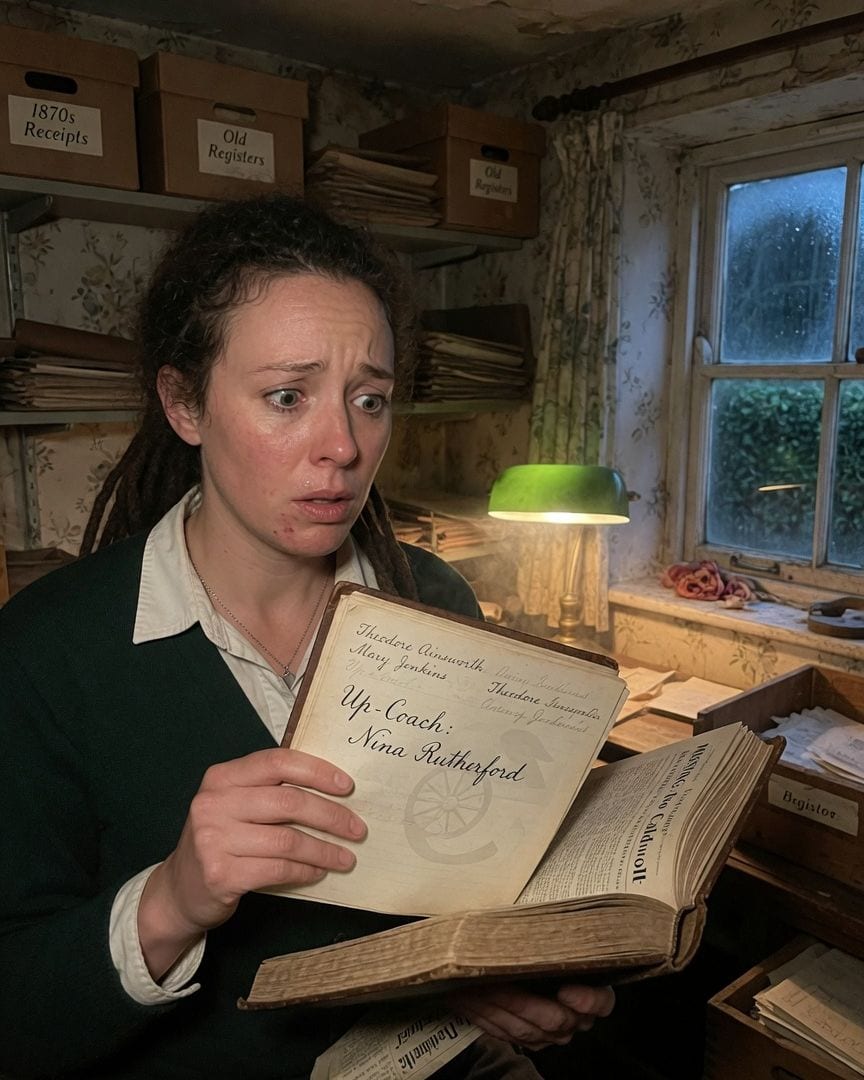
The old inn's arrivals book logs a vanished girl's name. She disappeared two months ago, but the ledger says she checked in last week.
As the new owner of The Angel Inn, I cherished its ancient history. But one evening, while tidying the old arrivals book, I found a chilling entry: Nina Rutherford, a local girl who vanished two months ago, was logged as checking in last week.
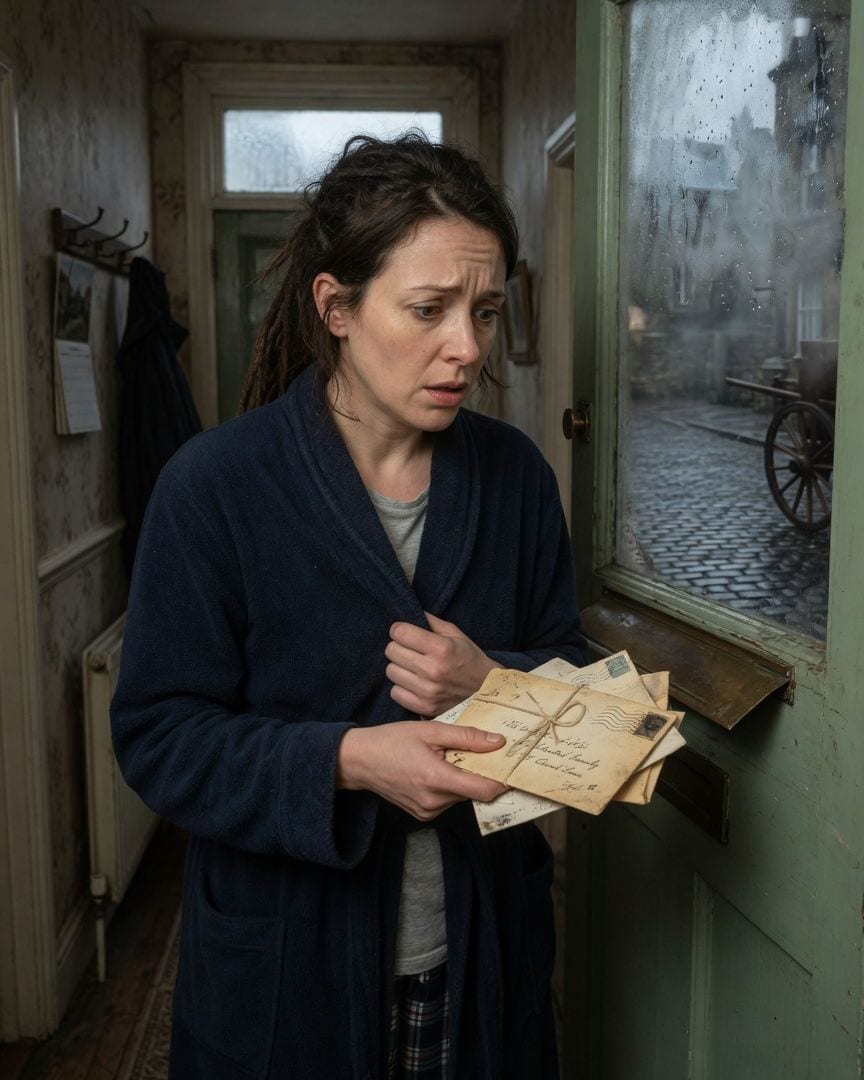
Seventy years ago, a hidden journal recorded my door opening to the wrong street and receiving Lockwood post.
I'd only recently moved into my inherited house, a quiet place on the edge of town. One grey morning, a distinct clatter from the front door's post flap caught my attention. Reaching down, I expected my gravel path, but instead, the flap showed a dark, cobbled street that wasn't mine. A bundle of warm, old letters, addressed to 'The Lockwood Family,' slid through, before the vision flickered and was gone.
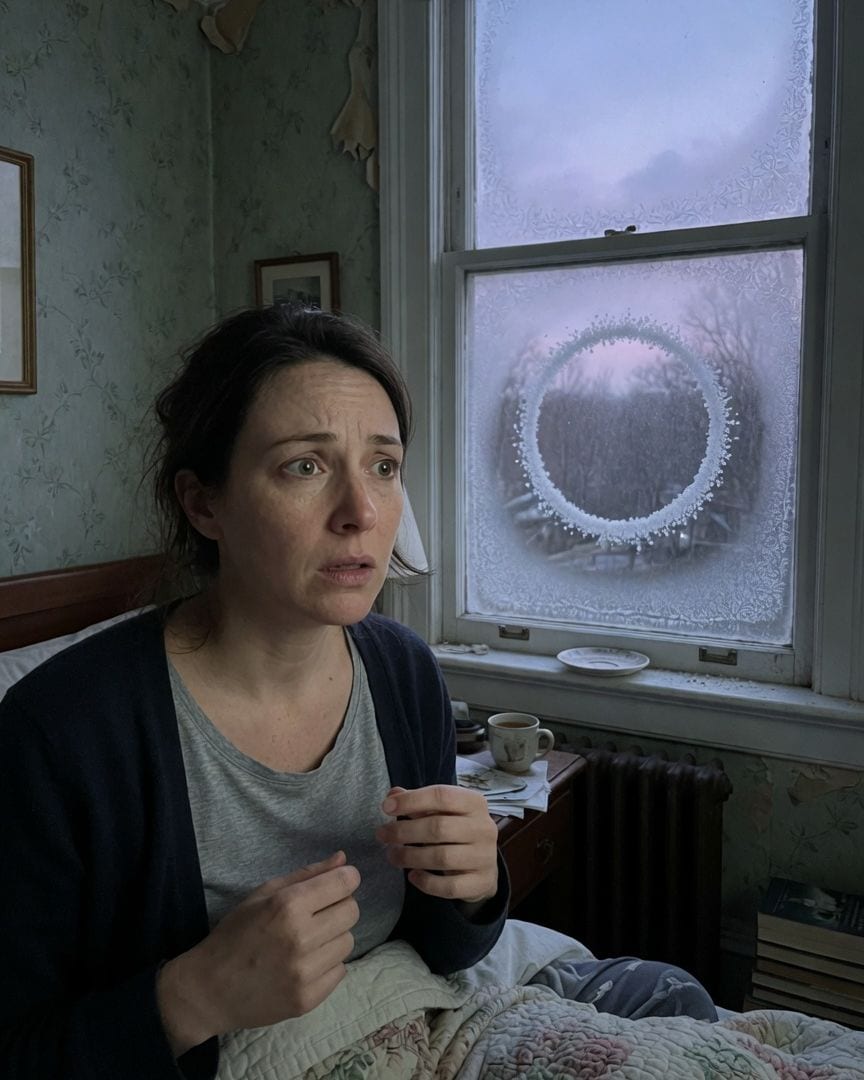
A 1963 obituary for a vanished 7-year-old girl lists *my Fenwick address* as her last known home.
Fenwick has its quaint traditions, like placing a salt saucer on the sill for protection. I put mine on my fourth-floor bedroom window, a private scoff at local custom. The next morning, the saucer was gone, replaced by a perfect salt ring on the *outside* of the glass, impossible to reach.
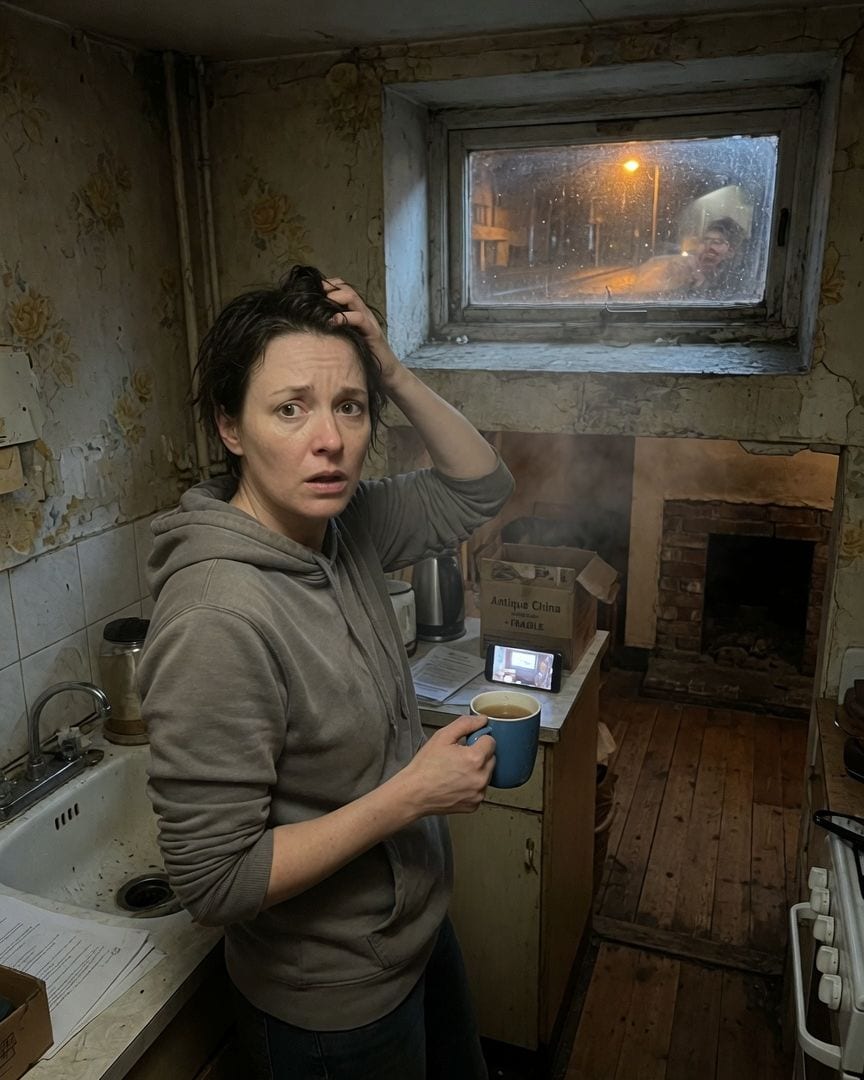
My basement window shows a gaslit kitchen moving at midnight, hams hung from the ceiling. My own kitchen is dark.
Settling into my new basement flat, I was making tea late one night when I glanced out my kitchen window. Instead of the concrete well, I saw a gaslit kitchen with an enormous cast-iron range, a young scullery girl, and cured hams hanging from the rafters. The vision was too sharp, too real, and the smell of coal smoke lingered long after it vanished.
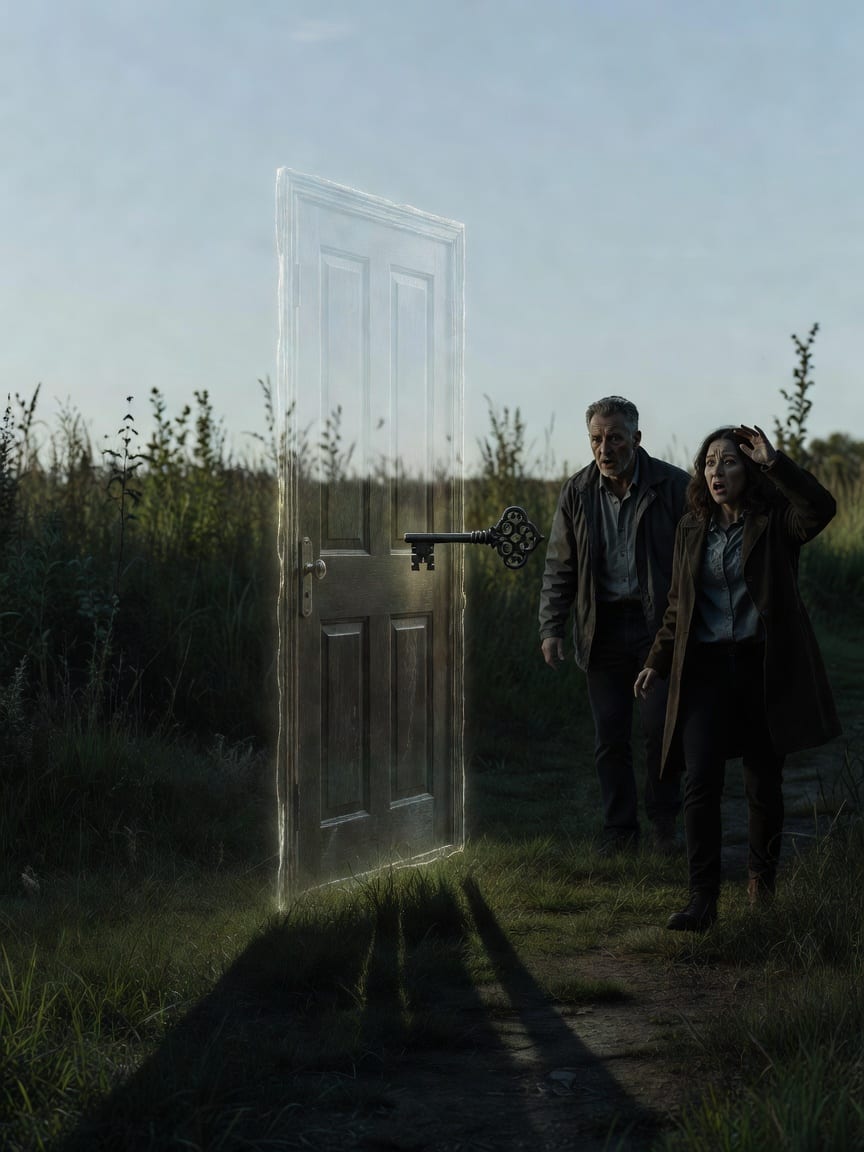
My name was on a package lodged in 1974. I wasn't born until 1985. Inside was a key and a note: 'You know which door. Not yet.'
I'm Elena Radcliffe, 38, and a solicitor's letter just arrived for me about a package. The firm's records state it was lodged in 1974, years before I was born. Now I've found an old newspaper article reporting a woman with my exact name vanished that very year.
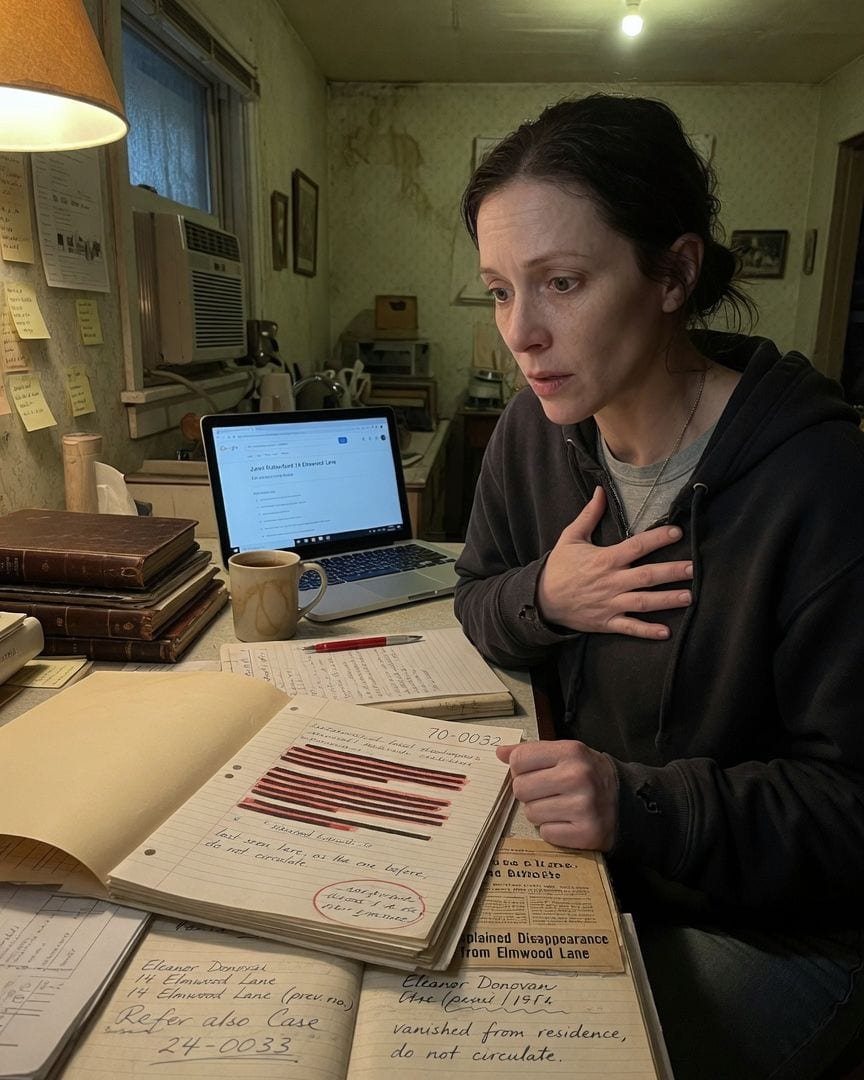
My own address is on a missing person's file from 1970. The blacked-out line names my street. She never lived here.
When my neighbor vanished, I started digging into old local missing persons cases. In a police file for a woman who disappeared in 1970, I found my own address, 14 Elmwood Lane, framing a blacked-out section of the duty log. Janet Rutherford never lived here, and the file contained a chilling handwritten note: 'do not circulate.'