My beach huts now number forty-one. Hut 41 appeared past the promenade's end, locked with a padlock I don't own, washing stiff and dry on its line every morning since Monday.
The tide was out, the air sharp with salt and the faint tang of drying seaweed.
My morning rounds started like any other, the rhythmic crunch of gravel under my boots, the familiar line of forty beach huts stretching along the promenade.
Each one numbered, each one accounted for on my meticulously updated board back at the office. Hut 1 to Hut 40, a neat, predictable row of council-green boxes.
But this morning, past the concrete slipway where the promenade always, definitively, ended, something was wrong. There, planted firmly in the sand as if it had always been there, stood Hut 41.
It was the same standard council green, a twin to all the others, but its padlock was an unfamiliar, tarnished brass.
And on a line strung between its corner and a weathered post, a faded blue towel and a child’s swimsuit hung, stiff and bone-dry despite the fine mist that still clung to the air.
My steps faltered. Forty huts. Always forty. I pulled out my key ring, the heavy metal clinking against itself, my eyes scanning the numbered tags. No 41.
No key for a brass padlock like that, not one of our standard issue. I walked past it, then back, the same impossible hut staring out at the grey, placid sea. It was utterly, irrevocably, out of place.
For three days, Hut 41 remained. Each morning, I’d see it from my office window, a stubborn green smudge beyond the slipway, a silent defiance of everything I knew about my job. I tried to dismiss it, at first.
A prank, maybe. Or a misdelivery, some rogue builder’s mistake. I called the council, the property department. “Hut 41?” a bored voice asked. “No, Mrs. Montgomery, there are forty huts. Always have been.”
A faint click, and the line went dead.
I drove the length of the promenade in my little van, past the ice cream kiosks and the row of chippies, noting the end-point, the precise location of the slipway where the concrete dissolved into sand.
Hut 41 was undeniably beyond it, a good thirty meters further than any official structure should extend. I took photos on my phone, zoomed in, measured the distance with the app. The hut was real, solid.
It cast a distinct shadow under the weak morning sun.
I tried the padlock again, jiggling it, feeling the cold, rusted brass under my fingers. It wasn't one of our standardized council locks, the kind that opened with a master key.
This was old, a lever lock, probably bought from some hardware store decades ago. The washing still hung there, the faded blue towel and the small swimsuit, always the same items, always stiff and dry.
I touched the towel; it felt like cardboard, strangely unyielding.
I checked local news archives online, searched for any mention of new construction, any planning permits that might have slipped through the cracks. Nothing.
The hut simply was, a quiet, impossible presence, a stark, green contradiction to every record I held dear.
The frustration gnawed at me. I needed an answer, a paper trail, anything that made sense. That afternoon, I found myself in the old council archive, a forgotten room in the basement of the town hall.
It smelled of dust and damp paper, filled with neglected blueprints and property deeds dating back through generations. I was looking for any past plans for extending the promenade, anything that might account for an extra hut, however unlikely.
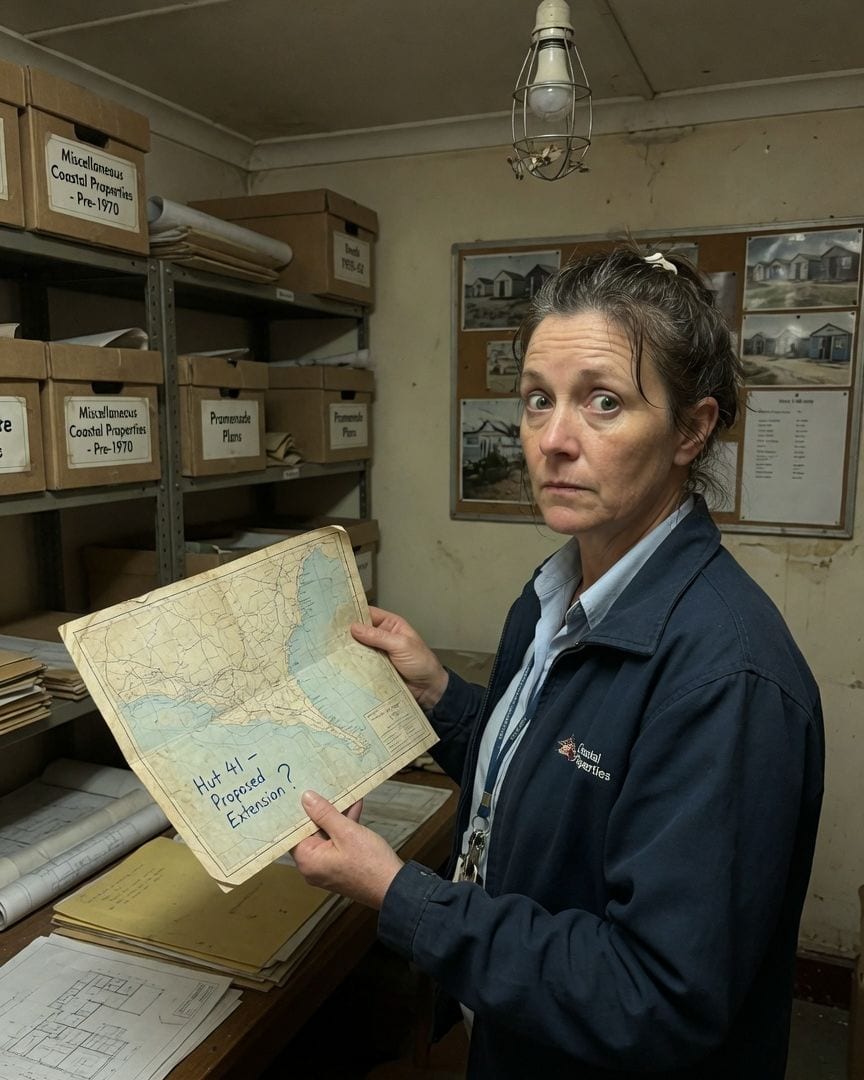
Deep in a box marked 'Miscellaneous Coastal Properties - Pre-1970,' my fingers brushed against brittle, yellowed paper. I pulled it out carefully. It was an old, hand-drawn surveyor’s map, dated 1958.
My eyes scanned the familiar coastline, the slipway, the promenade—exactly as it looked today. And there, sketched with meticulous detail precisely where Hut 41 now stood, was a small, labeled rectangle: 'Hut 41 – Proposed Extension?'
The question mark was unsettling, an echo of my own confusion, but the number, the location, were undeniable.
I stood there in the dusty, forgotten corner of the old council archive, holding the brittle, yellowed map.
My finger traced the faded ink, confirming the impossible: a hand-drawn 'Hut 41' sketched precisely where the promenade ends, decades before I was born.
The map changed everything. It wasn't a prank, wasn't a misdelivery, wasn’t a construction error. This wasn't new. This was... recurring.
I went back to Hut 41, my boots making a different sound on the sand this time, heavier, more deliberate.
I tried the padlock again, not with the futile jiggling of a confused manager, but with the grim purpose of an investigator. It was a standard brass lever lock, old but not unique. I knew what I needed.
I found Albert Caldwell, a locksmith who’d been plying his trade in town since my parents were children.
He was hunched over a work bench, a magnifying glass perched on his nose, trying to coax life back into a rusted antique key. “Brass lever, you say? Haven't seen one like that in use since the 70s.
Unless…” He trailed off, looking at me with a peculiar expression, his eyes suddenly sharp above the magnifier.
“Unless what, Albert?” I pressed.
He shook his head, pushing his glasses further up his nose. “Just old wives’ tales, dear. Nothing you’d be interested in. Places that don’t stay put.” He mumbled it, almost to himself, then turned back to his key.
I tried to get him to elaborate, but he just grew evasive, cleaning his tools with an intensity that clearly meant the conversation was over.
His words, 'places that don't stay put,' echoed in my head. If Hut 41 had been there in 1958, depicted on a map with a question mark, then it wasn't just appearing now. It was a pattern.
I went back to the news archives, broadening my search. Local disappearances. Not just recent, but stretching back into the 50s and 60s, cross-referencing with the map's date, with the general coastal area.
The reports were sparse, often ending with "no trace found" or "presumed lost at sea." But a handful stood out. Unsolved cases. People vanishing near the coast, specifically near the slipway.
A young woman, Sandra Reynolds, last seen near the slipway in 1961. The article mentioned her bright red swimsuit, a detail that snagged in my mind, a faded echo of the child’s suit on the line outside Hut 41.
My meticulous records, usually a comfort, a testament to my ordered world, now felt like a futile, desperate attempt to impose order on a chaos that had been simmering beneath the surface for decades.
Later that afternoon, the phone rang in my office. I almost didn't answer, caught in a tangle of missing persons reports and forgotten council minutes. “Vivienne?” The voice was calm, almost unnervingly so.
It was Steve Sterling, the retired council groundskeeper, who’d managed the huts before me. He was old, sharp-eyed, and always seemed to know more than he let on.
My heart pounded. How did he know? Had Albert Caldwell said something? “Steve. What can I do for you?” I tried to keep my voice even.
“I heard you were digging around in the old archives,” he said, the calm in his voice unwavering. “Looking for something specific?”
I took a breath. This was it. “Yes, Steve. I’m looking for information about Hut 41.”
He sighed, a long, slow sound down the line. “Some things are better left alone, dear. The sea has its secrets.”
It wasn't a threat, not overtly, but his quiet warning carried an immense weight, heavy enough to push the air out of my lungs. He didn't elaborate, didn't offer any more explanation, just reiterated his advice and then hung up.
Later that evening, as I was locking up my office, the last sliver of sun bleeding out of the sky, I glanced out at the beach.
Hut 41 was visible in the distance, a dark, lonely sentinel against the fading light. And standing motionless beside it, watching me, was Steve Sterling. He didn't wave, didn't move.
Just stood there, a dark silhouette against the deepening dusk, his presence a stark, cold reminder that my investigation had been noticed, and that I was no longer alone in this impossible puzzle.
The next morning, I drove directly to Steve’s house. He was in his garden, pruning roses with the slow, deliberate movements of a man completely at peace. “Steve,” I said, my voice sharper than I intended.
He slowly put down his trowel, not looking surprised. “What do you know about Hut 41? And Sandra Reynolds?”
He straightened up, his eyes meeting mine, calm as ever. “Sandra… yes. A bright girl. Too curious.” He paused, picking a spent rose head from a bush, turning it over in his fingers. “Like some others.”
I pressed him, recounting the map, the disappearances, the unyielding padlock, the dry washing. I told him about Albert Caldwell’s mutterings.
He nodded slowly, as if I were simply confirming something he’d known for a lifetime. “It comes and goes, Vivienne. Always has. A blind spot. The council… they learned to ignore it. To make sure others did too.”
He paused, looking out towards the sea, invisible from his garden but always there. “It’s not a place that moves. It’s a place that is and isn’t. A geometry that reasserts itself when it’s ready.”
My throat was dry. “What does that mean? Reasserts itself?”
“It takes what it needs,” Steve said, his voice flat, devoid of emotion. “Or rather, what it finds. Those who… those who get too close, too curious.” He looked back at me, his eyes hollow but steady.
“I got ‘lost’ once. When I was a young groundskeeper, barely twenty. Three days, near the slipway. Just vanished. Reappeared, disoriented. Felt like I’d been gone for weeks, but it was only three days.”
He smiled, a faint, unsettling curve of his lips. “You come back… different. You learn to leave it alone. To help others leave it alone.” His gaze hardened slightly, fixed on me. “You’re digging too deep, Vivienne.
It’s found you, now. Like it found Sandra. Like it found me.”
Shaken by Steve’s admission, by the hollow calm in his eyes, I returned to Hut 41. The sun was dipping, painting the sky in violent oranges and bruised purples. This time, the distinctive brass padlock was gone.
The door, previously unyielding, now stood ajar, a dark sliver inviting me in. The sea wind, usually boisterous, was strangely still here, as if holding its breath.
Inside, it was sparse: a single wooden bench, dusty, pushed against one wall. A narrow shelf above it, empty. And in a dusty corner, half-hidden by a drift of fine sand, lay a small, leather-bound ledger.
Its cover was worn smooth, no title, no indication of its purpose. My fingers trembled as I picked it up. It felt impossibly heavy for its size.
I opened it. Page after page of neat, almost elegant handwriting. Dates and names. ‘1947 – Thomas Galloway.’ ‘1961 – Sandra Reynolds.’ The name hit me like a physical blow. Then ‘1978 – Lars Caldwell.’ More names.
All local people, all missing, all associated with the ‘slipway anomaly’ Steve had described. The list stretched back decades, a chilling, impossible record.
My hands were shaking so violently I almost dropped the book. I turned the final page, my breath catching in my throat, my eyes fixed on the ledger's final, neat entry: 'Vivienne Montgomery – next Tuesday.'
My own name, in my own handwriting, staring back at me from a book that shouldn't exist, detailing a fate yet to happen.
I stared at the entry, at the impossible future date written in my own hand. Next Tuesday. It was my handwriting, undeniable, every loop and slant familiar. But I remembered none of it.
Not the act of writing it, not the ledger itself. Steve’s words echoed in my mind, cold and clear: 'You come back… different.'
A terrifying realization bloomed in my chest. This ledger wasn’t just a record of disappearances; it was an artifact of the anomaly itself. A pre-written account of its ‘collections.’
It didn’t merely record who had been taken; it determined it, or perhaps recorded a fate that was already sealed by proximity and curiosity.
The hut wasn’t simply a manifestation, it was a gateway, a point of access for this spatial ‘collection.’
The perpetually dry washing, the unchanging padlock I’d tried to pick, the hut’s sudden appearance and disappearance – all of it clicked into place. Markers of its otherness, its detached existence from normal time and space.
The anomaly was an indifferent, geometric hunger, and I, by investigating, by getting too close, had stepped into its predefined cycle. The old map, the unsolved disappearances, Steve’s hollow, knowing eyes – it all formed a coherent, terrifying pattern.
There were no coincidences, only inevitability.
With the ledger still clutched in my hand, I walked from my office, past the deserted promenade, towards the slipway. The tide was out, the beach vast and empty under a sky the colour of slate.
Hut 41 stood silhouetted against the horizon, its dark green form stark and quiet. I knew then that escape was impossible. The entry was in my hand.
This wasn't a fight against an entity or a malevolent force, but an acceptance of a geometric truth, a preordained conclusion to a process I had inadvertently triggered.
I re-entered Hut 41. The air inside was still, cold, tasting faintly of salt and something else, something metallic and vast, like deep ocean or distant, cold stars.
I sat on the single wooden bench, tracing the impossible entry with my finger, 'Vivienne Montgomery – next Tuesday.'
As I waited, a subtle shift occurred. The light outside the window dimmed, not with the setting sun, but as if the very space around the hut was contracting, pulling inwards.
The distant sounds of the sea, the cries of gulls, receded, replaced by a profound, resonant silence that pressed against my ears.
The walls of the hut seemed to stretch, to grow, the single window becoming a distant, shrinking square of fading light. I felt no fear, only a strange, cold calm, a sense of inevitability as the geometry reasserted its claim.
I realized I wasn’t waiting for something to happen, but for something to undo.
The next morning, Hut 41 was gone. The promenade ended abruptly at the slipway, exactly as it always had. My rental board still listed forty huts, all accounted for. My car was parked in its usual spot outside my office.
Steve Sterling was back in his garden, pruning roses, his face unlined by worry. The old map and the impossible ledger were nowhere to be found.
The local paper carried a small notice about the unexpected disappearance of a local woman, Sandra Reynolds, from decades ago, with no new details. Life on the beachfront resumed its normal rhythm, oblivious to the quiet reordering that had occurred.
Vivienne Montgomery now manages the beach huts with a quiet efficiency. Her smile is gentle, her eyes observant, always sweeping the horizon past the slipway. She no longer makes meticulous notes, nor does she question the occasional oddity.
When a new, unfamiliar padlock appears on Hut 17, she simply notes it and moves on.
If a local asks her about the old stories of disappearances near the promenade's end, she gives a soft, knowing look, and changes the subject. Her ledger, once a source of comfort, now sits empty on her desk.
One afternoon, Steve Sterling stops by, ostensibly to chat about the weather. He sees her looking out at the sea, where the promenade ends. 'All quiet, Vivienne?' he asks, his own eyes holding that familiar, distant calm.
She turns, a faint, almost imperceptible smile playing on her lips. 'As quiet as it needs to be, Steve,' she replies. He just nodded, then turned back to the quiet, empty stretch of beach where the promenade had always ended.
If this one got to you
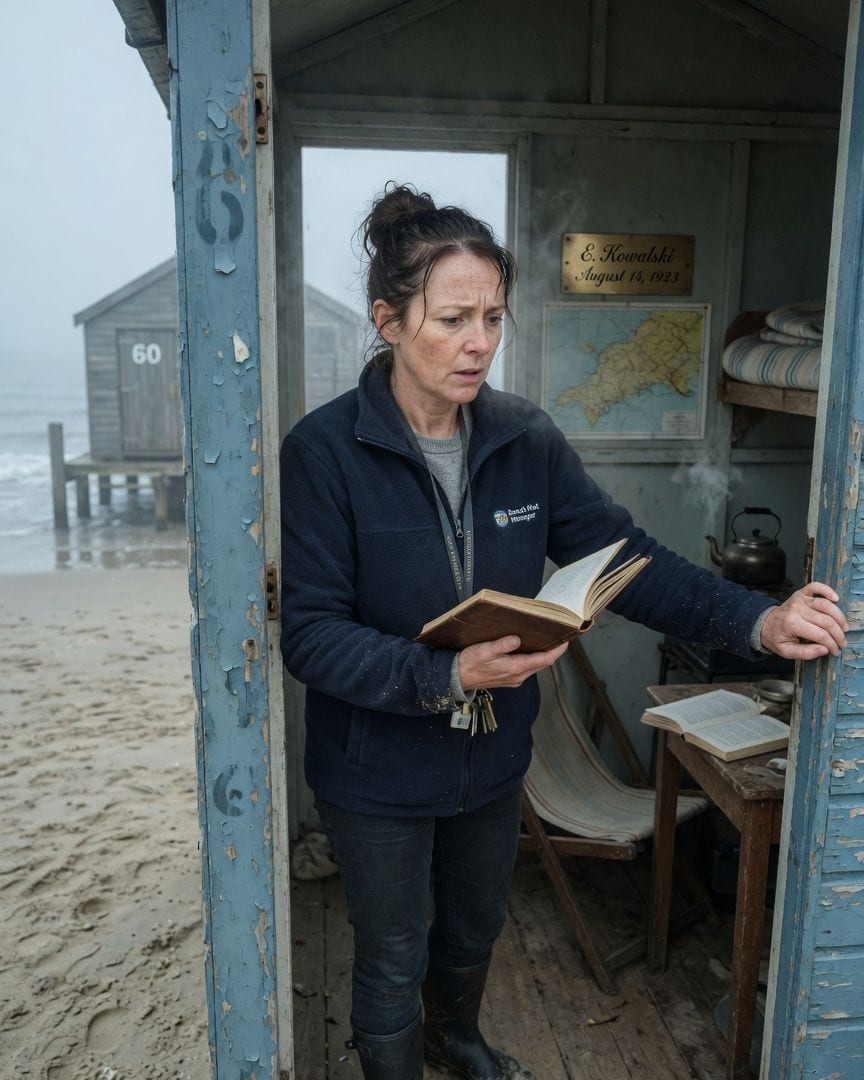
My beach hut row now has Hut 61, but it's not in my books. Inside, a kettle steams, and a plaque on the wall bears my family name, dated 1923.
As manager of the council's sixty beach huts for ten years, I knew my route blind. But on my usual morning walk, nestled against the groyne beyond Hut 60, stood a Hut 61. It looked decades old, just like the others, yet my ledger held no record of its existence.
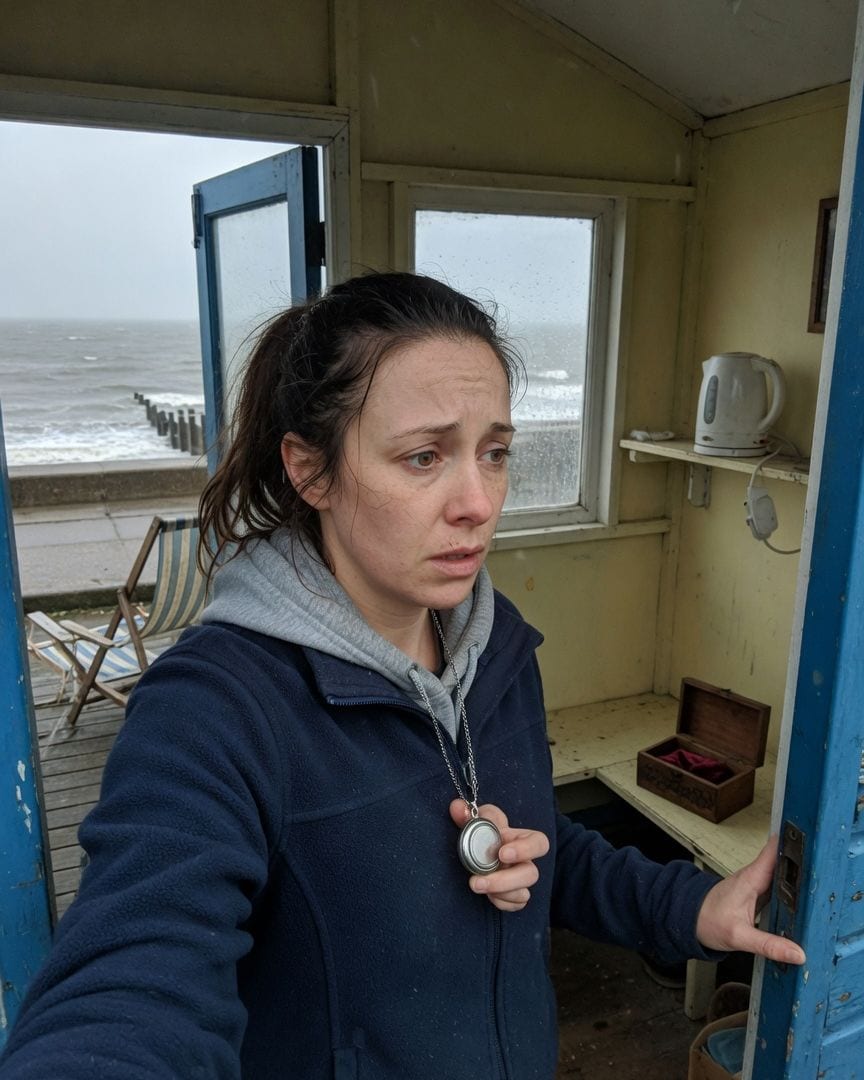
My beach huts run 1 to 60. On Sunday, past 60, was a Hut 61, weathered, with a kettle warm inside, and no record of it ever existing.
I've managed the sixty beach huts on the promenade for five years, knowing every detail. But one Sunday, a new one appeared: Hut 61. Inside, the air was warm and a kettle still steaming, as if someone had just stepped away, yet my booking book holds no record of it.
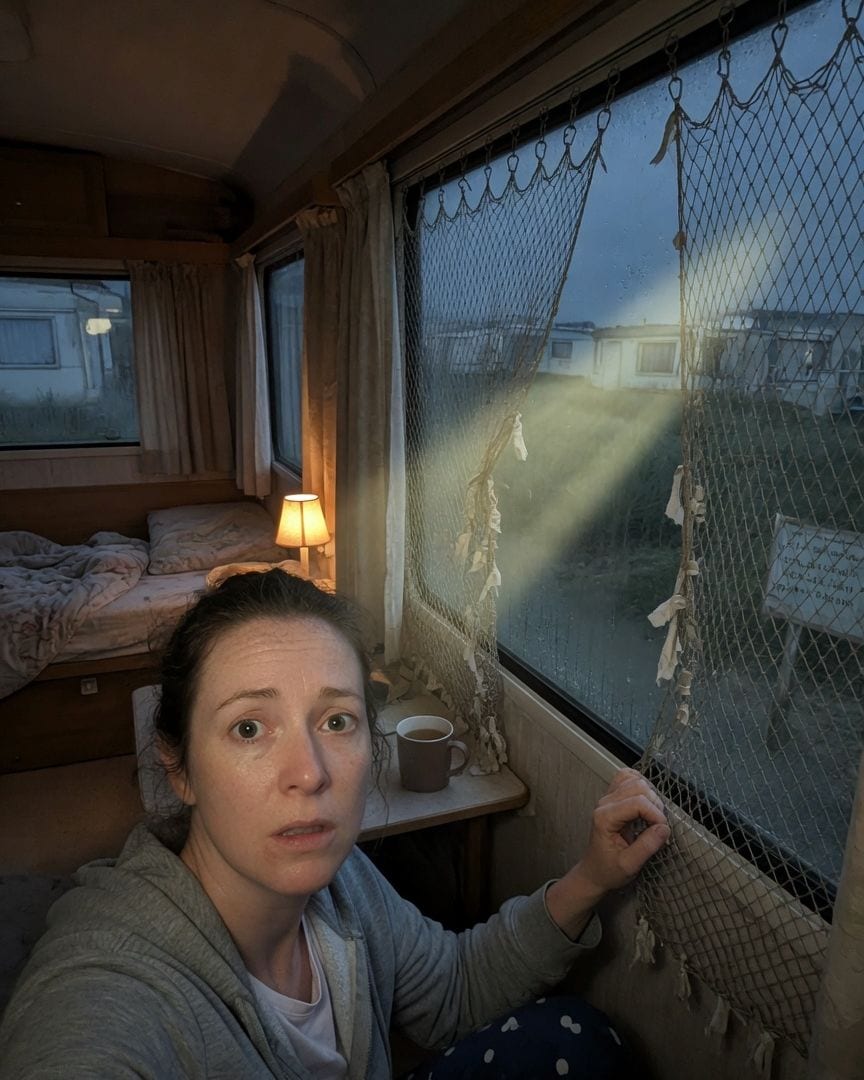
My caravan's seaward curtain was wide open. Fifteen minutes later, it was drawn tight, the hooks ripped outwards from the sea.
I arrived at Seawall Sands Caravan Park, looking forward to quiet nights by the sea in my caravan, number 14. An old sign mentioned a rule to draw seaward curtains by nine, but I forgot. I woke to find my curtain, left open, now tightly closed, its metal hooks ripped outwards from the sea side.
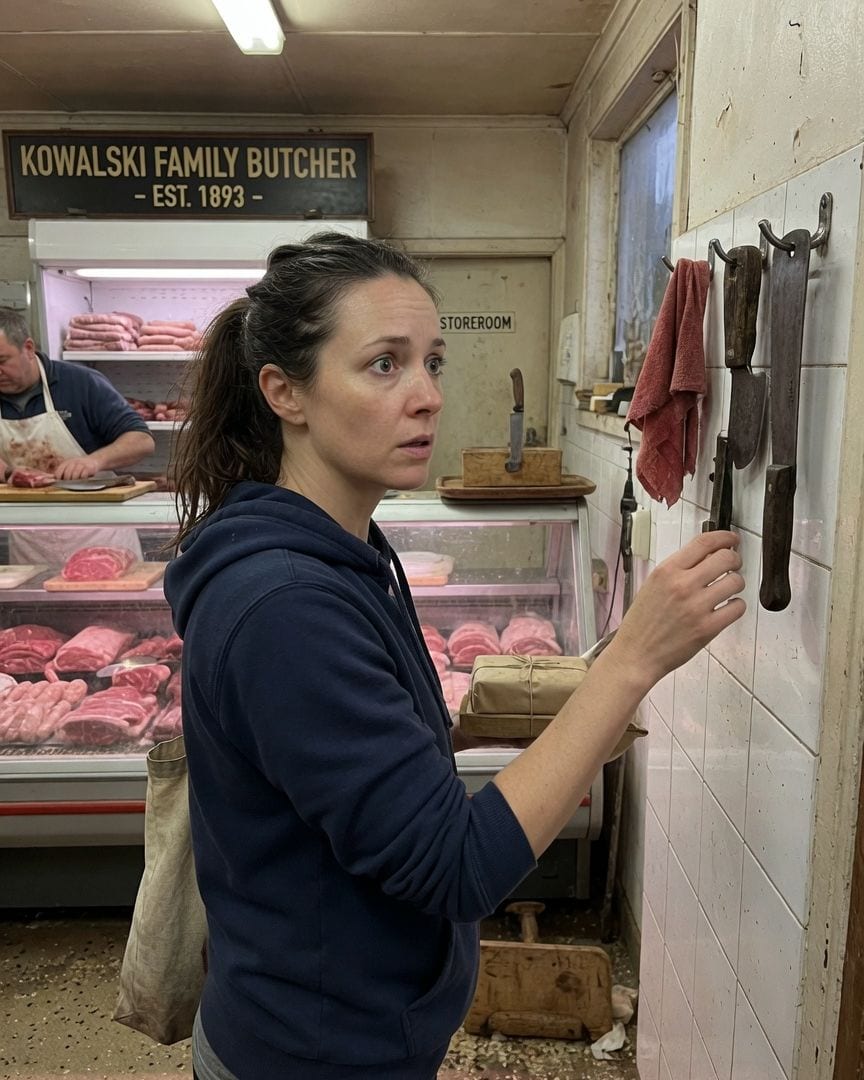
The butcher's back hook always hangs empty, draped with a red cloth. It holds a standing order since 1911 for the Hall, which burned down before the first war. The meat is gone every Friday, but no one's seen a cart.
Still new to Longnor, I stepped into Oscar Kowalski's butcher shop, needing a place to hang my bag. My hand brushed a simple hook, but Oscar's knife suddenly thudded, and he snapped, 'Not that one, dear.' He insisted the empty hook was 'reserved,' leaving me with a strange prickle of unease.
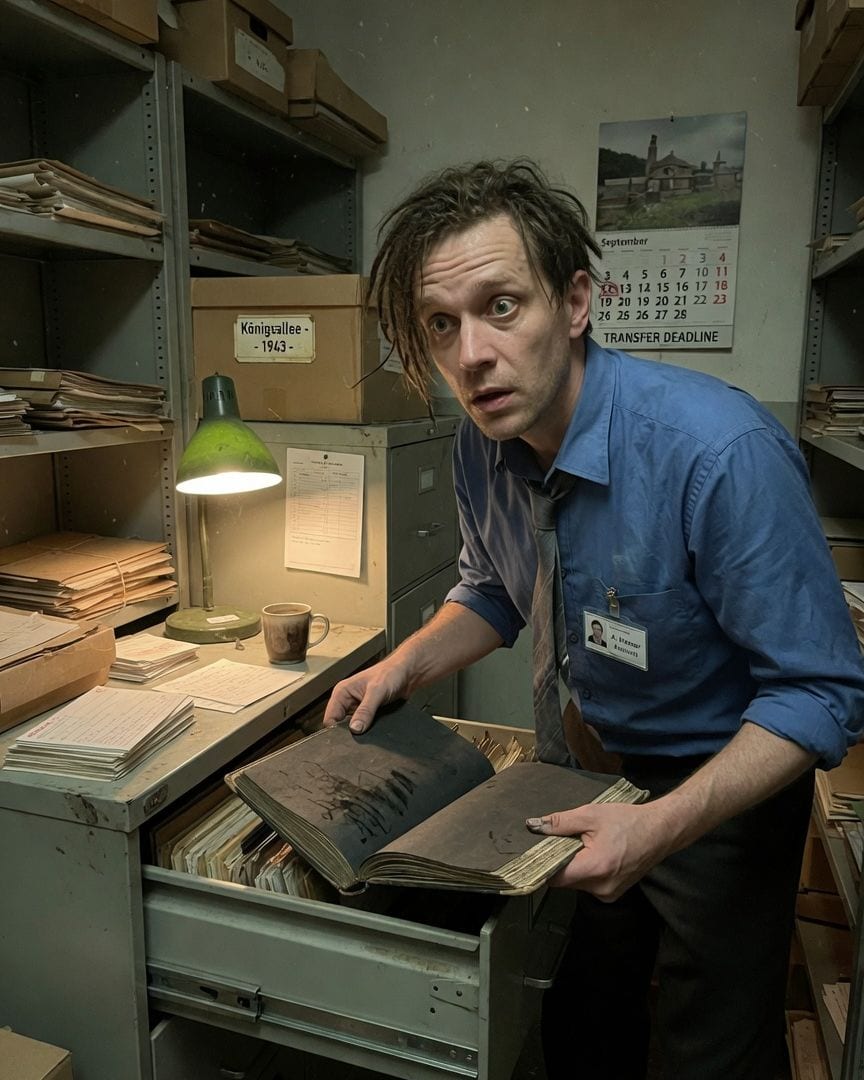
A Berlin archive researcher races a deadline. A hidden log for a Cold War barracks on a vacant lot has ink still wet from last month.
Ansel Vidmar, a methodical researcher, felt the pressure of a looming deadline. The municipal transfer of the old Berlin archive was days away, and he still had countless documents to categorize amidst towering stacks of forgotten history. His focus narrowed to an unindexed metal cabinet, revealing records for a garrison company at Königsallee – an address that had been a vacant lot since the war. A punishment log inside listed an entry from 1983, a date far too recent for a non-existent building. When Ansel visited the site, he found only overgrown grass, save for a single, eerily clean concrete doorstep emerging from the earth. His unease solidified into dread when he later uncovered a hidden Quartermaster's Log, meticulously detailing supplies for the same barracks, with entries extending to "last month," the final page's ink still faintly wet. What unseen operations were still being maintained?
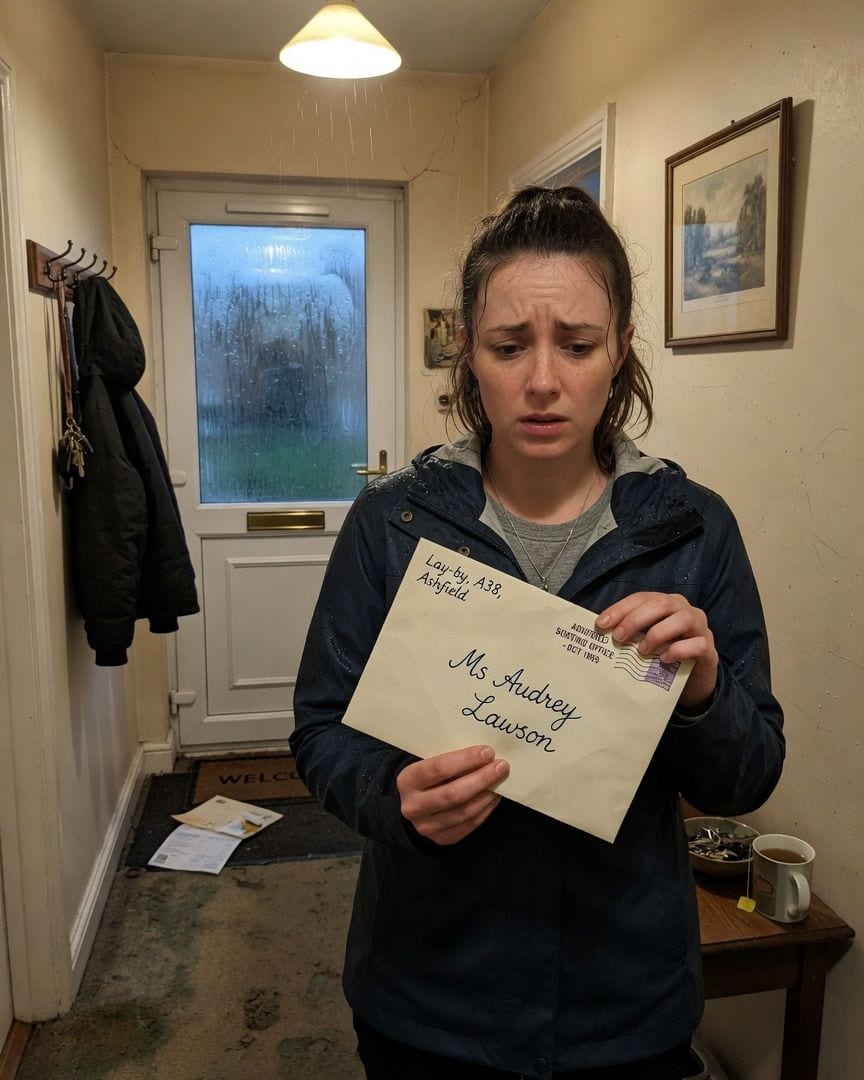
My condolence card arrived for a death that never happened, postmarked from a sorting office that closed before I was born.
My first envelope arrived on a Tuesday, nestled with bills. It bore my full name and a return address for an A38 lay-by that held only a crash barrier. But the postmark read ASHFIELD SORTING OFFICE – OCT 1985, an office decommissioned before I was even born.