My condolence card arrived for a death that never happened, postmarked from a sorting office that closed before I was born.
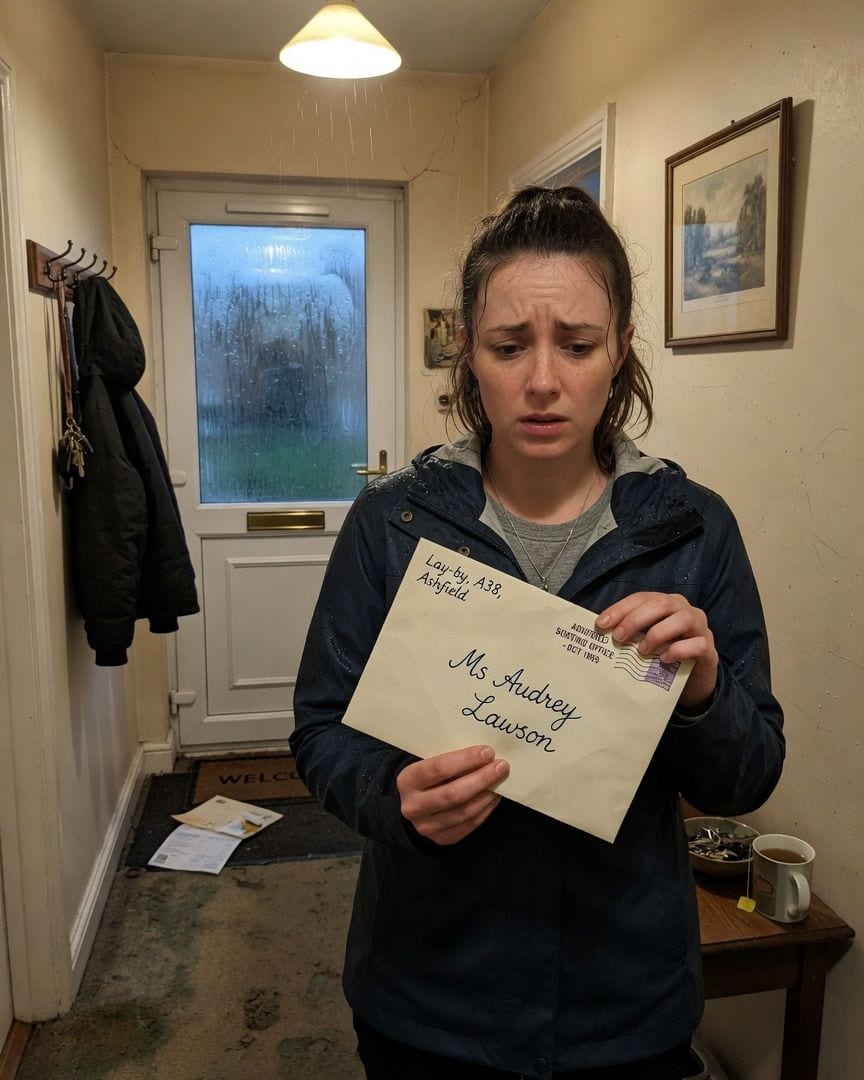
The cream-colored envelope landed on my doormat on a Tuesday, nestled among utility bills and a takeout menu. My full name, Audrey Lawson, was written on it in precise, elegant script, like something from a different era.
The return address was a lay-by on the A38, a stretch of dual carriageway where I knew only a crash barrier and overgrown verge stood. The postmark, faded but legible, read 'ASHFIELD SORTING OFFICE – OCT 1985'.
I stood in my hallway, turning the card over in my hands. The date alone was wrong. Ashfield Sorting Office had been decommissioned in '85, before I was even a flicker in my parents' eyes.
I’d grown up in this town; everyone knew that. And the A38 lay-by? I’d driven past it countless times. Nothing there but a hard shoulder and a patch of grey tarmac.
Inside, the card was blank except for a single line of text: "With deepest sympathy for your loss." No sender's name, no context. Just that archaic, almost formal, phrasing. My first thought was a prank, a particularly elaborate, unfunny one.
But who would go to such lengths? And for what? No one I loved, no one I even knew, had died. I checked the local obituaries online, called my parents, my sister. Nothing. Everyone was fine.
Two days later, still unnerved, I drove out to the A38. Pulled off into the lay-by, engine idling. Rain had started to fall, drumming on the roof. I got out, walked the length of the barrier.
The only things marking the spot were a scatter of fast-food wrappers and a single, sodden glove. No house, no property, certainly no return address.
The wind whipped at my hair, carrying with it the smell of damp earth and exhaust fumes. It felt utterly desolate, a place of transit, not residence.
A week later, a second envelope arrived. Identical cream color, same elegant script, same impossible postmark, same non-existent return address. This time it was a birthday card.
Inside, again, only my full name, and the words, "Many happy returns on your special day." My exact birthdate. Which was in four months. A cold dread, quiet and precise, settled in my stomach. Someone knew me. Intimately.
And they were sending me things from nowhere.
The rational explanations had all crumbled. I’d called the Royal Mail; they confirmed Ashfield Sorting Office was long closed and that no mail could possibly be processed there.
I’d even tried the local council about the A38 address, fishing for any records of a residential property at that specific grid reference. The woman on the phone, her voice tinny, just said there was nothing there, just highway land.
She sounded bored, accustomed to odd queries.
My next stop was the local historical society. If anyone kept records of phantom houses and defunct post offices, it would be them.
The building was old, smelling of dust and forgotten paper, with light filtering thinly through high, grimy windows. I found Everett Muller in a back room, hunched over a pile of yellowed newspapers.
He was a retired history teacher, probably close to sixty, with neat grey hair and a perpetually skeptical frown.
I laid out my story, the condolence card, the birthday card, the impossible postmarks, the non-existent address. He listened, stroking his chin, his expression unreadable. "Sounds like a remarkably dedicated prankster, Ms. Lawson," he said eventually, his voice dry.
"Or a very confused postal worker."
"But the sorting office closed in 1985, Mr. Muller. And the address... I went there. There's nothing." I pushed the photocopies of the envelopes across his desk. He picked one up, peering at the postmark. His frown deepened.
"Ashfield, you say. Yes, that's correct. Shut down the year after the bypass opened, if I recall. Bit of a landmark, for its time." He tapped the postmark. "But to have letters processed through it now...
that's peculiar, even for a prank."
I pressed him for anything – old maps, property records, anything connected to that specific stretch of the A38. He shuffled through a box of ancient ordnance survey maps.
"There was a house, actually," he mused, pulling out a large, brittle sheet of paper. "Way before the lay-by was even a concept. Small holding. Isolated. Demolished when they widened the road in the late eighties. Not much to it."
He gestured vaguely towards a tiny, almost erased mark on the map. "But that would have been well before 1985."
He paused, then looked up, his eyes suddenly sharp. "You mentioned the demolition, 1987. That rings a faint bell." He pointed me towards a row of microfiche readers. "See if you can find anything around that date. Local Gazette.
Might be a small blurb, perhaps an obscure planning notice."
I sat in the dim light of the microfiche room, the whirring of the machine the only sound. It took me nearly an hour, scrolling through grainy headlines about council meetings and harvest festivals.
Then I found it: a small article from October 1987, tucked away on page five. 'A38 Property Demolition Complete'. It was brief, mentioning the site's imminent redevelopment.
And then, a single, chilling sentence that made the hairs on my arms prickle. It stated that "several previous residents had moved away suddenly in the preceding years, making the property sale and demolition a simpler affair." 'Moved away suddenly.'
It implied a pattern. A pattern I was now, somehow, a part of.
"Mr. Muller," I said, my voice barely a whisper, holding out the microfiche printout. My hand trembled slightly. "The house. Before its demolition. Do you have any records of the people who lived there? These 'previous residents'?"
Everett took the printout, his eyes scanning the casual phrasing. His initial skepticism had faded, replaced by a quiet, academic dread. "Ah. Yes. That's... interesting."
He walked over to a tall, glass-fronted cabinet, the wood groaning as he slid open a drawer. From inside, he pulled out a large, leather-bound ledger, its pages yellowed and brittle with age.
"This isn't official, mind you," he explained, placing it carefully on a felt-lined table. "It was a personal record kept by Eleanor Finch, the town clerk from the 1940s to the 70s.
She had an almost obsessive need to document every local detail, especially the unusual ones."
He opened the ledger. The pages were filled with elegant, faded cursive. "She logged births, deaths, marriages, property transfers... and a section she titled 'Departures'." He pointed to the heading.
"I always assumed it was for people who moved out of the district, though the phrasing always struck me as a bit... dramatic."
I leaned over the table, my heart hammering. The air in the room felt thick, oppressive. I started to flip through the decades, my finger tracing the lines of names and dates, searching for anything connected to the A38 address.
I scrolled past 'Smith, Thomas, Departed 1948', 'Jones, Edith, Departed 1962'.
My finger paused. Then it trembled.
Under the chilling heading 'Departures', dated 1984, years before I was ever born, I saw it. My full name.
'Audrey Lawson.'
The elegance of the script only made it worse, a quiet, almost beautiful pronouncement.
My voice was a raw croak. "What does 'Departures' actually mean?"
Everett’s gaze, unnerved, fell on my name in the ledger. "It was for people who vanished," he admitted, his voice low, "without a trace. Usually from the more remote properties.
There were whispers, you see, about 'letters from nowhere' preceding such disappearances. Always from places that didn't quite make sense." He gestured vaguely, as if towards an unseen pattern. "Like the old house on the A38 site, for example."
Working together, the two of us plunged deeper into the archives. The dusty silence of the historical society pressed in around us.
We cross-referenced names and dates from the 'Departures' section with census reports, old property deeds, even scanned microfiche of local obituaries. A chilling pattern emerged. The individuals listed under 'Departures' consistently had their last known addresses near the A38 site.
Their disappearances were never solved, merely closed as 'missing person' cases after a few weeks. And many of these entries were dated around the time the Ashfield sorting office would have still been active.
The dates on the ledger, the postmarks on my own impossible letters – it was all beginning to line up.
Then I found it: 'Joan Vaughn, Departed 1955'. Her address was listed as a small farm just a few miles from the A38 lay-by. Everett looked up. "Joan Vaughn," he murmured. "Yes. I remember that name.
There was a granddaughter, Renee. Still lives in the area, I believe. A quiet woman. Never talks about her grandmother."
I tracked down Renee Thatcher to a small, tidy cottage on the outskirts of town. The garden was immaculate, filled with carefully tended roses.
Renee herself was a woman in her late sixties, with a sharp, guarded look in her eyes. She invited me in, but her posture was wary, her hands clasped tightly in front of her.
"I'm here about your grandmother, Joan Vaughn," I began, my voice careful. I showed her the photocopy of the ledger entry. Renee’s composure, as I watched, cracked like thin ice.
Her eyes, which had been so sharp, clouded with an ancient grief.
"The letters," she said, her voice barely a whisper. "Before she went away, she used to get them. Beautifully written. Personal. But the postmarks...
my mother used to say they were from places that didn't exist anymore, or from towns hundreds of miles away that Joan had no connection to."
Renee’s gaze drifted to a faded photograph on her mantelpiece – a smiling woman in a straw hat, likely Joan. "They'd know things. Little things about her day, a thought she'd had, a dream.
Things no one else could possibly have known." She shook her head. "Then one morning, she was just... gone. Not a note, not a struggle. The police came, they searched. Nothing."
I felt a profound chill settle over me as I left Renee's cottage. The sun was setting, casting long, bruised shadows.
As I drove away, I glanced back at the empty field where the A38 house once stood, now visible through a gap in the trees.
For a split second, I saw it: a flicker of movement, a distortion in the air, like heat haze on a summer road, but it was October, and cold. Nothing concrete, just a wrongness in my periphery.
I blinked, and it was gone.
Later that evening, back in my apartment, a plain, white envelope lay on the floor inside my front door. No postmark. No return address. Just my full name, 'Audrey Lawson,' in that same elegant, old-fashioned script.
My hand shook as I picked it up. Inside, the paper was blank. Completely blank. It was a silent, undeniable warning, slipped under my door while I was out, a terrifying escalation.
I rushed back to Everett, the blank envelope clutched in my hand. I recounted Renee’s story, the eerie feeling at the field, the new, unspoken warning delivered to my home. Everett, his face pale, now looked utterly unnerved.
The academic curiosity was gone, replaced by genuine fear.
"It's worse than I thought," he said, his voice dropping to a near whisper. He pulled open another drawer, retrieving a microfiche reel. "I'd almost forgotten this one. From 1987. Just before the A38 house was demolished."
He threaded the film into the reader, and a blurry image of an old police report glowed on the screen.
It detailed the disappearance of a man named Benjamin Ford. His last known address? The house at the A38 lay-by.
The report explicitly mentioned that Benjamin's family found a series of strange letters addressed to him, postmarked from defunct locations, before he vanished without a trace. "They never found him," Everett said, his voice barely audible. "Just like Joan.
Just like all the others in Eleanor Finch's ledger."
He took out the old ledger again, its pages rustling like dry leaves. He pointed to Benjamin Ford’s name under 'Departures', dated 1987. Then to Joan Vaughn’s entry, 1955.
And finally, his finger landed, cold and heavy, on my own name: 'Audrey Lawson, 1984'.
"They're not just moving, Audrey," Everett whispered, looking directly at me, his eyes wide with a horrifying realization. "They're being... summoned. The letters are the first step. The ledger, Ms. Lawson, is a record of those who answer."
The dread solidified into a horrifying certainty. The pattern was real, ancient, and methodical. Every impossible detail, every vague folklore, every vanished name now clicked into a terrifying, coherent whole. The entity, whatever it was, was patient, unerring.
And it had chosen me.
The weight of Everett’s words pressed down on me as I returned to my apartment. The silence in my usually bustling building felt profound, heavy.
I tried to rationalize, to find some mundane explanation for the growing list of impossible coincidences. But the coherence was too strong, the pattern too clear. It fit. All of it.
I stared at my phone on the kitchen counter, at the last entry in my call log – Renee Thatcher. I scrolled through my contacts, my thumb hovering over names, wondering who I could call, who might believe me.
Charlotte, my best friend? My parents? How would I even begin to explain? A sense of terrible isolation washed over me.
Before I could decide, my phone rang. Unknown number.
My heart hammered against my ribs, a frantic bird trapped in a cage. I hesitated, my finger hovering over the screen, a cold sweat breaking out on my forehead.
Every instinct screamed at me not to answer, to throw the phone across the room, to run. But a terrible curiosity, a desperate need to know, overriding all fear, forced my hand.
I pressed 'Answer'.
A calm, flat, toneless voice, utterly devoid of human inflection, filled my ear. It said my full name: "Audrey Lawson."
A pause, deep and unsettling, stretched across the line. The silence felt vast, ancient. Then it whispered, "It's time."
The line went dead.
The dead line hummed in my ear, a phantom echo of the voice. "It's time." The cold precision of it, utterly devoid of human warmth, echoed in my mind. With horrifying clarity, I understood.
This was the "channel that uses your name." The final, direct summons. It wasn't human; it was an imitation, a perfect mimicry, a cold, indifferent call from something methodical and ancient.
The letters weren't just anomalies; they were a prelude, a way to 'mark' me, to establish a connection across time and space. The ledger entries weren't mistakes or predictions; they were a pre-registration, a claim laid on an existence.
The entity, tied to the desolate field where the house once stood, wasn't a person or a ghost. It was a deep, ancient pattern of selection, an unerring targeting system that operated across generations.
It didn't kill; it took. It called specific names, specific bloodlines, for decades, centuries even. And those who answered the call simply 'departed' – leaving no trace, no struggle, just an empty space where they once were.
My name in the 1984 ledger wasn't a historical anomaly; it was my designation, a claim laid on my existence decades before I was even born.
The terrifying coherence of it all, how every impossible detail now clicked into a single, horrifying truth, made my blood run cold. I was not merely a witness; I was the next 'departure'.
I knew I couldn't fight an entity that operated through impossible postmarks and pre-dated ledgers, that slipped blank warnings under my door and whispered my fate from untraceable numbers.
My only option was to break the pattern, to refuse the summons, and to leave a record that, while unbelievable, might one day be understood.
With frantic urgency, I began to work. I backed up every piece of evidence onto a secure cloud drive: high-resolution photos of the condolence card, the birthday card, the blank warning envelope.
Screenshots of the ledger entries for myself, Joan Vaughn, and Benjamin Ford. A capture of my phone's call log showing the 'Unknown Number' at the exact time of the summons, its duration a single, terrifying second.
Then, I drafted a detailed, rational account of everything I’d experienced. Every clue, every terrifying realization, every impossible detail. I attached all the evidence files.
I emailed it to my trusted friend, Charlotte Easton, with clear instructions to open it only if I didn't make contact in 48 hours.
I left my smartphone, still logged into the cloud, on my kitchen counter – a digital breadcrumb, a small, desperate act of defiance.
I packed a single, small bag. Essentials only. My laptop. I got into my car, its engine a low thrum in the pre-dawn quiet. I drove away from my apartment, from my city, from my name, without a backward glance.
I had to disappear on my own terms, to escape the 'departure' it had planned for me, to become untraceable in a way it couldn't control.
I was fleeing, not from a threat I could fight, but from a terrifying, inescapable intimacy.
Audrey, now living under a new identity in a small coastal town hundreds of miles away, constantly scans faces in crowds, flinches at unknown numbers. She never receives another letter, never another call.
She keeps a low profile, cutting off all but the most essential old connections.
Forty-eight hours after Audrey’s departure, Charlotte Easton, confused and concerned, opens the email. She reads the attached document, browses the photos, but dismisses it all as a bizarre, elaborate breakdown.
She tries to contact Audrey, gets no response, and eventually reports her missing. The police find her empty apartment, her phone on the kitchen counter, but no sign of forced entry or foul play. Audrey Lawson simply vanished.
The case goes cold.
Audrey sits alone in a small apartment overlooking the grey, churning sea, watching the rain lash against the window. She sees a new face in the mirror sometimes, a stranger in her own eyes.
She survived, but it cost her everything she was, everything she knew. She is a ghost to her old life, carrying a truth that no one would ever believe. The intimate dread, however, never truly leaves her.
She knows she is merely delaying the inevitable, not escaping it entirely.
A week later, Charlotte Easton deletes the strange email, convinced it was a cry for help from a friend who’d had a breakdown. She clicks 'Empty Trash'.
The next morning, her own mailbox contains a cream-colored envelope, addressed to her full name, postmarked from a sorting office that closed decades ago. 'With deepest sympathy for your loss.' The paper felt cool beneath her thumb.
If this one got to you
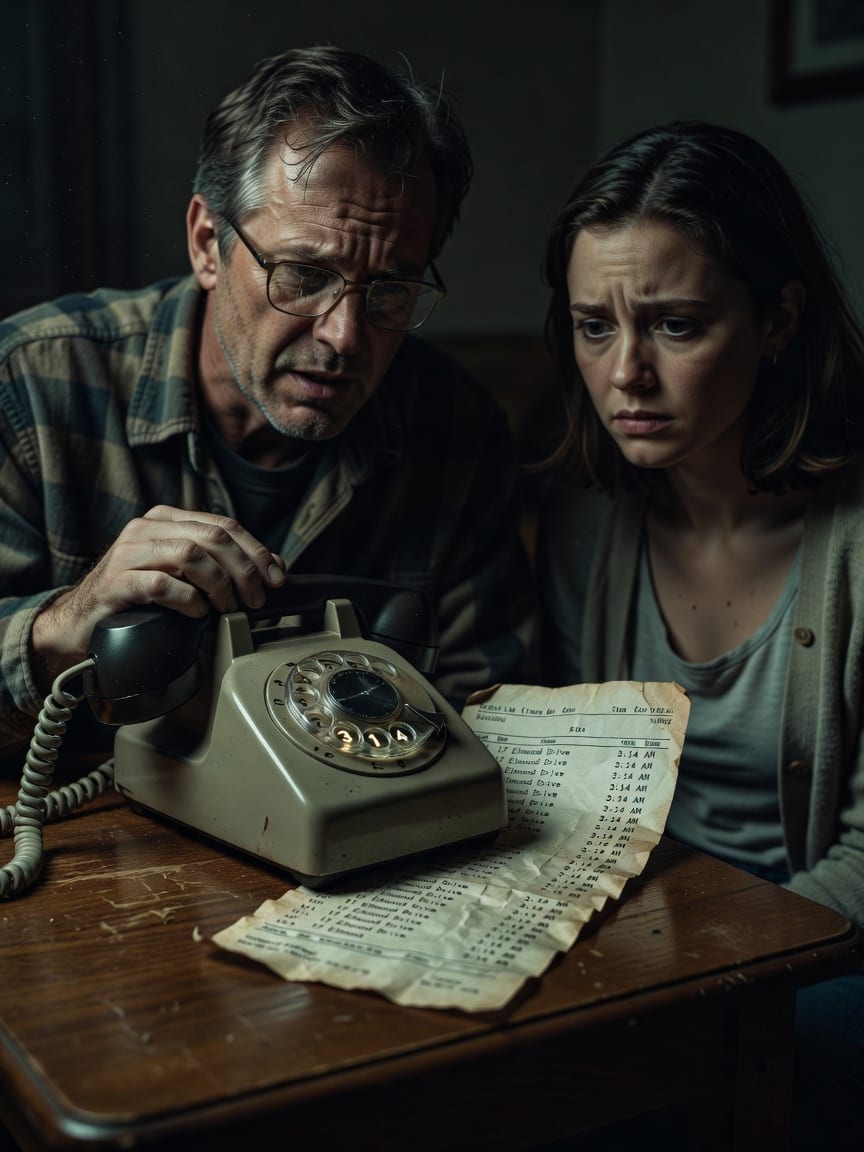
My phone bill itemised forty calls from my number to a house demolished in 1990. Each call at 3:14 AM, lasting eleven minutes. The bill arrived postmarked from a flattened building.
I expected the usual mobile bill, but my landline statement listed forty calls from my number to '17 Elmwood Drive.' That address was for a house torn down in 1990, a vacant lot I remembered from childhood. The phone company insisted the calls were legitimate, leaving me profoundly unsettled by the impossible charges.
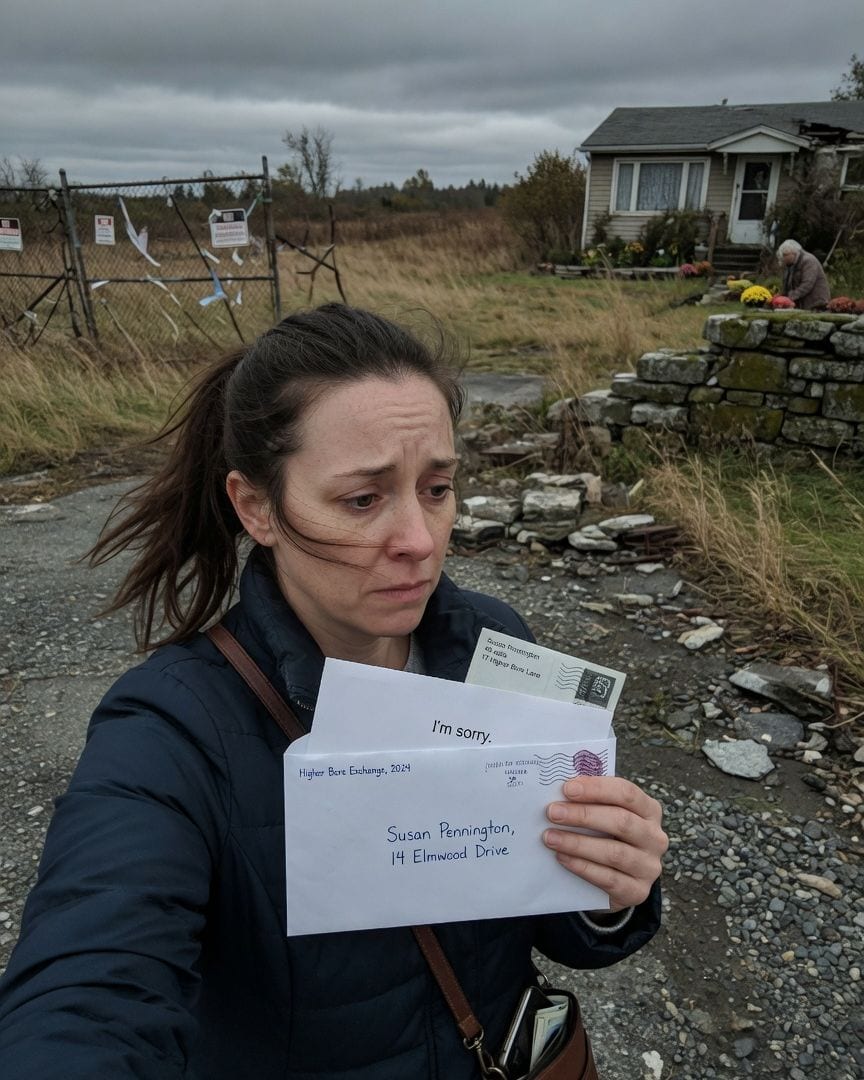
My phone bill listed forty calls made at 3:14 AM to a house demolished in 1990. The paper bill came from a flattened building. My name is on it.
I stared at my phone bill, my morning coffee forgotten. It detailed forty calls, each at 3:14 AM, to an address I knew was a vacant lot where a house had stood decades ago. But the real dread began when I saw the bill's return address: a telephone exchange flattened years before.
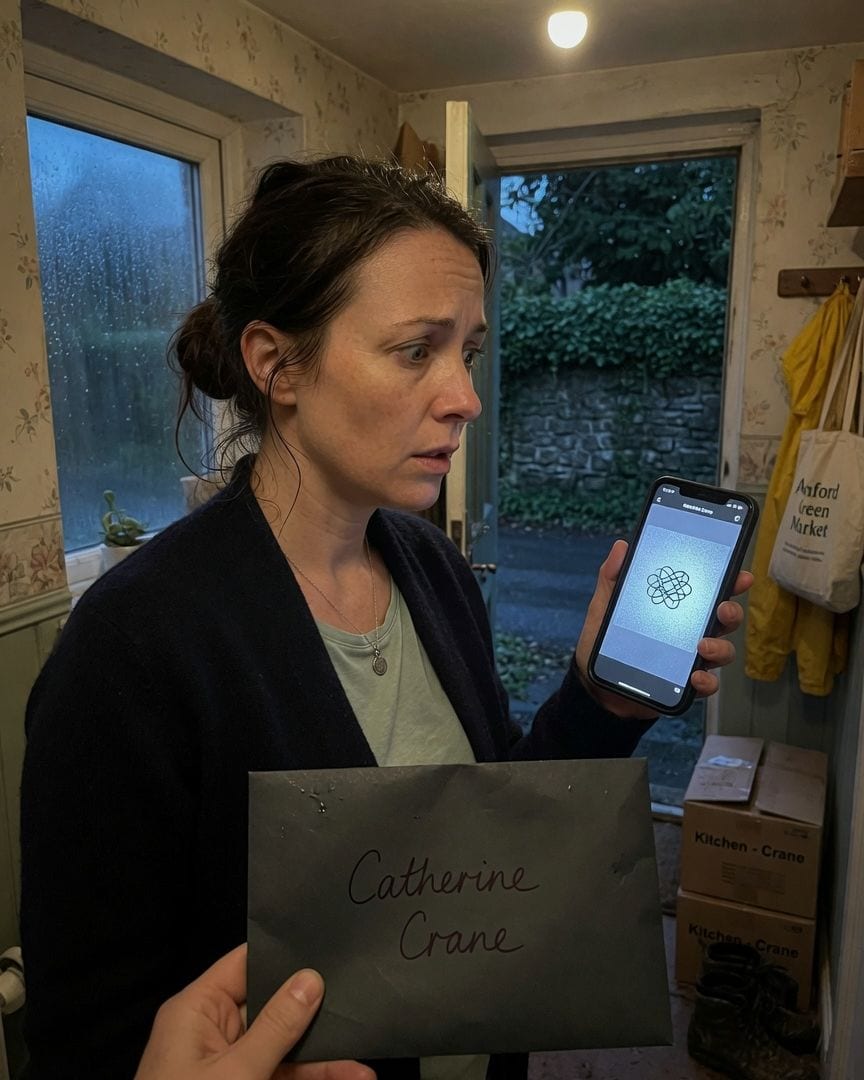
My postman warned me: never use the old pillar box. Royal Mail logs a collection every day, one item, signed by no one.
Moving to Ashford Green, I dismissed my postman's strange warning about the old pillar box by the ford. But after my own letter vanished inside it, I returned at midnight. Then, a dark, unstamped envelope slowly slid *out* of the slot, addressed to me.
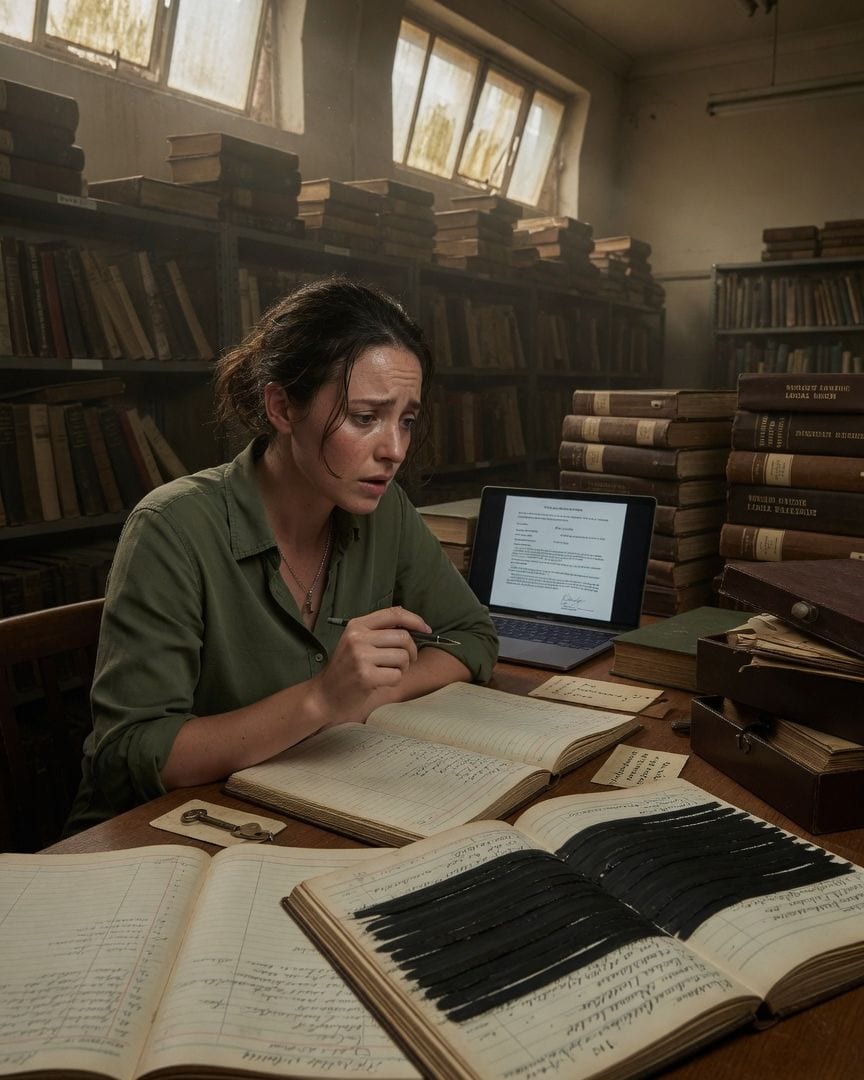
My grandmother’s name is on a blacked-out line from a 1954 drowning inquest, on our street, with a note: 'do not send a second notice.'
Transcribing old inquest registers in the quiet archive was a routine task, until I found a 1954 entry for an accidental drowning. The next of kin line was savagely blacked out, but the faint impression underneath named Patricia Kingsley, my grandmother. Her address was listed on Weir Lane, eleven years before she ever lived there, alongside a chilling note: 'do not send the notice a second time.'
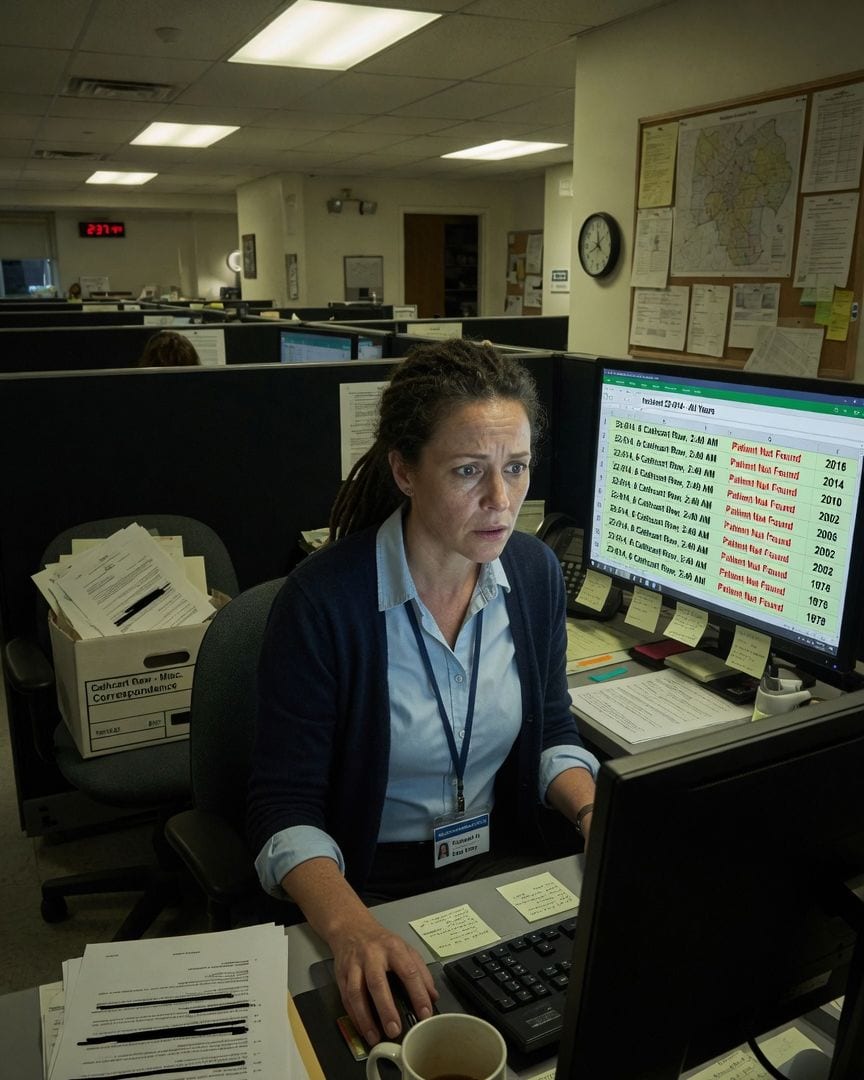
My computer log shows the same 2:40 AM call to Cathcart Row, every four years since 1978, always closed 'patient not found'.
Working data entry for the County Ambulance Trust, I found a routine incident logged as 'Patient Not Found.' But digging deeper, I discovered the exact same phantom call had repeated every four years for over forty years, always at the same address, always at 2:40 AM. Then I found a heavily redacted memo linking it to my own street.
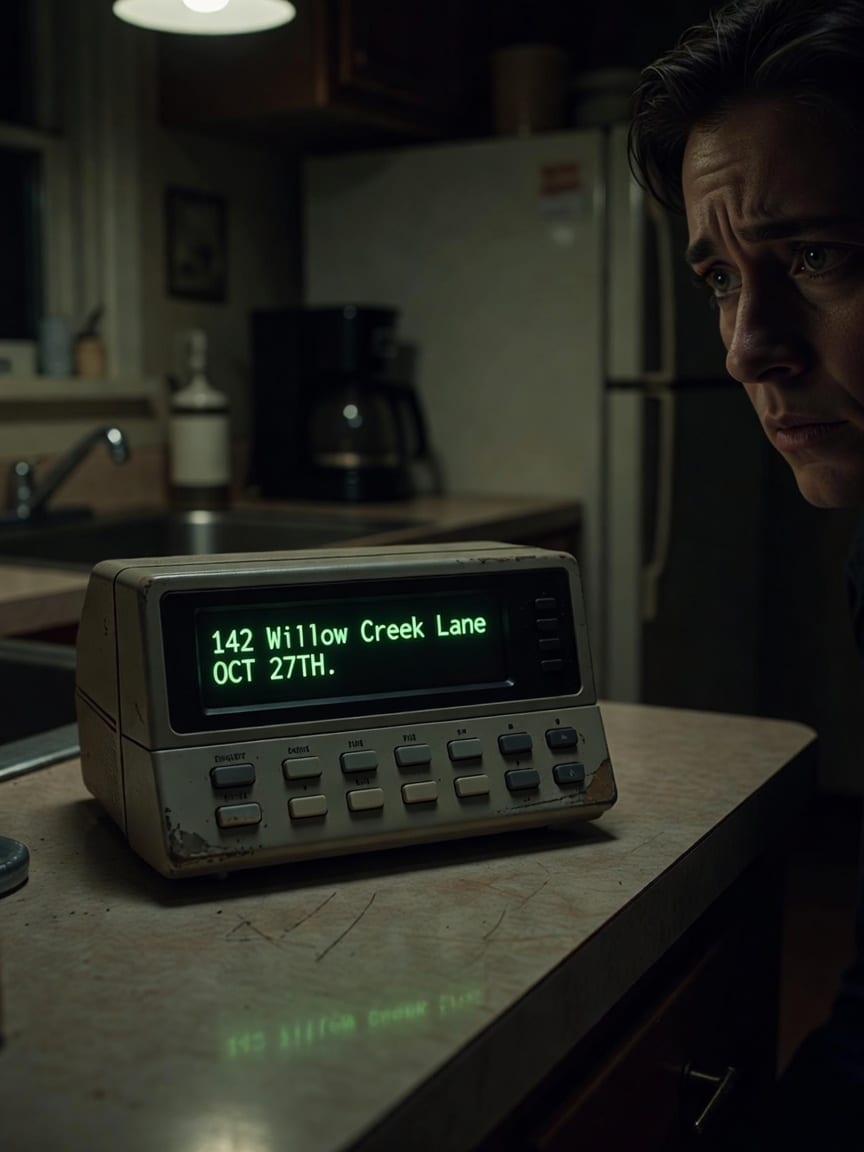
My radio scanner picked up a channel at 2 AM reading local addresses. Mine was on it, dated tomorrow.
I was tracking a storm on my old weather radio when a synthesized voice cut through the static. It began reading local street addresses, then my own: 142 Willow Creek Lane. But the date it gave for my address was tomorrow.