My dog's case number, V-880, traces the same black dog with a notched ear back to 1971, through four different owners, all discharged 'will return'.
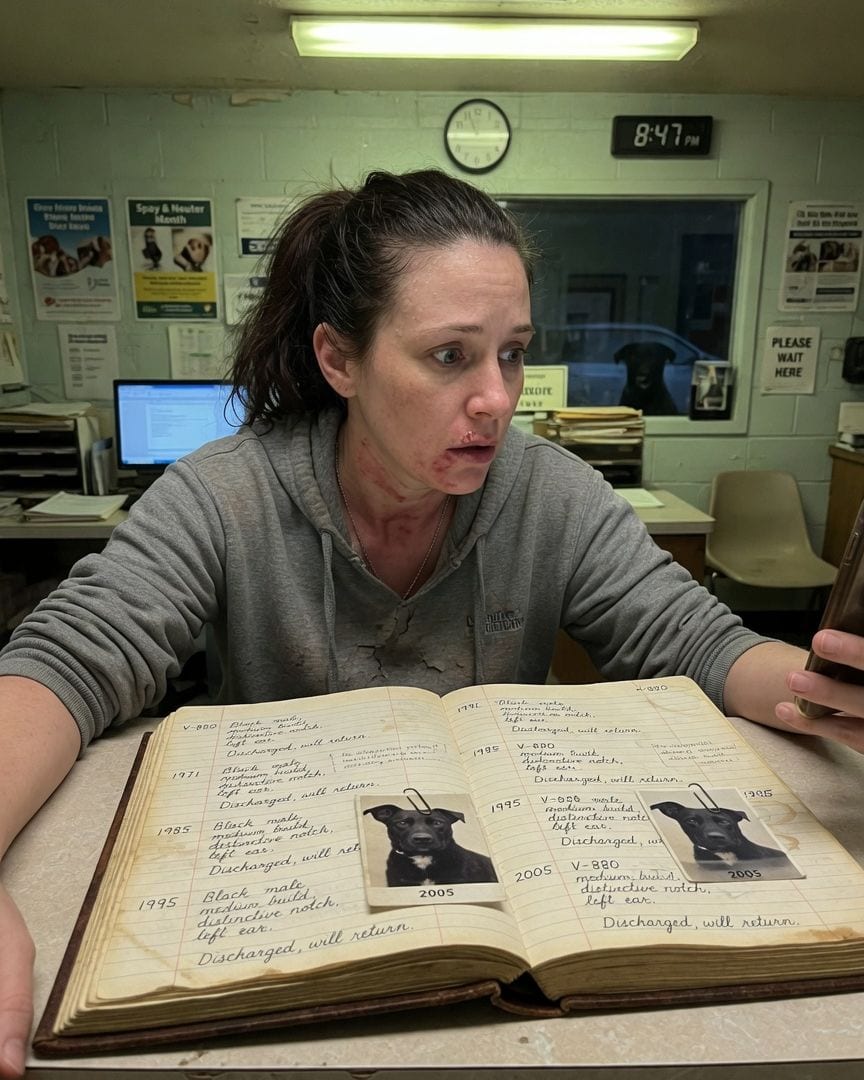
I’m an IT professional, thirty-five, and I deal in logic and verifiable facts. That’s why what happened with Midnight, my new stray, ripped my understanding of the world to pieces.
I found him near the old industrial park, a big, quiet black dog with a distinctive V-shaped notch taken out of his left ear.
A few days after I took him in, I brought him to the local veterinary hospital for a check-up, gave them my details, and they assigned him a case number: V-880.
It was just a number. But something about the way Theodore Barlow, the long-time receptionist, wrote it down, a strange almost knowing flicker in his eyes, stuck with me.
A few days later, a strange compulsion, a tickle of curiosity I couldn’t shake, led me back to the reception desk.
“Excuse me, Theodore,” I said, trying to sound casual. “That V-880 number for Midnight. Does it, uh, go back far? Just curious about the history.”
Theodore, a man in his sixties whose placid face seemed carved from old oak, looked up from his computer. He blinked slowly, then gave a faint, unreadable smile. “Ah, V-880. Yes, Ms. Patterson. A very long history indeed.”
He rose, moving with a deliberate calm that always unnerved me slightly, and retrieved a thick, leather-bound ledger from a shelf behind him. It looked ancient, far older than anything a modern hospital should be using.
He laid it open on the counter. I flipped through the heavy pages, my fingers tracing the handwritten entries. Each one had a date stamped at the top: 1971, 1985, 1995, 2005.
Four different owners, four different dates, yet the core description was identical: 'Black male, medium build, distinctive notch, left ear.' A chill started to crawl up my spine. This wasn’t just a recurring case number; it was the same dog.
What truly froze me was the consistent closing note, handwritten in neat, precise cursive for every single entry, regardless of the date or apparent hand: 'Discharged, will return.'
I looked up at Theodore, my voice a little rougher than I intended. “’Discharged, will return’? What exactly does that mean?”
He merely shrugged, that faint, unreadable smile playing on his lips again. The fluorescent lights hummed above us, and the air in the reception area suddenly felt cold, almost stagnant. “Just hospital protocol, Ms. Patterson. Some cases are… unique.”
That phrase, 'discharged, will return,' kept playing in my head, a low, insistent hum. It felt wrong, utterly out of place for a veterinary record.
I tried to dismiss it as an old-fashioned way of saying a patient might need follow-up, but the sheer consistency across decades felt less like protocol and more like a deliberate, unsettling pattern.
I returned to the hospital a couple of days later, under the pretense of picking up flea medication. Dr. Audrey Radcliffe, the lead vet, was busy with a long consultation, which was exactly what I needed.
While Theodore was momentarily out of sight, helping a woman with a carrier, I used my phone to subtly photograph a few pages of the V-880 ledger.
My hands felt clammy as the shutter clicked, the quiet sound far too loud in the silent room.
Back home, I laid the photos out on my kitchen table, a mug of cold coffee forgotten beside them. I meticulously compared the entries.
The handwriting styles shifted subtly from entry to entry—a flourish here, a more angular script there—indicating different people had recorded them.
But the core description of the dog and that chilling closing note, 'Discharged, will return,' remained identical, unwavering across fifty years.
It wasn’t just the words; it was the unnerving precision of the description, almost like an official designation, not a casual observation.
Then I found it. In the margin of the 1995 entry, a small, tightly written notation, barely visible: 'Re-integration protocol initiated, owner unaware.'
My breath hitched. This wasn't just about a returning dog, a beloved hospital mascot, or a string of bizarre coincidences. 'Re-integration protocol'? 'Owner unaware'? This implied a deliberate, managed process. A protocol. For what?
I tried to rationalize it again: an elaborate inside joke, a long-running prank by bored staff. But the cold, clinical language and the sheer consistency spanning over five decades made those mundane explanations crumble into dust.
This was a system, and I was looking at its records.
Midnight, my Midnight, lay at my feet, stretched out on the rug. He lifted his head, watching me with an unnervingly still, intelligent gaze.
His eyes, usually warm and soft, seemed to hold a depth I’d never noticed before, an ancient knowing that far surpassed any ordinary animal.
He wasn't just my pet in that moment; he was an observer, and he seemed to understand my growing unease perfectly.
Driven by a desperate need for a concrete explanation, something that would either confirm my suspicions or entirely debunk them, I returned to the hospital one evening.
I feigned a sudden emergency: Midnight had coughed up a hairball, but ‘I was worried.’ Theodore, bless his impassive heart, was distracted with a truly frantic client, a woman whose chihuahua had apparently swallowed a sequin.
I quickly located the V-880 ledger again, my heart thudding a frantic rhythm against my ribs. I flipped to the 1985 entry, scanning for anything I might have missed, anything that would make sense.
Tucked deep within the folded page, secured with a brittle, rusty paperclip, I found it. An old, faded photograph.
It was a color print, the dyes having shifted slightly over time, giving it a nostalgic, sepia-toned cast. But there was no mistaking the subject.
It was the black dog with the notched ear, unmistakably the same animal from all the entries, the same dog that was currently waiting patiently in my car.
Beneath the image, faint and almost erased, a date stamp was visible. Printed in a modern digital font, it clearly read: '2005'.
My breath caught in my throat. The photograph, clipped to an entry from 1985, was dated 2005. It could not exist. The implications of a photo that could not possibly belong to that date dawned on me, cold and absolute.
My fingers trembled, clutching the impossible artifact.
The impossible photograph became the solid core of my dread, a physical object that defied logic and cemented my deepest fears. I couldn’t dismiss it. It was real, tangible proof of something profoundly wrong. I had to pull this thread.
I started by meticulously searching for previous V-880 owners. The 1995 entry listed a Richard Hayes. Old phone books and online archival services were tedious, but eventually, I tracked down an address in an older, tree-lined part of town.
The house itself was a squat, solid brick structure, now owned by an elderly woman named Sophia Radcliffe.
Sophia, whose memory was hazy and punctuated by long pauses, remembered the Hayes family. “Oh yes, Richard and his wife,” she mused, her voice thin and reedy. “And their lovely black dog. What was his name? Didn’t bark much.
Just… left one day. They were quite sad, I recall. Said he just wandered off.” She waved a dismissive hand.
Then, a flicker of something more. “There was always that quiet man from the vet,” Sophia added, peering at me over the rim of her spectacles. “Used to visit, sometimes unannounced. Just checking in on the dog, he said.
Very particular about the dog’s well-being, that one. Came by long after the Hayes family moved, too. Always seemed to know when a new family moved in with a dog, even though the Hayeses moved on years ago. Odd.”
A quiet man from the vet. Unannounced visits. Theodore. It confirmed his long-term presence, his unnerving involvement.
Back home, I couldn't stop observing Midnight. He seemed unusually quiet these days, his movements economical, almost deliberate. Sometimes, I’d catch his eyes, and there was a depth to them, a knowing intelligence that far surpassed any ordinary animal.
It wasn’t just the stare of a pet looking at its owner; it was like he was watching me, assessing me, rather than merely being my dog.
He never barked unless truly necessary, and then it was a low, resonant sound that felt ancient.
The stillness about him, the deep, dark calm, now felt less like a sign of a well-behaved dog and more like a carefully maintained facade.
The unsettling feeling that Theodore was always watching grew with each passing day. I decided to schedule an appointment with Dr. Audrey Radcliffe, hoping that the lead veterinarian, a medical professional, would provide a rational explanation for the anachronistic photograph.
I clutched the faded print in my hand, my palm sweating.
“Dr. Radcliffe,” I began, trying to keep my voice even, “I have some concerns about Midnight’s case file, V-880.”
I laid the photograph on her examination table, carefully explaining my findings: the 1985 ledger entry, the unmistakable dog, and the 2005 digital date stamp.
Dr. Radcliffe picked up the photo, her brow furrowed. She initially dismissed it as a “clerical error” or a “misplaced photo,” her voice tight, a strange tension in her shoulders. “These old paper files, Ms. Patterson, they’re hardly infallible.
Things get mixed up.”
But I pressed. “It’s a digital date stamp, Dr. Radcliffe. From 2005. How could a 2005 photograph be clipped to an entry from 1985?
Unless… unless it’s the same dog, and it was simply still around in 2005, despite being supposedly owned in 1985.”
Her eyes darted nervously towards the reception area, where Theodore Barlow was calmly sorting a stack of files, his back to us. A flicker of something—fear? recognition? something profoundly uncomfortable—crossed Dr. Radcliffe’s face, quick as a shadow.
She cleared her throat, her demeanor abruptly shifting from professional concern to strained urgency.
“I’m sorry, Ms. Patterson, but I’ve just been paged,” she said, her voice tight, already moving towards the door. “An urgent procedure. I’m afraid we’ll have to continue this discussion another time.”
Before I could protest, she was gone, leaving me alone with the impossible photograph on the sterile metal table.
As I left the hospital, a prickling sensation crawled up my spine, raising gooseflesh on my arms. I got into my car, the interior feeling strangely cold, even though it was a mild afternoon. I glanced into my rearview mirror.
Theodore Barlow stood by the hospital’s entrance, perfectly still. He wasn’t looking at his phone, or greeting a departing client, or even scanning the street. He was watching my car. His posture was unnervingly straight, his expression faint and unreadable.
He wasn't just a receptionist; he was observing me, and I knew, with a certainty that chilled me to the bone, that he knew what I had found.
The next day, the dread had solidified into a cold, hard knot in my stomach. I couldn’t let it go. I found Theodore during a lull, when the reception area was quiet.
There was a faint scent of antiseptic and something else, something metallic and old, hanging in the air. I walked up to the counter, placed the impossible photograph squarely between us.
“This photo, Theodore,” I said, my voice steady despite my heart hammering against my ribs. “It’s dated 2005, but it’s clipped to an entry from 1985. It’s the same dog. Midnight. What is V-880, Theodore?”
He picked up the photo, his calm facade unbroken, not even a flicker in his deep-set eyes.
He looked at the image, then back at me, a faint, almost sad smile playing on his lips, as if I had just confirmed something he already knew. “Ah, yes. The 2005 re-evaluation.
We had to update the records, of course.” He spoke without a hint of irony, his voice flat and factual, as if this were the most mundane explanation in the world.
“V-880 is a unique case, Ms. Patterson. A long-term client, you might say. This particular animal has a… tendency to reappear. We’ve managed its re-integrations for decades. It’s simply hospital protocol.”
He gestured vaguely around the pristine reception area, as if the very walls were privy to this ancient, bureaucratic secret.
He didn't explain what the dog was, or how it returned, not in any supernatural sense. He just laid out the mechanics of its management.
He detailed how they identified new, suitable owners—people with a certain quiet disposition, he implied, who might be more receptive to a stray.
He described how they prepared the ‘client’ for its next ‘chapter,’ ensuring its health and documentation were in order, how they made sure it found its way to the right doorstep.
The dread was in his utter lack of surprise, the way he discussed an immortal creature as if it were a routine, albeit 'unique,' patient. The hospital, this seemingly ordinary institution, was a quiet, meticulous curator of an impossible cycle.
Theodore, still unnervingly calm, leaned forward across the counter, his eyes fixed on mine. The air felt thick, heavy with unspoken things. “You’re a good owner, Constance,” he said, his voice dropping slightly, becoming almost conspiratorial. “Very observant.
It’s a shame we don’t see more like you.” He paused, letting the words hang in the air, a quiet menace in their gentle cadence. “Especially for the ones that stay. Some never truly leave, you know.
They just… wait for the next chapter.”
He gestured subtly, almost imperceptibly, towards Midnight. My dog was waiting patiently in my car, visible through the large glass window of the reception area, a dark, still silhouette against the afternoon sun.
He sat perfectly upright, not looking at me, but staring out into the street. “And once a V-880 finds its way to you, it tends to ensure you’re part of its story, too. Always.”
My blood ran cold. I looked from Theodore’s placid face to Midnight, waiting in my car, and a chilling realization settled in, heavy and absolute.
Midnight wasn't just a V-880; he was the V-880, the perpetual client, and Theodore’s words echoed with an ancient, terrifying truth.
I was now inextricably bound to its unending cycle, just like the previous owners, Richard Hayes and the others stretching back to 1971.
Theodore’s gaze held mine, a knowing, ancient calm in his eyes, a silent confirmation that my fate was sealed.
The next day, I avoided the veterinary hospital, my mind reeling, a kaleidoscope of impossible facts clicking into horrifying place. I couldn't stop thinking about Theodore's words, the calm way he’d delivered my sentence.
I buried myself in online archives, searching for anything beyond the V-880 file, anything that might contextualize this nightmare.
I found obscure local newspaper clippings from decades past. Small articles, buried deep, referencing odd disappearances of pets, always linked to a 'stray black dog' seen in the area beforehand.
A dog found wandering, then an owner's beloved pet simply vanished, no trace. The reports were infrequent, easy to dismiss individually, but when strung together across the decades, a pattern emerged, chillingly precise.
More disturbingly, I unearthed internal hospital memos from the 1960s, predating even the earliest V-880 entry I’d seen. These memos, marked 'For Senior Staff Only,' outlined 'protocols for the perpetual client' and 're-homing guidelines to ensure continuity.'
The language was clinical, devoid of emotion, detailing procedures for managing the dog’s appearances, including contacting 'suitable' new owners and maintaining 'discreet oversight.' It was clear.
The veterinary hospital, or at least a powerful, long-standing faction within it, had been actively curating the dog’s cycle, ensuring its continuity through generations. Theodore was merely the current administrator of this ancient, chilling task.
I now understood. 'Discharged, will return' wasn’t just about the dog; it was about the owners. The ones who eventually lost it, only for it to return to someone new, perpetuating a quiet, horrifying cycle.
The pattern across dates and names in the ledger wasn't random; it was meticulously managed. I wasn’t an owner; I was a temporary caretaker, a placeholder in a system that had existed for longer than anyone could imagine.
Overwhelmed by the horrifying coherence of it all, by the cold, bureaucratic machine I had unwittingly become a part of, I rushed to my car, parked outside my house.
I intended to leave town, to escape the cycle, to break free from the chilling bureaucracy that had ensnared me. I was shaking, my hands fumbling with my keys.
Midnight whined softly from the backseat, a low, mournful sound. His usual intelligent gaze now seemed to hold an ancient, knowing sadness, a profound understanding of what was about to happen.
As I struggled with the ignition, Theodore appeared at my driver’s side window, tapping gently. His serene smile was gone, replaced by a flat, almost mournful expression.
The air around him felt heavy, cold, as if he carried the weight of decades of grim duty.
“It’s time, Constance,” he said, his voice devoid of its usual calm, flat as stone. “Midnight needs to be checked in for his routine ‘discharge.’ The next owner is expecting him.”
I stared at him, then at Midnight in the rearview mirror, whose eyes met mine with a depth of understanding that chilled me to the bone.
Midnight did not look like a dog anymore; he looked like a patient, a quiet participant in an endless process. I knew I couldn’t fight this institution, this pattern that had been managed for decades.
The police wouldn't believe me; no one would. I understood, with an agonizing clarity, that 'discharged, will return' applied to me, too. Not as a threat, but as an inevitable, bureaucratic fact.
My escape was impossible; I was part of the file now.
I drove Midnight to the hospital. My movements were robotic, detached. My body felt like it belonged to someone else. Theodore met me at the reception, his placid demeanor returned, the momentary flicker of grimness gone.
He handed me a new file, pristine white, with V-880-A stamped on the tab, titled 'Owner Transfer Protocol.' My name was already on it. I signed it without reading, my hand shaking uncontrollably, making the pen skip across the page.
I watched as Theodore led Midnight down a hallway, the dog trotting calmly beside him, head held high. Before they rounded the corner, Midnight looked back at me once, his notched ear twitching faintly, almost a goodbye.
Then they were gone. I drove home in a daze, the house empty, silent, the quiet more profound than I ever imagined.
The absence of Midnight was not a relief, but a hollow space where something essential used to be, now filled with a chilling, coherent truth.
Weeks later, I sit alone in my quiet house. The empty dog bed, still in the corner, is a constant, nagging presence. A phantom weight on my feet, a phantom presence by my side.
I find myself staring at the hospital’s number, saved in my phone, a strange compulsion growing within me, an ache that settles deep in my bones. I know I shouldn’t. Every fiber of my being screams at me not to.
But my fingers, almost against my will, dial the familiar digits.
“Hello, this is Constance Patterson,” I hear myself say, my voice unnaturally calm, smooth, almost practiced. “I was wondering if there were any new ‘re-integration’ opportunities available?
I’m looking for a black dog, perhaps with a notch in its left ear.” I hang up the phone, a faint, wrong smile touching my lips.
A month later, her neighbor, George Carver, noticed Constance had finally gotten a new dog. A black stray, he thought, with a distinctive notch in its left ear.
He waved hello across the fence, but Constance just gave a faint, wrong little smile and went inside.
If this one got to you
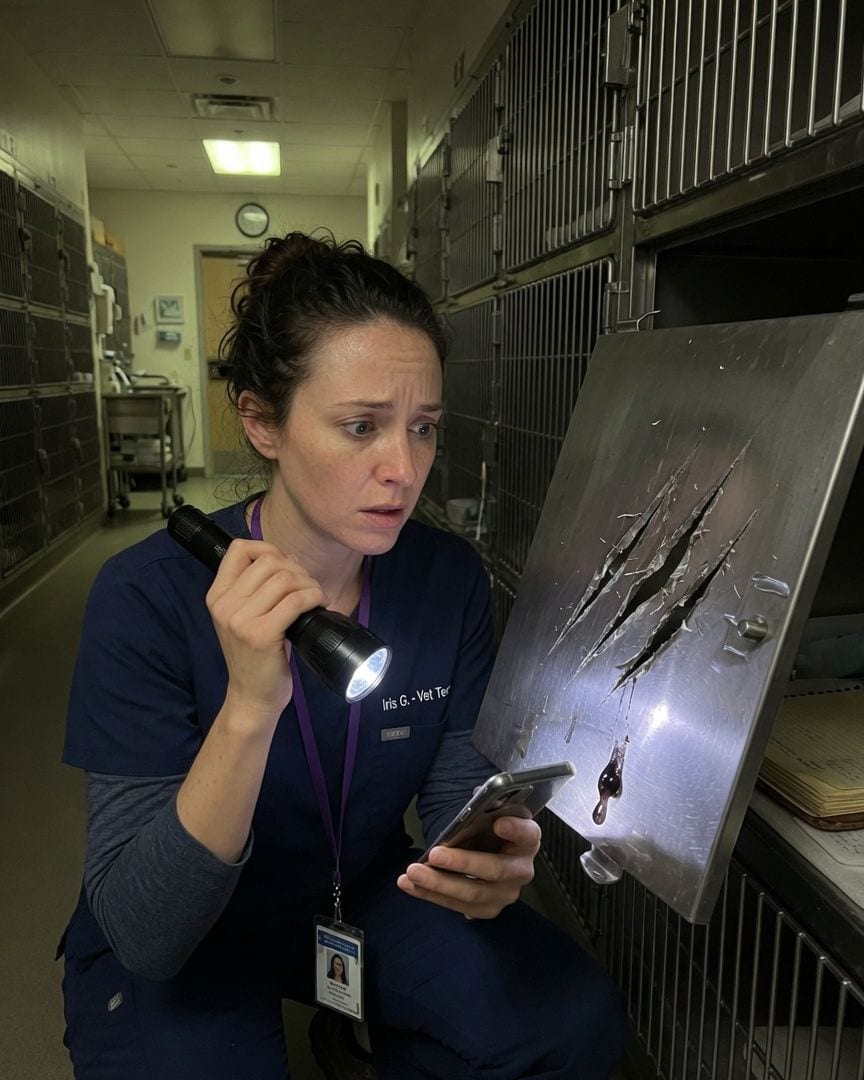
My digital log shows a dog in an empty kennel, medicated at 3:35 AM. That kennel has been empty for days, and I was the only tech on shift.
As an overnight vet tech, Iris Granger expected a routine shift. But her login showed a sedative administered to a dog in Kennel 6—a kennel that had been empty and awaiting repair for days. Then, near that same kennel, she found a strange, luminescent droplet that refused to make sense.
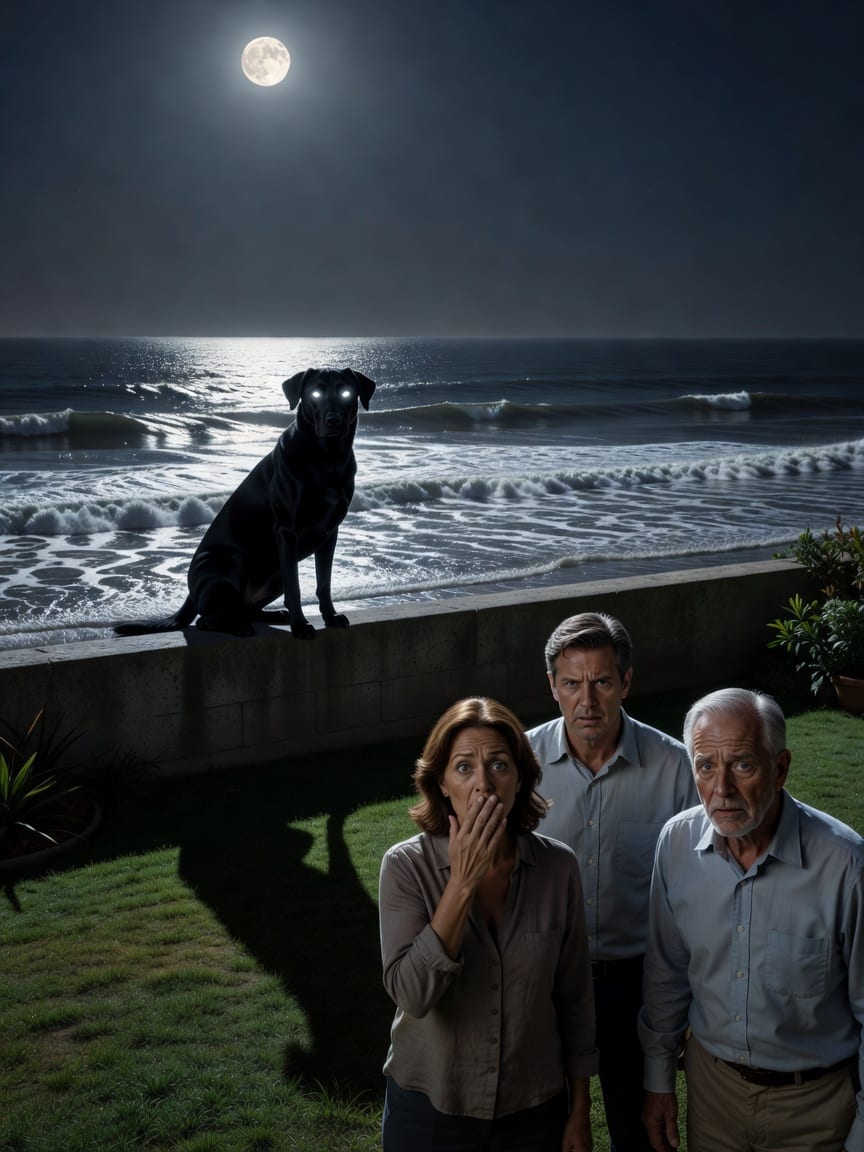
My black dog on the sea wall isn't mine. Its eyes held something ancient and cold, and my neighbours laughed when they warned me not to feed it. The lifeboat log shows its name beside every drowning for ninety years.
My new cottage by the sea offered peaceful sunsets and a solitary black dog patrolling the wall. I left it some stew, thinking it was just a stray. But its eyes met mine, and they weren’t dog eyes at all—they were obsidian, ancient and cold, devoid of all warmth.
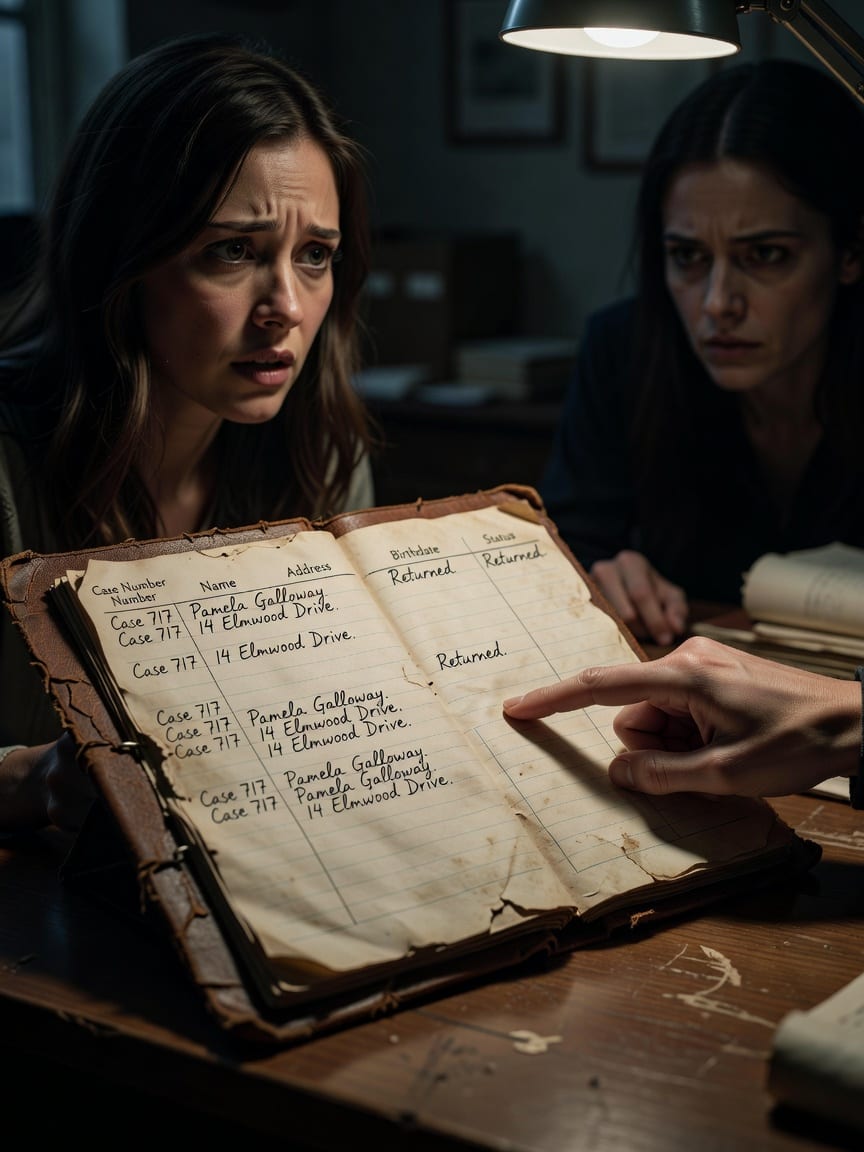
My hospital file has a blacked-out line from 1988. It names my street address, decades before I lived here. Then: 'returned'.
I finally got my medical file, hoping to clear up a ridiculous bill. Inside, I found an entry from 1988: my current home address, scrawled on a partial intake form and marked 'returned.' I was six then, living fifty miles away.
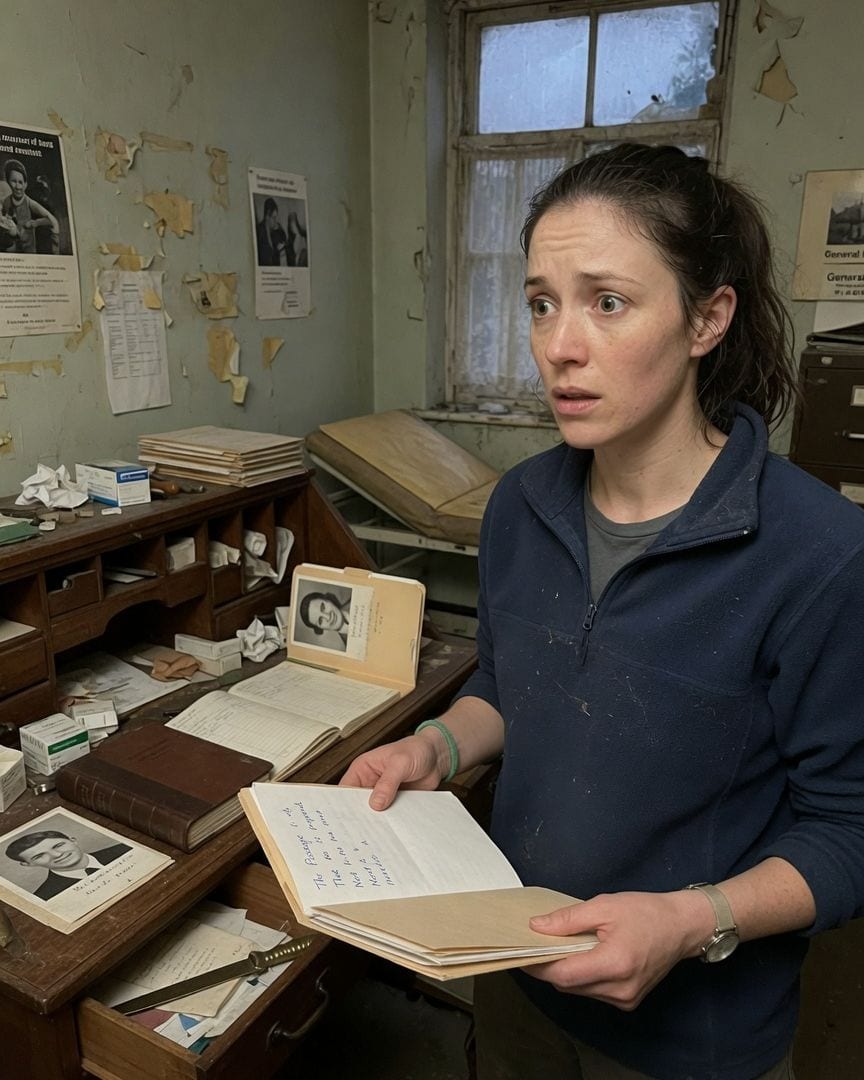
My new clinic's appointment book shows entries for this coming Monday, decades after the doctor retired and died.
Chloe Lawson bought an old, abandoned surgery in Nettlebed, ready to open her new vet clinic. Locals insisted Dr. Almott retired in '79 and the practice shut down for good. But then Chloe found his dusty appointment book filled with meticulous entries, continuing unbroken from 1979 through the decades, right up to this coming Monday.
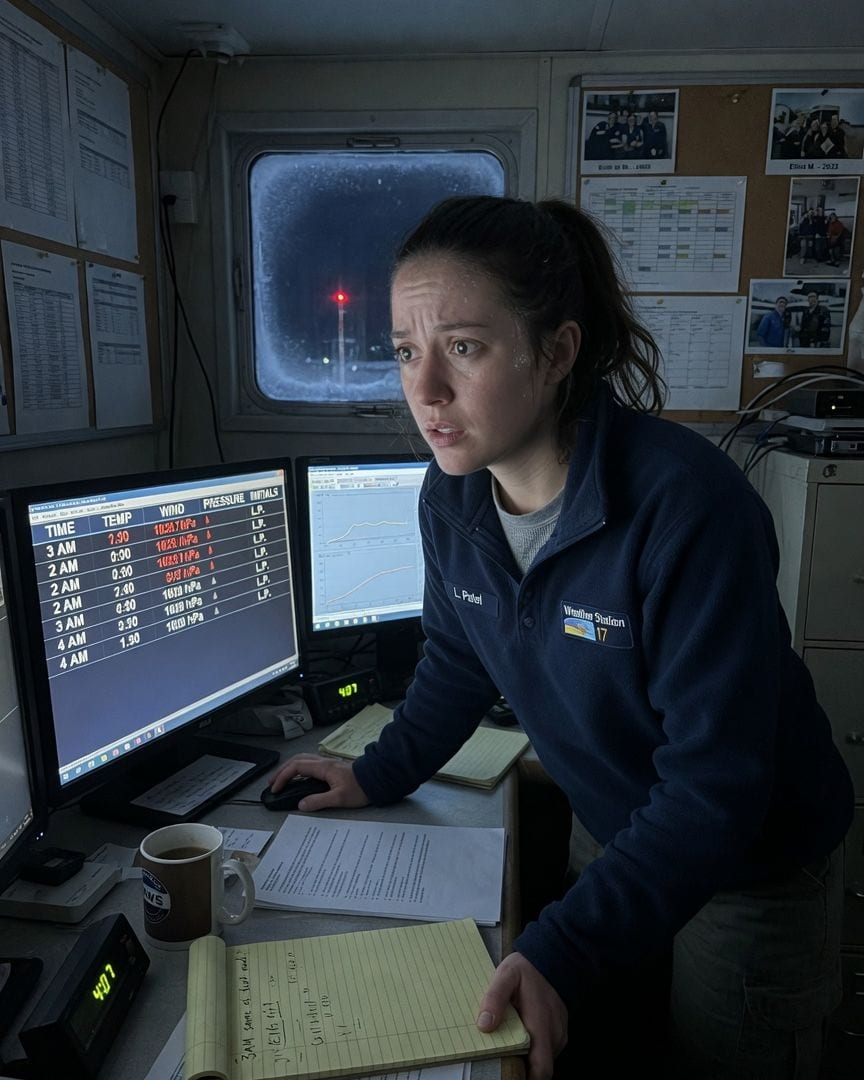
My weather station's 3 AM log shows a pressure reading I never made. My initials are on it, but the dials were dead still.
Working the overnight shift at the remote weather station, I routinely checked the digital logs. The 3 AM entry showed an impossible barometric pressure spike, a hurricane that simply hadn't happened. I distinctly remembered being outside at that time, calibrating a sensor, not making that entry. Yet, my initials, L.P., were clearly logged next to data I never made.
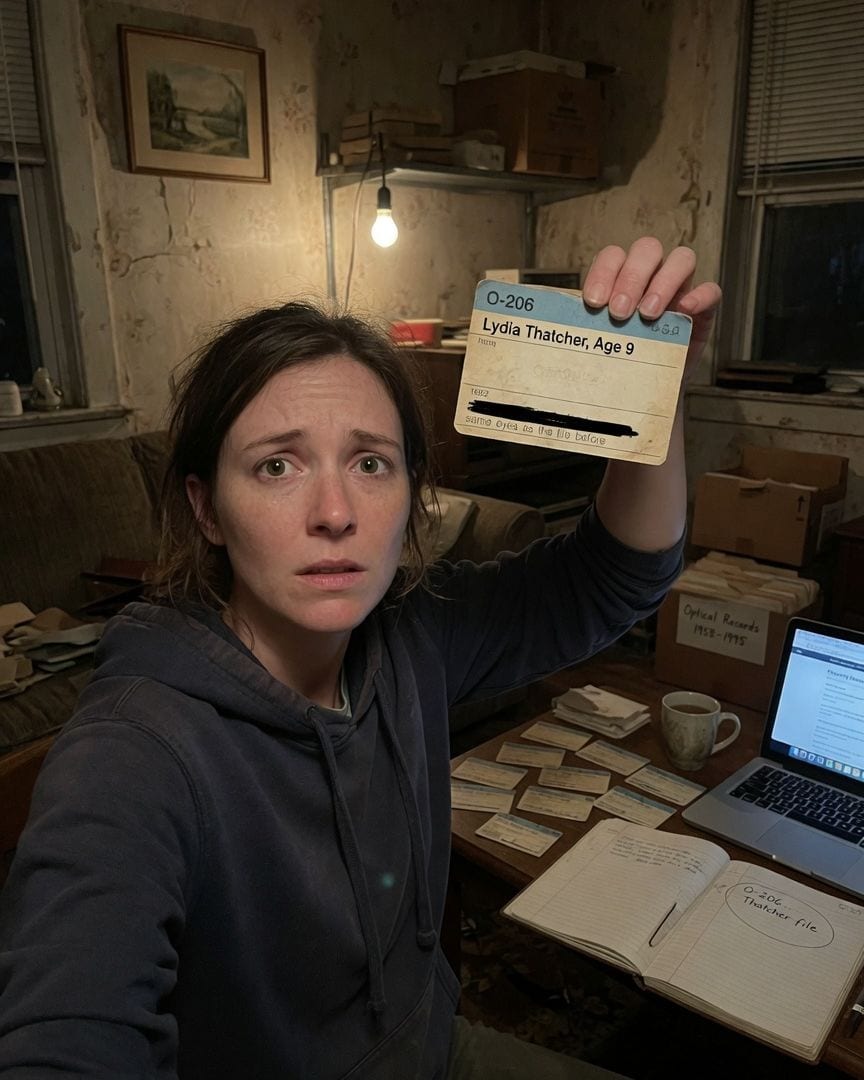
My own optical card is dated 1962, with my name on it. I wasn't born until 1993.
Sifting through old patient files from my former optical practice, I found my own O-206 card. It had my name, Lydia Thatcher, and my current home address printed on it. But the card was dated 1962, decades before I was even born, and a redacted note mentioned 'same eyes.'