My grandfather vanished from the ward for six days. He's back, drinking milky, unsweetened tea, thanking the nurse for 'how he's always had it.' My grandfather took his tea black for ninety years.
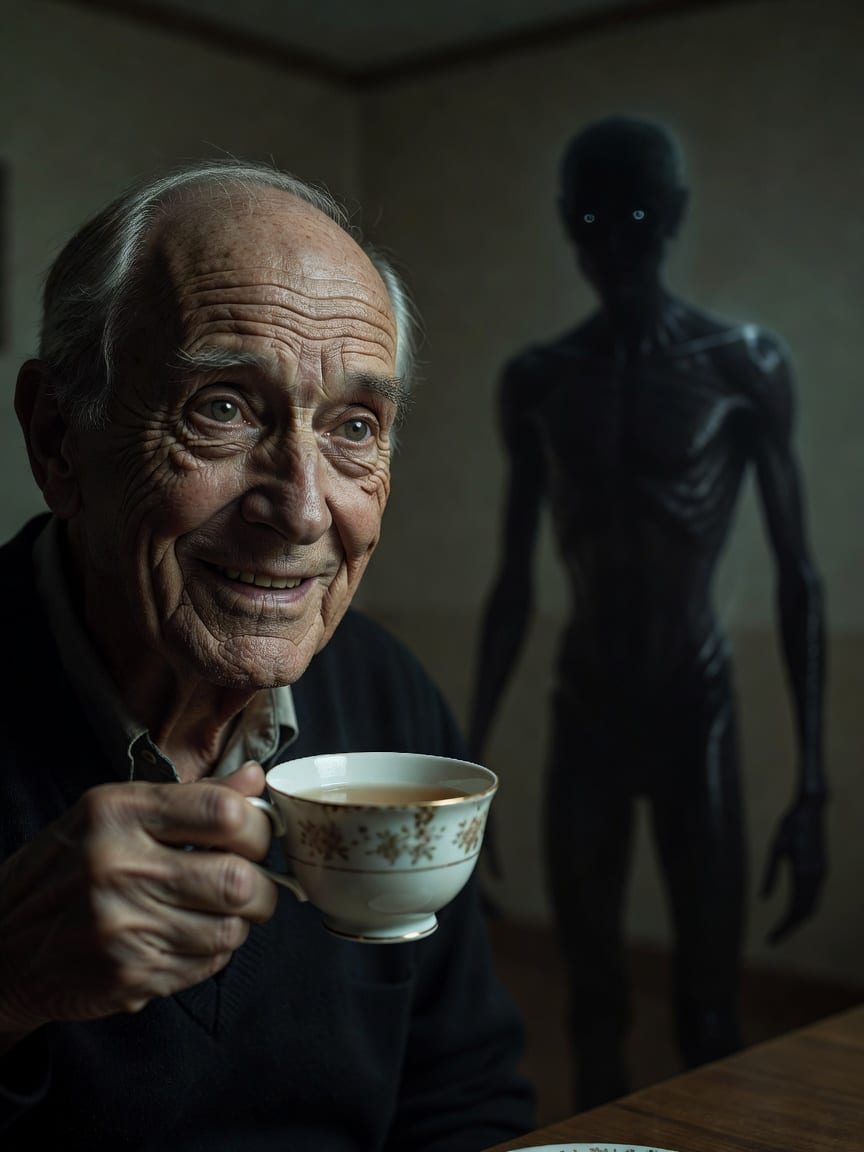
My grandfather, Ralph Drummond, had a ritual. For ninety years, his morning tea was two sugars, no milk, scalding hot. The whole family knew; you could make it blindfolded.
It was a small, unyielding part of his identity, a testament to his stubborn routines. Then he vanished from St. Jude’s ward for six days. Six days of frantic searches, police reports, and my mother, Judith, nearly losing her mind.
When they found him, wandering confused in the hospital’s rarely used south wing, the relief was a tidal wave. Until breakfast the next morning.
Nurse Grace Harrington, bless her heart, brought him a cup. “Just how you like it, Mr. Drummond,” she chirped, placing a milky, unsweetened brew before him. The ceramic clinked softly on the bedside table.
Grandfather Ralph smiled, a soft, unfamiliar crinkle around his eyes that didn't quite reach them. “Ah, Grace, you always remember how I’ve always had it.” He took a slow, deliberate sip, a sound of contentment escaping him.
I was standing right there, holding his hand, watching the steam rise from a cup that was utterly, profoundly wrong.
The faint, sweet scent of milk, a smell he’d always recoiled from with a theatrical shudder, hung heavy in the sterile air. My throat went dry, a sudden, inexplicable chill running down my spine.
He finished the cup, humming faintly, his gaze fixed on the window with an almost serene placidity.
I tried to dismiss it. Old age, confusion, a post-disappearance trauma. Maybe his tastes had changed in the six days he was gone. But the dread gnawed, a persistent, cold whisper beneath my rational thoughts.
Later that day, I brought up the tea, gently, as we watched a documentary. “Grandpa, you always loved your tea black, remember? Said milk was for babies.”
He looked at me, his gaze clear, almost too clear, devoid of the familiar spark of mischief or the slight irritation he usually showed when corrected. “Black? Nonsense, Monica. Always a splash of milk, always unsweetened. You know that.
It settles the stomach.” His certainty was absolute, unwavering, and utterly convincing, even to himself. My rational mind tried to find an out. Had I misremembered? Ninety years was a long time, and memory was fallible. But no.
The memory was too ingrained, too much a part of family lore, a running joke at every holiday gathering. He’d even written a letter to a tea company once, complaining about an accidental milk sachet in his order.
That memory was vivid.
That evening, while helping him change into his pajamas, I noticed something else. A small, almost imperceptible scar, a faint white line just above his left eyebrow.
A memento from a childhood fall, a story he’d told a hundred times, always pointing to the left. But now, it was on his right eyebrow. I blinked, rubbed my eyes, feeling a dizzying disconnect.
No, it was definitely on the right. I touched it lightly, my finger tracing the wrong side of his face. He flinched slightly, a fleeting, almost imperceptible movement. “What’s wrong, dear?” he asked, a placid, untroubled smile.
I mumbled something about dust. My heart hammered, a frantic drum against my ribs. Two things. Two impossibly wrong things, observed in the man I loved.
The next afternoon, while we were looking through old family photo albums, a familiar, faded picture came up: me, aged six, tear-streaked, clutching our old beagle, Buster, after he’d run away for a day.
Grandfather Ralph, who had been on a business trip in Japan at the time, pointed to it warmly. “Ah, Buster. Remember how I helped you find him in Farmer Giles’s field?
We walked for hours, just you and me, until we heard his little bark.” He smiled, a genuine, fond memory playing across his face, his eyes crinkling.
He described the muddy field, the exact way Buster had barked when he saw me, the relief in my small voice, the warmth of the sun that day. Every detail was perfect, vivid. But my grandfather was not there.
He was in Japan. I remembered my mother, Judith, comforting me, my father, David, tirelessly searching. Grandfather Ralph was thousands of miles away.
His eyes, fixed on the photo, were calm, certain, filled with a warmth for a moment he had never lived.
The memory he shouldn't have was a cold, hard knot in my stomach, refusing to loosen.
I spent the next few days re-examining family albums, cross-referencing dates with my mother’s old travel diaries and my father’s meticulously kept business trip itineraries.
The evidence was irrefutable: Ralph Drummond was in Kyoto, Japan, from April 12th to April 20th, 1996. Buster went missing on April 15th. The wrongness wasn’t in my memory, but in his.
I tried to speak to my mother, Judith, about it, framing it as a peculiar lapse. She dismissed it as a sweet, if inaccurate, embellishment from an old man. “He’s just happy to be home, Monica. Don’t overthink it.
His mind isn’t what it used to be.” But his mind had been razor-sharp just weeks ago.
I started paying closer attention to everything. His gait, subtly different, a little too smooth, less of his characteristic shuffle. A slight hesitation before answering familiar questions, as if accessing a database, then the perfect, unblemished recall.
He’d always hummed off-key, a charmingly discordant habit; now his humming was perfectly in tune, almost saccharine. Small, almost invisible shifts, but to me, they screamed.
I began discreetly asking nurses at St. Jude’s about other patients who had “wandered off” and returned.
Most were just confused, found in other wings, but Nurse Grace Harrington, who had served Ralph his milky tea, became visibly uncomfortable when I pressed. She mentioned that Mr. Charles Vance, the facility’s head administrator, handled all “unexplained absences” personally.
She quickly changed the subject, her eyes darting nervously, avoiding my gaze.
My digging didn't go unnoticed. One evening, I was in Ralph’s room, sorting through his old paperwork, looking for anything that might shed light on his disappearance or the facility’s protocols.
I found a small, leather-bound journal he used to keep for gardening notes.
It was filled with his familiar, looping script, but the most recent entries, starting from the day he returned, were subtly different – straighter, almost too neat, lacking the slight waver of his true hand.
I was tracing a freshly penned sentence about rose pruning when Ralph walked in, unannounced, his footsteps unnervingly silent. His eyes fixed on the journal in my hand, a flicker of something unreadable in their depths. “Looking for something, Monica?”
he asked, his voice even, but with an edge I hadn’t heard before, a controlled quietness. “Just tidying up, Grandpa,” I stammered, my heart leaping, quickly putting the journal back on his bedside table.
He didn’t press, didn’t comment, but his gaze lingered on me, watchful, assessing. The air in the room seemed to thicken.
The next day, Nurse Grace pulled me aside in a deserted corridor near the laundry room, her voice barely a whisper. Her face was pale, her hands twisting nervously. “Monica, please, stop asking questions about the… disappearances.
Mr. Vance knows you’re looking into things. He asked about your presence on the ward after hours.” She glanced over her shoulder, her eyes wide with fear. “He has eyes everywhere. Just… leave it alone.
For your own good, and for your grandfather’s. Some things are better left undisturbed.” Her urgency was chilling, the unspoken threat clear. The danger was no longer abstract; it was personal, and it knew my name, knew my actions.
Grace’s warning solidified my resolve. I cornered her again, this time in the staff breakroom during her lunch break, away from prying eyes and surveillance cameras. She was jumpy, picking at her sandwich. “Grace, what is going on?
What does Charles Vance do that has you so terrified?” I kept my voice low, firm, trying to convey empathy, not accusation. She wrung her hands, her gaze fixed on her plate. “It’s not what you think, Monica. It’s… complicated.
There have been others. Patients who… changed after they came back from a ‘walkabout’.” Her voice was barely a whisper, laced with a desperate plea for understanding. “Mr. Vance, he… he always handles them.
Says it’s a delicate process, for the family’s peace of mind. To spare them the… decline.”
“Changed how, Grace? Like my grandfather’s tea? His scar? His memories?” I pushed, each question a hammer blow. She flinched, then nodded slowly. She took a deep, shaky breath. “Yes. Exactly like that. Small things.
A new habit, a forgotten memory. But always… calmer. More compliant. They never cause trouble after they come back. They’re… easier.” Her eyes pleaded with me to understand, to forgive her. “He calls them ‘templates.’ Says they’re better this way.
Less suffering. Less… difficult.” The word ‘templates’ hung in the air, heavy and obscene. “Templates for what, Grace?” The words felt like sandpaper in my throat, raw with dawning horror.
She shook her head, tears welling in her eyes, silently tracing paths through the faint blush on her cheeks. “I don’t know. He just… replaces them. Says he’s giving them peace. He says it’s an evolution, a gentle transition.”
The implication hit me like a physical blow, a cold, sickening wave washing over me. Ralph wasn't just confused or traumatized; he was replaced.
The milky tea, the migrated scar, the memory of Buster, the unnerving calm, the perfectly in-tune humming – it all clicked into a horrifying, coherent pattern, like pieces of a macabre puzzle falling into place.
This wasn't my grandfather; this was a thing wearing his skin, a calmer, more compliant version. The dread intensified, now laced with a cold, righteous fury. My grandfather was gone, and something else was sitting in his chair.
Grace’s admission spurred me into action. Charles Vance. He was the key, the orchestrator. I knew he kept odd hours, often working late in his office, long after most staff had left.
That night, I waited until the hospital was quiet, the only sounds the distant hum of machinery and the soft creak of the building settling. Then, heart pounding, I slipped into the administrative wing.
The door to Vance’s office was locked, but a forgotten master key, hanging on a janitor’s cart tucked into a shadowy alcove, provided entry. Inside, the office was neat, almost sterile, a contrast to the chaos in my mind.
I searched frantically, my hands trembling, until I found it: a small, leather-bound ledger, not a formal hospital record, tucked away in a locked desk drawer beneath a stack of old, dusty patient files.
The pages were filled with meticulous, handwritten notes, dates, and names. Each entry detailed a patient who had 'wandered off,' returned, and then exhibited 'minor behavioral adjustments.'
Next to some names, there were specific anomalies: 'Mrs. Henderson – developed fondness for jazz, previously disliked,' 'Mr. Davies – left-handed now, always right,' 'Ms. Fontaine – sudden aversion to sunlight.'
My grandfather's name, Ralph Drummond, was among them, with 'tea preference reversed, scar migrated, memory discrepancies.'
As I scanned the chilling list, my finger tracing a name from three years prior, a name that had been quietly discharged, I heard it – a faint, almost imperceptible creak of the office door behind me.
The light from the hallway, now a sliver, indicated it was no longer fully closed. I froze, the ledger open in my hands, the cold certainty settling deep within me that I was no longer alone.
I turned slowly, the ledger still clutched in my hand, my breath catching in my throat. Charles Vance stood in the doorway, his silhouette calm against the dim hall light. He wasn’t surprised, nor was he angry.
His expression was one of quiet resignation, almost pity. “Monica. I expected you’d find your way here eventually.” His voice was soft, conversational, completely devoid of threat or malice.
He stepped fully into the room, closing the door softly behind him. The gentle click of the latch echoed in the profound silence of the office. “Grace is a good nurse, but a terrible secret-keeper, bless her heart.”
He gestured to the ledger with an almost fond indulgence. “You’ve found my little project, then.” He sat behind his desk, leaning back, his hands steepled, his gaze steady on me. “It’s not malicious, Monica. Far from it.
This facility, it houses the elderly, the forgotten, the ones whose minds are already fading, whose bodies are failing. We offer them… a different kind of peace.”
He explained, his voice unnervingly even, as if discussing hospital budgets, that for decades, they had been perfecting a process.
When a patient reached a certain stage of decline, or simply became too distressed, too much in pain, they would be ‘retired.’ An entity, a consciousness, would then take their place.
“Not an alien, not a monster,” he clarified, “but a benevolent observer, a ‘caretaker.’ It doesn’t feel pain, or fear, or the crushing weight of existential dread. It simply… experiences.”
It would study the original’s memories, habits, and personality from a distance, then integrate into their body. The slight variations – the tea, the scar, the misplaced memory – were simply the imperfections of a complex imitation.
“Your grandfather, Ralph, was deeply unhappy, Monica. Confused, afraid of losing himself. The one who came back? He’s content. He feels no pain, no fear. He simply… observes. He is at peace.” He smiled faintly. “Isn’t that better than suffering?”
Every clue, every unsettling detail I had observed, now clicked into a horrifying, coherent picture, a tapestry woven from quiet dread and a chilling, clinical logic.
The calm explanation was far more terrifying than any monster. Vance wasn’t a villain; he was a twisted savior, a benevolent god playing with human lives. “You’re replacing people,” I whispered, the words catching in my throat, tasting of ash.
“You’re erasing them. Their souls, their very selves.” “We’re alleviating suffering,” Vance countered, his gaze unwavering, betraying no flicker of doubt or remorse. “No one truly misses the original. The family gets a peaceful, compliant loved one back.
A quiet life, free from the ravages of age and disease. A perfect memory.” He stood, walking to the large window overlooking the moonlit hospital grounds, his back to me. “You can’t expose this, Monica. Who would believe you?
And what would it achieve? Chaos? Fear? Your grandfather’s ‘peace’ would be shattered, and countless others would be condemned to their suffering.” My mind raced, a frantic hamster on a wheel. He was right.
How could I prove any of this? The police would think I was delusional, grieving. The implications for my mother, for the entire family, for every family whose loved one had 'returned' from St. Jude's, were staggering, unfathomable.
The entity wearing Ralph’s skin wasn’t a threat to me, not physically. But its very existence, its intimate proximity, was a constant, profound violation, a living lie. I couldn't fight him, not here, not now.
I had to get out, to save myself, and perhaps, somehow, preserve the memory of the real Ralph. I looked at Vance, a cold dread settling deep within me, colder than any fear. “What happens if I tell?”
He turned, his smile still faint, but his eyes held a steel I hadn't seen before, a calculated threat. “Then, Monica, you would become a subject of great interest. Perhaps a template yourself. We are always looking for suitable candidates.”
The implication was clear. I wouldn't be replaced for peace, but for silence. I backed away slowly, the ledger now hidden beneath my jacket, a heavy weight against my side. “I’m going home,” I said, my voice thin, but firm.
“I’m taking my grandfather home.” Vance simply nodded, a serene expression on his face. “Of course. Give Ralph my best. I trust you’ll make him his tea just the way he’s always had it.”
I left the office, the master key still on the janitor’s cart, a silent witness. I walked past Ralph’s room, seeing him asleep in his bed, his chest rising and falling with a steady, peaceful rhythm.
I knew, with absolute certainty, that the man lying there was not my grandfather. He was a perfect, terrible imitation.
I discharged Ralph Drummond the next morning, signing the papers with a detached, clinical efficiency. My mother, Judith, was overjoyed, attributing my sudden decision to a renewed appreciation for family, a sentimental impulse.
She noticed nothing, only remarking on Ralph’s improved disposition. We brought him back to his old house, a quiet place filled with his genuine memories, now silently observed by a stranger.
Charles Vance remained at St. Jude’s, undisturbed, his 'project' continuing, unseen, unmolested. The ledger remained hidden, tucked away in a waterproof box in my attic, my secret burden, a constant weight. I couldn't share it, couldn't prove it.
The world moved on, oblivious to the quiet replacements happening within its walls, to the subtle shift in identities. I watched my mother interact with him, her eyes blind to the wrongness, and felt a profound, isolating despair.
The truth was mine alone, a chilling secret I carried everywhere.
Life settled into a new, unsettling rhythm. Ralph sat in his favorite armchair, reading the paper, humming perfectly in tune, a sound that grated on my nerves.
He still drank his milky, unsweetened tea, always with that gentle, content smile, a smile that never quite reached his eyes.
Sometimes, he would share a childhood memory of mine, a moment I knew he’d only observed, never truly lived, describing it with a detached, perfect recall.
My mother, Judith, would coo over his improved disposition, his newfound tranquility, his quiet contentment. And I would watch, a sentinel of a truth too terrible to speak, too unbelievable to share.
The original Ralph, the one who loved his tea black, the one with the scar on the left, the one who was truly there for me, was gone. And this new Ralph, this gentle, observant imitation, remained.
Every morning, I make him his milky, unsweetened tea, and watch him drink it, knowing the true taste of dread.
If this one got to you
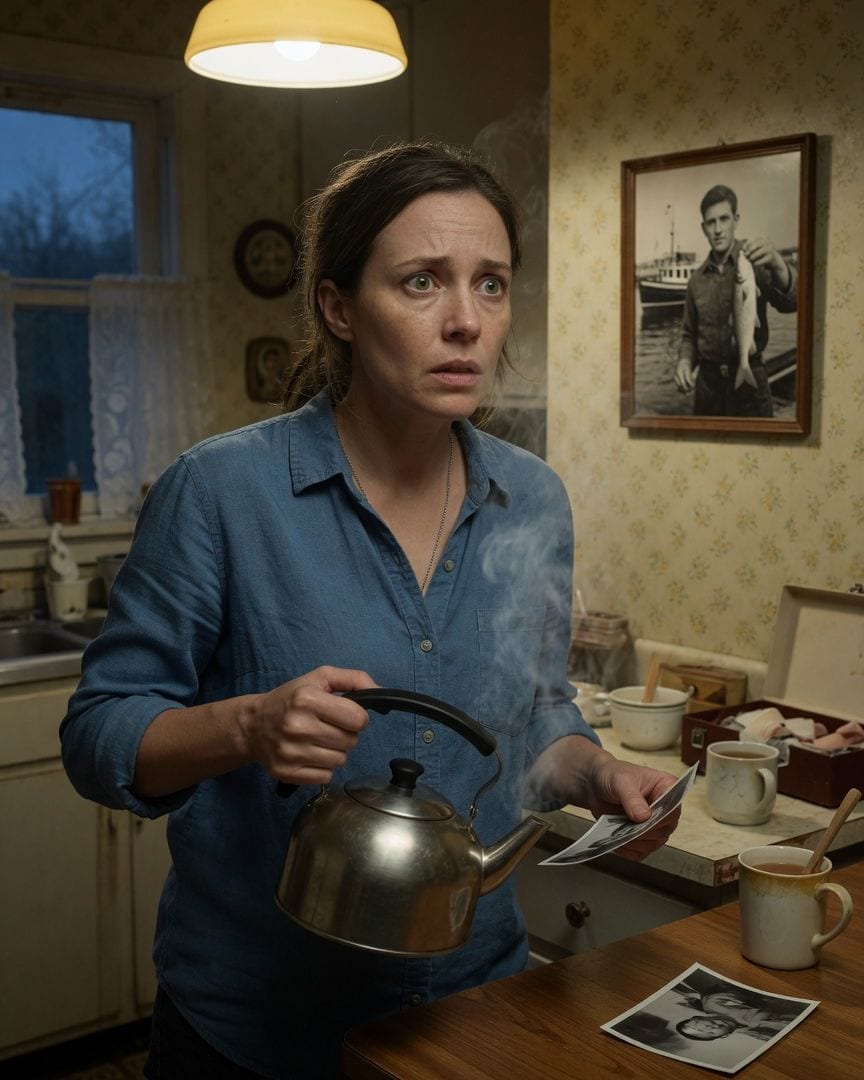
My grandfather thanked me for whiskey at his wake. There was no wake. My father, who gave the toast, has been dead for years.
My grandfather, Theodore, returned from Blackwood Forest, alive but subtly changed. Then I found his distinctive childhood scar, always on his left hand, had somehow moved to his right.
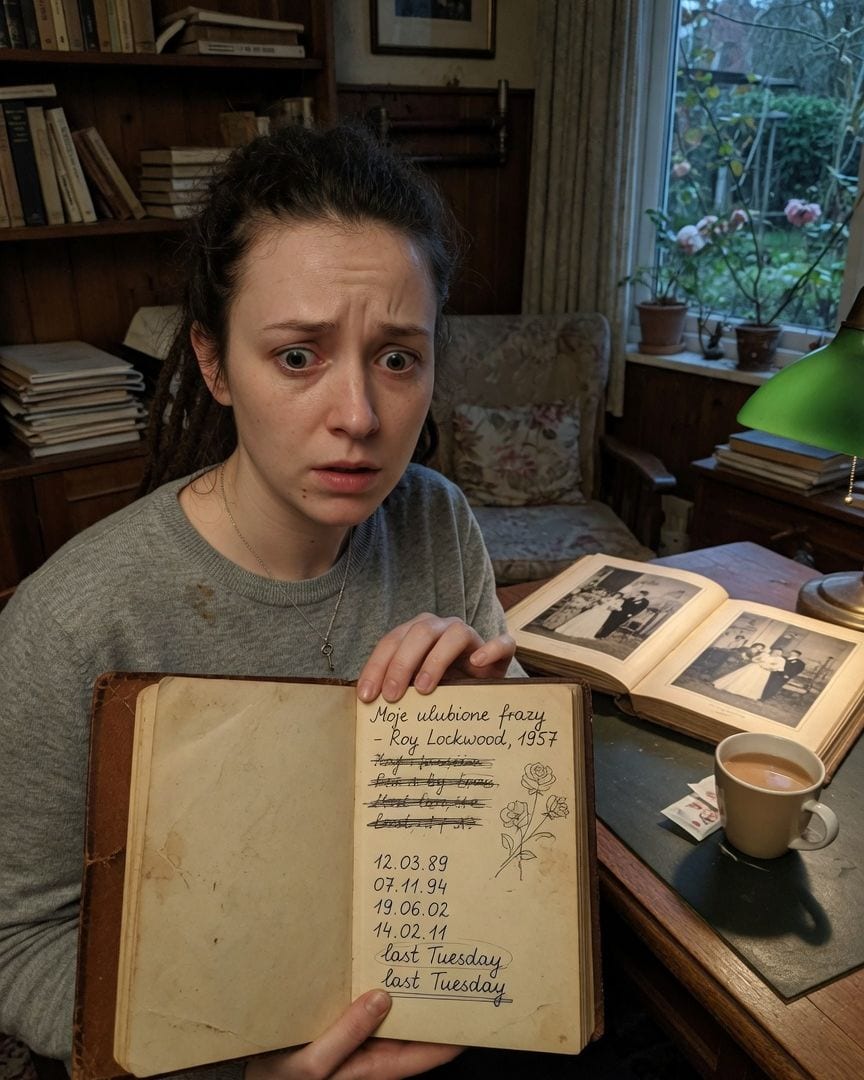
My grandfather counts 'one, two, three' in English now. He just came back. He always counted in Polish, and denies ever speaking it.
My grandfather, Roy Lockwood, returned last Tuesday after vanishing for a week, bringing immense relief. He seemed thinner, a bit disoriented, but otherwise, he was just Grandpa. Then I heard him count 'one, two, three' in clear English before lifting potting soil, instead of his lifelong Polish habit.
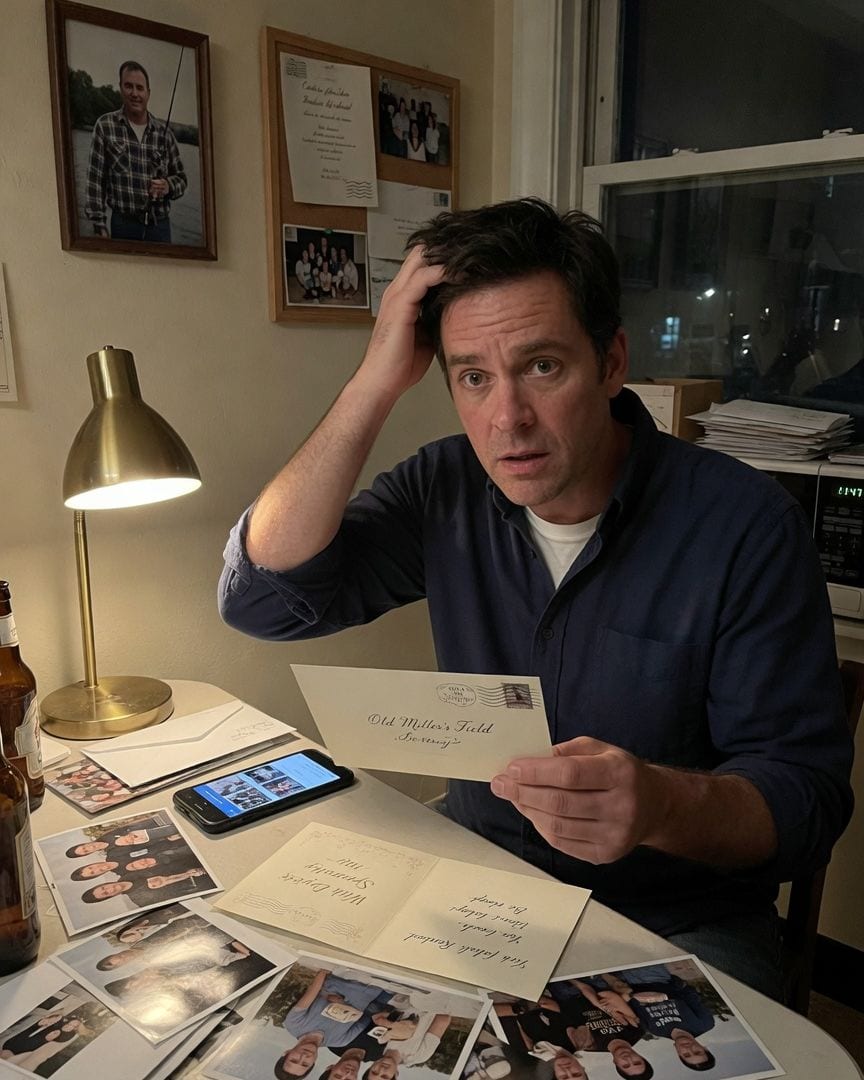
A stranger shook my hand, apologised for my father, then disappeared from every photo of the reunion.
My ten-year reunion was a blur of forgotten faces and loud music until a stranger approached me. He took my hand, apologized for my father, then vanished into the crowd without a trace. Now, a week later, a strange card has arrived, postmarked from a place that hasn't existed for decades.
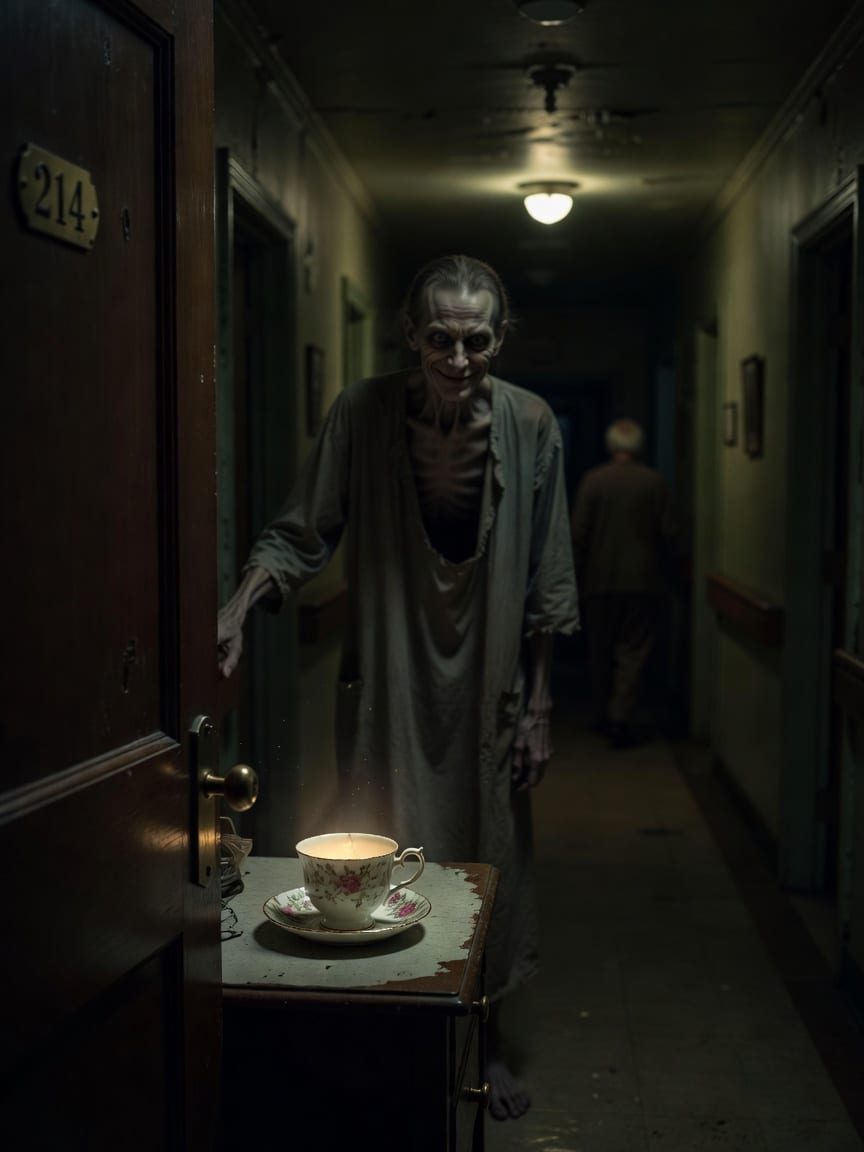
Every 3:30 AM, old Mr. Pryce shuffles past my hospice desk. He smells of lavender, asks for tea. My day nurse says he discharged four months ago. His room has been empty since.
As a night desk attendant, I'm used to the quiet routine of the hospice, especially Mr. Pryce's nightly cold tea request. But then the day nurse told me Mr. Pryce was discharged four months ago, and Room 214 has been empty since. Now, his floral teacup sits on the bedside table, still faintly warm.
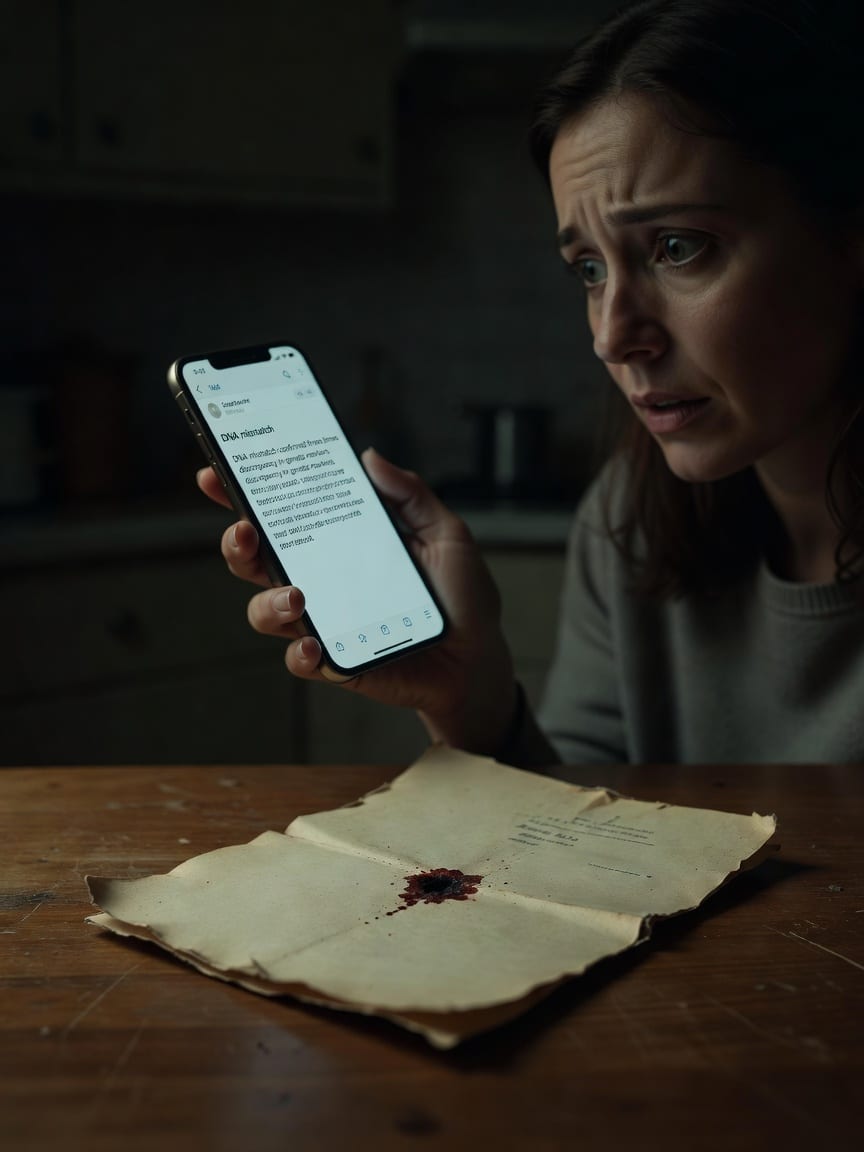
My baby bl**d card doesn't match my own DNA today. The lab ran it three times, confirming the dried spot and my living swab come from two different people.
Sitting at my kitchen table, I opened an email that shattered my quiet afternoon. I'd sent my newborn heel-prick card to a genealogy lab out of harmless curiosity. The results were devastating: the bl**d on that card, preserved for three decades, does not match my DNA.
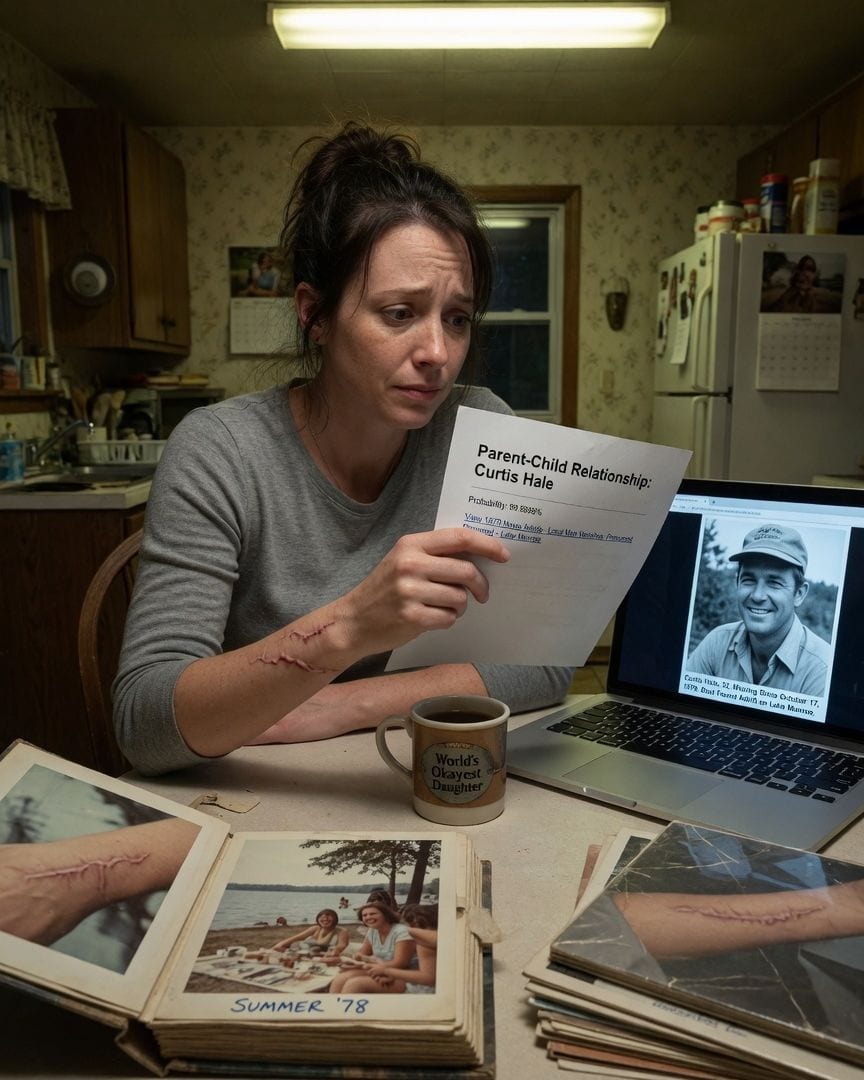
My DNA returned Curtis Hale as my father. He vanished in 1979. I was born twelve years later. The lab confirmed the match twice.
My DNA test results revealed something impossible: my biological father vanished in 1979, twelve years before my birth. My mother dismissed it as nonsense, but her reaction felt forced, leading me to old family photos. There, in a faded 1978 snapshot, I found my own distinctive childhood scar on the wrist of a stranger.