My baby bl**d card doesn't match my own DNA today. The lab ran it three times, confirming the dried spot and my living swab come from two different people.
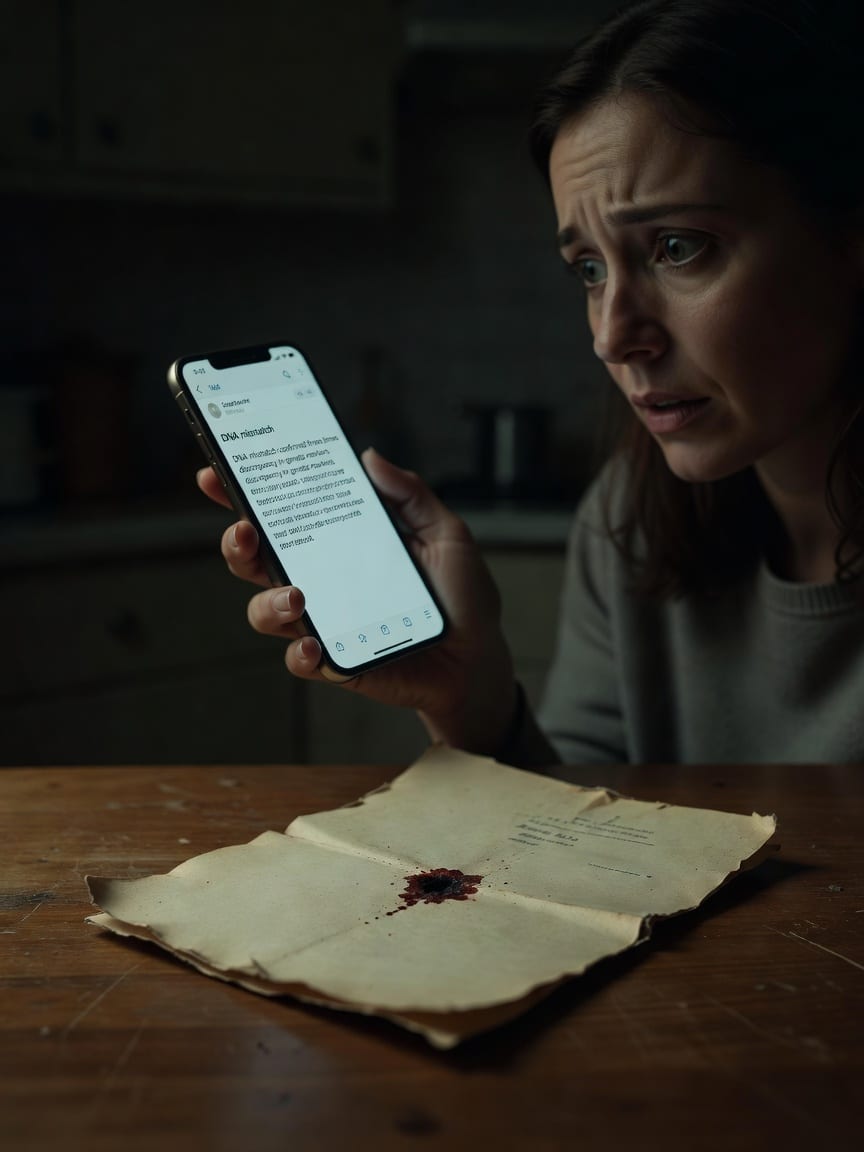
I remember the exact moment the bottom fell out. I was sitting at my kitchen table, sunlight slicing through the blinds, painting stripes across the worn oak. On the wood lay a small, laminated card, yellowed at the edges.
My newborn heel-prick card. My mother, Carol, had kept it tucked away for thirty years, a tiny piece of my history she always called a 'souvenir.'
Out of some harmless curiosity, a whim born from a quiet afternoon, I’d sent it off to a genealogy lab a few weeks ago, along with a cheek swab. Just to see. Just for fun.
The email arrived this morning. It landed in my inbox with the cold, clinical precision of an axe. The bl**d on the card, the lab stated, does not match the DNA from the swab I’d sent in.
They’d run it twice, then a third time, each confirmation echoing in my mind like a fresh, colder shock. No mix-up, their follow-up email stated. No contamination.
The dried spot, preserved for three decades, and the living cells from my mouth today, belong to two different people.
My first thought was a glitch, a mistake. My mind, trained to find logic in everything, immediately sought a mundane explanation. A misplaced sample, a tired tech, an administrative error. But the triple confirmation gnawed at me. Three times.
That wasn't a mistake; that was a fact. The sunlight on the table suddenly felt too bright, too clinical, illuminating an impossibility. Whose bl**d was this, then, if not mine? And if not mine, then who the hell was I?
My mind reeled. I called the lab, the calm, professional voice of a woman named Sarah on the other end, patient but firm. She reiterated the integrity of their process. The card was sealed when it arrived.
The swab was sealed. No mix-up. No contamination. The results stood. I felt a chill spread through my chest, deeper than the air conditioning. If the card wasn't hers, what else wasn't?
I started with my own records, pulling out old baby photos from dusty albums, scrutinizing my birth certificate. Everything seemed normal, utterly mundane. My name, Emily Hale, printed neatly. Date of birth: October 31st, 30 years ago. St. Jude’s Hospital.
My mother, Carol, listed clearly. Nothing amiss. The photographs showed a chubby, smiling infant, one that looked vaguely like the child version of myself. But then, a thought, cold and precise, struck me: medical records.
I remembered a chipped tooth incident as a child, when I was about six. A dramatic fall from my bike, a lot of tears, and a specific filling that Dr. Barlow, our family dentist, had put in.
He’d long since retired, but his office, now run by his daughter, still held old patient files. I called, feeling a strange urgency in my voice, and requested my childhood dental chart.
A week later, a thick, manila envelope arrived, addressed to me. It felt heavier than it should have, weighty with untold history. I spread the faded diagram on my kitchen table, the paper crinkling under my fingers.
It was a meticulously drawn chart, an almost artistic rendering of a child’s teeth, dated from when I was six years old. Next to it, I placed my current dental X-rays, taken only last month.
My heart hammered. The old chart depicted a distinctive, almost intricate pattern of silver fillings, sketched with fine lines and tiny notations.
And more than that, a specific, unusual bone ridge was diagrammed on the upper jaw, a detail I remembered my mother once casually mentioning was a 'signature' of Dr. Barlow’s precise work.
But my current X-rays, clear and stark against the light, showed none of it. My teeth were different. My jaw was different. The fillings were in different places, of a different material. The bone ridge simply wasn't there.
The chart was unequivocally 'hers,' stamped with my name and birthdate, yet it wasn't my mouth at all. It was a ghost-mouth, a wound I never had, smiling back from the page.
I called my mother, Carol, trying to sound casual, my voice thinner than I intended. 'Mom, do you remember that filling I got when I was little? The one Dr. Barlow did?'
Carol hesitated, a beat too long. The silence stretched, tight as a drum. 'Oh, darling, that was so long ago. I suppose so. Why?'
I didn’t answer.
I scheduled an emergency appointment with my current dentist, Dr. Brooks, the next day. He was a younger man, sharp and methodical.
I laid out the old dental chart, yellowed and fragile, next to my crisp new X-rays on his light box. He patiently reviewed both sets, his brow furrowed in concentration.
The soft hum of the X-ray machine seemed to vibrate through the room, a low, anxious note.
He confirmed the old chart was legitimate, the work clearly decades old, impeccably recorded. 'This isn't some sketch from a forgotten ledger, Emily,' he said, tapping the paper. 'This is an official record. Look at the detail here.'
He pointed to a specific anomaly – a unique, almost genetic-level variation in the root structure of a molar, alongside the distinctive filling pattern. 'This is a very specific signature,' he said, tracing the faded diagram.
'Something you’d expect to see in only one person. It's like a fingerprint for your mouth. And it’s not present in your current mouth, Emily.'
He looked at me, then back at the chart, a slow, dawning confusion on his face.
I felt a cold knot tighten in my stomach, the fluorescent lights of the dental office suddenly too harsh. Two different people. Not just the bl**d on a card, but the very bones of my face.
I was looking at a ghost-mouth, a wound I never had, smiling back from the page.
The next few days were a blur of frantic research. I refused to grow hysterical. Instead, I became methodical, driven by a chill that had settled deep in my bones.
I searched for any records of children born around my own birth date with similar dental anomalies or, more vaguely, 'unusual circumstances.' I focused on St. Jude’s, the hospital where I was born.
Its archive, housed in the hospital’s basement, was a labyrinth of microfiche and yellowed files, the air thick with the smell of old paper and dust. The quiet hum of the microfiche reader was the only sound for hours.
I found nothing directly matching the dental anomaly. But I did find something else. Tucked away in a local newspaper’s microfilmed archives, a small notice, dated a week after my own official birth.
It detailed the tragic, sudden death of an infant, Greta Brooks, born at St. Jude’s just days before my own birth. The cause of death was listed simply as 'SIDS.' A prickle of unease ran down my spine.
A baby named Greta Brooks, born at the same hospital, dying so close to my own arrival. The name 'Brooks' resonated with my current dentist's surname, but I dismissed it as coincidence. It had to be.
My attention then turned to my mother, Carol. Her evasiveness about my birth details had always been subtle, easy to overlook amidst the noise of everyday life. Now, it screamed.
I pressed her gently, about her earliest memories, about her time in the hospital after I was born. She grew visibly uncomfortable, her hands fidgeting with the teacup she held, its porcelain clinking against the saucer.
Her answers became vague, almost rehearsed. 'It was all a blur, darling. You know how it is with newborns. So exhausting.'
I didn’t let up. 'Did you know the Brooks family, Mom? Maureen Brooks?'
Carol’s face went pale, the color draining out of her. 'The Brooks? No, I don't think so. Why would I?' Her tone was too sharp, too defensive, a shield snapping into place. I knew she was lying.
I remembered her mentioning a close 'family friend' who was a doctor at St. Jude’s, someone who had 'helped them through a difficult time' after my birth. Dr. Gordon Sinclair.
I found his name in the hospital archives, listed as a prominent obstetrician during that period. His signature was even on some of the generic forms related to my own birth.
The pieces weren’t fitting yet, not neatly, but they were definitely piling up, forming a pattern of obscured truths, like jagged shards of glass in a growing pile.
I decided to visit Dr. Gordon Sinclair. He was now retired, living in a quiet suburban home that exuded an air of manicured, unbothered prosperity.
The air in his living room felt like stale, expensive perfume, heavy and hard to breathe. He was a man in his seventies, with impeccably coiffed white hair and calm, unblinking eyes.
He listened without interruption as I laid out my findings: the DNA discrepancy, the conflicting dental charts, the newspaper clipping about Greta Brooks. His composure was unsettling, unwavering.
'A fascinating hypothesis, Emily,' he said, his voice smooth, devoid of any surprise or alarm. 'But memory is a fickle thing, isn't it? And records can be misfiled, misinterpreted.'
He offered me tea, a gesture that felt less hospitable and more like a deliberate delaying tactic. The cup he handed me felt unnaturally warm against my cold fingers.
I pushed back. 'The DNA was confirmed three times. My childhood dental records show a different person. Greta Brooks died shortly after birth at St. Jude's, the same hospital where I was born, just days apart.
And my mother mentioned you were a 'family friend' who helped her through a 'difficult time' around my birth.'
Sinclair's eyes finally flickered, a momentary tightening around the corners, a brief twitch of an eyebrow. 'Your mother, Carol, is a dear woman. She went through a great deal.' He paused, then leaned forward, his voice dropping, almost a whisper.
'Some things are best left undisturbed, Emily. For everyone's sake.' The implicit threat was clear, delivered with a calm, almost paternal tone that made it even more chilling.
It wasn't a warning; it was a statement of fact, a boundary being drawn in the sand.
I felt a prickle of fear, not for myself, not yet, but for the sheer depth of the secret I was uncovering, the institutional wall I was hitting.
I left his house with the distinct feeling of having been observed, weighed, and found lacking. Later that day, I noticed a black sedan parked down my street, its occupants obscured by tinted windows.
It was there again the next morning, a silent, dark sentinel. Someone was watching me. Someone knew.
I knew I couldn't outmaneuver Sinclair alone. I needed concrete proof, something undeniable, something that would tear through his cultivated calm. I thought of the hospital archives again. There had to be something more, something I’d missed.
I returned to St. Jude’s, my heart thumping a frantic rhythm against my ribs.
This time, I focused not just on my own file, but on patient admission logs and birth records from that specific week, expanding my search to include all records adjacent to my birth date and Greta Brooks’s.
The old microfiche reader hummed louder in the quiet room, a persistent, unsettling companion. I spent hours sifting through dusty binders, my fingers growing smudged with ancient grime.
And then I found it. A small, almost imperceptible detail in the handwritten admission log for Maureen Brooks, Greta's mother.
An additional note, scrawled in a different hand than the primary entry, barely legible, cross-referencing a 'Dr. G. Sinclair, special arrangements.' And next to it, a code I didn't recognize. I cross-referenced the code with other patient files.
It was an internal code for 'urgent transfer' or 'special placement.' This wasn't a random entry; it was a deliberate flag. Someone had gone out of their way to make this note, to mark this particular case.
I then remembered a box of my mother’s old photographs I’d stumbled upon years ago, tucked away in the attic. I’d dismissed them then as mundane family history, snapshots of long-forgotten faces and places.
Now, a cold certainty settled in my gut: they might hold the key.
I drove straight home, my hands trembling on the steering wheel, the hum of the sedan following me down the street a faint but persistent drone in the back of my mind.
I scrambled up to the attic, the air thick and hot. After an hour of searching, pushing aside old holiday decorations and forgotten furniture, I found the box.
Inside, beneath old vacation slides and faded postcards, was a small, sepia-toned photograph.
It showed my mother, Carol Hale, younger, vibrant, standing beside another woman. The other woman was unmistakably familiar from the newspaper clipping: Maureen Brooks. They were outside St. Jude’s, both smiling, Carol holding a small bouquet of flowers.
The date stamp on the back read, 'Oct 12, 30 years ago.' My official birth date was October 31st of that same year.
My mother and Greta Brooks’ mother, together, at the hospital, weeks before I was supposedly born. It clicked, cold and hard in my mind. This wasn't a casual acquaintance. This was a pre-existing connection. My mother knew Maureen Brooks.
My mother was at the hospital before my official birth. My mind raced, piecing together the fragments, the shards of glass now forming a horrifying mosaic.
The unusual dental anomaly, the heel-prick card's foreign DNA, Greta Brooks' sudden death, Sinclair's calm warning, my mother's evasiveness, and now, this photograph. My mother wasn't just a passive recipient of a switched baby. My mother was involved.
My mother was always inside it.
I confronted Carol, the photograph clutched in my hand like a weapon. I laid out the dental charts, the DNA results, the newspaper clipping, and finally, the photo. Carol’s face crumpled, the carefully constructed facade finally cracking like brittle porcelain.
Tears streamed down her face, carving paths through her makeup.
'I had to, Emily,' she sobbed, her voice thin and reedy, shaking with a desperate, ancient grief. 'After… after the first one…'
I froze. 'The first one? What are you talking about?'
Carol looked up, her eyes wide, glistening, full of a pain I had never seen before. 'Your first brother… he was born with… difficulties. He didn't make it. The doctors… they said it was a rare genetic issue.
They told me I couldn’t have another healthy child.'
I stared, horrified. My mother had lost a child before me? A brother I never knew existed?
'Dr. Sinclair… he knew Maureen Brooks. Her baby, Greta, was born with a severe heart defect. Not SIDS, Emily. Never SIDS. She was never going to make it, no matter what they did. He offered a solution.
A way for Maureen to have a healthy child, and… a way for me to have you.'
A wave of nausea washed over me, cold and sickening. I wasn't just switched; I was a replacement, a solution to two different tragedies, a convenient answer for a doctor playing God. And my own mother had orchestrated it.
My entire life was built on a lie, a cover-up for a death I didn't know existed, and a grief her mother had kept buried for decades.
I was not just living someone else's life; I was the ghost of a dead baby, placed to heal another family's wound, while my own mother erased her true origins to escape her own. I was always inside it.
And the worst part: the photo showed her smiling. Smiling as she planned to erase Emily's true self and replace a dying child.
The full, sickening truth detonated in my gut, leaving a hollow ache. My mother, Carol, through choked sobs and desperate pleas for understanding, finally revealed everything.
After her first son’s tragic death, Carol was devastated, shattered by the news that she might not carry another healthy pregnancy to term. Dr. Gordon Sinclair, a family acquaintance and respected obstetrician, saw her despair.
Simultaneously, Maureen Brooks was facing the imminent, unavoidable death of her newborn, Greta, due to a severe congenital heart defect – not SIDS, as officially recorded.
Sinclair, known in certain circles for his 'discreet' solutions for high-profile families facing difficult circumstances, saw an opportunity.
He arranged the switch: I, a healthy newborn whose true parentage was conveniently obscured (a detail Carol still refused to disclose, even now), would be placed in Greta’s crib.
Greta’s death would be quietly re-labeled as SIDS to avoid scrutiny, and I would become Greta Brooks, living under a new identity, with new parents.
Carol, desperate for a child, agreed to take me, erasing my true origins and giving me the identity of the deceased Greta, whose heel-prick card and dental records would now become mine.
The photograph I found wasn't of a casual meeting; it was of Carol and Maureen, standing outside St. Jude’s, finalizing the horrific swap. The date on the photo, weeks before my official birth, marked the planning phase.
The dental chart with the unique anomaly was Greta Brooks’s, not mine. The heel-prick bl**d was Greta’s, not mine.
I had been living a life that was never mine, a ghost in another child's skin, a living monument to two families' desperate deceptions.
My own mother, the woman who tucked me in, who held my hand, had knowingly stripped me of my true self to fill a void.
Numb with a profound sense of violation, I arranged another meeting with Dr. Gordon Sinclair.
This time, I brought my mother, Carol, who was now a frail, broken shadow of her former self, clinging to my arm as if I were her lifeline.
Sinclair greeted us at the door with his unsettling calm, a slight, almost imperceptible smile playing on his lips. The air in his elegant living room, once merely heavy, now felt charged, metallic.
'So, the truth is out, Emily. A difficult truth, but sometimes necessary.'
I cut him off, my voice steady despite the tremor in my hands. 'Necessary for whom? For the Brooks family to have a healthy child? For my mother to avoid her grief? What about Greta? What about me?'
Sinclair sighed, a practiced, weary sound, as if he’d had this conversation countless times before. 'Greta was always going to die. We merely… ensured her legacy continued in a healthy form, and provided a child to a family in need.'
He looked at Carol, his gaze softening slightly. 'And your mother, Emily, was a woman in extreme distress. We offered a path forward.'
I slammed the heel-prick card and the dental charts onto his polished coffee table. The faint echo of the impact seemed to shake the framed photos on the mantelpiece behind him. 'You falsified records.
You erased a child's identity and replaced it with another. This isn't a 'path forward,' it's a goddamn crime.'
Sinclair merely shrugged, a subtle lift of his shoulders. 'The records were adjusted. For the greater good. No one was harmed, Emily. You lived a good life.'
My voice was cold, each word an icicle. 'I lived a lie. My entire identity is a fabrication.'
Carol, emboldened by my fury, finally spoke, her voice a thin whisper. 'He told me it was done all the time. Small adjustments, to help families. He said it was just a few lines on a chart.'
Sinclair's composure faltered for a fraction of a second, a muscle twitching in his jaw. He quickly regained it, his gaze hardening, his eyes narrowing. 'That is quite enough, Carol.' But the damage was done.
The admission, however fleeting, however quickly retracted, hung in the air: 'done all the time.' This wasn't an isolated incident. This was a system.
I stood, the weight of my stolen life pressing down on me, heavier than any physical burden. 'This stops now,' I declared, my voice shaking but firm. I pulled out my phone, recording. 'I'm going to expose all of it.
Every record, every lie, every 'adjustment'.'
Sinclair watched me, a faint, almost pitying smile on his lips. 'You truly believe you can undo decades of… careful work, Emily? You’ll find some truths are too deeply embedded to simply pull out.
Some records, once written, become the only truth that ever was.'
I released my findings online, anonymously at first, then publicly. The story exploded. Dr. Gordon Sinclair faced investigations, his practice and reputation crumbling into dust.
Carol Hale retreated into a shell of guilt and regret, her relationship with me irrevocably fractured, a silent chasm between us.
The official records of Greta Brooks were eventually corrected to reflect her true cause of death, but the space where Emily Hale’s original identity should have been remained stubbornly blank.
There was no 'other' Emily, no record of my true birth. I was a child born into a void, then placed into a life that wasn't hers.
The world now knew my story, but it didn't give me back my past. It only confirmed what I had become: a living testament to a stolen identity, a ghost in my own skin.
I now live with the truth. I carry the weight of Greta Brooks’s brief life, a phantom twin whose dental chart and bl**d card are the only physical proof of my own erased past.
I look in the mirror and see myself, but know the face staring back is a placeholder, a stand-in. My life, my memories, my very name, are built on a deception I was always inside.
The world is a different place now, colder, sharper, stripped of the comforting illusion of a stable self.
I often find myself tracing the faint scar on my own arm, a scar from a childhood fall I distinctly remember, and wonder if Greta Brooks had a similar one, a mark that would have been hers.
The silence in my life is profound, the quiet echo of a name I can never speak, a person I can never be.
The exposure of Dr. Sinclair’s actions brought some justice, but it couldn’t give me back what was taken. I walk through my days, a testament to the fact that some records, once written, become the only truth that ever was.
I am Emily Hale, and I am Greta Brooks, and I am neither. I am the body that doesn't fit.
Her mother, Carol, called occasionally, her voice thin with age and unspoken regret. 'Are you alright, darling?' she'd ask. Emily would pause, looking at the hand that held the phone, a hand that now felt subtly, irrevocably alien to her.
'Is that so?' she would reply, a faint, wrong little smile on her lips.
If this one got to you
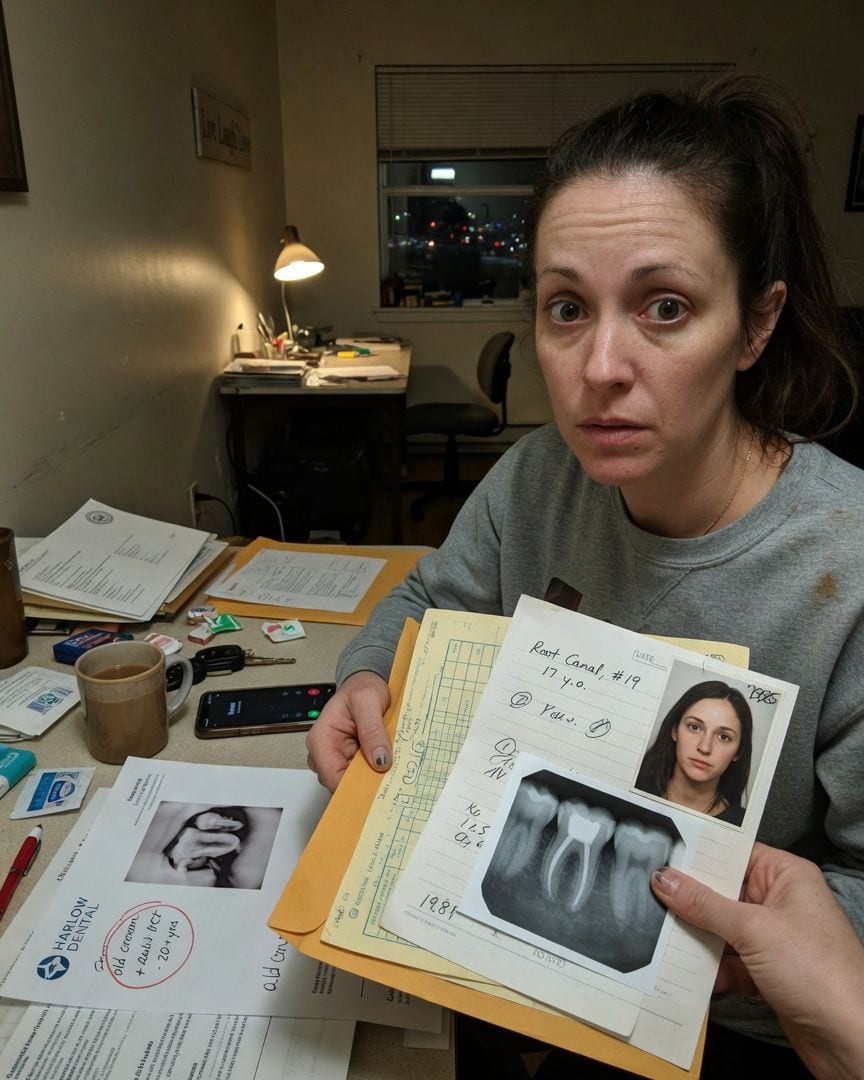
My lower molar has a twenty-year-old root canal. My new dentist showed me the scan. That tooth is whole. I can feel it.
My new dentist found a twenty-year-old root canal and crown in my mouth. The problem? I have no memory of ever having major dental work there, and my mother confirms I never did. My own body held a secret I couldn't explain.
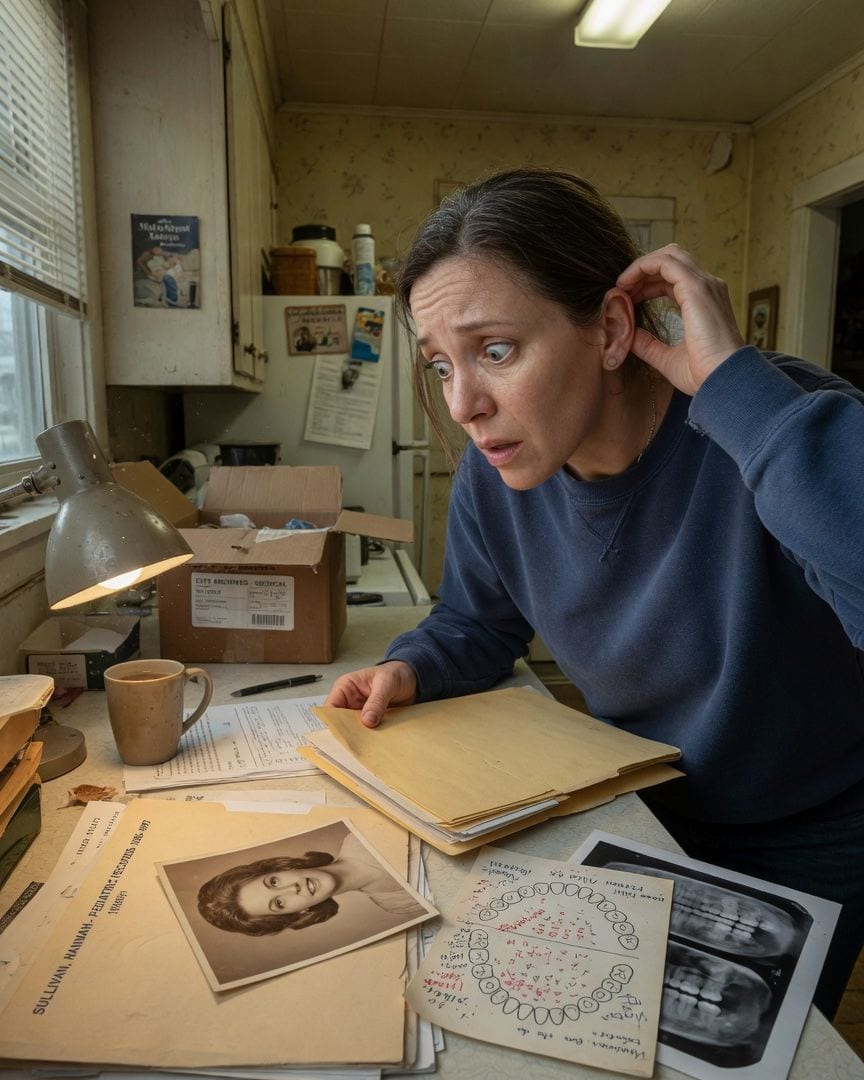
My MRI showed a perfect, decades-old surgical opening in my skull. I have no memory of it.
I underwent a routine MRI for persistent dizziness, expecting reassurance. Instead, the scan revealed a perfectly healed, decades-old surgical opening in my parietal bone, just behind my left ear. Dr. Hughes confirmed it was an access point for a procedure, yet I have no memory of any head surgery, ever. My body holds a secret I cannot recall.
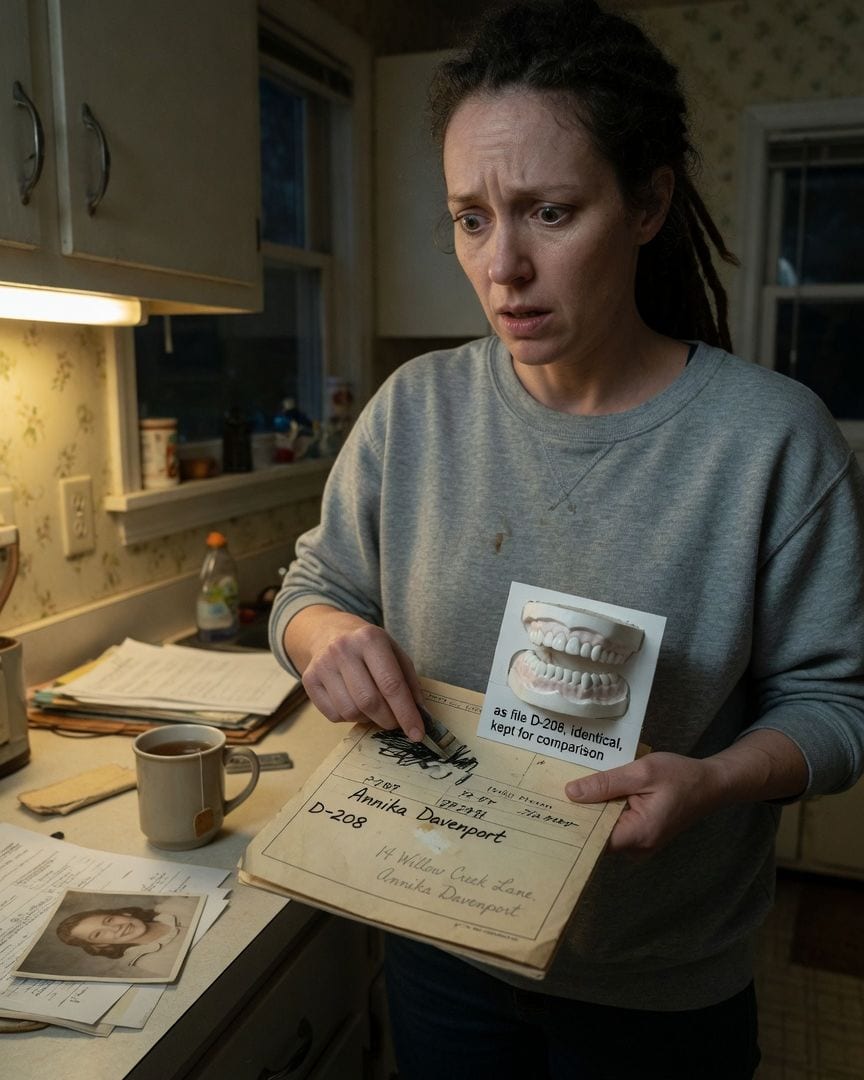
My childhood dental chart lists the house I bought last year — in my own name, years before I was born. A second set of my teeth sits filed beside it, marked 'identical.'
Sifting through old dental records, I found my chart, D-208, with my 1988 birth date. But a line from 1958 was blacked out, and a clipped card with an impression of my teeth listed my name and current home address, decades before I was born. The impossible facts knotted into a cold certainty.
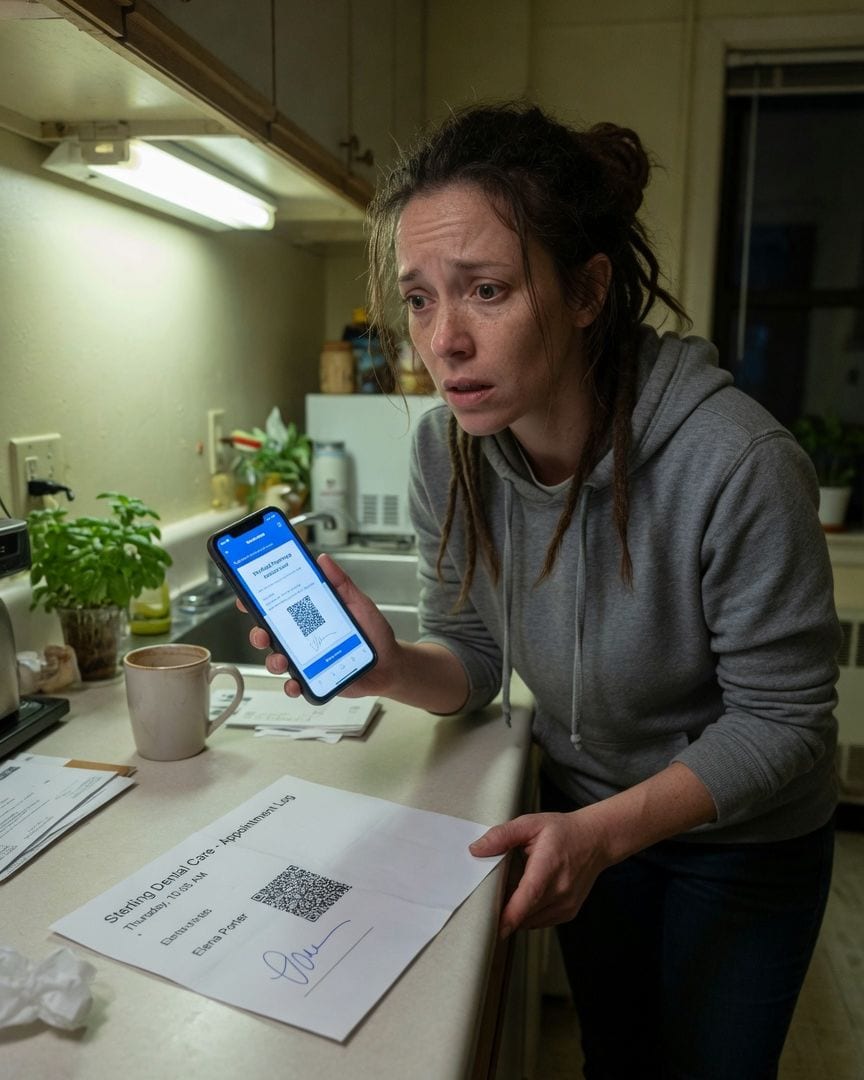
My dentist's system says I was there last Thursday. I wasn't. But the check-in tablet shows my signature, and the hygienist described my chipped tooth exactly right.
I received a call confirming a dental appointment I never made, for a day I was home. Yet, Sterling Dental had my perfect digital signature and described a chipped incisor I’d never told them about. The physical proof insisted I was there, but I wasn’t.
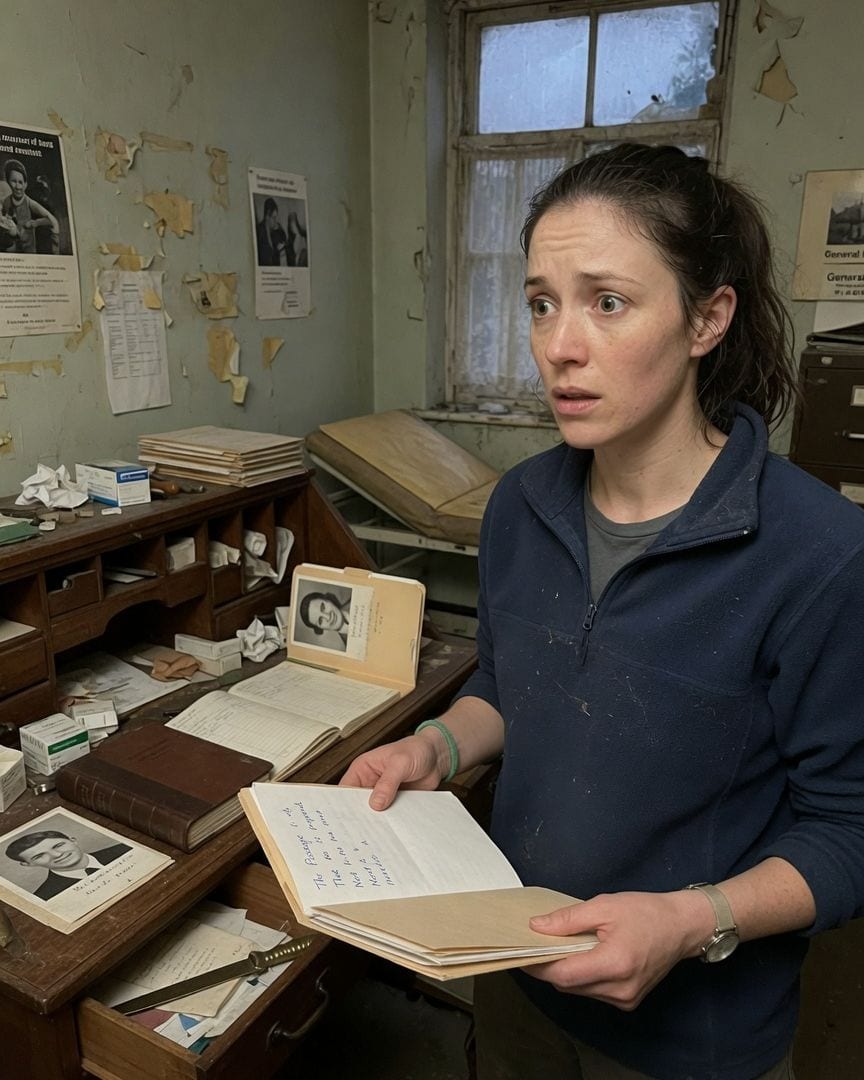
My new clinic's appointment book shows entries for this coming Monday, decades after the doctor retired and died.
Chloe Lawson bought an old, abandoned surgery in Nettlebed, ready to open her new vet clinic. Locals insisted Dr. Almott retired in '79 and the practice shut down for good. But then Chloe found his dusty appointment book filled with meticulous entries, continuing unbroken from 1979 through the decades, right up to this coming Monday.
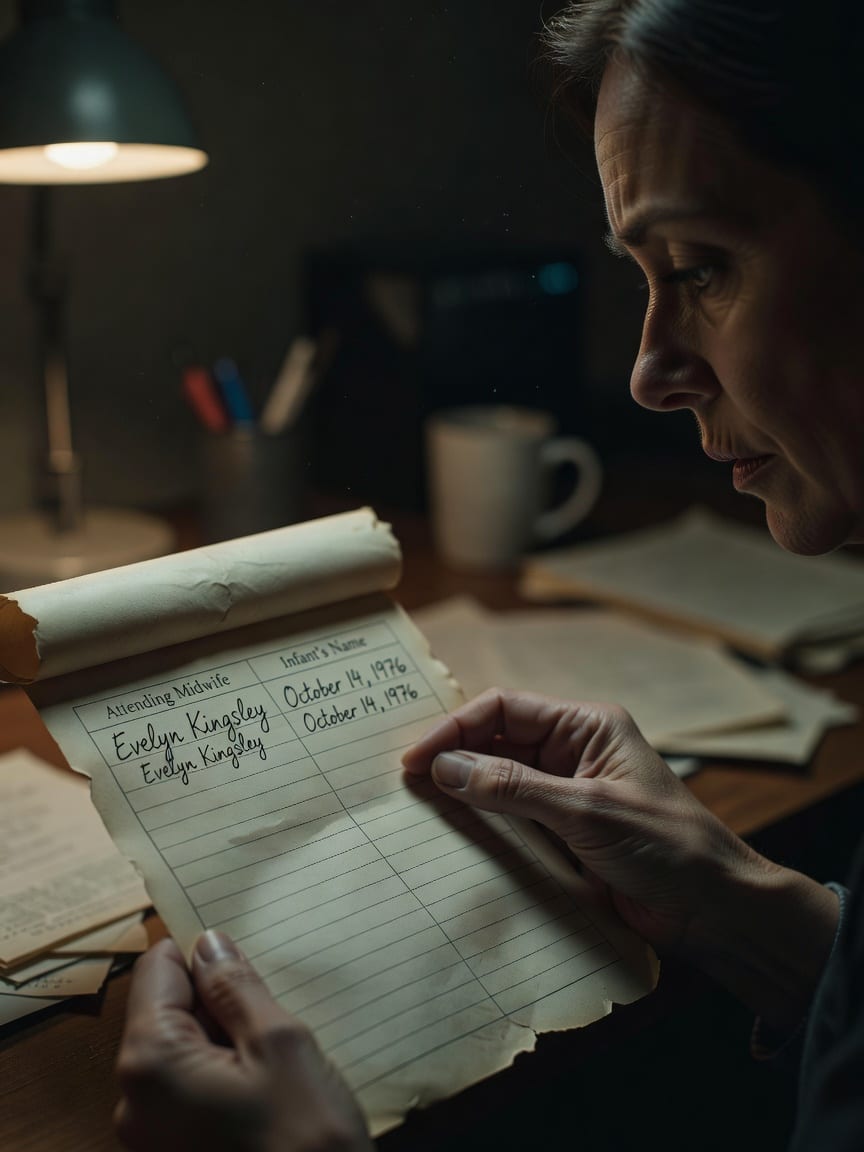
My own handwriting is on my birth certificate, signed as the attending midwife. I was the baby born that night.
I found my adult signature scrawled across my mother’s maternity file, right on my own birth register page. Forensic analysis confirmed it was genuinely my handwriting, dated 1976. But that was the year I was born, and my signature was listed as the attending midwife.